It happened just a few weeks ago: Jim Obergefell was moving things in his office when he came across the ashes of his late husband, John Arthur, now 12 years gone. Arthur had last wishes for his ashes. Obergefell had yet to fulfill them.
“And it struck me that, oh, I am actually now mentally, emotionally ready to take care of John’s ashes,” Obergefell told The 19th. “It was the first time that I had that feeling so clearly and so strongly.”
Obergefell, 58, is ready to move on. Not exactly from the love of his life or the history-making Supreme Court decision that came after Arthur died. But certainly from the insecurities straight America was grappling with a decade ago about same-sex unions.
Obergefell is that Obergefell: the named plaintiff in the landmark lawsuit that extended marriage equality to every state in the nation in 2015. Ten years later, he celebrates that win and the many ways it rewrote his life. And in a time when LGBTQ+ rights are again under assault, he is looking to the future — of the queer rights movement and also his own.
A journey to the Supreme Court
Obergefell’s journey to the Supreme Court was hardly destined. It began 12 years ago, on June 26, 2013, when the Supreme Court struck down the Defense of Marriage Act, a federal law that prohibited the government from recognizing same-sex marriages.
Obergefell and Arthur had been together for 21 years at the time. The two had discussed getting married before. But they wanted it to be legal, and their home state of Ohio didn’t offer same-sex marriages.
Arthur was gravely ill with ALS, a progressive neurodegenerative disease, and he barely left his home hospice bed.
After the ruling, Obergefell leaned over to Arthur, hugged, then kissed him.
“Let’s get married,” he said.
Arthur agreed.
The logistics were not easy. Arthur was in no shape to travel, and the couple could not wed in Ohio. Obergefell researched and found that Maryland would let him get a marriage license even with only one of them present. But both would need to arrive in the state for the ceremony.
When friends and family learned about their predicament, they pooled together money to charter a medical jet for Arthur. The two flew to Baltimore. Over the course of 45 minutes, they exchanged vows on the tarmac before flying home.
“In the days that followed, we said the word ‘husband’ hundreds of times a day,” Obergefell said on the Decidedly Podcast in 2023.
But just five days later, their joy was muted when civil rights attorney Al Gerhardstein informed them that because of Ohio’s ban on same-sex marriage, Arthur would be listed as single in death.
Arthur and Obergefell were angry. The couple sued the state of Ohio in federal district court and won. Three months later, Arthur died.
The following year, Obergefell, still in mourning, lost on appeal. But he refused to believe he might lose altogether.
“I just kept going,” Obergefell said. “It was the right thing to do.”
On June 26, 2015, he won. For the country, the win was immensely practical. Many told Obergefell it gave them so much hope it saved their lives. For Obergefell, it meant a legacy for the man he loved.
“I made promises to John to love, honor and protect him, and I was going to keep doing that,” he said.
In the decade since Jim Obergefell won his Supreme Court case that made same-sex marriage federally legal, hundreds of thousands of same-sex couples have married in the U.S. (Eric Gay/AP Photo)
Changing history
It’s difficult to overstate the impact of Obergefell’s case on the nation or the world. Since the 2015 ruling, the Williams Institute at the UCLA School of Law estimates, 591,000 queer couples have wed, generating an estimated $5.9 billion in wedding spending for state and local economies.
It has also radically transformed Obergefell’s life. Introverted and unassuming, he has spent the last decade campaigning for LGBTQ+ rights. He helms Equality Vines, a wine company that donates its proceeds to advancing civil rights causes.
It’s a position that makes him deeply proud if not a little fatigued.
“I’m not tired of talking about it,” he said of the 10-year anniversary of the ruling. “I’m just physically tired from all of the interviews and the photographers and the speaking gigs and the events. Yes, I’m exhausted.”
For 12 years, Obergefell has kept Arthur alive through retelling their story countless times in courtrooms and for the media. That exercise, of telling and retelling, helped Obergefell process his profound loss.
But he has never recoupled. It wasn’t that Arthur didn’t want him to. In fact, Arthur told him regularly that he wanted him to find love again. He asked his friends and family to tell Obergefell that he wanted him to find love after he was gone.
“I know it was sincere, because he told me that he had other people tell me that,” Obergefell said.
It isn’t about the pressure he feels as the face of marriage equality, he said, though part of him wonders what it would be like to date after making history.
“I don’t know how to date,” he confessed. “I’m clueless when people flirt with me, and as much as I hate it, and I don’t go into any conversation or anything like this, but you know, there’s that part of me that sometimes wonders, you know, are they interested in me as a person, or are they interested in me as Jim Obergefell, named plaintiff?”
Obergefell’s name has become synonymous with marriage equality in the United States, an issue that has not always united the LGBTQ+ community. Some queer activists have argued that same-sex marriage was a misguided goal for the movement as queer youth continue to face high rates of homelessness and transgender people grapple with police violence and incarceration, among other issues.
More work to do
Obergefell, too, is worried that the needs of the community’s most vulnerable have gone unmet. He has watched horror-struck over the last five years as state legislatures have moved to restrict transgender rights.
“We need to fight for every marginalized community, because the queer community includes every marginalized community, and equality for one is pointless without equality for all,” he said. “I didn’t go to the Supreme Court just so White, cisgender, gay men like me could get married.”
Despite all of the setbacks in LGBTQ+ rights, and even threats to Obergefell’s game-changing victory, he is hopeful — and feels stronger than ever. People assume his case was difficult for him. It was, but the path was also obvious, to him and to Arthur. They loved each other.
“If we weren’t willing to fight for each other and for what was right, then what’s the point?”
I could have written large parts of this myself. It is scary to be in our position and at the mercy of those who have so much money they will never understand our needs or it seems even care. Most of congress are multimillionaires. They see their jobs not to look out for people like me, but to gain ever more wealth and power for themselves. Which leads to the billionaire bailout bill the republicans are pushing to pass right now. Hugs
The author asserts cuts to programs such as Social Security Disability Insurance will make it difficult for her to afford basic necessities The program provides month payments to people who have a disability that stops or limits their ability to work. (Dreamstime/TNS)
Being a care provider in a nursing home is backbreaking work. It includes heavy lifting and spending all day on your feet, helping patients eat, dress and use the bathroom while keeping track of dozens of patients who all have different needs, medicines and preferences. It’s never easy, but during my career I held myself to the standard of providing the care I would want someone to give to one of my family members.
I was a certified nursing assistant and medication aid in nursing homes before retiring due to health problems. I loved my job. It provided me with more than a paycheck; it gave my life meaning. It felt good to be someone people could depend on, especially in times of need. I loved being the first face my patients would see in the morning and the last at night. It was physically and emotionally draining at times, but always worth it. I’ve learned that anything in life worth having is a struggle to obtain. I miss working every day.
Now, my main source of income is Social Security Disability Insurance. Without it, I wouldn’t be able to cover my rent or help take care of my daughters, grandchildren or father. My monthly disability check, which I put toward rent, laundry, bills and other necessities, goes fast. The only way I am able to cover the rest of my expenses each month is through programs such as the Supplemental Nutrition Assistance Program and the Low Income Energy Assistance Program and Medicaid.
I’m prediabetic, so I have to be mindful about what I eat. SNAP is the only way I am able to afford healthy food. Lately, the price of everything in the grocery store has gone up. I shop carefully, but some weeks I have to forego buying meat to save money. My SNAP benefits have gone down significantly in recent months, which has already made it harder for me to afford the food I need. Across Pennsylvania, over 2 million people receive SNAP benefits. That’s thousands of families in our state, just like me, who depend on this program to put food in the mouths of their children.
I’ve received Medicaid on and off for over 20 years. It has helped me pay for important surgeries including a vision surgery, cystoscopy and a hysterectomy. Medicaid helps me cover copays and deductibles and access mental health services. Losing Medicaid would mean sacrificing health care and having to pay my medical costs out of my own pocket, which I cannot afford.
Every winter, LIHEAP benefits help me keep my home warm. It keeps my heating bill manageable so that I don’t have to use the stove to generate heat. Without LIHEAP, I would need to make tough decisions about which bills to pay, whether that’s rent, electricity or gas. It would be a situation of robbing Peter to pay Paul. My monthly budget is extremely fragile and the possibility of losing LIHEAP, which provides me about $200 each winter, is enough to put my whole financial situation at risk. When I hear that politicians in Washington want to make billions of dollars worth of cuts to SNAP, Medicaid, LIHEAP and other programs, it makes me incredibly anxious. Without these programs, I wouldn’t be able to stock my fridge, go to the doctor or heat my home.
I spent decades caring for patients in need and did it with pride. No one ever expects to be disabled and suddenly have to stop working. You never know what could happen and never think it could happen to you until it does. I didn’t think I would ever need back the tax dollars I put into the system. But God had a different plan for me. These programs are so important for me and millions of Americans.
But the programs are also part of what makes America a great and a caring nation. They ensure that any American — our neighbor, our family member, or a co-worker — who gets sick can live with dignity in the richest nation on earth. It seems like Republicans in Congress have no interest in supporting everyday people. They just want to make the rich richer.
By voting in favor of cuts to Medicaid and SNAP, my Congressional representative, Rep. Ryan Mackenzie, voted to turn his back on constituents like me. With these cuts, people will suffer and end up on the streets. People like me, who are already doing everything we can to make it work, will struggle even more.
I am calling on Sens. Fetterman and McCormick to chart a different path and put an end to these proposed cuts. Lives are on the line. It’s time for our leaders to show that they care and that they are willing to stand up against billionaires. On behalf of the millions of Pennsylvanians who rely on these SNAP, Medicaid and LIHEAP, I urge you to protect these programs and our ability to provide for our families.
This is a contributed opinion column. Pamela Berman is a Bethlehem resident and former certified nursing assistant. The views expressed in this piece are those of its individual author, and should not be interpreted as reflecting the views of this publication. Do you have a perspective to share? Learn more about how we handle guest opinion submissions at themorningcall.com/opinions.
Riley Gaines, who has turned a fifth place finish against non-trans swimmers into career with MAGA media.
Now let me see if I have this right. Riley Gaines finished 5th in a race with a trans athlete. And, if that trans athlete had NOT been in the race, Riley Gaines would still have finished in 5th place because the two swimmers were TIED for 5th. So, a trans athlete being in the race did not have any effect on Riley Gaines at all
First of all, I would like proof of this man’s “big balls.”
Second, he is a national security disaster. From his Wikipedia page:
His maternal grandfather Valery Martynov was a KGB Lieutenant Colonel executed by the Soviet Union as a double agent. After his execution his widow moved with her children, including Coristine’s mother, to the United States.
Also from Wikipedia:
Bloomberg News reported that Coristine had been fired from his internship at cybersecurity firm Path Network in 2022 for allegedly leaking internal company information to a competitor. Following his dismissal, a large collection of internal Path documents and conversations was leaked online.
The apple may not fall too far from the tree in this instance.
Reuters published a story alleging that Coristine’s online content delivery network DiamondCDN had facilitated the work of the cybercriminal group EGodly. In 2023 Egodly thanked Coristine saying “We extend our gratitude to our valued partners DiamondCDN for generously providing us with their amazing DDoS protection and caching systems, which allow us to securely host and safeguard our website,” Egodly has claimed involvement in a number of crimes including email hacking, theft of cryptocurrency, and the harassment of a former FBI agent.
This guy would never have passed any sort of normal security clearance. That this story isn’t a massive front page scandal is an indictment of the times we live in.
A Ukrainian lawmaker nominated Donald Trump for a Nobel Peace Prize, and has now withdrawn it, saying he had ‘lost any sort of faith and belief” in Trump and his ability to secure a ceasefire between Moscow and Kyiv. The mystery here is why ever had “faith” or “beliefe” in Donald Trump in the first place?
To believe in Donald Trump, you either have to be a cultist who does not live in reality, or have previously taken a tack hammer to the head.
The Ukrainian official, Oleksandr Merezhko, said Trump is “evading—he is dodging—the need to impose sanctions on Russia.” That’s because he’s Putin’s beyotch. Has Merezhko not been paying attention all these years?
Pakistan submitted a formal recommendation for Trump to receive the Nobel Peace Prize after saying his “decisive diplomatic intervention and pivotal leadership” stopped its recent military spat with India over Kashmir. Although India stated there was no need for external mediation on the Kashmir issue, playing down Trump’s role. Factor in that India’s leader is a Trump fan.
But now, just a day after recommending TACO for the Nobel Peace Prize, it’s condemning him for attacking Iran, saying the strikes “constituted a serious violation of international law” and the statute of the International Atomic Energy Agency. Pakistani Prime Minister Shehbaz Sharif, in a phone call Sunday with Iranian President Masoud Pezeshkian, expressed his concern that the bombings had targeted facilities that were under the safeguards of the IAEA.
Today, Georgia GOP Rep. Buddy Carter has formally nominated Trump for a Nobel Peace Prize, writing to the committee that it’s “in recognition of his extraordinary and historic role in brokering an end to the armed conflict between Israel and Iran.”
But, Buddy…you don’t negotiate peace by bombing somebody. Also, the peace deal isn’t working. Israel accused Iran of violating the deal, and Trump got upset, probably because further escalation would ruin his pretend chances of winning a Nobel Peace Prize. Also, you don’t win a Nobel Peace Prize by bombing a nation that’s never attacked you.
Trump said, “We basically — we have two countries that have been fighting so long and so hard that they don’t know what the fuck they’re doing.” Oh, and you do, TACO?
Buddy didn’t nominate Trump for the Nobel Peace Prize because he believes it would be deserved. Like Pakistan and the Ukrainian guy, Buddy is using the prize to kiss Trump’s ass. Pakistan and Ukraine both turned around and said Trump doesn’t deserve it, which they already knew. Maybe they should buy him planes. Buddy, I don’t know what you want from Trump, but can you buy him a plane?
Of course, Republicans are praising Trump for a peace deal with Israel and Iran, but why? There are no conditions or terms. Neither nation has given any concessions to the other. Has Iran agreed to abandon its nuclear program? No. Even if they did, why would it be more trustworthy than the deal Obama already made with Iran that Trump destroyed, which was working? Did Israel give Iran any concessions, like maybe abandoning its nuclear program that nobody wants to talk about?
Trump’s peace treaty is like the TEMU of peace treaties. It’s going to break just as soon as you start playing with it. (snip-MORE)
=============================
NATO Making Careful Preparations To Keep Baby Trump Entertained During Tomorrow’s Big Summit by Rebecca Schoenkopf
Wouldn’t want him to get bored or stomp out and demand to go home or anything! Read on Substack
This morning, Donald Trump was angry. One would imagine that after ending all wars forever with his flawless execution of the ceasefire between Israel and Iran, he just wanted to have a nice celebratory night, while SecDef Pete Hegseth drunked and belched around the White House residence in a sexy teddy singing “Nobel Peaaaaaaace Biiiiiiiiirthday, Missssteerrrrr [HIC!] Prezzzzdinint!”
Alas.
Instead it appears Israel and Iran stopped shooting long enough to let President Dumbass get on Truth Social and declare flawless victory, before they got right back to shooting at each other. It’s gotta be tough pretending to be the leader of the free world when none of the world, free or otherwise, has any respect for your leadership. (snip-MORE, and it is good!)
With Trump’s strikes on Iran and all the other shitstorms his administration has caused, the anniversary of American women losing their reproductive rights isn’t going to get a great deal of press. Here’s just one link to what abortion bans mean for women after the Supreme Court decision. There are plenty more.
============
Inside the queer pop-up parties you’ll never want to leave
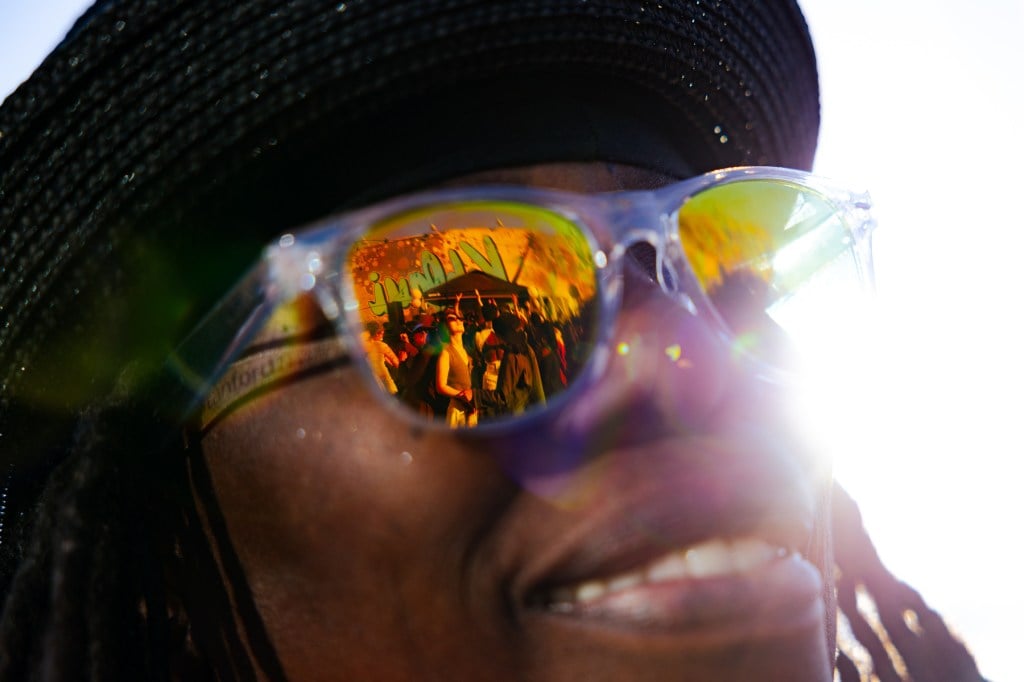
Glitter sparkles across people and surfaces, rainbow-colored acrylic nails snap in time to the Afrobeat, and boisterous cheers egg on the occasional dance floor death drop. These are moments that make up spaces created for and by queer and trans people of color (QTPOC). From Los Angeles to Philadelphia, New York City to Atlanta, queer community organizers, DJs, musicians and artists are producing monthly pop-up events that attendees and organizers say are reimagining queer liberation through collective joy.
Events range from underground warehouse raves like Hood Rave in Los Angeles to sunlit day parties and potlucks featuring patio yoga. Regardless of format, the trappings of queer life and culture are evident everywhere you look — necklaces made of popper bottles; chest harnesses as fashion; flags; fans; cheeky political statements across nails, hats and tees. The recognition of Black and Brown queer experiences is often apparent in event titles, like New York City’s notorious Papi Juice dance party and Los Angeles’ weekly Toxica event for sapphic Latine queers.
These parties also frequently double as advocacy work, where they highlight mutual aid campaigns, promote queer causes and spread political awareness. In recent years, DJ shouts of “Free Palestine” are frequently met with affirmative cheers from dance floors dotted with keffiyehs and watermelon imagery. QTPOC parties are also changing the tunes of gay nightlife from the pop/EDM/disco variety to a musical mix of hip-hop, trap, house, reggaeton, soca and Afrobeats.
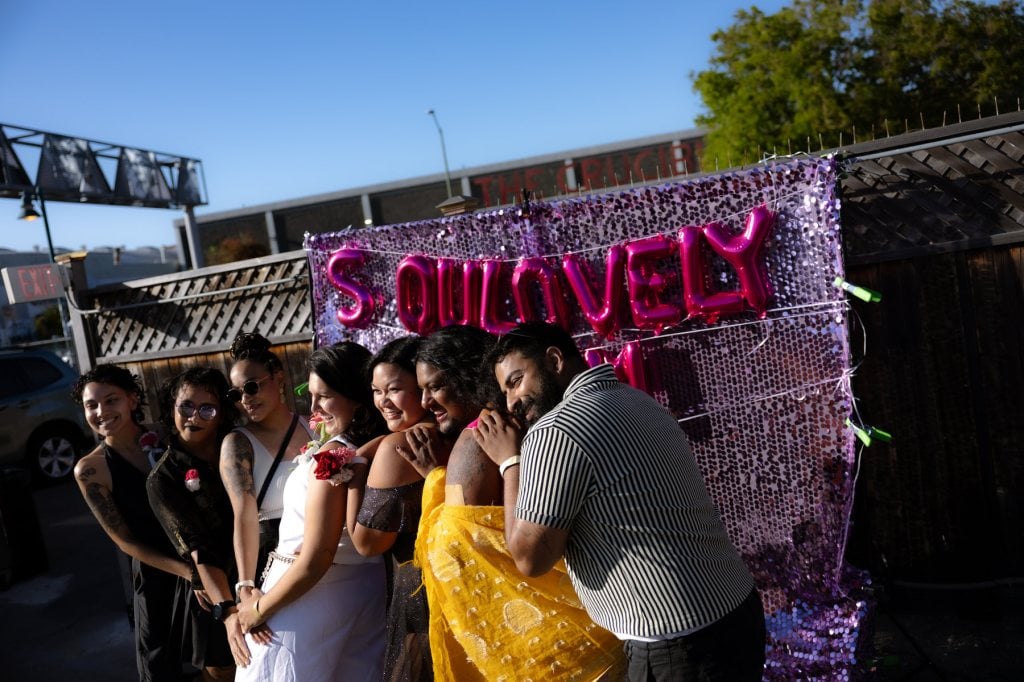
“Everybody is able to see themselves in the music and feel safe here,” said Terri Flamer, who attended the Soulovely prom in Oakland, California, in May. “That’s probably the best thing about it, is you’re safe to be yourself, you can party, you meet people that don’t look like you and it’s all love.”
Queer dance parties also enable the ecstatic experience of group dance, which can be understood as its own form of activism. Maya Bhardwaj, a scholar studying the global influx of such parties in the last decade, called them queer utopias that center: “healing, mental health, ancestral faith practices, queer Black and Brown music and dance traditions, and spaces for activists and cultural workers to gather beyond mainstream bars and nightlife.” Mission statements from QTPOC dance party organizations often invoke terms like “affirmation,” “celebration” and “sustaining.“
While queer nightlife as a space of resistance isn’t new — it has its roots in AIDS activism of the ’80s — the intersectional community building and intention brought to crafting these spaces makes the current slate of QTPOC parties feel fresh. Often exclusionary White male gay spaces are frequently the only options for LGTBQ+ nightlife, and the pop-up event has become a go-to to address a lack of gatherings that feel welcoming to QTPOC folks.
There’s this sense of pain shared among QTBIPOC […] and therefore the joy that is experienced at these parties feels more necessary, more dire and more of a relief.”Nicole Prucha
Pop-up spaces provide “a feeling of safety in being able to trust that the people who are there have experienced or understand what it is like to be othered, in a sense apart from our sexuality,” said performance studies scholar Nicole Prucha about her experience attending Los Angeles QTPOC parties. As a queer Arab person who has often struggled to find places where she feels truly seen, Prucha said parties like Casual, Hot Pot and its sister event HabibiPot fill a vital need for queer people of color: “A place of refuge and queer world-building” at a time when LGBTQ+ rights are under attack.
Terri Flamer attends Soulovely’s prom, held in the 14th season of Oakland’s QTPOC-centered monthly party. (Manuel Orbegozo for The 19th)
Event organizers are often working with limited resources amid challenging financial situations. Five queer BIPOC coordinators — Kike Ayorinde, Camryn Casey, Madi Dalton, dRi Guillén and Leslie Tellería — produce community-funded Lavender Evolutions (LE) events in D.C., and the ticket sales for each event contribute to the next event. In a collective statement, the organizers shared that they are largely unpaid but, “We do give core organizers small payments to cover things like gas, food during events, and the many hours of labor leading up to an event.” The LE organizers acknowledge that “money is a huge barrier and we could always use more of it, but for us, it’s more important that we have events that are financially accessible.”
They keep ticket prices below $25 to achieve that aim but struggle with the financial load of creating these pop-up spaces. The organizers say they are often unable to meet the market rates of DJs and other collaborators due to tight budgets, while logistical support frequently comes from community members willing to volunteer their time to assist with check-in and ticketing. Another challenge they face is making their work in building queer community attractive to funders. “Grant makers don’t always understand the scope of the work that we do and why it’s so important, especially in this moment,” organizers said.
Despite the challenges, organizers said the work is worthwhile. “We do experience burnout but we rely heavily on the collective,” the organizers said. “More than anything, we prioritize people. For our core organizers, it’s a delicate balance because our time and energy is limited. We’re all balancing our full-time jobs, life and Lavender, but the love of community keeps us going.”
They need us, we need them. It’s not always about the bottom dollar, sometimes it’s about building community and the dollars come after.Sgt. Die Wies
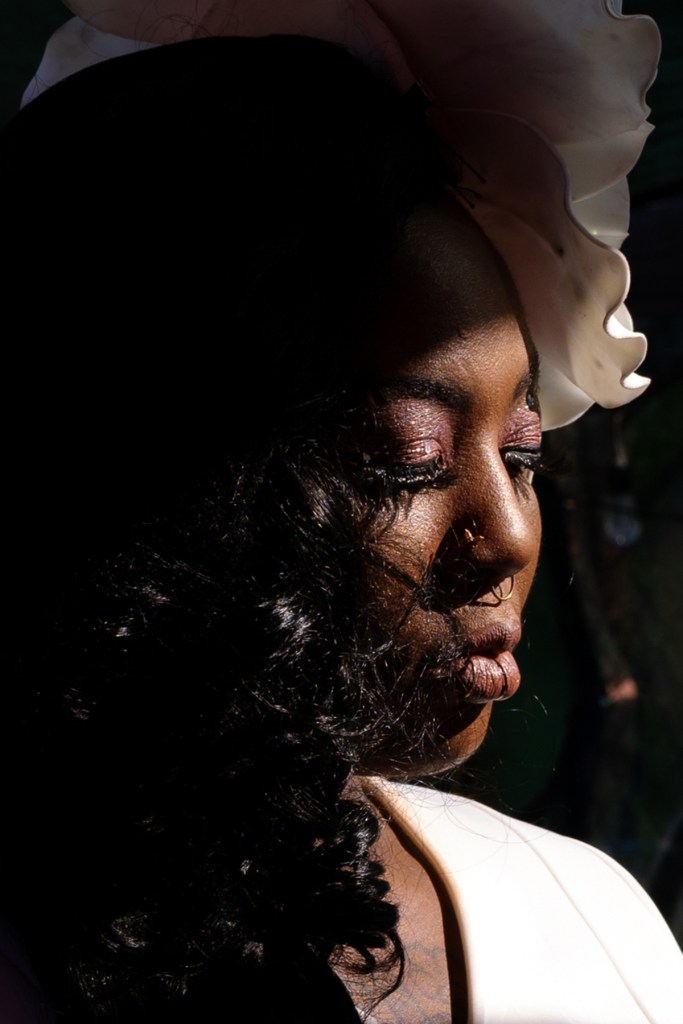
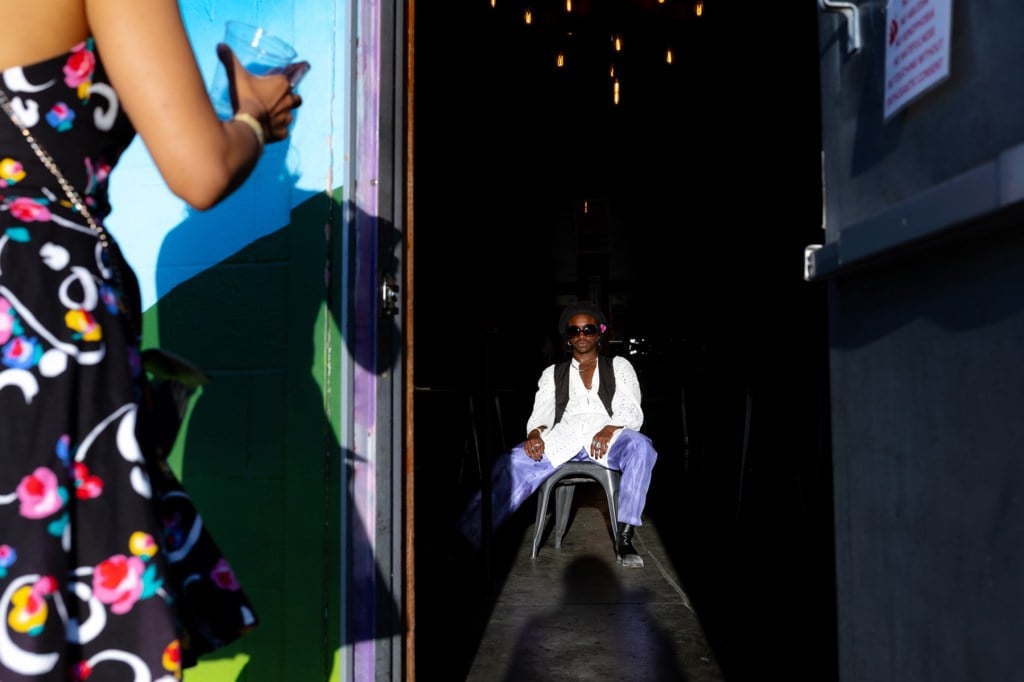
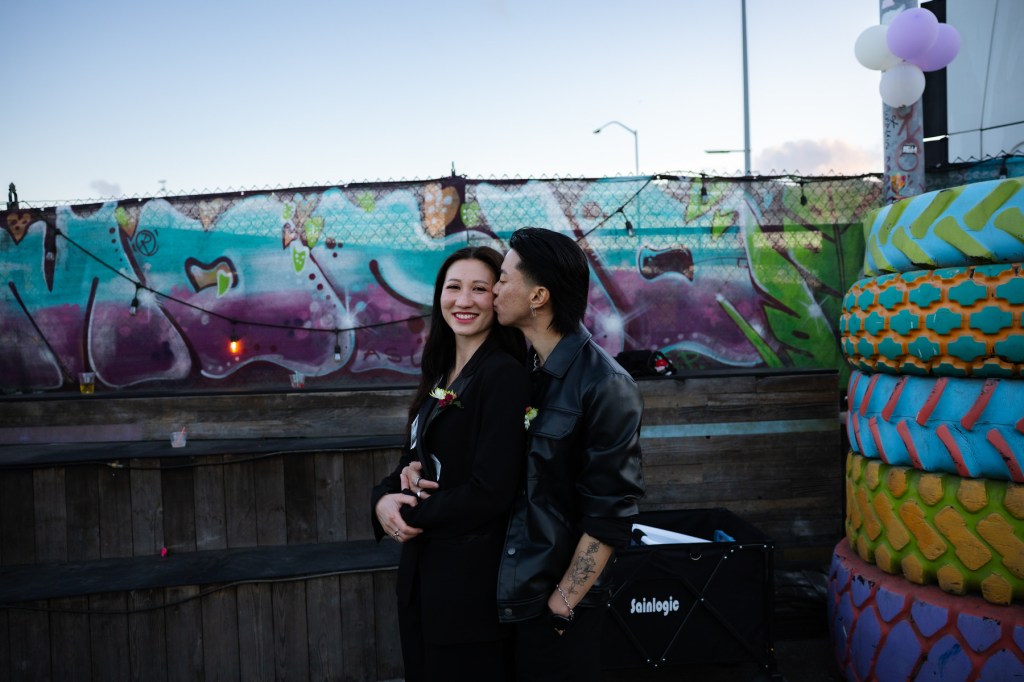
The 19th sent photographers to queer pop-up parties and events in Oakland, Washington, D.C., and Atlanta to show these spaces of radical queer joy in action and highlight the work that queer organizers are doing to build QTPOC community across the country.
OAKLAND
Soulovely has brought QTPOC-centered “cultural affairs” to the Bay Area for 14 years
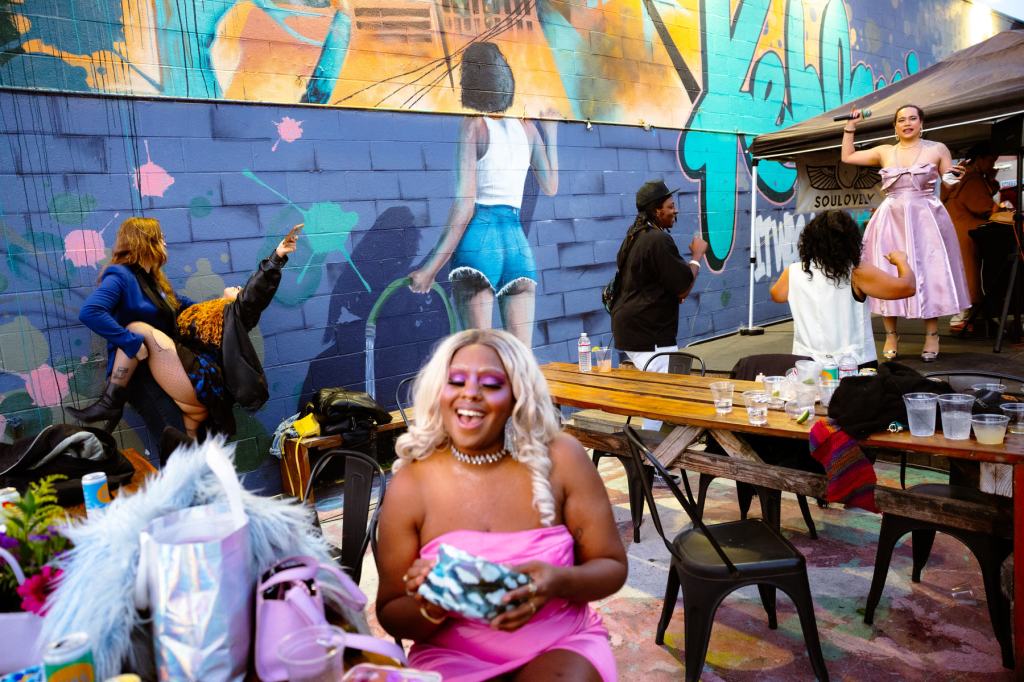
Many attendees of Soulovely’s prom said it was a first for them, providing queer and trans people of color (QTPOC) an opportunity to attend a prom in a safe and community-based setting. (Manuel Orbegozo for The 19th)
Soulovely is a beloved and long-lasting pillar of queer life in the Bay Area. Since 2011, its monthly events have served as a safe haven for a predominantly BIPOC queer community to celebrate their identities and bodies through music and dance. “I actually just found out that a loved one passed. So coming here was kind of like in honor of them as well, because they love to dance, I love to dance, we met out dancing — it brings people together,” said Mello-Jahlil Travis, who attended Soulovely in May.
Burlesque producer and performer Sgt. Die Wies attended the Soulovely queer prom on May 11 and says she thinks the space provides an opportunity to be “solution-based versus just focusing on the negativity. “ (Manuel Orbegozo for The 19th)
Attendees and organizers both are often quick to point out these spaces are not about excluding White, straight or otherwise non-QTPOC people. Rather they are about radical inclusion and belonging. Sgt. Die Wies, a burlesque producer and performer who attended the Soulovely queer prom in May, said that the party is all ages with a variety of ethnicities coming out to be together:“It’s beautiful to see because there’s so much division in the world right now.”
Mello-Jahlil Travis (they/them) said the Soulovely Prom gave them an opportunity to have a different prom experience. “I’m stoked to be here amongst other beautiful queer people. It’s important to be able to see people who look like you be themselves and feel free. There’s not everywhere that I feel like I can have my nails painted and dress like this. It’s dope to be around people who can receive that.” (Manuel Orbegozo for The 19th)
While all are welcome, Jaycee Chang especially appreciates the way Soulovely centers queer and trans people of color. “It is both a space of joy and being a community but also, it’s a relatively politicized space where they’re very intentional about the artists that they bring in, the DJs, the themes,” Chang said.
And that can even extend to their families.
“One of the DJs who helped host HabibiPot [in Los Angeles], her mom was there to watch her first DJ set and she played Arab classics that my own mom had introduced me to,” Prucha said. “They’re both Palestinian, and her mom was there, standing on the tables with the rest of us, and she was crying because she was so happy that her daughter was there and had found community.”
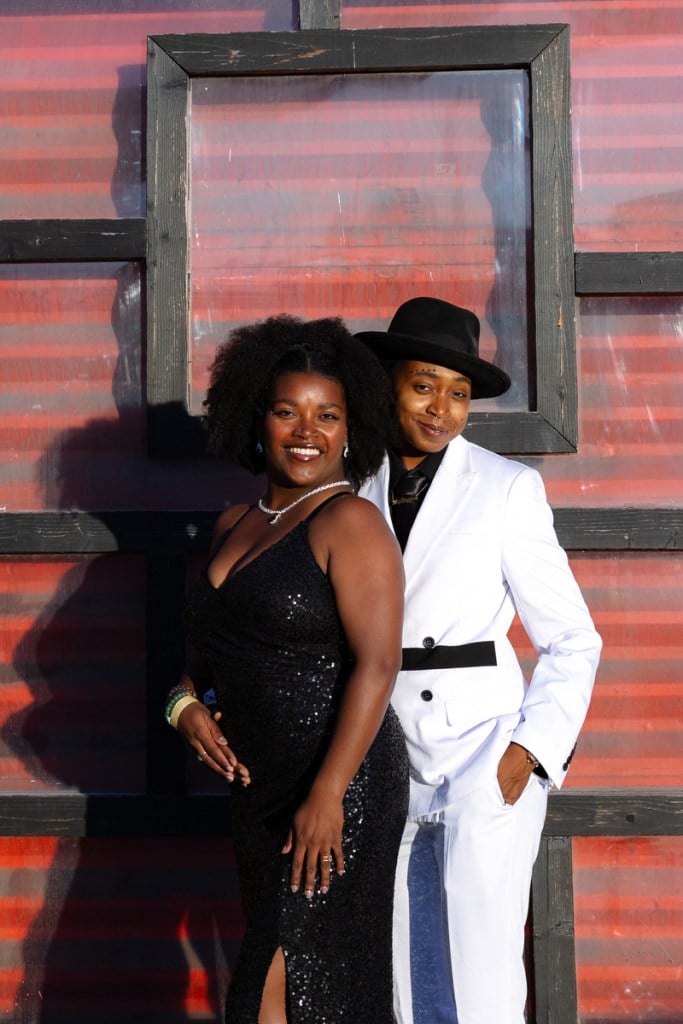
Tiara Reed (left) met her now-fiancée Chenelle Reed (right) at a Soulovely event and said “it’s so significant to have spaces where unapologetic joy and levity and freedom are welcome and everyone can just bask in it.” (Manuel Orbegozo for The 19th)
These spaces also provide opportunities for LGBTQ+ people to meet each other beyond dating apps. A 2020 Pew Research Center study reported that lesbian, gay and bisexual people were both more likely to use online dating and more likely to experience harassment through dating apps than their straight counterparts.
Soulovely is always part of our story.”Chenelle Reed
Ahn Lee feels safe at Soulovely parties because harassment is far less likely. “I feel like no one’s gonna try to come at me in a way that doesn’t feel comfortable,” Lee said.
Since 2011, Soulovely events have provided a safe haven for the queer BIPOC community in the Bay Area. (Manuel Orbegozo for The 19th)
And for others, like Tiara Reed and Chenelle Reed, Soulovely has become a character in their love story. Reflecting on the experience of meeting her now-fiancée, Tiara, at Soulovely and their future together, Chenelle said, “It’s going to be absolutely beautiful, because we have places like this … where you can connect and learn that anything is possible, family in all the ways is possible.”
Jaycee Chang (they/them, right) with their partner Ahn Lee (she/they, left), has been coming to Soulovely for over a decade. Chang said: “Even when the world is chaotic and there’s a lot of harm happening, we can come together as a community and create spaces that feel like refuge, like safety.” (Manuel Orbegozo for The 19th)
ATLANTA
Southern Fried Queer Pride builds QTPOC community through education and embodied healing
Grassroots collective Southern Fried Queer Pride (SFQP) — now in its 11th year — focuses its events toward “artivism” with a stated mission to fight narratives that confine Southern LGTBQ+ people to “stigma, statistics and struggle” instead aiming to uplift an “honest narrative of resilience, rich history and vibrance.” SFQP offers year-round programming, typically providing between 40 to 60 events that feature community education — like the upcoming trans health care workshop — as well as gallery shows, marches and dance parties, such as its June trans cabaret and open mic.
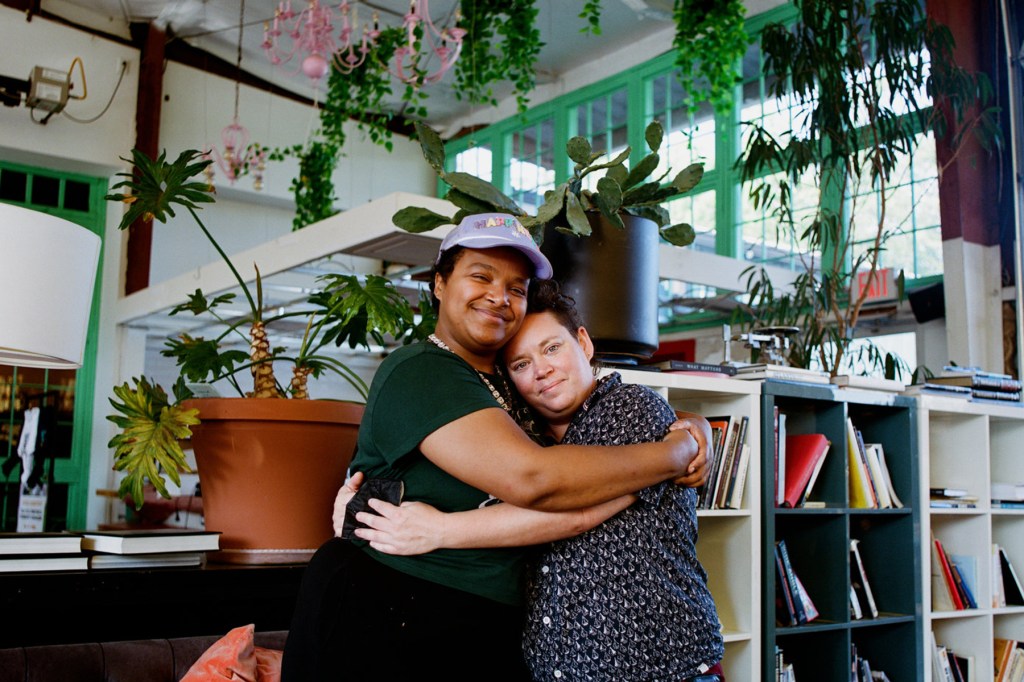
Maya Wiseman (left) and Magdalena (right) have both volunteered for SFQP for years and say organization offers a space of respite and community connection for them. (Piera Moore for The 19th)
Community organizer Maya Wiseman said the May 18 SFQP Community Potluck was an alcohol-free and masks-required event to further expand on their inclusiveness, which has become a hallmark of SFQP events. “Queer folks have been marginalized throughout time, but often queer folks, whether they know it or not, naturally end up creating safe spaces for everyone,” said Wiseman, who has worked with SFQP as a community organizer for six years. “We try to create spaces that say ‘come as you are,’ because we’re not having this at a club. If you want to come here in pajamas, in a tank top and shorts, it’s fine with us.”
Southern Fried Queer Pride offered yoga at its May 18 community potluck in Atlanta. (Piera Moore for The 19th)
Atlanta’s queer community is very easy to navigate, and SFQP is a big reason why.”Magdalena
WASHINGTON, D.C.
Lavender Evolutions and Alphabet Soup make space for QTPOC joy at summer day parties
Alphabet Soup Events uses a tiered ticket pricing system that recognizes the systemic financial issues queer and trans people of color face to increase racial diversity across its attendees. (Mariah Miranda for The 19th)
While not explicitly centering QTPOC, Alphabet Soup events, like the recent Daisy Dykes pool party, are “sapphic-focused” and find other ways to make their events inclusive and accessible for queer people of color. Tickets are available at different price tiers, with some lower-cost tickets allotted for BIPOC attendees.
A couple dances together at a pool party by Alphabet Soup Events. (Mariah Miranda for The 19th)
Adu Ogbagiorgis has witnessed a big shift in the racial makeup of Alphabet Soup parties after the organizer started this pricing practice, which they see as a welcome recognition that “Black queers have a different experience than White queers.” For Ogbagiorgis, this approach to ticketing shows they want people of color to come to the events. “So it’s really awesome to see that a lot of more predominantly White spaces are making space for Black queers,” they said.
Mackenzie Bolden said they can be themselves at Alphabet Soup events. “I feel like I can just embrace my skin, embrace my personality, embrace my queerness, embrace everything that is me. And that’s something I treasure and will never take for granted because of how often I don’t feel that way.”
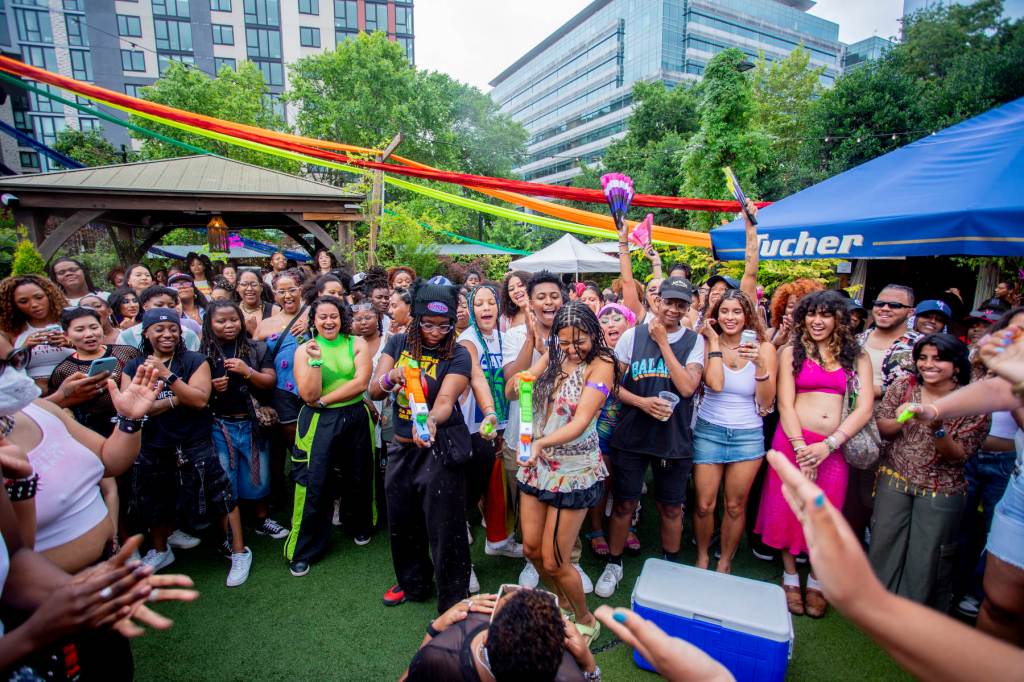
Lavender Evolution’s SWEAT party featured a wet t-shirt contest at on June 8 in D.C. (Mariah Miranda for The 19th)
Lavender Evolutions hosted a daytime beer garden pop-up called SWEAT on June 8 that featured a wet T-shirt contest, a water balloon toss and little cabanas filled with the sounds of multiple kikis.
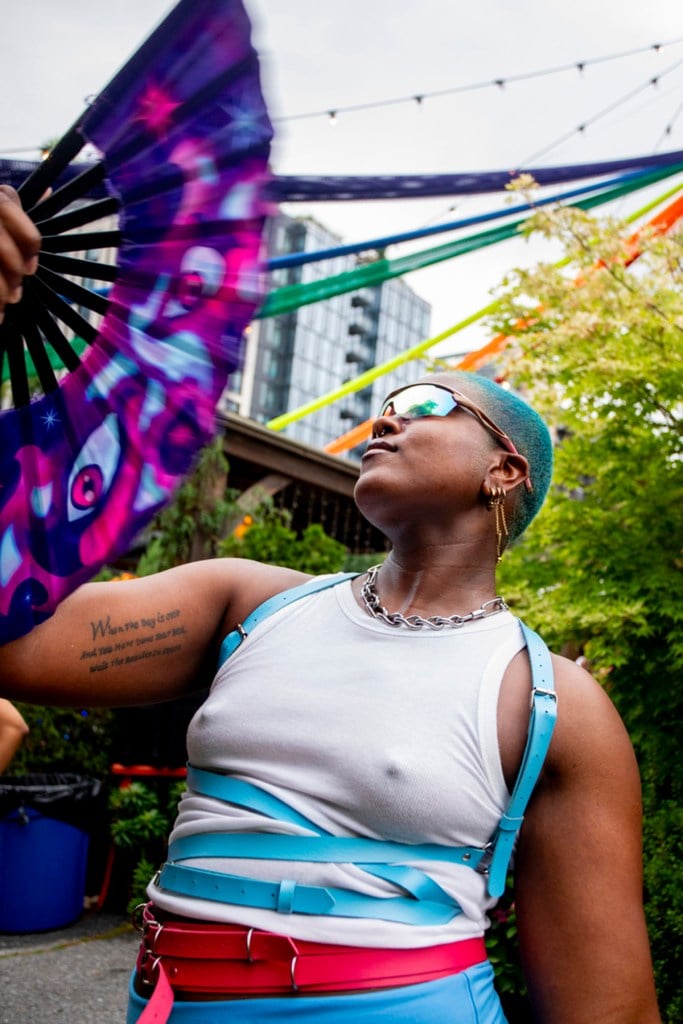
Ciara Bridges whips out their fan while attending Lavender Evolution’s SWEAT party in D.C. on June 8. (Mariah Miranda for The 19th)
Jojo Morinvil, who attended the SWEAT party, deeply values the way Lavender Evolutions has been intentional in their creation of space for queer BIPOC people to enjoy themselves. “They started out doing nature walks and book [clubs], then, as they grew, they really created safer spaces for folks to socialize, to get to know people and learn queer history, [along with] events where you can dance and party with your friends,” Morinvil said.
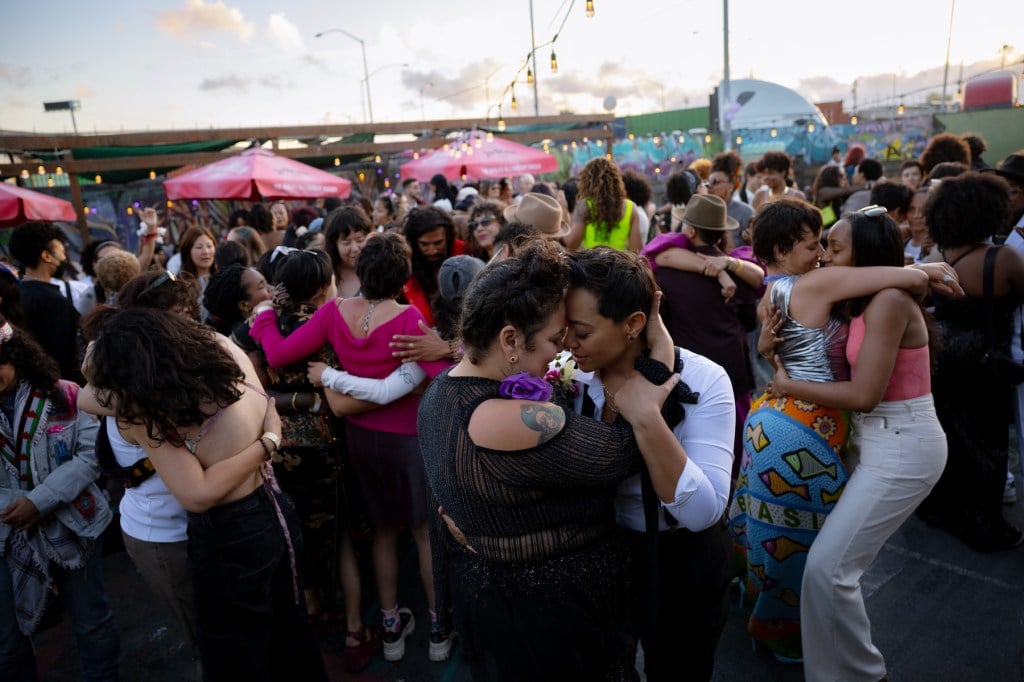
Couples and friends slow dance at Soulovely’s queer prom in Oakland on May 11. (Manuel Orbegozo for The 19th)
I truly believe that being whimsical will crush the patriarchy.”Sgt. Die Wies
Sgt. Die Wies points to the unabashed vibrance, love and joy experienced at parties like Soulovely as “things (that) are going to just crush the darkness. We’ve survived harder times than this. We’ve been bullied before. They ain’t got shit on us. There’s too many of us. There’s too much light and too much love and too much joy. We’ll be okay.”
Mariah Miranda, Piera Moore and Manuel Orbegozo contributed reporting.
“Zohran Mamdani would do to New York City what Khomeini and Khamenei did to Tehran,” Fine said. “We cannot let radical Muslims turn America into a Shiite caliphate.”
The proposal is unlikely to generate much revenue for the government; there is almost no private-sector interest in the mail trucks, and used EV charging equipment — built specifically for the Postal Service and already installed in postal facilities — generally cannot be resold.
“The funds realized by auctioning the vehicles and infrastructure would be negligible. Much of infrastructure is literally buried under parking lots, and there is no market for used charging equipment,” Peter Pastre, the Postal Service’s vice president for government relations and public policy, wrote to senators this month.
Read the full article. $10 billion into the sewer to please their Glorious Leader. Something something DOGE.
The Senate Judiciary subcommittee held a hearing Wednesday digging into the cognitive abilities of former President Joe Biden and claims of whether his aides helped what they say was a cover up of his alleged mental decline — claims the former president and many on his staff have denied.
The probe didn’t uncover any new information on the former president — with Democratic members of the subcommittee boycotting the hearing.
Democratic senators on the committee walked out of the hearing shortly after it began, with Democratic Sen. Dick Durbin blasting the panel for even holding the hearing, while he says a number of timely investigations should be going on related to President Donald Trump’s current actions.
“So far this year, the Republican majority on this committee has not held a single oversight hearing, despite numerous critical challenges facing the nation that are under our jurisdiction,” Durbin said.
The GOP panel repeatedly accused Democrats — and the media — of concealing the former president’s alleged real health conditions in order to prevent Trump’s 2024 victory.
“Today’s hearing is about competency, corruption and cover up within the Biden administration. Simply put, the last administration was rudderless from one crisis to another. The Biden Administration failed and folded. The partisan media did their best to cover up those failures,” Senate Judiciary Chairman Chuck Grassley claimed.
Former White House Press Secretary Sean Spicer listens to questioning during Senate Committee on the Judiciary hearings on how the Biden Cover-Up Endangered America and Undermined the Constitution in the Dirksen Senate office building in Washington, DC, June 18, 2025.
Mattie Neretin/Sipa USA via AP
Former White House press secretary Sean Spicer, who was among the witnesses, compared his time working under Trump in his first term to his observations of Biden, praising Trump’s energy and mental focus. Spicer never worked for the Biden administration.
Spicer also criticized “legacy media” for questions raised about Trump’s fitness for office in his first term, while he claims they were not questioning Biden the same way.
“Many, rightly so, believe the media in this country is culpable in covering up the obvious decline of the 46th president and leaders of the free world — the president of the United States. The scrutiny that was baselessly directed at President Trump during his first term was wholly absent from the media coverage of the Biden White House,” Spicer claimed.
Republicans on the committee also focused on Trump — saying he is in command and makes skillful decisions.
“The public is counting on us to ensure this never happens again, because we won’t always be fortunate enough to have a leader like President Trump, who is so unmistakably in command,” Republican Sen. Eric Schmitt said.
Joe Biden speaks during a conference of the Advocates, Counselors and Representatives for the Disabled (ACRD) at the Sofitel Hotel in Chicago, Illinois, on April 15, 2025.
Tannen Maury/AFP via Getty Images
In May, Senate Republicans announced their plans to launch the probe into Biden’s mental fitness while in office — including his use of autopen, a mechanical device to automatically add a signature to a document that’s been utilized by several past presidents, including Trump in his first term.
The hearing also comes after Trump earlier this month ordered Attorney General Pam Bondi to investigate whether Biden’s administration sought to conspire to cover up his alleged mental state while in office. The move by the White House represents a significant escalation, as it is a directive to the Justice Department to formally investigate.
Biden responded to the Trump order, saying “Let me be clear: I made the decisions during my presidency.”
“I made the decisions about the pardons, executive orders, legislation, and proclamations. Any suggestion that I didn’t is ridiculous and false,” Biden said in a statement.
In May, House Oversight Chairman James Comer requested Biden’s White House physician, Kevin O’Connor, appear for a transcribed interview as part of an investigation into Biden’s mental fitness and use of a presidential autopen while in office. Comer asked O’Connor to sit for an interview on June 25.
Sean Spicer, Heritage Foundation Visiting Fellow for Law and Technology Theodore Wold, and University of Virginia Law Professor John Harrison testify during a Senate Judiciary Committee hearing on the alleged cover up of former President Joe Biden’s alleged incapacity to serve on Capitol Hill June 18, 2025.
In response to the book’s release, a Biden spokesman said “there is nothing in this book that shows Joe Biden failed to do his job, as the authors have alleged, nor did they prove their allegation that there was a cover up or conspiracy.”
On Wednesday morning, Trump — who often criticizes Biden — lambasted the former president’s use of autopen and claimed that Biden didn’t have control while leading the country.
“All these people, all the scum that was around the Oval, you know, the Oval Office, or around the beautiful Resolute desk, telling this guy here, ‘Do this,’ ‘Do that,’ and not even tell him. They just go over to the autopen and sign whatever the hell they wanted to sign,” he said.
Trump claimed that it was aides who were making decisions for Biden — employing the autopen to carry out an agenda.
“He wasn’t for open borders, he wasn’t for transgender for everybody. He wasn’t for men playing in women’s sports. But he has no idea what the hell — he has no idea,” Trump claimed.
















 Scottie's Playtime