I can’t wait to make this cottage pie; I love them, especially with mushrooms instead of beef. But I’ll follow the recipe the first time I make it. I usually make cottage pie for Meal Trains, and just for us, and also like to make one with leftover ham, peas, and sweet potatoes. Meanwhile, this brioche is beautiful. I don’t keep white flour, but will buy some (brioche isn’t brioche when it’s whole wheat.) And the salad! It won’t be too many weeks, and we’ll be wanting cooler foods. Enjoy, everyone.
I am resharing this post because Janet found the story and gave us the link so we all could read it. I love the people who come here. Thank you Janet. Hugs
make a post about the noshies. I have a few minutes, so lets see if I can do it.
The other day, I exchanged treats with another good friend-we’ve been exchanging gifts family to family for 31 years. Sometimes crafty things, sometimes foodstuff treats, sometimes seasonal decorations, whatever. We don’t decide ahead of time, we just do what we feel. The past few years, we are older, of course, and it’s been foodstuffs because it’s easy to just make extra of what we’re making for our own households, then give it away. This year, I made up the afore-mentioned peppermint bark and snickerdoodles, and did up some candy-cane-dusted chocolate covered pretzels. I took photos:
The one on the left hand side is what we received, and holycowthisisaddictive. The photo on the right shows our gift with the lid on, and the snickerdoodles I shared; we have a few left over. Our gifts to give are packed up in boxes similar to the one we received. I’m sorry about no bark photo; every morsel of it is given away. It was dark chocolate, crushed candycanes, white “chocolate” layered on top, with more candy cane dust. Pretzels are pretzels.
OK, so. Yesterday I mentioned I ate a donut. The day before, I put a hurt (for me, anyway,) on the snack mix we received. I’m a nosher, and usually keep fresh veggies around so that when I’ve got enough calories, I can still nosh. I read the best thing in Yoga Journal one time: vegetables do not make a person fat. It’s the truth. Better for us raw, but even cooked, if it’s only veggies-no dip, cheese, butter, etc.-you can eat what you like, and they don’t make you fat. And as to dip, salsa is permissible, because, again, it’s vegetables. Raw carrots are delicious dipped in salsa, but likely as I did, you’ll have to find out by trying it, because I didn’t believe it, either. Anyway, I’m not including potatoes or corn as veggies; I mean veggies a person would eat raw. The thing is, they have lots of water along with all the wonderful nutrients, and even if a person eats a whole bag of carrots or bell peppers or turnips or celery, etc., it won’t make them fat. It would also take a long, long time. I read all this back then in a magazine I trust. Most people won’t eat that much at a time, and will lose their naughty craving well before they’ve polished off all the little carrots.
Well, I needed a nosh, went for the carrots and saw I’d picked up a package of a blend of various lettuces and spinach, and thought, cool! Chips. So, I spread out a cup (1 serving is a cup, fwiw. It fits on my sheet) and sprinkled a bit of water, then seasoned the leaves while I was waiting for the oven to heat to 375.
The photo on the right hand shows the raw leaves, and the seasoning I used. I like salt-free seasoning; veggies have flavor on their own that I enjoy plus plenty of sodium, but chips need a little oomph. This time it was Florida Hope Seasoned Pepper (which really needs to be in everything savory,) and a garlic salt called Justice that has shallots, garlic, onion, green peppercorns, chives, and green onion, but No Salt. It has the salty texture, though. It’s awesome on popcorn.
The photo on the lefthand is of the chips when I took them out of the oven (375 degrees, 15 minutes. Ovens will vary.) They are light, crispy, will not dip, but really solve that chips craving a person might get. And even with the water roasted out, you can eat as many of these as you can, and not get fat.
Well, time to see how this looks, and get it put up. I hope everyone has some fun exploring what they like to do to avoid overeating the delicious rich treats we have this time of year. And I hope Scottie maybe finds this a way he can get a little more nutrition in when he loses his appetite!
I need a tagline, the way Julia and Lidia have taglines. But I can’t steal those, of course. So, here’s to a great afternoon. Also, to anyone who’s made kale chips: this mixture does not contain kale, so the aroma kale produces turning into chips will not be present. Yay!
and just got home. I decided to eat one of the donuts I bought while out (there was a sale! As the shoppe will be closed until 1/5. Yay…) Anyway, the 1st page I open online every day is the NASA APOD, and here is what they put up today. Such a wonderful thing to see when I sit down to break my fast with a forbidden food and tea!! and relax a little reading blogs. I hope you enjoy it as much as I have.
Discover the cosmos! Each day a different image or photograph of our fascinating universe is featured, along with a brief explanation written by a professional astronomer.
(I don’t get why WP won’t accept these photos. I thought it was my puter, but I have a new one, and the pic is still not here. It’s a quick click, and a really nice page today, so please go see it. After all, SPACE-X’s photos are likely to be poor, if they even do this for us.)
Yesterday, 37 Democratic Senators voted to pass the anti-trans NDAA.Those same Dems refused to allow Senator Baldwin to advance an amendment to remove anti-trans provisions from the bill.EITM has released an easy to read list of Senators who voted for it.Subscribe to support our journalism.
This follows the Queensland and French reviews into care that found care to be safe and effective. The Cass Review was a political hatchet job. Guarantee the NYT and US media doesn't cover this.
In 2024, several New Hampshire Democrats, afraid that anti-trans attacks would work, voted in favor of a trans surgery ban and bathroom bill.They lost more seats than most other states. Now the R majority is ramping up targeting us.Capitulation didn't work.National Dems, take note.
There is no joy in taking health insurance coverage away from any of our constituents, including trans children of active duty service members here in Virginia.You can’t support our troops by making it harder for families to afford medically necessary health care prescribed by their doctors.
The result of puberty blocker bans means trans youth are just skipping to grey market hormones, not managed by a healthcare provider. So the result of bans is care that is not managed and worse for everyone involved. This is why gatekeeping doesn't work. People will get access anyways.
The only thing you do is make it less safe for trans people. Trans teens taking grey market hormones has been a thing for decades and had been declining until bans started kicking in. You'd think these idiots would learn that prohibitions never actually stops anything, you just make it less visible.
Rand Paul becomes the first to call for Elon Musk to replace Mike Johnson as Speaker. Which, if you listened to my podcast Uncovered yesterday, you already knew was going to happen before it just happened.
Mitch McConnell ran a playbook of total opposition after the 2008 election and it resulted in Republicans flipping 6 senate seats and 63 house seats two years after the biggest Dem victory since LBJwhat the fuck are you people doing
I don't think we're prepared for just how stupid things are about to get. The dumbest people on earth high on conspiracy theories will be making policy decisions like pandemic response based on disinformation from twitter.
"2025 Will Be the Year of Trump's Crackdown on Islam"What Trump’s hawkish anti-Muslim appointees mean for the Middle East – and beyond, writes @attackerman.bsky.social for @zeteo.com
Jeffries: That bipartisan agreement has now been detonated because House Republicans have been ordered to shut down the government and hurt the very working-class Americans that many of them pretend to want to help
This is why police unions are not real unions and no one should view them as such. They exist to protect power and property. That's it. There's no solidarity to be found there.
The peddlers of misinformation are high on their own supply Read on Substack
(Thanks to BruceDesertRat who comments here, for linking this really useful Substack!)
Well, I was going to post about proposals for bank deregulation, but I think that can wait for a bit. The news of the moment is the looming prospect that the federal government will shut down over the weekend.
We’ll have to see how much damage this does, but it’s already clear that assuming the worst happens — and it’s hard to see how it won’t — this will be the dumbest shutdown ever. I’d say that the incoming Musk administration (so far Musk, not Trump, appears to be calling the shots) is trying to hold itself up for ransom, but it doesn’t even rise to that level. This isn’t like 1995, when Newt Gingrich shut down the government in an attempt to extract cuts in Medicare and Medicaid — a move that seemed (and was) a foolish act of petulance, but at least had a ghost of motivation.
No, Musk is demanding — apparently successfully — that Republicans in Congress renege on a deal they had already agreed to, a continuing resolution that would keep the federal government going for the next few months. Why? Because, Musk says, of the outrageous provisions in that CR.
Except none of the items Musk is complaining about are actually in the bill. No, Congress isn’t giving itself a 40 percent raise. No, the bill doesn’t fund a $3 billion stadium in Washington. No, it doesn’t block future investigations into the Jan. 6 committee. No, it doesn’t fund bioweapons labs.
I have an embarrassing admission to make. I thought that Muskaswamy’s obvious problems with getting DOGE going would have inspired, not humility — never that — but at least a bit of caution. That is, I imagined that Musk would by now have at least an inkling of two things.
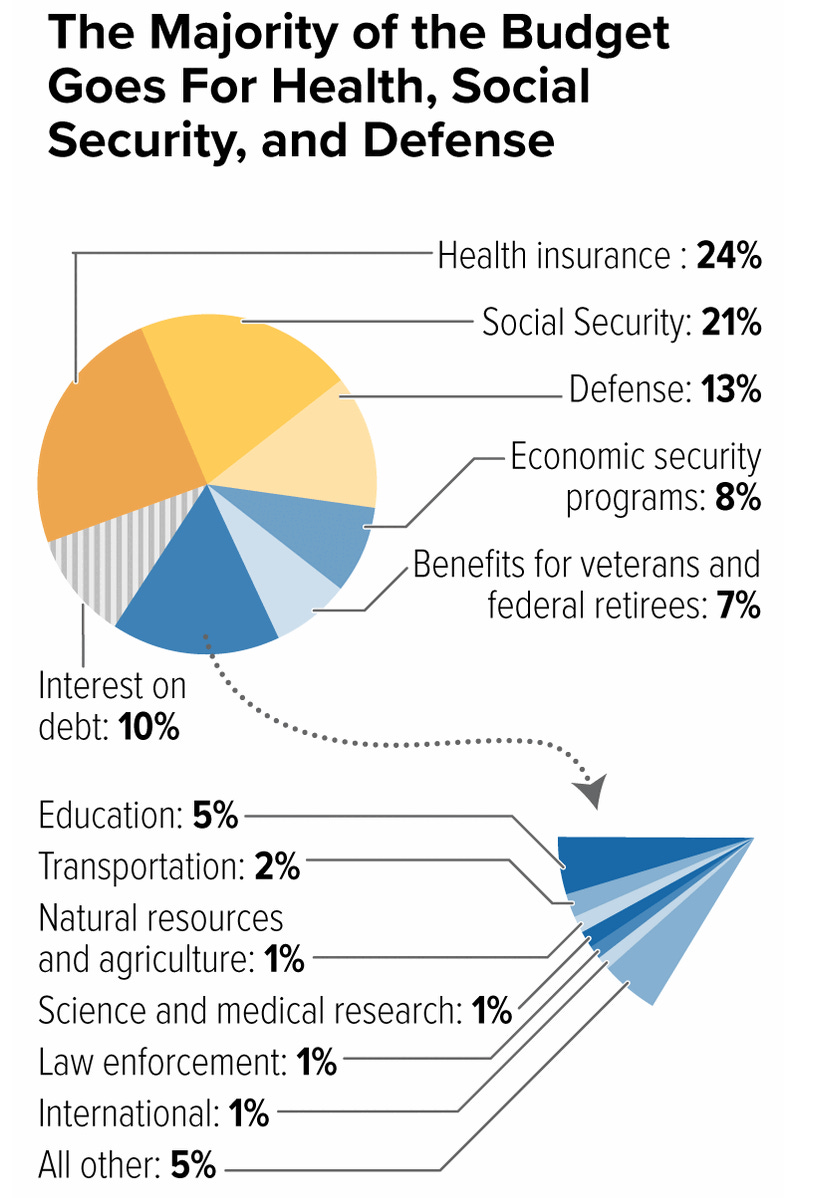
First, finding big-ticket examples of government waste is hard, because the government mostly spends money on things people want. Here’s a nice chart from the Center on Budget and Policy Priorities, showing where the money goes:
Yes, the federal government is an insurance company with an army.
Second, you shouldn’t trust claims about the budget coming from Some Guy on the Internet. You might have imagined that the world’s richest man could have a couple of fact-checkers on retainer to help ensure that he isn’t making clearly stupid assertions. But nooo.
In a barrage of posts on X Musk pushed misinformation about a more or less routine, place-holding bill that was basically a way to keep the ship of state afloat until Trump takes charge. Maybe this was in part a power play, an attempt to make Republicans in Congress show fealty to a man who clearly imagines that he’s the real president — and Trump, by meekly endorsing Musk’s position, did in fact convey the impression that Musk is leading the guy who is supposed to be in charge by the nose. But this political theater will have real consequences, for America, for Trump, and for Musk himself.
Musk has asserted that shutting the government down for a month would do no harm. And it’s true that Social Security, Medicare and Medicaid funding — which is where the bulk of the money goes — will continue. But many services people rely on will be disrupted, especially if the shutdown goes on for more than a month, which seems all too likely given Republicans’ razor-thin House majority and the dominance of misinformation in many members’ thinking.
Maybe Musk himself doesn’t expect to experience any hardship, but put it this way: I’m glad that I won’t need to renew my passport any time soon, that I don’t expect to be trying to get through airport security for a while, and especially glad that I don’t rely either on food stamps or on small business loans. For all of these things have been disrupted in past government shutdowns.
Do Musk and Trump know any of this? Almost surely not.
Beyond the specifics, my guess is that antics like the potential shutdown will do much more damage to the Musk/Trump administration than they realize. (There’s also this other guy — JV Dance or something? — but he clearly doesn’t matter.)
First, since the election financial markets have clearly been betting that Trump will do very little of what he promised during the campaign — that we won’t really have a trade war, just some minor trade skirmishes, that we’ll have symbolic deportations rather than a mass roundup of immigrants, and so on. Markets have, in effect, discounted the disastrous consequences that would follow if Trump honored his own promises.
But a government shutdown in response to completely false claims about what’s in an innocuous short-term funding measure suggests that the peddlers of misinformation are high on their own supply. Trump may really believe that foreigners will pay tariffs, that U.S. trade deficits subsidize the rest of the world, that there’s a reserve army of American workers available to fill the gaps deportation would create. I don’t want to put too much weight on the latest market fluctuations, but it is starting to look as if investors are questioning their own complacency.
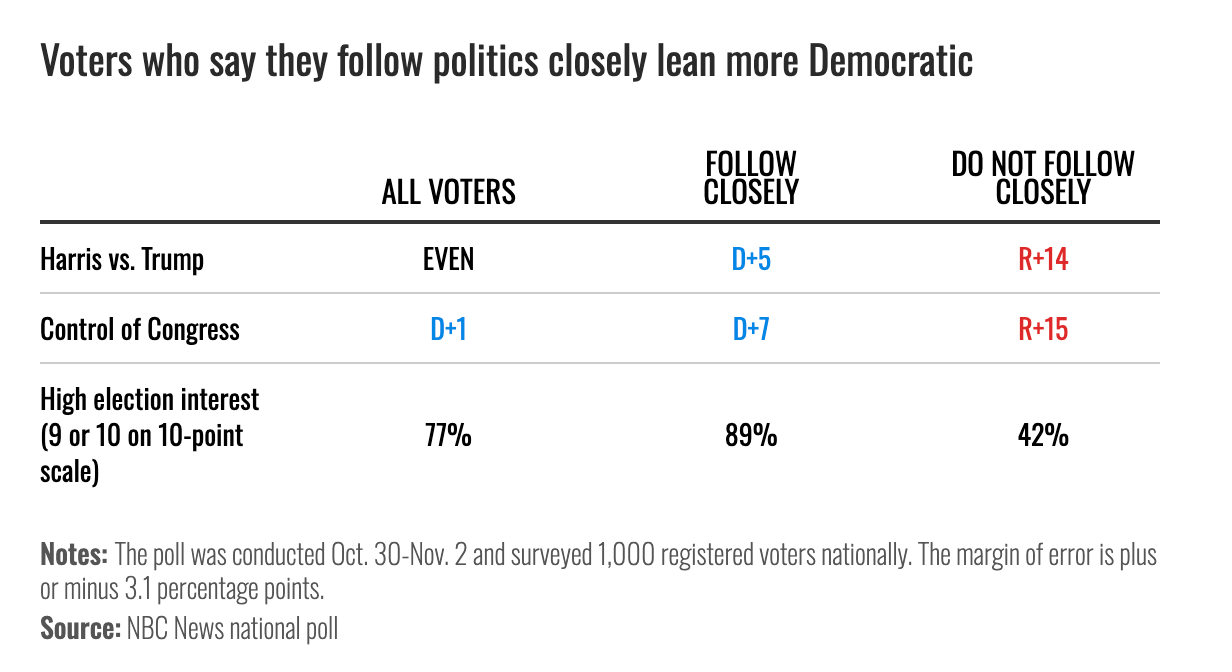
Second, many, probably most people who voted for Trump believed that he really is the character he played on The Apprentice — a highly competent manager. The other day I said that Trump was elected by low-information voters; this wasn’t a slur on Americans’ intelligence, it was a reference to survey results showing that Trump’s edge depended entirely on support from voters who don’t pay much attention to politics:
How will these voters react if, as seems all too likely, the second Trump administration is instead marked by rolling chaos?
Anyway, it’s pretty remarkable. Inauguration Day is still a month away, yet the chaos monkeys have already taken over. (snip)
has only good news for my body and for my mind, she warms them and she becalms them unlike her greek namesake who left her listeners terrified and tense ah the onomastic turnaround took twenty centuries to turn the older story on its head which explains ex-lingua why my modern body feels comfort in the new diachronic goddess


 Scottie's Playtime
