April, 16, 1971 The Internal Revenue Service (IRS) estimated over 2,000 people openly refused to pay part or all of their income tax. “If a thousand [people] were not to pay their tax bills this year, that would not be a violent and bloody measure, as it would be to pay them and enable the state to commit violence and shed innocent blood.” Henry David Thoreau on the Mexican War
April 16, 2000 Between 10,000 and 20,000 activists blockaded meetings of the World Bank and International Monetary Fund in Washington, D.C. Sitting down at intersections and locking arms to form human chains, the protesters were opposed to Bank and IMF policies that increased third-world indebtedness and did little to directly benefit the poor in those countries. “The World Bank is subjugating our economic and social independence,” Vineeta Gupta, a doctor from the Punjab in India, said in a letter he delivered to World Bank President James Wolfensohn at his home. “It is time that we shut the bank down, and this boycott is a great start.”
April 15, 1947 Jackie Roosevelt Robinson became the first African American to play in a major league baseball game in the 20th century. His stepping onto Ebbets Field in a Brooklyn Dodgers uniform broke the “color line,” the segregation of professional teams. The International League in 1887 began a wave of League-wide black exclusion, and it had been complete since 1899, when Bill Galloway became the last African-American player in white organized ball (Woodstock, Ontario). Though hitless in three at-bats, Robinson started at first base, and the Dodgers beat the Boston Braves that day, 5-3. “Jackie, we’ve got no army. There’s virtually nobody on our side. No owners, no umpires, very few newspapermen. And I’m afraid that many fans will be hostile. We’ll be in a tough position. We can win only if we can convince the world that I’m doing this because you’re a great ballplayer, a fine gentleman.”
April 15, 1967 King and Dr. Benjamin Spock lead an anti-war march to the United Nations, 15 April 1967 Amidst growing opposition to the war in Vietnam, large-scale anti-war protests were held in New York, San Francisco and other cities. In New York, the protest began in Central Park, where over 150 draft cards were burned, and concluded at the United Nations with speeches by Rev. Martin Luther King, Jr. and others. King’s opposition to the war, excerpts of his speeches and reaction throughout the country
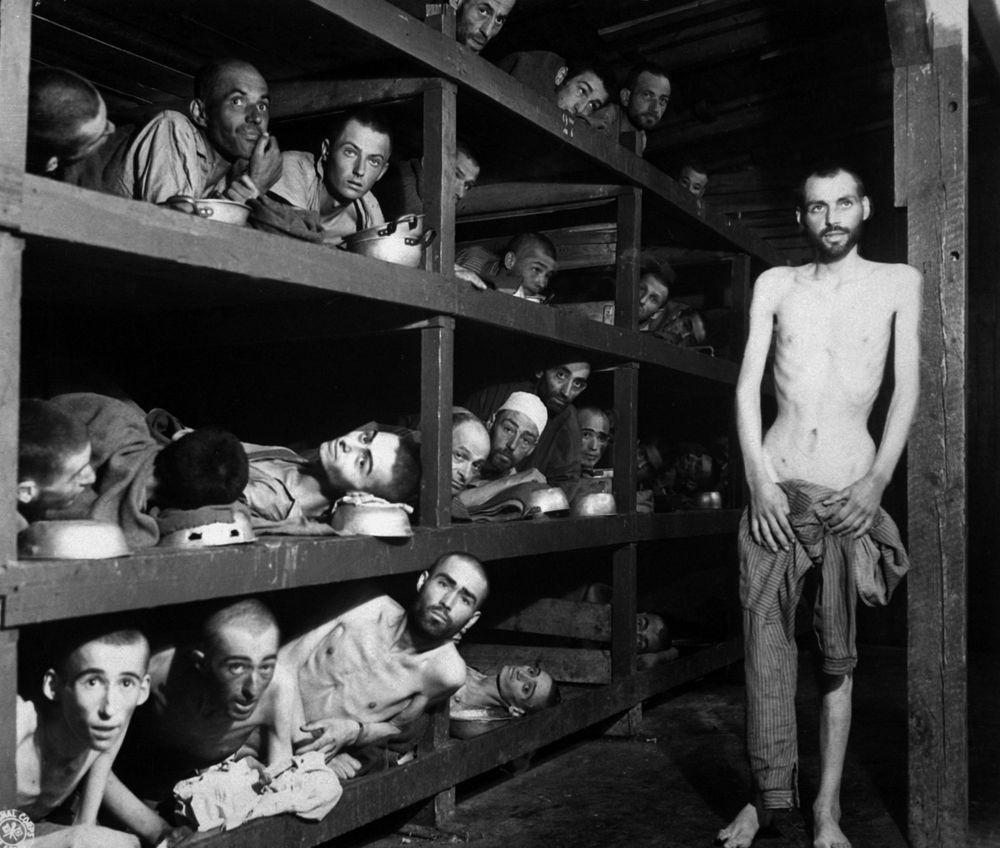
In the time since the first European man stepped foot on the soil of these shores, we have done the cringeworthy all too often, but now and again we do that which allows us to still stand tall. My father’s Uncle Dutch went to fight in WW2 and brought back pictures of the horrors of the concentration camps. We stopped that! We stood against the Fascist Nazi. And we should be proud of that.
I am sure that there were people then who believed the Jews, Gypsy’s and Gays were criminals deserving of their internment in concentration camps. I’m sure there were some who believed that Jews had no right to live in Germany. I’m sure that there some who believed that Gypsy’s were inherently criminal, whether they had a criminal record or not. I’m sure that there were some who convinced themselves that anyone who was gay was deserving of all abuse. I’m sure there were some. And, unfortunately, too many others went along with it.
Just like these German men, we will one day be forced to come face to face with what we have done, what we have allowed, because some charismatic charlatan said we should.
Karla Jay remembers joining the second night of street protests during the 1969 Stonewall uprising in New York City. For her, and for so many other LGBTQ+ people, something had shifted: People were angry. They didn’t want things to go back to normal — because normal meant police raids. Normal meant living underground. It meant hiding who they were at their jobs and from their families. They wanted a radical change.
Radical change meant organizing. Jay joined a meeting with the Gay Liberation Front, which would become the incubator for the modern LGBTQ+ political movement and proliferate in chapters across the country. At those meetings, she remembers discussing what freedom could look like. Holding hands with a lover while walking down the street, without fear of getting beaten up, one person said. Another said they’d like to get married. At the time, those dreams seemed impossible.
Jay, now 78, is worried that history will repeat itself. She’s worried that LGBTQ+ people will be put in the dark again by the draconian policies of a second Trump administration.
“Are things worse than they were before Stonewall? Not yet,” she said. “It’s certainly possible that people will have to go back to underground lives, that trans people will have to flee to Canada, but it’s not worse yet.”
The 19th spoke with severalLGBTQ+ elders, including Jay, about what survival looks like under a hostile political regime and what advice they would give to young LGBTQ+ people right now.
“We have forgotten that the laws are written to protect property and not to protect people. They’re written to protect White men and their property, and historically, women and children were their property,” she said. “To expect justice from people who write laws to protect themselves has been a fundamental error of the lesbian, gay, bisexual, trans community.”
To fight back, LGBTQ+ Americans need to organize, Jay said. That starts with thinking locally — supporting local artists, independent stores and small presses, as well as LGBTQ+ organizations taking demonstrable political action and protecting queer culture.
“See what you can do without going crazy. If you can focus on one thing and you can spend one hour a week, or you can spend one day a week, that’s much better than being depressed and doing nothing,” she said. “Because the person you’re going to help is yourself. This is the time for all of us to step up.”
Renee Imperato (far right) poses with other demonstrators during a protest outside the Stonewall Inn, after the word transgender was erased from the National Park Service’s webpage, in New York, on February 14, 2025. (Courtesy of Renee Imperato)
Renata Ramos feels obligated to share her experiences with young people.As a 63-year-old trans Latina,she wants young people to know that so many of their elders have already been through hard times — which means that they can make it, too, including during this moment.
“I’m not scared in the least. Because we have fought so many battles — the elders. We have fought so many battles, with medicine, with HIV, with marching on Washington, with watching our friends die,” she said. “It’s been one war after another in our community that we have always won. We have always been resilient. We have always stood strong. We have always fought for our truth, and we’re still here. They haven’t been able to erase us.”
As Ramos watches the Trump administration use the power of the federal government to target transgender Americans and erase LGBTQ+ history, she’s not afraid for herself. She’s afraid for young LGBTQ+ people, especially young trans people who now find themselves at the center of a growing political and cultural war. If someone transitioned six months ago, she said, they now have a target on their back — and little to no experience with what that feels like.
“They don’t know what it is like to be a soldier going into war, as far as social issues. So I fear for them,” she said. “Who wouldn’t be scared?”
Criss Christoff Smith has seen firsthand what that fear can look like. On January 28, at 3 a.m., he received a phone call from an LGBTQ+ person who was considering taking their own life. This was a stranger —someone who admired from afar Smith’s advocacy as a Black trans man and Jamaican immigrant. This was someone who had been considering a gender transition for years, Smith said, who was now feeling broken. He spoke with them for two hours.
“It’s been quite dark,” Smith said. The onslaught of policies targeting marginalized people and the turbocharged news cycle are working to keep Black and trans people in a constant state of fear and uncertainty, he said.
“I tell everyone in my community, you have to stop responding to those alerts and just try to go inward,” he said. “Find a space of peace and spirituality.”
To Smith, who is 64, looking inward can mean reflecting on what’s still here. Although the Trump administration is going to make daily life harder for LGBTQ+ people, he said, laws can’t be undone with the stroke of a pen on an executive order. LGBTQ+ Americans need to find whatever source of strength and peace they can find right now — and try to remove themselves from the daily fray as much as possible — while still finding ways to take action.
“This is the time when we really have to find community, where we really have to hone in on our spiritual feelings and try to talk to someone. Don’t keep it to yourself,” he said. Joining protests or lobbying days at state capitols are great ways to find community in-person, Smith said — to be around like-minded people and to not feel so alone.
“That’s the best space to be in, not home alone and in your feelings and in your mind, because we can get lost there thinking negatively. So we have to stay positive and stay with like-minded people, and have those people constantly around you to reassure you and just hold you tight in that space,” he said.
Protests against the administration’s hostile LGBTQ+ policies have been ongoing — including outside the Stonewall National Monument. In at least one way, history is already repeating itself.
The National Park Service deleted all references to transgender and queer people from its web page honoring the 1969 Stonewall uprising — the most well-known moment from LGBTQ+ history in the country — leaving references to only lesbian, gay and bisexual people. Hundreds gathered in New York City to protest. Among them was Renee Imperato, a 76-year-old trans woman and New York native.
“Protests like this are our survival,” she told The 19th over email. “The rhetoric of this administration is driving a violent onslaught against our community. The Stonewall Rebellion is not over. We are at war, and we are still fighting back. What other choice do we have?”
Jay, herself an old hand at joining protests and demonstrations, said that she’s been afraid before every one of them. She’s lost sleep the night before and feared for her safety — but she did it anyway.
“I’m afraid I’ll be beaten. I’m afraid I’ll be arrested. But if you don’t do something even though you’re afraid, they win,” she said.
April 14, 1947 Segregation of Mexican-American children, common in California at the time, was declared unconstitutional by the Federal Appeals Court for the Ninth Circuit. Suit had been brought against several school districts in Orange County by Gonzalo Méndez and several World War II veterans. Separate schools for those of Mexican parentage was struck down in Méndez et al. v. Westminster School District: “ . . . commingling of the entire student body instills and develops a common cultural attitude among the school children which is imperative for the perpetuation of American institutions and ideals. It is also established by the record that the methods of segregation prevalent in the defendant school districts foster antagonisms in the children and suggest inferiority among them where none exists . . .” Sylvia Mendez Mendez v Westminster History
April 14, 1968 A massive student rally in West Berlin blocked the city’s main thoroughfare, the Kurfurstendamm. It ended in violent clashes between police and the marchers. The students were protesting the shooting a week earlier of one of their leaders, Rudi Dutschke, outside the offices of the German Socialist Students Federation (SDS). Read more
April 14, 1988 The Soviet Union signed an agreement pledging to withdraw its troops from Afghanistan after nearly ten years. The pact, drawn up in negotiations between the United States, the USSR, Pakistan and Afghanistan, was signed at a United Nations ceremony in the Swiss capital of Geneva. Entertaining and basically factual story of what pushed the Soviets out of Afghanistan
April 14, 1988 Denmark’s parliament, the Folketing, insisted that foreign warships affirmatively state whether or not they carry nuclear weapons before being allowed to enter Danish ports. Previously, their non-nuclear policy had not been enforced and such weapons were routinely carried on nuclear-capable NATO ships visiting Denmark. U.S. and other allies had abided by a policy known as “neither confirming nor denying” (NCND). Denmark’s Folketing The policy and its consequences
April 13, 1919 Socialist, pacifist, and labor leader Eugene V. Debs was imprisoned for opposing U.S. entry into World War I. While in prison, he received nearly one million votes for President in the 1920 election (as he had in 1912). All aspects of Debs from the Eugene Debs Foundation
April 13, 1919 In Amritsar, holiest city of the Sikh religion (in India’s Punjab province), British and Gurkha troops fired without warning and killed at least 379 and wounded another 1200 Sikhs meeting in a park known as Jallianwala Bagh to celebrate their new year’s festival of Baisakhi Mela.In the previous three days, two key Sikh leaders had been deported, Mohandas Ghandi had been barred from entering the Punjab, and a general strike and demonstration had been met with deadly fire from British troops, sparking violent reaction. Background of the Amritsar massacre
April 12, 1935 60,000 students across the U.S. took part in the first nationwide student strike. The protest was against fascism and participation in any war. Posters from the anti-war movement of the 1930’s One of the events that day
April 12, 1963 Martin Luther King, Jr. and his fellow ministers Fred Shuttlesworth and Ralph Abernathy, along with 60 others were arrested on Good Friday in Birmingham, Alabama, for marching downtown. They had been denied a parade permit, and were violating a court order banning them from all protest activities. Public Safety Commissioner Theophilus Eugene “Bull” Connor had sought the injunction to put an end to a series of sit-ins, kneel-ins, boycotts and other nonviolent actions designed to challenge the local and state segregation laws. Fred Lee Shuttlesworth (left), Ralph David Abernathy (center), and Martin Luther King Jr. (right) march on Good Friday on April 12, 1963, in Birmingham. The Birmingham campaign of 1963 Arrest in Birmingham
April 12, 1971 Protest at Fessenheim The first European demonstration against nuclear power brought together 1300 peacefully to oppose construction of a nuclear power plant at Fessenheim, on the Rhine in the Alsace region of France. The four 900 megawatt reactors have been in operation since 1977.
The two quotes from the article I added just below what I am writing give away the Fundamentalist Christian republican’s goal, which is to make those people they disagree with, that they hate, disappear from society. Their goal by taking LGBTQ+ media out of schools is to make it appear that all kids are straight and cis. No one can be different from them or their beliefs. Everyone must walk lockstep with them, their way is the only way people can live. Holy dictators. Their goal is to erase anyone different from them from the public view, from society. We must not let them do that. Hugs
A controlled production of “knowledge” maintains the marginality of other groups, and it denies exposure to multiple perspectives.
The institutionalization of a hegemonic norm functions to legitimize what can be said, who has the authority to speak and be heard, and what is authorized as the truth.
Former President Donald Trump speaks about border security at a rally at Million Air, a private airplane terminal at Austin-Bergstrom International Airport, Friday October 25, 2024.
“When someone with the authority of a teacher describes the world and you are not in it, there is a moment of psychic disequilibrium, as if you looked into a mirror and saw nothing.”-Adrienne Rich
The United States Supreme Court has agreed to hear a case that could possibly perpetuate the “psychic disequilibrium” that Adrienne Rich laments.
Trump’s Department of Education called the suggestion that rightwingers are trying to ban book a “hoax.”
The case arose from conflicts between those in favor of teaching LGBTQ+ topics in schools and those who believe in so-called parents’ rights on religious grounds when it comes to the education of their children. The case stems from some parents’ concerns about a policy sanctioned by the Montgomery County Board of Education requiring new elementary school storybooks covering LGBTQ+ topics that could be read in class.
One of the contested books is titled “Pride Puppy!” and is about a puppy who gets lost in the crowd during an LGBTQ+ Pride parade.
When the policy first passed, parents could opt their children out of the curriculum, but later, the board reversed that part. In this demographically diverse school district, some Christian and Muslim parents, in particular, objected. I wonder, though, whether they think parents should be allowed to opt their children out of reading age-appropriate stories about Jewish or Asian people, for example.
This case harkens back to one of the earlier curricular programs created in 1991 by the New York City Board of Education. The Children of the Rainbow Curriculum was introduced to first-grade teachers to “assist with teaching about multicultural social issues.” The board developed the program to counter the increase in hate crimes directed against members of marginalized communities.
The curriculum contained 443 pages of suggested readings, activities, and other lectures, all designed to help teachers promote academic and social skills while teaching about diversity.
Unfortunately, the section on families that covered LGBTQ+ people incited enormous criticism. Some opponents argued that it promoted sex and sodomy to kids.
The battle gained significant publicity, and the New York City Department of Education ultimately voted against accepting the entire Children of the Rainbow Curriculum.
And the moments of psychic disequilibrium continued.
Surplus Repression & Anti-Knowing
Of course, parents and other adults have the inherent responsibility of protecting young people from harming themselves and being harmed by others and of teaching them how to live and function in society within our ever-changing global community.
In Freudian terms, we must develop a balance between the individual’s unrestrained instinctual drives and that person’s restraints (repression) on these drives in the service of maintaining society (civilization) and sustaining the life of the individual.
Nonetheless, we must establish a line demarcating protection from control, teaching from oppression, and minimal and fundamental repression from what Herbert Marcuse terms “surplus repression” (that which goes over and beyond what is necessary for the protection of the individual and the smooth functioning of society and enters into the realm of domination, control, and oppression).
Authorizing the “truth”
When I think back on all the crap I learned in high school
It’s a wonder I can think at all
And though my lack of education hasn’t hurt me none
I can read the writing on the wall.
Paul Simon laments in his song “Kodachrome” that his education consisted of neutralizing, meaningless content. “Everything looks worse in black and white,” he sang of the whitewashing of his lessons.
Metaphorically, most schools teach only in black and white, whereas most students want the array of colors Paul Simon wished for: “Those nice bright colors: the greens of summers, makes you think all the world’s a sunny day, oh yeah.”
Unfortunately, Simon’s educational system took his Kodachrome away: the camera film that captured the full spectrum of the rainbow from the brightest reds, oranges, and yellows, to the darkest blues and browns and deepest purples.
Schools across the nation are attempting to function amidst increased book banning and control of course content by state legislatures under the false flag of “parental rights.” It’s all part of the current tide of right-wing takeovers of educational systems.
People on the political right transform terms like “woke” and “diversity, equity, and inclusion” into hate-filled and frightening epithets. In the process, they have driven us away from the underlying purpose of education.
The term “education” is derived from two Latin roots: “e,” meaning “out of,” and “ducere,” meaning “to lead” or “to draw.”
In its original translation and intent, education includes the process of drawing knowledge out of the student or leading the student toward knowledge. This is in contrast to the placing or depositing information into what some educators perceive as the students’ waiting and docile minds, or what the Brazilian philosopher and educator Paulo Reglus Neves Freire termed “the banking system of education.”
Surrounding forces – religion, parenting, schooling, and other types of socialization – often inhibit the maintenance of critical thinking facilities in young and old alike.
Let us take, for example, the Biblical warning in Genesis 2: 16-17, related to the story of the Tree of Knowledge of Good and Evil in the Garden of Eden: “And the Lord God commanded the man, saying, ‘Of every tree of the garden thou mayest freely eat: But of the tree of the knowledge of good and evil, thou shalt not eat of it: for in the day that thou eatest thereof thou shalt surely die.’”
The apples on that tree represent knowledge. When eaten, this “forbidden fruit” unlocks levels of knowing that can more than overturn the apple cart. But more importantly, it can give the knower a full-color spectrum of the workings of the world. We are encouraged, nonetheless, to think only in the black and white determined by those in power.
Figures like the biblical Eve and Greek Pandora, women, are blamed for the downfall of “man.” In fact, they were strong women who refused to be trapped under the thumbs of the patriarchy.
Additionally, the ancient Greek legend of Prometheus casts a cautionary tale on the gifting of knowledge. The chief of the gods, Zeus, punished him for offering mortals the best of the sections from a slaughtered cow while giving the gods the remaining fat and bones.
After an infuriated Zeus took back fire from humanity, Prometheus stole and returned it to mortals, thus turning the darkness from the spectrum of black and white to technicolor once again.
For Prometheus’ crime of returning light and knowledge to humankind, Zeus had Prometheus chained to the Caucasus Mountains and sent an eagle to eat his immortal liver every day, which grew back every night.
Literature and cinema likewise warn of the horrific and often fatal risks of challenging the limitations placed by the powerful on the accumulation of knowledge.
The first film in the “Planet of the Apes” franchise, released in 1968, can be understood as a recreation of the legend of Prometheus. A U.S.-based crew crash land their space vehicle on a strange planet in the distant future amounting to nearly 2000 years advancement on Earth, as they traveled at the speed of light.
The crew, led by Taylor – the Prometheus character – discover that the planet is ruled by a species of apes who possess what to the Earthlings appear as human-like qualities, including speech, high reasoning, and cultural artifacts such as museums, medicine, constructed homes, a judicial system, and written religious and governing scrolls.
A community of humans on this planet, on the other hand, lacks the facility of speech and operates on an animal-like intellectual level. The apes hunt, enslave, and murder humans to keep them from invading their gardens and stealing food and to use them in medical and psychological experiments.
Taylor rebels and protests his treatment by challenging the hierarchical ranking of apes over humans. Two apes listen to Taylor and befriend him, Zira and Cornelius, and they eventually come to believe that what they have been socialized to accept as factual was somehow manipulated and falsified.
Blond-furred Dr. Zaius (Zeus), Minister of Science and Chief Defender of the Faith, knows the truth regarding the origins of his species and the rise and fall of humans through industrialization and the power of the atom, which terminated life as it had been once known. His primary objective has been to keep the fire of “knowledge” away from his ape community and humans.
He attempts to destroy any artifacts and other remnants of pre-nuclear holocaust human society to keep alive the myth of perennial simian superiority. Knowledge, therefore, represents overturning the proverbial apple cart, undermining origin myths, and challenging hierarchal positionings.
These genesis/origin stories are examples of the concept of “hegemony,” a term coined by social theorist Antonio Gramsci to describe the ways in which the dominant group successfully disseminates dominant social realities and social visions in a manner accepted as common sense and part of the natural order.
This controlled production of “knowledge” maintains the marginality of other groups, and it denies exposure to multiple perspectives.
The institutionalization of a hegemonic norm functions to legitimize what can be said, who has the authority to speak and be heard, and what is authorized as the truth.
This was certainly the case in Nazi Germany. In 1933, Nazi stormtroopers invaded, ransacked, and closed The Institute for Sexual Sciences in Berlin, founded by Dr. Magnus Hirschfeld, a Jewish and homosexual sexuality researcher. The Institute conducted early sexuality research and was a precursor of the Indiana-based Kinsey Institute in the United States.
Storm troopers carried away and torched over 10,000 volumes of books and research documents calling the Institute “an international center of the white-slave trade” and “an unparalleled breading ground of dirt and filth.”
Soon thereafter, Nazis and conservative university students throughout Germany invaded Jewish organizations and libraries, confiscating books they deemed “un-German.”
The German Student Association (Deutsche Studentenschaft) declared a national “Action against the Un-German Spirit.” On May 10, 1933, students and Nazi leaders across Germany set ablaze over 25,000 volumes. Joseph Goebbels, the Reich Minister of Propaganda, fired up the Berlin crowd of over 40,000 sympathizers by declaring, “No to decadence and moral corruption. Yes to decency and morality in family and state.”
In 2018, we witnessed anti-LGBTQ+ Christian crusader Paul Dorr check out four LGBTQ+-inclusive children’s books from the Orange City, Iowa Public Library and burn them in a 27-minute October 2018 video diatribe on Facebook. – Dorr is the founder of Rescue the Perishing, a group “contending against moral evil to advance the Kingdom of Christ.”
The books in question were Two Boys Kissing, by David Levithan; Morris Micklewhite and the Tangerine Dress, by Christine Baldacchino; This Day In June, by Gayle E. Pitman; and Families, Families, Families!, by Suzanne and Max Lang.
In his video rant, Dorr argued that Two Boys Kissing was “designed to get 12-to-13-year-old boys to start having homosexual sex together.”
The fight for all the colors
To build off of Pastor Martin Niemöller’s famed poem:
First they came for Leaves of Grass, and I did not speak out — Because I was not gay.
Then they came for Stone Butch Blues, and I did not speak out — Because I was not a transgender person.
Then they came for Critical Race Theory and Beloved, and I did not speak out — Because I was not Black.
Then they came for Maus, and I did not speak out — Because I am a Christian and not a Jew.
Then they came for books representing my experiences and identities — and there was no one left to speak out for me.
Subscribe to the LGBTQ Nation newsletter and be the first to know about the latest headlines shaping LGBTQ+ communities worldwide.
April 11, 1916 Annie Besant, founder of the India Home Rule League and publisher of New India. Annie Besant, a Briton and active suffragist who moved to India, established the Home Rule League with autonomy for India from British colonial rule as its goal. Head of the Theosophical Society of India, she was also the publisher of the newspaper, New India, and CommonWeal. More on Annie Besant
April 11, 1961 The trial of Nazi war criminal Adolf Eichmann began in Israel. The man accused of leading Hitler’s effort to exterminate the Jewish people and others faced 15 charges, including crimes against humanity, crimes against the Jewish people, and war crimes, all of which took more than an hour to enumerate. Adolf Eichmann The charges against Eichmann
April 11, 1968 The Civil Rights Act of 1968 was signed into law by President Lyndon Johnson just one week after the assassination of Reverend Martin Luther King, Jr. Known as the Fair Housing Act, it first outlawed discrimination in the sale, rental or financing of housing and now bans it for reasons of race, color, national origin, religion, sex, familial status, or handicap. The struggle for Fair Housing
April 10, 1516 In what was the first ghetto, Jews in Venice, Italy, were forced to live in a specific, restricted area of the city known as Campo del Ghetto Nuovo. The word “ghetto” comes from the Venetian word “geto,” meaning foundry. Prior to becoming an exclusively Jewish neighborhood, the Venice ghetto was the site of a foundry. After its establishment the city’s Jews, who were allowed to attend to their business during the day (though required to wear a yellow badge or scarf indicating their religion), were forced to return to the ghetto where gates were locked to keep them inside overnight. Venice also restricted the living quarters of Germans and Turks, all to satisfy the demands of the Roman Catholic Church. The site of the Ghetto Nouvo today
April 10, 1971 Ninety-year-old Jeannette Rankin, the first female member of Congress (R-Montana), and the only one to vote against U.S. entry into both World Wars, led 8000 in protest of the Vietnam War in a women’s peace march on the Pentagon.
April 10, 1972 Charlie Chaplin received an honorary Oscar for “the incalculable effect he has had in making motion pictures the art form of this century.” The British native’s political views had previously been criticized, as had been his failure to apply for U.S. citizenship. Pressed for back taxes and accused of supporting subversive causes during the McCarthy era, Chaplin left the United States in 1952.Informed that he would not be welcomed back, he retorted, “I wouldn’t go back there if Jesus Christ were president.” He returned briefly from exile, however, to accept this award and received the longest standing ovation in Academy Award history, lasting a full five minutes. Charlie Chaplin, one of PBS’s American Masters
April 10, 1981 The United Nations Convention on Certain Conventional Weapons (also known as the Inhumane Weapons Convention) started gathering signatures of nations willing to abide by its limitations. Currently, 109 countries have agreed to ban or limit munitions that cause unnecessary or unjustifiable suffering to combatants, or affect civilians indiscriminately. So far the restrictions cover mines, booby traps, incendiary weapons (such as Napalm) and blinding laser weapons. This Life photograph of a naked child running down a street in Vietnam screaming in agony captures the effects of Napalm. Nick Ut’s photograph of Kim Phuk, taken in 1972, won the Pulitzer Prize ( Associated Press). Not all country signatories have agreed to all its provisions How militaries think about incendiary weapons
April 10, 1994 France, Belgium, the U.S., among other countries airlifted their nationals out of Rwanda as the wholesale slaughter of Tutsis at the hands of the Hutu majority proceeded. Rwandan employees of Western governments were left behind. The International Red Cross was already estimating the death toll in the tens of thousands.
April 10, 1998 The Northern Ireland peace talks ended with an historic accord—called the Good Friday Agreement—reached after nearly two years of talks and 30 years of conflict. Former U.S. Sen. George Mitchell (D-Maine) was chair of the talks which established a Northern Irish Assembly for both the Irish Catholic republicans and the British Anglican unionists. Senator George Mitchell