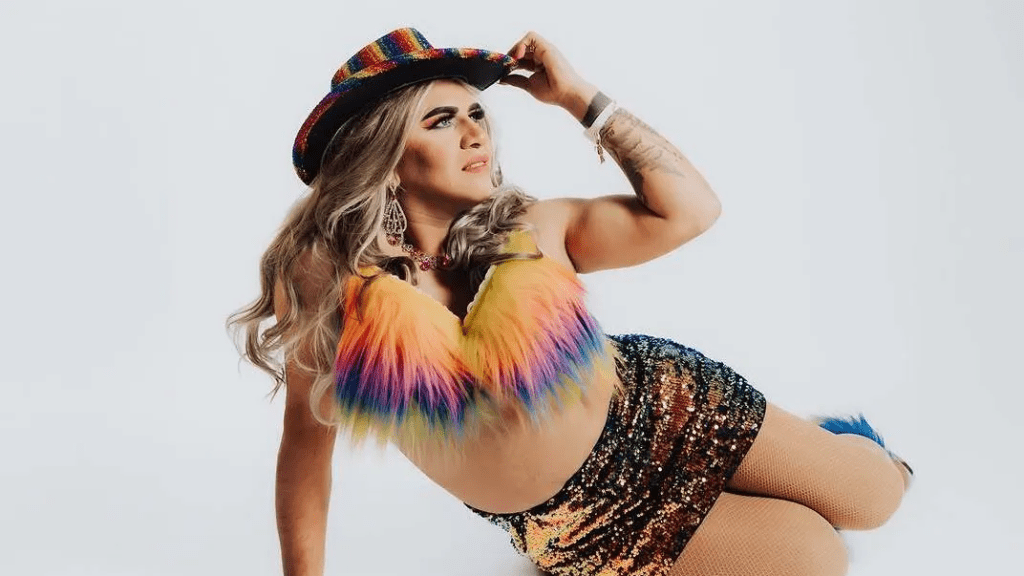
Community activists in San Francisco are rallying to support Hilary Rivers, an immigrant drag queen who was arrested by ICE agents after an asylum hearing nearly two weeks ago — one of the latest LGBTQ+ victims of the Trump administration’s campaign for mass deportations.
Rivers fled his home in Guatemala due to “traumatic and severe” persecution for being gay, as the San Francisco Chronicle reported last week. (His legal name is not being widely reported to protect his confidentiality, advocates told the nonprofit news platform 48Hills.org shortly following the drag performer’s arrest.) On June 26, Rivers attended a scheduled asylum hearing, where the government’s motion to dismiss his case was denied; Rivers was then arrested by ICE agents as he left the courtroom. That combination — in which the government attempts to dismiss an asylum case, then immediately arrests the asylum seeker for deportation — has become an increasingly common tactic for U.S. immigration police in the past several months, and one that is sometimes conducted with cooperation from courthouses themselves. (snip-MORE)
Transgender pilot Jo Ellis was falsely accused of killing 67 people earlier this year — and unfortunately, she isn’t alone: right-wing hoaxers have blamed trans people for at least 12 incidents of violent death in the U.S. since 2022, according to a new analysis in Wired.
Ellis, a part-time pilot in the Virginia Army National Guard, filed suit against right wing influencer Matt Wallace in April, after Wallace shared false claims that Ellis was responsible for the January helicopter crash at Ronald Reagan International Airport that killed dozens. The crash was later determined to be an accident caused by years of poor safety practices at the airport. But Ellis soon found herself on the receiving end of right-wing hatred thanks in part to people like Wallace, who posted on Elon Musk’s X platform that the crash “may have been another trans terror attack.”
Wallace has since deleted the post about Ellis, as Wired noted. But the key word in that post was “another.” In the past two years, right-wing disinformation accounts — such as Chaya Raichik’s “Libs of TikTok” — have spread similar false accusations against trans people on at least a dozen occasions, according to Wired’s analysis of news reports across that period. (snip-MORE)
I know in the last few days I have posted a lot of what I think is important stuff. But if you have ever wanted to hear a grand response to a hate preacher calling for the death of gay people then you need to watch this video. The reverend is as upset and agitated as I have ever seen him. He not only debunks the hate preachers arguments but uses the verses before and after to show how wrong people that use that to hate on gays are. Hugs.
With little discussion, Pittsburgh City Council on Tuesday unanimously passed three bills intended to provide further safeguards to LGBTQ Pittsburghers.
Councilor Barb Warwick introduced the bills at the end of June to extend more protections to the local queer community.
Two of the bills were designed to de-emphasize enforcement of any future law restricting the LGBTQ community from participating in otherwise legal activities and create avenues for reporting medical discrimination.
The first bill prohibits the withholding or denial of “elective medical care which would normally be provided to a person, but for that person’s real or perceived gender identity or expression.”
For example, if a medical provider denied breast augmentation surgery to a trans patient on the basis of their gender identity, residents could report the provider to the city’s Commission on Human Relations.
The second bill aims to pre-emptively shield the LGBTQ community against being barred from society by future federal legislation by directing the city to de-prioritize enforcement of such a ban or restriction.
A third bill lessens the legal penalty for engaging in sex work from a misdemeanor to a summary offense. Warwick and other advocates say LGBTQ individuals have been disproportionately affected by such arrests. They say this measure will help the queer community and other vulnerable workers to not be targeted, and come forward to law enforcement if they need help without fear of persecution.
“Whether it’s proactively making sure that we are not criminalizing being trans, or making sure trans people have access to the health care that they need or not being discriminated against by our largest medical providers, and also making sure that folks who are doing survival sex work on the street are not being persecuted and thrown in jail, but they’re actually being cared for and getting the services that they need — these are all good things, right?” Warwick said.
“These are things that make Pittsburgh safer and really help protect our most vulnerable.”
Julia Maruca reports on Pittsburgh city government, programs and policy. She previously covered the Westmoreland County regions of Hempfield and Greensburg along with health care news for the Tribune-Review.
Ohio Republicans split the Ohio Equal Rights Amendment into two separate ballot issues.
One issue addresses overturning Ohio’s same-sex marriage ban, while the other expands anti-discrimination protections for LGBTQ+ individuals.
This move requires proponents to collect double the signatures or sue the Ohio Ballot Board.
Ohio Republicans added another hurdle for proponents of a measure to overturn Ohio’s dormant ban on same-sex marriage and expand anti-discrimination protections for LGBTQ residents.
In a party-line vote, Ohio Ballot Board divided the Ohio Equal Rights Amendment into two issues: one to overturn a 2004 vote that defined marriage as between one man and one woman and another that would prohibit state and local government from discriminating against more than a dozen protected groups, including transgender Ohioans.
To make the ballot, proponents will either have to collect double the number of signatures to get both proposals approved or sue the Ohio Ballot Board to overturn its decision. Backers are eyeing the 2026 ballot at the earliest, said Lis Regula, a member of Ohio Equal Rights’ leadership committee.
During the July 9 meeting, the ballot campaign’s attorney Corey Colombo argued that the proposed constitutional amendment was one issue because it encompassed equal rights for all Ohioans.
But Republicans contended that transgender issues and marriage equality are two different things with two different levels of support from voters.
While Ohioans might support marriage between any two people in the Ohio Constitution, “they may not want to support creating 12 new protected classes under a bunch of different circumstances,” said Ohio Secretary of State Frank LaRose, a Republican who leads the Ohio Ballot Board.
Rep. Terrence Upchurch, D-Cleveland, said Republicans divided the measure because of politics. “It’s one issue. It’s cut and dry.”
“There’s definitely political will for using trans people to divide Ohioans,” Regula said. “The hopeful side of me appreciates that they are recognizing the support for same-sex marriage. That’s great. We’ve made progress. We still have progress to make.”
What is the Ohio Equal Rights Amendment?
If approved by voters, the Ohio Equal Rights Amendment would prohibit state and local government from discriminating based on: “race, color, creed or religion, sex, sexual orientation, gender identity or expression regardless of sex assigned at birth, pregnancy status, genetic information, disease status, age, disability, recovery status, familial status, ancestry, national origin or military and veteran status.”
The sweeping measure would expand the list of protected individuals far beyond the national Equal Rights Amendment, which aims to prohibit discrimination based on sex. Ohio ratified that amendment in 1974, but it has not been recognized as part of the U.S. Constitution because of missed deadlines and other disputes.
The proposal would also overturn a 2004 vote that defined marriage as between one man and one woman.
This language has been dormant since a 2015 U.S. Supreme Court decision led by Ohioan Jim Obergefell legalized gay marriage in America. As of 2023, Ohio had 22,400 same-sex married couples, according to the most recent federal census data.
“Marriage equality has been going strong now for 10 years, and the sky hasn’t fallen. Society hasn’t collapsed,” said Senate Minority Leader Nickie Antonio, D-Lakewood. “What happened is you have families who have standing, whose children can feel good and talk about their families just like every other kid at school, no matter what the configuration of their family is.”
But proponents of marriage equality worry that the Obergefell decision could be overturned by an unfriendly U.S. Supreme Court. “I think it is reasonable to believe that it is under threat,” said Regula, citing the language used in the decision overturning Roe v. Wade.
What are the arguments for and against this measure?
“Those discriminatory laws make Ohio less of a welcoming place and make it a place where fewer people are interested in coming,” Regula said.
Opponents say these are losing issues at the ballot box.
“To bring such an unpopular constitutional amendment like this forward is one, shockingly appalling, but also really dumb after Sherrod Brown just lost his Senate seat over these issues,” said Aaron Baer, president of the Center for Christian Virtues.
Republicans crafted attack ads against Brown for voting against amendments that would have stripped funding from schools and colleges that allowed transgender girls to play in women’s sports.
“I have a hard time seeing them get a lot of traction with this,” Baer said. CCV was a driving force behind the 2004 constitutional amendment to ban same sex marriage in Ohio.
What happens next?
The group looking to put the Ohio ERA before voters faces a tall task. If they want voters to approve both measures, they must collect an additional 1,000 valid signatures for each proposal, go before Ohio Attorney General Dave Yost for initial approval and return to the ballot board.
Then, proponents would have to collect at least 413,487 valid signatures, or 10% of votes cast in the most recent governor’s race, for each measure or 826,974 in total. Those signatures must meet a minimum threshold in half of Ohio’s 88 counties.
“While I applaud the spirit of the work that they are trying to do, I just think it’s a real uphill battle that they’re going to be faced with,” said Antonio, the state’s first and currently only openly gay lawmaker.
For more than a decade, Antonio has repeatedly introduced the Ohio Fairness Act to prohibit discrimination based on sexual orientation or gender identity. The GOP-controlled Legislature has not moved forward on the fairness act.
Antonio said a legislative fix is still the right path for protections against LGBTQ discrimination.
“I struggle with asking the majority of people, the majority of the population, to grant equality by a vote to a marginalized group,” Antonio said. “I will continue to fight for the Ohio Fairness Act, because I think it’s the right thing to do.”
Reporter Laura A. Bischoff contributed to this article.
State government reporter Jessie Balmert can be reached at jbalmert@gannett.com or @jbalmert on X.
that according to my email from WordPress on 7/10/24, I was added as an author on Scottie’s Playtime. My mission, as I understood it, is to post some posts often to keep the blog lively while Scottie recuperated from a thing, to keep track of and acknowledge/reply to comments, to thank other bloggers who link to us, and to make sure that readers who feel marginalized know we see them and want to see them here at Playtime. Scottie has the blog mission statement linked up above. I hope I’ve been doing that, and I’m so complimented by Scottie’s continuing support of the stuff I do here. I always want to make sure everyone knows I’m an old woman ally who has plenty of free mom hugs, and I also make some excellent chocolate chip cookies that are not only excellent, but healthful, and I love to share. All are welcome here.
I am up for suggestions on material, too! I’ve been posting the Peace & Justice newsletters here for a year, so they will be becoming redundant. I’m wondering about culling a little something from each one, and maybe posting them weekly, though I’m not adverse to continuing as I am. The one thing about it, some of their links are no longer active, so I’m able to search for newer info and use those links, but otherwise, the newsletters are much the same each year. (I’ve been reading and sharing them since 2002. Not here since then, but other places.😄)
I’ve really been enjoying the Queer History Substacks! I like some lusty language with my facts. However, is there something I can do to make those easier on readers? Let me know!
So, again, I’m humbly pleased that Scottie lets me post here on his blog, and is so supportive of it. I hope to continue for at least the upcoming year, and am always up for suggestions. And comments. And chocolates.
Let’s start with the grifter in chief. I am old enough to remember when the office of president had a grave dignity that each resident of the office did their best to uphold. Now we have a carnival barker in the overall office using the presidency to hawk everything he can think of to separate his cult rubes from their money to make him profit. The presidency has become not a job to guide the nation but a profit seeking center of a crime family. But right wing media crowed non-stop about the Biden crime family over an alleged 20 thousand dollar payment. Meanwhile it was reported that tRump made almost 600 million in just the time he has been in office on a crypto scheme. And no one is stopping him. So much for the emolument clause of the constitution. Hugs
And speaking of hate for those no white …. what is the death of brown children worth these days compared to billionaires getting a tax cut to keep more money they will never need other than to claim to have it. Hugs.
It was all about not having a ship named after a gay navy hero because to these bigots somehow gay means weak. However some of the greatest military heroes are members of the LGBTQ+ community. They just needed the cover of claiming these other ships would be renamed also. There is no inclusion and diversity with these white supremacist haters. If someone thinks different from them, looks different from them, or has a different religious view from them that person must be destroyed by them. Such a person is a threat to them. Weird way to think. Hugs
Let’s talk about the attempt to whiten the US. That is what the entire goal is. It is not about removing criminals as the government just gave two convicted traffickers felon gang members asylum for at least one year and removed from jail just so they could accuse an innocent man the government deported “by accident”. These concentration camps and ICE actions are because people like Stephen Miller hate anyone not white especially if they speak Spanish which Miller can not understand which makes him sure that they are insulting him. It is about older white people scared that the brown people will do to the whites what they did to the brown people while they were in charge. Hugs
Add in the capitalist all the profit must be for us people who hate for a democratic socialist that wants to make live better for the lower incomes, along with the Christian freak out the man is Muslim claiming he will install his religious laws instead of theirs on the public, and the weirdest right wing shit like he will authorize killing all Jewish people and go on a terrorist campaign on the city, but the worst thing is corporate democrats are terrified to support the elected Democratic Party nominee because their corporate over lords don’t like he is going to do stuff for the public, for the people instead of shifting all possible profit to the wealthy like the corporate Democratic Party leadership republican lite members. Hugs
It’s rather telling that they’ve chosen to go after CNN, and NOT Apple nor the app creator. If they were serious, they’d attempt to stop it immediately by going after the app creator first and then Apple for allowing it to be available in their App Store and compatible with their iOS. (Apple could install a patch that would hinder the app.)
This is clearly about intimidating, censoring & controlling the media, and the fat fascist is just itching to destroy one of these entities.
tRump and crew do not care how many people lose their coverage. They claim those “able-bodied people” should get a job so they have healthcare. That is how out of touch most wealthy republicans are if they honestly believe that companies routinely offer health care now. Most companies either don’t or have strict requirements to qualify. The thing is republicans have been trying to cancel health care of the public, for the people since forever. Look how many times they tried to repeal the ACA / Obama care. This bill they just passed will let them roll back the subsidies and throw millions off the ACA rolls. Why? Because they don’t care, they got their healthy care so you can fuck off as it costs profits. You’re not wealthy enough to pay for care yourself than you don’t need or deserve it. Just suffer and then slink away and die. Hugs
This is the person who the cult felt was so much smarter and better than Joe Biden? I often ask how his cult could be taken in by him and the reply comes back “he speaks like we do, he hates who we hate”. WTF. Hugs
With all that is happening it is hard to keep up but we are in the land of nonsense where people with the least understanding of a subject override the advice and judgment of experts. Real scientists make judgments based on medical data / studies while these people run on emotional high that conspiracies give them. Dunning-Kruger effect. Hugs
At what point can we start calling and admitting tRump is not acting as a president of the US but as an authoritarian dictator trying hard to cement his power / authority to crush any dissent. When will our eyes be opened wide enough to see that time is short to stop the erosion of our rights and due process. The Democratic Party is not doing enough to get the message out. Hugs
As was widely reported during the 2022 and 2024 elections, hundreds of seasoned local and state election officials fled their jobs due to threats of violence by the cult. The statement below is from the Democratic Association of Secretaries of State.
So this guy who never served in the military and has no background in law enforcement will lead the army and the ATF, but is convinced he alone is smart enough and needs no help? No I think what this is about is they don’t want the civilians to find out planes to illegally use the military and to either try to stop it or tell people about it. Think on it, tRump wants complete unfettered control to use the military / Army to enforce tRump’s decrees. Maybe his taking over local or state elections apparatus to declare republicans
won when they clearly did not, to enforce voter suppression acts, or simply to back him as he demands a third
On Friday, Driscoll notified the 115 members of the Civilian Aides to the Secretary of the Army program, or CASA, an all-volunteer group that serves as the secretary’s eyes and ears in communities across the country, that their roles were being terminated.
Just last month, in a virtually unprecedented move, the service granted direct commissions at the rank of lieutenant colonel to a group of wealthy tech executives from firms including Palantir, Meta and OpenAI. Meanwhile, behind the scenes, Army planners are quietly trimming down, or outright dismantling, programs seen as peripheral to the service’s high-tech future.
as the service doubles down on its push to modernize with a Silicon Valley-style lensI can imagine where that’s headed.
In the late 20th century, a gay social club became a major political force in the California tech industry, eventually influencing corporate policies as well as state and federal laws across the country.
In the 1980s, at a time when the federal government turned its back on the LGBTQ community, gay men and lesbians found an unlikely partner in their fight for equality: corporations.
In the face of the AIDS crisis, hostility toward LGBTQ employees forced the community to “turn from the state to business for protection, according to Margot Canaday’s Queer Career: Sexuality and Work Modern America.” Corporate America did more than federal or state governments in this regard, outpacing both the labor movement and the non-profit sector.
And it started in Silicon Valley.
While Silicon Valley was dominated by the kind of straight white men mocked in the HBO series of the same name, it also wasn’t the establishment. In these early days, for example, women made up a larger proportion of those working in computer programming. Nonconformity was seen as valuable rather than problematic. In 1987, Lotus became the “first highly visible, for-profit company” to provide same sex couples with partner benefits, according to Canaday.
Today, Silicon Valley dominates the public narrative and the economy. Granted, in our current moment, it seems paradoxical that the same industry that gave us social media platforms that often perpetuate misogyny and homophobia also served as an important battleground for the assertion of employment rights for LGBTQ workers. Yet it did, and it happened internally through employee resource groups and externally through advocacy groups.
One of the most prominent of these external advocacy organizations was the High Tech Gays (HTG). Formed in the living rooms of Silicon Valley’s San Jose in 1983, it began largely as a social group for the region’s LGTBQ tech workforce, but over time it served as an incubator for other organizations dedicated to LGBTQ political rights, inspiring members to start their own employee resource groups at their places of employment and organizing against anti-gay state referendums.
The 1980s and Silicon Valley
While San Francisco, has long been identified with LGBTQ activism, suburban Silicon Valley proved more conservative. “Even though I was ‘out’ with friends and family who knew me…I found myself being very reserved in expressing affection, talking in any depth about gay culture with them,” says Bob Correa, a California native, San Jose resident (1971-1986), and an early HTG member. “Even in the early ’80s there was a lot of prejudice back then, a heck of lot more than today,” adds his husband and one of HTG’s founders, Denny Carroll, in their 2018 interview.
Denny Carroll and Bob Correa after donating the HTG collection to the San Jose State Martin Luther King Library (Photo courtesy of HTG, Martin Luther King, Jr. Library, San Jose State University)
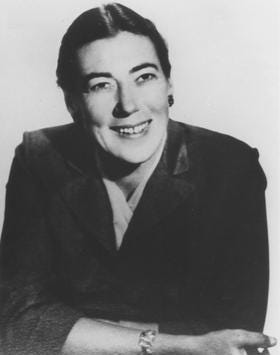
In 1956, when the entire psychiatric establishment was convinced that homosexuality was a form of mental illness requiring treatment, cure, or containment, one woman looked at the scientific evidence and said, “This is complete bullshit.” Evelyn Hooker didn’t just challenge conventional wisdom—she demolished it with the kind of methodological precision that left her opponents scrambling for excuses and the LGBTQIA+ community with something they’d never had before: scientific proof that there was absolutely nothing wrong with them.
But this wasn’t some abstract academic exercise conducted by a dispassionate researcher in an ivory tower. Hooker’s work was personal, political, and profoundly revolutionary in ways that extended far beyond the confines of psychological journals. She was a straight woman who risked her career to defend people she cared about, a scientist who refused to let prejudice masquerade as objective research, and a human being who understood that the difference between pathology and normalcy could literally be a matter of life and death for millions of people.
Her story is one of scientific courage in the face of institutional pressure, intellectual honesty in an era of willful ignorance, and the transformative power of rigorous methodology applied to questions that society would rather not examine too closely. It’s also the story of how one woman’s determination to follow the evidence wherever it led helped liberate an entire community from the tyranny of psychiatric pathologization, proving that sometimes the most radical act is simply insisting on the truth.
The Making of a Scientific Revolutionary (snip-MORE)
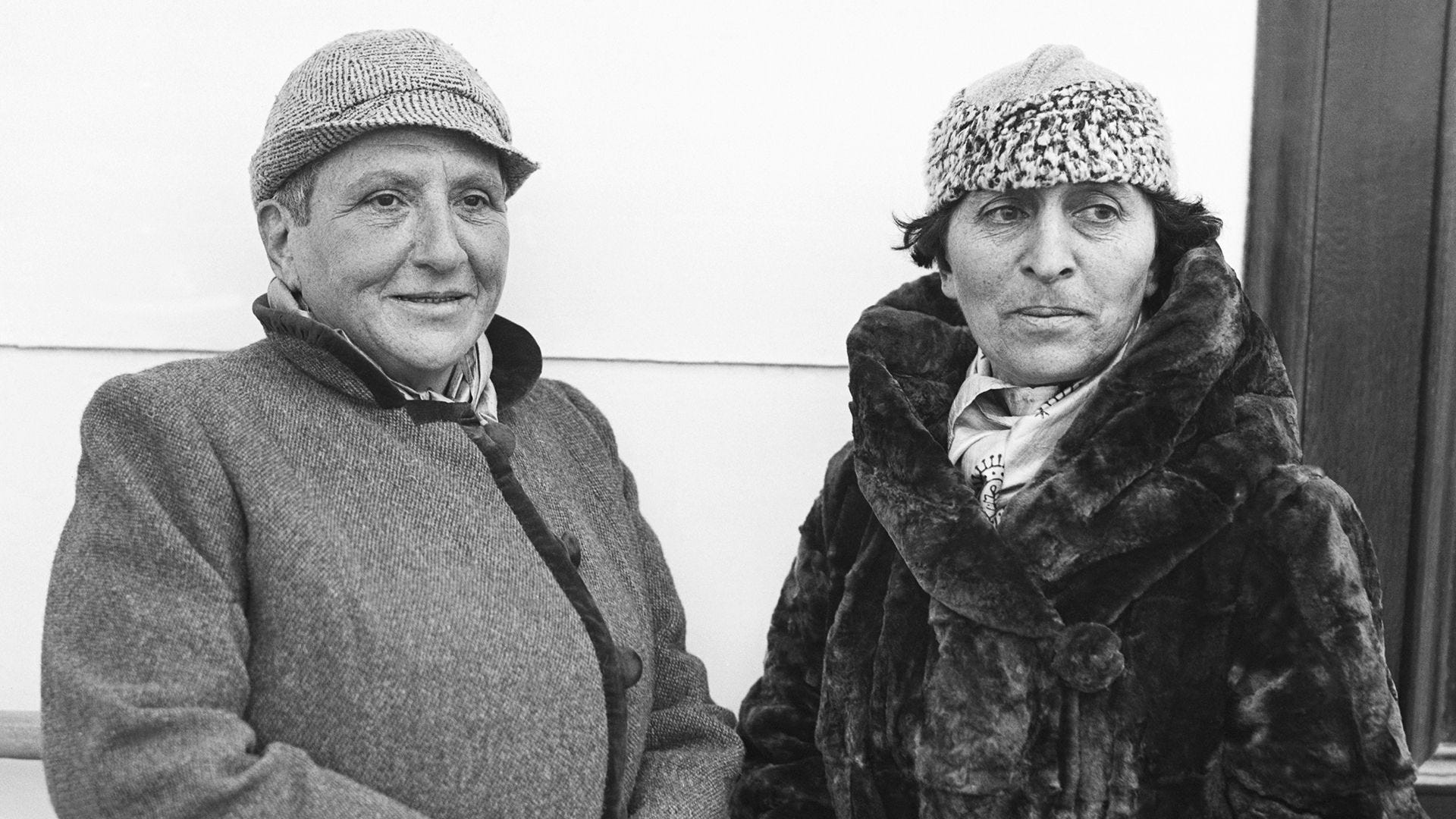
Queer History 573: Gertrude Stein and Alice Toklas by Wendy🏳️⚧️🏳️🌈🌈
The Badass Bitches Who Told Paris to Go Fuck Itself and Made Art History Anyway Read on Substack
Listen up, you beautiful fucking souls, because today we’re diving headfirst into the absolutely goddamn legendary love story that rewrote the rules of art, literature, and what it meant to be authentically, unapologetically queer in the early 20th century. We’re talking about Alice B. Toklas and Gertrude Stein – two women who said “fuck your heteronormative bullshit” and proceeded to create one of the most influential artistic partnerships in modern history.
These weren’t just two women living together because society expected spinsters to share expenses. Hell no. This was a love affair that burned so bright it illuminated the entire fucking modernist movement, and their relationship became the beating heart of Parisian avant-garde culture for nearly four decades.
The Fierce Fucking Beginning
Picture this shit: It’s 1907, and Alice Babette Toklas, a sharp-as-hell California Jewish woman with an eye for detail that could cut glass, walks into Gertrude Stein’s salon at 27 rue de Fleurus in Paris. The moment their eyes met, the world shifted on its goddamn axis. Alice later described hearing church bells ringing – not metaphorically, but literally – because apparently when your soulmate walks into the room, even the universe knows it’s time to celebrate.
Gertrude Stein wasn’t just any woman. This brilliant bitch had already established herself as a radical writer whose experimental prose was making traditional literature scholars shit their conservative pants. Born in 1874 in Pennsylvania to a German-Jewish immigrant family, Gertrude had studied psychology under William James at Harvard’s sister school, Radcliffe College. She understood the human mind in ways that would make Freud jealous as fuck.
Alice, born in 1877 in San Francisco, came from a middle-class Jewish family and had been living what society deemed an “appropriate” life for a single woman. But the moment she encountered Gertrude’s magnetic presence, all that conventional bullshit went straight out the window. Here was a woman who wrote things like “A rose is a rose is a rose” and made it sound like the most profound shit you’d ever heard.
In the sun-scorched landscape of Spanish politics, where machismo runs deeper than olive oil and Catholic conservatism clings like barnacles to a ship’s hull, Carla Antonelli emerged like a fucking phoenix from the ashes of Franco’s repressive regime. Born Carlos Álvarez-Malvar in 1959, she didn’t just transition from male to female—she transformed from a society that wanted her dead into a political force that would reshape Spain’s understanding of transgender existence. This wasn’t some gentle evolution; this was a goddamn revolution with lipstick and legislative power.
Carla Antonelli represents more than just political firsts and broken barriers. She embodies the visceral struggle of transgender people in post-Franco Spain, where the ghost of fascist oppression still haunted every street corner and the Catholic Church’s influence seeped into every crack of social life. Her journey from underground actress to regional parliamentarian reads like a masterclass in survival, authenticity, and the raw power of refusing to be erased.
Let’s be brutally fucking honest about what Carla faced: a Spain that had spent decades under a dictator who considered LGBTQIA+ people degenerates worthy of imprisonment or worse. Franco’s regime didn’t just criminalize homosexuality and gender nonconformity—it tried to erase these identities from existence entirely. When Franco finally had the decency to die in 1975, his ideological progeny didn’t magically disappear. They lurked in institutions, in families, in the collective psyche of a nation that was slowly, painfully learning to breathe freely again.
The Making of a Revolutionary in Franco’s Shadow (snip-MORE)
Queer History 892: Ben Barres – The Badass Brain Scientist Who Fucked Up Gender Bias Forever by Wendy🏳️⚧️🏳️🌈🌈
In the testosterone-soaked world of academic neuroscience, where brilliant minds wrapped in fragile egos compete to unlock the secrets of the human brain, Ben Barres stood as a goddamn force of nature who revolutionized not just our understanding of neural circuits but the entire fucking structure of scientific academia itself. Born Barbara in 1954, Ben didn’t just transition from female to male—he transformed from a marginalized outsider fighting for recognition to one of the most respected neuroscientists on the planet, all while wielding his unique perspective like a scalpel to dissect the sexist bullshit that infected his field.
Ben Barres wasn’t just another transgender scientist who happened to make discoveries. He was a revolutionary who used his lived experience of gender bias to expose the systemic discrimination that had been hiding in plain sight for decades. His story reads like a masterclass in how authenticity and scientific rigor can combine to create change that extends far beyond laboratory walls. When he died in 2017, he left behind not just groundbreaking research on glial cells and neural development, but a legacy of advocacy that continues to reshape how academia treats women, minorities, and anyone who doesn’t fit the traditional mold of what a scientist should look like.
This is the story of a brilliant mind who refused to be diminished by a world that couldn’t understand him, who channeled the fury of marginalization into scientific excellence and social change. Ben Barres proved that the best revenge against discrimination isn’t just success—it’s using that success to burn down the systems that tried to stop you in the first place.
The Early Years: A Brilliant Mind in the Wrong Package (snip-MORE)


 Jessie Balmert















 Scottie's Playtime