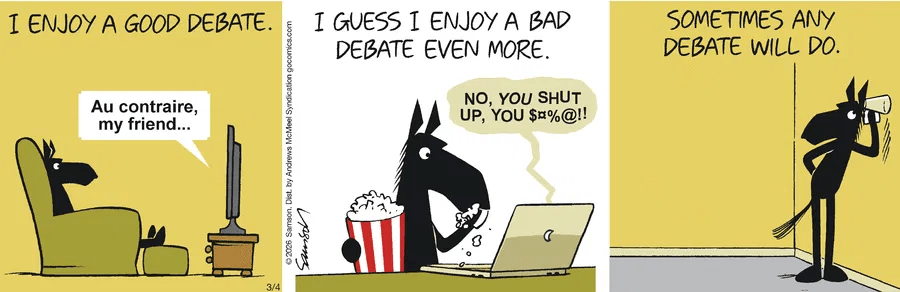
https://www.gocomics.com/darksideofthehorse/2026/03/04

and go on about our day being peaceful, in order to bring about peace. (I have a dental appt. to finish what was begun a couple of weeks ago at that dental appt. I feel all pure-white-dovey inside.)
In the previous post, I spoke on how I was so very tired of the political climate. One of the issues that I described was this constant stress of chaos that the drumpf administration purveys upon the American public and the world in general. Stress is debilitating. It leaves a person living in a constant state of fight/flight, questioning what we should be doing to survive the madness that is maga and a perpetual attack upon our empathy for those not so fortunate to only be stressed.
There is a saying that goes generally that if you can’t do anything about it, don’t stress over it. But, I’m stressed.
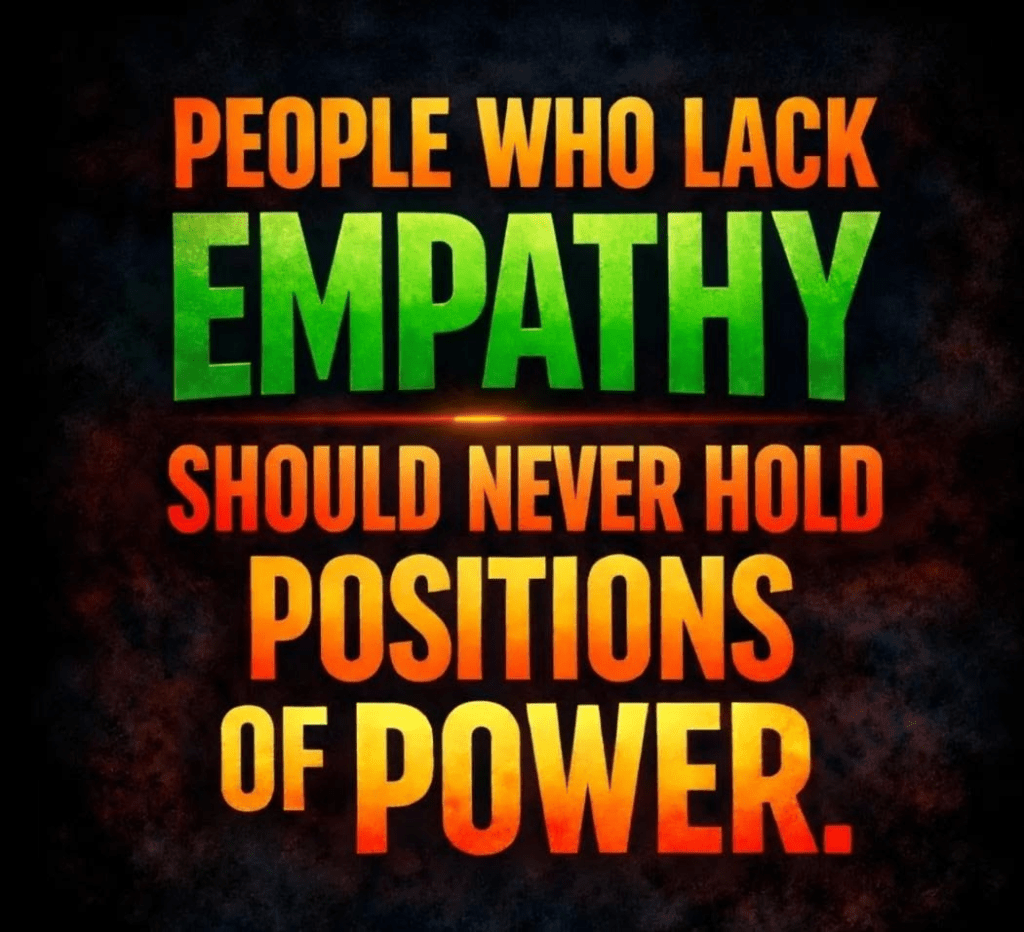
Much of my stress is my own personal life challenges, but a lot of my stress comes in the realization that while I may hope to ignore those things that are beyond my control, others are not so free. How many lives have been destroyed in the turmoil of one man’s pursuit of totalitarianism? How many deaths do we lay at the feet of this conman? And worse, however reluctantly and contrary to our wishes, he is our leader and we are responsible for the atrocities he commits.
Let’s face it, he told us who he was before being elected – for the second damned time! He showed us he was a fraud, a rapist, a serial adulterer, a racist, a criminal. He stole from children, from his workers, from his wives.
So, right or wrong, earned or borrowed, stress presses down on me and many like me. And that chronic stress severely impacts our health by keeping us in that fight or flight reflex, leading to our burnout, mental impairment and physical illness. We struggle with chronic pain, insomnia, high blood pressure and a weakended immunity. We are anxious, depressed, and can’t remember why we came into the damned room!
Is this what it means to be an adult, or just an adult in the drumpf era? My god! I watch the news and find myself in line for ptsd treatment! What could be next? What ball will I drop next? What emotional eruption is next in line for me?
I’m so f’ing tired of being tired; I’m so f’ing tired of being depressed; I’m so very f’ing tired of being anxious.
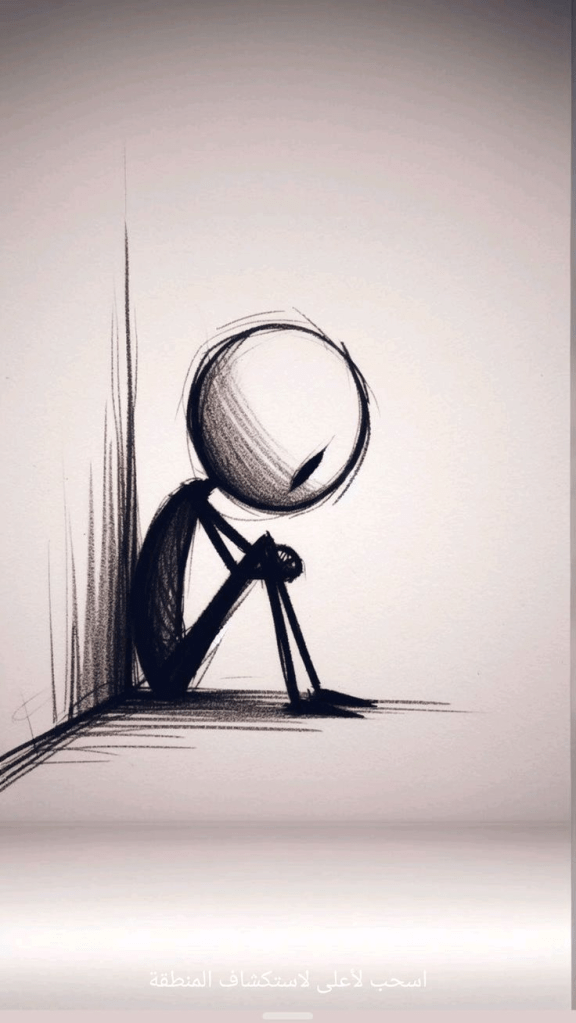
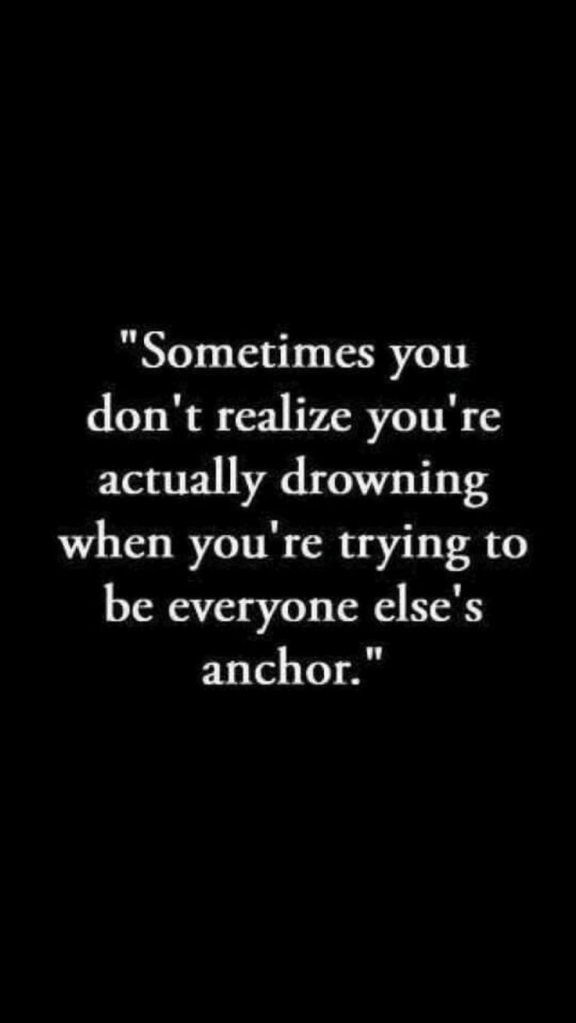
Today one of my workers asked me if I was ok. He saw that I was angry, I guess. I laughed for a moment, told him I was fine and that my back was just hurting, that it was a typical Monday. He just stood there, in front of my desk and waited. And somehow I found myself very quietly saying no. I’m not ok.
I don’t really have the freedom to be anything but ok. I am the one that has to be there making sure things get done. I am supposed to be watching out for the morale of the team. I’m charged with the continuity of employment. I’m supposed to be the strong one, the boss. And there I was realizing that everything was broken, and there isn’t a damned thing I can do about it.
I don’t have answers to a damned thing, but today someone stopped what they were doing long enough to demonstrate that they cared, and I realized just how powerful that could be. It didn’t solve my problems, the sun didn’t shine any brighter and the birds weren’t singing overhead, but for a moment my burden was shared. For a moment I didn’t feel quite so alone. That made a huge difference. I hope I’m strong and wise enough to emulate that, and perhaps together we can outlast this too. Hugs.
The international accompaniment movement teaches us that to sustain an emergency response to state violence, we must build durable, collective and supportive structures now.
Zia Kandler and Moira Birss February 24, 2026
Targeted state violence and rising fascism are being met with creative organizing by people in Minneapolis and across the country, from mass marches to neighborhood mutual aid to ICE watch foot patrols. These are all beautiful manifestations of resistance that have kept many people safe and demonstrated widespread repudiation of the Trump administration’s policies.
Yet as state-sanctioned violence becomes more coordinated, normalized and national in scope, we must continue adapting our response systems to shifting needs. Emergency response structures set up in moments of crisis can often lead to isolated, reactive decision making with responsibility falling on a few shoulders, creating the conditions for burnout, security failures, movement fragmentation and individual and organizational missteps or even collapse.
Here we can draw on some hard-earned lessons from our predecessors in the decades-long international accompaniment movement, who witness, stand with and provide security support for human rights defenders, communities and activists under attack by authoritarian regimes in Latin America.In response to sometimes devastating losses, accompaniment organizations developed a set of skills and strategies over many years for collaborative, sustainable decision making to respond to security incidents while under conditions of constant threat. We ourselves learned these skills in our many years of working with accompaniment organizations in Guatemala, Honduras and Colombia from 2008 to 2022.
We share here principles and practices from this legacy, which we hope organizations and networks, whether formal or informal, can use to develop emergency response structures that are sustainable, don’t overly burden a few individuals with the difficult decision making, actively build collective capacity and shared analysis, and support skill-building for more people in our movements.
What we present here are suggestions, and we invite you to adapt them to particular organizations and situations. They may take a bit more planning and preparation than may seem available in moments of urgency. But if we want to sustain our movements for what, unfortunately, is likely to be a long struggle, we must begin now to put durable, collective and supportive structures into practice.
Decision making in emergency security situations is emotionally and mentally taxing. Stress can narrow our literal and metaphorical fields of vision. And because the weight of a decision can be incredibly heavy to bear — especially if things go wrong — no one ever made a decision alone in the accompaniment organizations of which we were a part. We had clearly established protocols for which people, based on their roles in the organization, would come together for specific emergency response decisions.
For example, we established regional subcommittees based on where a security incident occurred. Each subcommittee was composed of a security lead, a representative from the advocacy team and on-the-ground volunteers, who worked together to assess, analyze and respond to emergency situations.
Applying this principle in a U.S. context, organizers of a publicly advertised protest could set a team of folks who gather at an office or a home to monitor social media and news reports for security incidents or threats, and be ready to make decisions about emergency response.
Emergency response or crisis moments are when people are most activated and are also the most likely to lead to organizational, interpersonal or movement conflict. This shouldn’t come as a surprise. After all, we are being subjected to situations of prolonged violence directed at ourselves and people we care for. We want to show up in the best way possible, yet often also feel frustration, impotence or rage.
In our accompaniment organizations, we mitigated stress and conflict (to the extent possible) by having clear processes and roles for decision making.
First, we frontloaded as many decisions as possible before an emergency, allowing us to focus on the situation at hand rather than spend time debating who would do what and delaying important support for the impacted individuals. Knowing who is going to be involved in emergency response reduces the need for conversation and shortens the response time.

We have seen this play out in high-risk moments in our accompaniment work. For example, when we responded to nationwide protests that extended over months and saw daily murders of protesters by military and police forces, we set up a rotating decision-making group. Because roles and communication channels had already been agreed upon, colleagues didn’t have to debate who should verify information, call other allied organizations or set up our emergency response protocol. They could simply act.
Second, we made decisions in consensus. While clear decision-making structures are essential, that doesn’t necessarily mean they have to be hierarchical. We’ve found in our accompaniment work that decisions are easier to implement when everyone has a hand in shaping them. A consensus-based decision-making structure keeps any one person from carrying the whole mental load (see “No one person decides alone”) and lets us actually use the full brainpower in the room. We all come with different lived experiences, risk tolerances and ways of thinking, which means we’re bound to catch things others won’t and, luckily, vice versa.
This works best when folks talk it out together and create a clear timeline to decide. In the example above, if the group got stuck, they would start with a quick break to rest and regroup, and if that fails, go to a smaller predesignated subgroup — and, if even that doesn’t work, have a clear fallback decision-maker. Something else we’ve learned: Consensus tends to work better when we trust each other and each other’s criteria, so it helps to make the effort to get to know each other, grab a coffee or go for a walk before the emergencies happen.
It might seem logical that those directly involved in the emergency response should be onsite, able to see the situation firsthand and respond immediately. In fact, we learned in our accompaniment work that involving folks offsite as advisors or even decision makers can provide essential perspective, bring in crucial information and further spread the decision-making burden.
In one protest scenario, while tensions escalated on the ground, an off-site team a few blocks away tracked both police staging and local news sources and relayed that information back to organizers. This wider view allowed on-the-ground leadership to make informed choices without relying only on what was immediately visible.
Holding a decision-making role in an emergency situation is not easy; it means putting your body on high alert, navigating complex situations and grappling with violence directed at our communities. This, unsurprisingly, takes a toll on us over an extended period of time (more on this below).

Lessons in courage, care and collective action from the international accompaniment movement
Even if we believe we can hold this indefinitely, the reality is that, without moments to regulate our nervous systems, our bodies normalize the constant alertness, making it harder to activate when necessary and to properly analyze what is truly an emergency. We want our emergency decision makers to be well-rested, regulated and connected — for their wellbeing and ours, too.
That’s why we recommend that the decision makers in an emergency situation shift on an agreed-upon rotation. Depending on organizational structure, the best rotation might be every protest or event, or it might be a time period, like a week. This not only gives us a chance to skill up more folks in emergency response (always a benefit for our movements!), but it also gives us decision makers a chance to rest and recharge.
In the protest scenario previously mentioned, once things settled for the day, the people who had been making decisions rotated out. Some went home to sleep; others took quiet time away from phones and updates. A few days later, once they were rested enough to look at what they’d learned and what might need to change next time, they checked back in for the follow-up stage.
Prolonged emergency situations make it harder over time to accurately recognize urgency. When everything feels critical, true emergencies can become blurred. Clear guidelines help mediate this by providing structure and clarity for decision making under sustained stress. In our accompaniment work, we used the following guidelines to categorize our responses:
On alert (prior to emergency): The situation seems to be escalating. We have seen a few signs indicating the risk level may be increasing (increased presence of armed actors, state or non-state, counter-protesters gathering, surveillance signs, suspected infiltration, etc.). Start to notify the security team (on and offsite) and start to implement increased security measures.
Immediate response (minutes to hours after): The emergency situation is active; the threat has not yet passed and there is potential for the situation to escalate or repeat. The physical and emotional well-being of impacted individuals is prioritized immediately.
Rapid (24 to 48 hours after): The specific situation has passed, but there is potential of it repeating in the near future. This could be because we will go to the same location in the next few days, or the event we are hosting will continue, or the aggressor is still nearby or indicating potential harm to our communities.
Follow-up (a few days to weeks after): The situation has passed. Here we focus on analysis and whether we need to adapt our organizational and movement strategy. This is also a great time to broaden the analysis by including allies in answering questions like: What was the aggressor’s desired impact? Have we seen this strategy used before? What are the increased security measures we may need to implement based on this situation?
We have used this for years in accompaniment spaces, allowing us to clearly mark stages in our response and who had to be involved. For example, when activists we were supporting suffered an assassination attempt, the attention moved from split-second decisions (immediate response) to checking in with impacted participants, ensuring medical attention, locating others who could be targeted next and finding safe houses, to adjusting security plans for the next day and watching for signs the situation might flare up again (rapid response). Later still, the group circled back to look at what had happened and what it meant going forward (follow up).
When stepping into an emergency response decision-making role, it is essential to shore up your emotional resources before an emergency and repair your heart and mind afterward. This will look different for everyone, but all organizations and networks should dedicate time and space for everyone involved in emergency response to do this. You might employ the same tools for shoring up and for repairing: They could include a nice walk with your dog, tea with a close friend, reading a good book or taking a bath.
Whatever you need to rest and recharge, identify those activities and build them into your plans. We know this is hard, and to be clear, this level of care has not always been consistently present within accompaniment organizations; its absence often contributes to rapid turnover and diminished response capacity. Naming this matters. After more than a decade of collective work in emergency accompaniment, we have seen clearly that constant crisis response is not sustainable if people’s nervous systems are never given real opportunities to rest and regulate.
This is why we believe it is so important to speak directly about intentional, collective care practices not as an ideal, but as a necessary condition for the longevity and effectiveness of accompaniment and emergency response itself.
These tools aren’t a panacea for the real risks presented by escalating state violence. They won’t stop all arrests, injuries, raids, deportations or assassinations. They won’t undo the harm already done or bring back the people we’ve lost. But the more we incorporate skillful emergency response tools into our repertoire, the more we can stay connected to one another under pressure, reduce preventable harm, and keep showing up again and again without burning out, fragmenting or turning on each other.
None of this work is new. We are drawing from the accumulated knowledge of mentors, organizers, human rights defenders, journalists, accompaniers, medics, lawyers and movement elders who have spent decades responding to fascist and authoritarian governments across regions and generations. From underground networks resisting military dictatorships, to civil rights organizers facing state-sanctioned terror, Indigenous land defenders, abolitionists, anti-colonial movements and transnational solidarity networks, people have long been building collective security, emergency response and care structures under conditions that mirror in many ways what we are facing now.
Luckily, this means we don’t have to reinvent the wheel. We just need to know how to look to the past, to other contexts and to each other for guidance and support. The more intentional we are, the better we’ll be able to keep up the struggle so that, one day soon, we will not just have survived fascism but defeated it.
I almost posted this last night for those who might have wanted a funny alternative to the SOTU, but here’s hoping you all found what you wanted to watch. Randy posted, and I wanted that to stay on top, because he’s been busy and tired and not able to get around to posting. Of course, this is Josh Johnson: no matter the subject, guard your device from whatever beverage you may be taking in as you relax and listen and laugh!
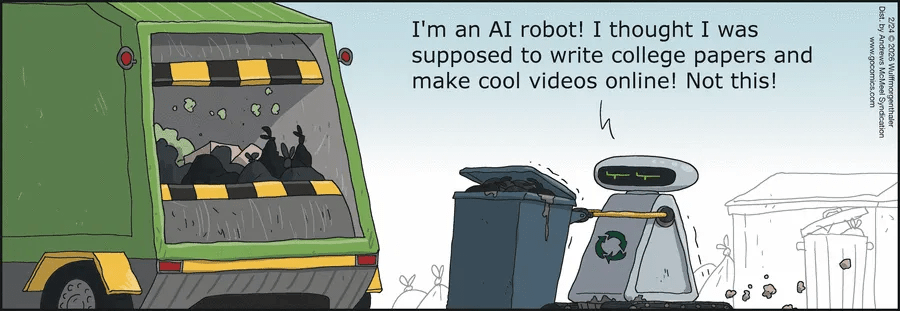
https://www.gocomics.com/wumo/2026/02/24
Heck, have more than one!
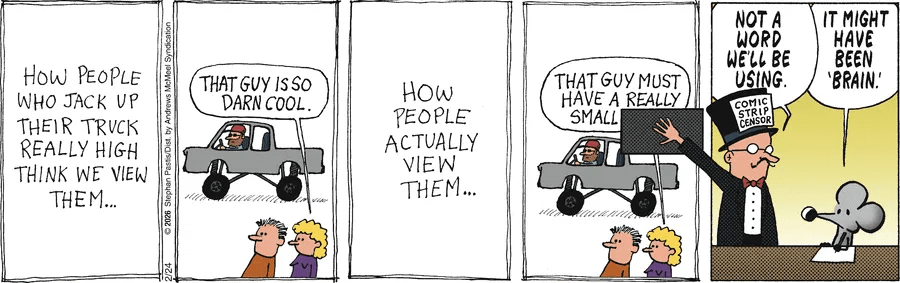
https://www.gocomics.com/pearlsbeforeswine/2026/02/24
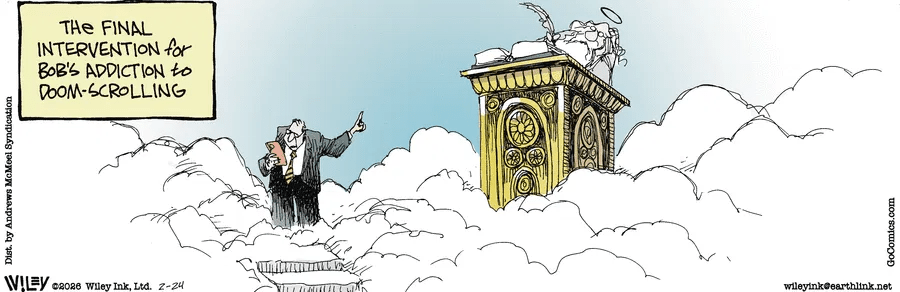
https://www.gocomics.com/nonsequitur/2026/02/24
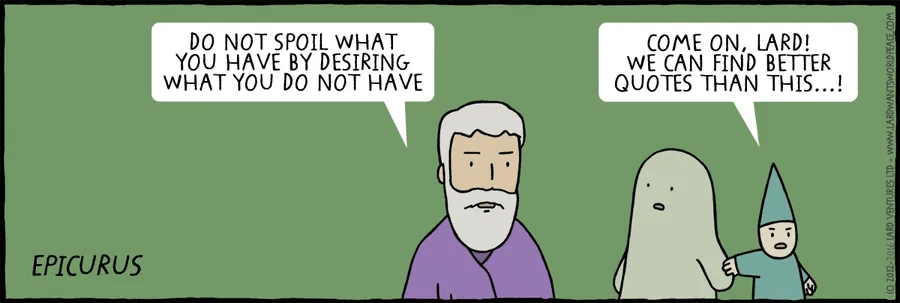
https://www.gocomics.com/lards-world-peace-tips/2026/02/24
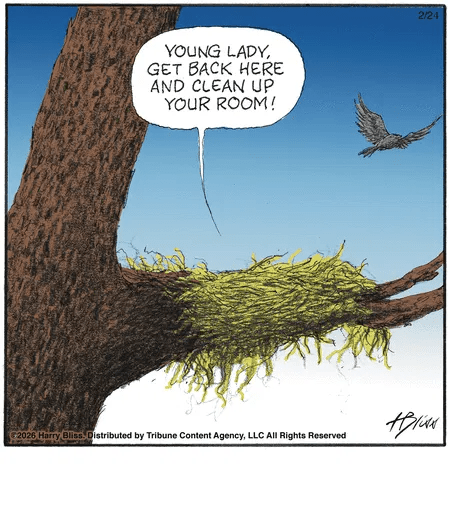
https://www.gocomics.com/bliss/2026/02/24
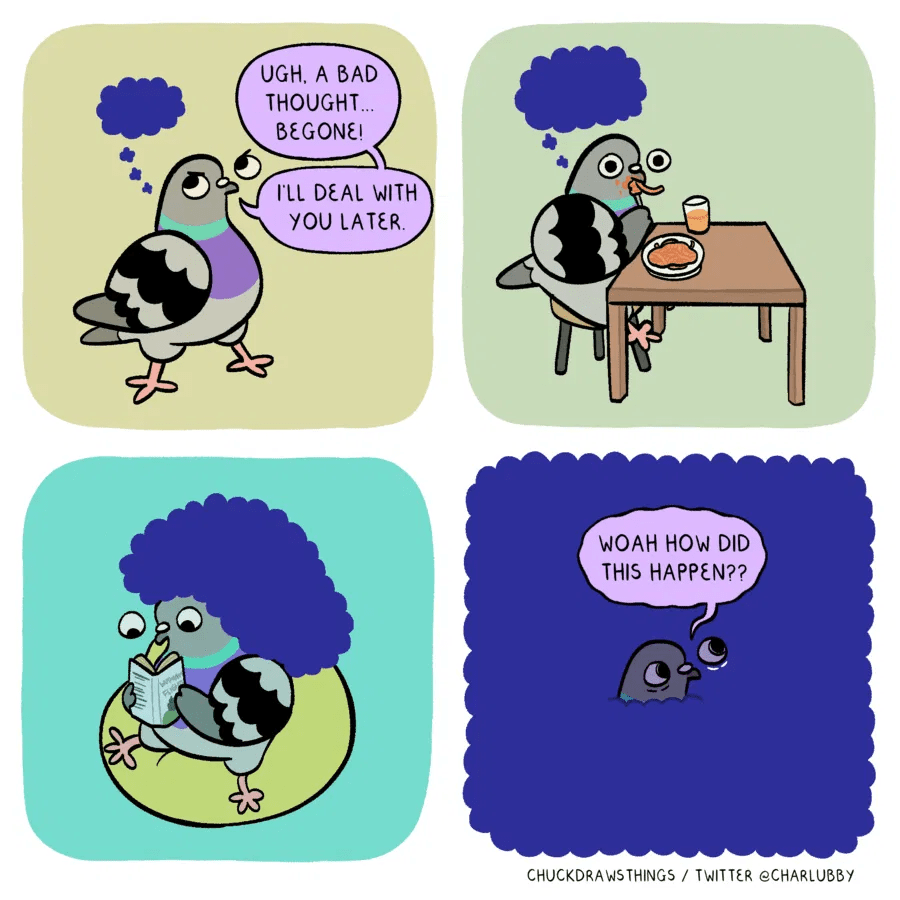
https://www.gocomics.com/chuckdrawsthings/2026/02/20
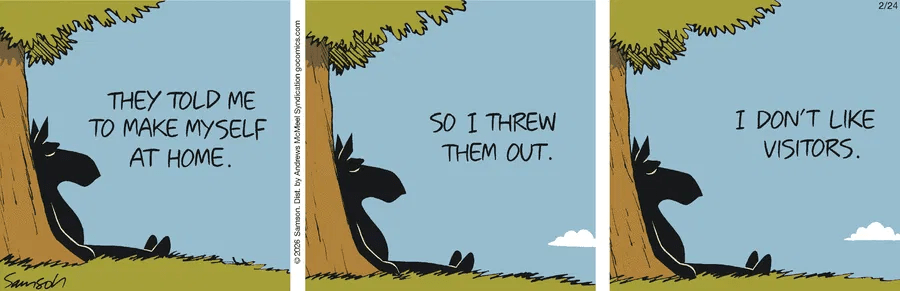
https://www.gocomics.com/darksideofthehorse/2026/02/24
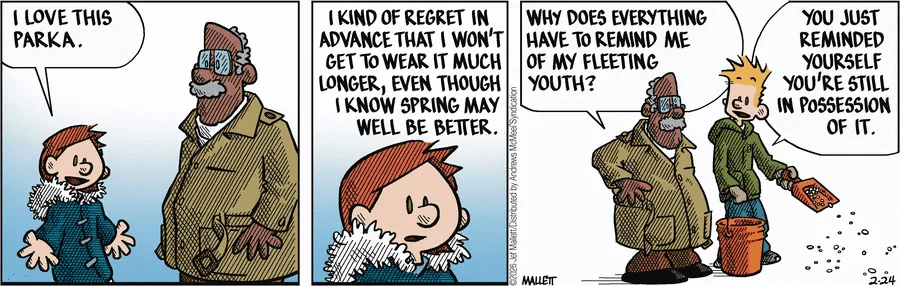
https://www.gocomics.com/frazz/2026/02/24
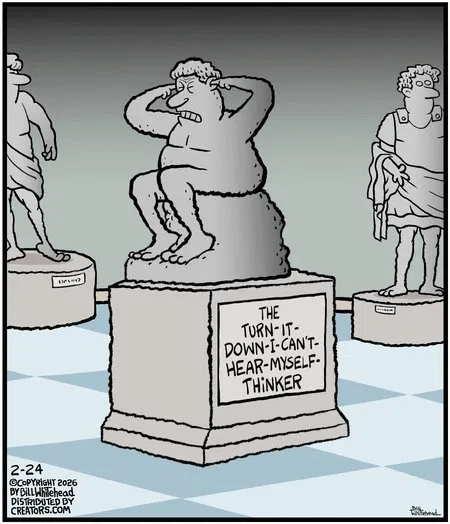
https://www.gocomics.com/freerange/2026/02/24
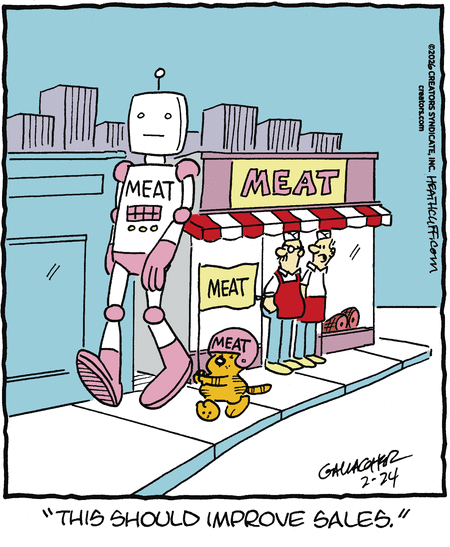
https://www.gocomics.com/heathcliff/2026/02/24
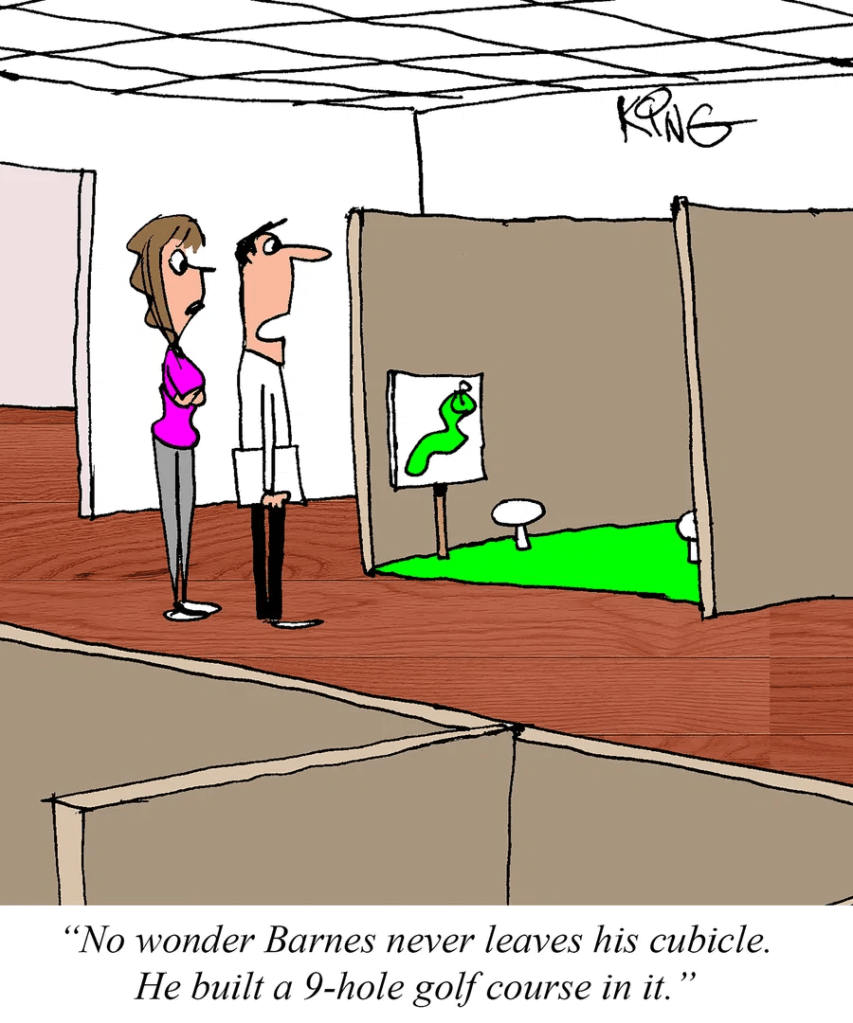
https://www.gocomics.com/jerry-king-comics/2026/02/24
Well, that was several more! At least they’re calorie-free. I hope all have a great afternoon! I’m getting the plumbing job done a day early, today instead of tomorrow. That is good; no water torture overnight!
by Amanda · Feb 23, 2026 at 3:00 am · View all 12 comments
Welcome back to Cover Snark! These covers were all sent in by the community!

From Jane Buehler: At first glance (small thumbnail) I thought he was shooting out a laser beam from his chest!
Sarah: That’s an interesting place for a stigmata.
Amanda: Why is he so grainy, like his skin is the texture of a basketball.
Sarah: Wait. WAIT. Whatever this cheetah-print thing is, it is both above and below his pec. What IS that?! Why is it partially encircling his pec? Why is it shooting out pink silly string? WHAT IS THIS.
And this is only the first cover. God help me with this set.

From Jen: My cousin introduced me to you guys a while back. We have a regular cousin chat about your Cover Snark because it cracks us up.
Recently I was at a gift shop and saw this gem. I immediately shared it to the cousin chat and they encouraged me to submit it!
Thanks for giving us all so many laughs.
Sarah: At first glance this looks unremarkable, but the more I looked the tiltier my head got. Why does his chest hair patch match the small patch of hair on his arm? I’m presuming the Yankee’s logo is backwards on purpose but also ????
And her boobs are going in very different directions – unless she’s got one of those bathing suit tops that only holds in one tit and the other is free to roam. I Hate suits like that. Also she’s reading a book called HOWL and that’s very funny.
There are a lot of stylistic choices that I really like, and also some details that I do not get.
Claudia: I have one question — why he doesn’t seem to have eyes?
Sarah: I was wondering that, too! It looks like they got blurred or something? Why does she have features while he does not?
Amanda: Why are we not talking about the fact that he’s a satyr?!
Sarah: A satyr in that shirt!

From Marianne: This popped up in my edelweiss+ pre-approved and I had to embiggen because what was I even looking at? Who wears light beige jeans with their chaps???
Sarah: WHAT is WITH the cowboy-hat-hides-the-faces trend? Do people not like drawing faces? Or is kissing difficult (I imagine it is) to draw?
And WHY would anyone wear light jeans with chaps. I get that it’s a Look, but also it’s a Laundry.
Amanda: It reminds me of when you’re in middle school and you draw people with their hands in their pockets or behind their back so you can avoid it.
Sarah: “Where’s your teal and white cow print cowboy hat?”
“Why?”
“I need it for reasons.”
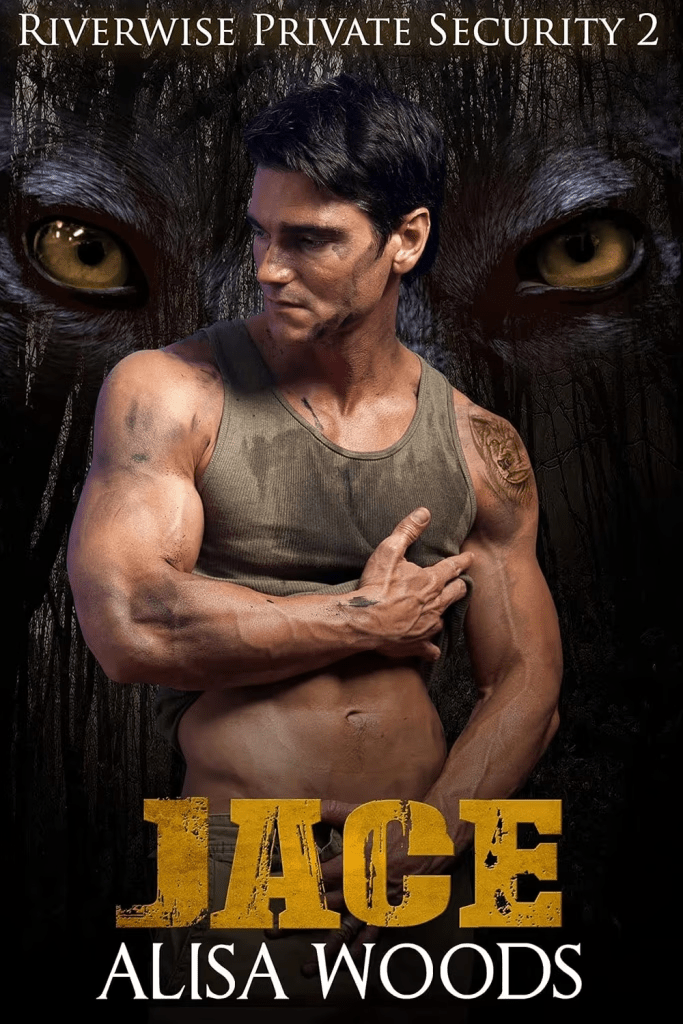
From Deborah: Is he giving himself a simultaneous breast and pelvic exam under the watchful eyes of Dr Giant Tree Wolf?
Sarah: That’s a very intimidating way to do a breast exam.
Amanda: It also looks like he’s checking his crotch. Perhaps he’s just making sure everything is where it should be.
Sarah: So many cover models do that. Should we be worried? (snip)

