All device protection from beverage spray protocol should be observed.
Category: Love
A Little Monday Mix
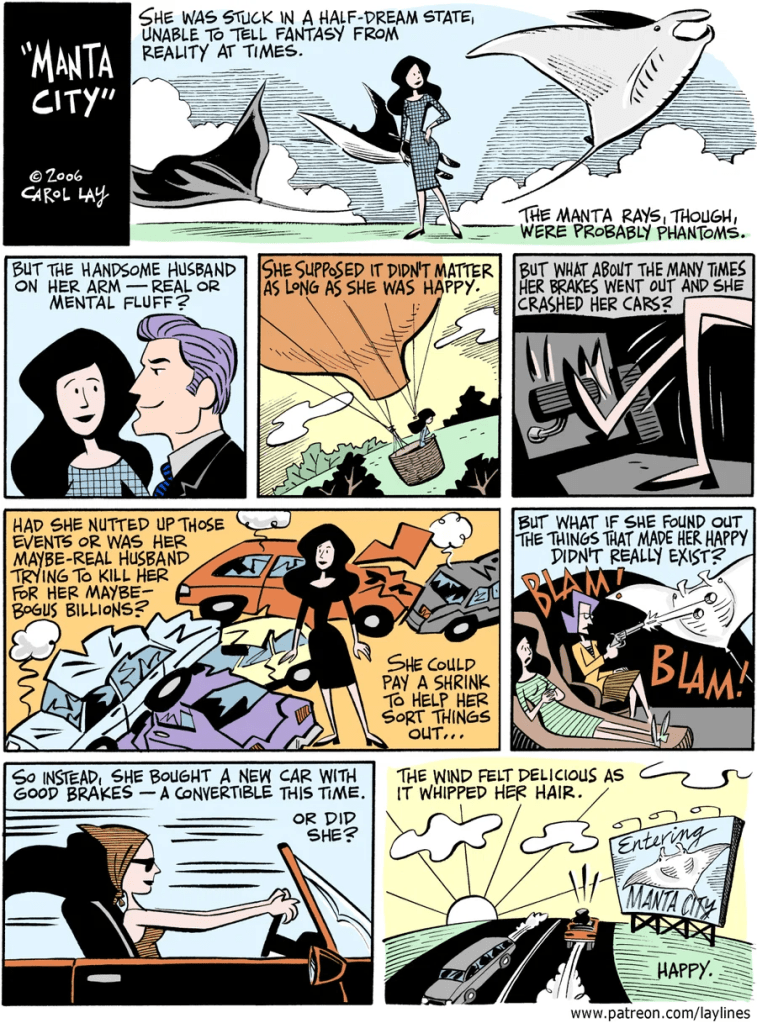
I am riding with a friend to a Humane Society board meeting this evening. I don’t tend to leave the house much in the evenings; I prefer daytime stuff, and tucking up in the evening. But, I do want to get back into helping the shelter, and they need board members, so I’m going. It is causing me anxiety; I think I’d rather drive myself, but it’ll be fine. So Chuck Drew A Thing, and here it is below:
https://www.gocomics.com/chuckdrawsthings/2026/04/17

And here’s a local news story that is pertinent to Playtime’s interests, I think.
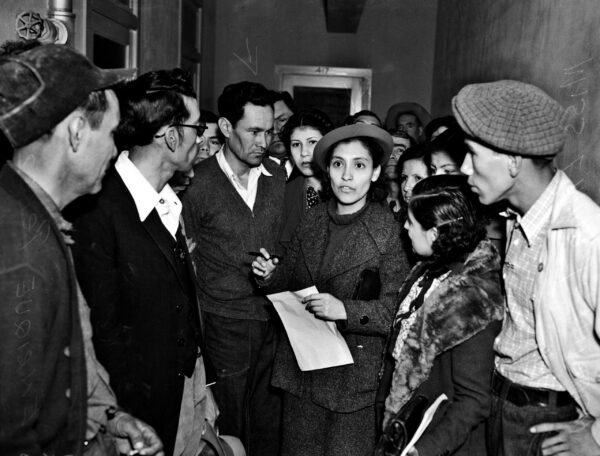
Wichita’s “Rosie the Riveter,” B-29 DOC volunteer Connie Palacioz dies at 101
WICHITA, Kan. (KWCH) – Connie Palacioz, a World War II-era “Rosie the Riveter” who helped build B-29 Superfortress bombers in Wichita and later spent decades volunteering with the restored B-29 DOC aircraft, has died. She was 101.
During World War II, more than six million women entered the workforce in a variety of roles, including factory work that was crucial to the war effort.
Palacioz went to work at The Boeing Co. in Wichita at age 17 and served as a riveter on the B-29 production line from 1943 to 1945. The Wichita factory built 1,644 B-29 Superfortress bombers during the war.
In 2000, when B-29 DOC returned to Wichita for restoration, Palacioz was 75 years old. She joined the team working to return the aircraft to flight, according to a statement from Doc’s Friends, Inc., the non-profit she volunteered at.
“She was the first one up when she was on tour with us, and the last one to leave the airplane. She was so proud of what she and her volunteers and what she and her team had built,” said B-29 DOC Executive Director Josh Wells.
Palacioz remained an active member of the organization for 26 years. She served as an advocate for the nonprofit’s mission while sharing her own story and those of other women who worked in wartime production.
“Connie’s life journey was inspiring, and it’s been our great honor to have shared her legacy and life story through B-29 DOC,” Wells said in a statement. “Not only was Connie a Wichita and Kansas legend, but her story and work during World War II on the B-29 Superfortress production line also made her a national hero.”
Wells also shared the impact Palacioz had on his life.
“She was an inspiration to me. She was an inspiration to many people, and I think she’s a trailblazer,” Wells said.
Not only was Palacioz a trailblazer for women, she was also a supporter of civil rights, as she worked with a minority coworker when no one else would.
“Jerry was African-American, and Mom said, ‘that’s fine with me, I’m a minority, I’m Mexican, I’ll work with her.’ Then they wanted to separate them, and they didn’t separate,” said Tish Nielsen, Palacioz’s daughter.
Palacioz often reflected on her role in the wartime effort while speaking with visitors to the aircraft.
“When visitors come and they ask us, and then I tell them that I worked there and that I did this, and everything is still in order,” Palacioz said. “You know, I always tell them there were seven rivets missing when it was in the desert.”
“I wish all the others that worked with me could be here, but of course, they are gone,” she said. “But, I don’t know, it’s been great. It just is something that I can’t tell you exactly how, but I feel wonderful to be here.”
For many years, Palacioz’s story was unknown, even to her daughter, which Nielsen pointed to as a sign of her humility.
“When you would ask her, ‘why didn’t you tell us you were Rosie the Riveter?’ She said, ‘Well, I was just doing my job.’ And that’s the way she was,” Nielsen said.
Wells said it’s important to keep stories like Palacioz’s alive.
“It’s very important that we carry on their stories and honor people like Connie, to make sure that the next generation knows about them,” Wells said.
Nielsen said the thing she’ll remember most about her mother is her faith and her hard work throughout life.
“I would say she was a very faithful, faith-filled woman, who was very determined, and enjoyed life,” Nielsen said.
Funeral services are pending. A public celebration of life will be planned, according to the statement.
Monday, Back To It!
Enjoy a couple of political ones that are good, and uplifting. First, Sen. Prof. Warren tells us a bit about Zach Wahls:
Next, well, you can see it’s gonna be nice before you even tap Play. But tap Play!
How About Some Shorts?
Not necessarily about current events; if so, it’s snark, short, and sweet. Have some fun!
Dance a little!
Heh. Some justice.
So, We Three Post A Great Deal Of
stuff here on Playtime, day to day; lots of material from which to listen, choose, skim, read in full, watch. Today is Sunday. I frequently take the day to get my emails cleared and read the stuff I haven’t gotten to through the week. Sunday is the day a new Lit Hub email comes, and today I indulged myself by opening it before many other things, including last week’s Lit Hub. I did that because I admire Mae West; also I tend to use the F-word a lot inside my home and inside my head. Today’s Lit Hub covers each of these subjects along with its usual variety. If you likeand/or use the F-word, and/or are interested in the etymology of the F-word, you should read the Lit Hub story you can see by clicking this sentence. And now, here is the bit of info of interest about Mae West. We may all be aware that she was so much more than the caricature we tend to receive; she was an ally of LGBTQ+, a playwright, and more. This short bit has some links to her work. Enjoy!

Monstrosity Plucked From Garbage Can: On Mae West’s early career as a controversial playwright.
Walker Caplan April 20, 2021
Mae West is an icon: literally, a representative symbol. In the popular imagination, Mae West stands in for a certain type of seduction—blonde, campy, one-liner-heavy. But though West is best known for her distinctive performances, she was also a controversial playwright; before West established the acting persona that would stick in the public’s minds for a century, she was offending critics and facing jail time for shows that she called “comedy-dramas of life,” illuminating elements of life yet to be popularized onstage.
West’s plays The Drag and The Pleasure Man brought a type of communal gay camp onstage that at turns scandalized and excited a largely straight audience. And back in 1926, before Diamond Lil, her play-turned-movie about a good-natured prostitute, launched West to bona fide stardom, she wrote and performed another play—SEX—which would lay the groundwork for the plot of Diamond Lil but polarized audiences in a way Diamond Lil never did.
In SEX, West starred as a prostitute named Margy Lamont. The plot is winding, complicated, and not the point; viewer response was created by the first two acts, where the audience saw Margy working in a brothel and then in a nightclub. Critics were universally horrified by SEX. The New Yorker described the script as “street sweepings”; the New York Herald Tribune said that “never in a long experience of theatre-going have we met with a set of characters so depraved”; the slightly more provocative New York Daily Mirror titled their review “SEX an Offensive Play, Monstrosity Plucked From Garbage Can, Destined to Sewer.”
It wasn’t that there had never been sex or representations of sex workers on Broadway before; but critics found SEX reminiscent of burlesque (stigmatized at the time), as well as uncomfortably realistic in its treatment of sex work and class. As Marybeth Hamilton puts it in “SEX, The Drag, and 1920s Broadway,” “Margy was . . . an ill-paid sex-worker who traded her body on the streets. West made that fact unmistakable. As West embodied her, Margy was palpably from the lower orders . . . Margy is bitterly conscious of herself as a member of the oppressed class, and the grimness and harshness of her manner are reflected in the world she inhabits.” Imagine Mae West’s characteristic delivery without the irony: that was Margy Lamont. Understandably (though not correctly), people were scandalized.
As usually happens when people freak out about a piece of art, ticket sales went up. Then, on February 9, 1927, SEX was raided by the acting mayor, and West spent $14,000 to bail herself and her fellow actors out of jail. As she refused to shut down the show, West was sentenced to ten days in jail for “corrupting the morals of youth.” She was released two days early for good behavior, and the jail time essentially operated as a publicity stunt, launching her in the media as a “bad girl” of theater.
West capitalized on the publicity of SEX and took it as an opportunity to retool her persona, creating Diamond Lil. West plays a sex worker in Diamond Lil as well, but this time, it was funny. Lil was constantly making jokes, and West played her with a veil of irony, so an audience could interpret all of the raunchiness as satire. Plus, the specter of class was never mentioned, making it easier to swallow for middle-class audiences. West called Lil “a little spicy, but not too raw”; this was the beginning of the West performances we know today. I’m grateful for West’s fame, and her later work; but I’m glad we know what was lost in translation.
We Haven’t Had “Cover Snark” Here In A While-
Cover Snark: Burger King and Bobbleheads
by Amanda ·
Welcome back to Cover Snark!

From M: Another cut and paste disaster. This guy’s head is not only too small for the rest of him, but someone removed his neck. And what the heck are those red circles? Leftover Christmas ornaments?
Sarah: I need the Harley community to weigh in on giant red jingleballs on your handlebars. Seems…unwise.
And I cannot stop laughing at this poor man’s pasted on head. My God the indignity. His unveiled desire is to have his own neck.
Amanda: His head looks like it’s going to bobble right off.

From Elizabeth S: I don’t even know what all crazy is going on here.
Sarah: Setting aside the completely distracting Y shaped torso, did Wonder Woman get him? Is that the lasso of truth? What do you think this guy is confessing to, dedicated steroid regiment? Stealing conditioner?
Claudia: Wow. Gym-rat Jesus!
Sarah: The lat bar is his shepherd? He shall not skip leg day?
Amanda: This man feels very familiar to me. We may have snarked his image before.

Sarah: This is giving me Perez Hilton vibes and never in a good way.
Elyse: I was going with the little crown kids get at Burger King
Amanda: I feel like this has a new illustrated cover. I recently featured it on the After Dark sales.
Sarah: At least on this one, I can read the Wine Mom Font correctly.

Elyse: “Smell my finger.”
Sarah: Nooooooo
Amanda: Welp, now that’s all I can think about.
(snip-comments, etc. on the page, linked in the title)
Earth Month
It is Earth Month, and I’ve only posted a single acknowledgement of that, so far. Meanwhile, Ten Bears has us, with a full post of links regarding how things are, what needs to be done, and importantly, what we can still do.
All About The Birds
Ollie has endeared himself to some house finches who come here to eat. He’s done this by chasing the squirrel off the feeder they prefer. He doesn’t realize he’s doing favors for the birds; he wants to play with the squirrel, especially zoomies. But, for 2 days in a row, I’ve watched house finches, in pairs, chase a squirrel back in Ollie’s direction by swooping the squirrel. They also are, so far, the only birds who don’t fly up away from this feeder when Ollie goes outside. Even the crows tend to fly into the trees until he comes back inside. So the house finches fascinate me this year. Anyway, here are these about more birds, and a bat, too.
Also Known As
- Trile (Colloquial, Chile)
- Alférez (Colloquial, Uruguay)
- Varillero ala amarilla (Spanish)

About
The Yellow-winged Blackbird is a conspicuous species of the Southern Cone of South America, congregating in colonies in marshes during the breeding season, and forming larger flocks in wetlands, grasslands, and agricultural fields the rest of the year. These birds are also extremely vocal, giving a startling variety of calls, including sharp and percussive sounds, clear and musical whistles, and a range of other rattling, chirping, whining, whirring, and gargling vocalizations. Their song in particular makes use of virtuosic trills, robotic whistles, and mechanical whirring or buzzing sounds, coming across as half bird, half sci-fi robot. This iconic song is also the source of one of the Yellow-winged Blackbird’s nicknames, “trile,” and some authors propose it may also be the origin of the name of the country Chile! As if to make the most of their raucous acoustic capacity, the males of an entire colony will sometimes sing together in one big, cacophonous chorus.
In addition to nesting together in the same space, Yellow-winged Blackbirds also synchronize their nesting in time. Most of the females in a colony will lay within several days of each other. As a result, most of the nests in the colony will be on the same timeline, with eggs and nestlings developing at about the same time across the marsh. (snip)
Historic Oregon Bill Generating Conservation Funding Is Signed Into Law
Oregon will soon have a new, dedicated source of conservation funding to support the recovery of struggling bird and wildlife species across the state. House Bill 4134, dubbed 1.25% for Wildlife Bill, passed the Oregon State Senate in February and has now been signed into law by Governor Tina Kotek. American Bird Conservancy (ABC) strongly supported the 1.25% for Wildlife Bill, a proactive measure expected to raise up to $30 million annually for wildlife conservation in the state.
“This is monumental: Oregon has chosen to invest in its wildlife and its future with the passage of this historic law. Habitat restoration, recovery programs, and anti-poaching efforts are just a few of the programs that will be funded by this landmark legislation,” said Hardy Kern, ABC’s Director of Government Relations.
The Act will create a sustainable funding source dedicated to conserving imperiled species like the Marbled Murrelet, a seabird that nests in mature and old-growth forests in the state. Nest predation by jays and ravens contributes to the species’ declining population. Actions that could boost nesting success, such as campground cleanup efforts to reduce jay and raven numbers near sensitive nesting sites, are currently unfunded, but could benefit from the revenue generated by the newly signed law. (snip-MORE)
Some Peace & Justice History for 4/16 & 17:
| April, 16, 1971 The Internal Revenue Service (IRS) estimated over 2,000 people openly refused to pay part or all of their income tax. “If a thousand [people] were not to pay their tax bills this year, that would not be a violent and bloody measure, as it would be to pay them and enable the state to commit violence and shed innocent blood.” – Henry David Thoreau on the Mexican War ![]() National War Tax Resistance Coordinating Committee |
| April 16, 2000 Between 10,000 and 20,000 activists blockaded meetings of the World Bank and International Monetary Fund in Washington, D.C. Sitting down at intersections and locking arms to form human chains, the protesters were opposed to Bank and IMF policies that increased third-world indebtedness and did little to directly benefit the poor in those countries. “The World Bank is subjugating our economic and social independence,” Vineeta Gupta, a doctor from the Punjab in India, said in a letter he delivered to World Bank President James Wolfensohn at his home. “It is time that we shut the bank down, and this boycott is a great start.” |
More from National War Tax Resistance Coordinating Committee:
War Tax Resistance
What is War Tax Resistance?
War tax resistance means refusing to pay some or all of the federal taxes that pay for war. While you can refuse income tax legally by lowering your taxable income, for many people war tax resistance involves civil disobedience.
In the U.S. war tax resisters refuse to pay some or all of their federal income tax and/or other taxes, like the federal excise tax on local telephone service. Income taxes and excise taxes are destined for the government’s general fund and about half of that money goes for military spending, including weapons of war and weapons of mass destruction.
People take many roads to war tax resistance. Most are motivated by a combination of reasons and actively work for peace in many other ways too. If you consider your motivations this will help you determine your method of resistance.
Refusing to pay federal income taxes is an act of civil disobedience with a long history in the U.S. America’s most well-known war tax resister was Henry David Thoreau, whose refusal to pay his poll tax because of the Mexican-American War earned him an night in jail and the experience that led him to write his influential essay, Civil Disobedience. While those of us who refuse to pay war taxes believe our refusal is just and imperative — and some of us cite international law to back up this belief — the government considers the refusal to pay these taxes to be illegal, and there are potential repercussions through the IRS collection system. For most of us who resist, the dire consequences of voluntarily paying for war are far worse that what the IRS and government can do to us. (snip-MORE)
| April 17, 1959 22 were arrested in New York City for refusing to take shelter during a civil defense drill. |
| April 17, 1960 Inspired by the Greensboro sit-in of four black college students at an all-white lunch counter, nearly 150 black students from nine states formed the Student Nonviolent Coordinating Committee (SNCC). Meeting in Raleigh, North Carolina, with Ella Baker, James Lawson and Martin Luther King, Jr., the founders set SNCC’s initial goals as overturning segregation in the South. ![]() ![]() They also considered it important to give young blacks a stronger voice in the civil rights movement, as many had participated in sit-ins that had proliferated to dozens of cities over the previous three months. At the Raleigh conference Guy Carawan sang a new version of “We Shall Overcome,” an adaptation of an old labor song. This song would become the national anthem of the civil rights movement.People joined hands and gently swayed in time singing “black and white together,” repeating over and over, “Deep in my heart, I do believe, we shall overcome some day.” What SNCC did to make change happen |
April 17, 1961![]() Cuban leader Fidel Castro during the Bay of Pigs invasion. An army of 1500 anti-Castro Cuban exiles, mercenaries equipped and trained at a secret Guatemala base by the CIA, landed at Bahia de Cochinos (Bay of Pigs) in an attempt to “liberate” Cuba from Communist rule. Within three days, the invasion proved disastrous with nearly 1200 members of Brigade 2506 (who had been trained in the U.S.) taken prisoner. Known as Operation Zapata, it was conceived by Vice President Nixon, planned and approved by the Eisenhower administration, and executed shortly after President John Kennedy’s inauguration. ![]() President Kennedy receives the Brigade 2506 flag in Miami in 1962 and declares: “I promise to return this flag in a free Havana.” Soviet General Secretary Nikita Kruschev sent a telegram to President Kennedy: “Mr. President, I send you this message in an hour of alarm, fraught with danger for the peace of the whole world. Armed aggression has begun against Cuba. It is a secret to no one that the armed bands invading this country were trained, equipped and armed in the United States of America. The planes which are bombing Cuban cities belong to the United States of America, the bombs they are dropping are being supplied by the American Government . . . .” What actually happened |
April 17, 1965![]() The first national demonstration against the Vietnam War took place in the nation’s capital. Students for a Democratic Society (SDS), the organizers, had expected about 2000 marchers; the actual count was 15,000–25,000. This was the largest anti-war protest ever to have been held in Washington, D.C. up to that time. The number of marchers approximately equaled the number of U.S. soldiers in Vietnam. Several hundred students in the protest broke away from the main march and conducted a brief sit-in at the U.S. Capitol’s door. An exam prepared by SDS about the Vietnam War (answers available) |
April 17, 1965![]() Gay rights advocate Jack Nichols The first demonstration promoting equal treatment of homosexuals, Jack Nichols, Barbara Gittings and others picketed in front of the White House. There were no media present. Read more (Go-it’s interesting!) |
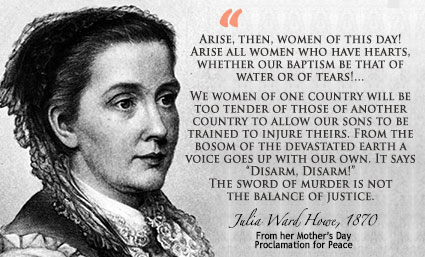
| April 17, 1986 Reverend Jesse Jackson, future congresswoman Maxine Waters and others co-founded the Rainbow Coalition, initially intended as a progressive public-policy think tank within the Democratic Party. ![]() Representative Maxine Waters, Harry Belafonte, John Sweeney, President of the AFL-CIO, Reverend Jesse Jackson, and Willie Nelson August 6, 2005-Atlanta, Georgia. Brief history of Rainbow Push Coalition |
| April 17, 1992 On Good Friday morning, about 50 people accompanied Fr. Carl Kabat and Carol Carson to Missile Silo Site N5 at Whiteman Air Force Base in Missouri, the same silo that Carl and other members of the Silo Pruning Hooks (see below) disarmed in 1984. They cut through a fence and, once inside, Carol used a sledgehammer on the concrete lid of the silo while Carl performed a rite of exorcism. Eventually, the police arrived and arrested Carl and Carol. They were jailed and held until their court appearance. At that time, they made a preliminary agreement with federal prosecutors wherein they would plead “no contest” to trespass in exchange for the property destruction charge being dropped; they were sentenced to six and three months, respectively, in a halfway house. Carl KabatA History of Direct Disarmament Actions About the Silo Pruning Hooks action |
One More Short Video, & A Story
These are informational, rather than fun, except that Pete Buttigieg is fun even while serious. I’d like to see him run for something this time. Then, any time a very wealthy person thinks of others before themselves, it’s good news; Meals On Wheels is a fine thing.
Billionaire philanthropist MacKenzie Scott has donated again—a week after gifting millions to a colege, she’s just given $70 million to Meals on Wheels America

MacKenzie Scott, worth $41.1 billion, is on a philanthropic tear and has donated an estimated 46% of her net worth.Dia Dipasupil / Staff / Getty Images
While billionaires have come under fire for not living up to their philanthropic promises, one person is rising from the rest: MacKenzie Scott. She’s pouring billions into education, public health, and the environment—and now, she just funneled some of her fortune to help feed and support millions of Americans. (snip-MORE)


Carl Kabat