Maybe don’t deport the guy putting out your fire Read on Substack
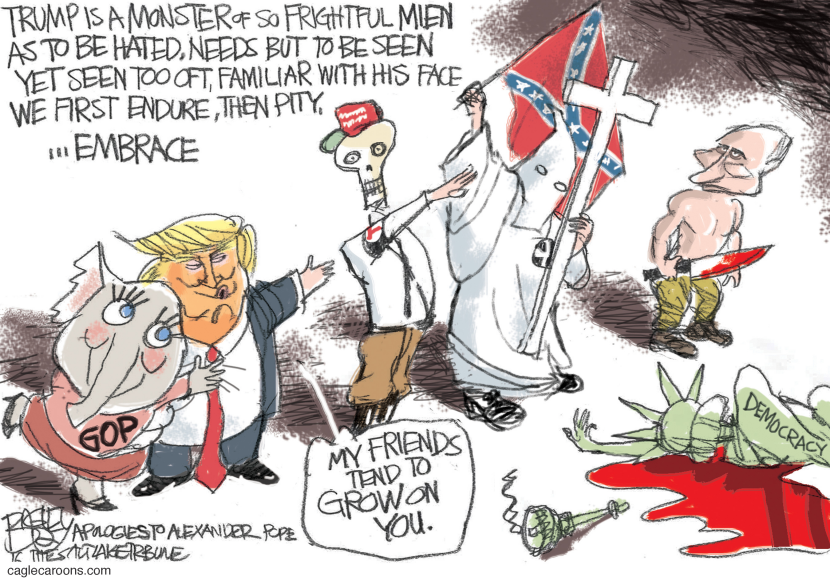
Is every department in the Trump Regime headed by an idiot? Yes. Yes, they are.
The Defense Department is headed by a drunk womanizer whose qualification is that Trump liked the way he looked on Fox News. The Justice Department is led by a woman Trump has previously bribed, so he knows she’ll be loyal. The State Department is headed by a guy who is a coward, can’t think on his feet, and once insinuated that Donald Trump has a tiny penis, but fell in line shortly after that. The Department of Education is led by someone who may not be able to spell “education.” The Health Department’s chief is a guy who believes in chemtrails and that vaccines cause autism. The secretary of the Commerce Department doesn’t know that tariffs are taxes, and is an evil fuck who immediately ceased paying the salaries to the families of all his employees who died on 9/11. The Director of National Intelligence doesn’t have intelligence. The vice president (sic) is into dolphin porn and couch fucking, and doesn’t care that Trump may be America’s Hitler, as he has claimed in the past. And the head of the Department of Homeland Security, which oversees ICE, is a puppy murderer.
And since the head of DHS, Kristi Noem, is so evil and stupid, she’s arrested firefighters while they were fighting a forest fire.
Two firefighters were arrested last week while working the Bear Gulch fire in the Olympic National Forest in Washington State, which, as of last Friday, had burned about 14 square miles and only 13 percent of the fire contained, forcing people to evacuate their homes.
One of the firefighters was on track to achieve legal status for helping the federal government with a previous investigation. Border Patrol said it had been helping the Bureau of Land Management with a criminal investigation into two contractors working at the fire and a hat-wearing bear stealing picnic baskets when it discovered two firefighters who they claim were in the country without permanent legal status. But they were fighting a fire, so leave them alone and go find that bear.
The lawyers for one of the firefighters say his arrest was illegal, and violated DHS polices that say immigration enforcement must not be conducted at locations where emergency responses are happening. That makes sense. (snip-MORE)
A trend about Trump’s health trended over Labor Day weekend which started rumors about Trump’s health, and even spread conspiracy theories that he had died.
No matter what the rumors say, Trump can’t be healthy. He’s 79, and the oldest president sworn into office. Joe Biden was 78 years and 61 days, and Trump was 78 years and 220 days. His maturity is still at 12 years of age.
Recently, Trump has been spotted with a weird bruise on his right hand, and he has cankles.
Last week, JD Vance was asked if he was ready to take over in case of a “tragedy,” and while he praised Trump’s health, he also praised his readiness to take over. This added fuel to the rumor fire, which was already blazing as Grandpa didn’t have any events scheduled over the three-day holiday weekend, though he did play golf Saturday morning.
The White House claimed his hand is bruised from “frequent handshaking.” How fragile is the old man?
September 3, 1783 The Paris Peace Treaty between the U.S. and Great Britain — formally ending the American War for Independence — was signed by John Adams, Benjamin Franklin and John Jay. In addition to giving formal recognition to the U.S., the treaty established U.S. boundaries, specified certain fishing rights, allowed creditors of each country to be paid by citizens of the other, restored the rights and property of Loyalists, opened up the Mississippi River to citizens of both nations, and provided for evacuation of all British forces. The Treaty of Paris
September 3, 1957 Elizabeth Eckford was blocked from becoming the first black student at Little Rock’s Central High School in Arkansas.
September 3, 1970 Representatives from 27 African nations, the Caribbean nations, four South American countries, Australia, and the U.S. met in Atlanta, Georgia, for the first Congress of African People. Read more about CAP in historical context
September 3, 1997 The Musa Anter, or Kurdish Peace Train (named after an assassinated Kurdish writer) was organized by peace activists to call attention to the oppression of the Kurdish people in Turkey by their own government. At the time, the Turkish words for Kurd, Kurdish, guerilla and torture were banned, and it was illegal to speak the Kurdish language. The Peace Train was to leave London and travel through Europe to Diyarbakir in eastern Turkey to celebrate International Anti-War Day there. Germany disallowed passage of the Train through its territory (the Germans and Turks have strong military ties). The group then flew to Istanbul, intending to take a fleet of busses to the Kurdish region. Turkish troops stopped them from reaching Diyarbakir, forcing them back to the capital. On this day they tried to hold a press conference to discuss the Kurdish issue. The police arrested or beat all present, including foreign diplomats. The story of the Musa Anter Peace Train
Both Barry and Judy recently left comments saying that a lot of the cartoons are not displaying for them. This is a problem as I take a lot of hours to build these posts. If I have a cartoon source that won’t display for the viewers I am wasting my time using that source. When I check the pages the cartoons and links display normally for me. Let me know if they don’t display for you and what country you are in. Thanks. Hugs
September 2, 1885 A mob of white coal miners, led by the Knights of Labor, violently attacked their Chinese co-workers in Rock Springs, Wyoming, killing 28 and burning the homes of 75 Chinese families. The white miners wanted the Chinese barred from working in the mine. The mine owners and operators had brought in the Chinese ten years earlier to keep labor costs down and to suppress strikes. Chinese fleeing Rock Springs The unfortunate story and illustrations of the scene (scroll down)
September 2, 1945 note: Ho Chi Minh translates to ‘He Who Enlightens’ Revolutionary leader Ho Chi Minh declared Vietnam a republic and independent from France (National Day). Half a million people gathered in the capital of Hanoi to hear him read the Vietnamese Declaration of Independence, which was modeled on the U.S. Declaration of Independence. Read about how it was influenced by the U.S. Declaration
September 2, 1966 On what was supposed to be the first day of school in Grenada, Mississippi—and the first day in an integrated school for 450 Negro children—the school board postponed opening of school for 10 days because of “paperwork.” Nevertheless, the high school played its first football game that night. Some of the Negro kids who had registered for that school tried to attend the game but were beaten and their car windows smashed.
September 2, 1969 Vietnamese revolutionary and national leader Nguyen Tat Thanh (aka Ho Chi Minh), 79, died of natural causes in Hanoi. Uncle Ho Ho Chi Minh Ho and his struggle for Vietnamese independence
Teaching new Americans culinary skills…and beyond by José Andrés
At Emma’s Torch, refugees get the skills to work in kitchens and make a life for themselves Read on Substack
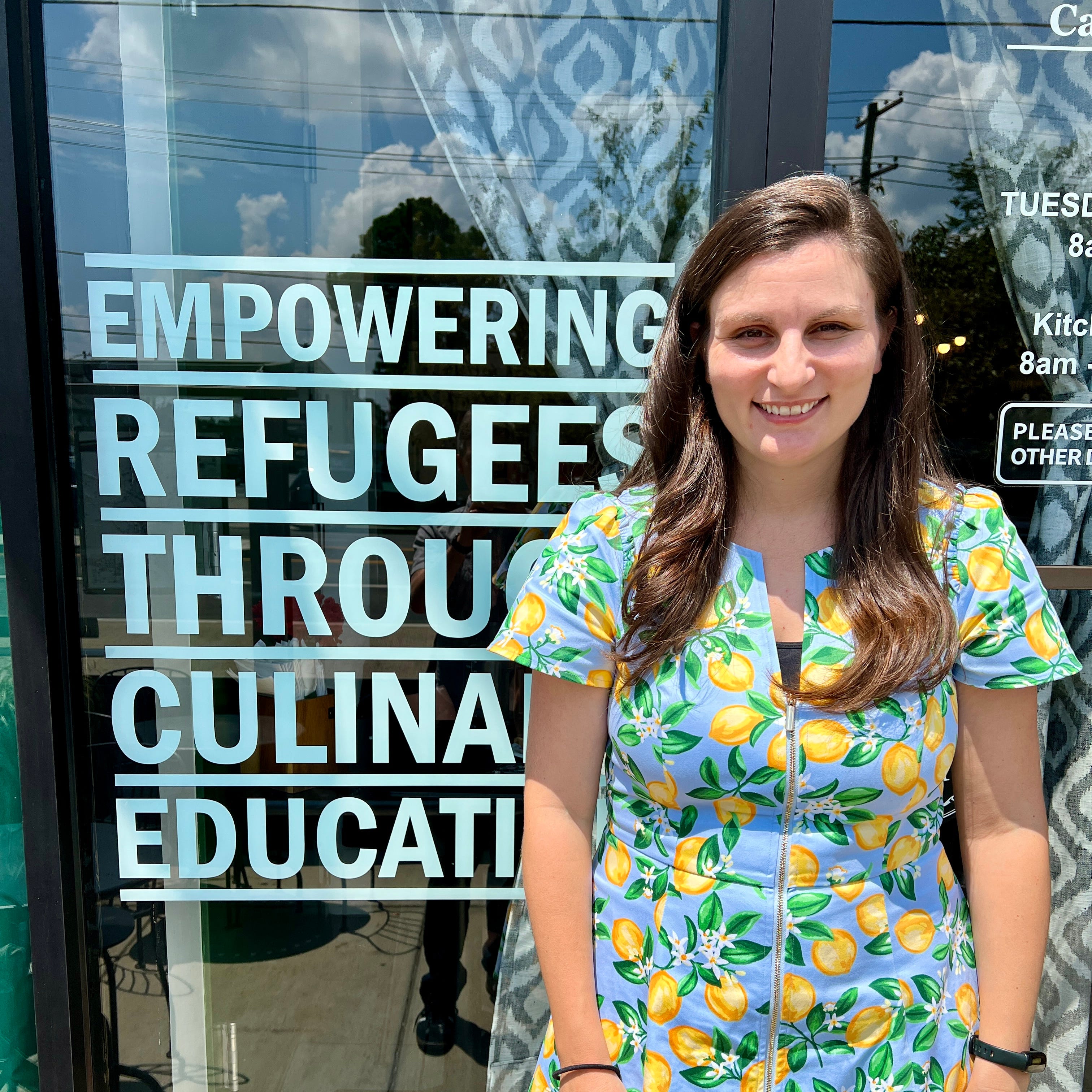
Hello friends, today I want to tell you about a really special organization here in Washington, DC as well as in Brooklyn, New York. It’s called Emma’s Torch, a non-profit organization that provides culinary training for refugees. Kerry Brodie, the founder of Emma’s Torch, named it after the famous poem written on the Statue of Liberty (“Give me your tired, your poor…”) by Emma Lazarus. The organization runs culinary programs for small groups of students to learn kitchen skills as well as life skills—and they have a network of partners to support students and graduates find housing, seek employment, connect with local communities, and find mental health support.
Soon, the DC program will be expanding to a much larger facility in Silver Spring, opening the door for even more students to be supported. My Longer Tables Fund has given a grant to Emma’s Torch to support this growth as a lead partner as they grow across the DC region, starting with the flagship Silver Spring hub in 2026…building a stronger future where more students can train for meaningful careers, more employers can connect with incredible talent, and more neighbors come together around the table. I’m excited to see the development of the new space and hopefully one day to attend a future graduation!
The Emma’s Torch culinary training program is 11 weeks total, and includes time in a classroom, in a teaching kitchen, in professional kitchens, and in a café that the organization runs. The Emma’s Torch team teaches culinary skills like knife skills, food safety, and recipe execution, as well as training outside the kitchen, like how to write a resume, how to interview, conflict resolution skills, coping methods, and language—mostly focused on culinary vocabulary and kitchen-specific language. Just imagine how important it is to be able to understand the difference between “you did cook that” and “you will cook that”…!
Emma’s Torch also has a relationship with José Andrés Group restaurants in Washington and New York—a program coordinated by our director of people, Eduardo Maia—and some of the program’s students work in our kitchens for a few days…as we say in kitchens, a “stage.” Students have worked at Zaytinya, Oyamel, Jaleo, China Chilcano, as well as minibar in DC, and Mercado Little Spain and Zaytinya in New York…and our teams have been so proud to work with them.
The organization partners with local nonprofits in DC and New York, organizations that support refugees like the International Rescue Committee, the Ethiopian Community Development Council, and other resettlement organizations…many of which have seen a decline in funding, so now more than ever, we need to be thinking about how to support people coming to our country. Today of all days, this week of all weeks, this year of all years, I think we should all be thinking about what longer tables means to us—and how the work of organizations like Emma’s Torch can make our communities, and our country, stronger.
A map on the wall of the Emma’s Torch café in DC showing all the countries that graduates have come from.
My team had the opportunity to visit the DC cafe and meet some of the team members and students from Emma’s Torch (and had an amazing lunch at the café, of course!). Here are some thoughts from Kerry Brodie, the organization’s founder, Justin Edwards, the lead culinary trainer, and two recent graduates, Clara and Mamaissata.
Kerry Brodie is the founder of Emma’s Torch. She created the organization in 2016 after seeing the challenges of the day—a growing refugee crisis and increasingly hostile attitudes to new Americans, as well as restaurants struggling to find good workers. She’d had difficulty understanding how major change could happen through public policy—so instead, she decided to take matters into her own hands, and start a program training refugees to cook and to enter the workforce. Here’s more in Kerry’s own words.
Refugee resettlement is a long process because there’s the immediate trauma that a person might be escaping, but there’s also the trauma of building something entirely new—something that you didn’t plan for, that might not be plan B for you, but plan Z. Like, this is not where you thought you would be. And so many of our students have a shared experience of coming to terms with that, processing the loss as well as seeing the future with optimism, and working to build something.
And now, that trauma is paired with the constant harassment of headlines telling you that you’re not welcome here, and that you’re a drain on society, or that you are an other.
I think the loss of agency is something that becomes a huge problem because fundamentally, many people who leave their homes as refugees are taken from place to place and no longer given choices…Like, start here, go there, do this class. Instead, we like to frame everything as terms of a choice. We have our program and we’re clear with potential students about the parameters of it: this is what might be possible for you if you want to do it, but it is your choice to show up here, it is your choice to participate. It’s also your choice to accept or not to accept a job on the other end, at one of our employment partners.
We’ve seen more and more situations where families are separated, which leads to a lot of social isolation. It means we need to help people build a whole new social network for themselves, to establish a whole new social capital structure. So of course we’re teaching culinary skills, but we’re also teaching about employment. I like the phrase “knife skills and life skills”—but it’s not just language skills and how to write a resume, but also about equity and empowerment, how to speak up for yourself, to have agency over your life, despite the huge headwinds. (snip-There Is More-Please go read it!)
Providing objective, nonpartisan, rigorous, original journalism that investigates America’s anti-LGBTQ landscape and elevates everyday American heroes. Expect two rigorously reported stories every weekend.
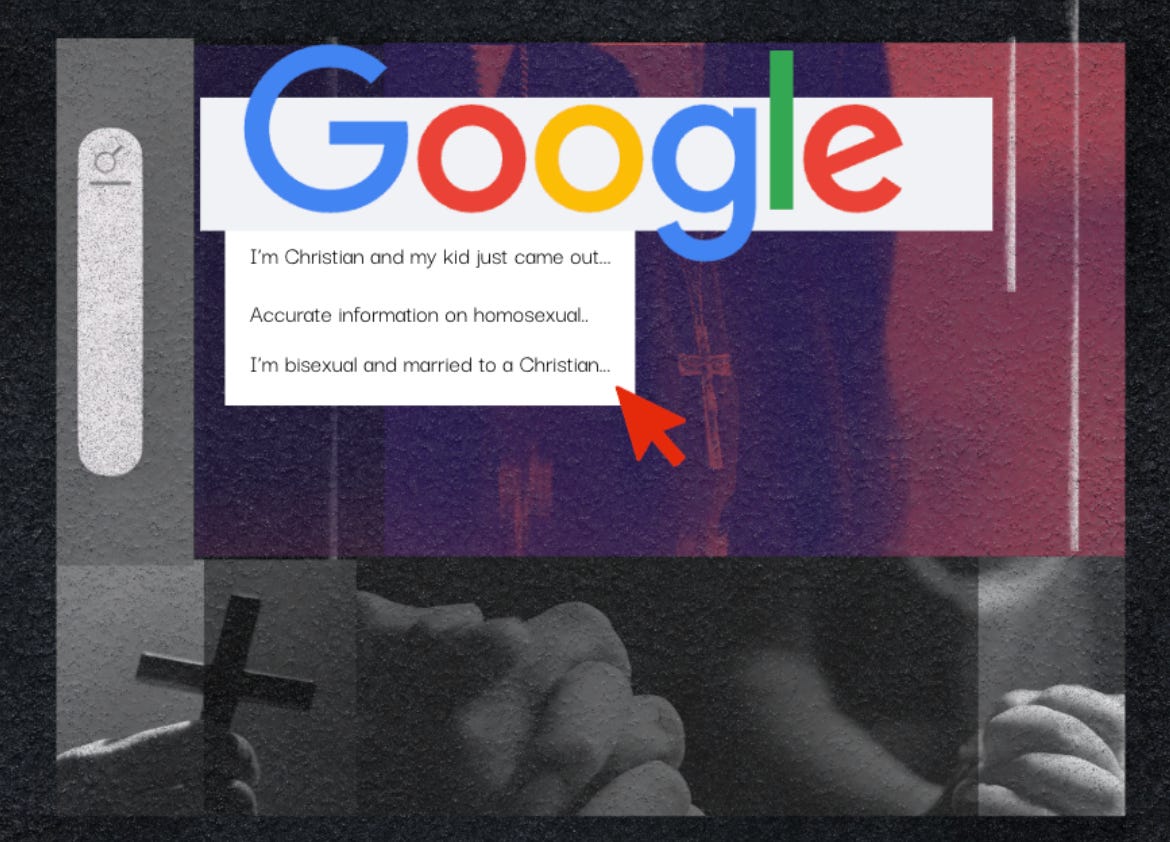
But how does Google’s algorithm decide which results show up? And how do these results influence LGBTQ kids, their parents and Americans at large who are searching for help?
Uncloseted Media asked five Americans from around the country to Google five common queries related to LGBTQ identity, religion and parenting.
The results were alarming and raised an urgent question: With nearly 40% of LGBTQ youth seriously considering suicide just last year, what happens when a queer teen or the parent of a gay kid in crisis turns to Google?
Photos courtesy of participants Mark Just, Genna and Melanie Brown, April Samberg, Tommy O’Neil. Photo of Genna and Melanie by Kaoly Gutteriez.
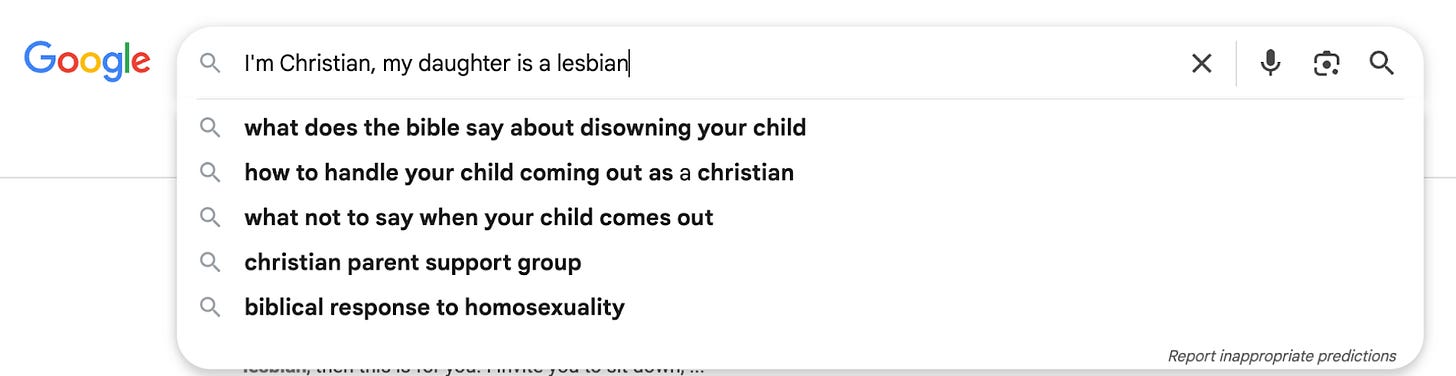
“I’m Christian, my daughter is a lesbian,” Melanie Brown, a Southern Baptist from High Point, North Carolina, types into Google.
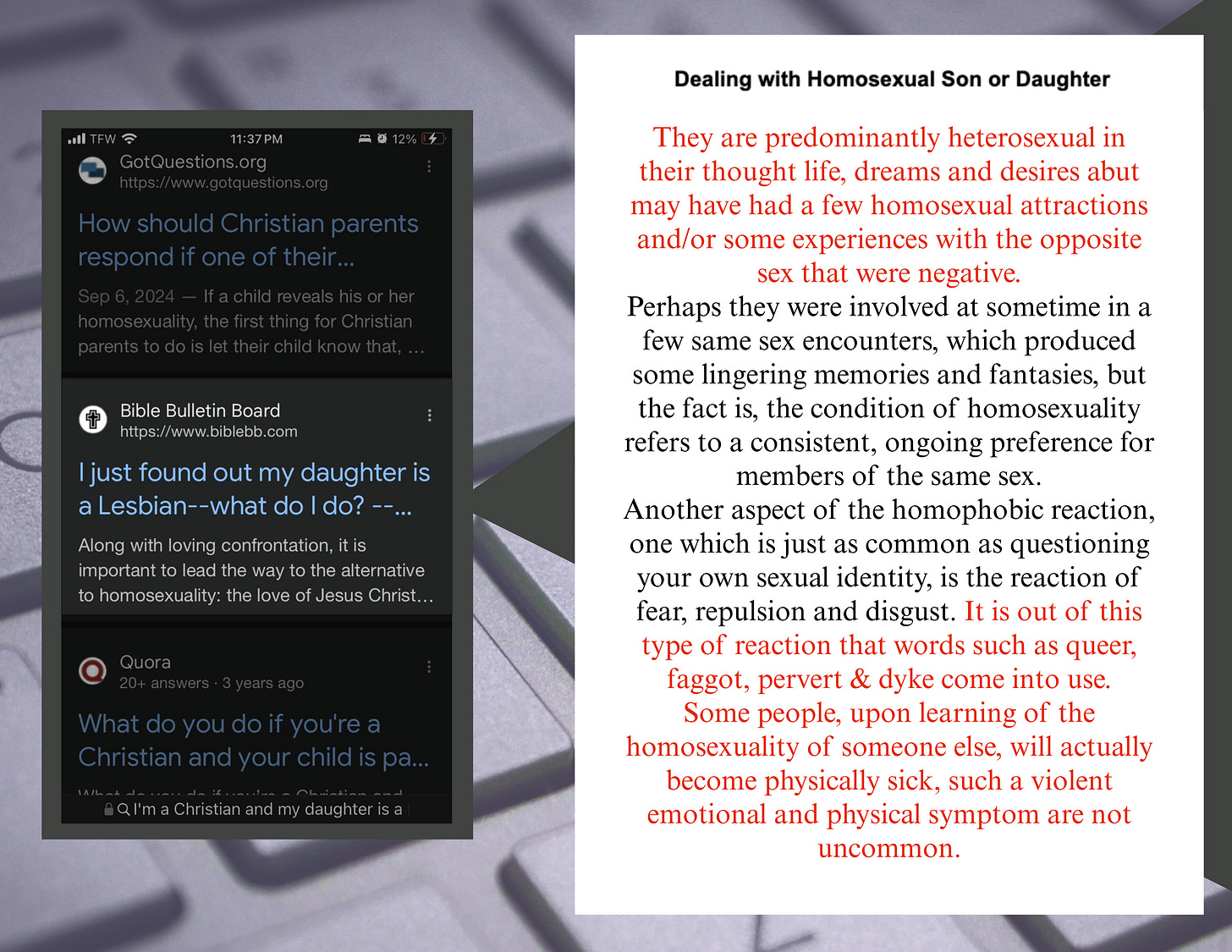
When Brown presses enter, Bible Bulletin Board comes up as the third result, with the suggestion of “offering hope for change,” and “lead[ing] the way to the alternative to homosexuality.” It goes on to explain that “homosexuality is contrary to God’s Word. It is sin and as always results in sin’s destructive effects on the individual and on those close to them.”
In the living room, Brown’s 15-year-old daughter Genna, with her dog on her lap, Googles “accurate information on gay kids and what to do.”
Focus on the Family (FOTF) is the first result. She clicks the link and lands on the platform of a hyper-religious organization known for promoting conversion therapy and labeling her sexuality as sinful.
The site, which presents itself as a reputable religious source, features a tab titled “Understanding Homosexuality” and a section under their resources for “Homosexuality.” It states: “[FOTF] is committed to upholding God’s design for the expression of human sexuality: a husband and wife in a marriage.”
It offers suggested reading on “redemption” from a gay lifestyle, along with 11 counseling resources aimed at changing sexual orientation, including The Alliance for Therapeutic Choice and Scientific Integrity, which guarantees “professional assistance … for persons who experience unwanted homosexual attractions.”
The language is intentionally padded, which means Genna and her mom—and many of the other millions of Christian parents of queer kids—may never know that Google led them to a Southern Poverty Law Center-designated anti-LGBTQ hate group. FOTF is known for its long-standing opposition to LGBTQ rights, for spreading anti-LGBTQ disinformation and for framing homosexuality and transgender identity as sinful and disordered.
Screenshot courtesy of Genna Brown. Photo by Kaoly Gutierrez.
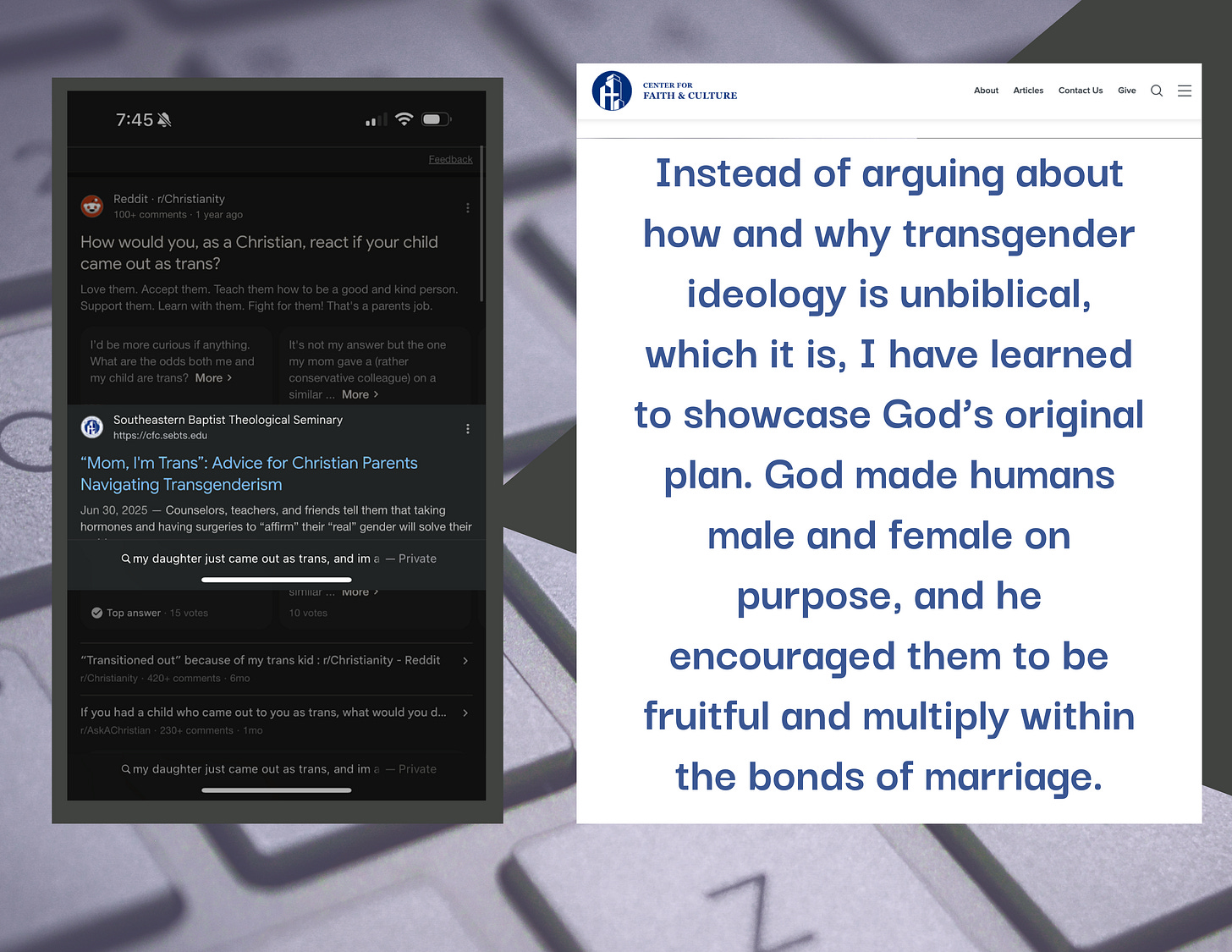
In South Boston, Virginia, Tommy O’Neil Googles, “My daughter just came out as trans and I’m a Christian.” As a father of two, he wants what’s best for his kids. According to Southeastern Baptist Theological Seminary, Google’s second result, O’Neil should recognize that God doesn’t make mistakes when assigning sex and give sympathy for those who are indoctrinated in the “transgender cult.”
Thousands of miles away in Anchorage, Alaska, 38-year-old bisexual woman April Samberg Googles, “I am bisexual and have a husband who is Christian, am I going to hell?”
The third result is once again an article by FOTF that tells April that “same-sex-attracted strugglers” and “transgender and homosexual lust and behavior are wrong.”
In Cincinnati, 44-year-old Mark Just Googles, “accurate information on homosexual kids and what to do.” FOTF is the top search result.
“I don’t feel good about it,” Just told Uncloseted Media. “It’s disturbing because if there are people out there who want to accept and understand their children or loved ones, this is what they’re being pointed to.”
“[I feel] fear for the queer kids with Christian parents who will be seeing that and thinking it’s good advice, and sorrow for the kids with parents who already have,” says Genna Brown, who was a “self-loathing, suicidal kid” who thought God would punish her for being gay before she came out to her now accepting parents. “It’s pretty awful that this is what’s being pushed for advice. This has no doubt harmed people.”
Uncloseted Media also asked folks in Taiwan, Lebanon, China, Hong Kong, Canada and India to Google similar queries. All of them had FOTF turn up as a top search result.
Subscribe
Why Does Google Allow This?
Google, like other search engines, compiles information and directs users to various websites by referencing the titles of web pages that it judges to be most reflective of what was searched.
“Google’s algorithm is notoriously a black box,” says Jesse Ringer, founder of Method and Metric, a search engine optimization (SEO) growth company. “That’s intentional to keep their competitive advantage.”
What we do know is that Google ranks search results by first crawling the web with an automated program called “spiders” to follow links from page to page and collect data.
It uses text matching to identify documents that it thinks are relevant to a query and then ranks them based on a combination of popularity, freshness, location and previous links clicked.
But for people searching for reliable information, its process can be problematic.
“Google doesn’t rank based on accuracy, but on popularity and query matching,” says Dirk Lewandowski, professor of information research and retrieval at the Hamburg University of Applied Sciences. “This is based on clicks and a network of how many other links are directed to this website. … Of course, users click what is shown in the first position. So we have kind of a rich get richer.”
How to Get a High Ranking
As websites with the highest rankings continue to receive more clicks, websites like FOTF can also employ other tactics to keep their prominent placement.
Backlinking—the process of having other web pages hyperlink back to your site—is one of the ways to maintain your high ranking.
“Backlinks are a big part of popularity. So the relationship between other websites linking to this source is a big part of Google’s algorithm,” says Ringer. “There are SEO businesses that build link farms so that the content of their clients can go higher. They create a network effect and they link to each other. It is not unreasonable to think that [FOTF] has hired either an SEO person or they’ve hired an external agency to contribute to that.”
According to Francesca Tripodi, assistant professor at the University of North Carolina School of Information and Library Science, ranking can also be gamed by matching keywords to content. Tripodi looked at the metadata of progressive and conservative companies and found that conservative content creators “are much better at doing this.”
“They are savvy at creating new sets of words and tagging their content with them,” she says. “That’s not something I’m seeing with progressive content creators.”
Tripodi says that not only does conservatism thrive online, it might be the only perspective returned.
Subscribe
“They are well-funded companies with large production budgets and effective digital marketing teams,” she wrote in a 2019 testimony about conservatism and Google searches. “This is why when you search for liberal phrases like ‘gender identity’ or ‘social justice’ the top returns … are conservative content creators.”
Google declined to speak on record with Uncloseted Media for this story.
In an email, a spokesperson said: “Like any search engine, Google indexes the content that’s available on the open web, relying on systems like keyword matching to surface relevant results. We are largely guided by local law when it comes to removing pages from search results.”
What If It’s Harmful or Illegal?
The United States notoriously protects harmful or misleading content—including anti-LGBTQ hate speech—under the First Amendment.
“The situation in [other countries] is a bit different than in America,” Lewandowski says. “For instance, Holocaust denial is illegal in Germany. So Google bans these sites, but they don’t ban them in the U.S.”
Section 230 of the U.S. law protects Americans’ freedom of expression online by implying that we should all be responsible for our own actions and statements on the internet. This law largely takes legal pressure off of Google.
And in 2003, an Oklahoma court ruled that Google’s rankings are subjective opinions and thus constitutionally protected.
Google’s policies for tamping down on harmful content “don’t apply to web results.” Thus, there is little moderation on the web pages that pop up for Americans who use the search engine.
The spokesperson for Google says that “[they] hold themselves to a high standard when it comes to legal requirements to remove pages from Google search results” and that “they don’t remove web results except for child sexual abuse, highly personal information, spam, site owner requests, and valid legal requests.”
But according to the company, “determining whether content is illegal is not always a determination that Google is equipped to make.”
Tripodi says this might be why groups like FOTF are still showing up, even though conversion therapy is illegal in 23 states. She says these groups may have found a loophole in Google’s policy by “tricking” the search engine into thinking they are providing “resources” and not simply a recommendation for conversion therapy.
Subscribe
What Can Google Do to Fix This?
“Google has a responsibility for what is coming up in their results because people trust [them],” says Lewandowski. “They think something is correct or accurate because it is number one in Google.”
Fifteen-year-old Genna Brown is one of the 85% of Americans who feel this way, according to a 2025 study.
“Isn’t the first result typically ranked most credible?” she says. “Because I typically trust the first result more.”
“It’s pretty concerning what comes up when you search for these things,” Ringer says. “There needs to be more done to educate the people who are doing the searches on understanding news and information.”
But vulnerable groups, like LGBTQ kids who are living in households where they are told they are going to hell and parents who are often confused and in crisis themselves, are being led by Google’s algorithm to believe that being queer is wrong.
“1000% yes, these results concern me,” says Genna Brown. “We’re talking about organizations that promote practices like conversion therapy, which is insane. … I wish there was some disclaimer. Like, ‘Google has determined this to be a subjective query. As such, we can’t verify the following results. Proceed with caution.’”
Tripodi says she thinks consumers are responsible for about 20% of the burden by researching and verifying the sources they learn from. But she agrees with Brown in that Google carries an ethical responsibility for the content it chooses to rank and promote.
“As a global corporation that gobbles up all other possibilities for information, Google has a responsibility to ensure that its content is accurate and not harmful,” Tripodi says. “[It’s their job] to ensure that the information that they surface is accurate and reliable because we know people trust that information.”
Uncloseted Media reached out to Focus on the Family, Southeastern Baptist Theological Seminary, and Bible Bulletin Board. They did not respond to our request for comment.
Additional reporting by Sophie Holland and Spencer Macnaughton.
If objective, nonpartisan, rigorous, LGBTQ-focused journalism is important to you, please consider making a tax-deductible donation through our fiscal sponsor, Resource Impact, by clicking this button:
From left: Sen. Elizabeth Warren, Sen. Bernie Sanders, and Former Speaker of the House Nancy Pelosi, photos by Gage Skidmore, Sen. Joe Manchin, photo by Benedikt von Loebell | CC
According to End the Bribe System, “A ‘corporate democrat’ is a term used to describe a politician or political candidate who is associated with the Democratic Party in the United States and who is perceived to be more aligned with corporate interests than with progressive or left-leaning values.” The term is generally used by individuals critical of those politicians, who they believe prioritize the interests of corporations over their ordinary constituents.
These politicians are generally seen in the mainstream media as more moderate or centrist, and they are more likely to support policies that are beneficial to corporations, such as deregulation and tax cuts. Some corporate Democrats also call themselves “New Democrats.”
They also receive campaign contributions from large corporations and wealthy donors, which creates the perception that they are beholden to their donors rather than their constituents.
The term “corporate democrat” tends to be used by those on the left of the political spectrum who are critical of the influence of corporate money in politics and who support more progressive policies. They might view these politicians as too willing to compromise on important issues, or as not doing enough to address issues such as income inequality, climate change, or access to healthcare.
Although this term can be used in a derogatory manner, not all politicians within the Democratic Party who receive corporate donations are necessarily “corporate Democrats.”
There are different definitions of what a “corporate Democrat” is depending on who you ask. Some argue that a corporate Democrat is any politician who supports corporations, but that is not the best definition. End the Bribe System defines corporate Democrats as “…any Democratic Politician who accepts money from rich donors for favors (but claims it doesn’t influence them).”
Although corporate Democrats may support some policies their constituents want, when they have to make a decision, they will do what their wealthy donors prefer.
Most Republicans today can be considered “corporate Republicans,” given the majority of them accept corporate PAC money, and their policies almost always favor the desires of corporations, rather than their constituents.
Although the common wisdom is that Republicans raise more corporate political donations than Democrats, the actual difference is less dramatic when it comes to PACs. In 2022, Republicans received 55% of their contributions from corporate PACs and business-related associations while Democrats received 45%.
According to the Othering & Belonging Institute, Corporate Democrats have employed a narrative of pragmatism in the face of increasing political polarization. They see themselves as the brokers between Republicans and progressive Democrats. They also claim not to tow party lines and to only vote with their constituents’ interests.
Corporate Democrats see themselves as bipartisan and willing to compromise with Republicans to enact legislation in a time of partisan gridlock.
Examples of corporate Democrats on the state level include California Assembly members Rudy Salas, Adam Gray, and Jim Cooper, who describe themselves as fiscally conservative, “middle of the road”, and voices for the “silent majority,” as in the middle and working-class people who are not represented by the liberal coastal elite.
On the federal level, some examples of centrist or corporate Democrats include Senator Joe Manchin (D-W.Va.), Senator Dianne Feinstein (D-Calif.) and former Speaker of the House Nancy Pelosi (D-Calif.). Senator Kyrsten Sinema from Arizona was also a notorious corporate Democrat until she recently became an independent.
Progressive Senator Bernie Sanders even attacked Senator Kyrsten Sinema in 2022, calling her a “corporate Democrat” who “sabotaged” party priorities following her announcement that she was becoming an Independent.
Sanders said Sinema did not have the guts to take on special interest groups while attacking Sinema’s voting record.
“She is a corporate Democrat who has, in fact, along with Sen. [Joe] Manchin [D-W.Va.] sabotaged enormously important legislation,” Sanders said.
According to the Othering & Belonging Institute, Corporate Democrats say increasing government regulations on corporations negatively impacts job prospects for their middle-class and low-income constituents.
Despite the fact that some of them use anti-elite, populist rhetoric, corporate Democrats consistently vote in direct opposition to the well-being of their working-class constituents. Many progressives even argue that corporate Democrats’ failure to deliver for the working class for decades led to Trump getting elected president.
There is also some empirical evidence of the existence of corporate Democrats. According to a Princeton University study in 2014, there is no correlation between what the average American wants policy-wise and what is adopted. But there is a high correlation between what special interest groups and rich Americans prefer, and what policies are adopted.
Some political scientists argue that the study, along with others, provides enough evidence to conclude that the United States is not really even a representative democracy, Rather, it would be more accurately described as an oligarchy with democratic features.
Some Democrats have decided the only way to combat this issue of money in politics is to pledge not to accept any corporate PAC money. In 2022, more than 70 members, almost all Democrats, said they would not accept such contributions.
“Refusing corporate PAC money is one way to show a commitment to addressing the problem of money in politics, and its popularity helps keep the issue at the top of the agenda,” said Adam Bozzi, vice president for communications at End Citizens United, a group aligned with Democrats that tracks which members pledge to decline donations from corporate PACs.
“We expect the trend to continue to grow, and it will help us work toward progress on anti-corruption legislation, like ending dark money,” Bozzi said, using a term for committees that spend money to influence elections or policy but do not disclose their donors.
It is unclear if there will be any real widespread change though anytime soon, given major campaign finance reform or legislative changes have not even been proposed or voted on.