Some news items I wanted to post that got lost in the short time I have to share stuff.

These four articles come from March 17 / 18th and I really wish I could have posted them then.   Hugs


How many eggs can you send? U.S. asks countries to help lower soaring prices

https://www.reuters.com/world/us/how-many-eggs-can-you-send-us-asks-countries-help-lower-soaring-prices-2025-03-14/

The above is the tRump admin trying to get other countries with higher standards in their food to send us their eggs to protect tRump from the soaring prices.

————————————————————————————————————————–


Hungary To Use Facial Recognition Against LGBTQs

Hungary To Use Facial Recognition Against LGBTQs

This scares me because the fundamentalist and white cis straight male supremacists will demand it be used here.  First on trans people to protect the children then expand it to the entire LGBTQ+ as they have been doing everything else they tried to use against trans kids / people. 


Famed Navajo Code Talkers Axed From Pentagon Sites

Famed Navajo Code Talkers Axed From Pentagon Sites

Yes I know that these were restored.  But now tRump is demanding Vance who is on the board of the Smithson and the National Zoo to remove all illegal (purge) references to race, gender, the LGBTQ+ and so much more.  He is demanding a national landmark the US government doesn’t control to toe the fundamentalist straight cis white supremacy Christians agenda to deny anything but them into history or society.  We really are seeing a complete take over of society and we must do all we can to prevent the rollback of all rights and equality of anyone not white straight cis Christian males.  This is horrifyingly scary.  Because these hate groups have learned if they can control information, control education, control what is considered good or bad by their standards they can force the youngest people in the country to voice that belief and grow up to enforce it.  It is what theocratic Islamic nations do.  Are we now a nation taken over by theocratic Christian fundamentalist demanding a change in even the constitution to force everyone to follow their god and their rules?  Please kill me first. 


Kentucky Republicans Overturn Ex-Gay Torture Ban

Kentucky Republicans Overturn Ex-Gay Torture Ban

Every accredited organization except those directly driven by fundamentalist religiously motivated agree this is simply torture.  The religious just simply refuse to believe sexual orientation is not a choice and no one wants to be like that no matter what has to be done to change it.  Including electroshock therapy to the genitals.   Think of yourself, gay straight, or any other orientation.  If you are cis and straight, how much conversion therapy would it take to make you believe you were gay / lesbian and desire that.  How could who you are attracted to be changed.  That all comes from the idea that it is a mental illness and a sickness that needs to be cured.  Which the majority of medical organizations reject, agreeing it is an inborn part of a fetus development.  Plus if you could change a sexual orientation … look at my childhood.  I was forced to please sexually both males and females.  But the only rapes that totally crashed me in the military was the one by a woman with more rank than me who demanded I have sex with her … four times.  The last time I was so upset and humiliated that I ran nude up the stairs of the housing unit for higher enlisted and pounded on my soon to be E-7’s door.  I was sobbing incoherently.  I have been raped all my life and was able to stand that.  Why did what this woman force me to do reduced me to that state?  Because it was against my very nature of who I was.  I was having same sex relations with another young guy and loving it.  What she was forcing me to do was against everything I felt inside.  That is what the people of these gay conversions want to do. 

Some of them think that being gay is a choice because … well when did they decide instead of men they would like to have sex with women?  No they just felt it, but what gay / lesbian people feel is not valid and must be forced to change. The rest of this group feels their interpretations of their view of what their god wants must be enforced on everyone even those that don’t follow their god.  Because it is their god and he must be pleased because their god hates what they hate.  Even if it is not in the bible or they misunderstood it, their hate preacher told them it was so.  They can not let others live their lives, everyone must live by their church dictates.  Why??? Because only that way their god will love them?  I am an atheist that is willing to let religious people believe as they wish as long as they don’t try to force their beliefs on others.   You do you … but why can’t they do the same.  They insist that no one can be different from them and their beliefs.   That is scary just that they think like that and more that they are now running the US government.  

PS.  When James was a newly teen of 13 his parents went to the Florida Keys with a group of us.  They always stayed apart even though they asked to be part of the caravan of RV going.  Well I caused an issue.  His … maybe abusive parents had lots of tattoos and were highly Catholic religious … even had a statue of the mother Mary in the entrance of their home.   Yes the husband ruled the house and told the wife what she would do at all times.  Which included the abuse of the child which is where we came in.  In a year or so after this even the boy started staying at our home because he was not allowed home until the mother was there.  I had seen a young kid come in with a Mohawk.  The boy had his hair shaved on both sides of his head and long in the front and back.  We had already talked to their son at our table because the parents they were trying to force the boy to get Christian tattoos. 

When I spoke up and said there is …. next hair cut … it will look grand on him.  His stepdad exploded and said he wouldn’t ever allow the boy in the house with that and he would hold him down and shave all his hair off.  As anyone can imagine I got triggered, I had been held down and had my hair cut.  I flew up from the table as Ron was grabbing at me and yelled you want him to have tattoos which is against the bible but a simple haircut which can be changed or grow back and has no mentioned in the bible upsets you so much you’re threatening the kid.  I loudly said, “What the fuck is wrong with you”!  They took the boy from our table and left his meal uneaten.  I was furious.  Others who did not know of my childhood tried to calm me down.  The family of the boy left that day from our group at the campground.  Next time the boy came to our home his hair was cut short and the parents never went on another trip with us.  Hugs


FL GOP Advances Ban On City Diversity Initiatives

FL GOP Advances Ban On City Diversity Initiatives

Again an attempt to turn the country into a while male cis straight only nation.  How much clearer can it be.  And all these republicans or most of them are fundamentalist Christians who were funded by their church in a steal run to get elected.   This not what the publican wants.   But these republican fundamentalist groups understand … politicians can force change in public opinion if they support something loud and forcefully enough.  Which is one why Kamala Harris l think lost the election, the democrats refused to respond to the attacks on trans people fearing it would hurt them.  That is how you bring people along to a new understanding.  The republicans are doing it in reverse of what the progressive movement did with government support in the early 2000s.  Now that democrats have retreated only the hard right republicans are getting their voices heard returning the countries view to pre-rights for LGBTQ+ people.  Hugs


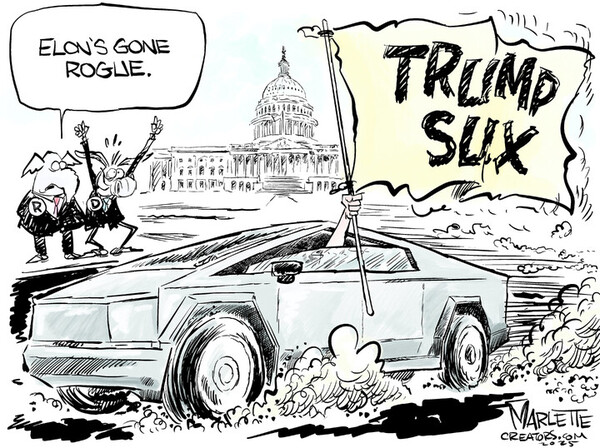
‘maga Re-Education’

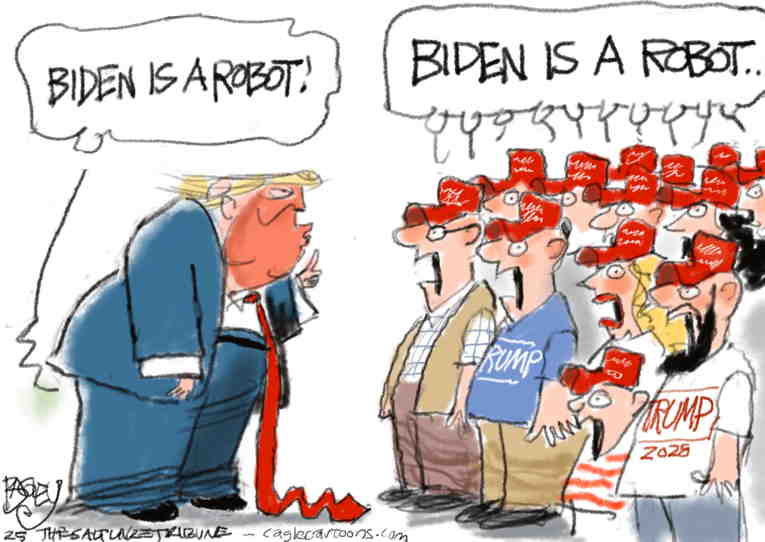
Improper Ideology by Clay Jones

Another fascist EO from the Great Red-Ass Baboon Read on Substack

MAGA re-education continues.

Donald Trump has issued an executive order for Vice President (sic) JD Vance to work with Congress to rid the Smithsonian Museum and National Zoo of “improper ideology” that is “inconsistent with federal law.”

First, what is “improper” ideology? Even Nazi ideology isn’t illegal, so what is Trump talking about here? And what’s “improper” about any ideology at the non-partisan Smithsonian? Is Fonzie’s jacket too woke? Is the Enola Gay gaying up the Air and Space Museum?

And what is “improper” ideology at the zoo? Are the zebras more Black than White? Are the Giant Pandas too Chinese? Are the Black bears getting preferential treatment over the polar bears? Do we need to deport the Brown bears to El Salvador? Maybe JD will remove all the animals that have exhibited gay behavior, which would include lions, bats, giraffes, bonobos, penguins, macaques, flamingos (obviously), lizards, gulls, and the mascot of the Republican Party, elephants, except they don’t stay in the closet and lie about it.

The Vice President is on the board of The Smithsonian, even if he’s a mascara-wearing couch-humping dolphin porn-searching gaslighting lying racist moron. However, while the federal government helps fund the Smithsonian (which includes the National Zoo), it’s not owned or under the government’s control. It’s not the responsibility of any of the three branches or even Elon’s fake and unconstitutional fourth branch.

All JD and Congress can do is cut funding if they don’t do as Trump “desires,” which is the way JD put it to Greenland, “We can’t just ignore the president’s desires.”

The executive order on “restoring truth and sanity to American history” alleges that the country has undergone “a concerted and widespread effort to rewrite our Nation’s history.” It instructs Vice President Numb-Nuts to work with Congress to prohibit spending on “exhibits or programs that degrade shared American values, divide Americans based on race, or promote programs or ideologies inconsistent with federal law and policy.”

We don’t have laws that ban “improper” ideology. We have laws that PROTECT ideology.

Among the exhibits Trump wants to ban are those in the American Women’s History Museum that “recognize men as women in any respect.” The order also calls out an exhibit on race and sculpture at the Smithsonian.

Trump’s EO also instructs the Secretary of the Interior (Dough Burgum) to reinstate any national monuments or statues within his jurisdiction that were “removed or changed to perpetuate a false reconstruction of American history.” You know, Confederate statues.

This falls right in line with Trump deporting a green card holder for protesting, cutting funds to universities for allowing protests, deporting people for writing Op-Eds, revoking hundreds of visas from student protesters, and banning words like “black,” “gay,” and “women” from government websites.

The Trump regime is trying to rewrite history while engaging in censorship. It’s re-educating. Renaming the Gulf of Mexico to the Gulf of America and making English our “official” language is a part of this, too.

This is what fascist governments do. The Nazis, the Soviets, and Imperial Japan all attempted to change history, currency, and even the languages in nations they captured. In North Korea, they tell the people their leader is a god who doesn’t even need to poop and he can talk to dolphins. By the way, dolphins can be gay, too. Russia claims that nobody is gay in the country, not even the dolphins.

The Smithsonian is wonderful, and now I’m scolding myself for not visiting the place in over a decade. It has 19 museums, 14 education and research centers, and the National Zoo, and they’re all FREE. I’ve been there several times, with most of it spent in the Air and Space Museum because I couldn’t drag my kid out of there.

If you’re in Washington, visit the Smithsonian. Hell, make a special trip to visit Washington (use the Metro while you’re here). I love the zoo, and the pandas are back. Visit it soon before Donald Trump destroys it, like he’s also planning to do with the Kennedy Center.

Everything Donald Trump touches dies.

Music notes: I listened to The Who and some Pete Townsend solo stuff. He really wants to kiss those rough boys, but not in Russia.

Drawn in 30 seconds: (snip-go see it)

Peace & Justice History for 3/30

March 30, 1891
Signaling a growing movement toward direct political action among desperate western farmers, “Sockless” Jerry Simpson called on the Kansas Farmers’ Alliance to work for a takeover of the state government.

“Sockless” Jerry Simpson
Simpson was one of the most well-known and influential leaders among Populist-minded western and midwestern farmers of the late 19th century.
Angered over low crop prices, high-interest bank loans and unaffordable shipping rates, farmers began to unite in self-help groups like the Grange and the Farmers’ Alliances. Initially, these groups primarily provided mutual assistance to members while agitating for the regulation of railroads and grain elevators. Increasingly, though, they became centers of support for more sweeping political change by uniting to help form the nationwide third-party movement known as the Populists.

More about Populist “Sockless” Jerry Simpson 
March 30, 1919
Shops were closed and thousands demonstrated in protest against Rowlatt Acts in New Delhi, Amritsar, and other Indian cities. The hastily passed law permanently extended wartime civil liberties restrictions such as trial without jury and internment without trial.
March 30, 1948
Henry Wallace, former vice-president (under Franklin D. Roosevelt) and then Progressive Party presidential candidate, lashed out at the Cold War policies of President Harry S. Truman. Wallace and his supporters were among the few Americans who actively voiced criticisms of America’s Cold War mindset during the late 1940s and 1950s.

Read more on his warnings about American fascists 
March 30, 1976

Land Day, 1978. (Photo: Gidon Gitai)
Became known as “Land Day” when Palestinians in occupied territories stood strong against the Zionist entity’s attempted confiscation of thousands of acres of land. Their grassroots protests were met with aggressive violence in which the Zionist police force killed six and injured hundreds of its Palestinian citizens.
What is LandDay? | more 
1982

AP photo/Castelnuove; Marchers protest for Land Day on March 30, 1982 in the Arab village of Sakhnine in northern Israel.
2018
Palestinian people mobilized en masse along the Gaza border to demand an end to a brutal “Israeli” blockade and to demand the rights for displaced Palestinians to return to their homeland. On that day, tens of thousands of Palestinians in Gaza put their lives on the line to participate in demonstrations that continued every Friday for over a year. Over 250 Palestinian demonstrators have been killed and over 30,000 injured. Rightfully called the Great March of Return, this unwavering display of strength solidified the Palestinian commitment to liberation and sent a clear message that Palestinians will not be silenced.

March 30, 1980
80,000 demonstrated against construction of a commercial nuclear reprocessing plant in Wackersdorf, Germany.
The project was ultimately abandoned.

https://www.peacebuttons.info/E-News/peacehistorymarch.htm#march30

Whiskey Leaks Signal Chat | Christopher Titus Armageddon Update

Stars & Movies!

Watchlist: Elliot Page, Peppermint and other trans icons share the movies that shaped them

Mar 27, 2025 Kate Sosin

This story was originally reported by Kate Sosin of The 19th. Meet Kate and read more of their reporting on gender, politics and policy.

Transgender Day of Visibility, held every March 31, was founded 16 years ago to give trans people a day to celebrate trans life and community. At a time when transgender people are facing unprecedented vitriol and attacks, it’s more important than ever to seek out accurate and affirming portrayals of trans life. 

The 19th asked 10 trans icons, from Elliot Page to Peppermint, to reflect on the movies that move them and that and affirm the dignity of trans people. 

Responses have been edited for length and clarity.


Elliot Page

Actor (he/him)

Elliot Page
(Courtesy of Elliot Page)

Recommended film: “Framing Agnes”

“‘Framing Agnes’ highlights two fundamental truths about the transgender community: One, that we have always existed, and two, we have always found clever ways to get what we need to live more authentically and ultimately survive. It’s crucial now more than ever, for trans and cis people alike, to learn about the history of the trans community, to defend trans rights and advocate for our humanity to be acknowledged and respected — because as seen in the film, our world has always had trans people in it, and it always will.”


Peppermint

Actress and singer (she/her)

Peppermint
(Davide Laffe)

Recommended film: “Monica”

“I’d recommend people watch ‘Monica’ because it shows a trans woman in a normal context where she was able to connect with her family and display a more motherly and nurturing nature towards the end of the film, which is something we don’t often get to see trans women, portrayed in ways that are actually true to how many of us are.”


Brian Michael Smith

Actor (he/him)

Brian Michael Smith
(Rich Polk/Getty Images for IMDb)

Recommended film: “Disclosure: Trans Lives on Screen” 

“My pick is definitely ‘Disclosure: Trans Lives on Screen.’ It powerfully unpacks how decades of misrepresentation in media have fueled harmful narratives, directly contributing to the unprecedented wave of anti-trans legislation we’re seeing nationwide — laws targeting our health care, sports participation and basic rights. It’s groundbreaking because it centers trans voices authentically sharing our own experiences, created entirely by trans filmmakers — unlike many films, articles and legal discussions that talk about us without ever including us. It’s essential viewing right now to counter misinformation, uplift our community and reclaim our stories during this critical fight for our humanity.”


Geena Rocero

Author, writer and director (she/her)

Geena Rocero
(Geena Rocero)

Recommended films: “Joyland,” “Lingua Franca,” “Asog” and “Tangerine”

“These are films that center trans characters in their complex humanity. As a writer and director, these kinds of character studies fascinate me. In our current political culture that dehumanizes trans folks, these films present trans lives full of agency.”


Tuck Dowrey

Director of development for PAGEBOY Productions (he/him)

Tuck Dowrey
(Erik Tanner)

Recommended film: “Changing the Game”

“This documentary is incredibly timely given the current attacks on trans youth and their right to just be kids, which includes their right to participate in sports. ‘Changing the Game’ highlights the benefits of sport for young people, particularly the social and developmental benefits, and sheds a light on the shameful and needless bullying of transgender children by adults and lawmakers. Arguments to exclude trans kids also inevitably adversely impact all girls and women, because if we begin to allow certain bodies to be questioned and investigated, it sets a dangerous precedent for anyone who exists outside of rigid gender stereotypes — in athletics and beyond. As a trans man and athlete, I passionately believe all kids should have access to the life-saving outlet of sports. ‘Changing the Game’ cuts through the misinformation and shows that trans kids in sport are no different than anyone else, and they deserve to play. It’s a must-watch for everyone.”


Tre’vell Anderson 

Co-executive director of the Trans Journalists Association (they/them) 

(Courtesy of Tre’vell Anderson)

Recommended film: “Kokomo City” 

“At a time when certain political forces are aiming to pit historically excluded communities against each other, a film like ‘Kokomo City’ — bold and uncompromising in its focus on the relationships between Black trans women and the broader Black community — stands firmly at the intersection. Director D. Smith’s propulsive interrogation is at once entertaining and informative, raw and inspiring, and I’m sure you’ve likely never seen a film like this, especially not from this vantage. You’ll be craving more authentic Black trans narratives after watching.”


Sav Rodgers

Filmmaker and founder of the Transgender Film Center (he/him)

Sav Rodgers
(Greg Doherty/Getty Images)

Recommended film: “Heightened Scrutiny”

“While ‘Heightened Scrutiny’doesn’t have traditional distribution yet, it’s a documentary well worth your time to seek out as it travels through the film festival circuit. Sam Feder’s follow-up to ‘Disclosure’follows [American Civil Liberties Union] attorney Chase Strangio as he prepares to argue a landmark trans rights case, United States v. Skrmetti, before the Supreme Court. The case, which is still pending, will determine whether bans on trans healthcare for minors violate the Equal Protection Clause of the 14th Amendment. 

“The most powerful aspect of this timely documentary draws a direct link between irresponsible, prejudiced reporting at major media institutions like the New York Times and how quickly these half-baked op-eds become cited as ‘evidence’ in anti-trans legislation around the country. Despite how bleak the world is, this film presents a case for hope: hope that we will endure, that people are fighting for us and that we can continue to fight for each other.”


Hope Giselle 

DEI consultant and activist (she/her/Beyoncé)

(Courtesy of Hope Giselle)

Recommended film: “The Mudge Boy”

“This is a queer love story that I know isn’t beautiful, but is honest and a depiction of the way that a lot of AMAB folks experience what we think is love for the first time. A film that’s hard to watch at times, but so beautiful to see happens so that you don’t feel alone.”


Tuck Woodstock

Host of the Gender Reveal Podcast and editor of “2 Trans 2 Furious” (he/him)

Tuck Woodstock
(Courtesy of Tuck Woodstock)

Recommended films: “The Aggressives” and “Beyond the Aggressives: 25 Years Later” double feature

“In a society where transness is continually misrepresented as some kind of hot new trend for predominantly White youth, it’s an incredible gift to watch this quartet of (broadly) transmasculine queers of color grow and evolve over a quarter century. While the documentaries don’t shy away from the obstacles faced by their subjects — including everything from relationship conflict and (lack of) health care access to incarceration and [Immigration and Customs Enforcement] detention — they nevertheless capture the freedom and relief of living in the world as exactly yourself.”


Kae Petrin

Co-executive director of the Trans Journalists Association and Data & graphics reporter for Civic News Company (they/ze/hir)

Kae Petrin
(Courtesy of Kae Petrin)

Recommended film: “Neptune Frost”

“After a divine gender transformation, a lost runaway joins forces with an escaped miner who’s mourning the death of his brother. Together they become beacons of hope and resistance, forming an anticolonialist hacking collective in the mountains of Burundi. The collective takes on The Authority, a totalitarian regime that ravages the workers and the environment with a violent military and aggressive drone attacks. Despite the dark subject, an unshakeable optimism and hope thread through the Afrofuturist parable. Also, it’s technically a musical. It has everything: worker solidarity, gender magic, meddling gods, romance and song breaks. And it feels particularly resonant now, even though its U.S. release came several years ago.”


Alex Schmider

Senior director of entertainment at GLAAD (he/him)

Alex Schmider
(Courtesy of Alex Schmider)

Recommended film: “Will & Harper”

“‘Will & Harper’ is a story about friendship. Harper Steele and Will Ferrell have been friends for over 30 years after meeting while working on ‘Saturday Night Live.’ After Harper’s transition, they hit the open road to reintroduce her to the American small towns, dive bars and stock car races that she has always loved — now, as herself — while processing what this new stage of life means for them individually and as friends. When trans people are so often portrayed as existing in isolation from other people, this documentary is a joy to watch as Harper and Will traverse the country making each other laugh and drinking bad beer. Comedy is a powerful tool that can create connection with an audience when they are laughing with us, not at us. ‘Will & Harper’ is a funny, sincere and enjoyable ride with two comedians who are at their best when together.”

Disclosure: Alex Schmider is a board member of The 19th. Find a full list of our board members here.

I’ve Seen Cartoons About This …

also it’s been talked about on “Grey’s Anatomy.” This is real, and exciting.

Tiny robots powered by magnets could one day do brain surgery

Robot tools powered by magnets (Supplied)

Most brain surgery requires doctors to remove part of the skull to access hard-to-reach areas or tumours. It’s invasive, risky, and it takes a long time for the patient to recover.

We have developed new, tiny robotic surgical tools that may let surgeons perform “keyhole surgery” on the brain. Despite their small size, our tools can mimic the full range of motion of a surgeon’s wrist, creating new possibilities for less-invasive brain surgery.

Robotic surgical tools (around 8 millimetres in diameter) have been used for decades in keyhole surgery for other parts of the body. The challenge has been making a tool small enough (3mm in diameter) for neurosurgery.

In a project led by the University of Toronto, where I was a postdoctoral fellow, we collaborated with The Hospital for Sick Children (SickKids) in Canada to develop a set of very small neurosurgery tools.

The tools are only about 3mm in diameter. In a paper published in Science Robotics, we demonstrated these tools could grip, pull and cut tissue.

Their extremely small size is possible as they are powered not by motors but by external magnetic fields.

Three small robotic tools, one with a blade and two with grippers.
Three magnetic tools: a cutter, a gripper and forceps. Changyan He

Current robotic surgical tools are typically driven by cables connected to electric motors. They work in much the same way as human fingers, which are manipulated by tendons in the hand connected to muscles in the wrist.

However, pulleys smaller than several millimetres wide to control the instruments are weak and prone to friction, stretch and fracture. This creates challenges in scaling down the instruments, because of difficulties in making the parts of the system, assembling the mechanisms and managing friction in the cables.

Magnetic controls

The new robotic system consists of two parts. The first is the tiny tools themselves: a gripper, a scalpel and a set of forceps. The second part is what we call a “coil table”, which is a surgical table with several electromagnetic coils embedded inside.

In this design, the patient would be positioned with their head on top of the embedded coils, and the robotic tools would be inserted into the brain via a small incision.

Diagram showing a patient lying on a table undergoing brain surgery.
Patients would lie on a ‘coil table’ containing magnets which are used to control the surgical tools. Changyan He

By altering the amount of electricity flowing into the coils, we can manipulate the magnetic fields, causing the tools to grip, pull or cut tissue as desired.

In open brain surgery, the surgeon relies on their own dexterous wrist to pivot the tools and tilt their tips to access hard-to-reach areas, such as removing a tumour inside the central cavity of the brain. Unlike other tools, our robotic neurosurgical tools can mimic this with “wristed” movements.

Surprising precision

We tested the tools in pre-clinical trials where we simulated the mechanical properties of the brain tissue they would need to work with. In some tests, we used pieces of tofu and raspberry placed inside a model of the brain.

We compared the performance of these magnetically operated tools with that of standard tools handled by trained surgeons.

We found the cuts made with the magnetic scalpel were consistent and narrow, with an average width of 0.3–0.4mm. That was even more precise than those from traditional hand tools, which ranged from 0.6 to 2.1mm.

Microscope video showing a tiny scalpel slicing some tofu.
The magnetic scalpel, shown slicing some tofu inside a model of the brain, can make cuts more precise than those done with traditional tools. Changyan He

As for the grippers, they could pick up the target 76% of the time.

Microscope video showing tiny grippers picking up a lump of raspberry.
The magnetic grippers (shown here picking up some raspberry) were successful 76% of the time. Changyan He

We were surprised by how well the robotic tools performed. However, there is still a long way to go until this technology could help patients. It can take years, even decades, to develop medical devices, especially surgical robots.

This study is part of a broader project based on years of work led by Eric Diller from the University of Toronto, an expert on magnet-driven micro-robots.

Now, the team wants to make sure the robotic arm and magnetic system can fit comfortably in a hospital operating room. The team also wants to make it compatible with imaging systems such as fluoroscopy, which uses x-rays. After that, the tools may be ready for clinical trials.

We’re excited about the potential for a new era of minimally invasive neurosurgical tools.

Changyan He, Lecturer, School of Engineering, University of Newcastle

This article is republished from The Conversation under a Creative Commons license. Read the original article.

2 Diverse Poems by Diverse Women

As always, click on the titles to see more about each poet, and why she wrote her work posted here.

1951, Brenda Hillman 1951 –

Was it odd to be born?

Was it odd to be born 
when women wore rick-rack

& the sun was a bracelet of yes? 
  
When wind bent dandelions in puffy winglets, 
& wisdom did raise her voice & not say
 weed &

when the toad did raise its spikes at the same time 
                 as federal codes 
                      & the try-to-be-perfect raised its voice?

Did the clang of copper collectors & the too-many lawns 
                 begin in Arizona

 
while peel-paint steeples rose over dirt for the prism 
                                  of progress,
 
            
                 minerals torn from mines with no mouths
but you had a mouth & sang early?

When nuclear testing began north of love
& the Remington computer was placed in office use,

when there was just as much beauty & sex as later,
while some lay down at drive-ins in Chevies on seats
                        the color of crushed 
                 berries & phone calls went up to a dime?

When Congress loaned money to countries because their grains had 
ancient fungus 
claviceps purpuria that caused 
          visions & swelling 
under the silent claw of the predator?

Was shame in you born before beauty? 
Was beauty was shame was beauty?

As white gravel spread under the white churches 
as silver sequins on danceless 
dresses tacked on each
                  “hanging by a thread”

                         like drops of sweat on horses at the city’s edge

while downcast daisies were mimicked on sisterly aprons 
       catching sugars from women making pudding from boxes 
                                  under swamp coolers

 with slightly mildewy pads in a breeze 
                      created for doing housework by yourself?
 
  
Was it odd to be born when two 
types of purslane in the west were called 
weed
even agave used to make soap, 
though it was home to the yucca moth, central & sweet, its

terminal clusters piercing thunderheads over red pick-up trucks,

& lowly dogbane hiding from developers with sibling roots 
     of fungi with  “no downsides to pesticides”
                & florets like diamond periods on certain fonts           
                                                  also were called weed?

Was it odd to be born near hillsides with radars
         like baby ears of question marks 

                        
     under the silent claw of the predator,   
when mountains shook toward sabino canyons

& there was Jello salad at picnics?

Here from this century can you say
                 was it wild to be born?

Was there anything else like this, anything at all?

Copyright © 2025 by Brenda Hillman. Originally published in Poem-a-Day on March 27, 2025, by the Academy of American Poets.

———————————————————-

Failed Poems, Jessica Abughattas

will crawl out of the drain and try to kill you
like some 80s horror flick. The picture of us at the Santa Fe 
Railyard, foreheads glistening. The black widow creeping
from the mound of linens still warm from our bodies. Mechanical
hum of crickets when you push into me in the middle of the night, when 
I can’t sleep and the years replay like a foreign movie, a terrible one 
where the voices sound underwater. Failed poems will steal 
your breath when you wake parched, hungover, emptied
in a room full of the steady buzz of the refrigerator. 
When all that excites you is momentary, an earthquake in which 
all the books shake in place, and nothing falls. No one ever reads 
failed poems, but they follow you home in the dark and tuck in 
beside you. Failed poems are cute grim reapers that live in cartoon snowcaps. 
They’re midnight döner kebabs that give you heartburn. 
Once, in Zurich, we were served rabbit paella at a party 
celebrating an exhibition of an artist from Venice Beach 
who used to be homeless but drinks $25 Erewhon smoothies and paints 
hundreds maybe thousands of happy faces with his feet. His canvasses 
go for $25,000. Toe paintings are better or at least significantly 
more profitable than failed poems. Failed poems won’t help you 
earn a living. You will probably have to do freelance marketing 
to sustain the creation of failed poems. Failed poems accrue interest. 
They seep into dreams where all your friends line up to blow 
your husband. They cost a monthly cloud subscription to maintain. 
Failed poems are injected into your father’s veins when he ODs 
for the second time this year. They’re shared to infinity 
when you’re canceled for fringe political views. When you’re six
feet under, a failed poem is written on your head. It’s a prayer 
in the form of a failed poem, the last words 
you hear on earth

Copyright © 2025 by Jessica Abughattas. Originally published in Poem-a-Day on March 28, 2025, by the Academy of American Poets.

Satanic Mass In Kansas

Yeah, this happened and has been happening here. I’m not Satanist, but we all have the same rights, including all who showed up, as long as there is no violence and no one takes away anyone else’s rights to freedom of speech and assembly. Many here know I’m a Christian believer, so of course when one side says “We’re here so that God can be in control, not Satan,” I smile, since God handled that with Satan centuries ago (so it is written. I’m not proselytizing, or even testifying, though my point is either people believe or they don’t; if they do, they know or should know that God doesn’t need human protection. Anyway.) I don’t know how far out from Kansas this story has gone, but Friday was the day, and here is the local story as of 10 PM Friday. Enjoy. There is a video on the page I can’t embed, but Kate Devine is a fine reporter on camera. There is also a text story below.

Satanic leader arrested during Black Mass protest at Kansas Statehouse

Mar 28, 2025 Updated 3 hrs ago Kate Devine

TOPEKA, Kan. (KAKE) — The leader of a Satanic group was arrested Friday after entering the Kansas Statehouse and performing a ritual, despite warnings from law enforcement.

Michael Stewart, president of the Kansas Satanic Grotto, attempted to enter the building during the group’s Black Mass event outside the Statehouse. Authorities allowed him inside as a private citizen but told him he could not hold a demonstration.

Once inside the rotunda, Stewart raised his arms in dedication to Satan, prompting a confrontation with Christian protesters. Capitol Police intervened and took him into custody.

“Our governor, Laura Kelly, after forcing us out of the building, said basically if we come back in, we are going to get arrested,” Stewart said. “So we feel like this is a violation of our First Amendment rights.”

Outside, Christian protesters held prayers and recited hymns in opposition to the event.

“We heard that Satanists were here to claim Kansas, and we said no way,” said Susan Jones, a Christian protester from Baxter Springs. “God is in control here, not Satan.”

The event, which had been planned for weeks, was originally approved to take place inside the Statehouse but was later restricted to the outside grounds. A petition opposing the event gathered nearly 100,000 signatures.

Christian groups say they gathered to pray and stand in opposition, while Satanic organizers argue their right to religious expression was violated.

It is unclear if Stewart will face charges. (end)

Peace & Justice History for 3/29

March 29, 1925
Black leaders in Charleston, West Virginia, protested the showing of D. W. Griffith’s movie, Birth of a Nation, scheduled to open at the Rialto Theatre on April 1. They said it violated a 1919 state law prohibiting any entertainment which demeaned another race. Mayor W.W. Wertz and the West Virginia Supreme Court supported their argument and prevented the showing of the film; efforts to ban the film met with mixed results around the country.

Ku Klux Klan “justice” as portrayed in Birth of a Nation.
The efforts to censor the film 
What made this movie (after a book called The Clansmen) exceptional in cinema history 
March 29, 1971

U.S. Army Lieutenant William Calley was found guilty at a court martial for his part in the My Lai massacre which claimed the lives of hundreds of South Vietnamese civilians. Convicted for the premeditated murder of at least 22 Vietnamese civilians, he was sentenced to three years under house arrest.
Resources and links about My Lai 
March 29, 1973
The last American combat troops left South Vietnam, ending direct U.S. military involvement in the Vietnam War. Military advisors to the South Vietnamese Army remained, as did Marines protecting U.S. installations, and thousands of Defense Department civilians.Of the more than 3 million Americans who served in the war, almost 58,000 had died, and more than 1,000 were missing in action. Some 150,000 Americans had been seriously wounded. The loss of Vietnamese killed and wounded was in the millions and damage to the countryside persists to this day.

The 615th MP Company was inactivated in Vietnam on the last day of American military combat presence.
Timeline on the war in Vietnam
Learn about the persisting problem of Agent Orange 
March 29, 1987
Members of Vietnam Veterans For Peace arrived in Wicuili at the end of a march from Jinotega, Nicaragua. The veterans were actively monitoring the U.S. attempts to destabilize the country by providing aid to the insurgent contras.

More than weapons may have been involved in the Contra supply operation 
Visit Veterans for Peace 

https://www.peacebuttons.info/E-News/peacehistorymarch.htm#march29

A Movement to Destroy U.S. Democracy Controls the Presidency, Congress, and the Supreme Court—But What’s Behind It?

A Movement to Destroy U.S. Democracy Controls the Presidency, Congress, and the Supreme Court—But What’s Behind It?


The man in the MAGA cap and the “Size Matters” T-shirt allowed me to take his picture. The “size” in question had to do with bullets, represented on the shirt in a line from pistol- to bazooka-grade. Not far from us stood a man in a T-shirt that read “MAKE MEN MEN AGAIN.” Women walked past in red-white-and-blue outfits. Many had Bible verse numbers or slogans on their T-shirts, though quite a few sported images of guns, some of which were aimed at “RINOs.” At a booth nearby, a group of women was raising money for the “patriots” of January 6 incarcerated in “the DC gulag.”

It was a hot summer day in 2023, and there was little new for me at this gathering of right-wing activists in Las Vegas. Yet as I took in the January 6 memorabilia, I couldn’t help thinking back on another, very different event four years earlier. In 2019, I found myself in a seventeenth-century palazzo in Verona, Italy, for a gathering of the World Congress of Families, where I sat in on speeches and discussions with American, Russian, and European political activists on “the LGBT totalitarians” and the evils of “global liberalism.” The message was in some sense the same as the one in Las Vegas, but it’s safe to say that among the well-heeled, stylishly-dressed, highly-educated, and well-traveled participants there, members of the Nevada T-shirt crowd would have stuck out like a platter of corn dogs at a fine Italian trattoria.

The last of the speakers in Verona was a diminutive white-haired academic in a nondescript jacket and tie, the dean of a small law school in California, whose brief tirade about “gender confusion” among the “radical Left” didn’t leave much of an impression on me. I did, however, take note of his name: John Eastman. The same Eastman would later show up at the podium on the White House lawn on the morning of January 6 and he would subsequently turn up as “Co-Conspirator 2” in the federal indictment of Donald Trump for conspiring to overturn the 2020 election. He himself would be indicted in Georgia for the same conspiracy and disbarred in his home state of California. (He’s pled “not guilty” to conspiracy fraud and forgery charges.)

It’s a long way from the palazzo populists of Verona to the RINO hunters of Las Vegas, but they’re clearly part of the same story—the rise of an antidemocratic political movement in the United States. Though diverse and complicated, the movement is united in its rejection of the Enlightenment ideals on which the republic was founded and represents the most serious threat to American democracy since the Civil War.

They don’t want a seat at the table—they want to burn down the house

The American idea, as Abraham Lincoln saw it, is the familiar one articulated in the preamble to the Declaration of Independence. It says that all people are created equal; that a free people in a pluralistic society may govern themselves; that they do so through laws deliberated in public, grounded in appeals to reason, and applied equally to all; and that they establish these laws through democratic representation in government. While the American republic has often fallen short of this idea, many people rightly insist that we should, at the very least, try to live up to it. And in its better moments, the United States and its revolutionary creed have inspired freedom movements around the world.

But in recent years a political movement has emerged that fundamentally does not believe in the American idea. It claims that America is dedicated not to a proposition but to a particular religion and culture. It asserts that an insidious and alien elite has betrayed and abandoned the nation’s sacred heritage. It proposes to “redeem” America, and it acts on the extreme conviction that any means are justified in such a momentous project. It takes for granted that certain kinds of Americans have a right to rule, and that the rest have a duty to obey.

No longer casting the United States as a beacon of freedom, it exports this counterrevolutionary creed through alliances with leaders and activists who are themselves hostile to democracy. This movement has captured one of the nation’s two major political parties, and now controls the Presidency, Congress, and the Supreme Court. It claims to be “patriotic,” and yet its leading thinkers explicitly model their ambitions on corrupt and illiberal regimes abroad that render education, the media, and the corporate sector subservient to a one-party authoritarian state.

How did such an anti-American movement take root in America?

The antidemocratic movement isn’t the province of any single demographic, or even ideology. The real story of the authoritarian Right features a rowdy mix of personalities, often working at odds with one another: “apostles” of Jesus; atheistic billionaires; reactionary Catholic theologians; pseudo-Platonic intellectuals; woman-hating opponents of “the gynocracy”; high-powered evangelical networkers; Jewish devotees of Ayn Rand; pronatalists preoccupied with a dearth of (White) babies; COVID truthers; and battalions of “spirit warriors” who appear to be inventing a new style of religion even as they set about undermining democracy at its foundations.

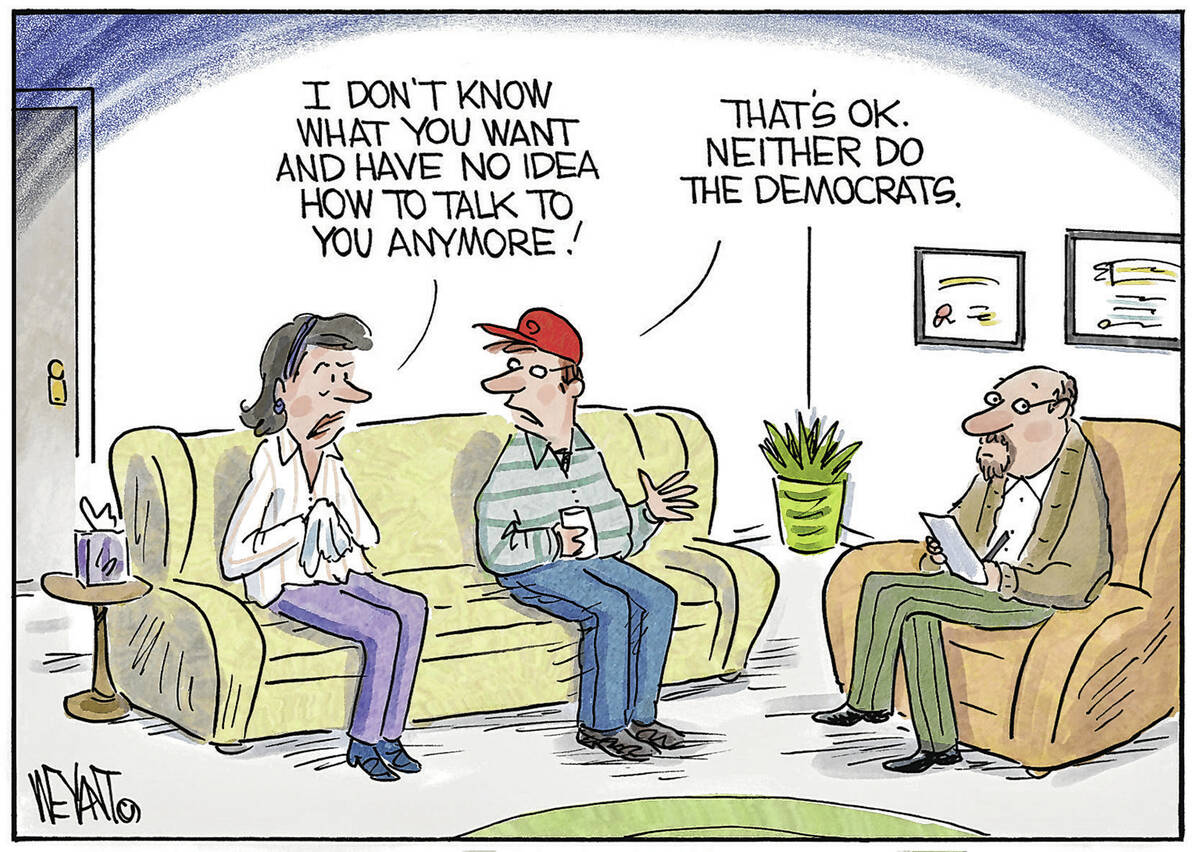
To repeat the obvious: this movement represents a serious threat to the survival of American democracy. Today’s political conflicts aren’t simply the result of incivility, tribalism, “affective partisanship,” or some other unfortunate trend in manners. All will be well, the thinking goes, if the red people and the blue people would just sit down for some talk therapy and give a little to the other side. In earlier times this may have been sage advice. Today it’s a delusion.

American democracy is failing because it’s under direct attack, and the attack isn’t coming equally from both sides. The authoritarian movement isn’t looking for a seat at the noisy table of American democracy; it wants to burn down the house. It isn’t the product of misunderstandings; it advances its antidemocratic agenda by actively promoting division and disinformation. In my book, Money, Lies and God, I bring the receipts to support these uncomfortable facts.

The fall has been swift, but it was decades in the making

When did the crisis begin? It can sometimes seem that the antidemocratic reaction snuck up on us and suddenly exploded in our living rooms when Donald Trump descended on the escalator and announced his candidacy. Looking back over the decade and a half I’ve spent reporting on the subject, the escalation of the threat is breathtaking. In 2009, I was reporting on an antidemocratic ideology focused on hostility to public education that appeared to be gaining influence on the Right. By 2021, I was writing about an antidemocratic movement whose members had stormed the Capitol—and about a Republican Party whose leadership disgracefully acquiesced in the attempted overthrow of American democracy. Yet the swiftness of the fall should not distract from the long duration of the underlying causes.

The present crisis is deeply rooted in material changes in American life over the past half century. The antidemocratic movement came together long before the 2016 election, and the forces hurling against American democracy will long outlive the current political moment. Their various elements have emerged along the fissures in American society, and they continue to thrive on our growing educational, cultural, regional, racial, religious, and informational divides.

This antidemocratic reaction draws much of its energy from the massive increase in economic inequality and resulting economic dislocations over the past five decades. In the middle of the twentieth century, capitalist America was home to the most powerful and prosperous middle class the world had hitherto seen. By the second decade of the twenty-first century, capitalism had yielded in many respects to a form of oligarchy, and the nation had been divided into very different strata. At the very top of the wealth distribution arose a sector whose aggregate net worth makes the rich men of earlier decades look like amateurs. Between 1970 and 2020, the top 0.1 percent doubled its share of the nation’s wealth. The bottom 90 percent, meanwhile, lost a corresponding share.

For the large majority of Americans, the new era brought wage stagnation and even, within certain groups in recent years, declining life expectancy. In the happy handful of percentiles located just beneath the 0.1 percent, on the other hand, a hyper-competitive group has managed to hold on to its share of the pie even as it remains fearful of falling behind.

While the political conflicts of the present cannot be reduced to economic conflicts, the great disparity in wealth distribution is a significant contributor. It has fractured our faith in the common good, unleashed an epidemic of status anxiety, and made a significant subset of the population susceptible to conspiracism and disinformation.

Different groups, of course, have responded differently. The antidemocratic movement isn’t the work of any one social group but of several working together. It relies in part on the narcissism and paranoia of a subset of the super-rich who invest their fortunes in the destruction of democracy. They appear to operate on the cynical belief that manipulation of the masses through disinformation will enhance their own prosperity. The movement also draws in a sector of the professional class that has largely abdicated its social responsibility. Much of the energy of the movement, too, comes from below, from the anger and resentment of those who perceive that they’re falling behind.

As these groups jockey for status in a fast-changing world, they give rise to a politics of rage and grievance. The reaction may be understandable. But it’s not, on that account, reasonable or constructive. Although the antidemocratic movement emerged, in part, out of massive structural conflicts in the American political economy, it does not represent a genuine attempt to address the problems from which it arose. This new politics aims for results that few people want and that ultimately harm everybody.

The rocket fuel of the new American authoritarianism

What are the main features of this new American fascism grounded in resentment? In America, just as in unstable political economies of the past, the grievances to which the daily injustices of an unequal system give rise inevitably vent on some putatively alien “other” supposedly responsible for all our ills. America’s demagogues, however, have a special advantage. They can draw on the nation’s barbarous history of racism and the fear that the “American way of life” is slipping away, abetted by an out-of-touch elite.

The story of this movement cannot be told apart from the racial and ethnic divisions that it continuously exploits and exacerbates. The psychic payoff that the new, antidemocratic religious and right-wing nationalism offers its adherents is the promise of membership in a privileged “in-group” previously associated with being a White Christian conservative—a supposed “real American”—with the twist that those privileges may now be claimed even by those who aren’t White, provided they worship and vote the “right” way. At the same time, the movement is the result of the concerted cultivation of a range of anxieties that draw from deep and wide roots.

Anxiety about traditional gender roles and hierarchies is the rocket fuel of the new American authoritarianism. Among the bearded young men of the New Right, it shows up in social media feeds bursting with rank misogyny. In the theocratic wing of the movement, it puts on the tattered robes of patriarchy, with calls for “male headship” and female subordination, and relentlessly demonizes LGBT people. On the political stage, it has centered around the long-running effort to strip women of their reproductive health rights and, in essence, make their bodies the property of the state. That effort has had significant consequences at the ballot box—which is why a sector of movement leadership is starting to speak openly about stripping women of the right to vote. The tragedy of American politics is that the same forces that have damaged so many personal lives have been weaponized and enlisted in the service of a political movement that’s sure to make the situation worse.

Expressions of pain, not plans for the future

The bulk of this movement is best understood in terms of what it wishes to destroy, rather than what it proposes to create. Fear and grievance, not hope, are the moving parts of its story. Its members resemble the revolutionaries of the past in their drive to overthrow “the regime”—but many are revolutionaries without a cause.

To be sure, movement leaders do float visions of what they take to be a better future, which typically aims for a fictitious version of the past: a nation united under “biblical law”; a people liberated from the tyranny of the “administrative state”; or just a place somehow made “great again.” But in conversations with movement participants, I have found, these visions quickly dissipate into insubstantial generalizations or unrealizable fantasy. There is no world in which America will become the “Christian nation” that it never actually was; there’s only a world in which a theocratic oligarchy imposes a corrupt and despotic order in the name of sectarian values.

These visions turn out to be thin cover for an unfocused rage against the diverse and unequal America that actually exists. They’re the means whereby one type of underclass can be falsely convinced that its disempowerment is the work of another kind of underclass. They’re expressions of pain, not plans for the future. This phenomenon is what I call “reactionary nihilism.” It’s reactionary in the sense that it expresses itself as mortal opposition to a perceived catastrophic change in the political order; and it’s nihilistic because its deepest premise is that the actual world is devoid of value, impervious to reason, and governable only through brutal acts of will. It stands for a kind of unraveling of the American political mind that now afflicts one side of nearly every political debate.

Yet there is method in this phenomenon. The direction and success of the antidemocratic movement depends on its access to immense resources, a powerful web of organizations, and a highly self-interested group of movers and backers. It has bank accounts that are always thirsty for more money, networks that hunger for ever more connections, religious demagogues intent on exploiting the faithful, communicators eager to spread propaganda and disinformation, and powerful leaders who want more power. It takes time, organizational energy, and above all, money to weaponize grievances and hurl them against an established democracy—and this movement has it all.

To be clear, there’s no single headquarters for the antidemocratic reaction. There are, however, powerful networks of leaders, strategists, and donors, as well as interlocking organizations, fellow travelers, and affirmative action programs for the ideologically pure. That matrix is far more densely connected, well-financed, and influential at all levels of government and society than most Americans appreciate.

History shows, however, that better organization does not always flatten the contradictions. On the contrary, it can sometimes amplify the conflicts. This is perhaps the most difficult to appreciate aspect of the antidemocratic movement—and the source of both its weakness and its strength. This movement is at war with itself even as it wages war on the rest of us. It consists of a variety of groups and organizations, each pursuing its own agendas, each in thrall to a distinct set of assumptions.

Viewed as a whole, it seems to want things that cannot go together—like “small government” and a government big enough to control the most private acts in which people engage; like the total deregulation of corporate monopolies and a better deal for the workforce; like “the rule of law” and the lawlessness of a dictator and his cronies who may pilfer the public treasury; like a “Christian nation” that excludes many American Christians from the ranks of the supposedly righteous. It pursues this bundle of contradictions not merely out of hypocrisy and cynicism but because the task of tearing down the status quo brings together groups that want very different things and are even at odds with one another.

Hope despite—and because of—the chaos

While a survey of the antidemocratic reaction in the United States is bound to provoke alarm and perhaps even a feeling of hopelessness, the self-contradictory nature of this reaction should be a source of hope for those who want to defend American democracy. MAGA is in many regards a weak movement, not a strong one. It draws on multiple factions, including oligarchic funders, the Christian Right, the New Right, libertarians, Q-Anoners, White nativists, “parent activists” radicalized by disinformation, health skeptics, a small segment of the Left, and others, all of whom worked together to bring slim majorities of voters to their side. These groups don’t really belong together, and they probably won’t stay together indefinitely.

In spite of their differences, for now these groups are rowing in the same boat. They told us ahead of the 2024 election that they were going to smash the federal bureaucracy, which they view for ideological reasons as interfering with their agenda. Trump said in no uncertain terms that he would turn the Department of Justice into his personal vendetta machine, and that’s what he’s attempting to do. He promised trade wars and let everybody know he would trash vital international alliances, and that’s what he’s doing.

So this is no time to retreat under the covers. Now is the time for moral courage. There are more Americans who would prefer to live in a democracy than a kleptocratic, Christian nationalist autocracy. We need to come together in broad coalitions and stay focused on organizing—from developing pro-democracy strategies and infrastructure to taking local action to improving voter turnout operations—now and in the long term.

When they lost in 2020, the MAGA movement didn’t roll over. They simply resolved to organize better and fight harder. Above all, they found new populations to evangelize with untruths. We wouldn’t wish to emulate their most craven tactics, of course, but we can learn something from their strategic resolve.