So I’m Reading This,

and wondering about the little internet anomalies that happened here after I sent a very nice letter to Sec. Noem about a young woman being detained for protesting, who’s starving to illness because halal food is not provided in her detention facility. You all know me; of course I made it very polite and non-confrontational. I had a few concerns for a bit, then let it go, slept, did yesterday only wondering a bit now and then, but nothing happened. Then this morning, I see this article. sigh I really hate posting this because I’m always encouraging people to write and direct our government, and this is certainly dis-encouraging. And discouraging. But necessary for people to know.

He Sent One Email. Then Federal Agents Came To His Door.

Trump’s Department of Homeland Security is weaponizing a little-known legal tool to crack down on free speech — and Big Tech is complying.

n October, a Philadelphia man sent an email to the Department of Homeland Security criticizing a government policy. Hours later, federal agents and local police were banging on his door to interrogate him without a warrant. It feels like something out of a movie, but it’s real.

Today on Lever Time, David Sirota sits down with ACLU attorney Steve Loney, who’s now representing the man involved, to ask some big questions: How are federal agencies obtaining your private data without a warrant? How are tech giants like Google enabling them? And what should you do if the feds come knocking on your door?

LISTEN: https://megaphone.link/TPG5560517715

Or read the transcript (as I’m doing.) Part of it below, then the rest on the page.

TRANSCRIPT

Following is an automated, unedited transcription of this episode. The text may contain grammatical or spelling errors, especially for proper nouns, or attribute text to the wrong speaker. If you plan to quote any part of this transcript, please first confirm that it is correct by listening to the audio.

[00:00:00] David Sirota: From The Lever’s reader, supported newsroom, it’s Lever Time. I’m David Sirota. The idea of civil liberties can seem abstract. Civil liberties are your basic right to speak out, criticize the government and feel free from state sponsored censorship or intimidation. And it’s easy to take civil liberties for granted as if they just exist.

That is, until they become less abstract and more concrete when the government goes full authoritarian against you. In recent months, we’ve seen the Trump administration deploying immigration enforcement agents to violently invade US cities. Killing people is an obvious violation of their civil liberties, to say the least.

But there’s a quieter assault on civil liberties also happening right now. One that can start with you just sending an innocuous email expressing opposition to a government policy, and then end up with federal agents banging on your door and big tech companies threatening to turn all of your digital data over to federal police.

Now, this may sound like science fiction or something happening in a far away country, but today on Lever Time, you’re gonna hear how it’s happening right here in America at a potentially massive scale, and I have some very big questions for the lawyer right in the middle of this battle.

How can a federal agency subpoena your personal data without a judicial warrant? Why are giant tech companies that once sold themselves as protecting customer’s privacy from government intrusion? Why are they now apparently working with the Trump administration to destroy that privacy? And what can you do if you find one of these subpoena threats in your own email inbox? Coming up, my discussion with ACLU attorney, Steve Loney, who tells the harrowing tale of one man being threatened by the government for sending an email opposing ICE’s policy and what they discovered when pushing back against the Trump administration and Big Tech.

Why don’t we start with, um, just who you are, uh, what you do, and anything you think the audience should know. Uh, for purposes of this conversation.

[00:02:22] Steve Loney: My name is Steve Loney. I’m the senior supervising attorney at the A CLU of Pennsylvania. Um, the senior attorney in the Alus Philadelphia office. I am a civil rights attorney, um, one of the last of the generalists.

So if, uh, people’s civil rights are being violated in Pennsylvania, then um, I may be on the case. I have a pretty significant First Amendment docket, which is how I got involved in cases involving people. Having their data subpoenaed by the federal government, and a couple of the most significant or high profile cases have come out of Pennsylvania and activists, uh, in suburban Philadelphia.

[00:02:58] David Sirota: So the story that we’re talking about today starts with a Washington Post article, and I want you to tell me about this article published in late October. Of 2025 detailing how the Trump administration decided to deport a man, a father of two to Afghanistan, where he expected the Taliban to kill him.

Just set the scene here with this article coming out.

[00:03:26] Steve Loney: It started with a man who ended up being our client sitting in the suburbs of Philadelphia reading. This post article in October about the government sort of stripping status for an asylum seeker, somebody who was trying to stay in the United States legally.

Um, so to the extent that all of this debate around immigration is about, you know, trying to find a path to be here illegally, this individual apparently was seeking a path to be here illegally. He had a live asylum application. His asylum claim was based on his legitimate fear that if he returned. To Afghanistan after having helped the United States while he was there.

Then he would suffer retribution, maybe even be killed by the Taliban. So the post published an article about his case where the government was essentially revoking his status and attempting to deport him imminently. And the men ended up being our client. John, and I’ll avoid using his last name because part of the First Amendment issue here is DHS piercing the bail of anonymity for people who are trying to express their abuse anonymously.

John is a naturalized citizen in Pennsylvania who is very politically interested, very upset about what’s happening. Right now, especially as it pertains to immigration. As somebody who was born in another country and worked to become a United States citizen, he read this article and was appalled by the position the government was taking.

In that article, a government lawyer, a United States lawyer from the DOJ was identified as the lawyer identified by name. It’s this is a public servant doing the business of the government in public. So this is not a doxing situation, however people might try to use that term. This is somebody who publicly signed the papers in the Afghanistan refugees case and was identified by the Post.

Our client did a quick Google search, found the government lawyer’s email address listed publicly. Again, I think he found it on his state bar’s website, so he decided to send an email to the government lawyer. It was a very innocuous, non-threatening, just plea for. The government to do the right thing and not let this individual from Afghanistan go home to face torture and death.

[00:05:38] David Sirota: So at this point in, in this story, the Washington Post publishes a story that’s, uh, a pretty tragic story of the Trump administration deporting a guy potentially sending him back to a country where he could get killed. Somebody else reads this story. Sees the, uh, public official quoted emails, the public official, a plea for a different, a different decision.

[00:06:04] Steve Loney: I believe his words were a plea for decency. Apply human decency. That was this. This was the guy’s crime, was to ask a government official to be decent,

[00:06:12] David Sirota: and that gets to this next part, which is a crime, right? That apparently in doing this, the response was to treat the. Guy who sent the email almost as a criminal, what happened next?

[00:06:28] Steve Loney: What happened next was that the government investigated him or started to investigate him as a criminal. Within hours of hitting send on the email, he used his Gmail account to send this email to the government official, and within hours he received a notice on his Gmail account sort of form. Notice from Google saying that we’re waiting to notify you that your data has been requested by a government agency and you have seven days to seek a court order stopping this or else we’re gonna comply and hand over your data to the government.

[00:06:56] David Sirota: This is hours later.

[00:06:57] Steve Loney: Hours

[00:06:57] David Sirota: later, like not, not a few days later, not caught in the spam filter. It’s like sends the email, maybe goes out, does some errands, comes back, checks his email, and he gets this email in his Gmail precisely saying. The government is like knocking down our door. Google’s door demanding your data,

[00:07:13] Steve Loney: right?

And Google’s not gonna step up and try to resist this. Google’s not gonna look into whether this is a legitimate government inquiry. Google is putting the onus on this individual who all he did was send a two line email to navigate federal courts and figure out what motion to file on his own dime. To stop this train or else Google’s gonna comply with the subpoena.

[00:07:34] David Sirota: This subpoena, to be clear, is known as an administrative subpoena. So just for people who hear this term, it’s not like the government went to a judge, got a judge to sign off on a warrant, like in a couple of hours, and then sent something to Google. This is something. Different. And I think it’s important for people to understand what an administrative subpoena is as distinct from a, a judicial warrant,

[00:08:00] Steve Loney: right?

And, and a judicial warrant is what you would normally expect to be sought by a prosecutorial entity trying to prosecute or investigate a crime. So, as I said before, they treated him like a criminal, but they didn’t follow the procedures and the guardrails that are in place to protect our rights. In the event that.

A prosecutor wants a warrant to search your stuff. So what they’re doing instead is trying to shoehorn these kinds of requests into administrative subpoenas. So administrative subpoenas are authorized to some extent by statute. So DHS has statutory authority to investigate, essentially, I’m gonna oversimplify, but essentially violations of immigration law or interference with immigration functions.

So if DHS is legitimately. Investigating a violation of the immigration laws. It can issue its own subpoena. It doesn’t have to go to to a judge because it’s not, that is not a criminal process. That or it’s not yet a criminal process, right? So the agency can do agency things through an administrative subpoena, but there are still guardrails and, and a bygone, quaint era of Trump won.

We might’ve expected the tech companies who are under no obligation. This is, this is a big distinction between a criminal search warrant signed by a judge and an administrative subpoena. The recipient of the administrative subpoena, the tech company can actually say no. They can say thanks. No thanks.

And in that past era when tech companies seemed to be more interested in kind of marketing how good of a job they were doing at protecting their users’, privacy would kind of tout that we will push back on these subpoenas. And they did. And there were some cases like this, that back and forth, the administrative subpoena goes to Google or any tech company, they look at it, they realize it’s not a judicially signed warrant.

They say, no thanks. Then the onus is on the government to go to court and they know how to file things in federal court. The onus is on the government to go to court and justify why their investigation is tied to that statutory authority. Right. And it’s so then it’s not on the end user. But things have shifted now in a couple of different ways.

One is we’ve learned that. DHS is overusing these administrative subpoenas.

[00:10:16] David Sirota: How much, like what are we talking about overusing?

(snip-more)
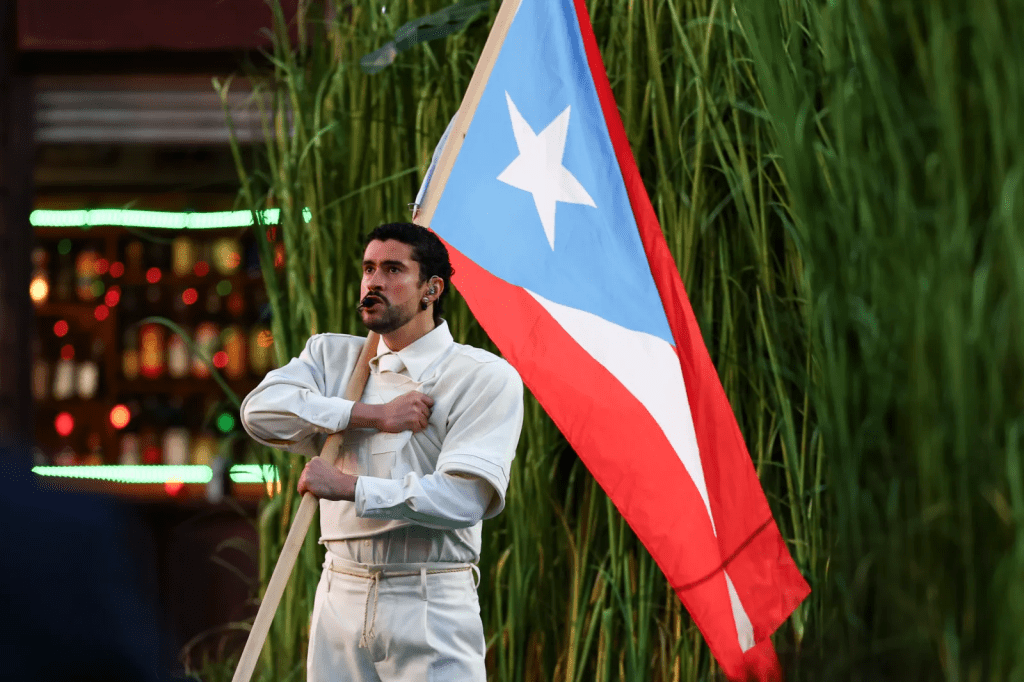
How Cool Is This?

Chart Shows Widespread Side Effect to Bad Bunny Performing in Spanish

By Melissa Fleur Afshar Life and Trends Reporter


Duolingo saw a sharp rise in Spanish learners following Bad Bunny’s Super Bowl Halftime Show, according to a post shared by the language-learning app on social media.

“Duolingo saw a 35 percent increase in Spanish learners last night. Better late than never,” the company wrote on Threads on February 9, under its official account, @duolingo. The post, which included a graph showing a clear spike in Spanish lessons, has been liked more than 7,500 times to date.

The surge followed Bad Bunny’s history‑making performance at the Super Bowl Halftime Show, where he became the first artist to sing primarily in Spanish during the most-watched sporting event in the U.S. Duolingo’s official Threads account shared the data shortly after the night ended, highlighting the immediate impact the performance appeared to have on language learning behavior.

Bad Bunny’s Super Bowl appearance came months after he used a Spanish-language monologue on Saturday Night Live (SNL) to tell audiences they had “four months to learn” Spanish ahead of the game. Despite online backlash from some commentators at the time, the data shared by Duolingo suggests many viewers embraced the message, with interest in learning Spanish rising sharply during the Halftime Show.

Snip-MORE

Observing Black History Month

The Story of 10 Black Models Becoming Legends at the Battle of Versailles Fashion Show in the 1970s

In November 1973, 10 Black models helped put American fashion on the map in an epic runway face-off with well-known French designers. In honor of the start of New York Fashion Week, here’s their story!

By Angela Johnson

Models dressed in midriff-bearing tops and oversized bottoms of solids, stripes and plaids worn with headresses during the fashion show to benefit the restoration of the Chateau of Versailles, five American designers matching talents with five French couturiers at the Versailles Palace on November 28, 1973 in Versailles, France…Article title:’One night and pouf! It’s gone! (Photo by Fairchild Archive/Penske Media via Getty Images)

We know that for most people, February is all about the Super Bowl, Valentine’s Day and Black History Month. But if you love style, you know it’s also about New York Fashion Week – a time for some of the hottest designers to showcase the latest trends — kicking off Wednesday (Feb. 11).

While we’re going to be all over covering what’s new from Sergio Hudson and Public School, we thought this week was also a perfect time to show some love to the Black designers and models who paved the way for future generations.

We’re kicking things off with the story of 1973’s Battle of Versailles fashion show –an epic stand-off between French and American designers in Paris. The highly-hyped event not only put American fashion designers on the map, but it also put a spotlight on a group of 10 Black models who shut down the red carpet and showed the rest of the world the beauty in having a diverse runway that looked more like the rest of the world.

A Palace in Need of Repair

Fragment of golden entrance gates to the Versailles Palace (Chāteau de Versailles) on a sunny summer day. The Versailles is a Royal Palace in Versailles which is a suburb of Paris, some 20 kilometres southwest of the French capital.

The Palace of Versailles is an iconic French landmark. The stunning estate became the official royal residence in 1682. But while it has been a tourist destination for quite some time, in the early 1970s, the 17th century palace was in desperate need of a $60 million glow-up to repair years of damage.

A Fabulous Fundraiser

American Fashion co-ordinator, Miss Eleanor Lambert (Mrs Berkson) who arrived by Qantas today to finalise arrangements for a major all-American fashion show in Sydney and Melbourne later this year. May 25, 1967. (Photo by Trevor James Robert Dallen/Fairfax Media via Getty Images).

American fashion publicist Eleanor Lambert knew $60 million dollars wasn’t small change, so she proposed the idea of a fashion show to raise money for the Versailles repair project. Working with the palace curator, Gerald Van der Kemp, she wanted to invite some of the wealthiest elites from around the world to view collections from fashion designers from France and the United States. Lambert believed the ticket sales would help bring in much-needed funds for the palace project and give American designers a chance to prove their talent on the world stage.

The French Designers

Fashion designer Pierre Cardin stands in his studio surrounded by models. (Photo by Pierre Vauthey/Sygma/Sygma via Getty Images)

Lambert’s idea got the green light, and the date was set for Nov. 28, 1973. The French assembled an all-star lineup of designers, including Hubert de Givenchy, Yves Saint Laurent, Pierre Cardin, Marc Bohan (Creative Director for Christian Dior) and Emmanuel Ungaro. Ready to show the international audience that Paris was the fashion capital of the world, they planned more than an ordinary runway show, but a production that featured live music, dance and an extraordinary set.

The American Designers

NEW YORK, NY – JANUARY 24: Designer Stephen Burrows attends the Tribute To The Models Of Versailles 1973 at The Metropolitan Museum Of Art on January 24, 2011 in New York City. (Photo by Stephen Lovekin/Getty Images)

The American team accepted the challenge and built a roster that included designers Oscar de la Renta, Halston and Bill Blass. Unlike the French, Team USA brought a little more diversity to the event, with the only woman designer, Anne Klein, and Stephen Burrows, a Black graduate of New York’s Fashion Institute of Technology, who made a name for himself with his colorful, lightweight knit designs and signature lettuce hem.

News of the show got lots of press in both the United States and France. John Fairchild, who was the editor of Women’s Wear Daily at the time, helped add to the hype, billing the event “The Battle of Versailles.”

Choosing Models

Norma Jean Darden, Bethann Hardison, Billie Blair (Getty Images)

The budget for the event was tight, causing some of the more well-known models of the time — like Jerry Hall and Lauren Hutton — to turn down the $300 job. But their decision left the door open for a group of talented and beautiful Black models who were happy to step in and help bring the designer’s clothing to life. In the end, the American show featured 10 Black models – Billie Blair, Bethann Hardison, Pat Cleveland, Amina Warsuma, Charlene Dash, Ramona Saunders, Norma Jean Darden, Barbara Jackson, Alva Chinn and Jennifer Brice – making it one of the most diverse runways the fashion industry had ever seen at a major show.

Americans in Paris

Models Bethann Hardison and Armina Warsuma arrive in Marseille, Paris. (Photo by Michel Maurou/Reginald Gray/WWD/Penske Media via Getty Images)

Although they weren’t paid much for the gig, many of the Black American models chosen for the show jumped at the chance to participate in a high-profile international event. Pat Cleveland remembers how excited many of the models were when they first set foot on French soil.

“They got out of the bus and kissed the ground, they were so happy,” she said.

A Not-So-Warm Welcome

Model Pat Cleveland eats a sandwich backstage during the Battle of Versailles fashion show to benefit the restoration of the Chateau of Versailles on November 28, 1973. The Battle of Versailles featured the top five American designers matching their talents with five French couturiers. The Americans triumphed. (Photo by Reginald Gray/WWD/Penske Media via Getty Images)

Although the city of lights was beautiful, the American designers and models did not feel the love in France. Designer Stephen Burrows confirmed that their accommodations were far from five-star.

“There was no toilet paper in the bathroom. It was terrible,” Burrows said. “They had the girls there working all day long and didn’t feed them.”

Rehearsal Drama

Oscar de la Renta watches American team model Billie Blair practicing in a breakout rehearsal space within the palace complex. (Photo by Michel Maurou/WWD/Penske Media via Getty Images)

The French weren’t any more gracious when it came to the rehearsal time, using up most of the days leading up to the show to run through their performance –leaving the American team to make the most of the middle of the night.

A Star-Studded Guest List

Marisa Berenson, Roy Halston, Liza Minnelli and friends attend the fashion show to benefit the restoration of the Chateau of Versailles, five American designers matching talents with five French couturiers at the Versailles Palace on November 28, 1973 in Versailles, France. (Photo by Fairchild Archive/Penske Media via Getty Images)

The idea of a showcase featuring some of the best in American and French fashion attracted a who’s who of high-profile stars, including Elizabeth Taylor, Liza Minelli (who took the stage during the American show) and Andy Warhol.

The French Performance Was a Production

American born-French entertainer Josephine Baker in costume rehearses on stage before her performance during the “Battle of Versailles” fashion competition in Paris on November 29, 1973. (Photo by Reginald Gray/WWD/Penske Media via Getty Images)

On the night of the show, the French took the stage first, with a 40-piece orchestra, more than $30,000 worth of props and performances from well-known Soviet ballet dancer Rudolf Nureyev and legendary performer Josephine Baker along with their designer’s collections. American model Bethann Hardison remembered the French designer’s elaborate presentation that lasted for more than 2.5 hours.

“They had everything. You just couldn’t believe all the entertainment they had,” she said. “It was like a circus. The only thing they didn’t do was shoot a man out of a cannon.”

The Americans Met the Moment

After the French showcase, it was Team USA’s turn to take the stage. Although they walked to music on a cassette tape instead of a live orchestra, they met the moment, with the Black models showing off their rhythm as they floated down the runway. Although their show was only 35 minutes, they left the audience – who gave them a standing ovation – wanting more.

Making Fashion Ready-to-Wear

Battle of Versailles (Photo by Reginald Gray/WWD/Penske Media via Getty Images)

While the French showcased classically tailored clothing conceived with a wealthy client in mind, the American designers were looking toward the future and embracing a growing shift towards ready-to-wear pieces that were accessible to a wider audience. The designers weren’t afraid to add color and pattern to a collection that was made for time.

The Power of Diversity

Models dressed in gowns take the stage during the fashion show to benefit the restoration of the Chateau of Versailles, five American designers matching talents with five French couturiers at the Versailles Palace on November 28, 1973 in Versailles, France…Article title: ‘One night and pouf! It’s gone! (Photo by Fairchild Archive/Penske Media via Getty Images)

Filmmaker Deborah Riley Draper captured the magic of the Battle of Versailles in the documentary, “Versailles ’73: American Runway Revolution.” In an interview with CBS, she emphasized the importance of this groundbreaking moment in fashion history.

“What America was able to do was to demonstrate that diversity and inclusion on the stage was the most powerful weapon they could have,” she told CBS in an interview.

Trump admin’s ‘cartel drone’ story bursts like a balloon. Or four.

Is every agency of the tRump admin totally screwed up and useless?  But I want to point out the Nazi like states used such as defend the homeland.   These Nazi wannabee white supremacists are so desperate to have the Nazi ideology forced on the public that they slip it into every aspect of the current administration.  Hugs

According To Libertarians,

(You can listen to this, on the page)

January 16, 2025 6:01AM

Biden Didn’t Cause the Border Crisis, Part 1: Summary

By David J. Bier

This is Part 1 of a four-part series on the origins of the border crisis: Read Part 2Part 3Part 4.

During President Joe Biden’s term, Border Patrol arrested an unprecedented number of immigrants who crossed illegally into the United States. Many believe Biden caused this increase in migration by reducing border enforcement. However, data obtained by the Cato Institute through the Freedom of Information Act (FOIA) challenges this narrative. In fact, the border crisis began before Biden took office and ended before he left.

From his administration’s first day in January 2021, Biden actually increased border enforcement—arrests, detentions, and removals of border crossers all increased. The prevailing narrative that blames Biden overlooks the real causes of the crisis: America’s robust labor market and bad immigration policies that incentivized illegal entries. However, Trump, not Biden, mostly started those policies. Biden eventually phased out some of them; he increased legal migration, and as the labor market cooled, the problem dissipated.

Summary

The main takeaways are:

  • Illegal immigration had already increased to a 21-year high before Biden entered office.
  • Biden immediately started increasing expulsions from his first day in office.
  • Biden tripled interior detention and increased border detention 12-fold.
  • Biden increased air removal flights by 55 percent over 2020 levels.
  • Biden negotiated broader expulsion deals with foreign countries than Trump.
  • Biden got many foreign countries to carry out crackdowns on illegal and legal migration.
  • Biden removed or expelled 3.3 million border crossers—three times as many as Trump.
  • Biden even managed to remove a similar percentage of crossers as Trump’s four years.

Despite Biden’s historic crackdown:

  • Expulsions did not deter migrants, even among demographics universally expelled.
  • The percentage increase in evasions of Border Patrol increased as much as Border Patrol arrests, implying that releases did not cause the crisis and that many people did not want Border Patrol to catch them but were undeterred by the threat.
  • Releases occurred not because Biden cut removals but because migration grew faster than the administration could increase them.
  • As a result, releases only occurred among specific demographic groups and in certain areas where removals were logistically complicated.
  • Biden could not easily remove groups to Mexico, like families, children, and immigrants from distant countries who were arrested in record numbers.

The actual causes of the increases in illegal immigration were:

  • Unprecedented labor demand, which incentivized and funded migration from around the world: From February 2021 to August 2024, there were more open jobs each month than in any month before Biden’s term began. During this time, economies worldwide were recovering far less quickly than the United States. As labor demand subsided in 2024, immigration fell.
  • Unprecedented access to information about migration through the Internet and social media: Internet access rose rapidly from 2018 to 2021, nearly doubling in Central America and reaching unprecedented highs in South America. Social media platforms gave people step-by-step instructions on migrating and connected them directly with smugglers. This opened migration from around the world, which contributed to the number of releases.
  • Novel and perverse enforcement policies: The Title 42 expulsion policy incentivized repeat crossings by returning people to Mexico, where they could immediately attempt to re-enter the United States. Title 42 also cut off access to asylum, incentivizing more Border Patrol evasions.
  • Novel and perverse legal migration policies: Title 42 not only banned asylum for people who crossed illegally but also prohibited legal entries by asylum seekers, including demographic groups that had traditionally always entered legally, like Haitians, Cubans, and Mexican families. Biden eventually increased legal entries by these groups and others, limiting the crisis’s extent and ultimately contributing to its end.

The border crisis did not end because Biden signed an executive order in June 2024. If he had signed his border executive order in 2021, it would have merely duplicated what Title 42 was already doing: ban asylum. Moreover, the border executive order did not significantly change the downward trend in arrivals in 2024, which had already fallen in half during the five months before he signed it. Finally, the order did not increase removals. Rather, the crisis primarily ended because labor demand subsided significantly and because Biden expanded legal migration.

Read Biden Didn’t Cause the Border Crisis, Part 2: Did Biden Cut Enforcement?

A Couple Of Shorts; More Topical But In A Humorous Fashion

I acquired this link to a David Nihil short in 3 different ways, but it will not embed. I promise it’s worth the click, and it’s short.

https://youtube.com/shorts/qdFI3Y1Xa2o?si=yhsp9ugIcxHkeAqi

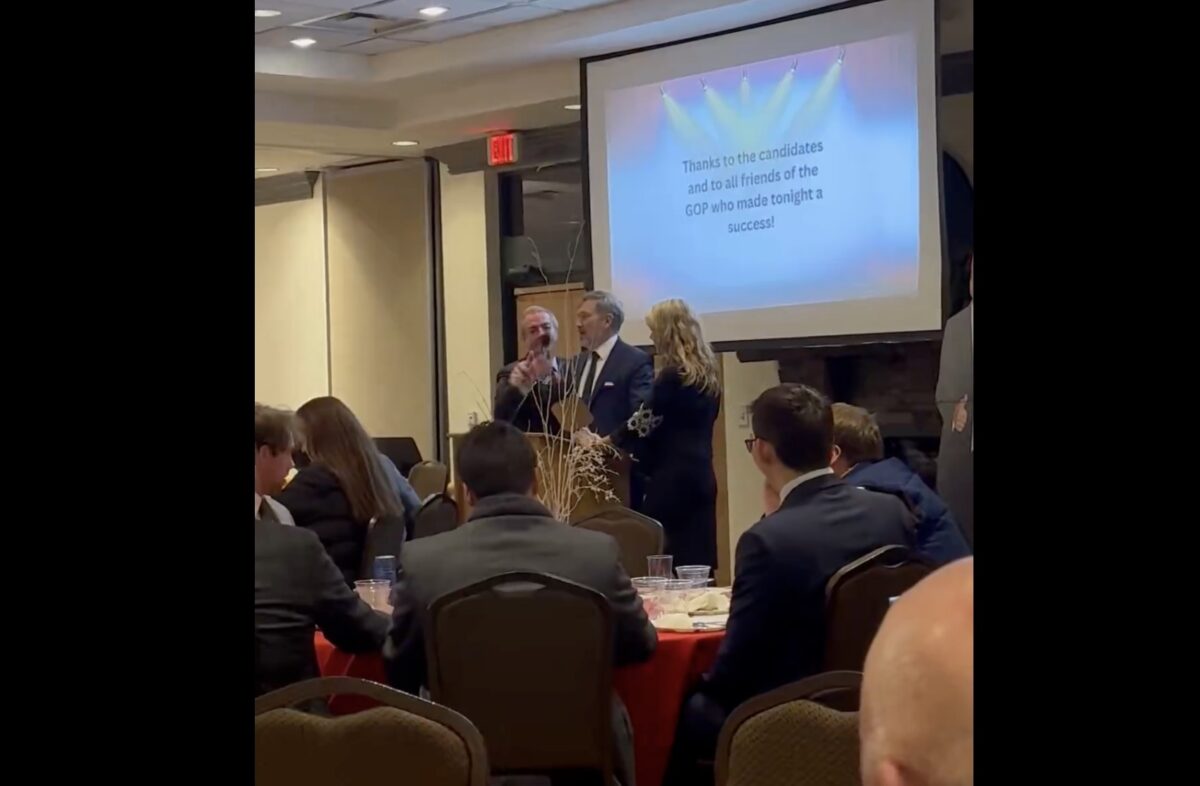
GOP Official Snatches Thomas Massie’s Mic In the Midst of Comments at Kentucky Event

As much as they wish to deny it maga republicans cannot stand an independent Republican not sucking up to tRump so they yanked his mic before he could convince the audience of the truth / reality.  Hugs

GOP Official Snatches Thomas Massie’s Mic In the Midst of Comments at Kentucky Event

Rep. Thomas Massie (R-KY) had a microphone snatched right out of his hand Friday night as he spoke at the Oldham County, KY,  Republican Party’s Lincoln Day Dinner.

Massie was in the midst of saying, “If you are a congressman, you work not for the Speaker of the House, I work for you!” pointing to the audience, when event emcee and state House Speaker David Osborne (R) decided he’d heard enough.

Osborne grabbed the mic away as someone yelled, “Welcome to the snake pit, baby!”

Massie then walked off “in solidarity” with supporters who left the event because he’d been cut off, according to the Louisville Courier Journal.

Massie told the paper that he joined supporters for drinks at Ernesto’s Mexican Cuisine in La Grange.

“I said, ‘Well, if they’re going to walk out for me, I’ll walk out and meet with them,’” Massie said.

Oldham County Republican Party Chair Blaine Anderson said Massie’s mic was taken only because he had gone over his allotted time limit.

In a text message to the paper, Anderson said Massie and his primary opponent Ed Gallrein were given “explicit instructions that they had five minutes to speak.”

After Massie was given an extra minute “as a courtesy,” Anderson said Osborne took away the mic.

“This had nothing to do with what was being said by the Congressman,” Anderson wrote. “It was about speaking time expiring.”

Massie called Anderson a “great guy” and said he didn’t blame the chairman for the mic incident. “But he’s swimming upstream,” Massie added. “There’s some Massie Derangement Syndrome in Oldham County among the establishment.”

President Donald Trump threw his support behind Gallrein after a series of rogue moves Massie made against House Republicans. Massie has stood firm in his call for a full release of the Epstein files, condemned U.S. involvement in Iran, and denounced Trump’s “One Big Beautiful Bill” that became law last summer.

Earlier Friday, Trump called Massie a “moron” while remarking at the National Prayer Breakfast in Washington, D.C.

“There’s something wrong with him,” Trump said of Massie who continues to challenge the president on the release of the Epstein files. “We call him Rand Paul Jr. They just vote no. They love voting no. They think it’s good politically.”

MS Now clips about the new Epstein file releases. Pick a couple or watch them all your choice

Names of the wealthy abusers still redacted.  Hugs


The DOJ is making it as difficult as possible for the congress people to see the files.  Only 4 computers are set up for hundreds of congress people.  Plus they are still redacted not of the victims but of the names of the abusers.  Hugs


Stuff I Saw During My Jogs

Friday and Saturday. Enjoy while taking a break from the big game, or just enjoy whenever!

===

http://youtube.com/post/UgkxYHx582PD9x35cjaAklWR1b99_pZOTHRm?si=eq76y1PWoI8ySXkx
WeRateDogs
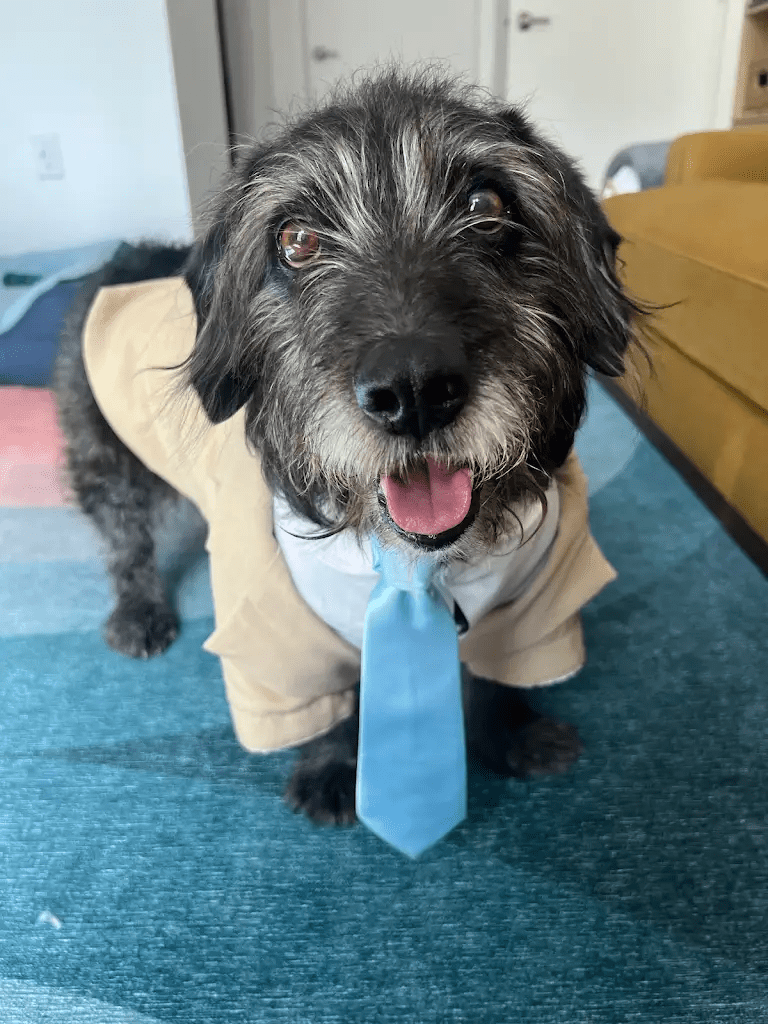
1 day ago Javier, our CEO, wanted to check in with everybody. He hopes you’re doing alright. If not, you’re welcome to take a few deep breaths with him and think of something you’re looking forward to. Javi is looking forward to the Bad Bunny halftime show ❤️

http://youtube.com/post/UgkxIK9nsJmpxmiip5xhUxcnR-XGOkU2NcCX?si=atK_jV3EhVi8dcPO

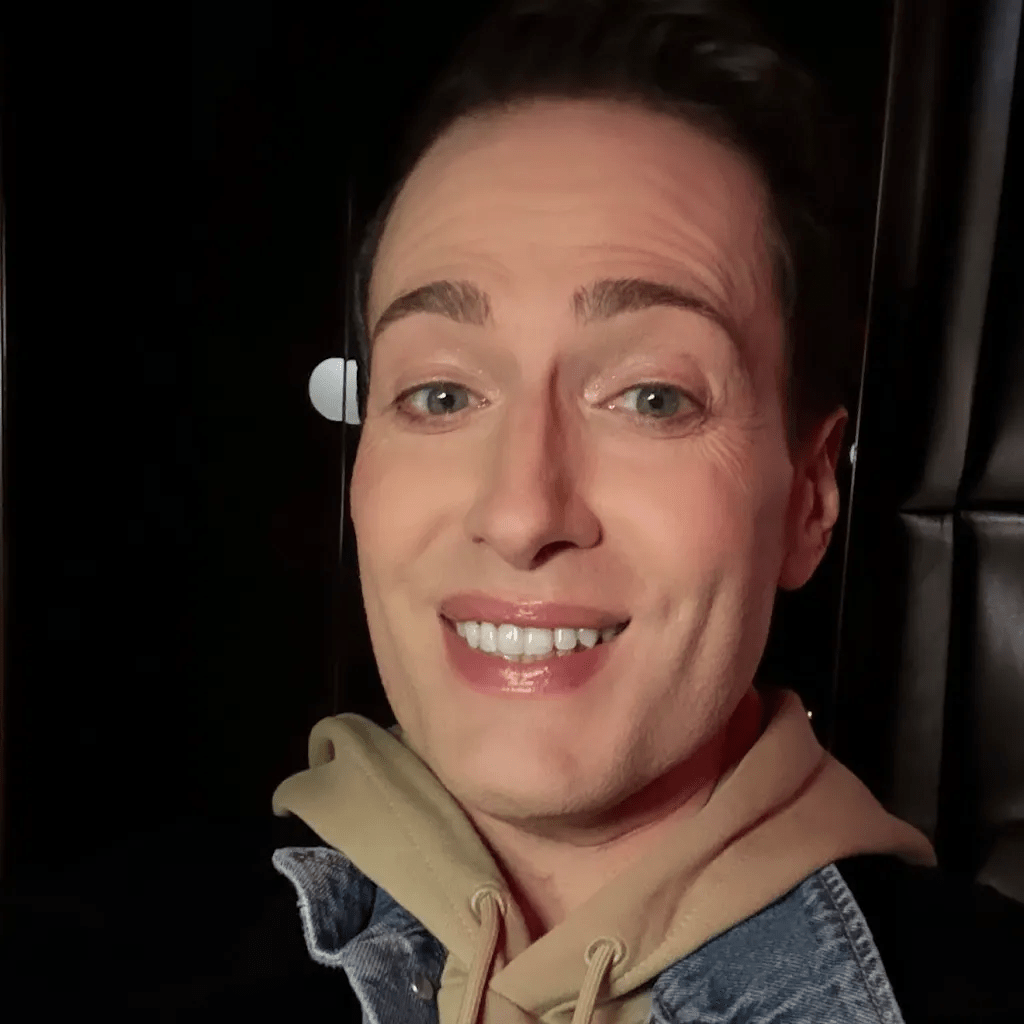
Randy Rainbow6 days ago Punxsutawney Phil saw his shadow, predicting new videos coming this month… 💌🎶💖

http://youtube.com/post/UgkxmbD6u_T-UhBr1nwyqHjmqIWfPeVpavN2?si=Mymur9qFx0pA_6W6

http://youtube.com/post/UgkxpQ37vRwpotd2SoNyrV2HG4KLmx9EEQ0-?si=q8RF6NfuiNw0t99K

===

Dance Party!

And a simple quote:

“Dogs smell time. The past is underfoot; the odors of yesterday have come to rest on the ground.”

Alexandra Horowitz

Queer Representation In Black History Month

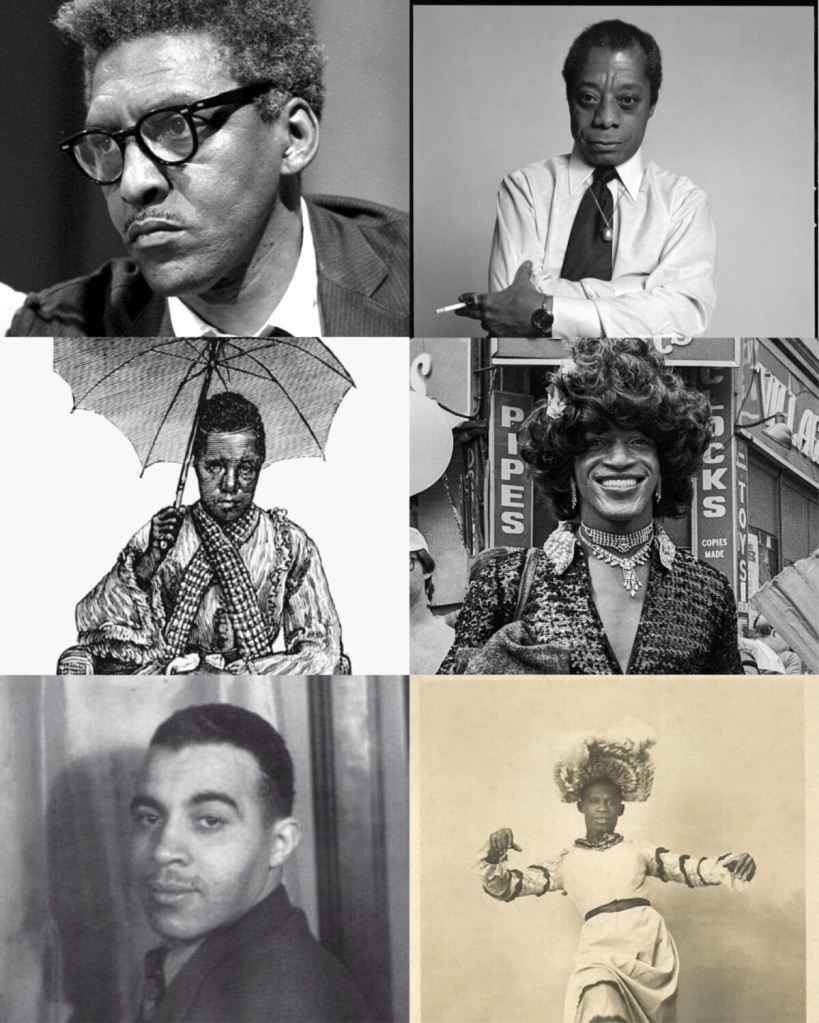
Since I started reading here at Scottie’s, I’ve thought especially of Bayard Rustin during Black History month. I learned of him (aside from him being at the side of Rev. MLK Jr.) from The Nation magazine back in the early 1990s. Mr. Rustin finally got a movie in 2023, and I’ve wondered about other representation within. There is a veritable trove of information, so here is some of that. Enjoy with your favorite beverage. -A.

=====

Voice of the day

God does not require us to achieve any of the good tasks that humanity must pursue. What God requires of us is that we not stop trying.
– Bayard Rustin

=====

Black Queer History is American History

By Tymia Ballard, Communities of Color Junior Associate

 it’s important to note the amount of  BIPOC Queer History that has been an integral part of American history but has unfortunately been largely erased. Queer history surrounding people of color is deeply interwoven with American history, revealing critical insights into the nation’s progress in civil rights, social justice, and cultural evolution. To understand American history fully, it’s essential to acknowledge how Black queer individuals have shaped and influenced pivotal movements, art, and thought in the U.S. Despite facing intersectional challenges related to both race and sexual orientation, Black queer Americans have persistently fought for visibility, acceptance, and equality, contributing a legacy that has strengthened America’s commitment to inclusion and diversity.

Black queer history includes significant contributions to American arts and culture. From the Harlem Renaissance to contemporary music and fashion, Black queer individuals have played central roles in defining American aesthetics and storytelling. The Harlem Renaissance of the 1920s, for example, was driven by several Black queer artists, including poets like Langston Hughes and novelists like Richard Bruce Nugent, whose works celebrated Black identity while also subtly addressing queer themes. These artists expanded narratives around Black life in America, blending the experiences of race and sexuality into a singular, expressive voice.

The contributions of Black queer Americans to political activism are also inseparable from American history, especially when considering the origins of LGBTQ+ advocacy. These activists confronted police harassment and societal prejudice, laying the groundwork for the LGBTQ+ rights movement in the U.S. (snip-click through to see the stories)

https://glaad.org/black-queer-history-is-america-history/

=====

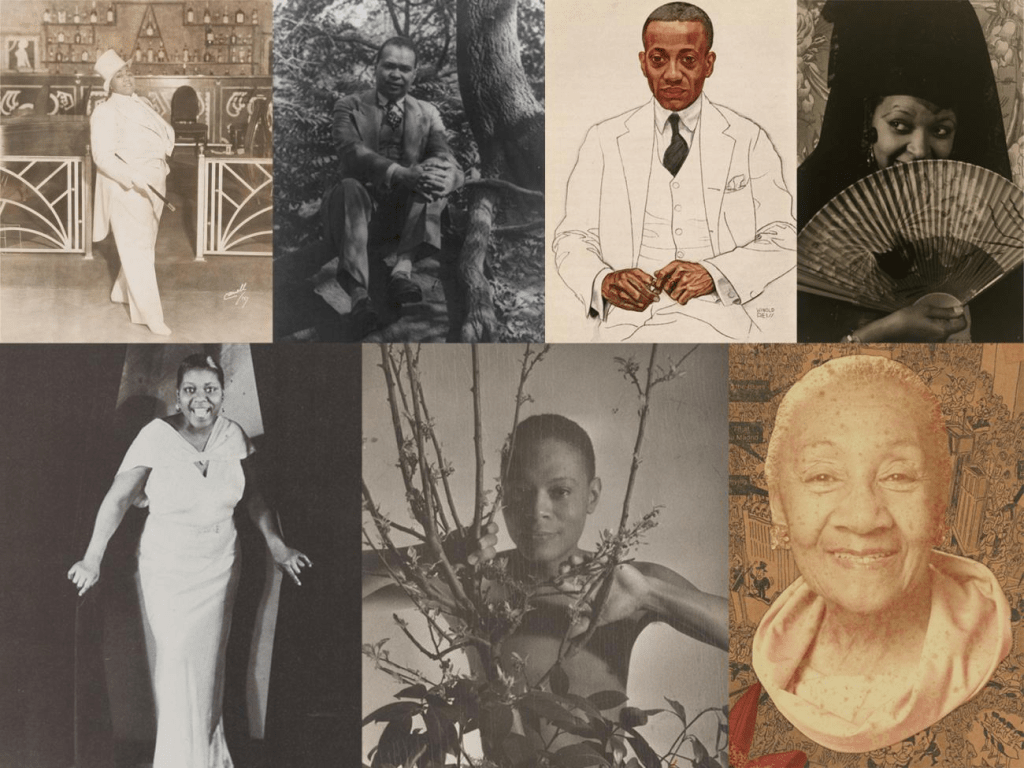
The Harlem Renaissance in Black Queer History

African American literary critic and professor Henry Louis Gates once reflected that the Harlem Renaissance was “surely as gay as it was Black, not that it was exclusively either of these.” Gates’s comments point to the often-overlooked place of the Harlem Renaissance within queer history.

The Harlem Renaissance, a literary and cultural flowering centered in New York City’s Harlem neighborhood that lasted from roughly the early 1920s through the mid-1930s, marked a turning point in African American culture. Developments from Zora Neale Hurston’s folklore-influenced fiction to Duke Ellington’s colorful orchestrations reflected an assertive and forward-thinking Black identity that philosopher Alain Locke dubbed “The New Negro.”

Black queer artists and intellectuals were among the most influential contributors to this cultural movement. Like other queer people in early twentieth century America, they were usually forced to conceal their sexualities and gender identities. Many leading figures of the period, including Countee Cullen, Bessie Smith, and Alain Locke, are believed to have pursued same-sex relationships in their private lives, even as they maintained public personas that were more acceptable to mainstream audiences. From a modern vantage point, the work of these artists and their peers is part of the foundation of modern Black LGBTQ art.

Top row l to r: Gladys Bentley, ca. 1940. 2013.46.25.82; Countee Cullen by Carl Van Vechten, 1941. Courtesy Library of Congress, Prints and Photographs Division; Alain Locke by Winold Reiss, 1925. National Portrait Gallery, Smithsonian Institution. Ethel Waters as Carmen by Carl Van Vechten, 1934. 2010.42.4
Bottom row l to r: Bessie Smith from Delegate magazine, 1975. Gift of Anne B. Patrick and the family of Hilda E. Stokely. 2012.167.9; Jimmie Daniels, early 1930s. Gift of Paul Bodden in memory of Thad McGar and James “Jimmie” Daniels. TA2020.19.3.1; Alberta Hunter, date unknown. Gift of Paul Bodden in memory of Thad McGar and James “Jimmie” Daniels. A2020.19.1.2

(snip-do click through to see. There is a wealth of history: writers, blueswomen, entertainers. There is even a video they cannot play due to restrictions, and then yet more historical information.)

https://nmaahc.si.edu/explore/stories/harlem-renaissance-black-queer-history

=====

Hidden figures in queer Black history

Throughout February, in honor of Black History Month, we’ve been busy on Stonewall’s Instagram highlighting some of the lesser-known figures in queer Black history. These bold individuals lead with bravery and authenticity, moved the needle on LGBTQ liberation and racial justice, and paved the way for future generations. Each one of these icons should be a household name! Read on to learn some of the hidden history of our intertwining and ongoing struggles for equality.

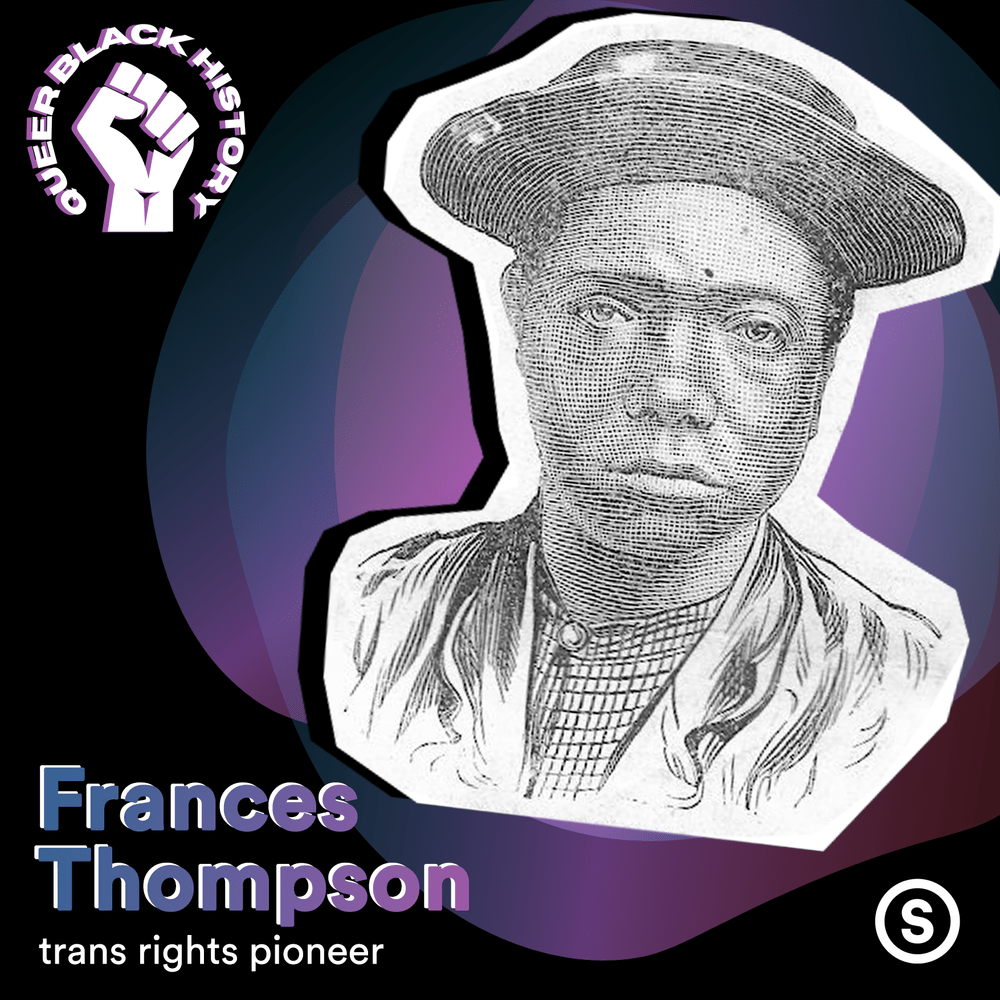
Frances Thompson – Trans Rights Pioneer

Frances copy.png

Believed to be the first transgender woman to testify before the United States Congress, Frances Thompson was born into slavery in 1840. Living as a free woman by the age of 26, Thompson was an advocate for bodily autonomy, an anti-rape activist, and she played a pivotal role in getting the US government to enact legislation protecting the civil rights of newly emancipated Black people.

Thompson’s bold legacy lives on today as we continue fighting for self-determination, dignity, and justice for queer and trans people. Her story serves as a reminder that queer and trans people have always been here, and we always will be. Always.

Learn more about Frances here.

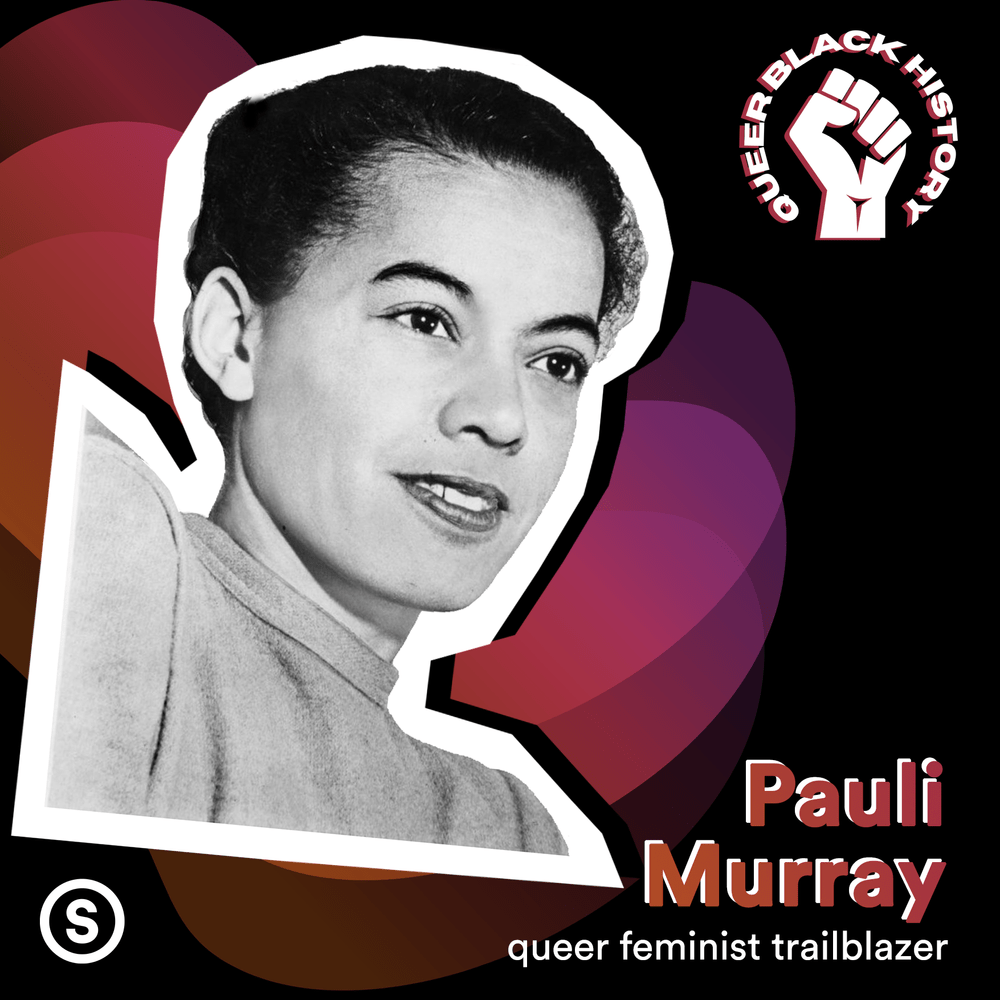
Pauli Murray – Queer Feminist Trailblazer

One of the most pivotal – yet often forgotten – figures of the Civil Rights Movement, Pauli Murray was a Black, queer, feminist lawyer who dedicated a lifetime to challenging preconceived notions of race, gender, sexuality, and religion. Murray pioneered many of the non-violent protest tactics of the Jim Crow era, and authored legal arguments that played a pivotal role in outlawing systemic racism and sexism.

Many of Murray’s contributions to the Civil Rights Movement were erased from the broader narrative as same-gender relationships and gender nonconformity disrupted the respectability expectations of the era. Many historians believe that if the language existed at the time, Murray may have identified as a trans man.

Later in life, Murray became an Episcopal priest, and was eventually canonized as a saint – a queer saint!

Learn more about Pauli here.

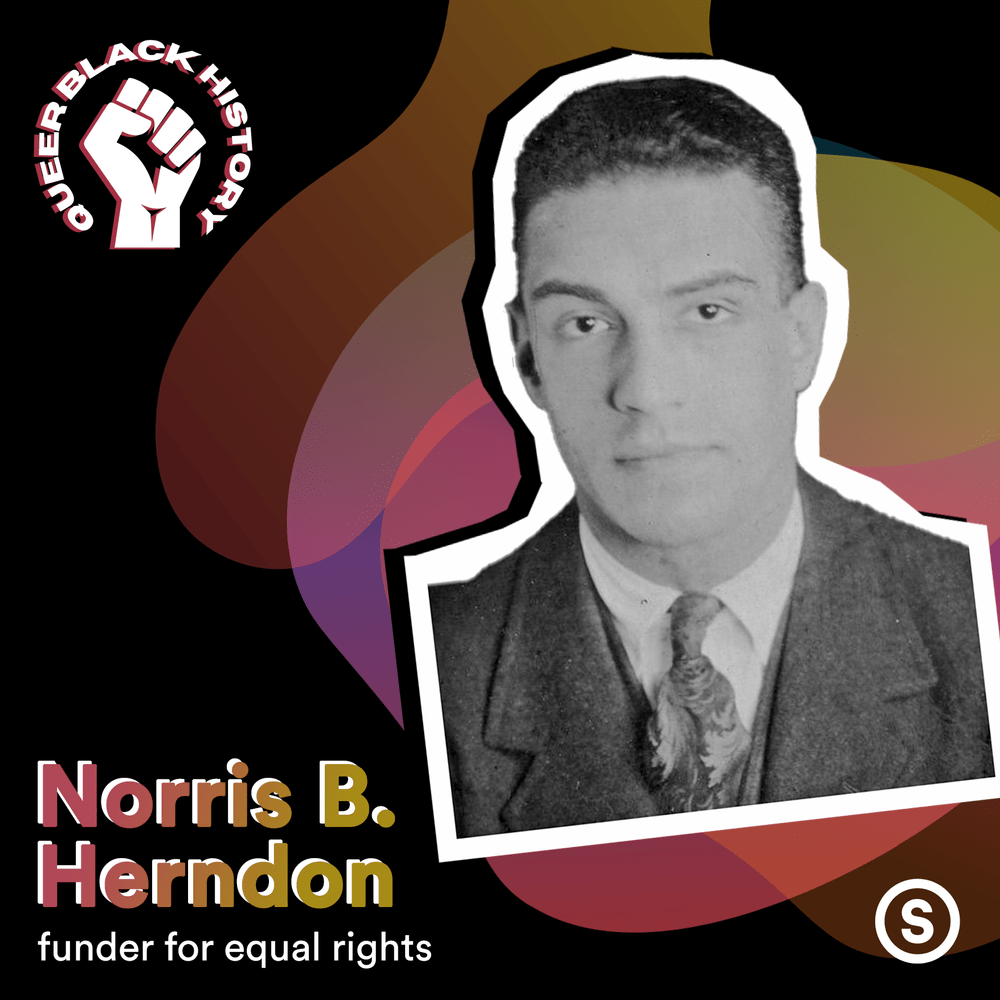
Norris B. Herndon – Funder for Equal Rights

After the death of his father in 1927, Norris B. Herndon assumed the role of president of Atlanta Life Insurance, turning the company into one of the most successful Black-owned business in the US. Using his wealth and influence to support the Civil Rights Movement, Herndon was a critical funder of Civil Rights efforts, and regularly gave generously to support MLK, Jr., HBCUs, the NAACP, and more. He even allowed key Civil Rights activist to use his offices for training purposes. 

While he never publicly identified as gay or bi, many in his inner circle were aware of his relationships with men throughout his life.

Herndon’s legacy serves as a reminder of the important role that Black queer individuals have played in shaping American history.

Learn more about Norris here.

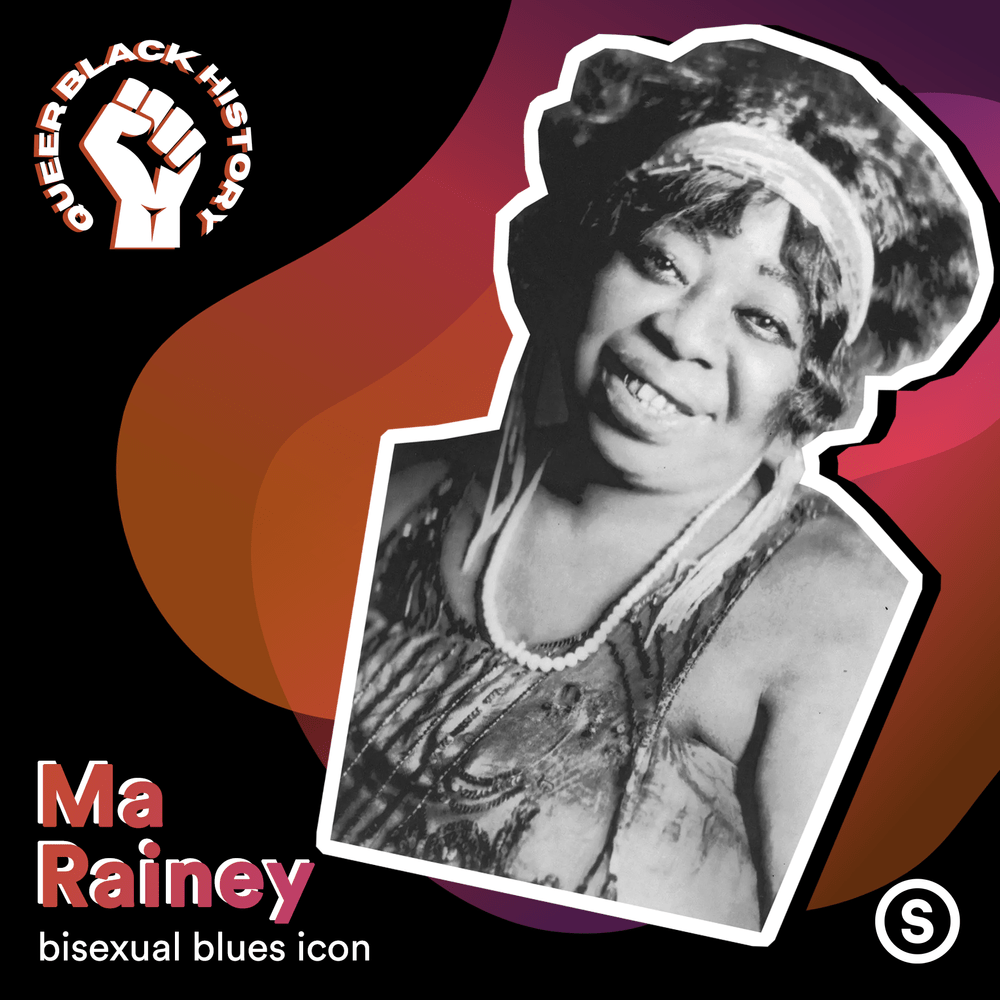
Ma Rainey – Bisexual Blues Icon

Ma Rainey, also known as the “Mother of the Blues,” was a pioneering blues singer and one of the first openly bisexual performers in the early 20th century. Her music often expressed themes of sexual freedom and gender identity that challenged prevailing attitudes of her time.

Rainey’s songs such as “Prove It on Me Blues” and “Sissy Blues” were widely considered to be bold and unapologetic expressions of her bisexuality, and her performances often featured drag queens and other gender-nonconforming artists.

Rainey’s visibility and outspokenness about her sexuality, at a time when queerness was widely stigmatized, helped pave the way for later LGBTQ performers and activists. Today, she is celebrated as an icon of queer representation in music history.

Learn more about Ma Rainey here.

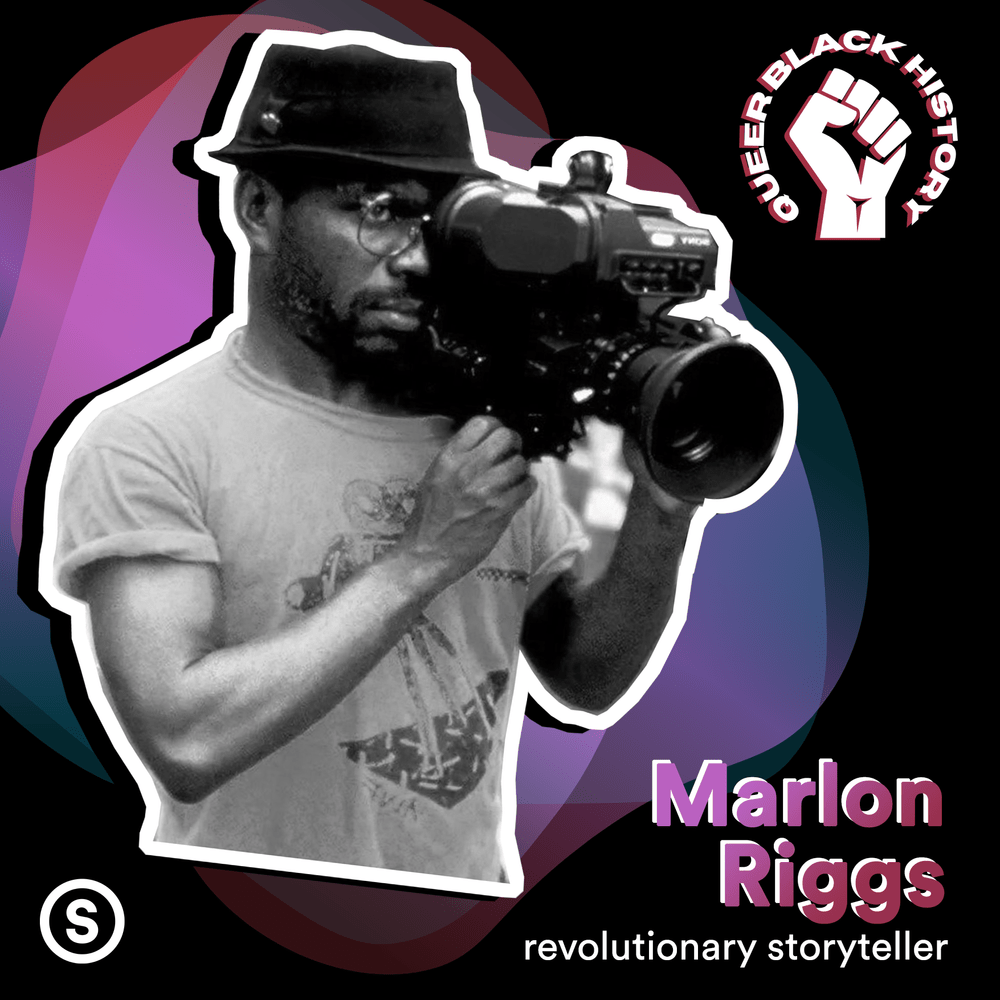
Marlon Riggs – Revolutionary Storyteller

Marlon Riggs was a pioneering filmmaker and activist whose work focused on issues of race, sexuality, and identity, seeking to challenge and subvert stereotypes of LGBTQ and Black people.

In the early 1990s, Riggs’ films, including “Tongues Untied” and “Color Adjustment,” explored the experiences of Black gay men and the intersectionality of race and sexuality. His work helped to broaden mainstream awareness and understanding of LGBTQ and Black lives, and his films were highly influential in advancing Black and queer representation in media. Riggs also worked with organizations like the National LGBTQ Task Force and ACT UP to fight for the rights of LGBTQ people and folks living with HIV/AIDS.

Riggs’ legacy continues to inspire and inform the ongoing struggle for LGBTQ liberation and racial justice.

Learn more about Marlon here.

https://www.stonewallfoundation.org/impact-winter-2023/queer-black-icons

=====

Against the Erasure of Black Queer History

Feb. 13, 2024 BY: Trevor News

American history of resistance is a history of Black LGBTQ+ people. Advancements in civil rights and greater visibility of the LGBTQ+ community overall can be attributed to the efforts of Black LGBTQ+ folks; so much of what is popular and beloved in music, fashion, culture, and even language is because of the innovations and traditions of the Black queer diaspora. All of this is born out of the need to survive oppressive and violent conditions, distinguish themselves from their white LGBTQ+ counterparts who often enjoyed greater privilege.

When there are efforts to censor Black queer history in classrooms, to prevent trans folks from changing their gender markers or using the bathrooms they prefer, we must resist. Resistance of erasure is resistance to oppression.

This Black History Month, take a moment to learn about and honor the Black LGBTQ+ movements and people who have resisted throughout history.

The Cakewalk

What we know as the art of drag and ballroom today is born out of Black queer resistance to enslavement. The cakewalk, a dance performed by enslaved people, was meant to secretly mock plantation owners who frequently galavanted and gloated their expensive clothes. Their enslavers awarded the dancers cakes, unaware they were being blankly parodied. Later during the abolition period, “cakewalks” organized by the formerly enslaved served as a celebration of freedom and continued mockery of the enslavers, featuring attendees in extravagant costumes.

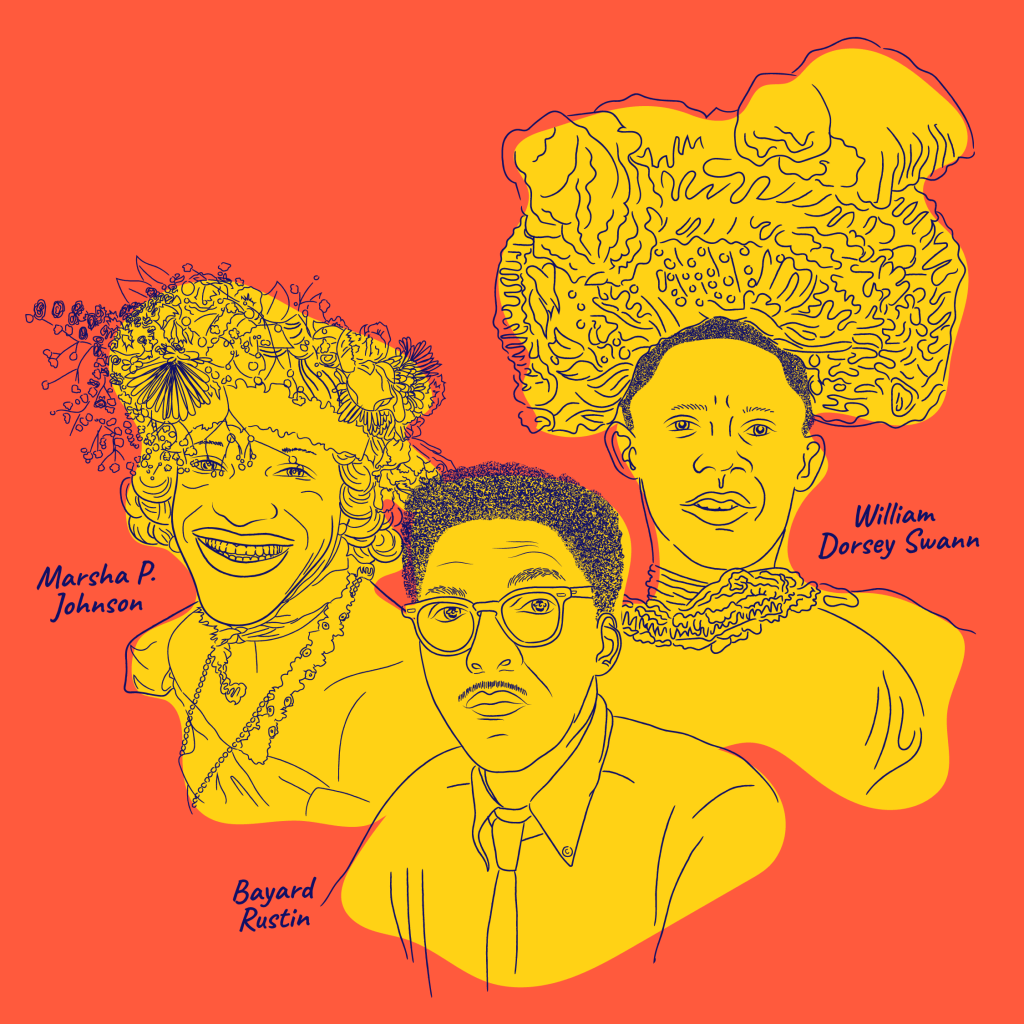
There is one particular person we can thank for the art of drag, and that is William Dorsey Swann, known now as the first drag queen. Swann, who was born into enslavement and survived to emancipation, was inspired by the “queens” of Washington D.C.’s Emancipation Day parades. He developed a form of dance for “glad rags,” also known as masquerade balls, and hosted cross-dressing balls for the community, many of which were raided by police. 

This combination of dance performance and visual expression as a form of resistance survives in modern-day ballroom culture, famously depicted in the documentary film “Paris Is Burning.” Categories like “Executive Realness” serve as an opportunity for young Black queer folks — often denied positions of prominence in white society — to both mock the practices of the privileged and pretend to enjoy those privileges.

In the film, artist Dorian Corey notes: “Black people have a hard time getting anywhere. And those that do are usually straight. In a ballroom, you can be anything you want. You’re not really an executive, but you’re looking like an executive. And therefore you’re showing the straight world that ‘I can be an executive. If I had the opportunity, I could be one because I can look like one.’”

Bayard Rustin and the Civil Rights Movement

Many of us know about the work of Dr. Martin Luther King Jr., but not as many know about Bayard Rustin, an “angelic troublemaker,” his mentor and collaborator during the civil rights movement of the 50s and 60s. Rustin was in fact the primary organizer of the historic March on Washington in 1936, perhaps the most famous civil rights protest of all time. Rustin was also openly gay, and spent much of his life dealing with political and legal persecution because of it (recently depicted in the 2023 film “Rustin”).

(snip-do go and read the rest; it’s not too long)