I am not trans even though I have been asked because of my super strong support of trans people. I have lost friends who wouldn’t accept trans people using a public bathroom with them even though all private functions happen in enclosed little stalls. I do have distant family members who are trans and fully supported by family. More important I can clearly see the same negative vile things said about trans people are the same things pushed against gay people when I was a struggling gay teen being pushed by the same groups on the same ideas of victimhood. They were mostly driven by hyper Christian Nationalist religious groups and those who demanded that traditions along with society never change from when they were young and happy. These same groups and feelings are in play against trans people. They are simply the homosexual aids scare of the 1980s. Just as I as a young gay person needed allies and support so do trans people today. Please give as much vocal and upfront support for trans people you can. It is easier to make progress as a society if we don’t have to undo hateful laws outlawing our very existence. Hugs
Robin Abcarian, Los Angeles Times on Published in Op Eds
I had a difficult time reading the gut-wrenching accounts from the parents of gay children who are part of the Supreme Court case about conversion therapy bans and freedom of speech.
All claim their family relationships were seriously damaged by the widely discredited practice, and that their children were permanently scarred or even driven to suicide.
The case, Chiles vs. Salazar, arose from a 2019 Colorado law that outlaws conversion therapy, whose practitioners say they can change a minor’s sexual orientation or gender identity to align with heterosexual and cisgender norms. The therapy is considered harmful and ineffective by mainstream medical and mental health organizations.
At least two dozen other states have similar laws on the books, all of them good-faith attempts to prevent the lasting harm that can result when a young person is told not just that they can change who they are, but that they should change because God wants them to. The laws were inspired by the horrific experiences of gay and transgender youths whose families and churches tried to change them.
The case was brought by Kayley Chiles, a licensed counselor and practicing Christian who believes, according to her attorneys, that “people flourish when they live consistently with God’s design, including their biological sex.”
Colorado, incidentally, has never charged Chiles or anyone else in connection with the 2019 law.
Chiles is represented by the Alliance Defending Freedom, a conservative Christian law firm known for its challenges to gay and transgender rights, including one brought to the Supreme Court in 2023 by Christian web designer Lorie Smith, who did not want to be forced to create a site for a gay wedding, even though no gay couple had ever approached her to do so. The Court’s conservative majority ruled in Smith’s favor. All three liberals dissented.
As for conversion therapy, counselors often encourage clients to blame their LGBTQ+ identities on trauma, abuse or their dysfunctional families. (If it can be changed, it can’t possibly be innate, right?)
In oral arguments, it appeared the conservative justices were inclined to accept Chiles’ claim that Colorado’s ban on conversion therapy amounts to viewpoint discrimination, a violation of the 1st Amendment’s free speech guarantees. The liberal minority was more skeptical.
But proponents of the bans say there is a big difference between speech and conduct. They argue that a therapist’s attempt to change a minor’s sexual orientation or gender identity amounts to conduct, and can rightfully be regulated by states, which, after all, lawfully impose conditions on all sorts of licensed professionals. (The bans, by the way, do not apply to ministers or unlicensed practitioners, and are generally not applicable to adults.)
Each competing brief whipsawed my emotions. The 1st Amendment is sacred in so many ways, and yet states have a critical interest in protecting the health and welfare of children. How to find a balance?
After reading the brief submitted by a group of 1st Amendment scholars, I was convinced the Colorado law should be ruled unconstitutional. As they wrote of Chiles, she doesn’t hook her clients to electrodes or give them hormones, as some practitioners of conversion therapy have done in the past. “The only thing she does is talk, and listen.”
Then I turned to the parents’ briefs.
Linda Robertson, an evangelical Christian mother of four, wrote that she was terrified when her 12-year-old son Ryan confided to her in 2001 that he was gay. “Crippling fear consumed me — it stole both my appetite and my sleep. My beautiful boy was in danger and I had to do everything possible to save him.”
Robertson’s search led her to “therapists, authors and entire organizations dedicated to helping kids like Ryan resist temptation and instead become who God intended them to be.”
Ryan was angry at first, then realized, his mother wrote, that “he didn’t want to end up in hell, or be disapproved of by his parents and his church family.” Their quest to make Ryan straight led them to “fervent prayer, scripture memorization, adjustments in our parenting strategies, conversion therapy based books, audio and video recordings and live conferences with titles like, ‘You Don’t Have to be Gay’ and ‘How to Prevent Homosexuality.’ ”
They also attended a conference put on by Exodus International, the “ex-gay” group that folded in 2013 after its former founder repudiated the group’s mission and proclaimed that gay people are loved by God.
After six years, Ryan was in despair. “He still didn’t feel attracted to girls; all he felt was completely alone, abandoned and needed the pain to stop,” his mother wrote. Worse, he felt that God would never accept him or love him. Ryan died at age 20 of a drug overdose after multiple suicide attempts.
As anyone with an ounce of common sense or compassion knows, such “therapy” is a recipe for shame, anguish and failure.
Yes, there are kids who question their sexuality, their gender identity or both, and they deserve to discuss their internal conflicts with competent mental health professionals. I can easily imagine a scenario where a teenager tells a therapist they think they’re gay or trans but don’t want to be.
The job of a therapist is to guide them through their confusion to self-acceptance, not tell them what the Bible says they should be.
If recent rulings are any guide, the Supreme Court is likely to overturn the Colorado conversion therapy ban.
This would mean, in essence, that a therapist has the right to inflict harm on a struggling child in the name of free speech.
This is the same Bari Weiss that is rabidly anti-trans and a religious racist bigot. She is often used as a warrior to get the crimes against trans kids out, and Teldeb that used to come here and spew Weiss’s lies. No matter who many times I debunked and showed that everything Weiss had reported was lies and misinformation rabid trans haters like Teldeb kept pushing her lies. Because the truth doesn’t matter to them, making sure no child can be who they really are or fit the mold they demand children fit in. Now it is trans kids but as we have seen in the US they are coming for every not straight cis kid demanding they fit into the regressive world they demand everyone live in. Weiss is also a Jewish person who is an Islamophobe. She supports the genocide in Gaza. Hugs
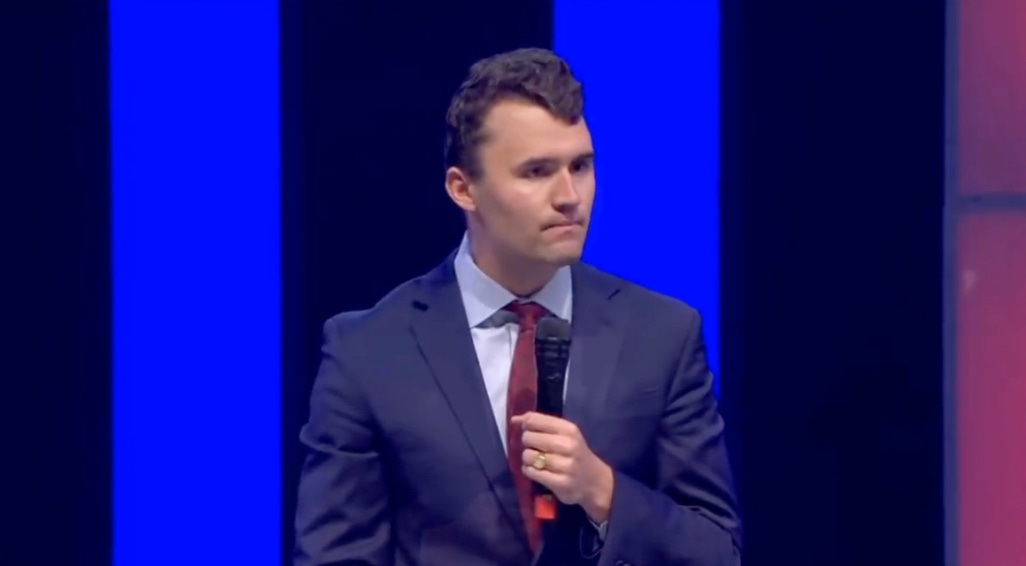
Following the assassination of Turning Point USA (TPUSA) co-founder Charlie Kirk on Sept. 10, there’s been significant posthumous discussion about who he was and what he left behind. President Trump and the Republican Party have described him as a martyr, making his funeral into a 200,000-person event comparable to those of deceased presidents, while calling for retribution against the “radical left” and trans people, despite the fact that the man who killed him is cisgender and his political affiliation is unclear.
Some liberals have mourned Kirk, casting him as a champion of civil dialogue. Meanwhile, critics of his often hateful beliefs have faced repercussions, with retaliatory firings of educators, writers and reporters.
Given the volume of discussion about Kirk and his legacy surrounding LGBTQ issues, Uncloseted Media decided to assemble the receipts. Here’s a track record of Kirk and TPUSA’s actions and statements on the queer community.
Oct. 4, 2016
TPUSA co-founder Charlie Kirk publishes a manifesto that outlines the group’s vision and political strategy, where he complains that “personal and overall freedom” are being lost in “exchange for ‘micro’ freedoms like taxpayer-funded contraception and gay marriage.”
He writes that TPUSA’s strategy is inspired by what he describes as the LGBT movement:
“We are using the same message delivery methods and many of the same organizing tactics. They use social media, rallies, and pop-culture messaging, just like we do. Despite our very different agendas, there is no question we have adapted our movements into the times in which we live.”
Kirk also references Jonathan Haidt, a professor of ethical leadership at New York University Stern School of Business, who has likened being a conservative graduate student on campus today to being a closeted gay student in the 1980s.
Nov. 21, 2016
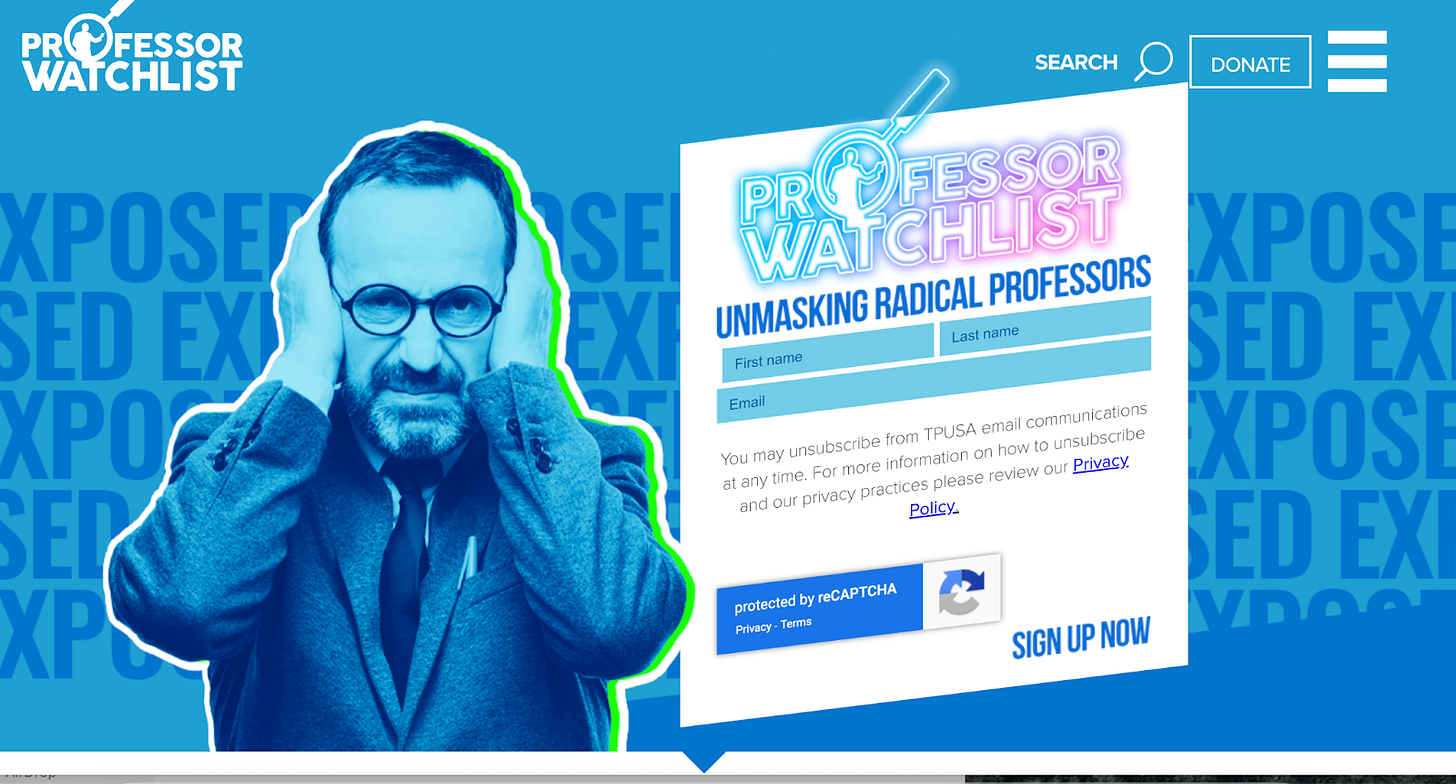
Screenshot of Professor Watchlist.
TPUSA launches the Professor Watchlist, a database cataloging “anti-conservative” college professors. Many targeted professors later face harassment. A gay professor says that when they were placed on the watchlist, they began receiving anti-LGBTQ emails on their work account. And a tenured professor at the University of Florida who was placed on the watchlist and tagged with sharing a “racial ideology” says that all four professors at her university who are on the watchlist are either a person of color or someone who identifies as LGBTQ.
Subscribe
Jan. 25, 2017
TPUSA co-hosts an event with College Republicans at CU Boulder called “Why Ugly People Hate Me.” The event features far-right provocateur Milo Yiannopoulos, who was in the middle of his Dangerous Faggot Tour which challenged “political correctness” on college campuses. Yiannopoulos claims to be an “ex-gay,” born-again Christian who “demoted” his husband to “housemate.”
April 25, 2018
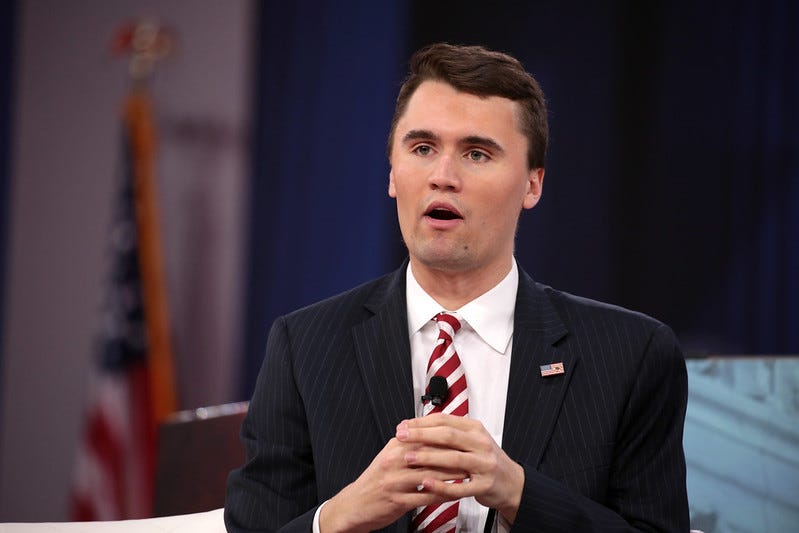
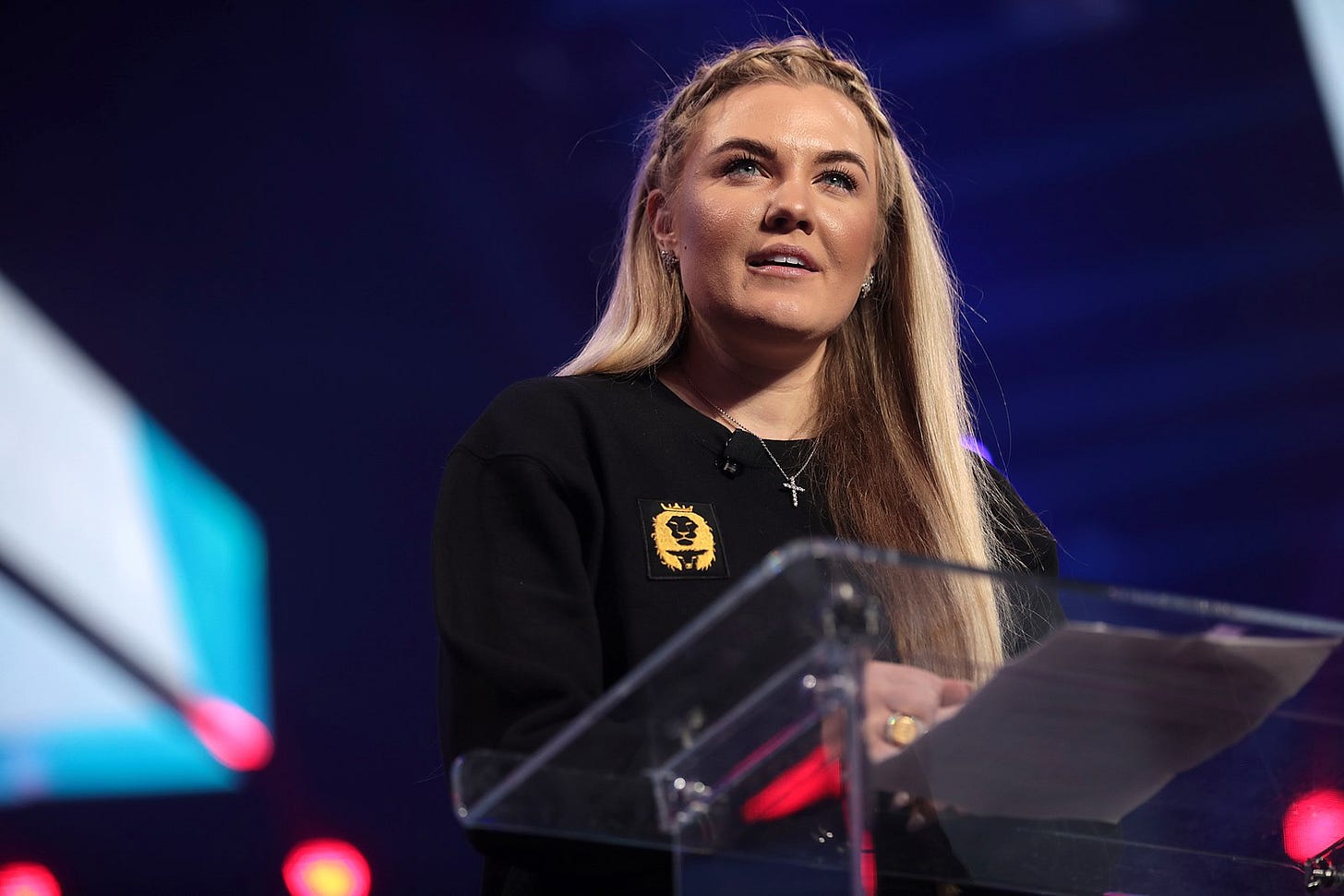
Kirk at the Conservative Political Action Conference in 2018. Photo by Gage Skidmore.
A Huffington Post report finds that Shialee Grooman, then TPUSA’s national field director, had a long history of racist and homophobic posts, including one that read, “Okay. All of you are f*ggots.” In a statement to HuffPost, Kirk says Grooman is a “former employee,” and TPUSA issues a company-wide memo announcing social media background checks and offers to assist employees in making their social media posts less public.
Nov. 22, 2019
At a TPUSA event called “Culture War” in Florida, Kirk addresses a heckler who accuses him of betraying conservatism by tolerating gay and transgender individuals and warns of a slippery slope to normalizing pedophilia. Kirk tweets, “I believe marriage is one man one woman biblically” but goes on to say that he doesn’t think gay people should be excluded from the conservative movement.
Sept. 14, 2020
TPUSA launches TPUSA LIVE, a new media hub that they say provides “daily conservative content” that includes “hot takes, opinions, and reactions to breaking news.”
Other articles include transphobic headlines inspired by conspiracy theories that trans women are actually male creeps trying to invade women’s spaces. Some headlines include:
TPUSA launches the School Board Watchlist, modeled after their Professor Watchlist, to monitor high school officials they deem too progressive. The watchlist now seems to be defunct.
Oct. 14, 2021
Kirk publishes an op-ed titled “On Sexual Anarchy” that is rife with anti-LGBTQ animus. He writes:
“The facts that there are only two genders; that transgenderism and gender ‘fluidity’ are lies that hurt people and abuse kids; and that God’s good, loving, and joyful ideal for our lives is for a man and woman to be joined in a lifelong marriage covenant—these are all under official opprobrium in 2021.”
Feb. 18, 2022
A University of South Carolina student posts screenshots of racist and homophobic messages from two group chats affiliated with the school’s TPUSA chapter. The president of the chapter later releases a video apology, saying that “these remarks have no place being made in our organization,” though this video would later be taken down.
Subscribe for accountability journalism.
Subscribe
April 8, 2022
On his podcast, Kirk says: “[Gay people] are not happy just having marriage. Instead, they now want to corrupt your children.”
In another episode the following week, Kirk falsely links trans people to inflation.
“There’s a direct connection to inflation and the trans issue. You say, ‘Charlie, come on. They couldn’t be further apart.’ No, they’re exactly the same. They’re the same in this aspect—when you believe that men can become women, why wouldn’t you also believe that you could print wealth?”
June 2022
Drew Hernandez, host of TPUSA FRONTLINE on YouTube, spends Pride Month calling LGBTQ people “mentally ill” and dubs it “groomer month.” Hernandez also says parents who bring their children to Pride events should be arrested. Months later, YouTube would remove the videos.
July 6, 2022
On his podcast, Kirk rejects a previous perspective he held: “There is no separation of church and state. It’s a fabrication. It’s a fiction. It’s not in the Constitution. It’s made up by secular humanists.”
Oct. 12, 2022
The Student Government Association at Maryland’s Towson University formally condemns the university’s TPUSA chapter after leaked messages show the group’s members allegedly using racist, homophobic and ableist slurs. Some of the messages refer to Pride Month as “f*ggot month” and the monkeypox outbreak as the “f*ggot virus.”
Feb. 17, 2023
Discussing trans women in women’s bathrooms, Kirk says, “These people are sick. … I blame the decline of American men. … Someone should’ve just took care of it the way we used to take care of things in the 1950s or 60s.” Journalist Erin Reed, whose reporting focuses on the trans community, responds to Kirk’s remarks by saying he is “openly calling for the lynching of transgender individuals.”
May 28, 2023
Kirk defends TPUSA’s partnership with Shawn Bergstrand, a registered sex offender who served time in federal prison for attempted “coercion and enticement” after trying to persuade “a minor female” to “engage in sexual activity.”
He defends Bergstrand on X and simultaneously attacks Target for selling Pride merchandise: “I’m told … that he’s a nice person who did something wrong over a decade ago, and unlike Target, he repented and the experience led him to his faith. Good for him. That’s the Gospel.”
Sept. 11, 2023
Screenshot of 2023 speech.
In a speech, Kirk describes transgender people as a “throbbing middle finger to God” and trans swimmer Lia Thomas as “an abomination to God.”
Oct. 11, 2023
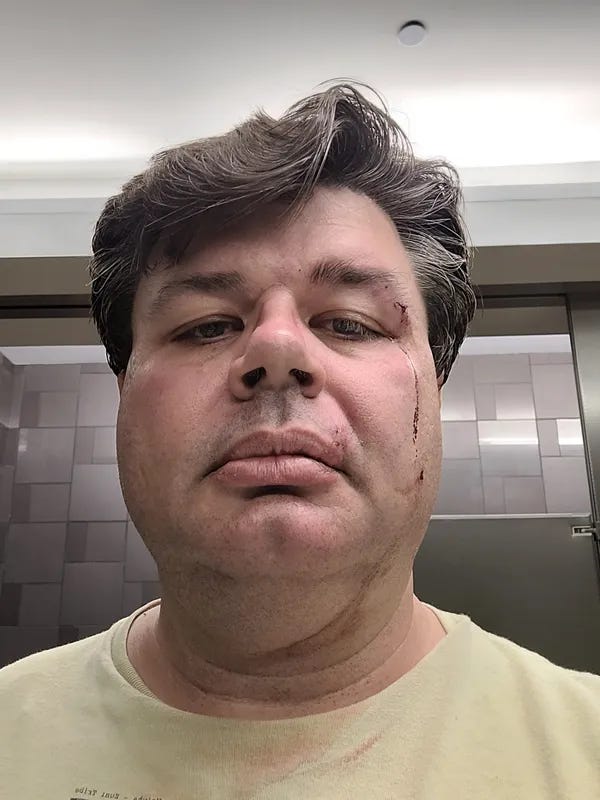
David Boyles, an instructor at Arizona State University, posts a photo of his injuries on Instagram. Photo courtesy of David Boyles.
A TPUSA-affiliated crew assault David Boyles, a queer Arizona State University professor who teaches English and is a co-founder of Drag Story Hour Arizona. The crew shouts accusations about drag shows and sexuality, “accusing [him] personally of pedophilia and hating America,” and ultimately shove him to the ground after he tries to block their camera from recording. Campus police say they investigated the interaction as a “potential bias or prejudicially motivated incident.” Both suspects would plead guilty in court. The professor had been featured on TPUSA’s Professor Watchlist in part for teaching an LGBTQ-themed class on pop culture and politics.
Subscribe for LGBTQ journalism.
Subscribe
March 20, 2024
In a debate, Kirk says, “I believe marriage is between one man and one woman, but if you ask me do I have hate in my heart for somebody that doesn’t choose the [heteronormative] lifestyle … of course not.”
April 1, 2024
Kirk calls for gender-affirming clinics to be banned: “We need to have a Nuremberg-style trial for every gender-affirming clinic doctor.”
June 6, 2024
Trump has spoken at multiple TPUSA events through the years. Trump appears here at the 2019 TPUSA Teen Student Action Summit. Photo by Gage Skidmore.
Trump appears at a TPUSA event, signaling collaboration with Kirk’s organization for his second presidential campaign, which was centered around anti-trans ads. Trump delegates many campaign responsibilities to Turning Point Action, the political advocacy arm of TPUSA. Trump tells the crowd, “Arizona is being turned into a dumping ground for the dungeons of the third world.”
June 8, 2024
Speaking on a podcast, Kirk attacks Ms. Rachel for quoting “love your neighbor” to defend Pride celebrations on “Songs for Littles,” her YouTube series that uses music and games to help toddlers develop language and social skills.
“Ms. Rachel, you might wanna crack open that Bible of yours. … Leviticus 18 [says] that ‘thou shall lay with another man, shall be stoned to death.’ … Ms. Rachel, you quote Leviticus 19, ‘love your neighbor as yourself.’ The chapter before affirms God’s perfect law when it comes to sexual matters.”
When opining about how Christians should act towards gay people, Kirk calls homosexuality an “error” and equates it to an addiction: “How do you love somebody? You love them so much to correct their error. … If you meet an alcoholic or you meet a drug addict, do you affirm their struggle? No! You say, ‘You’re better than this, let’s get you free from that.’”
When speaking about LGBTQ rights advocates, Kirk says, “First, they wanted you to affirm, and then they wanted you to celebrate and then they wanted you to participate. And if you don’t, they are willing to destroy your life.”
Oct. 28, 2024
Kirk wears a T-shirt with the slogan “xy = man” at an election rally in Arizona, referencing that sex and gender are biological and insinuating that trans people don’t exist.
Jan. 10, 2025
TPUSA and The Daily Wire release Identity Crisis, a documentary that cherry picks stories from detransitioners and parents fighting to protect children from gender ideology. The main expert in the documentary is Dr. Drew Pinsky, a TV personality who is not a gender specialist.
March 3, 2025
Kirk speaks at the 2025 TPUSA Young Women’s Leadership Summit in Texas. Photo by Gage Skidmore.
When asked by a gay conservative college student for advice, Kirk responds, “You are a complete human being. … We act as if the most important part of your identity is what you do in the bedroom. It doesn’t mean that much to me. If you asked from a perspective as a Christian, I don’t agree with that lifestyle.”
Aug. 25, 2025
“While we’re talking about flags, we should work to overturn every conviction for those arrested, fined, or otherwise harassed for the ‘hate crime’ of doing donuts over Pride flags painted on public streets,” Kirk writes on X, referencing a teenager who was arrested in St. Petersburg for doing circular “doughnut-burnouts” on a rainbow pride mural.
In a separate post, Kirk writes that “it should be legal to burn a rainbow or BLM flag in public.”
Sept. 10, 2025
Charlie Kirk is shot and killed while speaking at a TPUSA event at Utah Valley University in Orem, Utah. In the moments leading up to his death, Kirk is speaking about gun violence.
The mainstream media spreads disinformation based on falseleaks from the Bureau of Alcohol, Tobacco, Firearms, and Explosives that say the shooter had “expressions of transgender and anti-fascist ideology” written on the bullets.
Trans hate has risen since Kirk’s death, and trans students unaffiliated with the shooting have been doxxed and harassed.
“[People online] were asking for my class schedule,” Simone Goodheart, a trans woman and UVU alum, told Uncloseted Media. “A few of them made awful comments about my appearance and who I am as a person.”
Sept. 12, 2025
Kirk’s widow, Erika, issues a statement at the TPUSA headquarters in Phoenix, Arizona, signaling an escalation of tension:
“If you thought that my husband’s mission was powerful before, you have no idea. You have no idea what you just have unleashed across this entire country, and this world. … You have no idea the fire you’ve ignited within this wife. The cries of this widow will echo around the world like a battle cry.”
Two weeks after Kirk’s assassination, a Texas man faces charges for threatening to open fire at the Abilene Pride Parade as “revenge” for Kirk’s death. In Facebook messages, he urges a friend to “lock and load and pay them back” and suggests they go “hunting fairies.” The FBI says his threats were targeted toward Pride participants.
Sept. 30, 2025
TPUSA returns to Utah for the first time since Kirk’s death to host a panel at Utah State University.
The panel discusses political tolerance. Jason Chaffetz, a former Utah State Representative, says, “I worry that we’re putting too much tolerance. You do not need a man with junk in a woman’s bathroom. End of story.”
When discussing LGBTQ allies who lit up the iconic Brigham Young University’s “Y” in the color of the trans flag, the moderator calls it “some of that evil that’s just seeping in throughout the state.”
If objective, nonpartisan, rigorous, LGBTQ-focused journalism is important to you, please consider making a tax-deductible donation through our fiscal sponsor, Resource Impact, by clicking this button:
Sakler says she was white knuckling it, trying to get through life as a “shell of a person.” She began cutting, hitting and hating herself because of the rejection from her church community.
He was given a treatment plan that involved limiting time with LGBTQ affirming friends, reading articles designed to redirect his attractions, and practicing what the therapist called “male characteristic activities,” such as taking charge and asserting control. He told his therapist that his marker of when things would be better was “life [going] back to normal.”
The therapist also worked with his parents, telling them they had failed by allowing the “gay agenda” to threaten their family and “let the devil get into the house.”
Editor’s note: This article includes mention of suicide and self-harm. If you are having thoughts of suicide or are concerned that someone you know may be, resources are available here.
“You don’t feel secure in your masculinity,” Sam Nieves remembers his licensed therapist telling him at Brigham Young University in Provo, Utah. “Go grab a Playboy and find a way to enjoy it,” the Mormon therapist told him.
“He told me I can’t be straight if I don’t go fishing with my dad,” says Nieves, who was 20 at the time. “He told me I needed to play more sports, listen to country music, stuff like that. He told me something was wrong with me.”
After these sessions, which lasted about a year and a half, Nieves started experiencing crippling shame and self-loathing. He eventually developed excruciating migraines and memory loss.
“My therapist just helped me find better ways to help me to hate myself,” Nieves, now 41 and living in Seattle, Washington, told Uncloseted Media.
Sam Nieves as a young adult. Photo courtesy of Nieves.
Fourteen countries have a national conversion therapy ban, while many more have state or provincial bans. In the U.S., religious leaders can practice nationwide, though licensed therapists are not allowed to apply it to kids in 23 states.
While research around torture and mental health consistently suggests the practice should be banned, almost 700,000 LGBT adults have received conversion therapy at some point in their lives, including about 350,000 who received it as adolescents.
Despite all of this, on Oct. 7 the Supreme Court heard arguments in Chiles v. Salazar, a case that challenges Colorado’s conversion therapy ban and—if overturned—would have implications for the rest of the states with bans in place.
While the verdict will likely not be announced until June, the court seems poised to overturn it, suggesting that restrictions on therapists might violate the First Amendment’s free-speech clause.
“I’m emotionally devastated for the children who will lose the protections we fought so hard to give them,” says Nieves.
Conversion Therapy and Self-Hate
Unlike many young Americans who are forced into the practice by their parents, Nieves—who was raised Mormon—opted to see a conversion therapist because his church community said that if he didn’t change his sexuality, he was letting them down.
“I actively didn’t want to be attracted to guys,” he says. “And so it was always this confusing, gaslighting situation where they would tell me to stop being gay, even if I wasn’t doing anything. I was trying really hard not to. That’s when [the church] referred me to conversion therapy.”
Sam Nieves in his 20s. Courtesy of Nieves.
Nieves’ therapist insisted that his mom was too overbearing and his dad was not actively parenting, causing him to be gay. As his therapist continued to recommend that he engage in stereotypically masculine activities, he began to withdraw, cutting off friendships and avoiding community gatherings. His Mormon upbringing had taught him to feel shame, but conversion therapy solidified it.
“Conversion therapy gave me validation for why I hate myself. It was just building on top of what the church had already taught me,” he says.
Subscribe
Links to Dissociative Identity Disorder
Nieves became depressed and eventually developed a mild type of dissociative identity disorder (DID), where he experienced one persona that carried shame and recognized he was gay, and another that tried to act straight. Headaches and mental fog were persistent. Thoughts of ending his life flickered through his mind.
“It was just nonstop, massive disassociation,” he says. “There was the Straight Sam and the Gay Sam. And the whole time, everyone was telling me Satan was working on me because something inside me was trying to be gay. So it was insane making. They were making me clinically insane.”
According to medical experts, repeated trauma like medical procedures, war, human trafficking, conversion therapy and terrorism can cause DID when it overwhelms a child’s ability to cope, causing their sense of self to fragment into distinct identity states as a survival mechanism. The trauma disrupts the normal integration of self, leading to symptoms like memory gaps, dissociation and distinct personality states.
When Hunter Moore, a 29-year-old queer woman now living in Washington, was subjected to conversion therapy from her church and parents, she developed DID.
Raised in rural Idaho and immersed in an Independent Fundamental Baptist church that condemned queerness as sinful, the constant fear and shame brought on by her church’s conversion therapy program fractured her sense of self. She attributes her condition to repeated trauma that caused her brain to wall off painful memories.
“I didn’t know how to handle it other than just to check out,” Moore told Uncloseted Media. “I still have a lot of memory gaps from the conversion therapy because of how intense it was. … Once I didn’t have the restraints of that church anymore, the memories started to return.”
Fear, Shame and Suicidal Ideation
Similar to Nieves and Moore, Addy Sakler, who grew up in a conservative Protestant community in Ohio, says conversion therapy was “slowly killing” her.
“I figured I liked girls in kindergarten but did not have the language to describe it,” she told Uncloseted Media.
Sakler knew she wouldn’t be accepted at her church, so she put herself in conversion therapy throughout her young adulthood.
But it didn’t work. Sakler remembers the first sneaking moments of affection between grad school classes with her first crush. But after each kiss, the joy was followed by shame.
“We’d feel a lot of guilt and break up and immediately go repent,” she says. Both women were part of a church ministry that promised to “pray away the gay,” a 12-week program of lessons and deliverance sessions meant to convert them to heterosexuality. Instead, Sakler says, it nearly destroyed her.
Addy Sakler and her boyfriend before she came out. Photo courtesy of Sakler.
“I felt like a zombie walking around. I was depressed and I tried to commit suicide,” she says. “I was in the hospital for a month, two different times. It created a lot of trauma.”
Sakler says she was white knuckling it, trying to get through life as a “shell of a person.” She began cutting, hitting and hating herself because of the rejection from her church community.
Addy Sakler as an adult. Courtesy of Sakler.
“You believe what they’re saying. They’re telling you you’re broken and to be right with God you have to be heterosexual and if you’re not changing, then you’re being attacked by Satan.”
For nearly 15 years, Sakler attended conversion therapy conferences across the country, including one put on by the now dissolved Exodus International.
According to the Williams Institute, LGBTQ adults who have undergone conversion therapy have nearly twice the odds of attempting suicide and 92% greater odds of lifetime suicidal ideation compared to those who haven’t. Among LGBTQ youth, the numbers are higher, with 27% of those who experienced conversion therapy attempting suicide in the past year.
In addition, survivors experience disproportionately high rates of depression, PTSD and substance abuse. According to the findings from one Stanford Medicine study, the psychological harm caused by conversion therapy mirrors that of other severe traumas known to cause PTSD—like sexual or physical assault, the loss of someone close, or even experiences of war and torture.
Isolation and Families Torn Apart
When Curtis Lopez-Galloway told his parents he was gay at 16, they drove him two hours away from his house in southern Illinois to a conversion therapist who used the sessions to berate him for not trying hard enough to change into “the man that God wanted” him to be.
Curtis Lopez-Galloway as a teenager. Photo courtesy of Lopez-Galloway.
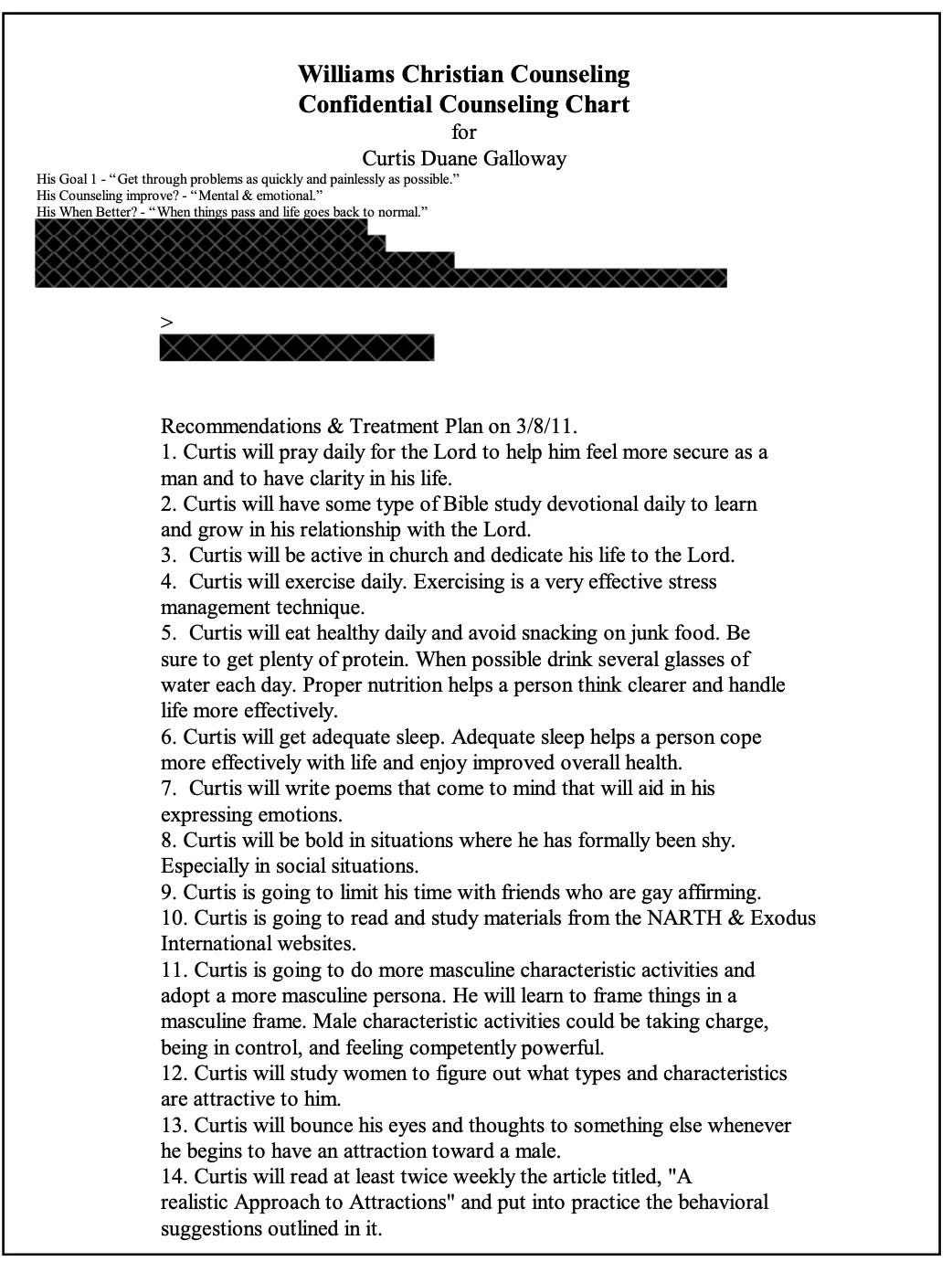
Lopez-Galloway remembers being told that his attractions to other men were a symptom of a deeper lack of masculinity, that he needed to “study women to understand what kind of man he was supposed to be” and that he should “bounce his eyes, and change his thoughts to something else whenever he begins to have an attraction toward a male.”
Curtis Lopez-Galloway’s treatment plan, courtesy of Lopez-Galloway.
He was given a treatment plan that involved limiting time with LGBTQ affirming friends, reading articles designed to redirect his attractions, and practicing what the therapist called “male characteristic activities,” such as taking charge and asserting control. He told his therapist that his marker of when things would be better was “life [going] back to normal.”
The therapist also worked with his parents, telling them they had failed by allowing the “gay agenda” to threaten their family and “let the devil get into the house.”
Lopez-Galloway, who now runs the Conversion Therapy Survivor Network, a nonprofit that connects survivors of the practice, recalls frustration and shame spilling into screaming matches that tore his family apart. “My parents were miserable, I was miserable, and we would just take it out on each other,” he says. “I went to [my therapist] for six months, and he just abused me and made life worse. It pushed me deeper into the closet and made me anxious and depressed.”
Curtis Lopez-Galloway as a teenager. Courtesy of Lopez-Galloway.
“[My therapist] would use therapeutic ideas but twist them in a way that was trying to change sexuality. … He would try to manipulate me in that sort of way and really broke me down as a person,” says Lopez-Galloway.
We reached out to the center Lopez-Galloway went to for treatment but they did not respond to a request for comment. Lopez-Galloway says his parents now acknowledge the harm the therapy caused, and he says their relationship has improved.
Subscribe
Life After Conversion Therapy
For many survivors of conversion therapy, the trauma can last a lifetime.
Even 21 years later, Nieves still gets triggered. He dropped out of college during his last semester of counseling school because the practices were too similar to those manipulated and weaponized by his therapist. “The hardest part was fighting … to no longer be suicidal every single day,” he says. “I would say that’s the hardest part. … It’s the suicidality that you fight with once it’s over.”
Nieves and Moore have both found support in Lopez-Galloway’s survivor network, where they meet weekly and heal together in community. Sakler has found healing in therapy for PTSD, and has found acceptance with her wife and her queer community in Sacramento, California.
Despite this, the trauma often requires undoing self-hatred and discovering self-worth.
“[We’re] constantly saying, ‘We don’t know who we are,’” Nieves says. “We don’t know how to enjoy life. We don’t know what the meaning of life is. We’re like The Walking Dead. Because just like how you break a horse, they broke our spirits. They told us everything about us was wrong and we needed to conform. But no matter what we did, we couldn’t conform.”
Even with these survivors’ experiences, along with countless testimonies from other Americans over decades, the Supreme Court looks poised to overturn Colorado’s ban, with multiple justices describing it as “viewpoint discrimination.”
Nieves strongly disagrees and advises kids who are experiencing conversion therapy right now to stay strong and ask for help when possible. “This may very well be the most difficult time of your life. For many of you, it’s going to feel like a living hell, and you may even pray for death every night. I know this, because this is how [I] felt too,” he says. “Often, [conversion therapists] break other laws. If you think someone might be breaking the law during your conversion therapy, please seek out a trusted adult and let them know,” he says.
Above all, Nieves tells kids to push through no matter what. “It can and will get better if you promise yourself that you deserve authentic joy, free of lies and coercion. Community is out there waiting for you, if you can just hold on for one more day, one more hour, or even just for one more minute.”
If objective, nonpartisan, rigorous, LGBTQ-focused journalism is important to you, please consider making a tax-deductible donation through our fiscal sponsor, Resource Impact, by clicking this button:
I know that the Christian religion has been on a push for forcing the US to be a theocracy run by their personal church doctrines. Why I don’t understand? Do they think that will earn them favor with their god? Is it simply a way for the leaders of the movement to gain more power / wealth? Is it simply they are terrified of after they die and are convinced that their forcing others to follow their church doctrines will get their god to give them more benefits in heaven. The religious strictures on sex and sexual stuff is rooted in an ancient not correct misunderstand of life and sexuality. I still do not understand why others watching porn upsets Christian republicans. I really don’t get it. Is it because they are afraid the people watching will masturbate? Is it because sexual arousal is fearful to them? I really wish someone could explain it to me. Even in the church boarding school I went to my senior year of high school they did not push that no sex stuff very hard, instead they occasionally reminded us not to touch ourselves. They need not have worried, in the boy’s dorm we were touching each other which in our kid brains got around the entire sin of jerking off thing. Hugs.
Michigan lawmakers have introduced a bill that would make it illegal to distribute pornography via the internet in the state.
HB 4938, introduced last week by six Republican members of the state House of Representatives, would “prohibit the distribution of certain material on the internet that corrupts the public morals.”
Pornography is the principal target, though the bill also seeks to criminalize depictions of transgender people.
The bill defines “pornographic material” broadly, to include “any content, digital, streamed, or otherwise distributed on the internet, the primary purpose of which is to sexually arouse or gratify, including videos, erotica, magazines, stories, manga, material generated by artificial intelligence, live feeds, or sound clips.”
The bill appears to exempt from the ban material protected by the First Amendment. Since pornography is constitutionally protected speech, this makes it unclear how the legislation could actually work.
According to the law, “prohibited material” means “material that at common law was not protected by adoption of the First Amendment to the Constitution of the United States respecting laws abridging freedom of speech or of the press.”
XBIZ spoke with adult industry attorney and First Amendment expert Corey D. Silverstein to attempt to explain what this meant.
“I think they are trying to say that it would not be applicable to content not deemed as obscene under the Miller test,” he said. “But it is written so poorly that there is some uncertainty as to their angle, which also makes the proposal both vague and ambiguous.
“At the same time, it could be another attempt to undercut and soften the Miller test, which we have been seeing in various other states throughout the country,” he added.
The proposed penalties in the bill are severe, including up to 20 years in prison or a fine of up to $100,000, or both. It also allows for civil fines of up to $500,000 per violation.
The bill would require internet service providers to implement “mandatory filtering technology” to prevent Michigan residents from accessing “prohibited material” as defined in the bill, to “actively monitor and block known circumvention tools,” and to block access to specific websites on receipt of a court order.
The bill calls for the state attorney general to establish “a special internet content enforcement division” staffed with “digital forensics analysts, legal experts, cybersecurity specialists, and investigators” to enforce the proposed law.
Silverstein added that he doesn’t believe the bill has much of a chance at being adopted.
“This bill has virtually no chance of going anywhere, given the current makeup of the Michigan legislature and its far-left Democrat governor,” he said. “The bill is unconstitutional at every turn. Regardless, it is alarming that this type of thinking and government waste continues to occur.”
The bill was referred to the Committee on Judiciary.
Talk of porn bans has increased in recent months. Earlier this year, Republican Senator Mike Lee of Utah introduced federal legislation that would redefine almost all visual depictions of sex as obscene and therefore illegal, a goal that was also laid out in the Heritage Foundation’s Project 2025 policy blueprint, which has heavily guided the Trump administration’s agenda.
Update, Sept. 19: The bill’s reference to “known circumvention tools” includes VPNs, proxy servers and encrypted tunneling methods, which would make it nearly impossible to access adult content online within the state.
I have read rumors about this guy for a long time. But I was always hopeful he played for the straight team because of how hateful he is. He is an all out racist. But they claim to have checked it out and it is true. There clearly is some excitement in Ryan’s pants.







 Scottie's Playtime