February 13, 1912 Labor leader Mary Harris “Mother” Jones was placed under house arrest at Pratt (Kanawha Co.), West Virginia, for inciting to riot. An organizer for the United Mine Workers, she had come to the Paint Creek and Cabin Creek mines where a long and nasty struggle had escalated. Jones was known for her fiery (and often obscene) verbal attacks on coal operators and politicians. A native of Ireland, she had been organizing for more than 15 years.The coal operators had hired mine guards to intimidate the workers and discourage formation of a union. Besides asking to be paid what other area miners were making, the union demanded • the right to organize • recognition of their rights to free speech and assembly • an end to blacklisting of union organizers • alternatives to company stores • an end to the practice of using mine guards • prohibition of cribbing • installation of scales at all mines for accurately weighing coal unions be allowed to hire their own checkweighmen to make sure the companies’ checkweighmen were not cheating the miners who were not paid hourly, but by the ton. 68 years old (though claiming to be over 80) and suffering from pneumonia, Jones was never charged with a crime (martial law had been declared). A few weeks later, the new governor, Henry Hatfield, was sworn in and examined Mother Jones (he was also a doctor) but refused to release her from house arrest for two months. Mother Jones biography Mother Jones magazine (They have a great free newsletter!)
February 13, 1960 France became the world’s fourth nuclear power, conducting its first plutonium bomb test at the Reggane base in the Sahara Desert in what was then French Algeria. “Gerboise Bleue” was detonated from a 330-foot tower and had a yield of 60-70 kilotons (equivalent to nearly 70,000 tons of TNT).
February 13, 1967 Carrying huge photos of Vietnamese children who had been victims of Napalm (a flammable defoliant used extensively in the war there), 2,500 members of the group Women Strike for Peace stormed the Pentagon, demanding to see “the generals who send our sons to Vietnam.” When Pentagon guards locked the main entrance doors, the women took off their shoes and banged on the doors with their heels. They were eventually allowed inside, but Defense Secretary Robert McNamara would not meet with them. Senator Jacob Javits (R-New York) agreed to meet a few hundred of the women, but he was booed by the women when he denied the U.S. was using toxic gas in Vietnam.
February 13, 1968 Five soldiers were arrested at a pray-in for peace in Vietnam at Fort Jackson, South Carolina. Two were court-martialed for refusing to stop praying. The pray-in was repeated a year later.
February 13, 1991 Two precision-guided missiles destroyed the Amiriyah subterranean bunker in Baghdad while being used as an air-raid shelter by 408 Iraqi civilians during the first Gulf War. The resulting deaths of all inside made it the single most lethal incident for non-combatants in modern air warfare. The U.S. had detected signals coming from the bunker and considered it a military command and control center. There was an antenna atop the bunker but it was connected by cable to the actual command center 300 yards away, which was not hit by the 2000 lb. bombs which landed precisely on their intended target, penetrating ten feet of hardened concrete. Only 3% of the 250,000 bombs and missiles fired during that conflict were considered such “smart bombs.” Visitors tour the Amiriyah Bunker. The Iraqi government has preserved the bunker as a public memorial.
But please don’t delete without scrolling down to the Extra Credit item, which is of particular and specific pertinence to our interests here on Playtime, and just do that one if you can’t stomach bothering your congresscritters today. Seriously, just do the Extra Credit item-you won’t be sorry, and you will make a difference!!!Thanks, A.
I hope you’re hanging in there today. I know things remain gobsmackingly awful, but I remain cautiously optimistic that the opposition is at last finding its sea legs.
A few reasons for this are:
1) House Democrats announced this morning that they have formally established a Rapid Response Task Force and Litigation Working Group! Good! We need a committee specifically dedicated to this fight, and this one, it seems, will be. I also happen to know that a huge political influencer is meeting with the Democrats this morning (and all week) to teach them how to make effective posts for social media. It’s overdue, and I’m very glad it’s happening.
2) There are now several big rallies or actions in the works—a nationwide protest on February 17, a one-day general strike on February 28, and a “total shutdown” on March 15. I’m sure many more things are being planned. There’s also now a website for a General Strike, and 200K people—including me—have already signed a strike card. The organizers offer a weekly Discord discussion, by the way, if you have questions about how a general strike might work. All are welcome.
3) Finally, my sister Lily went to her first Indivisible meeting last night. She called me from her car—in high excitement, I might add—to tell me that the meeting, which was hosted by a brand new Indivisible group, Rockland Indivisible, was so full that she couldn’t even get into the parking lot of the library where it was being held! Cars were backed up on the freeway trying to get in! She eventually found parking a ways away and walked over, but the room was so full she couldn’t get inside. She listened from the hallway and was blown away by the energy and enthusiasm of the 300 people (!!) in the room. More were watching on Zoom. This kind of out-of-control enthusiasm for (and turnout at) a new Indivisible group is just wildly encouraging.
I could go on. It’s building. It’s coming. I feel it. We just need to keep fanning the flames.
Our job is to not quit while it’s hard. They want us to. They’re counting on it. They literally think we’re snowflakes. They think their orgy of destruction will force us to walk away in exhaustion.
They’re going to find out that they’re very wrong.
Breathe in strength. Breathe out fear. I’m not downplaying the danger. It’s real. I simply believe in our power more than I fear their malevolence. You should too.
Hi, I’m a constituent calling from [zip]. My name is ______.
I’m calling to demand that the Senator vocally support the Consumer Financial Protection Bureau and protect it from being dismantled by the Trump administration. The CFPB does vital work to protect consumers like me from being scammed by predators. A block to its funding is both illegal and also puts me at direct risk for financial harm. [H/T]
Speaking of which, almost everything Elon Musk is doing is illegal. Does the Senator stand for law and order or doesn’t s/he? If s/he does, then s/he needs to fight to take Congress’s power back. Agencies like the CFPB and USAID can’t be shut down without Congressional approval. That’s the LAW. Standing up for it is literally the Senator’s job. Thanks.
Hi, I’m a constituent calling from [zip]. My name is _______.
[If Republican:]
I’m calling in strong opposition to defunding USAID. Why is Congress letting Musk do this? It’s illegal. Any closing of an agency established by Congress can only be approved by Congress. Also, USAID gives the US massive influence overseas, it keeps diseases at bay, and it gives U.S. farmers a place to sell their produce. By gutting it you are hurting Americans. Please restore support for USAID immediately. I didn’t vote for Elon Musk and I’ll be damned if I’m going to let him hurt my country. Thanks.
[If Democrat]
I’m upset about the gutting of USAID. I appreciate Democrats’ support for it, but the message needs to be stronger, louder and more effective. Congress needs to take its power back—any major reform or closing of an agency established by Congress can only be approved by Congress. More needs to be done now to stop the dismantling of USAID and other vital agencies, and to provide appropriate protections to the federal workforce. Thanks.
The Children’s Hospital of Los Angeles, a former leader in gender-affirming health care in the bluest of blue states, has stopped offering vital health care to new patients, cancelling scheduled appointments for hormone treatments. We know that a lack of access for trans kids leads to higher rates of depression and suicide so we must call this out for what it is, a callous and fear-based decision to capitulate in advance to a transphobic White House trying to rule by Executive Order. Gender affirming care is protected under California state law so denying this care is also illegal.
CHLA’s patient relations line is 323-361-4682 (you have to let the entire outgoing message play to get to the VM. The “press pound” function doesn’t work.
Say something like:
My name is ____ and I am deeply disappointed by CHLA’s decision to stop providing gender-affirming care to new patients. This sends a terrible message to the rest of the country that even hospitals in blue states are unwilling to provide vital healthcare for trans patients. It also goes against California State Law. Please reverse this horrible decision. It will only lead to increased rates of depression and suicide for trans children. Thank you.
You can also call California Attorney General Rob Bonta. He’s written a letter to put CHLA on notice, but needs to know that is not enough. His office’s number is 1-800-952-5225 (press 1 for English, then 7 to leave a message). If you live in CA be sure to say that but you can call even if you don’t.
My name is ____ and I want to make sure you’re doing everything you can to protect trans kids in our communities. I was extremely disappointed to hear that Children’s Hospital of LA recently stopped providing gender-affirming care for new patients. This sets a dangerous precedent for other medical providers in California and violates the Unruh Civil Rights Act. I understand your office has put CHLA on notice but we need you to do more until this dangerous decision is reversed. Thank you.
Get Organized
Join Indivisible’s weekly discussion with co-founders Ezra Levin and Leah Greenberg on Thursdays, 3pm ET/12pm PT.
When horrendous news comes at us as fast as it has the last few weeks, the only way to process it and stay grounded is to come together in community and discuss what’s happening. And, more importantly, discuss how we fight back. I can’t adequately describe how helpful these weekly Indivisible calls are to me. Ezra and Leah are so smart, so strategic, and so tough. They give me a lot of hope.
Want to stay apprised of what’s happening in the news but need it in a not-overwhelming format? I really like Matt Kiser’s Substack “What the F**k Just Happened Today?” (The actual name contains the full curse word, so if that’s a dealbreaker don’t click on it.)
Matt describes it this way:
WTF Just Happened Today? is a clear, once-a-day newsletter helping normal people make sense of the news. It’s curated daily and delivered every afternoon around 3 pm PT.
My job is to help distill news that deserves attention into a clear, understandable, and accurate first draft of history for normal people who might not otherwise engage with the news. WTFJHT covers the news through the lens of the executive branch specifically – and the president in particular – followed by the legislative and judicial branches in general, and in that order.
I find it to be a useful way of keeping track of the top headlines without drowning in information overload. Maybe you will, too. Check it out here.
Messaging! Messaging! Messaging! 📣
Truth Bombing is a new means of communicating that tackles the misinformation problem. Learn to use your creativity and social media to create & distribute pro-democracy messaging where it will do the most good.
This is Civic Sunday’s 6th zoom about it, by popular demand. Thursday Feb 13, 2pm PST/5pm EST.
Join Grassroots Democrats HQ and WisDems to make calls to voters for the Wisconsin Supreme Court election! Join them every week on Wednesdays to recruit volunteers from 3-5pm PT/6-8pm ET and Sundays to contact voters from 10am-12pm/1pm-3pm ET.
You’ll be making calls to talk to voters in Wisconsin about what issues are important to them & the importance of the Supreme Court Race and Spring Elections!
First time making calls? Phone banking is easy, fun, and rewarding! You’ll receive comprehensive training at the start of your shift.
Right now, ICE agents and other federal immigration officers are racially profiling and detaining U.S. citizens and people with valid visas because of how they look. For example, some Native residents of Arizona and New Mexico have already been questioned or detained by federal immigration agents. Some federal agents have also rejected Tribal ID cards or Certificates of Degree of Indian Blood (CDIB) as proof of citizenship. In response to these civil rights violations, Tribal leaders across the country are encouraging their members to carry documentation and to know their rights if ICE agents stop them on the street or knock on their door.
In these ICE roundups, federal agents are also violating people’s constitutional rights — which apply regardless of immigration status — by arresting people without reasonable suspicion. Additionally, although being here as an undocumented person is a civil violation and not a crime, federal agents are arresting undocumented people who have no criminal records.
Please do everything in your power to stop the presidential administration’s illegal and unconstitutional actions, including by rejecting Trump nominees who plan to break the law, speaking out forcefully to pressure the White House to walk back violations of the law, refusing to fund immigration raids and detention, and conducting oversight visits of immigration detention centers. Immigrants and Indigenous people make America great. Thanks.
OK, you did it again! You’re helping to save democracy! You’re amazing.
Feb. 12th always reminds me of the time we were sitting in a Wendy’s eating on the way to/from a karate tournament. Someone in the restaurant sneezed (it wasn’t crowded,) and I automatically said “God bless you!” then the kid said, “Science could have prevented that.” It was pretty awesome. Happy Darwin Day!
February 12, 1809
Charles Robert Darwin, who first described the process of evolution of species in the plant and animal kingdoms through natural selection, was born. It is now celebrated as Darwin Day, when the common language of science, bridging language and culture, is recognized and appreciated.
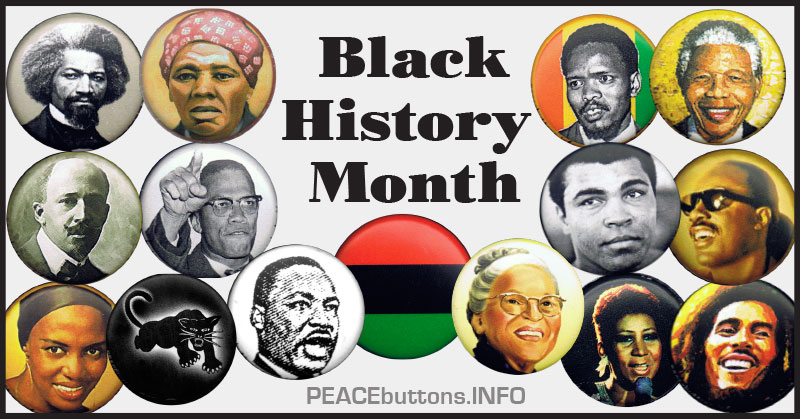
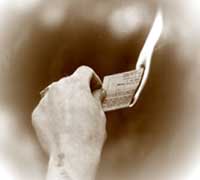
Darwin Day ideas ================================================ February 12, 1909 The National Association for the Advancement of Colored People (NAACP) was founded by sixty Americans, both black and white, in a call to safeguard civil, legal, economic, human, and political rights of black Americans. The call was partly in reaction to a race riot in 1908 in Springfield, Illinois, home of Abraham Lincoln. The call was issued on the centennial of his birth, and principally written by Oswald Garrison Villard, president of the N.Y. Evening Post Company: “If Mr. Lincoln could revisit this country in the flesh, he would be disheartened and discouraged.” Oswald Garrison Villard NAACP’s beginnings ================================================== February 12, 1947 An estimated 400-500 veterans and conscientious objectors from World Wars I and II burned their draft cards during two demonstrations, in front of the White House and at New York City’s Labor Temple, in protest of a proposed universal conscription law. This was the first peacetime draft-card burning. ================================================== February 12, 1993 About 5,000 demonstrators marched on Atlanta’s State Capitol to protest the Georgia state flag (on left) because its principal element was the Confederate battle flag. That flag was adopted in 1956 by the state legislature in reaction to the Supreme Court decision of Brown v. Board of Education ordering the racial integration of public schools. Several newspaper editorials opposed the flag as well as 18 local patriotic organizations, including the United Daughters of the Confederacy, stating the flag “would cause strife.”
In 2001 the Georgia state flag was redesigned, shown above. ==================================================== February 12, 1997 In “Prince of Peace Plowshares,” six activists poured blood and symbolically disarmed U.S.S. The Sullivans, a nuclear-capable Arleigh Burke-class destroyer, at the Bath Iron Works in Bath, Maine. All were eventually convicted of destruction of government property and conspiracy. Read more about this action
It was cold out in Ollie’s potty area this morning!
Later this evening and overnight, we should get between 2-4 in. of snow, which is fine, then the temps will be below 20 degrees for a few days. Poor little guy’s gonna have to chase his favorite ball inside for a while.
———–Other Thoughts————————————–
I enjoy spicing my oatmeal differently each morning. I think I especially like ginger with a dash of vanilla, but my top favorite is cocoa and cayenne pepper. It’s really awesome, and puts a fine shine on the day, for me. Ollie can’t clean my bowl for me, though, when I do that one.
Our kid’s birthday is this week. I have no good ideas; he himself has no good ideas; we’re all sort of at the place where if we need something, we just get it. I’m thinking of something to cook. And trying to decide between ice cream cake, or lava cake, both of which are his favorites.
I’ve been really relishing a TV show on Tuesdays, now at 8PM but used to be at 9PM on ABC, called “High Potential.” It’s really good, and I don’t want to spoil it for anyone who might try it; it’s a mystery show with a high IQ neurodivergent (show’s description) woman who becomes a detective while juggling family life and a missing husband. I really like it, and recommend it to anyone with an hour at 8PM on a Tuesday night! They stream it on Hulu, too.
I know no one thinks it’s much justice for We The People to see the FBI reports on the stolen documents found at Mar-A-Lago. It isn’t, really, except we’ll know if we want to, and will be yet better informed as we go about our civic duty of directing our government. And he’s still a convicted felon, as well.
I hope everyone’s got sun today, at some point. I usually prefer cloudy days with temps between 35-48 degrees, but since the election, for some reason, I’ve noticed I prefer a sunny day after a cloudy day, and maybe slightly higher temps, like between 42-60. Go figure.
That’s what I’ve got. I need to sweep the floor to make room for the new dog hair!
(I used to do 10-20 minutes of some yoga each day during W’s admin while the kid was in school. I sort of let it go over time, though I suppose technically I use it when generally stretching, and during some exercises. This is linked on Oliver Willis’s news page, and I thought it could help all of us.)
The news is all shit right now. Sure, there are more artful, creative, and writerly, ways to say that, but time is precious and writing something like that would prove nothing more than ownership of a thesaurus.
If you’re like me and millions of others, you are absorbing all this and wondering, “What can I do?” You can subscribe to journalism (which you probably already do! Yay!), donate money, volunteer, show up for your family, friends, and neighbors, and then what? That’s the thing about the battle for a real democracy—it is not won in flashy, Hollywood fight scenes, though those do make for excellent inspirational images for sharing amid said battle for democracy. It’s won in federal workers showing up to do their jobs. It’s won in reporters showing up to do their jobs. It’s won in a lot of us, in our own ways, showing up, doing our jobs, and not being assholes, even to the person who irritates you—and they are so, so annoying—but dammit we’ll deal with that after we make sure there’s still a republic.
Except, after all that showing up, there’s still a lot of time left for the mind to spiral. It can be easy to forget that our brains, for much of human history, did not take in this much news every day. Not even 100 years ago, most people got their news from a newspaper or magazine. They read it and went about their day, unless they listened to a radio broadcast. Then came television, then cable, then 24-hour news, then smartphones, then apps with push notifications, then social media and its endless firehouse of likes and lives. If we do not know how to log off it is because, in part, for most of human history, nobody had to. You could read to the end of the newspaper or reach the end of the newscast; you cannot ever scroll to the end of Instagram or TikTok. The endlessness is the point. We sacrificed true boredom to the gods of engagement.
So here’s my advice: Stretch your hips. Yes, even if you aren’t naturally stretchy, which I am not, and even if you can’t touch your toes, a feat I can barely accomplish myself. Those of you who have followed my work for a while probably will be unsurprised to know that I completed a 200-hour yoga teacher training in 2018. I didn’t become a yoga teacher afterward, but it did deepen my practice and gave me more tools for stress management. Mostly, it taught me that one secret to leading a good yoga class is setting aside time for a hip stretch. Everyone gets so excited for a hip stretch, almost as much as savasana, and everyone feels really good afterward.
For my money, the best hip stretch is deer pose. You won’t run into it in a ton of classes; I find the defaults tend to be pigeon pose or figure four. But figure four doesn’t provide me much relief, and my hips are too inflexible to pull off a proper pigeon pose without bolsters and time to settle in. But deer pose? It requires less flexibility, no props, and provides a nice hip stretch.
In lieu of giving you an entire explanation of how it works, here’s a good video to walk you through the pose because, c’mon, you were just gonna skip to this part anyway. Though, if you want to read more about the pose, you can do that here. Also, remember you gotta do both sides!
To be clear, I’m not saying occasional hip stretches will stop fascism; I’m saying they help you stay level while you’re trying to survive the fascism. Tomorrow you will wake up, grab your phone, and scroll through what will feel like an endless stream of bad news and horrors. But then what? Maybe you go on a walk. Maybe you actually touch grass. Or maybe you take a few minutes to do deer pose. (snip)
It reminds me of how “Cosmopolitan” was one of the early ‘mainstream’ magazines honestly discussing the AIDS virus, where to find care, and knowledge to avoid contracting it. They knew and reported early on that any- and everyone can catch what we now know as HIV. This piece is about early cancer info dissemination.
At a time when people wouldn’t even say the word, journalists at Good Housekeeping, Redbook, and other women’s magazines were informing readers how to recognize, protect against, and talk about cancer.
Maxine Davis wrote about plenty of tough topics during her long career in journalism, but none of them frightened her as much as the assignment she received in the spring of 1940. Her editors at Good Housekeeping wanted her to cover cancer, a disease so cloaked in stigma that Davis, like many other Americans, was afraid to say its name out loud.
The sweeping series of articles she produced that year changed her thinking. “My research has dispelled that terror,” she wrote in an article that appeared in Good Housekeeping’s April 1940 issue, declaring that cancer could be cured especially if it was caught early through education and hypervigilance. Cancer, she explained, was “sneaking, insidious. Only you and you alone can guard yourself against it.”
At the time Davis wrote these words, cancer was a taboo topic. The term itself wouldn’t be spoken on the radio until 1945. Rumors about its causes were rampant. (Many Americans at the time believed it to be contagious or a sign of poor character.) Physicians routinely withheld cancer diagnoses from patients to spare them shame. Although it wasn’t always a death sentence, the treatments we rely on today were nascent or nonexistent. And yet, the editors at Good Housekeeping still decided to devote pages and pages to in-depth coverage of the disease.
This is one example of how, during the 1940s and 1950s, women’s magazines played a vital and largely forgotten role in educating average Americans about burgeoning efforts to prevent and treat cancer. It was a pivotal era for modern medicine thanks to scientific advancements and increased attention to public health. Cancer was among the leading causes of death, and rates were increasing in part because people were living longer. Print media in all its forms played a major role in normalizing public conversations about cancer, but women’s magazines took a unique approach. They made disease prevention personal, calling upon women to become cancer watchdogs for themselves and their families.
Mortality rates from selected cancers among women in the United States, 1930–2008 (Surveillance, Epidemiology, and End Results Program 2013, National Library of Medicine)
Davis was among the best-known of the women’s magazine journalists covering cancer. By the early 1940s, she had reported on the League of Nations, driven all over the United States to research a book about American youth, and founded a wire service aimed at explaining politics to women. Her cancer stories for Good Housekeeping launched her to a new level of prominence, one akin to modern day health influencers. Her editors promoted her work heavily, framing her as a lay expert with carefully cultivated sources. “Doctors like to work with her,” they wrote in an introduction to her spring 1940 cancer series, “and they give her all the help they can.”
Writing in May of 1940, Davis introduced readers to the basics of cancer treatment, explaining in plain language how surgery, X-rays, and radium were being used to help patients.
Sometimes X-ray, radium, and surgery are all used to treat a malignant condition. Take the case of Ada Johnson. Ada put off going to hospital longer than she should have after she felt a lump in her breast; but the doctor didn’t think the situation was hopeless. This is what he did:
First, there was a surgical operation. When that had been successfully accomplished, the specialist in cancer of the breast applied radium to the chest wall. That wasn’t all. The doctor then used deep X-ray therapy on Ada’s breast and armpit….This was repeated for thirty-five treatments. Ada is perfectly well today.
Davis was not, however, the only women’s magazine reporter working the cancer beat at midcentury. Seventeen magazine’s beauty editor Jean Campbell urged her young readers to get involved in efforts to bring specialized cancer to more communities. “Demand them,” she wrote in the April 1948 issue, “and raise funds for them.” That same year Miriam Zeller Gross deftly described the history of stomach cancer treatment in a gripping feature story that appeared in Better Homes and Gardens. In the early 1950s, Redbook’s Collie Small encouraged women to overcome “false modesty” and allow physicians to screen them for breast cancer. Women’s magazines were publishing hundreds of articles on cancer by dozens of writers. Women also wrote about cancer for general magazines including The Saturday Evening Post, which featured a handful of stories in the 1950s by female cancer survivors.
Stories about cancer were far less common before World War II, but they did sometimes appear in women’s magazines. Ladies Home Journal has been credited by medical historians with publishing the very first general interest article about cancer detection in 1913. Others, including Good Housekeeping, featured occasional educational columns by physicians during the 1920s.
While less common, articles about cancer did appear in women’s magazines in the early 20th century, such as this piece by Dr. Harvey W. Wiley in the November 1922 issue of Good Housekeeping. (Cornell University Library)
In addition to becoming quick experts on complex medical topics, these journalists managed often-fraught relationships with health professionals who tended to distrust journalists. It became common practice during this time for physicians to review stories before they were published. Sometimes, one of those physicians would write a sidebar: In 1955, American Cancer Society vice president Dr. Charles S. Cameron had reviewed a draft of an April 1955 article on cervical cancer by health journalist Gladys Denny Shultz for Ladies Home Journal, and wrote a public note of thanks, proclaiming that the magazine was “offering its readers a great service by publishing this excellent article. It should be a means of saving thousands of lives.”
While most of the bylines atop women’s magazine stories about cancer belonged to female journalists, editors did occasionally invite physicians, almost always men, to contribute. Cosmopolitan published a 14-page essay by Walter Alvarez, who had just retired from clinical practice to pursue a second career in medical writing. The piece, which appeared in January of 1953, sprawled across 14 pages under the headline “Danger Signals in Your Life” and includes tips to spot illnesses like cancer in children, teens, and adults. Alvarez assured readers he wasn’t out to scare them. Instead, he hoped to save “wise persons from avoidable illness or death.”
Much of this coverage was driven by coordinated public relations campaigns initiated by the American Cancer Society and similar organizations. In addition to connecting journalists with expert sources and organizing junkets to prominent research centers, such campaigns included advertising blitzes promoting new treatments, championing medical breakthroughs, and reminding Americans of the importance of cancer screenings. Women’s magazines were a popular venue for such ads, so it wasn’t uncommon for some issues to feature a reference to cancer on nearly every page.
While groundbreaking, the cancer coverage provided by midcentury women’s magazines was imperfect. Race and class were seldom addressed because these publications — like much of the news media — assumed their audience was white and financially stable. Some coverage also illustrates the era’s rudimentary and fast-evolving scientific knowledge. One example is a story that appeared in Parents magazine in 1943. Written by journalist Constance J. Foster and prominently endorsed by the New York City Cancer Committee, the article proclaimed that “cancer is not hereditary.” A piece that appeared in Redbook a decade later explained new research showing that some forms of cancer do run in families.
The role of women’s magazines in the fight against cancer is a fascinating chapter in media history, one laced with a type of gender politics that feels familiar today. The cancer beat gave women journalists like Davis access to male-dominated sectors like medicine, public policy, and journalism, but it also kept them firmly tethered to domestic matters and subservient to male physicians. Their work, while educational, put undue pressure on individual women to spot the signs of cancer. But it also brought hope to families facing a terrifying diagnosis. As Davis wrote in the October 1948 issue of Good Housekeeping, “Cancer is not necessarily fatal. Cures do exist.”
Northeastern University student Elsa O’Donnell contributed archival research for this article.
(There’s a slideshow on the user-friendly page; click through here.Some of these companies have been sued by Stephen Miller’s lawyer group, but were found by the Justice Dept. to be well within law. So there’s a thing I guess we watch, also…)
Despite a slew of companies like Walmart, Meta and Amazon rolling back their diversity, equity and inclusion efforts, other companies have remained firm in continuing these vital initiatives. Donald Trump has attacked diversity on both the campaign trail and now during his second presidential term. Even though Trump set on getting rid of inclusive practices, here’s a list of places advocating for marginalized communities to be part of their workforce.
A few things I’ve run across while doing other things. We’re having freezing rain until noon, though it’s mostly not slick out. Still cloudy. Yesterday it was heaven, but today, Ollie is sad about no sun. There are fewer visitors to the trees and lawn for him to watch and play with!
Here’s one about Dems getting in the middle of DOGE. It sounds collegial, but the plan, of course, is oversight. They have no majority, but they can tell us what’s happening.
A new GOP-led congressional caucus that supports President-elect Donald Trump’s push to cut trillions in federal spending has welcomed a Democrat.
This week, Rep. Jared Moskowitz of Florida joined the Department of Government Efficiency caucus in the U.S. House of Representatives, becoming the first Democrat to do so.
Moskowitz, who represents a “middle of the road” Florida district that includes Boca Raton and Ft. Lauderdale, said joining doesn’t mean he fully shares Trump’s agenda. <snip>
This I saw this morning, and it’s really heartening to see Kansas businesses organizing on behalf of customers! Here’s hoping businesses organizing for people becomes a thing.
by: Jeremiah Cook Posted: Feb 3, 2025 / 07:24 AM CST Updated: Feb 3, 2025 / 09:34 AM CST
KSNF/KODE — More than 100 Sunflower State pharmacies will close shop next week—to help send a message to lawmakers.
Wolkar Drug president and pharmacist Brian Caswell says on Wednesday, February 5, roughly 100 stores in 56 Kansas counties will close—including Wolkar Drug in Baxter Springs.
Roughly 400 people from those stores will be headed to Topeka—hoping to make a change in healthcare laws.
Caswell says pharmacy benefit managers—or PBM’s—have had a big, and negative, impact on the healthcare industry.
Caswell tells us PBM’s act as the middlemen between insurance companies and pharmacies—and can cause higher deductibles and even dictate what medications are covered, based on what makes them more money.
“PBM’s have been around for, like, well over 40 years, and they’ve slowly kind of changed the industry altogether and taken over. With the success of money and power, they’ve actually created a healthcare industry that’s just unsustainable right now,” said Brian Caswell, Wolkar Drug president & pharmacist. (snip-MORE)










 Scottie's Playtime