Nearly Two-Thirds of Young Americans Are Thinking About Getting the Heck Out of Here

Nearly Two-Thirds of Young Americans Are Thinking About Getting the Heck Out of Here

America’s biggest export might soon be its own citizens. According to the American Psychological Association’s Stress in America 2025 survey, 63% of adults ages 18 to 34 have considered leaving the country this year because of “the state of the nation.” Among parents, more than half—53%—say the same.

These aren’t impulsive fantasies about Parisian cafés or permanent vacation visas. The study, conducted between August 4 and 24 among more than 3,000 adults, found that stress about the country’s future has hit a historic high. Seventy-five percent of Americans say they’re more worried about the direction of the nation than they used to be, and 76% call that fear a “significant source of stress.”

The anxiety isn’t limited to politics. Half of all adults reported feeling lonely, and 69% said they needed more emotional support this year than they received. “People are overwhelmed by societal division, technology, and uncertainty about what’s next,” said APA chief executive Arthur C. Evans Jr. “It’s affecting how they relate to each other and themselves.”

Almost Two-Thirds of Young Americans Are Thinking About Ditching the U.S. for Good

That division has started to show up physically. Among adults who named it a major stressor, 83% experienced physical symptoms in the past month, like headaches, fatigue, or anxiety, compared to 66% of those who didn’t. The same group was more likely to lose patience with family, cancel plans, or struggle to plan ahead.

AI is also creeping into the collective stress index. Fifty-seven percent of adults now say the rise of artificial intelligence adds to their anxiety, up from 49% last year. Among students, that number has nearly doubled to 78%. As automation expands and misinformation spreads, Americans are increasingly uneasy about how technology will reshape work, privacy, and even identity.

Still, the survey found that most people haven’t given up. Seventy-seven percent say they have some control over their personal futures, and 84% believe they can build good lives despite national instability. Family, friendships, and health remain top sources of meaning.

But optimism has its limits. Sixty-six percent of adults think they’ve sacrificed more than previous generations, and many feel the country isn’t keeping up its end of the bargain. For young Americans, especially, the American dream feels more like a relocation plan.

As stress levels rise and passports renew, the question hanging in the air isn’t whether they love their country, it’s whether they can still live in it.
A Couple Of Pieces From “Them”

A Man Got His Jaw Broken Defending a Trans Woman. The Community Paid for His Surgery

Jarod Adkison had been left with a concussion by three men.

By Abby Monteil

After the story of a cisgender man who was severely beaten over the summer while defending a trans woman went viral, strangers have helped him cover his reconstruction surgery.

33-year-old Jarod Adkison told Austin American-Statesman that he began chatting with three women while visiting Barton Springs Pool near Austin, Texas on July 26. While they were sitting by the pool, Adkison noticed three men who appeared drunk coming up and making fun of one of the women, who is trans.

“It all stemmed from the men seeing the trans lady and making a lewd gesture,” he said. (snip-MORE-click on the title to finish)

=====

Our First Lady Cole Escola to Play Gender Nonconforming Role in Netflix’s One Piece

The performer will play the role of Bon Clay.

By James Factora

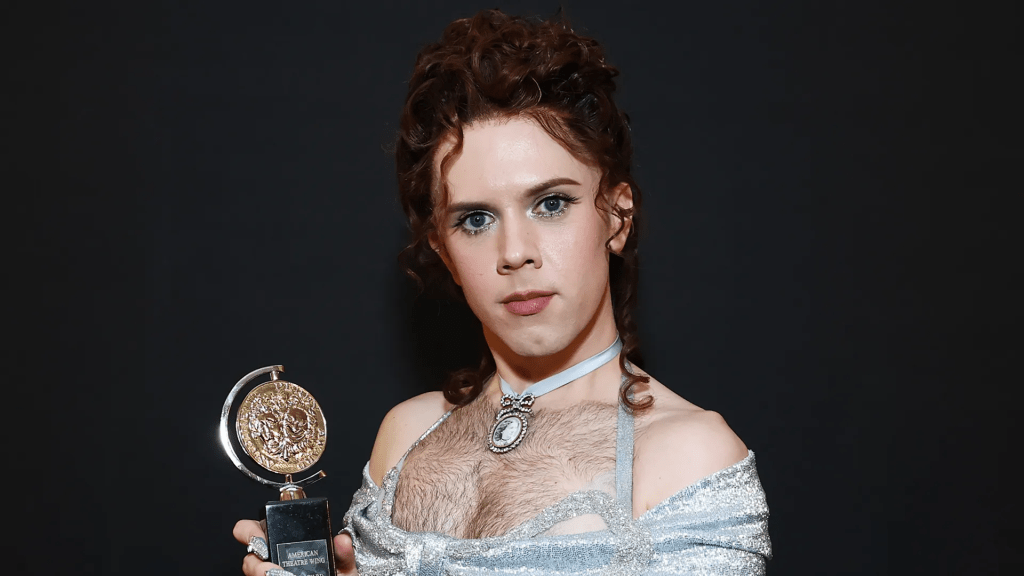
Cole Escola has been cast in the third season of Netflix’s live-action adaptation of One Piece as a fan favorite character.

The news of the actor’s casting was announced on Monday. They will be playing Bon Clay, who is described as “a master of performance and precision who is as dangerous as they are dazzling, a theatrical assassin who turns combat into art.” The character in the original manga is described as an okama, a Japanese umbrella term that can refer to gender nonconforming men, trans women, and crossdressers. So basically, Escola is perfect for the role. (snip-MORE-click through on the title)

What about the bible saying, “Lazy people shouldn’t eat!”?

U.S. Labor Organizes, & Acts, On This Date In Peace & Justice History

November 8, 1892
Thirty thousand black and white, factory and dock workers staged a general strike in New Orleans, demanding union recognition, closed shops (where all co-workers join the union), and hour and wage gains. They were joined by non-industrial laborers, such as musicians, clothing workers, clerks, utility workers, streetcar drivers, and printers.
November 8, 1935
United Mine Workers president John L. Lewis and other labor leaders formed the Congress of Industrial Organizations (CIO). They had split with the existing labor union umbrella organization, the American Federation of Labor (AFL), which was not interested in organizing unskilled workers, such as those in the steel, rubber, textile and auto industries.

John L. Lewis
CIO history 

https://www.peacebuttons.info/E-News/peacehistorynovember.htm#november8

Peace Song November-

A post from Bee with a song (It’s Muse-click through and turn it up!!), then my selection beneath; leave the volume up for that one, too. Peace Out! 🕊 ☮

Leave the volume up for this one, too. Yes, it seems Christmasy, but it’s a peace song. We used to go to Wichita to see them every year. They told the story during the concert. From notes on the video:

“For anyone who wants to know the story of this song, I looked it up: The city of Sarajevo was in a war with another city, in the middle of the Bosnian War, and his city was destroyed by his own people. Desperate to do something the old man would go to the highest place he could find, and play music on his cello, things like Mozart and Beethoven. A reporter went to try and find him and ask why he did such a crazy thing. He responded because it was his only way to show that there was still a little bit of humanity in the world.”

Music For Peace

From Bee:

Snippet From This Post:

“On Tuesday, I commented on Scottie’s Playtime that I believe we create what we focus on. I believe focusing so much on those who want to divide us the people to gain from the division we give them the power they think they deserve.

That’s why I feel that music, poetry & stories with a vision for a better world are so important.” (snip-go listen to Bob Marley, and read the provenance of “One Love”!)

=====

The above song was-maybe Dixie Chicked?-in my area, as I heard it for the first time last night on Bee’s blog. It’s good, and it should have been on the radio, but somehow, it just wasn’t. Interesting, no?

=====

Here is my own choice for this post. Peace & love! ✌ 🫶

The Great March To Transvaal, Apartheid Condemned by U.N., Draft Cards Ignited, & Iran-Contra Denied On This Date In Peace & Justice History

November 6, 1913
Mohandas K. Gandhi led 2500 ethnic Indian miners, women and others from South Africa’s Natal province across its border with Transvaal in the Great March. This was a violation of the pass laws restricting the movement of all non-whites in the country.
Originally granted the rights of British subjects, Indians’ rights were steadily eroded beginning in the 1890s with the denial of the right to own property.
Shortly before the March, a court in Capetown had invalidated all Muslim and Hindu marriages. Gandhi and many others were arrested and jailed after refusing to pay a fine.

 
The Great March to Transvaal    

Mohandas Gandhi, 1915
Read about the early resistance in South Africa 
November 6, 1962
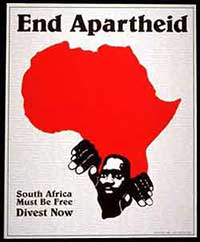
The 17th session of the U.N. General Assembly passed Resolution 1761 condemning apartheid in South Africa and called on all member states to terminate diplomatic, economic and military relations with the country. The policies of the country embodied in apartheid, the strict racially separatist regime, were declared a threat to international peace and security.

Apartheid was the racially separatist regime under which black and, to a somewhat lesser extent, so-called colored South Africans, were without political, civil or economic rights. All political power and wealth were held by the white population, approximately 15% of the country. “Apartheid” is the Afrikaans word for “apartness.” (Afrikaans is the language of the Boers, or [white] Afrikaners.)
U.N pressure over the years on South Africa 
November 6, 1965
2,500 people gathered in New York City’s Union Square to witness the burning of draft cards, a violation of recently passed federal law, as an expression of resistance to the Vietnam War.
Dorothy Day, founder of the Catholic Worker movement, and pacifist leader A.J. Muste spoke, identifying with the “crime” about to be committed.


Gordon Christianson, chairman of the Committee for Nonviolent Action and a World War II combat veteran, used his lighter to burn the cards.
A counter-demonstrator shot a fire extinguisher at those ready to burn their cards, but they still ignited. And the counter-demonstrators shouted, “Burn yourselves, not your draft cards!”
At trial, those who were arrested conceded the prosecution’s case, submitting footage of the action shot by a supporter. They made a defense under the First Amendment to the Constitution, arguing that the burning of draft cards in such a context was an act of symbolic speech. The trial judge found them guilty and sentenced them to six months in federal prison.
November 6, 1986
Although an American plane with supplies for the Nicaraguan contra insurgents had been shot down the previous month, and a Lebanese newspaper reported that the U.S. government had arranged for the sale of weapons to Iran, President Ronald Ronald Reagan denied involvement (“. . . a story that came out of the Middle East, and that to us has no foundation . . . .”) in what came to be known as the Iran-Contra scandal. Both the ongoing aid to the contras and the weapons sales to Iran were violations of U.S. law.

https://www.peacebuttons.info/E-News/peacehistorynovember.htm#november6

A Couple From Waging Nonviolence

WNV linked each of these. Here are the original pages with snippets.

After No Kings, It’s Time to Escalate by Eric Blanc

We need bigger—and more disruptive—nonviolent campaigns that can go viral and peel away Trump’s pillars of support Read on Substack

American democracy is on the ropes. Trump and his billionaire backers are doing everything possible to transform our country into an authoritarian state like Hungary or Russia, where the trappings of institutional democracy mask brazen autocratic rule.

Our president’s sinking popularity numbers might not matter so much if his administration is either able to ignore electoral results or to distort the electoral map so badly that there’s almost no way to vote Republicans out.

Far too many Democrats and union leaders naively hoped that the courts would save us. But the Supreme Court has given a green light to Trump’s power grab, and it appears poised to overturn Section 2 of the Voting Rights Act, the last major legal roadblock to prevent Republicans from disenfranchising millions of Democrats and Black voters across the South.

Are we cooked? Trump would certainly like us to believe he’s unstoppable. Faced with the administration’s relentless offensive against immigrants, free speech, public services, and majoritarian rule, it’s normal to sometimes succumb to despair. But there’s no need to throw in the towel — and there are concrete next steps we can all take to win back the country through nonviolent resistance. As Chicago Teachers Union (CTU) president Stacy Davis Gates reminds us, Trumpism “won’t be stopped just in the courts or at the ballot box.” (snip-there is MORE on the page linked at “Read on Substack” above)

=====

The introvert’s guide to fighting for democracy by Protect Democracy

Six ways to protect democracy — without attending a protest Read on Substack

If you’re reading this, you’re concerned about our democracy’s slide into authoritarianism — and you want to do something about it. Wahoo! You’ve taken the first and most difficult step: committing to action.

Now come the fun parts.

I want to be really clear on a couple things to start out. First, there is no one-size-fits-all best way to exercise your First Amendment rights of speech and association. Every successful social movement has employed a wide variety of tactics and repeatedly adjusted to respond to facts on the ground. Opt for action over agonizing about optimal tactics.

Second, be realistic. We are all busy. Reflect on the commitments you can actually sustain with room to grow. It is far better to regularly move the ball forward on a smaller effort than to dive into and never complete an ambitious one.

Third, be unique! You have unique talents, skills, and passions. Let those guide your advocacy. Focus on projects that bring you joy, things you actually look forward to engaging with week after week. Lean into the comparative skills and expertise you bring to the movement.

With all that in mind, here’s a short list of six ways everyone can protect democracy — even (especially) if going to a protest or some other more public form of engagement isn’t for you.


1. Check in with your local library

Local libraries are the backbone of an informed democratic citizenry, and they provide crucial resources for underserved communities. But their funding is under attack by the administration, which has cut critical funds nationwide.

So, give the library in your neighborhood a call. See how they are doing in relation to funding cuts and if there are ways you can support them. Do they take book donations? Need volunteers? See if there are teach-in or reading groups you can join — or even lead. Offer to help curate pro-democracy reading lists for various ages. Many libraries are open to suggestions for books to add to the collection — here are some recommendations from our team.

2. Fill the gaps left by government programs

Taking care of one another is essential movement building. Check in on your food pantry and community kitchen — many of which have faced funding cuts — to see how you can help. (snip-MORE at the page linked above: “Read on Substack”)

=====

And more from Waging Nonviolence.org

Music Against War Today

suze mentioned a great song, and I’m happy to play it today. It’s a rocker! Here’s what Bee shared; there is some personal history, plus her chosen song.

And for suze, For The World! Edwin Starr:

A Little Women’s History

Kickass Women in History: Tze-gu-juni, AKA Huera

by Carrie S 

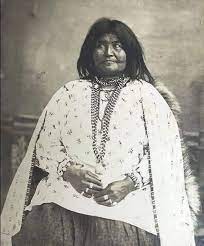
Tze-gu-juni, also known as Huera, was a woman whom Geronimo called “The Bravest of Apache Women.” She was a woman of intensely powerful inner strength who survived captivity, a trek across the desert, and mountain lion attack to serve her tribe as a shaman.

Tze-gu-juni was born around 1847. As a child, she survived a lightning strike that killed her mother and sister. She seems to have lived an otherwise peaceful life until October 14, 1880, the day of the Battle of Tres Castillos, the battle that killed Chiricahua Chief Vittorio and ended Vittorio’s War, a war Vittorio waged against U.S. and Mexican Army soldiers in New Mexico, Texas, and Mexico. Tze-gu-juni was captured along with approximately seventy other women and children and taken to Mexico City, where she was enslaved and given the name ‘Huera’.

During her captivity, Tze-gu-juni became fluent in Spanish and secured a role as a translator at an Apache reservation in Arizona. She and about five others planned an escape and fled into the desert. They had one knife and one blanket and would have to walk for approximately 1300 miles to reach safety. They foraged for food and water in the desert.

Orange flowers wave in front of a view of rocky desert and a distant mountain range

The land near San Carlos Reservation

Along the way, Tze-gu-juni was attacked by a mountain lion. She tightened the blanket around her neck which saved her, and fought off the mountain lion. She was badly wounded but managed to reach San Carlos Reservation, where Geronimo and Tze-gu-juni’s future husband, Mangas, were living. Her hands and face were scarred for the rest of her life and she had limited use of her hands thereafter. (snip-MORE; go read it!)

Black and White photo of Tze-gu-juni seated, long black hair unbound, wearing a white patterned top

Tze-gu-juni, Image from History.net, provenance unknown