Multiple sources shared details with the Daily Beast about a meeting in which the ABC News president delivered a message that left the co-hosts unnerved.
Photo Illustration by Thomas Levinson/The Daily Beast/Getty/ABC
Disney and ABC News have asked the hosts of The View to tone down their political rhetoric, multiple sources told the Daily Beast.
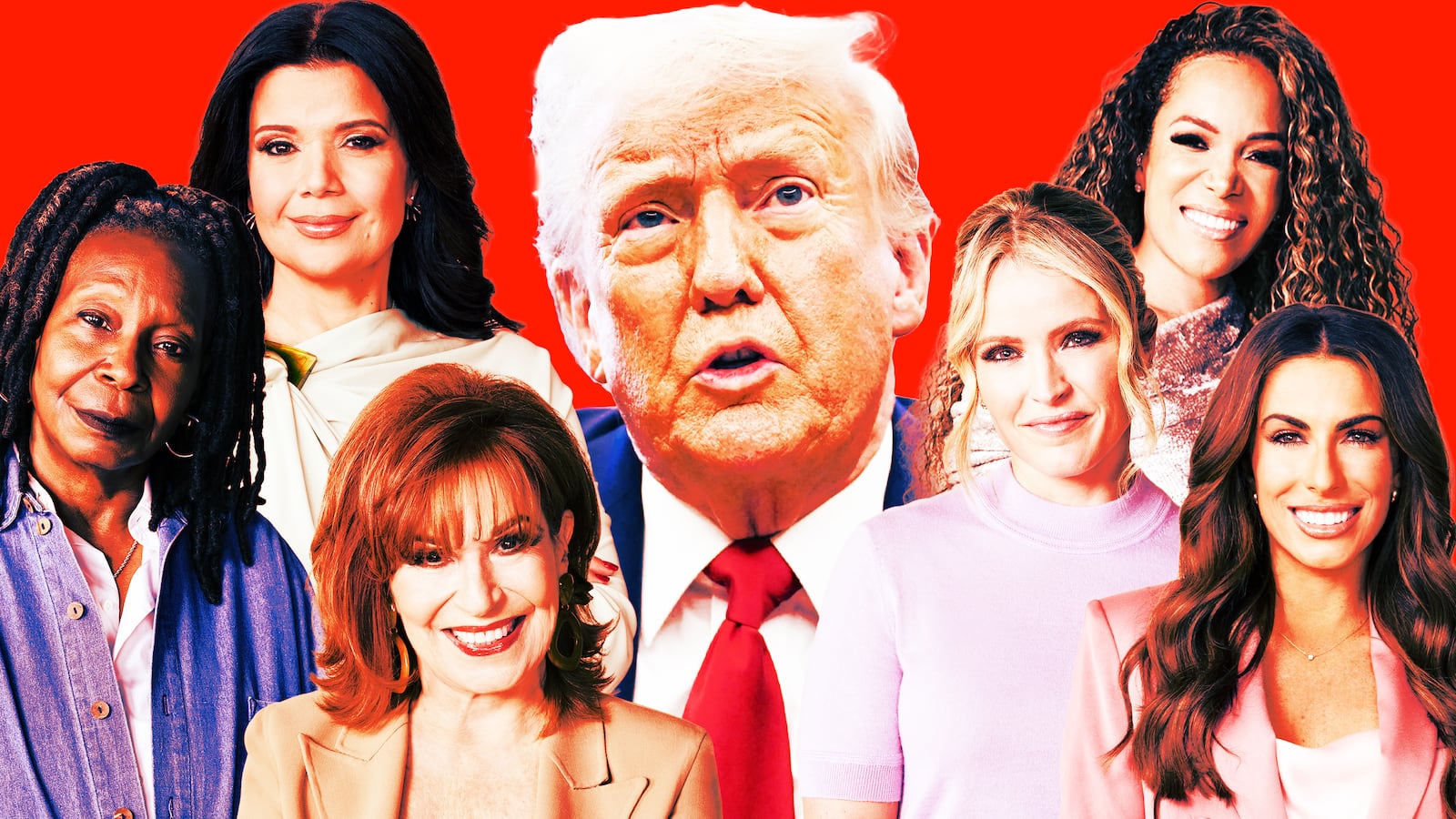
Since President Donald Trump’s election in 2024, the panel of co-hosts on The View—Whoopi Goldberg, Joy Behar, Sara Haines, Ana Navarro, Sunny Hostin, and Alyssa Farah Griffin—have consistently criticized Trump administration officials and policies.
But its constant focus on Trump and politics seems to have roiled the network’s top bosses, including Disney CEO Bob Iger and ABC News President Almin Karamehmedovic.
Almin Karamehmedovic lights the Empire State Building in Partnership with ABC News in Celebration of Nightline’s 45th Anniversary at The Empire State Building on March 28, 2025 in New York City.Roy Rochlin/Getty Images for Empire State Realty Trust
Karamehmedovic convened a meeting with The View‘s executive producer Brian Teta and its hosts, and suggested the panel needed to broaden its conversations beyond its predominant focus on politics, two sources familiar with the meeting said. Karamehmedovic highlighted episodes with celebrity guests that he said were highly rated, one source said, and encouraged them to lean into such coverage moving forward.
The move was not framed as an edict, one source said, but the suggestion alone rankled the hosts. The group pushed back forcefully, with hosts like Navarro noting the show’s audience routinely seeks out its perspective on politics, especially when the administration’s radical attempts to upend the government can potentially affect their daily lives.
One source familiar with the meeting characterized the hosts as telling their boss, “‘This is what our audience wants. Isn’t it gonna look kind of bad if we’re all of a sudden not talking about politics?’”
Ultimately, the women found the requests “silly” and that “they were just going to keep doing their thing.”
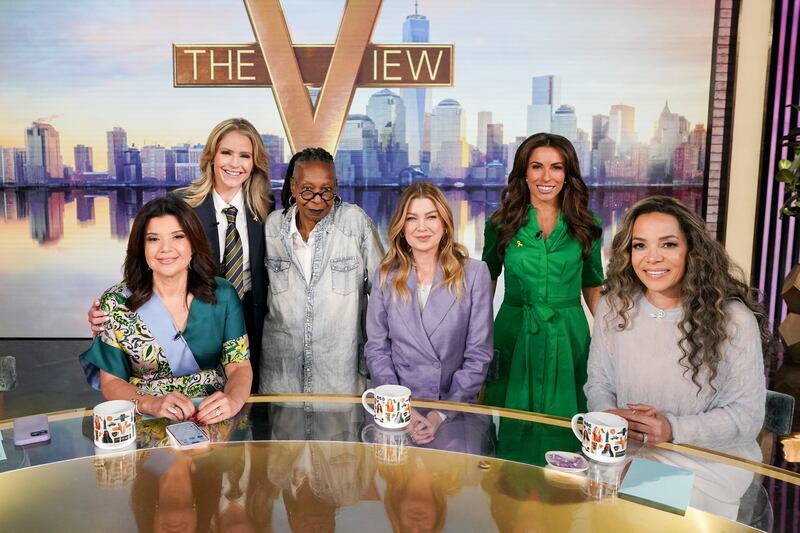
Ellen Pompeo is a guest on “The View” on March 17, 2025.Al Drago/ABC via Getty Images
Still, the conversation continued to stay at top of mind for at least one of the co-hosts. During Disney’s Upfront presentation day to advertisers last week, an annual glitzy gathering where media companies seek to woo brands to advertise with their shows, Navarro had a direct conversation with Iger, according to multiple sources.
Navarro thanked Iger for allowing the hosts to continue doing their jobs in a politically turbulent environment, the sources said. Iger confirmed he supported the show—but he also reaffirmed that the show needed to tone down its political rhetoric, the sources said.
The conversation made clear the suggestion to tone down the politics went all the way to the top, the sources said.
ABC News did not comment, and a Disney spokesperson did not respond to a request for comment. Navarro did not respond to multiple requests for comment.
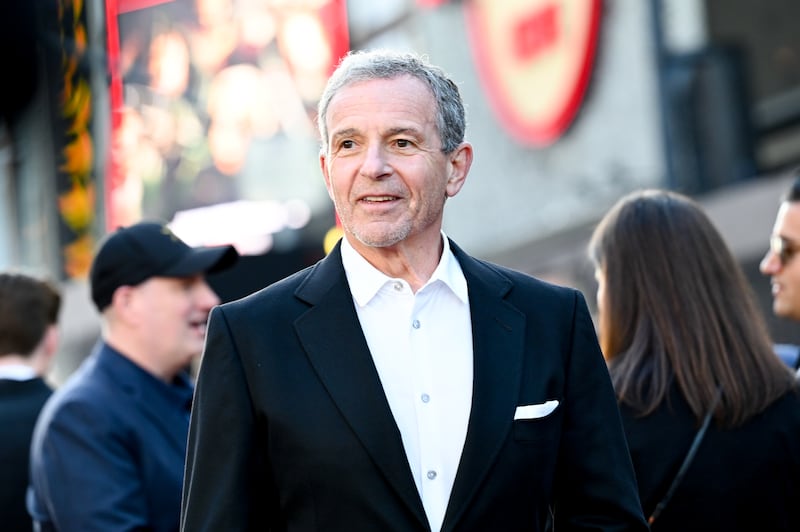
Bob Iger at the Los Angeles Premiere Of Marvel Studios’ “Thunderbolts*” at Dolby Theatre on April 28, 2025 in Los Angeles, California.Gilbert Flores/Variety via Getty Images
Another source familiar with the matter said ABC will “constantly have conversations with talent based on viewer feedback, and this instance was no different,” suggesting the show’s viewers have indicated that they want the show to be less political.
Despite suggestions otherwise by ABC’s top brass, the political coverage appears not to have affected the show’s ratings. The show was the No. 1 among daytime network talk shows and news programs during 2025’s first quarter, according to TheWrap, beating time slot competitor The Faulkner Focus on Fox Newsin both total viewers and women ages 25-54, its chief advertiser-focused demographic, throughout the quarter.
Even earlier this month, it maintained that No. 1 title, beating competitors like NBC’s TODAY Third Hour and TODAY with Jenna & Friends during the week of May 5, according to ABC.
The executives’ efforts to push The View in a less political direction highlight the current difficult circumstances facing media organizations as Trump and his administration set their sights on bending them to their will over critical coverage.
Trump got Disney to pay his presidential library $15 million and $1 million in legal fees in December when he sued the network and anchor George Stephanoupolous over an interview that mischaracterized a verdict that found him liable for sexual abuse as opposed to rape. Disney made the decision in part to avoid brand damage and risk stripping press freedom protections across the industry should it have lost at trial, according toThe New York Times.
Trump has also been at legal war with CBS and its parent company Paramount Global, suing the two for $20 billion over a 60 Minutes interview with Kamala Harris. CBS has called the lawsuit baseless, but as Paramount’s controlling shareholder Shari Redstone seeks to merge the company with David Ellison’s Skydance Media, the company has entered into mediation talks with Trump to secure a settlement.
Federal Communications Chairman Brendan Carr, an outspoken supporter of Trump, has also launched an investigation into Disney and ABC over its diversity, equity, and inclusion policies, and said the 60 Minutes interview would factor into the FCC’s review of the merger. And on Wednesday, Trump lashed out at an NBC News reporter and suggested NBC’s parent company Comcast “ought to be investigated.”
“Bob Iger writes a check for $15 million and then the FCC opens an investigation into DEI? What are they thinking?” one source said. “If anybody could stand up to Trump, it’s Bob Iger, and he already decided not to.”
The View, the long-running opinion talk show that became creator Barbara Walters’ crowning achievement in her celebrated run at ABC News, has long been a major player in the political media landscape. Democrats like Joe Biden, Barack Obama, and Harris have flocked to the show’s glass-adorned table to appeal to its predominantly female audience, and arun of Democrats and Republicans appearing on the show in 2019 promptedTheNew York Times Magazine to label it the “the most important TV show in America.”
Pundits speculated whether Harris’ admission at the table that she wouldn’t have done anything differently from President Joe Biden cost her the 2024 election, highlighting the show’s political relevance.
But just as common as its friendly approach to Democrats has been its vocal criticism of Trump and his policies. The show railed against the once-View regular—Trump appeared on the show more than a dozen times before effectively shunning it ahead of the 2016 election—and Goldberg warned last year his reelection could put the U.S. “in danger.”
But Trump won the election—a month after calling its panel “degenerates”—prompting the show to figure out its next move. The Daily Beast reported at the time that it planned to invite Trump to the table, though it had no plans to add an explicitly pro-Trump panelist.
Despite the conversations with Iger and Karamehmedovic, the hosts have continued to keep politics in focus this month. The women conducted a lengthy interview with former President Joe Biden and former first lady Jill Biden ahead of a book questioning his mental decline—though it was the Biden team that approached the show about the conversation, a Biden spokesperson told the Daily Beast.
Its “Hot Topics” segment on Tuesday also featured Behar questioning “when is Jake Tapper gonna write a book about the cognitive decline of the person who is in charge right now,” and Wednesday’s episode had a segment railing against “puppy killer” Homeland Security Kristi Noem for her bungled definition of the legal concept of habeas corpus.
But hints of a balancing act have emerged. During a robust discussion last week over the question of whether Democrats needed to focus on the question of Biden’s decline or move forward to fight Trump, Griffin appeared to strike a more balanced tone by highlighting how Trump’s low approval numbers were ahead of the Democratic Party.
“This table spends a lot of time criticizing Donald Trump and a lot of it is very valid and needs to happen, but it’s a fact his approval rating is 39 percent,” she said on Friday. “However, Democrats’ is 27 percent. People felt gaslit and lied to.”
That episode continued with a panel conversation about a Reddit post that asked whether Mother’s Day cards were appropriate for women who consider pets to be their “children.”
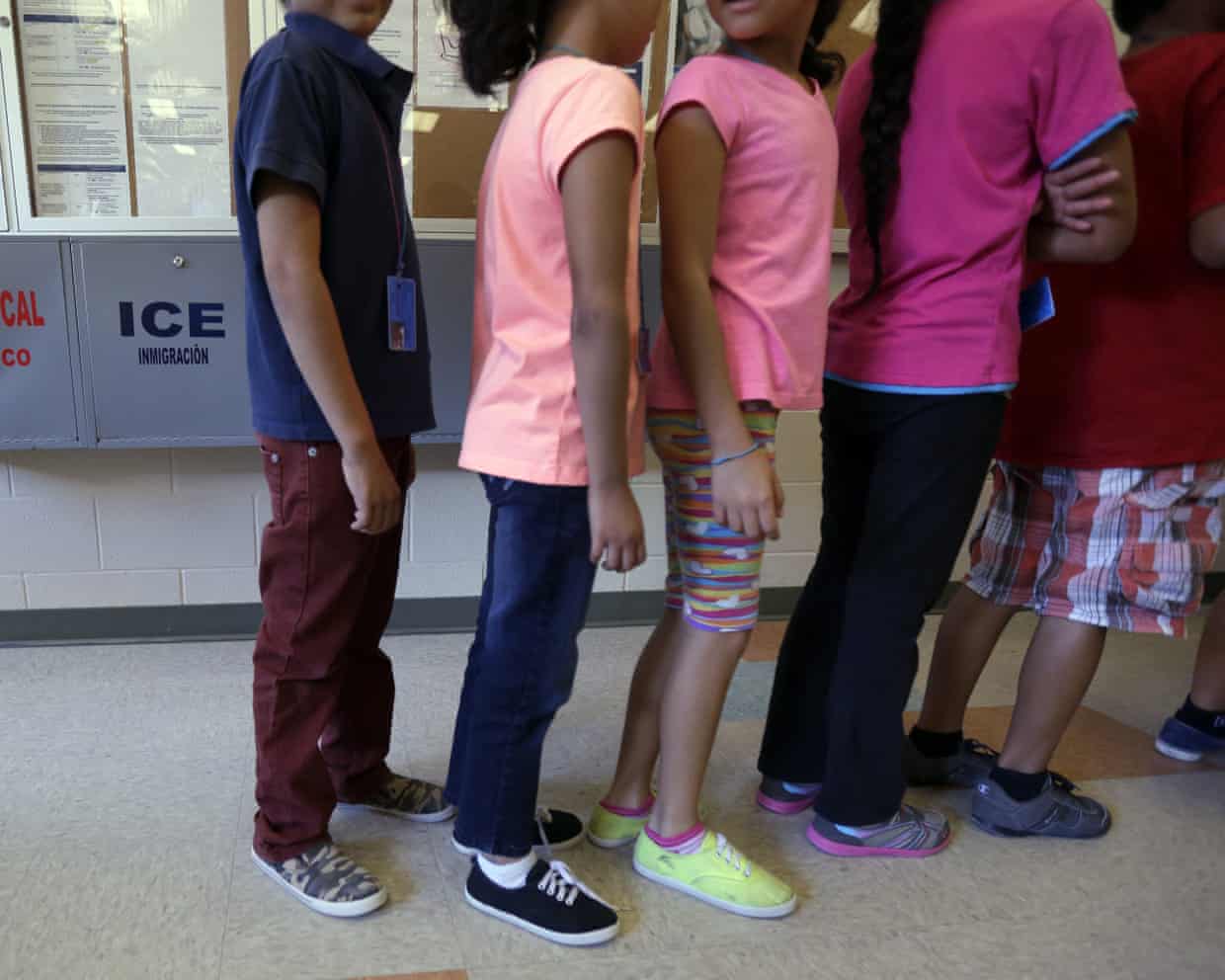
Detained children line up in the cafeteria at the Karnes County Residential Center in Karnes City, Texas, on 10 September 2014. Photograph: Eric Gay/AP
The Trump administration is trying to end a cornerstone immigration policy that requires the government to provide basic rights and protections to child immigrants in its custody.
The protections, which are drawn from a 1997 consent decree known as the Flores Settlement Agreement, limit the amount of time children can be detained by immigration officials. It also requires the government to provide children in its custody with adequate food, water and clean clothes.
The administration’s move to terminate the Flores agreement was long anticipated. In a court motion filed Thursday, the justice department argued that the Flores agreement should be “completely” terminated, claiming it has incentivized unauthorized border crossings and “prevented the federal government from effectively detaining and removing families”.
Donald Trump also tried to end these protections during his first term, making very similar arguments.
Ice arrests at immigration courts across the US stirring panic: ‘It’s terrifying’
Read more
The move to end protections follows a slew of actions by the Trump administration that target children, including restarting the practice of locking up children along with their parents in family detention. Immigration advocacy groups have alleged in a class-action lawsuit filed earlier this month that unaccompanied children are languishing in government facilities after the administration unveiled policies making it exceedingly difficult for family members in the US to take custody of them. The president and lawmakers have also sought to cut off unaccompanied children’s access to legal services and make it harder for families in detention to seek legal aid.
“Eviscerating the rudimentary protections that these children have is unconscionable,” said Mishan Wroe, senior attorney at the National Center for Youth Law. “At this very moment, babies and toddlers are being detained in family detention, and children all over the country are being detained and separated from their families unnecessarily.”
The effort to suspend the Flores agreement “bears the Trump administration’s hallmark disregard for the rule of law – and for the wellbeing of toddlers who have done no wrong”, said Faisal al-Juburi of the Texas-based legal non-profit Raices. “This administration would rather enrich private prison contractors with the $45bn earmarked for immigrant detention facilities in the House’s depraved spending bill than to uphold basic humanitarian protections for babies.”
The Trump administration in 2019 asked a judge to dissolve the Flores Settlement Agreement, but its motion was struck down. During the Biden administration, a federal judge agreed to partially lift oversight protections at the Department of Health and Human Services, but the agreement is still in place at the US Customs and Border Protection (CBP) and US Immigration and Customs Enforcement agencies.
“Children who seek refuge in our country should be met with open arms – not imprisonment, deprivation and abuse,” said Sergio Perez, executive director of the Center for Human Rights and Constitutional Law.
The settlement is named for Jenny Flores, a 15-year-old girl who fled civil war in El Salvador and was part of a class-action lawsuit alleging widespread mistreatment of children in custody in the 1980s.
Since the settlement agreement was reached in 1997, lawyers and advocates have successfully sued the government several times to end the mistreatment of immigrant children. In 2018, attorneys sued after discovering unaccompanied children had been administered psychotropic medication without informed consent.
In 2024, a court found that CBP had breached the agreement when it detained children and families at open-air detention sites at the US southern border without adequate access to sanitation, medical care, food, water or blankets. In some cases, children were forced to seek refuge in portable toilets from the searing heat and bitter cold.
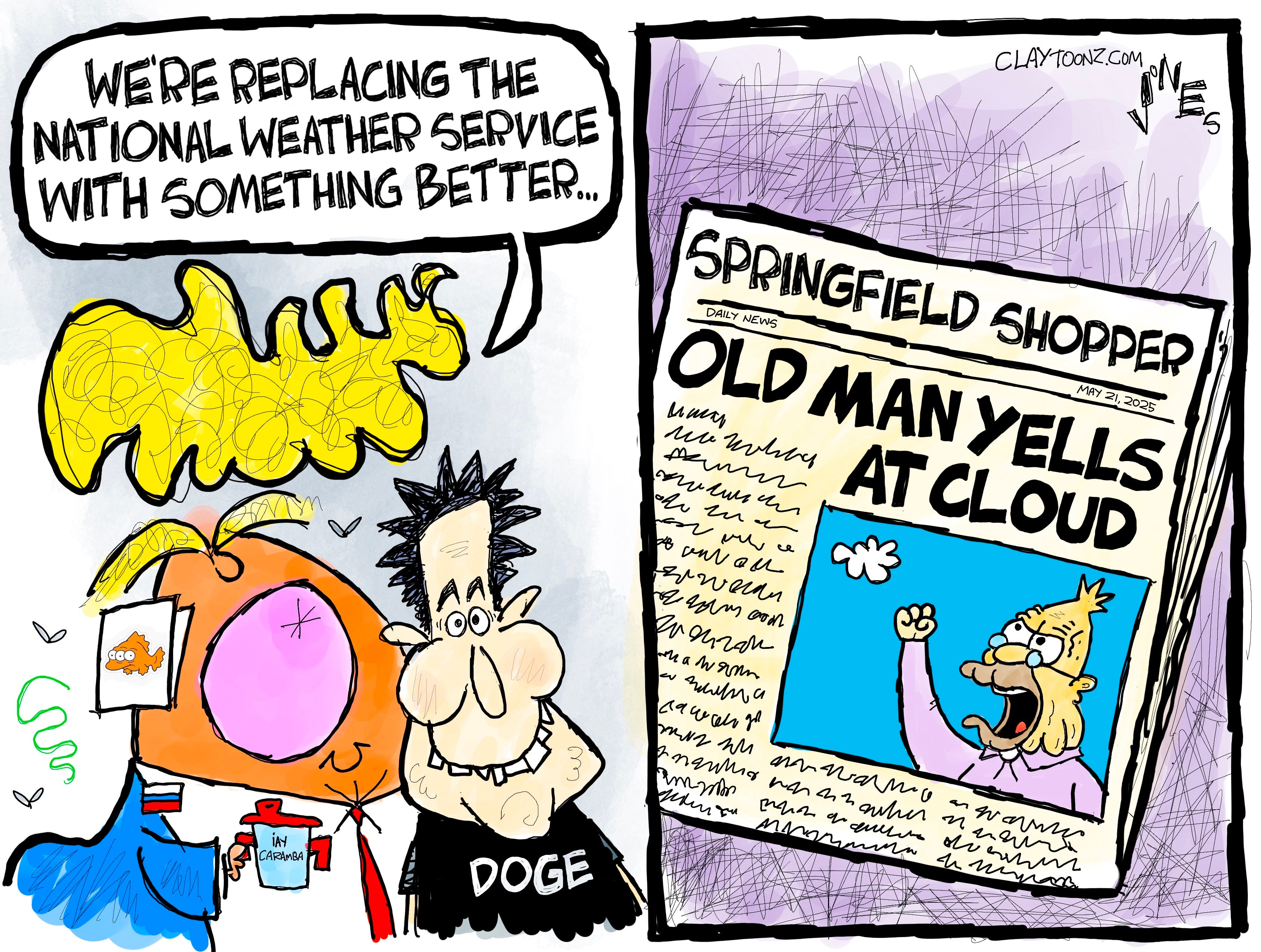
Of course, Donald Trump doesn’t take weather forecasting seriously. He thinks you can move a hurricane with a Sharpie. Or, he thinks only he can move a hurricane with a Sharpie, because everyone’s supposed to listen to the Almighty Trump, even hurricanes.
Naturally, the National Weather Service isn’t going to be spared from DOGE cuts. Who cares if we’re only about two weeks from hurricane season? Last season, there were 18 named storms, 11 hurricanes, and five major hurricanes. It was the first since 2019 to feature multiple Category 5 storms. Hurricane season 2024 also closed the most Waffle Houses (I made that up, but it’s a thing).
And it’s tornado season, bringing 42 deaths to Missouri, Kentucky, and Virginia over the weekend. Would there have been as many deaths if there hadn’t been cuts to our weather systems? The National Oceanic and Atmospheric Administration (NOAA) and the National Weather Service (NWS) are crucial for the nation’s emergency-response system. Hurricanes are easier to track, but tornadoes don’t give much time at all to prepare. And now, the offices that track them are understaffed because of Trump and Elon (an unelected billionaire bureaucrat).
Five former NWS directors from both Democratic and Republican administrations wrote an open letter on May 2, stating, “Our worst nightmare is that weather forecast offices will be so understaffed that there will be needless loss of life.”
Climate scientist Daniel Swain said, “The net result is going to be massive economic harm. As we break these things, eventually it will become painfully and unignorably obvious what we’ve broken and how important it was. And it’s going to be unbelievably expensive in the scramble to try and get it back—and we might not be able to get it back.”
After the NWS’s first wave of firings and early retirements under the Trump regime, staffing at the service’s 122 field offices across the country has dropped to a 19 percent vacancy rate. Fifty-two offices are now considered “critically understaffed,” meaning a shortage of more than 20 percent. Some branches are down by more than 40 percent. The good news is that the budget for White House Sharpies has gone up.
There has also been huge reductions and cancellations of weather balloon launches, which are supposed to happen twice a day at every forecast office across the country. According to reports, they’re being saved for Trump’s birthday parade on June 14, which also explains the nation’s shortage of cakes and hot dogs (joke, but the parade is real). (snip-MORE, along these lines that should be read.)
Donald Trump set another trap for a foreign leader in the Oval Office. This time, it didn’t go like the trap set for President Volodymyr Zelensky (where Trump and JD harangued him for not surrendering to Putin), but more like the trap he set for a reporter, claiming a doctored pic of Abrigo Garcia with MS-13 labeled on his fingers was real.
This time, Donald Trump was trying to lecture South African President Cyril Ramaphosa about White genocide in his nation. This would be like me going to New York City and lecturing the locals that C.H.U.D.s are real.
I could tell them that I saw a documentary hosted by John Goodman on HBO back in the 80s proving that Cannibalistic Humanoid Underground Dwellers are living in their sewers, leaping out at the right opportunities to grab old ladies while they’re walking their dogs for a late-night snack. The reason you’re not hearing about the C.H.U.D.s is that the liberal media and the Deep State are working together to hide it until you and your Schnauzer or C.H.U.D. meat. Why should they think they know NYC better than I do, because they actually live there? Hmph!
Did you know that last April, C.H.U.D.s ate 27,687 human beings, three Schnauzers, two poodles, and one of those skinny hairless cats that nobody is sure is an actual cat? I haven’t actually researched or verified these numbers, but someone on the internet said it’s true (that was me). And, most of those eaten were White people, because White people are the most persecuted segment of civilization in world history.
That has to be true because people like Donald Trump, Elon Musk, Stephen Miller, Tucker Carlson, and crazy old White guys wearing MAGA caps on the city bus keep warning us about the Great Replacement theory, where White people are being replaced by Mexicans and other people with suspicious skin tones. It has to be true because I saw another documentary, this one hosted by Mel Brooks, showing a Black man screaming, “Where all the White women at?”
I’m telling ya, White people can’t catch a break anymore, especially the White billionaire president (sic). Just this week, he was forced to listen to a Black man in the Oval Office refuse to be browbeaten to agree with his conspiracy theory. What next? Is someone going to park a Venezuelan food truck in front of the White House on what was White Lives Matter Plaza (there’s one near L’enfant station and it’s amazeballs)?
Ramaphosa was sitting next to Trump, engaging in fake pleasantries, talking about golf and other assorted bullshit, knowing he was sitting in a trap. Fortunately for the South African prez, the trap springer is a moron (person, woman, man, camera, TV). Ramaphosa said “listening to the stories” of South Africans would help Trump better understand the bullshit he was talking about, except Trump doesn’t listen. But then, Trump had the lights dimmed (It’s a trap!), as a MAGAt aide turned on the TV and played a video of South African opposition politicians singing apartheid-era songs about shooting Boers, a term that refers to farmers or Afrikaners (the term for White South Africans). The video was several years old.
Drone footage showed supposed Afrikaner graves marked by white crosses. Then Trump whipped out newspaper clippings (probably all from Breitbart) about recent killings in South Africa, muttering, “Death, death, death, horrible death.” My gosh. It sounds like there might be an agenda here.
It must have been tough for Ramaphosa to sit still when Trump said White genocide is “sort of the opposite of apartheid.” Read the room, Grandpa.
Trump got distracted when he called NBC reporter Peter Alexander a “jerk” for asking why he accepted a $400 million plane from Qatar.
Trump said rhetorically, “Why did a country give an airplane to the United States Air Force? So they could help us out, because we need an Air Force One. That’s what that idiot talks about, after viewing a thing where thousands of people are dead,” that Trump had made up. He’s so touchy when called out for taking a bribe.
Seizing the moment and embarrassing Trump, Ramaphosa said, “I’m sorry I don’t have a plane to give you.” Not realizing that Ramaphosa basically said, “I’m sorry, I don’t have a bribe for you,” Trump said, “I wish you did. I would take it. If your country offered the United States Air Force a plane, I would take it.”
Trump is an idiot.
There is no White genocide. It’s a lie that racist Elon Musk (who was in the room with Trump and Ramaphosa) has been pushing for years. (snip-again, MORE along the same lines; it ought to be read.)
1. Terrifying news for transgender people across the United States. In a late night development, the House Spending Bill was amended to ban transgender coverage for transgender ADULTS on medicaid!A manager's amendment removed the words "for minors."Subscribe to support my journalism.
I am certain that we will not hear about deficits and debt ever again from Republicans who are about to vote for a bill that adds more debt to a country’s balance sheet than any piece of legislation in the history of the human race.
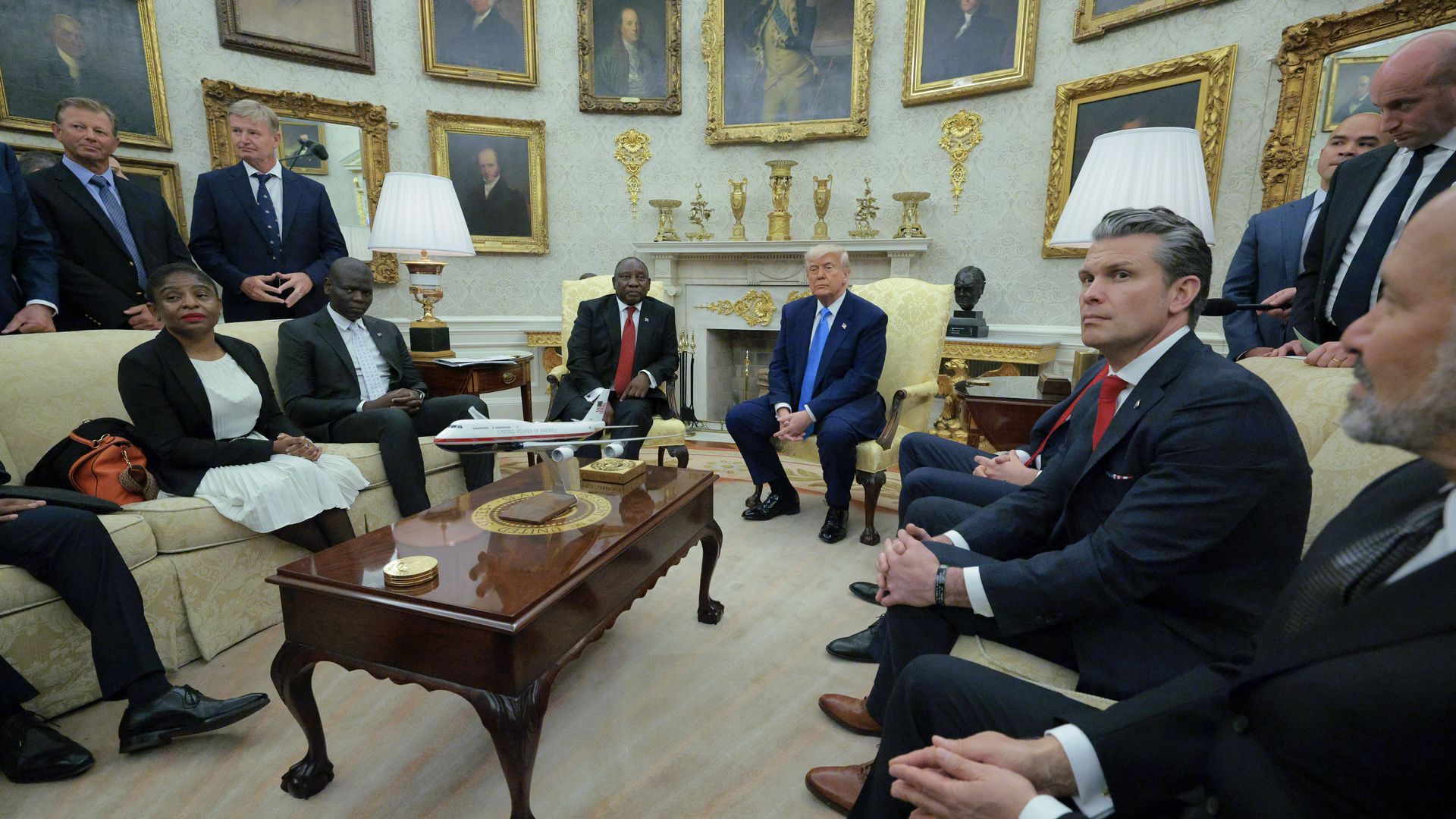
President Cyril Ramaphosa meets with President Trump in the Oval Office on May 21. Photo: Chip Somodevilla/Getty Images
In a shocking moment during President Trump‘s meeting with South African President Cyril Ramaphosa on Wednesday, Trump requested that videos be displayed purporting to show evidence of violence against white people in the country.
The big picture: Trump, who cut all foreign assistance to South Africa, has embraced the false accusations of genocide against white South Africans as justification for granting them refugee status in the U.S.
A South African court in February dismissed claims of a “white genocide” asnot real.
Driving the news: In a stunning scene reminiscent of the Oval Office showdown with Ukrainian President Volodymyr Zelensky, Trump asked for the lights to be dimmed before playing the videos.
While Trump watched the video, Ramaphosa looked away, appearing uncomfortable.
At one point, speaking over the video, Trump said the screen was displaying “burial sites.” Ramaphosa inquired where the scene was located, adding, “This I’ve never seen.”
Later on, Trump paged through articles from the “last few days” while repeating, “death, death, death.”
Catch up quick: In the question that preceded the video display, a reporter asked Trump what it would take for him to be convinced there was no genocide in South Africa — an inquiry Ramaphosa answered.
“It will take President Trump listening to the voices of South Africans,” Ramaphosa said.
Trump jumped in, saying there were “thousands of stories” and “documentaries.”
“It has to be responded to,” he said before the footage began.
Context: The video played in the Oval Office featured the voice of Julius Malema, a firebrand politician and leader of the Economic Freedom Fighters, who was ejected from Parliament.
Ramaphosa clarified that the utterances in the footage were not “government policy,” saying, “We have a multiparty democracy in South Africa that allows people to express themselves.”
South Africa’s Agriculture Minister John Steenhuisen — who is white — reiterated Ramaphosa’s point, emphasizing that the two people in the video are opposition leaders. He said his party, the Democratic Alliance, chose to join forces with Ramaphosa’s “to keep those people out of power.”
Trump interjected, “You do allow them to take land … and then when they take the land, they kill the white farmer, and when they kill the white farmer, nothing happens to them.”
South Africa recently passed the Expropriation Act, which allows the government to take some land and redistribute it as part of a long-running effort to lessen the racial and economic disparities created by apartheid.
Ramaphosa acknowledged there is “criminality” in the country — but said the majority of people killed have been Black people.
Trump claimed the “farmers are not Black” and said, without evidence, that people were being killed “in large numbers” and were decapitated. He repeatedly lashed out at reporters, saying, “The fake news in this country doesn’t talk about that.”
This is a developing story. Please check back for updates.
There should be a test before seeking public office. I understand there’s on-the-job training, but this isn’t Taco Bell.
Even before Kristi Noem was the Director of Homeland Security, she was a governor. No governor in this nation should be as ignorant of the Constitution as Noem displayed yesterday. Don’t we already have too many Jeff Sessions in government? Even college football coaches should know what the three branches are.
Even at Taco Bell, I’m sure you’d eventually get shit-canned if you couldn’t keep track of the difference between a Chalupa and a Gordita. Fuck. Now I want some Taco Bell. Anywhos…
Democratic New Hampshire Senator Maggie Hassan is considered one of the mildest members of the U.S. Senate. I bet at least a quarter of my blog followers couldn’t name what state she represented until they read the previous sentence. Honestly, I might have fumbled it. Despite being one of the nicest in the Senate, Hassan still scorched Kristi Noem during a hearing yesterday. And Hassan wasn’t even trying. It’s Noem’s fault for not knowing her shit.
Hassan asked Noem a question a simple question. It wasn’t like she asked something difficult, like how many women have accused Donald Trump of rape and sexual assault. You don’t have to be a genius to know the answer either. Hassan didn’t hit her with a Navier-Stokes equation.
The question was: What is habeas corpus? Her answer was more embarrassing than that time Katie Porter asked Ben Carson about REO rates, and he thought she was talking about Oreo cookies. Dammit. Now I want some Oreos.
Noem’s reply was, “Habeas corpus is a constitutional right that the president has to be able to remove people from this country.”
Wrong. Not even close. It’s not even a nice try. If you asked this question as a part of a bar bet, you’d probably get a better answer and still win a beer. Hassan should have made this a bar bet, because at least she would have won a beer. My go-to question in a bar bet is: Name the only American president who was never elected.
Noem got her bachelor’s degree by taking online courses and earning college intern credits from her position as a member of Congress. That’s still better than Sarah Palin.
They say there are no stupid questions, but there are some real dumbass answers. Kristi Noem is a fucking moron.
Habeas corpus is a bedrock constitutional legal principle that safeguards individuals from unlawful imprisonment by enabling them to petition the court to review the legality of their detention. Or the short version, it’s the right to due process. That’s an acceptable answer. It’s an easer answer, and it’s definitely isn’t that Donald Trump doesn’t get to do whatever the fuck he wants.
Noem thought the answer was specific about deportations. It’s not.
After explaining habeas corpus to Noem, Hassan asked her if she supported it. Noem answered wrong again.
Noem said, “Yes, I support habeas corpus,” but she couldn’t stop there. She went on to say, “I also recognize that the President of the United States has the authority under the Constitution to decide if it should be suspended or not.”
Wrong again, Dumbo. That doesn’t even make sense if she believed in her first answer. She thought habeas corpus was the right of the president to deport people, and the Constitution gave him the right to suspend that right. What? It’s not surprising she’s dumb enough to carry $3,000 in her purse, and then to have it stolen right from under her in a cheeseburger restaurant. Shit. Now I want a cheeseburger. Anyways.
Article I, Section 9of the U.S. Constitution prohibits the suspension of habeas corpus “unless when in Cases of Rebellion or Invasion the public Safety may require it.” That’s not happening. And, the president needs the approval of Congress to suspend habeas corpus.
Trump is violating due process, he’s ignoring court orders, there was another ruling today that he’s violating court orders, he has placed a giant image of his face in the capital which surprises me that there hasn’t been a sudden rash of car crashes in the city, he’s taking bribes, and Kristi Noem is a puppy killer.
I believe that if you gave a citizenship test to assholes like Trump, JD Vance, Stephen Miller, Marco Rubio, Kristi Noem, or any of the other idiots in this regime, they would all flunk.
If you have to take a test to be a citizen of this nation, then there should be a test for people who want to represent the citizens of this nation.
These tests are not difficult unless you’re a MAGAt dumbass.
Creative note: I’m kinda going through a fit this week with ideas. No, it’s not writer’s block, but too many subjects. I have several subjects I believe are nearly equal in importance, but I don’t have enough days. And no, I don’t want to draw several cartoons a day. When you draw too many cartoons a day, they will start to look like you drew too many. I can burn out.
I went with this one today because it’s timely, funny, I really liked it, and I’ll take almost any opportunity not to draw Trump.
I used five layers in Procreate to draw this cartoon. I hate using lots of layers while other cartoonists love them.
A recent book release claims a cover-up of President Biden’s cognitive decline Read on Substack
I’d like to see someone write a book about how two capable, intelligent women (one a former vice president) running for president are defeated by an aging, narcissistic, wannabe autocrat with clear signs of dementia. That’s what I’d like to read.

 Photo Illustration by Thomas Levinson/The Daily Beast/Getty/ABC