Because of Mamdani’s policies being for the people to help the people and his huge popularity is going to affect or should affect how other democrats run their races. The people respond to taxing the wealthy more and using those funds to help the lower incomes. Maybe the young today don’t remember how it was before Reagan slashed the taxes on the wealthy when infrastructure was maintained, services for the public were available, when schools were properly funded and higher education was inexpensive and government offices to serve the public were fully staffed along with so much more. But the more the upper incomes take of the country’s money the less is available for the rest of the people. A large part of the democratic party became addicted to that big money from corporate and wealthy donors so they did not fight for the people as they should have instead helping companies and businesses to make more profit. The people saw the shift by the democrats and stopped supporting them. Mamdani has shown how to get the voters back on the democrats side again. Hugs
This is a great clip on the situation with the democratic party, democratic leadership, and the democratic message. Also the polls on democratic leader ship is in the negative numbers. One reason is the Israeli genocide in Gaza and the minority leader in the Senate, Chuck Schumer has said his number 1 priority is making sure the left keeps supporting israel. The democratic party leadership has been totally captured by the big money donors, corporations, and large lobbying groups like the Israeli lobby AIPAC. It doesn’t make the people feel they are important to him or the party leaders. Hugs
The largest medical association in the United States supports gender-affirming care — a stance it has reiterated in different ways over the last 10 years. But as Republicans press leading medical organizations on health care for transgender youth, the American Medical Association (AMA) is the latest group caught between political rhetoric and the complex realities of specialized care that few people receive.
As patients, families and doctors navigate this care in an increasingly confusing and hostile landscape, what medical groups say matters. But lately, what they’ve had to say — and how politicians interpret it — has only caused more uncertainty.
The AMA’s stance was already in question after a January meeting between leaders of major medical groups and Dr. Mehmet Oz, the head of the Centers for Medicare and Medicaid Services. After that meeting, which was first reported by The New York Times, one group in attendance — the American Society of Plastic Surgeons (ASPS) — muddied the waters about whether it had taken a more restrictive stance on gender-affirming care.
Questions soon followed for the AMA, the nation’s most prominent organization representing doctors.
Twenty Republican state attorneys general are pushing for the AMA to broadly oppose gender-affirming care for minors, in response to news coverage about their recommendations around youth surgeries. The attorneys suggest that the AMA may be violating state consumer protection laws by confusing, or even misleading, medical providers and patients about their stance. They mention wanting to “avoid a formal investigation” into the issue.
The attorneys, led by Steve Marshall in Alabama, wrote a letter in February asking whether the group recommends hormone therapy or puberty blockers to treat gender dysphoria in minors.
“If you agree that there is insufficient evidence to support using surgical interventions to treat gender dysphoria in minors — as your recent statement indicates — we do not understand how you can find that there is sufficient evidence to support using hormonal interventions to treat gender dysphoria in minors,” their letter reads.
This is an escalation of a familiar tactic, said Khadijah Silver, director of gender justice and health equity at Lawyers for Good Government. And if it works, it will be a major weapon in the political fight to delegitimize gender-affirming care, they said.
“If you can convince the public that they have shifted stance, that’s extremely powerful,” they said, referring to the AMA.
In some ways, that impact is already being felt.
In a recent congressional hearing on rising health care costs, the board of trustees chair for the American Medical Association was asked about how patients across the country are struggling to find doctors. Two hours into the hearing, he was also asked about gender-affirming care for trans youth — a topic that affects few Americans, but takes up a lot of political air.
Rep. Erin Houchin, a Republican from Indiana, asked why the medical group changed its position on surgeries for trans youth.
But the AMA maintains that it has not changed its position.
“In surgery and minors, our belief is that it should generally be deferred until adulthood. But, we respect the physician-patient-family relationship in determining that,” Dr. David H. Aizuss answered in response to the question from the congresswoman.
That exchange took only a few minutes out of a hearing that spanned the gamut of crises facing the U.S. health care system, like skyrocketing insurance premiums and a worsening physician shortage. But it represents a growing tension between Republicans and medical groups, as elected officials who oppose gender-affirming care push for major health care organizations to do the same.
The American Medical Association declined to comment on the attorneys general’s letter, which had asked for a response by March 25. In a broader statement, the medical group said it supports gender-affirming care.
“We support evidence-based treatment for medical care, including gender affirming care,” an AMA spokesperson said in an email. “Currently, the evidence for surgical intervention in minors is insufficient for us to make a definitive statement. In the absence of clear evidence, surgical interventions in minors should be generally deferred to adulthood. Treatment decisions should be made between the physician and the patient (and family) based on the best medical evidence and clinical judgment.”
That position aligns with the World Professional Association for Transgender Health (WPATH), an authority on medical care for trans people. WPATH recommends that patients generally wait until adulthood before seeking surgery. Trans youth rarely undergo surgery of any kind; of the small number performed on adolescents, the majority are mastectomies.
If an adolescent does need surgery, WPATH recommends they meet extensive criteria — including a full understanding of reproductive side effects, a year’s worth of hormone therapy, sustained gender incongruence, plus emotional and cognitive maturity.
The questions surrounding surgery come on the heels of the American Society of Plastic Surgeons’ response to the January meeting with Oz. In what the Times described as a “tense” meeting, Oz pressed leaders of organizations including the AMA and the ASPS on why they recommend gender-affirming care for trans youth. At that meeting, the surgeons group said it would be changing its position, per the Times.
Weeks after the meeting, ASPS released a nine-page statement saying that gender-affirming surgery should be delayed for minors until a patient is at least 19. The surgeons’ group cited insufficient evidence that benefits for surgery outweigh risks, and pointed to a controversial report created by the Trump administration to back its position.
The surgeons group noted that it still opposes criminalization of such medical care. The Trump administration celebrated the announcement.
“Today marks another victory for biological truth in the Trump administration,” said former Deputy Health and Human Services Secretary Jim O’Neill, in a press release. Oz, who has compared gender-affirming care for minors to lobotomies, applauded the American Society of Plastic Surgeons “for placing itself on the right side of history.”
In the following days, the surgeon’s group appeared to backtrack. The American Society of Plastic Surgeons reportedly told NPR that its position “does not include a blanket recommendation for surgery for minors.” The ASPS did not respond to a request for comment on this story.
The AMA has had its own trouble communicating its position. In a recent internal newsletter from the board chair, the association said that its policy on gender-affirming care has not changed at all; and that it requested a correction from The New York Times in response to the outlet’s coverage of its initial statement on youth surgeries. However, the Times says it has received no such requests.
This back-and-forth is taking place against an intense political backdrop: Six states have made it a felony for doctorsto provide gender-affirming care to trans youth. Hospitals across the country have shuttered gender clinics in response to pressure from the administration. As a result, some young patients are cut off in the middle of treatment and medical professionals are grappling with how the law impacts them.
And despite ample news coverage, gender-affirming care is still not widely understood.
Very few transgender youth seek and access surgeries. More rely on hormone therapy and puberty blockers to treat gender dysphoria, which is a medical condition that can cause significant distress for trans people.
Puberty blockers delay the hormones that cause kids to go through puberty, which can be an intense and emotionally fraught time for trans youth. Many families say this treatment is crucial for their child’s wellbeing and prevents distress caused by dysphoria. There are potential risks, like decreased bone density, which is monitored by medical providers. Some providers recommend weight-bearing exercise or diet optimization to boost calcium and vitamin D levels while on puberty blockers.
Hormone therapy, which involves taking testosterone or estrogen to cause physical changes that align one’s body with their gender identity, is another treatment that some trans youth receive to alleviate dysphoria. As with puberty blockers, clinics require a mental health assessment as well as parental or guardian consent for the treatment.
The Endocrine Society and the American Academy of Pediatrics are under federal investigation over their support for gender-affirming care. Both medical groups have sued, as the government seeks information to determine if they have made “false or unsubstantiated representations” regarding the care.
The attorneys’ general letter to the American Medical Association is leveling up that pressure on medical groups, Silver said.
“Because the care is so politicized, any association that stands up and asserts its support for physicians who provide the care, will be made an example of,” they said.
Ketanji Brown Jackson stood out from several justices appearing to be skeptical of the president’s argument against the Citizenship Clause in the 14th Amendment.
As the Supreme Court continues to debate President Donald Trump’s case to end birthright citizenship, Justice Ketanji Brown Jackson is going viral after clips of her questioning Trump’s interpretation of the 14th Amendment began circling the internet.
(embedded social media post-see it on the page)
As we previously told you, the high court heard arguments on Wednesday (April 1) for the landmark case. Jackson stood out from several justices, appearing to be skeptical of the president’s argument against the Citizenship Clause in the 14th Amendment. Specifically, the first Black woman Supreme Court Justice grilled Solicitor General D. John Sauer about how enforcing Trump’s January 2025 executive order would actually work.
“How does this work? Are you suggesting when a baby is born people have to present documents,” Jackson asked. “Is this happening in the delivery room? How are we determining when or whether a newborn child is a citizen of the US under your rule?”
The Root reported that the president attempted to axe birthright citizenship on his first day back in the White House and was met with serious backlash from folks who saw the order as an attack against immigrants and an attack on the U.S. Constitution.
Online, folks praised Jackson for getting straight to business. “Had his a** sounding like he just smoked a whole carton of Newport box short cigarettes,” @PatrickJnmarie said.
(embedded post, visible on the story page)
Pew Research estimated that 320,000 infants were born on American soil to immigrant parents without authorization in 2023. Under Trump’s order, babies of millions of migrants who enter the country– legally or not– wouldn’t automatically be eligible for citizenship. This is a complete turnaround from the way the U.S. has viewed birthright citizenship since 1868.
“This isn’t just a misstep it’s a fundamental misunderstanding of the Fourteenth Amendment to the United States Constitution,” @Popular_EY said.
Other folks online gave President Joe Biden credit for choosing Jackson for her position on the court. “Shoutout to President Joe Biden. You did good, kid,” @CarolDright said. “God love ya.” @WmAG_V agreed, writing, “Joseph Robinette Biden Jr did his MF job when he got Justice KBJ on the bench!”
Jackson became the first Black woman to serve as Supreme Court justice back in 2022. Since then, she’s positioned herself as a liberal leader unafraid to go against her fellow justices on the bench. “Justice Ketanji is head and shoulders above trumps DEI pics on the Supreme Court,” @ClaudetteGGibs1 tweeted.
(embedded tweet or whatever they are on X, on the story page)
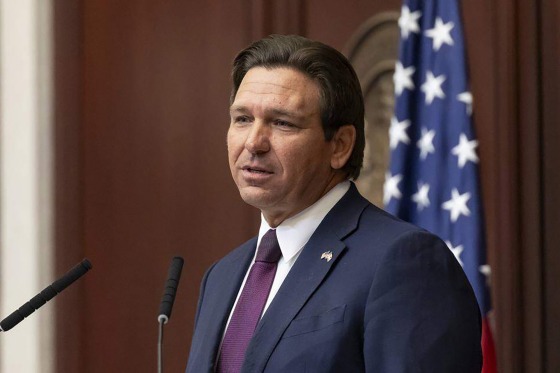
But while many Black folks rallied behind Jackson’s Wednesday remarks, she was also met with conservative and MAGA supporters like Fla. Gov. Ron Desantis, who called her bluff.
Still, it seems Jackson is supported by plenty of Black Americans rooting for her. “Ketanji Brown Jackson has more real, hands-on experience in the justice system than any current Supreme Court Justice—including the Chief,” @lab_ftwtx pointed out. “She’s been a public defender, a trial judge, and an appellate judge. She’s actually worked at every level, not just one side of it. Facts.”
PUBLISHED: 31 March 2026 LAST UPDATED: 31 March 2026
“Everyone is on high alert, constantly watching the sky with fright and exhaustion […] We also keep our eyes on our mobile phone connections — the moment the signal drops, we immediately take cover in underground shelters. We’ve come to understand that a loss of communication signals an impending airstrike.— Humanitarian aid worker on the internet shutdown that took place in Myanmar during air strikes near Tamu township in the Sagaing region.
The 2025 data and analysis confirm a horrific reality: internet shutdowns are increasing, not decreasing — and their impact on people’s lives is devastating. Shutdowns reached a new record high in the past year, continuing the steady increase since 2020. Our new report, Rising repression meets global resistance: Internet shutdowns in 2025, documents how democratic and autocratic governments alike deploy them to silence, collectively punish, and terrorize populations, as well as to hide human rights violations and killings. At the same time, we highlight how resistance is growing and people’s power is rising, and offer recommendations for stakeholders to push back. From Myanmar to Iran, Tanzania to Nepal, communities are challenging repression, demanding accountability, and devising new ways to reconnect during blackouts.
In 2025, Access Now and the #KeepItOn coalition documented 313 shutdowns in 52 countries, surpassing the appalling records from 2024 (304) and 2023 (289). Seven new countries joined the offender list in 2025, meaning that people in 100 countries have now experienced a shutdown since we started tracking in 2016. As 2026 began, there were 75 shutdowns in 33 countries that persisted from 2025, a significant increase from the 54 shutdowns in 26 countries that were ongoing from 2024 into 2025. This shows that perpetrators are increasingly attempting to permanently block communications platforms or even keep entire populations cut off from the internet indefinitely.
If you can’t see the highlights below, please check your privacy-enhancing browser extensions. Open in desktop view for the best experience.
(snip-go see. The site is Access Now, it’s safe, the subject of this story (internet access) is its specialty, and my Ad Blocker even shows no blocked ads on the page! Go finish reading this, because forewarned should be forearmed, as to organizing locally.)
I think the article is self explaintary and clear. The hate directed against the LGBTQ+ seems irrational and immoral. Why is it immoral if it is being done by religious groups? Because they have no qualms about lying, giving false and misleading information, and forcing their church doctrines on others who don’t agree with those doctrines. Below are just a few quotes from the article. The last one from florida would make pointing out the truth about how a person is acting or speaking illegal, but doing the racist bigoted stuff would stay legal. Hugs
Anti-trans bathroom bans made a comeback, with four passed in Alabama, Idaho, Ohio and South Carolina.
Policy changes enacted barriers to gender markers and name changes for IDs/personal documents in Arkansas and Florida.
Florida introduced a bill that limited free speech, making public accusations, whether true or false, of a person being homophobic, transphobic, racist or sexist equivalent to defamation and punishable by fine. The bill did not pass.
A central theme of anti-LGBTQ+ organizing and ideology is the opposition to LGBTQ+ rights or support of homophobia, heterosexism and/or cisnormativity, often expressed through demonizing rhetoric and grounded in harmful pseudoscience that portrays LGBTQ+ people as threats to children, society and often public health.
Top Takeaways
In 2024, the number of anti-LGBTQ+ groups increased by about 13% from the previous year. Anti-LGBTQ+ groups maintained a trend in heavy mobilization across multiple strategies with increasing political and financial support from the hard right.
Anti-trans narratives were instrumental to the 2024 election at all levels of government, especially at the local level where anti-LGBTQ+ and anti-inclusive education activism continue to heavily overlap. The politicization of gender-affirming health care and LGBTQ+-inclusive school curricula contributed to what has been characterized as the “most Anti-LGBTQ election in decades.” Republicans spent almost $215 Million on TV ads to smear trans people, surpassing ads on rival issues such as economy, immigration and housing. Another wave of anti-LGBTQ+ legislation broke records at state and federal levels, but such bills were not as nearly as successful as last year.
Anti-LGBTQ+ groups are heavily invested in the courts and pushing policy change by judicial decision. Hard right and anti-LGBTQ+ extremists on social media continue their campaign to “make pride toxic” by targeting inclusive business and marketing practices while anti-LGBTQ+ legal groups take up administrative law and lobbying strategies to eliminate diversity, equity, and inclusion practices in the public and private sectors under the guise of “viewpoint diversity” and “religious freedom” advocacy.
Key Moments
Throughout the state legislative sessions, anti-LGBTQ+ movement organizations continued their facilitation of a decades long effort to foment anti-trans moral panic in public discourse. Legislative assaults broke records for the fifth consecutive year, albeit with fewer successes.
Several factors slowed the trend, including coordinated community responses and reporting, such as the SPLC’s Project CAPTAIN, on the networks that perpetuate anti-LGBTQ+ talking points and legislation. Legislation trends of concern include:
A Florida bill promoted insurance coverage conversion therapy for detransition. The bill passed the House, but died in the Senate.
Anti-trans bathroom bans made a comeback, with four passed in Alabama, Idaho, Ohio and South Carolina.
Policy changes enacted barriers to gender markers and name changes for IDs/personal documents in Arkansas and Florida.
Florida introduced a bill that limited free speech, making public accusations, whether true or false, of a person being homophobic, transphobic, racist or sexist equivalent to defamation and punishable by fine. The bill did not pass.
In February 2024, anti-trans influencers spun a disinformation campaign to exploit the tragic shooting at Lakewood Church in Houston by alleging the shooter was trans. Hard-right social media influencers, equipped with talking points that help fuel gun purchases, used this and other mass shootings in 2024 to perpetuate anti-immigrant and anti-trans conspiracy theories. Despite claiming anti-trans activism helps “protect children,” the SPLC reported that in the wake of mass shootings, anti-trans extremists divert attention from meaningful reforms to prevent gun violence, which is the leading cause of death for children in the United States.
In response to online campaigns by hard-right social media personalities, many major brands scaled back Pride merchandise in 2024. Armed Conflict Location and Event Data (ACLED) reported anti-LGBTQ+ protests at Pride events decreased in 2024; however, GLAAD documented 110 anti-LGBTQ+ incidents during June 2024. In addition, the SPLC monitored at least 74 bomb threats targeting LGBTQ people and events between January 1 and June 30, 2024.
The Colorado Republican Party posted “Burn all the #pride flags this June” and shared a video clip titled “God Hate F__s.” There was no shortage of vandalism: In Poulsbo, Washington, 14 Pride banners were slashed, and over 200 pride flags were stolen from the town center in Carlisle, Massachusetts. Throughout June, SPLC tracked dozens of protests, bomb threats and harassment campaigns directed at civil society groups like Pride committees and LGBTQ+-inclusive religious congregations. Hate groups including MassResistance, Gays Against Groomers, Protect Texas Kids, White Lives Matter, and Aryan Freedom Network were active at Pride events in June 2024.
In July and August 2024, anti-trans influencers manufactured controversy over the gender identity of Olympic athletes Imane Khelif and Lin Yu-ting. This anti-trans controversy exclusively targeted Taiwanese and Algerian athletes, scrutinizing the legitimacy of their womanhood. The crux of arguments made by the anti-trans actors re-animated misogynoir stereotypes to exclude women of color from being considered women based on white Eurocentric beauty standards of femininity. The series of events suggests eugenics and racism underlie transphobia and exhibited how anti-trans hysteria disproportionately impacts women of color on an international scale.
In September 2024, the anti-LGBTQ+ hate group Family Research Council held its annual Pray Vote Stand conference. FRC hosted a variety of anti-immigrant commentary ranging from Katy Faust, president of the anti-LGBTQ+ hate group Them Before Us, urging attendees to “breed out” immigrants and trans people. At the conference, Oklahoma superintendent of public instruction Ryan Walters alleged illegal immigrants were bringing fentanyl into schools; and the summit featured population control myths espoused by both anti-abortion and anti-vax panelists. FRC devoted multiple plenary sessions to anti-trans, anti-abortion and anti-immigrant coded topics.
The election of the first trans member of congress, Sarah McBride, was immediately met with a trans bathroom ban on all restrooms on the House side of the Capitol complex. The resolution was introduced by Nancy Mace and supported by House Speaker and former Alliance Defending Freedom attorney Mike Johnson. Mace posted anti-trans slurs on X following a bathroom sit-in at the Capitol in protest of the bathroom ban. The protesters were arrested and taken to the Capitol Police station; Mace then posted a video showing her outside the stations saying, “Some tr——s got arrested protesting my ban.” She then began reading them their Miranda rights along with demeaning commentary about the protesters.
States will continue to be labs for experimenting with anti-LGBTQ+ public policy. The legislative early filing period in Texas shows 32 anti-trans bills already filed for the 2025 legislative session. This year will show a continued pressure on erasing trans people from public life. With Donald Trump’s re-election, federal civil rights enforcement litigation will likely swing against LGBTQ+ inclusion.
Authors of Project 2025 are being tapped as cabinet picks for the second Trump administration. Project 2025 is an authoritarian and theocratic road map, and anti-trans scapegoating makes up key policy recommendations.
Background
Anti-LGBTQ+ groups in the United States oppose LGBTQ+ rights but also generally support heterosexism, an ideology that assumes heterosexuality is the only “normal” sexuality, and/or cisnormativity, an ideology that assumes one’s gender identity always matches the sex one was assigned at birth. Anti-LGBTQ+ groups primarily consist of Christian Right groups but also include such organizations as the National Association for Research and Therapy of Homosexuality (NARTH) that purport to be scientific. Anti-LGBTQ+ groups in America have employed a variety of strategies in their efforts to oppose LGBTQ+ rights or support heterosexism and/or cisnormativity, including engaging in the crudest type of name-calling.
Anti-LGBTQ+ groups on the SPLC hate list often link being LGBTQ+ inherently to criminal behavior; claim that the marriage equality and LGBTQ+ people in general are dangers to children and families; contend that being LGBTQ+ itself is dangerous and support the criminalization of LGBTQ+ people and transgender identity. These groups also believe in a false conspiracy that LGBTQ+ people seek to destroy Christianity and the whole of society. More recently, hard-line anti-LGBTQ+ groups have promoted their discriminatory laws and policies that limit the rights of LGBTQ people under the guise of religion, blurring the lines between the separation of church and state and discarding anti-discrimination civil rights policies. These same groups have promoted legislative models to push anti-trans legislation into law under a conservative religious assumption that gender can only be understood as either “male” or “female.”
Many leaders and spokespeople of SPLC-designated anti-LGBTQ+ groups have used degrading and derogatory language to describe LGBTQ+ people. Others disseminate disparaging information about LGBTQ+ people that are simply untrue – an approach no different from how white supremacists and nativist extremists propagate lies about African American people and immigrants to make these communities seem like a danger to society. Viewing LGBTQ+ people as unbiblical or simply opposing marriage equality does not qualify an organization to be listed as an anti-LGBTQ+ hate group.
2024 Anti-LGBTQ+ Hate Groups
* – Asterisk denotes headquarters.
Abiding Word Baptist Church, Revival Baptist Church
Orange Park, Florida
Advocates Protecting Children
Arlington, Virginia
Alliance Defending Freedom
Scottsdale, Arizona
American College of Pediatricians
Gainesville, Florida
American Family Association
Indianapolis, Indiana
Tupelo, Mississippi *
Franklin, Pennsylvania
American Vision
Powder Springs, Georgia
Americans for Truth About Homosexuality
Columbus, Ohio
ATLAH Media Network
New York, New York
California Family Council
Fresno, California
The Campus Ministry USA
Terre Haute, Indiana
Center for Christian Virtue
Columbus, Ohio
Center for Family and Human Rights (C-FAM)
New York, New York*
Washington, D.C.
Chalcedon Foundation
Vallecito, California
Child and Parental Rights Campaign
Johns Creek, Georgia
Church Militant/St. Michael’s Media
Ferndale, Michigan
Concerned Christian Citizens
Temple, Texas
D. James Kennedy Ministries
Fort Lauderdale, Florida
Do No Harm
Glen Allen, Virginia
Faith2Action
North Royalton, Ohio
Faithful Word Baptist Church
Tempe, Arizona
Straight Paths Baptist Church
Tucson, Arizona
Family Action Council of Tennessee
Franklin, Tennessee
The Family Foundation of Virginia
Richmond, Virginia
Family Policy Alliance
Colorado Springs, Colorado
Family Research Council
Washington, D.C.
Family Research Institute
Colorado Springs, Colorado
Family Watch International
Gilbert, Arizona
First Works Baptist Church
Anaheim, California
Florida Family Voice
Orlando, Florida
Focus on the Family
Colorado Springs, Colorado
Frontline Policy Council
Atlanta, Georgia
Gays Against Groomers
Fountain Hills, Arizona
California
Georgia
Kansas City, Missouri
Monroe, North Carolina
Vancouver, Washington
Milwaukee, Wisconsin*
Generations
Elizabeth, Colorado
Genspect
Chicago, Illinois
Heterosexuals Organized for a Moral Environment (H.O.M.E.)
Downers Grove, Illinois
Illinois Family Institute
Tinley Park, Illinois
Liberty Baptist Church
Rock Falls, Illinois
Liberty Counsel
Orlando, Florida
Louisiana Family Forum
Baton Rouge, Louisiana
MassResistance
Torrance, California
Pocatello, Idaho
Idaho
Waltham, Massachusetts*
New Jersey
Fort Worth, Texas
Houston, Texas
Kenosha, Wisconsin
Gilette, Wyoming
Lander, Wyoming
Massachusetts Family Institute
Wakefield, Massachusetts
Mission: America
Columbus, Ohio
Montana Family Foundation
Laurel, Montana
Pacific Justice Institute
Sacramento, California
Santa Ana, California
Miami, Florida
Mississippi
Reno, Nevada
Salem, Oregon
Seattle, Washington
Partners for Ethical Care
Chicago, Illinois
Pass the Salt Ministries
Hebron, Ohio
Pennsylvania Family Institute
Harrisburg, Pennsylvania
Pilgrims Covenant Church
Monroe, Wisconsin
The Pray In Jesus Name Project
Colorado Springs, Colorado
Probe Ministries
Plano, Texas
Public Advocate of the United States
Merrifield, Virginia
Revival Baptist Church
Clermont, Florida
Ruth Institute
Lake Charles, Louisiana
Save California
Sacramento, California
Scott Lively Ministries
Springfield, Massachusetts
Society for Evidence-Based Gender Medicine
Twin Falls, Idaho
Stedfast Baptist Church
Oklahoma City, Oklahoma
Cedar Hills, Texas *
Strong Hold Baptist Church
Norcross, Georgia
Sure Foundation Baptist Church
Indianapolis, Indiana
Vancouver, Washington*
Seattle, Washington
Spokane Valley, Washington
Them Before Us
Seattle, Washington
Tom Brown Ministries
El Paso, Texas
True Light Pentecost Church
Spartanburg, South Carolina
United Families International
Gilbert, Arizona
Verity Baptist Church
Sacramento, California
Warriors for Christ
Mount Juliet, Tennessee
Westboro Baptist Church
Topeka, Kansas
World Congress of Families/International Organization for the Family
Rockford, Illinois
I am unable to figure out if the Florida Real ID driver’s license that the state forced everyone to get a bunch of years ago. I remember having to go to the driver’s license place with a folder of information including utility bills in my name and with my birth certificate and my marriage license. It was touted as the “Real Id” that was the only one we would need. It was OK even for flying. When I told Ron about this he was adamant that after his surgery we get me a passport no matter the cost. I explained that we both should have them in case our same sex marriage gets invalidated. We have one out that I am sure my abusive adoptive parents did not plan to give me. They were Canadian citizens here on green cards and my birth certificate shows me as their kid, something I have always hated. Current Canadian laws let me apply to Canada for asylum or simply to immigrate with my spouse. But it clearly shows this is an attempt to restrict those who have the right to vote to do so. Hugs
The law’s requirements for proof of citizenship to register to vote and stricter voter ID rules won’t take effect until next year.
Florida Gov. Ron DeSantis signed a bill into law that is akin to President Donald Trump’s SAVE America Act at the national level.Matias J. Ocner / Miami Herald via Getty Images file
Republican Gov. Ron DeSantis signed a bill Wednesday that will require proof of citizenship to vote and impose stricter voter ID restrictions on Floridians.
The new law, most of which won’t take effect until after the midterm elections, is Florida’s version of the federal SAVE America Act, a bill President Donald Trump has championed. That measure is currently stalled in the U.S. Senate, where it lacks the 60 votes needed to advance under current rules.
“This bill protects and expands integrity in our voter registration process,” DeSantis said. “Our Constitution in the state of Florida says only American citizens are allowed to vote in our elections, so we need to make sure that is the law.”
Democrats and voting rights advocates warn Florida’s law will disenfranchise eligible voters who lack ready access to the documents that are needed to vote.
Already, the League of Women Voters of Florida and a coalition of advocacy groups, represented by the American Civil Liberties Union, have filed a federal lawsuit to block the law.
“We are most concerned about impact as it relates to the most vulnerable Florida voters,” said Jonathan Topaz, attorney at the American Civil Liberties Union. “This could mean older Black voters who grew up in Jim Crow South who don’t have access to birth certificates, this could be naturalized citizens — we know naturalized citizens are flagged as noncitizens all the time.”
Voters who were born in Puerto Rico, have changed their name or have lost documents may struggle to meet the requirements of the new law, he said.
Supporters of the legislation note that millions of Floridians have already shown government officials their passports or birth certificates when obtaining a REAL ID. They also argue the law is necessary to prevent voter fraud, despite little evidence of it occurring.
More than 9% of American citizens of voting age do not have proof of citizenship documents readily available, according to a study commissioned by the Brennan Center for Justice. Based on that metric, advocates fear that more than 1 million Floridians could struggle to cast a ballot starting next year, when the law will be fully implemented.
Other states have tried to impose documentary proof of citizenship requirements in the past, but courts have ruled they violate federal law. To comply with one such ruling, Arizona now has a bifurcated election system that allows those who haven’t proved their citizenship to only vote in federal elections.
The system offers a window into the kinds of people who do not have access to the documents required by proof of citizenship laws. In Arizona, they are disproportionately voters of color and younger voters, according to an analysis by the Brennan Center. Votebeat reported that Arizonans who are only eligible to vote in federal elections often live around college campuses, suggesting they are students without their citizenship documents on hand.
Florida’s law has different requirements than Arizona’s, however. It asks election officials to verify voters’ citizenship after registration. For Floridians who have shown their passport or birth certificate to government officials when getting a driver’s license, their citizenship will be affirmed and their registration approved.
Those without this information on file will be asked to prove their citizenship within a month or they could be removed from the voter rolls.
Wendy Sartory Link, the supervisor of elections for Palm Beach County, said implementing this law will be a major challenge for election officials, particularly those in larger, more diverse counties.
Link said her office will need to roll out new rules and forms — all of which do not yet exist and will need to be written by the state — and rush to begin preparing for the proof of citizenship requirements that go into effect in January.
She said that computer systems will need to be updated — the voter file doesn’t currently include a space for citizenship proof — and that new systems will need to be created among agencies to share data. Link also said she will need to hire new staffers to handle the increased workload, though the bill didn’t give her any additional funding to pay for it. Once voters are asked for proof, she said, she’s worried long lines will form with voters bringing proof of citizenship.
She also said she has many unanswered questions: Can she accept proof of citizenship over email even if she can’t touch the raised seal to be sure it’s an original document? Does she need to ask voters to prove their citizenship every time they update their voter registration? Does she need new trainings to evaluate the proof that voters may bring her?
“If somebody brings a birth certificate and it’s an Idaho birth certificate, I don’t know what that looks like. Am I supposed to know whether or not that’s a fraudulent birth certificate, or do I just accept it because it says Idaho birth certificate?” Link said.
Florida’s new law also restricts the kind of photo IDs that voters can use to prove their identities at the poll, eliminating the use of retirement community and student IDs.
At polling sites near college campuses and retirement communities, Link said, this change could trigger long lines as more students fill out provisional ballots and need to later affirm their identities.
Out-of-state students may struggle to obtain the required ID unless they plan months ahead, too. In her community, she said, it also takes time to get an appointment for a Florida driver’s license.
Lawmakers in a dozen states have advanced legislation this year that would require residents to prove their U.S. citizenship to register to vote or bring photo ID to the polls, according to the Voting Rights Lab, a nonpartisan group that tracks election legislation. Utah and South Dakota have also sent bills imposing a proof of citizenship requirement on to their governors.
I read LGM when I have time; haven’t been there in a couple of weeks. But here is this. I thank another friend of the blog for the link to this. It’s concise.
Graham Platner, son of wealthy parents, is cosplaying as a salt-of-the earth oyster farmer who sells his product to his mother and is running to become the Democratic candidate for Senate in Maine, against Susan Collins. He was outed as having a Nazi tattoo, which he had tattooed over with a slightly less Nazi tattoo. His earlier writings and activities include slurs against women and wearing a Blackwater hat to own the libs.
He is now running ahead of Governor Janet Mills, who is an older woman but who actually has experience in government, something Platner lacks.
Why is Platner doing so well? We can look to Donald Trump for that.
All of our politics today are gender politics. It’s very difficult to talk about that, because it permeates everything we do, leaving us fish unaware of the water. The response is frequently that no, it’s something else, maybe power. But power is gender infused too. So let’s focus on gender if only for the amusement of seeing something through a new lens.
We have multiple models in our heads of what women and men are. Mute eye candy, intellectual, blue collar are some general descriptors, but more specifically, we associate particular groups of characteristics with particular manifestations of gender. Graham Platner and Donald Trump are avatars of a particular way to be a man. I will enumerate some of them.
Men tell it like it is. This means that they can say things that are associated with this type of masculinity, like referring to women by their genitals and using slurs against other groups that are not able-bodied white men.
Men are muscular and do hard work. This means that blue-collar men are Real Men™.
Men are strong. This is different from being muscular, but the two bleed into each other. A man can take on emotionally difficult tasks and bull his way through.
Men never apologize. From what I have read, Platner has acknowledged the tattoo and his earlier actions but has not apologized. Trump, well.
Men are by nature fit to lead. Platner has no experience in government, as was the case with Trump in 2016. But they were/are questioned very little on this issue.
Men may become violent. Platner was in the military and Blackwater, with a violent tattoo. Trump shouts, rages, and talks about violence all the time.
To my mind, this type of masculinity is disqualifying for elected office. But obviously others disagree.
He’s a plain-talking guy you could have a beer with. Or at least a man could have a beer with. The comfort factor is enormous, and Platner and Trump give people permission to be comfortable in a particular way. Ezra Klein interviewed (gift link) one of conservatism’s intellectuals, Christopher Caldwell. Caldwell writes at the Claremont Review of Books and is one of the New York Times’s resident conservatives.
One of the things he settles on as an aspect of Trumpism is what he calls free speech. He has felt throttled by woke and was delighted to be able to be comfortable in what he says. That banker interviewed by the Financial Times said it out loud: He can say the “r” word and refer to women’s bodies in conversation. It’s what all conservatives mean by “free speech,” sometimes with Nazi phrases or concepts thrown in. When they say “free speech,” they mean whatever speech white men in charge want to use.
Those “free speech” advocates are given permission to speak freely by Platner and Trump.
There are other reasons people vote for men displaying this cluster of traits considered masculine. It’s a comfortable stereotype – much in the media and what people who don’t have close contact with blue-collar men may believe of them.
Even Rahm Emanuel feels he has to put on a muscular performance of eating his salad.
Medicaid cuts threaten hundreds of hospitals, new report finds
Together, the hospitals provide care for nearly 7 million patients across the U.S., according to the analysis.
Across the country, hospitals have already warned they may need to lay off staff members or scale back care, including maternity and mental health care, because of Medicaid cuts.Image Source / Getty Images
More than 400 hospitals across the United States are at high risk of closing or cutting services because of the Medicaid cuts in President Donald Trump’s “big, beautiful bill,” according to an analysis from the progressive watchdog group Public Citizen.
The fallout could make it harder for millions of people to get care and put thousands of health care workers’ jobs at risk as hospitals lose a key source of federal funding. Medicaid covers about a fifth of all hospital spending.
The Medicaid cuts come in phases, with more significant changes, including work requirements, in 2027 and limits on how states raise funds in 2028. Overall, the law is expected to reduce federal Medicaid funding by roughly $1 trillion over the next decade.
“We’re seeing hospitals that are already under severe financial strain having to make decisions about how to stay financially solvent,” said Eileen O’Grady, a researcher in Public Citizen’s Congress Watch division and the report’s author. “That has pretty clear implications for people who live in that community. It also has ripple effects on other hospitals in those communities.”
The analysis draws on hospital financial data from the Centers for Medicare and Medicaid Services from 2022 through 2024, covering about 95% of U.S. hospitals. The group defined at-risk hospitals as those in which Medicaid and other low-income government programs made up at least 20% of revenue and that have been operating at a loss in recent years.
The report doesn’t estimate when hospitals could close or cut services.
“Closure is the worst-case scenario, but it also doesn’t preclude hospitals from having to make really tough decisions about cutting services that might be essential to those communities but are just no longer financially viable,” O’Grady said.
Across the country, hospitals have already made statements warning they may need to lay off staff or scale back care, including maternity and mental health care, because of the Medicaid cuts.
For many patients, hospitals are the last place to turn when there are few or no other options for care.
“When hospitals close, patients have less access to the care that they need,” said Gideon Lukens, director of research and data analysis on the health policy team at the Center on Budget and Policy Priorities, a nonpartisan research group. “They have to travel further or wait longer in other hospitals that become overcrowded. That additional time can be the difference between success and failure of time-sensitive, potentially life-saving treatments.”
The closures also add strain to the hospitals that take on the extra patients. O’Grady said doctors end up having “less patience, less time, less capacity to provide the highest quality care.”
“It can be very dangerous for hospitals to be under this kind of strain,” she said.
The analysis found a total of 446 at-risk hospitals, with at least one at-risk hospital in 44 states and Washington, D.C.
About 60% of the at-risk hospitals — 267 facilities — are in urban areas, even as much of the debate around Medicaid cuts has focused on rural hospitals. Black and Latino people stand to be the most affected by the cuts.
The hospitals span both Democratic and Republican-led states, though the states with the largest number of at-risk hospitals are California, New York, Illinois and Washington.
Republicans also represent several congressional districts with the highest number of at-risk hospitals. House Republicans who voted for the Medicaid cuts have 196 at-risk hospitals in their districts, while Senate Republicans — all of whom back the cuts — represent 146 at-risk hospitals in their states, according to the analysis.
The cuts could lead to a worsening crisis, especially for rural hospitals, said Zachary Levinson, the project director of the KFF Project on Hospital Costs.
He said that by his estimates, Trump’s law sets aside $50 billion to support rural communities, but could reduce federal Medicaid spending in rural areas by far more — about $137 billion over a decade.
James Jackson, the CEO of Alameda Health System in Oakland, California, said the Medicaid cuts represent an “existential threat.”
Alameda Health System, which gets 60% of its revenue from Medicaid payments, announced in December that it would lay off nearly 300 employees and lose more than $100 million annually by 2030. (The health network was not included on Public Citizen’s at-risk list, though the report notes its financial troubles.)
The layoffs, set to take effect in March, have since been delayed.
Proposed cuts included mental health services, care for patients with chronic conditions and an ambulatory plastic surgery program. Jackson said closing hospitals is not on the table, but the system has continued to look at scaling back services.
“I don’t think the impact is going to be a positive one,” he said. “We are often the provider of last recourse, so if we’re not able to provide a service, there will be a delay in receiving care at one of the other systems in the area or they may not provide it at all.”
Trinity Health, a Michigan-based hospital system with facilities in other states, said it’s projected to lose $1.5 billion due to “recent and future government policy changes.”
In January, it said it was laying off 10.5% of its billing staff. One of its hospitals, St. Mary’s Sacred Heart Hospital in rural northeast Georgia, announced last October it was closing its maternity unit.
In a statement, a Trinity Health spokesperson shared a previous statement that said in part that “more reductions” are being considered by the federal government and it’s “not possible to simply absorb such a significant financial impact without making thoughtful, forward-thinking changes.”
Berkeley Lovelace Jr. is a health and medical reporter for NBC News. He covers the Food and Drug Administration, with a special focus on Covid vaccines, prescription drug pricing and health care. He previously covered the biotech and pharmaceutical industry with CNBC.




 Scottie's Playtime