A crop field in Oxnard, California, U.S., June 18, 2025. REUTERS/Pilar Olivares
Lisa Tate is a sixth-generation farmer in Ventura County, California, an area that produces billions of dollars worth of fruit and vegetables each year, much of it hand-picked by immigrants in the U.S. illegally.
Tate knows the farms around her well. And she says she can see with her own eyes how raids carried out by agents from U.S. Immigration and Customs Enforcement in the area’s fields earlier this month, part of President Donald Trump’s migration crackdown, have frightened off workers.
“In the fields, I would say 70% of the workers are gone,” she said in an interview. “If 70% of your workforce doesn’t show up, 70% of your crop doesn’t get picked and can go bad in one day. Most Americans don’t want to do this work. Most farmers here are barely breaking even. I fear this has created a tipping point where many will go bust.”
In the vast agricultural lands north of Los Angeles, stretching from Ventura County into the state’s central valley, two farmers, two field supervisors and four immigrant farmworkers told Reuters this month that the ICE raids have led a majority of workers to stop showing up.
That means crops are not being picked and fruit and vegetables are rotting at peak harvest time, they said.
One Mexican farm supervisor, who asked not to be named, was overseeing a field being prepared for planting strawberries last week. Usually he would have 300 workers, he said. On this day he had just 80. Another supervisor at a different farm said he usually has 80 workers in a field, but today just 17.
A Guatemalan immigrant works on a crop field at a farm in the Kern County, California, U.S., June 19, 2025. REUTERS/Pilar Olivares
BAD FOR BUSINESS
Most economists and politicians acknowledge that many of America’s agricultural workers are in the country illegally, but say a sharp reduction in their numbers could have devastating impacts on the food supply chain and farm-belt economies.
Douglas Holtz-Eakin, a Republican and former director of the Congressional Budget Office, said an estimated 80% of farmworkers in the U.S. were foreign-born, with nearly half of them in the country illegally. Losing them will cause price hikes for consumers, he said.
“This is bad for supply chains, bad for the agricultural industry,” Holtz-Eakin said.
Over a third of U.S. vegetables and over three-quarters of the country’s fruits and nuts are grown in California, according to the California Department of Food and Agriculture. The state’s farms and ranches generated nearly $60 billion in agricultural sales in 2023.
If they show up to work, they don’t know if they will ever see their family again.
Migrant worker
Of the four immigrant farmworkers Reuters spoke to, two are in the country illegally. These two spoke on the condition of anonymity, out of fear of being arrested by ICE.
One, aged 54, has worked in U.S. agricultural fields for 30 years and has a wife and children in the country. He said most of his colleagues have stopped showing up for work.
“If they show up to work, they don’t know if they will ever see their family again,” he said.
The other worker in the country illegally told Reuters, “Basically, we wake up in the morning scared. We worry about the sun, the heat, and now a much bigger problem – many not returning home. I try not to get into trouble on the street. Now, whoever gets arrested for any reason gets deported.”
Item 1 of 4 An immigrant worker harvests crops during the weekend, as labor shortages risk leaving fields unpicked, in Oxnard, California, U.S., June 22, 2025. REUTERS/Pilar Olivares
[1/4]An immigrant worker harvests crops during the weekend, as labor shortages risk leaving fields unpicked, in Oxnard, California, U.S., June 22, 2025. REUTERS/Pilar Olivares
To be sure, some farmworker community groups said many workers were still returning to the fields, despite the raids, out of economic necessity.
The days following a raid may see decreased attendance in the field, but the workers soon return because they have no other sources of income, five groups told Reuters.
Workers are also taking other steps to reduce their exposure to immigration agents, like carpooling with people with legal status to work or sending U.S. citizen children to the grocery store, the groups said.
ICE CHILL
Trump conceded in a post on his Truth Social account this month that ICE raids on farmworkers – and also hotel workers – were “taking very good, long-time workers away” from those sectors, “with those jobs being almost impossible to replace.”
Trump later told reporters, “Our farmers are being hurt badly. They have very good workers.” He added, “They’re not citizens, but they’ve turned out to be great.”
He pledged to issue an order to address the impact, but no policy change has yet been enacted.
Trump has always stood up for farmers, said White House spokeswoman Anna Kelly in response to a request for comment on the impact of the ICE raids to farms. “He will continue to strengthen our agricultural industry and boost exports while keeping his promise to enforce our immigration laws,” she said.
Bernard Yaros, Lead U.S. Economist at Oxford Economics, a nonpartisan global economics advisory firm, said in a report published on June 26 that native-born workers tend not to fill the void left by immigrant workers who have left.
“Unauthorized immigrants tend to work in different occupations than those who are native-born,” he said.
ICE operations in California’s farmland were scaring even those who are authorized, said Greg Tesch, who runs a farm in central California.
Farmers and laborers in California told Reuters that many field workers have stopped showing up to pick fruit and vegetables. Emma Jehle reports.
“Nobody feels safe when they hear the word ICE, even the documented people. We know that the neighborhood is full of a combination of those with and without documents,” Tesch said.
“If things are ripe, such as our neighbors have bell peppers here, (if) they don’t harvest within two or three days, the crop is sunburned or over mature,” said Tesch. “We need the labor.”
The Reuters Tariff Watch newsletter is your daily guide to the latest global trade and tariff news. Sign up here.
Reporting by Tim Reid, Sebastian Rocandio, Pilar Olivares and Leah Douglas. Editing by Mary Milliken and Rosalba O’Brien.
Yes, this passed in the Senate, thanks to the VP’s tiebreaking vote. However, it’s still got rows to hoe in the US House; Spkr. Johnson wants to vote tomorrow. The thing to remember about our US Reps is, they’re up for election each 2 years. So, while firmly directing them in dealing with this dreadful bill, also firmly yet lovingly remind them that the OBBB will be hanging around their necks every step of the way of their campaigns like a bubblegum machine golden giant dollar sign necklace, if they vote in favor.
(Actually, if you didn’t when you contacted your Senators last week, you can still remind them of the same thing, unless they voted against, in which case, Thank Them. It took bravery to vote against, and they need to know we have their backs. And thank you very much. Now call.)
Surprise surprise. A week after Sarah McBride gives cover fire for throwing trans people under the bus, some Dems are privately indicating they’ll capitulate on trans youth healthcare and citing the pseudoscientific Cass Report literally drafted in consultation with hate groups.
1. A government official has informed us that the Trump administration is likely intentionally not complying with a trans passport ruling in an Erin In The Morning exclusive.One person was told, "We don't answer to courts."Subscribe to support our journalism.
I hope everyone and their pets enjoy at least some peace these next few days! I hate fireworks, though I don’t mind them far away or on TV. I did used to like them, when I was a kid. 🎆
July 1, 1917 8000 anti-war marchers demonstrated in Boston. Their banners read: “IS THIS A POPULAR WAR, WHY CONSCRIPTION? WHO STOLE PANAMA? WHO CRUSHED HAITI? WE DEMAND PEACE.” The parade was attacked by soldiers and sailors, on orders from their officers.
July 1, 1944 A massive general strike and nonviolent protest in Guatemala led to the resignation of dictator Jorge Ubico who had harshly ruled Guatemala for over a decade. Juan José Arévalo Bermejo On March 15 of the following year, Dr. Juan José Arévalo Bermejo took office as the first popularly elected president of Guatemala, and promptly called for democratic reforms establishing the nation’s social security and health systems, land reform (redistribution of farmland not under cultivation to the landless with compensation to the owners), and a government bureau to look after native Mayan concerns. Jorge Ubico A decade of peaceful democratic rule followed, until a CIA-backed coup in 1954 ushered in a new, even more brutal era of dictatorial and genocidal regimes. [see June 27, 1954]
July 1, 1946 The United States exploded a 20-kiloton atomic bomb near Bikini Atoll, part of the Marshall Islands in the Pacific Ocean.
July 1, 1968 Sixty-one nations, including the United States, Britain and the Soviet Union, signed the Treaty on the Non-Proliferation of Nuclear Weapons (NPT) which set up systems to monitor use of nuclear technology and prevent more nations from acquiring nuclear weapons. 190 countries are now signatories; Israel, India and Pakistan remain outside the Treaty. North Korea joined the NPT in 1985, but in January 2003 announced its intention to withdraw from the Treaty. Text of the Treaty
July 1, 1972 The first issue Publication of the first monthly issue of Ms. Magazine, founded by Gloria Steinem “The truth will set you free. But first, it will piss you off,” Letty Cottin Pogrebin “Housework is the only activity at which men are allowed to be consistently inept because they are thought to be so competent at everything else,” and others. Ms. Magazine today (It’s still Ms. Magazine! -A.)
July 1, 2000 Vermont’s civil unions law went into effect, granting gay couples most of the rights, benefits, protections and responsibilities of marriage under state law. In the first five years, 1,142 Vermont couples, and 6,424 from elsewhere, had chosen a Vermont civil union.
Losing a pet is a unique kind of heartbreak, one that can feel both profound and invisible. To help bring comfort, we spoke with Patricia Denys, MFA, a compassionate voice in the world of pet grief and healing.
Patricia is an artist, animal activist, creative director of Animal Culture magazine, educator, yogi, vegan, and an interfaith, interspecies animal chaplain ordained by the Compassion Consortium. She’s also a great friend of MUTTS.
In this conversation, Patricia shares her perspective as an animal chaplain on navigating loss, offering support, and finding gentle ways to honor the journey. Whether your pet recently crossed the Rainbow Bridge or you’re reflecting on a loss from long ago, we hope this conversation brings you some clarity, comfort, and connection.
Understanding the Role of an Animal Chaplain
Can you explain what an animal chaplain does?
An animal chaplain helps animals live their fullest lives and helps them transition when it is time. They offer help to animal parents, animal care workers, and animal people in general, navigate stress, grief, and compassion fatigue. Animal chaplains also encourage stronger human-animal (interspecies) bonds, individually and communally. Animal chaplains offer help with end-of-life care, decisions and rituals (interfaith), and bereavement support. An animal chaplain is also there for celebrations and victories for all animals and our planet!
How did you become an animal chaplain, and what drew you to this work?
Our magazine, Animal Culture, interviewed Reverend Sarah Bowen, co-founder of Compassion Consortium and Executive Director of their Animal Chaplaincy Training Program. The program is interfaith, interspiritual, and interspecies, which was important to me. Sarah was a wonderful interviewee, and I became quite interested in the program after connecting with her. It seemed intriguing and intelligent, and an organic next step on my path of a lifetime working with animals. It was quite a commitment of study and well worth it. My fellow students were amazing, compassionate people. It was a very positive experience.
What kinds of support do you offer to people who are grieving the loss of a pet?
The first thing is listening, while being a calming presence for different needs from different people. Using gentle questioning to see what arises for someone. Reminding people that laughter is good and healthy, and part of healing. And, working on realizing that one does not stop loving someone after the transition.
Hospice and Palliative Care for Companion Animals, edited by Amir Shanan, Jessica Pierce, and Tamara Shearer, is an excellent book. In one of the essays, the writer calls mourning, “…a transition from loving in presence to loving in absence.” We work on that as animal chaplains.
Why Saying ‘Goodbye’ to a Pet Is So Painful
Why do we often feel that losing a pet is just as painful — if not more so — than losing a human loved one?
Those of us who have experienced the pain of the loss of a companion animal, or any animal, know this pain all too well. Humans have intense bonds with an animal they love or one that is a part of their lives somehow. Animals’ lives are shorter than humans’. The shock of that short life being over can be very hard to process.
Companion animals also demonstrate stability and routine. A big void is created when these things come to an end. Animals are sentient. They are aware. We see that time and time again. We want to be with them and protect them; they are our family.
How can we respond to people who say, “It was just an animal” or who don’t understand pet grief?
It is very disappointing to hear, “It was just an animal,” from anyone, especially someone you respect or that is close to you. It is the last thing anyone wants to hear since it is so insensitive to one’s feelings and to the memory of the one who has passed. What someone grieving needs is validation that their feelings of loss for such a profound bond with an animal, are understandable and real. You may choose to say that or not.
What are some healthy ways to process and express grief after losing a pet?
Definitely seek support from friends, family, your veterinarian, and/or an animal chaplain. Animal grief is in our mainstream now. There is no shame in asking for help, ever. One needs to talk about the loss. It’s real.
Consider taking a workshop on animal loss or creating a shrine, memorial, art piece, or photo book. Volunteering is also a great, healthy way to heal.
Do you have any advice for someone who feels stuck in their grief or like they should have “moved on” by now?
“Moving on” is a very individual thing. There is no time limit on processing through one’s grief. Accepting the loss and adjusting one’s life accordingly takes time. You need to take your time. If you feel that you are experiencing symptoms of prolonged grief, a therapist can be of help.
Helpful Ways to Honor a Pet’s Memory
How can rituals or memorials help with healing? Do you have any suggestions for meaningful ways to honor a pet’s memory?
Oh, there are so many wonderful things you can do! Humans have always embraced rituals. It is a way to connect to something. A ritual may be something within your religious practices, your own spirituality that you find comforting, or the daily ritual of taking a walk with your dog. That is a ritual for both of you!
A memorial can be a powerful took for healing. It is a coping tool. It is a way to process. Creating an altar on a table for the one you have lost that includes photographs, something that was meaningful for that animal such as a toy, or adding flowers can be a positive expression of your feelings of loss. Re-wilding a small garden that encourages other animals to visit, or creating a small shrine you can carry with you are other ideas. Keeping a journal of your thoughts or sketches can also have a profound effect on healing. The simple act of writing to your loved one — what they meant to you, how much they are missed, what you enjoyed most about them, for example, is often a comfort.
As an artist and a teacher of art, I know creating art can be cathartic and healing, I conduct art workshops on loss and celebration of animals and the planet. They are for non-artists especially. It has been an incredible experience to see what people can create as a way to work out their feelings, and usually, how anxious they are to share with each other. It is a bonding experience about the power of love.
(snip-a bit MORE; click through on the title above)
I cannot add up the number of times I’ve been told by good, liberal Dems that these issues won’t float. And that was back in the 1980s and 90s, not to mention the 2000s. Anyway, take a look!
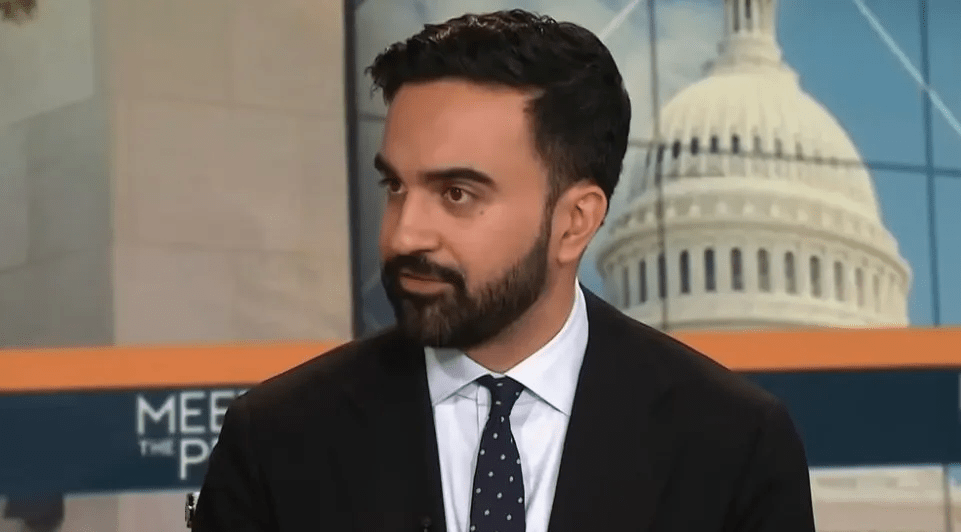
Mamdani And The Left Are Moving The Window – Good by Oliver Willis
What if everything you believed since you have been politically awake is wrong? It isn’t that you have bad intentions or you’re fundamentally stupid, but what if instead you believed for so long that the existing menu of political options was one group of beliefs but in reality, that was a really limited menu that excluded some really tasty items you never considered before?
When a rising progressive figure like Zohran Mamdani makes bold statements about what he wants to achieve, it can make regular old mainstream Democrats/liberals like myself wince. Government supermarkets? We shouldn’t have billionaires? Immediately that kicks in concerns about how Democrats are perceived. It isn’t just Mamdani. Ideas like defunding the police, universal basic income, free health care, etc.? Sure, we say, they may sound good on paper – but they also sound like left wing fantasyland, they’re just not “practical.”
And maybe they are impractical, unworkable, and election losers. But – what if not? We should at least have the conversation, I think.
Because for decades now American political discourse has been operating within the parameters set by the right wing, not the left. Since 1980 we have had 20 years of Democratic presidents and while I think they did a decent job of domestic politics between the three of them (Clinton, Obama, and Biden), much of what they did was within the narrow paradigm of what was acceptable behavior.
Clinton frequently talked about cutting the size of the government, Obama spoke about lowering the deficit, and Biden also used the language of “fiscal responsibility” as the right envisions it. All three men accepted the existence of billionaires and even pushed policies that would theoretically create even more of them. None of them would argue that the police needed to be defunded, and in fact they all oversaw federal spending that sent billions to police departments.
I was among the millions who supported these three presidents, along with other Democrats who ran for office with a similar world view both at the presidential and congressional level to varying degrees of success.
But these people have all been operating within the right’s paradigms. Collectively we never openly debated how we could have it all wrong. Maybe the prison system should be abolished? Maybe billionaires should be taxed out of existence?
Even if we don’t ultimately reach those conclusions, these are debates worth having.
Because while we have been limiting ourselves, the right hasn’t. Since Barry Goldwater in 1964, the right has been shifting the Overton Window – what is considered acceptable public discourse – steadily to the right. We have gone from Republicans like Nixon creating agencies like the EPA to Ronald Reagan and George W. Bush cutting funding for vital agencies to Donald Trump trying to completely destroy agencies like the Department of Education.
Things that Trump treats as uncontroversially right-wing today would have been laughed out of the room as the ravings of lunatics in 1958. The right has mounted serial challenges to what was the liberal orthodoxy (not on every issue but most issues) in the 1960s and they have molded public perception of what acceptable dialogue is.
We are worse off for this. One can praise what Democratic leaders have accomplished in a progressive manner (health care, infrastructure, overall policy) and still admit that the thinking has been severely limited and inhibiting.
Voters are making this clear to the party. They keep showing in multiple federal and state elections that they are unhappy with the status quo and in some instances, like with Trump, they are far too eager to flirt with fascism versus maintaining the system as-is.
Think about the world that millennials and Gen-Z have lived in for their entire lives. Not only has it been shaped by Reaganism and Trumpism, but it has also been peppered with Democratic leaders like Obama, Clinton, and Biden who didn’t fundamentally challenge the bedrock of what the right laid but instead focused on (well needed) nibbling at the edges.
It has been a very long time, probably not since the Great Depression, where Democrats articulated the notion that something beyond the acceptable was possible. When Franklin D. Roosevelt first took office, the consensus was that bad stuff just had to happen and that the government had to lie back, helpless. Herbert Hoover couldn’t truly conceive of a universe where the government swooped in and actively combated the forces making things worse for ordinary Americans. Roosevelt shifted the window and set up the infrastructure of the safety net that still exists today (for now). (snip-MORE, + Kal El photo. Click through!)












 Scottie's Playtime