Remember a couple of things as you read this below. First there is nothing wrong with being LGBTQ+ and the feelings associated with those letters. Second most children are desperate to fit in to the majority, to be “normal”. The country was well on the way to reassuring these kids / adults that those feelings were normal and OK. That the child was not damaged not an abomination to god, and did not need to be fixed. Then the right wing religious hate machine managed to pass don’t say gay laws, bathroom bills, and “lets make those who are not straight or cis be attacked outcasts again” laws.
There are two errors not really mentioned here. Minors who are going to these “religious anti-LGBTQ+ be straight cis only” therapest / religious leaders are normally forced there by parents who have been convinced by religious leaders in their church that their child is damaged and needs to be fixed as they are sinning just for feeling as they do and so will be going to hell. (Side note Jesus never said anything like that. I remember being told that I was “acting gay / doing gay things” because I liked sinning. To which I replied, You have it backwards. I was born gay and I like doing / being gay and so I don’t care that it is sinning to you.) The child is often told this to the point where even if they don’t fully hate themselves they are willing to do anything their parents want to “be normal” or get their parents off their backsides about it. And often the child is threatened with being thrown out of the home if they don’t go to conversion therapy. And then the religious therapist reinforces the message that they are damaged, broken, that they cannot be as they are but must be fixed, must be healed of the sin / feelings. Every major medical association has reviewed and studied conversion therapy and they conclude it is harmful, has no basis in science and those kids who go through it are far more likely to try to end their lives so they recommend helping young people to accept themselves and their feelings except for the minor one started by a religious group that has rejected all the studies and findings for the religious belief that god wouldn’t create anyone that way and because we are not that so those people / kids that feel that way must be forced to change to make them and their god happy.
There are facts, and then there are religious beliefs that disregard those facts. The fact is that the data and medical studies show that helping non-straight non-cis children accept that they are normal also shows that gender afirming care is the most beneficial way to help young people who are LGBTQ+ and struggling with the idea of wanting to be “normal” or like the other students are. I did not want to be gay as a kid growing up. I knew my attraction perhaps sooner than most kids due to my childhood situation. But all the time growing up I heard about how bad and horrible people who had the feelings I did were and how doing what I was being forced to do made me the worst possible human. I was attacked at school even though I was not out but some thought I was different and that was enough. When I had to join the church to get to leave my abusive home to get to safety I heard constantly how bad / sinfull / an abomination I and people like me were to god who wanted mankind to wipe me out… wait why does god need mankind to do that, especially white Christian men to do that, can’t he just stop making gay people with out a demon in them?
At my church school a lot of the boys were flirting with same sex attractions as they were horny teen boys separated from girls. Similar to the situation I found in the military where I had a group of “straight” guys asking me to go on passes with them. And it was very fun, but they always claimed not to be able to remember what happened on those trips. But each of those kids and some of those adults I had consensual fun with blamed themselves for failing god and failing to be normal. I had one really cute fun guy who I would go on passes with who couldn’t wait to get into the hotel room to have sex. And it was not just one way either. He received as he gave and what he enjoyed he returned if you catch my trying not to be too explicit. But that was the same with all the guys, they were not hung up on straight norms while in a hotel room with me. But this one guy would always on the way back to base tell me we couldn’t do that again. It was wrong. It was something we shouldn’t do. I did not argue. But 3 weeks or a month later he was begging me to go on a four day pass with him.
My point was this guy was 18 / 19 like me. I had already long accepted who I was and how I felt. He had taken the be normal message to heart. He could have used therapy to accept his feelings and needs. But the one thing he did not need and would have been harmful was conversion therapy. That guy was with me in Germany, after a wonderful weekend he again said we couldn’t do that again, He got married and it lasted a year, then he got divorced. I lost touch with him. But lives were harmed because he just couldn’t face he was gay, couldn’t tell his religious parents he was gay, and would have been placed in conversion therapy if his parents had known as a teen he struggled with same sex attraction and was not straight. Hugs
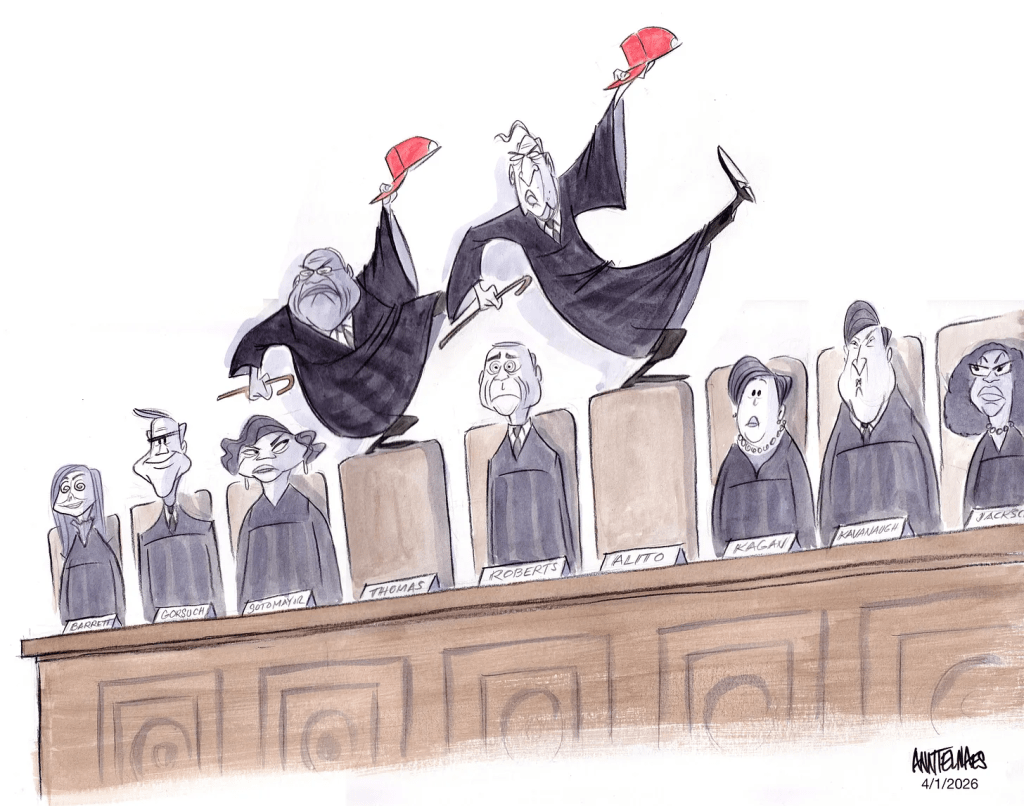
The Supreme Court on Tuesday delivered a major win for the free speech rights of counselors and therapists, ruling in an 8-1 decision that a Colorado law prohibiting licensed counselors from engaging in talk therapy to help a person “reduce or eliminate unwanted sexual attractions, change sexual behaviors, or grow in the experience of harmony with [their] bod[ies]” unconstitutionally violated the First Amendment right to freedom of speech.
FRC President Tony Perkins called the decision “A Supreme Court win for free speech and biological reality.”
“I’m encouraged to see the muzzle removed from therapists seeking to help willing patients come to terms with, and be at peace with, how God created them,” reflected Perkins in a statement to The Washington Stand.
“The Left is using the levers of government to block families and individuals seeking help. Under Colorado law, a girl could legally seek a therapist’s help to change her gender but could not seek help from that same therapist to align her identity with her biological sex. Where is the fairness or logic in that? I commend the court for striking down this deeply invasive and unjust law.”
Read the full article. In 2013, Exodus International – then the nation’s largest ex-gay group – disbanded. Its longtime president Alan Chambers declared that not one of his group’s thousands of victims had ever become heterosexual.
Conversion therapy is discredited junk science that inflicts harm on LGBTQ youth.The Supreme Court’s decision is disappointing and puts vulnerable kids at risk.
In the past few days, I’ve been wondering what/how/when to frame Autism Month in a post. We here have learned so much from Barry already, and I want to be respectful to him, to other autistic readers, and also to the students I’ve worked with in years past, none of whom probably read here, but they exist in this world. Anyway, it takes some thinking, for me. So, I’d like to invite autistic and/or neurodivergent readers to guest post if you are inclined; Scottie and I and Randy can put your work up, or you can even use a comment space. One thing I’ve learned from Barry is that autistic people are the best ones to address the subject because they have the actual perspective to do so. But we do want people to be aware that neurodivergent people are amongst the marginalized people to whom we want to give voice. Enjoy Barry’s post this morning!
I read LGM when I have time; haven’t been there in a couple of weeks. But here is this. I thank another friend of the blog for the link to this. It’s concise.
Graham Platner, son of wealthy parents, is cosplaying as a salt-of-the earth oyster farmer who sells his product to his mother and is running to become the Democratic candidate for Senate in Maine, against Susan Collins. He was outed as having a Nazi tattoo, which he had tattooed over with a slightly less Nazi tattoo. His earlier writings and activities include slurs against women and wearing a Blackwater hat to own the libs.
He is now running ahead of Governor Janet Mills, who is an older woman but who actually has experience in government, something Platner lacks.
Why is Platner doing so well? We can look to Donald Trump for that.
All of our politics today are gender politics. It’s very difficult to talk about that, because it permeates everything we do, leaving us fish unaware of the water. The response is frequently that no, it’s something else, maybe power. But power is gender infused too. So let’s focus on gender if only for the amusement of seeing something through a new lens.
We have multiple models in our heads of what women and men are. Mute eye candy, intellectual, blue collar are some general descriptors, but more specifically, we associate particular groups of characteristics with particular manifestations of gender. Graham Platner and Donald Trump are avatars of a particular way to be a man. I will enumerate some of them.
Men tell it like it is. This means that they can say things that are associated with this type of masculinity, like referring to women by their genitals and using slurs against other groups that are not able-bodied white men.
Men are muscular and do hard work. This means that blue-collar men are Real Men™.
Men are strong. This is different from being muscular, but the two bleed into each other. A man can take on emotionally difficult tasks and bull his way through.
Men never apologize. From what I have read, Platner has acknowledged the tattoo and his earlier actions but has not apologized. Trump, well.
Men are by nature fit to lead. Platner has no experience in government, as was the case with Trump in 2016. But they were/are questioned very little on this issue.
Men may become violent. Platner was in the military and Blackwater, with a violent tattoo. Trump shouts, rages, and talks about violence all the time.
To my mind, this type of masculinity is disqualifying for elected office. But obviously others disagree.
He’s a plain-talking guy you could have a beer with. Or at least a man could have a beer with. The comfort factor is enormous, and Platner and Trump give people permission to be comfortable in a particular way. Ezra Klein interviewed (gift link) one of conservatism’s intellectuals, Christopher Caldwell. Caldwell writes at the Claremont Review of Books and is one of the New York Times’s resident conservatives.
One of the things he settles on as an aspect of Trumpism is what he calls free speech. He has felt throttled by woke and was delighted to be able to be comfortable in what he says. That banker interviewed by the Financial Times said it out loud: He can say the “r” word and refer to women’s bodies in conversation. It’s what all conservatives mean by “free speech,” sometimes with Nazi phrases or concepts thrown in. When they say “free speech,” they mean whatever speech white men in charge want to use.
Those “free speech” advocates are given permission to speak freely by Platner and Trump.
There are other reasons people vote for men displaying this cluster of traits considered masculine. It’s a comfortable stereotype – much in the media and what people who don’t have close contact with blue-collar men may believe of them.
Even Rahm Emanuel feels he has to put on a muscular performance of eating his salad.
Hi Friends, I have been nominated for @TheWebbyAwards and you can vote if you want me to win. https://vote.webbyawards.com/PublicVo… . I’ll also be hosting the awards this year which is truly wild. Thank you all so much for getting me here ❤️
An amazing retirement village is accepting guests in Shropshire, England—but instead of catering to elderly people, it’s designed for elderly cats. Shropshire Cat Rescue has been rescuing elderly cats set to be euthanized and providing them with top-notch elder care for over 21 years. Thanks to donations and sponsorship, the retirement village was built in 2009 to create comfortable homes within the rescue for senior and super senior kitties.
The owner and co-founder of the rescue, Marion Micklewright, was tired of seeing older cats get passed over for adoption and subsequently put to sleep simply because they were old. So she decided to do something about it. Shropshire was created in 1991 and moved to Micklewright and her husband Richard’s current home address in 1998. Today there are cats wandering the retirement village who are over 20 years old. One cat, lovingly named Cat, loves to hang out in the little “store” in the tiny cat town, while others lounge in cat condos. (snip-MORE)
As usual, busybody Republicans should probably be more concerned with what’s going on under their own roofs before peeping in on others. The same people who worried about drag queen story hour have discovered that one of their own likes to play dress-up.
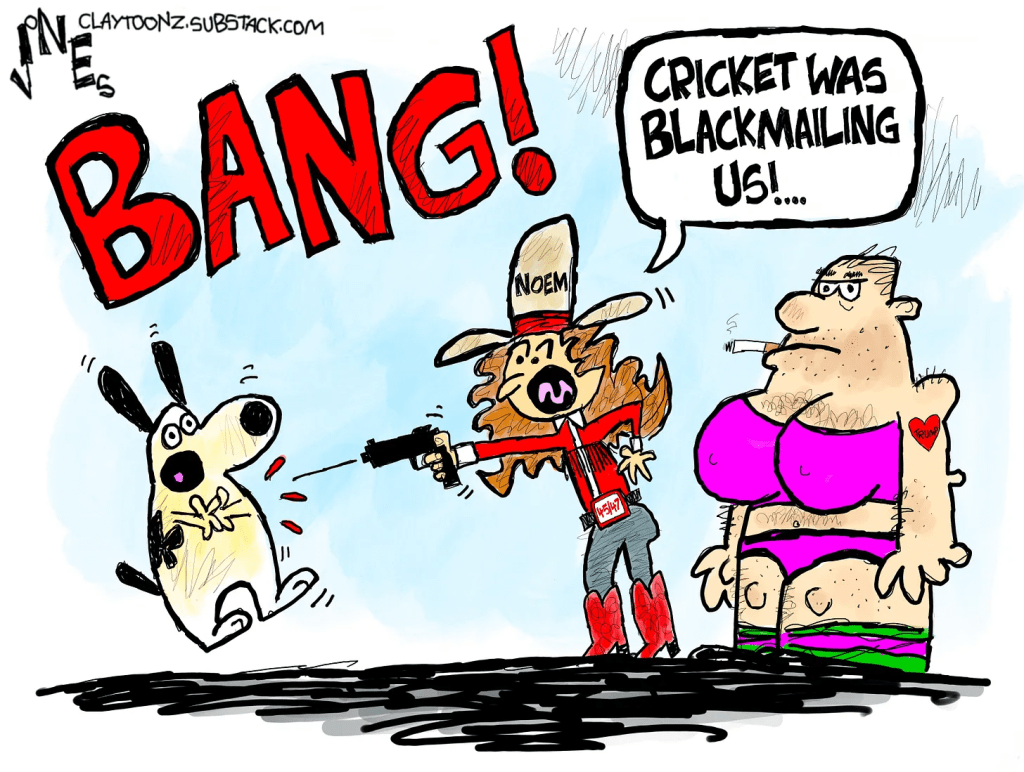
Kristi Noem, the disgraced former head of the Department of Homeland Security, said she was “blindsided” when photos emerged of her husband, Bryon Noem, participating in an online “bimbofication” fetish community. (snip-MORE)
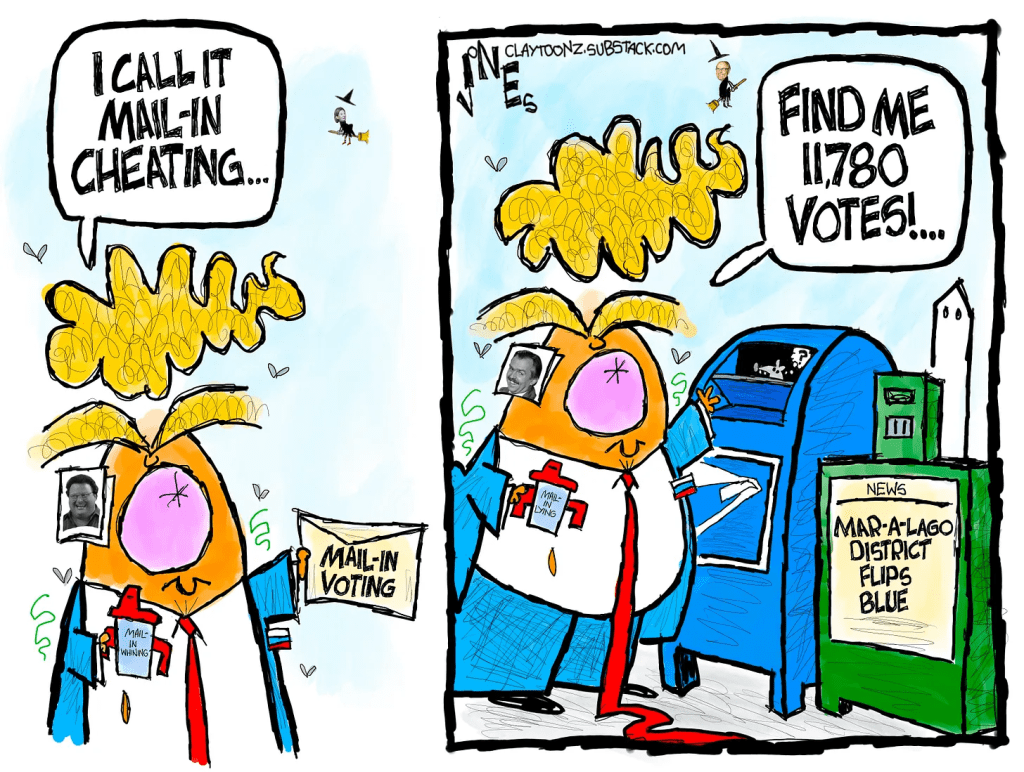
Guess which critic of mail-in voting recently cast a mail-in ballot? I will give you a hint. He’s overweight and lies about it, orange, kind of stupid, smells, likes to name everything after himself, is probably a pedophile, is a known grifter, oggles his own daughter, and recently started a war for reasons we still haven’t determined. Yeah, I think you know who it is.
Donald Trump has a history of attacking absentee voting while also having a history of using absentee voting. (snip-MORE)
We’ve got a tornado watch with storms on their way, so I don’t know how active I’ll be online tonight. However, I want to finish off the day nicely, since nothing is happening right now. Enjoy! TTYL, or tomorrow. 🙂
Medicaid cuts threaten hundreds of hospitals, new report finds
Together, the hospitals provide care for nearly 7 million patients across the U.S., according to the analysis.
Across the country, hospitals have already warned they may need to lay off staff members or scale back care, including maternity and mental health care, because of Medicaid cuts.Image Source / Getty Images
More than 400 hospitals across the United States are at high risk of closing or cutting services because of the Medicaid cuts in President Donald Trump’s “big, beautiful bill,” according to an analysis from the progressive watchdog group Public Citizen.
The fallout could make it harder for millions of people to get care and put thousands of health care workers’ jobs at risk as hospitals lose a key source of federal funding. Medicaid covers about a fifth of all hospital spending.
The Medicaid cuts come in phases, with more significant changes, including work requirements, in 2027 and limits on how states raise funds in 2028. Overall, the law is expected to reduce federal Medicaid funding by roughly $1 trillion over the next decade.
“We’re seeing hospitals that are already under severe financial strain having to make decisions about how to stay financially solvent,” said Eileen O’Grady, a researcher in Public Citizen’s Congress Watch division and the report’s author. “That has pretty clear implications for people who live in that community. It also has ripple effects on other hospitals in those communities.”
The analysis draws on hospital financial data from the Centers for Medicare and Medicaid Services from 2022 through 2024, covering about 95% of U.S. hospitals. The group defined at-risk hospitals as those in which Medicaid and other low-income government programs made up at least 20% of revenue and that have been operating at a loss in recent years.
The report doesn’t estimate when hospitals could close or cut services.
“Closure is the worst-case scenario, but it also doesn’t preclude hospitals from having to make really tough decisions about cutting services that might be essential to those communities but are just no longer financially viable,” O’Grady said.
Across the country, hospitals have already made statements warning they may need to lay off staff or scale back care, including maternity and mental health care, because of the Medicaid cuts.
For many patients, hospitals are the last place to turn when there are few or no other options for care.
“When hospitals close, patients have less access to the care that they need,” said Gideon Lukens, director of research and data analysis on the health policy team at the Center on Budget and Policy Priorities, a nonpartisan research group. “They have to travel further or wait longer in other hospitals that become overcrowded. That additional time can be the difference between success and failure of time-sensitive, potentially life-saving treatments.”
The closures also add strain to the hospitals that take on the extra patients. O’Grady said doctors end up having “less patience, less time, less capacity to provide the highest quality care.”
“It can be very dangerous for hospitals to be under this kind of strain,” she said.
The analysis found a total of 446 at-risk hospitals, with at least one at-risk hospital in 44 states and Washington, D.C.
About 60% of the at-risk hospitals — 267 facilities — are in urban areas, even as much of the debate around Medicaid cuts has focused on rural hospitals. Black and Latino people stand to be the most affected by the cuts.
The hospitals span both Democratic and Republican-led states, though the states with the largest number of at-risk hospitals are California, New York, Illinois and Washington.
Republicans also represent several congressional districts with the highest number of at-risk hospitals. House Republicans who voted for the Medicaid cuts have 196 at-risk hospitals in their districts, while Senate Republicans — all of whom back the cuts — represent 146 at-risk hospitals in their states, according to the analysis.
The cuts could lead to a worsening crisis, especially for rural hospitals, said Zachary Levinson, the project director of the KFF Project on Hospital Costs.
He said that by his estimates, Trump’s law sets aside $50 billion to support rural communities, but could reduce federal Medicaid spending in rural areas by far more — about $137 billion over a decade.
James Jackson, the CEO of Alameda Health System in Oakland, California, said the Medicaid cuts represent an “existential threat.”
Alameda Health System, which gets 60% of its revenue from Medicaid payments, announced in December that it would lay off nearly 300 employees and lose more than $100 million annually by 2030. (The health network was not included on Public Citizen’s at-risk list, though the report notes its financial troubles.)
The layoffs, set to take effect in March, have since been delayed.
Proposed cuts included mental health services, care for patients with chronic conditions and an ambulatory plastic surgery program. Jackson said closing hospitals is not on the table, but the system has continued to look at scaling back services.
“I don’t think the impact is going to be a positive one,” he said. “We are often the provider of last recourse, so if we’re not able to provide a service, there will be a delay in receiving care at one of the other systems in the area or they may not provide it at all.”
Trinity Health, a Michigan-based hospital system with facilities in other states, said it’s projected to lose $1.5 billion due to “recent and future government policy changes.”
In January, it said it was laying off 10.5% of its billing staff. One of its hospitals, St. Mary’s Sacred Heart Hospital in rural northeast Georgia, announced last October it was closing its maternity unit.
In a statement, a Trinity Health spokesperson shared a previous statement that said in part that “more reductions” are being considered by the federal government and it’s “not possible to simply absorb such a significant financial impact without making thoughtful, forward-thinking changes.”
Berkeley Lovelace Jr. is a health and medical reporter for NBC News. He covers the Food and Drug Administration, with a special focus on Covid vaccines, prescription drug pricing and health care. He previously covered the biotech and pharmaceutical industry with CNBC.
Supreme Court hears arguments in Trump birthright citizenship case
The Supreme Court heard arguments over President Trump’s bid to end birthright citizenship, a case that tests one of the cornerstones of his immigration agenda.
A Striking Departure: The number of declinations marks a striking departure not only from the Biden administration but also the first Trump term, according to the ProPublica analysis.
An Unusual Order: Former DOJ prosecutors said that they regularly reviewed caseloads. But none could recall an order like the one in February to review cases.
Different Priorities: While Elon Musk’s DOGE operatives said they were rooting out federal waste, fraud and abuse, the DOJ declined over 900 cases of federal program or procurement fraud.
These highlights were written by the reporters and editors who worked on this story.
In the first days after Pam Bondi was appointed attorney general last year, the Department of Justice began shutting down pending criminal cases at a record pace.
The cases included an investigation into a Virginia nursing home with a recent record of patient abuse; probes of fraud involving several New Jersey labor unions, including one opened after a top official of a national union was accused of embezzlement; and an investigation into a cryptocurrency company suspected of cheating investors.
In total, the DOJ quietly closed more than 23,000 criminal cases in the first six months of President Donald Trump’s administration, abandoning hundreds of investigations into terrorism, white-collar crime, drugs and other offenses as it shifted resources to pursue immigration cases, according to an analysis by ProPublica.
The bulk of these cases, which were closed without prosecution and known as declinations, had been referred to the DOJ by law enforcement agencies under prior administrations that believed a federal crime may have been committed. The DOJ routinely declines to prosecute cases for any number of reasons, including insufficient evidence or because a case is not a priority for enforcement.
But the number of declinations under Bondi marks a striking departure not only from the Biden administration but also the first Trump term, according to the ProPublica analysis, which examined two decades of DOJ data, including the first six months of Trump’s second term. ProPublica determined the increase is not the result of inheriting a larger caseload or more referrals from law enforcement.
In February 2025 alone, which included the first weeks of Bondi’s tenure, nearly 11,000 cases were declined, the most in a month since at least 2004. The previous high was just over 6,500 cases in September 2019, during Trump’s first administration.
Some of the cases shut down were the result of years long investigations by federal agencies such as the FBI and the Drug Enforcement Administration. For complex cases, the DOJ can take years before deciding whether to bring charges.
The shift comes as the DOJ has undergone an extraordinary overhaul under the Trump administration, with entire units shuttered, directives to abandon pursuit of certain crimes and thousands of lawyers quitting or, in some cases, being forced out of the agency.
In doing so, the DOJ is retreating from its mission to impartially uphold the rule of law, keep the country safe and protect civil rights, according to interviews with a dozen prosecutors and an open letter from nearly 300 DOJ employees who have left the department under Trump. The Trump DOJ, the employees wrote, is “taking a sledgehammer” to long-standing work to “protect communities and the rule of law.”
The change in priorities was outlined in a series of memos sent to attorneys early last year. Trump’s DOJ has said it is “turning a new page on white-collar and corporate enforcement” and emphasizing the pursuit of drug cartels, illegal immigrants and institutions that promote “divisive DEI policies.” Trump, in an address last March at the department, said the changes were necessary after a “surrender to violent criminals” during the past administration and would result in a restoration of “fair, equal and impartial justice under the constitutional rule of law.”
The department prosecuted 32,000 new immigration cases in the first six months of the administration, which was nearly triple the number under the Biden administration and a 15% increase from the first Trump term. It has pursued fewer prosecutions of nearly every other type of crime — from drug offenses to corruption — than new administrations in their first six months dating back to 2009.
The DOJ has also closed hundreds of cases involving alleged crimes that the administration has publicly emphasized as enforcement priorities. Even as the Trump administration unleashed Elon Musk’s Department of Government Efficiency operatives to root out waste, fraud and abuse in the federal government, the DOJ declined over 900 cases of federal program or procurement fraud. About three times as many cases of major fraud against the U.S. were declined under Trump compared with the average of similar time periods under prior administrations. And while the Trump administration has promised to “make America safe again,” its DOJ has declined more than 1,000 terrorism cases, also more than prior administrations.
Federal prosecutor Joseph Gerbasi had spent years in the department’s Narcotic and Dangerous Drug Section helping build cases against major suppliers of fentanyl ingredients in India and China. After Bondi came in, he was left bewildered when his team was ordered to abandon its work.
“All of the building blocks of what would become successful prosecutions were pulled out,” said Gerbasi, who retired as the section’s acting deputy chief for policy in March 2025 after 28 years with the department.
The move had an “overwhelming deflating effect on morale,” he said.
After Trump’s Inauguration, the Department of Justice Turned Down a Record Number of Cases
The first quarter of 2025, and especially February of that year, saw the department declining to prosecute cases against thousands of defendants outside of its regular six-month review process.
Source: DOJ data provided by TRACKen Morales/ProPublica
Barbara McQuade, who worked as a federal prosecutor in Michigan for two decades until 2017 during Republican and Democratic administrations, said it was not unusual for new administrations to come to office with a few “pet priorities” — such as a focus on violent crime or drug trafficking. But she said those changes usually involved modest adjustments in policy and that most of the decisions on what crimes to focus on were typically made at the local level by the district U.S. attorney in coordination with the FBI or other agencies.
“We would revise those about every five years, not having anything to do with any administration, just because it made sense,” she said.
A DOJ spokesperson, in an emailed response to questions about the spike in declinations, said that in “an effort to clean, remediate, and validate data in U.S. Attorneys’ case management system,” the department reviewed all pending criminal matters opened prior to the 2023 fiscal year, which included updating the status of closed cases. “This Department of Justice remains committed to investigating and prosecuting all types of crime to keep the American people safe, and the number of declinations is a direct result of our efforts to run the agency in a more efficient manner.”
The agency did not respond to questions about the types of cases declined.
The spike of declined cases began in February 2025 when the department ordered prosecutors to review every open case launched prior to October 2022 and determine whether to close it. Such a review would typically take months, according to one attorney tasked with reviewing cases. A memo, which was described to ProPublica reporters, ordered the review to be completed within 10 days.
Former DOJ prosecutors told ProPublica that they typically reviewed caseloads every six months with supervisors and that closing out languishing cases wouldn’t ordinarily be cause for concern. They said the February directive, however, was unusual. None could recall a similar order.
The directive came as higher-ups in the department had begun making frequent demands for data about specific types of cases and charging decisions, such as the outcome of fentanyl cases, according to former prosecutor Michael Gordon. Gordon, who helped prosecute Jan. 6 cases before moving to white-collar crime prosecutions, said the “fire drills” from officials in Washington became so regular that he grew used to the forlorn look on his supervisor’s face when he showed up at Gordon’s door, apologetically delivering yet another frantic request.
“It was either ‘give us stats we can use to make ourselves look good’ or ‘give us the stats to show how bad things are in this area,’” Gordon said. “It was never productive fact-finding.”
Though Gordon didn’t see the memo, he remembered getting the request to review all cases that had been open for more than two years and report back on their status, entering into a master spreadsheet basic information about any that he wanted to keep pursuing.
“The office was pushing us to close everything by a certain date so that when they had to report up to D.C. they had a low number of open cases,” he said. “You really had to go to bat to keep open a case that was more than two years old.”
Gordon said he was fired by the DOJ last June. He has filed a lawsuit alleging his termination was politically motivated. The department did not respond to questions about Gordon’s comments or his lawsuit. The government filed a motion to dismiss the case late last year, arguing that the federal court did not have jurisdiction over the matter. The court has not yet ruled on that motion, and the case is still pending.
Investigations into individuals or corporations declined for prosecution are generally not reported to courts and usually only disclosed in summary form by the DOJ in annual reports. To conduct its analysis, ProPublica obtained declination data from the DOJ and the Transactional Records Access Clearinghouse, a center that obtains data through Freedom of Information Act requests.
The DOJ Declined a Slew of Cases Shortly After Pam Bondi Was Confirmed as Attorney General
Nearly 11,000 criminal cases were declined during her first month in office.
Source: DOJ data provided by TRACKen Morales/ProPublica
Here are some of the areas most impacted by the spike in declinations.
Drugs
As president, Trump has spoken frequently about the “scourge” of drugs coming into the country. At the same time, the Justice Department has declined to prosecute nearly 5,000 cases of federal drug law violations, including trafficking and money laundering. The number of declinations were 45% higher than the average of the prior three new administrations.
Gerbasi, the counternarcotics prosecutor, declined to comment on specific cases that might have been declined in his office. But, he said, once Bondi was appointed, the priority in the office became building cases against Tren de Aragua, a Venezuelan group that the Trump administration has labeled a foreign terrorist organization.
“Tren de Aragua was not anywhere close to the scale or impact of the cartels we were focused on,” Gerbasi said. “But we were told to generate those cases.”
He said his office had to scramble to fly people to investigate local gangs in small towns that were reportedly affiliated with Tren de Aragua. “They never would have merited a full-scale federal investigation,” he said.
“It told me that decisions were going to be based on political appearances and not based on the merits of where investigative resources should be placed.”
The DOJ declined to comment on Gerbasi’s remarks.
Trump’s DOJ Has Rejected Far More Cases Than Previous Administrations Across a Wide Range of Categories
Many of the dropped cases were in programs the DOJ has claimed were priorities.
Source: TRAC, DOJ
Note: “Other” primarily includes government regulatory offenses and theft. Comparison to average of past administrations only includes the first six months after a presidential administration change: Obama (2009), Trump (2017) and Biden (2021)Ken Morales/ProPublica
National Security
Under Bondi, the DOJ declined more than 1,300 cases involving terrorism and national security, nearly twice what was typical at the start of the most recent new administrations. While domestic terrorism was the hardest-hit program, just over 300 cases involving charges of providing material support to foreign terrorist organizations were also dropped.
The DOJ program handling matters relating to national internal security — which considers cases of alleged spy activity and the security of classified information — saw over 200 declinations, which is four times as many as typical in the first six months of a new administration. Some of the cases related to serving as an unregistered foreign agent, a charge Bondi ordered prosecutors to stop pursuing unless they involved “conduct similar to more traditional espionage by foreign government actors.”
Jimmy Gurulé, a former federal prosecutor and George W. Bush appointee to the U.S. Treasury Department who investigated the financing of terrorism, said the decline in terrorism cases was troubling.
“The Trump DOJ has been used as a political weapon,” he said. “It’s a question of prioritizing resources. Are they going to be used for national security threats or to prosecute his political enemies and critics?” The DOJ did not respond to a request for comment on Gurulé’s remarks.
Labor
The DOJ shut down over 60 union corruption and labor racketeering cases, 2.5 times the number in Trump’s first term. Nearly half of the cases turned down for those offenses were out of the New Jersey U.S. attorney’s office, which in the past has aggressively pursued alleged union corruption. All were noted as declined for insufficient evidence.
Most of those cases had been opened by Grady O’Malley, an assistant U.S. attorney who oversaw several prosecutions of union corruption while working in the New Jersey office over four decades. He retired in 2023 and was disturbed to learn from former colleagues that the office was shutting down the open union probes.
A Trump supporter, O’Malley said that while he doesn’t blame the president, he worries the decision to drop so many cases could embolden unions that he and his colleagues spent years working to hold accountable. “No one is assigned to do labor union cases, and the unions have every reason to believe no one is looking.”
The New Jersey U.S. attorney’s office said it had no comment on the declination of labor cases.
White-Collar Crime
The Trump administration has pledged to root out “rampant” fraud in federal benefit programs like food stamps and welfare. The controversial surging of federal agents to Minnesota in January began as a stated crackdown on noncitizens allegedly ripping off nutrition and child care programs.
The DOJ, however, shut down more than 900 cases of federal program or procurement fraud in the first six months of the administration, including one targeting a mortgage lender accused by several state regulators of defrauding the Federal Housing Administration. The case was dropped due to “prioritization of federal resources and interests.” The U.S. attorney’s office for the Northern District of Alabama, which declined the case, did not reply to a request for comment. The number of fraud cases closed was about double that in the same time period of the Biden and first Trump administrations.
The agency also closed over 100 health care fraud cases as a result of “prioritization of resources and interests” even though the Trump administration has said it is making this area of enforcement a priority.
Among other cases the DOJ determined weren’t a priority: the probe into the Virginia nursing home accused of abuse, as well as investigations in Tennessee into fraud at a national hospital chain and one of the largest Medicaid managed care companies.
The Western District of Virginia U.S. attorney’s office, through a spokesperson, declined to comment on the nursing home case. A spokesperson for the U.S. attorney in the Middle District of Tennessee said the office does not comment on investigations that do not result in public charges.
The DOJ’s Antitrust Division, which focuses on preventing big businesses from creating harmful monopolies, also declined an unusually high number of cases in Trump’s second term. More than 40 cases were dropped within the first six months of Bondi’s tenure. That’s more than double the number declined in the same time period by the prior three new administrations.
Despite the declinations, the department said it charged slightly more people with fraud in 2025 compared with the final year of the Biden administration, and those cases alleged larger financial losses.
Promises Kept
The DOJ under Bondi has also rapidly pursued many of the priorities laid out in Trump’s early executive orders and her own “first day” directives to staff.
Trump in February 2025 issued an executive order pausing new investigations under the Foreign Corrupt Practices Act, which prohibits citizens and companies from bribing foreign entities to advance their business interests. The order asked the attorney general to review and “take appropriate action” on any existing probes to “preserve Presidential foreign policy prerogatives.”
In the first six months, Bondi’s DOJ shut down 25 such cases, which is more than the combined number dropped by the prior three new administrations over the same time period. One of the cases declined for prosecution involved a major car manufacturer, which had reported possible anti-bribery violations to federal investigators involving a foreign subsidiary. The DOJ declined the case for prosecution last June, citing the “prioritization of federal resources and interests.”
On her first day, Bondi ordered a review of criminal prosecutions under the Freedom of Access to Clinic Entrances, or FACE Act, which prohibits people from illegally blocking access to abortion clinics and places of worship. The department dropped as many cases under the act in its first six months as the past three new administrations combined, over the same time frame. Bondi’s order focused on “non-violent protest activity,” although at least one of the closed cases was being investigated as a violent crime. The DOJ has since charged protesters against Immigration and Customs Enforcement and journalists in Minneapolis under the FACE Act. The defendants in the case have pleaded not guilty.
The agency closed three times the number of cases alleging environmental crimes as the Biden administration did and one-and-a-half times as many as compared with Trump’s first term. The declinations came as the DOJ reassigned and cut prosecutors working on environmental cases. One-fifth of all of the dropped environmental protection cases were shut down for “prioritization of federal resources and interests.”
I got up at 3 am this morning and was able to respond to almost all the comments. That gave me a few minutes while I ate some apple oatmeal for breakfast to read some news from Joe My God that he posted yesterday. Here they are in no particular order. Hugs
Yes it would make me want to sign up to work grueling hours and possibly die for a country that wants to use my graduation to arrest and deport my family members. Great move. Hugs.
I wonder what makes a person so hateful, bigoted, and racist. How much do you fear not being in a super majority and why? Do they worry that the new majority will treat them the way they treated the minorities when they were the majority? Hugs
More racism. This program they are now stopping claiming it is DEI and woke is because the first program illegally excluded black people in an attempt to be racist. Hugs
I was not sure whether to put this under corruption or racism. But as they are clearly using race, skin color, and language/accents to stop and detain people, racism won the toss. Hugs
OK more bigotry if not racism. The joy these people get from forcing kids to be cis or straight rather than let people just express themselves as they are is something I don’t understand. Seriously, why the need to go against all the medical science, medical studies that show conversion therapy to not only not work but to be very harmful to those who experiance it. It is torture and child abuse. Kids who are forced into it, who have to suffer through conversion therapy are much more likely to try to commit suicide. For what goal, to please their god? Their god created the trans / gay person as trans or gay.
The Army felt it was important enough breach of regulations and rules along with a waste of taxpayer money to suspend and investigate those involved. Pete Kegseth our Fox host wannabe big time war general secretary of defense over ruled their decision and undermined their authority because it looked cool. He is acting like a 10 year old boy playing army with his toys. Kegseth also illegally removed 4 officers from being promoted to flag rank. Two because they were female and two because they were black. The rest he wanted to be promoted were white men of course. Hugs
More illegal actions by the wannabe dictator and his administration who believe anything tRump mumbles is the law of the land and they do not have to follow any rule or law. Hugs
tRump illegally deciding that his administration can decide who gets to vote and how voting is done. All by his decree. The dear leader has spoken. Hugs
More crime? Why am I surprised that people that rioted and attacked the US Capitol, breaking in and causing mass damage might not respect the laws? In that act they assaulted police, staff, and tried to kill congress members. Hugs