I didn’t get any posts set up last night for today. Ollie got a little overheated yesterday during our walk, and I wanted to watch over and care for him to make sure he’s all right. I just didn’t get to setting up posts. (I feel as if that will be a relief for eyes on the blog! But anyway.) He is fine; he’s not taking the fireworks real well, and for some reason doesn’t want his morning walk today, either, which is different, but I’m letting him lead on that. Fireworks don’t begin until 10AM here, so so far, so good on that. Anyway, that’s what’s up here. I hope all are managing to stay healthily cool enough, and taking good care to hydrate well, and screen the UV rays. And that the fireworks aren’t irritating! 🎆
June 30, 2025 Evrim Yazgin, Cosmos science journalist
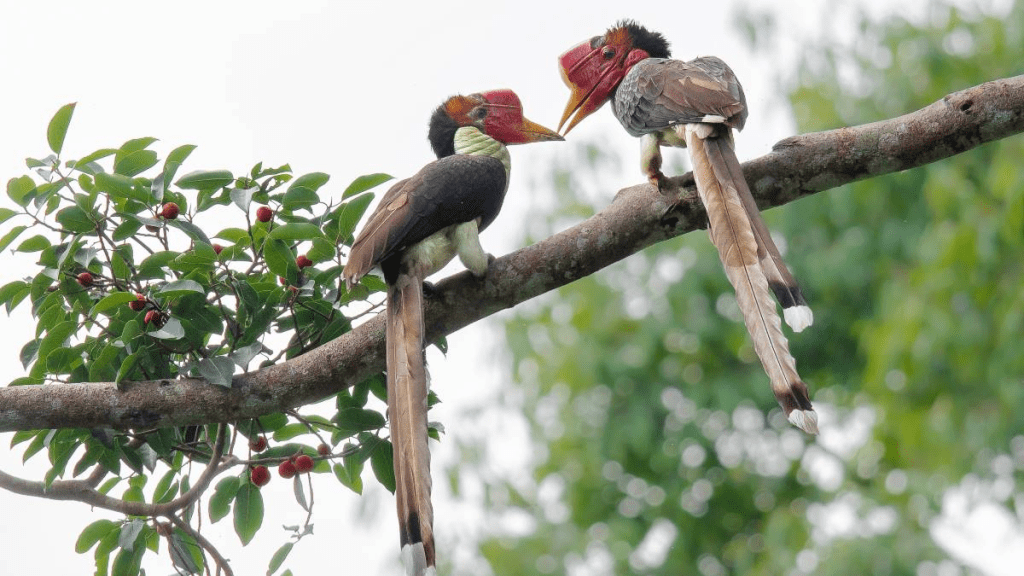
Helmeted Hornbill (Buckeroos vigil) male and female. Credit: Hello my names is james,I’m photographer / iStock / Getty Images Plus.
Researchers analysed different threat factors such as habitat loss and climate change to find that 500 bird species could go extinct in the next century. Unique species are most at risk.
The study, published in the Nature Ecology & Evolution, warns that the loss of unique birds could harm ecosystems around the world.
Vulnerable birds include the bare-necked umbrellabird found in the forests of Costa Rica and Panam, helmeted hornbill from Southeast Asia and yellow-bellied sunbird-asity endemic to Madagascar.
“We face a bird extinction crisis unprecedented in modern times. We need immediate action to reduce human threats across habitats and targeted rescue programmes for the most unique and endangered species,” says lead author Kerry Stewart from the University of Reading, UK.
The researchers studied the behavioural and morphological traits of about 10,000 bird species – representing nearly all known bird species – using data from the International Union for Conservation of Nature (IUCN) Red List.
Applying a statistical model, the researchers were able to show that large-bodied species were more at risk from hunting and climate change. Meanwhile, birds with broad wings suffer more from habitat loss.
“Stopping threats is not enough, as many as 250–350 species will require complementary conservation measures, such as breeding programmes and habitat restoration, if they are to survive the next century,” says senior author Dr Manuela Gonzalez-Suarez, also from the University of Reading. “Prioritising conservation programmes for just 100 of the most unusual threatened birds could save 68% of the variety in bird shapes and sizes. This approach could help to keep ecosystems healthy.”
“Many birds are already so threatened that reducing human impacts alone won’t save them,” adds Stewart. “These species need special recovery programmes, like breeding projects and habitat restoration, to survive.”
The authors say that “functionally unique” species – i.e. species that fill highly specialised ecological niches – are the most vulnerable. Likewise, the loss of such unique species could cause a cascading effect of harm for broader ecosystems.
“Effective targeted recovery programmes that explicitly consider species uniqueness hold great potential for conserving global functional diversity as a complementary strategy to threat abatement,” they write.
Losing a pet is a unique kind of heartbreak, one that can feel both profound and invisible. To help bring comfort, we spoke with Patricia Denys, MFA, a compassionate voice in the world of pet grief and healing.
Patricia is an artist, animal activist, creative director of Animal Culture magazine, educator, yogi, vegan, and an interfaith, interspecies animal chaplain ordained by the Compassion Consortium. She’s also a great friend of MUTTS.
In this conversation, Patricia shares her perspective as an animal chaplain on navigating loss, offering support, and finding gentle ways to honor the journey. Whether your pet recently crossed the Rainbow Bridge or you’re reflecting on a loss from long ago, we hope this conversation brings you some clarity, comfort, and connection.
Understanding the Role of an Animal Chaplain
Can you explain what an animal chaplain does?
An animal chaplain helps animals live their fullest lives and helps them transition when it is time. They offer help to animal parents, animal care workers, and animal people in general, navigate stress, grief, and compassion fatigue. Animal chaplains also encourage stronger human-animal (interspecies) bonds, individually and communally. Animal chaplains offer help with end-of-life care, decisions and rituals (interfaith), and bereavement support. An animal chaplain is also there for celebrations and victories for all animals and our planet!
How did you become an animal chaplain, and what drew you to this work?
Our magazine, Animal Culture, interviewed Reverend Sarah Bowen, co-founder of Compassion Consortium and Executive Director of their Animal Chaplaincy Training Program. The program is interfaith, interspiritual, and interspecies, which was important to me. Sarah was a wonderful interviewee, and I became quite interested in the program after connecting with her. It seemed intriguing and intelligent, and an organic next step on my path of a lifetime working with animals. It was quite a commitment of study and well worth it. My fellow students were amazing, compassionate people. It was a very positive experience.
What kinds of support do you offer to people who are grieving the loss of a pet?
The first thing is listening, while being a calming presence for different needs from different people. Using gentle questioning to see what arises for someone. Reminding people that laughter is good and healthy, and part of healing. And, working on realizing that one does not stop loving someone after the transition.
Hospice and Palliative Care for Companion Animals, edited by Amir Shanan, Jessica Pierce, and Tamara Shearer, is an excellent book. In one of the essays, the writer calls mourning, “…a transition from loving in presence to loving in absence.” We work on that as animal chaplains.
Why Saying ‘Goodbye’ to a Pet Is So Painful
Why do we often feel that losing a pet is just as painful — if not more so — than losing a human loved one?
Those of us who have experienced the pain of the loss of a companion animal, or any animal, know this pain all too well. Humans have intense bonds with an animal they love or one that is a part of their lives somehow. Animals’ lives are shorter than humans’. The shock of that short life being over can be very hard to process.
Companion animals also demonstrate stability and routine. A big void is created when these things come to an end. Animals are sentient. They are aware. We see that time and time again. We want to be with them and protect them; they are our family.
How can we respond to people who say, “It was just an animal” or who don’t understand pet grief?
It is very disappointing to hear, “It was just an animal,” from anyone, especially someone you respect or that is close to you. It is the last thing anyone wants to hear since it is so insensitive to one’s feelings and to the memory of the one who has passed. What someone grieving needs is validation that their feelings of loss for such a profound bond with an animal, are understandable and real. You may choose to say that or not.
What are some healthy ways to process and express grief after losing a pet?
Definitely seek support from friends, family, your veterinarian, and/or an animal chaplain. Animal grief is in our mainstream now. There is no shame in asking for help, ever. One needs to talk about the loss. It’s real.
Consider taking a workshop on animal loss or creating a shrine, memorial, art piece, or photo book. Volunteering is also a great, healthy way to heal.
Do you have any advice for someone who feels stuck in their grief or like they should have “moved on” by now?
“Moving on” is a very individual thing. There is no time limit on processing through one’s grief. Accepting the loss and adjusting one’s life accordingly takes time. You need to take your time. If you feel that you are experiencing symptoms of prolonged grief, a therapist can be of help.
Helpful Ways to Honor a Pet’s Memory
How can rituals or memorials help with healing? Do you have any suggestions for meaningful ways to honor a pet’s memory?
Oh, there are so many wonderful things you can do! Humans have always embraced rituals. It is a way to connect to something. A ritual may be something within your religious practices, your own spirituality that you find comforting, or the daily ritual of taking a walk with your dog. That is a ritual for both of you!
A memorial can be a powerful took for healing. It is a coping tool. It is a way to process. Creating an altar on a table for the one you have lost that includes photographs, something that was meaningful for that animal such as a toy, or adding flowers can be a positive expression of your feelings of loss. Re-wilding a small garden that encourages other animals to visit, or creating a small shrine you can carry with you are other ideas. Keeping a journal of your thoughts or sketches can also have a profound effect on healing. The simple act of writing to your loved one — what they meant to you, how much they are missed, what you enjoyed most about them, for example, is often a comfort.
As an artist and a teacher of art, I know creating art can be cathartic and healing, I conduct art workshops on loss and celebration of animals and the planet. They are for non-artists especially. It has been an incredible experience to see what people can create as a way to work out their feelings, and usually, how anxious they are to share with each other. It is a bonding experience about the power of love.
(snip-a bit MORE; click through on the title above)
I cannot add up the number of times I’ve been told by good, liberal Dems that these issues won’t float. And that was back in the 1980s and 90s, not to mention the 2000s. Anyway, take a look!
Mamdani And The Left Are Moving The Window – Good by Oliver Willis
What if everything you believed since you have been politically awake is wrong? It isn’t that you have bad intentions or you’re fundamentally stupid, but what if instead you believed for so long that the existing menu of political options was one group of beliefs but in reality, that was a really limited menu that excluded some really tasty items you never considered before?
When a rising progressive figure like Zohran Mamdani makes bold statements about what he wants to achieve, it can make regular old mainstream Democrats/liberals like myself wince. Government supermarkets? We shouldn’t have billionaires? Immediately that kicks in concerns about how Democrats are perceived. It isn’t just Mamdani. Ideas like defunding the police, universal basic income, free health care, etc.? Sure, we say, they may sound good on paper – but they also sound like left wing fantasyland, they’re just not “practical.”
And maybe they are impractical, unworkable, and election losers. But – what if not? We should at least have the conversation, I think.
Because for decades now American political discourse has been operating within the parameters set by the right wing, not the left. Since 1980 we have had 20 years of Democratic presidents and while I think they did a decent job of domestic politics between the three of them (Clinton, Obama, and Biden), much of what they did was within the narrow paradigm of what was acceptable behavior.
Clinton frequently talked about cutting the size of the government, Obama spoke about lowering the deficit, and Biden also used the language of “fiscal responsibility” as the right envisions it. All three men accepted the existence of billionaires and even pushed policies that would theoretically create even more of them. None of them would argue that the police needed to be defunded, and in fact they all oversaw federal spending that sent billions to police departments.
I was among the millions who supported these three presidents, along with other Democrats who ran for office with a similar world view both at the presidential and congressional level to varying degrees of success.
But these people have all been operating within the right’s paradigms. Collectively we never openly debated how we could have it all wrong. Maybe the prison system should be abolished? Maybe billionaires should be taxed out of existence?
Even if we don’t ultimately reach those conclusions, these are debates worth having.
Because while we have been limiting ourselves, the right hasn’t. Since Barry Goldwater in 1964, the right has been shifting the Overton Window – what is considered acceptable public discourse – steadily to the right. We have gone from Republicans like Nixon creating agencies like the EPA to Ronald Reagan and George W. Bush cutting funding for vital agencies to Donald Trump trying to completely destroy agencies like the Department of Education.
Things that Trump treats as uncontroversially right-wing today would have been laughed out of the room as the ravings of lunatics in 1958. The right has mounted serial challenges to what was the liberal orthodoxy (not on every issue but most issues) in the 1960s and they have molded public perception of what acceptable dialogue is.
We are worse off for this. One can praise what Democratic leaders have accomplished in a progressive manner (health care, infrastructure, overall policy) and still admit that the thinking has been severely limited and inhibiting.
Voters are making this clear to the party. They keep showing in multiple federal and state elections that they are unhappy with the status quo and in some instances, like with Trump, they are far too eager to flirt with fascism versus maintaining the system as-is.
Think about the world that millennials and Gen-Z have lived in for their entire lives. Not only has it been shaped by Reaganism and Trumpism, but it has also been peppered with Democratic leaders like Obama, Clinton, and Biden who didn’t fundamentally challenge the bedrock of what the right laid but instead focused on (well needed) nibbling at the edges.
It has been a very long time, probably not since the Great Depression, where Democrats articulated the notion that something beyond the acceptable was possible. When Franklin D. Roosevelt first took office, the consensus was that bad stuff just had to happen and that the government had to lie back, helpless. Herbert Hoover couldn’t truly conceive of a universe where the government swooped in and actively combated the forces making things worse for ordinary Americans. Roosevelt shifted the window and set up the infrastructure of the safety net that still exists today (for now). (snip-MORE, + Kal El photo. Click through!)
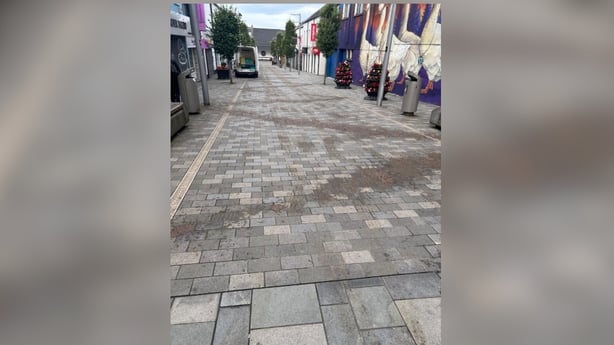
Prank my ass, this was a hate crime against the marchers. The slurry can be classified as a biohazard. If it got into the water table it would contaminate the water supply. Chicken shit is full of diseases and stinks worse than any other manure. This was done to hurt LGBTQ+ people and their allies. Hugs
Updated / Monday, 30 Jun 2025 15:06
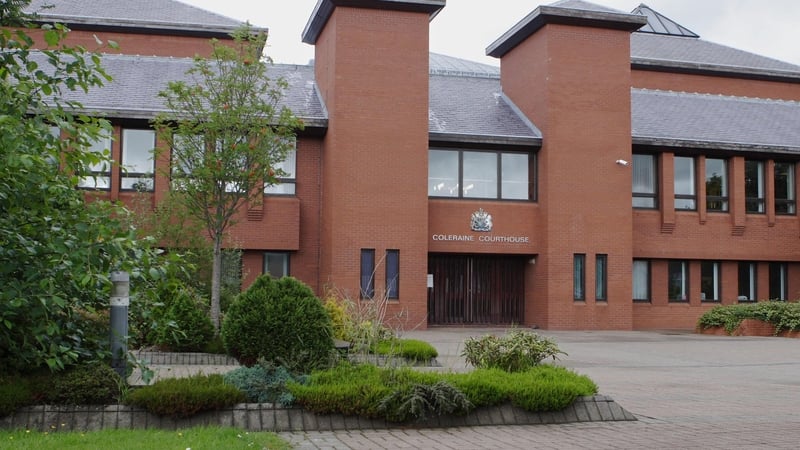
Coleraine Magistrates Court heard that the 19-year-old “made full and frank admissions” to police
A Co Antrim teenager spread gallons of hen manure on a road before Ballymena’s first Pride parade as part “of a prank,” a court has heard.
Coleraine Magistrates Court also heard that 19-year-old Isaac Adams “made full and frank admissions” to police when he was arrested.
Defence solicitor Stewart Ballentine said Mr Adams was “literally caught in the headlights of the police vehicle” when committing the offence.
Appearing handcuffed in the dock, Mr Adams, from the Lislaban Road in Cloughmills, confirmed his identity and that he understood the three charges against him, all alleged to have been committed on 28 June this year.
He was charged with causing criminal damage to Granville Drive in Ballymena, causing manure to be deposited on the road and possessing a bladed article, namely a lock knife.
According to a police statement at the time, Mr Adams was arrested in the early hours following reports of slurry being spread on the road at around 02.55am.
“The matter is being treated as a hate crime,” said the police statement.
The PSNI said they observed slurry on the road at Greenvale Street
While Mr Adams was charged to court today, a 20-year-old man who was arrested in connection with the incident has been released on police bail and is due to appear in court in November.
During Mr Adams’ brief court appearance, a police officer gave evidence that she believed she could connect the teenager to each of the offences.
She outlined how police on patrol happened upon a male wearing a balaclava and carrying “two empty 25 litre jugs”.
“He admitted that he had been spreading the manure over the roads to disrupt the Pride parade,” the officer told the court, adding that the lock knife was found in his pocket when he was searched.
The courty heard that Mr Adams “freely admitted” that he intended to disrupt that Pride parade due to be held later that day and during formal police interviews, the teenager told police “he was not the only person involved”.
The farmer told police he had filled four or five, five gallon jugs with “hen litter waste” from his family farm “and described it as a prank”.
Regarding issues of bail, the officer conceded the parade had now taken place and further that Mr Adams has absolutely no criminal record.
District Judge Peter King heard the clean up operation cost £788 (€921).
Under cross examination from Mr Ballentine, the officer agreed that Mr Adams “cooperated fully with the police” and also that he told them he had the knife as part of his work.
Submitting that Mr Adams “comes from good stock” in North Antrim and that the incident “is very much out of character,” Mr Ballentine said that having spent the weekend in a police cell, Mr Adams “has learnt a very salutary lesson”.
He argued that Mr Adams could be granted bail and Judge King agreed.
Freeing Mr Adams on his own bail of £500 and adjourning the case to 24 July, the judge imposed several conditions, including a curfew, barred Mr Adams from entering Ballymena and from contacting his co-accused.
Having heard the incident by mobile phone, he also ordered that Mr Adams can only have a phone which cannot access the internet and he has to pass on the details of any phone to the police.
The Agriculture Department said it would begin the process of rolling back protections for nearly 59 million roadless acres of the National Forest System.
June 23, 2025 at 6:23 p.m. EDTYesterday at 6:23 p.m. EDT
The Tongass National Forest on Prince of Wales Island in Alaska. Currently, 92 percent of the forest — 9 million acres — is protected from logging and roadbuilding. (Salwan Georges/The Washington Post)
A decades-old rule protecting tens of millions of acres of pristine national forest land, including 9 million acres in Alaska’s Tongass National Forest, would be rescinded under plans announced Monday by the Trump administration.
Speaking at a meeting of Western governors in New Mexico, Agriculture Secretary Brooke Rollins said the administration would begin the process of rolling back protections for nearly 59 million roadless acres of the National Forest System.
If the rollback survives court challenges, it will open up vast swaths of largely untouched land to logging and roadbuilding. By the Agriculture Department’s estimate, this would include about 30 percent of the land in the National Forest System, encompassing 92 percent of Tongass, one of the last remaining intact temperate rainforests in the world. In a news release, the department, which houses the U.S. Forest Service, criticized the roadless rule as “outdated,” saying it “goes against the mandate of the USDA Forest Service to sustain the health, diversity, and productivity of the nation’s forests and grasslands.”
Environmental groups condemned the decision and vowed to take the administration to court.
“The roadless rule has protected 58 million acres of our wildest national forest lands from clear-cutting for more than a generation,” said Drew Caputo, vice president of litigation for lands, wildlife and oceans for the environmental firm Earthjustice. “The Trump administration now wants to throw these forest protections overboard so the timber industry can make huge money from unrestrained logging.”
The Roadless Area Conservation Rule dates to the late 1990s, when President Bill Clinton instructed the Forest Service to come up with ways to preserve increasingly scarce roadless areas in the national forests. Conservationists considered these lands essential for species whose habitats were being lost to encroaching development and large-scale timber harvests.
The protections, which took effect in 2001, have been the subject of court battles and sparring between Democrats and Republicans ever since.
The logging industry welcomed the decision.
“Our forests are extremely overgrown, overly dense, unhealthy, dead, dying and burning,” said Scott Dane, executive director for the American Loggers Council, a timber industry group with members in 46 states.
He said federal forests on average have about 300 trunks per acre, while the optimal density should be about 75 trunks. Dane said President Donald Trump’s policies have been misconstrued as opening up national forests to unrestricted logging, while in fact the industry practices sustainable forestry management subject to extensive requirements.
“To allow access into these forests, like we used to do prior to 2001 and for 100 years prior to that, will enable the forest managers to practice sustainable forest management,” he said.
Monday’s announcement follows Trump’s March 1 executive order instructing the Agriculture Department and the Interior Department to boost timber production, with an aim of reducing wildfire risk and reliance on foreign imports.
Because of its vast wilderness, environmental fragility and ancient trees, Alaska’s Tongass National Forest became the face of the issue. Democrats and environmentalists argued for keeping the roadless rule in place, saying it would protect critical habitat and prevent the carbon dioxide trapped in the forest’s trees from escaping into the atmosphere. Alaska’s governor and congressional delegation have countered that the rule hurts the timber industry and the state’s economy.
After court battles kept the rule in place, Trump stripped it out in 2020, during his first term, making it legal for logging companies to build roads and cut down trees in the Tongass. President Joe Biden restored the protections, restricting development on roughly 9.3 million acres throughout the forest.
Trump officials have gone further this time, targeting not just the rule’s application in Alaska but its protections nationwide. In her comments Monday, Rollins framed the decision as an effort to reduce the threat of wildfires by encouraging more local management of the nation’s forests.
“This misguided rule prohibits the Forest Service from thinning and cutting trees to prevent wildfires,” Rollins said. “And when fires start, the rule limits our firefighters’ access to quickly put them out.”
The Forest Service manages nearly 200 million acres of land, and its emphasis on preventing wildfires from growing out of control has become more central to its mission as the blazes have become more frequent and intense because of climate change. Yet critics of the administration’s approach have said Trump officials have worsened the danger by firing several thousand Forest Service employees this year.
Advocates for the roadless rule said ending it would do little to reduce the threat of wildfires, noting that the regulation already contains an exception for removing dangerous fuels that the Forest Service has used for years.
Chris Wood, chief executive of the conservation group Trout Unlimited, said the administration’s decision “feels a little bit like a solution in search of a problem.”
“There are provisions within the roadless rule that allow for wildfire fighting,” Wood said. “My hope is once they go through a rulemaking process, and they see how wildly unpopular and unnecessary this is, common sense will prevail.”