I am home and decompressing. I had a very bad night. But I guess I should start at the beginning.
Ron left the morning of Saturday the 17th for Texas because his sister fell and broke her wrist. This after her husband died and she needed Ron’s help to get her large home ready for sale. She had returned here with him and I was so grateful for her being here as she let me get back to what I love, blogging. But Ron being gone for three weeks was traumatic for Tupac who has seen the humans he loves go away never to come back so he clung to me the entire time Ron was gone. He had already been coming to me before Ron when he wanted something and at night he would sleep either on the pillow I put in the middle of the bed so he could lay on it and be made of by both of us or what he started to do while Ron was gone the first time he would lay between that middle pillow and my body.
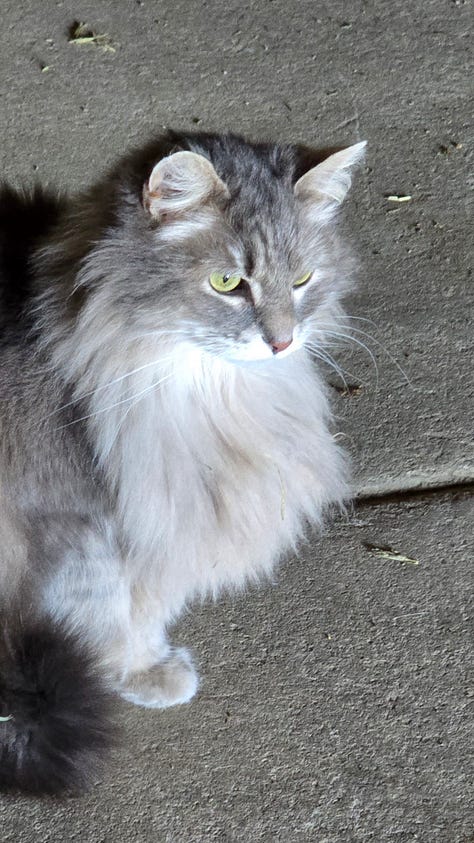
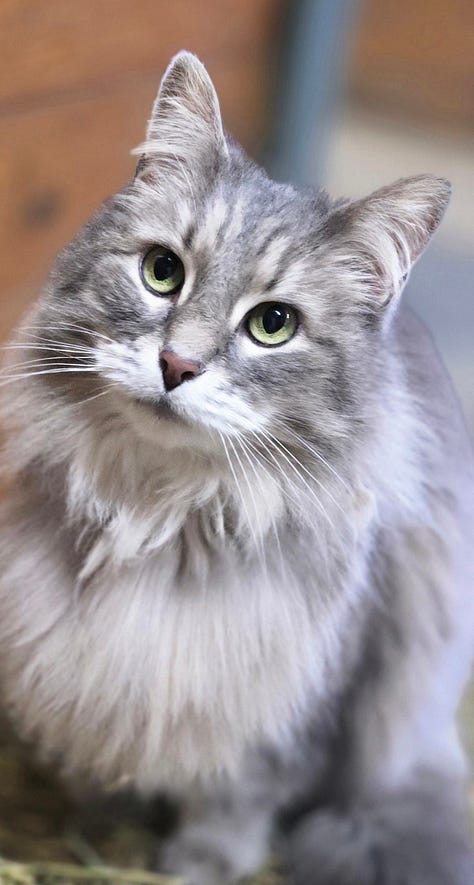
So Ron left for Texas and I noticed that Tupac was staying much closer to me and to the house when outside. He also did not want to go out as much. Ron had noticed that there was a very large orange cat that was coming around to lay near the house and also a back long hair cat that was very vocal screaming at Tupac. While the orange cat was trying to find friendship the black long hair seemed to want to provoke a fight or at least scare Tupac. So I figured Tupac was staying close to home or inside since Ron left because of that. Also since Ron left Tupac who is a bit incontinent leaking a bit on the places he sleeps and stuff started urinating on the floor as he was walking or eating, or even just sitting somewhere. Now let’s get to the drama queen stuff and the big scare.
Yesterday the 20th Tupac stayed on the new daybed Diane gave us that was in the new living room all morning sleeping. I heard him thump onto the floor. I was in the kitchen getting ready to do dishes. As he walked into the room I noticed he was limping on his right front paw. But he seemed to be walking it out as he moved I just figured he slept too long on his right front shoulder. So I gave it no more thought. Then during the later part of the day he got up on my desk as he has gotten to love doing. It is one way I have bonded with all our cats, they love the warmth the monitors put off and enjoy rubbing on them and other things on the desk. I put a towel down and the cat sits next to the keyboard enjoying the pets and warmth along with companionship while I work. It took a while for Tupac to understand that joy but he took to it once he did.
So back to yesterday he was on the desk and I went to get a soda. I heard a thump / bang and came back to find Tupac on the floor with his right front paw held high. He was very upset and when I reached for him he hobbled away from me to the bedroom. Then he stopped and let me put him on the bed. He hobbled to my pillows and lay down. I reached out to him and he swatted my hand away with no claws. I started envisioning the worst.
Yes maybe he gets his drama queen honestly. I figured he either broke his leg or did damage to his shoulder like dislocating it. He pressed hard into my side pillow very upset. I let him be for a bit then went back to him. He then accepted my petting him. Still thinking he broke his leg / paw I brought him supper in bed. Then I went to bed with him. I did not try to push him over but tried hard to lay down on my side of the bed next to him. He loved it. He slept pushed hard against me as I laid on the edge of the bed worried to try to move him and hurt his broken leg / paw. He never got up once which was not normal, but he did change position pressing harder into me each time, each time I woke and couldn’t sleep because I worried he would try to jump down from the bed. I figure I got two and half broken hours of sleep.
This morning I again brought him breakfast in bed which he loved. I tried putting him on the floor but he wouldn’t walk or put the paw down and I got even more worried. I put him back up on the bed near the pillows and he settled back into them while I went and got my shower. After all I had to take him to the vet’s office as soon as they opened. After my shower I got two shirts out, one that he could claw if he needed as I put him in his carrier and one to wear out to the vet’s office.
When it came ten minutes from the time to leave, I went out, started the van let it warm up, and then moved it into position to be more able to move him into it. I then picked him up from the recliner I have put him in and he seemed fine with staying in. He did not really fight or struggle to stop going into the carrier. So I closed the door and went to change my shirt to the one I wanted to wear in the veterinarian’s office. Remember I was on an emergency walk in so the bill was $150 to walk into the door.
I have to admit the young woman behind the counter was very much sympathetic and on the ball. Seeing my cane she carried the pet carrier to a chair for me. She was very sympathetic. Then who I would in the hospital say was a medical assistance who came to get me and Tupac. Again seeing my cane she came and offered to carry Tupac into the room and set his carrier on the table. She took all the information. Again very caring person. I explained my fears and how Ron was in Texas. She was very understanding through it all. I thought of my time in the hospital and how many of the people there had far less empathy and concern for the feelings of the patients or their families.
The doctor came in and talked with me, heard my fears and concerns. They took Tupac and did X-Rays and other checks. After 30 minutes the doctor came back. She showed me the two X-Rays they were able to get before old man Tupac got too grumpy to let them do anymore. I guess veterinarians are used to that and let him calm down while the doctor came to talk to me.
The X-Rays showed that he had no breaks in his leg or wrist bones. They did show great swelling in his paw near the first two digits. The doctor suggested he got his claw caught and wrenched it while jumping down from the day bed. But she was not sure. I asked about his shoulder and she told me he was too grumpy then but if I wanted they could try again. I asked her to if she could as I needed reassurance he did not damage his shoulder. She told me she also was going to look closely at his claws on that paw to see if he ripped one.
Well letting the old grumpy moocher calm down worked. They got the X-ray, no damage to the shoulder. She was able to look closely at his paw and claws. And it explained what the issue was. He had what she felt was an infected first digit and slightly his thumb on that paw. That was why his paw was so swollen. She said it looked like a puncture such as a bite from another cat that did it. I asked if it could be a puncture from a plant or other thing and she said yes, but she felt it was another cat that did it.
So for an entire night of staying awake watching to make sure he did not jump down and hurt his broken leg / wrist / shoulder and feeding him in bed then carrying him to the recliner this morning and packing pillows around him while putting them on the floor in case he jumped down, to find out he had an infected swollen very painful paw. The doctor gave me three pain pills to give him one a day, and they gave him an antibiotic shot to help with the infection.
But who would have figured that two old gay guys, one who owned / ran a bar for gay people in the 1980s would have a furry drama queen child who milked a painful paw into getting supper and breakfast in bed and carried around like a little prince … Oh I give up. Hugs








 Scottie's Playtime