Far from the front lines of the climate crisis, 100 men and women in air-conditioned offices, 61 of them millionaires, are making decisions that could increase United States carbon dioxide emissions, and the warming of the climate they are driving, for decades to come.
In the latest political wrangle over energy and climate policy, a group of Republican senators over the weekend added provisions to the US federal budget bill that, as currently written, would end clean energy tax credits at the personal level and at utility scale and increase taxes on foreign-made parts for solar power equipment.
Ending federal subsidies for most renewable energy projects, including residential heat pumps, for example, would affect thousands of projects that are already in planning or development and jeopardize future investments in manufacturing renewable energy equipment.
Friday, June 27, hours before the Senate released the latest draft of the reconciliation bill just after midnight, US Secretary of Energy Chris Wright claimed on the Department of Energy website that wind and solar are unreliable and that federal subsidies have made energy more expensive, although he did not cite any official reports or peer-reviewed studies to support that claim.
On the Department of Energy website, Wright wrote, “wind and solar brings us the worst of two worlds: less reliable energy delivery and higher electric bills …If sources are truly economically viable, let’s allow them to stand on their own,” he wrote, ignoring that the fossil fuel industry gets annual subsidies of about $20 billion annually, according to estimates by Oil Change International, a nonprofit watchdog group.
But hundreds of studies show that renewable energy is much less expensive and, in a well-planned grid, can make energy supplies more secure.
“The proposed GOP tax on wind and solar is a danger to the United States,” Mark Z. Jacobson, a Stanford University renewable energy researcher who has authored numerous studies on wind and solar power, wrote via email.
The new tax provisions “lock in death and illness to up to 100,000 Americans every year due to fossil-fuel and bioenergy-fuel air pollution that wind and solar help to eliminate,” he said.
An early evaluation shows the administration’s planned energy policies would result in the drilling of 50,000 new oil wells every year for the next few years, he said, adding that it “ensures the continuation of land devastation… the poisoning of soil and groundwater due to fossil fuels and the continuation of gas blowouts and fires.”
There is nothing beneficial about the tax, he said, “only guaranteed misery.”
An analysis by the Rhodium Group, and energy policy research institute, projected that the Republican regime’s proposed energy policies would result in about 4 billion tons more greenhouse gas emissions than a continuation of current policies—enough to raise the average global temperature by .0072° Fahrenheit.
The overall budget bill was also panned in a June 28 statement by the president of North America’s Building Trades Unions, Sean McGarvey.
McGarvey called it “a massive insult to the working men and women of North America’s Building Trades Unions and all construction workers.”
He said that, as written, the budget “stands to be the biggest job-killing bill in the history of this country,” potentially costing as many jobs as shutting down 1,000 Keystone X pipeline projects, threatening an estimated 1.75 million construction jobs and over 3 billion work hours, which translates to $148 billion in lost annual wages and benefits.
“These are staggering and unfathomable job loss numbers, and the bill throws yet another lifeline and competitive advantage to China in the race for global energy dominance,” he said.
Research in recent years shows how right-wing populist and nationalist ideologies have used anti-renewable energy arguments to win voters, in defiance of environmental logic and scientific fact, in part by using social media to spread misleading and false information about wind, solar and other emissions-free electricity sources.
The same forces now seem to be at work in the US, said Stephan Lewandowsky, a cognitive psychologist at the University of Bristol who studies how people respond to misinformation and propaganda, and why people reject well-established scientific facts, such as those regarding climate change.
“This is a bonus for fossil fuels at the expense of future generations and the future of the American economy,” he said. “Other countries will continue working towards renewable-energy economies, especially China. That competitive advantage will eventually pay out to the detriment of American businesses. You can’t negotiate with the laws of physics.”
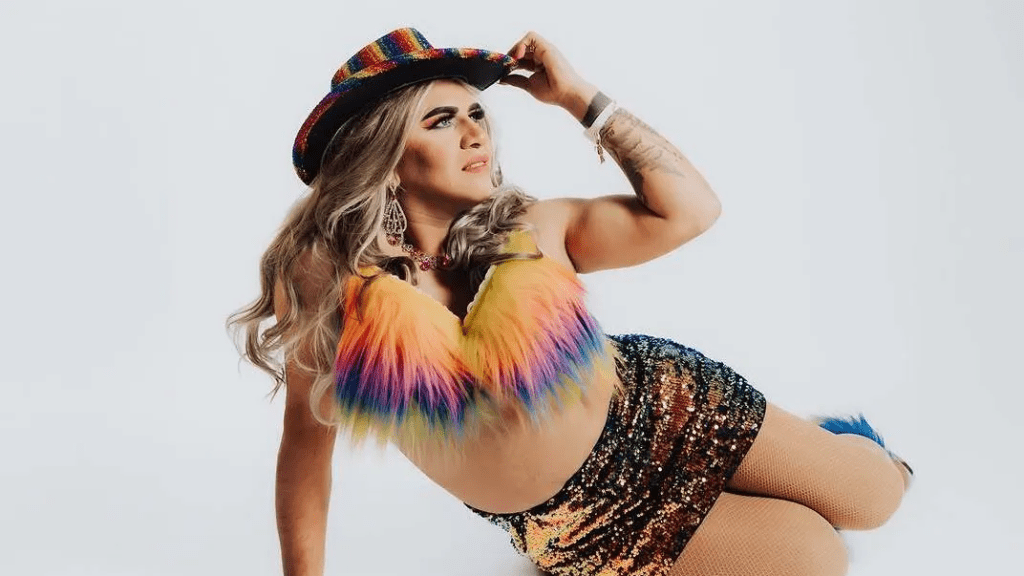
Community activists in San Francisco are rallying to support Hilary Rivers, an immigrant drag queen who was arrested by ICE agents after an asylum hearing nearly two weeks ago — one of the latest LGBTQ+ victims of the Trump administration’s campaign for mass deportations.
Rivers fled his home in Guatemala due to “traumatic and severe” persecution for being gay, as the San Francisco Chronicle reported last week. (His legal name is not being widely reported to protect his confidentiality, advocates told the nonprofit news platform 48Hills.org shortly following the drag performer’s arrest.) On June 26, Rivers attended a scheduled asylum hearing, where the government’s motion to dismiss his case was denied; Rivers was then arrested by ICE agents as he left the courtroom. That combination — in which the government attempts to dismiss an asylum case, then immediately arrests the asylum seeker for deportation — has become an increasingly common tactic for U.S. immigration police in the past several months, and one that is sometimes conducted with cooperation from courthouses themselves. (snip-MORE)
Transgender pilot Jo Ellis was falsely accused of killing 67 people earlier this year — and unfortunately, she isn’t alone: right-wing hoaxers have blamed trans people for at least 12 incidents of violent death in the U.S. since 2022, according to a new analysis in Wired.
Ellis, a part-time pilot in the Virginia Army National Guard, filed suit against right wing influencer Matt Wallace in April, after Wallace shared false claims that Ellis was responsible for the January helicopter crash at Ronald Reagan International Airport that killed dozens. The crash was later determined to be an accident caused by years of poor safety practices at the airport. But Ellis soon found herself on the receiving end of right-wing hatred thanks in part to people like Wallace, who posted on Elon Musk’s X platform that the crash “may have been another trans terror attack.”
Wallace has since deleted the post about Ellis, as Wired noted. But the key word in that post was “another.” In the past two years, right-wing disinformation accounts — such as Chaya Raichik’s “Libs of TikTok” — have spread similar false accusations against trans people on at least a dozen occasions, according to Wired’s analysis of news reports across that period. (snip-MORE)
Cuban reggaeton artist Leamsy La Figura, arrested last week in Miami-Dade on assault charges, was transferred to South Florida’s new immigration detention facility known as Alligator Alcatraz in the Everglades, the singer confirmed in a phone call.
He and other detainees claim they are enduring inhumane conditions at the site, including lack of access to water, inadequate food and denial of religious rights.
Alligator Alcatraz was built in a matter of days on a rarely used municipal airport located about 50 miles west of the City of Miami. The first group of detainees arrived at the center on July 3, according to state Attorney General James Uthmeier.
La Figura, whose real name is Leamsy Isquierdo, was charged with aggravated assault with a deadly weapon and battery. He was initially held at the Turner Guilford Knight Correctional Center (TGK) before being transferred to Alligator Alcatraz.
“There’s no water to take a bath”
In a phone call from inside the facility, La Figura described what he called horrific conditions.
“I am Leamsy La Figura. We’ve been here at Alcatraz since Friday. There’s over 400 people here. There’s no water to take a bath, it’s been four days since I’ve taken a bath,” he said.
He claimed the food at the immigration facility is scarce and unsanitary.
“They only brought a meal once a day and it had maggots. They never take off the lights for 24 hours. The mosquitoes are as big as elephants,” La Figura said.
Detainees say rights are being violated
Other detainees echoed La Figura’s concerns, alleging violations of their basic rights.
“They’re not respecting our human rights,” one man said during the same call. “We’re human beings; we’re not dogs. We’re like rats in an experiment.”
“I don’t know their motive for doing this, if it’s a form of torture. A lot of us have our residency documents and we don’t understand why we’re here,” he added.
A third detainee, who said he is Colombian, described deteriorating mental health and lack of access to necessary medical care.
“I’m on the edge of losing my mind. I’ve gone three days without taking my medicine,” he said. “It’s impossible to sleep with this white light that’s on all day.”
He also claimed his Bible was confiscated.
“They took the Bible I had and they said here there is no right to religion. And my Bible is the one thing that keeps my faith, and now I’m losing my faith,” he said.
La Figura’s girlfriend said the couple shares a 4-year-old daughter.
Florida officials respond to inhumane conditions allegations
On Tuesday, state officials responded to the allegations made by detainees at the facility, saying they are “completely false.”
“The reporting on the conditions in the facility is completely false. The facility meets all required standards and is in good working order,” said Stephanie Hartman, director of communications for the Florida Division of Emergency Management.
FDEM was the engine behind Alligator Alcatraz, using the state’s emergency management tools and funding to build, staff and operate the detention facility.
With little discussion, Pittsburgh City Council on Tuesday unanimously passed three bills intended to provide further safeguards to LGBTQ Pittsburghers.
Councilor Barb Warwick introduced the bills at the end of June to extend more protections to the local queer community.
Two of the bills were designed to de-emphasize enforcement of any future law restricting the LGBTQ community from participating in otherwise legal activities and create avenues for reporting medical discrimination.
The first bill prohibits the withholding or denial of “elective medical care which would normally be provided to a person, but for that person’s real or perceived gender identity or expression.”
For example, if a medical provider denied breast augmentation surgery to a trans patient on the basis of their gender identity, residents could report the provider to the city’s Commission on Human Relations.
The second bill aims to pre-emptively shield the LGBTQ community against being barred from society by future federal legislation by directing the city to de-prioritize enforcement of such a ban or restriction.
A third bill lessens the legal penalty for engaging in sex work from a misdemeanor to a summary offense. Warwick and other advocates say LGBTQ individuals have been disproportionately affected by such arrests. They say this measure will help the queer community and other vulnerable workers to not be targeted, and come forward to law enforcement if they need help without fear of persecution.
“Whether it’s proactively making sure that we are not criminalizing being trans, or making sure trans people have access to the health care that they need or not being discriminated against by our largest medical providers, and also making sure that folks who are doing survival sex work on the street are not being persecuted and thrown in jail, but they’re actually being cared for and getting the services that they need — these are all good things, right?” Warwick said.
“These are things that make Pittsburgh safer and really help protect our most vulnerable.”
Julia Maruca reports on Pittsburgh city government, programs and policy. She previously covered the Westmoreland County regions of Hempfield and Greensburg along with health care news for the Tribune-Review.
Ohio Republicans split the Ohio Equal Rights Amendment into two separate ballot issues.
One issue addresses overturning Ohio’s same-sex marriage ban, while the other expands anti-discrimination protections for LGBTQ+ individuals.
This move requires proponents to collect double the signatures or sue the Ohio Ballot Board.
Ohio Republicans added another hurdle for proponents of a measure to overturn Ohio’s dormant ban on same-sex marriage and expand anti-discrimination protections for LGBTQ residents.
In a party-line vote, Ohio Ballot Board divided the Ohio Equal Rights Amendment into two issues: one to overturn a 2004 vote that defined marriage as between one man and one woman and another that would prohibit state and local government from discriminating against more than a dozen protected groups, including transgender Ohioans.
To make the ballot, proponents will either have to collect double the number of signatures to get both proposals approved or sue the Ohio Ballot Board to overturn its decision. Backers are eyeing the 2026 ballot at the earliest, said Lis Regula, a member of Ohio Equal Rights’ leadership committee.
During the July 9 meeting, the ballot campaign’s attorney Corey Colombo argued that the proposed constitutional amendment was one issue because it encompassed equal rights for all Ohioans.
But Republicans contended that transgender issues and marriage equality are two different things with two different levels of support from voters.
While Ohioans might support marriage between any two people in the Ohio Constitution, “they may not want to support creating 12 new protected classes under a bunch of different circumstances,” said Ohio Secretary of State Frank LaRose, a Republican who leads the Ohio Ballot Board.
Rep. Terrence Upchurch, D-Cleveland, said Republicans divided the measure because of politics. “It’s one issue. It’s cut and dry.”
“There’s definitely political will for using trans people to divide Ohioans,” Regula said. “The hopeful side of me appreciates that they are recognizing the support for same-sex marriage. That’s great. We’ve made progress. We still have progress to make.”
What is the Ohio Equal Rights Amendment?
If approved by voters, the Ohio Equal Rights Amendment would prohibit state and local government from discriminating based on: “race, color, creed or religion, sex, sexual orientation, gender identity or expression regardless of sex assigned at birth, pregnancy status, genetic information, disease status, age, disability, recovery status, familial status, ancestry, national origin or military and veteran status.”
The sweeping measure would expand the list of protected individuals far beyond the national Equal Rights Amendment, which aims to prohibit discrimination based on sex. Ohio ratified that amendment in 1974, but it has not been recognized as part of the U.S. Constitution because of missed deadlines and other disputes.
The proposal would also overturn a 2004 vote that defined marriage as between one man and one woman.
This language has been dormant since a 2015 U.S. Supreme Court decision led by Ohioan Jim Obergefell legalized gay marriage in America. As of 2023, Ohio had 22,400 same-sex married couples, according to the most recent federal census data.
“Marriage equality has been going strong now for 10 years, and the sky hasn’t fallen. Society hasn’t collapsed,” said Senate Minority Leader Nickie Antonio, D-Lakewood. “What happened is you have families who have standing, whose children can feel good and talk about their families just like every other kid at school, no matter what the configuration of their family is.”
But proponents of marriage equality worry that the Obergefell decision could be overturned by an unfriendly U.S. Supreme Court. “I think it is reasonable to believe that it is under threat,” said Regula, citing the language used in the decision overturning Roe v. Wade.
What are the arguments for and against this measure?
“Those discriminatory laws make Ohio less of a welcoming place and make it a place where fewer people are interested in coming,” Regula said.
Opponents say these are losing issues at the ballot box.
“To bring such an unpopular constitutional amendment like this forward is one, shockingly appalling, but also really dumb after Sherrod Brown just lost his Senate seat over these issues,” said Aaron Baer, president of the Center for Christian Virtues.
Republicans crafted attack ads against Brown for voting against amendments that would have stripped funding from schools and colleges that allowed transgender girls to play in women’s sports.
“I have a hard time seeing them get a lot of traction with this,” Baer said. CCV was a driving force behind the 2004 constitutional amendment to ban same sex marriage in Ohio.
What happens next?
The group looking to put the Ohio ERA before voters faces a tall task. If they want voters to approve both measures, they must collect an additional 1,000 valid signatures for each proposal, go before Ohio Attorney General Dave Yost for initial approval and return to the ballot board.
Then, proponents would have to collect at least 413,487 valid signatures, or 10% of votes cast in the most recent governor’s race, for each measure or 826,974 in total. Those signatures must meet a minimum threshold in half of Ohio’s 88 counties.
“While I applaud the spirit of the work that they are trying to do, I just think it’s a real uphill battle that they’re going to be faced with,” said Antonio, the state’s first and currently only openly gay lawmaker.
For more than a decade, Antonio has repeatedly introduced the Ohio Fairness Act to prohibit discrimination based on sexual orientation or gender identity. The GOP-controlled Legislature has not moved forward on the fairness act.
Antonio said a legislative fix is still the right path for protections against LGBTQ discrimination.
“I struggle with asking the majority of people, the majority of the population, to grant equality by a vote to a marginalized group,” Antonio said. “I will continue to fight for the Ohio Fairness Act, because I think it’s the right thing to do.”
Reporter Laura A. Bischoff contributed to this article.
State government reporter Jessie Balmert can be reached at jbalmert@gannett.com or @jbalmert on X.
An especially brutal incident occurred at an SF immigration courthouse Tuesday morning, as protesters attempted to block an ICE SUV that was apparently transporting an arrested immigrant, and the SUV simply plowed its way through the demonstrators.
After Monday’s ICE military-style sweep through a near-empty park in Los Angeles, we wondered this morning if this was a harbinger of things to come. It did not take long to get an answer.
The incident happened at about 11:15 am Tuesday morning at SF Immigration Court at 100 Montgomery Street, where some 20 protesters were attempting to block the transport of an apparent immigrant in custody who was thrown into a black SUV. The SUV drove through the group of protesters, and per Mission Local, federal officers also “pointed their rifles, deployed pepper spray, and shoved people to the ground.”
Warning: The video of this incident contains substantial profanity.
These events are captured in the video above from Mission Local. It begins as your typical SF protest scene, with demonstrators trying to blockade and prevent ICE agents from getting inside the building. There is much skirmishing and shouting between the ICE agents and the protesters, with agents using batons to keep the protesters at bay. Around the 1:14 mark it appears that agents do get their suspect out of the building and into the SUV, at which point, some eight to ten protesters attempt to block the SUV.
The SUV starts inching forward, slowly at first, often stopping as agents try to pull the protesters off the front of the vehicle. Once many of the protesters are off, the vehicle picks up speed. Only one protester still clings to the front of the SUV, and then it really picks up speed. The protester flies off the hood, fellow demonstrators come to aid that person, and there’s another unsuccessful attempt to block the vehicle the next block up, before it speeds away.
The SF Standard has their own video of the incident, albeit from several stories above, seemingly from a Financial District office window.
Bar Association of San Francisco immigration attorney Milli Atkinson confirmed to Mission Local that one immigrant was arrested and detained during the incident. So that is disturbing.
But most disturbingly, have you ever seen such a high percentage of law enforcement officers with their faces covered in masks, with no badges or identifying information, and mostly not wearing anything (other than their vests) that resembles a legitimate uniform? If these are all indeed sworn ICE officers, there seems to be a paramilitary push toward concealing their identities, and some strangely loose new decorum in their uniform standards under the Trump administration.
Mission Local adds that one demonstrator was pepper-sprayed at Market and Montgomery streets, though was then restrained by other agents. One demonstrator reportedly yelled at him, “Your parents were immigrants, asshole.” That site also adds that another ICE agent (or someone appearing to be one) “pointed a matte black rifle at protestors and press, including this reporter,” and that “An SFPD officer stood by and watched from a distance.”
In their own writeup of the incident, the SF Standard spoke to the protester who appears to be the person who held on to the moving SUV’s hood long enough to be jostled off. “I was bleeding everywhere,” said that person, identifying herself only as Sorin. “They were brutal to those of us trying to exercise our rights and protect our community.”
Please read. DeathSantis and ICE are doing horrible illegal things while breaking laws all in the name of white supremacy and getting rid of anyone not white in the US at the same time the Florida tax payer is entirely on the hook for all the costs. This story is even more proof of the authoritarian dictatorship the US is under along with the disregarding of any law or lawmaker that gets in the way of cruelty to brown / black people. Also I read that trump sent 200 marines to this place. The link to that store after this one Hugs
In a surprising and possibly unlawful act, five state legislators were denied entry Thursday into a taxpayer-funded migrant detention center deep in the Everglades, raising questions about what will happen behind the razor-wire fences that are being erected surrounding the controversial facility the state has named Alligator Alcatraz.
Armed only with state law and a growing list of humanitarian concerns, state Senators Shevrin Jones and Carlos Guillermo Smith, along with Representatives Anna V. Eskamani, Angie Nixon and Michele Rayner, arrived at the gates of the facility to conduct what they saw as a legally authorized inspection. What they encountered instead was silence, locked doors and a bureaucratic wall.
The state’s shifting justification for not letting them in — first a flat denial, then vague “safety concerns” — only fueled suspicions.
Wearing mosquito netting, Florida Sen. Shevrin Jones and state Representatives Michele K. Rayner and Anna Eskamani were denied entry along with fellow representatives into Alligator Alcatraz. PHOTO BY AL DIAZ adiaz@miamiherald.com
“This is a blatant abuse of power and an attempt to conceal human rights violations from the public eye,” the legislators said in a joint statement. “If the facility is unsafe for elected officials to enter, then how can it possibly be safe for those being detained inside?”
Just hours earlier, Republican officials and even former President Donald Trump had toured the same site without issue. When the lawmakers attempted to speak with Florida Department of Emergency Management officials by phone, the call was abruptly cut off.
Now, with reports of flooding, extreme heat and detainees allegedly being held without due process, legislators say the administration of Gov. Ron DeSantis is operating a secretive, $450 million detention network with no oversight— and no regard for the law.
The state legislators Michele Rayner arrived at the site to conduct what they said was a lawful inspection under Florida Statutes 944.23 and 951.225, which grant legislators access to state-operated detention centers without advance notice. Instead of transparency, they were met with locked gates and silence.
Workers install a permanent Alligator Alcatraz sign at the new state immigration detention facilty in the Everglades. PHOTO BY AL DIAZ adiaz@miamiherald.com
Under Florida law, members of the Legislature have the clear right to access any state-run detention facility, including prisons and jails, without needing prior approval or notification. That legal mandate was ignored, according to Representative Michele Rayner, a civil rights attorney who represents parts of Pinellas and Hillsborough counties.
“For two hours, we waited. We cited the law. We cited the press release announcing our visit. Still, we were denied,” said Rayner. “They cited ‘safety concerns,’ even though just hours earlier President Trump and GOP lawmakers had toured the very same facility.”
Rayner said that when she asked whether she could visit a client being detained inside, she was again refused—contradicting statements made to her moments earlier by Florida Department of Emergency Management officials. When legislators tried to clarify the denial with the agency’s general counsel and legislative affairs director, the call was abruptly disconnected.
“This is America right now,” Rayner said. “And everyone should be concerned.”
The delegation’s visit came just one day after migrants were transferred into the detention center despite flooding caused by ongoing summer storms. Lawmakers say they’ve received reports of extreme heat, poor infrastructure, and a lack of mosquito protection, conditions they say that may be endangering the health and safety of detainees.
Florida House of Representatives denied entry, including State Rep. Anna .V. Eskamani, PhD at Alligator Alcatraz. The facility is within the Florida Everglades, 36 miles west of the central business district of Miami, in Collier County, Florida. , Florida, on Thursday, July 3, 2025. PHOTO BY AL DIAZ adiaz@miamiherald.com
“I was bitten by insects as soon as I got here. My lips started to swell. And I’m outside for just a few minutes,” said Rep. Angie Nixon of Jacksonville. “Imagine what it’s like for the people inside who don’t have bug spray or clean bedding.”
Nixon expressed particular concern over reports in the Miami Herald that pregnant women and children could be housed in the facility. “We’re spending $450 million on this while refusing to expand Medicaid and closing public schools in Duval County,” she said. “This is not about public safety—it’s about cruelty as campaign theater.”
Smith did not mince words, calling the site a “makeshift immigrant detainment camp in the middle of the Everglades swamp,” built through no-bid contracts awarded to major Republican campaign donors.
“This isn’t about detaining dangerous criminals,” Smith said. “It’s about detaining housekeepers, cooks, and immigrants who had legal status five minutes ago—until it was stripped away by policy.”
Smith referenced a Miami Herald story that revealed the state may bring pregnant women and children to the site, despite public claims that the facility was intended for “the worst of the worst.” ICE data shows that fewer than 10% of current immigration detainees in Florida have any violent criminal history, and the majority had no prior offenses.
“We’re detaining vulnerable people for political spectacle,” Smith said. “And it’s not a coincidence this facility was unveiled just days after our legislative session ended—avoiding any real oversight.”
Jones added that the facility, built with $450 million in state funds, does not qualify for federal support. “The federal government has said this facility is ineligible for grants,” he said. “That means it’s 100% on Florida taxpayers—and it was done without a single committee hearing or floor debate.”
Florida state Sen. Shevrin Jones, Rep. Anna Eskamani and fellow representatives were denied entry Thursday into Alligator Alcatraz. PHOTO BY AL DIAZ adiaz@miamiherald.com
Jones emphasized that both Democratic and Republican lawmakers should be concerned. “This is not a partisan issue,” he said. “We have a duty to ensure that state-funded operations uphold basic standards of decency and legality.”
Rep. Anna Eskamani from Orlando described the detention center as a “political stunt” orchestrated by DeSantis. “Hundreds of millions of taxpayer dollars are being spent to build what is essentially a concentration camp,” she said. “This is government by press conference and no-bid contract.”
Eskamani said reports indicate that the first detainees arrived without due process, and flooding had already compromised parts of the facility. “We’re here because the people of Florida deserve transparency. What is being hidden behind these walls?”
All five lawmakers said they plan to pursue legal remedies and initiate legislative inquiries into the construction, contracting, and operation of Alligator Alcatraz.
A check point at Alligator Alcatraz as Florida State Representatives denied entry. The facility is within the Florida Everglades, 36 miles west of the central business district of Miami, in Collier County, Florida. , Florida, on Thursday, July 3, 2025. PHOTO BY AL DIAZ adiaz@miamiherald.com
They also demanded that the Florida Division of Emergency Management and the governor’s office provide a full accounting of who is detained at the facility, what conditions exist inside, and which companies received contracts—particularly those with political ties to the DeSantis administration.
“This is not over,” said Smith. “We will be back, and we will not stop until we get the answers Floridians deserve.”
This story was originally published July 3, 2025 at 6:09 PM.

Jessie Balmert
Cincinnati Enquirer


 Scottie's Playtime