Appetizers, Anyone?

An old food photos post-

8 Old-School Appetizers People Loved To Eat In The ’50s

Vanessa Barron

Sat, October 4, 2025 at 9:20 AM CDT

trays with elaborate appetizers on toothpicks and skewers
trays with elaborate appetizers on toothpicks and skewers – Chaloner Woods/Getty Images

Yahoo is using AI to generate takeaways from this article. This means the info may not always match what’s in the article. Reporting mistakes helps us improve the experience.

Step back in time and into the kitchens of mid-century America, where no party would be complete without tiny morsels of food elegantly arranged on colorful plates to greet guests. In the 1950s, home entertaining was all the rage thanks to postwar prosperity and the rise of suburban living, and dinner parties became a cornerstone of middle-class American society. Hosts armed with cookbooks like “Betty Crocker” and “Good Housekeeping” perfected the art of elegant yet approachable hors d’oeuvres. Unlike more formal, old-fashioned dining customs, these appetizers were often served in the living room before dinner. In theory, they were meant to stimulate both the guests’ appetite and their conversation; in practice, they gave the host some breathing room to prepare for the elaborate meal ahead. Regardless, appetizers were expected to delight both the eyes and the palate. In the ’50s, presentation was everything.

Appetizers have been around since Ancient Greece, when feasts would begin with small plates of snails, sea urchins, and pickled cabbage to leave guests just a little hungry for the main course. Later, appetizers gained popularity across Europe, from Russian caviar to Scandinavian smorgasbords. By the 1950s, these bite-sized offerings were still relatively rare in everyday American cuisine but quickly became commonplace at formal banquets, weeknight dinners, and casual gatherings. From the ubiquitous shrimp cocktail to the adventurous rumaki, these classic nibbles came to represent hospitality, abundance, and the optimistic spirit of the era. Keep reading to discover the most popular appetizers that delighted hungry guests in mid-century America.

Read more: 15 Vintage Ice Cream Flavors No One Seems To Eat Anymore

Fruit juice cocktail

a green fruity punch served in glasses with garnishes
a green fruity punch served in glasses with garnishes – Primestock Photography/ShutterstockMore

When you picture a 1950s dinner party, you might imagine classic cocktails like martinis and highballs in every hand. But if you flip through cookbooks from that era, you’ll find that many hosts actually served fruit cocktails before dinner. These could take the form of diced fruit served in dainty sherbet cups, or a simple blend of fruit and vegetable juices presented in stemware. Far from being an afterthought, they were considered a refreshing and wholesome start to a meal, whether served on their own or alongside other appetizers.

Juice itself was a relatively new commodity at the time. During World War II, scientists developed frozen orange juice concentrate to provide soldiers with vitamin C. This innovation led to the formation of Minute Maid, which made juice more affordable and firmly established it as a household staple by the 1950s. Many baby boomers grew up drinking juice daily as a part of a well-balanced diet.

Cookbooks of the era reinforced the idea that juice cocktails were a sign of good hosting. Betty Crocker cheerfully advised (albeit in very dated language), The clever wife has a simple appetizing cocktail ready for her weary husband when he comes home at night. Vegetable or fruit juices are at their best when two or three tart flavors are chilled and served ice cold in appropriate glasses.” A 1951 home economics textbook also suggested that a proper informal dinner should begin with cold tomato juice seasoned with spices, served alongside canapΓ©s as a complete appetizer. For more elaborate entertaining, Betty Crocker and Good Housekeeping recommended tomato-sauerkraut juice or even pineapple-lemon foam cocktails made with whipped egg whites.

Shrimp cocktail

a plate with shrimp on a bed of ice and a bowl of cocktail sauce
a plate with shrimp on a bed of ice and a bowl of cocktail sauce – Bhofack2/Getty Images

Shrimp cocktail is a retro favorite that’s never really gone out of style. Visually striking and refreshingly simple, it epitomized mid-century elegance. Surprisingly, cocktail sauce was originally created as an oyster pairing; shrimp only took center stage in the 1950s. The shift came about due to dwindling oyster supplies and major advances in refrigeration. By the late 1940s, shipping fresh shrimp by truck had become standard practice, and suddenly, this once-coastal delicacy was available nationwide. Shrimp cocktails quickly became a glamorous staple, especially in the glitzy casinos of Las Vegas.

Cookbooks of the era eagerly embraced the trend, showcasing seafood cocktails with zesty cocktail sauces. Presentation was considered just as important as flavor. Betty Crocker’s 1950 cookbook suggested serving shrimp with chopped celery or skewering them on toothpicks for easy nibbling. Good Housekeeping’s 1955 cookbook offered more dramatic ideas β€” arrange the shrimp in a lettuce-lined sherbet glass for formal occasions, or, for casual living-room entertaining, serve them on a plate with cocktail sauce tucked into a hollowed-out tomato, grapefruit, or avocado shell. It also suggested adding a green garnish and keeping toothpicks on hand so guests could keep their fingers clean.

Deviled eggs

a close-up of classic deviled eggs
a close-up of classic deviled eggs – Samantha Gossman/Getty Images

A simple recipe with elegant results, deviled eggs have been a crowd-favorite appetizer for ages. In fact, deviled eggs are significantly more vintage than you might think β€” as in, 13th-century vintage. Medieval cookbooks include recipes for eggs filled with all kinds of ingredients, including saffron, mint, cilantro, and pepper. The term “deviled” didn’t come around until the late 1700s, when it was used to refer to dishes prepared with spicy seasonings, the idea being that the devil loved heat.

Deviled eggs were particularly popular appetizers in the 1950s. Advances in refrigeration made eggs easy to store, and their affordability and versatility made them a natural choice for home entertainers. They were simple to prepare, endlessly customizable, and visually appealing. Betty Crocker’s 1950 cookbook praised deviled eggs with poetic flair, describing them as Mounds of savory yellow egg yolks in white frames. A stunning garnish and satisfying appetizer…food for picnics and parties.”

The basic formula involves mashing hard-boiled egg yolks with mayonnaise, mustard, or salad dressing and a handful of spices before piping the mixture back into the whites. Mid-century cooks often added their own twists, using ingredients like paprika, pimientos, minced ham, or dried beef to create deluxe versions of the bite-sized treat. Whether served at picnics, cocktail hours, or holiday spreads, deviled eggs embodied the 1950s love of practical and pretty appetizers.

Stuffed celery

a wooden plate with five stuffed celery pieces
a wooden plate with five stuffed celery pieces – Mariha-kitchen/Getty Images

A beloved retro appetizer perfect for summer picnics and cocktail parties, stuffed celery enjoyed a long stretch of popularity throughout the 20th century. Conceptually, it’s not far from deviled eggs β€” many recipes even use similar fillings, which is why the two often appeared side by side on appetizer platters. The appeal is easy to see: stuffed celery is incredibly easy to make, relatively light, and looks elegant on a serving dish.

Stuffed celery can be endlessly customizable. In the 1950s, Good Housekeeping suggested six variations, ranging from olive-nut and sardine-pickle fillings to pineapple-horseradish for more adventurous palates. Meanwhile, Betty Crocker kept it simple, suggesting a filling of Roquefort and cream cheese seasoned with Worcestershire sauce.

There are all sorts of ways to present stuffed celery, too. The stalks can be served whole, cut into bite-sized sticks, or pressed together and sliced into decorative pinwheels. Betty Crocker even suggested tying string around the stalks while they chill so the celery curls into appealing shapes. As with most mid-century appetizers, appearance was key. But the real charm of stuffed celery was the crisp and refreshing taste that didn’t spoil your appetite.

Pigs in a blanket

a baking tray with pigs in a blanket
a baking tray with pigs in a blanket – Lauripatterson/Getty Images

Pigs in a blanket remain an enduring American favorite, beloved for their simplicity and universal appeal. They’re the perfect finger food: sweet, salty, savory, easy to make, and even easier to eat. Pigs in a blanket are a descendant of the British sausage roll but first started appearing in American cookbooks in the 1930s.

“The Joy of Cooking,” an iconic cookbook from 1936 that’s worth a pretty penny today, included a recipe for “Sausages in Pastry or Biscuit Dough.” By 1944, a U.S. military cookbook was calling them “Pigs in Blankets,” cementing the dish as a mainstay of American food culture.

Despite requiring only two ingredients, there is some room for customization. Betty Crocker recommended using Vienna sausage halves wrapped in thinly rolled pastry or rich biscuit dough, baked until golden and flaky. However, for an even more retro meat choice, you can substitute the hotdogs with Spam. Whether they’re making the rounds at a 1950s cocktail party or showing up at a modern potluck, pigs in a blanket have never really fallen out of fashion.

Dips and spreads

a bowl of dip surrounded by chips
a bowl of dip surrounded by chips – NatalyaBond/Shutterstock

Dips and spreads were everywhere in the 1950s, a trend reflected in the sheer number of recipes found in cookbooks of the era. Most of these recipes revolved around soft dairy bases like cream cheese, sour cream, or mayonnaise, all of which had become more widely available thanks to the rise of home refrigeration. With reliable cold storage now standard in American kitchens, perishable ingredients could be shipped, stored, and served more safely, fueling a boom in dairy-rich appetizers.

There was also a clever shortcut that made dips a breeze β€” just one of many forgotten cooking hacks from a bygone era. One of the decade’s most enduring innovations was French onion dip. Sometime in the 1950s, an anonymous home cook discovered that stirring a packet of Lipton’s dehydrated onion soup mix into sour cream created a quick and delicious dip. The recipe caught on like wildfire. Lipton quickly embraced it, marketing the mixture as California Dip in advertisements that doubled as recipe cards. Soon, copycat versions hit the market, using the name French onion dip.

For homemade spreads, Betty Crocker offered combinations like cheese-anchovy or herring-apple, along with the infamous Hollywood Dunk, made with deviled ham, horseradish, onion, chives, and whipped cream. Typically served in the living room with colorful garnishes on a festive tray, dips and spreads epitomized the 1950s love of convenience and creativity.

Cheese ball

a nut-encrusted cheese ball with crackers
a nut-encrusted cheese ball with crackers – Liudmyla Chuhunova/Getty Images

Cheese balls were the life of the party in the 1950s. Like so many mid-century appetizers, they were popular because they were extremely simple to make, easy to customize, and had an undeniable visual appeal. After all, nothing says “Wow!” quite like a giant ball of cheese at the center of the snack table.

Legend has it that the very first cheese ball dates back to 1801, when a Massachusetts farmer presented President Thomas Jefferson with a colossal 1,200-pound wheel of cheese. However, the appetizer-sized version didn’t appear in print until 1944, listed in a Minneapolis cookbook. From there, the ’50s home-entertaining culture elevated cheese balls to a party staple that would remain popular throughout the rest of the century.

Cheese balls are typically made by combining cream cheese with shredded cheese, herbs, and spices. Some enterprising cooks even include a meaty element in their recipe, fortifying their cheese balls with dried beef. This mixture is then shaped into a sphere and rolled in chopped nuts or fresh herbs for added texture. Paired with chips or crackers, the cheese ball was the mid-century party centerpiece guests could literally gather around.

Rumaki

a plate with rumaki on toothpicks
a plate with rumaki on toothpicks – Tim Bieber/Getty Images

Special occasions call for stylish appetizers, and rumaki was a trendy mid-century favorite. First introduced at Trader Vic’s in the 1940s, the dish fit neatly into America’s burgeoning tiki craze. The name might not ring many bells today, but rumaki is closely related to the vintage British seafood-based appetizer, Angels on Horseback. Its classic form features water chestnuts and chicken liver, both wrapped in bacon, marinated in soy sauce, and flavored with ginger and brown sugar.

By the 1950s, rumaki was a common feature at prominent U.S. tiki bars and Chinese-American restaurants, often appearing on pupu platters alongside egg rolls and chicken-on-a-stick. By the 1960s, rumaki had crossed into the suburban mainstream β€” it even makes a cameo on the TV show “Mad Men, when Betty Draper serves it at an international-themed dinner party.Trader Vic’s founder, Victor Bergeron, suggested the recipe came from Chinese cooking by way of Hawaii, but it’s more likely that it was his own invention. Authentic or not, rumaki embodied the mid-century appetite for exotic flavors in appetizer form.

Read theΒ original article on Tasting Table.

Treaties, Illegal Weapons Sales, & More In Peace & Justice History for 10/10:

October 10, 1699
The Spanish issued a royal decree which stated that every African-American who came to St. Augustine, Florida, and adopted Catholicism would be free and protected from the English.
October 10, 1963
The Limited Test Ban Treatyβ€”banning nuclear tests in the oceans, in the atmosphere, and in outer spaceβ€”went into effect. The nuclear powers of the timeβ€”the United States, Great Britain, and the Soviet Unionβ€”had signed the treaty earlier in the year.
In 1957, Nobel Prize-winner (Chemistry) Linus Pauling drafted the Scientists’ Bomb-Test Appeal with two colleagues, Barry Commoner and Ted Condon, eventually gaining the support of 11,000 scientists from 49 countries for an end to the testing of nuclear weapons. These included Bertrand Russell, Albert Einstein, and Albert Schweitzer.


Linus Pauling
Pauling then took the resolution to Dag HammarskjΓΆld, then Secretary-General of the United Nations, and sent copies to both President John F. Kennedy and Soviet Premier Nikita Kruschev. The final treaty had many similarities to Pauling’s draft. It went into effect the same day as the announcement of Pauling’s second Nobel Prize, this time for Peace.
October 10, 1967
The Outer Space Treaty (Treaty on Principles Governing the Activities of States in the Exploration and Use of Outer Space, Including the Moon and Other Celestial Bodies) demilitarizing outer space went into force.It sought to avoid “a new form of colonial competition” as in the Antarctic Treaty, and the possible damage that self-seeking exploitation might cause. Discussions on banning weapons of mass destruction in orbit had begun among the major powers ten years earlier.

1949 painting by Frank Tinsley of the infamous “Military Space Platform” proposed by then Secretary of Defense James Forrestal in the December 1948 military budget.
The text of the treatyΒ 
Read moreΒ 
October 10, 1986
Elliott Abrams, then assistant secretary of state for inter-American affairs, testified before the Senate Foreign Relations Committee (in closed executive session) that he did not know that Marine Lt. Col. Oliver North, a White House employee in the Reagan administration, was directing illegal arms sales to Iran and diverting the proceeds to assist the Nicaraguan contras.
Abrams pled guilty in 1991 to withholding information on the Iran-contra affair during that congressional testimony, but was pardoned by President George H.W. Bush.
Β Β 
Β Β Β 
Elliott Abrams

Presidents George W. Bush & George H.W. Bush

Oliver NorthΒ 
Read more about the pardonsΒ Β 
October 10, 1987
Thirty thousand Germans demonstrated against construction of a large-scale nuclear reprocessing installation at Wackersdorf in mostly rural northern Bavaria.
October 10, 2002Β 
The House voted 296-133 to pass the β€œJoint Resolution to Authorize the Use of United States Armed Forces Against Iraq,” giving President George W. Bush broad authority to use military force against Iraqi leader Saddam Hussein, with or without U.N. support.Β 

https://www.peacebuttons.info/E-News/peacehistoryoctober.htm#october10

Heather Cox Richardson (From Yesterday)

The Great Chicago Fire by Heather Cox Richardson Read on Substack

Today is the anniversary of several deadly wildfires that took place in 1871. While it was not the deadliestβ€” that label went to the Peshtigo Fire in Wisconsinβ€” the Great Chicago Fire tends to be the one people remember, not least because observers turned it into anti-immigrant propaganda even before the flames had died out.

A short history of the facts behind the popular memory of the Great Chicago Fire.

(This is not tonight’s letter, by the way. It’s just cool history, and I don’t get to do enough of that lately.)

U.S. Atomic Secrets Shared Exclusively, Solidarnos’c’ Banned; in Peace & Justice History for 10/8

October 8, 1945
President Harry S. Truman announced that the secret of the atomic bomb would be shared only with Great Britain and Canada.
October 8, 1982
The Polish Parliament overwhelmingly approved a law banning
SolidarnosΒ΄cΒ΄ (Solidarity), the independent trade union that had captured the imagination and allegiance of nearly 10 million Poles.

Solidarnosc leader Lech Walesa, 1982
The law abolished all existing labor organizations, including Solidarity, whose 15 months of existence brought hope to people in Poland and around the world but drew the anger of the Soviet and other Eastern-bloc (Warsaw Pact) governments.
The parliament created a new set of unions with severely restricted rights.

https://www.peacebuttons.info/E-News/peacehistoryoctober.htm#october8

A Sad Anniversary This Date In Peace & Justice History

October 7, 1989
Tens of thousands (estimates ranged from 40,000 to 150,000) from all over the country marched on Washington, lobbied Congress and Housing Secretary Jack Kemp to provide affordable housing for the homeless. Some of the signs read, β€œBuild Houses, Not Bombs.”
Kemp signed a letter committing the George H.W. Bush administration to several steps to help the homeless, including setting aside about 5000 government-owned single-family houses for them.
October 7, 1998

Matthew Shepard
Matthew Shepard, a gay student at the University of Wyoming, was beaten, robbed and left tied to a wooden fence post outside Laramie, Wyoming; he died five days later. His death helped awaken the nation to the persecution of homosexuals and their victimization as objects of hate crimes.
A play about the incident, and later an HBO movie, β€œThe Laramie Project,” has been performed all over the country.

Watch a previewΒ 
MatthewShepard.orgΒ 
Matthew’s PlaceΒ 

https://www.peacebuttons.info/E-News/peacehistoryoctober.htm#october7

About The ADL & The SPLC

This is bad news, probably very bad news. SPLC and ADL do so much work against anti-semitism, and SPLC lobbies against and informs of hate of all people. I do lobbying work with SPLC. Maybe the Quakers are more gentle than SPLC, but only by a hair! So this is bad news for many reasons now.

FBI cuts ties with Southern Poverty Law Center, Anti-Defamation League after conservative complaints

ByΒ Β ERIC TUCKER

WASHINGTON (AP) β€” FBI Director Kash Patel says the bureau is cutting ties with two organizations that for decades have tracked domestic extremism and racial and religious bias, a move that follows complaints about the groups from some conservatives and prominent allies of President Donald Trump.

Patel said Friday that the FBI would sever its relationship with the Southern Poverty Law Center, asserting that the organization had been turned into a β€œpartisan smear machine” and criticizing it for its use of a β€œhate map” that documents alleged anti-government and hate groups inside the United States. A statement earlier in the week from Patel said the FBI would end ties with the Anti-Defamation League, a prominent Jewish advocacy organization that fights antisemitism.

The announcements amount to a dramatic rethinking of longstanding FBI partnerships with prominent civil rights groups at a time when Patel is moving rapidly to reshape the nation’s premier federal law enforcement agency. The organizations over the years have provided research on hate crime and domestic extremism, law enforcement training and other services but have also been criticized by some conservatives for what they say is an unfair maligning of their viewpoints. snip-MORE on the page)

“Howl”ing Peace & Justice History for 10/6

I’m so glad the newsletter is back! I’d missed it in my Inbox. Although, we can see all of it anytime we want to, at The Year In Peace & Justice History. That’s where I got them for a few months before I took a break on them. I figure it’s a sign I should pick it back up, that I’m getting newsletters again.

October 6, 1683
Thirteen Mennonite families from the German town of Krefeld arrived in Philadelphia on the ship Concord. Having endured religious warfare in Europe, the Mennonites were pacifists, similar to the Society of Friends (often known as Quakers) who opposed all forms of violence. The first Germans in North America, they established Germantown which still exists as part of Philadelphia.
Modern Mennonite peace activism:Β  (The page is from Quaker History.)
More about the Mennonites in AmericaΒ 
October 6, 1955
Poet Allen Ginsberg read his poem “Howl” for the first time at Six Gallery in San Francisco. The poem was an immediate success that rocked the Beat literary world and set the tone for confessional poetry of the 1960s and later.
“Howl and Other Poems” was printed in England, but its second edition was seized by customs officials as it entered the U.S.Β City Lights, a San Francisco bookstore, published the book itself to avoid customs problems, and storeowner (and poet) Lawrence Ferlinghetti was arrested and tried for obscenity, but defended by the American Civil Liberties Union (ACLU).


Working on Howl in San Francisco, circa June, 1956
Following testimony from nine literary experts on the merits of the book, Ferlinghetti was found not guilty.

Lawrence Ferlinghetti outside City LightsΒ 
More about City LightsΒ 
Read HowlΒ 
Read more about Allen Ginsberg
October 6, 1976
An airliner, Cubana Airlines Flight 455, exploded in midair, killing 73 mostly young passengers including the entire Cuban youth fencing team. The plot was engineered by Orlando Bosch and Luis Posada Carriles, a Cuban former CIA agent, who was based in Venezuela at the time.

The Posada Carriles file from the National Security ArchiveΒ  (It’s still there!)
October 6, 1978
346 protestors were arrested at the site of the proposed Black Fox Nuclear Power Plant in Inola, Oklahoma.
In 1973 Public Service of Oklahoma announced plans to build the Black Fox plant about 15 miles from Tulsa.
It was also near Carrie Barefoot Dickerson’s family farm. She became concerned, as a nurse and a citizen, about the potential health hazards.

Carrie Barefoot Dickerson
Through her group, Citizens’ Action for Safe Energy (CASE), and the consistent opposition of informed and persistent allies, the project was canceled in 1982. There are no nuclear plants in the state of Oklahoma, and no nuclear plant has been built in the U.S. since then.
Carrie Dickerson FoundationΒ 
October 6, 1979

Seabrook Nuclear Power Plant protest – late 1970s
Over 1400 were arrested at Seabrook, New Hampshire, the construction site of two new nuclear power plants. The occupation was organized by the Clamshell Alliance.
Clamshell historyΒ 

https://www.peacebuttons.info/E-News/peacehistoryoctober.htm#october6

More Women’s History From SBTB!

Kickass Women in History: Rosa Mackenberg

byΒ Carrie SΒ Β· Oct 4, 2025 at 2:00 am Β·Β 

Most people know that Harry Houdini was a famous magician. Many people also know that Houdini devoted much of his life to debunking fake mediums during a time when Spiritualism had widespread acceptance.

But did you know that Houdini’s chief investigator was a woman named Rosa Mackenberg? I did not, but thanks to a Skeptoid podcast episode I do now!

Mackenberg began her career working as a private detective at a detective agency in New York. She was introduced to Houdini, who asked her to help expose fake mediums. Mackenberg believed that it was possible to communicate with the dead, but also agreed that mediums could be frauds. She started a partnership with Houdini that would last even after he died (in a sense).

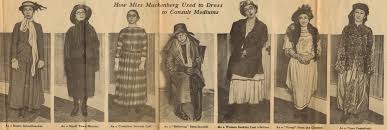
Mackenberg joined Houdini’s team in 1924. Mackenberg would adopt a costume and a backstory and meet with psychics before Houdini came to town. She took notes on their methods and passed them on to Houdini. Then when Houdini came to town, they would discredit the fake psychics publicly.

A newspaper clipping shows some of Rosa's disguises
A newspaper clipping shows some of Mackenberg’s disguises.

Mackenberg testified before Congress hoping to convince them to pass a bill that would outlaw predatory practices among mediums. In the process, she divulged that multiple members of Congress, as well as President Calvin Coolidge, visited mediums in Washington, D.C.

After Houdini died in 1926, she continued her work, investigating fraudulent psychics and giving talks to professional and legal groups as well as the general public on how mediums were able to successfully swindle their victims. (snip)

In her work, she advanced not only the opportunities for women in investigative fields, but also some techniques of scientific investigation that are still used today. (snip-read MORE)

https://smartbitchestrashybooks.com/2025/10/kickass-women-in-history-rosa-mackenberg/

Republicans In Other Times, & Demos Against Use of Cassini in Peace & Justice History for 10/4

October 4, 1976
Earl Butz resigned as President Gerald Ford’s agriculture secretary with an apology for what he called the “gross indiscretion” of uttering a racist remark.
October 4, 1997
Demonstrations across the country occurred protesting the scheduled launch of the space probe Cassini because its power source was three plutonium-fueled Radioisotope Thermoelectric Generators.The probe carried 72.3 pounds of plutonium, the most ever put on a device to be launched into space. The concern was for an accidental release in the event of a launch mishap.Β Plutonium is the most toxic substance known.

“It is so toxic,” says Helen Caldicott, president emeritus of Physicians for Social Responsibility, “that less than one-millionth of a gram is a carcinogenic dose. One pound, if uniformly distributed, could hypothetically induce lung cancer in every person on Earth.”

The Risk of Cassini Probe PlutoniumΒ 
An interview with Dr. CaldicottΒ 

https://www.peacebuttons.info/E-News/peacehistoryoctober.htm#october4

A couple clips from The Majority Report on Schumer and Jeffries.

https://www.joemygod.com/2025/10/trump-posts-another-racist-ai-video-of-jeffries/

https://www.independent.co.uk/news/world/americas/us-politics/trump-hakeem-jeffries-ai-video-government-shutdown-b2836991.html

https://www.thedailybeast.com/mike-johnson-caught-trashing-trumps-vulgar-ai-video/

https://www.joemygod.com/2025/10/johnson-on-trumps-racist-videos-its-not-my-style/