
Category: History
Some clips of Adam Mockler
Ron has followed this young man for a while. This morning he was telling me how smart and well grounded he was. I decided to check him out. I found out I really like his content. Here are a few clips. Hugs
Adam Mockler with MeidasTouch Network breaks down Donald Trump’s botched Ukraine meeting.
Adam Mockler with MeidasTouch Network breaks down Donald Trump and JD Vance throwing a fit while meeting with President Zelenskyy.
Peace & Justice History for 3/1
| March 1, 1943 A huge rally in New York City’s Madison Square called on the U.S. government to reconsider its refusal to offer sanctuary to Jewish refugees of Nazi Germany. |
| March 1, 1954 Nuclear Free and Independent Pacific Day, or Bikini Day, marks the anniversary of the explosion of the largest-ever U.S. nuclear weapon which contaminated major parts of the Marshall Islands [see February 28, 1954].  The land and people of the south Pacific have been exposed to numerous nuclear bomb tests and their radioactive aftermath. In addition to the 67 atmospheric U.S. tests at Bikini and Eniwetok Atolls, France tested 193 weapons in French Polynesia, 46 in theatmosphere. The U.K. exploded 34 devices on Malden and Christmas Islands.The day is also intended to call attention to the potential danger of the increasing trans-oceanic shipment of hazardous nuclear materials, and the need of nuclear and shipping nations to consider the rights and health of the indigenous peoples of the region. The proposed South Pacific Nuclear-Free Zone Treaty |
| March 1, 1956 The University of Alabama permanently expelled Autherine Lucy, the first African-American person ever admitted to the University (following a federal court’s ordering her admission).She was met with rioting by thousands of students (none of whom were disciplined) and others. She charged in court that University officials had been complicit in allowing the disorder, as a means of avoiding compliance with the court order. The trustees expelled her for making such “ baseless, outrageous and unfounded charges of misconduct on the part of the university officials.”  Burning desegregation litgerature at the University of Alabama. Students, adults and even groups from outside of Alabama shouted racial epithets, threw eggs, sticks and rocks, and generally attempted to block her way.  Autherine Lucy Foster receives her master’s degree from University of Alabama in 1992. Autherine Lucy Foster ultimately received her master’s degree from the University of Alabama in library science in 1991, the same year her daughter, Grazia, earned her undergraduate degree. The University now grants an endowed scholarship annually in Lucy Foster’s name. |
March 1, 1961 President John F. Kennedy issued Executive Order 10924 establishing the Peace Corps as a new agency within the Department of State. The same day, he sent a message to Congress asking for permanent funding for the agency, which would send trained American men and women to foreign nations to assist in development efforts. The Peace Corps captured the imagination of the U.S. public, and during the week following its creation, thousands of letters poured into Washington from young Americans hoping to volunteer. What is the Peace Corps today? (A happy surprise; the website is still up and functioning at 7:54 PM 2/28/25. -A) |
| March 1, 1974 Former top Nixon White House aides H.R. Haldeman and John D. Ehrlichman, and former Attorney General John Mitchell, were indicted on obstruction of justice charges related to the Watergate break-in. |
| March 1, 1981 Irish Republican Army member Bobby Sands began a hunger strike at the Maze Prison in Northern Ireland; he died 65 days later. He had dedicated his life to freeing Northern Ireland from British rule.  Read more “Hunger,” a film about Bobby Sands by director Steve McQueen (“Shame”) with Michael Fassbender Watch the trailer |
https://www.peacebuttons.info/E-News/peacehistorymarch.htm#march1
Peace & Justice History for 2/28, 29
February 28, 1919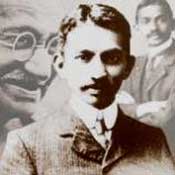 Gandhi, 1919 Mohandas Gandhi launched his campaign of non-cooperation with Imperial British control of India. He called his overall method of nonviolent action Satyagraha, formed from satya (truth) and agraha, used to describe an effort or endeavor. This translates roughly as “Truth-force.” A fuller rendering, though, would be “the force that is generated through adherence to Truth.” More on Satyagraha (civil disobedience) Excerpt from The Core of Gandhi’s Philosophy by Unto Tahtinen on the concept of Satyagraha |
February 28, 1946 Ho Chi Minh, the leader of the newly formed Democratic Republic of Vietnam, facing re-imposition of French colonial rule over his country, sent a telegram to President Harry Truman: “. . . I most earnestly appeal to you personally and to the American people to interfere urgently in support of our independence and help making the negotiations more in keeping with the principles of the Atlantic and San Francisco charters [founding documents of the League of Nations and United Nations].” |
February 28, 1954 The U.S. detonated its largest thermonuclear blast ever, in a test of a new hydrogen (fusion) weapon design in the atmosphere at Bikini Atoll, part of the Marshall Islands. Castle Bravo had an explosive yield of 15 megatons (equivalent to 15,000,000 tons of TNT), it was double the maximum possible expected by the Atomic Energy Commission. Carried out in spite of adverse weapon conditions (the monitoring station was downwind at the time of detonation), the unexpected yield created a radioactive fallout plume that contaminated three other atolls of the 29 in the Marshall chain. Though too late to avoid their contamination, hundreds of Marshallese and U.S. servicemen were evacuated.To avoid another such radiological disaster, future tests required an exclusion zone 1370 km in diameter (850 miles), an area equal to about 1% of the earth’s surface. Because Bikini had been essentially destroyed, subsequent test weapons were detonated from barges. All about Castle Bravo |
February 28, 1958 The Campaign for Nuclear Disarmament (CND) was founded in London by philosopher Sir Bertrand Russell, then 86 years old, and the Reverend Canon (Lewis) John Collins of St. Paul’s Cathedral.The peace symbol was originally developed for CND. History of the CND The CND today |
| February 28, 1989 The Nevada-Semipalatinsk Movement to Stop All Nuclear Testing was founded in the USSR (Union of Soviet Socialist Republics). Olzhas Suleimenov, a popular Kazakh poet, was chosen to lead this first anti-nuclear non-governmental organization in Kazakhstan, formerly part of the USSR. Nevada-Semipalatinsk ended nuclear arms tests at the Semipalatinsk Polygon. Organizers had been inspired by the large Nevada Test Site anti-nuclear demonstrations and encampments outside Las Vegas in the mid-to-late 1980s.   a Semipalatinsk test demo at Semipalatinsk, 1990 Read more |
| February 29, 1968 The National Advisory Commission on Civil Disorders (Kerner Commission) warned that racism was causing America to move “toward two societies, one black, one white – separate and unequal.” Former Illinois Governor Otto Kerner and his commission were charged by President Lyndon Johnson to look into the causes of the many riots that had taken place in recent years. The 1968 Kerner Commission Got It Right, But Nobody Listened |
| February 29, 1984 U.S. District Judge Miles W. Lord held the officers of A.H. Robins Company personally liable for the injuries caused by the intrauterine contraceptive device they had produced and sold, the Dalkon Shield. Eighteen women had died, and more than 300,000 ultimately claimed injury. The top three executives had to pay $4.6 million personally, and the company paid out $220 million in compensatory and $13 million in punitive damages to thousands of women.  Judge Miles W. Lord Judge Lord: “The whole cost-benefit analysis is warped. They say, well you can kill so many people if the benefits are great enough . . . Once they put a price on human life, all is lost. Life is sacred. Life is priceless.” He also criticized Robins’s legal strategy of requiring witnesses to discuss their sex lives: ”You exposed these women, and ruined families and reputations and careers, in order to intimidate those who would raise their voices against you,” he said. “You introduced issues that had no relationship whatsoever to the fact that you implanted in the bodies of these women instruments of death, mutilation and of disease.” Judge Lord was called before a review panel for his professional and judicial conduct in the case but the charges were dismissed and he continued to serve until retirement. Read about the case |
https://www.peacebuttons.info/E-News/peacehistoryfebruary.htm#february28
Groups helping LGBTQ+ victims of violence could face a catastrophic loss of federal funding
Feb 26, 2025 Mel Leonor Barclay, Jasmine Mithani
This story was originally reported by Mel Leonor Barclay and Jasmine Mithani of The 19th. Meet Mel and Jasmine and read more of their reporting on gender, politics and policy.
Organizations that provide services to LGBTQ+ victims of domestic and intimate partner violence expect much of the federal funding they rely on to dry up as the Trump administration’s executive orders target the work they have been carrying out for years.
Some received direct notices from the federal government to stop work that promotes what the administration is calling “gender ideology extremism” and to include disclaimers on their websites that the federal government doesn’t support their mission.
Federal grants make up significant shares of operating budgets for many domestic violence nonprofits, and losing that funding puts their continued existence at risk.
Groups that focus specifically on LGBTQ+ victims are part of a broader network of federally funded nonprofits that provide life-saving counseling, housing and legal aid to people experiencing violence from spouses, partners or family members. Some nonprofits also train social workers, therapists and lawyers in how to work sensitively with LGBTQ+ victims of violence.
The White House has promised to slash funding for programs that don’t align with the administration’s ideology on gender, race and immigration.
Domestic violence groups and the broader network of gender-based violence nonprofits have been on high alert since a temporary federal freeze in late January, as The 19th reported this month. The vague language of President Donald Trump’s executive orders — “illegal” diversity, equity, inclusion and accessibility activities; “gender ideology extremism” — has left organizations scrambling to figure out if they stand to lose federal funding.
Some are trying to protect their funding by removing language or resources that they fear may be at odds with the executive orders. The people leading groups founded specifically to support LGBTQ+ people say that for them, there is no hiding: The executive orders specifically target the people they are focused on serving.
“Some groups are making an effort to kind of change the way they talk about their services and the populations they serve. Our organization literally has the words gay and lesbian in our IRS name — we’re not fooling anybody. And obscuring what we do and who we serve doesn’t help those services stay accessible,” said Audacia Ray, the interim executive director of the New York City Anti-Violence Project, officially the New York City Gay And Lesbian Anti-Violence Project Inc., which supports LGBTQ+ and HIV-affected victims of violence.
LGBTQ+ Americans, with the exception of gay men, are more likely to have experienced domestic violence, partner abuse or dating violence than cisgender and heterosexual people. Queer women are significantly more likely to have experienced intimate-partner violence in their lifetime than straight women, according to an analysis of federal survey data by the Human Rights Campaign.
Transgender people are four times more likely to be victims of violent crime than cisgender people, according to research from the Williams Institute at UCLA. Fifty-four percent of respondents to the 2015 U.S. Trans Survey — the most recent data available — said they have experienced intimate partner violence, and 47 percent reported being sexually assaulted. Transgender people are also more likely to experience severe physical intimate partner violence than the average American.
Nonprofits serving victims of violence have long relied on federal funding, especially since the Violence Against Women Act created specialized grant programs 30 years ago. They receive little support from private philanthropy: Most recent data from the Equitable Giving Lab shows about 0.1 percent of charitable giving in the United States goes toward LGBTQ+ causes, and less than 2 percent goes toward women and girls.
“The danger of this moment is that it becomes very nebulous to people how federal funding contributes to the basic social safety net. There aren’t donors. There isn’t all this money,” said the executive director of a regional nonprofit serving LGBTQ+ victims of violence that receives about 40 percent of its funding from the federal government. The organization helps offer shelter and direct cash assistance, among other services, to LGBTQ+ people fleeing violence.
The executive director spoke on condition of anonymity out of fear that their organization would be targeted further by the Trump administration.
“When people are facing imminent threat of being murdered, and there are no resources to give people funding to flee that situation … it is going to result in more death. Truly, I believe that.”
The need for targeted LGBTQ+ services
Nonprofits focused specifically on LGBTQ+ communities sprung up to meet the specific needs of this population, which experiences higher incidences of violence and also discrimination based on gender-identity and sexual orientation.
Specialized resources for LGBTQ+ survivors are dearly needed: A 2017 survey of LGBTQ+ survivors who received services from the National Coalition of Anti-Violence Programs showed that 43 percent of LGBTQ+ intimate partner violence survivors were denied entry to a shelter; of those denied, a third were refused entry due to their gender identity.
LGBTQ+ people are vulnerable to abuse related to their identity, including threats of outing that could cost them housing, jobs or other relationships. Queer survivors are often isolated from typical support systems like family who could help them in an abusive situation. Transgender people are more likely to be killed by intimate partner violence, and the risk is increased for people of color, especially Black trans women.
Groups focused on LGBTQ+ survivors serve as a critical safety net for LGBTQ+ victims, often accepting referrals from national and local groups without tailored resources. The Hotline, a national nonprofit that supports victims of domestic violence, describes the “fear of not receiving services” as an obstacle “to reaching safety that LGBTQ+ people might confront.” It offers referrals to service providers focused on LGBTQ+ people – the same providers that are now staring down the loss of federal funding.
Given the executive orders, “there’s no universe in which some of the work doesn’t take a hit. I feel very clear about that,” said Ray of the New York City Anti-Violence Project. And at the same time, “we have to be able to answer the phone and support our community, who’s directly impacted by all this violence.”
NYCAVP runs a 24/7 hotline for victims of violence, as well as free long-term counseling, legal services and connections to support groups. About two-thirds of the organization’s budget comes from a mix of federal, state and local government grants. Most of its funding comes from programs targeting “underserved communities.”
Ray said that the New York City Anti-Violence Project, in addition to offering direct services to victims, including through its hotline, also spends resources advocating and advising lawmakers on legislation affecting LGBTQ+ people. For example, NYCAVP helped shape the 2013 reauthorization of the Violence Against Women Act, the first federal funding statute that banned discrimination based on actual or perceived gender identity and sexual orientation.
“My immediate thought was we will do what we do as long as we can, and we’re not preemptively laying people off or shutting anything down,” Ray said.
“We have a couple different contingency plans around, ‘What are the services that we need to prioritize and center, and how do we continue to do that as long as possible?’”
The executive director who spoke on condition of anonymity said their organization connected with more than 600 LGBTQ+ people facing abuse and violence in the past year. Some came as referrals from domestic and intimate partner violence organizations that weren’t equipped to serve them, or who were working with a victim needing relocation to a state less hostile to LGBTQ+ people. “It’s kind of like an informal witness protection program,” they said.
Without federal funding, they said, their ability to help these victims will significantly shrink.
How nonprofits are fighting back
In a lawsuit filed Thursday by Lambda Legal on behalf of nine nonprofits that receive federal funding, the plaintiffs argue that the Trump administration’s executive orders, including the order calling for the end of federal funding for activities that promote “gender ideology extremism,” amount to “an existential threat to transgender people.” They argue the orders are unconstitutional because they violate the groups’ free speech, due process and equal protection rights.
“The executive orders force plaintiffs to silence their speech and viewpoints… that are not only of great societal importance but also central to plaintiffs’ missions… or forgo federal funding,” the complaint reads. “That choice is an impossible one.”
Among the plaintiffs suing Trump is FORGE, one of the only organizations in the country focused on supporting transgender people experiencing intimate partner violence. FORGE trains providers who assist transgender and nonbinary survivors of sexual assault, intimate partner violence and hate crimes. The 30-year-old organization also connects victims with wellness services.
According to the case filing, 90 percent of FORGE’s funding is derived from federal grants, the highest out of any listed plaintiff. It has received grants from a wide range of agencies including the Department of Justice, the Department of Health and Human Services (HHS) and the National Institutes of Health.
Several other plaintiffs that received funds from HHS programs, according to the complaint, were sent notices in late January to “immediately terminate, to the maximum extent, all programs, personnel, activities, or contracts promoting ‘diversity, equity, and inclusion’” or, separately, “gender ideology.”
“Trans and nonbinary people are scared and hurting – not only from the high levels of violence so many of us experience every day, but also because of the dehumanizing, erasing, and damaging impact of the Executive Orders. For the past 30 years, FORGE has been committed to serving trans survivors of sexual assault, stalking, and hate-fueled harm. We are not going anywhere,” michael munson, executive director of FORGE, said in a statement. “Conditioning federal funding on rejecting transgender identity and DEI not only harms trans people, but it also creates a world that is less safe and less free for us all.”
Deleting language and resources
The National LGBTQ Institute on Intimate Partner Violence urged fellow providers to “hold the line together” and stand in solidarity with LGBTQ+, immigrant and BIPOC survivors in an email obtained by The 19th. The missive explicitly called upon organizations to continue serving LGBTQ+ survivors, to not take down materials tailored to the queer community and to keep pronouns on public-facing materials. It also cited previous reporting from The 19th detailing how some groups removed mentions of LGBTQ+ people from their websites.
“For organizations that have removed LGBTQ+ materials, we encourage that these materials be restored,” the statement read. “We urge organizations to not cede our collective power as a movement and back down in our work to protect LGBTQ+ survivors.”
The group reminded organizations in its network that federal law — the same law that the New York City Anti-Violence Center helped pass — makes it illegal to discriminate based on actual or perceived gender identity or sexual orientation. “These federal non-discrimination policies remain in place and give us power to protect transgender survivors in the work that we do,” the organization said.
The Los Angeles LGBT Center, where the institute is housed, declined to speak on the record, citing the current lawsuit.
Several days later, Respect Together, the umbrella organization of the National Sexual Violence Resource Center and the Pennsylvania Coalition to Advance Respect, publicly apologized for removing resources for LGBTQ+ people from their websites.
“Federal and state funding accounts for the vast majority of our operational budget, and as a result, we acted too swiftly to the news from the current administration,” the apology reads. “We heard you, and recognize that this was the wrong choice,” CEO Yolanda Edrington said in the statement. “We are committed to rebuilding trust, learning from this experience, and ensuring that our actions align with our mission to support survivors of all communities, their allies, and advocates.”
The Hotline, which had deactivated a page on LGBTQ+ resources earlier this month, has now restored it. The organization did not respond to a request for comment on the restoration, but told The 19th earlier this month that it was reviewing its website to protect its federal funding.
Even if groups commit to still serve all people in need, regardless of identity, removing resources adds friction. Visibility and ease of navigating resources when you are in need of services is important, said Tandra LaGrone, the CEO of In Our Own Voices, a nonprofit supporting LGBTQ+ people of color in upstate New York, which has received a grant from the Office on Violence Against Women.
The erasure of information can lead victims to feel like they are at fault, LaGrone said.
Ray said that it’s a big risk to not change their organization’s public-facing content in anticipation of a potential loss of funding, but they think holding steady is the right thing to do. Backing down won’t reduce violence, they said.
“I really believe that complying in advance of direct demands and being forced to change those programs is contributing to the overall violence against LGBT people,” Ray said. “That sort of advance compliance is extremely worrisome to me, because it shows that those orgs are concerned about the org as an institution more than they’re concerned about the community as a directly impacted population.”
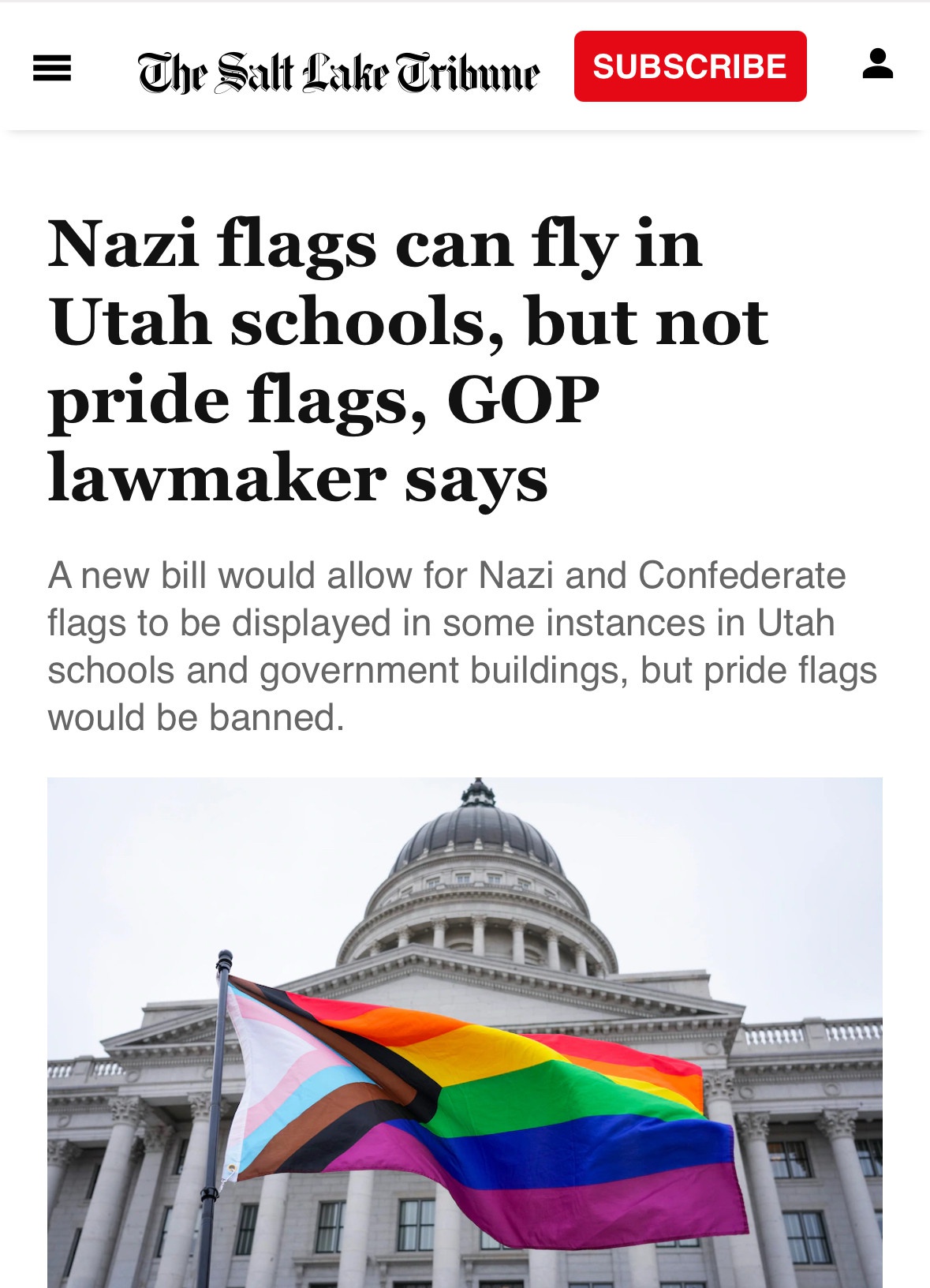
Utah GOP Bill: Ban Pride Flags, But Allow Nazi Flags
Sorry this is both old and I can’t remember if I already posted it. But the GOP is not even trying to hide it anymore. They are Nazi wannabees. Hugs
++++++++++++++++++++++++++++++++++++++++++++++++++++++++++++++++
The Salt Lake Tribune reports:
An ongoing fight in Utah to ban pride flags in schools entered new territory Thursday after Rep. Trevor Lee proposed new legislation to ban the flags not just in public schools, but in any government building or on any government property. The bill, HB0077, originally applied only to schools. But an update to the bill released ahead of Thursday’s House Education Committee hearing expands the ban to all government buildings or property.
Approved flags for display in government buildings and schools would include the Utah state and U.S. flags, military flags, flags for other countries, flags for Native American tribes and official flags for colleges and universities. The bill also allows for the flying of a “historic version of a flag … that is temporarily displayed for educational purposes,” which Lee, R-Layton, said would include the Confederate and Nazi flags.
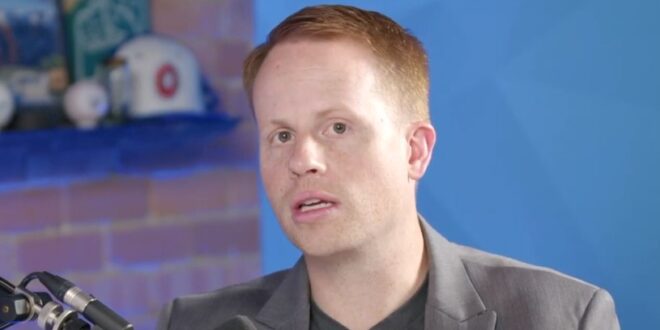
Read the full article. In his floor speech, Lee said, “You may have a Nazi flag. You may have a Confederate flag, and so you are allowed to display those flags as part of the curriculum, and that is okay.” An attempt to ban Pride flags failed in 9-20 Utah Senate vote last year. As you’ll see in the video report below, Lee has a history. His X feed is mostly retweets of prominent cultists and extremists. He’s also attacking the “dumb” report linked above.

Some clips from TizzyEnt
Sorry this may be the last post I make today. I am not doing well. I have had 3 hours sleep in two days. Monday I got a steroid shot in each shoulder so I could move them again. My bones ache so bad I wondered if I had gotten a cold or flu again. Steroids do depress my already depressed immune system. But I can hardly stand the pain in my hands, arms, legs, and I am not a jolly fellow today. Tomorrow I have my allergy shots. That should be great, right, what could go wrong with how I feel. Ron is going with me and we are going to buy the flooring for the Florida room Ron built and that will be my new office. As I have said before it is to give me more light and not feeling so isolated and will give us a spare bedroom for visitors. Hugs
Some Science on Thursday
Earliest evidence of humans in rainforests leads to surprises about how we evolved
February 27, 2025 Evrim Yazgin
The earliest evidence that humans inhabited rainforests has been found in Africa, a surprising find which pushes human settlement in these habitats much further back than previously thought.
Modern humans, Homo sapiens, evolved about 300,000 years ago in Africa. The ecological and environmental circumstances in which our species evolved are still not well understood.
It is likely that our ape-like ancestors millions of years ago did live in dense rainforests. But the retreat of Africa’s forests and the spread of savannah and grasslands as Earth’s climate dried is usually linked to the evolution of bipedalism in early human ancestors as far back as 7 million years ago.
As a result, rainforests have often been overlooked as important habitats in the evolution of early modern humans.
New research published in Nature has put a dent in this assumption.
The evidence comes from a site which dates to 150,000 years ago in present-day Côte d’Ivoire on the southern coast of West Africa.
“Before our study, the oldest secure evidence for inhabitation in African rainforests was around 18,000 years ago and the oldest evidence of rainforest inhabitation anywhere came from southeast Asia at about 70,000 years ago,” says lead author Eslem Ben Arous, from Spain’s National Centre for Human Evolution Research (CENIEH) and the Max Planck Institute of Geoanthropology in Germany.
The site was first investigated in the 1980s when ancient stone tools were discovered. But the age of the tools and the ancient ecology couldn’t be determined with the technology of the day.

Today, Côte d’Ivoire has roughly 9% forest cover which has dropped from nearly 50% in the 1960s due to agriculture from nearly 50% in the 1960s.
“Several recent climate models suggested the area could have been a rainforest refuge in the past as well, even during dry periods of forest fragmentation,” says senior author Eleanor Scerri, from the Max Planck Institute of Geoanthropology. “We knew the site presented the best possible chance for us to find out how far back rainforest inhabitation extended.”
The anthropologists used several dating techniques including optically stimulated luminescence and electron-spin resonance to determine the stone tools were 150,000 years old.

Sediment samples also showed the region was heavily wooded, with pollen and leaf waxes typically found in humid West African rainforests. Low levels of grass pollen show it wasn’t a narrow strip of forest either, but in a dense woodland.
This evidence suggests that some early modern humans lived in rainforests while others stuck to their grassland and savannah homes.
“Convergent evidence shows beyond doubt that ecological diversity sits at the heart of our species,” says Scerri. “This reflects a complex history of population subdivision, in which different populations lived in different regions and habitat types.
“We now need to ask how these early human niche expansions impacted the plants and animals that shared the same niche-space with humans. In other words, how far back does human alteration of pristine natural habitats go?”
“This exciting discovery is the first of a long list as there are other Ivorian sites waiting to be investigated to study the human presence associated with rainforest,” says Guédé.
The site which yielded these stone tools has since been destroyed by mining.
Peace & Justice History for 2/27

February 27, 1939 Flint sit-down strikers, 1937 The Supreme Court outlawed sit-down strikes in its decision NLRB v. Fansteel Metallurgical Corp. Such strikes had become a very effective strategy employed by workers to organize unions. The 1937 Flint sit-down strike of autoworkers against General Motors forced GM to recognize the United Auto Workers as the representative of its hourly employees, and negotiate wages and working conditions. The text of the Supreme Court’s decision: |
| February 27, 1973 Hundreds of Oglala Lakota Sioux and members of the American Indian Movement (AIM) occupied the village of Wounded Knee, South Dakota. Angered over a long history of violated treaties, mistreatment, family dismemberment, cultural destruction, discrimination, and impoverishment through confiscation of resources, they particularly demanded the U.S. live up to the terms of the 1868 Fort Laramie Treaty. That treaty recognized the Sioux as an independent nation in the western half of South Dakota. Additionally, there had been a recent campaign of harassment and violence by tribal and FBI officials. Wounded Knee was chosen because of the 1890 massacre there of several hundred men, women and children by U.S. troops. The occupation lasted until May.  The Fort Laramie Treaty What happened at Wounded Knee |
https://www.peacebuttons.info/E-News/peacehistoryfebruary.htm#february27
Peace & Justice History for 2/26

February 26, 1966 Julian Bond in 1966 Four thousand picketed outside New York’s Waldorf-Astoria Hotel as President Lyndon Johnson received the National Freedom Award. As Johnson began his speech in defense of his Vietnam policies, James Peck of the War Resisters League jumped to his feet and shouted, “Mr. President, peace in Vietnam!” On the streets, meanwhile, activist A.J. Muste presented the crowd’s own “Freedom Award” to Julian Bond, who had been denied his seat in the Georgia legislature for refusing to disavow his opposition to the war, and for his support of the Student Non-Violent Coordinating Committee. |
| February 26, 1984 The last of the 1400 peacekeeping troops President Ronald Reagan had sent to the Lebanese capital of Beirut were evacuated. The troops were part of an international force sent to deal with the Lebanese civil war. The president withdrew almost all American troops following the deaths of 241 Marines and 58 French paratroopers in a suicide truck bombing carried out four months earlier by the combined forces of Islamic Jihad and Hizbollah. France withdrew its troops as well.  Three weeks earlier, Reagan had told the Wall Street Journal, “As long as there is a chance for peace, the mission remains the same. If we get out, that means the end of Lebanon.” In a barb directed at House Speaker Thomas P. “Tip” O’Neill Jr. (D-Massachusetts), Reagan had said, “He may be ready to surrender, but I’m not. News of the withdrawal of peacekeeping troops |
February 26, 1998 Libby Davies An international Citizens’ Weapons Inspection Team, led by Canadian Member of Parliament Libby Davies (NDP-Vancouver East), was denied entry to determine the presence or absence of weapons of mass destruction at Naval Base Kitsap-Bangor, Washington, nuclear submarine base, just 12 km (7 miles) from Seattle and less than 60 km (37 miles) from Canada. They found the WMDs! OMG – right in our back yard! |
https://www.peacebuttons.info/E-News/peacehistoryfebruary.htm#february26
 Scottie's Playtime