Not before free public restrooms, but still. Maybe service organizations or churches can help out with space, etc. Anyway, enjoy simply reading about a nice thing.
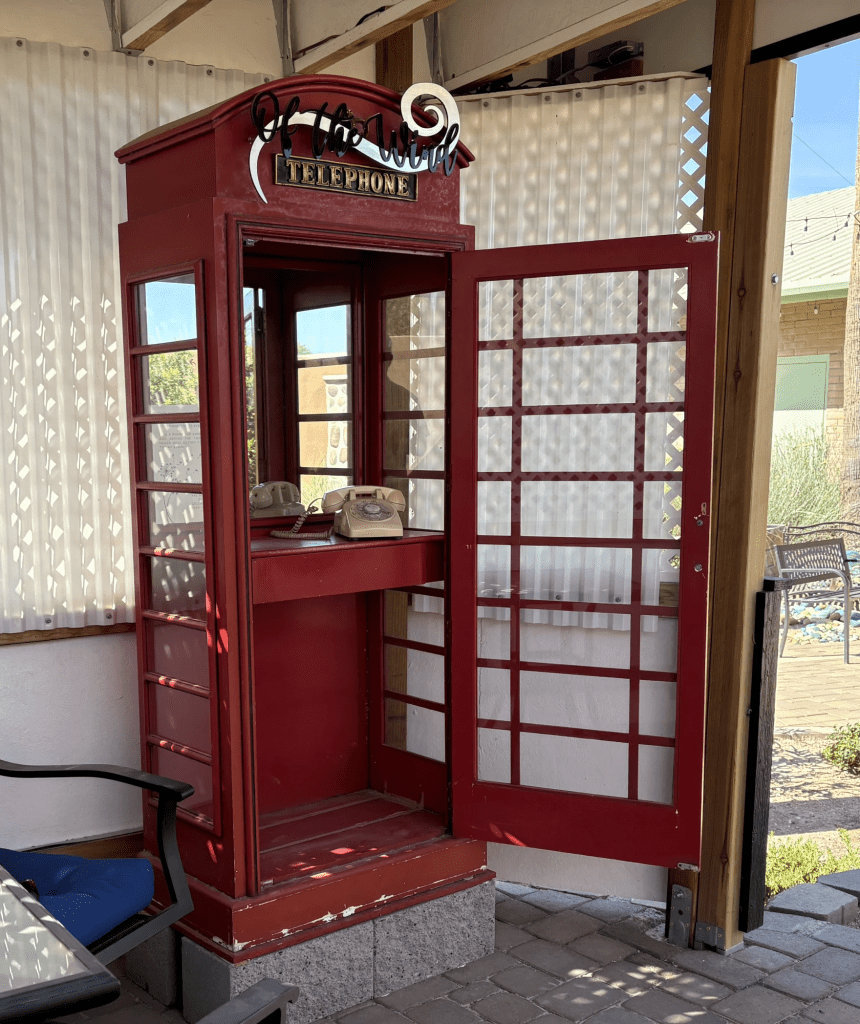
The “wind phone” set up at New Vision Center for Spiritual Living in Phoenix.
Back in 2020, a woman named Amy Dawson lost her 25-year-old daughter, Emily.
In the midst of her grief, she discovered a monument in Japan, built by a man named Itaru Sasaki: a small white phone booth on a hill overlooking the Pacific Ocean, in the town of Otsuchi. Sasaki, who’d suffered a loss of his own several years earlier. He called it a “wind phone,” and the idea was simple: step into the booth, pick up the receiver and speak to those you can no longer reach on a regular phone.
Here in Phoenix, the idea connected with a member of the congregation at the New Vision Center for Spiritual Living, who told Rev. Karin Einhaus about it.
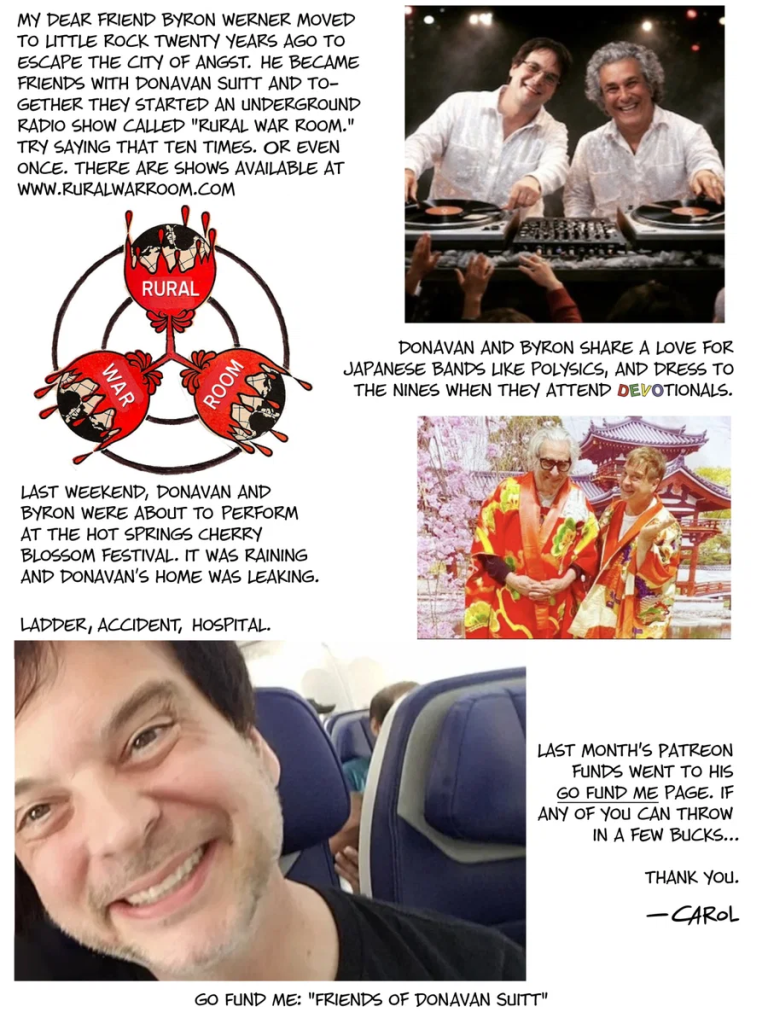
is a fundraiser for a friend of the cartoonist. I’m posting it not so much to try to help, but because I promised I’d post this every week. There is, as always, great art here!
I am leaving for the second part of my book tour in 10 hours and I have not done laundry, packed, or (if I’m being honest) unpacked from the first leg of book tour. In spite of the fact that the first stops were so lovely and fun and filled with fellow weirdos who completely understood my anxiety, I am once again convinced that everyone will hate me and no one will show up and probably I will be eaten by sea lions. So right now I am writing this to you and reminding myself that everything will be okay.
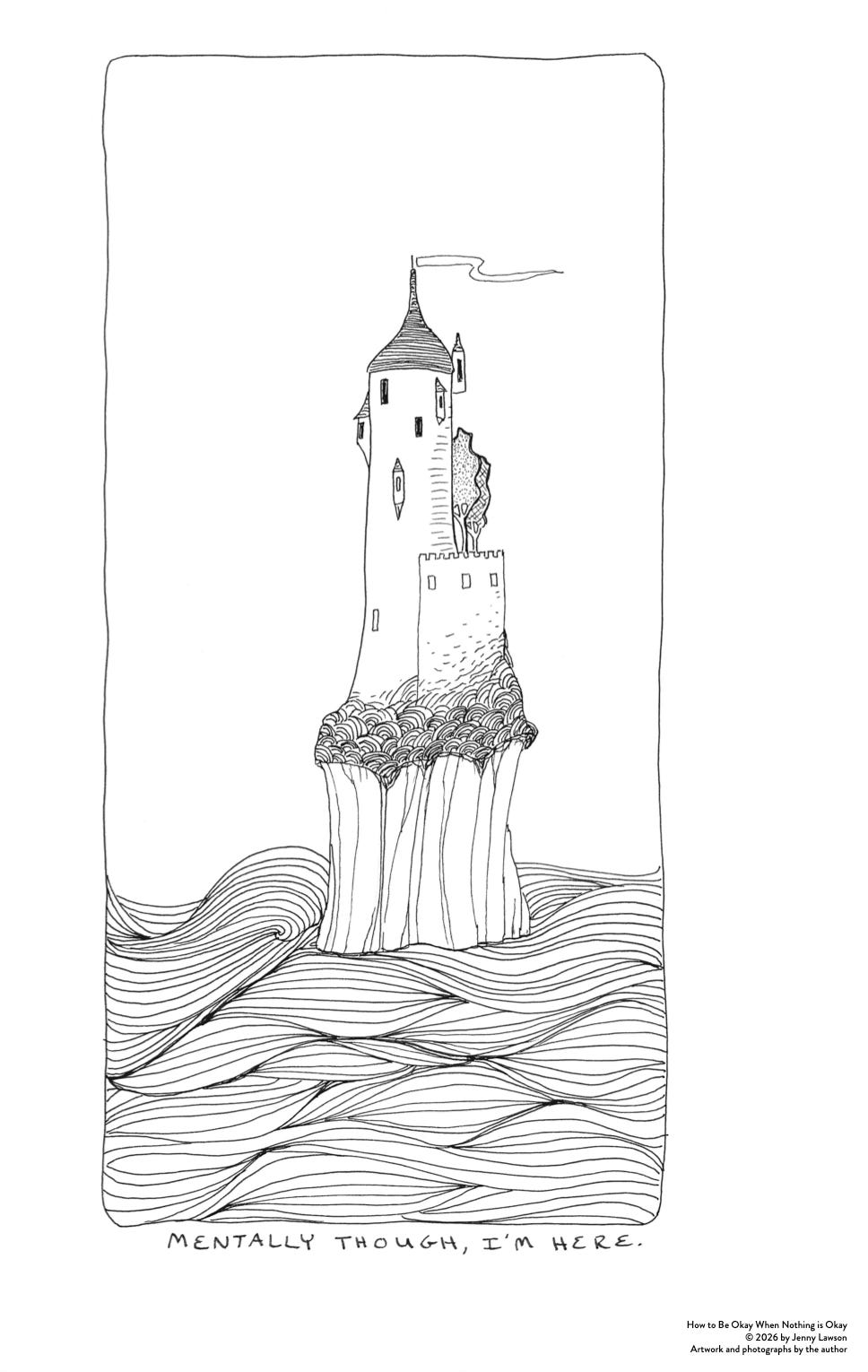
I did lots of little drawings this week but Hunter S. Thomcat is laying on my sketch pad and I don’t want to move him so instead I’m sharing a drawing from the book because I drew it when I was having a high anxiety week and it feels fitting to come back to it now. Just a reminder that even when things feels scary, you can always make a little oasis in your mind. My spell check tried to change that to “you can always make a little oatmeal in your mind” and I’m feeling very relieved that I caught that because that’s even weirder than my normal letters to you.
Josh Johnson2 days agoHi Friends, I wanted to share this with you a little early. I’ll be a guest on @ColbertLateShow this Wednesday. First time being interviewed on the show. To be a guest weeks before the show comes to an end feels really special. Thank you for being part of the reason this is happening.
Scientists found that the male’s hectocotylus, the specialized arm for mating, is lined with receptors that can sense hormones from the female.
The California two-spot octopus is a solitary creature. How exactly they manage to find suitable mates has been one of the ocean’s best-kept secrets.
Now scientists have discovered that male octopuses have a unique way of sensing a female’s presence: they use special sensors in the arm they use for sex. Receptors in the suckers on this arm taste female sex hormones, and directly guide the arm to where it needs to go to deliver sperm, researchers report in the journal Science. (snip-MORE; click the title above)
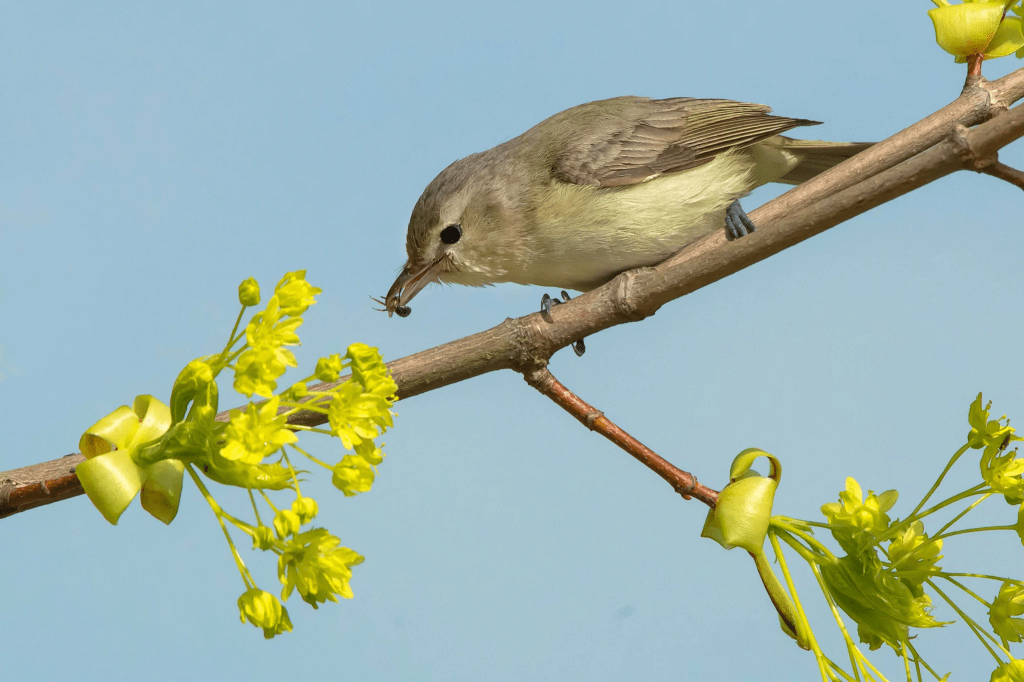
The Eastern Warbling Vireo is a quintessential species of spring and summer across much of eastern North America. This rather drab bird is often hard to spot, hidden up high among the leaves of tall deciduous trees, but its buoyant, easygoing song is hard to miss. One of the most persistent singers through summer, this vireo’s song is considered by many ornithologists and naturalists to be among the most beautiful in its range. Males do most of the singing, but females sing as well — an unusual trait among songbirds in temperate regions. Even more unusual, these birds will even sing while sitting on their nests!
Unfortunately for the vireos, Brown-headed Cowbirds seem to cue in on this species’ habit of singing from the nest. Cowbirds are “brood parasites,” laying their own eggs in the nests of other species, often resulting in the death of some or all of the host’s young. Female cowbirds are quite crafty, even using the movements of parent birds to determine the location of a nest; the more often a parent uses the same paths to and from the nest, the more likely cowbirds are to find it. However, Eastern Warbling Vireos are remarkably efficient at removing cowbird eggs, often puncturing the offending eggs with their bills before discarding them. Studies of this behavior showed that these vireos seem to recognize cowbird eggs by differences in the pattern of speckles on the shell — and get rid of them 90-100 percent of the time! (snip-MORE-2 calls and a song!)
The 2025 law forbade any flags on public property other than the flags for US America, Idaho, cities and tribes, military services, and a few other official flags of “a governmental entity.” The bill’s Republican sponsor insisted that this wasn’t culture war, heavens no, it was about promoting unity, and America, and “stuff that we can all agree on.”
The Boise City Council promptly turned right around and passed a resolution adopting the Pride flag as one of three official City of Boise flags, and ran the rainbow colors up the flagpole again. Hooray!
Unwilling to accept such rampant disrespect to their edict, Republicans in the Lege this year passed a whole new flag law, this one adding a new rule saying that only official city or county flags “designated prior to 2023” will be allowed. The new law also added a $2000 per day / per flag fine, to show Boise what serious business this flag war is. The bill’s sponsor, state Rep. Ted Hill (R), explained the fine was absolutely necessary to force compliance from “insubordinate government officials. […] It sets a tone of anarchy.” He too said that we must have “unity” under the stars and stripes, orelse.
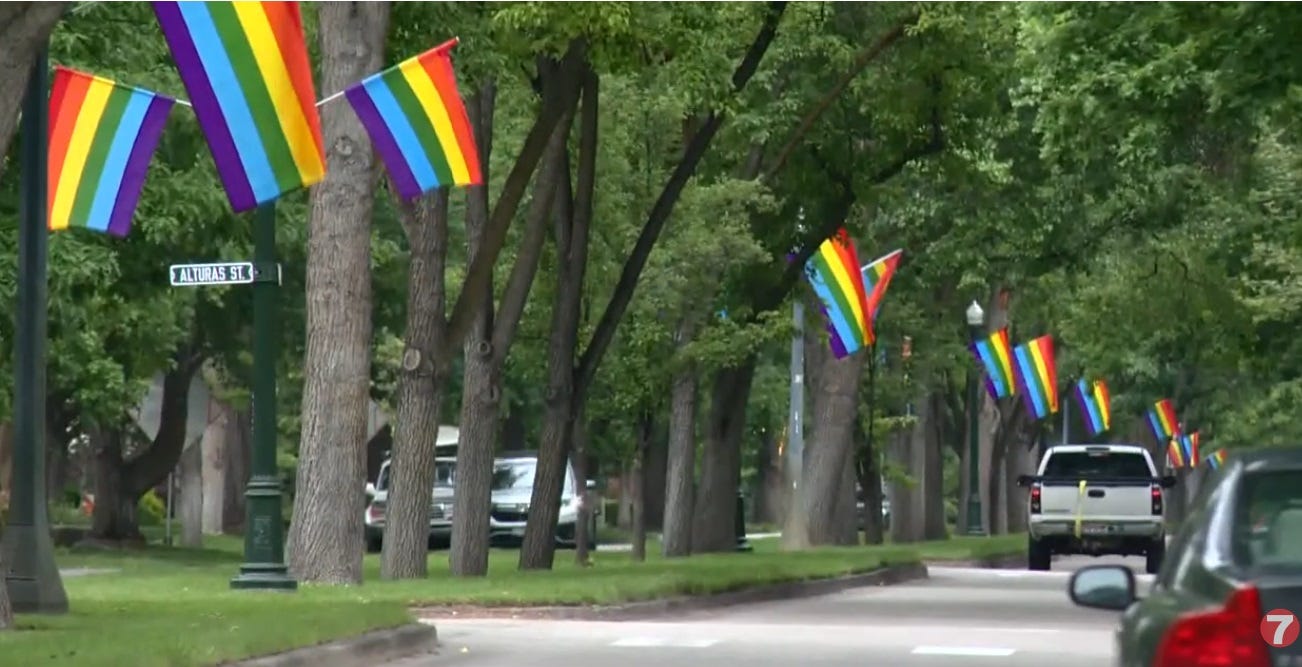
Pride flags along Harrison Blvd. in Boise, 2023. Since Trump’s first term, assholes have stolen and even burned multiple flags each year. They’re then replaced by the volunteers who put ‘em up in the first place. Screenshot, KTVB-TV on YouTube.
In an extra little kick at Boise, where light poles on the median of one major residential street have long displayed Pride flags throughout June, the bill specifically applies to land along “parks, roads, and boulevards.” No nice things for you, Boise.
Just to be a real prick about it, Gov. Brad Little signed the bill on March 31, the Trans Day of Visibility. Little also signed another far worse bill criminalizing trans people who use bathrooms or locker rooms that match their gender identity, not only in schools and public buildings, but also in “public accommodations,” like private businesses. First offense is a misdemeanor, with up to a year in prison, and a second offense would be a felony, with up to five years in prison. The Idaho affiliate of Planned Parenthood Alliance Advocates called it “the most extreme anti-transgender bathroom ban in the nation.”
In response to the two new laws, Boise Mayor Lauren McLean ordered the Pride flag lowered outside City Hall, but also presided over a special session of the City Council to honor the Trans Day of Visibility. Choking back tears, McLean said to the Council and an audience of about 60 Boiseans, “Many people in this state and around this country are seeking to divide us. They’re seeking to divide us by targeting the most vulnerable among us. I want the people in this room to know that I see you. We see you. You are wanted, important, and unique members of our community.”
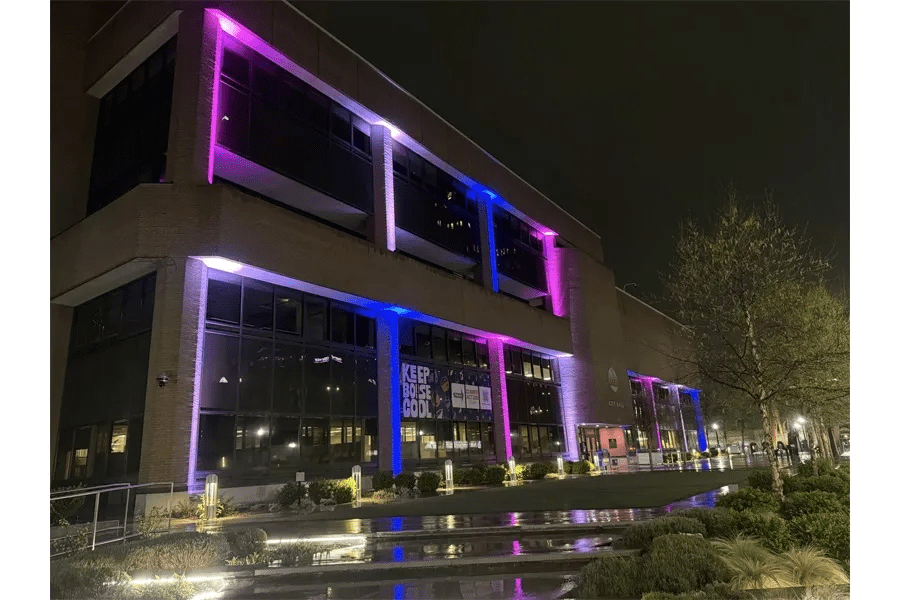
That night, City Hall was lit in the colors of the transgender flag.
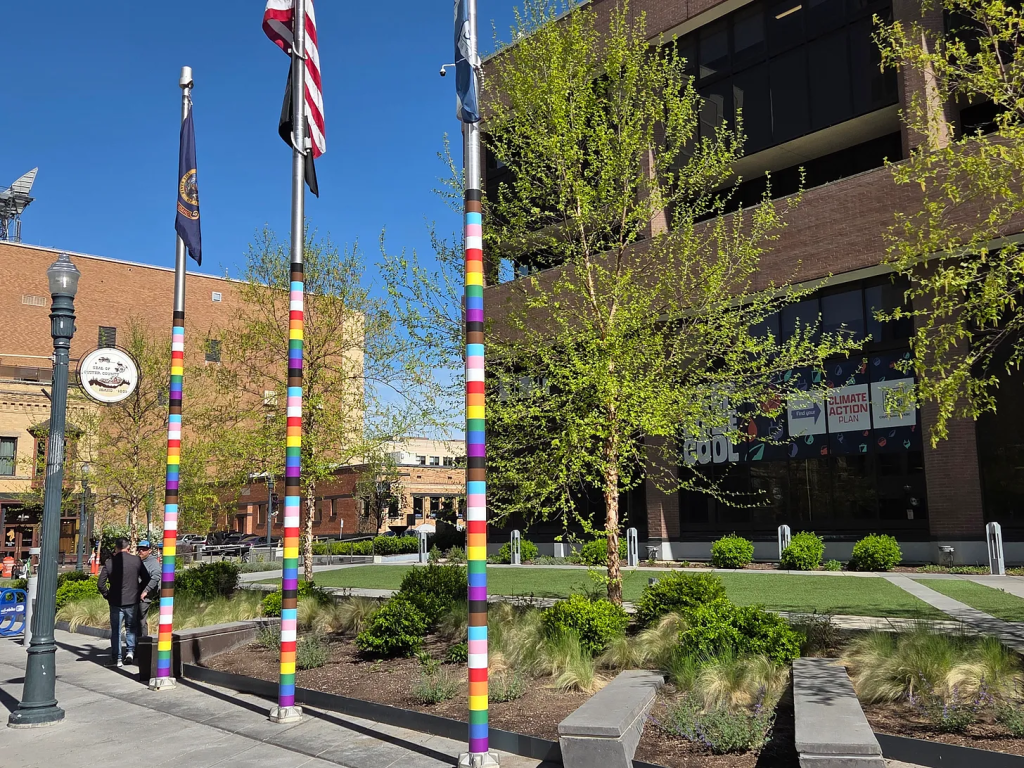
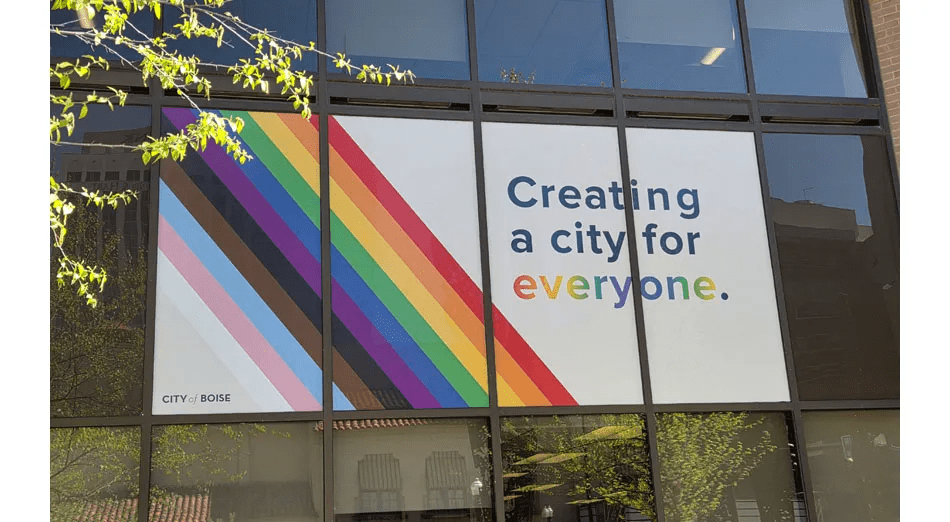
Then, a week after the Pride flag came down, the three flagpoles in front of City Hall sported new vinyl wraps in the colors of the Pride/Progress flag, and a big new banner was visible in the building’s windows, with the rainbow and the slogan, “Creating a city for everyone.” Yr Dok Zoom went downtown to take some photos, and damn right he plugged in his EV at one of the two free EV chargers at City Hall (still hadda feed the meter, though, so that explains the $1.50 on my company card, Rebecca).
You can see the poles up top, and here’s that nice new sign:
And now at nighttime, City Hall is lit up in rainbow colors as well. Gosh I like my city a lot!
City Council President Meredith Stead told local TV station CBS2 that the city is observing the new state law to the letter, and joyfully at that. “The law was based on the flag and we are using rainbows, and it’s not at all a flag,” Stead explained, and I hope she was grinning. “So I would say we are in full compliance of the law, that’s certainly the most important thing to us. So we’re going to be sure that we always are, and this was just a different way to celebrate our diversity and values.”
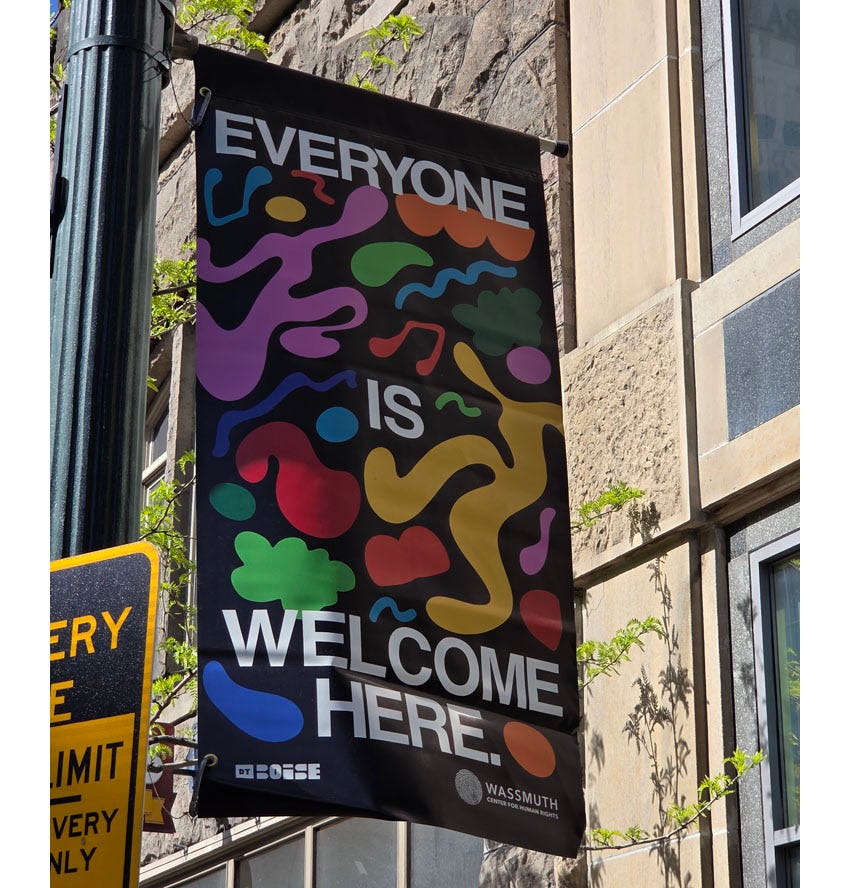
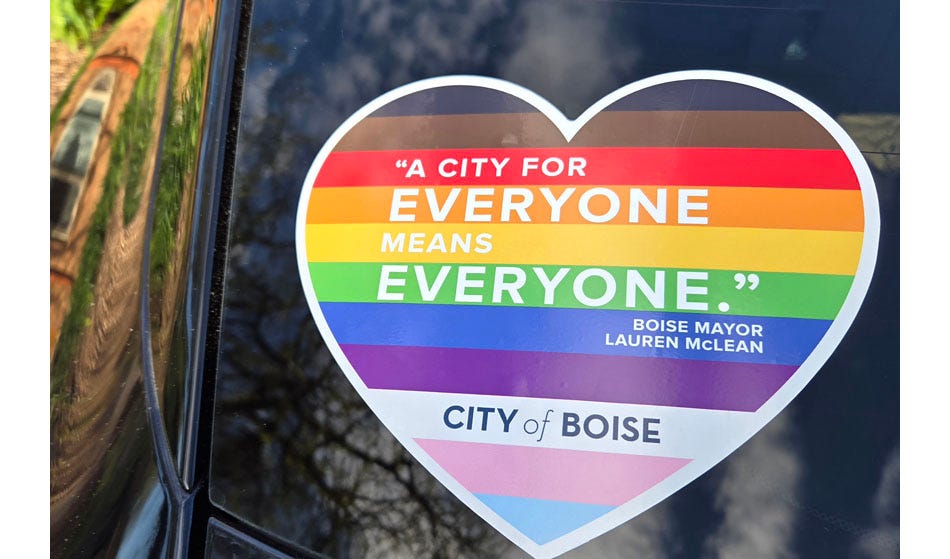
The cost of the flagpole wraps and new banners was $5,931.87, from the city’s operating budget. We think that may also have included the printing costs for these spiffy new stickers you can pick up at City Hall; I got a nice big one that looks great in the rear window of my EV:
We like this “everyone” thing the mayor is going on about! Photo: Dok Zoom.
Needless to say, while all the folks you’d like to hang out with in Boise are delighted by the city’s latest reply to the Lege, the Usual Suspects are big mad about this latest besmirch statement by the city, and we can only imagine what sort of stupid crap law the Idaho Lege will pass next year in another futile attempt to control the wayward capital city. We’ll close with this line from the very timely second season of Andor, which Dallas ally, former Obama official, and teamonger Brandon Friedman says nicely sums up Boise’s Rainbow Battle: “Tyranny requires constant effort. It breaks, it leaks. Authority is brittle.”
At a New York party, attendees spent Trans Day of Visibility dancing, DJing, and learning how to become less visible online.
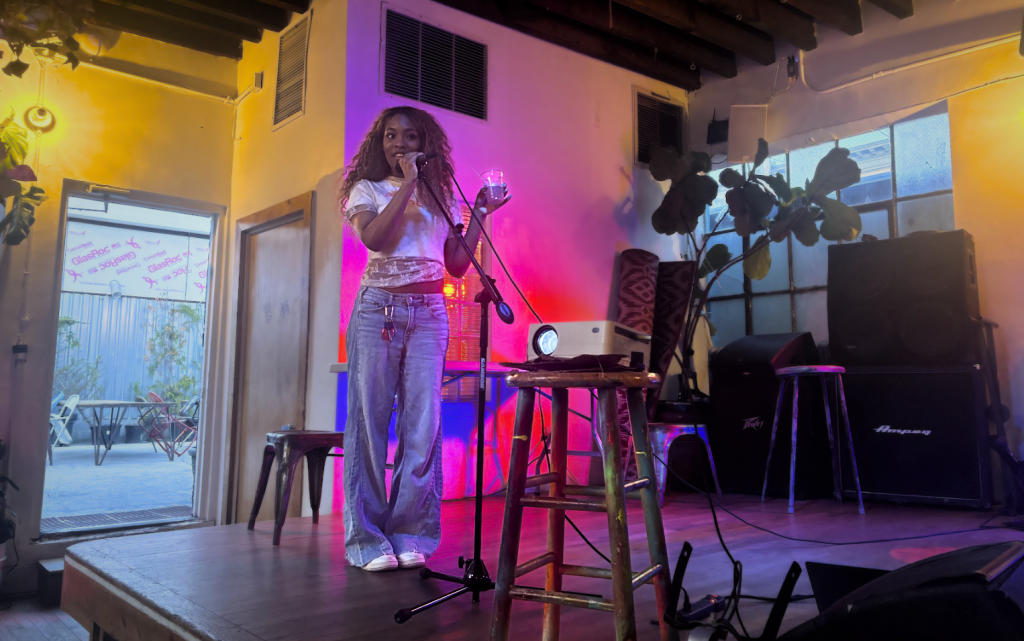
Imani Thompson, digital security trainer and organizer of the event / Photo by Janus Rose
It’s Trans Day of Visibility, and I’m at an event space in the heart of New York City’s Commie Corridor to learn how to become less visible online.
The crowd gathered at the aptly-named Trans Pecos in Ridgewood, Queens is here for “404: Deadname Not Found,” a digital self-defense workshop which promises to teach trans people how to find and remove their sensitive personal information from the internet (and which also has no relation to this website). The vibe is giving OpSec rave happy hour—attendees sip colorful drinks, groove to DJ sets, and huddle around laptops using online tools to track down their own digital footprints.
The goal of the exercise is to find holes in your digital defenses, a practice cybersecurity folks call “red-teaming.” A slide deck guides participants through this “self-doxing” ritual, instructing them to use websites like IntelBase, PimEyes, and haveibeenpwned to find addresses, selfies, passwords, old names and aliases, and other personal info that might have been left sitting around on the open internet.
It makes for great cocktail party banter. One participant raises their arms in triumph upon receiving a clean bill of health while checking if their information was leaked in a data breach. Others swivel laptop screens and compare notes on the various places their digital detritus had cropped up. In my case, I was lucky: I mostly found data brokers with incorrect information, a long-forgotten MySpace page, and a woman whose spam calls I’ve been receiving for the past 10 years. Finally, participants are directed to various pages where they can request data to be removed, or sign up for discounted services like Kanary and DeleteMe that do the removals on your behalf.
Behind the fun and light atmosphere, everyone here knows the unspoken reality that drives tonight’s activities: an unrelenting wave of discriminatory bills and executive orders that are rapidly demolishing trans rights across the US. “Trans Visibility” is a nice idea, but it turns out it really sucks to be visible in a fascist surveillance state where the highest levels of government are obsessively trying to destroy your ability to live.
“In this world of hyper-surveillance, I want to make sure all my stuff is safe and that no one is trying to harvest my data for anything,” Anna, a workshop participant, told 404 Media. Anna asked to use a pseudonym to protect her identity, which is not surprising given that the goal of the workshop is to make it harder to be doxed. “Especially now that there’s lots of incentives for the federal government to get into that business, I just wanna make sure all of that is under wraps.”
Like the event’s name suggests, many attendees are looking for traces of their “deadnames,” which is how some trans folks refer to the names they were given pre-transition. Trans people face a disproportionatelyhigh risk of being doxed online, and deadnames and other sensitive info are frequently dug up on right-wing hate forums like KiwiFarms and social media sites like Elon Musk’s X, where harassment campaigns and hate speech are allowed and even encouraged.
“We have to protect ourselves,” said Ryan, who also used a pseudonym. “It’s great to know how to find stuff like this, because you never know what’s still out there.”
Imani Thompson, a digital security trainer who organized the event as part of her series Cache Me Outside, says she started hosting the free workshops at queer bars in Brooklyn a year ago, after noticing trans and intersex friends who were noticeably shaken by the opening salvos of the second Trump administration.
“I hadn’t seen cybersecurity events that looked like they would attract or resonate with the crowds I felt needed this information the most,” she told 404 Media. “I wanted to make this fun and un-intimidating and doing digital security training at the bar is kind of silly and fun and gives us a built-in VPN and protection from sensitive convos being recorded.”
There are specific reasons many trans people are anxious about their personal data and online presence these days. For one, trans identities often don’t fit neatly into government boxes, and the name and gender they are assigned at birth may or may not match their government-issued IDs. Recently, a new law in Kansas resulted in hundreds of trans people being told that theirdrivers licenses and IDs had been invalidated overnight, forcing them to obtain new documents that revert to the sex marker assigned at birth. JournalistMarissa Kabas later reported that the 300 trans IDs in question had been flagged and not immediately invalidated, but the goal of the law and its ensuing chaos was clear: requiring trans people to have IDs that don’t match their appearance or lived reality, forcing them to out themselves and introducing friction and discrimination into their everyday lives.
The same Kansas law also implemented the first state-level “bathroom bounty,” making it a crime for trans people to use appropriate bathrooms and changing rooms and promising rewards to random passersby who feel “aggrieved” by someone they think might be trans. Lawmakers in Idaho have passed an even harsher bill, which would charge repeat trans bathroom-users with a felony and up to 5 years of jail time. These bills threaten not only trans people, but anyone whose appearance might fall outside of someone’s normative expectations of “male” and “female.” And they are especially dangerous at a time when facial recognition can near-instantly identify someone with a quick search.
Thompson also worries about the information that queer folks can reveal while asking for help online. Trans people experienceunemployment,housing insecurity, andviolence at exponentially higher rates than cis people, and it’s not uncommon to see Gofundme pages and Venmo accounts flooding social media feeds. These posts will sometimes include personal details like a person’s name, face, transition status, location, immigration status, and even how much they have in their bank account—great for getting donations, but not so great for the doxable breadcrumbs they leave behind.
“I think the risk is tenfold for the dolls and Black trans siblings because of disproportionate scrutiny in light of these bathroom bills and also how we do mutual aid,” said Thompson. “Whenever I see a mutual aid request being reposted or processed it makes me nervous, because we’re basically doxing our most vulnerable friends.” To reduce risk, she recommends people take down mutual aid posts as soon as needs are met and set their Venmo activity to private. “I feel like the intention in listing off how all these systems of oppression impact our friends are meant to create a sense of urgency and care, but then months later it’s still floating around and is a goldmine for someone who wants to claim they were made to feel unsafe in a bathroom so they can claim $3k or further an agenda.”
The privacy attitudes on display at the event contrast with the dominant media narratives about trans communities a decade ago. Fresh off the Supreme Court victory in Obergefell vs. Hodges that legalized same-sex marriage, many at that time were convinced that trans visibility would pave the way to equality, as glossy magazine covers featuring stars like Laverne Cox declared a “Trans Tipping Point.” But while conditions for some trans people marginally improved, we all know what happened next: a wave of reactionary anti-trans state laws, culminating in the re-election of Donald Trump and a series of executive orders aimed at destroying trans peoples’ access to healthcare, sports, bathrooms—essentially the ability to live a normal life.
At the same time, protection can’t be a retreat back into the closet. “It’s still important for trans voices to be heard in online spaces,” said Anna. “It’s not like I wanna go into the shadows or anything. I just don’t want people to know my personal data, my personal records, any of that.”
“Being Black, I also understand the distinction between visibility and hypervisibility and the precarity and lack of agency that hypervisibility creates,” said Thompson. “It’s tricky to find language around digital security that doesn’t imply queerness is something to hide or a shameful thing, because of course it’s not. I think having agency and purpose in how we can show up online and interact with tech as well as literacy around how technology and surveillance operates makes us better equipped.”
Janus Rose is New York City-based journalist, educator and artist whose work explores the impacts of A.I. and technology on activists and marginalized communities. Previously a senior editor at VICE, she has been published in digital and print outlets including e-Flux Journal, DAZED Magazine, The New Yorker, and Al Jazeera.