The weekend before this last one Odie started throwing up and he was not eating as well as he normally did. On Monday last week Ron took him to the vet. After 800 dollars the vet said she felt he had no blockage and most likely he had an ulcer. She gave us several medications and told us to get him some over the counter Pepcid. We managed to give him his medications in a syringe.
But on Thursday we took him back to the vet for a bolus of fluid because he still was not eating nor drinking. We increased his new make him hungry ear rub. All weekend we tried hard to entice him to eat or drink. On Monday I had a doctor’s appointment. When I got home I suggested that Ron call the vet. He told me he got Odie to drink something and said he heard cats can make huge turn a round after not eating or drinking for days. I felt what it really was a cry for more time. As Odie seemed stable and not in pain I let things be, after all Ron watches a lot of animal vet shows and I hoped he was correct.
For the first time since Odie got ill he did not leave his safe space which is Ron’s closet that day. Ron tried hard to get him to drink or eat. This morning (Tuesday 8-5-2025) I told Ron he needed to call the vet and he agreed, he had faced the fact of Odie’s situation and realized that Odie was passing and not able to get better.
The vet told us to bring him in around 4 pm or 1600 for those on a 24 hour clock. All day both Ron and I checked on him and Ron kept trying to get him to eat or drink. The veterinarian hospital is only like five or 7 minutes away from us. At about 3:50 pm Ron set the carrier on the counter and put a fresh blanket in it. I picked Odie up from the closet and realized he had no strength to even support himself anymore. Once I got him in the carrier he did not even try to turn around and we struggled to get his tail completely in the carrier. I ended up having to reach around him to pull the blanket further in so we could secure the door.
I needed Ron to carry the carrier to the vet’s office, but while I had been with every furry family member when they walked the rainbow bridge, Ron has not joined me during the procedure as his feelings are so strong and he has struggled with the death of each one. I feel it is the last act of love I can do for them. My last duty for them.
The vet asked if we both wanted to stay and I said yes. I was surprised Ron did also. The vet assistant took Odie to have an IV inserted. I asked Ron if he was sure he wanted to stay instead of going to the waiting room or the car. He wanted to stay. When they brought Odie back we petted him until the doctor came in to do the finial step. As first the sedative and then the last medication was injected Ron sat near him and talked to him. I stood next to him and gently rubbed his head and neck fur. I said a few things verbally and a lot more mentally. I could see Ron was doing the same. I was proud of how he handle a very painful experience. The one who was crying the most was the vet, she said that her cat was a ginger and she really liked Odie when he was visiting them.
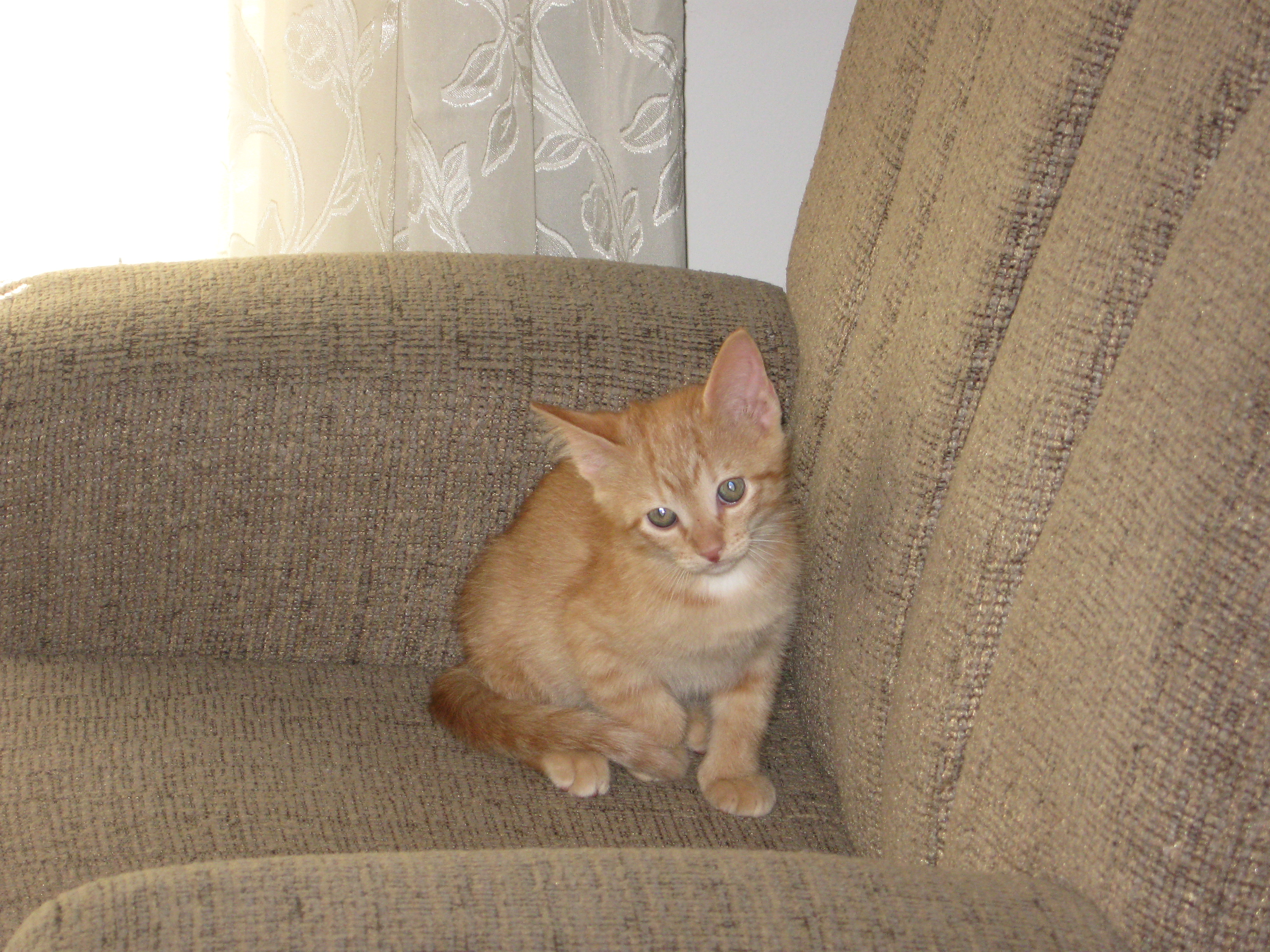
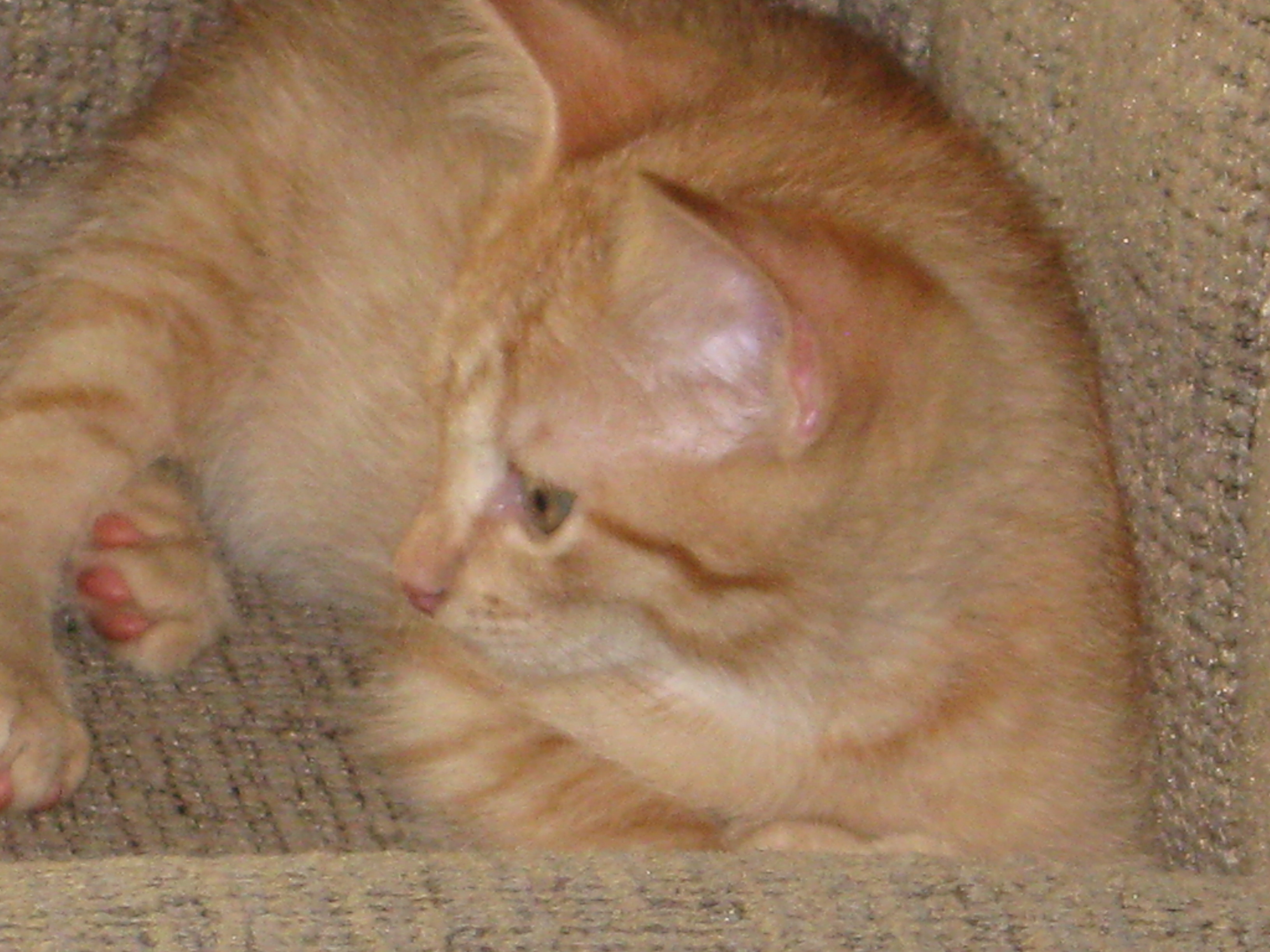
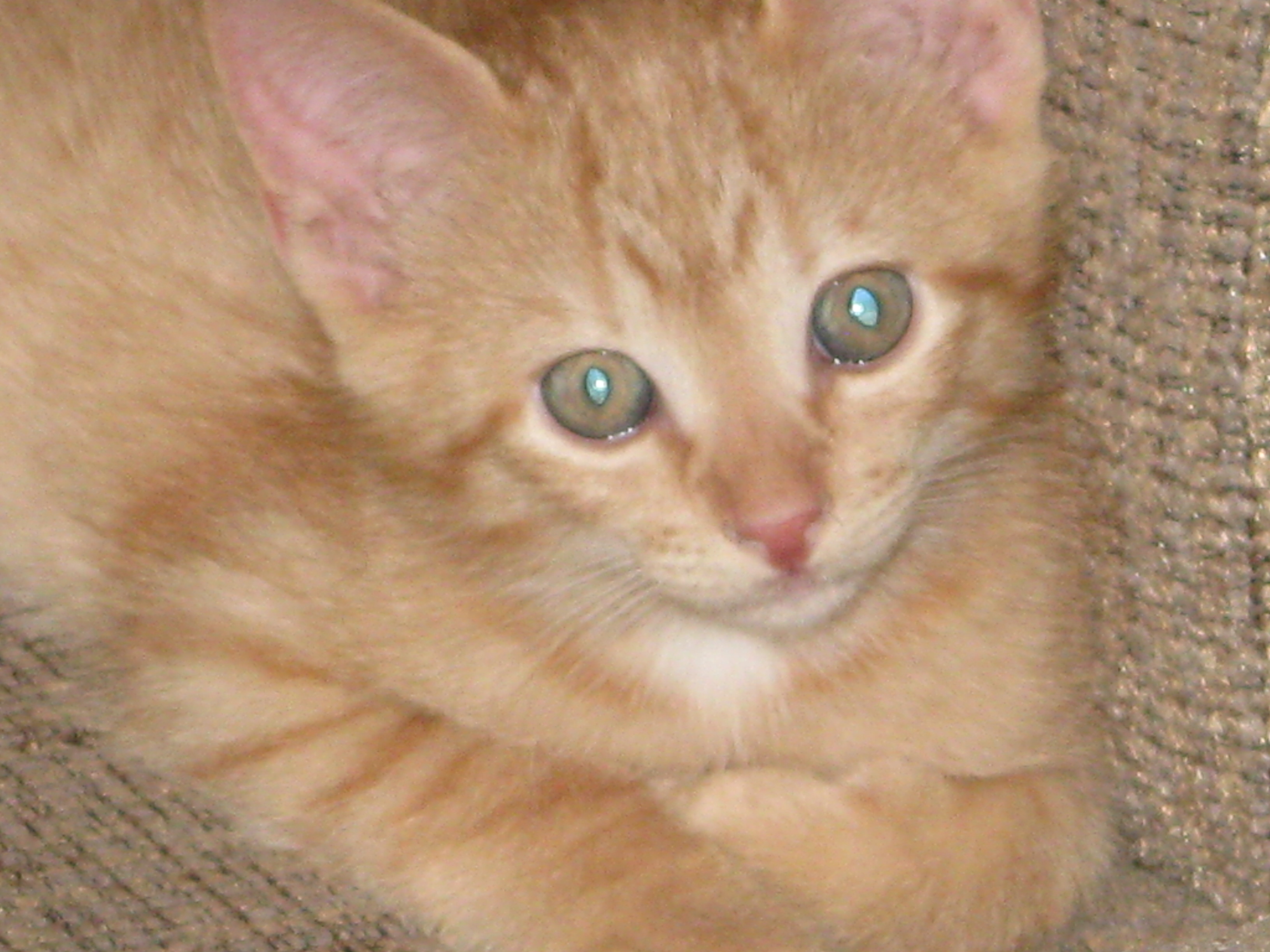
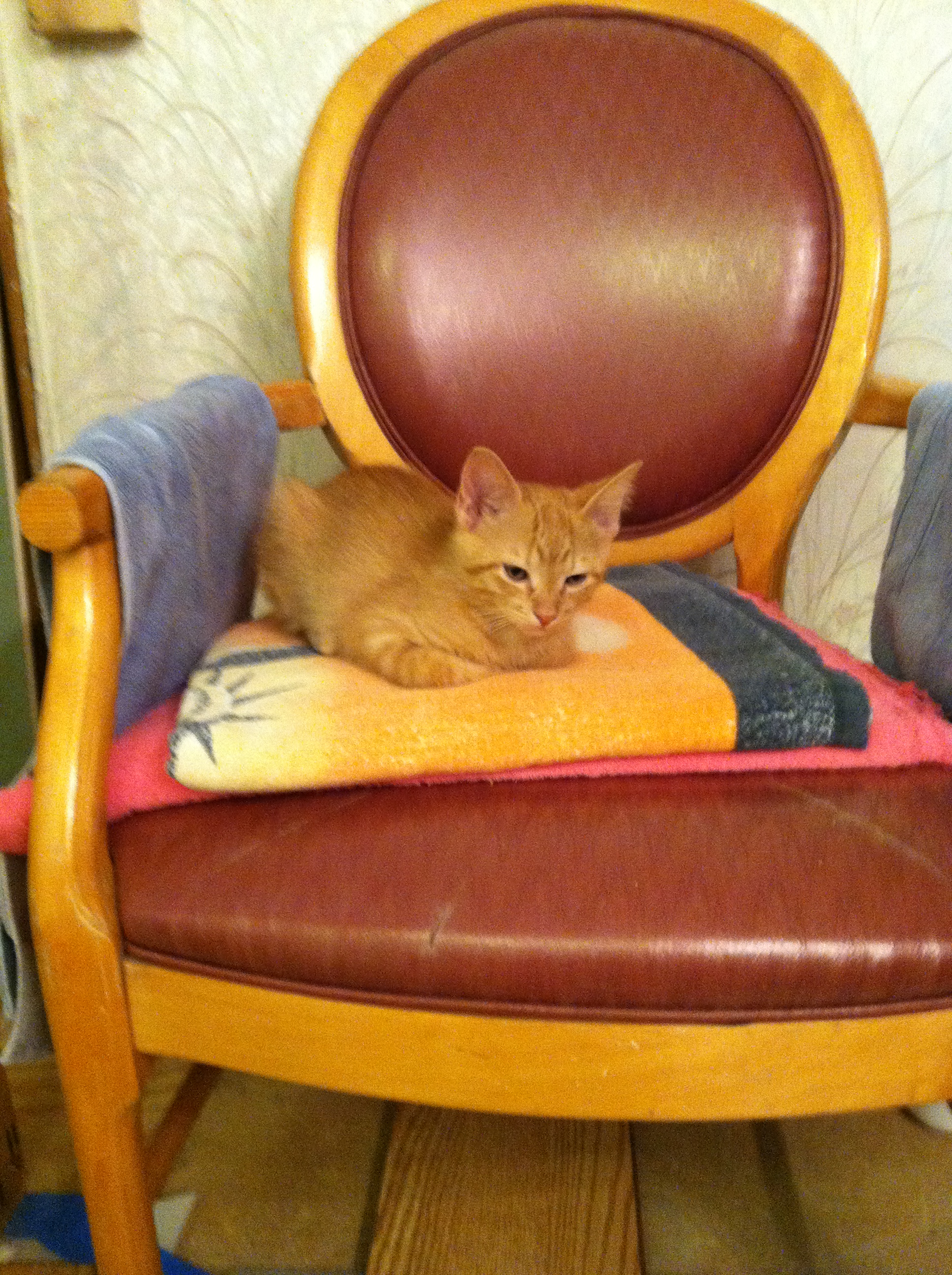
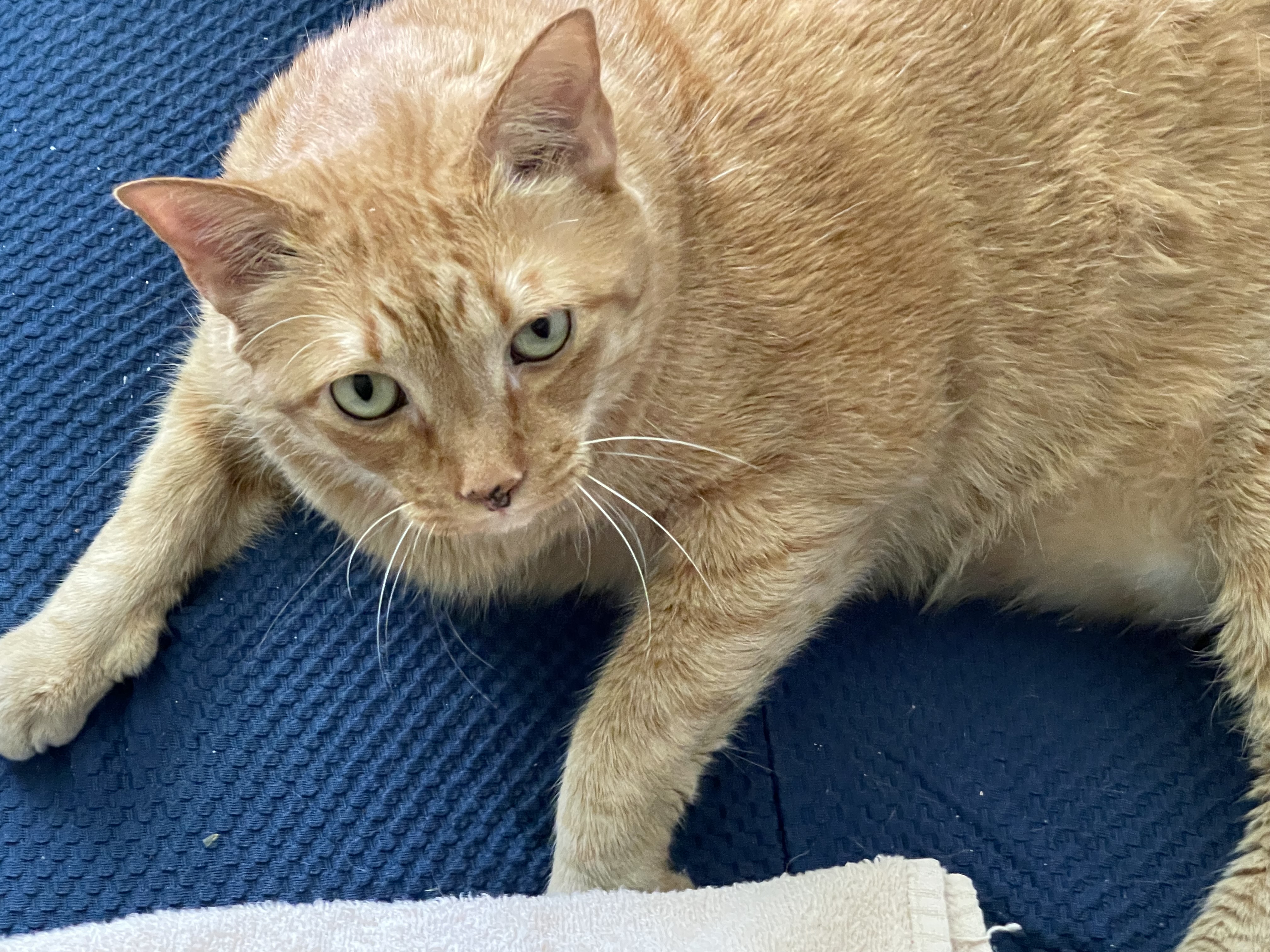
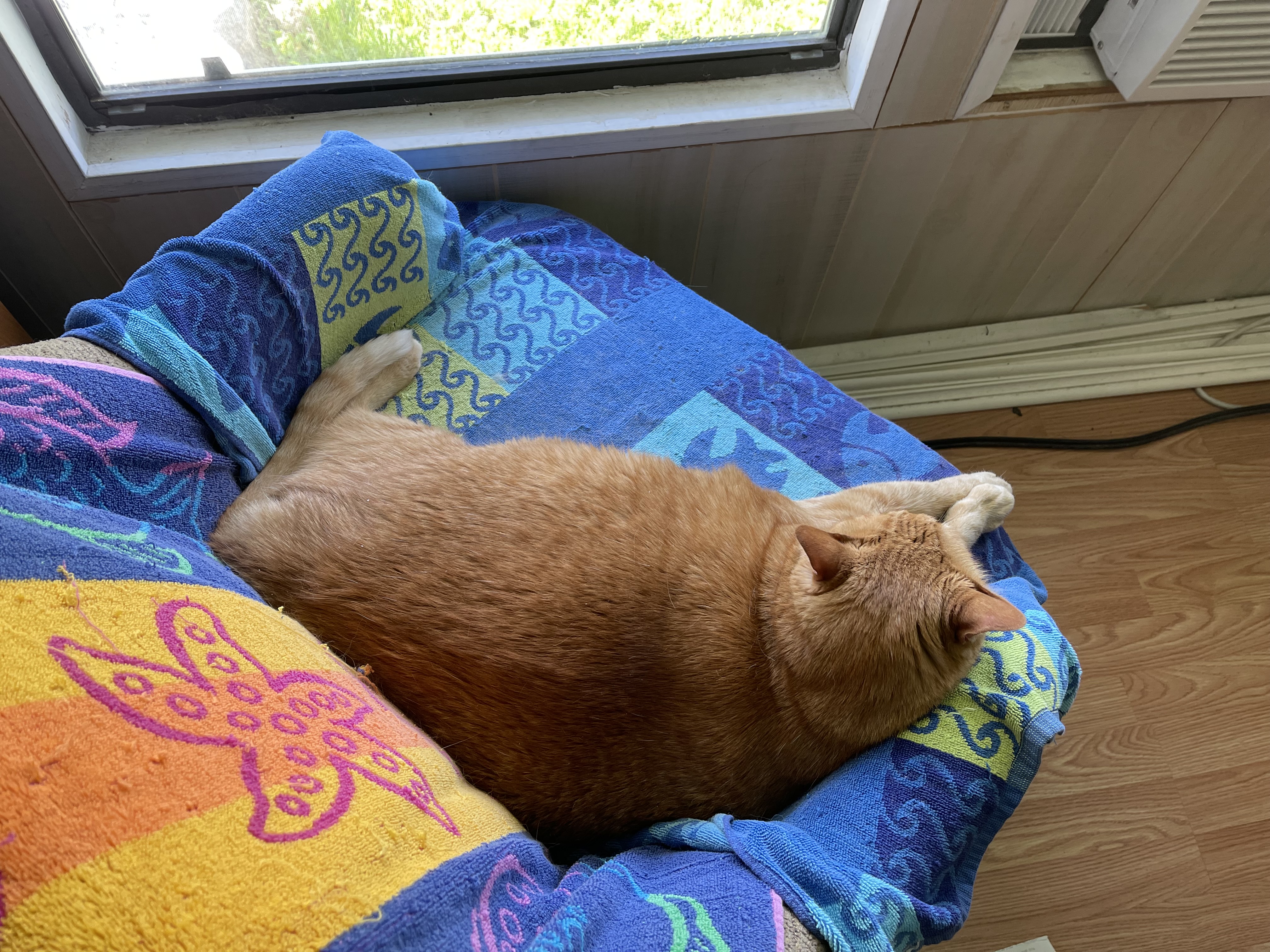
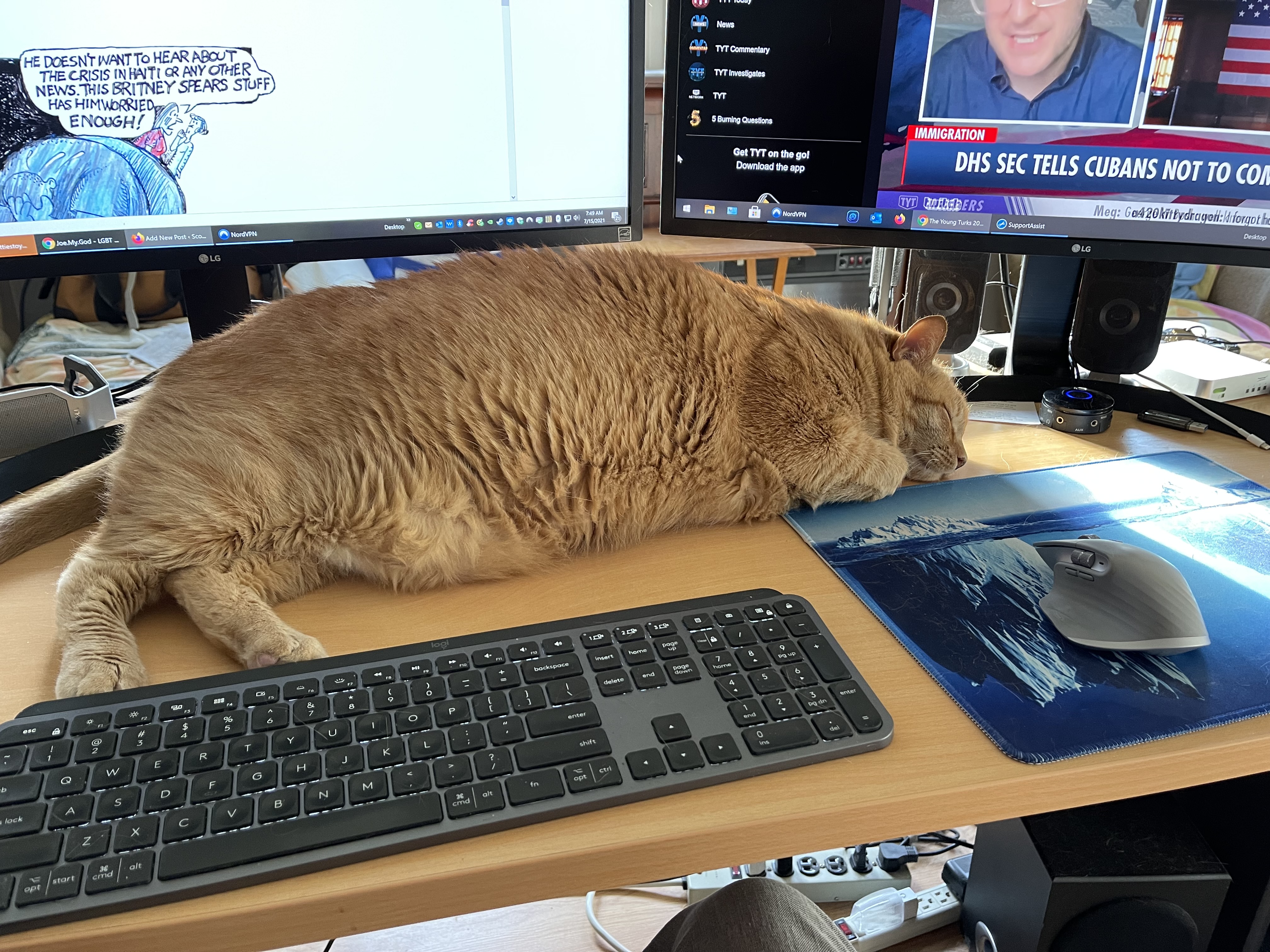
I have included a few pictures of Odie below. Best wishes, Purrs, and Hugs for all who want them.
Odie as a Kitten
Odie older.
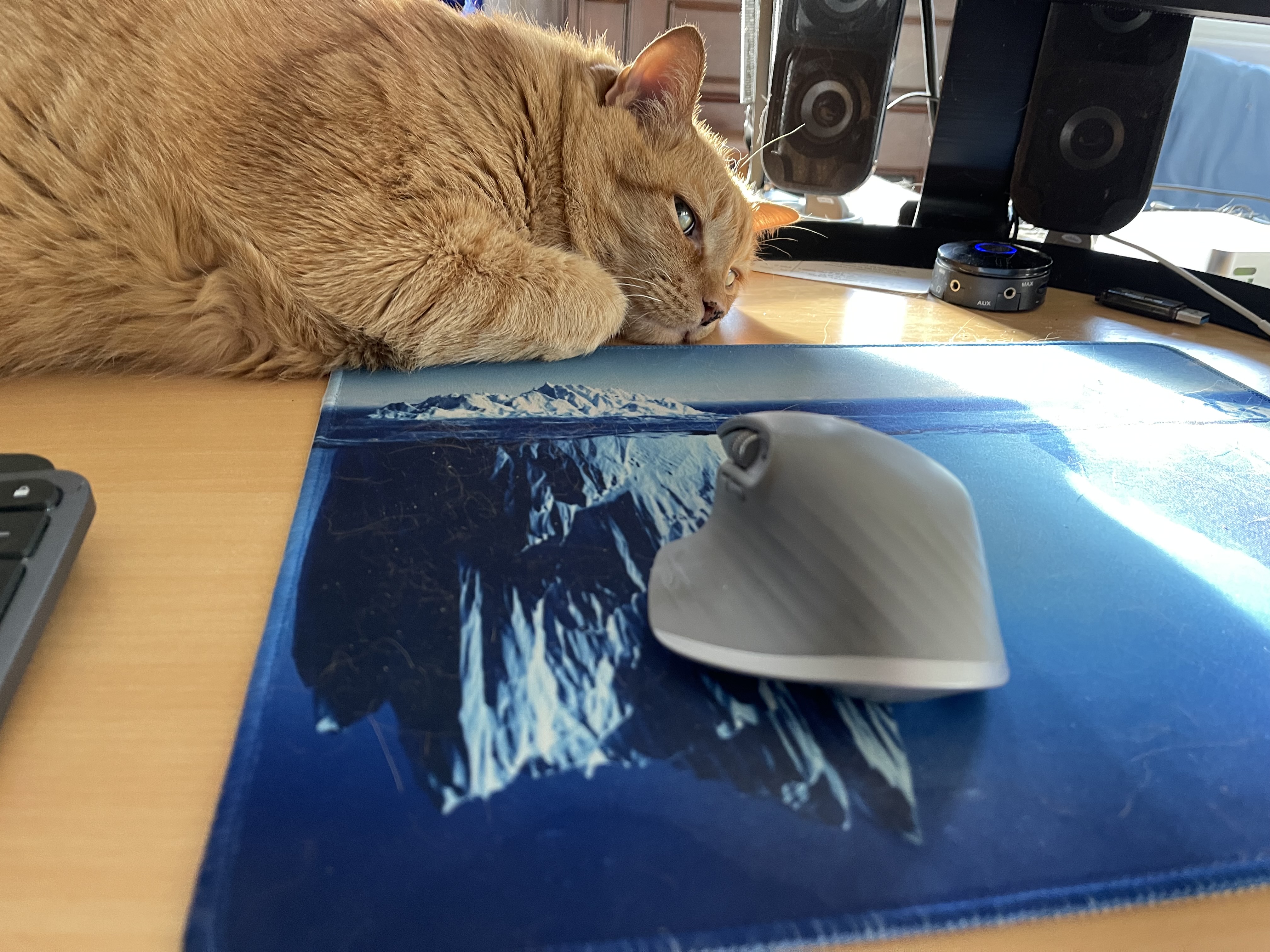
Odie in his favorite spot to get my love and attention. My desk.
This one’s about trouble for all coastal states, coming from Louisianans.
Louisiana Fights Against Becoming Another Not There No More Statistic by Jerileewei
Terrebonne Parish: Where the Rivers Meets the Sea Read on Substack
CCJC Audio Podcast Episode 00086, Season 2
“It’s not just the land we’re losing. It’s the stories. The way we talk. The smell of the air before a big storm.” — Emile Navarre
Cajun Chronicles Audio Podcast – Bringing you the heart of Louisiana. Artwork generated with Google Docs Image Maker.
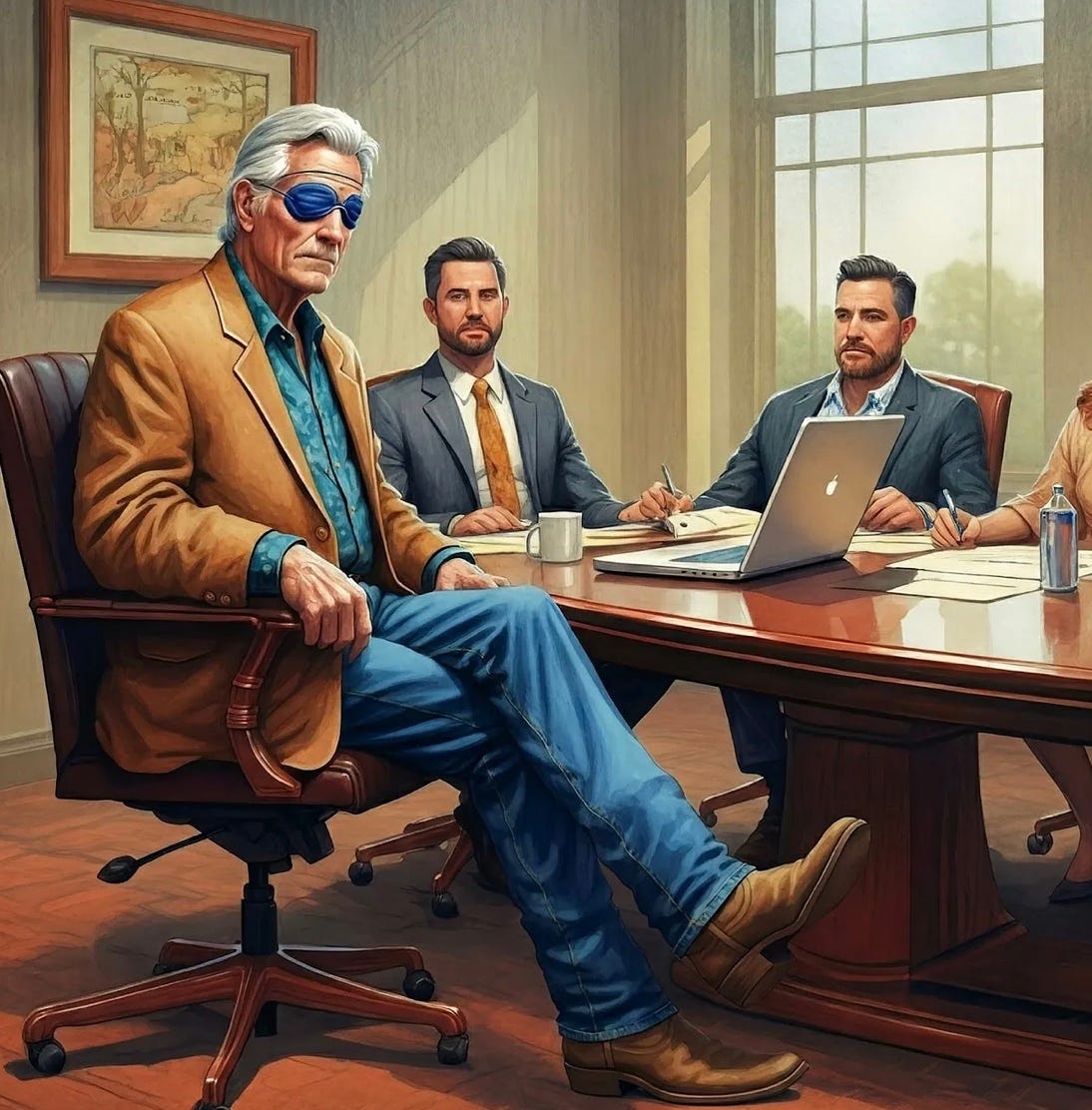
Back from his month long vacation in Chacahoula, Louisiana, Cajun Chronicle Podcast, Writer/Editor, Emile Navarre arrived for our first staff meeting armed with fresh material for a future episode, as soon as Marie Lirette, our Outreach Coordinator can reach out to potential experts on the topic of “Ain’t There No More” – a nation wide trending group talk everywhere these days, as our world changes in ways none of us could have imagined.
Here is his recount of his lifelong story telling to his family’s youngest children:
Cajun Chronicles Audio Podcast – Bringing you the heart of Louisiana. Artwork generated with Google Docs Image Maker
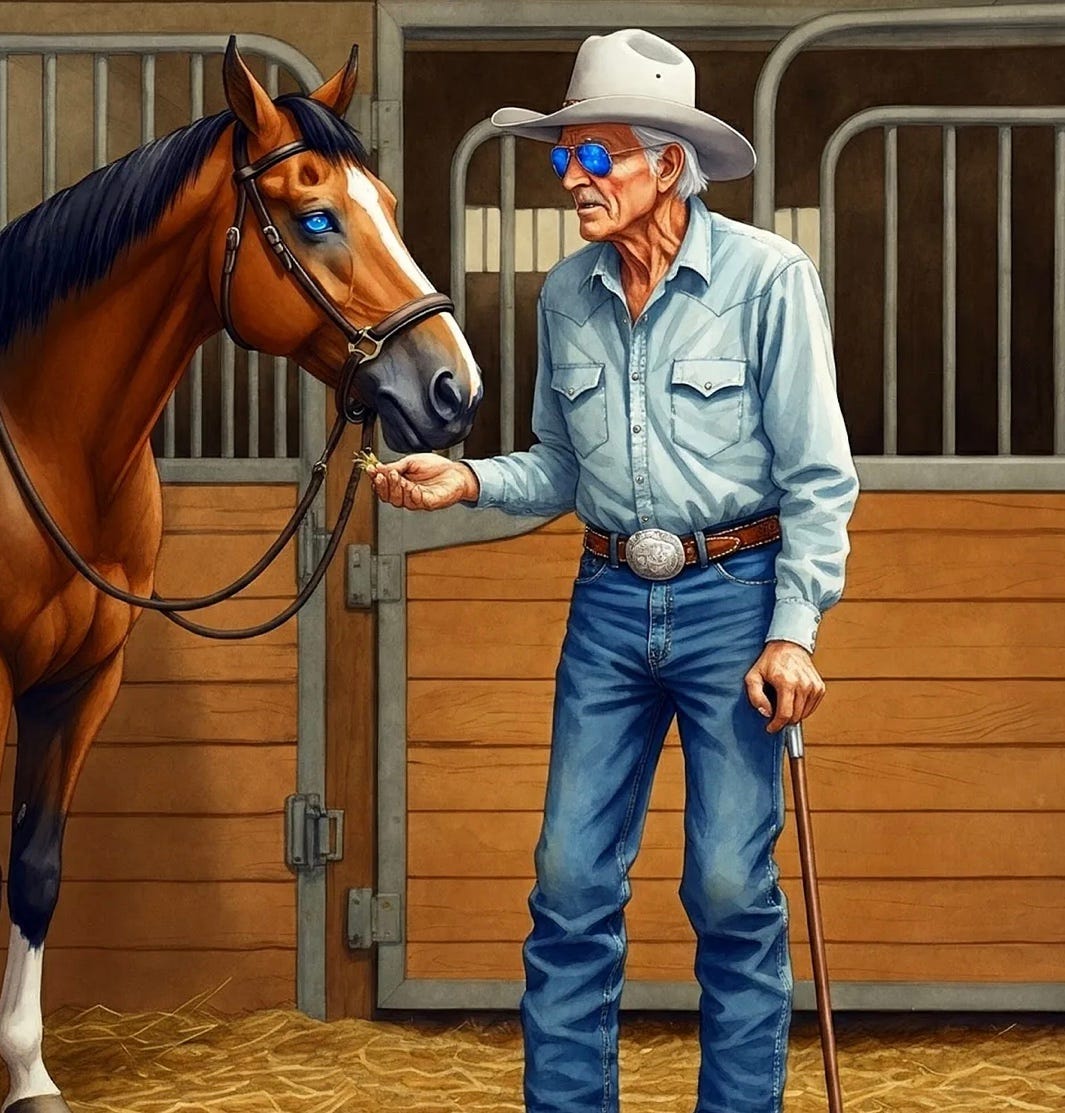
“Come closer, chérs,” he said, his voice a low rumble like the last Lafitte skiff shrimping boat of the day heading down the Bayou Lafourche over Galliano or Golden Meadow way. His cane bottom rocking chair seat creaked a steady rhythm against the worn Cedar floorboards as he said that.
The sun, a too warm blanket he could feel, but not see, was sinking somewhere behind the great oak in the yard he will always remember. He ran a hand over the cane of his chair, then rested it on the knee of a boy sitting on the steps below him. He lifted his walking stick and pointed off to the right side. “You see that big fence, hein?
“Or that levee your mamans and pépère have to climb to get home from work at the Bollinger Shipyard, just to get up to the house? We didn’t have such a thing when I was a boy. Back then, my feet knew every dip and bump in this land”.
“From our porch right down that oyster shell road to the bayou where the shrimp jumped so high, you’d swear you could catch them in your mouth, if you were quick.” A ripple of giggles ran through the children.
“Ah, oui,” he chuckled, “I lost a good tooth catching shrimp that way. But the land, it was different. We were like a river family. She’d bring us a big muddy hug every spring, and we’d be happy for it.”
“The floods, they were always a part of life. We’d move our things up high, sing songs, and wait for the water to go down. When it did, Mother Nature would leave behind a gift, a rich, dark mud that made our gardens burst with life. You could feel it in your toes, a soft, giving sponge of sandy soil that told you everything was going to be alright.”
He paused, and the laughter faded, replaced by the chirping of crickets.
“My pépère, he’d sit right here on the back porch with a fishing line tied to his toe, but in his mind, Gaia was always busy with the water. He’d talk about how the Lafourche river was a living thing, always moving, always changing. ‘She builds, and she takes away,‘ he’d say.”
“We knew that. A little bit here, a little bit there. It was a fair trade. But then came the men with the big ideas. They came from places where the land didn’t move so much. They told us we could stop the river’s big hugs. They said we could make a straight line and build high walls, so the water would stay in its place.”
Emile’s voice dropped to a conspiratorial whisper. “The young people, they thought it was wonderful. No more floods! No more moving furniture to the attic! But my pépère, he just shook his head. ‘You can’t trap a wild woman, not for long,’ he said. ‘She will find her way, and she will be angry for it.'”
“And she was,” he said, his hand now clutching his walking stick. “For years, the river was quiet, but our land, she was not. I can’t see it anymore with my eyes, but I felt it with my feet. The soil grew tired, no longer receiving her yearly gift.”
“The ground began to sag, and the bad marsh saltwater, it came closer in to say hello, not from a storm, but like a thief in the night, creeping up through the channels les Américains dug for the oil. They were for the big machines, the big money, but they were also a wound. A wound in the land that never healed.”
He turned his head toward the silent children, his milky blind blue eyes fixed on something only he could see. “Now, this levee you have, it protects you from the river, oui? But it holds the land in a box. It cannot breathe. The land is sick, and the ocean is hungry, taking a football field from our home every hour, the experts say.”
“I hear it in the wind now, not just the storms, but also in the sad whispers of the marsh, of the birds that have no place to land anymore. The land is leaving us, and we are left behind. We traded our river’s muddy hugs for a straight line and some high walls, and now we pay for it. Now, it’s not just the water that takes. It’s the land that gives itself away.”
The porch was silent, a stillness that was heavier than the humid air. The children looked at each other, not understanding all the words, but feeling the weight of them. One of the little girls, her braids tied with pink ribbons, quietly moved her hand to rest on the Emile’s knee as she headed inside for bed.
Emile smiled, his face creasing with a thousand invisible memories. Talking to the breeze, he raised his fist and threatened, “But you know what else my pépère said? He said, ‘As long as we tell the stories, the land is not truly gone.’ So listen, chérs, listen closely to my bedtime stories. Because now, it is your turn to remember.”
Cajun Chronicles Audio Podcast – Bringing you the heart of Louisiana. Artwork generated with Google Docs Image Maker
He had felt the last of the children’s light footsteps fade into the dusk, and the porch was still again except for his rocking chair. His head turned to the quiet rustling of the adults lingering on the porch. “You hear my stories, oui?” he said, his voice now lower, rougher.
“You too remember what I said about the river’s gift of mud? We didn’t know it, but we were like a family that had a big, generous table. Rivers brought food, and our land ate it. Every year, she’d get fat and happy. We thought we were so smart, so clever, when we built those high walls.”
“We told Gaia to stop eating for a while, believing for a while that she didn’t need the mud. ‘Don’t worry,’ we said, ‘We’ll protect you from the floods.’ But what we really did was put the food in a box and send it out to sea. Now, the land is starving. You cannot see it in a day, or a year. But that’s happening rapidly.”
“But I feel it in every part of my mind and body. Every year, she gets thinner, weaker. And like a sick old person who can’t stand anymore, Mother Earth’s starting to melt away. The medicine to save her is that very food we cut her off from. But the walls of levees and the canals the Corps of Engineers built? They are so high.”
“How will we get the food back to Louisiana’s coast before she’s gone entirely? That is the story my heart tells me now. And that is the story for you all to worry about. Time’s running out. I’m 75 years young this month. In another 75 years I won’t be here to see that my beloved Louisiane will be added to that dreaded list, “Ain’t Here No More.“
Cajun Chronicles Note: Sediment Starvation: The settlers’ levees and later government agencies built, while protecting their land from floods, also had an unintended consequence that would become a major factor in today’s coastal crisis. By containing the rivers, they prevented the natural flooding that would have deposited sediment into the wetlands.
This sediment was the building block of the delta. Without it, the land began to sink (subsidence) and slowly disappear. The settlers since the 1800s and later colonists were unaware of this long-term process and the vital role of the Mississippi’s and other rivers’ sediment in sustaining the land.
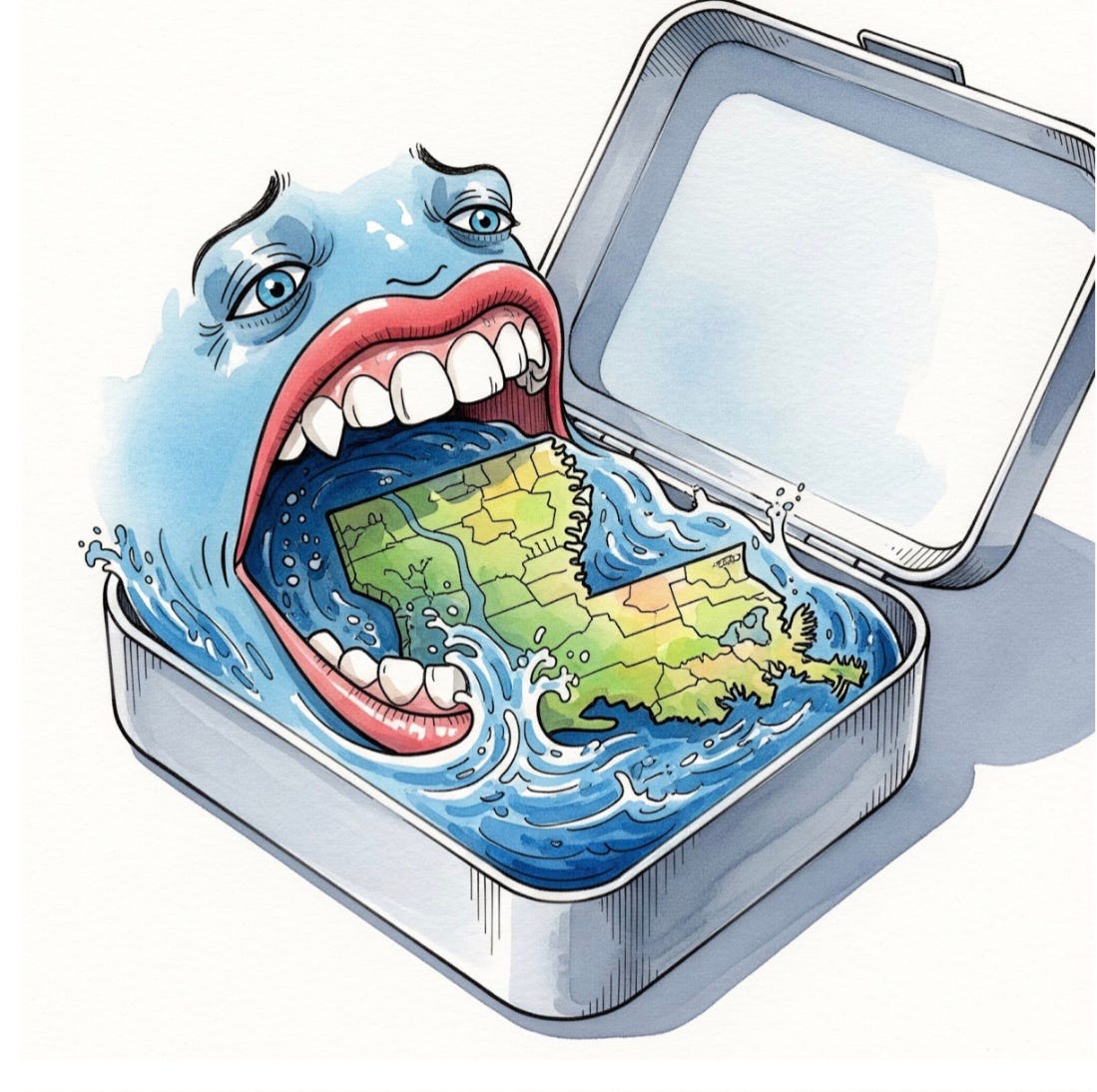
Water’s Takin’ Our Land, Gulf’s Hungry & She Ain’t Slowin’ Down
Cajun Chronicles Audio Podcast – Bringing you the heart of Louisiana. Artwork generated with Google Docs Image Maker
Louisiana has the highest coastal land loss rate in the United States. Since the 1930s, the state has lost about 2,000 square miles of land. This is a significant amount, roughly the size of the state of Delaware.
Without major intervention, the state of Louisiana is projected to lose an additional 700 to 1,000 square miles of land by the year 2050. This is an area roughly the size of the greater Washington D.C.-Baltimore area.
By the year 2100, the projections are even more dire, with some worst-case scenarios suggesting that up to 3,000 square miles of land could be lost. Some scientists have even warned that the entire remaining 5,800 square miles of Louisiana’s coastal wetlands in the Mississippi River delta could eventually disappear.
A Word of Wisdom:
Our fictional and non-fictional tales are inspired by real Louisiana and New Orleans history, but some details may have been spiced up for a good story. While we’ve respected the truth, a bit of creative license could have been used. Please note that all characters may be based on real people, but their identities in some cases have been Avatar masked for privacy. Others are fictional characters with connections to Louisiana.
As you read, remember history and real life is a complex mix of joy, sorrow, triumph, and tragedy. While we may have (or not) added a bit of fiction, the core message remains, the human spirit’s power to endure, adapt, and overcome.
Black Indigenous Chefs Are Reclaiming Identity Through Food — One Dish at a Time by Michael Harriot
Black Native food workers are passing down culinary traditions, restoring lost connections and feeding body and soul. Read on Substack
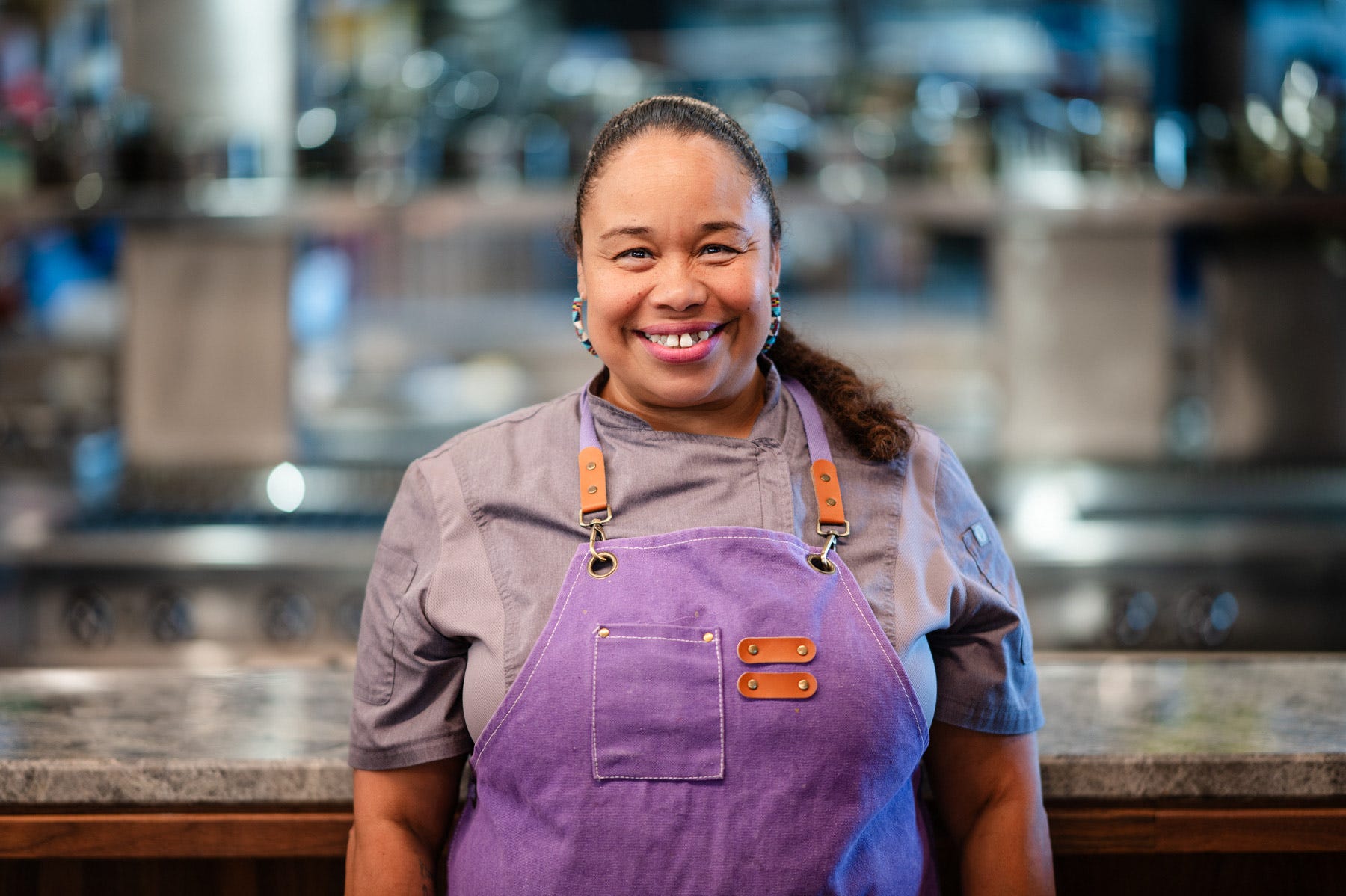
Crystal Wahpepah (Photo courtesy of Crystal Wahpepah)
The Indigenous food movement has seen a renaissance in North America, with restaurant openings, cookbook releases and community initiatives that announce the presence, expertise and heritage of Indigenous food workers. Amidst this moment, Black Native food workers have seen both the beauty and the harshness of living at the intersection of Blackness and Indigeneity, as the dominant settler colonial culture of the United States often tries to erase or flatten all parts of their identities.
But those attempts at erasure have also provided moments of reflection and insight, and a realization that the mission of Black Indigenous food workers is profoundly spiritual and political healing work. For Stephan Oak, a Black and Lakota forager and woodworker who lives in Detroit, the threads of connection that Black Indigenous people hold in their family stories that are “steeped in violence, but also steeped in love and resistance” are also guides that allow them to connect in the past, present, and future — a shared cosmology.
Crystal Wahpepah, who is Black and Kickapoo and the executive chef and owner of Wahpepah’s Kitchen in Oakland, Calif., says that often, through representation and education, Black Native people in the food industry come to a deeper peace about their identity and heritage. At Wahpepah’s Kitchen, over cornbread dishes from the Ute and Kickapoo people, wild rice from the Great Lakes tribes and bison from the Great Plains, people often find themselves.
“I meet so many people who are Black and Native but never felt connected to their Indigenous side, and when they meet me, they start talking about it, about culture, about those things that have been lost,” she says. Wahpepah is also opening a new restaurant, A Feather and a Fork, which is also the title of her upcoming cookbook.
That loss is something felt in both Black and Indigenous communities and can often feel pronounced because of family separation through residential schools, land expulsions, the trans-Atlantic slave trade and the domestic slave trade that broke up Black families across the country. “Because of colonial violence, there’s a fractured relationship to home or your connection to your ancestors,” says Oak. “The intent of the colonizer is to stop you from looking … to accept the identity of the conditions they’ve placed on you.”
Food is one of the ways Oak and others are reclaiming autonomy over their identities, especially as governments use food as a weapon by depriving communities of affordable, culturally relevant food. Oak points out that even amidst food deserts on reservations and urban Black communities, people find ways to be more self-sufficient and connect back to the land, which helps them reconnect with the essence of who they are. (snip-MORE; lots more but not too long)
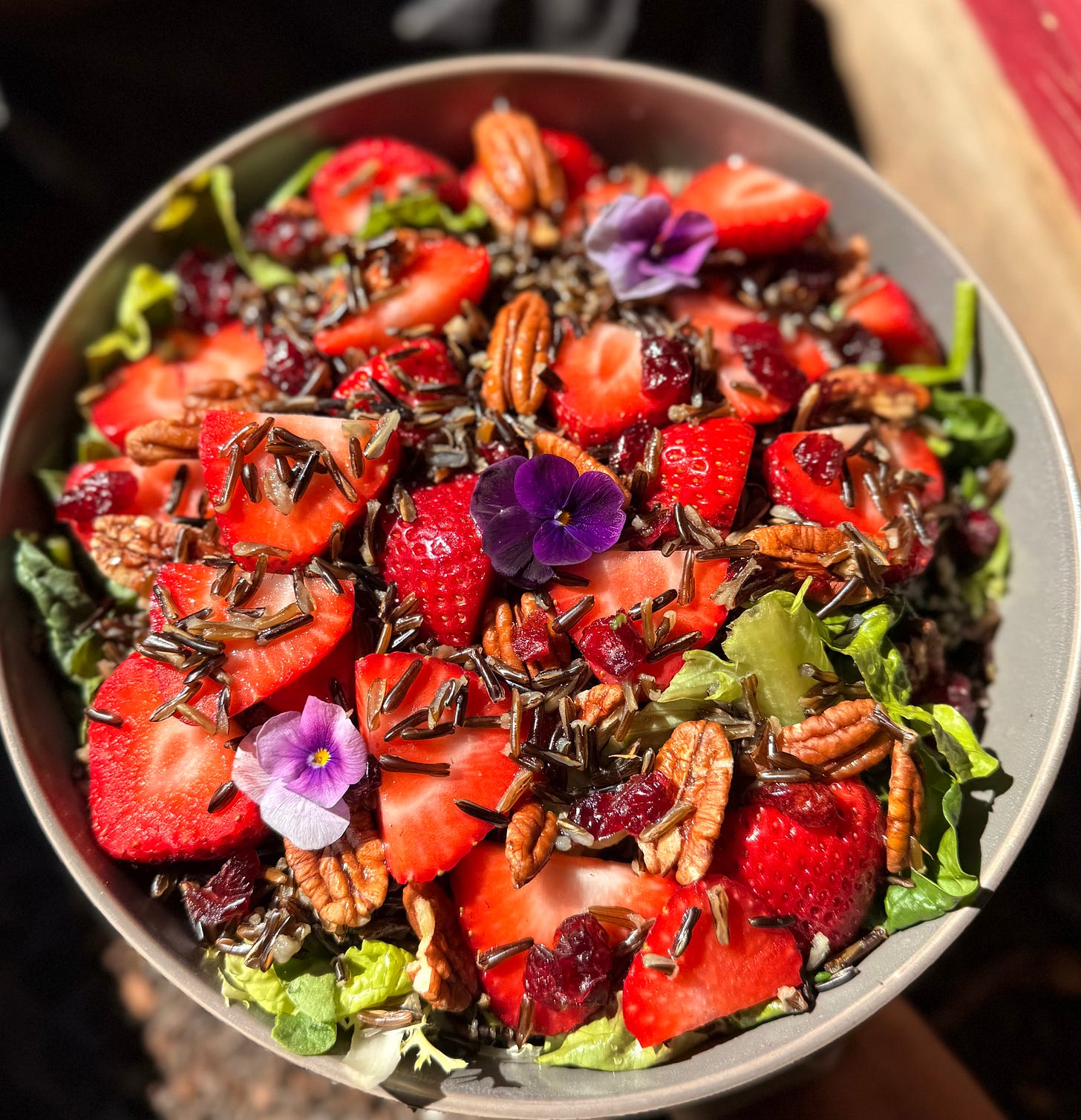
Crystal Wahpepah’s wild rice salad with strawberries and pecans (Courtesy of Crystal Wahpepah)
July 30, 1492 The same month Christopher Columbus set sail from Spain for his “expedition of discovery to the Indies” [actually the Western Hemisphere], was the deadline for all “Jews and Jewesses of our kingdoms to depart and never to return . . .” lest they be executed. Under the influence of Fr. Tomas de Torquemada, the leader of the Spanish Inquisition, King Ferdinand and Queen Isabella had ordered the expulsion of the entire Jewish community of 200,000 from Spain within four months. Spain’s Muslims, or Moors, were forced out as well within ten years. The edict of expulsion from Spain signed by King Ferdinand and Queen Isabella All were forced to sell off their houses, businesses and possessions, were pressured to convert to Christianity, and to find a new country to live in. Those who left were known as Sephardim (Hebrew for Spain), settling in North Africa, Italy, and elsewhere in Europe and the Arab world. Most went to Portugal, were allowed to stay just six months, and then were enslaved under orders of King John. Those who made it to Turkey were welcomed by Sultan Bajazet who asked,“How can you call Ferdinand of Aragon a wise king, the same Ferdinand who impoverished his own land and enriched ours?”
July 30, 1996 Four Ploughshares activists in Liverpool, England, were acquitted of all charges (illegal entry and criminal damage) on the basis of their having prevented a greater crime, after having extensively damaged an F-16 Hawk fighter jet to be sold to the Indonesian government for use in its genocidal occupation of East Timor. Seeds of Hope-East Timor Ploughshares: the action and the aftermath
Not necessarily in order of the day. For instance, just now, which is 8:30 PM Monday night, I am beginning to feel like the worst doggy mom in the world again. Ollie, dear little broken guy that he is, practically perfect in every way but for the fear he gained from his early abuse, has to be tranquilized before visiting the vet. Also muzzled right before the vet comes in the exam room, but. I Have To Slip My Little Doggy Mickeys! He gets one at night, one with breakfast on appointment day, and one an hour before the appointment, along with a couple of Solliquin, which are supplements with calming homeopathic calming substances. He loves those. Not so much the tranqs because he has no idea what’s happening to him or why. Tonight, though, he’s dealing with it better than a couple of weeks ago, which was his first time. He has to go in tomorrow for a follow-up heartworm test because we switched him from one flea protection to another that also protects from various other bugs that can bite him and cause him illness. At least he’s getting to where he doesn’t mind riding in the car as much as he used to! Of course, he’ll be tranquilized, so there’s that. There’s a kinda funny King Clarence YouTube about getting slipped mickeys; they do it like one of those TV lawyer ads. Pretty comical. Have not shown that to Ollie.
Moving on; a thing I like to do is buy the raw organic nuts and cashews off the ugly produce shelf; these are excellent products that are fine, but cheap because they need to be used quickly. Frequently, I’ll split a bag with the birds and squirrels; I’ll chop and freeze some for our use, and chop the rest to scatter outside. Earlier today, I decided to chop some cashews to take outside for birds and squirrels. The chopper is one of those “armstrong” choppers (photo below); you put your stuff in the cup, put the chopper over it, and start pumping the handle, which is on a spring. I remember a spokesperson ad for the “Slap Chop”, if anyone else does; my chopper is like that, but it’s a Zyliss. Not advertising. My chopper is 20 years old, the blades are beginning to dull, but I keep thinking that as long as I do things by hand instead of electricity, things in the world will be better. Well, today I get the chopper down, and the cup for the stuff, which is also the storage base of the chopper, has the ooky sticky feel that old plastics get when the PVCs or PFCs or whatever start leaching out. sigh. It wasn’t on the inside of the cup; only the outside, so I trashed the cup, and used a solid bowl to chop after I washed the chopper to make sure. Don’t want to mess up the birds’s systems with plastic chemicals!
When things like this happen, the words “planned obsolescence” always come into my mind. These days many, including myself, might say “enshittification,” though I think it’s reasonable that a 20 year old chopper cup might be worn out enough to leach. But still. Anyway, the words “planned obsolescence” always bring Jimmy Carter to mind. Why, you might ask?
Or maybe you didn’t, but here’s why. I was not of voting age when he was elected. His speaking accent annoyed me a great deal. I liked his ideas, definitely didn’t want Ford, was relieved when Carter won and wished him well, but that accent made my teeth hurt. So, of course, when the time for his initial SOTU arrived, what did my Speech & Forensics instructor instruct us, but to listen to that SOTU, and judge it using the very guidelines judges would use on us later in tournaments. We were to pay close attention to everything, but our work was to judge the speech without factual or political consideration, only his delivery skill.
Now, my recollection is he did fine; aside from his accent, which was not a judgeable item, he spoke of “planned obsolescence” a great deal. Enough that it became a bit redundant as to the speech itself, though not to his actual points. Of course, I had to mark that. However, that term stayed with me, and I learned from that, about designing and manufacturing, sales, consumerism, etc., etc. And that term comes to me when something fails after some use, and I think of Jimmy Carter, which reminds me to be all around nicer.
Speaking of this: do you think Jimmy Carter would use the term “enshittification” these days (not in an SOTU, of course!)? Let me know in the comments. I hope you enjoyed my Monday mind’s wanderings!
This is not a work of fiction. It’s from my clinical notes, drawn from the quiet corners of a family learning how to listen, how to see, and how to love. What follows is Maya’s story—and ours too. It began with misunderstanding and grew into music. It was shaped by silence, and strengthened by learning how to hear what was never said out loud.
—
🧠 Main Characters
• Maya (17) – A brilliant, autistic teen who expresses herself through music but struggles with verbal communication and sensory overload. Her inner world is rich, but rarely understood.
• Daniel (45) – Her father, a pragmatic man who misinterpreted Maya’s behavior as defiance. He’s emotionally shut down but carries deep guilt.
• Leah (43) – Her mother, who tried to advocate for Maya but became isolated in the process. She’s exhausted, but still hopeful.
• Eli (15) – Maya’s younger brother, who felt invisible growing up. He’s witty, sarcastic, and secretly protective of Maya.
—
I. The Fracture
The house had grown quiet over the years—not the peaceful kind, but the kind that echoed with things unsaid. Leah sat at the kitchen table, her fingers wrapped around a chipped mug, staring at the steam like it held answers. Upstairs, Maya rocked gently in her chair, headphones on, fingers twitching over her keyboard. Her music was her voice now.
Eli moved through the house like a ghost. He didn’t slam doors or raise his voice. He just existed in the spaces between tension. And Daniel—he hadn’t been home in months. He lived alone now, in a small apartment filled with regrets and unopened letters.
Maya had always been different. Brilliant, but misunderstood. Her silence wasn’t emptiness—it was survival. Her meltdowns weren’t tantrums—they were overload. But Daniel never saw that. He saw defiance. He saw rebellion. And slowly, the family unraveled.
—
II. The Breaking Point
It happened at school. Maya, overwhelmed by noise and light and chaos, collapsed in the hallway. Hands over her ears, rocking, humming. Someone filmed it. Of course they did.
Eli found the video first. He didn’t speak. Just slid his phone across the table to Leah and walked out.
That night, Leah called Daniel.
“She was screaming,” she said. “And no one heard her.”
Daniel arrived the next morning. He stood in the doorway like a stranger. Eli didn’t look up. Maya didn’t come down. Leah didn’t cry. Not anymore.
“She doesn’t talk much,” Leah said. “But she plays.”
Daniel didn’t understand. Not yet.
—
III. The Song
Eli knocked on Maya’s door. “Can I record you?” he asked.
She didn’t answer, but she didn’t say no.
He sat on the floor, phone in hand, and watched as Maya’s fingers danced across the keys. The melody was aching, defiant, beautiful. It was everything she couldn’t say.
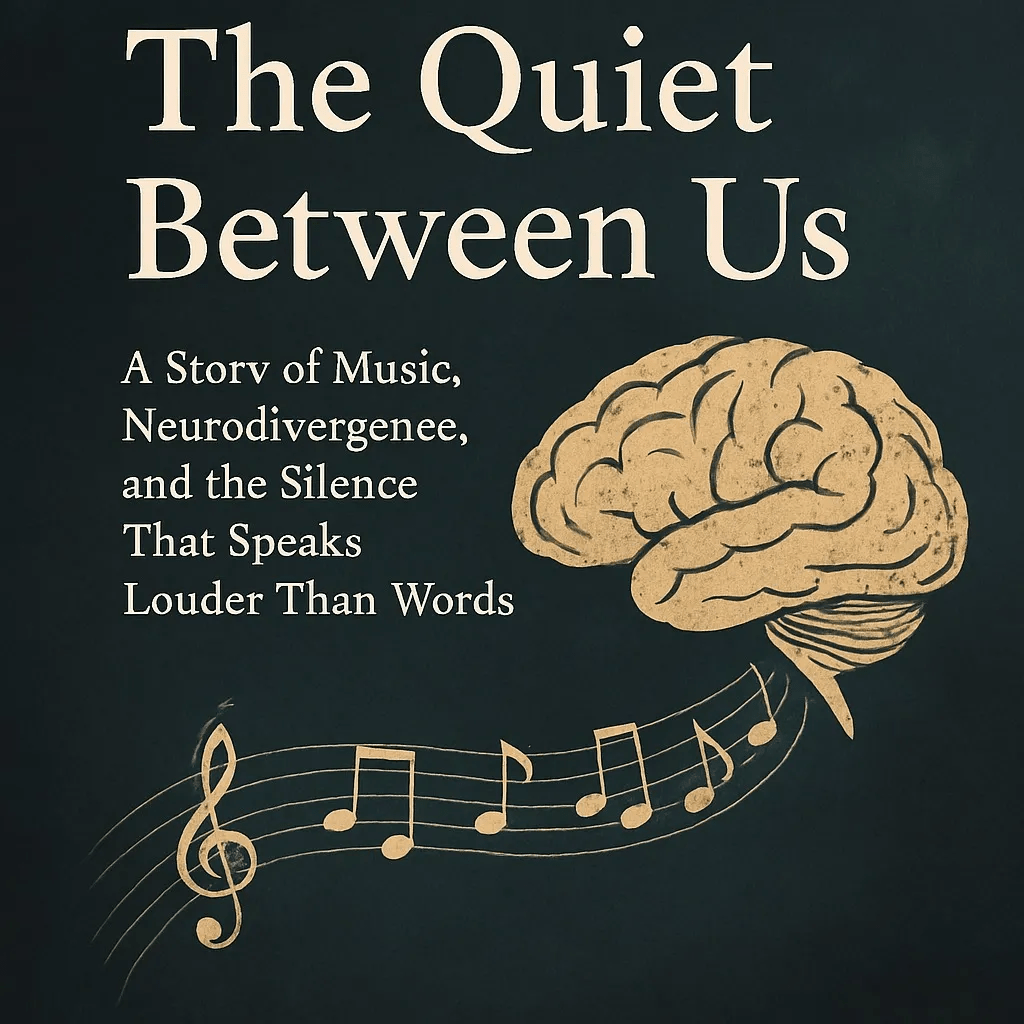
He uploaded it that night. The Quiet Between Us.
The video spread. Comments poured in. People who felt seen. People who understood.
Daniel watched it on repeat, tears streaking his face.
“I didn’t know she could feel like that,” he said.
“She always did,” Leah replied. “You just didn’t know how to listen.”
—
IV. The Shift
Daniel knocked on Maya’s door. She didn’t look up, but she didn’t turn away.
“I heard your song,” he said. “I’m sorry I didn’t hear you sooner.”
Maya reached for her keyboard. Played a single note. Then another.
Daniel sat beside her, silent. Listening.
Leah watched from the hallway, hand over her heart.
Eli uploaded another video: The Quiet Between Us – Live.
They began to change. Slowly. Imperfectly.
Daniel stopped trying to fix. He started trying to understand.
Leah stopped carrying everything alone. She let herself be held.
Eli stopped disappearing. He became the bridge.
And Maya? She kept playing.
—
V. The Reconnection
They sat together in the living room. Maya played. Eli recorded. Leah smiled. Daniel closed his eyes and listened.
No one spoke. But everything was said.
They weren’t perfect. But they were real.
And in the quiet between them, they found something louder than words.
They found each other.
🎵 Epilogue: The Song That Speaks (Follows graphic)
—
🎵 Epilogue: The Song That Speaks
Maya’s music became a language for others.
Eli started a podcast for neurodivergent families.
Daniel and Leah spoke at workshops. Not as experts—but as learners.
Their story wasn’t about fixing.
It was about listening.
About loving each other—not in spite of difference,
but with it.
Because love isn’t always loud.
Sometimes, it’s quiet.
And sometimes, the quiet is where love begins.
This is more than a story. It’s a lived truth. Signed not with ink—but with the quiet strength of love, survival, and rediscovery.
July 24, 1974 The United States Supreme Court (U.S. v. Nixon) unanimously ordered President Richard Nixon to surrender tape recordings of White House conversations regarding the Watergate affair. Speaking for the Supreme Court in front of a packed and hushed courtroom, Chief Justice Warren E. Burger (a Nixon appointee) rejected President Nixon’s claims of executive privilege (virtually total confidentiality for the White House) because the need for fair administration of criminal justice must prevail. The White House feared review of the recordings by a U.S. district judge would reveal, among other crimes, impeachable offenses. Listen to the tapes online (It’s a YouTube playlist!)
July 24, 1983 Canadians and Americans spanned the international border at Thousand Islands Bridge, linking New York and Ontario, to protest nuclear weapons and border harassment of peace activists. Thousand Islands Bridge
July 24, 1983 Women tagged a U.S. warplane with anti-nuclear graffiti at Greenham Common, an air base in England. The Greenham Common Women’s Peace Camp had been set up just outside the perimeter of the base in 1981 to get U.S. Cruise missiles, some of which were deployed at the base, out of their country. Other tactics included disrupting construction work at the base, blockading the entrance, and cutting down parts of the fence. Read more about The Greenham Common Women’s Peace Camp
Very informative and heart felt. Aron Ra is well known for his thought approach to atheism and science, delivering it in a way that a normal person can understand. The things he says at the end and the pictures he shows makes clear that as he says this is not about protecting anyone but about enforcing bigotry. Hugs

















 Scottie's Playtime