Political cartoons / memes / and news I want to share. 5-12-2026
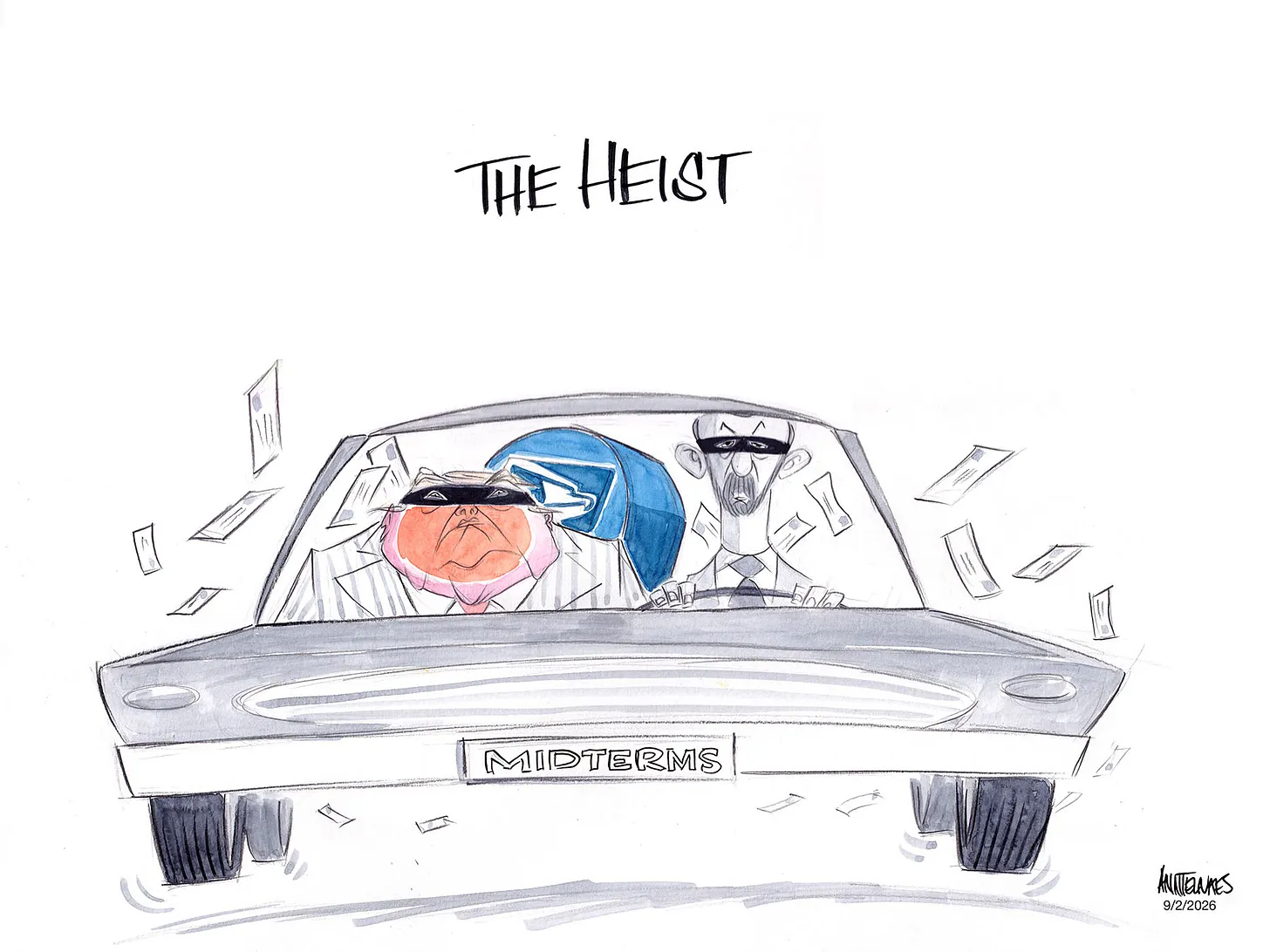


Image from Liberals Are Cool


Democrats vow to fight $1 billion Senate security proposal for White House ballroom (Associated Press)#Trump

TrumpWatch (@trumpwatch.skyfleet.blue) 2026-05-11T10:43:50.861Z


#national embarrassment from Liberals Are Cool


Image from Liberals Are Cool


‘Actually a Disease’: Trump Goes Off on TDS During Maternal Healthcare Event

Mediaite (@mediaite.com) 2026-05-11T16:01:11Z


Image from Liberals Are Cool


Image from Liberals Are Cool


Image from Liberals Are Cool


Hassett lies his ass off: "Almost all of the job creation that happened under President Biden was the employment of illegal aliens"

Aaron Rupar (@atrupar.com) 2026-05-10T14:32:58.493Z


Hassett preemptively blames blue states for sluggish national GDP growth: "If we disappoint at all, it'll be because of, like, what happens to New York and California because of these misguided policies"

Aaron Rupar (@atrupar.com) 2026-05-10T14:35:21.265Z


Republicans who denied 2020 election results could be governors next year http://www.washingtonpost.com/politics/202…

Timothy McBride (@mcbridetd.bsky.social) 2026-05-10T09:22:27.153Z


#medicare for all from Liberals Are Cool


People are already peddling ivermectin for Hantavirus. The same people had never heard of Hantavirus 3 days ago. We live in the dumbest possible timeline.

Angry (@angrystaffer.bsky.social) 2026-05-07T01:28:15.240Z

Everybody stay calm, the top virologists, medical research scientists, clinical researchers and clinical pharmacologists on Twitter have been working around the clock for two minutes and already discovered that Ivermectin cures the hantavirus.

Covie (@covie93.bsky.social) 2026-05-07T14:19:20.506Z

Right on cue. A new outbreak and immediate misinformation about “miracle cures.”Ivermectin is an antiparasitic drug, not a proven treatment for #hantavirus. Being an RNA virus does not mean ivermectin works against it.Promoting unsupported therapies during an outbreak causes real harm.

Krutika Kuppalli, MD FIDSA (@krutikakuppalli.bsky.social) 2026-05-07T10:59:14.860Z


Those who cheered ivermectin as a Covid-19 treatment are now making unsubstantiated claims about its use against hantavirus.

The Intercept (@theintercept.com) 2026-05-08T16:11:44.698Z

New vein of Maga Moron stupid discovered in Texas. Dr Mary Talley Bowden who was reprimanded for treating COVID-19 without permission in Texas,now says the Hantavirus can be treated with ivermectin and that she will be selling it to Texans only without prescriptions.www.rawstory.com/mary-bowden-…

Sylvaners (@sylvaners.bsky.social) 2026-05-07T22:22:14.307Z


Ivermectin is not a proven treatment for hantavirus. Read more: u.afp.com/SRou

AFP Fact Check (@factcheck.afp.com) 2026-05-08T21:17:46.206Z

RFK Jr: "In 1970, men had twice the sperm count as our teenagers do today"

Aaron Rupar (@atrupar.com) 2026-05-11T15:38:29.578Z


Image from Liberals Are Cool


#SCOTUS from Liberals Are Cool

Image from Liberals Are Cool

This is not a photo from the civil rights era. This is Tennessee yesterday May 7, 2026.

This is the vision of America the GOP and Republicans want.


Was the Voting Rights Act created because Democrats established racist gerrymanders, as Rep. Byron Donalds said? No. The law targeted a range of discriminatory practices for voting such as literacy tests, poll taxes and violence.

PolitiFact (@politifact.bsky.social) 2026-05-10T16:06:00.717Z


Image from Liberals Are Cool


Tuesday we will head into the belly of the beast for an Oversight hearing in Palm Beach to hear from Epstein Survivors in FL. We won’t stop until there’s justice.

Rep. Melanie Stansbury (NM-01) (@repstansbury.bsky.social) 2026-05-08T00:34:07.809Z


Tuesday we will head into the belly of the beast for an Oversight hearing in Palm Beach to hear from Epstein Survivors in FL. We won’t stop until there’s justice.

Rep. Melanie Stansbury (NM-01) (@repstansbury.bsky.social) 2026-05-08T00:34:07.809Z


Trump is really crashing out on social media today. Mother’s Day must be tough for him. His latest screed: “I have just read the response from Iran’s so-called ‘Representatives.’ I don’t like it — TOTALLY UNACCEPTABLE! Thank you for your attention to this matter. President DONALD J. TRUMP”

Aaron Rupar (@atrupar.com) 2026-05-10T20:14:11.590Z


Israeli Prime Minister Benjamin Netanyahu tells 60 Minutes he wants Israel to eventually stop relying on U.S. military aid: “It's time that we weaned ourselves from the remaining military support.” 60Minutes.com

60 Minutes (@60minutes.bsky.social) 2026-05-10T18:53:40.420Z

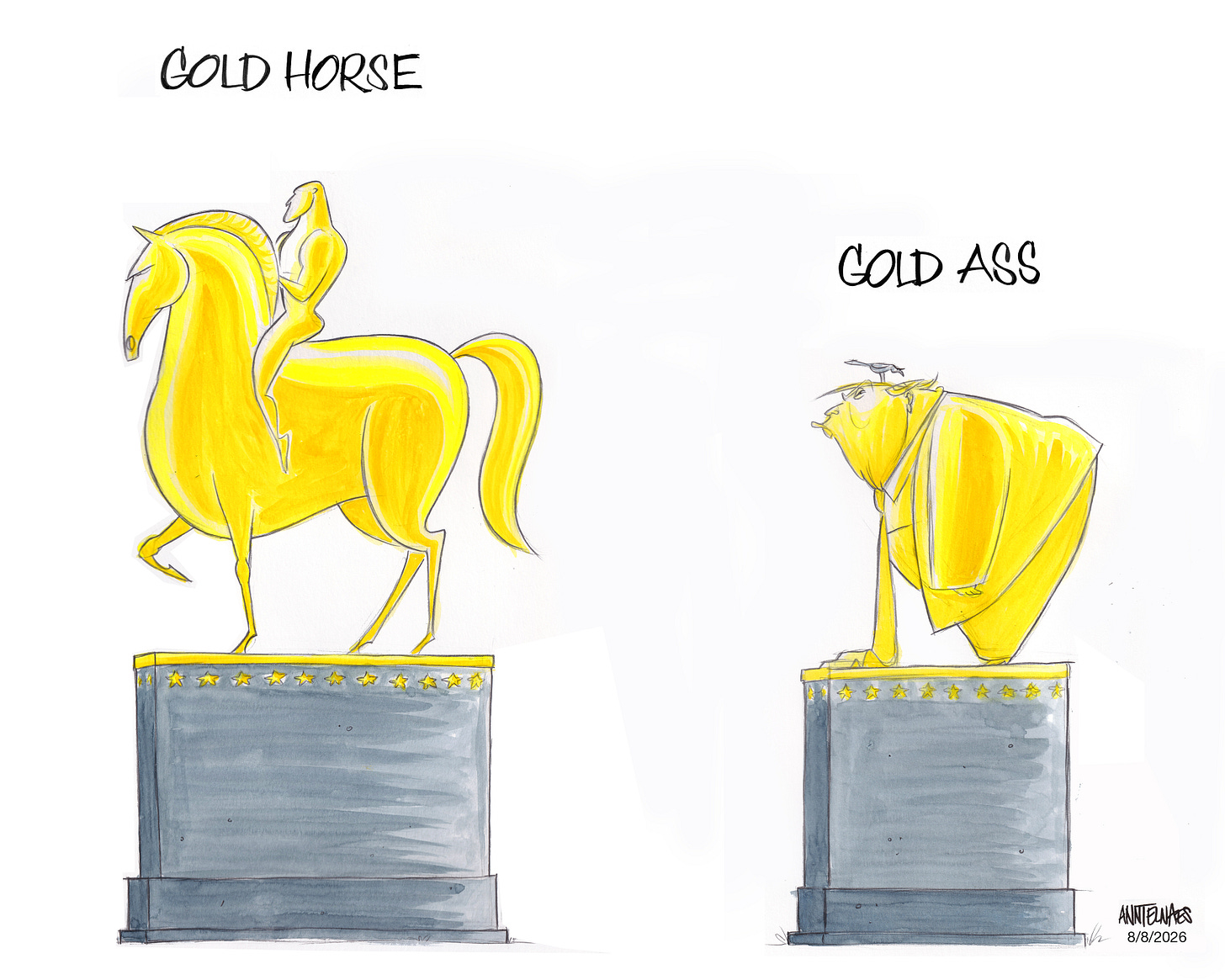
BREAKING: antifa thugs erect obscenely suggestive Benjamin Netanyahu statue right next to the 15 foot tall Donald Trump statue, at his golf course at Trump National Doral in Florida.#DonaldTrump #GoldenStatue

Paulley Ticks (@tomadelsbach.bsky.social) 2026-05-10T17:50:09.518Z

Netanyahu hints at upcoming war on social media."I think there's been a concerted effort by several states to basically vilify Israel in the social, primarily in the social media … We've not fought back yet; so we'll have to do that."

Ken Klippenstein (@kenklippenstein.bsky.social) 2026-05-11T00:34:08.648Z


Netanyahu Blames Social Media for Israel’s Crumbling Support in USA. As opposed to that slaughter and ethnic cleansing of both Christian and Muslim Palestinians and Lebanese. Netanyahu is making it clear Christian and Muslim lives do NOT matter! http://www.mediaite.com/media/news/n…

Dean Obeidallah (@deanobeidallah.bsky.social) 2026-05-11T00:43:19.876Z


Russia Has Lost More Than 350,000 Soldiers, New Estimate FindsNYT gift articleAbout half a million soldiers have died on Russian and Ukrainian sidesDoesn't include those who have died on the front this year and deaths of foreigners who have fought for RussiaWhile Trump sleepsbit.ly/4eVTckj

Frank D. Russo (@fdrtoday.bsky.social) 2026-05-09T18:34:49.068Z


Trump invites Elon Musk, Tim Cook, Larry Fink and other CEOs to join China trip for Xi summit

CNBC (@cnbc.com) 2026-05-11T15:57:44.966Z


Image from Liberals Are Cool


From My Friend, Brian Arbenz, A Meme For The Season

More On The Courts From Joyce Vance

Here’s Why We’ve Been Keeping An Eye On Alabama

A really bad decision from SCOTUS

Joyce Vance

When we last discussed Alabama, we talked about the fact that it took the state about a nanosecond after Callais to run to the Supreme Court for permission to redraw its maps—to get the “benefit” of Callais—ahead of the midterm elections.

Today, the Supreme Court ruled. There had been speculation that they might delay until after the midterm primary, which is scheduled for Tuesday, May 19, one week from tomorrow. But the Court jumped right into the fray, despite its constant protests that it does not interfere in elections or make political decisions.

The Court has sent the case back to the panel that considered it previously for a decision “consistent with Callais.” Essentially, that’s a direction to permit Alabama to abandon the court-ordered map that created a second Black opportunity district and leave the state free to revert to the older map that the Court had previously ruled discriminated against Black voters in violation of the Voting Rights Act. That’s the map we looked at the other night, that sends long spines out of Alabama’s Black Belt into Birmingham, Montgomery, and north of Mobile to pack Black voters into a single district.

Justices Sotomayor, Kagan, and Jackson dissented. I haven’t seen the dissent yet, but it’s noted on the docket. I’d expect it to be pretty vigorous and to focus on the panel’s finding that the Alabama Legislature engaged in intentional discrimination against Black voters. The Court split along pure party lines. Justices Roberts and Kavanaugh, who three years ago ruled in favor of Black voters, abandoned that principled position.

Oh, and the kicker? Despite Alabama’s win, which meant the Court found that the maps the state legislature had drawn illegally discriminated against Black voters, the state went through an additional election cycle using those maps. Alabama had argued that any changes, sought in February ahead of a June primary, came too close to the election and violated the Purcell principle.

Purcell is the recently created Supreme Court doctrine that says federal courts can’t make changes to state election laws or procedures “too close” to an election, whatever too close means. Meanwhile, the Supreme Court just made the mother of all changes in Alabama one week before the primary.

The rationale for the principle is that it prevents voter confusion and avoids logistical chaos for election officials. Since the Court dropped its decision, I’ve spoken with candidates, election officials, and voters in Alabama. To say Alabama is in disarray is not an overstatement.

It’s not even clear whether the primary will be held on schedule next week at this point. Jerome Dees, at the Southern Poverty Law Center, told me that, “HB1 didn’t give a clear cutoff date for when it would be ‘too close’ to the election, which means whether Alabama will hold a primary on schedule next week is up in the air.” There has been some suggestion that Governor Kay Ivey and Secretary of State Wes Allen are canvassing local election officials to see if they can make the turnaround happen within a week, but new districts throw everything from candidate qualifying to physical ballots into question. Alabama could invalidate votes cast next week and hold a special election later this year in the affected districts.

Earlier today, the Court scheduled for conference later this week three cases involving whether individual voters can sue to enforce the Voting Rights Act. One was Milligan.

The other cases involve Native voters in Turtle Mountain Band of Chippewa Indians v. Howe and a case out of Mississippi brought by the NAACP.

The Brennan Center explained the significance last year: “For decades, Congress, the courts, the DOJ, and private litigants have agreed that Section 2 of the VRA can be enforced by individual voters and groups. Historically, a majority of Section 2 cases have been brought by private parties, and DOJ attorneys have explained that the department relies on private lawsuits because it does not have the resources to bring all of these types of cases even if it wanted to.”

If the Court rules that private parties cannot sue to enforce the Voting Rights Act, that leaves only the Justice Department—in other words, this Justice Department—which is not inclined to protect historically disenfranchised voters by filing lawsuits. That would truly eviscerate the last shreds of the Voting Rights Act, while DOJ continues to pursue fantastical theories of voter fraud instead of protecting voting rights. It can still get worse.

It is a sad, difficult day for democracy, with the Court as a willing participant.

(snip-subscription stuff)

We’re in this together,

Joyce

This Week:

The Week Ahead

May 10, 2026
Joyce Vance

Here’s what to expect this week:

The Gerrymandering Epidemic Continues

The Supreme Court’s decision in Callais continues to make clear all the reasons we needed, and continue to need, a Voting Rights Act. And it isn’t about protecting white voters. Congress had an entirely different intent when it passed the Act, an intent that DOJ has forgotten to remove mention of from its website:

Section 2 “prohibits voting practices or procedures that discriminate on the basis of race, color, or membership in one of the [specified] language minority groups,” according to the website, which hasn’t been updated by this administration, at least not yet. “[T]he Supreme Court explained that the ‘essence of a Section 2 claim is that a certain electoral law, practice, or structure interacts with social and historical conditions to cause an inequality in the opportunities enjoyed by black and white voters to elect their preferred representatives.’” Congress clarified that the courts should look to “the history of official voting-related discrimination in the state or political subdivision,” when determining if the law has been violated. In the states hurriedly enacting new maps that eliminate Black voting power, that history involves denying Black people the right to vote. Instead of using Section 2 to fix that, the Court and Southern state legislatures are turning the law on its head and making a mockery of the rights it was meant to protect.

When the Court gutted Section 5 of the act in Shelby County v. Holder, Justice Ruth Bader Ginsburg accused the majority of shutting the umbrella that was meant to protect voters in the middle of a rainstorm who weren’t getting wet, because the umbrella was working. The case was decided in 2013, but even before the Supreme Court formally gutted Section 5 of the Act, repressive measures were being adopted in states like Alabama, which adopted a stepped-up voter identification requirement that made it more difficult for parts of the population, including Black voters, to exercise their rights, expecting that the Court would do away with Section 5’s preclearance provision.

A study at the Brennan Center explained the impact: “The racial turnout gap — the difference between white and nonwhite turnout rates in elections — has been consistently growing since at least 2008, reaching 18 percentage points in the 2022 midterm elections. If the gap did not exist, nearly 14 million additional ballots would have come from voters of color that year.” The analysis was based on nearly 1 billion vote records and controlled for factors like regional differences, income, and education.

The kind of behavior the Act was meant to prevent is exactly what’s happening, as Black voting power is diluted with new maps that are being adopted. And the Court seems to have abandoned its allegiance to the Purcell principle, which it has used in the past to prevent changes from being made too close to an election. Some of the new measures adopted by the states are being challenged, or will be challenged in court, and we’ll get a chance to see if the rules are different now that the Court is focused on protecting white voters from discrimination, which was the story behind Callais.

For instance, Tennessee’s extraordinary gerrymander was accompanied by a change to state law, so that election officials no longer have to advise voters about changes to their designated polling places as a result of the newly drawn maps. It’s easy to imagine how this plays out: voters with limited time because of family responsibilities go to what they think is the right polling place. They wait in a long line, maybe for hours, before being told they’re in the wrong location. At every step, the process is being redesigned to insert more friction, in hopes that Democratic-leaning voters will be dissuaded from participating. As Marc Elias noted, “Republicans defended the map by claiming that only population and politics were considered when the new map was created, not race.” But of course, the two are inextricably intertwined in Southern elections, despite the pretense the Court adopted.

To put all of this into context, consider the importance of the right to vote. At bottom, it’s the right that unlocks all of the other rights, the essence of democracy. Efforts by the Trump faction to impede that right—whether it’s by making it more difficult to register, more difficult to vote, or more difficult to have your vote count—is an effort to lock up all of our other rights.

The NAACP filed a lawsuit challenging Tennessee’s new gerrymander late last week. The complaint explains that “The timing of drawing Tennessee’s congressional districts is governed by Tennessee law, including Section 2-16-102 of the Tennessee Code, which provides: ‘The general assembly shall establish the composition of districts for the election of members of the house of representatives in congress after each enumeration and apportionment of representation by the congress of the United States. The districts may not be changed between apportionments.’” The NAACP is asking the court to issue a declaratory judgment that the late-decade redistricting violates the law and to enter an injunction that will prevent the new maps from going into effect.

There are reports that South Carolina is getting ready to join in this week, with a proposal that would gerrymander its only Black member of Congress, Jim Clyburn, into a district that, at least in theory, is designed to make it more difficult for the veteran Congressman to win. But it’s not clear that the South Carolina Senate will extend the legislative session to permit action to be taken. Currently, the state has seven seats in the House and only one Black representative, although the state is roughly 25% African American.

Alito’s Mistake in Callais

Late last week, The Guardian reported that Justice Alito relied on flawed data to justify his majority opinion in Callais. That opinion is predicated on the view that it is no longer necessary to apply the Voting Rights Act as a corrective for historic voter suppression because Black voter turnout has caught up. Of course, that doesn’t square up with the Brennan Center data we discussed up above. But Alito wrote that Black voter turnout exceeded white voter turnout in two of the five most recent presidential elections, both nationally and in Louisiana. He relied on data that the Solicitor General of the United States, who was not a party to the case, but who filed an amicus brief, presented to the Court:

The data is flawed because it calculates voter turnout in Louisiana as a proportion of the total population of each racial group, for people over the age of 18. But that isn’t the same as calculating eligible voters, because total population includes non-citizens, people with felony convictions, and others who are ineligible to vote. For instance, Black people are more likely to have felony convictions in South Carolina than white people are, which skews the data.

Perhaps Justice Alito should have paid more attention to Justice Ginsburg’s explanation about closing the umbrella prematurely. She was right.

Oral Argument in the DC Circuit on Trump Executive Orders

On Thursday, the D.C. Circuit will hear oral argument in the cases regarding Trump’s executive orders that were designed to punish law firms. The terms of the executive orders made it more difficult, if not impossible, for law firms that the president viewed as representing clients or causes he disagreed with to do business. The cases brought by the law firms have been consolidated for the appeal. So far, every court to consider one of the orders has found them to be illegal.

We discussed the executive orders here when they were first issued, and again here, when the administration dismissed the appeals it will argue later this week before abruptly changing course and asking to reinstate them.

Four law firms are involved: Perkins Coie, Jenner and Block, WilmerHale, and Susman Godfrey. There is also an executive order against Mark Zaid, a lawyer known for his work representing whistleblowers. He is represented by Abbe Lowell. Lowell has argued in his briefs that the executive orders turn security clearances, necessary for lawyers in this field to do business, into political weapons.

Perkins Coie’s brief to the Court of Appeals opens like this: “One year ago, the President did something no other president had done before: issue an executive order declaring a law firm whose clients and representations he dislikes ‘dishonest and dangerous’ and deploying the levers of federal power to try to put the firm out of business. That was a perilous moment for appellee Perkins, the legal profession, and the rule of law. Nine law firms, cowed by the threat of firm-ending sanctions, ‘settled’ with the President …Four different district judges recognized the President’s executive orders for what they are: shocking abuses of power that trample the constitutional rights of the law firms and their clients. This Court should recognize the same.” Two of the judges on the panel that will hear the case, Chief Judge Sri Srinivasan and Judge Cornelia Pillard, were appointed by President Obama. The third judge, Neomi Rao, is a Trump appointee.

Kash On The Hill

FBI Director Kash Patel will join the administrator of the DEA, the Director of the ATF, and the head of the U.S. Marshal’s Service for budget hearings in the Senate on Tuesday afternoon. It’s typical for the four DOJ law enforcement agencies to do this jointly.

Despite the intricacies of the federal budget, the question on everyone’s mind will likely be whether Patel will be passing out bottles of his special Ka$h Patel, FBI Director, Bourbon.

Atlantic reporter Sarah Fitzpatrick, who wrote the original expose on Patel’s erratic behavior in office, had a new story last week. Fitzpatrick wrote, “it is not unusual for him [Patel] to travel with a supply of personalized branded bourbon. The bottles bear the imprint of the Kentucky distillery Woodford Reserve, and are engraved with the words ‘Kash Patel FBI Director,’ as well as a rendering of an FBI shield. Surrounding the shield is a band of text featuring Patel’s director title and his favored spelling of his first name: Ka$h. An eagle holds the shield in its talons, along with the number 9, presumably a reference to Patel’s place in the history of FBI directors.”

Finally

The administrative stay in the mifepristone case ends on Monday. That means that unless the Supreme Court issues an order regarding whether the injunction should stay in place while the litigation proceeds, the Fifth Circuit’s ban on obtaining the abortion drug via telehealth goes into effect.

Given that the Court virtually disallowed nationwide injunctions last June in Trump v. Casa, it’s difficult to see the legally consistent path to permitting this one to go into effect. And, in the 2023-2024 term mifepristone case, the Court stayed efforts to restrict the availability of the drug from going into effect during the pendency of the lawsuit (before it dismissed it rather than decided the substantive issues, because it found the plaintiffs lacked standing). The smart money would seem to be on similar treatment here, but this is a Court that has been willing to ignore the past to put abortion out of reach for American women, so we will wait and see.

There’s a busy week ahead of us. But Donald Trump is spending the evening on Truth Social, reposting memes about his popularity.

The latest NPR/PBS News/Marist poll shows Trump with just a 37% approval rating; 59% of those polled disapproved of his performance. That’s the worst score this poll has given Trump in either of his terms in office.

We’re in this together,

Joyce

Fireside Chat: Why Susan Collins is the Worst

Susan Collins will always be there for you…when you don’t need her.

Reflecting Pool Repairs to Cost $13.1 Million. Trump Had Promised $1.8 Million.

The Interior Department added $6.2 million to the no-bid contract for repairs to the Lincoln Memorial pool late last week.

Pedestrians walking on the steps of the Lincoln Memorial overlooking a large, empty reflecting pool that is in the process of being painted blue, with workers and construction equipment inside.
Atlantic Industrial Coatings was hired to repair leaking joints between the pool’s concrete slabs, waterproof the pool’s bottom and paint it a shade called “American flag blue.”Credit…Al Drago for The New York Times

President Trump said that his handpicked contractor would charge only $1.8 million to repair the Lincoln Memorial Reflecting Pool and paint it blue.

The actual cost is now more than seven times that, after the Interior Department nearly doubled the size of the contract late last week, federal records show.

On Friday, the Interior Department added $6.2 million to the contract’s previous cost, saying it now planned to pay $13.1 million to a Virginia firm called Atlantic Industrial Coatings. President Trump said he chose that company to repair the landmark because the firm had worked on the swimming pools at his golf club in Sterling, Va.

The government awarded that firm a no-bid contract last month, bypassing the requirement to seek competing offers by saying that the situation was so urgent that any delay would cause “serious injury” to the government. The government has not publicly said what that injury would have been.

Instead, it has cited Mr. Trump’s desire to get the work done before the country’s 250th birthday on July 4.

Public contracting records do not say why the contract’s cost increased so sharply on Friday. Katie Martin, a spokeswoman for the Interior Department, said that the higher price “reflects the effort necessary to expedite the timeline of completing the leak prevention coating project — more people, more materials, more equipment and longer hours ahead of our 250th.”

Atlantic Industrial Coatings did not respond to questions about the increase.

But government documents obtained by The New York Times show that the contract’s current value matches, down to the dollar, an offer submitted to the government by Atlantic Industrial Coatings in the middle of last month. That offer included a 20 percent profit margin, the documents show.

Competitive bidding laws aim to ensure that the government is getting a fair price from its vendors.

Image

Workers with hoses and masks spraying a flat surface bright blue.
“Every day that the resurfacing continues, the historic character of the Reflecting Pool is being further and fundamentally altered,” a lawsuit filed Monday said.Credit…Al Drago for The New York Times

The contractor was hired to repair leaking joints between the pool’s concrete slabs, waterproof the pool’s bottom, and paint it a shade called “American flag blue.”

The pool has also been troubled for decades by leaks and algae blooms that turn its water green.

On Monday, a nonprofit dedicated to landscape architecture filed a lawsuit in U.S. District Court in Washington seeking to halt the paint job. The Cultural Landscape Foundation said that the Trump administration had ignored a law requiring advance scrutiny of projects that alter historic landmarks.

The foundation, based in Washington, said in its lawsuit that “every day that the resurfacing continues, the historic character of the Reflecting Pool is being further and fundamentally altered.”

David A. Fahrenthold is a Times investigative reporter writing about nonprofit organizations. He has been a reporter for two decades.

Luke Broadwater covers the White House for The Times.

Babies Are Bleeding to Death as Parents Reject a Vitamin Shot Given at Birth

Babies Are Bleeding to Death as Parents Reject a Vitamin Shot Given at Birth

A painted, colorful illustration shows a doctor wearing a white lab coat with his hand to his face, standing over an empty infant bed in a hospital nursery. A man and woman holding an infant walk out of the room in the background.

Reporting Highlights

  • An Essential Shot: Vitamin K shots, which help the blood to clot, are one of three key interventions for newborns, along with an antibiotic eye ointment and the hepatitis B vaccine.
  • Increasing Rejections: The government doesn’t track vitamin K rejections, but hospitals have seen a rise in parents opting out of the shots for their newborns, often driven by unfounded fears.
  • Troubling Data: Hundreds of children die each year from spontaneous bleeding in the brain, a common result of vitamin K deficiency, suggesting that many related deaths go unreported.

These highlights were written by the reporters and editors who worked on this story.

They entered the world the way babies should, with piercing cries announcing their arrival. They passed their newborn screening tests. Some made it to their 2-week wellness visits without concern.

Then, without warning, their systems began to shut down. A 7-week-old boy in Maryland developed sudden seizures. An 11-pound girl in Alabama stopped breathing for 20 seconds at a time. A baby boy in Kentucky vomited before becoming lethargic. A brown-haired girl in Texas, not yet 2 weeks old, bled around her belly button.

Desperate to save them, records show, doctors inserted tubes into their airways and hooked them up to IVs. They ordered blood transfusions. They spent half an hour trying to resuscitate one boy until his parents told them they could stop. They shaved another boy’s soft locks to embed a needle directly into his skull to reduce the pressure in his brain.

None of it was enough.

At the morgue, the babies were brought in with their diapers and blankets and with their hospital ID bracelets still wrapped around their tiny ankles. The pathologists’ findings were like those you would typically see in ailing adults, not newborns — the kind of bleeding seen during strokes or brain tissue loss similar to what happens when radiation is administered to treat cancer.

Their autopsies, which took place over the last several years, all came to the same conclusion: The deaths were caused, in whole or in part, by a rare but potentially fatal condition known as vitamin K deficiency bleeding.

In almost every case, the babies’ deaths could have been prevented with a long-standard vitamin K shot. But across the country, families — first in smatterings, now in droves — are declining the single, inexpensive injection given at birth to newborns to help their blood clot.

Many of them are doing so out of a well-meaning but ill-informed abundance of caution. In the hopes of safeguarding their newborns from what they see as unnecessary medical intervention, they have shunned fundamental and scientifically sound pharmaceutical intervention. The trend is also fueled by a contradictory pairing: families’ fierce desire to protect their babies and a cascade of false information infused into their social media algorithms.

Although it is not a vaccine, the vitamin K shot has been swept up in the same post-pandemic tide that has led to a drop in key childhood vaccines, including for measles and whooping cough.

The vitamin K shot is one of the three main interventions, along with the hepatitis B vaccine and an antibiotic ointment in the eyes, that newborns typically receive before leaving the hospital. Leading American institutions and the World Health Organization recommend that newborns get the shot.

In December, the Centers for Disease Control and Prevention stopped recommending that all newborns get the hepatitis B vaccine, which has been highly effective at fighting a virus that can lead to lifelong infections and liver cancer. A federal judge in March temporarily blocked the revised childhood vaccination schedule that included that recommendation. Some families are also rejecting the eye ointment.

Two weeks ago, at a House subcommittee hearing, Rep. Kim Schrier, D-Wash., pressed Health and Human Services Secretary Robert F. Kennedy Jr. to reassure parents that the vitamin K shot is safe. He refused and pushed back.

“I’ve never said, literally never said, anything about it,” Kennedy said.

“That’s exactly the point,” responded Schrier, who is a doctor. “You don’t say anything about it, but the doubt you’ve created about all of medicine and science is causing parents to make dangerous decisions.”

An HHS spokesperson did not respond to questions but in an email blamed the administration of former President Joe Biden for the rise in parents rejecting vitamin K shots. “Vitamin K at birth,” the spokesperson added, “remains the standard of care.”

Meanwhile, families continue to be inundated with advice from self-proclaimed experts using medical terms incorrectly and misunderstanding science to convince parents that getting the shot could put their newborns at risk of grave harm.

Nearly a century’s worth of research and medical advancements shows the opposite to be true.

Babies who don’t get the vitamin K shot, research shows, are 81 times more likely than those who do to develop late vitamin K deficiency bleeding, where in many cases oxygen can’t reach their brains and blood pools around their skulls. Perhaps most alarming is that, according to the CDC, 1 in every 5 babies with vitamin K deficiency bleeding will die.

Determining precisely how many babies have died or suffered severe brain damage because of a lack of vitamin K is difficult. State and federal agencies don’t track data around vitamin K injection refusal or subsequent bleeding, which impedes their ability to quantify and track outcomes, including death.

The number of deaths directly attributed to vitamin K deficiency bleeding appears to be small — fewer than a dozen annually — but has started to climb in recent years, according to death certificate data from federal and state agencies.

But those numbers capture only a fraction of deaths, which often are classified only by other, more immediate causes, such as bleeding in the brain. In 2024, for example, more than 700 newborns died from spontaneous bleeding in their brains, which could have been complicated by liver disease or prematurity. Still, six medical specialists and one official at the CDC said a meaningful portion of those deaths likely were caused by vitamin K deficiency. Many more babies survive the bleeding but suffer massive brain bleeds and lasting injuries.

“A lot of the providers don’t have this on their radar,” said Dr. Jaspreet Loyal, a pediatric hospitalist at Yale Medicine. “The lack of data is almost acting like a reassurance for families that this risk is worth taking.”

Although it is difficult to quantify deaths attributable to vitamin K deficiency, there is clearly a large jump in the number of parents declining the vitamin K shot. Some hospitals have seen refusal rates more than double. A national study of more than 5 million births, published in December, found that the rate of U.S. babies not receiving vitamin K at birth topped 5% in 2024 — up 77% from 2017.

More Newborns Are Not Getting Vitamin K Shots

More than 5% of newborns in the U.S. did not receive vitamin K shots in 2024.

Source: “Trends in Vitamin K Administration Among Infants,” JAMA

The success of the shot has been so remarkable that it nearly eliminated vitamin K deficiency bleeding altogether. The science was settled decades ago.

“This was not something we even bothered to spend much educational effort on,” said Dr. Allison Henry, the director of newborn medicine service at Cedars-Sinai Guerin Children’s in Los Angeles, “because there was this simple, safe intervention.”


A cluster of cases 13 years ago was one of the first major signs that something was amiss.

Four babies were rushed to a Nashville, Tennessee, children’s hospital after they suddenly fell ill months apart. Stunned, doctors ran tests that revealed severe bleeding and reached out to Dr. Robert Sidonio Jr., their blood disorder specialist. They learned that the parents had declined vitamin K shots for the babies, each of them between 6 and 15 weeks old.

Once they realized that, the medical team moved quickly to treat them, injecting them with vitamin K and hoping it wasn’t too late. Much to the relief of doctors, they all survived. Only one infant had developmental delays.

The parents explained that they had declined the shot for a number of reasons: a concern, based on long-debunked claims, that the shot could cause leukemia; a belief that the shot wasn’t necessary; and a desire to reduce their baby’s exposure to “toxins.”

The CDC and the state health department opened an investigation and later published a report that found that when the parents declined the shot, their awareness about the risk of bleeding was “incomplete or absent.”

Dr. Anna Morad, a pediatrician at Monroe Carell Jr. Children’s Hospital at Vanderbilt in Nashville, said she had witnessed a gradual rise in families refusing vitamin K leading up to the hospitalizations.

She and her colleagues went into the Nashville community to speak at birthing centers and advise families about the benefits of vitamin K. One mother who had refused the shot for her newborn partnered with Morad and described how she came to realize that the shot can save lives.

More than a dozen pediatricians interviewed by ProPublica said they strongly recommend all three of the typical newborn interventions but agreed that the vitamin K shot is the most vital.

“I’m picking vitamin K every day,” Morad said. “Absolutely.”

With time, the number of families who turned down the shot dropped. As the need for the community outreach waned, Morad lost touch with the mother she had teamed up with and refocused her energy on directing the newborn nursery at Vanderbilt Health.

“I’ll be honest, I thought we had turned the corner,” Morad said. “Naively, I thought that would be enough.”

A woman with long red hair, wearing a white lab coat, stands with her arms crossed in a pediatric hospital room.
Dr. Anna Morad, a pediatrician at Monroe Carell Jr. Children’s Hospital at Vanderbilt in Nashville, says the vitamin K shot is the most essential of three interventions that newborns are typically given. “I’m picking vitamin K every day. Absolutely.” Stacy Kranitz for ProPublica

All newborns lack vitamin K. No matter how much vitamin K a mother consumes, it doesn’t sufficiently pass through the placenta, and breast milk contains only small amounts. That puts babies who are exclusively breastfed at a higher risk for vitamin K deficiency bleeding. Formula is fortified with vitamin K, but even with that, experts agree, babies should still get the shot.

Doctors have yet to understand why some babies who don’t get the vitamin K shot are fine while others bleed uncontrollably. But they do know that the risk increases dramatically. For babies who don’t get the shot, the risk for vitamin K deficiency bleeding from a week after birth to 6 months ranges from 1 in 14,000 to 1 in 25,000 births. With the shot, the research shows, the risk drops to less than 1 in 100,000.

The role of vitamin K is so crucial that researchers were awarded the Nobel Prize in 1943 for their discovery of its ability to form clots and stop bleeding in babies. The official presenting the award called the discovery the vitamin’s “greatest practical importance” and lauded it among the discoveries that have been of great benefit to humankind.

In 1961, the American Academy of Pediatrics recommended that all newborns in the U.S. get a shot of vitamin K. The CDC has supported newborns getting the shot as well, devoting several pages online to raising awareness around vitamin K deficiency bleeding and writing that babies may bleed “into their intestines, or into their brain, which can lead to brain damage and even death.” For decades, medical textbooks and lectures have presented the vitamin K injection as an example of a public health policy success.

After reports that vitamin K deficiency bleeding was on the rise, the American Academy of Pediatrics updated its policy statement in 2022 to stress the shot’s safety and efficacy. The paper included talking points for pediatricians to help them respond to common misconceptions: “Vitamin K injection does not contain mercury. Vitamin K does not cause cancer. The vitamin K injection used in newborns is safe. The dose is not too high for newborns.”

“We’re a victim of our own success,” said Dr. Ivan Hand, the director of neonatology at Kings County Hospital Center in New York and the co-author of the American Academy of Pediatrics statement. “Since we’ve been treating babies with vitamin K, we haven’t seen much deficiency bleeding, so people think it doesn’t exist.”


Seeing photos online of healthy babies who didn’t get the vitamin K shot and reading comments from parents who felt justified in their refusal, it’s easy to think that the risk of bleeding isn’t real, or at the very least that it’s exaggerated.

On Facebook, comments about the shot include: “Don’t do it!” “Huge lie!” and “It’s a scare tactic.” One person wrote, “Never will I ever inject my baby with poisons from big pharma.”

Families have also pointed to a 2023 episode about vitamin K shots by conservative podcaster Candace Owens, who said, “What Big Pharma is saying is that we realize that babies were born wrong. They don’t have enough vitamin K, and so we’re going to give them what they always needed. God designed us wrong.”

Owens did not respond to a request for comment.

Hidden is the agony of parents mourning the loss of their babies. Some are still in denial.

ProPublica spoke with five of those families, but none of them wanted to be identified publicly.

The obituaries, social media posts and GoFundMe pages capture the utter despair of the families, though none of them reckon with the decision not to get the vitamin K shot.

“No one could’ve prepared us for the heartbreak we faced 6 weeks after our little miracle was born,” one mother wrote. “She had a spontaneous unexplained brain bleed that led to brain death.”

“We miss his sweet smell,” another family wrote.

A third family, who made their decision after reading about vitamin K on social media and talking with their midwife, dismissed the vitamin K shot altogether. Instead, the father expressed outrage at the hospital for not delaying the clamping of the umbilical cord. He said he believed doing so would have allowed his son to be infused with vitamin K from the cord blood, a popular theory on social media. Research, however, shows that while delayed cord clamping can raise the baby’s hemoglobin levels, it does not have the same effect on vitamin K.

“I figured the hospital was already pissy with me because we didn’t vaccinate at all,” he told ProPublica. “They lost out on all the money from that.”

The family’s anger has subsided some since the baby’s death, in part because of their trust in God’s plan.

“I can sit here and be upset and sad, but this brought me closer to God,” the father said. “I just can’t wait to be with him.”

Two of the families who went on to have other children found themselves facing the same decision: Would they decline the vitamin K shot again? Both got the shot for their newborn.

Two heavily redacted autopsy reports portrayed side by side, one with the highlighted lines “1: Vitamin K deficiency bleeding” and “2: Postnatal prophylaxis not received” and the other showing a baby’s footprints.
Autopsy reports reviewed by ProPublica, like these two from children in Minnesota and Arizona, have notes from coroners citing vitamin K deficiency as a cause of death. Obtained and redacted for privacy by ProPublica

Morad watched as the number of families declining vitamin K climbed over the last year.

In January, she reached out to Sidonio, her former colleague who first recognized the 2013 cluster of cases there, for advice. Sidonio, now a pediatric hematologist oncologist at Children’s Healthcare of Atlanta and professor at Emory University School of Medicine, said he’s more worried than ever.

During that cluster, Sidonio recognized the need to collect data on how often parents decline the shot and what happens to those babies. But in discussions with the CDC, he said, he was told that it would be too difficult.

More than a decade later, nothing has come of it. In a recent email to ProPublica, federal officials said vitamin K deficiency bleeding has never been submitted for consideration as a notifiable condition.

“If you don’t track it, you don’t document it,” said Sidonio, frustration building in his voice. “They have to make it a reportable health condition, just like a new measles case. That’s the only way it’s going to change.”

Like him, Dr. Kristan Scott, the lead author of the national study that found a jump in the number of babies not receiving vitamin K, also landed on a need for a robust system to monitor vitamin K refusals and any subsequent consequences.

“We don’t have a clean data repository provided by public health systems or the state that would allow us to be able to track this in a more systematic fashion,” said Scott, who is a neonatologist at the Children’s Hospital of Philadelphia.

Some doctors failed to recognize the role of vitamin K when a baby came into their emergency rooms, let alone knew how to reverse the damage from the declined shots. Many of them encountered the condition only in medical school textbooks.

Some hospitals have started to run their own numbers, but the effort is scattershot. The data is also usually kept in house, so there’s not a wider knowledge of the problem. Recognizing the urgency of the matter, officials at a handful of hospitals agreed to share their data with ProPublica.

Doctors at St. Louis-based Mercy, which runs birthing hospitals in Missouri, Kansas, Oklahoma and Arkansas, began noticing an uptick in families turning down the vitamin K shot during the pandemic. Last year, 1,552 babies across all Mercy hospitals didn’t get the injection. In 2021, that number was 536.

And at Idaho’s largest hospital system, the refusal rates have gone up every year since the start of the pandemic, and in some cases have more than doubled. In 2020, 3.8% of families across St. Luke’s Health System declined the vitamin K shot for their babies. In 2025, that figure jumped to 9.8%. One hospital even reached 20% of babies not getting vitamin K shots.

At least two babies treated at St. Luke’s died within the last year from complications related to vitamin K deficiency bleeding, hospital officials confirmed. But Dr. Tom Patterson, a pediatrician who treats newborns at some St. Luke’s hospitals and is among the most vocal in warning about the climbing refusal rates, suspects there may be more.

Patterson recently pleaded with a family to allow their baby to get the shot. The father refused and shocked the doctor by going even further. He approached the nurses to complain about Patterson pushing the matter.


How We Reported This Story

As part of our reporting, ProPublica contacted 55 hospitals and birthing centers around the U.S.; interviewed more than 30 doctors; and filed nearly 90 public records requests with state and local health departments, medical examiners and other agencies. ProPublica also analyzed data from the Centers for Disease Control and Prevention and examined hundreds of pages of medical and autopsy records.

Political cartoons / memes / and news I want to share. 5-11-2026


#Dysphoria from genderqueer positivity
Image from What Are You Really Afraid Of?

Image from What Are You Really Afraid Of?


#snl from stay hyped. get chicks #snl from stay hyped. get chicks


Image from loraaj


Image from No-Longer-Just-Another-Bondi-Blonde.


#equality from What Are You Really Afraid Of?


Image from Liberals Are Cool


A man and a woman watch TV in the living room.

“Sometimes I wonder if we’ll ever know the truth about anything.”


#hope from What Are You Really Afraid Of?


#republican assholes from Rejecting Republicans


Image from No-Longer-Just-Another-Bondi-Blonde.


‘Mild panic will set in soon’: GOP donors left to wonder about Trump’s $300 million war chest http://www.politico.com/news/2026/05…

Timothy McBride (@mcbridetd.bsky.social) 2026-05-10T09:22:12.654Z


image

Image from Liberals Are Cool


#MAGA from What Are You Really Afraid Of?

#MAGA from What Are You Really Afraid Of?

#MAGA from What Are You Really Afraid Of?


#Trump Mobile from What Are You Really Afraid Of?

Image from Making Donald Drumpf Again


Image from What Are You Really Afraid Of?


Image from Bowlby's Bric-a-brac


#The Mad Sonneteer from What Are You Really Afraid Of?


Image from Bowlby's Bric-a-brac


Lee Judge for 5/7/2026


image


Image from No-Longer-Just-Another-Bondi-Blonde.


Image from Bowlby's Bric-a-brac

Image from Rejecting Republicans


Political cartoon of the day


image


Jon Russo for 5/9/2026


Lee Judge for 5/8/2026


Image from reading.writing.revolution


Image from What Are You Really Afraid Of?


Image from Saywhat Politics


Image from Bowlby's Bric-a-brac


Image from What Are You Really Afraid Of?


Inside Ben Shapiro’s MAGA meltdownThe Daily Wire was once ascendant in right-wing media. Now, the “anti-woke” company faces contentious layoffs, ideological battles and dwindling relevance online.www.washingtonpost.com/technology/2…

Timothy McBride (@mcbridetd.bsky.social) 2026-05-10T04:36:37.633Z


Image from reading.writing.revolution


#pope leo xiv from Saywhat Politics


But it would have been allowed to celebrate a Christian only private event in the theocratic state of religious Texas.  Hugs

A planned celebration of an important Muslim holiday at a Grand Prairie water park has been canceled after backlash from Texas Governor Greg Abbott over religious discrimination.

FOX 4 News (@fox4dfw.bsky.social) 2026-05-07T14:30:14Z


Image from What Are You Really Afraid Of?


David Horsey for 5/8/2026


David Horsey for 5/7/2026


#ceasefire from What Are You Really Afraid Of?


Image from Bowlby's Bric-a-brac


US intelligence-gathering flights are surging off Cuba

Patrick Phillips (@patrickdotweb.bsky.social) 2026-05-10T14:20:06.275Z


Jon Russo for 5/7/2026


David Horsey for 5/6/2026

#TSA from What Are You Really Afraid Of?


I Thought We Should See This

Found it here.

Sculptor Behind Gold-Leafed Trump Statue: ‘This Was Chaos’

Sculptor Behind Gold-Leafed Trump Statue: ‘This Was Chaos’

The techbro-funded, gold-leafed, skinny Trump was a “clusterfuck” to make, the sculptor tells New Times.
photo of a golden statue of Donald Trump with his fist in the air in front of an evening sky and palm trees, overlaid with a photo of the sculptor

Doral Trump statue sculptor Alan Cottrill says no other commission has been as chaotic.Golden statue photo by Orlando Ramirez/Getty Images; overlaid photo from Alan Cottrill. New Times photo collage.

A towering, gold-leaf statue of President Donald Trump was unveiled with great fanfare on Wednesday at Trump National Doral golf course, in a dedication ceremony that included a prayer from a MAGA-aligned pastor who put the president on speakerphone. But the artist behind it had choice words when asked about the two-year creation process.

“This was a clusterfuck,” Ohio-based sculptor Alan Cottrill tells New Times.

From his foundry in Zanesville (about an hour east of Columbus), Cottrill has worked on hundreds of commissioned statues now standing across the country, including multiple at the Ohio State University. But never has a commission been as chaotic as the crypto bro-funded, gold-leafed, looksmaxxed Trump unveiled this week at Trump’s golf club, he says.

“I usually deal with people that have everything organized. From the start, this was chaos,” Cottrill says. “I have 400 life-size or larger statues around the country. The patron sets a date when they want it installed, and I have it installed on that date. And almost never, anytime whatsoever, does anyone miss a payment, because I always do what I say I’ll do, and the patron always does what they say they’re going to.”

That wasn’t the case with the 15-foot (22 feet when you include the platform) Trump statue. Demands to nix the turkey neck and make the model skinnier, missed payments, and calls to install the statue last-minute — no Cottrill commission has been as complicated as the statue dubbed “Don Colossus.”

photo of a golden statue of Donald Trump with his fist in the air in front of an evening sky and palm trees
The statue in question, seen near the ninth tee during the first round of the Cadillac Championship 2026 at Trump National Doral Miami on April 30 in Doral. 
Tech bros Ashley Sansalone (a cryptocurrency developer based in Canada) and Dustin Stockton (a Republican strategist) teamed up with a group of other crypto bros to pay Cottrill $500,000 for the creation of a Trump statue based on the fist pump he gave after the July 2024 assassination attempt in Pennsylvania. If Stockon’s name sounds familiar, it’s because authorities raided his property in connection with allegations that he was involved in defrauding donors of former Trump advisor Steve Bannon’s effort to crowdfund the southern border wall in Trump’s first term.

Sansalone and Stockton didn’t respond to New Times‘ requests for comment. But Stockton told the U.K paper The Times that the group did not agree with the sculptor’s description of what happened.

From Clay Clump to 15-Foot Trump

Cottrill, an Army veteran and founder of an international pizza chain, was in his late 30s when he touched clay for the first time and declared, “This is the mistress I’ve traveled the world in search of,” as he puts it in his website bio.

“Well, I tell people it’s kinda like the first time I kissed a girl. The minute I did that, man, that’s all I wanted to do,” Cottrill tells New Times.

From there, Cottrill built a business that’s attracted more than 500 commissions, with most standing in public places throughout the nation. In 2024, he got the call about making a giant Trump statue. The group of cryptocurrency acolytes, Stockton told The Times, was to highlight “one of the most iconic moments and to show our appreciation of his embrace of crypto.”

He said the group was in agreement: “If we are going to do this, we had to make it Trumpian.” Also, it had to look like gold.

When asked by New Times about his political leanings and whether he was excited by the commission request, Cottrill says, “No comment.”

The process of molding skinny Trump began with a life-sized clay model that wasn’t quite to the liking of Cottrill’s patrons, he said.

“I had him even skinnier than he is, a little bit. I knew they’d want that,” Cottrill said about the first model. “They said, ‘Oh, he’s too big.’ I’m close enough to his age, and I got some turkey neck going on, and I knew what that was. That’s what happens when you’re almost 80.”

Perhaps the only photo you’ll ever see of Trump fist-pumping in front of a pride flag. Photo from Alan Cottrill

Cottrill says it actually only took him four-and-a-half months to make the 50 pieces he’d put together to make the giant Trump. It took another year and a half, however, for the installation at Trump National Doral to happen because it took weeks for Sansalone and Stockton to make their final $90,000 payment.

The tech bros in 2024 paid an initial $300,000 for the initial statue, then paid another $60,000 a year later for the gold-leaf plating, and another $150,000 to use imagery of the statue to promote a crypto token, Cottrill said. But getting the payment was easier said than done.

“‘You were supposed to make these payments nearly a year ago. I can’t trust you to do that,’” Cottrill recalls telling his patrons. “So I held the statue. I put it in an undisclosed location and said it won’t be delivered until the final payments have been made.

“Like I told the crypto guys from the beginning, I said, ‘Hey, I don’t fuck around, so you don’t fuck around with me.’ And, like my daughter said, ‘They fucked around and found out.’”

After months of holding the statue hostage, the final payment finally came on April 22 with a phone call saying Cottrill had to have the statue installed the next day, ahead of the 2026 Cadillac Championship that ran April 30 to May 3.

“So I got in a truck with my foundry manager and we drove straight down and when we got to dropoff, we were told that we need this installed and all the gold leaf touched up by dawn tomorrow,” Cottrill said. “We usually would take three days to do all that, so we worked through the night till 4 a.m., and we finally finished. Then we slept two or three hours, got in the truck, and drove 18 hours straight back to Zanesville.”

Cottrill high-tailed it out of South Florida because he wasn’t actually invited to the unveiling and dedication ceremony that followed (another first for the sculptor).

When asked if Cottrill would ever work with the crypto bros or Trump’s team again, specifically for the upcoming Trump Presidential Tower in Miami, which, according to renderings, will include a large, gold-leaf Trump statue, he didn’t need to hear the full question before responding, “Fuck no.”

“Once somebody has shown that they can’t be trusted to do what they say,” he adds, “you don’t work with them anymore.”

Trump himself appeared to be pleased, writing on his platform Truth Social, “The Real Deal – GOLD – At Doral in Miami. Put there by great American Patriots!!! President DJT” However, the sculptor tells New Times, “don’t forget it’s just a normal bronze statue with a coating of gold leaf over the entire thing.”

A lot of gold leaf: “There were over 3000 3in.² leaves of 23.75 carat gold attached to the surface to cover the entire 15 foot statue,” he adds.