
All device protection from beverage spray protocol should be observed.
Category: Questions
All About That Shadow Docket
I subscribe for free to this one, so please do click to read the whole thing. He does great work, and deserves the reads. You do not have to sign in to read.
221. Chief Justice Roberts and the Clean Power Plan
Remarkable reporting from the New York Times provides a peek behind the curtain of the February 2016 rulings that ushered in the modern emergency docket. And what it reveals is pretty discouraging.
Welcome back to “One First,” a newsletter that aims to make the U.S. Supreme Court more accessible to lawyers and non-lawyers alike. I’m grateful to all of you for your continued support, and I hope that you’ll consider sharing some of what we’re doing with your networks.
(snip)
Back in February, I wrote about the tenth anniversary of the Supreme Court’s unsigned, unexplained February 2016 rulings blocking President Obama’s “Clean Power Plan,” and how they ushered in what might be called “the modern emergency docket.” In my earlier post, I raised a series of questions about what had led the Court to do something that, in 2016, was completely unprecedented (blocking an executive branch program then under review in the lower courts), and whether the justices had any idea of the Pandora’s Box they were opening. As I wrote, “because the Court didn’t write then, and hasn’t explained itself since, we’ll never know (at least, until our grandkids can read the justices’ internal papers from that time period).”
It turns out, thanks to some truly remarkable reporting from Jodi Kantor and Adam Liptak for the New York Times, that we didn’t have to wait quite that long. On Saturday, Kantor and Liptak published 16 pages of (leaked) internal memoranda from six of the justices providing a window into how and why the Court did what it did on February 9, 2016. And the memos are, at least to me, a remarkable combination of eye-opening and sadly unsurprising. As I explain below, I think there are at least five significant takeaways from these materials—none of which paint the Court in an especially flattering light. And at the heart of most of them is Chief Justice Roberts.
Behind the scenes, Roberts led the charge for the Court to blaze a new trail—relying on statements outside the record; invoking the wrong standard for the kind of relief the applicants sought; failing to even acknowledge the irreparable harm the government (and the environment) would suffer from the Court intervening; and pushing back aggressively when Justices Breyer and Kagan both urged a compromise that should have accounted for his ostensible concerns. I’ve suggested before that the real acceleration of the Court’s modern emergency docket behavior can be traced to 2018, right around when Justice Kavanaugh succeeded Justice Kennedy. But in the first major case in which the Court granted emergency relief as a means of shaping nationwide policy, it turns out that the justice who led the charge was the one who was doing quite a bit more than calling balls and strikes. (snip-the rest is on the page)
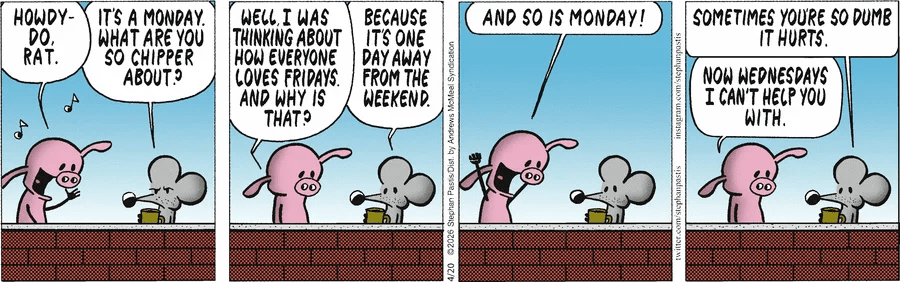
Pig Is My Spirit Animal
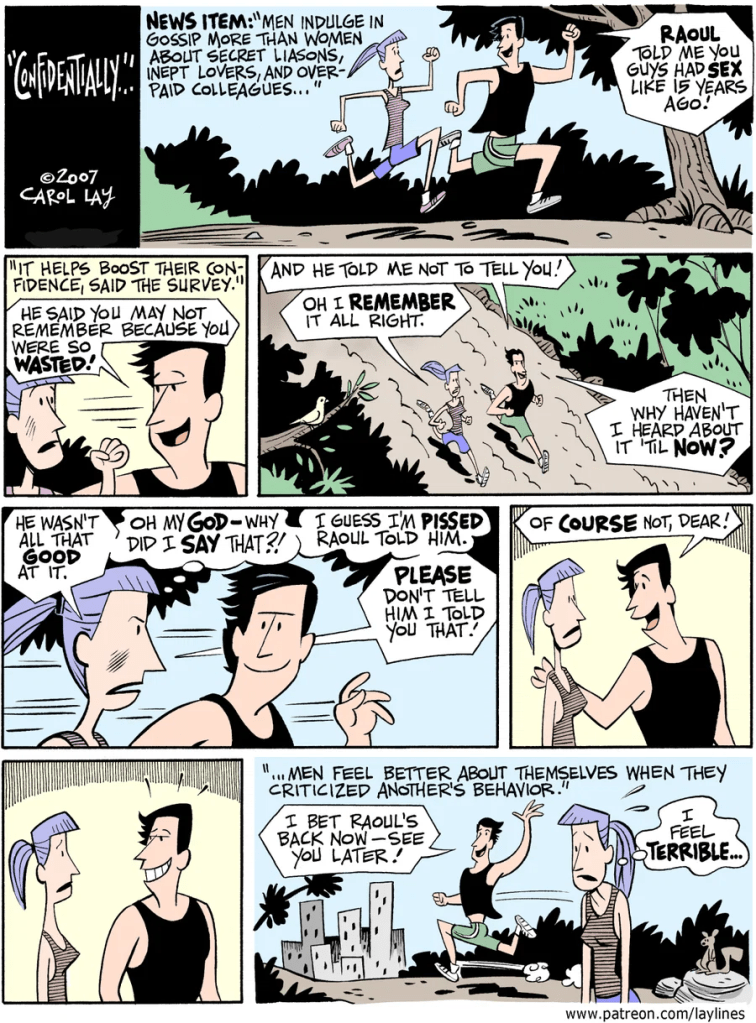
This Week’s “Lay Lines”
A Good Reason To Question The Propriety Of Capital Punishment
Because these things happen all the time: laws that are wrong, and poor investigative practices with witnesses.
Can Penn & Teller Magically Get SCOTUS To Consider Wrongful Conviction Appeal?
Charles Flores has been on Texas’s death row for over two decades for a crime the state knows he didn’t commit.
Charles Don Flores has sat on Texas’s death row for 27 years for the murder of Elizabeth “Betty” Black in 1998, during the commission of a robbery. The problem is, he did not kill Elizabeth “Betty” Black. That’s not just conjecture or me believing in someone’s innocence; even the state of Texas does not claim that he killed her. The man who actually did kill her was also sent to prison for the crime and was released over a decade ago, but Flores was sentenced to the death penalty for supposedly participating in the crime. Texas, you see, has a law called the “law of parties” that holds every participant in a crime responsible for everything that happened during its commission. So, for instance, if you drive the getaway car and your accomplice kills someone during the commission of a robbery, you are held equally responsible, even if you didn’t even know it happened.
There was no physical evidence, no DNA connecting Flores to Black’s murder. There is, in fact, no evidence whatsoever beyond his identification by a single neighbor who didn’t pick him out of two photo line-ups and initially said both men she saw where white with an average build and long hair, while Flores, clearly Latino, was a bigger guy with short hair.
So why is he there again? Because that neighbor, Jill Barganier, was later “hypnotized” by a cop who had never hypnotized anyone before. A cop who hinted, repeatedly, at the suspect having short or shaved hair, who told her she would continue to remember even more things about the robbery after the hypnosis. By the time she made it to court — after she had seen Flores’s picture on TV and in the news on many occasions — she was able to point to him in court as the accomplice of the the man who killed Betty Black.
There’s a lot that’s wrong with this case, obviously, but the hypnosis part is what caught the attention of magicians Penn & Teller, who recently submitted an amicus brief to the Supreme Court asking them to consider Flores’s case. Why? Because, they say, what the officer did is no different than what they do in their Vegas show every night.
“I am bringing this to you with the utmost humility,” Penn Gilette told The New York Times. “I am carny trash. I am uneducated. If you want to say I have a position of expertise, it is that I have lied to people onstage and gotten them to believe it. And I think I could do what that police officer did.”
The brief reads:
Despite the fact that Mrs. Barganier described the passenger in the car she saw at the scene of the crime as a white man with long hair, she was fed repeated suggestions by law enforcement that the passenger had “neatly trimmed” or “short, shaved” hair; she was told by the officer-hypnotist that she would remember more after the hypnosis session; and months later— after photos of Mr. Flores appeared in the press and she saw him seated at the defense table at trial— suddenly she identified him as the passenger. It is of little surprise that she was confident in her in-court identification when she saw this now-familiar face and believed she had produced it from her memory: That is exactly what the officer told her would happen. But it was not real. Some of the same cognitive techniques Penn & Teller use on stage to trick audience members’ memory and alter their perception explain how the investigative hypnosis session induced Mrs. Barganier to abandon all previous descriptions of the suspect and instead point to Mr. Flores.
On the tape, the officer keeps telling her that her memory is like a videotape that she can rewind and fast-forward at will. And it’s very tempting to believe that. It’s very tempting and comforting to believe that our brains are always recording whether we are aware of it or not and that, with the help of something like hypnosis, we can access those recordings. Certainly no one wants to believe that someone can more or less just jump into your brain and make you believe you saw things you didn’t see.
Our minds have a tendency to fill in the gaps if we don’t remember everything that happened in a particular situation, they explain, and memory retrieval process distorts memories — things they take advantage of as magicians.
By manipulating an audience’s memory—both in its formation and its recall—Penn & Teller get the audience to convince themselves that things have happened when, in reality, those things never occurred. That is all well and good for purposes of entertainment. But the same suggestion-based memory manipulation was also on display in the investigative hypnosis of Mrs. Barganier. And the officer-hypnotist left her believing that new things that came to mind later were true “memories” she could testify about, not merely things her brain subsequently filled in.
They can tell you exactly how he did it, as well.
The suggestion inherent in the investigative hypnosis of Mrs. Barganier is obvious: The officer/hypnotist asked her multiple questions about whether either suspect had short, shaved, neatly cut, or trimmed hair—even as Mrs. Barganier reiterated that both had long, wavy hair. The officer then showed Mrs. Barganier a photo lineup in which every photo was of a Hispanic male with short hair. Mrs. Barganier again did not identify Mr. Flores from that photo lineup. But she then also saw his photo in news coverage of the case prior to trial. Combined with the assurances of the officer-hypnotist that she would remember more as time went on, she was primed to “remember” Mr. Flores at trial. And she was particularly primed to do so because she was understandably motivated to assist police in finding the person who had committed a violent murder next door to her home. Pet. 6. Moreover, Mrs. Barganier’s certainty that her belated, in-court identification of Mr. Flores was correct (“over 100%” positive, as she testified), is not surprising. As Penn & Teller have observed, it is “very difficult for the audience to contradict the ideas that they themselves have constructed.”
The truly appalling thing about all of this is that the state of Texas actually knows that they are right about hypnosis being junk science. Just a few years ago, the state banned investigative hypnosis from being submitted as evidence in court. Of course, that was well after Flores was convicted and it had been used in over 1,800 trials over the course of four decades. In 2013, the state also enacted a “junk science” law, allowing for individuals to appeal for a new trial if the forensic science used to convict them has been found, upon further study, to be bullshit. This includes “evidence” like bite mark analysis, fiber analysis, bloodstain pattern analysis and 911 call analysis (one of the scariest ones, in my opinion, given that people have such wildly varying reactions in any kind of emergency).
Yet, Texas is fighting against Flores’s appeal and still hopes it will get to execute him. Because it’s Texas, and they really, really like executing people there.
There is a lot that is frustrating about our criminal justice system, but somewhere near the top is definitely the stubborn refusal of many involved with it to correct things when they’ve made a mistake. We see it over and over again, and it’s bad enough when it happens with someone serving any kind of sentence, especially a long one, but it’s unconscionable when we’re talking about the death penalty. There are no take-backs with the death penalty, and nothing anyone, even a magician, can fix once someone is dead.
Inadvertent Compliance
with the surveillance state.
How Citizen Surveillance Ate San Francisco
When a homeless man attacked a former city official, footage of the onslaught became a rallying cry. Then came another video, and another—and the story turned inside out.
Just when the people of San Francisco thought they’d seen every video—the sidewalk drug runners, the Louis Vuitton mob heisters, the men selling stolen laptops, the smash-and-grabbers snatching a camera from a Prius in traffic, the porch pirates porch pirates porch pirates into infinity, all indexed in the “Lawless San Francisco” section of the great internet video store—yes, just then: Stig Strombeck took out his cell phone camera on April 5 and hit Record.
It was around 7 pm, and Strombeck was on his way to his second job. He’d parked on Lombard Street. Not the famously crooked section up over the hill, but the wide gauntlet that jets toward the Golden Gate Bridge through the Marina district: the preppy hood of woo girls and boat guys and early-career Gavin Newsom and largely law-and-order Democrats. (“Everyone likes to shit on San Francisco, and San Franciscans like to shit on the Marina,” one resident told me. “It’s a victimless crime.”) But lately, even in the Marina, there was no escaping the rest of the city’s problems. The previous November, in a manicured playground just two blocks from where Strombeck was walking, a father said his 10-month-old baby had ingested fentanyl and had to be revived by Narcan—a San Francisco nadir that, to the presumable relief of civic boosters, hasn’t surfaced on film.
On the Lombard sidewalk, Strombeck pulled headphones from his ears and trained his camera on a disturbing scene playing out in the lot of a Shell gas station. Here’s the video: A bear of a middle-aged guy, 5’11”, 230 pounds, faces a rakish, apparently homeless man in his twenties who is wielding a 3-foot-long pole. The older bear of a guy holds his arms up like a boxer as the younger one jockeys with the pole, falls backward off a curb, then lithely spins back to his feet. The older guy blots his eyes and yells, “You’re going to jail, motherfucker.” The younger one, who wears a bright red stocking cap, whacks the bear of a guy across his face, sending him careening to the side. A male voice off camera says “Dude!”—the unmistakable Greek chorus of Wtf, this is insane. The younger guy looks toward the camera. The video stops.
⚠️ WARNING: GRAPHIC CONTENT
The following videos contain graphic content, which some readers may find disturbing.
(see it, embedded on the page, linked in the title above; there are also several .gifs at various points throughout this. I can’t grab ’em, plus it’s easier to just read on the page)
Strombeck stowed his phone, but the action kept spilling into other frames. A daycare’s security cam showed the red-capped figure maniacally chasing the now bloodied man down the Lombard sidewalk before bashing him again. A neighbor pointed his camera down from his third-floor window as the younger guy strode below with the pole in one hand and what looks like the older man’s baseball cap in the other, pumping his arm, looking amped. Another video of the attacker that appears to be shot from a passing vehicle was uploaded to the crime-alert app Citizen, which pinged a software engineer sitting on his couch a few blocks away, who ventured over and filmed the crimson drips and Rorschach splotches of blood leading down the sidewalk. (Strombeck would later testify that by the end of the attack, the big guy was covered in “the most blood I’ve ever seen.”)
The following day, a Marina local named Joan wrote on Nextdoor that she was the mother of Don Carmignani, the man who’d been bludgeoned by the pole: “I want to thank all the neighbors that videoed what was happening & got involved to stop it. If they were not there my son would be dead!” Don was in the hospital, she wrote, with a skull fracture and a broken jaw. City politicians tweeted prayers and a call for more cops. Local news identified Carmignani as a former city fire commissioner, a lifelong San Franciscan and father of two. The assailant: 24-year-old Garret Doty, a recent arrival from Louisiana.
Reports said the attack kicked off when Carmignani asked some homeless people to move away from his elderly parents’ door, which they were blocking. In one TV newscast, a reporter mentions an allegation, from one of Doty’s companions, that Carmignani used “bear spray” during the altercation. The segment then cuts to a close-up interview of Doty’s homeless friend—a striking, red-bearded man named Nate Roye, speaking from under a filthy shearling hood—saying that Doty attacked because Carmignani had been “disrespectful.”
“Is that enough to beat him up?” the journalist asks, incredulously.
“Yeah, sometimes,” Roye replies, with a decisive nod.
San Franciscans know the larger drama that this episode advances, and you probably do too: Tech’s glittering citadel, fallen, with the footage to show it. Within some 40 hours of the Marina attack, in another swank part of the city, a widely admired tech executive named Bob Lee, the former CTO of Square and a founder of Cash App, had staggered past surveillance cameras while bleeding from several stab wounds and later died at the hospital. The two maulings—a beaten fire commissioner, a slain tech executive—upcycled to the national news, putting San Francisco under the national surveillance to which it’s become accustomed, with particularly lip-licking schadenfreude on the right. Here again was Newsom’s and Nancy Pelosi’s doom-looping dystopia, where remote-working techies and fleeing billionaires have ceded the city to IRL Grand Theft Auto.
Carmignani, his family, his attorney, and some witnesses provided images that flickered through the reports and social media: Strombeck’s video from the gas station. A laundromat’s street cam view of Doty grabbing the metal bar out of a trash bin and taking a practice swing. The daycare cam. In the neighborhood itself, the vigorous uptake of these images inspired a kind of hope. Marina residents—forever wary of being pegged as pearl-clutching Karens—thought they finally had their irrefutable proof of how clearly things had gotten out of hand. “Somebody got beat up. It was on camera multiple, multiple places,” one told me. “Like, the best evidence!”
But within days, the clarity crumbled. In the case of tech executive Bob Lee, police arrested not a person off the street but a tech entrepreneur whose sister had been hanging out with Lee. And in private, within the police department, the Carmignani attack was veering off narrative too. A police sergeant, sorting through the symphony of surveillance clips that captured the face-off, played the bodycam footage from a cop who had been interviewing Carmignani’s girlfriend after the attack. The officer asks whether she’d been inside when Carmignani went out to “confront” the guy. She says yes. Then from the ambulance, Carmignani interrupts her, barking a command through his broken jaw, seeming to thicken the plot:
“Don’t say nothing to nobody. Don’t say nothing to any cop, no one.”
In San Francisco there’s always another video. New York and London are known for being blanketed with government-run CCTV coverage, but surveillance here is different: It is as privatized as it is pervasive, a culture of Hitchcock’s Rear Window, at scale.
In the city where Nextdoor’s offices sit right in the gritty Tenderloin, sharing Ring cam footage of porch thieves is a bonding exercise between neighbors who’ve never met. All over town, local nonprofits oversee neighborhood-wide networks of cameras funded in part by donations from crypto entrepreneur Chris Larsen. (“That’s the winning formula,” Larsen told The New York Times in 2020. “Pure coverage.”) Platoons of Waymo self-driving cars circulate the streets like Pac-Man ghosts, gathering up videofeeds that cops snag for evidence. You can watch a resident’s live cam to see who’s on the corner of Hyde and Ellis, right now.
True-crime video has become San Francisco’s civic language, the common vocabulary of local TV news broadcasts, the acid punch line to a million social media posts. The feeds intensified during the pandemic, when commuterless streets erupted with synthetic opioid use and property crime. Since then, the city has found itself hobbled through successive breakdowns—a police shortage, a 34 percent office vacancy rate, a federal injunction severely limiting the city from clearing homeless camps. No one seems to be solving San Francisco’s problems, the feeling goes, so by God, people are going to film the dysfunction and post the footage.
A guy who goes by the handle JJ Smith is probably the most vivid personification of this drive. A longtime resident of the Tenderloin whose brother died of a fentanyl overdose in 2022, Smith—not his real name—films unhoused people as he tries to cajole them into considering treatment. Then he posts the footage on X, where he has about 19,000 followers.
In happier cases, he’ll document when people check into a program and come out clean on the other side. But much of Smith’s footage is far grimmer: coroners rolling sheet-draped corpses out of residential hotels; a cold open on a woman’s face as she OD’s on a sidewalk. Smith explains that he’s just given the woman Narcan, pulling you into morbid suspense combined with an awful feeling of Are we really supposed to be seeing this? Other times, Smith dispenses a tough love that edges into trolling, like the time he snatched away a coat draped over a woman’s head so he could scold her for smoking drugs next to a park where his kids play.
People shrug off statistics, Smith says, but “when you’re actually seeing it, it really gets to you.” Supporters credit him with recording a humanitarian crisis. Critics tweet at him, even chide him on camera: He’s exploiting people who have no privacy with footage they haven’t consented to. (Hey, he says, it’s a public sidewalk.)
Some of the discomfort with Smith, who says he knows many of the people he films, stems from the simple fact that, by now, he’s part of a social media bandwagon. Even presidential hopeful Ron DeSantis once stopped by the Tenderloin to shoot a video. Today, Smith is joined by other accounts like FriscoLive415 and Tenderloin Tube—a cadre that lives somewhere on the border between citizen journalists and dystopic paparazzi. Consider the live birth video. Last spring, a Twitter account that typically posts store-looting vids showed something else: an infant, just born and naked, on a Tenderloin sidewalk, its dazed mother trying to pick the baby up. The event is morally excruciating, but so is its existence here, on X, overlaid with the account’s watermark as the video travels the internet to 1.5 million views, churned into headlines like “Caught on Video: Homeless Woman Gives Birth in Broad Daylight on Tenderloin District Sidewalk.”
(snip-a bit more on the page. Of course, there are twists!)
How About Some Shorts?
Not necessarily about current events; if so, it’s snark, short, and sweet. Have some fun!
Dance a little!
Heh. Some justice.
Masters Of War

We Haven’t Had “Cover Snark” Here In A While-
Cover Snark: Burger King and Bobbleheads
by Amanda ·
Welcome back to Cover Snark!

From M: Another cut and paste disaster. This guy’s head is not only too small for the rest of him, but someone removed his neck. And what the heck are those red circles? Leftover Christmas ornaments?
Sarah: I need the Harley community to weigh in on giant red jingleballs on your handlebars. Seems…unwise.
And I cannot stop laughing at this poor man’s pasted on head. My God the indignity. His unveiled desire is to have his own neck.
Amanda: His head looks like it’s going to bobble right off.

From Elizabeth S: I don’t even know what all crazy is going on here.
Sarah: Setting aside the completely distracting Y shaped torso, did Wonder Woman get him? Is that the lasso of truth? What do you think this guy is confessing to, dedicated steroid regiment? Stealing conditioner?
Claudia: Wow. Gym-rat Jesus!
Sarah: The lat bar is his shepherd? He shall not skip leg day?
Amanda: This man feels very familiar to me. We may have snarked his image before.

Sarah: This is giving me Perez Hilton vibes and never in a good way.
Elyse: I was going with the little crown kids get at Burger King
Amanda: I feel like this has a new illustrated cover. I recently featured it on the After Dark sales.
Sarah: At least on this one, I can read the Wine Mom Font correctly.

Elyse: “Smell my finger.”
Sarah: Nooooooo
Amanda: Welp, now that’s all I can think about.
(snip-comments, etc. on the page, linked in the title)
Earth Month
It is Earth Month, and I’ve only posted a single acknowledgement of that, so far. Meanwhile, Ten Bears has us, with a full post of links regarding how things are, what needs to be done, and importantly, what we can still do.

