Erin Brockovich & Data Centers

Erin Brockovich Asks Americans for Help as She Launches Data Center Map

updated May 29, 2026 at 12:27 PM EDT

Environmental activist Erin Brockovich is appealing to the public for help after launching a website to report data center concerns as the rapid expansion of AI-driven facilities across the United States increasingly clashes with local communities.

The appeal threatens to thrust an iconic anti-corporate activist into the heart of the battle to expand AI infrastructure at a time of growing public skepticism about the technology’s impact on jobs, safety and the environment.

The website, brockovichdatacenter.com, lists several “key concerns” surrounding such data centers, including high energy consumption that drives environmental impacts and costs, substantial water use for cooling that can strain local supplies, increased e‑waste from frequent hardware upgrades, exposure to location risks such as natural disasters or geopolitical instability, growing scalability pressures that can outpace local infrastructure, and constant noise from cooling systems and generators that can disrupt nearby communities.

“These challenges highlight the need for sustainable, secure, and efficient AI data center practices,” the website says. “Self-reporting is the best way we can get this information out to the public!”

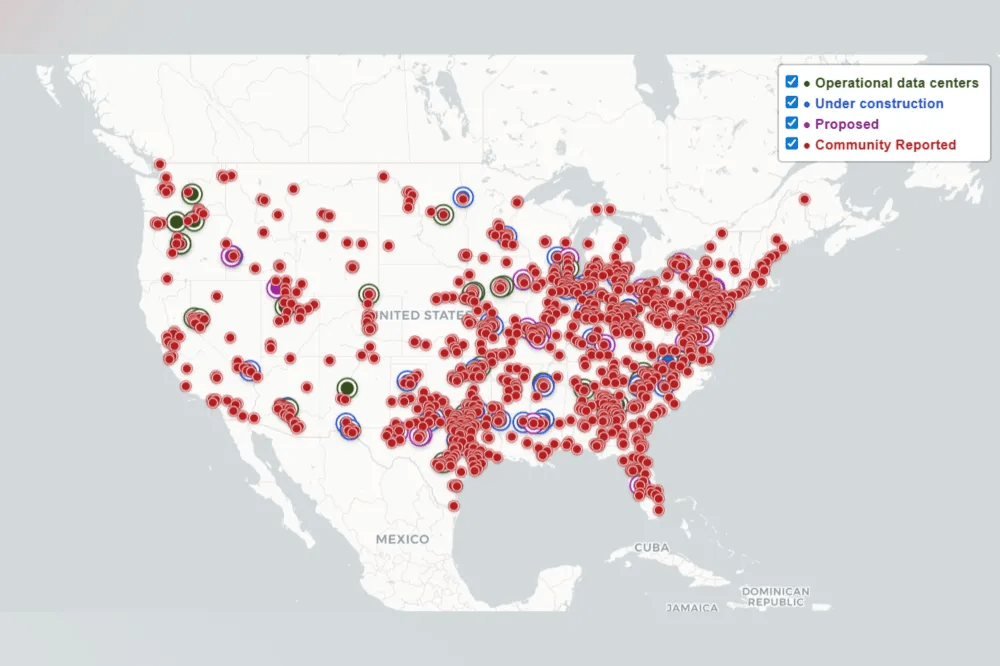
A map on brockovichdatacenter.com shows major AI data centers in the U.S. that are either operational or under construction, overlaid with locations w…Read More
 | brockovichdatacenter.com

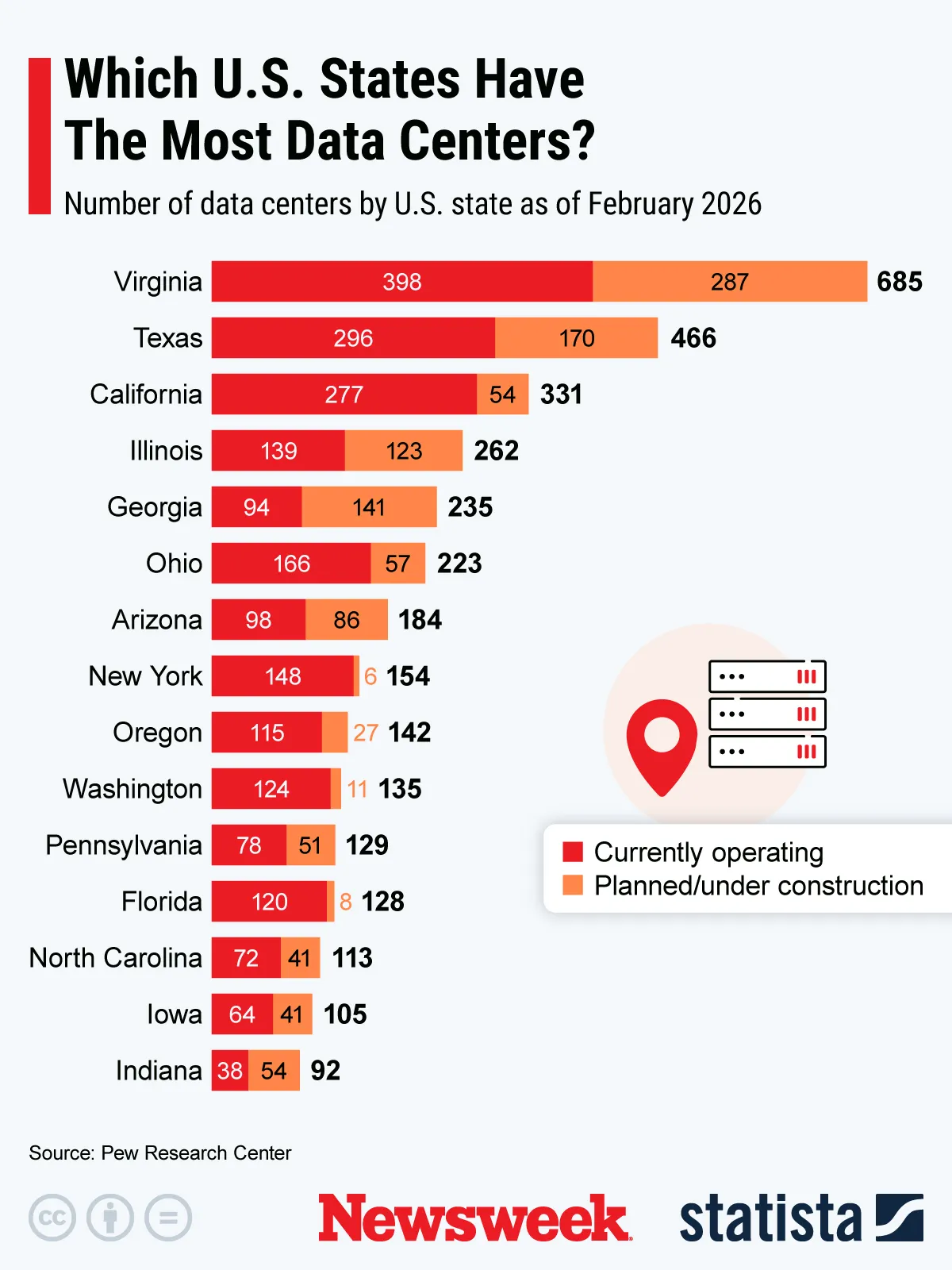
There are now more than 4,200 data centers—built to train, deploy and deliver AI—across the U.S., according to Data Center Map.

According to the website’s statistics, more than 2,716 reports have been submitted, with the most in Texas (612), as of Monday. The state is home to more than 460 data centers, according to Data Center Map.

The greatest concern among communities was water, followed by electricity, health and wildlife.

“The race to build AI infrastructures is unfolding town by town across America. In some places, data centers are welcomed. In others, they are delayed, contested or abandoned altogether. This map captures the real-world footprint of that race—revealing patterns of growth, conflict and uncertainty,” Brockovich said.

Who Is Erin Brockovich?

(snip-we know who she is. Or, please click through to read on the Newsweek page)

The States Becoming America’s AI Engine Room

As data centers become more visible across America’s landscape, some states are seeing more than others.

  • Virginia
    Long a hub for government contractors and cloud infrastructure, Virginia—particularly Northern Virginia’s “Data Center Alley”—offers proximity to federal agencies and one of the world’s densest fiber networks. Established infrastructure reduces build times and attracts hyperscalers looking to scale quickly.
  • Texas
    Texas combines vast, inexpensive land with a deregulated energy market that gives companies flexibility in securing large power loads. Cities like Dallas and Austin also bring a growing tech workforce and business-friendly policies that appeal to major AI investors.
  • Ohio
    Ohio has positioned itself as a Midwestern data hub, with strong incentives and central geographic access to U.S. population centers. Its legacy industrial sites are often repurposed for data centers, offering space and existing infrastructure at competitive costs.
  • Arizona
    Arizona’s dry climate is favorable for certain cooling technologies, while its abundant land and aggressive economic development incentives have drawn major tech firms. Phoenix, in particular, has become a key destination for new AI and cloud infrastructure builds.
  • Georgia
    Georgia, anchored by Atlanta, offers strong connectivity as a Southeast internet exchange hub. State and local tax breaks, combined with access to both talent and transport infrastructure, have made it increasingly attractive for large-scale data operations.
  • Utah
    Utah benefits from lower real estate costs, a stable regulatory environment, and access to renewable energy sources. Its growing tech sector, known as “Silicon Slopes,” provides an emerging talent pool to support AI-focused expansion.

Why companies are choosing these states:

  • Cheap land: Large-scale AI data centers require vast footprints; these states offer space at significantly lower costs than coastal markets.
  • Power access: Reliable, high-capacity energy grids, often with options for renewable sourcing, are critical for AI workloads.
  • Tax breaks: State and local governments are competing aggressively with incentives to attract long-term infrastructure investment.
  • Fewer regulations: Streamlined permitting and business-friendly policies enable shorter development timelines and reduced compliance burdens.

Felt lost in my own home!

Humans have questioned “Who Am I” as far back in our history as we first discovered we had a navel and could gaze upon it. Since then, the philosophers and prognosticators and teen-agers everywhere have come to one and only one conclusion:

Do define myself by my relationships? By my likes and dislikes? By the number of followers I have on TikTok (don’t even have an account)? By my past? Future? Hopes? Fears? By my employment? By my religion?

The past couple of months I have found myself adrift in a very strange place: one without my computer. It was crashing like a lead-footed blind man at Daytona! I thought it was a virus, then maybe a windows update snafu, then maybe a windows defender snafu (windows has a lot of snafu’s). I thought maybe I had a adblock issue, then a competing issue with my security software. I couldn’t go on line at all or the computer would crash. I struggled with it for a couple of months until I finally gave up and did a full factory image wipe. And, let’s be clear, I’m not Scottie. When I do a wipe I may as well have taken a sledgehammer to it because whatever that computer was is gone.

There went my favorite websites. My ways of spending time not working – even when I should have been working – were gone. I mean, who remembers all their passwords!?! I’ve got sites I’ve been going to for years that I put on a ridiculous password and saved it on the computer to never bother remembering it again. And they were all gone. I mean, what the hell am I supposed to do with my time now! I can’t tell you how stressful this was, and how dumb I felt feeling stressed about it.

So, I started reading more, and I mean a lot more. I went on a diet. I had a lot of work going on at my parent’s place and I started taking care of my own better. I cleaned my kitchen every day, my bathroom 3-times a week, kept caught up on laundry and even sorted through some of the junk I’ve allowed to pile up. I mowed the lawn and got rid of a pile of downed branches I had reserved for “later” (I have a lot of those “later” things – stuff I’ll take care of, ya know, … later). I didn’t even come into my office anymore. I was actually eating at the diningroom table! I know – sacrilege!

So, on Tuesday I began the work of putting this computer back together again, of re-establishing my very identity. Now, today, as I write this it’s Friday, the sink is full, laundry on the floor, dirty towels in the bathroom, I have a dirty plate and cup of cold coffee stagnating on my desk that I keep bumping with my elbow and somehow my life is now “right”. Truly, I found how the other folks live and I didn’t like it!

One thing I did also learn in all of this: I restarted Google and when I signed in I was presented with a number of bookmarked sites that I haven’t seen in years. A good third of them didn’t even exist anymore. Folks, let me tell you – Google Never Forgets! But, it’s nice to visit who I used to be 🙂

Hugs
-randy

Yet Another Thing To Keep Track Of:

Majority of Americans Support Ban on Surveillance Pricing and Electronic Shelf Labels

Surprisingly, 3% saying it would make them more likely to shop at a store.

By Matt Novak

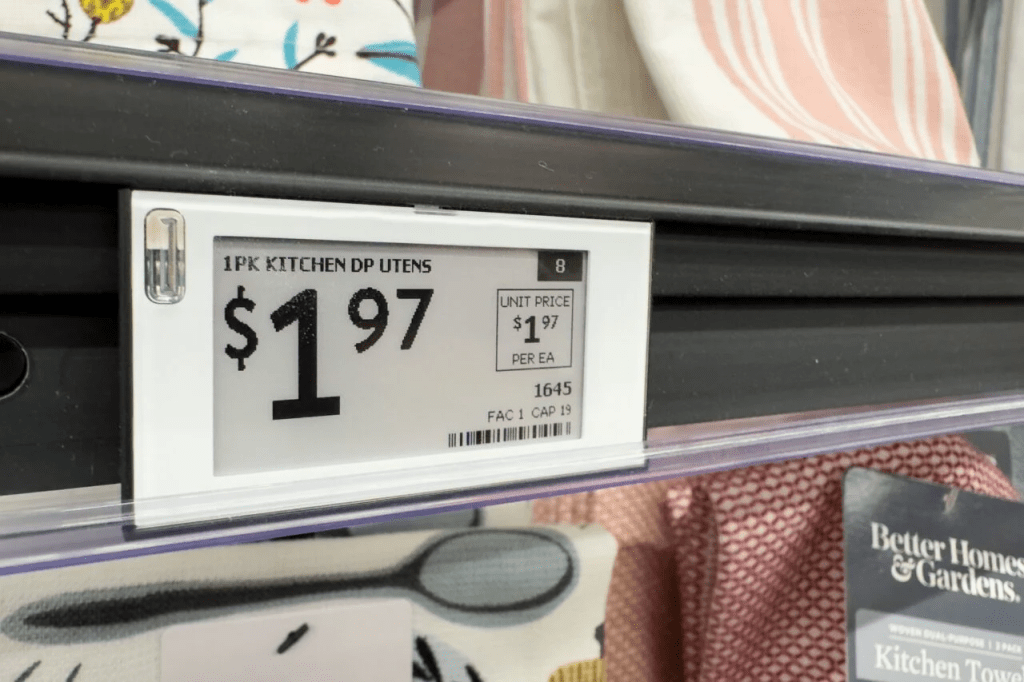
A whopping 68% of Americans say they worry about surveillance pricing increasing the cost of goods, while just 5% believe it will lead to lower prices, according to a new survey from GBAO Strategies distributed by the United Food and Commercial Workers International Union. Twenty percent say it will likely just keep prices the same.

The new survey is part of the UFCW’s “Affordable Groceries and Good Jobs Campaign,” an effort to encourage states to pass laws banning surveillance pricing and electronic shelf labels (ESLs), the increasingly common price tags that some activists worry allow companies to rapidly change prices in stores several times per day.

The concern includes obvious dynamic pricing models, like increasing the cost of cold beverages when it gets hot outside, but also involves more sophisticated and as-yet theoretical examples like increasing the cost of food staples when a customer’s data is analyzed in store and it’s determined they’re willing to pay more.

Fifty-eight percent of Americans in the survey say digital price tags would make them less likely to shop in a store, with 35% saying it would make no difference, and 3% saying it would make them more likely to shop there. Sixty-seven percent are in favor of banning ESLs outright, according to the new survey.

Walmart, which has patented AI-powered price changes, has been rolling out electronic shelf labels across its stores, and it aims to feature them in every U.S. location by the end of 2026. But the company has insisted it’s not going to use ESLs for jacking up prices and insists that a human manager must be in the loop when prices change.

Unsurprisingly, 66% of those surveyed say they’re worried about the cost of groceries. And it’s no wonder, given the trajectory of inflation in recent months. The University of Michigan’s May sentiment index hit a record low last month at 44.8, down five points from April, according to Bloomberg.

In April, inflation rose 3.8% on an annualized basis, while wages rose just 3.6%, the first time wages have failed to keep up with inflation since 2023, according to CBS News. And that’s causing major concerns about supermarkets’ plans to squeeze customers for more money with new tech.

The new survey takers at GBAO Strategies noted that some grocery stores are replacing paper price tags with digital price tags and asked Americans whether that technology was likely to increase or decrease prices for consumers. Just 3% thought it would decrease prices, while 65% thought stores would use digital price tags to increase prices. 24 percent of participants believe it will keep prices about the same, with the remainder (8%) saying they don’t know.

UFCW International Vice President Ademola Oyefeso told Gizmodo that he believes electronic shelf labels are a tool for price gouging and that tech companies are marketing them for that purpose.

“The ESL industry sells the prospect of higher prices and job losses as positives,” said Oyefeso. “Across the country, families are having to make tough choices in the grocery aisle every day as a result of sky-high prices, and polling clearly shows that they want these predatory technologies banned.”

Proponents of digital shelf labels take issue with the idea of using the term surveillance pricing at all. They prefer terms like “personalized pricing” and believe that stores have an incentive to make pricing competitive. But unions like UFCW don’t believe that’s true and are urging legislation to be passed around the country to fight it.

“Federal and state lawmakers know these practices are wrong, and the UFCW urges them to get ahead of them before they appear in every store,” Oyefeso told Gizmodo. “Any lawmaker that is serious about cutting costs for hardworking families must support a ban on electronic shelf labels and surveillance pricing in grocery stores.”

At least a dozen states are currently considering legislation that would regulate surveillance pricing, with Maryland recently passing the first law banning the practice at grocery stores. But activists have spoken out about that law and worry that it has way too many loopholes.

That Public Notice About NDA’s for Government Workers:

Anyway, here it is, along with the link so we can make our comments (of course it is not hyperlinked on the page, we need to copy it and paste it into our browser. WP has made it a live link in this post, but it doesn’t work.) It’s our duty and a right we still have; if we do not use it, we will most certainly use it. I found out about this yesterday on MPS’s post; it just took me a bit to get to this.

You can find this here. (This hyperlink is good; I made it myself and it works.) It is a .pdf. The NDA notice begins in the lower right-hand column.

ADDRESSES: You may submit comments
using the Federal eRulemaking Portal at
https://www.regulations.gov. Follow the
instructions for sending comments.
The general policy for comments and
other submissions from members of the
public is to make these submissions
available for public viewing at https://
http://www.regulations.gov without change,
and including any personal identifiers
or contact information. Before finalizing
the NDA, OPM will consider all
comments received on or before the
closing date for comments. OPM may
make changes to the NDA after
considering the comments received.

Request for Comment
OPM welcomes public comments on
all aspects of the draft NDA, including
whether the Privacy Act statement’s
description of the authority, principal
purposes, routine uses, and effects
provide sufficient notice to employees.
The draft NDA is available in the docket
for this notice on regulations.gov. See
https://www.regulations.gov/document/
OPM-2026-0100-0003. OPM specifically
requests comment on the following
issues.

  1. What scope of information should
    be covered by the NDA? Should it cover
    only unclassified information? How do
    you understand the terms confidential
    and confidentiality in the context of this
    NDA? What customization of the NDA,
    if any, may be necessary for agencies to
    ensure it covers the appropriate
    information?
  2. Does the NDA clearly communicate
    the types of information that would be
    subject to non-disclosure requirements?
    If not, how could OPM better describe
    what information can or cannot be
    disclosed to ensure employees have
    appropriate notice of their
    responsibilities?
  3. Are there other statutes to which
    OPM should cite in Appendix A of the
    NDA when describing the nondisclosure
    requirements applicable to individuals
    working for or on behalf of the Federal
    government?
  4. Do you have suggestions regarding
    the layout or formatting of the NDA?
  5. Does the Privacy Act statement in
    the NDA provide sufficient notice to
    employees of the authorities, principal purposes, routine uses, and effects of
  6. the form?
  7. Does the OPM/GOVT–1 system of
    records notice provide sufficient notice
    that the government-wide system of
    records would maintain records related
    to the signing of, or failure to sign, the
    NDA?
  8. What are the appropriate actions, if
    any, for agencies to consider taking if
    existing employees choose not to sign
    the NDA?
  9. What are the appropriate actions, if
    any, for agencies to consider taking if
    new employees choose not to sign the
    NDA?
  10. Does the NDA clearly communicate
    the potential consequences of refusal to
    sign the form for both existing and new
    employees, along with whether signing
    the form is voluntary or mandatory?
  11. What else should OPM consider
    with regard to the NDA??
    OPM will consider comments
    received before finalizing the NDA.

White Lion – When The Children Cry (Official Music Video)

I hate the YouTube algorithm and and myself more for giving into it and saving all the hateful abuse videos I get.  I am crying now trying not to alert Ron who is in the next room with the door between us open.  I had two open windows.  In one I had so many tabs of abuse that the algorithm pushed them to me because I occasionally watch them.  I deleted 8 of them before switching to the other open window.  What does YouTube think I need to see / hear after all that deleting and not watching all those videos?  The two videos below. 

Am I the one to blame but if so what does that say about all the vulnerable children who are led down hate rabbit holes?  At least the harm happening here is to me done myself aidded by the shit pushed into my feeds and I am so stupid that I click on them and leave the tab open while I try to move onto something else.  But eventually I end up coming back to the ones that hurt me so much.  Who is to blame?  As always in my life, as in my childhood … I am, and I have always been according to those that hurt me.   Goodnight.  Scottie.  Hugs


Women Need To Run Things-

Women Have Sacrificed Too Much for the Careers of Powerful Men: Analysis

May 12, 2026, 8:30am

Mia Brett

Cesar Chavez, Eric Swalwell, Justin Fairfax, and the gender politics of keeping their dirty secrets.

News about powerful men committing violence against women has bombarded the United States in recent months.  

On April 16, 2026, Virginia’s former Lieutenant Gov. Justin Fairfax killed his wife, Dr. Cerina Fairfax, and then himself inside their family home. The shocking news came days after Rep. Eric Swalwell, a Democrat from California, resigned from Congress following multiple sexual misconduct allegations. 

A few weeks prior, in March 2026, an investigation about labor movement leader Cesar Chavez revealed a decades-long pattern of sexual abuse, including against another farmworker icon, Dolores Huerta. 

All three of these powerful men had known patterns of alleged predatory sexual behavior. But their secret was protected—in some cases for decades—not only by other men, but also by some of the same women they’d hurt.

Somehow, no matter how much progress we think we’ve made, women keep being sacrificed—or sacrificing ourselves—for men’s accomplishments and legacy. Our lives and futures and mental health are even sacrificed on the altar of their potential political accomplishments and legacy. 

The Al Franken effect

I’m a legal historian and commentator on sexism and gender-based violence. I’ve studied violence against women and the criminal trials that let male perpetrators off the hook. I’m also a woman who experiences sexual harassment so often that it has become a dull hum following me throughout my day. 

This self-sacrifice seemingly stems from what seems to me to be a societal belief that the men who commit harm are more needed than the women who are harmed. Our ideas, organizing, and logistical labor—often dismissed as “secretarial” work—can’t compete with the fear of losing a single powerful man. 

When the allegations against Swalwell first broke, some on the left rushed to defend him. Some on social media claimed it was a Republican smear job because he’s been opposed to Trump’s policies and was running to be the next governor of California. 

Eventually, as more women came forward and D.C. insiders said that they’d heard rumors about Swalwell’s behavior for years,  Democratic leadership called for Swalwell to drop out of the governor’s race. 

Women often come forward with their stories when a man is running for political office because they feel that information is relevant to voters. Or, they may speak out because it’s difficult to see one’s abuser portrayed so incompletely in the news. 

Yet some people cast doubt on the timing of the Swalwell accusations, suggesting people were out to get attention or take a “good man” down before he can further ascend in his career. On social media, posts compared the situation to Al Franken resigning from Congress in 2017 over sexual misconduct allegations. 

Franken’s resignation is often treated as an example of #MeToo going “too far,” because some reporting suggests that the initial accusation against Franken may have been trumped up. But he was sexually inappropriate with women both before and after taking office. His resignation was important to live up to progressive values, and the left didn’t actually lose any political clout over it: Franken’s replacement, Tina Smith, has been a fantastic senator.

It’s relatively rare for members of Congress to resign after being accused of sexual misconduct. According to the National Women’s Defense League, 23 lawmakers with public accusations are running for reelection in 2026 in 16 states, including nine people running for Congress. 

The group held a press conference on April 21, 2026, to discuss two new reports on sexual misconduct in Congress and state government. According to its research, 80 percent of candidates publicly accused get reelected. 

Cesar Chavez’s legacy

The calculus for marginalized women to come forward about sexual assault is even tougher. 

The first line of Dolores Huerta’s public statement about her abuse says she kept quiet for nearly 60 years because she “believed that exposing the truth would hurt the farmworker movement I have spent my entire life fighting for.” 

I believe many women stay quiet when they think coming forward could hurt a movement—in this case, one Huerta helped to build. But they may tell their story if they’re worried not doing so could cause even more harm.

Her story details two incidents of sexual assault that resulted in two hidden pregnancies. She gave both children up for adoption.

Soon after the investigation broke, Chavez’s name was erased from monuments across the country. That’s not necessarily an indication of local leaders taking sexual violence seriously. In some places, it may just as well reflect a desire to erase Mexican American achievements and the progress of the United Farmworkers Union in securing rights for migrant laborers, some of the most marginalized workers in the country. 

I say that because we have the perfect replacement for Chavez’s legacy in Huerta herself. It would be so easy to simply rename every street and monument after her, rather than simply erase commemorations of the movement. 

Huerta was already forced to sacrifice so much by Chavez, must she now watch as her life’s work goes down with him, too?ire News Group is a reader-supported, independent nonprofit newsroom.

Jewish history

In my own Jewish community, there is a long history of pressuring victims of domestic violence and sexual assault to stay quiet—and not air their suffering outside the community. 

Doing so would be an example of “lashon hara,” or evil speech or gossip. If we report our abuse to police, we are contributing to negative ideas about the Jewish men in our community. Some men in the Jewish community even claim that because of Jewish teachings and customs, Jewish men can’t ever actually abuse their wives, because domestic violence is a Christian affliction of gentile culture—that is, a non-Jewish problem. 

This myth persists outside the Jewish community, and it can impact how Jewish women are treated in secular American courts. 

My doctoral dissertation research covered a case of a Jewish woman in New York City murdered in 1875. Both suspects in her killing were Jewish men protected by the community. During the trial, the victim was used as a cudgel against her own people to prove that Jews were dangerous. 

If she had survived and was given the choice to report the violence she faced would she have feared exposing a man from her community to the criminal justice system?

This concern is even more heightened for Black women. If their abusers are Black, they know that reporting them means increasing exposure to a racist criminal justice system. 

Research also suggests Black women are less likely to be seen as victims by the dominant society and more likely to be blamed for harming men of their own community, or accused of trying to “take down a good man.” (Think back to how accusations against R. Kelly, Mike Tyson, Bill Cosby, and Clarence Thomas were greeted.)

As Aishah Simmons, Black feminist and activist, explains, many people “think that exposing and addressing intra-racial sexual violence against Black women divides the community … and we should only focus … on racism since that is the ‘real problem.’” 

This community protection can feel even more important when the abuse comes from a so-called “good Black man,” as author Kaitlyn Greenidge wrote on April 19, 2026, of Cerina Fairfax’s killing. The promise of a Black middle class life with a politician husband like Justin Fairfax is supposed to guarantee a safe and protected life.

Cerina Fairfax stood by her husband even after two women accused him of sexually assaulting them; one alleged incident occurred back when he and his accuser were undergraduates at Duke University.

The accusations against Fairfax came to light during a crisis in Virginia politics when he was poised to possibly take over the governorship from the scandal-plagued Ralph Northam. Fairfax denied any misconduct and refused to resign. No criminal charges were filed. He ran for governor in 2021, and lost. 

Fairfax later sued CBS for defamation (the suit was thrown out) and claimed he was experiencing a form of lynching (taking a page out of Justice Clarence Thomas’ book after Anita Hill’s accusations). 

In this case, Democrats did lose leadership of the state. Before the sexual assault allegations, Fairfax was seen as a rising star in the Democratic Party. Had his accusers not gone public, he might have become the state’s next governor. 

But it’s equally true that had he resigned in 2019, after they did, a new Lt. governor could have stepped in and potentially run successfully in 2021.

Sacrificing for the cause

It irks me that Fairfax ran for governor after being accused of sexual misconduct. It irks me that Swalwell did, too. 

Swalwell’s name remains on the primary ballots in the California governor race, and that will hurt the Democrats’ chances to hold onto that post. It was Swalwell’s hubris and entitlement hurt his party—not the women who came forward to prevent him from accruing more power. 

I wonder: How many young staffers left politics because Swalwell was allowed to prey on his subordinates? What progress could have been made in the labor movement if the women abused by Chavez had instead been in leadership roles? Would Cerina Fairfax still be alive if her husband had been prosecuted in 2019? 

We’ll never know how the world would look if the well-being of the women in these cases had been prioritized over the careers of their abusers. What I know is that the harm done to us as women is more important than the potential of the men who hurt us. And I know that the goals of movements or political gains can no longer rest on our silence and our labor.

Been Wondering About Kat Abughazaleh? Here Is News:

Kat Abughazaleh shows us how to fight fascists

Q+A with one of the Broadview Six, who had all charges dropped against them after grand jury misconduct.

Marisa Kabas

For the last seven months, Kat Abughazaleh wasn’t allowed to go to Alaska. It’s not that she had any particular reason to, but being under felony indictment meant that she was only allowed to travel throughout the lower 48 United States. And forget leaving the country. But on Thursday, those restrictions were suddenly lifted when all charges against her were dropped.

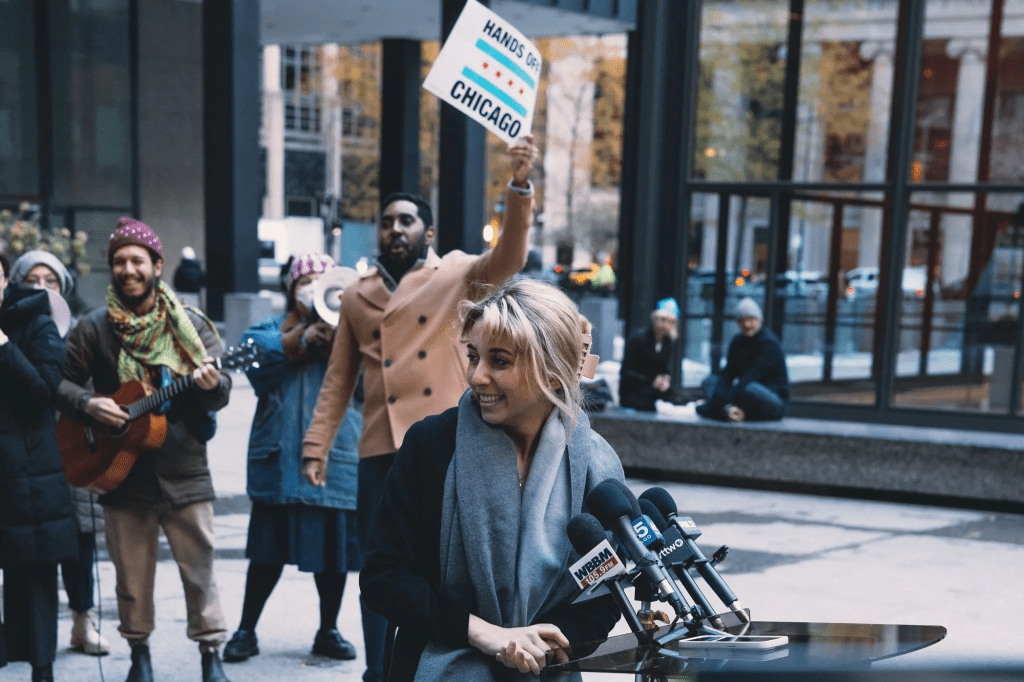
Abughazaleh, 27, woke up Friday a free woman. The former Illinois congressional candidate was charged in October along with five others for conspiring to impede an officer near the Broadview ICE facility just outside of Chicago. In reality, Abughazaleh and her co-defendants were there to protest the federal government’s increasingly public cruelty and the human rights abuses happening inside Broadview specifically, and broadly by ICE. The Trump administration, not surprisingly, did not appreciate their very public pushback and responded with brutality and violence. But with all charges against them now dropped, the only thing they’re an example of is why fighting fascists is good.

With the trial scheduled to begin just after Memorial Day, US district judge April Perry called an emergency hearing Thursday to discuss missing pieces of the trasncript from the grand jury proceedings where DOJ lawyers convinced jurors to indict Abughazaleh, her campaign field director Andre Martin, Michael Rabbitt, Brian Straw and two others who had the charges against them dropped earlier.

The case was already on the decline, with prosecutors dropping the felony charges against the remaining four in April as questions about the grand jury transcripts popped up. They still faced a full trial on misdemeanor charges and up to one year in jail. But Judge Perry ruled the DOJ’s handling of the grand jury and subsequent redactions constituted grave misconduct, making it impossible to move forward. 

I spoke with Abughazaleh by phone Friday morning about right wing fuckery, ridiculous rumors, and how she plans to reclaim her life after the federal government tried to destroy it. Our conversation has been edited and condensed for clarity.

MARISA KABAS, THE HANDBASKET: How did it feel waking up this morning?

KAT ABUGHAZALEH: I had to get up at like 5am to go on Morning Joe, but I woke up and I was like, oh yeah, I don’t have to go to trial this week—which is not a statement I thought I’d have to say ever in my life.

KABAS: Walk us through what you thought the next week or so was supposed to be like before yesterday’s hearing.

ABUGHAZALEH: I was supposed to have not just trial prep with my lawyers, but having to get my clothes dry cleaned. Going to get a manicure because my nails always always look awful. I spent way too long at a Nordstrom Rack picking out shoes that I thought looked fashionable but also modest and wouldn’t make jurors think I was a bitch. On Tuesday we were supposed to have jury selection. On Wednesday we were supposed to have opening arguments, which is a shame that we don’t get to hear our lawyers spit absolute fire. But yeah, it’s nice not to do it in the first place.

KABAS: Absolutely. So what do you think you’re gonna do instead?

ABUGHAZALEH: I have a 12-hour live stream tomorrow to raise money for our legal funds because, despite not having to go to trial, we’re still picking up the pieces of our lives both emotionally and financially. Every single one of us as co-defendants, we have very real fears of bankruptcy and being in debt for the rest of our lives because of this. And then, I don’t know, sleep a bunch. Get my passport renewed, something that I couldn’t do for the last seven months. I couldn’t even go to Alaska.

KABAS: Are you serious? Could you go to Hawaii?

ABUGHAZALEH: No, just the lower 48. Couldn’t even go to Puerto Rico.

KABAS: So this has really restricted your movement as a human being for the last seven months.

ABUGHAZALEH: Yeah, and it’s something that’s really scary, especially as the government gets more and more aggressive, just being like, oh, you’re stuck here no matter what happens.

“Kat” Abughazaleh speaking after today’s crazy developments in the “Broadview 6” case

— Jason Meisner (@jmetr22b.bsky.social) 2026-05-21T18:47:13.356Z

KABAS: So when did you get a sense that things might be changing this week?

ABUGHAZALEH: So we’ve been requesting to see the grand jury transcripts or just have the judge look at them for months. And ahead of trial Chris Parente—Brian Straw’s lawyer—just asked the judge, “Can you just look at the unredacted version?” And her understanding was that the redactions were referring to some IT issues, and the prosecution had never corrected her. So she looked at the unredacted transcript and then called a hearing the next morning. And it was sealed. Now the transcript is public. 

She was saying “I’m not sure that the charge will get dismissed without prejudice because there’s not a lot of precedent for that, especially for a misdemeanor.” And then we broke for an hour for the government to talk it over, and then they came in. I remember one of my lawyers looking at me as one of the government’s lawyers [Andrew Boutros] started talking, and she just turns to me and says, “Congratulations.” And I went, “What?” And then Boutros said, “dismissed with prejudice.” [Meaning the case was permanently closed.]  And it was just surreal. Absolutely surreal.

KABAS: Did you have a sense of where things were heading or were you totally shocked by the outcome?

ABUGHAZALEH: I truly did not think it would get dismissed yesterday. I did not want to get my hopes up. I thought that we were going to trial for sure, just because it’s very unusual to try a federal misdemeanor. I knew we would win in that case, but I was completely shocked.

KABAS: How do you think this will change or impact anti-ICE protests and prosecutions in the future?

ABUGHAZALEH: I hope that it does have impact. It was meant to intimidate us into silence, and none of us took a deal. None of us sold each other out (not that there was anything to sell each other out on.) But, you know, we were charged with conspiracy. We were facing like 10 years in prison. 

(snip-there is MORE, but this is already a long post, and I’m a free subscriber to Handbasket, and don’t want to just lift their work. Click on through!)

One Of The Many Things U.S. Reps Do

U.S. Rep. Sharice Davids urges NWS to be transparent about data collection shortcomings

Democrat renews alarm at missed Kansas balloon flights that assist forecasting

By:Tim Carpenter-May 22, 2026

TOPEKA — U.S. Rep. Sharice Davids expressed frustration Friday with the National Weather Service’s failure in the last month to launch three-fourths of the balloons typically sent aloft in Kansas to assess atmospheric conditions and assist with weather forecasting.

Davids, a Democrat representing the 3rd District in eastern Kansas, said publicly available records indicated NWS didn’t conduct on 25 of the past 30 days the standard 7 a.m. weather balloon flight dedicated to collecting atmospheric data in Kansas.

“That’s unacceptable,” she said. “Kansans deserve transparency about what’s happening, why it’s happening and what’s being done to fix it. Kansans deserve confidence that the systems meant to keep them safe are fully operational during tornado season and meteorologists deserve the reliable data they need to do their jobs.”

In the past year, Davids and U.S. Sen. Jerry Moran, R-Kansas, have raised questions about staff shortages and other issues at NWS bureaus in Kansas.

Moran recently said staffing problems persisted despite Congress appropriating sufficient funding for 24/7 operation of Kansas weather offices in Topeka, Wichita, Dodge City and Goodland.

Davids said she requested explanations one month ago from NWS about disruptions in gathering data after an outbreak of severe weather. NWS didn’t respond to the inquiry, the congresswoman said, despite seven more tornadoes touching down in Kansas last week.

NWS has an obligation to be transparent with the public about data collection failures, Davids said.

“These are not abstract bureaucratic problems,” Davids said. “You don’t get to quietly scale back something this important without transparency, especially in a state where severe weather can turn deadly fast. The administration owes the public answers and immediate action to address these reported failures before tragedy strikes.”

Davids said weather balloons provided forecasters real-time measurements, including temperature, humidity, pressure and wind conditions useful in anticipating storm intensity. Missed launches limited information available to meteorologists, she said.

She previously asked NWS to share details about reasons for missed balloon launches and how missing data contributed to delayed tornado advisories.

“For decades, 7 a.m. weather balloon launches have been a standard part of how we track severe weather and protect communities. If that standard has changed, the National Weather Service owes Kansans clear answers about why and the science and data behind that decision,” she said.

Eco-News

David Suzuki Turns 90, Says We’re All Screwed!

It’s not easy being green.

Andrew Fleming

Dr. David Takayoshi Suzuki — an author, environmental A-lister and original host of CBC’s long-running documentary series The Nature of Things — marked his 90th spin around the sun at a star-studded gala Friday night in Vancouver. Jane Fonda and Al Gore were among the VIPs who flew in to show the old tree-hugger some love and enjoy performances from Sarah McLachlan, Bruce Cockburn, Snotty Nose Rez Kids, and even a surprise set from Neil Young.

Dr. Suzuki may not be a household name outside of Canada and maybe Japan but he came in a solid fifth place in a big CBC contest back in the early aughts to name the best Canadian ever, ahead of the more problematic Don Cherry and Wayne Gretzky, the only other living finalists to make the top 10.

Imagine if Bill Nye the Science Guy and Sir David Attenborough had a baby and you’re on the right track. The hot ticket event was livestreamed for free but hasn’t yet been uploaded anywhere, presumably to cut down on the footprint from permanent data storage, so we may never know if he had anything interesting to say about attending a lavish celebration of his life’s work when it has widely fallen on deaf ears.

He was pretty blunt when asked about his hopes for the future in a recent interview with Piya Chattopadhyay where he said hunkering down in communities is our best shot at survival now that we’ve reached the point of no return:

For years I was told on The Nature of Things, “you can’t say that, that’s too depressing.” So I’ve been held back from telling the truth. And now, when the science has said “we have passed a tipping point, we cannot go back,” people are going “oh well, what the hell, it’s too late.” It’s true we are now headed for a catastrophic way and it’s unavoidable. The science is telling you that. So do you just throw up your hands? If you have children or grandchildren, you can’t do that. So you have to hunker down and say “it’s coming.” Because when the emergency comes, we don’t know what it will be. Government won’t be able to respond with the speed and the scale that you’re going to need so get your act together. The reality is the science says we’ve come to that point, and so I believe that the unit of survival is going to be your local community.

This is coming from a father of five who watched Justin Trudeau sign the Paris Climate Accords to limit the rise of global temperatures and then turn around to buy a new frickin pipeline two years later. And now the new prime minister has essentially declared war on the environment by tossing regulations aside to fast-track new projects because Donald J. Trump poses a more immediate threat to the country than Mother Nature does.

Mark Carney recently announced plans for a potential new bitumen pipeline from Alberta to somewhere in the Pacific, with construction expected to begin as early as September 2027 if they can find anyone to put build it. “This is Canada working, this is co-operative federalism, this is Canada building,” he told reporters at a press conference with Alberta preem Danielle Smith. “In effect, it creates an energy transition — all aspects of energy — but really sets the stage for an industrial transformation.”

We’re Wrong About the Rates of Trans People

I love Ethel and her way of presenting facts and reality.  She points out that studies in high schools indicate that the rates of trans children are 3.+ and those questioning are 2.+.  Plus she points out the reason more trans people are out is the same reason more gay kids came out in the 2000s, it was the left handed issue again.  When being left handed became OK to admit more people admitted and openly lived as left handed. Despite everything, trans kids feel safer coming out in the US than ever before.   Hugs.