“This is a once-in-a-century brain gain opportunity.”–Australian Strategic Policy Institute, urging its government to woo U.S.-based scientists and researchers caught in the Trump II attack on research and development
May 14, 1941 The first groups of WWII conscientious objectors (COs) were ordered to report to camp at Patapsco, Maryland. They and others formed the Civilian Public Service (CPS) during the war. They performed various duties, among others being trained as smoke jumpers dealing with forest fires. World War II COs Conscientious objection in America ACLU More on the CPS ======================================== May 14, 1954 In the “Yankee” nuclear weapons test in the atmosphere above the South Pacific, a single detonation, expected to yield 9.5 megatons of force, actually yielded 13.5 megatons (equivalent to thirteen and a half million tons of TNT), the second largest ever by the U.S. The resultant mushroom cloud extended 25 miles up and spread 100 miles across. “Yankee” ======================================== May 14, 1970 Phillip Lafayette Gibbs Two African-American students were shot to death and 30 others wounded by local police and state troopers and national guardsmen at primarily black Jackson State University in Mississippi. The two were watching demonstrators protesting the invasion of Cambodia and racial discrimination from a nearby dormitory tower. James EarlGreen This happened shortly after the shooting of students at Kent State University in Ohio. Two days of riots ensued in Jackson resulting in curfews and sealing off of the city. Read more about Jackson State
I can not understand the kind of hate or anger at different groups to want to cost yourself hundreds of dollars and possible jail time. To damage the books doesn’t erase the people they were written about and it doesn’t change history. It only hurts the library and the community which pays for the library. Hugs
Man accused of checking out books on Jewish, Black, LGBTQ history from Cuyahoga County Public Library and burning them on extremist website
A man checked out 100 books on topics including Jewish history, African American history and LGBTQ education before allegedly burning them in a social media video.
Credit: City of Beachwood, Ohio/Facebook
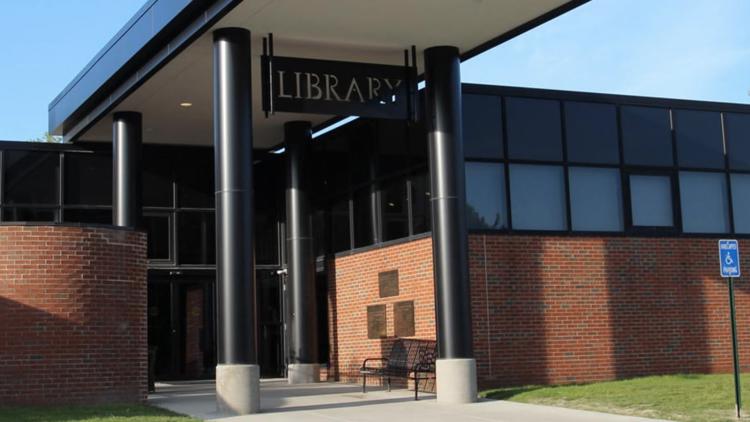
CLEVELAND — Cuyahoga CountyPublic Library officials, in a police report obtained by 3News, accused a man of checking out 100 books on Jewish history, Black history and LGBTQ education last month before filming a book burning and posting the video on a social media site described by advocates as a hub for white supremacist, neo-Nazi and extremist content.
According to an investigative report filed last week by the Beachwood Police Department, the man went into the Beachwood library branch on Shaker Boulevard and applied for a library card on April 2. He was approved for the card and checked out 50 books by the library’s proper procedure.
A library official told police that the Princeton University Bridging Divides Initiative, a non-partisan research effort that tracks political violence in the United States and monitors suspected hate crimes on social media, notified the library that the man posted a photo to Gab.com of a car trunk full of books. The post came with a caption that referenced “cleansing” the libraries, the official told police. The books in the photo “appeared to match the topics” of the books the man had checked out and also had Cuyahoga County Public Library stickers on them, the police report states.
According to the Anti-Defamation League‘s Center on Extremism, Gab is a platform known for lax content moderation policies that is widely used by “conspiracy theorists, white nationalists, neo-Nazis, members of militias and influential figures among the alt right.”
On April 10, the man returned to the Beachwood branch and borrowed another 50 books relating to similar topics. The man told a librarian that his son was a member of the LGBTQ community and he was trying to learn more about it. According to the police report, the librarian found the man’s behavior to be “very odd and concerning,” but the man did not make any threats during the encounter.
The Princeton researchers later reached out to the library again, this time saying that the man posted a video they believed depicted him burning all 100 books. The police report again states that the books in the video, a copy of which was obtained by police, “appeared to match the theme and titles” of the books that were checked out from the library. One of the books shown in the video had a CCPL sticker and was an exact match of one of the books the man withdrew, police said.
At the time the police report was filed on May 2, the man was not facing any charges in connection with the allegations. Police said the library staff were calling only to “document the incident,” and that the borrowed books were not yet overdue. The library told police that the man would be sent a bill once the books became overdue, and that the bill would be sent to collections if it was not paid.
The books had a combined total value of $1,700, the report stated.
Police told the library staff that “since a contract was entered and payment would eventually be billed,” the incident was likely a civil matter. The investigative report states the Beachwood city prosecutor would be consulted to determine whether criminal charges are warranted.
The library plans to ban the man from its property in the future. Police told the library staff to contact them for help issuing a trespass warning if the man returned.
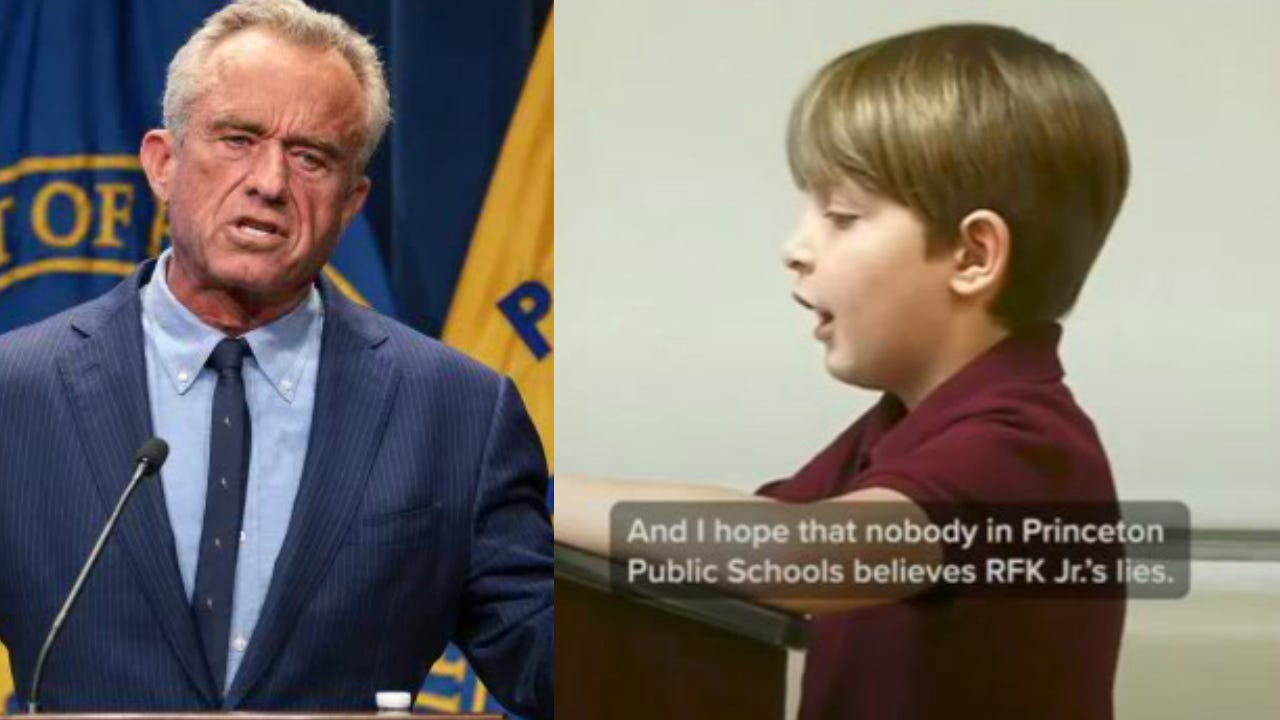
While RFK Jr. wanders the Earth saying foolish things like “autistic people are broken,” a 10-year-old prophet named Teddy stood before his school board and said, “I have autism. I am not broken.”
Well said, Teddy! Bless you!
1. And a Child Shall Lead Them
RFK Jr., the walking cautionary tale of nepotism, recently claimed that people with autism “can’t work” or “have families.” He said this with the confidence of a man who’s never Googled the words “ableism” or “shut up.”
Teddy is a fourth grader in Princeton, New Jersey. He has autism. He also has courage,poise, and the holy fire of truth.
He stood before the Princeton School Board and said:
“Recently, the U.S. secretary of health, RFK Jr., made false comments about autism like people with autism are broken, that autism is caused by vaccines, and that people with autism will never have jobs or families. But that’s not true. I have autism and I’m not broken, and I hope that nobody in Princeton Public Schools believes RFK Jr.’s lies.”
“PPS already recognizes Autism Awareness Month. But not much. There are posters in the cafeteria that say to be kind and inclusive. Students wear blue on April 2nd. But we are never taught about the spectrum of autism.”
“Kids need to be taught more about the different kinds of autism, that autism is a natural variation in the genes that you are born with (NOT caused by vaccines), and about successful people with autism. The lessons should also be extended to other “disabilities” like ADHD, cerebral palsy, blindness, deafness, dyslexia, apraxia, and more.”
“I want everyone to know that people with autism and other disabilities are not tragedies, but just different, like all people. If everyone understood more about autistic people, and about people with other disabilities, they would know more about how to treat them, what their lives are like, and that they don’t need to be fixed or cured.”
“This will help kids with disabilities have a better life. When people are aware of disabilities and are accepting them, they will have friends and less bullying. Also, the teachers might be more aware because they learned about the disabilities also.”
“Kids and teachers should know more about disabilities so they do not believe RFK Jr. is right about autism, and they choose to treat them in a way that is good for the kid. By knowing more about it, kids and teachers will be nicer to kids with disabilities.”
“This is important to me and PPS because I have a ‘disability’ and I noticed that disabilities are not being taught, only a few people mentioning autism. When teaching about culture, we teach many different cultures to accept them better. Because that’s what disabilities are like, a culture, a culture of differences.”
“PPS must add this to the curriculum of all grades and students, so we don’t have people like RFK Jr. in the future.”
BOOM. The Earth shook. Angels clapped. And lo, that dummy RFK Jr. dropped his dumbbell on his foot mid-curl.
Students are shown at Carl Wunsche Sr. High School, 900 Wunsche Loop, Tuesday, Feb. 4, 2025, in Spring.
Melissa Phillip/Staff Photographer
A lawmaker pushing to ban non-human behavior in schools says he based his bill on a conversation with a school administrator, who has since denied so-called furries are a problem in her district.
During an at-times tense hearing Tuesday night, Republican state Rep. Stan Gerdes said he filed the bill after hearing “reports of the presence of a furry” in a Smithville school. He said he called the district superintendent in November, who told him “this is happening in districts across the state” and schools don’t have the ability to stop it.
“We just want to help them have the tools to get some of the distractions out of the classroom so we can get back to teaching time,” Gerdes told the House Public Education Committee.
But the Smithville school district issued a public statement last month disputing Gerdes’ claims. It said Superintendent Cheryl Burns told Gerdes there were no litter boxes on campus for use by students dressed as cats, but as a courtesy to the lawmaker, she “made the extra effort to walk the campus to confirm.”
“At this time, the District has no concerns related to students behaving as anything but typical children,” the statement said.
Still, Gerdes argued the legislation was needed to curb the “extremely concerning” trend while providing scant evidence furries are a problem, or even present, in Texas schools.
Both Gov. Greg Abbott and House Speaker Dustin Burrows have backed the “Forbidding Unlawful Representation of Roleplaying in Education (F.U.R.R.I.E.S) Act,” which would prohibit any “non-human behavior” by a student, including wearing animal ears or barking, meowing or hissing.
The bill includes exceptions for sports mascots or kids in school plays and would only apply to grades 6-12. Still, it includes a clause that would amend the family code to deem schools “allowing or encouraging” a child to “develop a dependence on or a belief that non-human behaviors are societally acceptable” as child abuse.
The furries trend has existed for years, at least among adults. Many like taking on animal personas, dressing up in costumes and attending gatherings. The annual Anthrocon convention in Pittsburgh draws thousands.
Rumors about classrooms adapting to child furries appeared to start online in 2022. School districts in Iowa, Michigan and Nebraska later debunked claims they were providing litter boxes in bathrooms, and the fact-checking team at PolitiFact could not find any credible news reports that supported the claim.
Under questioning from a Democrat on the panel, who cast the bill as part of a “smear campaign” against public schools, Gerdes could not point to a single example of a school providing litter boxes to students.
Gerdes, a two-term legislator and past aide to former Gov. Rick Perry, said his office has received “some reports of them.”
“Did I go to these school districts and visit and see it with my own eyes? No,” Gerdes said.
When Gerdes introduced the legislation last month, he said he fully expected members of the subculture he was targeting to show up at the Capitol “in full furry vengeance” when the bill was heard.
“Just to be clear — they won’t be getting any litter boxes in the Texas Capitol,” the Smithville Republican said in a press release announcing the bill.
But there were no so-called furries or litter boxes at the late-night hearing Tuesday. Instead, the four people who showed up to testify against the measure included a public school teacher and a Texan who worried the measure could affect students with disabilities.
State Rep. James Talarico, a Round Rock Democrat who grilled Gerdes on the legislation, called the bill a “joke,” but said it would have serious consequences for educators. Teachers and schools could face fines of $10,000 to $25,000 for allowing behavior prohibited by the bill.
Talarico questioned whether a student licking their fingers after eating Cheetos would be prohibited by language in the bill, which defines “non-human behavior” as “licking oneself or others for the purpose of grooming or maintenance.” He asked whether students reading “Animal Farm” would be flouting the law if they made sounds like the characters in the book.
Gerdes said neither would meet the intent of the bill, and said he would be open to working with Talarico on the language to make him more comfortable with the legislation.
“I’m not comfortable with any bill that’s going after a non-existent issue,” Talarico responded. He cast the bill as part of an effort by Republicans to undermine public schools.
“Governor Abbott has used this litter box rumor to paint our schools in the worst possible light,” Talarico said. “That’s because if you want to defund neighborhood schools across the state, you have to get Texans to turn against their public schools. So you call librarians groomers, you accuse teachers of indoctrination, and now you say that schools are providing litter boxes to students. That’s how all of this is tied together.”
Gerdes denied the accusation. Later in the hearing, state Rep. Jeff Leach, a Plano Republican, defended Gerdes as a supporter of public schools and cast Talarico’s opposition to the legislation as part of an “obsession” with the governor.
“His hatred for Gov. Abbott and for private school vouchers or educational savings accounts has just gone too far,” Leach said. “You’re highly respected,” he told Gerdes, “and this bill doesn’t change that.”
The committee left the measure, House Bill 54, pending.
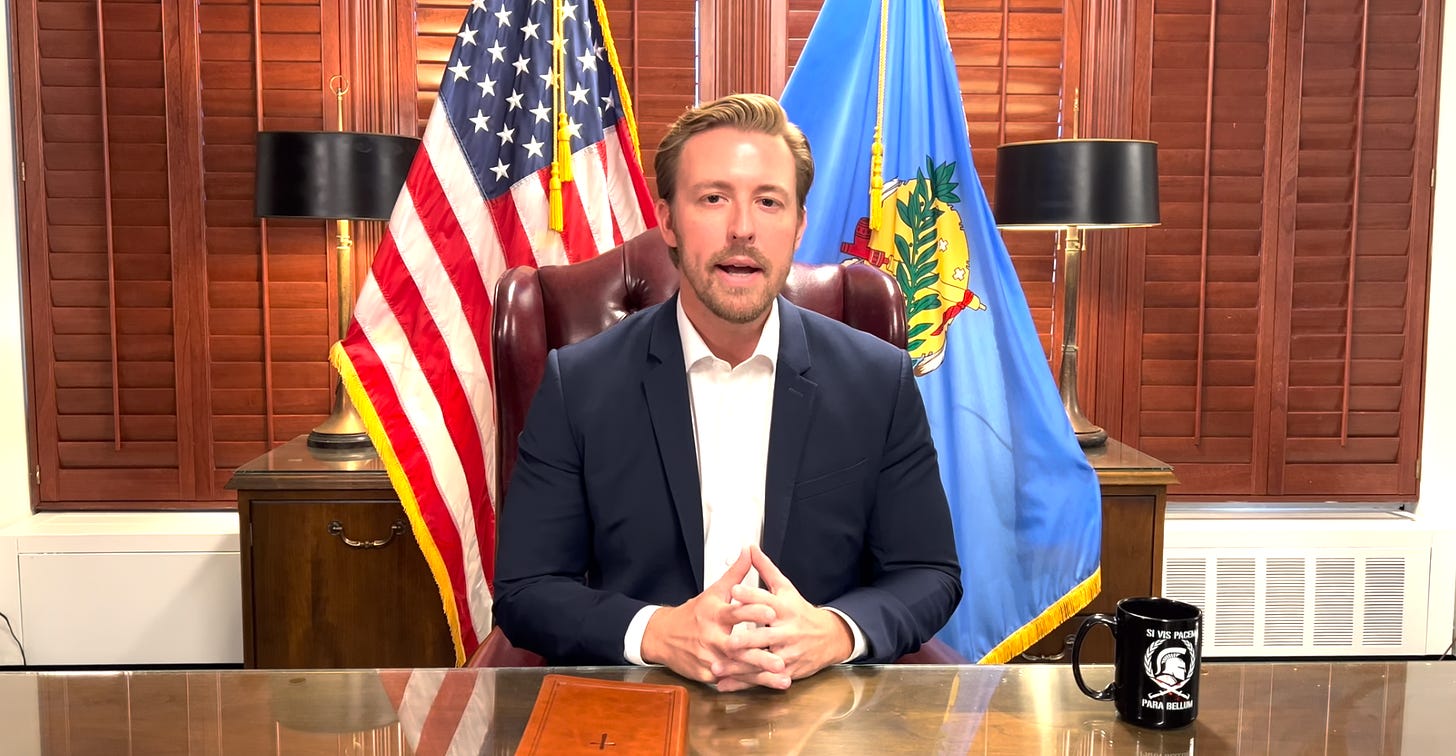
Oklahoma Superintendent of Public Instruction Ryan Walters (Screenshot/YouTube)
Beginning in the 2025-26 school year, thousands of high school students in Oklahoma will be required to learn about President Trump’s debunked claims that the 2020 election was tainted by fraud. The lesson will not be part of a course on conspiracy theories, but an official component of the new social studies curriculum created by Oklahoma Superintendent of Public Instruction Ryan Walters (R).
The new curriculum includes a section that requires students to “analyze contemporary turning points of 21st-century American society.” That requirement includes the following:
Identify discrepancies in 2020 elections results by looking at graphs and other information, including the sudden halting of ballot-counting in select cities in key battleground states, the security risks of mail-in balloting, sudden batch dumps, an unforeseen record number of voters, and the unprecedented contradiction of “bellwether county” trends.
In March, Walters said the purpose of this section was to teach “students to think for themselves” and “not be spoon-fed left-wing propaganda.” According to Walters, there are “legitimate concerns” about the integrity of the 2020 election that were “raised by millions of Americans in 2020.”
Walters is wrong. There are no “discrepancies” in the 2020 election results that validate the claims of Trump and his allies that the results were fraudulent. The new curriculum is simply an amalgamation of unsupported claims.
There was no “sudden halting” of ballot counting in key states. The counting took an extended period in some states because election officials were legally prohibited from counting early ballots in advance. Mail-in balloting is safe and secure. Large increases in vote totals (“batch dumps”) happen in every election, impact both parties, and are not a sign of fraud. Record turnout in 2020 was not “unforeseen” — it was due to increased engagement related to the pandemic and other factors. And traditional “bellwether” counties are now more conservative than the nation as a whole.
Oklahoma’s legislature had an opportunity to block the new curriculum. The chairman of the Oklahoma Senate Education Committee, Adam Pugh (R), filed a resolution that would have sent the curriculum back to the Oklahoma State Board of Education for further review. But ultimately, the resolution did not receive a vote.
Moms for Liberty, a far-right activist organization, sent a letter to Republican members of the legislature, praising the new curriculum as “truth-filled, anti-woke, and unapologetically conservative.” They also delivered a warning: “In the last few election cycles, grassroots conservative organizations have flipped seats across Oklahoma by holding weak Republicans accountable. If you choose to side with the liberal media and make backroom deals with Democrats to block conservative reform, you will be next.”
How Walters jammed his new standards through the State Board of Education
Walters’ new social studies standards were approved by the Oklahoma State Board of Education in February. But many members have since said that Walters used deceptive tactics in order to pass new last-minute changes.
Walters did not send the new standards with his additions to the members of the board until 4 p.m. the day before the board’s 9:30 a.m. meeting. This did not give members enough time to read the new standards, which are around 400 pages long. Some of the members said later that they did not even realize that the new standards were different from the earlier version that they had previously reviewed.
The email sent the day before the meeting “subtly indicate[d]” that updates had been made, but did “not provide any specifics,” 2 News Oklahoma reported. In the meeting, Walters did not mention the specific changes. In an April 24 meeting, one of the board members, Chris VanDenhende, asked Walters to provide documents that noted the changes made, but Walters called the request “irrelevant.”
At the February meeting, Ryan Deatherage, a board member, asked to delay the vote so they had time to read the full standards, but Walters “pressure[d] the board to vote that day, indicating a legislative time crunch,” according to 2 News, which attended the meeting. In reality, they had until April to approve the standards. After the February meeting, multiple members of the board stated that they wanted another chance to review the standards, calling Walters’ tactics a “breach of trust,” the Oklahoman reported.
Walters claimed that the last-minute additions to the standards were based on public input. But there is no evidence of this. During a press conference, “a reporter who reviewed an open records request said there were no public comments that suggested adding a standard about election discrepancies,” KGOU reported. Walters responded by arguing that there were “focus groups” and “a lot of discussions that were going on.” But Walters also acknowledged that he was the one who decided to change the content. “Ultimately, it was up to me to make the final decisions of what are we going to put in,” he stated.
Walters also included right-wing activists on the committee that reviewed the social studies standards. The committee would normally involve educators and other experts, but Walters’ committee included Kevin Roberts, the president of the Heritage Foundation; Dennis Prager, the co-founder of PragerU; and right-wing media personalities Steve Deace and David Barton. Only three out of the 10 people on the committee have lived in Oklahoma, according to the Oklahoma Voice.
The Oklahoma Council for Social Studies (OCSS) opposes Walters’ new standards: “OCSS cannot fully support the standards in their current form. Many of the late additions include historically inaccurate content and do not align with the inclusive, evidence-based approach that is essential to high-quality social studies instruction.” The statement also argued that “the manner in which these changes were introduced raises serious concerns, casting doubt on the transparency and integrity of the standards development process.”
More Bible, less Biden
Among the curriculum changes that will soon go into effect is the removal of part of a unit in which students will learn about former President Joe Biden’s administration. The original lesson plan taught students about the “challenges and accomplishments” of Biden’s term, but the new version focuses on challenges and leaves out accomplishments.
The original version said that students should be able to describe economic recovery after the COVID-19 pandemic and bipartisan infrastructure legislation. The new version only asks students to describe “the United States-Mexico border crisis” and “America’s withdrawal from Afghanistan, responses to the Russian invasion of Ukraine, and the Gaza-Israel conflict.”
While Biden’s accomplishments are de-emphasized in the new curriculum, the amount of time Oklahoma students spend learning about Christianity and the Bible will be increased. In December, Walters proudly announced that his new curriculum will increase the number of mentions of the Bible from two to nearly 50 for students starting in first grade. The Bible lessons primarily focus on the influence of Christian values on the Constitution and the Founding Fathers.
Students as young as six years old will learn the stories of the Ten Commandments and David and Goliath. By the end of middle school, students will have gone through several lessons on how the Bible’s principles served as inspiration for the American independence movement. In high school, they will be able to take an entire course about early Christians and the history of Christianity.
Despite the new emphasis on the relationship between the Bible and America’s founding, the curriculum does not reference the separation of church and state. Walters and many of the Christian nationalist figures who helped him craft the curriculum have said that the separation of church and state is unconstitutional or a myth.