Conversation Starter: MAGA Responses Similar to Domestic Violence

I recently watched a fantastic TED video, and I really do invite everyone to watch. It’s about 20 minutes and is here: (https://www.youtube.com/watch?v=VBnocNg69o4). In this TedTalk, Miles Taylor talks about how he went to Washington DC as a young page to dedicate his life to never allowing another 9-11 type event. Then came Trump, and his simple opposition to trump’s policies and procedures garnered trump accusing him of being a traitor, death threats to him, his wife, his baby daughter. As I watched this, I thought about my own concerns and experiences including the near violent responses I’ve heard from otherwise decent people who couldn’t respond with decency when defending trump. Says it all, doesn’t it?

But, it got me to ask a simple question to Google, and I was really surpised by the answer. I asked: are maga responses to criticism similar to domestic abuse?

It became clear that I am not the only one to see the uncomfortable parallel. The following is the copy/paste answer Google offered:

Psychological and political experts, as well as abuse survivors, have drawn notable parallels between the defensive communication tactics used by the MAGA movement and the behavior patterns of domestic abusers. Both rely on emotional manipulation and coercive control to maintain power and invalidate critics.

These parallels include tactics such as:

  • Gaslighting: Denying established facts or public statements, making followers and the public question their own memory or sanity.
  • DARVO (Deny, Attack, and Reverse Victim and Offender): When criticized, the immediate response is to deny the allegation, attack the critic’s credibility, and claim that the MAGA figure or movement is actually the victim.
  • Isolation: Portraying mainstream media, political opponents, and dissenters as corrupt or enemies, actively encouraging followers to cut off alternative perspectives and only trust the movement.
  • Minimizing and Dismissing: Downplaying the severity of concerning behaviorโ€”or even downplaying physical and sexual abuse allegations as mere “allegations” or “smears”.
  • Projection: Accusing critics or the opposition of the exact wrongdoing or corruption that they themselves are currently facing.

I’ve realized that I remain quiet in response to people ranting about their great and wise leader’s latest spite-filled fact-barren public embarrassment. In truth, I’m not terribly concerned about being the victim of violence, but do I really want the aggravation? I’ve realized, much to my embarrassment, that I’ve become another one of the silent majority; those who would not accept violence and abuse but only speak up in a safe environment. And, as Miles Taylor mentioned, it is the silent majority that make the abuse possible.

Is this cowardice? Is this simple self-preservation? Or, have I just become accustomed to the abusive caustic environment that the rise of trump has brought to our country? I’d like to say it is the latter, but damn. This is our reality now, but is that how I want to live? Is that even healthy?

I’ve come to realize that we are in a toxic relationship with those we love: our fellow countrymen. And, while some would say this is ridiculous, here are some questions that I’ve found to indicate one is in such a dangerous place:
Sometimes feel scared of how your partner may behave?
Constantly make excuses to other people for your partnerโ€™s behavior?
Believe that you can help your partner change if only you changed something about yourself?
Try not to do anything that would cause conflict or make your partner angry?
Always do what your partner wants you to do instead of what you want?
Stay with your partner because you are afraid of what your partner would do if you broke up?
What the hell has happened to us?!

What is worse is that due to the unhinged response we receive when we attempt to ask questions and hope for better, the defensiveness of his followers shut it down. The result is that this clown can do any illegal act and any restraint is met with calls for violence and abuse. Further, abusers abuse so that they can continue to abuse — meaning — having the power to abuse is not going to be willingly given up.

This Country has had problems from the beginning, fighting amongst ourselves and outright abusing people on the shores of our great nation. But we have always had the hope of moving toward a more perfect union. I don’t feel that anymore. I find myself feeling the destruction of deeply held ideals, like the Primacy of the Constitution and the idea that No One Is Above The Law. Am I just being naรฏve? Is this how Medgar Evers felt? Is this how Sitting Bull felt? I don’t know, but I do not feel that expectation of something better to come anymore. I feel like once abuse has become acceptable in this union, once those diseased claws have sunk into the marrow….

Israel continues to commit genocide by targeting children in Gaza, UN inquiry finds

To me and hopefully to everyone this is horrific.ย  But something I have been highlighting here that Israeli is a rouge terrorist government drying to genocide the Palestinian people.ย  It is horrific that a people who experienced such actions would inflict them on others.ย  ย But this show what can happen when right-wing movements turn into religious domination of the government.ย  ย The Israel government is now filled with extreme Jewish religious extremists who feel their holy book grants them all the territory around then that is the sovereign territory of other countries.ย  ย They feel their god gave it to them thousands of years ago so they have the right to take it.ย  ย Regardless of laws or norms between countries.ย  They want it so it should be theirs.ย  Just like Putin in Ukraine.ย  Israel talked our demented leader into going into war against their enemy which had no benefit for us but we took all the cost and risks.ย  The military equipment and weapons used in the genocide of the Palestinians was paid for by the US taxpayer.ย  Some quotes below.ย  ย Hugs

The โ€‹UN commission said in its report,ย released on Tuesday, that Palestinian children were deliberately targeted and killed during the โ€Œwar, including after a ceasefire came into effect โ€Œin October 2025.

โ€œThe evidence shows that Palestinian children have been deliberately targeted and killed by the Israeli security forces,โ€ said Srinivasan Muralidhar, the commissionโ€™s chair, in a statement accompanying the report.

โ€œThis indicates that โ€Œsuch attacks, which killed children in such high numbers, were intentional,โ€ it said. It added that it believed children were targeted collectively because the Israeli security forces considered the civilian population as a whole to be associated with Hamas and other armed groups.

Muralidhar said that by targeting children, Israel was undermining the capacity of the Palestinian people to exist and to determine their future.

The inquiry also found that attacks โ on healthcare and reproductive facilities affected newbornsโ€™ survival and the reported increase in miscarriages, and that nearly all children in Gaza โ€‹were reported to be in need of psychological support.

It said Palestinian children, especially boys, were subjected to systemic mistreatment in detention, including forced stripping, beatings and food deprivation.


https://www.theguardian.com/world/2026/jun/23/israel-deliberately-targeting-gaza-children-to-commit-genocide-un-inquiry-finds

Independent report says by aiming at children Israel is undermining capacity of Palestinian people to exist

A man tosses a child in the air amid rubble in Gaza, with several children watchingA man plays with a baby as Palestinian children look on amid the rubble in Khan Younis, Gaza, in March.

Photograph: Anadolu/Getty Images
Women with black headscarves holding a tiny shroud.Women mourn a baby killed in an Israeli strike on Khan Younis last year.

Photograph: Anadolu/Getty Images
Worried looking children in crowd with hands outstretchedChildren jostle for food at an aid point in the Nuseirat refugee camp in central Gaza on Monday.

Photograph: Anadolu/Getty Images
Rubble, a Palestinian flag and children


First They Came For The Immigrants…

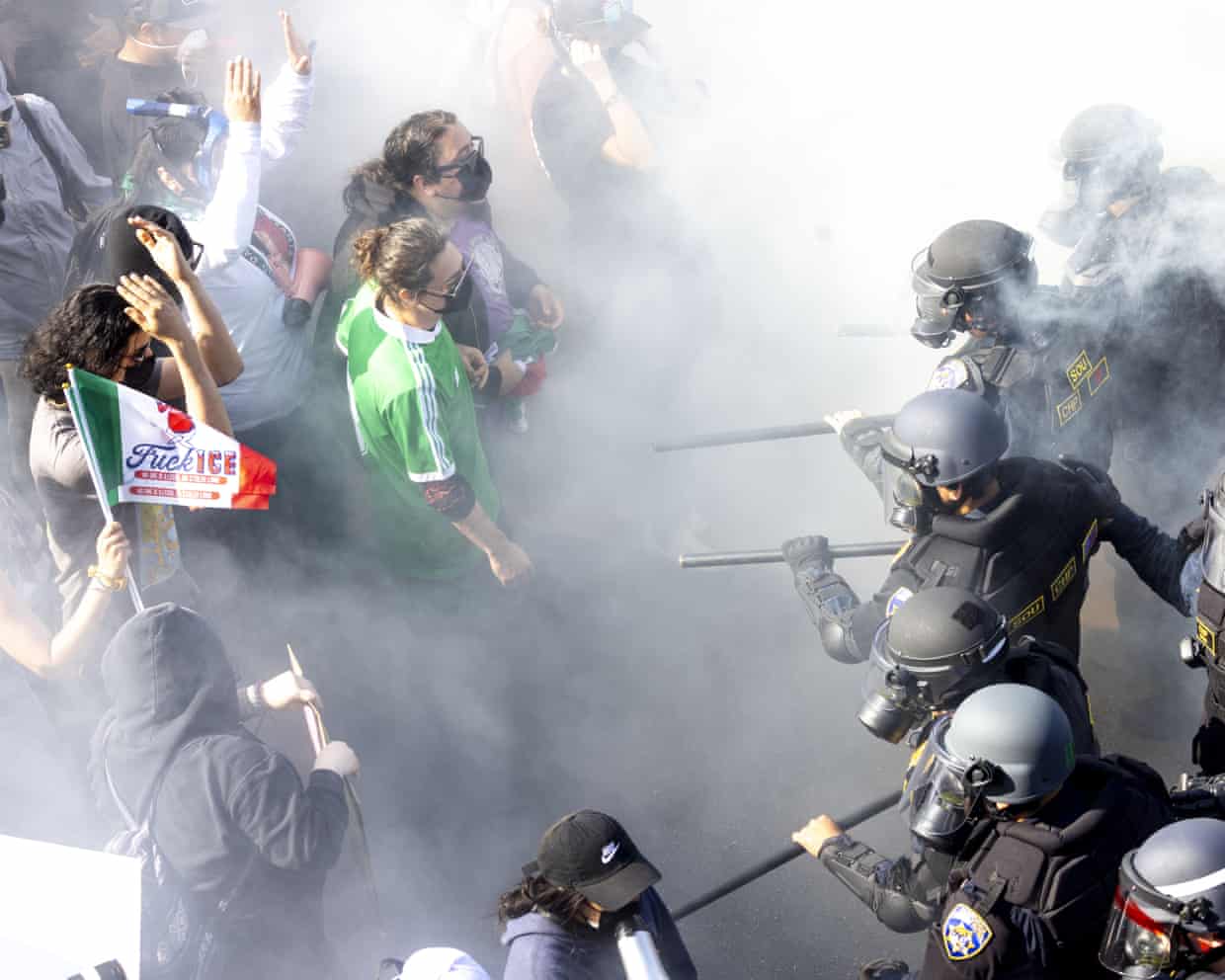
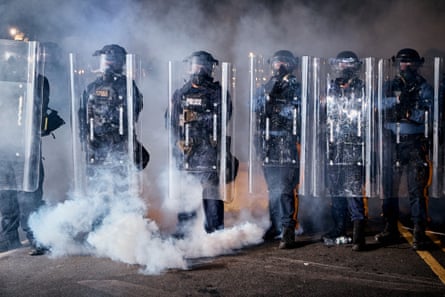
Emma Vigeland welcomes Ken Klippenstein, an independent journalist covering security and US politics at KlipNews, discussing the 15 anti-ICE activists indicted by the Justice Department.


“The Day The War Began”

Chris Geidner Regarding DOJ Subpoenae For Gender-Affirming Care Patients:

Arguing that DOJ’s trans care subpoenas have no precedent, challengers on both coasts push back

A pair of hearings on Tuesday highlighted the extreme nature of DOJโ€™s requests โ€” and the speed with which DOJ has moved to try and get the invasive patient data in recent weeks.

Chris Geidner

The Trump administrationโ€™s actions aimed at making it more difficult for transgender minors to receive gender-affirming medical care regardless of state policies allowing or even protecting such care are facing strong pushback. And while the Justice Department has described a โ€œnationwideโ€ investigation into the care, it was those challenging DOJ who prompted hearings on both coasts on Tuesday.

The Justice Departmentโ€™s efforts to obtain information about patients who received gender-affirming medical care by way of administrative subpoenas and, more recently, grand jury subpoenas are extreme โ€” and lawyers say, unprecedented.

The pair of hearings Tuesday highlighted the extreme nature of DOJโ€™s requests โ€” and the speed with which DOJ has moved to try and get the invasive patient data in recent weeks after nearly a year since the first requests went out in July 2025.

The administrative subpoenas have been blocked when challenged, leading a set of patients to seek a class-action order quashing the patient-specific requests in all of the administrative subpoenas.

At 10:00 a.m. ET Tuesday, U.S. District Judge Julie Rubin held a hearing related to that request at the Edward A. Garmatz U.S. District Courthouse in Baltimore.

Rubin, a Biden appointee, was one of the judges who had previously quashed the patient-specific requests, as to those who moved to quash the administrative subpoena issued to Childrenโ€™s National Hospital (headquartered in D.C. but with locations in Maryland as well), finding that the โ€œSubpoena lacks a legitimate purpose.โ€œ

The bulk of Rubinโ€™s questions to Rachel Berg from the National Center for LGBTQ Rights on Tuesday related to whether Rubin could certify a class in a motion to quash an administrative subpoena and, if not, how far relief could go.

Ultimately, Berg acknowledged that, if Rubin did not certify a class, relief could only reach those with a connection to Maryland. In their filing, they had noted that โ€œ[a]t least two Movants currently reside in Maryland and four families received services from Childrenโ€™s National Hospital in Maryland.โ€œ

That would, however, not accomplish what the litigation is seeking to do โ€” stop DOJ from getting any of the patient-specific information in response to any of the administrative subpoenas. As such, if Rubin denies this request, there likely would be a further effort to accomplish that goal.

At the same time, Rubin pushed DOJโ€™s Scott Dahlquist on the opposite side nearly as strongly as sheโ€™d pushed Berg. When he insisted that the patients were seeking โ€œsweeping, nationwideโ€ relief, Rubin asked how thatโ€™s different from any class-action litigation. Dahlqustโ€™s response was, essentially, that you canโ€™t get class relief for an administrative subpoena.

On rebuttal, though, Berg responded that, though the patientsโ€™ request to the court might be without a perfect match from past litigation, the reason that is so is because there is no precedent for the Justice Departmentโ€™s actions here.

Although it is not clear how Rubin will rule, the relevance of the administrative subpoena fight could be taking on less importance in short order. As Law Dork has covered in depth, DOJโ€™s apparent move to grand jury subpoenas issued in the Northern District of Texas in May is reaching a head โ€” with at least two grand jury subpoenas having initially had a return date of Wednesday, June 10.

Over the past week, patients of Lucile Salter Packard Children’s Hospital at Stanford have made efforts to block the grand jury subpoena issued to Packard. After a first attempt to block Packard from turning over the information โ€” in a lawsuit filed only against Packard โ€” was rejected over the weekend, the patients filed an expanded lawsuit on Monday. In that, they added the Justice Department and Acting Attorney General Todd Blanche as defendants and asking for class-action relief for all who received gender-affirming medical care as minors in California and, specifically, Packard patients (similar to litigation in New York City). They also filed a request for a temporary restraining order barring DOJ from receiving patient-specific information, given the forthcoming return-date deadline.

At 10:00 a.m. PT Tuesday, U.S. District Judge Casey Pitts held a conference related to that request. Pitts was presiding over the remote hearing from his courtroom at the Robert F. Peckham Federal Building and U.S. Courthouse in San Jose.

The hearing before Pitts, another Biden appointee, ultimately, was less adversarial โ€” for now โ€” than the Baltimore hearing.

Late Monday, Pitts had issued a temporary order blocking Packard from turning over any more documents to the government and blocking DOJ from taking any further action to enforce any grand jury subpoenas that would affect the would-be class here while he considered the matter.

Everyone, more or less, was OK with keeping that status while taking up the TRO request on a slightly less rushed timeline.

Although it took a few minutes at the status conference for everyone to agree that everyone was on the same page, ultimately John Wollman, the assistant U.S. attorney from the Northern District of California representing the government at the hearing, while not acknowledging any grand jury subpoena, agreed to push back any Packard subpoena response date to June 25 to allow time for briefing and arguments on the patientsโ€™ request.

Although the parties need to submit a briefing schedule to Pitts for how to proceed, the outcome is similar to that reached temporarily as to the grand jury subpoena challenge in New York City, where the next hearing is set for June 22.

In short, the grand jury subpoenas that are known to have been challenged are on hold for now by agreement of the government while the litigation is considered.

Despite that, though, the return date was June 10 on both published grand jury subpoenas, so it is possible that others are out there that have not been challenged and will lead to productions on Wednesday. (Of course, it is also possible there are other challenges that have just flown under the radar.)

Regardless, and as NCLRโ€™s Berg detailed Tuesday in Baltimore, this is an unprecedented, multi-pronged attack on a small handful of children. Whatโ€™s more, given the way DOJ is going about this, they and their families might not even know that their records might be turned over to the government โ€” or if their provider has even been subpoenaed.


Law Dork will continue to cover this story. If you know about any previously unreported subpoenas, other related DOJ efforts, or other challenges to those efforts, please reach out. Chris Geidner is available on Signal at crg.32 for more secure communications.

Is This The Moment Dan Goldman Lost His Re-Election?

Another sitting congress person who is bought and owned by Israel to the point where he is adamant that Israel was not breaking the Leahy law on the use of military weapons.ย  ย How did we the people let so many of our congress people be owned by foreign governments?ย  Oh yes it was citizens united.ย  ย That was one of the SCOTUS rulings that made bribery legal because the majority of right wing justices on the courts were taking bribes from wealthy people.ย  ย Hugs


Republican Ghoul Wants “Proof” Children Killed By Israel’s Bombs Are Innocent

A Republican wearing an IDF pin is defending Israel’s genocide and invasion of Lebanon.ย  ย He believes anything Israel does is OK, including attacking another country, killing its people, all to steal that country’s land.ย  Same thing Russia is doing to Ukraine that the US tried to stop.ย  Yet some members of our government / congress are bought and owned by Israel’s government.ย  Hugsย 

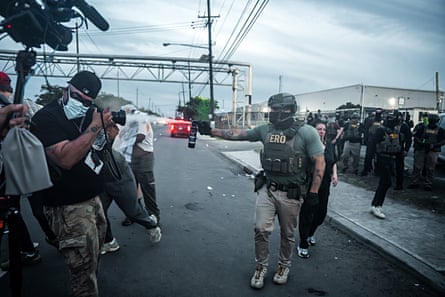
ICE Detention Protests Heating Up | Wali Khan | TMR

This clip was with a reporter detailing the abuses in ICE detention facilities and the illegal actions of ICE agents and for profit prison staff.ย  Profit over people as these ICE and prison staff do not see the detainees as humans like themselves.ย  ย What is concerning is ICE is learning how to use existing laws to make the local law enforcement work against the will of the people.ย  ย This young man wont admit he was attacked by ICE agents instead saying he thinks he hit a tree limb in the confusion but I showed Ron the video and he said the guy looks to him like he was hit repeatedly and hard in the head and possibly the body as well.ย  When will we as a people see that these abuses are so very similar to the abuses suffered by the minorities in 1930s Geermany.ย  ย Hugs

Winning Elections Against Autocrats

Opinion M. Gessen

This Is the Formula That Defeated Orban. It Would Defeat Trump, Too.

By M. Gessen

Visuals by Mรกtรฉ Bartha

M. Gessen, an Opinion columnist, and Mr. Bartha reported from Budapest.

  • May 29, 2026

Leer en espaรฑol

Starting early in the morning on the second Saturday of May, first hundreds and then thousands of people gathered in the square in front of Hungaryโ€™s majestic Parliament building to celebrate the start of a new political era. This was the square where tens of thousands gathered in 1956 and 1989 to demand an end to the Soviet occupation and in 2006 to protest a discredited government. It was the square on which Prime Minister Viktor Orbanโ€™s regime imposed a major redesign more than a decade ago โ€” with traffic rerouted away, a large reflecting pool and raised beds installed, narrow pathways laid down โ€” apparently to ensure that no such mass gathering could take place again. Today it was the square where Peter Magyar, a former Orban loyalist, would be sworn in, promising a rebirth of democracy and liberty after 16 years of autocratic control.

Squeezing into the available spaces and gradually filling up nearby cafes and streets, the crowd absorbed people of all ages: young people who didnโ€™t remember a time before Orban and who had voted in unprecedented numbers; aging intellectuals who didnโ€™t think theyโ€™d ever celebrate their country again; multigenerational families who had arrived by bus after seeing Magyar in their hometowns and villages. During his campaign, Magyar had traveled to an estimated 700 locations, turning many of them into โ€œTisza islandsโ€ โ€” outposts of support for his party. By the end, Magyar was holding five or more rallies a day.

It had looked like an impossible quest. Orban and his cronies dominated the media, persecuted and smeared opposition politicians and changed election laws to benefit his party, Fidesz. Orban had seemed to achieve what the Hungarian sociologist and political theorist Balint Magyar (no relation) calls โ€œautocratic breakthroughโ€ โ€” the point after which itโ€™s impossible to unseat an autocrat using elections. Illiberal politicians from other countries made pilgrimages to Hungary to learn from Orban; CPAC, the gathering for American national conservatives, started staging an annual convention there; and Vice President JD Vance visited Budapest in advance of the election, in a show of support for Orban. And yet Hungarians handed Tisza not just a victory but a constitutional majority, enough power to reverse Orbanโ€™s changes to Hungarian laws and institutions. The triumph was stunning โ€” unique in our era of democratic backsliding โ€” and it holds clear lessons for the United States.

One obvious lesson of Peter Magyarโ€™s success lies in the scale, reach and relentlessness of his organizing network. โ€œThey had 2,000 Tisza islands with between 30,000 and 50,000 volunteers,โ€ Balint Magyar told me, in evident awe. โ€œJust in their call centers, they had 3,000 to 4,000 people in the last week of the campaign.โ€ We talked two days before the swearing-in ceremony, at his office in the spectacular but largely empty building of Central European University. In 2018, Orbanโ€™s government forced most of the universityโ€™s operations into exile amid an antisemitic scare campaign focused on the Hungarian American philanthropist George Soros, the C.E.U.โ€™s founder and principal funder. Some of Orbanโ€™s many other scare campaigns targeted migrants, โ€œthe Brussels elitesโ€ and L.G.B.T.Q. people. During the latest election campaign, billboards and A.I.-generated social media posts warned Hungarians they were in danger of being overtaken by Ukraine and only Orban could protect them. It should have seemed absurd โ€” it was absurd โ€” but outlandish xenophobic and antisemitic propaganda had served Orban well for years. It didnโ€™t work against Peter Magyar โ€” probably because so many Hungarians got to see him in person, many of them repeatedly. This is another lesson of his success: Old-fashioned in-person politics can be a powerful antidote to media fearmongering.

In his inaugural speech to Parliament, broadcast on giant screens set up around the square, Peter Magyar said that voters had handed him a mandate โ€œnot just to change the government, but to change the system. To start over.โ€

Magyar enumerated the ways in which Orban had damaged Hungary: a stalled economy in which a third of the population lives in poverty, inadequate health care, low-quality schools, child welfare institutions plagued by abuse, an atmosphere of hatred and fear. Orbanโ€™s regime had โ€œstolen from the common good of the Hungarian nation โ€” from the pockets of the Hungarian people, and from the tables of Hungarian children and the elderly,โ€ Magyar said, โ€œan estimated 20 trillion Hungarian forints,โ€ or some $65 billion, over the last decade and a half.

Previous opposition politicians had described Orbanโ€™s regime as โ€œcorrupt,โ€ a relatively mild term suggesting some aberration from the governmentโ€™s intended function. Peter Magyar made no such accommodation. Borrowing a term coined by Balint Magyar, he has called it a mafia state โ€” a fundamentally criminal enterprise. Third lesson: Donโ€™t mince words.

Instead of shrinking away from direct confrontation, he fortified himself against it. By getting elected to the European Parliament, in 2024, he secured immunity from prosecution in Hungary. When rumors circulated of an intimate video that would be used to blackmail him, he went on the offensive, accusing Orban of using โ€œRussian-style kompromatโ€ (no video was released). Knowing that he would probably be blocked from registering a new political party, he took over one that had become dormant. Even more important, instead of trying to build coalitions among other parties, he focused on conscripting as many actual people as possible, from across the political spectrum, ultimately building a giant organization capable of taking down Orbanโ€™s political monopoly.

One could say โ€” and some have โ€” that Magyar won at least in part because he was a former insider of Orbanโ€™s Fidesz party. But my interlocutors in Hungary emphasized that Magyarโ€™s credibility lay in the fact that he was not a member of the old opposition, whose policies had led to the discontent that made Orbanโ€™s rise possible and whose timidity had helped perpetuate Orbanโ€™s power. Thatโ€™s a lesson, too: The person best positioned to break the power of Donald Trump would not be an anti-Trump Republican but an outsider to the Democratic establishment, someone who can credibly claim that Trump didnโ€™t happen on his watch โ€” a Graham Platner rather than a Thomas Massie.

For all his tireless work over the last two years, Magyar did not create his political machine from scratch. Like Zohran Mamdani, Magyar excelled at converting potential supporters into campaign volunteers. An existing news distribution service provided an initial skeleton of the organizing network. A panoply of grass-roots protest movements joined, too. On the day of Magyarโ€™s inauguration, a parallel, smaller commemoration organized by the city of Budapest celebrated those organizations. One by one, people took the microphone to give a short speech about their cause and their part in the electoral victory: teachers who had organized against a unified state-dictated curriculum; a young man who spoke up against abuses in the child care system; a high school student persecuted for reciting an anti-Orban poem; organizers of Budapestโ€™s L.G.B.T.Q. Pride celebration. The speakers stayed onstage, gradually forming a crowd of the kind โ€” the many kinds โ€” of ordinary Hungarians who had ended the Orban era.

Thatโ€™s a fifth lesson: Grass-roots organizations that have little or no connection to electoral politics โ€” in the United States, that might be the networks formed by the No Kings rallies, ICE-resistance groups and so on โ€” can matter as much as or more than those already focused on winning votes.

Another lesson lies in the issues that motivated Magyarโ€™s voters. Hungaryโ€™s economy is a mess, but post-election polling by Median, an organization that had predicted election results with uncanny accuracy, shows that voters saw corruption as the most important issue by far. Asked why they thought Orban had lost, 49 percent cited corruption, and only 18 percent thought it was the โ€œworsening economic situation, rising cost of living.โ€ The next three reasons cited were โ€œliesโ€ (15 percent); โ€œfearmongering, war rhetoricโ€ (11 percent); and โ€œpeople got fed upโ€ (10 percent). In other words, Hungarians seemed to see the damage that Orbanism had done to the nation as more important than any harm they felt they had suffered as individuals. They were united by a sense of moral outrage โ€” โ€œvalue choices,โ€ as one person close to the incoming government described it to me.

Polls have consistently shown that even Fidesz voters generally want Hungary to stay in the European Union. Some surely just want the ease of travel and residency, but others probably have in mind the loftier ideals of the E.U., such as the rule of law, human rights and the essential purpose of the E.U., which is peace.

Hungary is one of the poorer countries in the union, and in the early years of his regime, Orban was able to use E.U. membership to secure funding, and thereby power, even as he railed against the Brussels bureaucracy. But in 2022, the European Union started withholding funding, citing corruption. And in 2024, after Hungary ignored a European Court of Justice ruling that compelled it to process asylum applications, the court ordered Hungary to pay 200 million euros and imposed a daily fine of 1 million euros. (When Orban refused to pay, Brussels deducted the money from E.U. funds earmarked for Hungary.) These actions didnโ€™t just hurt the Hungarian economy โ€” they also allowed Magyar to draw a causal connection between Orbanโ€™s policies and the well-being of ordinary voters. One of his major campaign promises was to unlock E.U. funding.

Hungary joined the European Union in 2004. The E.U. flag โ€” 12 gold stars on a blue background โ€” adorned the facade of the Hungarian Parliament building alongside the nationโ€™s red, white and green standard. But Orbanโ€™s politics, like the politics of most autocrats, was the politics of grievance. Under his regime, the E.U. flag was removed and replaced with the flag of the Szekelys, a Hungarian minority that found itself living in Romania when World War Iโ€™s victors redrew the regionโ€™s borders. Orbanโ€™s symbolic gesture helped fan resentment against the E.U. and what he claimed were a new generation of attacks on Hungarian sovereignty.

Peter Magyar scheduled his inauguration for Europe Day โ€” the 76th anniversary of the declaration that created the road map for a united continent. Before he was sworn in, the European flag was raised again. But the Szekely flag remained, signaling that Magyar seeks to represent all Hungarian citizens, including those who supported Orban. In some U.S. coverage, Magyar has been labeled centrist or right-of-center. What his politics actually are โ€” and this is another lesson of his victory โ€” is pluralist. (snip-MORE)

That Public Notice About NDA’s for Government Workers:

Anyway, here it is, along with the link so we can make our comments (of course it is not hyperlinked on the page, we need to copy it and paste it into our browser. WP has made it a live link in this post, but it doesn’t work.) It’s our duty and a right we still have; if we do not use it, we will most certainly use it. I found out about this yesterday on MPS’s post; it just took me a bit to get to this.

You can find this here. (This hyperlink is good; I made it myself and it works.) It is a .pdf. The NDA notice begins in the lower right-hand column.

ADDRESSES: You may submit comments
using the Federal eRulemaking Portal at
https://www.regulations.gov. Follow the
instructions for sending comments.
The general policy for comments and
other submissions from members of the
public is to make these submissions
available for public viewing at https://
http://www.regulations.gov without change,
and including any personal identifiers
or contact information. Before finalizing
the NDA, OPM will consider all
comments received on or before the
closing date for comments. OPM may
make changes to the NDA after
considering the comments received.

Request for Comment
OPM welcomes public comments on
all aspects of the draft NDA, including
whether the Privacy Act statementโ€™s
description of the authority, principal
purposes, routine uses, and effects
provide sufficient notice to employees.
The draft NDA is available in the docket
for this notice on regulations.gov. See
https://www.regulations.gov/document/
OPM-2026-0100-0003. OPM specifically
requests comment on the following
issues.

  1. What scope of information should
    be covered by the NDA? Should it cover
    only unclassified information? How do
    you understand the terms confidential
    and confidentiality in the context of this
    NDA? What customization of the NDA,
    if any, may be necessary for agencies to
    ensure it covers the appropriate
    information?
  2. Does the NDA clearly communicate
    the types of information that would be
    subject to non-disclosure requirements?
    If not, how could OPM better describe
    what information can or cannot be
    disclosed to ensure employees have
    appropriate notice of their
    responsibilities?
  3. Are there other statutes to which
    OPM should cite in Appendix A of the
    NDA when describing the nondisclosure
    requirements applicable to individuals
    working for or on behalf of the Federal
    government?
  4. Do you have suggestions regarding
    the layout or formatting of the NDA?
  5. Does the Privacy Act statement in
    the NDA provide sufficient notice to
    employees of the authorities, principal purposes, routine uses, and effects of
  6. the form?
  7. Does the OPM/GOVTโ€“1 system of
    records notice provide sufficient notice
    that the government-wide system of
    records would maintain records related
    to the signing of, or failure to sign, the
    NDA?
  8. What are the appropriate actions, if
    any, for agencies to consider taking if
    existing employees choose not to sign
    the NDA?
  9. What are the appropriate actions, if
    any, for agencies to consider taking if
    new employees choose not to sign the
    NDA?
  10. Does the NDA clearly communicate
    the potential consequences of refusal to
    sign the form for both existing and new
    employees, along with whether signing
    the form is voluntary or mandatory?
  11. What else should OPM consider
    with regard to the NDA??
    OPM will consider comments
    received before finalizing the NDA.