Senators, House members and even a mayor expressed outrage and demanded accountability after our investigation detailed how at least 170 citizens have been held by immigration agents this year.
Democrats in the House and Senate announced plans for a wide-ranging investigation into immigration agents’ detention of citizens after a ProPublica story found that more than 170 Americans have been held by immigration officials this year.
Minority leaders of the House Oversight and Government Reform Committee and the Senate’s Permanent Subcommittee on Investigations said the joint investigation into the detention of U.S. citizens and other allegations of misconduct by immigration agents would include a hearing in Los Angeles.
“Over 170 U.S. Citizens are being arrested. Why? Because they look like me. Because they are of Latino origin. Or because they are suspected to not be a U.S. citizen, or because they are suspected of crimes they have not committed,” Rep. Robert Garcia of California, the ranking Democrat on the House committee, said during a Monday press conference in Los Angeles with Mayor Karen Bass.
Garcia said the investigators are demanding all records and documents showing how U.S. citizens are treated by immigration officials in Los Angeles and around the country. “We want to understand what they are doing in our neighborhoods, how it is being funded,” he said.
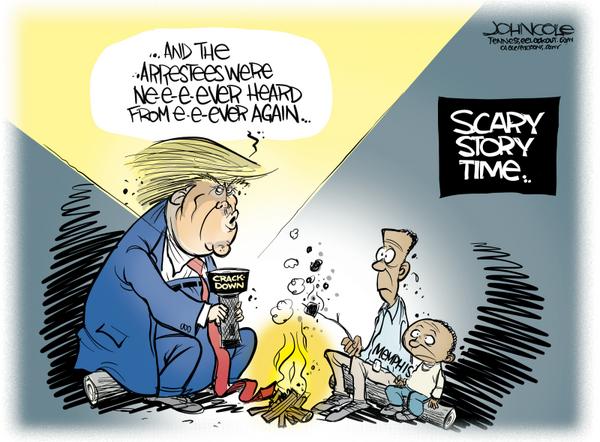
Our investigation found that at least 50 citizens have been detained based on questions about their citizenship as of Oct. 5. They were almost all Latino. Roughly 130 others have been detained after raids or protests on allegations of assaulting officers or interfering with arrests. Many of those cases have wilted under scrutiny.
We found Americans have been dragged, tackled, beaten, tased and shot by immigration agents. At least two dozen citizens have reported being held for at least a day without access to a phone or a lawyer.
Bass and Garcia said the mistreatment of citizens has come amid the arrests of immigrants reporting for check-ins and immigration court, and the administration’s repeated blocking of congressional attempts to visit and conduct oversight in federal detention facilities like the one in Los Angeles.
“It’s important that we say today that what is happening to undocumented residents is also happening to U.S. citizens, which means this can happen to anyone, to all of us, at any period of time,” Bass said.
In one letter sent on Monday to DHS Secretary Kristi Noem, Garcia and Sen. Richard Blumenthal, D-Conn., said citizens in cities like Los Angeles have borne the brunt of the administration’s aggressive immigration enforcement.
“The impact of these arrests has not been evenly distributed across the country, and cities like Chicago, Portland, Washington, D.C., and Los Angeles have been targeted,” Garcia and Blumenthal wrote. “Troublingly, the pattern of U.S. Citizen arrests coincides with an alarming increase in racial profiling — particularly of Latinos — which has been well documented in Los Angeles.”
Asked about the concerns from elected leaders, DHS spokesperson Tricia McLaughlin rejected claims that immigration agents have been engaging in racial profiling. She said in a statement to ProPublica that a temporary ruling by the Supreme Court in September had “vindicated” the administration “whether Mayor Bass or Rep. Garcia like it or not.”
“DHS enforces federal immigration law without fear, favor, or prejudice,” McLaughlin wrote. “Claims by the media, agitators, and sanctuary politicians like Mayor Bass and Rep. Garcia that ICE is targeting U.S. citizens, making unconstitutional arrests, and ‘trampling on civil liberties’ are FALSE.”
White House Deputy Press Secretary Abigail Jackson told ProPublica in an email that “unhinged rhetoric from activists and Democrat politicians” was responsible for an increase in assaults on ICE officers.
On social media, Deputy Chief of Staff Stephen Miller derided Bass’ press conference as “abject lies.”
“Violent leftists have been arrested and charged with illegally obstructing federal law enforcement, a felony,” Miller wrote Monday night on X. “Let that sink in: open borders Democrats have incited leftists to violently attack ICE.”
Of the cases we tracked through Oct. 5, we found nearly 50 instances where charges have never been filed or the cases were dismissed. Our count found at least eight citizens have pleaded guilty, mostly to misdemeanors, including for failing to follow orders. Others are still facing charges for more serious accusations, including for allegedly ramming an agent’s car. (The driver has pleaded not guilty.)
Our account did not count citizens arrested later, after some sort of judicial process, or those detained by local law enforcement or the National Guard. That included cases of some people charged with serious crimes, like throwing rocks or tossing a flare to start a fire.
Happy Monday from Atlanta! I just tried to convince thousands at a public health conference that it’s time to reimagine systems—not just defend the status quo. I’m happy to report that tomatoes weren’t thrown my way. This is my fourth state in five days, and the highlight is actually seeing the seasons change and meeting a lot of you in person. I couldn’t be more excited to see my girls (and survive another round of the KPop Demon Hunters soundtrack).
Top: Plenary stage with Mike Osterholm; From the bottom left: Met YLE reader Krisandra Allen at the conference. Fall leaves in Idaho. My daughter welcoming me home at the airport.
This week’s Dose runs the gamut: from what’s really going on with lead in protein powders (and whether you should be worried), to a refreshing burst of leadership as 15 governors join forces to strengthen public health collaboration, to falsehoods swirling around mammograms. We’ll wrap with an infectious disease weather report and a quick note for dog owners on an FDA recall.
Let’s go!
Consumer Reports found lead in protein powders. How bad is it?
Last week, Consumer Reports released an analysis revealing elevated lead levels in several popular protein powders and shakes. Google searches for “lead in protein powder” spiked 300%, and influencers lit up social media. Depending on which news source you read, it was either a five-alarm fire or no big deal.
So what’s actually going on? Lead is everywhere—soil, food, water, and air. Thankfully, overall exposure has dropped dramatically since the 1970s, and modern lab tests can now detect vanishingly small amounts (down to parts per billion). But detection does not necessarily equal danger.
How bad is bad?That’s where things get tricky because not everyone agrees:
California limit: 0.5 mcg/day. This number comes from a very conservative calculation: regulators took the “no observable effect” level for reproductive harm for inhaled lead exposure in workplaces and divided it by 1,000. Many experts argue that this threshold is unrealistic. It’s also not linked to adverse health outcomes.
FDA’s limit: 2.2 mcg/day for kids, 8.8 mcg/day during pregnancy, and 12.5 mcg/day for other adults based on blood lead levels, toxicology data, and a built-in 10x safety factor.
European Union limit: Allows up to 3 mg/kg (3 ppm) in food supplements—roughly 90 mcg per 30-gram scoop of protein powder. In this case, the FDA is far more cautious than Europe (and that’s not usually how things go).
Back to the report: of the 23 protein supplements they tested, two-thirds exceeded “Level of Concern.” One brand (Naked Nutrition Vegan Mass Gainer) hit nearly 16 times the limit. But because Consumer Reports used California’s exceptionally strict benchmark, those numbers sound scarier than they really are.
The average American already gets 5.3 mcg of lead daily from food and the environment. That’s another reason California’s cutoff doesn’t make much sense. Still, some products identified in the report could push intake close to the pregnancy (8.8 mcg) or adult (12.5 mcg) daily thresholds.
What this means for you: Don’t worry too much. While the FDA continues to reduce lead exposure through programs like Closer to Zero and the Total Diet Study (that is, if the funding continues), there are several things we can do in our own homes, especially for parents of kids and during pregnancy.
Check to see if your protein supplement (or any supplement, really) has third-party testing for heavy metals (like USP or Informed Sport).
Advocate for more pre-market regulatory oversight in the supplement industry (which has very little, if any at all) by writing to your local representative.
Eat a diet that includes a variety of nutrient-dense foods, which helps limit exposure to specific food sources and ensures we get an array of protective nutrients.
Prioritize getting your protein from whole food sources.
Big thanks to YLE’s Megan Maisano—Registered Dietitian Nutritionist— for writing this section.
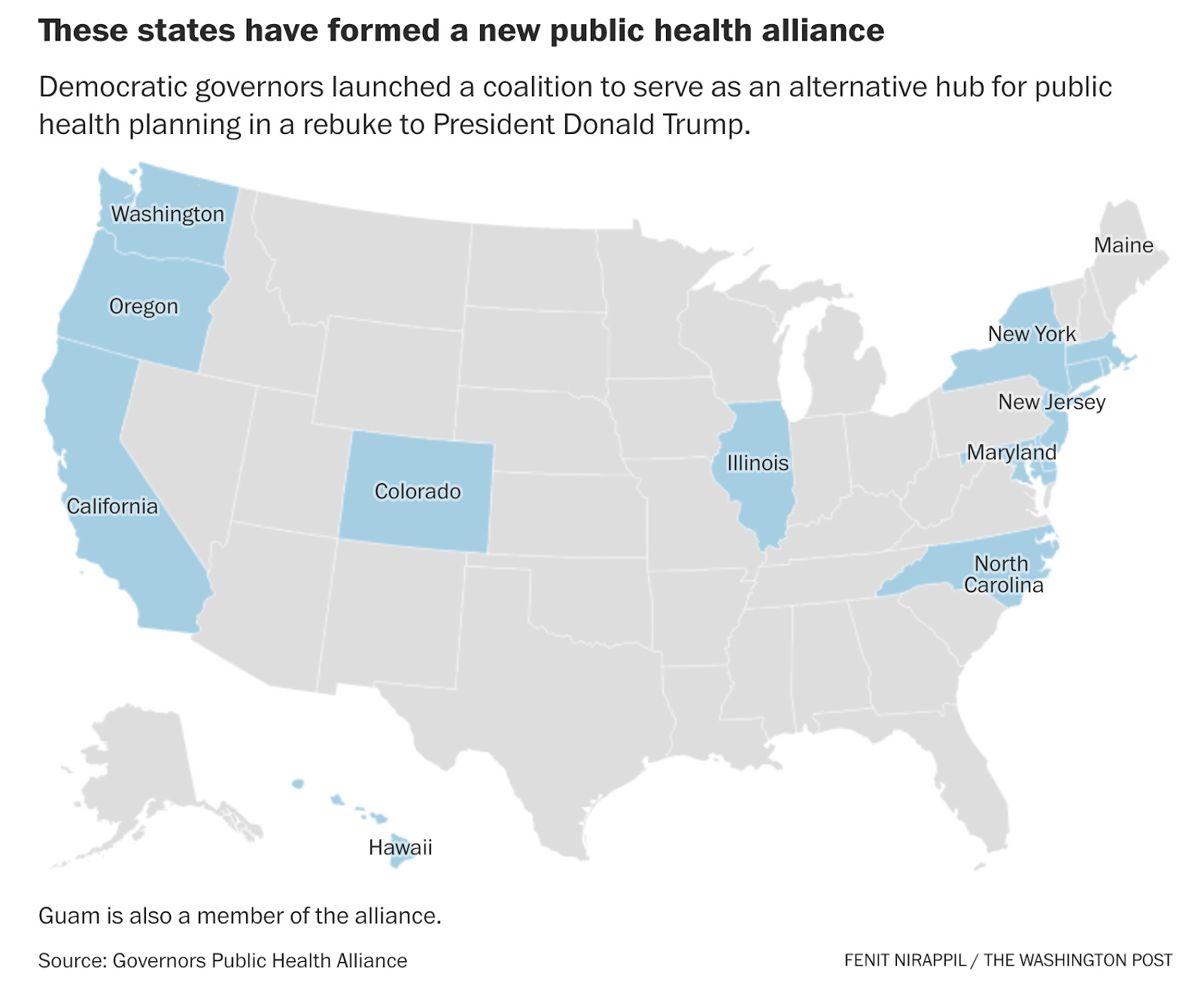
Fourteen states and Guam join forces to launch Governors’ Public Health Alliance
Governors from 14 states and Guam announced the creation of the bipartisan Governors’ Public Health Alliance, which is a new effort to strengthen coordination and collaboration across state lines.
Why do we need this? In the U.S., authority over health rests with the states, not the federal government. Health (encompassing both health care and public health) is not only the highest budget item for a state but also the primary reason for state bankruptcy. In other words, governors hold enormous power over your health.
Today, though, federal support is shifting fast, funding is drying up, and states are being forced to get creative. States must decide whether to maintain their public health departments (due to funding cuts), how to continue purchasing vaccines (if the federal government stops recommending them), whether to negotiate drug prices (like insulin), and more. We saw a similar challenge during the pandemic with bulk purchasing of PPE.
In general, the more coordinating, collaborating, and innovative thinking, the better.
However, I’m growing increasingly concerned about the partisan gaps in public health. Although some Republicans are on the advisory board and the initiative was framed as bipartisan, no Republican-led states have joined. This worries me for my friends in red states, like Texas, but it also has implications for everyone, as diseases don’t care about borders.
What this means for you: If your state is included, you can rest assured your governor is talking to others, which is a helpful step toward innovative solutions. You could argue it was needed before this moment, too. Public health has been siloed for far too long.
Mammograms save lives. They’ve been wrongly targeted.
Happy Breast Cancer Awareness month! Unfortunately, this month has driven some influencers to post false claims about the harms of mammograms. So let’s clear this up.
Breast cancer is the second leading cause of cancer death in women in the U.S., and accounts for 1 in 3 new cancers among women each year. (It affects men too, just at lower rates.) There is strong scientific consensus in support of routine mammograms to prevent breast cancer and detect it early:
Regular mammograms starting at age 40 are recommended for everyone, but may have even greater benefit for Black women, who are 40% more likely to die from breast cancer than white women and more likely to have aggressive cancers, younger.
There’s some critical nuance here:
With each mammogram, breast tissue is exposed to a small amount of ionizing radiation. But! We’re exposed to this type of radiation every day in our natural environment. At high doses, radiation exposure can change DNA and cause harm, but the amount of radiation exposure during a mammogram is about the same as flying from California to New York.
Organizations disagree on whether mammograms every year or every other year are optimal. Screening recommendations are based on evaluating science to maximize benefit (lives saved) while reducing patient worry, unnecessary costs, and diagnosing and treating cancers and pre-cancers that ultimately wouldn’t cause health problems—also called “overdiagnosis.” This is a balancing act.
Mammograms are just one tool for detecting cancer, and women with dense breasts or high risk for cancer (e.g., family history, known genetic predispositions, or other key risk factors) may benefit from additional screening, such as through an MRI.
For more, see YLE’s deep dive on breast cancer screening recommendations.
Infectious disease “weather report”
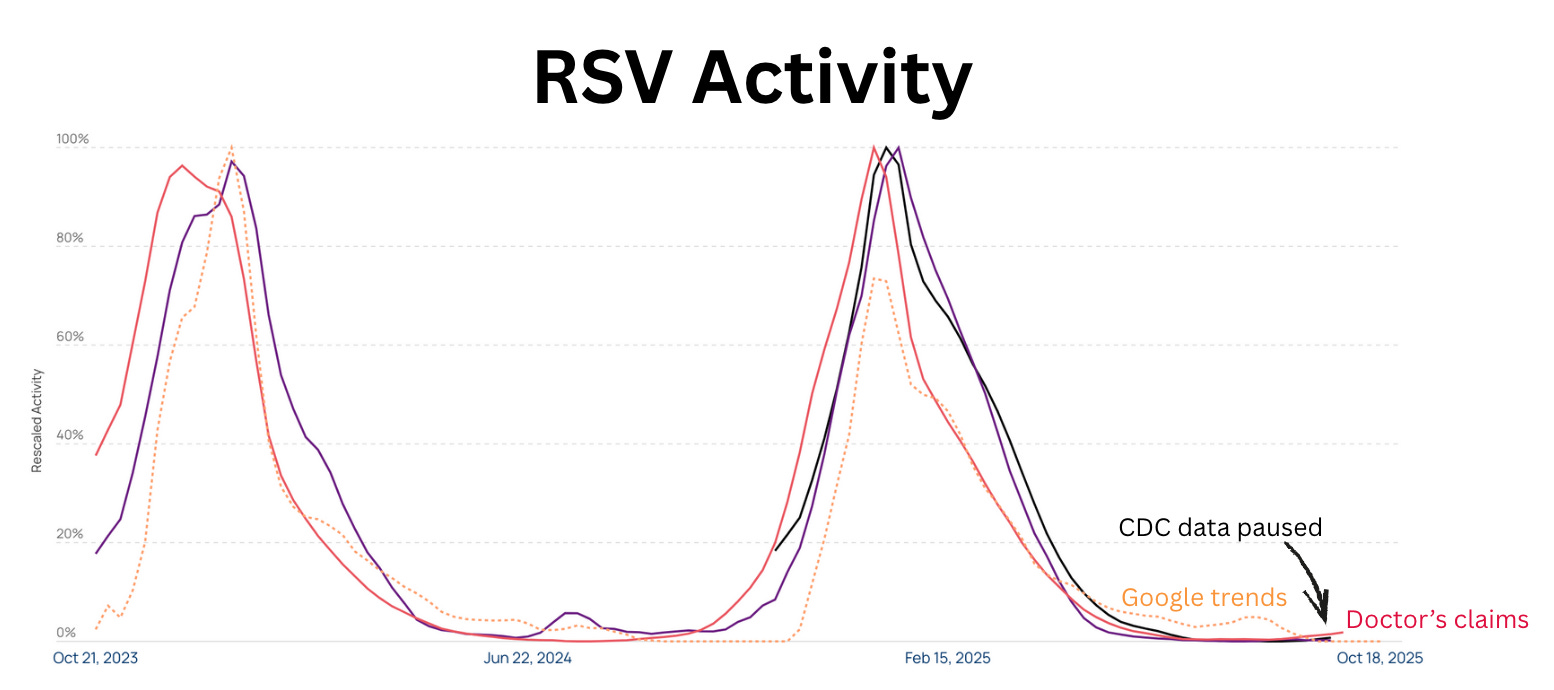
In the U.S., flu and RSV are still quiet. CDC data is still on pause because of the government shutdown, so we’re continuing to reference PopHive data. RSV activity is still low but growing in southern states, like Louisiana and Texas.
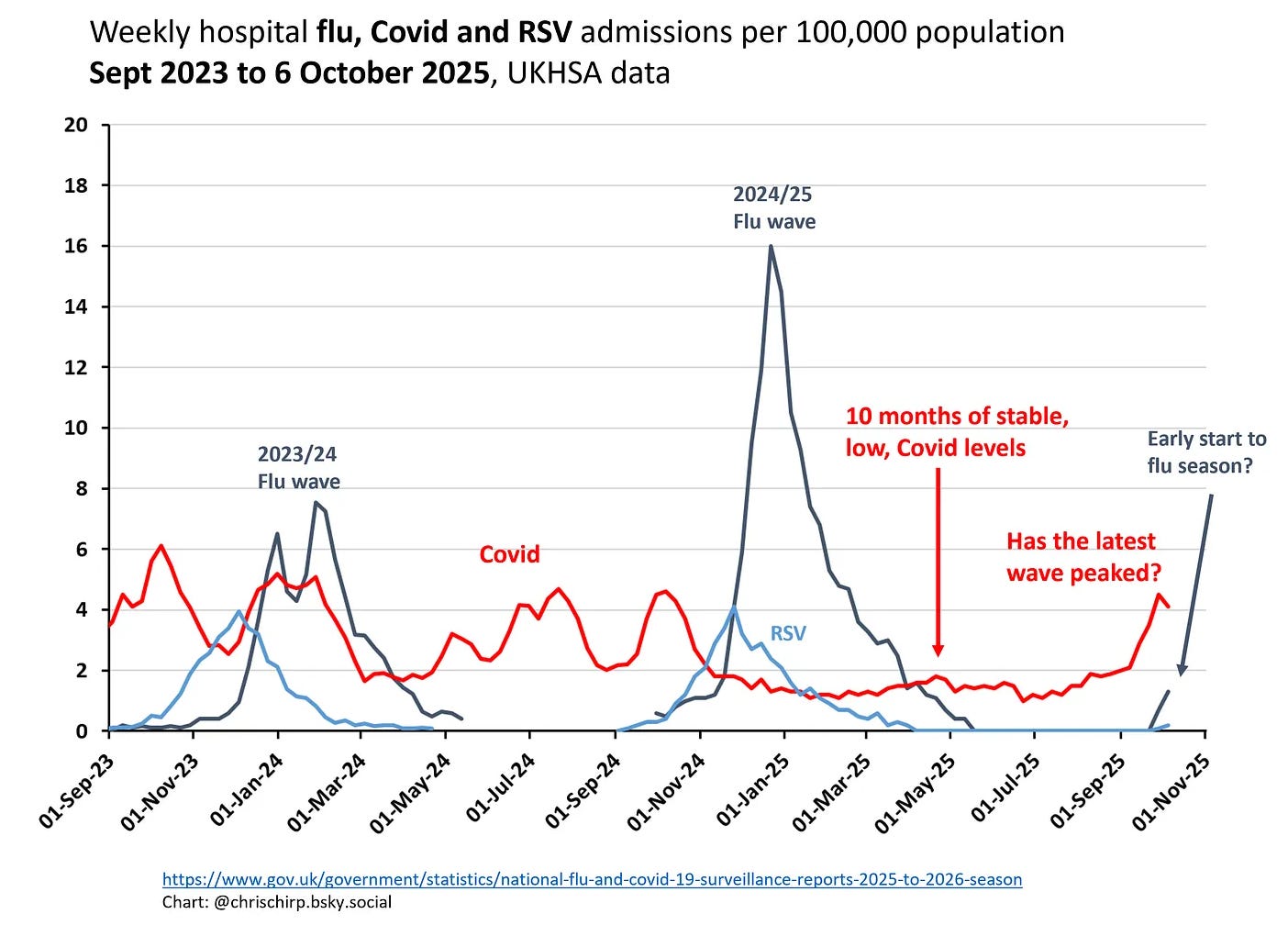
However, Covid-19 is having a moment in the U.K., with hospitalizations increasing exponentially after a 10-month lull. This isn’t driven by a dramatic variant, but rather by a lack of immunity building up over time. Flu might also be increasing, which suggests it’s coming soon (as expected) for the U.S.
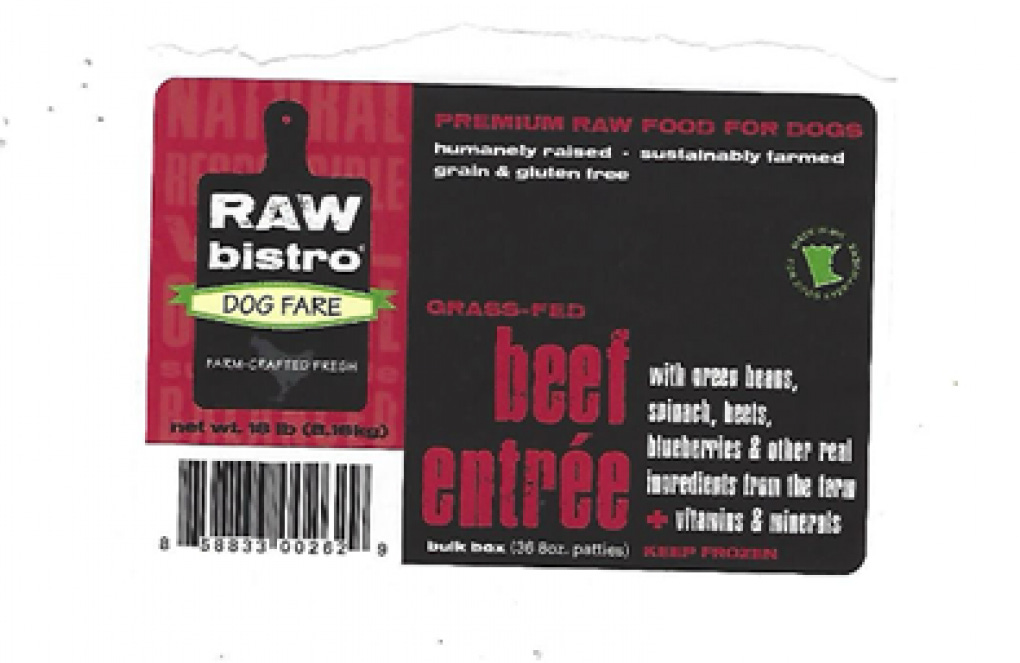
The FDA recalled Raw Bistro frozen beef dog food for possible Salmonella contamination. The recalled products were sold directly to consumers and to select distributors between Sept. 1 and Sept. 17 in California, Colorado, Illinois, and Minnesota.
Salmonella can make dogs sick, just like humans. Contaminated food can cause illness days later in dogs. And dog owners can get sick from handling contaminated food or dog bowls.
What this means for you: Check the lot numbers on your dog’s food, and toss it if they are included in the FDA recall notice. Sanitize bowls if they held contaminated food, wash your hands, and watch for warning signs in your dog: lethargy, vomiting, diarrhea, and loss of appetite. If you notice these signs, take your pet to the vet.
That’s it for this week! Share your fall leave pics in the comments below so that I can continue to live vicariously through you.
Love, YLE
Your Local Epidemiologist (YLE) is founded and operated by Dr. Katelyn Jetelina, MPH PhD—an epidemiologist, wife, and mom of two little girls. YLE is a public health newsletter that reaches over 400,000 people in more than 132 countries, with one goal: to translate the ever-evolving public health science so that people are well-equipped to make evidence-based decisions. This newsletter is free to everyone, thanks to the generous support of fellow YLE community members. To support the effort, subscribe or upgrade below:
Conservative strategist and co-founder of the Lincoln Project Rick Wilson laid out what a post-Trump world may look like, and what revelations would follow, in a column published Wednesday.
“When Donald Trump dies, the myth will begin to decay almost instantly; his cult will keep the flame alive for a while, but the records will outlive the rally faithful,” Wilson wrote on his Substack “Against All Enemies.“
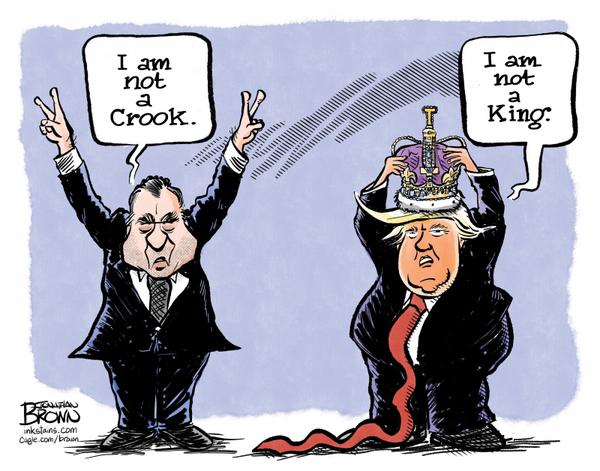
“History will not remember him as a king, or a savior. History will remember him as a small, ugly, sick man who happened to seize great power, who wielded it recklessly, and who left behind a trail of destruction, corruption and cowardice unmatched in American history.”
Sticking with Trump’s health, Wilson predicted that following Trump’s passing, a trove of documents related to his physical and mental condition would be unearthed, documents that would reveal that his “cardiac and mental decline was charted in careful, hidden memos.”
Wilson also anticipated that revelations around the president’s ties with Jeffrey Epstein – the convicted sex offender who died in 2019 awaiting trial on sex-trafficking charges – would come to light, and made several startling predictions about who in Trump’s cabinet may be held to account for potentially covering up those ties.
“Epstein’s web of power, blackmail, and sexual exploitation reached deep into America’s elite, and we’ll learn Trump was in the thick of it,” Wilson wrote. “The [Justice Department’s] illegal Epstein coverup and corrupt pardon of Ghislaine Maxwell will unravel, and by the end, [Attorney General] Pam Bondi, [Deputy Attorney General] Todd Blanche, [FBI Director] Kash Patel, and [FBI Deputy Director] Dan Bongino will be in prison.”
Details on Trump’s business dealings, many of which have enriched the president to the tune of billions of dollars, would also be laid to bare following his passing, Wilson noted, details that he argued history would not look well upon.
“The Trumpcoin scams, the garbage social media platform, the grifty deals with foreign powers, the bribes for pardons…all of it will be seen for what it is; a criminal enterprise, a mobster bustout of an entire nation,” Wilson wrote.
“History will learn about the shell companies, the overseas accounts, the backroom deals where American policy was auctioned off like a Mar-a-Lago dinner table.”
Ultimately, Wilson argued that through the wave of revelations following the president’s passing, a clear picture of Trump would be painted: that of someone whose “only interest was control.”
So many cowards gave Trump cover at the expense of true, decent Americans and our inclusive, loving sense of family and community.
WATCH: HuffPost Reporter Shuts Down Karoline Leavitt’s Childish Name-Calling On CNN
Senior White House correspondent S.V. Dáte’s text exchange with the press secretary went viral after she gave a childish response to his comment request.




















































 Scottie's Playtime