
Sorry struggling to function. Spent the entire morning barely watching news unable to deal with everything. Decided to instead do what I enjoy. I took one of my computers apart to check it, and did a clean on both. I wish I could explain. Hugs.
were we? I did, anyway. I received the video recipe below from Wendy The Druid (who does the LBGTQ+ history posts) today. Enjoy-I’m always there for hard sauce on spiced tart apples! Video and transcript on the Substack page; you need not subscribe to see.
The Gay Baker–Apple Mystery Dessert by Brandon Ellrich
A recording from Brandon Ellrich’s live video Read on Substack
Thank you DILLIGAF?IDO, Christine Niedzielko, Pat, Lisa Joy 🏳️🌈, julie elder, and many others for tuning into my live video!
Apple Mystery Dessert
Dessert:
¾ cup all-purpose flour
1 cup firmly packed brown sugar
1 ½ tsps baking powder
½ tsp salt
Dash mace (I used nutmeg instead)
Dash cinnamon
1 ½ tsps vanilla
2 eggs
2 cups chopped, peeled tart apples
¾ cup chopped walnuts
Cinnamon Hard Sauce:
¼ cup margarine or butter, softened
1 cup powdered sugar
½ tsp cinnamon
Dash salt
1 Tbs milk
1 tsp vanilla
Directions:
Heat oven to 350° F. Grease 9-inch pie pan. In large bowl, combine flour, brown sugar, baking powder, salt, mace (or nutmeg), and cinnamon; mix well. Stir in vanilla and eggs; blend well. Add apples and walnuts; mix well. Pour into greased pan.
Bake at 350° F for 20 to 30 minutes or until browned and firm to the touch.
Meanwhile, in small bowl, combine all hard sauce ingredients. Beat at high speed until well blended. Shape into 2-inch-thick roll or spread into butter molds (you may have to refrigerate the hard sauce before you’re able to roll it). Wrap in plastic wrap; refrigerate until firm.
When serving, top each serving of dessert with slice or mold of hard sauce. The hard sauce will melt on top of the warm dessert.
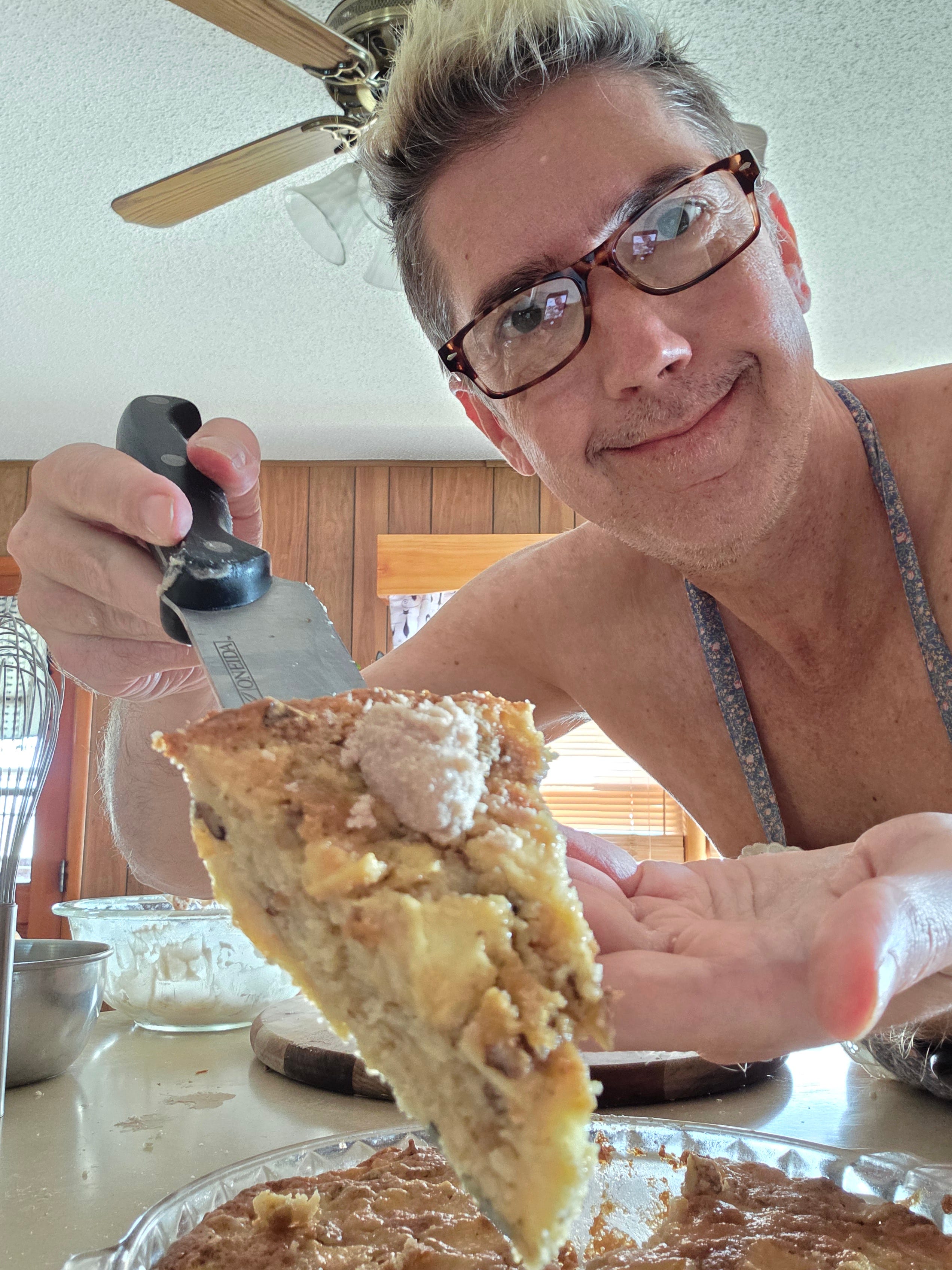
(snip but YUM though!!!)
It is simply magnificent.
First-of-its-kind grocery store opening in ‘food desert’ Downtown Atlanta
By Don Shipman
ATLANTA, Ga. (Atlanta News First) – A first-of-its-kind grocery store is getting ready to open its doors in Downtown Atlanta — and city leaders say it could be a game-changer for tackling food insecurity.
Azalea Fresh Market is moving into the historic Olympia Building, most recently home to a Walgreens, near Woodruff Park. Crews have been busy sprucing up the space this week with fresh signage and sidewalk cleaning ahead of the grand opening.
What makes the store unique is how it’s funded. The project is a partnership between the City of Atlanta, Savi Provisions, a supermarket chain with multiple Atlanta locations, and Invest Atlanta, an economic development agency. The city invested $3.5 million into the $5.4 million project
City leaders say food deserts disproportionately affect low-income neighborhoods. The grocery store is designed to bring affordable, fresh options right into the heart of downtown.
The investment also includes safety improvements.
“We made a commitment to this location, to Savi and to the residents and businesses of downtown — particularly right here near Woodruff Park. We’re going to make sure that it’s safe,” Atlanta Mayor Andre Dickens said.
People who live, work and study downtown say they’re excited about having healthier choices close by.
“If I have the option and I know it’s going to be just as good, I’ll probably go for the healthier option,” college student Nolan Williams said.
According to Invest Atlanta, the store is expected to generate $15 million in overall economic impact for the area. Plans are already underway for a second location on Campbellton Road in Southwest Atlanta later this year.
Azalea Fresh Market downtown will be open from 7 a.m. to 10 p.m. seven days a week. It’s set to open soon, but an exact date has not yet been announced.
Copyright 2025 WANF. All rights reserved.
Drawing is learning: the birds of the subantarctic
September 12, 2025 Bonnie Koopmans

(Some) Penguins of the Subantarctic. Watercolour and gouache on toned paper, 30 x 23cm. Credit: Bonnie Koopmans.
Between Tasmania and Antarctica, there are a series of tiny, isolated islands on the cusp of the Southern Ocean. Many people don’t even realise they exist, but these frigid and windswept islands host a surprising diversity of seabirds.
Last summer, I was awarded a Heritage Expeditions True Young Explorer Scholarship to visit this remarkable region. My time in the subantarctic included visiting 4 of the island groups in the region: The Snares, the Auckland Islands, and Campbell Island (belonging to New Zealand) and Macquarie Island (belonging to Australia).
As a keen naturalist and natural history illustrator, I jumped at the chance to experience an area so remote, expensive and difficult to access. Additionally, as a keen birder, the subantarctic represented an opportunity to see some stunning birds in the most beautiful, harsh and unique environment.

As an illustrator and visual learner, drawing is one of my methods of learning about something, whether it’s internalising technical species differences or figuring out the general shape and character of an animal.
Field studies and drawing from life, especially, allow an artist to deeply observe and capture behaviour and colours in a way that is otherwise very difficult to achieve. The illustrations featured in this article are a mixture of studies done in the field, and finished paintings I completed once I was back home.
Flipping through a bird field guide, the seabird section often seems remarkably… grey. For me, it was finally seeing these birds in the flesh that made me realise how special they are.
While seabird identification can be complicated (groups such as prions are notoriously difficult to identify), observing them in person can provide other avenues to assist the process, as even aspects such as manner of flight can help with distinguishing species.
Albatross with their immense unflapping wingspan, and their endearing rambling stride on land. Petrels following the ship almost the entire journey, arcing left and right past the stern. Penguins effortlessly rocketing through the water, only to reach land and be slowed to a shuffle by their own tiny legs.
Certainly, the highlight of the trip were the penguins, with 6 species seen on the trip, each absolutely bursting with personality and charm. To see a breeding colony of penguins is an unforgettable sight (and sound!) and, if anything, it’s a wonder to see immense congregations of penguins at all considering the history of whaling and sealing in the subantarctic.

During the 1800s and into the early 1900s, whaling and the subsequent products of oil and baleen were critically important to the newly industrial world. Whale oil – and later seal and penguin oil – provided crucial lubricants for machinery, and fuel for lighting. The subantarctic was heavily targeted.
Besides the obvious and huge impact these activities had on whale, seal and penguin numbers, another long-term conservation issue was the introduction of livestock and establishment of stowaway predators. These affected the local populations of seabirds, especially.
Once the whale and seal populations were low enough that it was no longer financially viable for whalers to remain on the islands, they turned their livestock loose, and pigs, cows, cats, and stowaways such as rats were left to run rampant.
As many of the seabirds breeding on these islands had never had to contend with land-based predators, the introduction of cats and rats devastated their populations. Surprisingly voracious predators which were, similarly, introduced as a food source were weka – flightless rails endemic to New Zealand.
As ground dwellers, the rails could easily eat chicks of ground burrowing seabirds such as common diving petrels and blue petrels. Additionally, livestock such as pigs and cows caused environmental damage and drastically changed the composition of habitat through grazing and trampling.

Beyond the obvious seabird residents, these islands are home to a wide variety of other bird species, from red-crowned parakeet and New Zealand falcon, to several species of passerines (‘perching birds’) such as tomtit, New Zealand bellbird and tūī.
Being so isolated, the islands tend to have a high level of endemism, meaning they are unique to the location. Several species of shags, ducks and snipe have diverged evolutionarily between the islands over time.
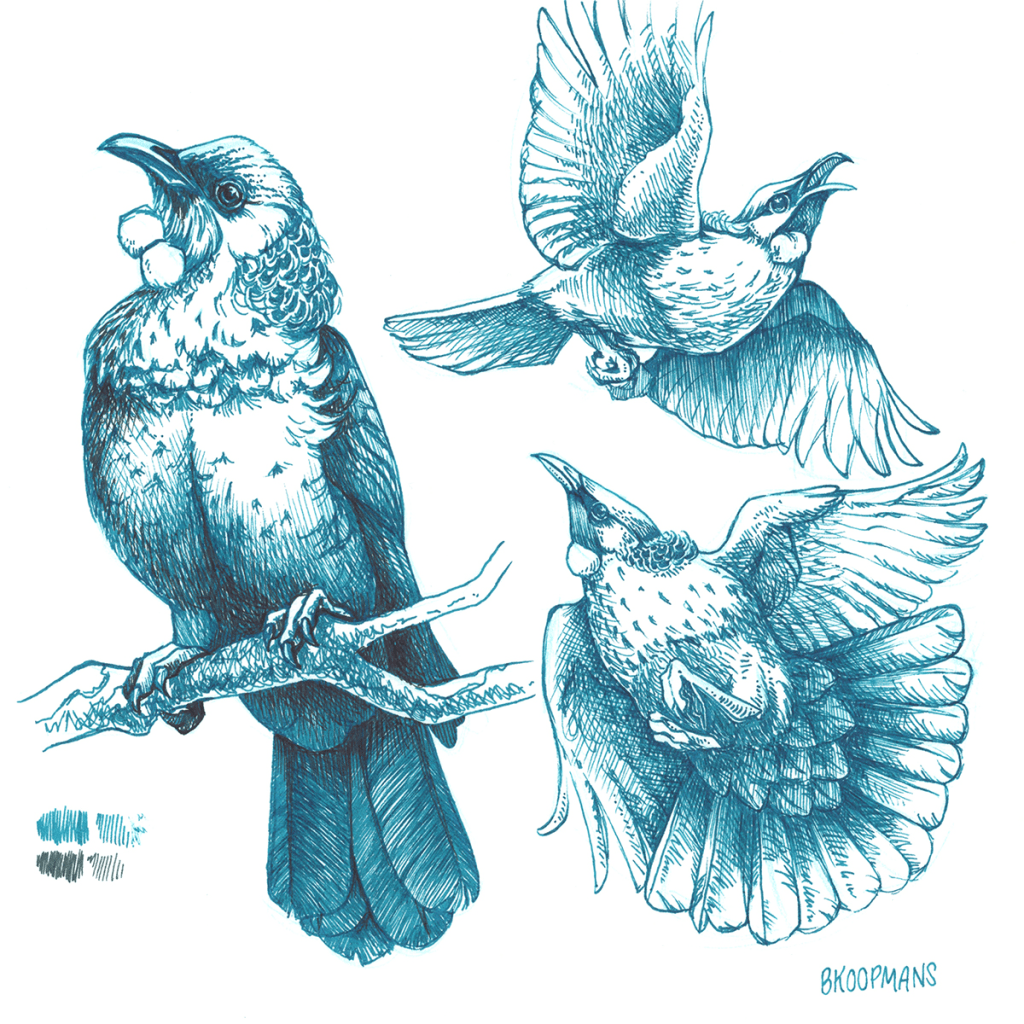
Campbell teal (Anas nesiotis) represent the impact introduced predators can have, but are also an incredible success story. This charismatic flightless duck was presumed extinct following the introduction of brown rats to Campbell Island during the period of whaling. A precariously small population was discovered on Dent Island, which rats hadn’t managed to reach, and in 1987 some of the teal were removed from the wild to establish a captive breeding program and ensure the preservation of the species.

Due to the significance of the New Zealand and Australian subantarctic islands in terms of unique habitat, flora and importance for the fauna that eke out an existence in the region, there have been some incredibly successful efforts to remove predator species and rehabilitate these islands.
Macquarie, Enderby, and Campbell Islands are now free of introduced pests, with New Zealand’s Department of Conservation aiming to embark on their most ambitious pest eradication yet, targeting Auckland Island at 46,000ha.
Campbell teal have been reintroduced to Campbell Island as of 2004, and bird populations generally have been improving with lessened pressure from predation.
The precariousness of life on these tiny specks of land in the middle of a vast ocean makes them so unique and important to the creatures that thrive there.
All 4 of these island groups are now protected as UNESCO World Heritage Sites for outstanding universal value.
True Young Explorer scholarship applications open each year in spring for summer voyages. You must be aged 18–30 and share your experience of the subantarctic.

Originally published by Cosmos as Drawing is learning: the birds of the subantarctic








Hearing how the Right has immediately called for a war with Democrats without knowing who the shooter is or what was their intent, it makes you think they don’t care.
They want Epstein out of the headlines. They want Russia owning Trump out of the headlines.








Best Wishes and Hugs,
Scottie
 Scottie's Playtime