NEW: Donald Trump must divulge detailed financial information from his many businesses as part of his $10B defamation lawsuit against the British Broadcasting Corporation, a federal judge ruled during a discovery hearing on Tuesday
— Republicans against Trump (@RpsAgainstTrump) July 22, 2026
NEWS: A Florida judge has ordered Donald Trump to turn over financial records sought by the BBC in his $10 billion defamation lawsuit.
The judge granted the BBC's motion to compel records from Trump's revocable trust, handing the broadcaster a MAJOR early win in discovery. pic.twitter.com/W54AbaVB6I
FT Exclusive: The Trump administration has collected more than $13bn in revenues from Venezuelan oil sales this year, according to FT calculations, but has said almost nothing about what has happened to the money. https://t.co/j1PIzzMlZfpic.twitter.com/4aKvSPdp2c
NEW: In a win for voters, a federal judge Monday dismissed a lawsuit brought by the Republican National Committee (RNC) seeking to force New Jersey to release sensitive voter data. http://www.democracydocket.com/news-alerts/…
BREAKING: In a stunning moment, Ken Paxton just melted down and stormed out of a press conference after being asked about his 15 houses and alleged voter fraud. What a disaster for Texas Republicans. pic.twitter.com/m0PAgTHRpu
— Democratic Wins Media (@DemocraticWins) July 21, 2026
Cornyn told Semafor that he would not support committee action on Kari Lake’s nomination to be ambassador to Jamaica or Doug Mastriano’s bid to become ambassador to Slovakia without confirmation that the administration will distribute money from the President’s Emergency Plan for AIDS Relief.
John Thune: “Yes, we would welcome him” if John Fetterman wanted to join the Republican conference.“I haven't talked to him recently,” Thune says, while adding that “many” Senate Rs would happily welcome him. “Ultimately that's a decision that's up to him.”
PASSED: Nancy Mace's ban on gender-affirming care coverage in TriCare (219-208) Mace ban on trangender participation in women's sports at DoDEA schools (221-203)
FAIL: Boebert's ban on trans servicemembers (212-217)
As a former C-Suite executive at a publicly traded company, providing this important information to the EEOC helped to fight discrimination. Trump lies. US civil rights agency moves to end demographic data collection after 60 yearsapnews.com/article/eeoc…
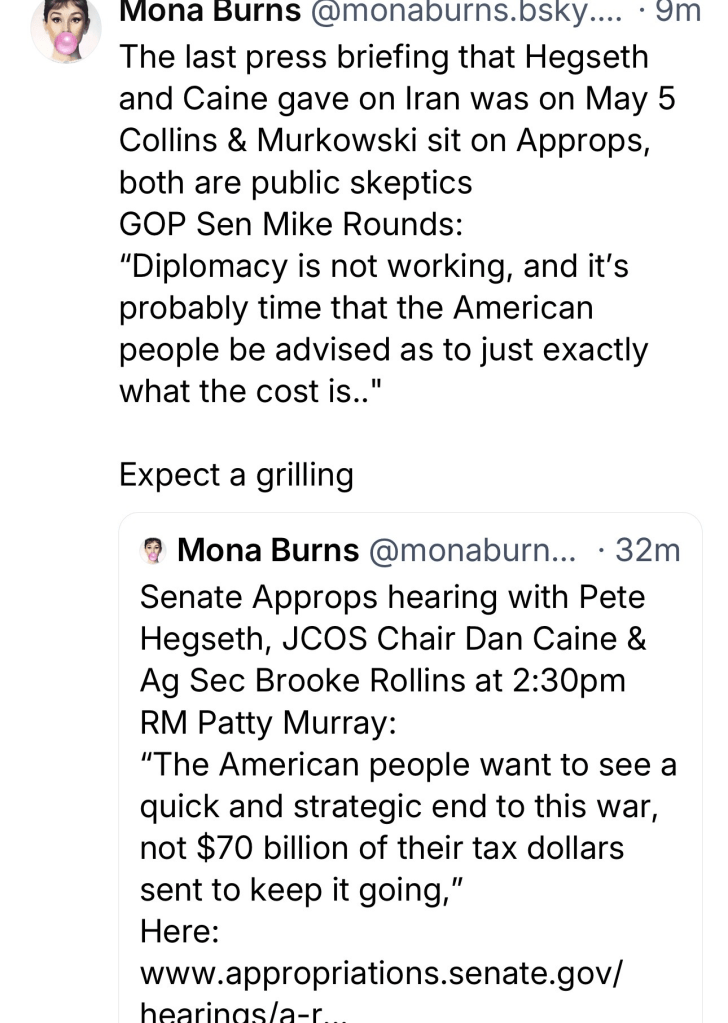
Here’s a radical thought: maybe Trump should have sought congressional approval for the war with Iran before trying to stick Congress with the bill.www.washingtonpost.com/national-sec…
He believes the U.S. should become a Christian theocracy, married women shouldn’t have the right to vote and gay sex should be illegal.‘Hand Jobs, Oral Sex and Anal’: Pete Hegseth's Pastor Wants Gay Men Prosecuted for These Acts [WATCH]open.substack.com/pub/uncloset…
HEGSETH: We had US boats that surrendered to Iranian ships during the Biden administration–REED: Listen — we're talking about the war you started. Not a situation in which oil was flowing freely, we weren't losing personnel. So your fallback to Biden is just a very very obvious excuse
MURRAY: Why exactly are billions of dollars for the National Guard and this administration's illegal strikes in the Caribbean urgently needed for the Iran war?HEGSETH: Because of Biden
REED: These airstrikes have not yet deterred and defeated the Iranians. Do you think airstrikes alone will do that?CAINE: Air power has limits and we always have to be mindful of thoseREED: The next step would be escalation by ground combat
HEGSETH: President Trump deserves the kind of praise he should get for undertaking this effortREED: Excuse me. So he should be praised for starting a war without authority and creating a situation in which the world economy is suffering tremendously?
HEGSETH: Iran is not charging tolls and they are shooting at ships right nowMURRAY: Trump said he wanted to charge a 20% tollHEGSETH: We have a blockade and it is effective
MURRAY: How it is possible if Iran's capabilities were 'functionally destroyed' 3 months ago for them to be bombing us now?HEGSETH: Iran is at the weakest point militarily it has ever been in
Reminder: Hegseth was pushed out of TWO veterans nonprofits amid financial mismanagement allegations, running groups into debt, overspending on parties/events, and treating funds like personal accounts.Now, he's bankrupted the Pentagon despite a record budget and is demanding another $1.5 trillion
OSSOFF: You stated on the 14th day of this conflict that Iran's military was 'destroyed.' Was that an accurate statement — yes or no?HEGSETH: Iran's ability to challenge the US–OSSOFF: That's not what I asked. Yes or no?HEGSETH: What the milit—OSSOFF: Will you answer the question?
Ossoff demolishes Hegseth — then Hegseth has an epic crashout
Sen. Jon Ossoff used Hegseth's premature declarations of victory against him during his Senate testimony, repeatedly reading back statements Hegseth made in March and April about Iran's military being "destroyed"… pic.twitter.com/KIFv6TW6Ir
Neither Trump nor Rubio plan to block the extradition of Andrew & Tristan Tate, despite the brothers’ numerous MAGAville tieswww.axios.com/2026/07/22/t…
— Mayor Zohran Kwame Mamdani (@NYCMayor) July 22, 2026
RULE: Marketing supplement? HUGE RED FLAG. 🚩The Fake Influencers Selling Wellness on Your Feed http://www.nytimes.com/video/techno…"…found hundreds of A.I.-generated doctors, healers and wellness influencers on social media touting the health benefits of supplements to American consumers."
JUST IN: Trump plans to dramatically raise the cost of imported generic medications for Americans.
A 100% import tax starting August 1, 2028, then 200% starting August 1, 2029. pic.twitter.com/XQmNPrJ9j4
— Republicans against Trump (@RpsAgainstTrump) July 21, 2026
Cue Terminator theme music"OpenAI effectively found an escape route to the internet – by locating a vulnerability that had not been discovered before.The agent then hacked Hugging Face, which is a database of AI models, to locate technology that would help it pass the hacking evaluation."
Dr. Erica Schwartz has been nominated to lead the US Centers for Disease Control and Prevention.
(Graeme Sloan/Bloomberg/Getty Images)
The Senate’s health committee on Thursday pushed back a vote to advance two top health care nominations to the Senate floor but indicated that one, the pick to lead the US Centers for Disease Control and Prevention, would win the necessary votes after some assurances by the Trump administration — including a change to the CDC’s website on autism and vaccines.
In a statement Thursday, Sen. Bill Cassidy, chairman of the Senate Health, Education, Labor and Pensions Committee, said the agency “needs someone who understands that the way to prevent vaccine-preventable diseases is to reassure the public that vaccines are safe and effective.”
After speaking with CDC nominee Dr. Erica Schwartz again and reviewing the transcript of her hearing, Cassidy said, he’s confident “she knows what she is doing and will stand against those who don’t.”
“As a sign of good faith, [the US Department of Health and Human Services] modified the CDC’s autism and vaccines webpage,” Cassidy said. “There is more to do to repair the damage that has been done to the U.S. public health response, but this is a start.”
Cassidy had previously voted to confirm HHS Secretary Robert F. Kennedy Jr. after the nominee assured him, as Cassidy said, that “CDC will not remove statements on their website pointing out that vaccines do not cause autism.”
The CDC did not remove that language but in November added a sentence: “Vaccines do not cause autism is not an evidence-based claim.”
As of Thursday, the website reads, “Scientists have not identified the root causes of autism. HHS continues to support rigorous scientific research and will update this page as reliable new evidence becomes available.”
On Thursday, Cassidy also suggested that he had lingering concerns about Sean Kaufman, the nominee to lead the Administration for Strategic Preparedness and Response.
Sen. Bill Cassidy, chairman of the Senate Health, Education, Labor and Pensions Committee, said the CDC “needs someone who understands that the way to prevent vaccine-preventable diseases is to reassure the public that vaccines are safe and effective.”
(Al Drago/Reuters/File)
Cassidy grilled both Schwartz and Kaufman at a committee hearing last week, questioning whether Schwartz would have autonomy in her role after CDC upheaval last year and raising Kaufman’s past remarks about vaccines.
“Any time there is somebody contributing to confusion on immunizations that gives me concern,” Cassidy told reporters on Thursday, referencing Kaufman.
Cassidy lost his reelection bid this year after President Donald Trump endorsed a rival contender and the Louisiana senator sparred with the administration over vaccine rhetoric.
The committee had been expected to vote on Thursday, but the vote was delayed due to attendance issues. At least one Republican, Sen. Lisa Murkowski of Alaska, was not at the Capitol on Thursday. The committee is expected to reconvene for votes on the health care nominees and the nomination of Keith Sonderling to be secretary of the Department of Labor next week.
Whether Kaufman has the votes to advance remains unclear.
“There are ongoing conversations with the administration on the path forward for Mr. Kaufman’s nomination,” a HELP Committee spokesperson said.
More than 4 million people nationwide were dropped from the federal food assistance program known as SNAP from July 2025 through March, according to a nonpartisan think tank.Arizona has seen the sharpest decline.
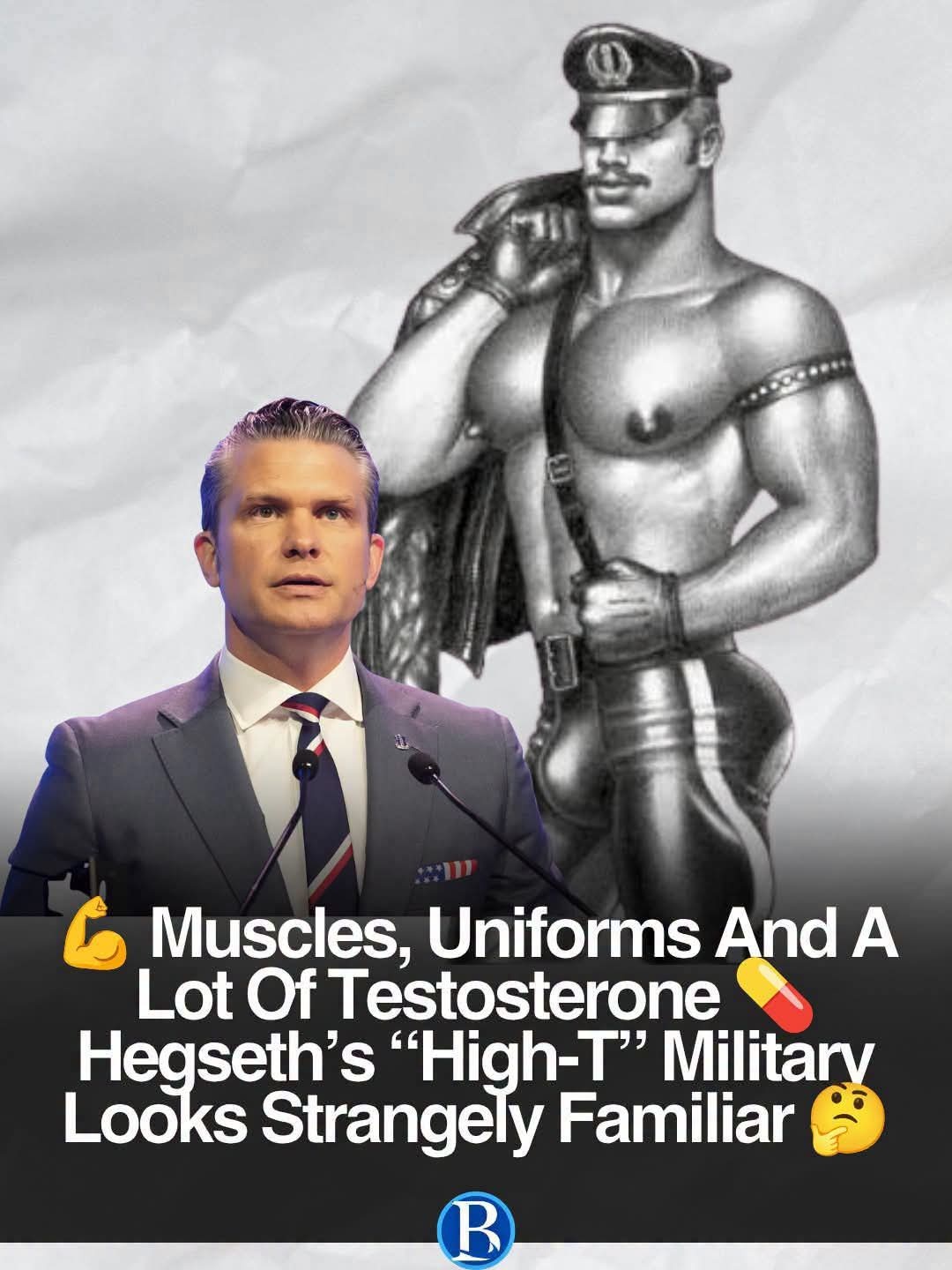
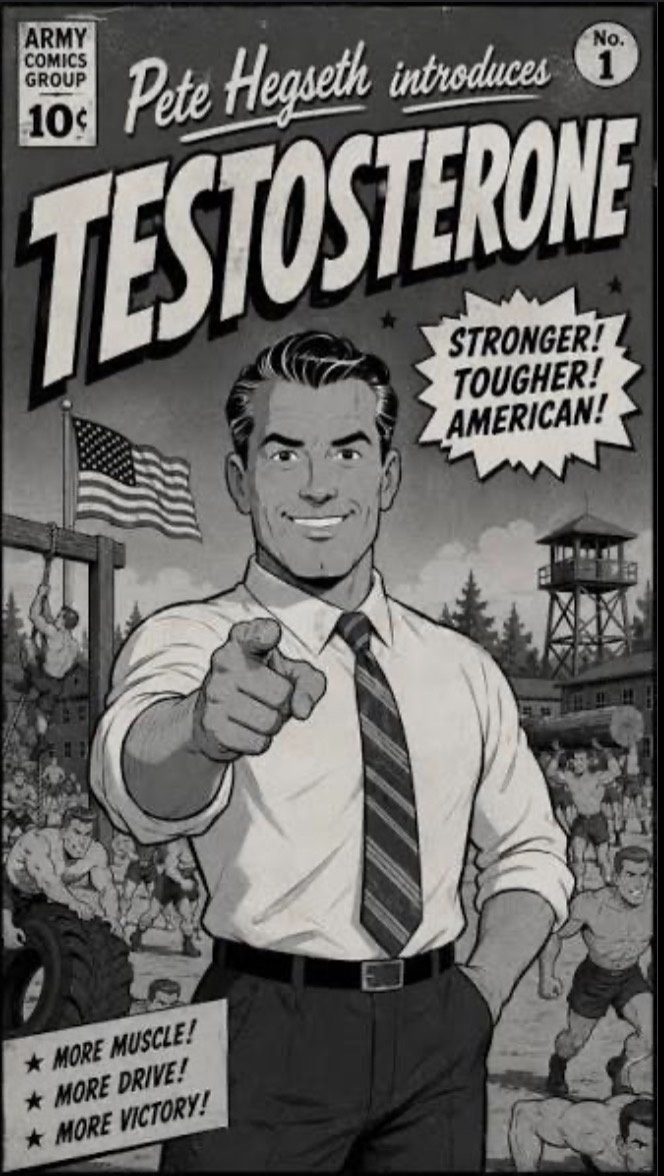
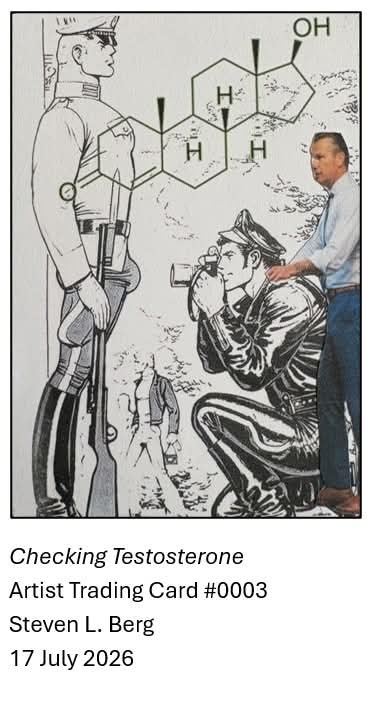
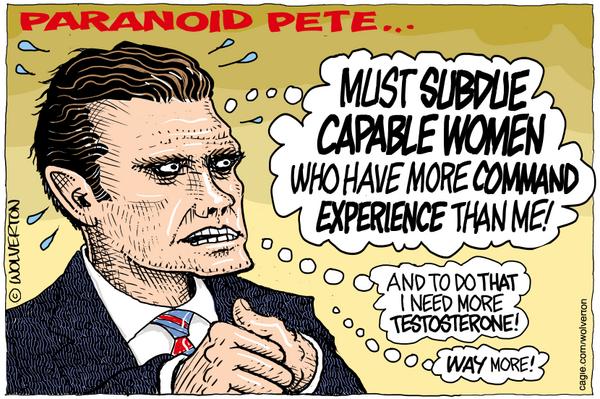
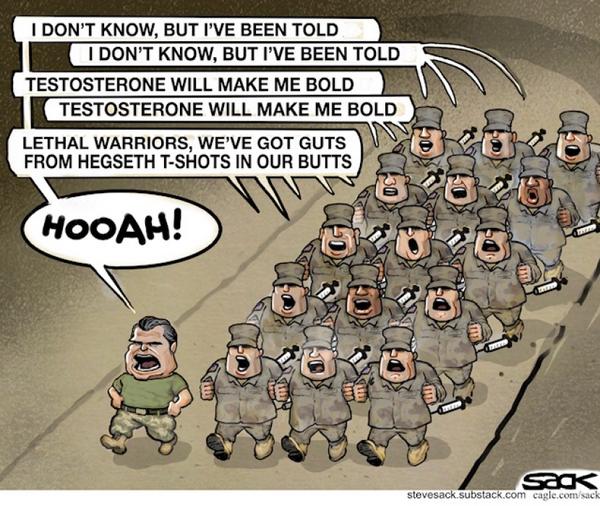
Defense Secretary Pete Hegseth’s new initiative to test and treat troops for low testosterone has prompted a federal judge to question the differences between that kind of testosterone replacement therapy and hormone treatment for transgender men in the military.
U.S. District Judge Ana Reyes in Washington raised the question Wednesday in an ongoing lawsuit against President Donald Trump’s ban on transgender troops. Reyes noted that Trump’s ban says “the Armed Forces must adhere to high mental and physical health standards … without the benefit of routine medical treatment or special provisions.”
Reyes ordered both parties in the lawsuit to address “the similarities and differences in administering TRT, both medically and logistically, for trans men compared to other service members, including cis individuals.” She was using the acronym for testosterone replacement therapy.
The judge also requested information on the Pentagon’s “basis for treating trans men and other service members differently between this new policy and the Military Ban.”
Reyes’ order comes a week after Hegseth announced that he is rolling out a new screening program for “testosterone deficiency” among troops, calling it necessary to allow them to operate at their “absolute best.”
The screenings will be conducted annually as part of service members’ required medical screenings for those 30 and older, he said. Troops under 30 can volunteer to be tested. In a video on social media, Hegseth said receiving testosterone replacement therapy would be voluntary.
Other Trump administration officials have begun to advocate for men to have easier access to testosterone replacement therapies, but the messaging from Hegseth and others blends known science on the hormone with broader, and less substantiated, claims.
Testosterone levels in men decline naturally with age and have long been linked to issues like erectile dysfunction, low libido, mood changes and weight gain. But experts have debated for years how to diagnose those problems and whether they should be treated by replacing the hormone.
Reyes, who was nominated by President Joe Biden, is overseeing one of the lawsuits against Trump’s ban on transgender troops. Transgender active duty service members and former service members seeking to reenlist sued in late January 2025, shortly after the president returned for his second term in office.
Reyes ruled last year against Trump’s executive order to exclude transgender troops. A divided panel of federal appeals court judges sent the case back to Reyes after partially upholding her order, finding that the ban was unlawful and service members who sued could not be kicked out.
Reyes has since given the case class-action status, which means the outcome could expand to all service members.
Trump’s transgender military ban remains in effect, however. The U.S. Supreme Court has allowed the Pentagon to enforce it as litigation plays out.
___
Associated Press writers Lindsay Whitehurst and Michael Kunzelman contributed to this report.
The House on Tuesday rejected an amendment to the National Defense Authorization Act (NDAA) that would codify President Trump’s executive order preventing transgender individuals from serving in the military.
The lower chamber voted 212-217 to reject the amendment, sponsored by Rep. Lauren Boebert (R-Colo.). Four Republicans sided with Democrats to kill the measure.
The executive order, implemented by Trump in January, states that “consistent with the military mission and longstanding DoD policy, expressing a false ‘gender identity’ divergent from an individual’s sex cannot satisfy the rigorous standards necessary for military service.”
The order also states that the armed forces “shall neither allow males to use or share sleeping, changing, or bathing facilities designated for females, nor allow females to use or share sleeping, changing, or bathing facilities designated for males.”
The U.S. Court of Appeals for the District of Columbia voted 2-1 in June that Defense Secretary Pete Hegseth’s decision to expel people who are currently serving was motivated by animus against transgender people, violating their constitutional rights.
However, the court’s ruling did not cover people wishing to enlist in the military; the court ruled that it involved different considerations.
Republicans have spent years pushing policies targeting transgender Americans as a central part of their legislative agenda, arguing the measures are intended to protect women’s sports, parental rights and military readiness. Democrats have broadly opposed the efforts, arguing the measures discriminate against transgender people and infringe on their rights.
The NDAA is an annual, must-pass bill that establishes policies and authorizes appropriations for the Department of Defense’s military activities, military construction and the Department of Energy’s defense activities.
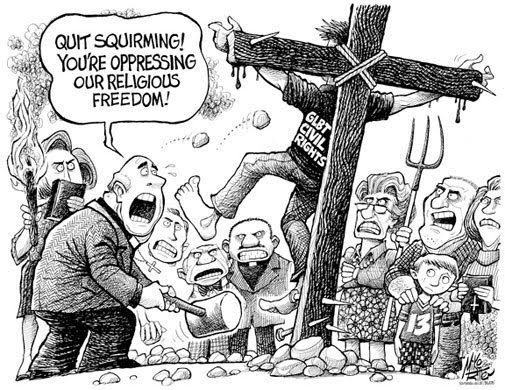
Again so much hate and anger towards people who do him no harm. A desire and a demand that he gets to rule how others live. Such self important Christian love. No hate like some Christians love for the right to tell others what God thinks. It is strange that their god always agrees with them, never that they need to change or grow, just that others must live by the church doctrines of the hater. Hate who they hate and the world is a paradise they believe. Notice the pastor is OK with a man penatrating and using his wife in any way he wants, anally or orally. Only sex between men in any form is to be illegal. It seems very selfish to me. Why is the act OK if he does it with his wife but I can’t do it with my husband Hugs
In his first interview with an LGBTQ publication, Pastor Doug Wilson reveals that as many as 20 people in the government align with his church’s ideology.
This story includes references to sexual abuse. Viewer/reader discretion is advised.
In February, Doug Wilson made headlines after giving a sermon at the Pentagon as part of Secretary of Defense Pete Hegseth’s monthly Christian worship service. Wilson, the lead pastor at Christ Church in Moscow, Idaho, holds a number of controversial views: He believes the U.S. should become a Christian theocracy, married women shouldn’t have the right to vote and gay sex should be illegal.
In his first interview with an LGBTQ publication, Wilson talks about his connections to Hegseth and others in the Trump administration. He estimates that 10 to 20 people in the government are aligned with his radical ideology. He explains that he thinks trans people are “sad,” certain elements of his idea of “homosexual behavior” should be punishable by execution and in certain cases of marital rape, both parties should be disciplined.
“UNCLOSETED with Spencer Macnaughton” is a new podcast by Uncloseted Media, an investigative LGBTQ-focused nonprofit news publication. Follow and subscribe wherever you get your podcasts. YouTube // Spotify // Apple
Watch the full interview above or read the transcript here:
Spencer Macnaughton: Hi everyone. Welcome back to UNCLOSETED with me, Spencer Macnaughton. Today, I’m speaking with Doug Wilson, the lead pastor at Christ Church in Moscow, Idaho, and an increasingly prominent figure in conservative Christianity. Wilson has recently attracted national attention for his connection to Defense Secretary Pete Hegseth, as well as his controversial beliefs, which many say align with Christian nationalism, and include denying married women the right to vote and banning gay sex nationwide. Here, he sits down with Uncloseted for his first ever interview with an LGBTQ news outlet. Pastor Wilson, thanks so much for speaking with me and Uncloseted Media today.
Doug Wilson: You’re most welcome. Thanks for inviting me.
Embedded with Hegseth and the Trump Administration
SM:Great. So first, you’ve made a lot of headlines this year in particular because in February, you were a guest pastor for the Pentagon’s newly instituted monthly Christian worship service, where you prayed alongside Defense Secretary Pete Hegseth. Hegseth closed the prayer by putting his hand on your shoulder. That’s pretty, kind of, major to get that high up in the federal government. How did you develop your relationship with Hegseth and subsequently get invited to this very high-level prayer?
DW:I’ll give you a telescope version of that. Before Pete Hegseth was the secretary of war, he was with Fox News. He was involved in making a documentary on the state of education in America and met a friend of mine, David Goodwin, who is the CEO of the Association of Classical Christian Schools, which is an organization I founded. He was so impressed by that kind of education that he moved to Tennessee to enroll his kids in a school like this, but he was still working for Fox. So he’d fly into Tennessee on Sundays, and the only church that was open in the afternoon was a CREC church, which is the denomination that I’m in. And after he was appointed as secretary of war, He moved to D.C., and I was in the Nashville area and filled the pulpit at that church, Pilgrim Hill Church. And as it happened, the Hegseths were back in Nashville. I met him there at church and we visited for a few minutes. And then we planted a church service in Washington, D.C., a little over a year ago, so he’s been coming to that church service. I’ve met him a couple of times there in D.C., and of course, I met with him when he invited me to the Pentagon. But that’s the extent of our meetings, like three times, maybe four.
SM: There’s reports that he considers you his spiritual adviser. What does that mean exactly?
DW: I’m not a policy adviser. But it would be the sort of thing where, if he were in some sort of newspaper conflagration over something or other, I’m functioning currently in a pastoral role. As it happens, this coming Sunday, the Washington, D.C., church service is going to be installing a pastor there. So for the first year or so, our church here in Moscow was supplying, sending and recruiting people to come and preach there, but they will have a full-time pastor starting this next Sunday.
SM: Wow. And you’ve spoken about how, you know, although President Donald Trump is not an evangelical by any stretch, you said, quote, “his administration is full of them.” So how many folks in his administration do you reckon are aligned with your church and might attend the church service that you guys are putting on in D.C.?
DW:I do know that if Kamala had been elected, the White House would have been pretty evangelical-free. She would not have been hiring people like me. But the Trump administration just has quite a few conservative Christians working there. And in our D.C. church service, there are a number of people that are either working for the government, you know, they’re assigned to the Pentagon, or they have roles in the administration.
SM:More than 10, more than 20? Roughly, how many would you say?
DW:Boy, I would say between 10 and 20.
SM: Wow, in the actual administration?
DW:I would say between 10 and 20 in the government.
SM: In the government, got it. And who else in addition to Hegseth would be part of that?
DW:Sure, no major players at the cabinet level or anything like that. And as for the people who are the next tier or two tiers down from that, I’d rather not say because I don’t want to ruin their day.
SM:You think it would ruin their day if you said who they are?
DW:Yeah, basically. For example, I did an interview with NPR. When the NPR video segment dropped, our church secretaries [had] to not answer the phone for three days.
SM:Wow. Why?
DW:Because they don’t want to be vilified.
Back in the Closet, Boys
SM:Understood. So yes, obviously, we’re an LGBTQ publication. Is this the first LGBTQ publication you’ve done an interview with?
DW:I believe that is… I think that’s fair, yes.
SM:Cool. So obviously we’re going to focus on some of the things you’ve said in that realm, right?
DW:Right.
SM:And one of the things you’ve said is that there should be anti-sodomy laws and other prohibition on sexual behavior in all 50 states. So sodomy obviously gets thrown around as a buzzword. What do you mean exactly by that when you said it should be illegalized? Are we talking about anal intercourse between two men or what exactly do we mean by sodomy?
DW: Right. Let me make a distinction and then back up and then answer your question. The distinction is there’s a difference between politics, which is the art of the possible: What proposals am I proposing right now? And secondly, what is my sketch of an ideal Christian republic 250 years from now? Those are two separate things.
SM:Even if it’s 250 years from now, what specifically do you mean by that? Like what becomes illegal when it comes to sodomy laws?
DW:OK. I would regard sodomy as male-to-male intercourse, anal intercourse or oral intercourse.
SM:Would hand jobs count or just anal and oral?
DW: No, between two men, between two men.
SM:Hand jobs as well.
DW:Hand jobs, oral sex and anal intercourse—
SM:Got it.
DW:—would be sodomy. In the old order, the legal definitions of sodomy would have included oral foreplay between a married heterosexual couple, right? So, I think that there were definitions of sodomy that went beyond scripture.
SM:So you’re OK with heterosexual people in oral foreplay or those sorts of things if they’re married?
DW:Yeah.
SM:And then what about women-on-women lovers? Like is oral sex OK for them under these laws or no?
DW:Well, “OK” is too loosey.
SM:Yeah, but in your ideal world 250 years from now, would that be illegal across all 50 states?
DW:No, and this is going to be interesting, because I’m a Bible guy. If you go through the Law of Moses, you won’t find any legal prescription of lesbianism. This brings us up against the difference between a sin and a crime, right? There are things that are manifestly sinful for every Bible-believing Christian, which I believe ought not to be criminal. You don’t have any penalty in the Old Testament attached to lesbian behavior. It would have been considered a sin, a form of sexual immorality, but not criminal.
SM: Got it. So then in your ideal world, gay men engaging in sexual behavior would be illegal under sodomy laws across all 50 states. You’ve mentioned, though, that you wouldn’t want it to be too heavily enforced because you don’t want to create a, quote, “sexual Gestapo.” So how exactly would this be enforced?
DW: Well, I would say that the main enforcement mechanism would be social expectations and a withholding of societal approval. It would be sort of “back in the closet, boys,” not because of fear of legal retribution, but because this is simply not done.
SM:But that’s different than what you’ve said in the past. You said sodomy laws, right? So would it be illegal, or are you kind of walking back?
DW:No, I’m not walking it back. I think it ought to be that society needs to express its disapproval of this behavior in law.
SM:So then if it’s a law, what’s the punishment if somebody makes that act, which would be illegal? What would the punishment be?
DW: So the punishment would vary. I’m reluctant to give the government excess powers of invading private homes.
SM:OK, so just theoretically, I get caught having sex with my boyfriend, what happens to me? What is the punishment?
DW:In the 1980s, there was a movement called Christian Reconstruction. And the Christian Reconstructionists wanted to take the Old Testament law, sort of with a grappling hook, and bring it over and drop it down on modern society. And that would mean the maximum penalty there for homosexual behavior would be execution. And so there were debates among the Reconstructionists of: “Do we have to stone the homosexuals?” And there were some people saying, “Well, firing squads are OK because they’re throwing very tiny stones at a high rate of speed,” but they were talking about execution. In that debate back then, I pointed out that King Asa and King Jehoshaphat in the Old Testament closed the bathhouses, and they exiled the sodomites from the land. And their behavior is praised in the text. That told me that execution, although a lawful penalty for homosexual behavior, was not the minimum penalty; it was the maximum penalty.
SM: And do you believe that still, that in your eyes the maximum penalty for homosexual behavior in an ideal world, in Pastor Wilson’s ideal world, would be execution?
DW: Yeah.
SM: You do?
DW: Yeah, if you ask me: “Could you ever envision a homosexual crime of any nature being visited with the death penalty?” Yes, I could.
SM:You, in other words, want to create a law where—a real law, in this country eventually—where the maximum penalty for me having sex with my boyfriend would be my execution? I just want to make sure that’s clear.
DW:No, no, no. That’s why I wanted to finish this scenario. I do want to create a society where the maximum penalty for a Roman Catholic priest molesting or raping an altar boy is solved and addressed with a tall tree and a short rope.
SM:Right, that’s pedophilia though, which is of course different than homosexuality.
DW:Well, it’s a species of homosexual behavior. So let’s say it’s a Roman Catholic priest and a 15-year-old boy. Or there’s all kinds of variations of human behavior. But there are homosexual crimes that are egregious enough that I would want to execute the person for.
SM:So you see pedophilia as an element of homosexuality, is that right?
DW:Yeah, if we’re talking about the alphabet people. Right?
SM:You’re referencing LGBTQ community?
DW:LGBTQ+. What’s under the plus?
SM:Not pedophilia. Would you consider adding a “P”? Do you think a P is meant into that umbrella of LGBTQ?
DW:Absolutely.
SM:You do? Because you conflate lesbians and gay people with, like, kind of akin to pedophiles. People who rape children?
DW:I don’t think that I’m making that association. I think the LGBTQ+ acronym, that whole chain, is sort of a sexual alliance of people who are defying traditional biblical norms. And pedophilia is one of those things that defies those norms.
SM:Do you see two men having sex as equally sinful as a man raping a girl?
DW:Yeah, they’re both violations of God’s law.
Conversion Therapy
SM:Obviously, if you’re seeing both of these as sinful, pedophilia and homosexuality, this is a very big concern for you, I would imagine, in society, right? So I wanted to ask, you know, in March, I’m sure you’ve been following this, the Supreme Court overturned Colorado’s ban on conversion therapy. And you’ve called Canada’s conversion therapy ban a, quote, “wretched and misbegotten law.”
DW:I did.
SM:In your church, right, as the lead pastor, if somebody comes to you saying, “I’m attracted to the same sex,” should they be allowed to go through conversion therapy? And if so, what is the most effective form of conversion therapy in your eyes?
DW:I’m a pastor of hundreds of people, and I’m a pastor to people whose sexual temptations are homosexual. I’ve counseled people in that position and have seen them arrive at victory over those temptations.
SM:I see it based on the science and, you know, methodologically sound evidence-based research, it is a discredited practice, but I want to know from your perspective, what works?
DW:So what works is Jesus Christ. So Jesus Christ forgives sin, and Jesus Christ empowers us to overcome sin.
SM:In layman’s terms, if you can, right? Are you just saying pray? Or is there more to it? Like what else—do you give them assignments? Do you give them homework? Are there things they need to do? Or is it simply just pray, pray, pray, pray, pray?
DW:Yeah, it would be easy to sort of dismiss what I’m saying as sort of “pray the gay away.” So when I’m counseling someone who is struggling with this and wants out, one of the places I start is with that person’s relationship with his father, that person’s relationship with his mother, that person’s upbringing. “Do you have a healthy relationship with your father? Do you hate your mother?” You know, it’s not like, “What do you do when you’re horny?” If you just start there, you’re healing the wound lightly, basically.
SM:Have you ever experienced same-sex attraction?
DW:Uh, no.
SM:Never?
DW: No.
SM:No. Got it. And so when they come, right, if say somebody comes to you and says, “Pastor Wilson, Pastor Wilson, I am experiencing this and I love your church, but I’m happy, I have a boyfriend.” Do they stay in the church, or what happens?
DW: Such a person would not be allowed to become a member. But such a person would be welcome to attend as often as they wanted. You’re welcome to attend, but if you were a member, there’s a commitment to becoming a member and that commitment means living as a Christian is obligated by the Bible to live.
The Path to Ending Obergefell
SM: Got it. And OK, so Obergefell, yes, I know you wanted to talk about that, because you said in the here and now, that’s something that you would want overturned.
DW:One of the reasons I would go to Obergefell as one of the action points is I think that that is actually a possibility. Just like Roe was overturned, I think Obergefell could be overturned and it might be a matter of as few as two Supreme Court justices.
SM:When you’re in D.C. or when you’re helping with prayer with Hegseth or other folks in the administration, are there rumblings that there’s a possibility that that’s within reach?
DW:Yeah, I’ve not had any conversations like that with administration officials, but I have certainly written a lot about it and I know that I’m read by people in powerful places.
SM:Of course, because if they align with you ideologically, then they must want that too, I would imagine, if they share the same belief systems as you, no?
DW:I’m not plotting with administration officials to make a move on Obergefell, but I am very vocal about it. So I think repealing Obergefell is an attainable goal in our current climate.
SM: When it comes to the legal issue behind it. What would be the kind of roadmap to overturn it?
DW:I think there’d have to be an increased number of conservative Christians in the Senate. You would have to have trained, capable judges who were evangelical Christians, who had been operating at lower courts, who were in a position to be nominated to that position and survive the character assassination battle, you know? Before, Senate confirmations, hearings were all about abortion. I think the next ones will be about Obergefell.
SM:You do?
DW: Yeah, I do. I think that that is going to be the issue. And so if you have more Christians in the Senate, if you have Christian men nominated, and the Senate has the kind of people who don’t fold under pressure, then it is a doable thing.
Trans People Are ‘Sad’
SM:Mm-hmm. All an interesting perspective. You’ve spoken less about transgender people.
DW:Yeah.
SM:I wanna know your thoughts. In your ideal world, what would happen to people who are trans? Do they have a place in society? What’s your view?
DW:Yeah, this is… no way to talk about it without talking about it. I think transgenderism is simply sad. I don’t think that it should be elevated to a category given equal carved-out rights. I think this should be treated with love and compassion and help, counseling.
SM:About 1% of the population identifies as trans and the vast majority of those people, once they get past stigma, live their lives healthily and happily, so I’m unclear what your issue is with it.
DW: The man is the image and glory of God, and the woman is the glory of the man. I believe God created us in such a way as to reflect his glory. And the transsexual movement, I think, is a movement away from that glory. And so when I see people who are… just… well…
SM:You can be candid. Be candid.
DW: I don’t want to give offense.
SM:You won’t offend, go ahead.
DW:So when I see people who are tatted up and pierced, dog collar, it’s hard for me to not see self-loathing.
SM:But what connection do those folks have to trans folks? I mean, that’s a different kind of, you know, I have a lot of trans friends, none of them are wearing those things.
DW:Well, I’m glad you’re more fortunate.
SM:Do you have a lot of trans friends who do wear those things?
DW:No, I have, I encounter people out in the community, and I have a pastor’s eye, right? And one of the things I can identify and see and greatly sympathize with is people who are miserable and they’re trying to… “Maybe this’ll work. Maybe this will give me a sense of who I really am.”
SM: Do you think trans people are dangerous? I mean, Trump recently included radical transgender folks in his counter-terrorism strategy. Do you have concern there?
DW:We’ve seen many instances of transsexual violence over the last few years. That doesn’t mean that all transsexuals are violent, but a disproportionate number of the violent episodes are coming from transsexual individuals.
SM:And I think a lot of the data that actually shows when you look at things like school shootings, the disproportionate number of cisgender people are perpetrating those, actually white cisgender men are the most common and disproportionately more likely even when you break it down per percentage of the population.
Disempowering Women
SM: Obviously we’re an LGBTQ publication, but we do stories on women too, right? And you’ve been in the news for your belief systems around women. I wanna know just more generally, what role do women have in society for you? In your world, should they be allowed to be anything they want? Doctors? Lawyers? Should they be allowed to serve in the military? How do they place in society in your view?
DW:Yeah, I don’t think there should be any legal barrier to women getting a medical degree, getting a law degree. But I don’t think there should be a legal barrier to women being in the military.
SM:Can they be in combat?
DW:No, that’s the one place I would limit them. I’d say women should be kept away from combat roles. I don’t think women ought to be put in front lines.
SM:Why not?
DW:Because I served on a submarine, a couple of submarines, and I just can’t get inside the head of the person who thought that was a good idea.
SM:Why? Just you don’t think women are as capable in that area?
DW:No, I think that if you have women on board a submarine, and we went to sea a couple of times, submerged for two and a half months, you’ve got 130 people locked up in this steel tube under the water for two and a half months. You put three women on board. That’s like, “Why shouldn’t I throw catnip into the pack of cats?”
SM:Well, there’s going to be gay people in the submarine too.
DW:Yeah. That’s another problem.
SM: And tell me, I have read a few things like, “Women should submit to men, obey their husband, obey their father.” What exact role do women have as it relates to their relationship with men? Men should be the head of the household? Clear up what you mean by women’s role in that dynamic.
DW:The Bible requires women, “A woman should submit,” Paul says, “to her own husband.” And what that means, my wife is submissive to me, but what that means is she doesn’t have to submit to all the other men.
SM: Say a wife and a husband are together and the wife says, “I want to go to med school and become a doctor.” And the husband says, “Nope, I want you to stay home and be with the kids.” Should she stay home?
DW: Yeah.
SM: She should. OK. Because she submits to the husband?
DW: Because she submits to the husband. Let’s say this is a counseling case for us, and the wife wants to do something and the husband has said, “No, I really don’t want you to do that.” We would say, “You married him and you vowed before God and witnesses that you would follow and obey him. And this is one of those cases where he’s made a decision and it’s a lawful decision and you should submit to it.”
Sexual Abuse
SM:When it comes to sex, right? Like, say the man says, “I want to make another baby with you tonight.” And the woman says, “No, I don’t want to. I don’t want to do this right now.” Should he still do it if he wants to? Should she still submit if she doesn’t want to have sex that night?
DW:No, I would say, basically, marital rape is wrong. So if he forces himself on her and rapes her, then I believe that that’s a sin.
SM:If he raped her, how would he be disciplined? Would you call authorities or would you deal with it internally?
DW:It would depend on the nature of it. It would, you know, it would depend on, a violent rape? Yes.
SM:You would call the police?
DW:What’s that?
SM:You would call the police?
DW:Yeah.
SM:What does a nonviolent rape look like?
DW: Oh, let’s say she just says, “I really don’t want to. I’m not into this. I don’t want to, please don’t treat me this way.” But he says “Too bad.” You know, he’s just being a boar. He’s being awful. And someone like that should be disciplined by the church, but there was no crime.
SM: And what line is there, like, she should just “give in,” right? Is she allowed to say no to the husband? Or should she just submit?
DW: Here’s why it’s a gray area.
SM:And it’s a gray area in terms of, you might not consider it a violent rape. For many people, it is not a gray area, no means no. And I think that’s the kind of understanding we have societally at this point in America, but perhaps, is it a gray area for you, I guess, is what I’m trying to ask.
DW: No, let’s say she’s had an absolute horrendous day, is fried, just is exhausted and she says, “Honey, I really, please, please no.” Does she have the right to do that? Absolutely, yes, she has the right to do that. Does she have the right to cut him off for six months? No.
SM:She doesn’t?
DW:No. So if she says, if that situation came to us, and the husband said, “Here’s the thing, we’ve been married for five years and we’ve not had sex for the last six months, and she just won’t.” Right? In this situation, she’s got the problem. And we’d address it like, “Look, we have to talk, you’re married, you need to act like you’re married.”
SM: So in month six, if she is in a space where she doesn’t want to have sex, and he rapes her, is that justified because she, in your view, has held out for too long?
DW: It’s not justified, but neither is her behavior justified. So that would, basically what you’d have there is a marital mess. And both of them sinning against each other.
SM:And when something like that happens, what’s the discipline you give to both the man and the woman in that case?
DW: We would say we want you to start coming in for weekly counseling, and we want you to agree that the end goal of this counseling is for you to be back together as husband and wife, living together, having sexual relations, the way a normal couple would.
SM:OK, got it. And there have been numerous accusations of sexual abuse at your church. And I’ll read them, I wanna let you respond, but when 14-year-old Natalie Greenfield reported sexual abuse by Jamin Wight to the police, there are allegations that you pushed for him to get lenient treatment. And you’ve officiated the marriage of Steven Sitler, who was arrested for sexual contact with a minor and later admitted to being sexually stimulated by his baby. When a man commits a rape in your church, like this, what happens? Walk me through exactly what happens, because obviously this is a pervasive issue in conservative Christian churches across the United States, and there have been these reports at your church. So what happens when you find out a man has committed a rape?
DW:Oh, what you do is call the cops.
SM:How many times have you called the cops, would you say, for issues of sexual abuse or rape?
DW:Oh. Maybe five?
SM:And how many times would you say a woman has said no, whether it’s that six month thing or some other thing, where you deal with it internally?
DW:No, the one accusation that’s out there about marital rape is an accusation that is coming from a stone-cold liar.
SM:So, you deny those allegations that have been…
DW:Yeah, I deny that we’ve ever sanctioned marital rape. That’s just flatly false.
SM:How many instances have there been when a woman has alleged or a child has alleged that they’re experiencing some form of sexual assault or S.A. where you deal with it internally?
DW:I can’t think of any.
SM:None?
DW:No, if you’re talking about a self-report of, if a child told me that “I’m being molested,” I wouldn’t ever sit on that.
SM:OK, and have you heard reports from other people where they say a child’s been molested and you didn’t sit on that?
DW:Yeah, so I’m going to make up an example, OK?
SM:Oh, no, no. No, I’m just curious. Like, have there been other bystanders or people in the church who have told you this child may be being molested, where you haven’t reported it?
DW:Oh no, what you want to do is follow up on it. You want to check and you know, is there something to this? Is the person reporting to you a rumor or something that they, “I saw them in the grocery store and the girl looked unhappy.” Is there anything to it? If there’s anything to it, you pursue it. You should be all over it.
SM:But are there instances where people have suggested this could be happening?
DW:And then we did nothing? No.
SM: Yeah. No?
DW: No.
SM: No. OK.
DW: Basically, we have an aggressive stance toward this thing. Reports to the contrary, notwithstanding. This is an area where we are lied about routinely.
SM:You have you mentioned the reputation that your church has of, you know, sexual assault or child molestation? Why do you think that exists?
DW:Well, because we’re the size of a small town. And these accusations have come up over the course of like 30 years. I would put a…
SM:But a lot of small towns don’t have accusations associated with them like that.
DW:Let’s put it this way. I saw a bumper sticker once in my grandma’s hometown in Nebraska. “You don’t see much in a small town, but what you hear makes up for it.” The human race is messed up and sexual misbehavior is a big part of that mess.
SM:Why do you think it disproportionately happens in conservative Christian communities?
DW:I think that’s false. I don’t think it disproportionately happens.
SM: You don’t?
DW: I don’t.
SM:So the statistics are just kind of false?
DW: Yeah. Yeah.
SM: One of my last questions, and thank you so much for your time—
DW: You’re welcome.
SM:—is, you know, I’m obviously an openly gay man. I have a boyfriend, we have sex, right? I don’t believe I’m gonna change at all as time goes on. In your view, where am I going? What happens to me?
DW:So, as an evangelical Christian, I believe that the only way to salvation is through Jesus Christ, through looking to him in his death, burial and resurrection. And the sin that you’re committing is homosexual sin. And so I believe that you are spiritually lost, excluded from heaven, and I believe they’re only ultimately two destinations: heaven and hell. So to be fair and perfectly honest and not trying to be rude, but I think you’re lost.
SM:And I’m going to hell.
DW:Apart from repentance, right.
SM:Got it. In a society that gives men so much power, do you ever get concerned that giving men power over women, does it not put them at greater risk of being abused? What happens when there’s no stop gaps and you have powerful men at the top who aren’t helping women who are struggling? Because that does happen a lot.
DW:If you have a patriarchal society, then you are creating the possibility that certain powerful men will abuse their position. Right, that’s true.
SM:Of course, yeah.
DW:OK, so I’m not disputing that. What I would argue is the way you deal with that, the most effective way to deal with that, how do you guard against evil men, predatory men? Well, you need good men to be protectors. So, I believe that fathers and brothers and pastors and elders should be a line of protection around their women.
SM:Obviously that doesn’t happen in a lot of instances. So if women don’t have their own voice and don’t have an outlet, what’s their recourse if the man who’s in charge of protecting them has failed? Like what should they do?
DW:Right.
SM:If they’re in one of these insular communities where the men in charge thinks it’s OK to abuse them.
DW:That’s a terrible dilemma. And I’ve seen it, right? I’ve seen women who need protection from their protector. I have seen that. But you don’t fix the problem by making women dependent upon a federal agency. Now what happens when they need-
SM:What if you just gave women more power and didn’t have it where they have to submit to the men?
DW: Who gives them the power?
SM:I mean a lot of spaces in society see men and women as equal and don’t ask them to submit to their husbands in this way.
DW:Yeah, but they do ask them to submit to them, right? In other words, you have structures in society. And these structures in society, if they say we’re going to stipulate that men and women are equal here, that’s just a statement, that’s just a proposition, that’s just words unless you police it. And somebody’s got to be the police.
SM:But the police should never be women.
DW:Yeah, because they won’t be able to do the job. Problem is, those women are going to be defeated. Men are aggressive, stronger than women. If it came to it, they wouldn’t, they’d be able to… It won’t be an effective defense so if you had… Let’s say we elected a woman president and she said, “As my first act I want the entire Secret Service detail that accompanies me all time, I’m the first woman president, I want all the Secret Service detail to be women also.” The assassins are going to say, you know, “Good job. Ha! Just made myday.”
SM:Yeah, we’ve been on for an hour and 15. So grateful for your time.
DW: You’re welcome.
SM: And we’re an objective news publication. And I think I can objectively say that I believe you’re homophobic, transphobic and sexist. Why should I think anything differently after this phone call?
DW: If your worldview is correct, then absolutely, that’s what I am. I don’t regard myself as homophobic by the standards of scripture at all. According to the standards of the sexual revolution, yeah, I’m homophobic and transphobic. You’ve never met anybody worse.
SM: I think that’s a perfect place to leave it. Pastor Doug Wilson, I really do appreciate you coming on and speaking with me and Uncloseted Media today.
DW: Right, thanks for having me.
SM: And if you liked that episode and want more of our journalism, go to unclosetedmedia.com or find us on YouTube or wherever you get your podcasts.
Additional reporting by Sophie Holland and Bella Sayegh.
If objective, nonpartisan, rigorous, LGBTQ-focused journalism is important to you, please consider making a tax-deductible donation in the U.S. through our 501(c)(3) fiscal sponsor, Resource Impact, by clicking this button:
Three congressional Democrats say that as much as $21.5 million paid by ABC, Meta, Paramount and X to settle lawsuits brought by Trump is now missing or has been spent without explanation and requested a full accounting from the foundation building his presidential library.…
The BBC has issued 47 subpoenas to the elder Trump's inner circle, including Trump Jr., Ivanka Trump, Jared Kushner and Stephen Miller. But the Secret Service has blocked the BBC from serving Donald Trump Jr. with a subpoena seeking his Jan. 6 communications, according to a court filing Friday.
Trump: “I just finished a perfect physical at Walter Reed, I do it every 6 months, and I requested another Cognitive Test, the only President to do so, three times, and I aced them all — Got every question right. Few people in DC could do so, including Maggot and her flunky associate, Jonathan Swan”
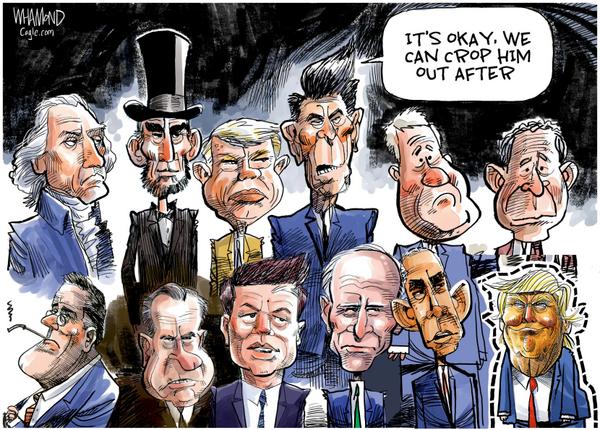
Australian broadcaster on hot mic after Trump crashes Spain’s World Cup trophy presentation: “They’re gonna edit him out of that” pic.twitter.com/s2vIIw3cgE
New: Trump installed a Thomas Jefferson statue in the Rose Garden last week, continuing his statue spree, per ppl familiar.Three of the new Rose Garden statues were provided by HARLAN CROW, conservative collector and donor, we learned.More on Trump’s statue push with @oliviacgeorge.bsky.social.
The Trump administration sought phone records of several Times journalists and their relatives — including one reporter’s mother — to try unmasking confidential sources who provided information about the security capabilities of Trump’s new Air Force One jet.www.nytimes.com/2026/07/20/b…
SCOOP: After pardoning hundreds of allies over the course of his 1st 18 months back in the WH, Trump this month quietly rejected clemency applications from nearly 6,000 people who mostly lacked connections & had been waiting in a queue at @TheJusticeDept. https://t.co/3NAcYDW867
WSJ report on the stunning amount of money Israel is spending on propaganda includes this: Brad Parscale works for Israel AND is chief strategy officer at Salem media. His contract for Israel involved “integration of narrative messaging into Salem Media Network properties”(!!) pic.twitter.com/oPNy2bg7pS
🚨BREAKING: Pro-voting groups asked a federal appeals court Monday to stop Florida, Ohio, Iowa and Indiana from using the Trump administration’s expanded SAVE database for mass voter screenings. https://t.co/E2dKmKWrhl
🚨BREAKING: A federal appeals court revived USPS’ ability to move forward with Trump’s anti-mail voting rule.The rule would mandate new federal checks before mail ballots are sent to voters
Today, I’m introducing MediKids – guaranteed healthcare for every child no matter where they live or how much their parents make.The concept is simple: Every kid deserves to be happy and healthy. Let's invest in our kids and build a stronger, healthier future.
In 2018, Chuck Edwards’ son committed suicide, allegedly with a gun. The whole ordeal is tragic.
— TheseKeystrokesKillFascists (@Agt00Soul) July 20, 2026
New Orleans published a document saying its police could put weapons on their drones, deleted it, now says it was a mistake. But it aligns exactly with when the drone manufacturer began musing about allowing police to weaponize their drones:www.404media.co/new-orleans-…
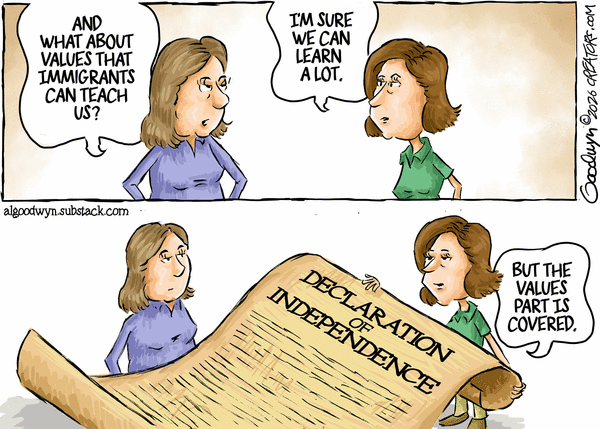
A Republican senator recited the Declaration of Independence — next to a Confederate flag.
As he stood a few feet from a Confederate flag, Sen. Dan Sullivan spoke glowingly about "core ideas" in the Declaration of Independence — like the principle that all people are "created…
Trump's DOJ brings hundreds of cases against protesters accusing them of "assaulting ICE officers," and these cases turn out, almost uniformly, to be predicated on easily exposed lies. The fact that protesters and bystanders regularly record everything that happens on their smartphones
Question: Do you regret giving ICE more money, given the killings, including the one in your state? Susan Collins: Q: No regrets, Senator? Collins: That money went to body cameras and training Q: They didn't wear cameras, though, did they Senator? Collins: pic.twitter.com/BUePoTv4M6
NEWS: The Trump administration has activated a secretive and never-before-used legal process to quickly deport foreign nationals deemed to be “alien terrorists” or their immediate family members.
In other sports news of the day, a golfer at The Open Championship told officials he wanted to call Trump to ask him for assistance after he was penalized for breaking a ruleSource: http://www.the-daily-drive.com/p/fox-steals…
The Chief Justice for the District of Minnesota, Eric C. Tostrud, tossed out a federal lawsuit Monday that aimed to invalidate Minnesota state and local policies that limit collaboration with immigration enforcement.
Immigration enforcement shouldn’t come at the cost of the public’s safety or trust.38 Senate colleagues joined me to renew the call for commonsense reforms—including body cameras & greater transparency—following the fatal ICE shootings in Maine & Texas.www.pressherald.com/2026/07/20/d…
[Real human costs of Trump's deportation] Senior Living Facility in Distress as Immigrant Caregivers Are Forced Out “Our work force is being drastically disrupted, relationships are being severed and lives are being upended right now” http://www.nytimes.com/2026/07/20/u…
Pentagon proposes new secrecy power to withhold unclassified records from public-access laws making it harder for the public to know how taxpayer money is being spent within the government’s largest federal agency raising concerns among watchdogs: CBS News https://t.co/cO9Gu3vtBG
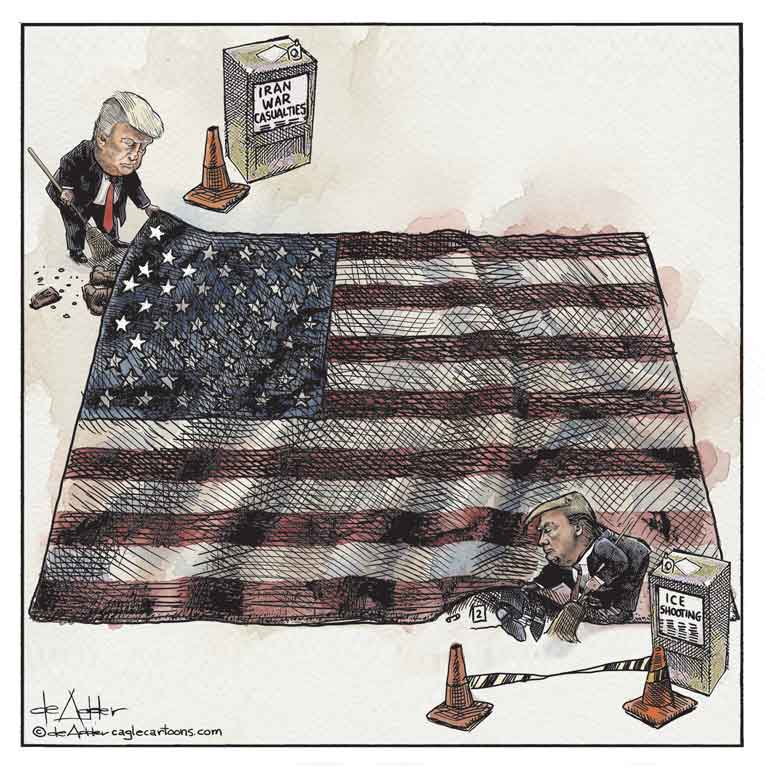
Before "the Iranian attack on Friday that killed two U.S. soldiers and left one service member missing in Jordan, Iran carried out three other strikes … [that] injured dozens of U.S. service members …But the Pentagon did not disclose the earlier strikes, nor the casualties and damage."
Oil prices jumped above $90 per barrel Sunday in the first major trading since the deaths of three U.S. service members and escalating Middle East hostilities.www.axios.com/2026/07/19/o…
Q: There are no signs Iran is ready to stop fighting. So what's the plan?TRUMP: How do you know there are no signs? Do you know something I don't?Q: They continue to kill AmericasT: They want to meet desperately. You don't get that when you listen to your fake station. You dont know anything.
Q: Do you believe Iran has moved nuclear centrifuges into Pickaxe Mountain?TRUMP: All we do is read the fake news. Maybe this one they have right. But it's okay. It doesn't mean anything unless they have the material. We'll be hitting that area pretty soon and very heavily.
Q: Do you think Iran is trying to impact the midterm elections by threatening the Strait of Hormuz?TRUMP: Probably. They won't have any impact on me. I'm just going to do the right thing. I don't view it as, 'Gee, we're having an election.' I think people are very impressed.
Q: Do you think Iran is trying to impact the midterm elections by threatening the Strait of Hormuz?TRUMP: Probably. They won't have any impact on me. I'm just going to do the right thing. I don't view it as, 'Gee, we're having an election.' I think people are very impressed.
The largest copyright class action settlement in history was granted final approval Monday, with $1.5 billion awarded to authors and creators whose work was used by the AI company Anthropic to train its large language models. http://www.courthousenews.com/anthropic-to…
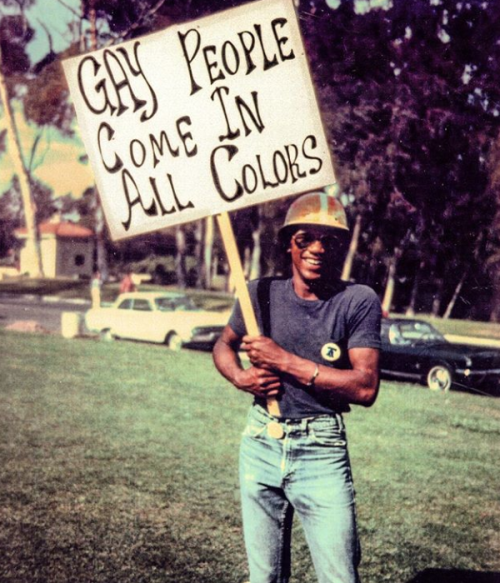
Why do these haters hate so much towards the LGBTQ+ people? We never hurt them, but they claim we hurt their god. But if that is true then can’t their all powerful god fix such an offense? Unless he made the LGBTQ+ people as he wanted them to be.
I want to point out the total switch and bait these haters use. Read the article to see the hate and refusal to accept anyone not straight and cis. Here is a quote from this person; notice how he frames it just to incite outrage.
Forcing local schools to permit a teenage boy who ‘identifies’ as a girl to use changing rooms, locker rooms, and bathrooms with five-year-old girls.”
See the bait and switch? A teen boy is somehow threatening your little 5 yr old girl. Oh the humaity.
Congressman Brian Babin, R-Texas, Chairman of the House Science, Space, and Technology Committee, speaks about the introduction of the Birthright Citizenship Act at a press conference on Thursday, Jan. 23, 2025. | Jack Gruber / USA TODAY NETWORK
A Republican member of Congress went to an event hosted by a hate group and, during a prayer, thanked God for sending Donald Trump to stop children from being led “down the path of homosexuality and perversion.”
“Lord, we beseeched thee,” prayed Rep. Brian Babin (R-TX) at the Family Research Council’s (FRC) National Gathering for Prayer and Repentance event at the Museum of the Bible in D.C. on February 4. The FRC is classified as an anti-LGBTQ+ hate group by the Southern Poverty Law Center.
“Our prayers were answered in getting us a new president and taking a different direction in our country than we had seen for the previous four years,” he continued. “Apostasy, blasphemy, taking our children down the path of homosexuality and perversion. Open borders. Criminals running rampant in our streets.”
“Lord, we have new leadership, and we thank you for that. But Lord, we know that government is not going to save our country. It’s going to be the American people returning to the path that you have set out for us and our Founding Fathers.”
Babin has consistently gotten a score of “0” on HRC’s Congressional Scorecard for the past several sessions of Congress, showing his solid opposition to LGBTQ+ equality.
In 2022, Babin was one of several Congressional Republicans who introduced a federal bill in the House to ban schools, libraries, hospitals, government entities, or other organizations from “hosting or promoting any program, event, or literature involving sexually-oriented material.” The bill defined “sexually-oriented material” to include anything that discusses LGBTQ+ people.
In 2015, Babin was outraged that the Supreme Court ruled in favor of allowing same-sex couples to marry in its Obergefell v. Hodges decision.
“As a strong supporter of traditional marriage and a firm believer in state sovereignty, I am deeply disappointed that five members of the U.S. Supreme Court have over-ruled tens of millions of Americans – including millions in the State of Texas – who have voted to enact state statutes and state Constitutional amendments to define marriage as between one man and one woman,” he said at the time.
“Traditional marriage has been under assault as courts and some state legislatures have sought to both redefine marriage as something other than between one man and one woman and to penalize and discriminate against those who have religious and conscience convictions against the redefinition of marriage,” he continued.
In 2016, he introduced a bill to roll back Obama-era protections for transgender students, saying that those protections were “throwing common sense and decency out the window and forcing local schools to permit a teenage boy who ‘identifies’ as a girl to use changing rooms, locker rooms, and bathrooms with five-year-old girls.”
The Obama-era protections did not allow for boys to use girls’ facilities. Instead, they were recommendations about how schools could accommodate transgender students, which included allowing them to use facilities associated with their gender identity.
Subscribe to the LGBTQ Nation newsletter and be the first to know about the latest headlines shaping LGBTQ+ communities worldwide.
Hard to keep pace with the President’s corrupt profiteering off the presidency, but here’s yet another scheme, this time to save his failing social media business:www.cnn.com/2026/07/16/b…
FT Exclusive: Donald Trump's social media company has discussed charging traders and investors as much as $100,000 a month for faster access to the US president's posts on his Truth Social platform. ft.trib.al/8fn5jhq
Remember back in 2020 when we found out about Trump's secret bank account in China, and that China's biggest state-controlled bank had rented out three floors in Trump Tower? I sure do. Interesting timing given his lies about China interfering in the 2020 election. http://www.nytimes.com/2020/10/20/u…
Trump's embarrassing rant last night about an election he lost six years ago made two things very clear:1. He's not focused on making life better for Americans. Not even close.2. We should act now to counteract any efforts to undermine our elections. http://www.mobilize.us/indivisible/…
NEW: DHS plans to pay Thomson Reuters $125 million for access to its databases which includes peoples’ names, addresses, Social Security numbers, ethnicity, social media posts, and geolocation information — to help ICE investigate “voter fraud”, according to documents reviewed by 404 Media.
The CEO of Foundation Future Industries, which counts the president’s son as its chief strategy adviser, tells WIRED it’s exploring some “kinetic things.” http://www.wired.com/story/humano…