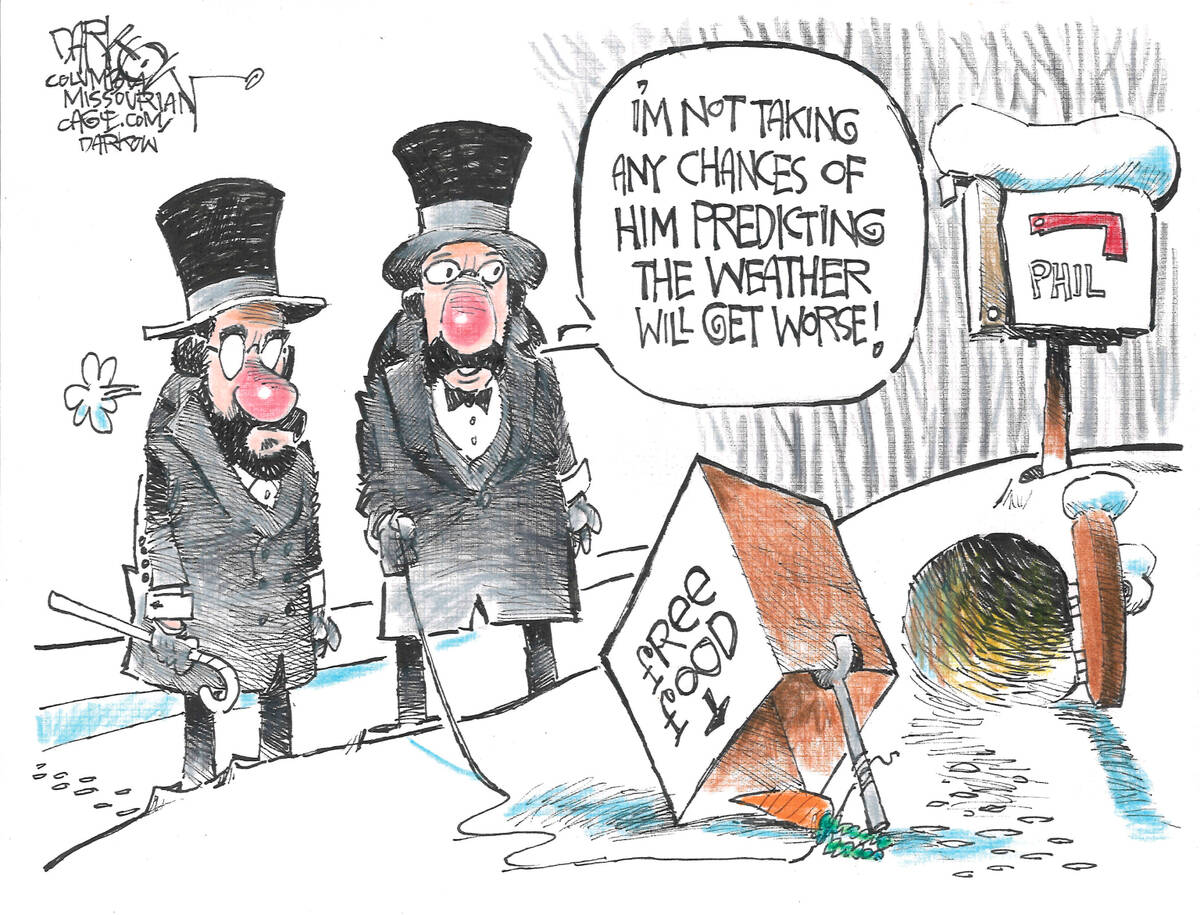
I would like everyone to see the above cartoon and understand it. As a teen and young adult I got asked about my sexual orientation constantly. “Are you gay?” “Are you a faggot?” “Do you suck dick”, “Do you take it up the ass”. Those questions did not stop being asked when I became an adult. They just became more invasive as people felt more emboldened to ask how this or feels? Or how do you do this or that? As an adult when those questions came from people who were people I knew or were friends, I answered them as honestly as possible because I felt they were honest but sometimes they were not. But as a teen those questions tore everything inside me apart and due to the times and hate against gay people I felt compelled to lie, which made me hate my self / situation even more. I understand straight people are curious, and in truth there is a lot of misinformation out there being preached by church leaders and others about LGBTQ+ people. However, some of the questions I got were so personal and about stuff that was so personal I often wondered what the reactions would be if I asked those questions of straight friends / people. How do you do it, what possitions do you use? Do you do special preparations? Does it hurt a lot, and the one that drives me crazy, “have you tried it with a woman or females as you know you might like it”. OK so have you tried it with a same sex partner? That drives me crazy because when I ask for the reverse back they look stunned and ask why they should answer such personal questions. Sadly, I have so many females tell me if I would only have sex with them I would not be gay anymore. Hugs
I am a bit fragile so when I looked up the Spanish meaning of the above word and read it meant bunny I started to cry and it went into sobs. How I wished I had some warm safe place and someone who loved me at his age to welcome me home. That poor child will have PTSD all his life. Sorry it has been a long day for me. Hugs
It is legally permissible for police departments to reject applicants for scoring too high on aptitude tests, a practice upheld by courts to minimize turnover.
Departments often look for average cognitive scores, typically between 20-27 on the Wonderlic test (approx. 104 IQ), fearing highly intelligent candidates will get bored, leave, and waste training costs.
Police hire mediocre candidates.
A Disgraced Brett Ratner directing over-budget documentary on Melania?
Ratner himself has kept a low public profile since 2017, when six women, including actress Olivia Munn, accused him of several crimes, including sexual harassment, assault, and rape
Makes sense Melania would pick an old friend from her extensive Epstein days.
I saw this yesterday and intended to post it for Sunday morning. It’s suppertime on Sunday, so it goes live Monday morning. It’ll keep until then. Click on through; it’s not too long. There are good graphics there, and that helped me.
404 Media is publishing a version of the user guide for ELITE, which lets ICE bring up dossiers on individual people and provides a “confidence score” of their address.
The tool lets ICE populate a map with potential deportation targets, bring up dossiers on each person, and view an address “confidence score” based on data sourced from the Department of Health and Human Services (HHS) and other government agencies. This is according to a user guide for ELITE 404 Media obtained.
404 Media is now publishing a version of that user guide so people can read it for themselves. (snip-MORE)
Ok to be honest why do all these new journalists seem like young teens to me? They are all cute and I want to advise them to go out and play. Sorry, that is the most ageist thing I know to say. But look at this young man and don’t tell me you don’t see him as a kid like I did the first time I watched this. Hugs
I often complain that democrats don’t use the media or appear on it enough for the public to understand what the party stands for. This is a congress critter who goes on numerous podcasts and media. I don’t always agree with him, but I am glad he is putting his / our voice out there. I just can’t help but wonder, where is the leadership of the party? They should either be standing next to these younger people supporting them as they voice the party possition or they should move aside and let these younger people take leadership. Hugs
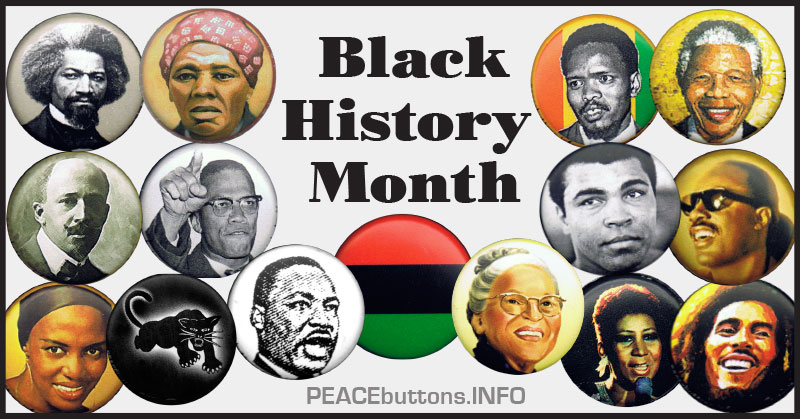
So far, it’s not illegal for us to acknowledge that February is Black History Month, so here we are, doing just that. Ha! There is even some Black History for this very date in Peace and Justice History:
February 1, 1960 Greensboro first day: Ezell A. Blair, Jr. (now Jibreel Khazan), Franklin E. McCain, Joseph A. McNeil, and David L. Richmond leave the Woolworth store after the first sit-in on February 1, 1960. Four black college students sat down at the Woolworth’s lunch counter in Greensboro, North Carolina, and were refused service because of their race. To protest the segregation of the eating facilities, they remained and sat-in at the lunch counter until the store closed. Four students returned the next day, and the same thing happened. Similar protests subsequently took place all over the South and in some northern communities. By September 1961, more than 70,000 students, both white and black, had participated, with many arrested, during sit-ins. On the second day of the Greensboro sit-in, Joseph A. McNeil and Franklin E. McCain are joined by William Smith and Clarence Henderson at the Woolworth lunch counter in Greensboro, North Carolina.
February 1, 1961 On the first anniversary of the Greensboro sit-in, there were demonstrations all across the south, including a Nashville movie theater desegregation campaign (which sparked similar tactics in 10 other cities). Nine students were arrested at a lunch counter in Rock Hill, South Carolina, and chose to take 30 days hard labor on a road gang. The next week, four other students repeated the sit-in, also chose jail.
In light of current events, I thought it’d be good to review how Black History Month came to be. Below is a bit on its beginnings.
Black History Month was first observed as Negro History Week in February 1926, but the inspiration for the commemoration began over a decade earlier through a steady stream of electrifying events, discoveries, and other celebrations of Black excellence. In 1915, American historian Dr. Carter G. Woodson attended the national celebration of the fiftieth anniversary of emancipation in Washington D.C. This event was widely attended and proved to be profoundly inspiring for Dr. Woodson who, later that year, joined forces with A. L. Jackson, William B. Hartgrove, George Cleveland Hall, and James E. Stamps to establish the Association for the Study of Negro Life and History, known today as the Association for the Study of African American Life and History (ASALH 2024). ASALH had the ambitious goal of educating the public about the achievements, inventions, and progress made by Black Americans, and though the Association’s intellectual efforts were remarkable – they began to publish The Journal of Negro History in 1916 and founded Negro History and Literature Week in 1924 – Dr. Woodson had a wider vision of his mission. Wishing to continue to discover and celebrate the history of the Black past, Dr. Woodson announced the celebration of Negro History Week through a press release.
Accounts of the contributions of Black Americans were notably absent from history books, credited to white men, or omitted altogether. Progressive communities and schools were ripe for the rich history that Negro History Week offered. Matching the popularity of the week, Woodson and the Association established an annual theme for the celebration to guide and inspire educators. Weary of those simply wishing to capitalize on a popular event, “Woodson warned teachers not to invite speakers who had less knowledge than the students themselves” (ASALH 2024). Additionally, ASALH expanded their offerings to provide study materials: pictures, lessons for teachers, plays for historical performances, and posters of important dates and people. This cemented the celebration of Black history in schools and communities, and Negro History Week grew in popularity throughout the following decades, with mayors across the United States endorsing it as a holiday.
Negro History Week grew into Black History Month in 1970 under the leadership of Black educators and students at Kent State University and would become a federally recognized event six years later. President Gerald Ford recognized Black History Month in 1976 during the celebration of the United States Bicentennial. He urged Americans to “seize the opportunity to honor the too-often neglected accomplishments of Black Americans in every area of endeavor throughout our history” (Franklin 2022). Today, nearly one hundred years after that initial celebration, it is prudent to reflect on the designed purpose of Black History Month and discover that after all this time, these lessons are still relevant, inspiring, and necessary. As Dr. Woodson said, “Real education means to inspire people to live more abundantly, to learn to begin with life as they find it and make it better” (Woodson 1933).
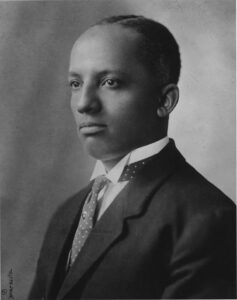
Pictured: Dr. Carter G. Woodson, The “father of Black history”
Photo Credit: Addison Norton Scurlock, Public domain, via Wikimedia Commons
ASALH. 2024. Carter G. Woodson Timeline: ASALH – the Founders of Black History Month. December 19. Accessed January 16, 2025. asalh.org/carter-g-woodson-timeline/.
Woodson, Carter G. 1933. The Mis-Education of the Negro. Trenton: Africa World Press.
==========
All right! So, we see that Black History Week then Month has been around for at least 20 years longer than our current POTUS, who seems to be ignoring the month’s existence. But, there’s no reason any of the rest of we the people have to! Including all history makes the US so much richer in knowledge. Most local historical and cultural organizations are going to have commemorations this month. What fun it will be, and how community-unifying for each of us to find an activity near us, and join in!