
Tag: Food
Trump’s America: Rising Beef Prices And Farmers Going Broke
Some clips from recent Majority Report that I enjoyed.
Some recent information, why I have not posted much even the cartoons, and Ron and I made a supper together but towards the end I couldn’t move with out nearly passing out.
Hi all. Thank you for being here. Thank you to Ali and Randy who keep the blog from becoming a feel bad for Scottie place. Last night I was feeling overwhelmed by the time I went to bed. I got up and told Ron I was going to bed because I was crying and trying to not let it show. He gets so upset if he comes to the office and sees me crying my eyes out. So I went to bed, hoping I could write a story in my mind to distract it / my mind from my damn first 24 years of my life. I got into bed and felt the void racing to cover me. The void is the huge dark emptiness that in my mind is like a tornado or hurricane. In the past Randy has helped me escape it by using him, his name, his person as a handle that keeps the vortex from being able to draw me in, to suck me down, to rip me away.
So I laid in the bed desperately trying to quickly create a narrative, a story that would keep my mind occupied so it would leave the memories and attach itself to the story I was trying to create. Most of the time, not always, but most of the time I can do it. Last night I failed. So in an attempt to quiet my mind and sooth my soul I turned to my saved music. I don’t listen to music much these days, preferring news podcasts and a lot of music I got from Jill and I owe her thanks, because it was some of her songs that helped me survive last night.
The double edge sword of the music is the lyrics and sounds that drew me to them to help me fight back the demons of my childhood gave them a foothold into my mind last night. But the music was working I was beating them back, not giving into the worst impulses, trying to hold on to sanity, and I was gaining ground. I tried to post them as a way to seek help. But for every step forward I was being knocked back. My pain was soaring.
Then Ron came to bed. Just walking in the room he realized what was happening. He turned on lights and moved the cat and asked me to cuddle with him. He took my phone and shut it down setting it on the bed headboard. He held me close before we even turned out the lights. I was struggling to speak and he simply held me until I calmed down. He kept talking to me and sadly I don’t remember what he said, just that I finally felt safe and warm. Then I feel asleep.
In the night I woke up to feed the cat at 03:30 and worried what I had posted in my pain. Then at 06:30 Ron and I both woke up to the cat wanting his window blinds moved up so he could see the kingdom outside he still feels is his domain. He howled until he got his way. I asked Ron is the same trick would work for me and he informed me to not even think of trying it.
Move to this afternoon. I was trying to answer comments and I have not done a real cartoon / meme post in days when at noon I got up to do the dishes. After I got done with them Ron mentioned he really would like me to make the kind of chili I was talking about the day before. I explained it was only an idea but we could try. I had already done the dishes and was needing to sit down but I started to do the chili with 2 pounds of Hamburg.
But the package recipe called for tomato sauce in a small amount. We had tomato sauce in 29 oz cans but not the small size needed. But I had a plan. I took a tomato paste can and added about the needed amount of water and heating it over the stove and stirred it into a nice paste. Now we could start. Sadly I was already wiped out. So I got out my rolling chair that Ron bought me. It is super high and able to let me look down into the highest posts on our stove sitting on the chair.


So the rest just followed. Browning the hamburger, and doing everything that came on after the other. Pictures will be below.
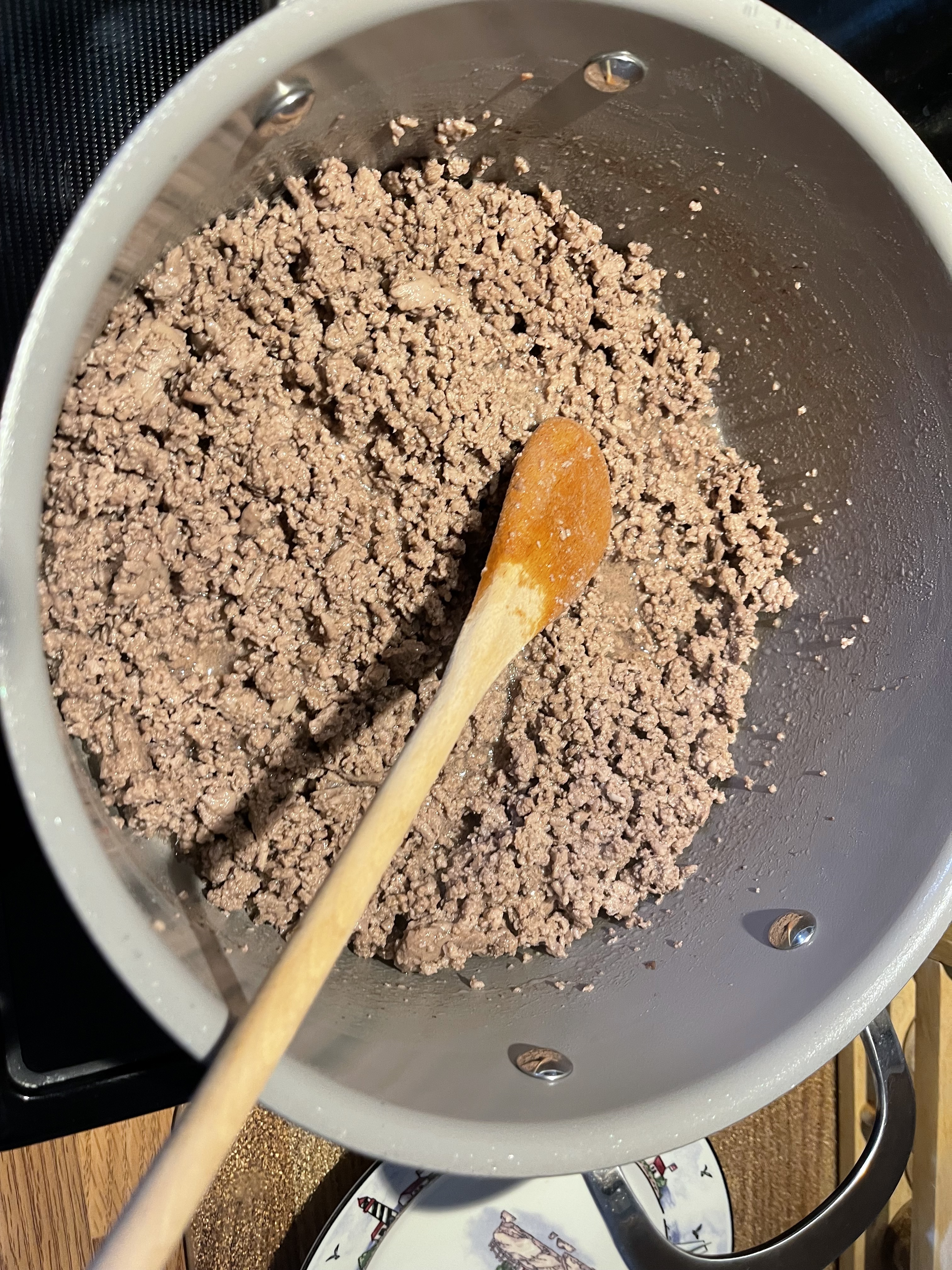
What we needed to decide next was do we add all the seasoning in the box or adjust to our own. I was used to adding them all and then adding my own. So we did. Then I got to playing. A dash of this here and a shake of that there. I added a couple spoons of garlic, which I love the taste of.
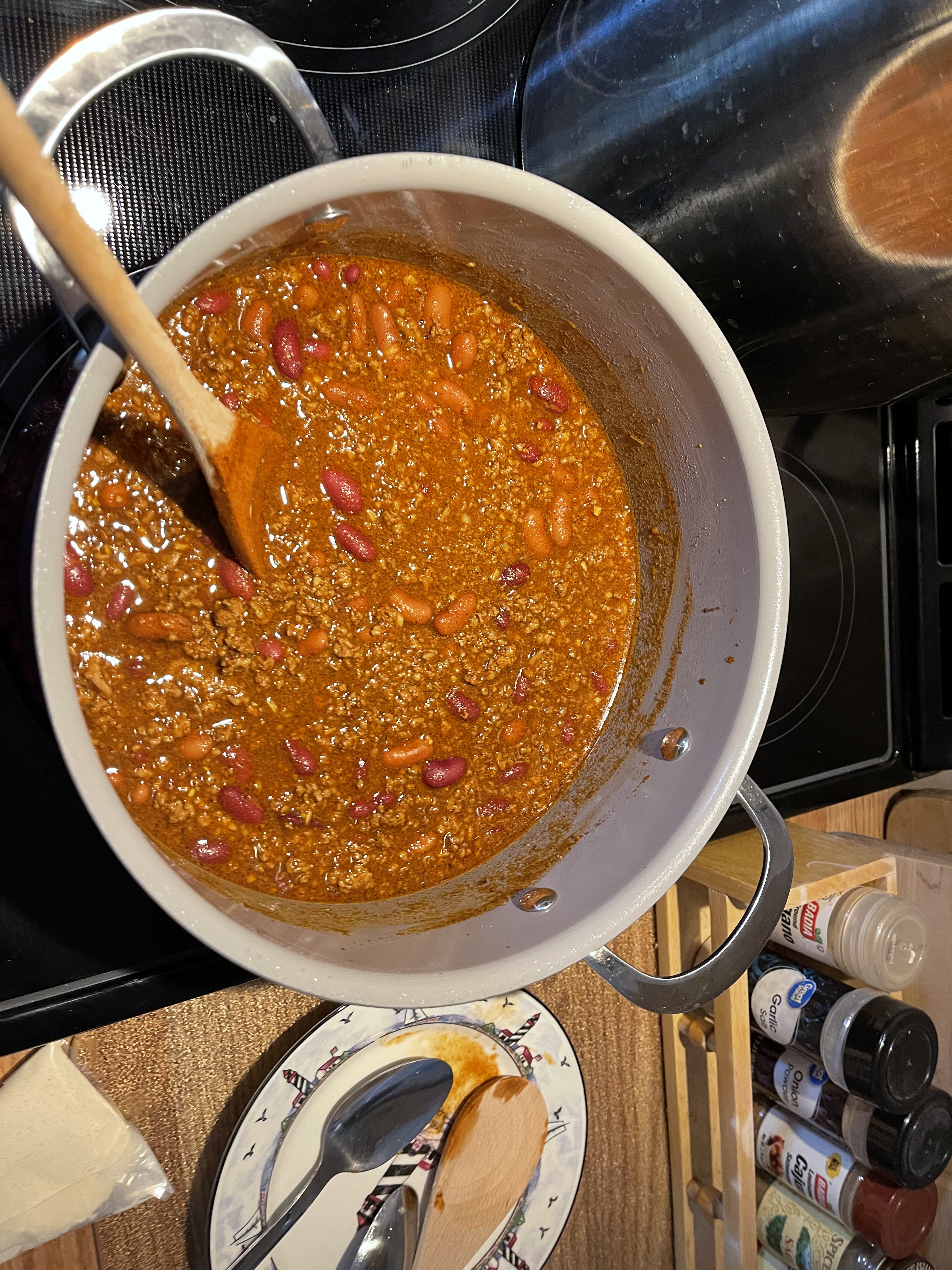

Then I got it to where I had only one thing left to decide, the masa. I had never added it before but I felt I should. What I was hoping was a rich brown smooth creamy sauce that the restaurant chili has and even the canned Wolf chili we get has. Mine did not come out like that. It was good but sadly not creamy reach like the store bought ones or the restaurant kinds. Ron added sour cream to his and said it made a big difference. The chili is not bad, it is very tasty and favorable. It just is more gritty and strong than it is smooth and flowing. Hugs and loves. If you have an idea what to do to make it seem more creamy and flowing brown, then please let me know. Best wishes for all and hugs for those that want them. Scottie

Israel: A Society In Denial
This is incredibly disgusting and horrific. The Israeli media is pushing garbage, lies, and misinformation on the Israeli public. They don’t believe what other news sources say about starving children or women. One Israeli man said he was going into the military in two months and hoped to be sent to Gaza to kill the Palestinians. When asked about the women and children he claimed there were no innocents, that they were all Hamas. He was asked about kids, little kids and babies his answer were they were either Hamas or terrorists or future terrorists. Better to kill the babies now rather than them growing up to hurt an Israeli. Only one couple called for an end to the war. The others demand Hamas release the hostages. The surrounding crowd did not believe them when they said that Hamas was willing to return the hostages in exchange for stopping the war but Netanyahu killed the negotiations. They are as brained washed as Fox viewers and when the truth comes out they will be living in Palestinian land claiming innocence because they willfully did not know of what the military was doing. Oh well water under the bridge they will claim. I am seriously anti-Israel’s government and military. I think they are equal to Hitlers government and supporters. They need to suffer the same fate. Following orders doesn’t cut it. Being Jewish is not a pass for committing genocide. Never again is for all people or it is not for any people. Best wishes for all and hugs for those that want them.
Netanyahu Just BLACKMAILED The West – His INSANE Response To Palestine Recognition
Trump Tariffs Already Screwing American Farmers
Trump Can’t Escape This
News We Can Use
First-of-its-kind grocery store opening in ‘food desert’ Downtown Atlanta
By Don Shipman
ATLANTA, Ga. (Atlanta News First) – A first-of-its-kind grocery store is getting ready to open its doors in Downtown Atlanta — and city leaders say it could be a game-changer for tackling food insecurity.
Azalea Fresh Market is moving into the historic Olympia Building, most recently home to a Walgreens, near Woodruff Park. Crews have been busy sprucing up the space this week with fresh signage and sidewalk cleaning ahead of the grand opening.
What makes the store unique is how it’s funded. The project is a partnership between the City of Atlanta, Savi Provisions, a supermarket chain with multiple Atlanta locations, and Invest Atlanta, an economic development agency. The city invested $3.5 million into the $5.4 million project
City leaders say food deserts disproportionately affect low-income neighborhoods. The grocery store is designed to bring affordable, fresh options right into the heart of downtown.
The investment also includes safety improvements.
“We made a commitment to this location, to Savi and to the residents and businesses of downtown — particularly right here near Woodruff Park. We’re going to make sure that it’s safe,” Atlanta Mayor Andre Dickens said.
People who live, work and study downtown say they’re excited about having healthier choices close by.
“If I have the option and I know it’s going to be just as good, I’ll probably go for the healthier option,” college student Nolan Williams said.
According to Invest Atlanta, the store is expected to generate $15 million in overall economic impact for the area. Plans are already underway for a second location on Campbellton Road in Southwest Atlanta later this year.
Azalea Fresh Market downtown will be open from 7 a.m. to 10 p.m. seven days a week. It’s set to open soon, but an exact date has not yet been announced.
Copyright 2025 WANF. All rights reserved.
 Scottie's Playtime