The two quotes from the article I added just below what I am writing give away the Fundamentalist Christian republican’s goal, which is to make those people they disagree with, that they hate, disappear from society. Their goal by taking LGBTQ+ media out of schools is to make it appear that all kids are straight and cis. No one can be different from them or their beliefs. Everyone must walk lockstep with them, their way is the only way people can live. Holy dictators. Their goal is to erase anyone different from them from the public view, from society. We must not let them do that. Hugs
A controlled production of “knowledge” maintains the marginality of other groups, and it denies exposure to multiple perspectives.
The institutionalization of a hegemonic norm functions to legitimize what can be said, who has the authority to speak and be heard, and what is authorized as the truth.
Former President Donald Trump speaks about border security at a rally at Million Air, a private airplane terminal at Austin-Bergstrom International Airport, Friday October 25, 2024.
“When someone with the authority of a teacher describes the world and you are not in it, there is a moment of psychic disequilibrium, as if you looked into a mirror and saw nothing.”-Adrienne Rich
The United States Supreme Court has agreed to hear a case that could possibly perpetuate the “psychic disequilibrium” that Adrienne Rich laments.
Trump’s Department of Education called the suggestion that rightwingers are trying to ban book a “hoax.”
The case arose from conflicts between those in favor of teaching LGBTQ+ topics in schools and those who believe in so-called parents’ rights on religious grounds when it comes to the education of their children. The case stems from some parents’ concerns about a policy sanctioned by the Montgomery County Board of Education requiring new elementary school storybooks covering LGBTQ+ topics that could be read in class.
One of the contested books is titled “Pride Puppy!” and is about a puppy who gets lost in the crowd during an LGBTQ+ Pride parade.
When the policy first passed, parents could opt their children out of the curriculum, but later, the board reversed that part. In this demographically diverse school district, some Christian and Muslim parents, in particular, objected. I wonder, though, whether they think parents should be allowed to opt their children out of reading age-appropriate stories about Jewish or Asian people, for example.
This case harkens back to one of the earlier curricular programs created in 1991 by the New York City Board of Education. The Children of the Rainbow Curriculum was introduced to first-grade teachers to “assist with teaching about multicultural social issues.” The board developed the program to counter the increase in hate crimes directed against members of marginalized communities.
The curriculum contained 443 pages of suggested readings, activities, and other lectures, all designed to help teachers promote academic and social skills while teaching about diversity.
Unfortunately, the section on families that covered LGBTQ+ people incited enormous criticism. Some opponents argued that it promoted sex and sodomy to kids.
The battle gained significant publicity, and the New York City Department of Education ultimately voted against accepting the entire Children of the Rainbow Curriculum.
And the moments of psychic disequilibrium continued.
Surplus Repression & Anti-Knowing
Of course, parents and other adults have the inherent responsibility of protecting young people from harming themselves and being harmed by others and of teaching them how to live and function in society within our ever-changing global community.
In Freudian terms, we must develop a balance between the individual’s unrestrained instinctual drives and that person’s restraints (repression) on these drives in the service of maintaining society (civilization) and sustaining the life of the individual.
Nonetheless, we must establish a line demarcating protection from control, teaching from oppression, and minimal and fundamental repression from what Herbert Marcuse terms “surplus repression” (that which goes over and beyond what is necessary for the protection of the individual and the smooth functioning of society and enters into the realm of domination, control, and oppression).
Authorizing the “truth”
When I think back on all the crap I learned in high school
It’s a wonder I can think at all
And though my lack of education hasn’t hurt me none
I can read the writing on the wall.
Paul Simon laments in his song “Kodachrome” that his education consisted of neutralizing, meaningless content. “Everything looks worse in black and white,” he sang of the whitewashing of his lessons.
Metaphorically, most schools teach only in black and white, whereas most students want the array of colors Paul Simon wished for: “Those nice bright colors: the greens of summers, makes you think all the world’s a sunny day, oh yeah.”
Unfortunately, Simon’s educational system took his Kodachrome away: the camera film that captured the full spectrum of the rainbow from the brightest reds, oranges, and yellows, to the darkest blues and browns and deepest purples.
Schools across the nation are attempting to function amidst increased book banning and control of course content by state legislatures under the false flag of “parental rights.” It’s all part of the current tide of right-wing takeovers of educational systems.
People on the political right transform terms like “woke” and “diversity, equity, and inclusion” into hate-filled and frightening epithets. In the process, they have driven us away from the underlying purpose of education.
The term “education” is derived from two Latin roots: “e,” meaning “out of,” and “ducere,” meaning “to lead” or “to draw.”
In its original translation and intent, education includes the process of drawing knowledge out of the student or leading the student toward knowledge. This is in contrast to the placing or depositing information into what some educators perceive as the students’ waiting and docile minds, or what the Brazilian philosopher and educator Paulo Reglus Neves Freire termed “the banking system of education.”
Surrounding forces – religion, parenting, schooling, and other types of socialization – often inhibit the maintenance of critical thinking facilities in young and old alike.
Let us take, for example, the Biblical warning in Genesis 2: 16-17, related to the story of the Tree of Knowledge of Good and Evil in the Garden of Eden: “And the Lord God commanded the man, saying, ‘Of every tree of the garden thou mayest freely eat: But of the tree of the knowledge of good and evil, thou shalt not eat of it: for in the day that thou eatest thereof thou shalt surely die.’”
The apples on that tree represent knowledge. When eaten, this “forbidden fruit” unlocks levels of knowing that can more than overturn the apple cart. But more importantly, it can give the knower a full-color spectrum of the workings of the world. We are encouraged, nonetheless, to think only in the black and white determined by those in power.
Figures like the biblical Eve and Greek Pandora, women, are blamed for the downfall of “man.” In fact, they were strong women who refused to be trapped under the thumbs of the patriarchy.
Additionally, the ancient Greek legend of Prometheus casts a cautionary tale on the gifting of knowledge. The chief of the gods, Zeus, punished him for offering mortals the best of the sections from a slaughtered cow while giving the gods the remaining fat and bones.
After an infuriated Zeus took back fire from humanity, Prometheus stole and returned it to mortals, thus turning the darkness from the spectrum of black and white to technicolor once again.
For Prometheus’ crime of returning light and knowledge to humankind, Zeus had Prometheus chained to the Caucasus Mountains and sent an eagle to eat his immortal liver every day, which grew back every night.
Literature and cinema likewise warn of the horrific and often fatal risks of challenging the limitations placed by the powerful on the accumulation of knowledge.
The first film in the “Planet of the Apes” franchise, released in 1968, can be understood as a recreation of the legend of Prometheus. A U.S.-based crew crash land their space vehicle on a strange planet in the distant future amounting to nearly 2000 years advancement on Earth, as they traveled at the speed of light.
The crew, led by Taylor – the Prometheus character – discover that the planet is ruled by a species of apes who possess what to the Earthlings appear as human-like qualities, including speech, high reasoning, and cultural artifacts such as museums, medicine, constructed homes, a judicial system, and written religious and governing scrolls.
A community of humans on this planet, on the other hand, lacks the facility of speech and operates on an animal-like intellectual level. The apes hunt, enslave, and murder humans to keep them from invading their gardens and stealing food and to use them in medical and psychological experiments.
Taylor rebels and protests his treatment by challenging the hierarchical ranking of apes over humans. Two apes listen to Taylor and befriend him, Zira and Cornelius, and they eventually come to believe that what they have been socialized to accept as factual was somehow manipulated and falsified.
Blond-furred Dr. Zaius (Zeus), Minister of Science and Chief Defender of the Faith, knows the truth regarding the origins of his species and the rise and fall of humans through industrialization and the power of the atom, which terminated life as it had been once known. His primary objective has been to keep the fire of “knowledge” away from his ape community and humans.
He attempts to destroy any artifacts and other remnants of pre-nuclear holocaust human society to keep alive the myth of perennial simian superiority. Knowledge, therefore, represents overturning the proverbial apple cart, undermining origin myths, and challenging hierarchal positionings.
These genesis/origin stories are examples of the concept of “hegemony,” a term coined by social theorist Antonio Gramsci to describe the ways in which the dominant group successfully disseminates dominant social realities and social visions in a manner accepted as common sense and part of the natural order.
This controlled production of “knowledge” maintains the marginality of other groups, and it denies exposure to multiple perspectives.
The institutionalization of a hegemonic norm functions to legitimize what can be said, who has the authority to speak and be heard, and what is authorized as the truth.
This was certainly the case in Nazi Germany. In 1933, Nazi stormtroopers invaded, ransacked, and closed The Institute for Sexual Sciences in Berlin, founded by Dr. Magnus Hirschfeld, a Jewish and homosexual sexuality researcher. The Institute conducted early sexuality research and was a precursor of the Indiana-based Kinsey Institute in the United States.
Storm troopers carried away and torched over 10,000 volumes of books and research documents calling the Institute “an international center of the white-slave trade” and “an unparalleled breading ground of dirt and filth.”
Soon thereafter, Nazis and conservative university students throughout Germany invaded Jewish organizations and libraries, confiscating books they deemed “un-German.”
The German Student Association (Deutsche Studentenschaft) declared a national “Action against the Un-German Spirit.” On May 10, 1933, students and Nazi leaders across Germany set ablaze over 25,000 volumes. Joseph Goebbels, the Reich Minister of Propaganda, fired up the Berlin crowd of over 40,000 sympathizers by declaring, “No to decadence and moral corruption. Yes to decency and morality in family and state.”
In 2018, we witnessed anti-LGBTQ+ Christian crusader Paul Dorr check out four LGBTQ+-inclusive children’s books from the Orange City, Iowa Public Library and burn them in a 27-minute October 2018 video diatribe on Facebook. – Dorr is the founder of Rescue the Perishing, a group “contending against moral evil to advance the Kingdom of Christ.”
The books in question were Two Boys Kissing, by David Levithan; Morris Micklewhite and the Tangerine Dress, by Christine Baldacchino; This Day In June, by Gayle E. Pitman; and Families, Families, Families!, by Suzanne and Max Lang.
In his video rant, Dorr argued that Two Boys Kissing was “designed to get 12-to-13-year-old boys to start having homosexual sex together.”
The fight for all the colors
To build off of Pastor Martin Niemöller’s famed poem:
First they came for Leaves of Grass, and I did not speak out — Because I was not gay.
Then they came for Stone Butch Blues, and I did not speak out — Because I was not a transgender person.
Then they came for Critical Race Theory and Beloved, and I did not speak out — Because I was not Black.
Then they came for Maus, and I did not speak out — Because I am a Christian and not a Jew.
Then they came for books representing my experiences and identities — and there was no one left to speak out for me.
Subscribe to the LGBTQ Nation newsletter and be the first to know about the latest headlines shaping LGBTQ+ communities worldwide.
You know this is what the fundamentalist religious right wants to do this here. This is one of the reasons the maga right loves Russia and Putin, he hates who they hate. He wants a straight cisgender stereotypical white society the same as they do. Hugs
Russia’s Interior Ministry has plans for a sweeping electronic database of LGBTQ+ people in the country, Meduza, an independent Russian news outlet, revealed this week.
Citing anonymous sources at the Interior Ministry, the outlet reported that the Orwellian plan has been in discussion since last year after Russia’s Supreme Court outlawed the so-called “international LGBT movement” as an “extremist organization” at the urging of President Vladimir Putin.
Raids and arrests at LGBTQ+ clubs have become commonplace across the country.
The database will be a “large-scale” system to track members of the LGBTQ+ community at large, according to sources.
The plans were corroborated by Dmitry Chukreyev, an official with the Civic Chamber of Yekaterinburg, Russia’s fourth largest city. He said police have been keeping informal lists of LGBTQ+ individuals since the Supreme Court ruling was announced.
In 2024, police conducted at least 42 raids on LGBTQ+-friendly venues across Russia, according to an investigation by independent news outlet Current Time and human rights organization Sphere. Beatings, forced confinement, and sadistic humiliations based on sexual and gender identities are regular features of the sweeps.
Russian officials and state-aligned media regularly describe Russia’s LGBTQ+ community as a network of “paramilitary groups” calling for an “open gender war,” who engage in “dehumanization” and “devil worship,” the outlet reports. Officials and media credit security forces’ actions with “suppressing” anti-state activity.
The raids, in addition to intimidating the queer community at large and forcing the closure of several venues, have provided security officials with information that would supply an electronic LGBTQ+ registry.
An employee at a Siberian queer establishment told Meduza, “Security forces copied the entire database from the computer where we keep track of reservations,” obtaining information about hundreds of clients. Fingerprints and mouth swabs were collected from visitors during a raid the Eden club in Chelyabinsk, and employees and patrons at the Orenburg club Pose were forced to state their registered residential address on camera.
At a house party raided by security forces in Leningrad Oblast, guests were forced to surrender their passports and unlock their phones; if someone refused, the others were subjected to collective punishment and forced to squat.
According to human rights activists, such raids are also aimed at exposing LGBTQ+ government officials. The organizer of one queer-friendly event in the Urals region revealed police who raided the venue hoped to “catch deputies [officeholders] and other significant individuals” at the event.
While security forces continue to collect data in ever-more sadistic operations, progress on a full-scale LGBTQ+ registry has been hampered by Putin’s other current obsession: the expansion of Greater Russia through his war on Ukraine. Forces assigned to that conflict are draining the ranks of police who would otherwise be hunting down members of the “international LGBT movement.”
But the raids continue to produce results.
One sweep at a restaurant and club in Gorno-Altaysk last year yielded data on 80 patrons and staff alone, an employee said.
“We know all of you now,” security forces repeated as the raid dragged on.
The bills author said the bill was “designed to restrict government’s ability to burden anyone’s religious freedom.” What they really mean is it would allow a religious person the right to hurt others, to be a jerk, to be an asshole to other people. It is a bill to enshrine the right of someone to disregard the rights and equal treatment of those the don’t like. Anytime one of these hate bills come up just replace the LGBTQ+ with the word black, or Jewish, or even white males and see if it still sounds like a good idea. Hugs
latest push in a long-running effort from right-wing policy groups to “vilify people based on their sexual orientation or gender identity.”
“They’re trying to elevate so-called ‘religious liberty’ above all other civil rights and claim that someone’s religious belief allows them to dominate the laws, the policies, the practices of the government and the rest of society,” Dickson said.
Arkansas ACLU Executive Director Holly Dickson testifies at the Capitol.
A bill allowing for discrimination against LGBTQ Arkansans in housing, employment, education and other areas passed out of committee Tuesday and will be heard next by the full Arkansas House of Representatives.
Rep. Robin Lundstrum (R-Springdale), the bill’s lead sponsor and a longtime crusader against LGBTQ rights, said it’s “designed to restrict government’s ability to burden anyone’s religious freedom.”
The bill would “prohibit the government from discriminating against certain individuals and organizations because of their beliefs regarding marriage or what it means to be female or male.”
“It helps protect religious organizations, places of worship, religious schools and religious ministries from government discrimination,” Lundstrum said, adding that it would protect a cake maker or wedding venue or anyone “asked to solemnize a marriage that they do not agree with.”
The bill would shield state government employees from being reprimanded in any way for engaging “in expressive conduct based upon or in a manner consistent with a belief about biological sex or marriage,” both at work and off the clock.
The state would not be able to do anything disciplinary to an employee making homophobic or transphobic social media posts, for example.
The full scope and implications of the bill aren’t clear, but Kaymo O’Connell, a transgender student from Little Rock, told lawmakers this bill clears the way for people to discriminate when making employment decisions.
Other critics of the bill, including the American Civil Liberties Union of Arkansas, say the bill is poorly written, allows and encourages discrimination against LGBTQ Arkansans and violates multiple federal laws and protections.
Holly Dickson, executive director of the ACLU of Arkansas, said the bill is the latest push in a long-running effort from right-wing policy groups to “vilify people based on their sexual orientation or gender identity.”
“They’re trying to elevate so-called ‘religious liberty’ above all other civil rights and claim that someone’s religious belief allows them to dominate the laws, the policies, the practices of the government and the rest of society,” Dickson said.
HB1615 is supported by the First Liberty Institute, a national right-wing extremist group, and the Arkansas Justice Institute, the legal branch of local right-wing extremist group the Arkansas Family Council.
Lundstrum was joined by legal representatives from both groups in committee today.
“Whether or not this bill passes it has already harmed Arkansans because, yet again, we are saying some people are worthy and other people are unwelcome,” Dickson said.
Rep. Nicole Clowney (D-Fayetteville), who voted against the bill, noted that it’s a clear case of unconstitutional viewpoint discrimination.
A Mississippi Gulf Coast restaurant came under fire after posting a video offering a free food deal to straight people only. The LGBTQ community is boycotting the business, and the owners’ stances on the matter have been erratic, swinging from backing the decision to apologizing before once again justifying their actions. Now, they’re defending the move.
On Tuesday, March 25, Darwell Yeager III and Nettie Mechelle Yeager shared a free food deal at Darwell’s Happiness Cafe in Long Beach.
Both spelled out that trans, lesbian and gay couples could not get the deal. Only heterosexual couples, regardless of how long they’d been together. In the following days, the owners have invoked President Donald Trump’s goal to “end to all this wokeness” and briefly shared a MAGA discount before deleting it.
A Mississippi eatery that appeared on Guy Fieri’s “Diners, Drive-ins and, Dives” is facing backlash after its owners posted a video offering “something free” to only straight couples that stopped by to eat at the Cajun joint on Tuesday.
“If you come in and you’re a couple … husband, wife, boyfriend, girlfriend, guy, girl couple, the real kind of couple,” Darwell Yeager said before his spouse cut in and said, “Because we don’t do the trans or the lesbian or gays, I’m sorry.”
“When you come in for the next hour and a half and you are a couple, can-produce-a-child couple, we’ll give you something free,” Darwell Yeager concluded in the since-deleted video that has spread online.
There’s a lot more at the first link, including multiple quotes from the couple’s now-deleted Facebook posts. The screenshot above is from a local station’s regular feature, “In The Kitchen With Darwell’s Happiness Cafe.” You should watch the video below.
MS restaurant owner defends anti-LGBTQ video offering free food after deleting apology https://t.co/m45OgjNHXF
OK again it is another old one. I should have saved the Disney board standing up to the hateful anti-LGBTQ+ anti-DEIA and the board voting to keep the policies and associations even as they did agree to end the idea of a trans character in a show and do more conservative story lines / characters. But think how tRump at every rally and in front of every courthouse claimed Biden was weaponizing the DOJ and government against him. Remember how bad it said it was that Biden was using the government against his enemies which meant every republican criminal. But now tRump is doing it and his maga cult that used to be called republicans are fine with it. Just like the debt and debt ceiling doesn’t matter now under tRump and did not matter under the first tRump term, but during Biden’s term those two things were constantly shouted by maga on every right wing media show. It is like the party who used to champion family values and law and order was never a believer in those things. Hugs
The US Federal Communications Commission is prepared to block mergers and acquisition proposals from companies that promote “invidious” DEI policies, according to chairman Brendan Carr.
The move could threaten billions of dollars worth of deals in the communications sector, with Carr specifically mentioning Paramount Global’s merger with Skydance Media, Verizon’s acquisition of Frontier Communications, and T-Mobile, which is seeking to purchase US Cellular Corp.’s wireless operations.
“Any businesses that are looking for FCC approval, I would encourage them to get busy ending any sort of their invidious forms of DEI discrimination,” Carr said in an interview Friday.
Federal Communications Commission Chairman Brendan Carr is vowing to use every tool at his disposal to eliminate Diversity, Equity and Inclusion programs from the companies his agency regulates, and has enlisted the help of a high-profile conservative activist in the effort.
Carr met with activist Robby Starbuck on Wednesday to discuss ways the agency can use its enforcement powers to stamp out DEI in the telecommunications sector. The two discussed ways the agency can enforce existing civil rights laws along with President Donald Trump’s recent executive orders targeting DEI in the public and private sectors.
“It’s my hope that this meeting is a wake-up call for businesses within the FCC’s purview that the days of violating the law with DEI are over,” Starbuck told Fox News Digital.
Robby Starbuck has successfully bullied multiple major firms into dropping LGBTQ support with threats of national boycotts.
Since becoming FCC chair, Carr has launched investigations into NPR, PBS, and the east coast flagship broadcast affiliates of ABC, CBS, and NBC.
Carr first appeared here in 2022 when he supported Trump’s demand to ban TikTok. Trump famously reversed on banning TikTok once he found out that GOP megadonor Jeffrey Yass holds a $15 billion stake in the platform.
In 2023 Carr accused then-Rep. Adam Schiff of running a “secret and partisan surveillance machine.” He has also accused the World Health Organization of “beclowning itself” with COVID mitigation advice.
In 2020, Carr told Fox News host Lou Dobbs that “far-left” social media platforms had “hopped from hoax to hoax to hoax” in attacks on Trump.
Carr is a vehement opponent of Net Neutrality and opposed efforts to block Elon Musk from purchasing Twitter.
Last year Carr wrote a full chapter in the Heritage Foundation’s book in support of Project 2025.
The above is the tRump admin trying to get other countries with higher standards in their food to send us their eggs to protect tRump from the soaring prices.
This scares me because the fundamentalist and white cis straight male supremacists will demand it be used here. First on trans people to protect the children then expand it to the entire LGBTQ+ as they have been doing everything else they tried to use against trans kids / people.
Famed Navajo Code Talkers Axed From Pentagon Sites
Yes I know that these were restored. But now tRump is demanding Vance who is on the board of the Smithson and the National Zoo to remove all illegal (purge) references to race, gender, the LGBTQ+ and so much more. He is demanding a national landmark the US government doesn’t control to toe the fundamentalist straight cis white supremacy Christians agenda to deny anything but them into history or society. We really are seeing a complete take over of society and we must do all we can to prevent the rollback of all rights and equality of anyone not white straight cis Christian males. This is horrifyingly scary. Because these hate groups have learned if they can control information, control education, control what is considered good or bad by their standards they can force the youngest people in the country to voice that belief and grow up to enforce it. It is what theocratic Islamic nations do. Are we now a nation taken over by theocratic Christian fundamentalist demanding a change in even the constitution to force everyone to follow their god and their rules? Please kill me first.
Every accredited organization except those directly driven by fundamentalist religiously motivated agree this is simply torture. The religious just simply refuse to believe sexual orientation is not a choice and no one wants to be like that no matter what has to be done to change it. Including electroshock therapy to the genitals. Think of yourself, gay straight, or any other orientation. If you are cis and straight, how much conversion therapy would it take to make you believe you were gay / lesbian and desire that. How could who you are attracted to be changed. That all comes from the idea that it is a mental illness and a sickness that needs to be cured. Which the majority of medical organizations reject, agreeing it is an inborn part of a fetus development. Plus if you could change a sexual orientation … look at my childhood. I was forced to please sexually both males and females. But the only rapes that totally crashed me in the military was the one by a woman with more rank than me who demanded I have sex with her … four times. The last time I was so upset and humiliated that I ran nude up the stairs of the housing unit for higher enlisted and pounded on my soon to be E-7’s door. I was sobbing incoherently. I have been raped all my life and was able to stand that. Why did what this woman force me to do reduced me to that state? Because it was against my very nature of who I was. I was having same sex relations with another young guy and loving it. What she was forcing me to do was against everything I felt inside. That is what the people of these gay conversions want to do.
Some of them think that being gay is a choice because … well when did they decide instead of men they would like to have sex with women? No they just felt it, but what gay / lesbian people feel is not valid and must be forced to change. The rest of this group feels their interpretations of their view of what their god wants must be enforced on everyone even those that don’t follow their god. Because it is their god and he must be pleased because their god hates what they hate. Even if it is not in the bible or they misunderstood it, their hate preacher told them it was so. They can not let others live their lives, everyone must live by their church dictates. Why??? Because only that way their god will love them? I am an atheist that is willing to let religious people believe as they wish as long as they don’t try to force their beliefs on others. You do you … but why can’t they do the same. They insist that no one can be different from them and their beliefs. That is scary just that they think like that and more that they are now running the US government.
PS. When James was a newly teen of 13 his parents went to the Florida Keys with a group of us. They always stayed apart even though they asked to be part of the caravan of RV going. Well I caused an issue. His … maybe abusive parents had lots of tattoos and were highly Catholic religious … even had a statue of the mother Mary in the entrance of their home. Yes the husband ruled the house and told the wife what she would do at all times. Which included the abuse of the child which is where we came in. In a year or so after this even the boy started staying at our home because he was not allowed home until the mother was there. I had seen a young kid come in with a Mohawk. The boy had his hair shaved on both sides of his head and long in the front and back. We had already talked to their son at our table because the parents they were trying to force the boy to get Christian tattoos.
When I spoke up and said there is …. next hair cut … it will look grand on him. His stepdad exploded and said he wouldn’t ever allow the boy in the house with that and he would hold him down and shave all his hair off. As anyone can imagine I got triggered, I had been held down and had my hair cut. I flew up from the table as Ron was grabbing at me and yelled you want him to have tattoos which is against the bible but a simple haircut which can be changed or grow back and has no mentioned in the bible upsets you so much you’re threatening the kid. I loudly said, “What the fuck is wrong with you”! They took the boy from our table and left his meal uneaten. I was furious. Others who did not know of my childhood tried to calm me down. The family of the boy left that day from our group at the campground. Next time the boy came to our home his hair was cut short and the parents never went on another trip with us. Hugs
Again an attempt to turn the country into a while male cis straight only nation. How much clearer can it be. And all these republicans or most of them are fundamentalist Christians who were funded by their church in a steal run to get elected. This not what the publican wants. But these republican fundamentalist groups understand … politicians can force change in public opinion if they support something loud and forcefully enough. Which is one why Kamala Harris l think lost the election, the democrats refused to respond to the attacks on trans people fearing it would hurt them. That is how you bring people along to a new understanding. The republicans are doing it in reverse of what the progressive movement did with government support in the early 2000s. Now that democrats have retreated only the hard right republicans are getting their voices heard returning the countries view to pre-rights for LGBTQ+ people. Hugs
Canada is furious at tRump for the bullying treatment they are receiving. But Canada is not a small country that tRump can bully with impunity. The border is a treaty. tRump has no legal authority to violate it, especially for his personal gain. Ask yourself why tRump and crew want Canada to be only one state? It is made up of thirteen administrative divisions: ten provinces and three territories. Why not bring all of them in to one big country. Because that would wipe out the republicans, they wouldn’t win elections. Canada is far more progressive than the US. But again why does tRump want Canada. Because they have a much higher standard of living, longer life expectancies, the government works much better for the people than in the US. It would stop people in the US from pointing to the north and saying … “see they understand how to do it, why can’t we”. Now tRump is on to something great he is just too stupid to realize it. I would love to see the three major countries in the Americas join as one state, with equality and inclusion of all. Something like the EU but closer. Eventually it could include the lesser nations. Think of the ways these countries could help build a better future for all if it could be one country. But tRump doesn’t want Mexico because those people are mostly brown in his mind, Canada is white in his mind. He should have watched more Star Trek. Hugs
Stop the testing tRump demanded during his first term. If we don’t admit the bad thing exists we can pretend it doesn’t hurt us. Right. Tell that to every frightened child. The free tests are very important to people on a limited budget and it is a way to keep co-workers safe. If these people can test themselves before they go to work then they might not spread what they have to their friends, family, and fellow workers. In the story after this one is about a pregnant Texas woman unvaccinated who had measles and never told the hospital staff when she went in to deliver her baby. She exposed every one of the newborns there, she exposed all the woman who gave birth, their families and the staff. All of them should sue her if any of the newborns have issues or die. These people are so stupid. The US used to have massive infant / child mortality over measles. If it did not kill you, like covid it can leave lasting organ damage. It will make the other newborns getting their vaccinations in question. Selfish people who have not lived through the horrifying consequences of these preventable diseases, so they ignore history and science. How many children need to needlessly suffer for them to wake up? Hugs
The Governor and Lt Governor have referenced “measles’ on their Twitter 0 times. Dan Patrick has however posted about renaming the New York Strip the Texas strip, served with Gulf of America shrimp, 5 times”.
I love how people who never served in any branch of the military feel they know all about what it takes to do so. I love that people who claim to honor the Vet’s and then cut all funding that would actually help veterans and military people. It is like the pro-life crowd that claims they need to erase the LGBTQ+ people from society to protect the children then slashing all funds for feeding and caring for those very same children. Hugs
Study after study has been done by both serious military leaders and hate groups. It doesn’t matter who does a serious study of LGBTQ+ people in the military as they all show that LGBTQ+ are great assets for the military that increase military effectiveness. I have often told the story of how my sub unit begged me to reenlist when I was saying good by the site went down and I was the one that got us back on the bird. But the new company commandeer was a homophobe Christian and he told me he would destroy me if I reenlisted. The unit lost a grand technician with a great future in the military due to bigotry. Compare the personal life of Pete Buttigieg a gay man who was in the military, seen action in Afghanistan and is in a stable same sex marriage with children to the life of the new straight cis Christian Nationalist Pete Hegseth. Hegseth often called kegseth by late night TV hosts, has married and devoiced several times currently on his third marriage, he has been married three times, his first wife, who he admitted to cheating on five times, is Meredith Schwarz. He is also stepdad to Rauchet’s three children so Trump’s appointee for Secretary of Defense has four biological children and is stepdad to three. He is credibly accused of being a drunken jerk who harasses women, has committed domestic violence on one of his wives. Really a moral guy compared to the gay guy though right because he has the right religion and is straight cis. Hugs.
Read the full article. The Washington Times is a far-right outlet founded and owned by the Unification Church – which is better known as the Moonies. Surely homocons Scott Bessent and Richard Grenell are thrilled with a no-gays symbol.
My but all those pesky freedoms in the constitution being thrown away as fast as possible. Freedom to protest the goverenment, the freedom of the press. You know the very things keeping the government in check. Look the democrats said the project 2025 was designed to destroy democarcy and install a authoritarian dictatorship such as Russia or Hungry. Wake up and act because tRump / republicans want to make it illegal to do anything that is not supportive of the cult leader. Think about what is being protected in the stories below, it is the profits of the wealthy and the ability of the cult leader to simply ignore any law or normal decency that displeases him. Hugs.
I’ll be reposting this on many stories I’m sure… “Congress shall make no law respecting an establishment of religion, or prohibiting the free exercise thereof; or abridging the freedom of speech, or of the press; or the right of the people peaceably to assemble, and to petition the Government for a redress of grievances.”
The setting was part of an effort to emphasize the power of the institution Mr. Trump controls through loyal and compliant appointees.
CNN’s Jake Tapper just noted on-air that in the same breath in which Trump raged about a “weaponized” justice system, he vowed to himself weaponize that same system against reporters and outlets that serve up anything other than lavish praise.
Think about this :
A convicted felon lectures the Dept. of Justice on what should or should not be ‘allowed’, – having just pardoned over a hundred other convicted felons.
Alice in Wonderland would be embarrassed.
All this is carefully planned and orchestrated.
Everything Trump is doing almost exactly mirrors what Orban did to take control in Hungary. In fact, it’s uncanny how similar the takeover is.
If you want to see what Trump does next, look to Hungary.
tRump has a problem. First he promised he could solve this before being sworn in to office. Now he talked tough and attacked Ukrainian leader Zelenskyy while saying he would hold Putin to the agreement with the strongest sanctions / efforts. Yet when Ukraine agreed to a cease fire and Russia did not … where was tRump’s big tough talk. He back tracked and demanded that Ukraine give in more. Now when Putin simply used the pause to attack and take over a large part of the region in the fighting, tRump is silent on his promises to make Putin agree to the cease fire. In fact again he attacks Zelenskyy as the real problem and the other countries supporting Ukraine. He guys if you just stop supporting Ukraine and agree with the US / Russia we can stop this war right way. He will not and never can say a bad thing about his boss Putin, he has been compromised and is desperate to change reality. Hugs
Along with the above, those that claim tRump is not a racist simply never worked with / for him and don’t watch what he says about people. Remember that he wants only white South Africans to be able to come to the US on a fast track, he wanted to annex Canada but not Mexico who he has accused of sending the US rapists and murders, he asked in a meeting why we can’t get more European white people to move to the US. His company was sued by the US government which won the case for not allowing black people to move into his apartment buildings. Any claim tRump is not a bigot or racist denies reality. In tRump’s mind and many of his racist white supremacist whites must always be in charge over those not white. Hugs
with Mr. Trump having accused Mr. Ramaphosa’s government of discriminating against South Africa’s white minority
Trump had already issued an executive order last month cutting all funding to South Africa over some of its domestic and foreign policies. The order criticized the Black-led South African government on multiple fronts, saying it is pursuing anti-white policies at home and supporting “bad actors” in the world like the Palestinian militant group Hamas and Iran.
How long before Trump calls for invading South Africa? Rather obviously, this was done as a favor to Elon Musk, who is wildly unpopular in his home country.
Read the full article. That Trump’s so-called antisemitism czar is merrily retweeting notorious anti-Semites is classically Trumpian. Terrell last appeared here in January when he declared that Los Angeles’s “DEI firefighters have no intention of putting out those wildfires.” Yesterday Terrell called for a new federal commission on “anti-white bias.”
Again look at what these countries have in common. Being not white is OK if you are wealthy but if you are not, being not white is a ban from tRumpstaia. Hugs
In those cases, affluent business travelers might be allowed to enter, but not people traveling on immigrant or tourist visas. Citizens on that list would also be subjected to mandatory in-person interviews in order to receive a visa. It included Belarus, Eritrea, Haiti, Laos, Myanmar, Pakistan, Russia, Sierra Leone, South Sudan and Turkmenistan.
This one is so clear. The criminal is demanding his crime files never be released. Why? If he was as innocent as he claims he is why not release the files for the public to see? Because he was guilty as hell and this judge was compromised and working with the tRump team to do everything possible to stall the case until possibly he could be reelected making the charges go way. He was guilty. Look the facts are clear, he had the files, he was asked to return them, he refused, then told the government he did not have anymore, the government went into his domicile and found he did have them. What never came out was why he wanted so badly to have these files that was reported he picked himself and why he was desperate to hold on to them. Everything I have written is fact! It is reality! So apparently there is so much more in those files that tRump is terrified will come out. Why? again if he is innocent then let the files show it. But he hides and wants the files hidden and destroyed. Hugs
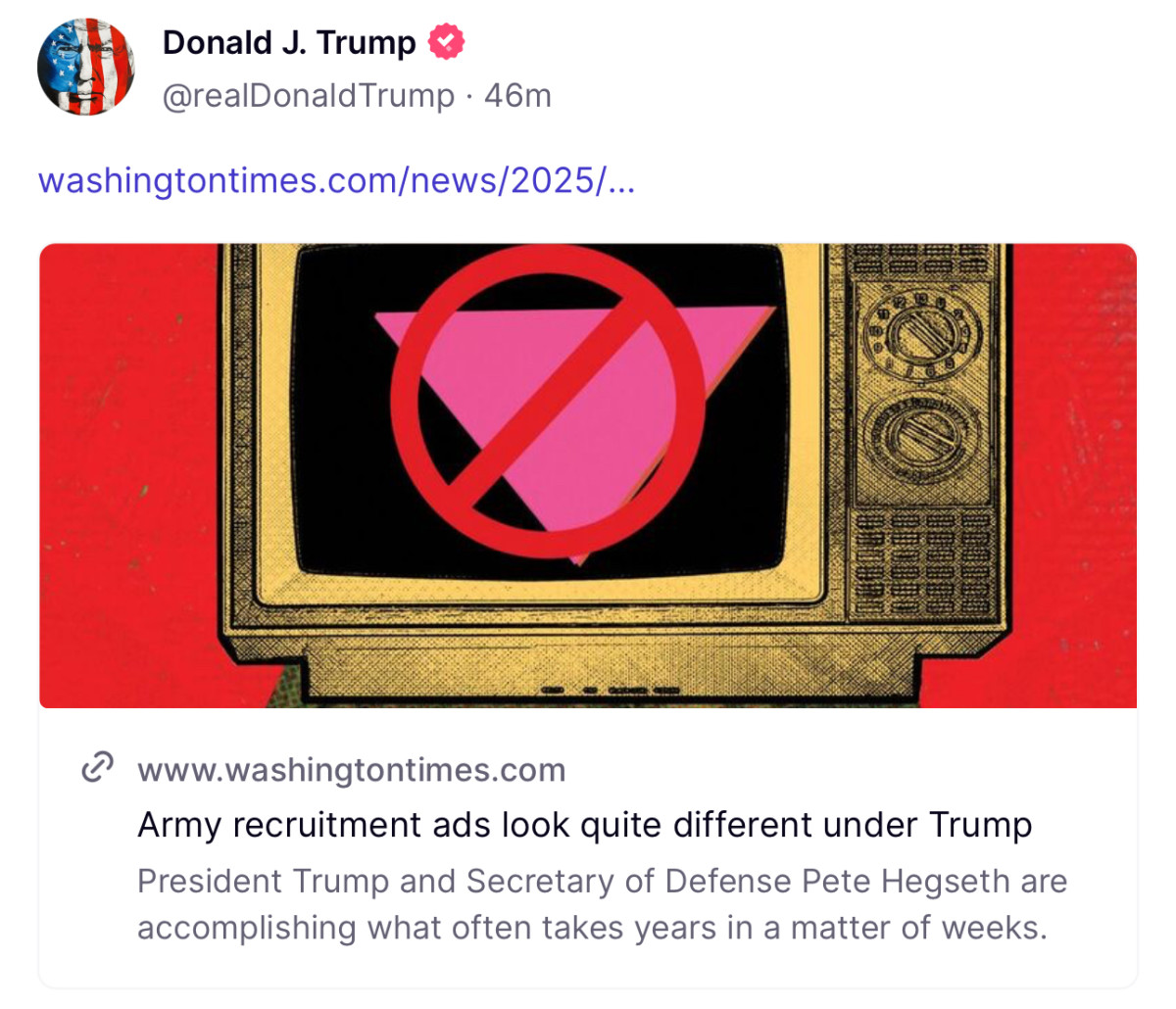
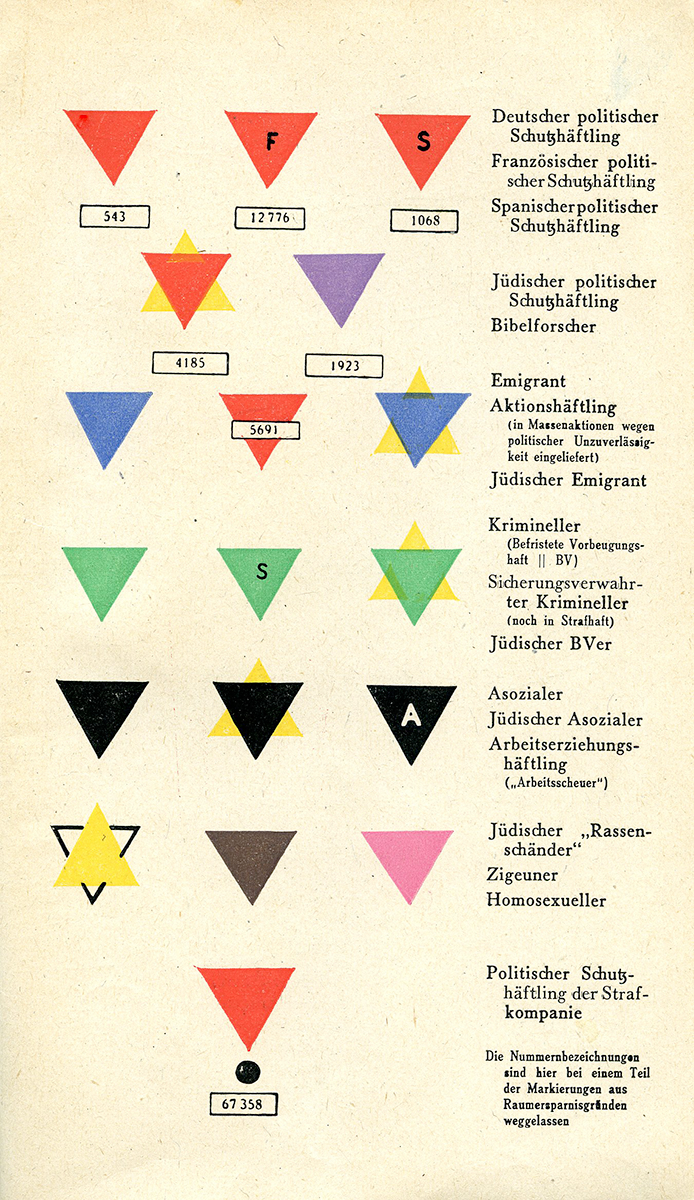
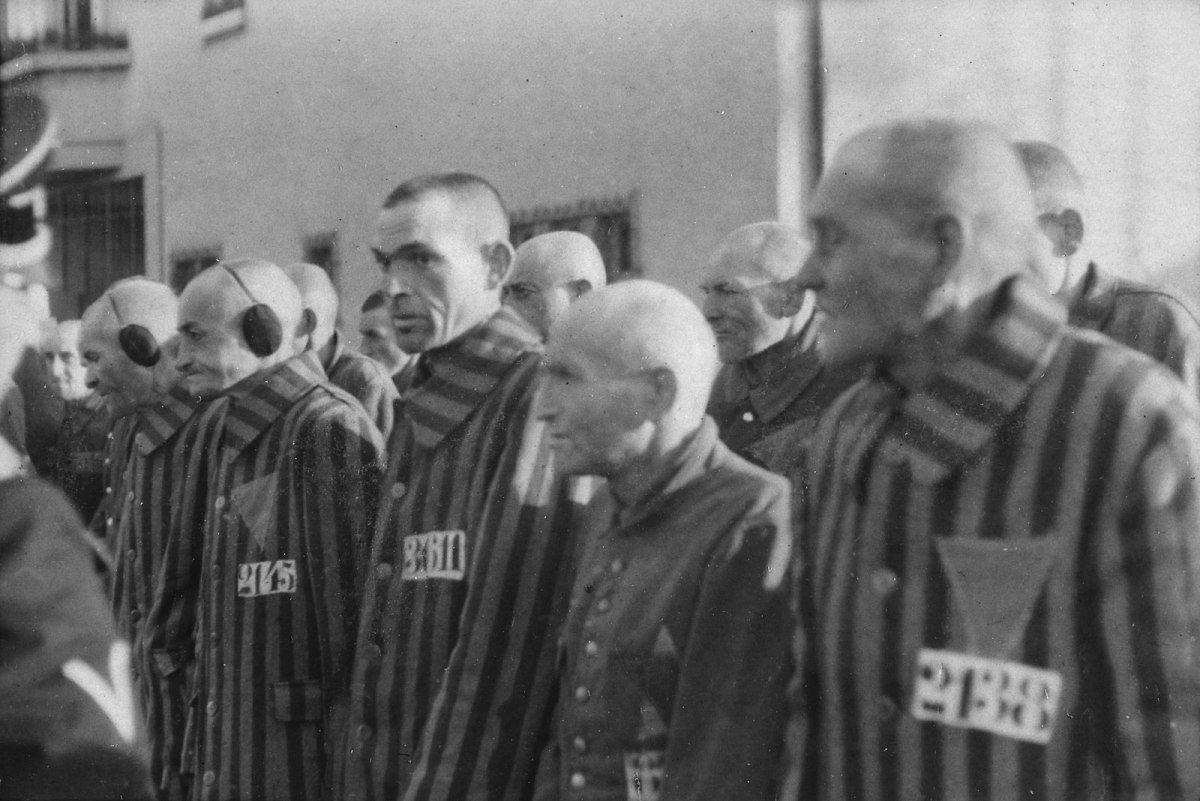
Trump posted an article to his Truth Social account this weekend featuring a deeply troubling image: a pink triangle—the Nazi-era symbol used to identify and persecute gay men in concentration camps—covered with a red prohibited sign. Historically, the LGBTQ+ rights movement reclaimed the pink triangle as a symbol of resistance, pride, and remembrance.
Trump
Truth Social
The article itself titled, “Army recruitment ads look quite different under Trump,” published by the Washington Times praises Trump and Defense Secretary Pete Hegseth for refocusing the military on “lethality” and reversing Biden-era policies that embraced diversity, including ads featuring LGBTQ+ soldiers.
Holocaust Museum Exhibit of Nazi concentration camp badges
Max, Wikipedia Commons
The image, placed in the context of military recruitment, strongly suggests a rejection of LGBTQ+ service members, at least in the terms of recruitment, under Trump’s leadership.
Military ads recruitment illustration
Washington Times
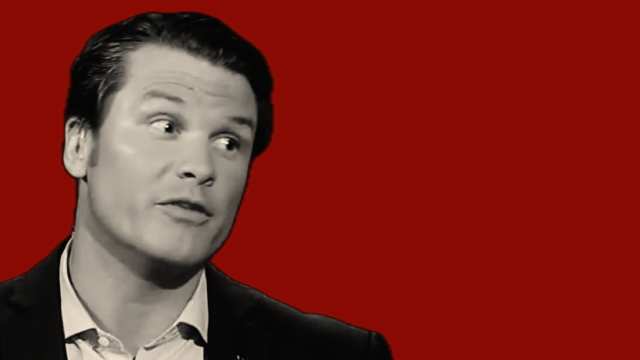
Trump’s choice to amplify such an image is particularly alarming given Hegseth’s past statements.
Prisoners wearing triangles in the concentration camp at Sachsenhausen, Germany, December 19, 1938
Heinrich Hoffman Collection / NARA
He has long opposed LGBTQ+ inclusion in the military, previously criticizing the repeal of Don’t Ask, Don’t Tell.
Pete Hegseth Lamented Don’t Ask Don’t Tell Change, Women in the Military
Now, under his leadership, Trump appears to be reinforcing the idea that LGBTQ+ individuals are unwelcome in the armed forces—not just through policy but through amplifying symbolic messaging with disturbing historical roots.
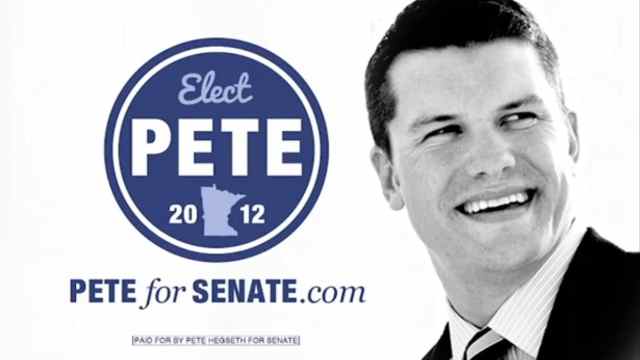
Pete Hegseth Campaigned to “Uphold Traditional Marriage” During 2012 Senate Run
Trump’s amplification of a Nazi-era symbol to promote this shift sends a message signaling a return to exclusionary policies that many believed were left in the past.

 Former President Donald Trump speaks about border security at a rally at Million Air, a private airplane terminal at Austin-Bergstrom International Airport, Friday October 25, 2024.


 Arkansas ACLU Executive Director Holly Dickson testifies at the Capitol.