
Please watch. As she says the site is called Dunning Kruger and states it is not fake news or lies because it is totally fictional and made up. But tRump believes it. Hugs
Tag: Health
Health News Updates
Infant formula botulism cluster, black box warning for HRT, flu is waking up, new blood pressure guidelines, and more by Katelyn Jetelina
This is your weekly Dose. Read on Substack
The shutdown may finally be coming to an end. Our health care costs, unfortunately, will not. I’ll be back on Wednesday with a deep dive into just how spectacularly absurd our health care system has become.
In the meantime, RSV and flu are picking up speed, and a concerning infant formula recall has been linked to a rare botulism cluster, thanks to a small but mighty team in California. The FDA is expected to remove the black box warning from hormone replacement therapy—a move that’s scientifically sound but bound to spark drama from HHS. We also have new blood pressure guidelines that could make prevention a lot more personal. And amidst it all, a few more pieces of genuinely good news to end on a high note.
Let’s dive in!
Disease “weather” report: RSV and flu gaining momentum
It will take some time for the CDC data systems to ramp up again after being offline for over 40 days. For now, we’ll continue to rely on the alternative sources, such as Dr. Caitlin Rivers’ updates and the PopHive dashboards.
RSV continues to climb slowly but steadily, especially among children under five. National growth is still linear—not yet exponential—but that acceleration could occur at any time.
The flu remains relatively low but is beginning to increase, particularly among young children. As Dr. Rivers notes, “Hawaii has moved to moderate activity, Arizona has surpassed its seasonal baseline, and New York cases jumped 49% in the past week.”
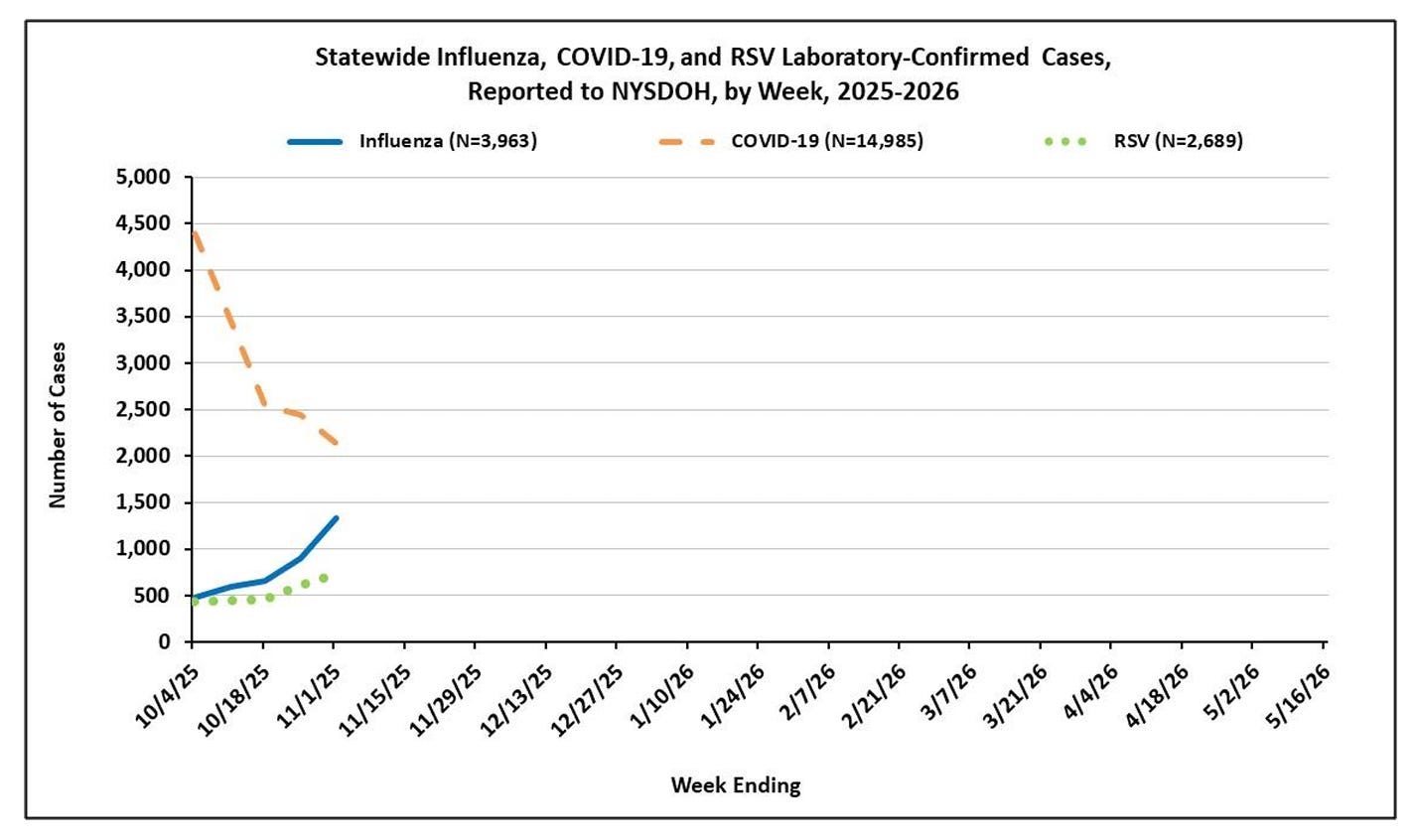
U.S. childhood flu vaccination rates have dropped from 62% to 49% over the past five years. Last year saw one of the deadliest seasons on record, with 280 pediatric deaths—the highest since tracking began in 2004. About 90% of those children weren’t fully vaccinated. Our deadliest flu season came at a time of historically low vaccination rates, which can’t be a coincidence. We don’t yet know this season’s coverage, but if it falls further, we could be facing another tragic record.
Covid-19 remains in a lull, though we typically see a winter rise starting in mid-to-late November.
I’m really hoping these three viruses don’t peak simultaneously. Hospitals strain under just a bad flu season; I couldn’t imagine the “big three” all at the same time. Historically, their peaks have staggered, but given how little we truly understand about these overlapping patterns, that may have been more a matter of luck than a rule. Time will tell.
What this means for you: This is the best time to get vaccinated. It’s certainly not too late.
Infant formula outbreak and Listeria in pasta
Over the weekend, a troubling cluster of infant botulism cases was linked to ByHeart Whole Nutrition Infant Formula. Even during a government shutdown and an increasingly challenging environment, outbreak teams have been working around the clock to protect our most vulnerable.
What this is: Infant botulism is extremely rare but serious. It occurs when Clostridium botulinum spores—commonly found in soil, dust, and some foods—germinate in a baby’s intestines and release toxins that can paralyze muscles, interfere with breathing, and require intensive care. In a typical year, the U.S. sees 160–180 cases, often linked to environmental exposure or foods like honey. Even a small cluster of cases is a clear red flag.
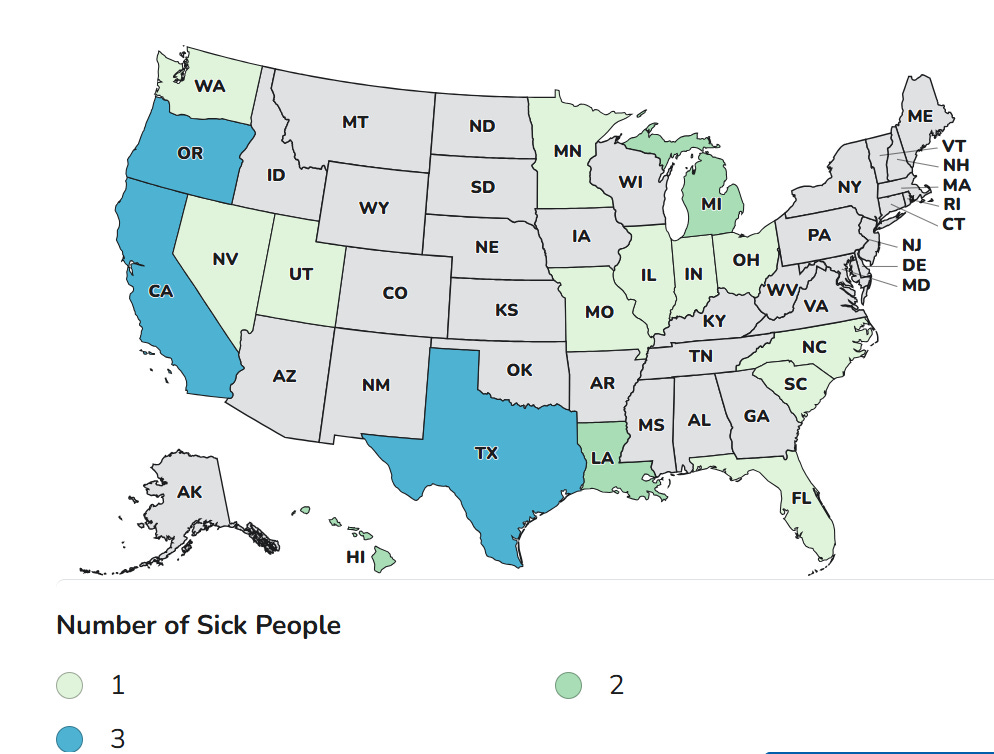
What we know: Clostridium botulinum spores have been detected in ByHeart infant formula, resulting in the hospitalization of 13 infants across 10 states. The California Department of Public Health (CDPH) played a key role in identifying this cluster. CDPH is the only source in the world for BabyBIG—the lifesaving antitoxin—and manages all clinician calls and treatment distribution. Their team noticed a spike in requests and discovered that the affected infants all consumed the same formula brand, prompting an alert to CDC. Importantly, ByHeart produces just 1% of U.S. infant formula, so this alone is unlikely to cause a national shortage. (Be sure to sign up for YLE CA for a deeper dive this Thursday.)
What we don’t know: Epidemiologists are investigating whether contamination is truly confined to ByHeart or reflects a broader issue in the manufacturing or ingredient sourcing process.
What to do: Stop using ByHeart Whole Nutrition Infant Formula immediately. Retailers should pull it from shelves, including Amazon, Kroger, Walmart, Whole Foods, Target, and Sam’s Club.
There is also the ongoing Listeria outbreak associated with frozen pasta dishes, including some sold at Trader Joe’s and other grocery chains. We’ve covered this before, but according to the agency’s ongoing investigation, two more brands of food are linked to the outbreak. There’s a long list of recalled products you can find here. Throw out immediately.
In total, there have been 27 illnesses reported, 25 hospitalizations, and six deaths in 18 states since late September.
HRT ‘black box’ warning may be gone soon
Word is that the FDA will remove the black box warning from hormone replacement therapy (HRT) this week. (It may now be pushed back with the government reopening.) If this announcement reflects the HRT review conducted at HHS last month, it will likely be messy and riddled with inaccuracies. However, if you look at the science without the drama, removing the black label is not unreasonable.
The black box warning—the strictest warning label, meant for drugs with potentially life-threatening risks—was enacted after a 2002 Women’s Health Initiative study found increased risks of stroke and breast cancer. Since then, research has revealed crucial nuance: risks depend on timing, dose, and delivery. Starting HRT earlier, using low-dose or localized estrogen, and tailoring therapy to each woman can be both effective and safe.
What this story is really about: Menopause is universal, yet too often misunderstood. While the science continues to evolve, the major problem is that clinical practice and training have lagged far behind. Women deserve evidence-based care, informed clinicians, and the freedom to make choices rooted in both science and compassion. We are still far from what is needed for women.
POLL
(snip-poll won’t embed here; go to the Substack page. The question is if readers would like to see a deep dive into HRT. If you wish to vote, click “read on Substack”, above.)
New blood pressure guidelines
Major new blood pressure guidelines dropped for the first time in years.
At the center of the update is an enhanced assessment tool called the PREVENT calculator, developed by the American Heart Association. It’s designed to estimate a person’s 10-year risk of cardiovascular disease using factors like blood pressure, cholesterol, smoking, and diabetes. The model was built using data from 6.5 million U.S. adults aged 30 to 79, making it one of the most representative tools available.
Here’s what stands out:
- A new threshold for medication. The key number to watch is 7.5%. If your 10-year risk of heart disease is at or above that level, physicians are now encouraged to consider medication even if your blood pressure hovers around 130/80 mmHg. If your risk is below that, lifestyle changes, like healthy eating, exercising, and better stress management, remain the first step.
- A focus on home monitoring. The guidelines also emphasize checking blood pressure at home. Growing evidence shows that home readings may actually be more accurate predictors of long-term risk than in-office measurements. So spending $45 on an arm monitor if you have hypertension might be a great (even lifesaving!) idea.
What this means for you: This makes heart health more personalized than ever. You can calculate your own 10-year risk using the PREVENT calculator (although you will need some pretty specific numbers from your last blood panel). Regardless, aim for blood pressure readings below 130/80, and use these new tools to guide smarter—and earlier—prevention.
Good news!
Here are some of the great things worth highlighting:
- The American Academy of Pediatrics (AAP) is standing up for science. The organization filed an updated lawsuit last week against HHS Secretary Robert F. Kennedy, Jr., asking a court to disband a panel (ACIP) appointed by RFK Jr. and to overturn recent decisions made by that panel. Then, to proceed under court supervision. The legal move is a direct push to restore expert-led vaccine policymaking.
- The Vaccine Integrity Project (VIP) is stepping up on Hep B. With the next ACIP meeting coming up in early December, where the agenda will likely include the Hepatitis B vaccine for infants, the childhood vaccination schedule, and HPV—VIP, an independent group of scientists formed in response to waning trust in RFK Jr.’s ACIP, is conducting an evidence review ahead of what could be a contentious meeting. Their work helps ensure the science remains front and center.
- Vaping among youth has seen a decline; but we still have a long way to go. A new study has found that the number of U.S. teens vaping has decreased overall. That’s progress. But among those who still do it, vaping is becoming more frequent and harder to quit—signs that use is shifting from experimentation toward dependence for some. If you have a teen who vapes, check out the EX Program, which is a free, anonymous text-messaging program designed specifically for young people who vape. There’s also SmokefreeTXT for Teens.
Question grab bag: You ask, we answer!
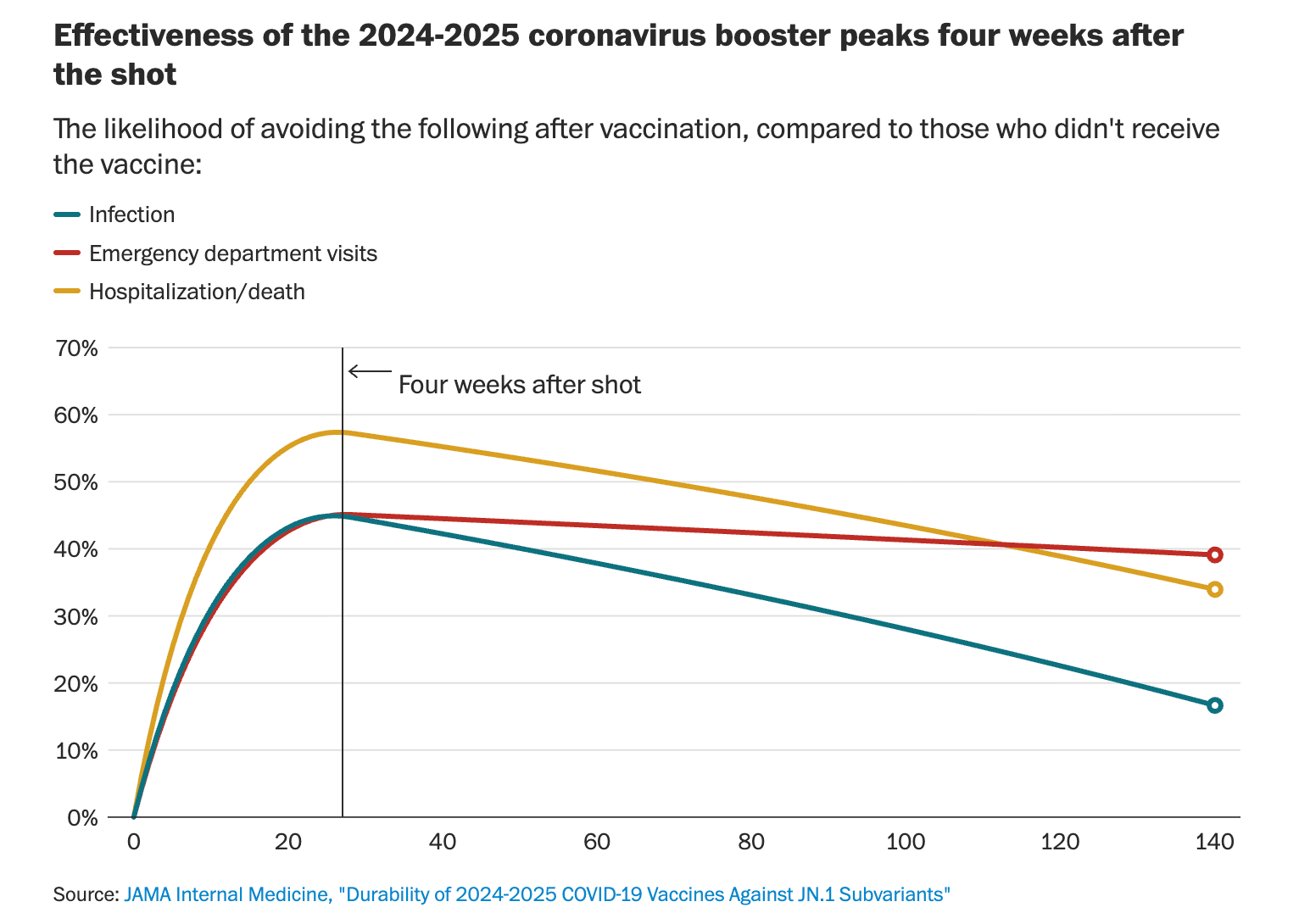
How long does the Covid-19 vaccine last? I got mine in September, do I need to get another?
A study published last week confirmed what we’ve consistently seen: protection against Covid-19 wanes over time. A study of more than 1.8 million Americans from the previous season showed protection against infection and severe disease declined after 4-5 months. The findings underscore the benefit of getting a Covid-19 vaccine every six months, especially for adults over 65, who accounted for nearly 80% of hospitalizations in the study.
In case you missed it
- Help shape our AI + Health conversation. Thanks to everyone who responded to our survey last week! We’re running the AI and health survey to hear your thoughts on using tools like ChatGPT, Claude, Copilot, and PerplexityAI to get health information. If you missed it, take the survey here.
- New York YLE’s Marisa discussed the state reaching a historic low in youth tobacco use.
- California YLE Matt discussed the impact of ICE raids on access to healthcare.
Have a wonderful week!
Love, YLE (snip)
“Whiskyjack”
Democrat Rips Reporter’s BS Shutdown Question To Shreds
Dr. Oz CAUGHT LYING Downplays 114% Health Insurance Spike
“Community Care Starts With Us”
These are among the truest words ever spoken. From Momsrising’s blog, here are resources: we should share them far and wide so that people can at least get by. I write letters and make phone calls with Momsrising; this is good and vital information. And, you don’t have to be a mom to use, share, or help anyone with this info! It’s for all. -A
==========
We moms shouldn’t have to hold the nation together on empty.
Yet here we are in the middle of a government shutdown that has thrown families into chaos. SNAP benefits are being cut; air traffic controllers,
We moms shouldn’t have to hold the nation together on empty.
Yet here we are in the middle of a government shutdown that has thrown families into chaos. SNAP benefits are being cut; air traffic controllers, military school teachers, families in several states are losing child care as Head Start centers start to close; and other federal employees are facing another missed paycheck (while still showing up every day, keeping our country running!). WIC is barely hanging on by thread, and rising costs are pushing families past the brink.
Moms are holding it all together and we see you!!
We see your strength. We see your exhaustion. And we know that love shouldn’t have to come with this kind of struggle.
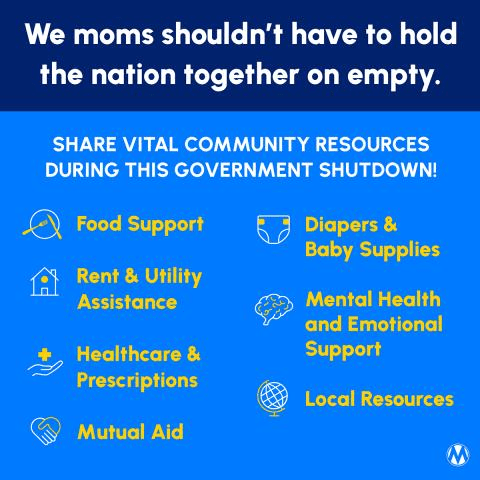
While the Trump Administration continues to play politics with families’ livelihoods, we want to make sure you have support right now while we keep up the fight.
- Food support: Feeding America food bank locator
- Diapers & baby supplies: National Diaper Bank Network
- Rent & utility assistance: 211.org
- Mental health & emotional support: Postpartum Support International or dial 988 for free, 24/7 support
- Healthcare & prescriptions: NeedyMeds.org or find a community health center
- Local resources at FindHelp.org; Discover free or reduced-cost housing, healthcare, and more!
- Community aid: MutualAidHub.org Connect with mutual aid networks near you
- Text HOME to 741741 for FREE, 24/7, confidential mental health support via text through Crisis Text Line
- Take action through mutual aid with NoKings
You are not alone. You are not invisible. And you should never have to carry this weight without care and community surrounding you.
We see you. We’re with you
Community care starts with us! Share this list so more families can find the help they deserve.
We know this shutdown is taking a toll. Your story matters. If you are being impacted by the shutdown, SNAP cuts, or rising costs, please share your story with us! When moms speak out, leaders listen!
SCOTUS, & Billboards, & Election Day. Oh, My!
The Week Ahead by Joyce Vance
November 2, 2025 Read on Substack
This Wednesday, the Supreme Court will hear the Trump tariffs case, arguably one of the most important cases it will hear all term.
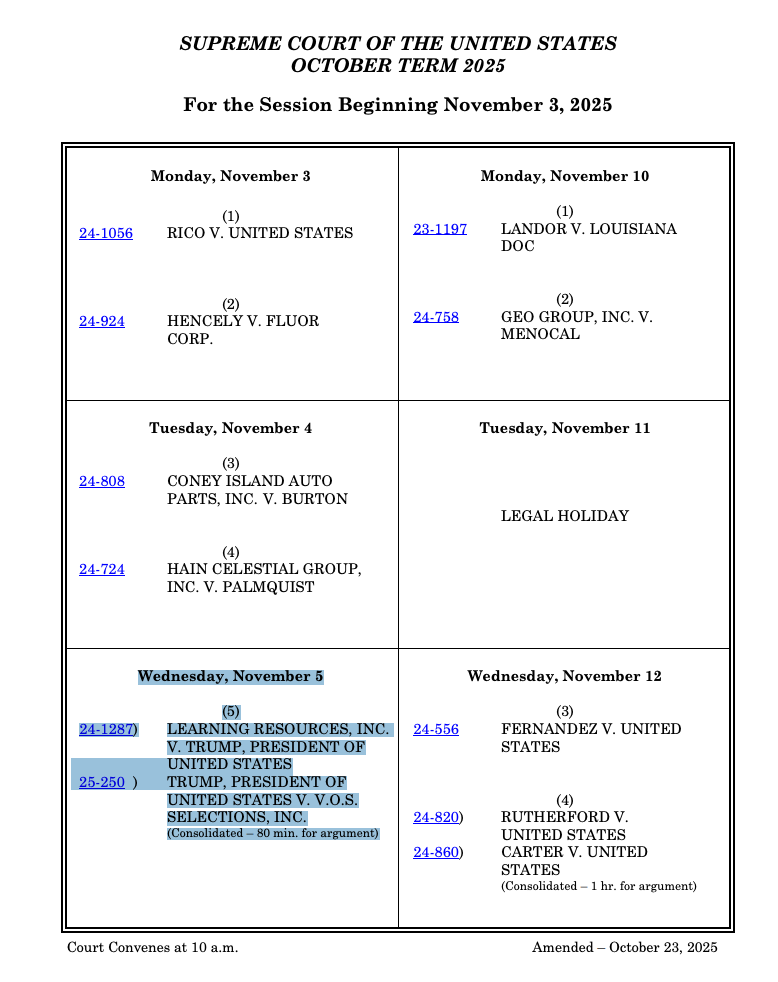
But, it’s important to understand that this is not a case about tariffs in general or about whether they are good policy. It’s a case about specific tariffs that President Trump imposed in February and whether he had the statutory authority to impose them. In other words, this is yet another example of Trump attempting to seize power that neither the Constitution nor our laws grant him and going to the Supreme Court in hopes they will validate it nonetheless. After argument, the Supreme Court will decide whether Trump had the legal authority to impose these tariffs in two cases.
We’ve been tracking this issue since Trump first threatened to impose tariffs, waffling back and forth seemingly from minute to minute. We studied the U.S. Court of Appeals for the Federal Circuit’s decision that rejected Trump’s effort to impose tariffs using IEEPA (I-E-Pa), the 1977 International Emergency Economic Powers Act, for the very simple reason that the Act, unlike other statutes that do give a president the right to impose tariffs, doesn’t mention tariffs at all. It does not give the president any authority to impose them under the statute that he has expressly said he used to do so. This is the kind of textualist argument conservative justices have backed in other cases, and to abandon that approach here would be a sharp and hypocritical departure for them. Last term, Justice Gorsuch wrote that the justices’ primary focus should be on the text of the statute.
The Constitution gives the power to impose taxes, which includes tariffs, to Congress. Because IEEPA doesn’t extend that power to the president, his use of it here is just a power grab, the kind of practice the Supreme Court should push back against if it intends to remain relevant to the American experiment. The Federal Circuit’s decision pointed out that while other laws expressly give the president the power to impose tariffs, IEEPA does not. Congress knows how to give the president the power to impose tariffs when it wants to and because it did not do so here, that should be the end of the inquiry. The administration should lose here. So what we hear in oral argument, even though it won’t necessarily signal where individual judges will end up, is worth following closely to see what tea leaves can be read for this case. It may also give us some sense of whether the Court intends to act as a check in other cases involving Trump’s power grabs.
The “major questions” will also be in play on Wednesday. You may recall it from recent terms of Court, where a conservative majority has recently used it to say there must be clear guidance from Congress before a federal agency can act on a major question of economic or political significance. Here’s the wrinkle: The Court has only used the doctrine to hamstring the Biden administration, and not to hinder Trump.
- In 2022, the Court decided National Federation of Independent Business v. Department of Labor, Occupational Safety and Health Administration, invalidating the Biden administration’s Covid testing/vaccination mandate for employers of more than 100 people. Without explicitly referencing the major questions doctrine, the Court wrote Congress had not given the president the authority to impose a vaccine mandate.
- In 2022, the Court decided West Virginia v. Environmental Protection Agency, rejecting the EPA’s authority to regulate greenhouse gas emissions from coal-fired power plants because Congress had not specifically authorized a regulation with such major political and economic consequences.
- In 2023, the Court rejected Biden’s student loan relief package in Biden v. Nebraska, holding that even though a federal statute allowed the Secretary of Education to “waive or modify” student loan debt, that authorization was insufficient for the Biden policy because this was a major question.
The Federal Circuit used these cases as precedent against the Trump administration. “Tariffs of unlimited duration on imports of nearly all goods from nearly every country with which the United States conducts trade” is “both ‘unheralded’ and ‘transformative,’” the court wrote, concluding that as a result, the administration needed to be able to “point to clear congressional authorization” for its tariffs. The absence of any language in the statute authorizing them was fatal to Trump’s case in the lower court. But the sardonic joke among appellate lawyers has been that the major questions doctrine only applies to Democratic administrations. On Wednesday, we will see whether that holds up and if the Court’s conservative majority is willing to twist itself into pretzel logic to support this administration’s political objectives.
There are other issues to look at this week:
As the Trump administration continues its extraterritorial strikes on supposed drug traffickers, there is increasing concern about the legality of that conduct. Georgetown law professor Steve Vladeck and I will take up that issue on Monday evening at 9 p.m. ET/8 CT in a Substack Live (if you subscribe to Civil Discourse, you’ll receive an email inviting you to join us when we go live, so mark your calendars and be ready).
As we head into the week, there are billboards up on the expressway heading toward U.S. Southern Command, in Doral, Florida, that tell troops “Don’t let them make you break the law” in response to those attacks.
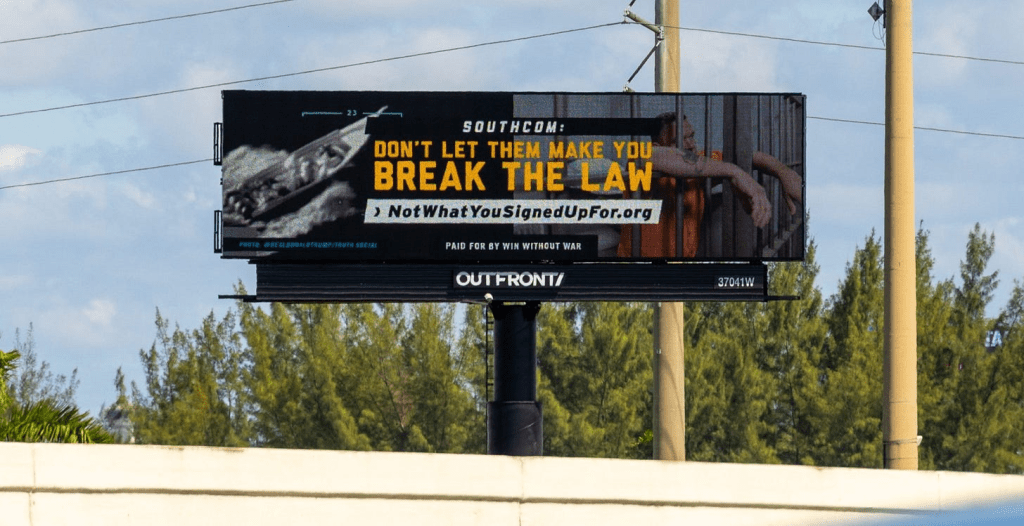
New billboards are going up near Miami, Chicago, and Memphis, Tennessee, as well, a warning to troops being deployed in American cities. The billboards are part of a campaign by veterans to support and encourage the troops to uphold military order.
If you’ve forgotten about DOGE, unfortunately, it’s time to remember. There are reports that the Pentagon’s DOGE unit “is leading efforts to overhaul the U.S. military drone program, including streamlining procurement, expand homegrown production, and acquire tens of thousands of cheap drones in the coming months.” And the Bulwark reported that Rear Admiral Kurt Rothenhaus was recently removed from his post as chief of naval research, the top post at the Office of Naval Research (ONR), and replaced by Rachel Riley, who has been working in DOGE-related roles in the Trump administration. Although she was a Rhodes Scholar, Riley, 33, has “no apparent naval experience.”
There are also reports of DOGE interfering with the Department of Agriculture. Senator Dick Durbin tweeted that “President Trump and the DOGE cowboys want to close and diminish critical agricultural research at the University of Illinois. The only other soybean lab like that in the world is in…China. Our President is ceding our agriculture research leadership to China.”
Remember back in February, when Trump floated the idea that everyone could get a $5,000 check from all of DOGE’s “savings”? That didn’t work out so well, did it? You may want to remember this for Thanksgiving dinner.
Tuesday is election day. There is the Virginia governor’s race and the New York City mayoral race. Also, the governorship is at issue in New Jersey. A California ballot initiative will determine whether that state will engage in defensive redistricting designed to offset the aggressive way the Trump administration has demanded Republican states use it to spike the balance between the two parties in the House in their favor, effectively letting politicians choose their voters, instead of the other way around. There is also a race in Pennsylvania, where three Democratic members of the state Supreme Court face retention votes that could be highly significant in the potential 2028 battleground state.
Vote.org, a nonpartisan voter registration and engagement platform, announced a “huge spike” in voter registration ahead of the elections, with their online registration platform being used more than twice as many times as they were during the comparable 2021 election cycle.
They reported that:
- More than 80% of those users are under the age of 35
- Nearly half (46%) are just 18 years old
- Compared to 2021, there are more young voters, more women, and more voters of color using the platform
It’s good news for pro-democracy Americans.
The house will remain out of session, yet again this week.
Epstein. Epstein. Epstein.
But as we all know, that means SNAP is still in danger, which means many of our fellow citizens could begin to go hungry this week if the administration tries to skirt compliance with or obtains an injunction staying decisions by a court in Massachusetts, and a more specific one in Rhode Island, which require the administration to use emergency dollars to fund SNAP. There, Chief Judge John J. McConnell Jr. ordered the USDA to distribute contingency funds and to report to the Court on its progress by 12:00 p.m. on Monday, November 3. Expect more litigation this week.
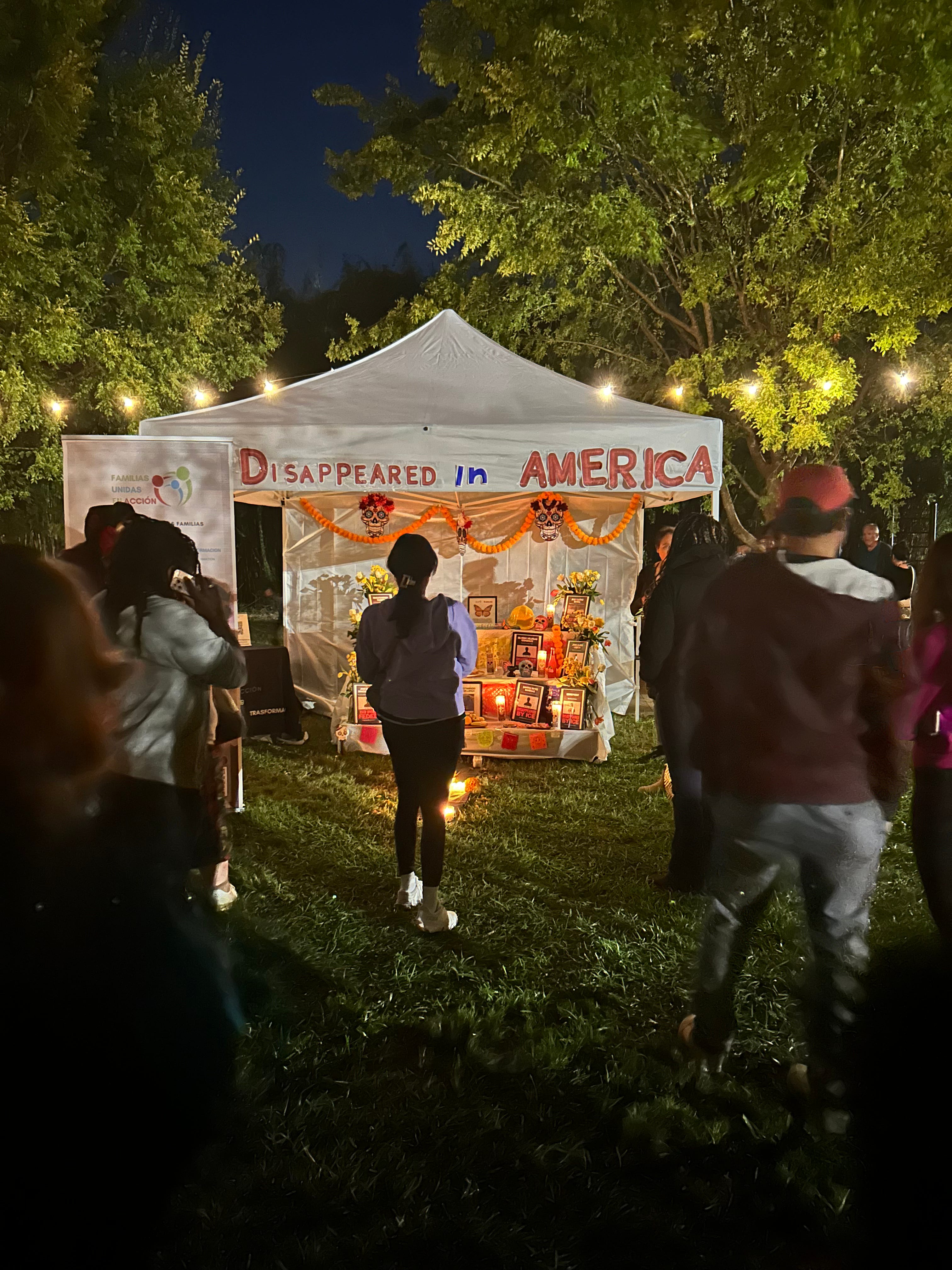
ICE agents are still engaging in “enforcement actions” in American communities and residential neighborhoods. Stories of abuses are circulating; it’s a critical moment for using our skills to ferret out misinformation and focus on the truth. This photo is from a Day of the Dead celebration in New Orleans.
It is clear that this is a week that will require us to summon our courage and continue to pay close attention. The times are far too important for us to look away. Remind yourself that dictators use overwhelm as a tactic for getting people to give up and submit to their rule. Let’s not do that to us.
We’re in this together,
Joyce
“Blood-drinking Bird”
A Flag, Sons Who Housekeep, & More, In Some Items I Read Yesterday
The items don’t have to do with each other; they interested me or looked like something I ought to know about, so I read them and thought someone else might like to read one or another or maybe all of them.
=======================
=============
Snippet:
The 1947 partition of the South Asian subcontinent into India and Pakistan led to the world’s largest mass migration. Populations from both sides of newly formed demarcations suffered in heinous riots. Women in particular were subjected to extreme violence. Yet, the severity of gendered crime during Partition wasn’t caused by an arbitrary upsurge of madness. Systemic patriarchy in South Asia had long reduced women to male-owned property. They were objectified to such an extent that a woman’s sexual “purity” became a metonym of her husband’s and kinsmen’s honor (izzat). In other words, male respectability was gauged by how successfully women’s bodies were regulated. With Partition, this dynamic became a forum for contesting powers and prestige at the communal and national levels.
To assert manhood and symbolize triumphal power over the enemy, rivaling sides opted for sexually charged violence, grotesquely marking, mutilating, and branding the bodies of women. According to historian
“[T]housands of women on both sides of the newly formed borders,” writes historian Urvashi Butalia,
were abducted, raped, forced to convert, forced into marriage, forced back into what the two states defined as “their proper homes,” torn apart from their families once during Partition by those who abducted them, and again, after Partition, by the state which tried to “recover” and “rehabilitate” them.
In the guise of celebrating independence from British rule, official narratives of nationalism largely omitted female experiences of such violence during the divisive convulsions of 1947. Among the earliest Partition texts that documented gory details which would have otherwise slithered into oblivion is Pinjar (which can translate to both “Skeleton” and “Cage”), a novella by Amrita Pritam that captures the cataclysmic years of Partition via a series of abductions.

A writer celebrated for both powerful poetry and prose, Amrita Pritam (1919–2005) is a well-known figure in South Asian literature. Inspired by real life, much of her work serves as testimony. Pritam witnessed firsthand the horrors of Partition—communal riots forced her to migrate to India from Pakistan in 1947 with nothing but her two small children and a red shawl. She never returned home. (snip-MORE on their page linked above)
==========================
Designing Intersex History: Behind the Intersex Flag with Morgan Carpenter
The Intersex Human Rights Fund (IHRF) at the Astraea Lesbian Foundation for Justice is celebrating its 10th year of funding intersex liberation efforts across the globe. Join us in reflecting on the IHRF’s many accomplishments, intersex movement successes, and our vision for the future of intersex organizing.
Created in 2013 by Morgan Carpenter, an intersex man based in Australia, the intersex flag was intentionally designed to stand out, communicate values important to intersex communities, and be used widely and freely. The intersex flag has a simple design: a bold purple circle on a bright yellow background. The circle represents many things, including wholeness and bodily autonomy, while the colors yellow and purple both represent the strength and diversity of intersex communities while avoiding all references to gender.
(Snip-a bit MORE)
====================
Vacuuming, laundry, and doing the dishes: My life as a ‘trad son’
Plenty of us are living back at home, adopting ‘traditional’ duties in exchange for free accommodation – Charlie Aslet
When I read the term “trad sons” on my phone, I spat the hot cocoa my mother had prepared for me out onto the screen. “What fresh torture will the live-at-home generation be subjected to next?” I cried. It only got worse when I scrolled to see that mothers were calling their stay-at-home sons “hubsons”, a play on the word husbands. “Has the whole world gone Oedipal?” I exclaimed in horror.
Following on from the trend of the “tradwife”, the internet has coined the term trad sons for children who stay at home with their parents and adopt “traditional” sonly duties in exchange for free accommodation. (Snip-MORE, it’s not long)
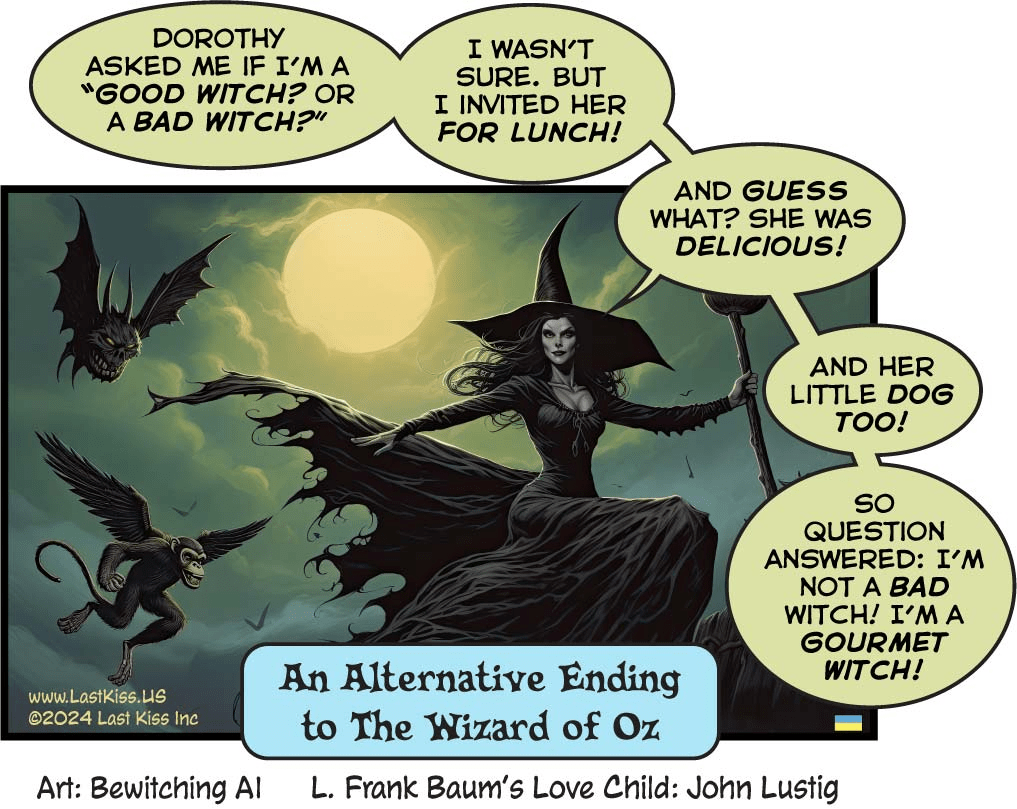
Some Halloween Cheer
 Scottie's Playtime
