A representative of Seattle Sperm Bank admitted to selling unused sperm vials to the FBI during an industry conference, purportedly for the agency to research splat patterns, multiple sources told LGBTQ Nation.
The sources say the admission came from the representative – who one source identified as Seattle Sperm Bank General Supervisor Angelo Allard – during an October 2022 meeting at the California Cryobank campus in Los Angeles. Allard did not reply to LGBTQ Nation’s multiple requests for comment, nor did Seattle Sperm Bank CEO Fredrik Andreasson, nor the bank’s communication team.
For decades, commercial sperm banks (on which many LGBTQ+ people rely to build their families) have faced ardent criticism over a host of ethical issues fueled by a lack of industry regulations. Donor-conceived people, recipient parents, and donors themselves have long sounded the alarm on the industry’s shady practices – from failing to enforce reasonable family limits to outright lying about donor medical histories. These activists continue to fight for legislation that would keep the banks in check.
This ongoing tension is why the 2022 meeting occurred in the first place. Sources say sperm banks hosted the gathering as a sort of olive branch to the reform advocates, though some who attended felt the banks were not actually willing to listen. Reportedly in attendance were lawyers, medical experts, activists, and scholars.
Although these activists have long known about the unethical practices of the industry, many were still shocked at what they heard.
Anti-fertility fraud activist Eve Wiley called it a “nails on a chalkboard moment” and said that the admission brought “a collective gasp in the room.” It was “unlike any other procedure any of us had heard,” she said.
She said the comment was skated over pretty quickly and that the man next to the speaker “was kind of like, ‘Dude, stop,’ giving, you know, the death stare essentially.”
A fertility expert who was also present in the room confirmed the story to LGBTQ Nation, saying they are “not sure what precipitated it” but that a “gentleman who was involved at a sperm bank raised his hand and basically said they sent sperm to the FBI at the request of the FBI for training purposes.”
“On one level it makes sense, you know, that you would need sperm to train on or to do some analysis of,” they said, “but I guess none of us had ever considered that law enforcement might reach a sperm bank and do this, certainly without consent from the parties themselves who could be genetically identified and put into a database if this were done.”
They said the representative seemed completely taken aback that anyone found the information troubling.
“They just stated it so matter-of-factly, like, ‘Yeah, this is what we do.’ And it was almost as if they didn’t see any privacy protections that needed to be discussed, any issues with that, any hesitation about turning information over to law enforcement in that manner, even for training purposes.”
Another expert who attended the meeting also heard the admission. They told LGBTQ Nation in an emailed statement that they remembered the representative from Seattle Sperm Bank “telling the group that they… provided the FBI with unused sperm for them to use for ‘practice.”’ The source (the same one who identified the speaker as Allard) said they do not remember the representative saying the sperm was “sold,” though.
A transcript of a Zoom chat obtained by LGBTQ Nation shows those who attended virtually discussing the admission in the chat. Folks called the revelation “shocking” and “incredibly concerning,” with some questioning if the DNA was being added to a criminal database.
LGBTQ Nation reached out to the National FBI office and received the following response from Seattle Field Office public affairs specialist Steven Bernd: “Our policy prohibits us, except in rare circumstances, from disclosing investigative techniques of an FBI investigation. However, I can plainly state that I did not find any information to suggest that the FBI has been purchasing sperm from a sperm bank.”
It’s not clear, however, whether the sperm would have been sold to the local or national office. Additionally, Bernd took less than an hour to reply to our request for a statement, raising the question of how much digging he did before saying he “did not find any information.”
The queer connection
Also reportedly present at the meeting were several LGBTQ+ family-building organizations, though none have corroborated the FBI admission with LGBTQ Nation.
Ron Poole-Dayan, executive director of Men Having Babies, stated over email that he had “no specific recollection” of the admission being made. The representative who attended the meeting from Family Equality no longer works for the organization, and a spokesperson said, “No current staff members have additional information to share.” Representatives from Colage, an organization for the children of LGBTQ+ people, and GLAD, an LGBTQ+ legal advocacy organization, did not respond to a request for comment.
Wiley called it “shocking” and “disheartening” that no LGBTQ+ organizations have come forward.
Laura High, a donor-conceived person and activist who was not present at the meeting, expressed disappointment that these organizations have not taken action.
“Especially right now we need to be able to rely on these organizations to keep the queer community safe,” she told LGBTQ Nation over email. “And the fact that they stayed silent on this incredibly clear violation of rights that clearly puts the queer community in jeopardy, especially under this regime is terrifying.”
High said many people in the activist community have told her they do not want to contribute to this story going public for fear of not being invited to future meetings or losing a seat at the table, and she wonders if perhaps that’s why these organizations also have not spoken up.
“But why on earth would you want to be sitting at that kind of table that clearly has no problem putting the queer community or any marginalized group in utter danger?” she said.
What’s at stake
The prospect of a bank selling sperm to the FBI without informed consent raises a number of ethical concerns, though the legality of it all is murky.
Donor contracts from Seattle Sperm Bank obtained by LGBTQ Nation state, “I understand that once I agree to participate in the donor program and have been accepted into the program, I may not impose restrictions on the manner in which my donor sperm may be used.”
“Technically, people can buy sperm for any purpose… but sperm samples are not intended for that purpose,” explained the fertility expert. “They’re intended for people to buy to family build. That is the assumption.”
“I think there would be a lot of people who would object, for example, if law enforcement just started suddenly going through trash in search of hair or saliva or discarded toothbrushes or fingernail clippings to include people in databases for ‘training purposes.’”
They said the lack of informed consent is one of the biggest issues. “I’ve talked to sperm donors, and they were not informed that this was going on.” LGBTQ Nation independently received direct confirmation from one Seattle donor who said they were never told this was a possibility.
Wiley said she is most concerned with sperm being mishandled or planted as evidence in a crime.
“What if someone steals that sperm and then sells it on the black market, and they plant that?” she said. “And is DNA being extracted and then being used in a database to catch criminals?… It’s hard to say what can happen.”
As someone who has spent her life fighting fertility fraud, Wiley has witnessed firsthand the horrific ways gametes can be mishandled. “It’s unbelievable,” she said, adding that “in the absence of laws and that legal landscape being the wild wild west, it’s really frustrating.”
High said trans people also have specific safety concerns, since they often preserve their sperm or eggs at these banks before starting gender-affirming care.
“We know this administration is targeting the queer community,” High said, “Especially the trans community, who actively uses the fertility industry to store their DNA before they medically transition.”
She said there is also particular concern for people of color. “We are well aware that people of color are actively and heinously targeted by the police force,” she said. “Secretly handing over sperm from Black donors or any donor of color does not just affect that donor, but potentially their entire family. We have a long and terrible history in this country of people of color getting set up for a crime by the police force.”
“This industry who’s already very famous for excluding recipient parents and donors of color is demonstrating that they are also willing to put those donors at risk for severe injustice… Seattle has given the FBI the ability to have a genetic tracker.”
There is also the matter of the DNA of the children conceived from each donor being in the hands of a government agency. One recipient parent, Romy Razuri, who told LGBTQ Nation she became an activist in the space after she had reason to believe Seattle Sperm Bank failed to report critical pieces of her donor’s medical information, called it “creepy.”
“It just doesn’t sound right. I mean, no matter how you look at it and if you try to make sense of it… Whatever the reason is, it’s just not okay.”
Asked if the information made her feel worried about her kids, she replied: “I mean, anything at this point related to donor conception makes me feel scared for my kids.”
Subscribe to the LGBTQ Nation newsletter and be the first to know about the latest headlines shaping LGBTQ+ communities worldwide.
Trump officials transferred the migrants to the East African nation in response to a judge’s order. They now face threats that include rocket attacks from Yemen.
June 6, 2025 at 5:51 p.m. EDTyesterday at 5:51 p.m. EDT
A U.S. Air Force plane used for deportation flights is stationed at Biggs Army Airfield in Fort Bliss, El Paso, on Feb. 13. (Justin Hamel/AFP/Getty Images)
Nearly a dozen immigration officers and eight deporteesare sick and stranded in a metal shipping container in the searing-hot East African nation of Djibouti, where they face the constant threat of malaria and rocket attacks from nearby Yemen, according to a federal court filing issued Thursday.
A federal judge in Boston interrupted an Immigration and Customs Enforcement deportation flight taking immigrants from Cuba, Vietnam, Myanmar, Laos and Mexico to South Sudan more than two weeks ago. U.S. District Judge Brian E. Murphy said the flight violated his order prohibiting officials from sending immigrants to countries where they aren’t citizens without a chance to ask for humanitarian protection. He instructed officials to arrange screenings.
Trump officials could have flown the immigrants back to the United States. Instead, they were taken to Djibouti, where in late May officers turned a Conex container into a makeshift detention facility on U.S. Naval Base Camp Lemonnier, according to Mellissa Harper, a top ICE official, who detailed the conditions Thursday in a required status update to the judge.
Three officers and eight detainees arrived at the only U.S. military base in Africa unprepared for what awaited them. Defense officials warned them of “imminent danger of rocket attacks from terrorist groups in Yemen,” but the ICE officers did not pack body armor or other gear to protect themselves. Temperatures soar past 100 degrees during the day. At night, she wrote, a “smog cloud” forms in the windless sky, filled with rancid smoke from nearby burning pits where residents incinerate trash and human waste.
The Trump administration has urged the Supreme Court to stay Murphy’s April order requiring screenings under the Convention Against Torture, which Congress ratified in 1994 to bar the U.S. government from sending people to countries where they might face torture. In a filing in that case Thursday, officials told the Supreme Court that Murphy’s order violates their authority to deport immigrants to third countries if their homelands refuse to take them back, particularly if they are serious offenders who might otherwise be released in the United States.
Matt Adams, a lawyer for the detainees and legal director of the Northwest Immigrant Rights Project, said the government is delaying interviewing the men to determine whether they have a reasonable fear of harm. The judge ordered the government to provide the detainees with access to their lawyers, but Adams said they haven’t spoken to them.
Lawyers fear the Trump administration is delaying the screenings in hopes that the Supreme Court stays Murphy’s order and clears the way for officers to deport the men to South Sudan. He said detainees are likely to prevail in proving they have a credible fear of being tortured because South Sudan is on the brink of civil war and they are not citizens of that country.
“What person wouldn’t have a reasonable fear of being dropped into a war torn country that they know nothing about?” he said.
While Djibouti is one of the hottest inhabited places on earth, a Navy guide to Camp Lemonnier says it has air conditioning, WiFi, a Pizza Hut, a Planet Smoothie, and a medical clinic. It also has a movie theater, a restaurant called “Combat Cafe,” a gym and a swimming pool.
But Harper wrote that the officers and detainees staying in the shipping container have not had access to basic necessities. Officers and detainees began to suffer symptoms of a bacterial upper respiratory infection soon after deplaning, including “coughing, difficulty breathing, fever, and achy joints.”
Medication wasn’t immediately available. She wrote that the flight nurse has since obtained treatments such as inhalers, Tylenol, eye drops and nasal spray, but they cannot get tested for the illness to properly treat it.
“It is unknown how long the medical supply will last,” Harper wrote, though the camp guide has a clinic on-site.
The officers spend their days guarding eight immigrants convicted of crimes that include murder, attempted murder, sex offenses and armed robbery, court records show. Harpersaid Defense Department employees “have expressed frustration” about staying in close proximity to violent offenders.
Harper said ICE has had to deploy more officers available to work in “deleterious” conditions to give the initial crew a break. Currently 11 officers are assigned to guard the immigrants and two others “support the medical staff,” she said. They work 12-hour shifts guarding immigrants, taking them to get medication, and to use the restroom and the shower in a nearby trailer, one at a time. Officers pat down the detainees, searching them for contraband.
At night and on breaks, officers sleep on bunk beds in a trailer, with one storage locker apiece. Some wear N95 masks even while they sleep, because the air is so polluted it irritates their throats and makes it difficult to breathe. The area is dimly lit, which Harper wrote poses a security risk to the officers.
Department of Homeland Security officials seized on the court filings to criticize the judge.
“This Massachusetts District judge is putting the lives of our ICE law enforcement in danger by stranding them in [Djibouti] without proper resources, lack of medical care, and terrorists who hate Americans running rampant,” said DHS spokeswoman Tricia McLaughlin on X. “Our @ICEgov officers were only supposed to transport for removal 8 *convicted criminals* with *final deportation orders* who were so monstrous and barbaric that no other country would take them. This is reprehensible and, quite frankly, pathological.”
A lawyer for the detainees said they are also worried about their clients’ health, and said the government is responsible for the current situation. Trina Realmuto, a lawyer for the detainees and executive director of the National Immigration Litigation Alliance, noted Murphy gave the government the option of returning the men to the United States.
“The government opted to comply overseas,” she said. “This is a situation that the government created by violating the order and easily can remedy with a single return flight.”
Family members who finally reached the detainees by phone said the trailer where they are being kept has air conditioning, but that they remain in leg irons and without sufficient access to medicine.
Murphy had said DHS abruptly launched the deportation flight even though it plainly violated his April 18 preliminary injunction barring them from removing people without due process. Federal law prohibits sending anyone — even criminals — to countries where they might be persecuted or tortured.
Although McLaughlin said officials couldn’t deport them to their home countries, Mexico President Claudia Sheinbaum said at a news conference last month that the U.S. government did not inform her of the Mexican national sent to Djibouti, Jesus Munoz Gutierrez, who was convicted of second-degree murder in Florida 20 years ago, court records show.
She said the U.S. would have to follow protocols to bring him to Mexico, if he wishes to be repatriated, and she said he could be detained upon arrival. She said Mexico is reviewing the case.
Murphy has also ordered the government to return a gay Guatemalan man who was deported to Mexico, where he said he had been kidnapped. The man returned Wednesday.
Minnesota Governor Tim Walz criticized President Donald Trump during an interview with MSNBC host Jen Psaki, stressing just why the people who elected Trump to run the country “like a business” were completely misguided.
Walz particularly lamented the impacts of Trump’s ongoing trade war with Canada and Mexico, noting that Trump has a history of scuttling deals and “a proven track record of being an absolute failure.”
U.S. Secretary of Defense Pete Hegseth speaks at the Al Udeid Air Base, Thursday, May 15, 2025, in Doha, Qatar. (AP Photo/Alex Brandon)
Military commanders will be told to identify troops in their units who are transgender or have gender dysphoria, then send them to get medical checks in order to force them out of the service, officials said Thursday.
A senior defense official laid out what could be a complicated and lengthy new process aimed at fulfilling President Donald Trump’s directive to remove transgender service members from the U.S. military.
The new order to commanders relies on routine annual health checks that service members are required to undergo. Another defense official said the Defense Department has scrapped — for now — plans to go through troops’ health records to identify those with gender dysphoria.
Far Right Federal Judge Rules Gay And Trans People Can Be Discriminated Against In Workplaces
Judge Kacsmaryk, a federal judge in the Northern District of Texas, ruled on the EEOC’s treatment of Title VII employment discrimination claims on gay and trans people.
On Thursday, Judge Matthew Kacsmaryk—a far-right federal judge in the Northern District of Texas with a record of aligning with the GOP’s most extreme legal positions—issued a ruling declaring that Title VII no longer protects LGBTQ+ people from workplace discrimination. The decision directly contradicts the Supreme Court’s landmark 2020 ruling inBostock v. Clayton County, which held that discrimination based on sexual orientation or gender identity is, by definition, sex discrimination. Kacsmaryk’s ruling marks one of the most alarming judicial rollbacks of LGBTQ+ rights in recent memory—and sets up a direct legal challenge to one of the foundational civil rights protections for queer and trans people in the United States.
Montana Court Issues Final Blow to Anti-Trans Health Care Law
A judge found that the law’s premise is not scientific, but “political and ideological.”
A state judge in Montana has permanently struck down SB 99, a law which sought to ban gender-affirming care for Montana youth under age 18.
The court decision is a welcome reprieve for young trans Montanans, who have had the threat of forced detransition hanging over their heads since 2023. The bill would have threatened the licensure of physicians who provided trans-affirming care to this age group and prevented state funds from being used for gender-affirming surgeries, hormones, puberty blockers, and “social transitioning” measures for trans youth. It also would have allowed parents of trans kids to sue medical professionals for providing their children with the proper care.
But these kinds of laws, which are being passed around the country, are highly unscientific. They try to erase the biological reality of gender and sexual diversity to further a far-right gender ideology. As the court ruling declared, “the State’s interest is actually a political and ideological one: ensuring minors in Montana are never provided treatment to address” their gender dysphoria.
“In other words, the State’s interest is actually blocking transgender expression.”
1) The court found overwhelming evidence backing the benefits of gender-affirming care for trans people.
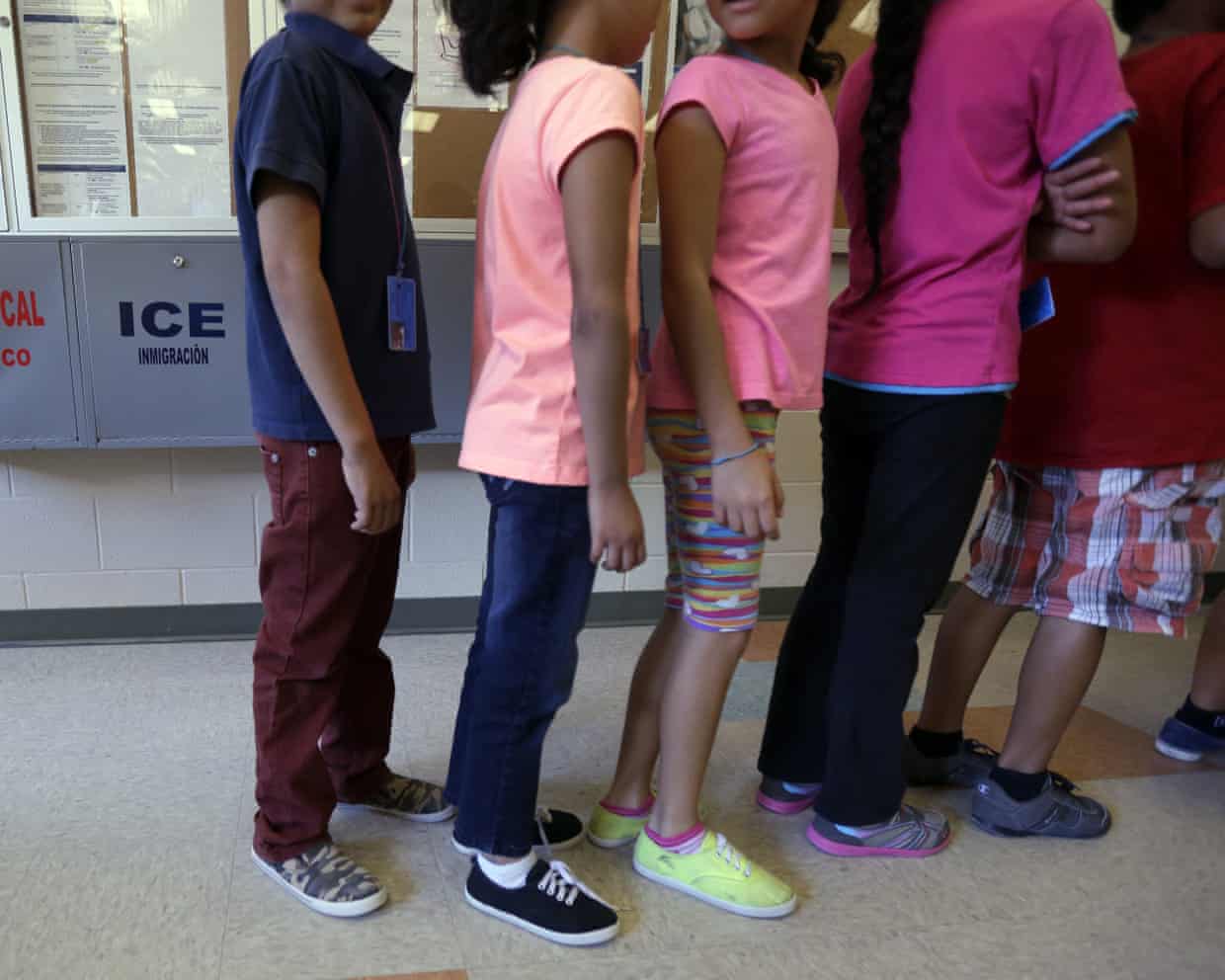
Detained children line up in the cafeteria at the Karnes County Residential Center in Karnes City, Texas, on 10 September 2014. Photograph: Eric Gay/AP
The Trump administration is trying to end a cornerstone immigration policy that requires the government to provide basic rights and protections to child immigrants in its custody.
The protections, which are drawn from a 1997 consent decree known as the Flores Settlement Agreement, limit the amount of time children can be detained by immigration officials. It also requires the government to provide children in its custody with adequate food, water and clean clothes.
The administration’s move to terminate the Flores agreement was long anticipated. In a court motion filed Thursday, the justice department argued that the Flores agreement should be “completely” terminated, claiming it has incentivized unauthorized border crossings and “prevented the federal government from effectively detaining and removing families”.
Donald Trump also tried to end these protections during his first term, making very similar arguments.
Ice arrests at immigration courts across the US stirring panic: ‘It’s terrifying’
Read more
The move to end protections follows a slew of actions by the Trump administration that target children, including restarting the practice of locking up children along with their parents in family detention. Immigration advocacy groups have alleged in a class-action lawsuit filed earlier this month that unaccompanied children are languishing in government facilities after the administration unveiled policies making it exceedingly difficult for family members in the US to take custody of them. The president and lawmakers have also sought to cut off unaccompanied children’s access to legal services and make it harder for families in detention to seek legal aid.
“Eviscerating the rudimentary protections that these children have is unconscionable,” said Mishan Wroe, senior attorney at the National Center for Youth Law. “At this very moment, babies and toddlers are being detained in family detention, and children all over the country are being detained and separated from their families unnecessarily.”
The effort to suspend the Flores agreement “bears the Trump administration’s hallmark disregard for the rule of law – and for the wellbeing of toddlers who have done no wrong”, said Faisal al-Juburi of the Texas-based legal non-profit Raices. “This administration would rather enrich private prison contractors with the $45bn earmarked for immigrant detention facilities in the House’s depraved spending bill than to uphold basic humanitarian protections for babies.”
The Trump administration in 2019 asked a judge to dissolve the Flores Settlement Agreement, but its motion was struck down. During the Biden administration, a federal judge agreed to partially lift oversight protections at the Department of Health and Human Services, but the agreement is still in place at the US Customs and Border Protection (CBP) and US Immigration and Customs Enforcement agencies.
“Children who seek refuge in our country should be met with open arms – not imprisonment, deprivation and abuse,” said Sergio Perez, executive director of the Center for Human Rights and Constitutional Law.
The settlement is named for Jenny Flores, a 15-year-old girl who fled civil war in El Salvador and was part of a class-action lawsuit alleging widespread mistreatment of children in custody in the 1980s.
Since the settlement agreement was reached in 1997, lawyers and advocates have successfully sued the government several times to end the mistreatment of immigrant children. In 2018, attorneys sued after discovering unaccompanied children had been administered psychotropic medication without informed consent.
In 2024, a court found that CBP had breached the agreement when it detained children and families at open-air detention sites at the US southern border without adequate access to sanitation, medical care, food, water or blankets. In some cases, children were forced to seek refuge in portable toilets from the searing heat and bitter cold.

 Molly Sprayregen (She/Her )May 21, 2025, 12:00 pm EDT
Kyle Neal




 Scottie's Playtime