Germany sees anti-Pride events and restricts rainbow flags ahead of LGBTQ+ parties

The minority groups trying to push hate on the LGBTQ+ are well funded by billionaires like J.K. Rowling and the Christian church.  They are using every media they can to turn young people against the LGBTQ+ using the most misinformation they can generate.  And as much as they want / demand society return to their fantasied Christian 1950s pro white cis straight only country it was not true then and can’t be true now.  Their goal is the total erasure of the LGBTQ+  and also any rights for those gained in the civil rights act.  Below is a quote from the article.  Hugs. 

“I’m almost 40 and have seen so much progress like equal marriage,” Kelly says. “But something is changing. Hatred towards people like me is becoming mainstream again.”


With Famine, No Electricity, Fuel, Water, No Family, How Are You Going To Survive?’ in Gaza

After over 21 months of Israel’s brutal assault on Gaza, the humanitarian crisis in the Strip has reached its worst point yet. 94% of Gaza’s hospitals have been destroyed or damaged. Dozens of children have died from malnutrition. And Israeli troops continue to kill scores of Palestinians as they try to receive food from the so-called “Gaza Humanitarian Foundation.”

In this second part of Zeteo’s live ‘Unshocked,’ Dr. Yasser Khan – a Canadian ophthalmologist and plastic surgeon who has traveled twice to Gaza since October 7, 2023 – describes to Mehdi and Naomi how Israel’s humanitarian assault on Gaza has turned injuries and disabilities in Gaza into, “a death sentence.”

Dr. Yasser Khan: “It was horrific, the most horrific things that I’ve ever seen.”

In the interview, Dr. Khan shares the stories of his many patients, the vast majority of whom he says were women and children.

Dr. Khan also discusses how upon returning from Gaza, many of his colleagues in the medical field refused to believe such stories, with some even going out of their way to tell him that, “‘he’s done nothing to be a hero.’”

Dr. Khan explains how he came to the conclusion that what he was seeing in Gaza was indeed a genocide and why he takes so much inspiration from the people in Gaza. Mehdi, Naomi, and Dr. Khan also take questions from a live audience.

Do consider becoming a paid subscriber so you can get early access to exclusive content like this.

Also, if you are interested in learning more about Israel’s assault on Gaza’s healthcare system, check out Zeteo’s most recently acquired documentary, ‘Gaza: Doctors Under Attack.’

W.E.B. DuBois & More, In Peace & Justice History for 7/28

(I should know better than to try to set up this post while I’m making supper. Thanks, WP, not; it’s much easier Any Other Time. 🤬)

July 28, 1868
Passed in the wake of the Civil War, the Fourteenth Amendment to the U.S. Constitution, guaranteeing due process, equal protection of the law, and full citizenship to all males over 21, including former slaves,
went into effect.


Booklet on the 14th Amendment from the Damon Keith Collection of
African-American Legal History at Wayne State University Law School


More on the amendment and the context of post-Civil War Reconstruction 
July 28, 1917

Anti-Lynching Parade in New York City, 1917
W.E.B. DuBois and others organized a silent parade down Fifth Avenue in New York City against the lynching of negroes and segregationist Jim Crow laws. There had been nearly 3,000 documented cases of hangings and other mob violence against black Americans since the Reconstruction period following the Civil War.
Read about W.E.B. DuBois
Strange Fruit, the song about lynching, and the film 
July 28, 1932

Bonus Marchers on the Capitol Steps
Federal troops, under command of General Douglas MacArthur, forcibly dispersed the so-called “Bonus Expeditionary Force,” or Bonus Army. They were World War I veterans who had gathered in Washington, D.C., to demand money they had been promised but weren’t scheduled to receive until 1945. Most of the marchers were unemployed veterans in desperate financial straits during the Great Depression.
More on the Bonus Army  (It’s WaPo; you can read it for free, but you have to sign in)
Film of the confrontation in Washington  (Watch on YouTube for free without sign in)
July 28, 1965

Pfc. John L. Lewis decorates his helmet with good luck tokens.
[Khe Sanh, February 1968.]” Life [Asia edition]. 18 Mar. 1968. cover
President Lyndon Johnson ordered 50,000 troops to Vietnam to join the 75,000 already there. By the end of the year 180,000 U.S. troops will have been sent to Vietnam; in 1966 the figure doubled. In addition to countless Vietnamese deaths, close to 1900 Americans were killed in 1965; the following year the number more than tripled.
Lyndon Johnson told the
nation
Have no fear of escalation


I am trying everyone to please
Though it isn’t really
war


We’re sending fifty thousand more


To help save Vietnam from Vietnamese

— part of Tom Paxton’s anti-Vietnam-war song, “Lyndon Johnson Told the Nation”
Full lyrics of the song

President Johnson explained: “We intend to convince the communists that we cannot be defeated by force of arms or by superior power.””
July 28, 1982
San Francisco became the first U.S. city to ban the sale and possession of handguns. The law was struck down by state courts, which ruled the local law to be in violation of the California constitution which gives the state the sole power to regulate firearms.

https://www.peacebuttons.info/E-News/peacehistoryjuly.htm#july28

What Makes Trump & MAGA So Cruel? A Psychiatrist Explains

All The Signs Are That Trump Is Now Preparing To Pardon Ghislain Maxwell

Peace & Justice History For 7/27

July 27, 1919
A riot began in Chicago when police refused to arrest a white man who was responsible for the death of a young black man, Eugene Williams. The 29th Street Beach on Lake Michigan was used by both black and white Chicagoans. But the man had been throwing stones at the black boys swimming there before hitting Williams.

The Coroner’s report on the riot described the events as follows: “Five days of terrible hate and passion let loose, cost the people of Chicago 38 lives (15 white and 23 colored), wounded and maimed several hundred, destroyed property of untold value, filled thousands with fear, blemished the city and left in its wake fear and apprehension for the future . . . .”
The city’s booming economy, especially jobs in the stockyards, had drawn many blacks during the Great Migration from the South, more than doubling their population in just three years. Only one policeman died in the chaos, Patrolman John Simpson, 31, an African American working out of the Wabash Avenue Station.
 
Gangs and the 1919 Chicago Race Riot. 
July 27, 1953
After three years of bloody and frustrating war leading to stalemate, the United States, the People’s Republic of China and North Korea agreed to a truce, bringing the Korean War—and America’s first experiment with the Cold War concept of “limited war”—to an end (South Korean President Syngman Rhee opposed the truce and refused to sign). U.S. President Dwight Eisenhower had taken office six months earlier, and Soviet leader Josef Stalin had died that March.

Korean War Memorial photo: Heather Stanfield
The armistice signed this day ended hostilities and created the 4000-meter-wide (2.5 miles) demilitarized zone (DMZ), a buffer between North and South Korean forces, but was not a permanent peace treaty. It also set up a system for exchanging prisoners of war: 12,000 held by the North, 75,000 by South Korea, the U.S. and the U.N. allied forces.
There were four million military and civilian casualties, including 16,000 from countries which were part of the U.N.-allied forces; 415,000 South and 520,000 North Koreans died.

There were also an estimated 900,000 Chinese casualties. 36,516 died out of the nearly 1.8 million Americans who served in the conflict.
July 27, 1954
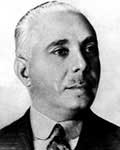
The democratically elected Guatemalan government of Jacobo Arbenz Guzmán, after receiving 65% of the vote, was overthrown by CIA-paid and -trained mercenaries. There followed a series of military dictatorships that waged a genocidal war against the indigenous Mayan Indians and against political opponents into the ’90s. Nearly 200,000 citizens died over the nearly four decades of civil war.
“They have used the pretext of anti-communism. The truth is very different. The truth is to be found in the financial interests of the fruit company [United Fruit, which controlled more land than any other individual or group in the country. It also owned the railway, the electric utilities, telegraph, and the country’s only port at Puerto Barrios on the Atlantic coast.] and the other U.S. monopolies which have invested great amounts of money in Latin America and fear that the example of Guatemala would be followed by other Latin countries . . . I took over the presidency with great faith in the democratic system, in liberty and the possibility of achieving economic independence for Guatemala.”

Jacobo Arbenz
More about Arbenz 
The real coup story through official U.S. documents 
July 27, 1996

Trident sub being loaded
Known as the “Weep for Children Plowshares,” four women were arrested for pouring their own blood on weaponry at the Naval Submarine Base at Groton, Connecticut, on the morning of the launch of the last-built Ohio-class submarine, the U.S.S. Louisiana. The 18 such submarines carry about half of the U.S. nuclear deterrent – 24 Trident I & II missiles with a range of 7400 km (4600 miles), each with several warheads known as MIRVs (multiple independently targeted re-entry vehicles).
Details of the action  

https://www.peacebuttons.info/E-News/peacehistoryjuly.htm#july27

The ADA & More, In Peace & Justice History for 7/26

July 26, 1953
In his first move to overthrow the U.S.-backed dictatorship of Cuban leader Fulgencio Batista, 26-year-old Fidel Castro led 134 other young revolutionaries to unsuccessfully attack the Moncada military barracks in Santiago de Cuba. Castro had concluded that armed struggle was the only way to unseat Batista, who had taken power in a military coup in 1952.
The Cuban Revolution is known as the July 26 Movement, and is celebrated annually there.


The Moncada Barracks, still showing a few bullet holes and pockmarks from that fateful early morning assault in 1953, is now both a historic site and an elementary school.
July 26, 1967
H. Rap Brown, then head of the Student Nonviolent Coordinating Committee (SNCC) was ordered arrested by then-Governor Spiro Agnew, who accused him of inciting a riot through his speech two days earlier at a civil rights rally in Cambridge, Maryland.
At the event, Brown declared, “Black folks built America, and if America don’t come around, we’re going to burn America down . . . If Cambridge doesn’t come around, Cambridge got to be burned down.”

Shortly after the speech, Brown was hit in the head by buckshot from a policeman’s shotgun. That night the segregated elementary school on the black side of town and 20 businesses burned down (there was no looting), some along Race Street, the racial divide which neither black nor white were expected to cross.

H. Rap Brown following the disturbances in Cambridge, Maryland.
What happened in Cambridge 
July 26, 1990
The Americans with Disabilities Act (ADA) was signed into law by President George H.W. Bush. It prohibited discrimination based on disability in employment, in public accommodation (e.g., hotels, restaurants, retail stores, theaters, health care facilities, convention centers), in transportation services, and in all activities of state and local governments.
The law did not go into effect until January 26, 1992.


ADA – Findings, Purpose, and History 

https://www.peacebuttons.info/E-News/peacehistoryjuly.htm#july26

Interesting-

Not class warfare, just wondering. It’s Upworthiest, after all; no controversy here.

If the total amount of money held by Americans was distributed evenly, how much would you get?

What if you got an equal slice of the country’s wealth?

Tod Perry

Snippets:

The United States has more money held by private citizens than any other country in the world. According to the Federal ReserveU.S. households hold a total of $160.35 trillion, which is the value of each person’s assets minus their liabilities. However, many Americans are perplexed by the fact that, in a country with such wealth, so many people still struggle to make ends meet.

Although Americans hold the largest amount of privately held wealth in the world, many of us still struggle with financial stress. A recent report found that 68% don’t have enough money to retire, 56% are struggling to keep up with the cost of living, and 45% are worried about their debt levels. A significant reason is that a small number of people hold a large portion of the privately held wealth in the U.S..

Nearly two-thirds of America’s private wealth is held by the top 10% of people, leaving the remaining one-third to be divided among 90% of the population. (snip)

With so many people struggling in America, while a few at the top are unbelievably wealthy, what would happen if the money were magically divided evenly among the 340 million people who live in the United States? If everyone received a truly equal share of the American pie, every person would receive approximately $471,465. That’s $942,930 per couple and $1.89 million for those with two kids. (snip)

However, such a drastic redistribution of wealth would be cataclysmic for the economy, as people would have to liquidate their investments to give their assets to others. The sudden increase in wealth for many, without a corresponding increase in goods and services, would lead to incredibly high inflation. The dramatic reconfiguring of the economy would also disincentivize some from working and others from innovating. Some posit that if everyone were equal, in just a few months, those with wealth-generating skills would immediately begin rising to the top again, while others would fall behind. (snip)

Although it seems that a massive redistribution of wealth isn’t in the cards for many reasons, we do have some evidence from recent history on how programs that give people money can help lift them out of poverty. Government stimulus programs during the COVID-19 pandemic brought the U.S. poverty level to a record low of 7.8% in 2021. Child poverty was also helped by the American Rescue Plan’s Child Tax credit expansion, which drove child poverty to an all-time low of 5.2%. It’s also worth noting that the trillions in government stimulus had a downside, as it was partially responsible for a historic rise in inflation. (Note from A.: The hyperlink takes you to CNBC, which hastens to report this: “But the widespread rise in prices was mostly “a supply-side phenomenon” caused by the Covid-19 pandemic itself, Yellen told CNBC in an exit interview.”) (snip-a little MORE)

Opinions, Please?

(I just read this beautiful substack; his stuff is always beautiful, but this one struck me as one I want to share here. -A.)

The Bridge of Quiet Things: How a Family Found Each Other in the Stillness by Richard Hogan, MD, PhD(2), DBA

null Read on Substack

📖 A Lived Truth

This is not a work of fiction. It’s from my clinical notes, drawn from the quiet corners of a family learning how to listen, how to see, and how to love. What follows is Maya’s story—and ours too. It began with misunderstanding and grew into music. It was shaped by silence, and strengthened by learning how to hear what was never said out loud.

🧠 Main Characters

• Maya (17) – A brilliant, autistic teen who expresses herself through music but struggles with verbal communication and sensory overload. Her inner world is rich, but rarely understood.

• Daniel (45) – Her father, a pragmatic man who misinterpreted Maya’s behavior as defiance. He’s emotionally shut down but carries deep guilt.

• Leah (43) – Her mother, who tried to advocate for Maya but became isolated in the process. She’s exhausted, but still hopeful.

• Eli (15) – Maya’s younger brother, who felt invisible growing up. He’s witty, sarcastic, and secretly protective of Maya.

I. The Fracture

The house had grown quiet over the years—not the peaceful kind, but the kind that echoed with things unsaid. Leah sat at the kitchen table, her fingers wrapped around a chipped mug, staring at the steam like it held answers. Upstairs, Maya rocked gently in her chair, headphones on, fingers twitching over her keyboard. Her music was her voice now.

Eli moved through the house like a ghost. He didn’t slam doors or raise his voice. He just existed in the spaces between tension. And Daniel—he hadn’t been home in months. He lived alone now, in a small apartment filled with regrets and unopened letters.

Maya had always been different. Brilliant, but misunderstood. Her silence wasn’t emptiness—it was survival. Her meltdowns weren’t tantrums—they were overload. But Daniel never saw that. He saw defiance. He saw rebellion. And slowly, the family unraveled.

II. The Breaking Point

It happened at school. Maya, overwhelmed by noise and light and chaos, collapsed in the hallway. Hands over her ears, rocking, humming. Someone filmed it. Of course they did.

Eli found the video first. He didn’t speak. Just slid his phone across the table to Leah and walked out.

That night, Leah called Daniel.

“She was screaming,” she said. “And no one heard her.”

Daniel arrived the next morning. He stood in the doorway like a stranger. Eli didn’t look up. Maya didn’t come down. Leah didn’t cry. Not anymore.

“She doesn’t talk much,” Leah said. “But she plays.”

Daniel didn’t understand. Not yet.

III. The Song

Eli knocked on Maya’s door. “Can I record you?” he asked.

She didn’t answer, but she didn’t say no.

He sat on the floor, phone in hand, and watched as Maya’s fingers danced across the keys. The melody was aching, defiant, beautiful. It was everything she couldn’t say.

He uploaded it that night. The Quiet Between Us.

The video spread. Comments poured in. People who felt seen. People who understood.

Daniel watched it on repeat, tears streaking his face.

“I didn’t know she could feel like that,” he said.

“She always did,” Leah replied. “You just didn’t know how to listen.”

IV. The Shift

Daniel knocked on Maya’s door. She didn’t look up, but she didn’t turn away.

“I heard your song,” he said. “I’m sorry I didn’t hear you sooner.”

Maya reached for her keyboard. Played a single note. Then another.

Daniel sat beside her, silent. Listening.

Leah watched from the hallway, hand over her heart.

Eli uploaded another video: The Quiet Between Us – Live.

They began to change. Slowly. Imperfectly.

Daniel stopped trying to fix. He started trying to understand.

Leah stopped carrying everything alone. She let herself be held.

Eli stopped disappearing. He became the bridge.

And Maya? She kept playing.

V. The Reconnection

They sat together in the living room. Maya played. Eli recorded. Leah smiled. Daniel closed his eyes and listened.

No one spoke. But everything was said.

They weren’t perfect. But they were real.

And in the quiet between them, they found something louder than words.

They found each other.

🎵 Epilogue: The Song That Speaks (Follows graphic)

🎵 Epilogue: The Song That Speaks

Maya’s music became a language for others.

Eli started a podcast for neurodivergent families.

Daniel and Leah spoke at workshops. Not as experts—but as learners.

Their story wasn’t about fixing.

It was about listening.

About loving each other—not in spite of difference,

but with it.

Because love isn’t always loud.

Sometimes, it’s quiet.

And sometimes, the quiet is where love begins.

This is more than a story. It’s a lived truth. Signed not with ink—but with the quiet strength of love, survival, and rediscovery.

Republican Crime In Peace & Justice History for 7/24

July 24, 1974
The United States Supreme Court (U.S. v. Nixon) unanimously ordered President Richard Nixon to surrender tape recordings of White House conversations regarding the Watergate affair. Speaking for the Supreme Court in front of a packed and hushed courtroom, Chief Justice Warren E. Burger (a Nixon appointee) rejected President Nixon’s claims of executive privilege (virtually total confidentiality for the White House) because the need for fair administration of criminal justice must prevail.

The White House feared review of the recordings by a U.S. district judge would reveal, among other crimes, impeachable offenses.
Listen to the tapes online  (It’s a YouTube playlist!)
July 24, 1983
Canadians and Americans spanned the international border at Thousand Islands Bridge, linking New York and Ontario, to protest nuclear weapons and border harassment of peace activists.

Thousand Islands Bridge
July 24, 1983
Women tagged a U.S. warplane with anti-nuclear graffiti at Greenham Common, an air base in England. The Greenham Common Women’s Peace Camp had been set up just outside the perimeter of the base in 1981 to get U.S. Cruise missiles, some of which were deployed at the base, out of their country. Other tactics included disrupting construction work at the base, blockading the entrance, and cutting down parts of the fence.

Read more about The Greenham Common Women’s Peace Camp

https://www.peacebuttons.info/E-News/peacehistoryjuly.htm#july24

A Few Bits I’ve Run Across This Week

Cohesive only in that each is about people. Enjoy as you will.

The stranger in the mirror: how will a hotter earth change humanity?

Two apes sitting on a branch of a tree in a forest.

Mesopithecus pentelicus thrived in the rainforests of the late Miocene, 7 million years ago. Credit: Mauricio Antón

Small, slender and short-lived, with broad noses, big, dark-adapted eyes, living underground, and in the shadows of a shattered, steamy, chaotic world.  Richard Musgrove asks: will this be us in 10,000 years?

Climate change is the greatest challenge in human history – current trends could have us eventually approaching extremes not seen on our planet for 15 million years. Will a destabilised global climate wreak economic havoc, leading to societal collapse, mass mortalities, even extinction? Or will we pull ourselves out of this spectacular self-imposed nose-dive?

Which raises the question – what if we don’t? How will humanity change on a much hotter Earth?

Numbers matter

Uncharted territory approaches as we nudge the Paris Agreement’s 1.5°C above preindustrial levels, on track for a potentially catastrophic 2.7°C by 2100. What about 2200, or 3200?

Globally, days above 50°C have doubled since the 1980s – in Australia, Pakistan, India and the Persian Gulf – with the ‘feels-like’ temperature often higher.  Even immediately reduced carbon emissions will still mean lingering planet-wide heating and associated effects for many thousands of years. 

Our adaptability has led us this far, but what does evolution have in store for our species if we don’t rise to face our greatest challenge?   The answer is unlikely to be in the mirror.

Nothing sweats like us  (snip-MORE)

===========

Medicaid ‘gamers’ are the new ‘welfare queens’ by Aaron Rupar

Republicans are taking strawman arguments to absurd extremes. Read on Substack

Earlier this month, Donald Trump and congressional Republicans passed a grotesque budget bill that (partially) funds massive tax breaks for the wealthy and a ramped-up ICE goon squad by cutting cutting $1.1 trillion from Medicaid and an additional $185 billion from federal food assistance programs, all while adding $2.8 trillion to the deficit.

Not surprisingly, the bill is massively unpopular. As a result, Republicans are gaslighting Americans about its impact, particularly regarding the cuts to Medicaid, which are expected to cost 10 million Americans their health coverage.

The Medicaid cuts could result in more than 16,000 extra deaths per year, researchers say. Republicans have tried to distract from that reality with a combination of blatant lies and misdirecting rhetoric. To hear them tell it, they’re only cutting supposed waste, fraud, and abuse. So when you lose benefits, they’re here to explain why it’s probably your own damn fault.

The lazy gamer myth

Republican messaging surrounding Medicaid cuts borrows heavily from Ronald Reagan’s playbook. (snip- MORE)

======================

Living FaithWomen and Girls

What Does the Bible Say About Gender?

By Heather Brady

The Bible has a lot to say about gender.

Of course, there are innumerable instances when the Bible has historically been used to enforce the idea that gender is a divinely ordained binary, with male and female genders that are distinct, complementary, and assigned at birth. 

But by going back to the original languages of the Bible and examining modern translations more closely a much more complex spectrum of biblical gender is revealed. At some rabbinical colleges, scholars have identified as many as eight genders represented in the original Hebrew.

Indeed, the Bible’s general attitude toward gender is expansive, with verses exploring God’s focus on the interior over the exterior, the distinction between sex and gender, the role of eunuchs in scripture, and more.

Here are 10 Bible verses that show a biblical approach to gender that is as varied as the colors in a rainbow. 

Genesis 1:27
So God created humans in his image, in the image of God he created them; male and female he created them.

Day and night. Water and dry land. Male and female. The creation poem might sound like it’s dealing in binaries, but we know that all of these things have transitional elements. Day and night contain transitions at dawn and dusk; the spectrum of water and dry land includes tidal plains and coral reefs; and people who are intersex, genderqueer, nonbinary, and more can be found between “male and female”.

Genesis 25:27
When the boys grew up, Esau was a skillful hunter, a man of the field, while Jacob was a quiet man, living in tents.

Jacob is described as “smooth” (Genesis 27:11) and stays in the tent where he cooks – traditional female attributes in the ancient world. Yet he is chosen over his “hairy” brother Esau, a skilled hunter, to lead God’s people, showing that God does not place value on traditional gender norms.

Isaiah 56:4-5
For thus says the Lord: To the eunuchs who keep my Sabbaths, who choose the things that please me and hold fast my covenant, I will give, in my house and within my walls, a monument and a name better than sons and daughters; I will give them an everlasting name that shall not be cut off.

Eunuchs were men who had been castrated, especially those employed to guard the women’s living areas. They represent clear historical examples outside of the gender binary in the Bible and are welcomed into the temple and to the community of worship.

Matthew 19:11-12
But [Jesus] said to them, “Not everyone can accept this teaching, but only those to whom it is given. For there are eunuchs who have been so from birth, and there are eunuchs who have been made eunuchs by others, and there are eunuchs who have made themselves eunuchs for the sake of the kingdom of heaven. Let anyone accept this who can.”

The disciples ask Jesus to clarify the explanation of gender in Genesis 1 as it relates to divorce. In answering them, Jesus offers this non-judgmental example of eunuchs that invokes a range of genders. This indicates the law should be flexible enough to allow for this range, instead of being too narrow to recognize its existence. 

Galatians 3:27-28
As many of you as were baptized into Christ have clothed yourselves with Christ. There is no longer Jew or Greek; there is no longer slave or free; there is no longer male and female, for all of you are one in Christ Jesus.

The apostle Paul explains that unity in Christ is what’s important, superseding the concept of gender and other identity markers.

Mark 11:17
[Jesus] was teaching and saying, “Is it not written, ‘My house shall be called a house of prayer for all the nations’? But you have made it a den of robbers.”

In this verse, Jesus is referencing Isaiah 56, when eunuchs are welcomed into the community at temple. He prioritizes welcoming all people, regardless of gender.

Acts 8:38-39
He commanded the chariot to stop, and both of them, Philip and the eunuch, went down into the water, and Philip baptized him. When they came up out of the water, the Spirit of the Lord snatched Philip away; the eunuch saw him no more and went on his way rejoicing.

The baptismal inclusion by Philip of the Ethiopian eunuch in the early church echoes the affirmation of eunuchs who are welcomed to the temple in Isaiah 56. “In neither case [both in Isaiah and Acts] is change required of them before they can join the community in worship,” writes Robyn J. Whitaker for The Conversation.

1 Samuel 16:7
But the Lord said to Samuel, “Do not look on his appearance or on the height of his stature, because I have rejected him, for the Lord does not see as mortals see; they look on the outward appearance, but the Lord looks on the heart.”

When the prophet Samuel was charged by God to look for a new king, David didn’t seem as king-like as the other options presented to Samuel — but he was still the right choice. Once again, we see that God does not share the human preoccupation with external biological features. Our physical bodies do not determine deeper matters of our identity.

Romans 2:29
Rather, a person is a Jew who is one inwardly, and circumcision is a matter of the heart, by the Spirit, not the written code. Such a person receives praise not from humans but from God.

As with the example of God choosing David because of what was in his heart, here the Bible says that physical alteration (like being circumcised) isn’t what matters to God — it’s what’s in the heart. 

Genesis 16:13
So [Hagar] named the Lord who spoke to her, “You are El-roi,” for she said, “Have I really seen God and remained alive after seeing him?”

Hagar changes the name she uses for God, reflecting a change in how she recognizes who God is — not a change in God’s own identity, but an uncovering that leads to a fuller understanding and affirmation of God’s identity. Similarly, someone may choose to change the gender (and the name that goes with it) that they identify with as a reflection of a greater understanding and affirmation of who they are, out of a desire that the world may better know and understand them, too.

Heather Brady Heather Brady is the audience engagement manager at Sojourners.