A post from Bee with a song (It’s Muse-click through and turn it up!!), then my selection beneath; leave the volume up for that one, too. Peace Out! 🕊 ☮
Leave the volume up for this one, too. Yes, it seems Christmasy, but it’s a peace song. We used to go to Wichita to see them every year. They told the story during the concert. From notes on the video:
“For anyone who wants to know the story of this song, I looked it up: The city of Sarajevo was in a war with another city, in the middle of the Bosnian War, and his city was destroyed by his own people. Desperate to do something the old man would go to the highest place he could find, and play music on his cello, things like Mozart and Beethoven. A reporter went to try and find him and ask why he did such a crazy thing. He responded because it was his only way to show that there was still a little bit of humanity in the world.”
November 6, 1913 Mohandas K. Gandhi led 2500 ethnic Indian miners, women and others from South Africa’s Natal province across its border with Transvaal in the Great March. This was a violation of the pass laws restricting the movement of all non-whites in the country. Originally granted the rights of British subjects, Indians’ rights were steadily eroded beginning in the 1890s with the denial of the right to own property. Shortly before the March, a court in Capetown had invalidated all Muslim and Hindu marriages. Gandhi and many others were arrested and jailed after refusing to pay a fine. The Great March to Transvaal Mohandas Gandhi, 1915 Read about the early resistance in South Africa
November 6, 1962 The 17th session of the U.N. General Assembly passed Resolution 1761 condemning apartheid in South Africa and called on all member states to terminate diplomatic, economic and military relations with the country. The policies of the country embodied in apartheid, the strict racially separatist regime, were declared a threat to international peace and security. Apartheid was the racially separatist regime under which black and, to a somewhat lesser extent, so-called colored South Africans, were without political, civil or economic rights. All political power and wealth were held by the white population, approximately 15% of the country. “Apartheid” is the Afrikaans word for “apartness.” (Afrikaans is the language of the Boers, or [white] Afrikaners.) U.N pressure over the years on South Africa
November 6, 1965 2,500 people gathered in New York City’s Union Square to witness the burning of draft cards, a violation of recently passed federal law, as an expression of resistance to the Vietnam War. Dorothy Day, founder of the Catholic Worker movement, and pacifist leader A.J. Muste spoke, identifying with the “crime” about to be committed. Gordon Christianson, chairman of the Committee for Nonviolent Action and a World War II combat veteran, used his lighter to burn the cards. A counter-demonstrator shot a fire extinguisher at those ready to burn their cards, but they still ignited. And the counter-demonstrators shouted, “Burn yourselves, not your draft cards!” At trial, those who were arrested conceded the prosecution’s case, submitting footage of the action shot by a supporter. They made a defense under the First Amendment to the Constitution, arguing that the burning of draft cards in such a context was an act of symbolic speech. The trial judge found them guilty and sentenced them to six months in federal prison.
November 6, 1986 Although an American plane with supplies for the Nicaraguan contra insurgents had been shot down the previous month, and a Lebanese newspaper reported that the U.S. government had arranged for the sale of weapons to Iran, President Ronald Ronald Reagan denied involvement (“. . . a story that came out of the Middle East, and that to us has no foundation . . . .”) in what came to be known as the Iran-Contra scandal. Both the ongoing aid to the contras and the weapons sales to Iran were violations of U.S. law.
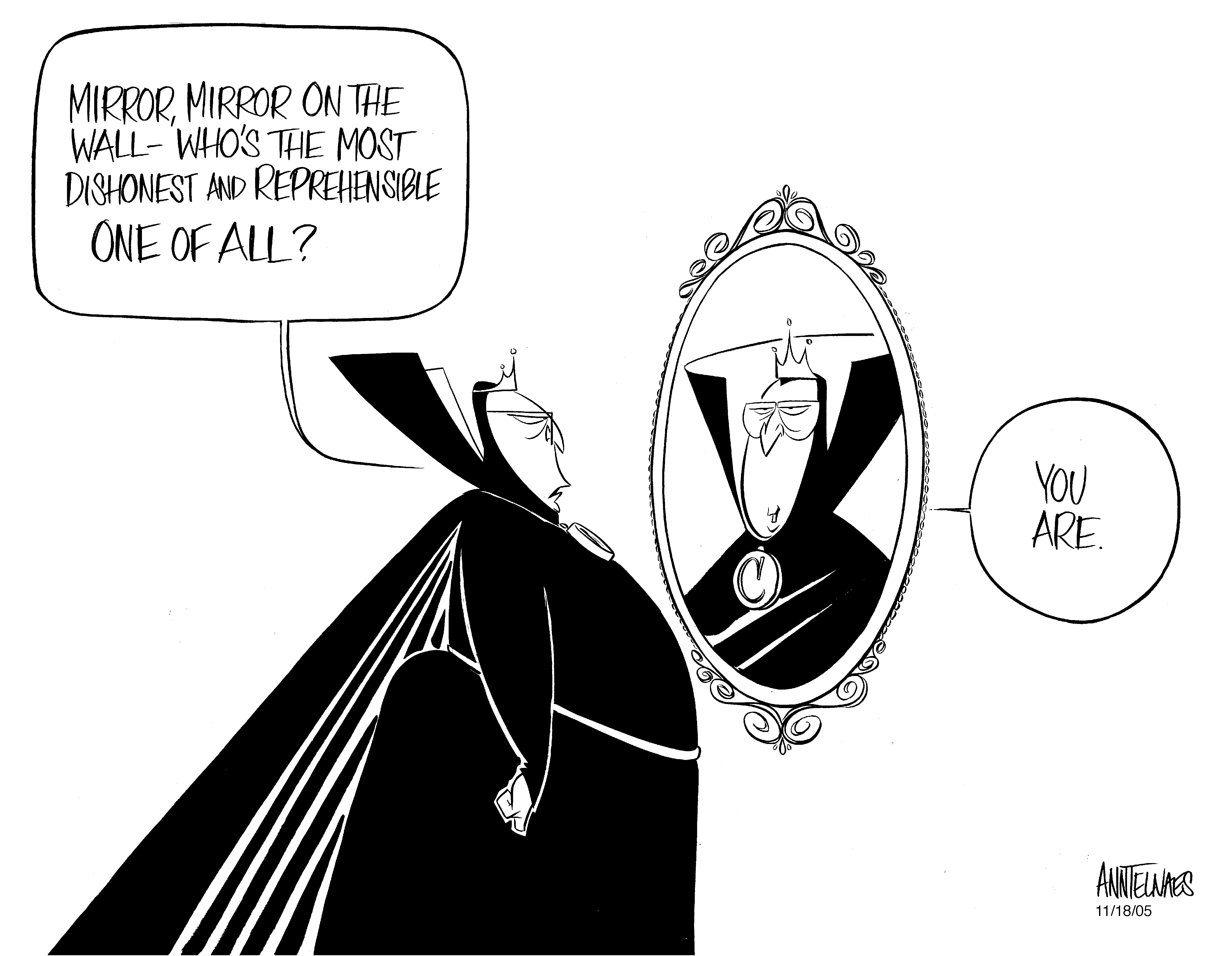
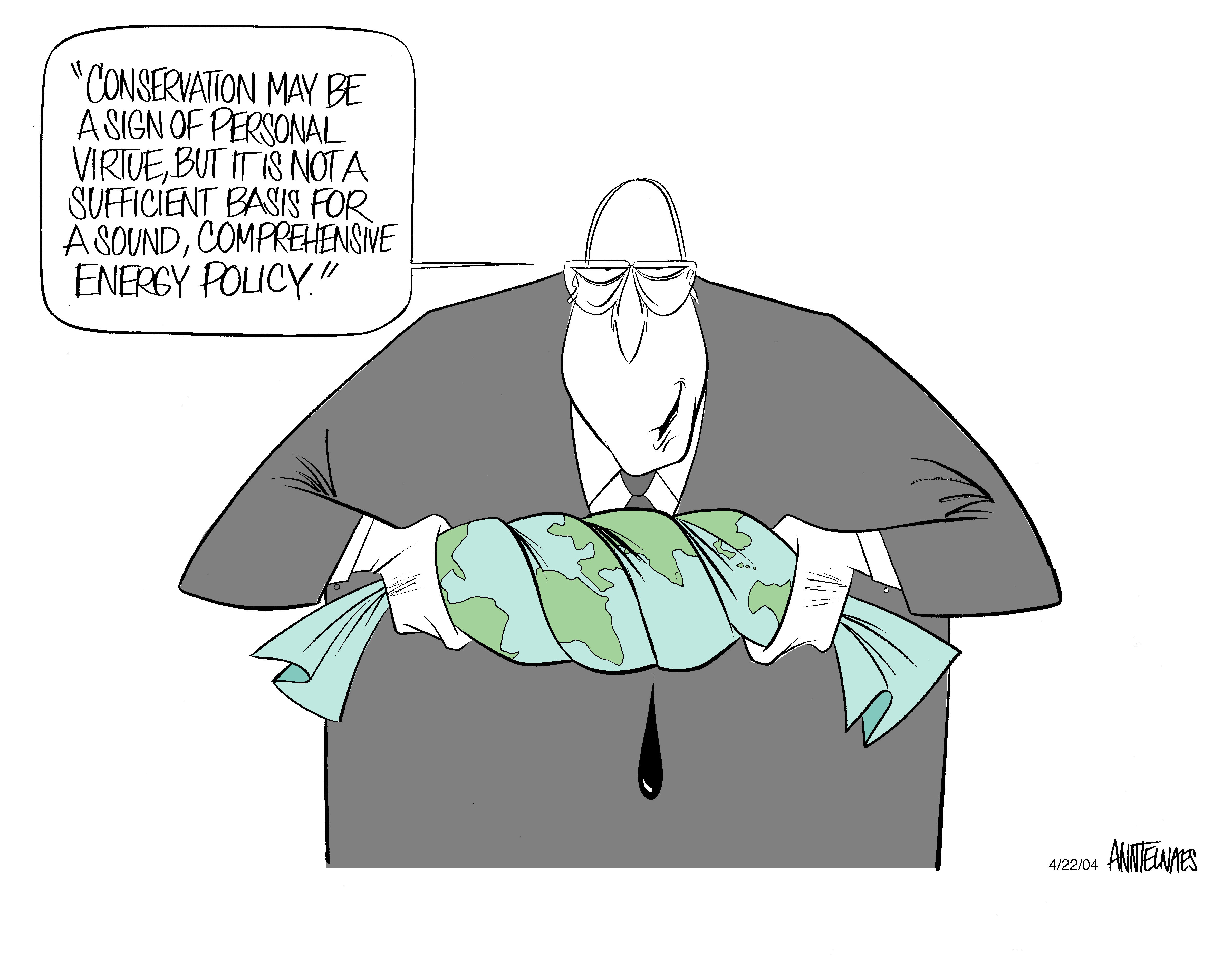
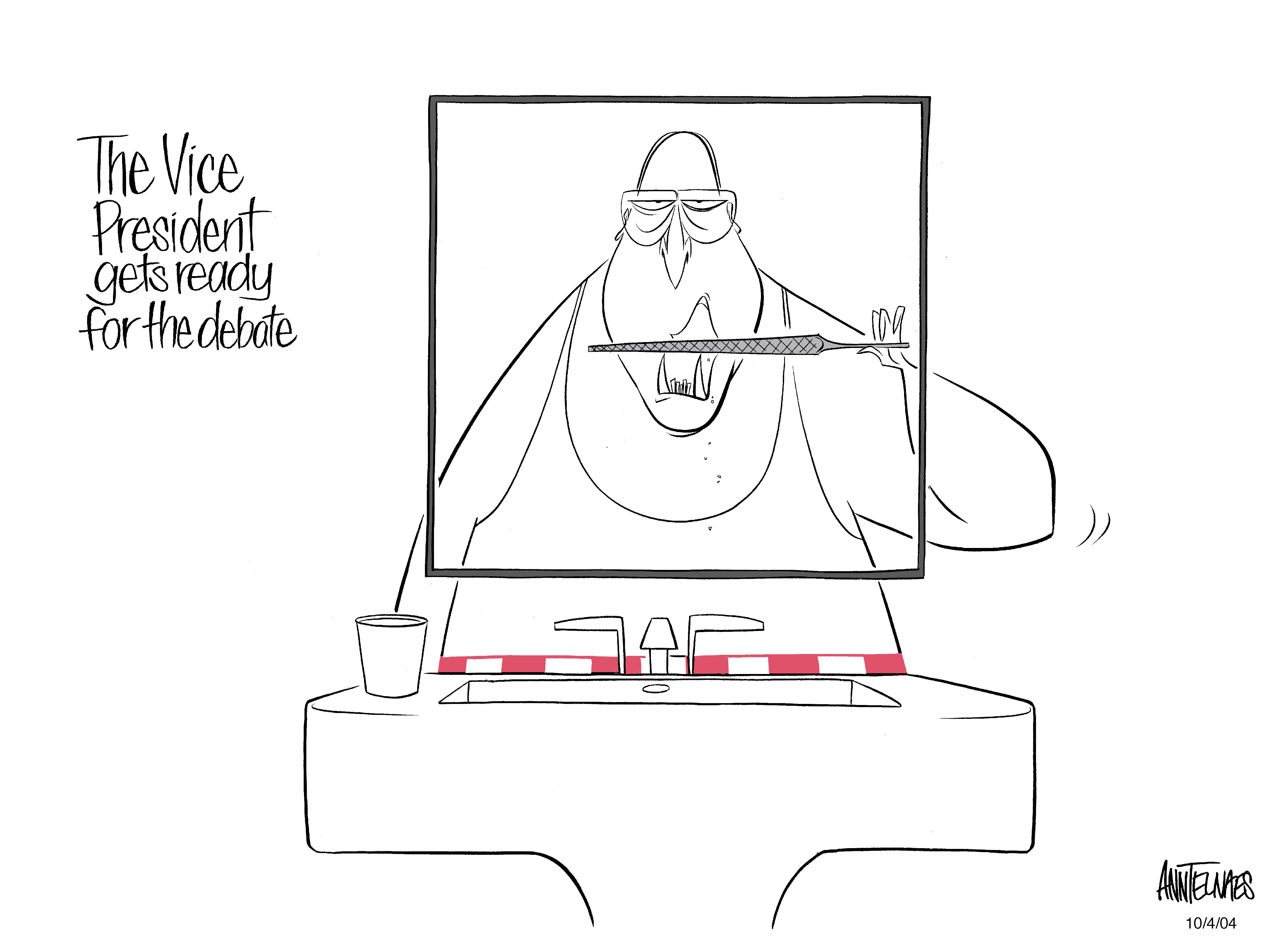
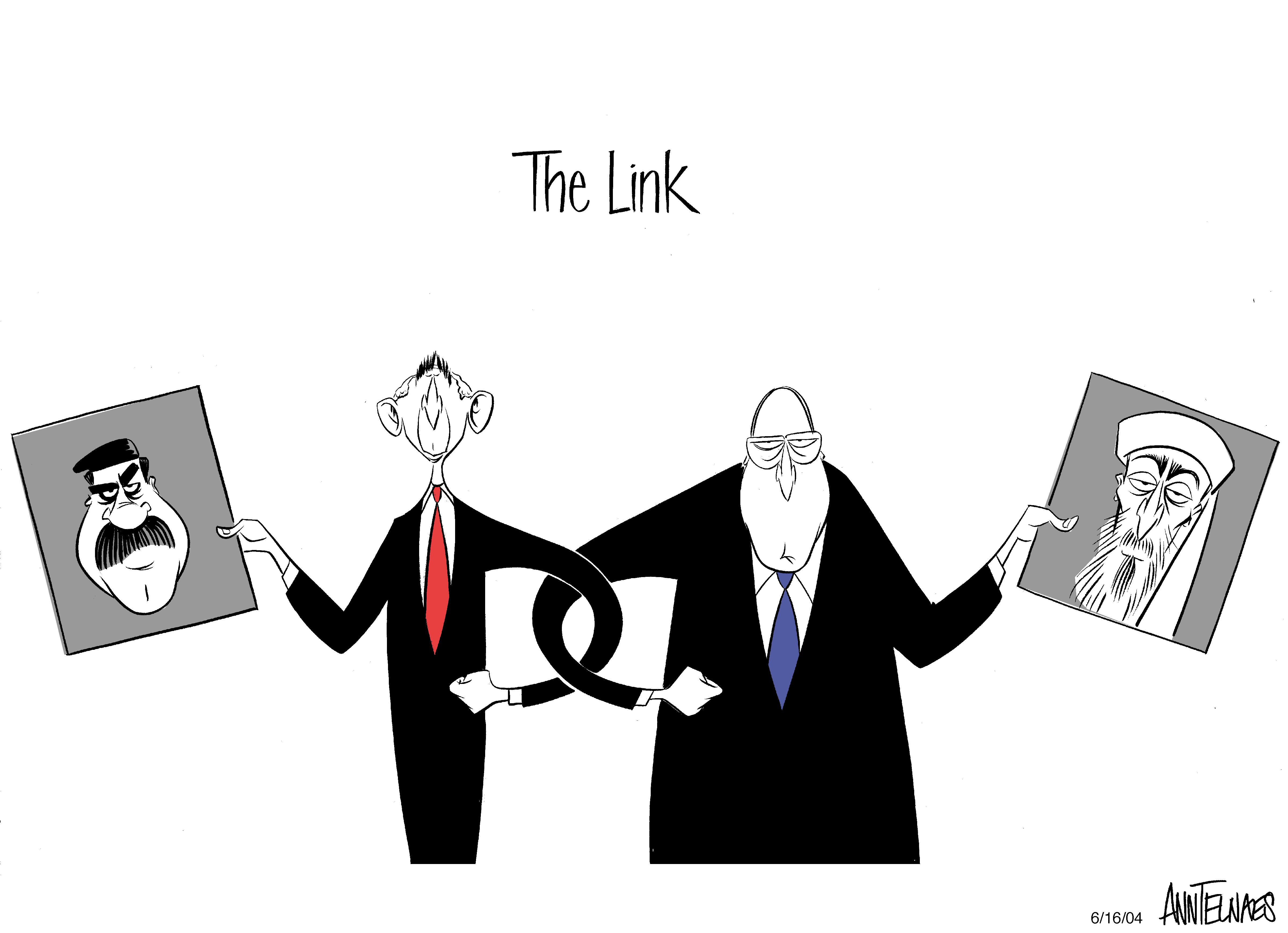
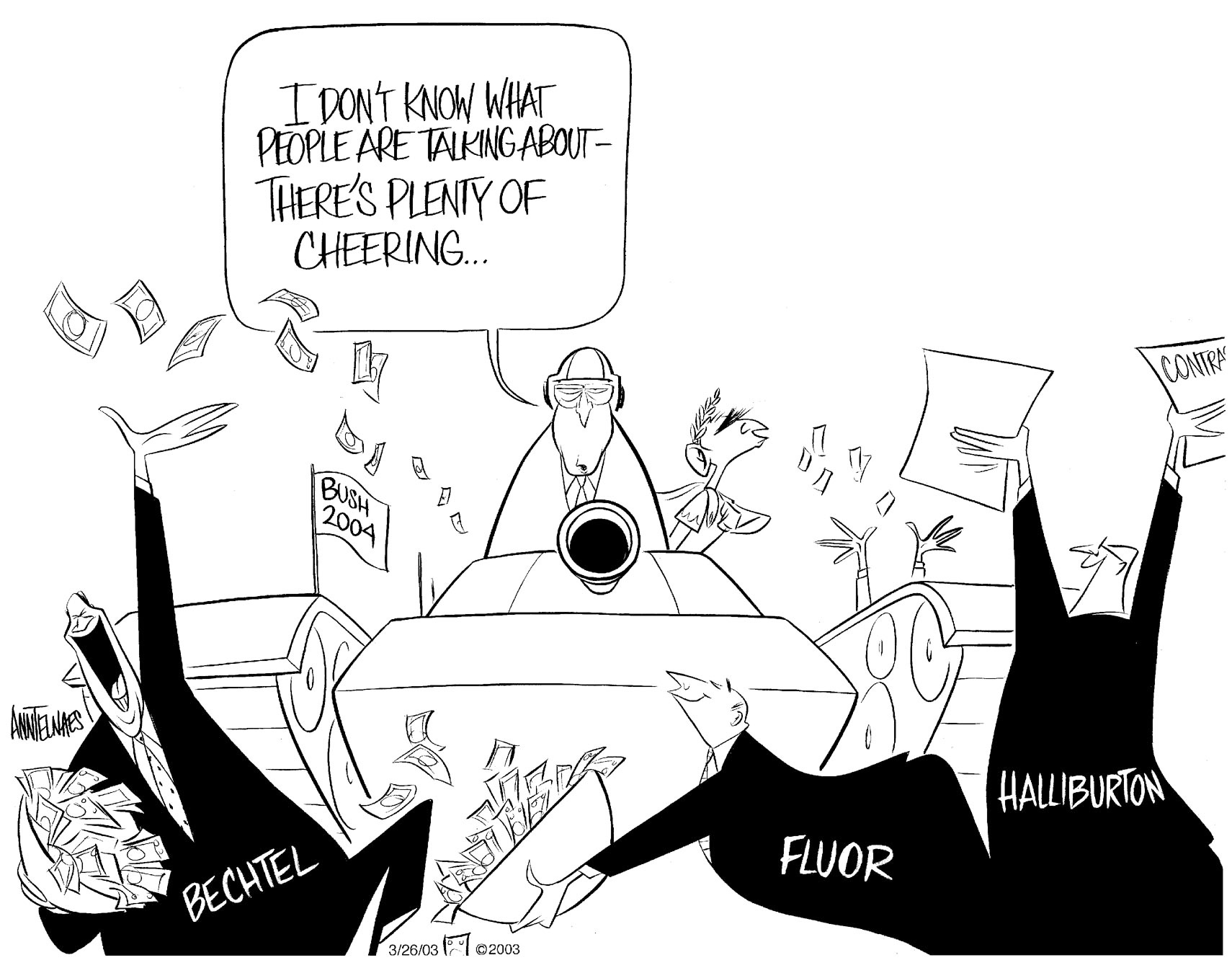
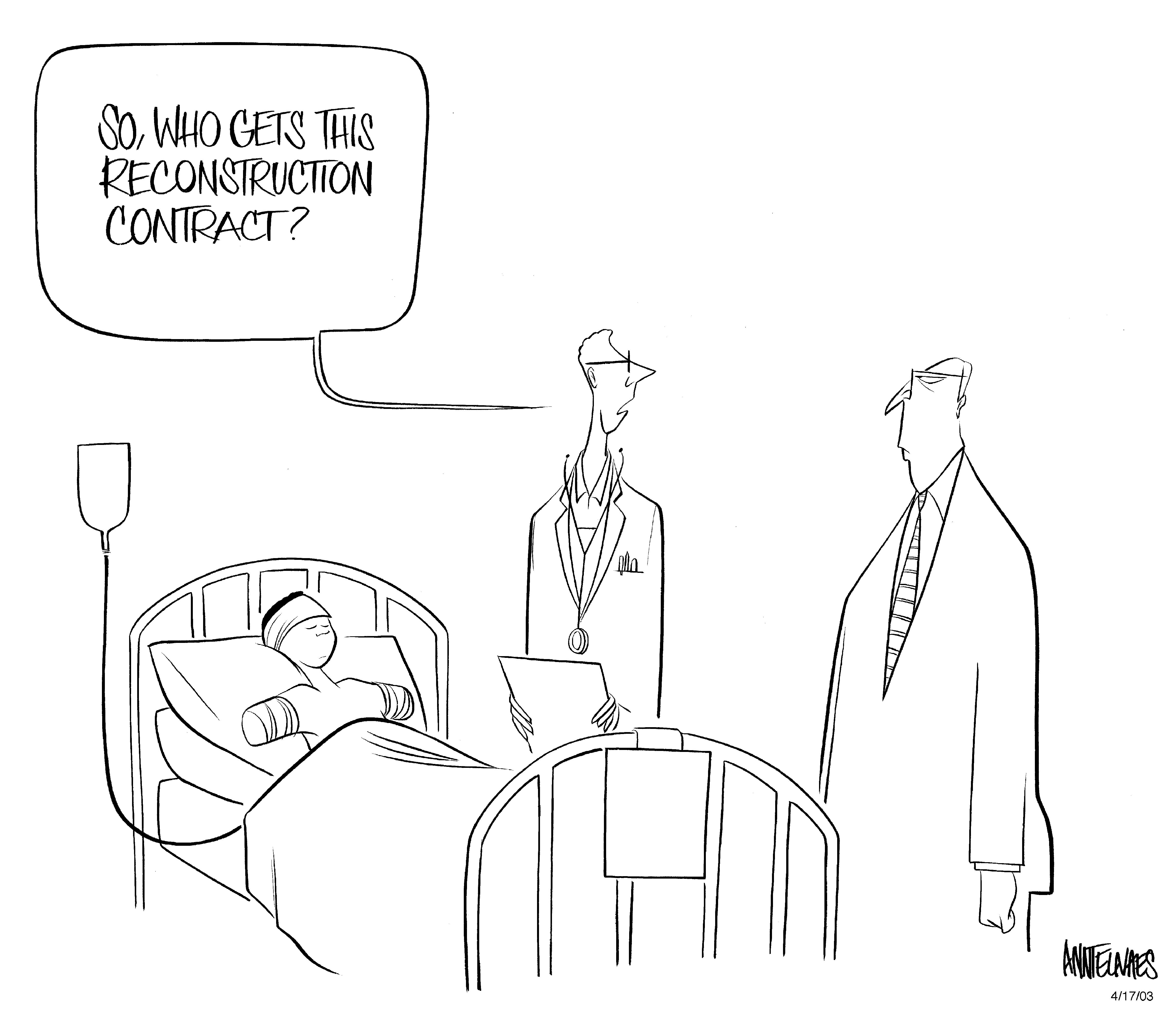
I’ve been in the editorial cartooning profession for over 30 years so I covered both George W Bush administrations. I can safely say I drew more cartoons of his vice president than I did of GW.
(Yes, I titled my book “DICK”)
Once I heard Dick Cheney say these words, I felt I had his caricature down.
WNV linked each of these. Here are the original pages with snippets.
After No Kings, It’s Time to Escalate by Eric Blanc
We need bigger—and more disruptive—nonviolent campaigns that can go viral and peel away Trump’s pillars of support Read on Substack
American democracy is on the ropes. Trump and his billionaire backers are doing everything possible to transform our country into an authoritarian state like Hungary or Russia, where the trappings of institutional democracy mask brazen autocratic rule.
Our president’s sinking popularity numbers might not matter so much if his administration is either able to ignore electoral results or to distort the electoral map so badly that there’s almost no way to vote Republicans out.
Far too many Democrats and union leaders naively hoped that the courts would save us. But the Supreme Court has given a green light to Trump’s power grab, and it appears poised to overturn Section 2 of the Voting Rights Act, the last major legal roadblock to prevent Republicans from disenfranchising millions of Democrats and Black voters across the South.
Are we cooked? Trump would certainly like us to believe he’s unstoppable. Faced with the administration’s relentless offensive against immigrants, free speech, public services, and majoritarian rule, it’s normal to sometimes succumb to despair. But there’s no need to throw in the towel — and there are concrete next steps we can all take to win back the country through nonviolent resistance. As Chicago Teachers Union (CTU) president Stacy Davis Gates reminds us, Trumpism “won’t be stopped just in the courts or at the ballot box.” (snip-there is MORE on the page linked at “Read on Substack” above)
=====
The introvert’s guide to fighting for democracy by Protect Democracy
Six ways to protect democracy — without attending a protest Read on Substack
If you’re reading this, you’re concerned about our democracy’s slide into authoritarianism — and you want to do something about it. Wahoo! You’ve taken the first and most difficult step: committing to action.
Now come the fun parts.
I want to be really clear on a couple things to start out. First, there is no one-size-fits-all best way to exercise your First Amendment rights of speech and association. Every successful social movement has employed a wide variety of tactics and repeatedly adjusted to respond to facts on the ground. Opt for action over agonizing about optimal tactics.
Second, be realistic. We are all busy. Reflect on the commitments you can actually sustain with room to grow. It is far better to regularly move the ball forward on a smaller effort than to dive into and never complete an ambitious one.
Third, be unique! You have unique talents, skills, and passions. Let those guide your advocacy. Focus on projects that bring you joy, things you actually look forward to engaging with week after week. Lean into the comparative skills and expertise you bring to the movement.
With all that in mind, here’s a short list of six ways everyone can protect democracy — even (especially) if going to a protest or some other more public form of engagement isn’t for you.
1. Check in with your local library
Local libraries are the backbone of an informed democratic citizenry, and they provide crucial resources for underserved communities. But their funding is under attack by the administration, which has cut critical funds nationwide.
So, give the library in your neighborhood a call. See how they are doing in relation to funding cuts and if there are ways you can support them. Do they take book donations? Need volunteers? See if there are teach-in or reading groups you can join — or even lead. Offer to help curate pro-democracy reading lists for various ages. Many libraries are open to suggestions for books to add to the collection — here are some recommendations from our team.
2. Fill the gaps left by government programs
Taking care of one another is essential movement building. Check in on your food pantry and community kitchen — many of which have faced funding cuts — to see how you can help. (snip-MORE at the page linked above: “Read on Substack”)
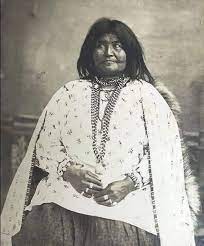
Tze-gu-juni, also known as Huera, was a woman whom Geronimo called “The Bravest of Apache Women.” She was a woman of intensely powerful inner strength who survived captivity, a trek across the desert, and mountain lion attack to serve her tribe as a shaman.
Tze-gu-juni was born around 1847. As a child, she survived a lightning strike that killed her mother and sister. She seems to have lived an otherwise peaceful life until October 14, 1880, the day of the Battle of Tres Castillos, the battle that killed Chiricahua Chief Vittorio and ended Vittorio’s War, a war Vittorio waged against U.S. and Mexican Army soldiers in New Mexico, Texas, and Mexico. Tze-gu-juni was captured along with approximately seventy other women and children and taken to Mexico City, where she was enslaved and given the name ‘Huera’.
During her captivity, Tze-gu-juni became fluent in Spanish and secured a role as a translator at an Apache reservation in Arizona. She and about five others planned an escape and fled into the desert. They had one knife and one blanket and would have to walk for approximately 1300 miles to reach safety. They foraged for food and water in the desert.
The land near San Carlos Reservation
Along the way, Tze-gu-juni was attacked by a mountain lion. She tightened the blanket around her neck which saved her, and fought off the mountain lion. She was badly wounded but managed to reach San Carlos Reservation, where Geronimo and Tze-gu-juni’s future husband, Mangas, were living. Her hands and face were scarred for the rest of her life and she had limited use of her hands thereafter. (snip-MORE; go read it!)
Tze-gu-juni, Image from History.net, provenance unknown
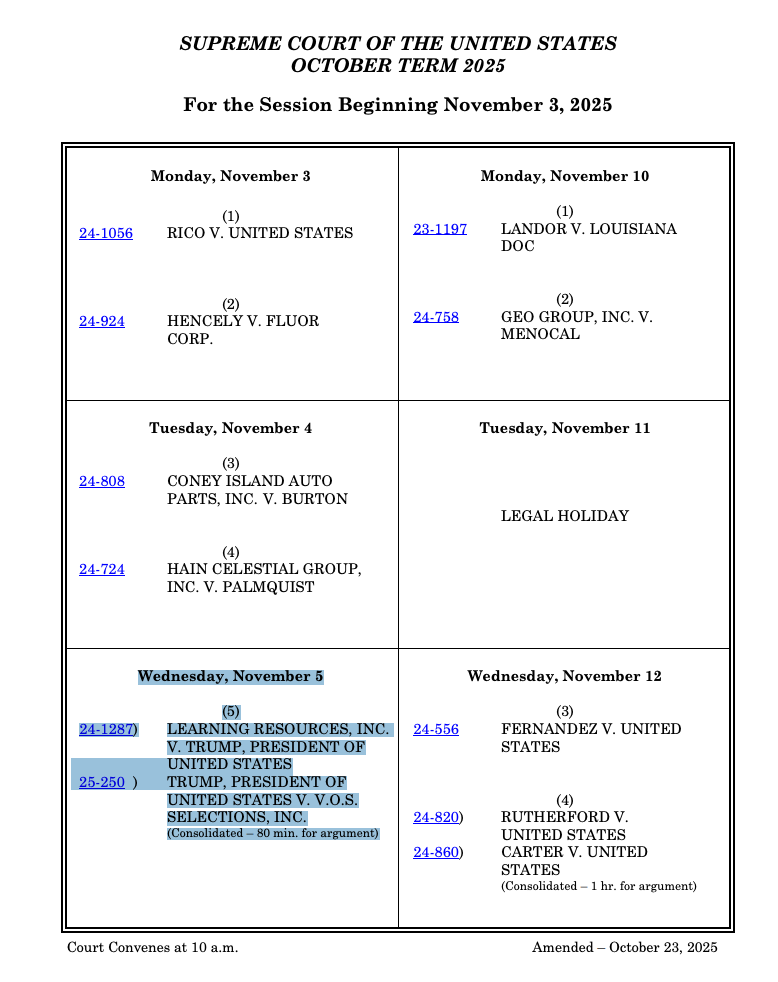
This Wednesday, the Supreme Court will hear the Trump tariffs case, arguably one of the most important cases it will hear all term.
But, it’s important to understand that this is not a case about tariffs in general or about whether they are good policy. It’s a case about specific tariffs that President Trump imposedin February and whether he had the statutory authority to impose them. In other words, this is yet another example of Trump attempting to seize power that neither the Constitution nor our laws grant him and going to the Supreme Court in hopes they will validate it nonetheless. After argument, the Supreme Court will decide whether Trump had the legal authority to impose these tariffs in two cases.
We’ve been tracking this issue since Trump first threatened to impose tariffs, waffling back and forth seemingly from minute to minute. We studied the U.S. Court of Appeals for the Federal Circuit’s decision that rejected Trump’s effort to impose tariffs using IEEPA (I-E-Pa), the 1977 International Emergency Economic Powers Act, for the very simple reason that the Act, unlike other statutes that do give a president the right to impose tariffs, doesn’t mention tariffs at all. It does not give the president any authority to impose them under the statute that he has expressly said he used to do so. This is the kind of textualist argument conservative justices have backed in other cases, and to abandon that approach here would be a sharp and hypocritical departure for them. Last term, Justice Gorsuch wrote that the justices’ primary focus should be on the text of the statute.
The Constitution gives the power to impose taxes, which includes tariffs, to Congress. Because IEEPA doesn’t extend that power to the president, his use of it here is just a power grab, the kind of practice the Supreme Court should push back against if it intends to remain relevant to the American experiment. The Federal Circuit’s decision pointed out that while other laws expressly give the president the power to impose tariffs, IEEPA does not. Congress knows how to give the president the power to impose tariffs when it wants to and because it did not do so here, that should be the end of the inquiry. The administration should lose here. So what we hear in oral argument, even though it won’t necessarily signal where individual judges will end up, is worth following closely to see what tea leaves can be read for this case. It may also give us some sense of whether the Court intends to act as a check in other cases involving Trump’s power grabs.
The “major questions” will also be in play on Wednesday. You may recall it from recent terms of Court, where a conservative majority has recently used it to say there must be clear guidance from Congress before a federal agency can act on a major question of economic or political significance. Here’s the wrinkle: The Court has only used the doctrine to hamstring the Biden administration, and not to hinder Trump.
In 2022, the Court decided West Virginia v. Environmental Protection Agency, rejecting the EPA’s authority to regulate greenhouse gas emissions from coal-fired power plants because Congress had not specifically authorized a regulation with such major political and economic consequences.
In 2023, the Court rejected Biden’s student loan relief package in Biden v. Nebraska, holding that even though a federal statute allowed the Secretary of Education to “waive or modify” student loan debt, that authorization was insufficient for the Biden policy because this was a major question.
The Federal Circuit used these cases as precedent against the Trump administration. “Tariffs of unlimited duration on imports of nearly all goods from nearly every country with which the United States conducts trade” is “both ‘unheralded’ and ‘transformative,’” the court wrote, concluding that as a result, the administration needed to be able to “point to clear congressional authorization” for its tariffs. The absence of any language in the statute authorizing them was fatal to Trump’s case in the lower court. But the sardonic joke among appellate lawyers has been that the major questions doctrine only applies to Democratic administrations. On Wednesday, we will see whether that holds up and if the Court’s conservative majority is willing to twist itself into pretzel logic to support this administration’s political objectives.
There are other issues to look at this week:
As the Trump administration continues its extraterritorial strikes on supposed drug traffickers, there is increasing concern about the legality of that conduct. Georgetown law professor Steve Vladeck and I will take up that issue on Monday evening at 9 p.m. ET/8 CT in a Substack Live (if you subscribe to Civil Discourse, you’ll receive an email inviting you to join us when we go live, so mark your calendars and be ready).
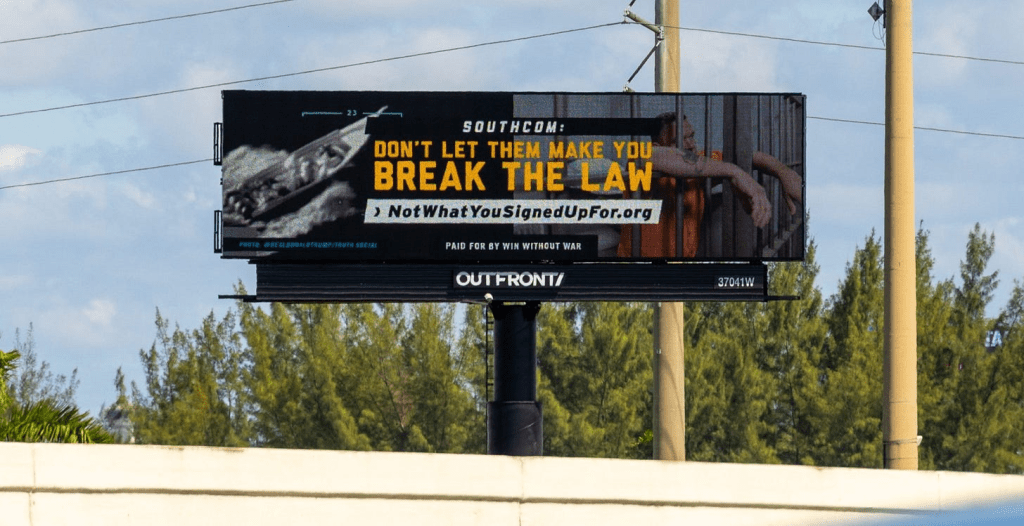
As we head into the week, there are billboards up on the expressway heading toward U.S. Southern Command, in Doral, Florida, that tell troops “Don’t let them make you break the law” in response to those attacks.
New billboards are going up near Miami, Chicago, and Memphis, Tennessee, as well, a warning to troops being deployed in American cities. The billboards are part of a campaign by veterans to support and encourage the troops to uphold military order.
If you’ve forgotten about DOGE, unfortunately, it’s time to remember. There are reports that the Pentagon’s DOGE unit “is leading efforts to overhaul the U.S. military drone program, including streamlining procurement, expand homegrown production, and acquire tens of thousands of cheap drones in the coming months.” And the Bulwark reported that Rear Admiral Kurt Rothenhaus was recently removed from his post as chief of naval research, the top post at the Office of Naval Research (ONR), and replaced by Rachel Riley, who has been working in DOGE-related roles in the Trump administration. Although she was a Rhodes Scholar, Riley, 33, has “no apparent naval experience.”
There are also reports of DOGE interfering with the Department of Agriculture. Senator Dick Durbin tweeted that “President Trump and the DOGE cowboys want to close and diminish critical agricultural research at the University of Illinois. The only other soybean lab like that in the world is in…China. Our President is ceding our agriculture research leadership to China.”
Remember back in February, when Trump floated the idea that everyone could get a $5,000 check from all of DOGE’s “savings”? That didn’t work out so well, did it? You may want to remember this for Thanksgiving dinner.
Tuesday is election day. There is the Virginia governor’s race and the New York City mayoral race. Also, the governorship is at issue in New Jersey. A California ballot initiative will determine whether that state will engage in defensive redistricting designed to offset the aggressive way the Trump administration has demanded Republican states use it to spike the balance between the two parties in the House in their favor, effectively letting politicians choose their voters, instead of the other way around. There is also a race in Pennsylvania, where three Democratic members of the state Supreme Court face retention votes that could be highly significant in the potential 2028 battleground state.
Vote.org, a nonpartisan voter registration and engagement platform, announced a “huge spike” in voter registration ahead of the elections, with their online registration platform being used more than twice as many times as they were during the comparable 2021 election cycle.
They reported that:
More than 80% of those users are under the age of 35
Nearly half (46%) are just 18 years old
Compared to 2021, there are more young voters, more women, and more voters of color using the platform
It’s good news for pro-democracy Americans.
The house will remain out of session, yet again this week.
Epstein. Epstein. Epstein.
But as we all know, that means SNAP is still in danger, which means many of our fellow citizens could begin to go hungry this week if the administration tries to skirt compliance with or obtains an injunction staying decisions by a court in Massachusetts, and a more specific one in Rhode Island, which require the administration to use emergency dollars to fund SNAP. There, Chief Judge John J. McConnell Jr. ordered the USDA to distribute contingency funds and to report to the Court on its progress by 12:00 p.m. on Monday, November 3. Expect more litigation this week.
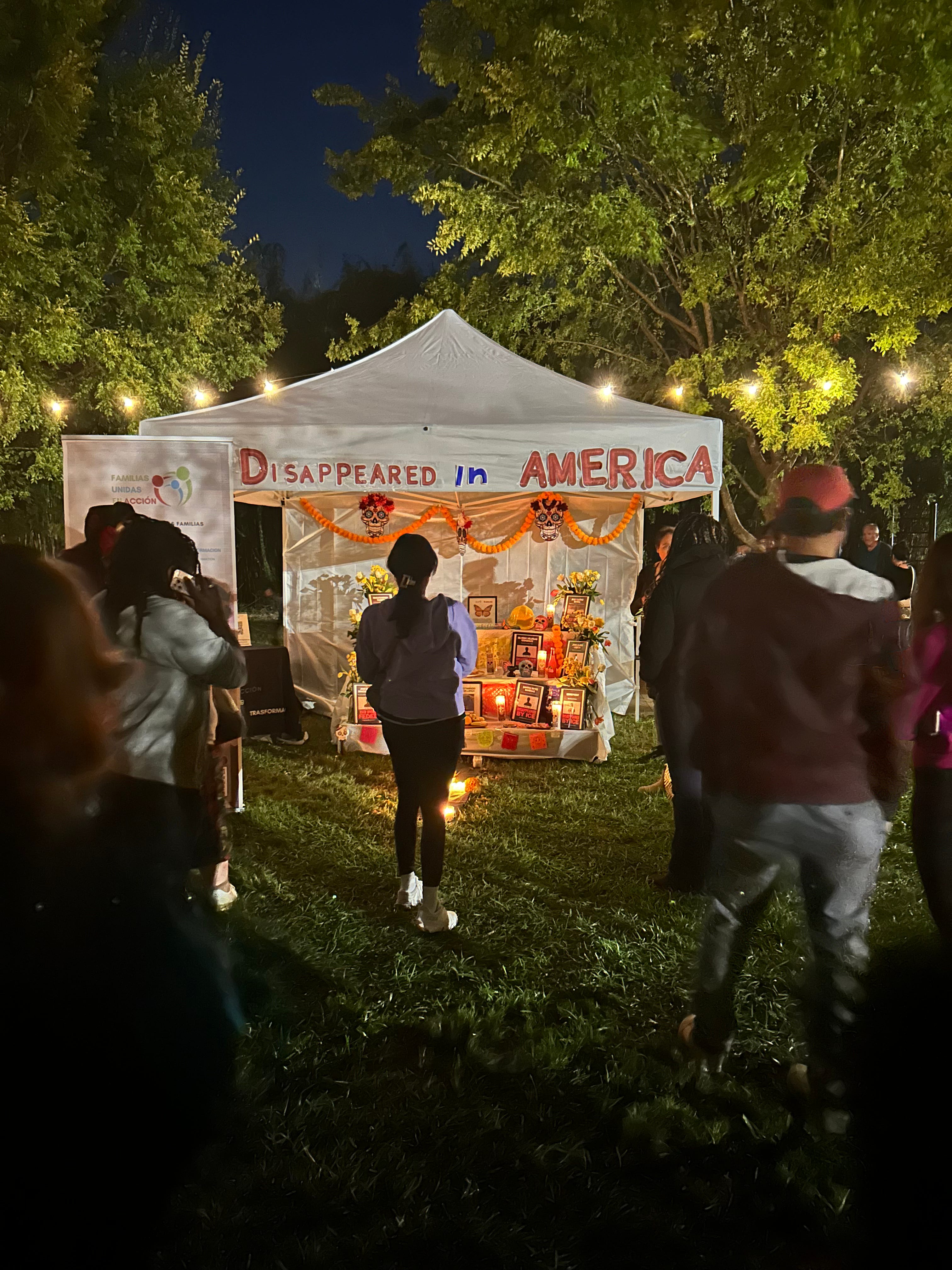
ICE agents are still engaging in “enforcement actions” in American communities and residential neighborhoods. Stories of abuses are circulating; it’s a critical moment for using our skills to ferret out misinformation and focus on the truth. This photo is from a Day of the Dead celebration in New Orleans.
It is clear that this is a week that will require us to summon our courage and continue to pay close attention. The times are far too important for us to look away. Remind yourself that dictators use overwhelm as a tactic for getting people to give up and submit to their rule. Let’s not do that to us.
ChatGPT, Gemini, DeepSeek, and Grok are serving users propaganda from Russian-backed media when asked about the invasion of Ukraine, new research finds.
Snippet:
“It raises questions regarding how chatbots should deal when referencing these sources, considering many of them are sanctioned in the EU,” says Pablo Maristany de las Casas, an analyst at the ISD who led the research. The findings raise serious questions about the ability of large language models (LLMs) to restrict sanctioned media in the EU, which is a growing concern as more people use AI chatbots as an alternative to search engines to find information in real time, the ISD claims. For the six-month period ending September 30, 2025, ChatGPT search had approximately 120.4 million average monthly active recipients in the European Union, according to OpenAI data.
The researchers asked the chatbots 300 neutral, biased, and “malicious” questions relating to the perception of NATO, peace talks, Ukraine’s military recruitment, Ukrainian refugees, and war crimes committed during the Russian invasion of Ukraine. The researchers used separate accounts for each query in English, Spanish, French, German, and Italian in an experiment in July. The same propaganda issues are still present in October, Maristany de las Casas says.
Amid widespread sanctions imposed on Russia since its full-scale invasion of Ukraine in February 2022, European officials have sanctioned at least 27 Russian media sourcesfor spreading disinformation and distorting facts as part of its “strategy of destabilizing” Europe and other nations.
A database containing information on people who applied for jobs with Democrats in the US House of Representatives was left accessible on the open web.
Snippet:
“Today, our office was informed that an outside vendor potentially exposed information stored in an internal site,” Joy Lee, spokesperson for House Democratic whip Katherine Clark, told WIRED in a statement on October 22. DomeWatch is under the purview of Clark’s office. “We immediately alerted the Office of the Chief Administration Officer, and a full investigation has been launched to identify and rectify any security vulnerabilities.” Lee added that the outside vendor is “an independent consultant who helps with the backend” of DomeWatch.
There are many unsecured and publicly accessible databases across the internet, and the researcher says that they might not have paused to investigate the DomeWatch data had they not noticed key words involving top-secret security clearances. This underscores the concern, the researcher says, that while the database is small, it contains information that would be potentially valuable in nation-state espionage. One entry, for example, listed a person who had “intelligence” and “US-China relations” experience.
“Exposed databases are a widespread, non-partisan cybersecurity problem. Left unchecked, they enable targeted espionage, fraud, and identity abuse,” says Alexander Leslie, senior advisor for government affairs at the threat intelligence firm Recorded Future, who was not involved in the research. “If accurate, this dataset would be extremely sensitive. Military histories and clearance status give adversaries precise reconnaissance and pretexting opportunities, and foreign espionage actors could further use this data for spear-phishing, impersonation, and targeted social-engineering to gain access or compromise accounts.” (snip-MORE)
This post continues my thoughts on the quote from “Ted Lasso” who said “be curious, not judgemental”.
Some time ago I learned that the psychotic magic of any supervisor or manager is the ability to take the attitude and issues of the workers in stride and gather them towards getting a task done. I’ve worked with some interesting people; rapists, drug dealers, people who were mentally disturbed, folks who used drugs and alcohol, the violent and even just the stubborn and immature.
Each of these men and women brought their own magic along with their own baggage, and I have been routinely blessed and amazed with what they can do. When working with rough people – those who rose above were a joy, others ultimately did not fit the organization, some went to jail, a few actually died.
But, this year, wow – it has really pushed me to lengths and depths I’d hoped never to see, and that has taken its toll on me. I’ve experienced depression, anger, and pain that required me to see a very unaffordable doctor – but not before I finally lost my temper. In that moment, the fear of the shop failing, the anger of the current political environment, the depression and the debilitating pain came together to have me behaving in an unprofessional, if verbally artistic and vulgar, manner.
Others who have been subject to this person’s ways were very understanding, two were quite giggly about it and no one was critical of me for my lost temper. Quite frankly, the guy is a prototypical engineer: thinks he’s smarter than everyone. But he’s also taking care of a recently disabled wife, is in financial hardship, frustrated that he’s tied the end of his career to this business. Once you get beyond his insecurities, he’s fairly funny, has had a lot of interesting experiences, and is surprisingly smart.
I knew I was wrong; took a short cut to feel self-righteous. Yet somehow I became a part of a group because I lost my temper and did something stupid. I responded unprofessionally because I was hurting, I was angry, I felt abused and disrespected. I responded unprofessionally not because of what he said that time, any time, but because of my own inability to deal constructively with my problems, and the task did not get completed.
That person is outside of my authority. And yes, the ceo should have put better controls on him so he wouldn’t abuse his people. But, it got me thinking. The aftermath of this had me curious about group mentality, shared grievances, and how maga people are acting.
Right or wrong, they feel they have grievances. They feel angry, abused, disrespected. I find it very interesting that they have chosen to latch on to the first charismatic fool that blasts out their pain for them to the point that they refuse to recognize this foundering wreck for what he is! Maga’ts follow his words like mana, respond violently when countered, and all for a person who doesn’t share their goals or their reality. In short, their pain and emotional turmoil has caused them to lose their curiosity.
Now there is fair evidence to say that magats have not been abused and disrespected, to which I would argue that they have. These folks have taken the words of faux news and those such to heart; they have had their fears stoked, they are defensive and angry because they confuse their fears and angers for a reality that doesn’t bear investigation.
So disillusioned and angry with reality in the scope of the manipulation their preferred information sources provide that they sometimes aggressively believe everyone is a liar except, ironically, those lying to them. Worse, they misconstrue opinion bias for research, and really don’t appreciate being told that.
So, some of you who have weathered this are screaming in your head “who cares!” – and some of you have actually screamed this out-loud. This is not our fault, I can hear you say – but it is our problem. As any of us who have tried to reach these folks can attest, seeking to change their outlook, to get them to consider things differently, to listen to f’ing reason! is incredibly difficult.
And, somehow, 70million of these fools voted in the last election. 70million defensive, angry, uninformed and misinformed people who can’t listen to anyone not associated with tRump are voting on our future. They think we are wimps, naive snowflakes because a 30-second news-cycle bombastically bullshitted them, and they liked it.
I find that very curious and extremely frightening, and I have no idea what to do about it.
Part III coming soon to a Scottie’s Blogs near you. 🙂
OK, so we’ve posted about this here at least a couple of times, and now we’re in the week where people will not be receiving benefits on which they depend, to eat. Here’s one more story. And, yes, this is a particular cause of mine, so I want to note that I’ve been looking around town to see where I might be able to help out should this come to fruition, as it appears to be doing. My posting may be sparser, because trying to help people get enough to eat will take up more time now. But, as we’ve also written here, building and sustaining community is important during times such as those we in the US find ourselves, and for me, helping people get enough to eat is sustaining community. So, while I’ll still be around, I may not post as often; the energy only goes so far. Here’s today’s AP story:
The new notice comes after the Trump administration said it would not tap roughly $5 billion in contingency funds to keep benefits through the Supplemental Nutrition Assistance Program, commonly referred to as SNAP, flowing into November. That program helps about 1 in 8 Americans buy groceries.
“Bottom line, the well has run dry,” the USDA notice says. “At this time, there will be no benefits issued November 01. We are approaching an inflection point for Senate Democrats.”
The shutdown, which began Oct. 1, is now the second-longest on record. While the Republican administration took steps leading up to the shutdown to ensure SNAP benefits were paid this month, the cutoff would expand the impact of the impasse to a wider swath of Americans — and some of those most in need — unless a political resolution is found in just a few days.
The administration blames Democrats, who say they will not agree to reopen the government until Republicans negotiate with them on extending expiring subsidies under the Affordable Care Act. Republicans say Democrats must first agree to reopen the government before negotiation.
Democratic lawmakers have written to Agriculture Secretary Brooke Rollins requesting to use contingency funds to cover the bulk of next month’s benefits.
Government shutdown The AP has journalists around the country covering the shutdown of the federal government. What questions do you have for them?
But a USDA memo that surfaced Friday says “contingency funds are not legally available to cover regular benefits.” The document says the money is reserved for such things such as helping people in disaster areas.
It cited a storm named Melissa, which has strengthened into a major hurricane, as an example of why it’s important to have the money available to mobilize quickly in the event of a disaster.
Some states have pledged to keep SNAP benefits flowing even if the federal program halts payments, but there are questions about whether U.S. government directives may allow that to happen. The USDA memo also says states would not be reimbursed for temporarily picking up the cost.
Other states are telling SNAP recipients to be ready for the benefits to stop. Arkansas and Oklahoma, for example, are advising recipients to identify food pantries and other groups that help with food.
Sen. Chris Murphy, D-Conn., accused Republicans and Trump of not agreeing to negotiate.
“The reality is, if they sat down to try to negotiate, we could probably come up with something pretty quickly,” Murphy said Sunday on CNN’s “State of the Union.” “We could open up the government on Tuesday or Wednesday, and there wouldn’t be any crisis in the food stamp program.”














 Scottie's Playtime