Gah-this one won’t embed, and it’s hilarious!! It’s about POTUS’s failed businesses. Do click; it’s great!
https://youtube.com/shorts/Kcol2OLmmko?si=jbo2a_Rarb8s-rsO
Gah-this one won’t embed, and it’s hilarious!! It’s about POTUS’s failed businesses. Do click; it’s great!
https://youtube.com/shorts/Kcol2OLmmko?si=jbo2a_Rarb8s-rsO
Dear friend,
This week I’ve been struggling a little with the fact that I can’t do all of the things that I want to. My book comes out next week (you’re in it!) and I feel so excited and lucky but also terrified and filled with dread. I worry people won’t like it…that no one will show up to the book tour…that I’m failing my publisher because I can’t do some of the things that most authors would jump at because I just don’t have the energy or mental strength to say yes to everything without making myself sick. I even felt a little bad about drawing this week when I probably should be doing author stuff.
But then I reminded myself that I need this quiet drawing time (is it considered “quiet” when I’m doing it while binging Dexter? I say yes.) to keep myself sane and to replenish my energy and to remind myself that I am more than just my work, and that it’s okay to not work yourself to exhaustion even if it’s for something you love.
I suspect we all struggle with this. Perhaps as parents or partners or in our career…the urge to try to be more than our bodies and minds allow, but not being able to because you are…human. It’s so easy to put ourselves last when it’s for something else that you care about.

“There is a fine line between beautiful and suffocating. Don’t forget to leave room for yourself.”
So this is a reminder from me to you to make time for yourself if you can. To rest. To create. To refill your cup. There is so much beauty in what we do for others, for our work and for our passions…but there is also a necessary beauty in what we do for ourselves…a beauty we often forget.
Sending love (and quiet moments of calm repose even when watching serial killer shows)
~me
This morning I was in New York filming the Today Show where I managed to talk about explosive diarrhea, fears of my foot falling off, apologized for using my hands too much, sat on them, promptly pulled my hands back out bc I can’t talk without them and then made all the anchors put pencils in their mouths…all within about 4 minutes. By this afternoon I was in Amish country in Pennsylvania where I met some very nice “fancy Amish” people (this is a real thing) and did not pet a horse even though I really wanted to. Tomorrow afternoon I’ll be in Lancaster for my first tour stop and signing even though technically my book doesn’t officially come out until Tuesday. Then it’s back to NYC, and then a stop in New Hampshire for another reading and signing and then I get to go home for a week to rest for the next round. I’m feeling tired, happy, lucky, scared, excited, embarrassed…all of the things. Oh, and did I mention my first book got banned from a Texas high school after a senate bill deemed it obscene and profane? It’s been a busy week. I would link to everything but I can’t figure out how to do this with my phone
I should have written all this before I left but i was overwhelmed with packing all the wrong things and so instead I’m writing this tonight, on the eve of my first new book event in over half a decade, to distract myself from the fear and from the incredibly loud but very happy drunken wedding taking place two rooms down from mine. It feels like you’re here, in a weird way. I know that’s strange, but it’s comforting.
I’ve drawn in planes and cars and green rooms to keep my hands and mind busy but it’s a jerky mess so instead I’m sharing a drawing from my new book, because it seems fitting while I’m traveling so much in spite of the fact that I never know where I am. It’s an adventure, after all, if I look at it with the right kind of eyes.

I super crazy love you,
Jenny
=====
The simple ritual of going outside to welcome nightfall can be extremely relaxing. Of course, this has been done since the dawn of time. However, the practice of “dusking” has recently regained popularity and has become a trend for people looking to boost their mental well-being. The Dutch have been doing this for ages. In…

(I can attest to this; I go outside with Ollie while he does his night-night wee & poo, and while I wasn’t aware it’s an actual thing, it is a calming little ritual, to look at the sky and see what I see. There is more than one way to do it. Soon, it’ll be time to repel mosquitoes, of course, but right now, I just wear a little jacket because it’s nice and cool bordering cold outside.)

A person watches the sky as night falls. – Photo credit:Canva
The simple ritual of going outside to welcome nightfall can be extremely relaxing. Of course, this has been done since the dawn of time. However, the practice of “dusking” has recently regained popularity and has become a trend for people looking to boost their mental well-being.
The Dutch have been doing this for ages. In the Netherlands, dusking is referred to as “schemeren,” which translates to “be dusky, to be in twilight.” It’s the idea of letting the lights turn off while the starry night envelops the day. Watching the color of the sky subtly fade can do wonders for a busy mind.
In a piece for The Guardian, writer Rachel Dixon describes her time at the Dark Skies “dusking event” in the United Kingdom in February 2026. “The darkening sky is faintly illuminated by a sharp sliver of crescent moon and the first stars. Bats are swooping in search of supper, an owl is softly hooting, and the dark outline of a ruined castle looms beyond the walls.”
She explains how this ritual has resurged, writing, “The custom had all but died out until it was revived by Dutch poet and author Marjolijn van Heemstra a few years ago. Now she is encouraging other countries to adopt dusking, running events in Ireland, Germany, and here in Yorkshire.”
Dixon shares that van Heemstra also spoke at the event she attended. “Dusking is about looking at one point and seeing it fade. Don’t look around too much; focus. Trees are very good – they rise up for a moment and then fade away,” van Heemstra eloquently said.
Not only is the concept beautiful, but it can also do wonders for anxiety and spark the imagination.
Discover the cosmos! Each day a different image or photograph of our fascinating universe is featured, along with a brief explanation written by a professional astronomer.
2026 March 14

A Year for K2-315b
Artist’s Illustration Credit: NASA Ames/JPL-Caltech/T. Pyle, Christine Daniloff, MIT
Explanation: Want to visit a planet that has 3.14 days in a year? Then plan a trip to K2-315b, an earth-sized planet orbiting around a cool, red, M dwarf star about once every 3.14 days. The exoplanet’s discovery, based on publicly available data from the planet-hunting Kepler Space Telescope’s extended K2 mission, was announced in 2020. K2-315b’s measured orbital period in days is nearly equal to the extremely popular irrational number Pi. That puts the exoplanet so close to its parent star that its surface is likely very warm, baking-hot in fact. And this Pi planet is over 185 light-years away. So instead of trying to arrange for an interstellar vacation to K2-315b, there may be easier and more comfortable ways for you to celebrate Pi day on planet Earth.
Tomorrow’s picture: equinox at the pyramid

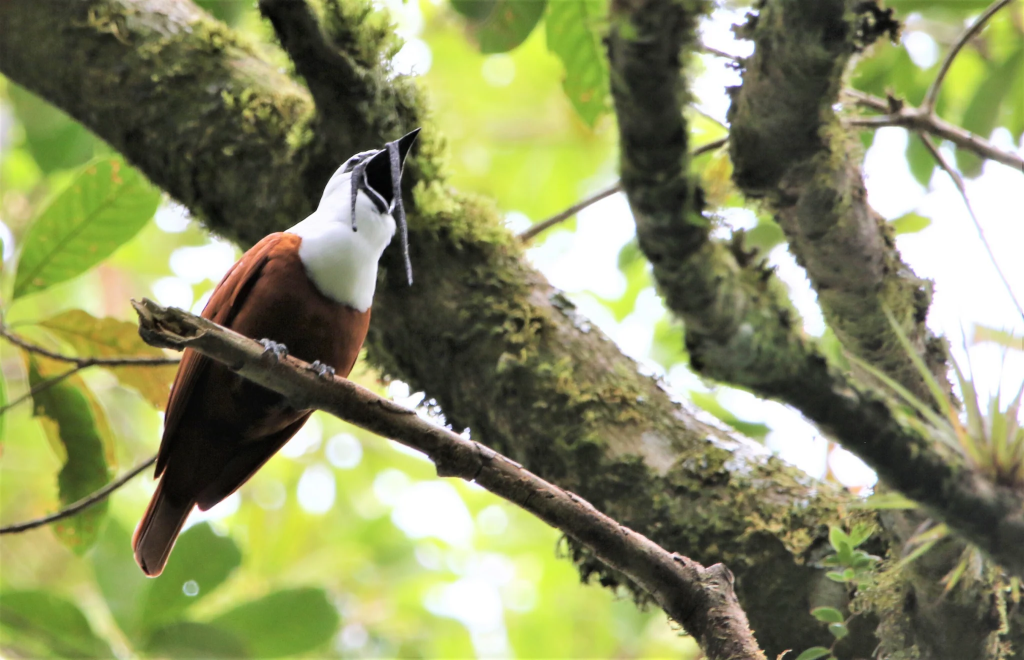
The Speckled Tanager is a preternaturally beautiful bird, even among the other stunning Central and South American tanagers of the family Thraupidae. The black speckles that give this species its name come from black feathers with brightly colored edges, giving the impression of scales over the bird’s body. The edges blend together to create a palette of iridescent yellow-green and green-blue over the body of the bird.
Striking as these patterns and hues may be, they actually provide good camouflage for this bird up in the green, backlit forest canopies where it spends most of its time. The tanager’s speckles, like the spots on a jaguar or the camo pattern on a hunter’s jacket, are a form of disruptive patterning, a camouflage strategy that breaks up or obscures an animal’s outline, allowing it to blend with its background. Up among the bright green leaves, these birds can easily go unseen. Up close, however, their plumage is hard to ignore.
Birds around the world are declining, and many of them face urgent threats. The Speckled Tanager lives primarily in old-growth forest, and healthy populations depend on the persistence of forests throughout their range in Central and South America. Though not considered a species of conservation concern, this bird is declining, and deforestation is one likely cause. (snip-MORE)

Enjoy some time on your Wednesday!
Also Known As: Tucanete Esmeralda (Spanish), Tucancillo Verde (Spanish)

Aptly named for its striking green plumage, the Northern Emerald-Toucanet is actually quite camouflaged in the leafy forests where it makes its home. With its tropical take on countershading — darker green on the back and wings, lighter yellow-green below — this bird beautifully matches the color palette of forest leaves, whether seen from above or from below. With its accents of chestnut, blue, and white, and a large black and yellow bill, this pigeon-sized bird is a true beauty.
Similar to other toucans, Northern Emerald-Toucanets eat mostly fruit, capitalizing on the wide diversity of fruit-bearing trees in the humid forests of their home in Central America. These birds mostly swallow their food whole, including some larger-seeded fruits, which they repeatedly regurgitate and swallow until the flesh is consumed. Whether by regurgitation or defecation, these birds spread the seeds of their food trees throughout the forest. Many tropical trees have evolved to bear fruit specifically for this purpose, taking advantage of birds’ wings to spread their seeds far and wide. In fact, the process of moving through the digestive tract of an animal actually helps the seeds of many of these trees to germinate. In effect, these toucanets, along with a cohort of other fruit-eating birds and mammals, are gardeners of their own food forests. (snip)
The Northern Emerald-Toucanet is indeed a beautiful, vibrant green, top and bottom, with the back a deeper, darker hue and the underparts lighter and slightly yellowish. The long tail is iridescent blue and green, with a rusty or chestnut tip matched by the vent feathers beneath the tail. The eight subspecies across its geographic range vary in the coloration of the throat, either blue or white, and the bill. In all subspecies, the lower mandible is black. The upper mandible has some black as well, but may be almost entirely yellow. Some subspecies also have a reddish to brown patch near the nostrils.

This one’s a couple of months old, but good for Women’s History Month.
Painter William Merritt Chase opened an art school for a new generation of women, teaching them how to draw as well as how to advocate for themselves.

William Merritt Chase with Parsons School of Design students via Wikimedia Commons
The story of the establishment of the Chase School of Art, forerunner of the Parsons School of Design in New York, offers an unlikely object lesson in what happens when you seek to realize your creative aspirations in an era of political and cultural upheaval. In 1896, the Impressionist painter William Merritt Chase was ready to declare independence from the rigid hierarchies of the New York art scene and its dependence on European masters and methods. He dreamed of establishing what he considered an explicitly American school of art, one that encouraged artists to embrace and portray the unique character and energy of the young nation and its people, and he needed money. To get it, he founded an experimental new school for painting in Manhattan that would, ironically, thrive on the burgeoning hopes of women in an era of their growing liberty and opportunity.
Best remembered for society portraits, plein air paintings, pastel seascapes, dead fish still lifes, and depictions of dancing white clouds, Chase suddenly found himself in an unfamiliar role: he was, if not quite an equal rights leader, then an ambitious artist who, in pursuing his own interests, opened avenues for women artists and played a part in establishing a new era of American art beyond his own envisioning.
As June L. Ness writes in Archives of the American Art Journal, Chase stood among the most influential artists and art teachers in the country at the turn of the twentieth century. He was on the faculty at the Art Students League, the Brooklyn Art Association, and the Pennsylvania Academy of the Fine Arts; he instructed a cadre of private students in his home studios and abroad; he lectured in Connecticut, Chicago, and elsewhere; and he oversaw a summer art school outside the Long Island town of Southampton.
A man of his times, Chase and his wife, Alice Gerson, an amateur photographer, ran at the limits of their finances. In 1896, as parents to four children, they faced a turning point. Chase wanted to quit teaching altogether and devote himself to painting. Yet the couple also wanted to maintain luxury residences in both the city and the country while traveling extensively but lacked the resources to sustain such a lifestyle. (snip-MORE, plus art!)
==========
Cadged these snippets from my Naked Pastor email:
| So when someone says, “You’re okay,” it can feel naive. Or rebellious. Or even offensive. But what if it’s neither naive nor rebellious? What if it’s simply true? Cartoon: You’re not broken ![]() Dad Joke: I’m confused ![]() Quote: The illusion ![]() Original: My Strength That Is Within Me ![]() Merch of the Week: Jesus Eraser Sticker ![]() |
Cartoon of the Week

I mean it.
Dad Joke
I keep saying “It is what it is,” but what even is it???
Quote
I recently saw a clip from a Leonard Cohen interview. She asked him about him spending time with Roshi in a Zen monastery. He said it was like a hospital, and Roshi was the doctor. The interviewer asked what he cured him from. Cohen replied, “The illusion that you are sick. He cured me of the illusion that I needed his teachings.”
You’re Okay!
| Let’s make this one short and sweet. I agree with Cohen. I also agree with Sinéad O’Connor’s therapist, who told her the whole point of therapy was to help her realize she didn’t need therapy. The same with Gabor Maté, who said that I am not broken, but just wounded. Underneath the wounds and pain is wholeness. A wholeness already there, just waiting to be embraced. These all ring true to me. When I share cartoons like the one here, The Best Healing, I get some positive comments, but also a lot of angry and offended ones. And I understand why. I, too, was raised to believe that I was born a sinner, deeply broken and flawed and depraved, in need of a saviour to redeem me. The whole theological system and enterprise is founded upon the assertion that I am a vile sinner who needs to be saved by a divine being.I know how difficult it is to walk away from this belief, because it’s not just a belief, but a whole worldview, an entire paradigm, complete with its religion, institution, scriptures, and priests. It’s like leaving the universe to start over in a new one. One that says you’re okay. It’s a radical step, and maybe you have taken it. I’m proud of you for that. |

and go on about our day being peaceful, in order to bring about peace. (I have a dental appt. to finish what was begun a couple of weeks ago at that dental appt. I feel all pure-white-dovey inside.)
They just keep on keepin’ on!
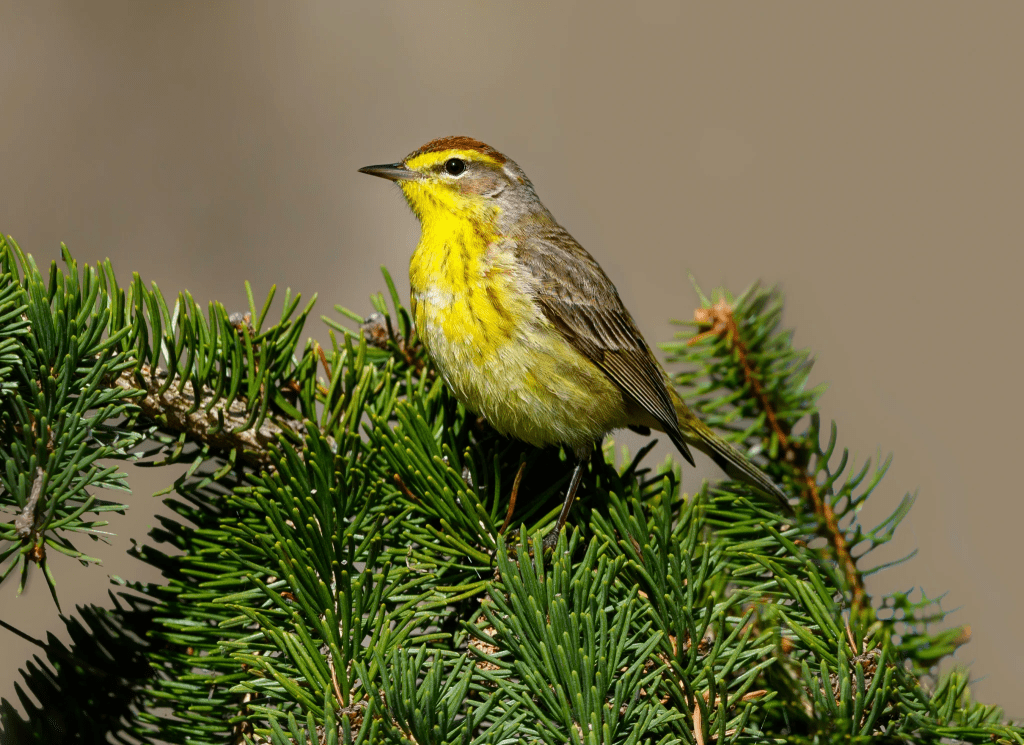
Any season of the year, the Mountain Chickadee is a delight to encounter. In their breeding season, they form neighborhoods of adjacent territories in the conifer forests of western Canada and the U.S., which ring in the early spring dawn with dozens of cheerful whistled songs. In winter, groups of Mountain Chickadees are joined by other birds — nuthatches, woodpeckers, creepers, kinglets — to form large dispersed flocks that move together through the forest, following the chickadees’ namesake rallying call.
Mountain Chickadees are social birds, living in groups of up to three mated pairs and juveniles of the last breeding cycle for most of the year, only breaking off into territorial pairs for the breeding season. In fact, while we tend to think of the breeding season as the time when mates are chosen and territories are established, most of this actually occurs in the winter. This is when the social hierarchy is solidified between the individuals in a group, and come spring, the dominant birds will reliably take the best territories. While boundaries may shift somewhat, the same birds will usually hold the same territories year after year. Pair bonds are formed during the winter as well, and usually last for as long as both birds survive.
Mountain Chickadees are well-known for their caching behavior. To survive harsh mountain winters, these chickadees hide surplus food throughout their winter territories, a behavior known as “scatter hoarding.” A single chickadee may cache tens of thousands of food items — insects, conifer seeds, or goodies from bird feeders — over the course of a year. They may cache food any time they have extra, and may recover caches any time of the year, but spend the most time caching in the fall, and the most time eating from them in the winter. In fact, studies have shown that Mountain Chickadees living in harsher winter environments have better spatial memory and are more adept at remembering where they have cached food. Unsurprisingly, these birds also survive longer. (snip-MORE)

=====
More than most, the Black-billed Magpie is a bird that inspires strong emotions in humans. A familiar species across much of the West, the Black-billed Magpie is intelligent, adaptable, and bold. For these attributes, they are both admired and loathed. While considered an annoyance or an inconvenience by some, they are also highly social and will occasionally leave “gifts” for humans who feed them.
Like many other intelligent and opportunistic corvids, magpies will take advantage of whatever resources they can. As such, the Black-billed Magpie is probably best known as a scavenger of garbage, carrion, and poorly guarded picnics. This has given these birds a bad reputation, with many regarding them as pests. A common folk belief is that magpies will wound cows to eat their flesh or drink their blood. Magpies will, in fact, stand on the backs of cows to probe and peck. However, the goal is typically not to eat the cow itself, but the parasites on the cow, such as ticks, that are doing just that. Cows are not the only beneficiaries of this behavior — magpies will eat ticks off of other large mammals, including bison, moose, elk, and deer.
The Black-billed Magpie holds a special place in mythology as well. Magpies are recognized as messengers in numerous Indigenous cultures of North America, sometimes to the aid of humans, sometimes to carry news to the Creator. One widespread story tells of how the magpie, for helping humans and birds alike, was given the honor of “wearing the rainbow” — a reference to the iridescent sheen on this bird’s wings and tail. (snip-MORE)