For The Weekend On A Friday Night

Ballad of the Wandering Charms: Weekend Edition

A Softening of the Day

Richard Hogan, MD, PhD(2), DBA

O come now, friend, and rest your bones,
the week’s been fierce and long;
but Ease comes stepping down the lane
to hum you its soft song.

A Lantern glows along the path,
a stubborn, golden spark;
the kind our grandfolks swore was left
to guide us through the dark.

Stillness drapes its woolen shawl
around your weary frame;
it whispers like an old seanchaí
who’s long forgotten blame.

The Hearth is warm for wanderers,
its welcome deep and wide;
it keeps a chair for every soul
the world has weathered tired.

Then Solace pours a quiet cup
the colour of the dawn;
it doesn’t ask what burdens ache—
it simply sits till they’re gone.

Your Breath returns like gentle rain
across an Irish hill;
it fills the fields inside your chest
and bids your heart be still.

And Grace—ah sure, it comes uncalled,
the way good blessings do;
it settles on your shoulders light
as morning’s silver dew.

An Ember glows beneath it all,
a spark that won’t give in;
the same that warmed our ancestors
through storm and winter’s din.

So walk with Gentle in your step,
let kindness be your guide;
for those who move with softened hands
find strength they need not hide.

And Here you stand, upon the earth,
your troubles set to rest;
the world leans in a little close
and wishes you its best.

Should you wish, please feel free to subscribe (no Paywalls): (Link up top as the title)

Thank you.

FWIW, All My Very Best

for a fine Spring this year. As I type, the Equinox will occur in 54 minutes. This is a striking photo!

Astronomy Picture of the Day

Discover the cosmos! Each day a different image or photograph of our fascinating universe is featured, along with a brief explanation written by a professional astronomer.

2026 March 20

Spring Equinox at Teide Observatory
Image Credit & CopyrightJuan Carlos Casado (Starry EarthTWAN)

Explanation: The defining astronomical moment of the equinox today is at 14:46 UTC (March 20). That’s when the Sun crosses the celestial equator moving north in its yearly journey through planet Earth’s sky, marking the beginning of spring for our fair planet in the northern hemisphere and fall in the southern hemisphere. Then, day and night are nearly equal around the globe. In fact, both day and nighttime exposures from a spring equinox at the Observatorio del Teide in Tenerife, Canary Islands, Spain, are used in this composited skyscape. Over 1,000 images were taken with a fisheye lens and merged in the ambitious equinox project. The apparent motion of the Sun setting along the celestial equator on the equinox date follows the bright linear, diagonal track from the sequence of daytime exposures taken over 6 hours. After sunset, nighttime exposures recorded startrails, with the celestial equator as a linear track and concentric arcs circling the north celestial pole near Polaris at upper right and the south celestial pole beyond the lower left edge (and below the Teide horizon). The foreground includes the distant Teide volcano peak and the observatory’s pyramid-shaped solar laboratory building.

Tomorrow’s picture: NGC 1300 and Friends

Reblogging da-AL:

Josh Day, Next Day

No oopsies on posting Josh Johnson! Remember device/keyboard protective protocols.

Oopsie!

https://www.gocomics.com/lay-lines/2026/03/16

In The Name Of Peace, Love, & Understanding

March 16, 1190
The entire Jewish community of York, England, perished while observing Shabbat ha-Gadol, the last sabbath before Passover. Gathered together inside Clifford’s Tower, the keep of York’s medieval castle, for protection from the violent mob outside, many of the Jews took their own lives; others died in the flames they had lit, and those who finally surrendered were massacred and murdered.

Clifford’s Tower
This occurred just after the beginning of the Third Crusade. “Before attempting to revenge ourselves upon the Moslem unbelievers, let us first revenge ourselves upon the ‘killers of Christ’ living in our midst!”
March 16, 1827
The first newspaper owned and edited by and for African-Americans, Freedom’s Journal, was published in New York City.
It appeared the same year slavery was abolished in New York state.
 

two of the early founders of Freedom’s Journal
March 16, 1921
The War Resisters International was founded with sections set up in Great Britain, the Netherlands, Germany and Austria. By 1939 there were 54 WRI Sections in 24 countries, including the U.S..

WRI No More War demonstration in Berlin 1922

Their symbol: a broken gun.Their slogan: “The right to refuse to kill.”
Their founding statement 
WRI today 
March 16, 1968
U.S. troops in South Vietnam killed 504 Vietnamese civilians at My Lai, a pair of hamlets in the coastal lowlands of Quang Ngai Province. The victims were from 247 families, completely eliminating 24 of them, three generations with no survivors. Among the dead were 182 women, 17 of them pregnant, and 173 children, including 56 infants,
and 60 older men.


Young girls sheltering behind their mother during My Lai
Lt. William L. Calley, Jr. commanded the men of Charlie Company, First Battalion, Americal Division, and was the only one tried out of 80 involved in what is called the My Lai Massacre. The Army, including a young Major Colin Powell, at first tried to cover it up and the media resisted reporting it.
Some of Calley’s soldiers refused to participate, but only 24-year-old helicopter pilot Hugh Thompson and his crew stopped it by putting themselves between the villagers and the troops pursuing them.Chief My Lai prosecutor William Eckhardt described how Thompson responded to what he found when he put his helicopter down: 
“[Thompson] put his guns on Americans, said he would shoot them if they shot another Vietnamese, had his people wade in the ditch in gore to their knees, to their hips, took out children, took them to the hospital…flew back [to headquarters], standing in front of people, tears rolling down his cheeks, pounding on the table saying, ‘Notice,
notice, notice’…then had the courage to testify time after time after time.”

Lt. William L. Calley
Some of Calley’s soldiers refused to participate, but only 24-year-old helicopter pilot Hugh Thompson and his crew stopped it by putting themselves between the villagers and the troops pursuing them.

Warrant Officer Hugh Thompson
Hugh Thompson’s story (An archived NYT piece that still wants a sign-in/up)
More on My Lai 
2015 article by Seymour Hersh who broke the original story
March 16, 1972
Reference librarian Zoia Horn refused to testify against the Harrisburg Seven who were on trial for an alleged conspiracy to kidnap then-National Security Adviser Henry Kissinger. Five of the seven were current or former Catholic priests or nuns.
Horn had been implicated by an ex-convict informer placed in the Bucknell University library by the FBI.


Reference librarian Zoia Horn
Though given immunity from self-incrimination, Zoia objected to the idea that libraries could become places of infiltration and spying. Charged with contempt of court, she was sent to jail for 20 days until a mistrial was declared.

Judith Krug, longtime director of the American Library Association’s Office of Intellectual Freedom, said that Horn was “the first librarian who spent time in jail for a value of our profession.”
At the trial she asked to read a statement of explanation, but was led away in handcuffs before she had begun her third sentence:
“Your Honor, it is because I respect the function of this court to protect the rights of the individual, that I must refuse to testify. I cannot in my conscience lend myself to this black charade. I love and respect this country too much to see a farce made of the tenets upon which it stands. To me it stands on freedom of thought—but government spying in homes, in libraries and universities inhibits and destroys this freedom. It stands on freedom of association—yet in this case gatherings of friends, picnics and parties have been given sinister implications, and made suspect. It stands on freedom of speech—yet general discussions have been interpreted by the government as advocacies of conspiracies.”
Zoia Horn in the California Library Hall of Fame 
March 16, 1988
Iraqi forces acting under orders from President Saddam Hussein attacked the Kurdish village of Halabja with a variety of poison gasses including mustard gas and the nerve agents sarin, tabun, and VX. About 5,000 non-combatant men, but mostly women and children, died from the chemical weapons.This was part of Saddam’s al-Anfal campaign, a slow genocide of the Kurds in Iraq. About 2000 villages were emptied and leveled as well as a dozen larger towns and cities, tens of thousands were killed.

Kurdish father Omar Osman and his infant son, victims of Saddam Hussein’s poison gas attack on Halabja, Kurdistan (Iraq)
The Human Rights Watch full report on the al-Anfal Campaign
March 16, 2003
Rachel Corrie, an American college student in Gaza to protest Israeli military and security operations, was killed when run over by a bulldozer while trying to stop Israeli troops from demolishing a Palestinian home.

The 23-year-old from Olympia, Washington, was a member of International Solidarity Movement and was the first nonviolent western protester to die in the occupied territories.
Remembering Rachel Corrie
March 16, 2003
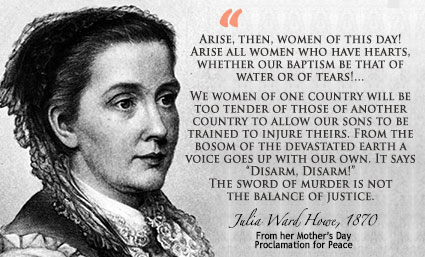
Over 5000 coordinated candlelight vigils and demonstrations took place, in more than 125 countries, in an eleventh-hour protest against the U.S. invasion of Iraq.


Knoxville, Tennessee Trafalgar Square, London

Remember Stormy Daniels?

Here’s an update.

“Never Forget!

People are trying the Dutch practice of ‘dusking’ to reduce anxiety and spark creativity

=====

The simple ritual of going outside to welcome nightfall can be extremely relaxing. Of course, this has been done since the dawn of time. However, the practice of “dusking” has recently regained popularity and has become a trend for people looking to boost their mental well-being. The Dutch have been doing this for ages. In…

By Cecily Knobler


A person watches the sky as night falls. – Photo credit:Canva

The simple ritual of going outside to welcome nightfall can be extremely relaxing. Of course, this has been done since the dawn of time. However, the practice of “dusking” has recently regained popularity and has become a trend for people looking to boost their mental well-being.

The Dutch have been doing this for ages. In the Netherlands, dusking is referred to as “schemeren,” which translates to “be dusky, to be in twilight.” It’s the idea of letting the lights turn off while the starry night envelops the day. Watching the color of the sky subtly fade can do wonders for a busy mind.

In a piece for The Guardian, writer Rachel Dixon describes her time at the Dark Skies “dusking event” in the United Kingdom in February 2026. “The darkening sky is faintly illuminated by a sharp sliver of crescent moon and the first stars. Bats are swooping in search of supper, an owl is softly hooting, and the dark outline of a ruined castle looms beyond the walls.”

She explains how this ritual has resurged, writing, “The custom had all but died out until it was revived by Dutch poet and author Marjolijn van Heemstra a few years ago. Now she is encouraging other countries to adopt dusking, running events in Ireland, Germany, and here in Yorkshire.”

Dixon shares that van Heemstra also spoke at the event she attended. “Dusking is about looking at one point and seeing it fade. Don’t look around too much; focus. Trees are very good – they rise up for a moment and then fade away,” van Heemstra eloquently said.

Not only is the concept beautiful, but it can also do wonders for anxiety and spark the imagination.

Happy Pi Day! 🥧 3.14… 😉

Astronomy Picture of the Day

Discover the cosmos! Each day a different image or photograph of our fascinating universe is featured, along with a brief explanation written by a professional astronomer.

2026 March 14

A Year for K2-315b
Artist’s Illustration Credit: NASA Ames/JPL-Caltech/T. Pyle, Christine Daniloff, MIT

Explanation: Want to visit a planet that has 3.14 days in a year? Then plan a trip to K2-315b, an earth-sized planet orbiting around a cool, red, M dwarf star about once every 3.14 days. The exoplanet’s discovery, based on publicly available data from the planet-hunting Kepler Space Telescope’s extended K2 mission, was announced in 2020. K2-315b’s measured orbital period in days is nearly equal to the extremely popular irrational number Pi. That puts the exoplanet so close to its parent star that its surface is likely very warm, baking-hot in fact. And this Pi planet is over 185 light-years away. So instead of trying to arrange for an interstellar vacation to K2-315b, there may be easier and more comfortable ways for you to celebrate Pi day on planet Earth.

Tomorrow’s picture: equinox at the pyramid