Cool Off Topic Thing, If You’re A Puzzler (or even if not!)

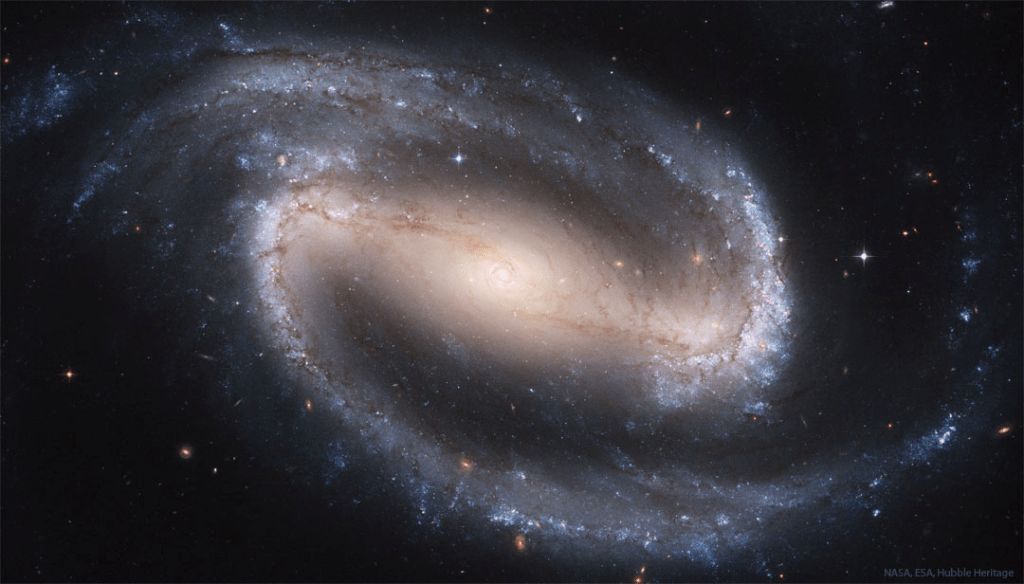
Now and then, I post here from NASA’s Astronomy Picture of the Day. I read there every day; it’s a good way to begin the day online, for me. Anyway, today, there is a link, Jigsaw Galaxy: Astronomy Puzzle of the Day So, being curious, I clicked it, and it’s pretty neat. If you like to do jigsaws, take a look!

A Few Current Event-Related & Other Funny Short Vids


https://youtube.com/shorts/Kcol2OLmmko?si=jbo2a_Rarb8s-rsO


Just Some Stuff


A Couple Of The Bloggess’s Substacks

Leave room for yourself

Jenny Lawson (thebloggess)

Dear friend,

This week I’ve been struggling a little with the fact that I can’t do all of the things that I want to. My book comes out next week (you’re in it!) and I feel so excited and lucky but also terrified and filled with dread. I worry people won’t like it…that no one will show up to the book tour…that I’m failing my publisher because I can’t do some of the things that most authors would jump at because I just don’t have the energy or mental strength to say yes to everything without making myself sick. I even felt a little bad about drawing this week when I probably should be doing author stuff.

But then I reminded myself that I need this quiet drawing time (is it considered “quiet” when I’m doing it while binging Dexter? I say yes.) to keep myself sane and to replenish my energy and to remind myself that I am more than just my work, and that it’s okay to not work yourself to exhaustion even if it’s for something you love.

I suspect we all struggle with this. Perhaps as parents or partners or in our career…the urge to try to be more than our bodies and minds allow, but not being able to because you are…human. It’s so easy to put ourselves last when it’s for something else that you care about.

“There is a fine line between beautiful and suffocating. Don’t forget to leave room for yourself.”

So this is a reminder from me to you to make time for yourself if you can. To rest. To create. To refill your cup. There is so much beauty in what we do for others, for our work and for our passions…but there is also a necessary beauty in what we do for ourselves…a beauty we often forget.

Sending love (and quiet moments of calm repose even when watching serial killer shows)

~me


From the road

Jenny Lawson (thebloggess)

This morning I was in New York filming the Today Show where I managed to talk about explosive diarrhea, fears of my foot falling off, apologized for using my hands too much, sat on them, promptly pulled my hands back out bc I can’t talk without them and then made all the anchors put pencils in their mouths…all within about 4 minutes. By this afternoon I was in Amish country in Pennsylvania where I met some very nice “fancy Amish” people (this is a real thing) and did not pet a horse even though I really wanted to. Tomorrow afternoon I’ll be in Lancaster for my first tour stop and signing even though technically my book doesn’t officially come out until Tuesday. Then it’s back to NYC, and then a stop in New Hampshire for another reading and signing and then I get to go home for a week to rest for the next round. I’m feeling tired, happy, lucky, scared, excited, embarrassed…all of the things. Oh, and did I mention my first book got banned from a Texas high school after a senate bill deemed it obscene and profane? It’s been a busy week. I would link to everything but I can’t figure out how to do this with my phone

I should have written all this before I left but i was overwhelmed with packing all the wrong things and so instead I’m writing this tonight, on the eve of my first new book event in over half a decade, to distract myself from the fear and from the incredibly loud but very happy drunken wedding taking place two rooms down from mine. It feels like you’re here, in a weird way. I know that’s strange, but it’s comforting.

I’ve drawn in planes and cars and green rooms to keep my hands and mind busy but it’s a jerky mess so instead I’m sharing a drawing from my new book, because it seems fitting while I’m traveling so much in spite of the fact that I never know where I am. It’s an adventure, after all, if I look at it with the right kind of eyes.

I super crazy love you,

Jenny

The Birds Must Be Heard & Seen

Anna’s Hummingbird

Calypte anna

Colibrí Cabeza Roja (Spanish)

Anna's Hummingbird. Photo by Nick Athana.

About

The Anna’s Hummingbird is a characteristic and charismatic species of coastal Central, Southern, and Baja California, although this species has expanded its range northward along the Pacific Coast and eastward into the Desert Southwest. Like the Rufous Hummingbird, Anna’s is well known for its aggressive territorial behavior. Males fiercely defend feeding areas, where they chase away other male hummingbirds and even large insects such as bumblebees and hawk moths that try to feed there.

Although the Anna’s Hummingbird readily feeds from non-native plants, wild plants are still crucial to these birds — and the birds are just as critical to these native plants. Anna’s Hummingbirds are important pollinators of the chaparral flora of coastal California. Many of these plants flower in the winter months, coinciding with California’s wet season. To take advantage of this boon of nectar, Anna’s Hummingbirds in coastal California breed in what is the nonbreeding season for most North American species, nesting as early as mid-December. After the rains end, many hummingbirds will move up into the mountains to take advantage of blooms at higher elevations.

The Anna’s Hummingbird is a highly vocal species, especially for a hummingbird. Males sing a complex, scratchy-sounding song while perched and during their high-flying courtship spectacles. The male performs this diving display by first ascending to 100 feet or higher, then swooping toward the ground. At the bottom of his dive, he will be moving at about 60 miles per hour, just overhead of a female (or intruding male). At the last minute, he banks upward and flares his tail, causing his modified tail feathers to produce an explosive, high-pitched chirp. The gravitational force (“G-force”) caused by this maneuver would cause a human pilot to lose consciousness, but these little hummingbirds do it again and again, up to about 40 times back to back, when trying to impress a female. He also orients his dives to maximize the reflectance of his beautiful gorget — the gem-like patch of tiny iridescent purple-pink feathers on his throat. According to researchers Christopher Clark and Stephen Russell, from the perspective of a female, he looks like a “tiny, glowing magenta comet” plummeting towards her. (Snip-More on the page. Actually hear a hummingbird!)

=====

Emerald Tanager

Tangara florida

About

The Emerald Tanager is truly a gem of the forest, roaming through the canopy in search of fruiting trees in the humid montane forests of Central and northern South America. Although primarily a fruit-eater, this species is also adept at hunting insects and other invertebrates on tree branches, deftly manipulating mosses with its bill in search of prey. This behavior sets it apart from other tanager species it often flocks with, but outside of the Emerald Tanager’s range, other specialized tanager species may fill this niche.

The Emerald Tanager’s relationship with moss extends beyond its foraging habits. Though their breeding biology is largely undescribed in peer-reviewed literature, the nests that have been observed have either been made of moss entirely or thoroughly covered in it. This, of course, provides good camouflage on the mossy branches where these tanagers build their nests. (Snip; MORE, and hear the Emerald Tanager)

“‘Cool, sing to yourself. You’re a grown woman.’” 

Taylor Tomlinson Turns Purity Culture Baggage Into Comedy

By Emma Cieslik

It has been a joy to deconstruct my religious trauma alongside 32-year-old comedian Taylor Tomlinson. Four years ago, as I was coming out as queer to my family, I found her Netflix special Taylor Tomlinson: Look at You to be a warm welcome into the community of formerly Christian queer kids and purity culture survivors. Dark humor gave all of us a silly sort of grace, a space where we could grieve and grow.

Tomlinson, who was raised in a conservative Christian household in Temecula, Calif., got her start in stand-up through the church comedy circuit. But as she grew up, she began deconstructing how her conservative Christian upbringing was hurting her mental health and sexual development, deciding instead to be a “secular” comic.

Her new Netflix special Prodigal Daughter was filmed inside Fountain Street Church in Grand Rapids, Mich., which welcomed her not despite but rather because of her comedy. On her aptly named “Save Me” tour, Tomlinson builds on a foundation of jokes about toxic Christian culture to call out not just people who weaponize religion as a tool for bigotry but also the people who make fun of those who still believe in God.

“Because if God does exist, he does not exist to make you feel better than other people. He exists to make you better for other people,” she said. “We judge each other’s coping mechanisms. Like, ‘You’re a quitter if you get on antidepressants. You’re stupid if you believe in God. B—-, I’m on mood stabilizers, you’re on Jesus. We’re all trying to get to ‘dead with Daddy.’”

In fact, Tomlinson recognizes the people in her life—her grandparents, aunt, and uncle, himself a pastor—“who are using religion correctly.”

“There are a lot of people who are using religion as a tool for community and connection and compassion and comfort,” she says, “and when I was writing this hour, I was thinking about those people.”

Cheekily, Tomlinson compares her own stand-up specials to her uncle’s Christian services. “We’re both out here on the weekends, changing lives.”

But the comedian is not here to absolve all the sins of Christianity or its effects on her.

“When you grow up in a religious environment, you spend a lot of your young adulthood untangling who you are from who they wanted you to be,” she says. For Tomlinson, this is best represented by her “late” coming out at age 30.

Tomlinson explains that she has so many queer friends who are open and free about their sexualities—the “Samanthas” of the group—but she didn’t see anyone else who, like her, was nervous entering the queer dating scene. “We need more gay prude representation,” she chuckles, making those of us coming out at an older age and experiencing a real queer second adolescence feel less alone.

A second adolescence refers to how many LGBTQ+ people didn’t have the chance to experience the joys of teenage years. Because of rampant queerphobia inside and outside religious communities, we didn’t have access to the romantic and sexual “firsts”—first crush, first kiss, first sexual encounter—that many heterosexual people did because we were told repeatedly that our love and our bodies were shameful and had to be hidden.

While she doesn’t explicitly name “second adolescence,” the significance of coming-of-age as a queer person runs throughout her special.

According to Adam James Cohen, a therapist specializing in helping LGBTQ+ patients, adolescence is critical to developing and cementing a person’s identity and sense of self. For those who missed out on that true identity formation earlier in life, second adolescence offers a mental and physical stage of healing and liberation, often involving people deconstructing their internalized anti-queerness and religious trauma. Sometimes this liberation happens through comedy, sometimes through therapy, or as Tomlinson discusses in her special, sometimes both. During this formational time, adults reckon with the grief of missing adolescence, and make up for lost time. 

Second adolescence isn’t just a uniquely queer experience. Many people raised in far-right Chrisitan environments experience a new phase of psychosocial development after they leave their conservative Christian homes. For people raised in purity culture, their second adolescence can be a time of sexual exploration, experimentation, and liberation during and after deconstructing harmful theologies of the body.

For the queer Christian kids like Tomlinson, we were robbed of moments of bodily and social experimentation and generation, so experiencing our second adolescence is like coming home to our bodies, an emotional rebirth or reversion, to put it in Christian terms, of learning and loving to be a queer child and queer teenager again. For trans and nonbinary people undergoing gender affirming medical care, second adolescence can be even more physical, as hormone therapy brings about a second puberty. 

And for many of us, this second adolescence is characterized by an eagerness—and joy—to accept and share the possibilities that many never questioned. As Tomlinson joked, “When I started dating women, it was the closest I’d come to feeling religious in a long time because my friend would complain about their boyfriends and husbands and I was like, ‘Have you heard the good news? You don’t have to live like this. There’s a better way.’” 

Second adolescence is especially common among people who have a later-in-life realization or acceptance of their LGBTQ+ identity, often called a “queer awakening” or “second coming out,” just like Tomlinson. There is no time limit on coming out or discovering and affirming gender or sexuality, but as Tomlinson jokes in her special, “coming out as bisexual at 30 feels like saying to a waiter, ‘By the way, it’s my birthday.’ They’re like, ‘Cool, sing to yourself. You’re a grown woman.’” 

Tomlinson’s special portrays this second adolescence with a humor, grace, and visibility I hadn’t encountered before but am deeply indebted to. Prodigal Daughter, and her comedy as a whole, carries special poignancy for the formerly queer Christian kids coming of age through humor and deconstruction. 

Some News Bits

A few things I ran across before lunch, in one post with links. Ollie and I had a good lunch, got a few things done, then took a nice walk on a cooler day when his thick black fur coat is not too heavy for him to be on a jaunt before 7 AM; it was 2 PM.😃

Back to reality, I saw this Reuters story about Iran hacking US FBI, but it was a subscriber only story (I agree-WTF? Why should profit be made on a story like that, when some of the free articles are such dreck…) But, here is a free one:

FBI director Kash Patel’s emails, photos hacked by Iran-linked group

The vigilante group Handala Hack Team said that it had successfully gained access to Patel’s personal email account.

Then, I know many of us, if we didn’t yawn, noticed the hypocrisy in wrangling for a law that includes banning mail-in voting while on the way to the post-box. If you’re busy, just click through; the money phrase is right there at the top.

The young woman who is running for my district’s US House seat, Katy Tindell, has a website now! I’ve mentioned her, but couldn’t link because all there was was an Act Blue contribution page. But now, she has her own website.

Every one of our states has at least one candidate like this running. Please choose a campaign anywhere (But work from your home district/state first, if you can,) and sign up. Money’s tight everywhere, but give the candidate some time if you want to see them in office. There are many things that need doing, and campaigns are better off with volunteers helping.

Finally for this post, Sojo has run a piece the author, Emma Cieslik, writes about Taylor Tomlinson, and Tomlinson’s influence on the author’s own deconstruction and being out. Seriously worth the click.

Josh Day, Next Day

Peace & Justice History On Elton John’s Birthday

March 25, 1807
Great Britain abolished international trade in slaves. Emancipation of slaves in the country, however, did not occur until 1834, and persisted as unpaid apprenticeship for the technically emancipated for years after that.
The story of abolition in England 
March 25, 1872
Toronto printers went on strike for a 9-hour workday and a 54-hour workweek—the first major strike in Canada. When the editor of the Globe newspaper had thirteen of them arrested, 10,000 turned out to support them. Later that year unions were made legal in Canada.
March 25, 1894
In the midst of a depression that had begun the previous year, a millionaire businessman from Massillon, Ohio, Jacob Coxey, organized a march of an “industrial army” from Ohio to Washington, D.C. Congress had done little in response to the economic crisis and Coxey advocated a range of solutions, many considered radical at the time, such as building roads and other public works (known as infrastructure today).


Coxey’s Army passing through Mayland on their way to Washington.
Coxey is seated behind the horses looking at the camera.
“Coxey’s Army” gathered on the Capitol lawn but they were driven off and Coxey was arrested for trespassing when he tried to deliver his address to the crowd in violation of their first amendment rights “peacably to assemble, and to petition the Government for redress of grievances.”
March 25, 1911
The Triangle Shirt Waist Company, occupying the top floors of a ten-story building on New York’s lower east side, was consumed by fire.

147 people, mostly immigrant women and young girls working in sweatshop conditions, lost their lives.
Approximately 50 died as they leapt from windows to the street; the others were burned or trampled to death, desperately trying to escape via stairway exits illegally locked to prevent “ the interruption of work.”Company owners were charged with seven counts of manslaughter—but were found not guilty.The incident was a turning point in labor law, especially concerning health and safety. For three days prior, the company, along with other warehouse owners, had grouped together to fight the Fire Commissioner’s order that fire sprinklers be installed.


Protests in the wake of the Triangle Shirtwaist fire, button from the struggle
Comprehensive collection of materials on the tragedy from Cornell University’s labor school 
March 25, 1915
The Sisterhood of International Peace was founded in Melbourne, Australia, by Eleanor May Moore and Dr. Charles Strong.
March 25, 1965
Their numbers having swelled to 25,000, the Selma-to-Montgomery marchers arrived at the Alabama state capitol.Organized by the Southern Christian Leadership Conference (SCLC) and the Student Nonviolent Coordinating Committee (SNCC), the march was to bring attention to the denial of voting rights to black Americans in the state and elsewhere in the south. Twice the people had been turned back, denied the right to leave Selma peacefully.

Martin Luther King Jr. and wife Coretta lead march into Montgomery, Alabama.
Dr. King spoke to the crowd: “Yes, we are on the move and no wave of racism can stop us. (Yes, sir) We are on the move now. The burning of our churches will not deter us. (Yes, sir) The bombing of our homes will not dissuade us. (Yes, sir) We are on the move now. (Yes, sir) The beating and killing of our clergymen and young people will not divert us. We are on the move now.”
The Federal Voting Rights Act was passed within two months.

The Selma to Montgomery National Historic Trail 
March 25, 1965

Viola Liuzzo
Viola Gregg Liuzzo, a housewife and mother from Detroit, driving marchers back to Selma from Montgomery, was shot and killed by Ku Klux Klansmen from a passing car. She had driven down to Alabama to join the march after seeing on television the Bloody Sunday attacks at Selma’s Edmund Pettus Bridge earlier in the month. It was later learned that riding with the Klansmen was an FBI informant, Gary Rowe.
More about Viola Liuzzo
Viola Gregg Liuzzo
March 25, 1967
Reverend Martin Luther King, Jr. led an anti-war march for the first time in Chicago, opposing the Vietnam War by saying:
“Our arrogance can be our doom. It can bring the curtains down on our national drama . . . Ultimately, a great nation is a compassionate nation The bombs in Vietnam explode at home—they destroy the dream and possibility for a decent America . . . .”


Reverend King addresses rally at the end of the Chicago march
photo: Jo Freeman
March 25, 1969
The newly wed John Lennon and Yoko Ono-Lennon began their seven-day “bed-in for peace” against the Vietnam War in the presidential suite of the the Amsterdam Hilton in The Netherlands. Their doors were open to the media from 10am to 10pm. They invited all to think about and talk about creating peace.
“Yoko and I are quite willing to be the world’s clowns, if by so doing it will do some good”.
 
The Wedding and “Ballad of John and Yoko” 
March 25, 1972
30,000 participated in the Children’s March for Survival in Washington, D.C., sponsored by the National Welfare Rights Organization. They were supporting the Family Assistance Program, then pending in Congress (but never passed), which guaranteed a minimum income level for all families.
March 25, 1990
A new community, Segundo Montes, was started by campesinos in El Salvador who had lived for nine years as exiles in Honduras following the El Mozote Massacre, when 1000 civilians were killed by the U.S.-trained Salvadoran military. The town was named after a priest who had helped them in the Colomoncagua refugee camp on the border, and who was murdered along with four other Jesuit priests by the Salvadoran military.

Thanks, MDavis!