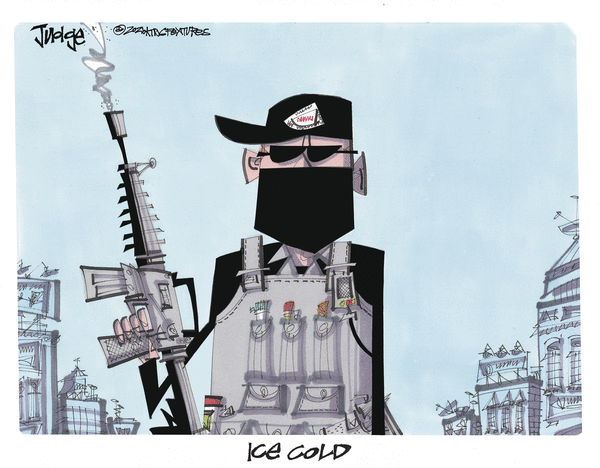
The video below has horrific clips of ICE assaulting bystanders and protestors. One clip showed the ICE gang thugs breaking down a door and entering a home like they think they are a special forcer unit in Fallujah Iraq. They seem to be acting like street gangs or drug cartel members as they just attack anyone that displeases them. They are not police nor professional but they act as though only they have rights. Hugs
I want to thank Ali for sending me this link. I really hope this causes some real soul searching with in some of these people as they sure need to. I saw these documents show on The Majority Report but I was not sure how correct it was because then I saw horrific actions, beatings, and gang thug behavior from ICE. Hugs
For more leaked documents (and to help me continue reporting on them), PLEASE become a paid subscriber!
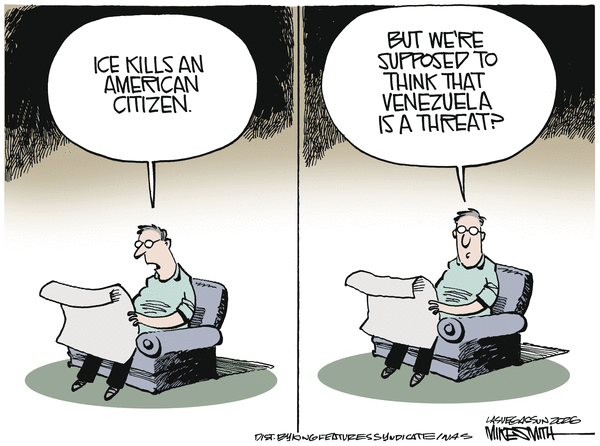
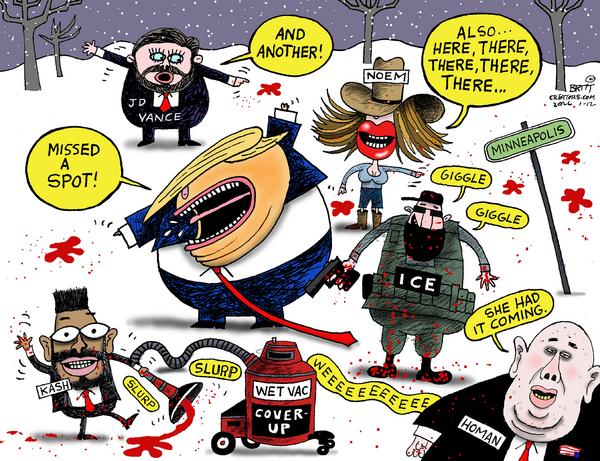
In the wake of an ICE officer’s killing of Renee Good, the Department of Homeland Security is rolling out “Operation Metro Surge,” flooding Minneapolis with hundreds of additional federal agents — only to realize it doesn’t actually have the confidence to match the bravado.
While homeland secretary Kristi Noem and others in the administration preen about justifying last week’s shooting and trumpet their war on “domestic terrorism,” DHS is privately divided and hesitant about the latest deployments. According to documents leaked to me, not only is the Department seeking “volunteers” for the apparently unpopular mission, it is urging its agents to maintain a low profile and comply with the use of force policies.
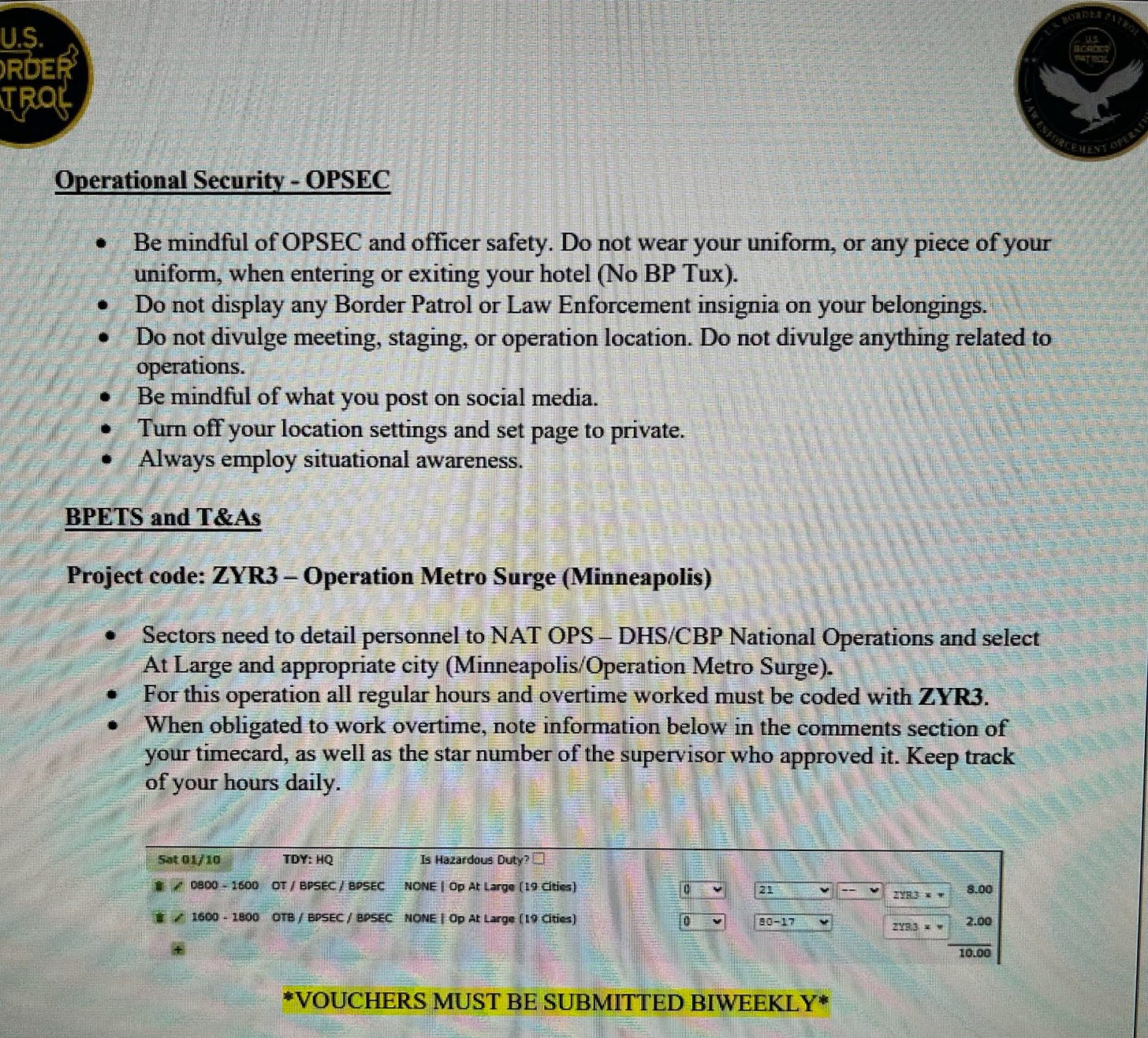
Border Patrol memo leaked to me
On Friday, DHS sought volunteers to deploy to Minneapolis, in part due to opposition within the ranks, according to border patrol agents and other homeland security workers who have reached out to me.
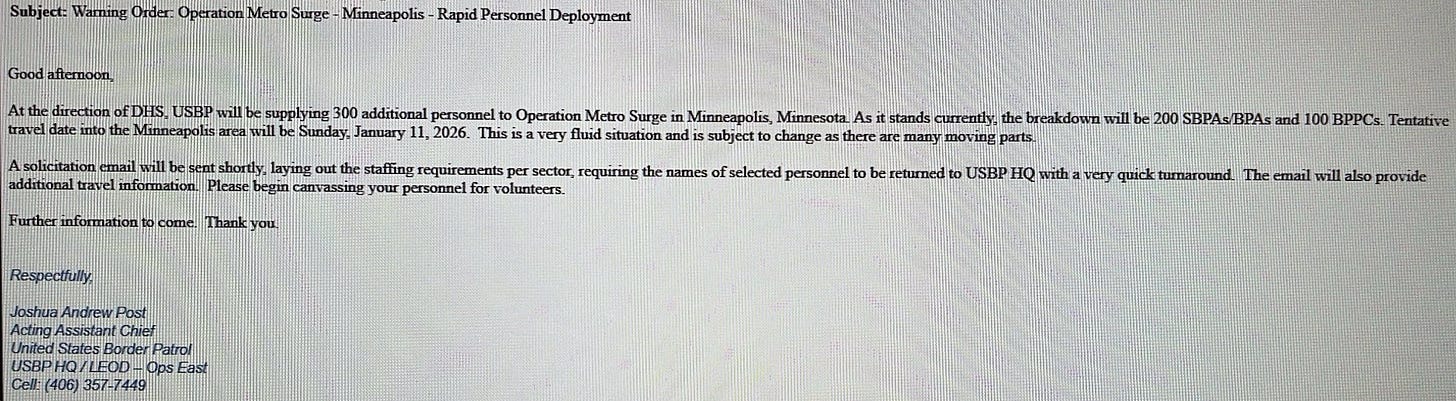
“Please begin canvassing your personnel for volunteers,” a memo sent by the Border Patrol’s Acting Assistant Chief Joshua Andrew Post on Friday.
The memo outlines a request for 300 additional personnel — 200 Border Patrol Agents (BPAs) and 100 Processing Coordinators (BPPCs) — to be funneled into “Operation Metro Surge” by Sunday, January 11.
Leaked Border Patrol memo
A Border Patrol agent familiar with the discussions said the volunteer push reflects real unease in the ranks about the Good shooting in Minneapolis and the related surge.
“We do have personnel but some just don’t want to go,” the agent told me.
Asked about the hunt for volunteers, DHS and Customs and Border Protection did not respond to my request for comment.
“There might be some immature knuckleheads who think they are out there trying to capture Nicolas Maduro, but most field officers see a clear need for deescalation,” a high level career official at Homeland Security headquarters in Washington also told me. “There is genuine fear that indeed ICE’s heavy handedness and the rhetoric from Washington is more creating a condition where the officers’ lives are in danger rather than the other way around.”
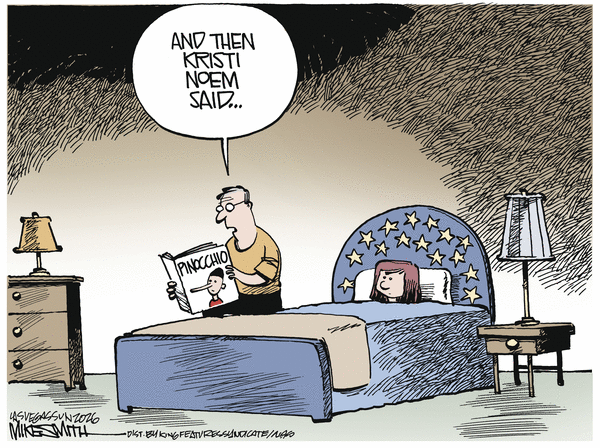
Within hours of the shooting, Noem held a press conference declaring Renee Good had carried out “an act of domestic terrorism” when she “attempted to run a law enforcement officer over,” as Noem put it.
“There is a video and she just lied,” the Border Patrol agent said of Noem’s characterization of the incident.
The senior DHS official adds that an increasing number of homeland security workers are concerned about the public backlash. “The claim is that recruiting is up, but there is also dread that the gung-ho types that ICE and the Border Patrol are bringing in have a propensity towards confrontation and even violence.”
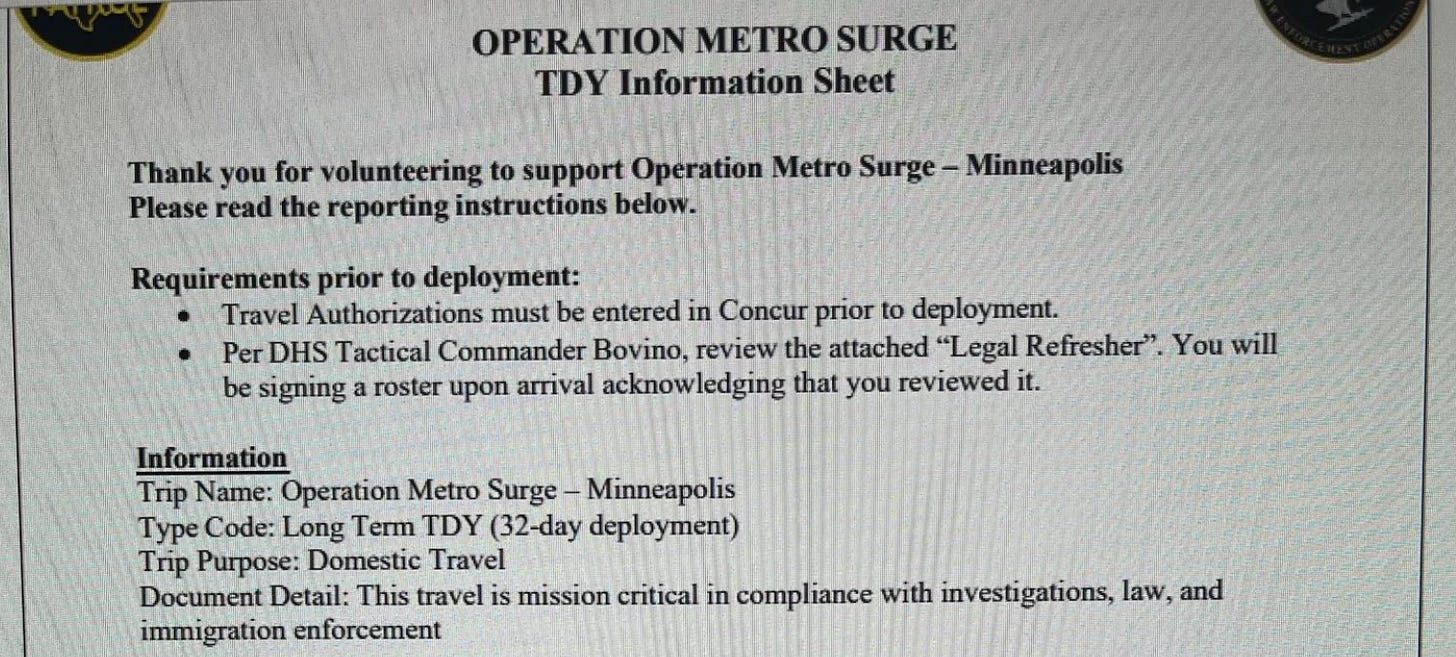
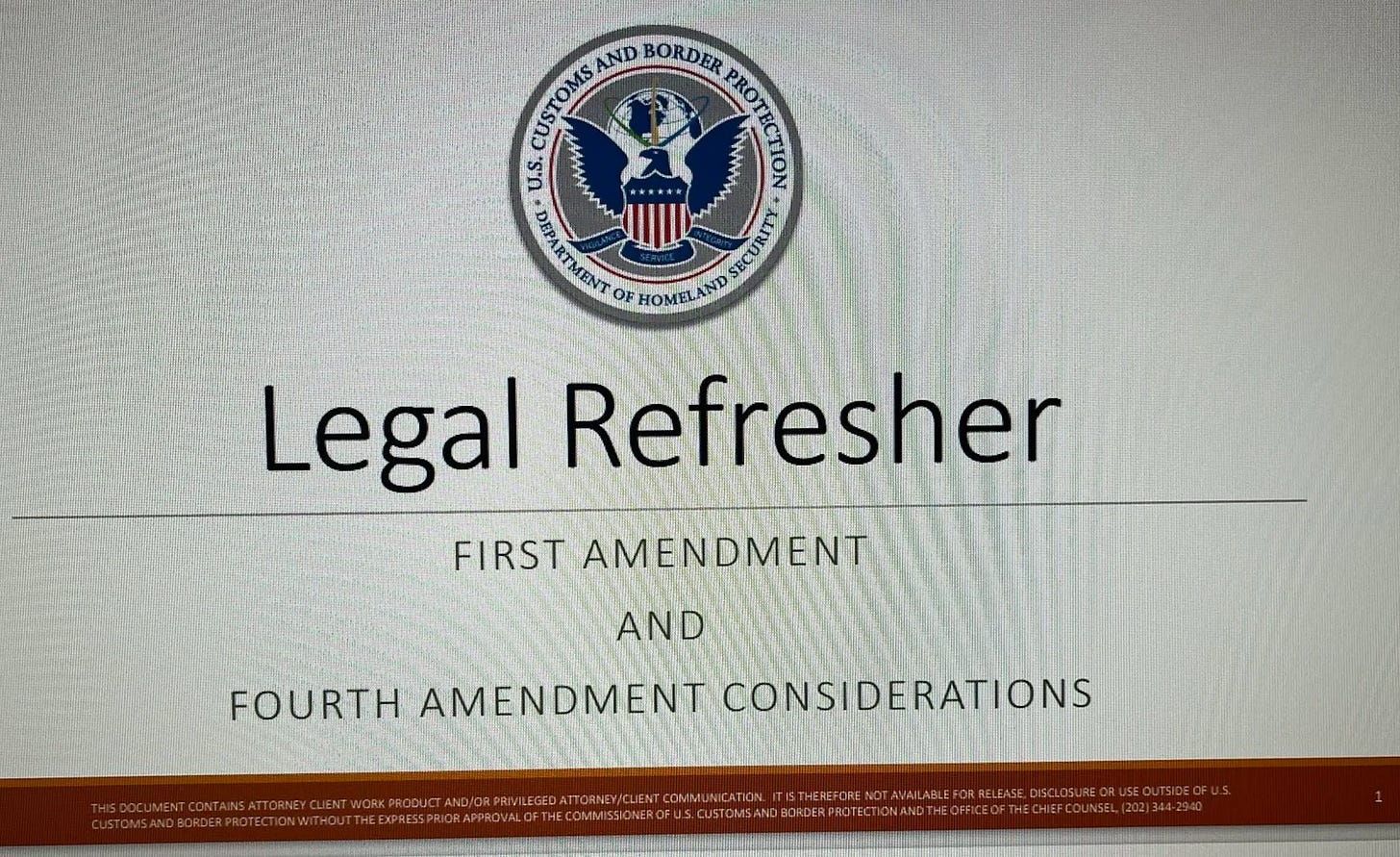
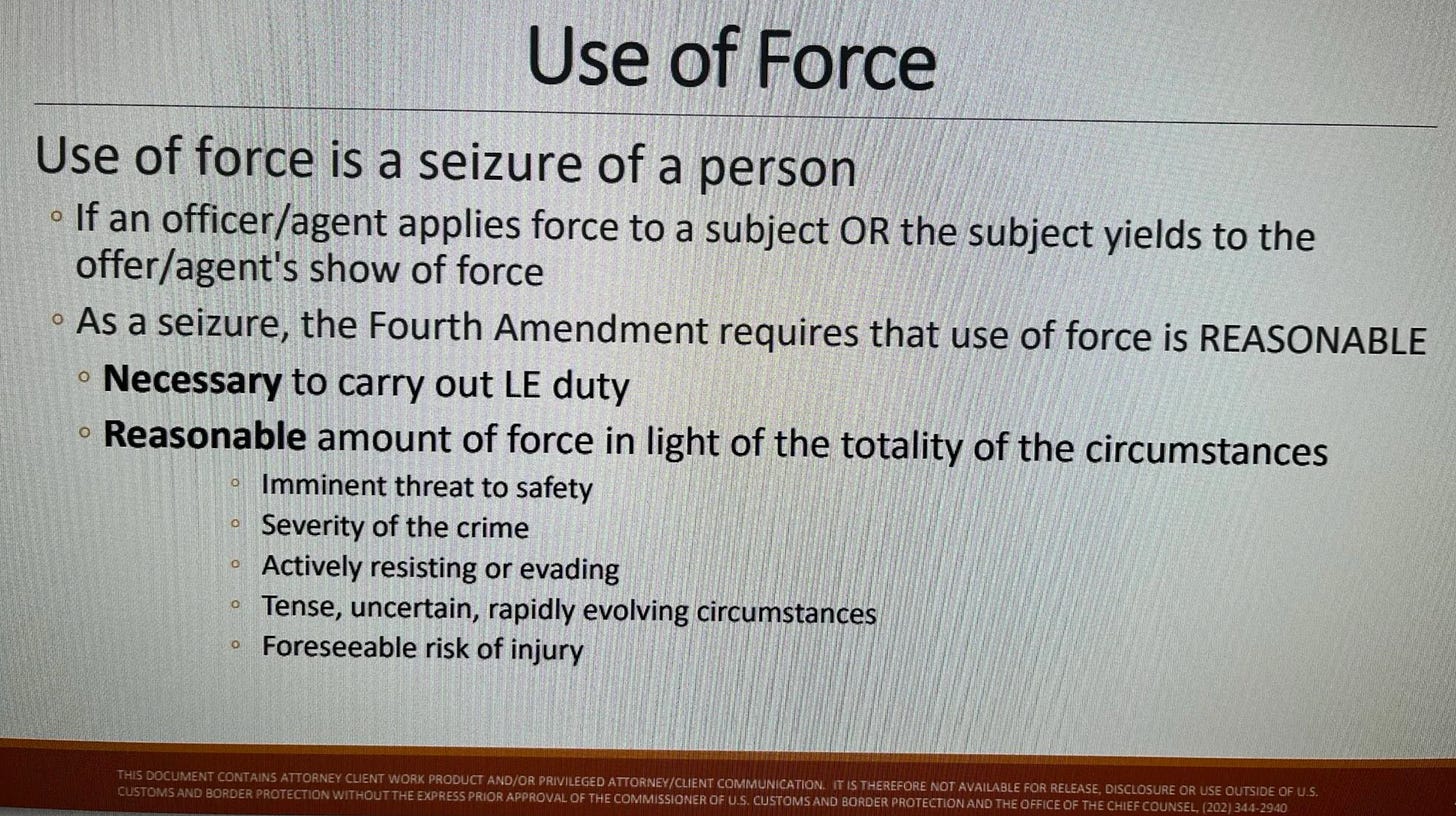
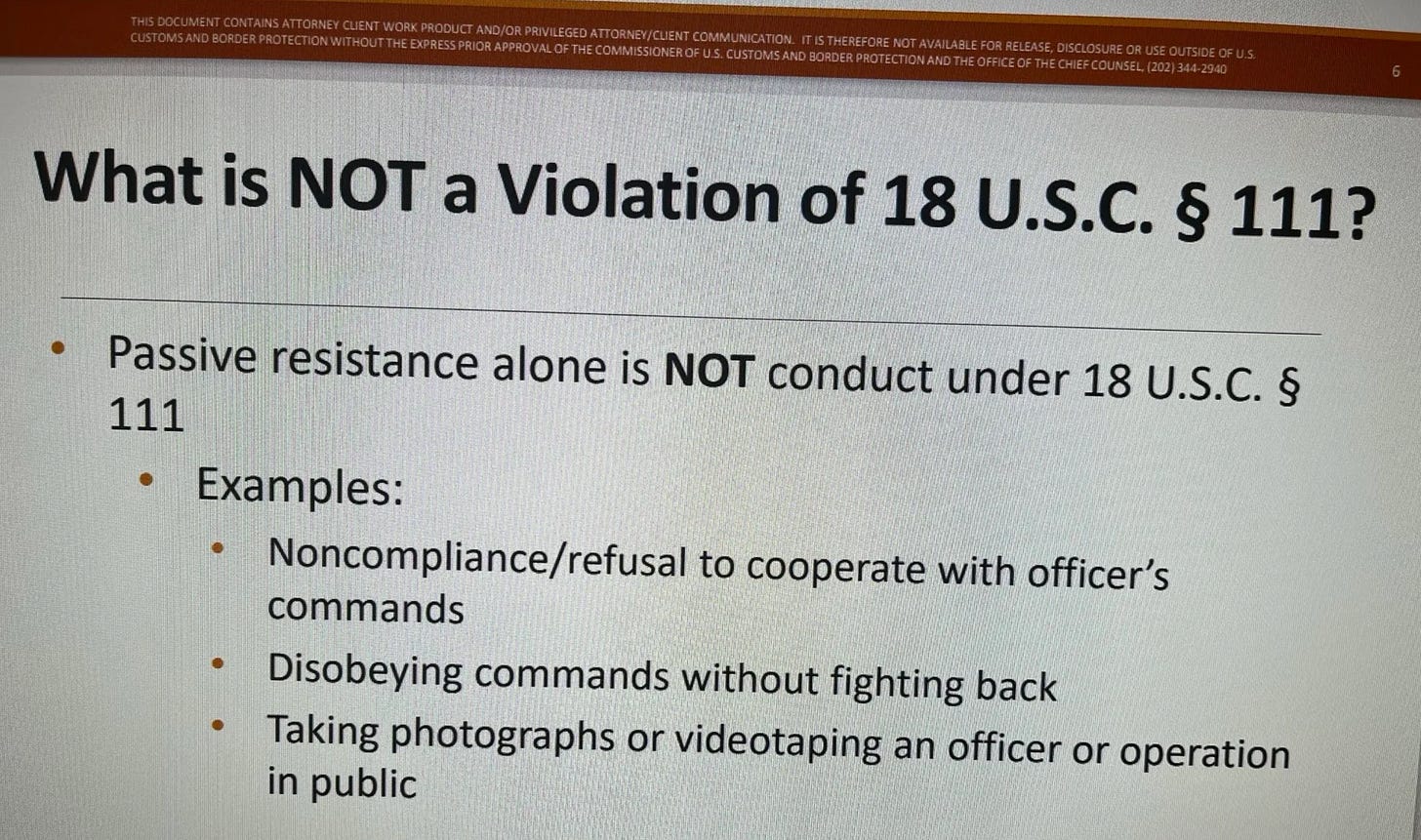
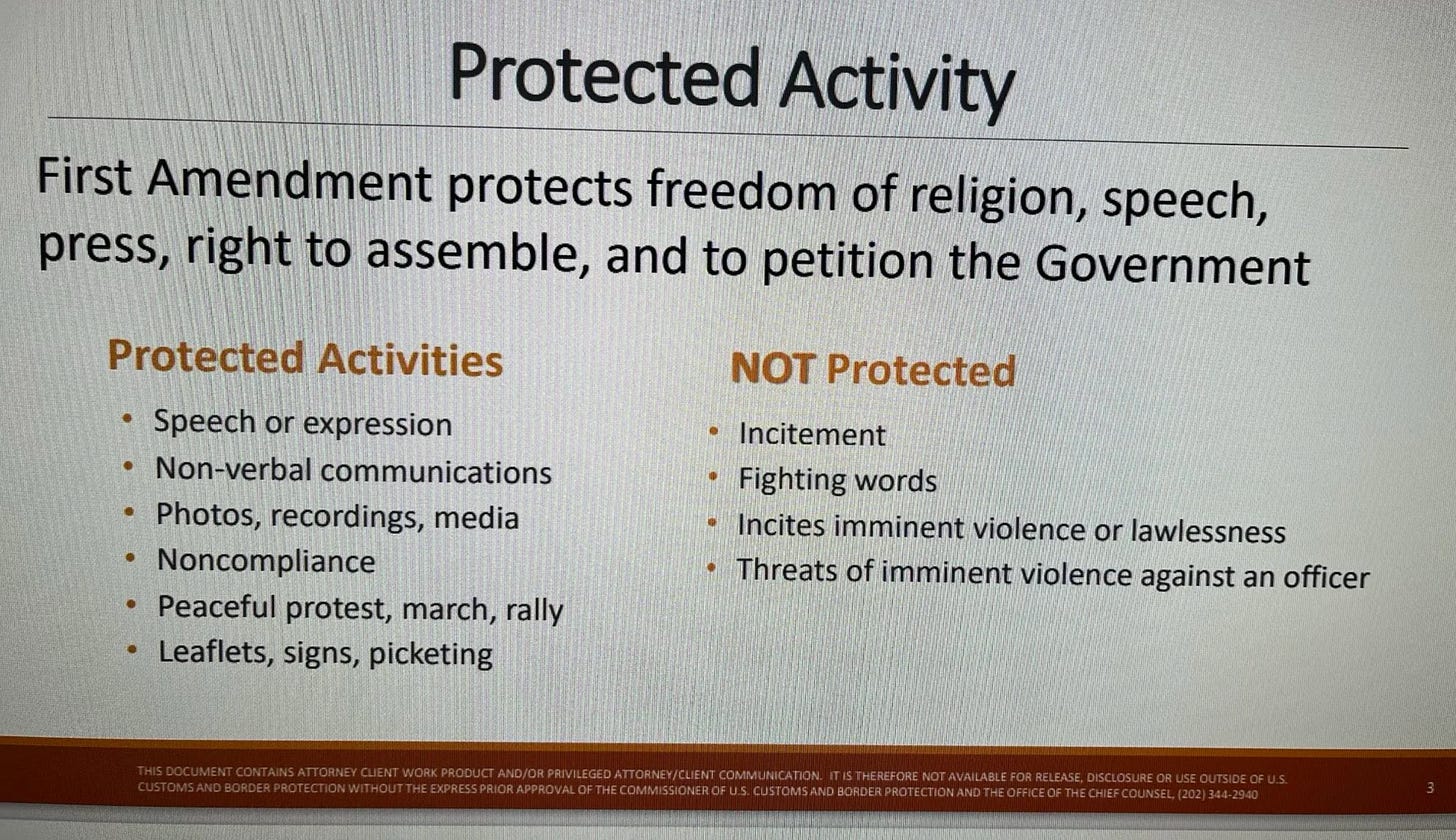
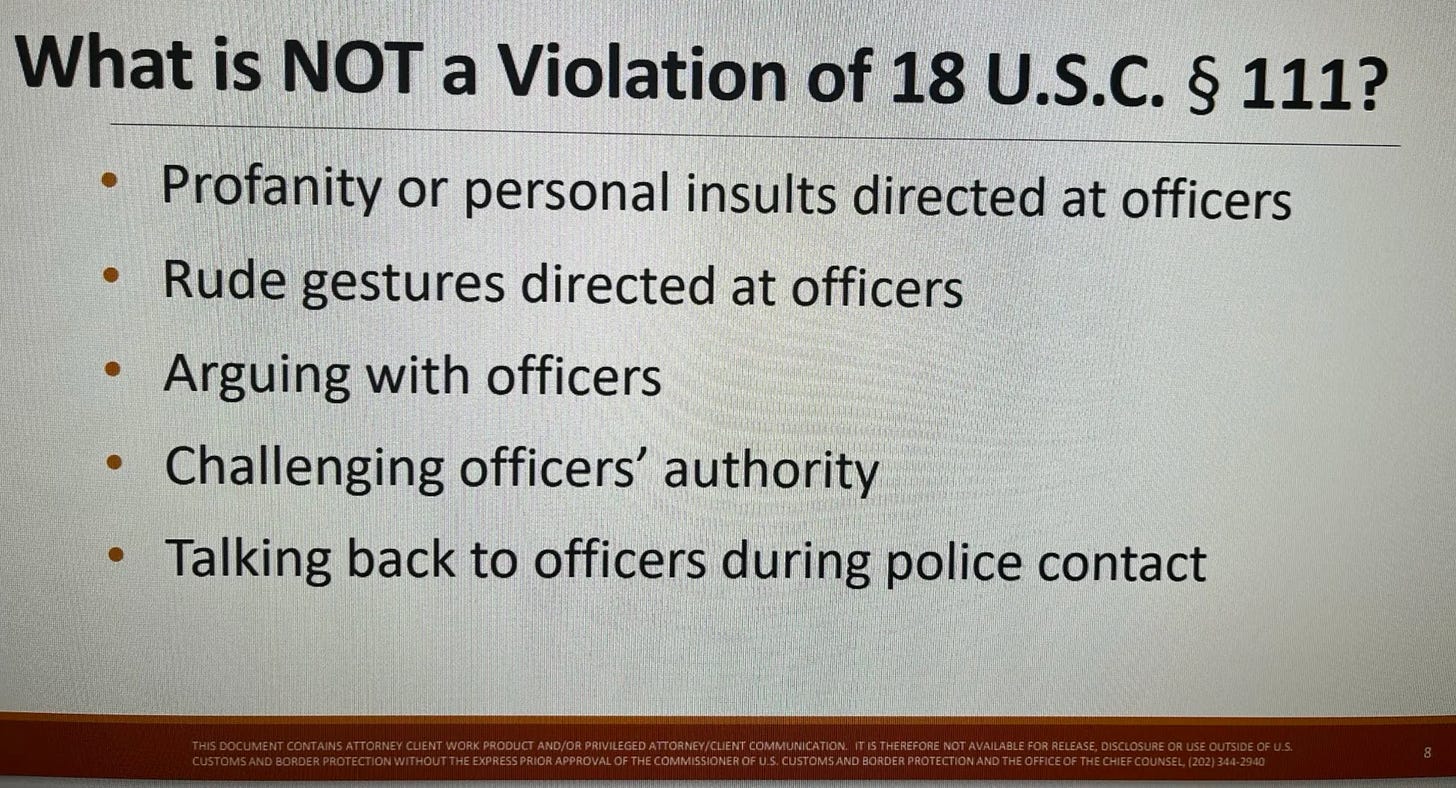
Today, Border Patrol Tactical Commander Greg Bovino circulated a “legal refresher” for agents in the field including on the use of force — not a move that screams certainty about their conduct. And the Department has sent memos to volunteers for Minneapolis warning about their “operational security,” covering everything from removing any signs of law enforcement affiliation when they are around their hotels to turning off location settings on their phones so that they can’t be tracked.
The guidance also reminds agents that things like profanity, insults and rude gestures directed at them are not illegal (though “incitement” is).
Legal refresher
Legal refresher
Legal refresher
Legal refresher
Legal refresher
“It sounds like they’re entering a war zone,” says senior intelligence official, who has been involved in discussions about calming the waters around ICE deployments. “Telling a bunch of 20-somethings to be prepared for war — and terrorism — creates the very condition officials are cautioning about.”
The Border Patrol agent said that while a significant minority of his colleagues agree with him, they are not comfortable speaking out given the political climate.
The agent also warned that the voluntary deployments, despite being symptomatic of splits within the agency, could further inflame the situation in Minneapolis.
“Key word is it’s on a ‘voluntary’ basis,” the Border Patrol said. “If no experienced senior agents step up, they send the new guys straight out of the academy. Not a good idea.”
He continued: “In a nutshell, it’s ‘Us versus them’ on steroids and I think some Border Patrol agents are more willing to use force and not feel restrained when you got DHS leadership lying to cover for them. For example, Kristi Noem lying her ass off on what happened is like saying to the federal agents on the ground: ‘Go ahead and do whatever you have to do. We got your back. We will find a way to justify it.’”
Help me cover the largest federal crackdown on immigration ever by becoming a paid subscriber — there’s A LOT more to this story
There was little warning. Officers tumbled into the newsroom all at once, guns drawn, shouting into the common spaces. In the kitchen, someone was in the middle of drawing an espresso; overflowing coffee and steam began to drip onto the floor. Then, there was silence as the men took tactical positions in corridors and cubicles, opening closed doors and forcing the occupants of privacy rooms onto the main floor.
They lined up the editors first, zip tying their hands together and leading them into vans downstairs. Then they began to gather the rest of the journalists. Laptops were gathered from desks. The server room, such as it was in the wake of zero trust and enterprise cloud services, had its door kicked in, switches and rack servers ripped out of their frames. One IT support engineer objected and found a gun in his face, the safety off, its owner ready to make them into an example.
The people of color were led into one van; the white journalists into another. All were driven away.
The newsroom’s infrastructure was decommissioned that same day. The website was taken offline. Email accounts and cloud storage were trespassed, their contents downloaded for rapid analysis by the authorities using some central AI system; maybe Palantir, maybe something else.
Ostensibly, there would be a trial. In reality, everyone knew, the point was the intimidation, the unpublishing, the detainment of the people responsible for criticism. There was no time for due process, the administration argued. Across newsrooms, universities, activist organizations, there were too many people. As the newsroom sat chained to their seats, being driven to some incarceration center somewhere, they wondered how long it would be before their families knew. How long before the remote journalists were picked up in similar ways, perhaps in front of their children, their homes trashed.
It didn’t take long for the authorities to gain access to the devices they had taken. They forced journalists to open their phones and laptops at gunpoint; they’d all been trained not to use biometric IDs, that nobody could force them to provide their passwords and PINs, but none of that matters when you have a weapon in your face. The hard drives, though encrypted, were unlocked and accessed, the data on them cloned.
They expected to find source information: the identities of people within the government who had leaked information about detainment sites and immigration enforcement activities.
They found nothing.
The files were all gone. The emails were all redacted. The devices were as good as empty.
And no matter what they did, no matter who they threatened, nobody could restore them. Not a single member of the newsroom gave up their private information.
They couldn’t.
And for all they did to bring the website down, they couldn’t stop the journalism. There was no way to take it offline. Within moments, other newsrooms seemed to have become aware of the raid, and were pointing to the articles. Interest had increased, not decreased.
The newsroom had planned for this.
For months, all its journalism had been mirrored elsewhere. It had always been available under a Creative Commons license for anyone to republish for free — a model pioneered by ProPublica and then followed by The 19th, Grist, The Marshall Project and more, which this newsroom had used for years. But in that model, another outlet needed to choose to republish an individual article.
In contrast, this new active mirroring left nothing to chance. An independent group in Switzerland intentionally syndicated all non-profit journalism onto its servers, located in Switzerland and subject to Swiss law, out of reach by the US administration. The pieces were also, after a time delay to account for post-publishing edits, syndicated to IPFS, the censorship-resistant peer-to-peer content delivery network. Together, these measures meant that it was impossible to fully redact American non-profit journalism in the public interest. The website was gone, but the articles lived on.
The group had another purpose. Beyond mirroring the newsroom’s articles, it had access to its cloud storage, its email accounts, its databases, its infrastructure. It maintained independent offsite backups of the site and every custom application, all in Switzerland. And most importantly, it had a kill switch.
When the newsroom was raided, monitoring systems in Switzerland noticed an anomaly and automatically shut down the newsroom’s systems within seconds. Email accounts and cloud storage were drained, information was locked down. Now, it was fully under their control: no-one in the US could compel them to restore it all.
Instead, two people in Switzerland, employed by a Swiss organization, needed to independently determine that it was safe to restore data. They sat in two separate clean, glass offices. To restore the data and systems, they would need to speak to the employees in the US, monitor the sensors and the security footage from the US offices, and make their own decision. If they did determine that it was safe, they would do so quickly, but it was their choice. They had full, independent authority to keep data from the newsroom until they could make that determination.
And in this case, they could not.
Because the newsroom used cloud services with zero trust, with data shared using the principle of least privilege, the seized laptops and servers contained very little usable information. Where they did contain local data, it was encrypted using keys that were kept in Switzerland and withheld with the rest of the cloud-hosted data. There was almost nothing that the authorities could use.
There were collaborators: people on the inside who provided information. Some did it because they truly believed in the administration’s cause; some simply wished to ingratiate themselves to power. Even they could not provide more access to the data; they could not lead authorities to sources or compromise the investigations of other newsrooms. In the event, they were not spared. They, too, rode in the van.
Word spread quickly. Details of the intrusion were saved to an indelible ledger of newsroom raids, violence against journalists, and other threats that was peered with newsrooms worldwide. Notifications were sent to leaders at partner newsrooms within seconds.
Those partner newsrooms — protected by similar remote kill switch with other, similar Swiss groups — were able to access source information that had been set aside in advance so that stories in progress could continue to be reported. Some of those newsrooms were in the US; some were in other countries, so that if every newsroom in the US was compromised, others would still be able to pick up the stories elsewhere.
The people in the van did not disappear. Their names, identities, and job titles were all recorded and broadcast to other newsrooms. There would be pressure for their release. Some of them were dual nationals or foreign citizens, and their respective governments would add to the pressure. It wasn’t going to be an easy road, but the truth would endure. Their sources remained safe. Their work could continue. And it would not be in vain.
ICE white supremacist gang thugs getting even more agressive attacking people. They no longer care about skin color. The gang has reverted to gang tactics of intimidation. They think might makes them right. The ones with the guns are in charge is what they have been taught. And the administration is OK with this as it helps their cause to have a frightened public unwilling to stand up to them. They are covering their faces because they understand they are breaking the laws and that if a police officer tried this they would be in prison. They know that Stephen Miller will not always be there to protect them. And tRump can not pardon people found guilty of state crimes. In this clip a woman rushes into another woman’s home. The police dispatch incorrectly tells her she must hand the woman over and she almost does, but then gains courage as ICE thugs draw closer on her property. Her neighbors come out and give her strength and support. Hugs
The government take over of thoughts and what material people can read is happening with the assistance of the tech community. The limiting what people can see or read started with the idea of restricting any media that positively presented the LGBTQ+ community so to protect the children they claimed. See how quickly it has progressed in less than a year to simply the government telling / demanding the right to tell people what they can read or view so that the government is never disfavored or contradicted. Totally as China and Russia work. How do you like living in such a society. Remember the people who had these books on their device had paid for them and Amazon did not return their money, they just reached in and deleted the material they did not want you to read. Once the precedent is set it will be used by any new government who wish to control the population and how they feel about the society they live in. Hugs
A commuter using an Amazon Kindle while riding the subway in New York.Credit…Lucas Jackson/Reuters
In George Orwell’s “1984,” government censors erase all traces of news articles embarrassing to Big Brother by sending them down an incineration chute called the “memory hole.”
On Friday, it was “1984” and another Orwell book, “Animal Farm,” that were dropped down the memory hole by Amazon.com.
In a move that angered customers and generated waves of online pique, Amazon remotely deleted some digital editions of the books from the Kindle devices of readers who had bought them.
An Amazon spokesman, Drew Herdener, said in an e-mail message that the books were added to the Kindle store by a company that did not have rights to them, using a self-service function. “When we were notified of this by the rights holder, we removed the illegal copies from our systems and from customers’ devices, and refunded customers,” he said.
Amazon effectively acknowledged that the deletions were a bad idea. “We are changing our systems so that in the future we will not remove books from customers’ devices in these circumstances,” Mr. Herdener said.
Customers whose books were deleted indicated that MobileReference, a digital publisher, had sold them. An e-mail message to SoundTells, the company that owns MobileReference, was not immediately returned.
Digital books bought for the Kindle are sent to it over a wireless network. Amazon can also use that network to synchronize electronic books between devices and apparently to make them vanish.
An authorized digital edition of “1984” from its American publisher, Houghton Mifflin Harcourt, was still available on the Kindle store Friday night, but there was no such version of “Animal Farm.”
People who bought the rescinded editions of the books reacted with indignation, while acknowledging the literary ironies involved. “Of all the books to recall,” said Charles Slater, an executive with a sheet-music retailer in Philadelphia, who bought the digital edition of “1984” for 99 cents last month. “I never imagined that Amazon actually had the right, the authority or even the ability to delete something that I had already purchased.”
Antoine Bruguier, an engineer in Silicon Valley, said he had noticed that his digital copy of “1984” appeared to be a scan of a paper edition of the book. “If this Kindle breaks, I won’t buy a new one, that’s for sure,” he said.
Amazon appears to have deleted other purchased e-books from Kindles recently. Customers commenting on Web forums reported the disappearance of digital editions of the Harry Potter books and the novels of Ayn Rand over similar issues.
Amazon’s published terms of service agreement for the Kindle does not appear to give the company the right to delete purchases after they have been made. It says Amazon grants customers the right to keep a “permanent copy of the applicable digital content.”
Retailers of physical goods cannot, of course, force their way into a customer’s home to take back a purchase, no matter how bootlegged it turns out to be. Yet Amazon appears to maintain a unique tether to the digital content it sells for the Kindle.
“It illustrates how few rights you have when you buy an e-book from Amazon,” said Bruce Schneier, chief security technology officer for British Telecom and an expert on computer security and commerce. “As a Kindle owner, I’m frustrated. I can’t lend people books and I can’t sell books that I’ve already read, and now it turns out that I can’t even count on still having my books tomorrow.”
Justin Gawronski, a 17-year-old from the Detroit area, was reading “1984” on his Kindle for a summer assignment and lost all his notes and annotations when the file vanished. “They didn’t just take a book back, they stole my work,” he said.
On the Internet, of course, there is no such thing as a memory hole. While the copyright on “1984” will not expire until 2044 in the United States, it has already expired in other countries, including Canada, Australia and Russia. Web sites in those countries offer digital copies of the book free to all comers.

























 Scottie's Playtime