Texas A&M University, earlier this month, banned a philosophy professor from teaching about Plato’s Symposium because it’s too gay (well, in their words, for discussing “gender ideology”), and, while obviously philosophy classes should be allowed to teach about Plato and state lawmakers and administrators shouldn’t be interfering in curricula… they are right that the specific texts that they banned are pretty gay.
If the legislators’ and administrators’ goal is to make LGBTQ+ people feel more isolated and alone as a way of getting them to conform and pretend to be cisgender and heterosexual, this won’t be enough to accomplish that goal — however, it’s a necessary step towards that goal.
I grew up in the ’90s in a conservative part of central Indiana, and I went to college on the other side of the country, determined to get away from everyone I knew and to live my life as I wanted. One of the classes I had to take in my first semester at college as an 18-year-old freshman was a survey of Western civilization-type class that included Symposium as one of its readings.
I still remember the professor warning us in the class prior to reading Symposium that the text was about “love” and that, for Plato, that very much included love between two men. This was 2001, pre-September 11, just a couple of years after Ellen DeGeneres came out, and at a time when homosexuality was illegal in many states, so, yes, we got a “trigger warning,” and the potential trigger was a discussion of homosexuality.
It’s hard to say what impact that book had on me. Pretty much the only mentions of homosexuality in grade school that I remember from Indiana were the slurs kids would throw around every other sentence, the jokes and insults that were never any deeper than calling someone gay, the Christians randomly arguing (against no one!) that homosexuality was sinful, the casual discussions of violence against gay people (I grew up in the days when fantasizing putting all gay men on an island and dropping a bombshell on them was just a normal thing for people to talk about, like the weather)… and here I was — a freshly minted adult among other adults — talking about Plato, the famous philosopher who (pretty much every adult my whole life had said) was an important historical figure. And Plato was gay. Maybe not “gay” in the modern sense, but he was writing books about loving men, and that was close enough for me.
[This] is why MAGA wants to end liberalism itself. To them, people are workers, soldiers, baby-producing machines, not human…. It’s a cold and sad way of looking at the world.
One of the passages that Texas A&M University had an issue with was Aristophanes’ speech about the origin of love. The short version is that, in the distant past, humans rolled around like balls with four arms and four legs and two faces. Some people were all male, some all female, and some a mix. They were powerful and a threat to the gods, so Zeus cut them all in half. Now they (we) spend our lives looking for our other half and holding on when we find them.
While the point of the story isn’t an explanation of why some people are gay and others are straight, it’s baked in, and modern readers are going to notice that Aristophanes is saying that same-sex love has the same origin as opposite-sex love. They’re all just normal variants of human sexuality, and it’s not something that anyone else in the book even comments on. That is, same-sex love is just another legitimate expression of love that comes from the same place, at least for Aristophanes. Others in the book have different opinions about male same-sex love, but none are disapproving.
I wasn’t the only one to take that message from that story. I have heard it mentioned by other queer people throughout my adult life. It featured prominently in the late-90s musical (and later film) Hedwig and the Angry Inch. It’s a part of the queer lexicon.
“The ‘gender ideology’ of this tale comes to us from the fourth century BC,” writes Guardian columnist Osita Nwanevu. “And philosophers in the many centuries since have examined it not only for what it tells us about the Greeks in Plato’s day but for what it might tell us, as far removed as we might be from ancient Athens, about sex, love, and longing. It is a tale about universal aspects of the human experience philosophers have examined in the service of understanding what it means to be a human being.”
Nwanevu’s larger point is that the underlying ideology of the presidential administration — as shown in Stephen Miller’s claim that the world is “governed by strength” and Vice President J.D. Vance’s statement that America is nothing more than a “homeland” for “people with a shared history and a common future” — is really selling people short. What it means to be human is much more than mere strength and domination, and America is supposed to be an idea and an ideal, not just a piece of land where we live.
LGBTQ+ rights flourished in the post-war world, as did other human rights protections; ending the constant spats over pieces of land inspired people to understand that there’s a lot more to being human…
That is, America is supposed to be about all people’s inherent value and right to “Life, Liberty and the pursuit of Happiness,” not Miller’s “iron laws of the world” — those of “might makes right” — that Nwanevu rightly calls “the laws of animals.”
This is fundamental to how the global neo-fascist movement sees the world: For them, everything is about domination and resource-hoarding. All other considerations are secondary.
It can be seen in the attacks on LGBTQ+ rights that are often justified by pointing to a decline in the birthrate, or in the attacks on humanities and social sciences at universities, degrees that many claim (often incorrectly) don’t pay well. This can be seen in the complaints that schools shouldn’t teach kids to be more tolerant of diverse people — a necessary skill in a multicultural world where we all get along — and should instead teach them the bare minimum of reading, writing, and arithmetic (and, since it’s the 21st century, how to code). It can be felt in the right-wing mockery of art and arts funding when they never have complaints about spending money on military equipment that will never (and should never) see combat.
And it’s in this horrifying Greenland business, which is what Miller was talking about when he was discussing “the iron laws of the world.”
| Shutterstock
On the one hand, invading Greenland would end NATO, end all sorts of ties between the U.S. and Europe, and end the peaceful world created in the latter half of the 20th century that led to prosperity in the West and an end to the wars for territorial expansion that defined Europe for millennia.
On the other hand, Greenland looks kinda big on Mercator-projection maps, and adding a big splotch to the part of the world labeled “United States” would make the president feel like he actually accomplished something of value in his life.
It shouldn’t be surprising that LGBTQ+ rights flourished in the post-war world, as did other human rights protections; ending the constant spats over pieces of land inspired people to understand that there’s a lot more to being human, to be concerned with their own and other people’s happiness, and to try to live up to the ideals laid out in previous centuries.
Which is why MAGA wants to end liberalism itself. To them, people are workers, soldiers, baby-producing machines, not human. Our worth is measured in terms of how much stuff we can produce, how much we can contribute to our nation’s domination over other nations. Individuals’ fulfillment and happiness are secondary. It’s a cold and sad way of looking at the world.
So Plato, of all people, is taking a beating in Texas. Learning about philosophy opened my mind when I was young and taught me to ask questions about what life could offer. (The part of Symposium about how homosexuality results in intellectual reproduction instead of biological reproduction like heterosexuality wasn’t even on the syllabus at Texas A&M, but I still haven’t forgotten about it.)
In the war on human-ness itself, LGBTQ+ identities will always be one of the first victims. That’s why they don’t want us learning about ourselves.
Subscribe to the LGBTQ Nation newsletter and be the first to know about the latest headlines shaping LGBTQ+ communities worldwide.
The Texas State Board of Education launched the process of redesigning the state’s social studies standards earlier this year. Trace Thomas for The Texas Tribune
The Texas State Board of Education is reshaping how public schools will teach social studies for years to come, but its recent selection of the panelists who will advise members during the process is causing concern among educators, historians and both Democrats and Republicans, who say the panel’s composition is further indication that the state wants to prioritize hard-right conservative viewpoints.
The Republican-dominated education board earlier this year officially launched the process of redesigning Texas’ social studies standards, which outline in detail what students should know by the time of graduation. The group, which will meet again in mid-November, is aiming to finalize the standards by next summer, with classroom implementation expected in 2030.
A majority of the 15 members in September agreed on the instructional framework schools will use in each grade to teach social studies, already marking a drastic shift away from Texas’ current approach. The board settled on a plan with a heavy focus on Texas and U.S. history and less emphasis on world history, geography and cultures. Conservative groups like Texas Public Policy Foundation and the Heritage Foundation championed the framework, while educators largely opposed it.
In the weeks that followed, the board selected a panel of nine advisers who will offer feedback and recommendations during the process. The panel appears to include only one person currently working in a Texas public school district and has at least three people associated with far-right conservative activism. That includes individuals who have criticized diversity efforts, questioned school lessons highlighting the historical contributions of people of color, and promoted beliefs debunked by historians that America was founded as a Christian nation.
That group includes David Barton, a far-right conservative Christian activist who gained national prominence arguing against common interpretations of the First Amendment’s establishment clause, which prevents the government from endorsing or promoting a religion. Barton believes that America was founded as a Christian nation, which many historians have disproven.
Critics of Barton’s work have pointed to his lack of formal historical training and a book he authored over a decade ago, “The Jefferson Lies,” that was pulled from the shelves due to historical details “that were not adequately supported.” Brandon Hall, an Aledo Republican who co-appointed Barton, has defended the decision, saying it reflected the perspectives and priorities of his district.
Another panelist is Jordan Adams, a self-described independent education consultant who holds degrees from Hillsdale College, a Michigan-based campus known nationally for its hard-right political advocacy and efforts to shape classroom instruction in a conservative Christian vision. Adams’ desire to flip school boards and overhaul social studies instruction in other states has drawn community backlash over recommendations on books and curriculum that many felt reflected his political bias.
Adams has proclaimed that “there is no such thing” as expertise, describing it as a label to “shut down any type of dialogue and pretend that you can’t use your own brain to figure things out.” He has called on school boards to craft policies to eliminate student surveys, diversity efforts and what he considers “critical race theory,” a college-level academic and legal framework examining how racism is embedded in laws, policies and institutions. Critical race theory is not taught in K-12 public schools but has become a shorthand for conservative criticism of how schools teach children about race.
In an emailed response to questions from The Texas Tribune, Adams pointed to his earlier career experience as a teacher and said he understands “what constitutes quality teaching.” Adams also said he wants to ensure “Texan students are taught using the best history and civics standards in America” and that he views the purpose of social studies as forming “wise and virtuous citizens who know and love their country.”
“Every teacher in America falls somewhere along the political spectrum, and all are expected to set their personal views aside when teaching. The same goes for myself and my fellow content advisors,” Adams said. “Of course, given that this is public education, any efforts must support the U.S. Constitution and Texas Constitution, principles of the American founding, and the perpetuation of the American experiment in free self-government.”
Republicans Aaron Kinsey and LJ Francis, who co-appointed Adams, could not be reached for interviews.
David Randall, executive director of the Civics Alliance and research director of the National Association of Scholars, was also appointed a content adviser. He has criticized standards he felt were “animated by a radical identity-politics ideology” and hostile to America and “groups such as whites, men, and Christians.” Randall has written that vocabulary emphasizing “systemic racism, power, bias, and diversity” cannot coexist with “inquiry into truth — much less affection for America.” He has called the exclusion of the Bible and Christianity in social studies instruction “bizarre,” adding that no one “should find anything controversial” about teaching the role of “Judeo-Christian values” in colonial North America.
Randall told the Tribune in an email that his goal is to advise Texas “as best I can.” He did not respond to questions about his expertise and how he would work to ensure his personal beliefs do not bleed into the social studies revisions.
Randall was appointed by Republican board members Evelyn Brooks and Audrey Young, both of whom told the Tribune that they chose him not because of his political views but because of his national expertise in history and civics, which they think can help Texas improve social studies instruction.
“I really can’t sit here and say that I agree with everything he has said. I don’t even know everything that he has said.” Brooks said. “What I can say is that I can refer to his work. I can say that he emphasizes integrating civics.”
The advisory panel also consists of a social studies curriculum coordinator in the Prosper school district and university professors with expertise ranging from philosophy to military studies. The group notably includes Kate Rogers, former president of the Alamo Trust, who recently resigned from her San Antonio post after Lt. Gov. Dan Patrick criticized her over views she expressed in a doctoral dissertation suggesting she disagreed with state laws restricting classroom instruction on race and slavery.
Seven of the content advisers were selected by two State Board of Education members each, while Texas’ Commissioner of Higher Education Wynn Rosser chose the two other panelists. Board member Tiffany Clark, a Democrat, did not appoint an adviser, and she told the Tribune that she plans to hold a press conference during the board’s November meeting to address what happened.
Staci Childs, a Democrat from Houston serving on the State Board of Education, said she had anticipated that the content advisory group would include “extremely conservative people.” But her colleagues’ choices, she said, make her feel like “kids are not at the forefront right now.”
Pam Little, who is the board’s vice chair, is one of two members who appear to have chosen the only content adviser with active experience working in a Texas K-12 public school district. The Fairview Republican called the makeup of the advisory panel “disappointing.”
“I think it signals that we’re going in a direction where we teach students what we want them to know, rather than what really happened,” Little said.
The board’s recent decisions show that some members are more focused “on promoting political agendas rather than teaching the truth,” said Rocío Fierro-Pérez, political director of the Texas Freedom Network, a progressive advocacy organization that monitors the State Board of Education’s decisions.
“Whether your political beliefs are conservative, liberal, or middle of the road really shouldn’t disqualify you from participating in the process to overhaul these social studies standards,” Fierro-Pérez said. “But it’s wildly inappropriate to appoint unqualified political activists and professional advocates with their own agendas, in leading roles and guiding what millions of Texas kids are going to be learning in classrooms.”
Other board members and content advisers insist that it is too early in the process to make such judgments. They say those discussions should wait until the actual writing of the standards takes place, which is when the board can directly address concerns about the new framework.
They also note that while content advisers play an integral role in offering guidance, the process will include groups of educators who help write the standards. State Board of Education members will then make final decisions. Recent years have shown that even those within the board’s 10-member Republican majority often disagree with one another, making the final result of the social studies revisions difficult to predict.
Donald Frazier, a Texas historian at Schreiner University in Kerrville and chair of Texas’ 1836 Project advisory committee, who was also appointed a content adviser, said that based on the panelists’ conversations so far, “I think that there’s a lot more there than may meet the eye.”
“There’s people that have thought about things like pedagogy and how children learn and educational theory, all the way through this panel,” Frazier said. “There’s always going to be hand-wringing and pearl-clutching and double-guessing and second-guessing. We’ve got to keep our eye on the students of Texas and what we want these kids to be able to do when they graduate to become functioning members of our society.”
The makeup of the advisory panel and the Texas-heavy instructional framework approved in September is the latest sign of frustration among conservative Republicans who often criticize how public schools approach topics like race and gender. They have passed laws in recent years placing restrictions on how educators can discuss those topics and pushed for instruction to more heavily emphasize American patriotism and exceptionalism.
Under the new framework, kindergarteners through second graders will learn about the key people, places and events throughout Texas and U.S. history. The plan will weave together in chronological order lessons on the development of Western civilization, the U.S., and Texas during grades 3-8, with significant attention on Texas and the U.S. after fifth grade. Eighth-grade instruction will prioritize Texas, as opposed to the broader focus on national history that currently exists. The framework also eliminates the sixth-grade world cultures course.
When lessons across all grades are combined, Texas will by far receive the most attention, while world history will receive the least — though world history would receive more time under the new framework than the one currently used.
During a public comment period in September, educators criticized the new plan’s lack of attention to geography and cultures outside of America. They opposed how it divides instruction on Texas, U.S. and world history into percentages every school year, as opposed to providing students an entire grade to fully grasp one or two social studies concepts at a time. They said the plan’s strict chronological structure could disrupt how kids identify historical trends and cause-and-effect relationships, which can happen moreeffectively through a thematic instructional approach.
But that criticism did not travel far with some Republicans, who argue that drastic changes in education will almost always prompt negative responses from educators accustomed to teaching a certain way. They point to standardized test results showing less than half of Texas students performing at grade level in social studies as evidence that the current instructional approach is not working. They also believe the politicization of education began long before the social studies overhaul, but in a way that prioritizes left-leaning perspectives.
“Unfortunately, I think it boils down to this: What’s the alternative?” said Matthew McCormick, education director of the conservative Texas Public Policy Foundation. “It always seems to come down to, if it’s not maximally left-wing, then it’s conservative indoctrination. That’s my perspective. What is the alternative to the political and policymaking process? Is it to let teachers do whatever they want? Is it to let the side that lost the elections do what they want? I’m not sure. There’s going to be judgments about these sorts of things.”
This is not the first time the board has garnered attention for its efforts to reshape social studies instruction. The group in 2022 delayed revisions to the standards after pressure from Republican lawmakers who complained that they downplayed Texan and American exceptionalism and amounted to far-left indoctrination. Texas was also in the national spotlight roughly a dozen years prior for the board’s approval of standards that reflected conservative viewpoints on topics like religion and economics.
Social studies teachers share the sentiment that Texas can do a better job equipping students with knowledge about history, geography, economics and civics, but many push back on the notion that they’re training children to adhere to a particular belief system. With challenges like budget shortfalls and increased class sizes, they say it is shortsighted to blame Texas’ academic shortcomings on educators or the current learning standards — not to mention that social studies instruction often takes a backseat to subjects like reading and math.
“I think we’re giving a lot more credit to this idea that we’re using some sort of political motivation to teach. We teach the standards. The standards are there. That’s what we teach,” said Courtney Williamson, an eighth-grade social studies teacher at a school district northwest of Austin.
When students graduate, some will compete for global jobs. Others may go to colleges across the U.S. or even internationally. That highlights the importance, educators say, of providing students with a broad understanding of the world around them and teaching them how to think critically.
But with the recent moves requiring a significant overhaul of current instruction — a process that will likely prove labor-intensive and costly — some educators suspect that Texas leaders’ end goal is to establish a public education system heavily reliant on state-developed curricula and training. That’s the only way some can make sense of the new teaching framework or the makeup of the content advisory panel.
“I’m really starting to notice an atmosphere of fear from a lot of people in education, both teachers and, I think, people higher up in districts,” said Amy Ceritelli-Plouff, a sixth-grade world cultures teacher in North Texas. “When you study history, you look at prior conflicts and times in our history when there has been extremism and maybe too much government control or involvement in things; it starts with censoring and controlling education.”
Disclosure: Schreiner University, Texas Freedom Network and Texas Public Policy Foundation have been financial supporters of The Texas Tribune, a nonprofit, nonpartisan news organization that is funded in part by donations from members, foundations and corporate sponsors. Financial supporters play no role in the Tribune’s journalism. Find a complete list of them here.
Protesters in support of LGBTQ+ rights and against book bans demonstrate outside of the U.S. Supreme Court Building while the justices heard arguments for the case of Mahmoud v. Taylor in Washington, DC., April 2025
Opinion: In Mahmoud v. Taylor, the justices gave bigotry a permission slip and ruled that parents can “opt out” of LGBTQ-inclusive lessons, further diminishing lessons and practices on inclusivity in civic society, argues Darek M. Ciszek.
The U.S. Supreme Court made a decision earlier this summer that has a significant impact on classrooms nationwide. In their 6-3 decision in Mahmoud v. Taylor, the majority completely missed the point as to why LGBTQ-inclusive education matters. By giving parents the option to pull their kids out of lessons that include LGBTQ+ characters or content, the Court prioritized personal religious objections over creating schools where students can learn without feeling invisible.
Justice Alito‘s majority opinion is especially troubling. He treats LGBTQ-inclusive education as if it were some optional “add-on” that schools can easily work around. As a former teacher, I can confidently say that is not how education works, especially when it comes to curriculum and lesson planning. And while Justice Thomas calls LGBTQ-inclusive education “ideological conformity,” he fails to see that most LGBTQ+ adults today grew up in a school system that forced us to conform to a cisgender and straight worldview. Ironically, I’d consider the Court’s narrow view of public education to be ideologically driven.
Let’s be clear about what LGBTQ-inclusive education is and isn’t. When teachers include books like Uncle Bobby’s Wedding in their curriculum, they are not trying to convert anyone’s child or attack anyone’s faith. They are trying to show students that families come in all colors, shapes, and sizes, reflecting our diverse society.
LGBTQ+ people are also part of every community. We have always been a part of human history, and we deserve to be represented in our nation’s schools. The goal is not to change what students believe at home; it is to teach them how to be respectful in a democratic and diverse world. Luckily, in her dissent, Justice Sotomayor got it right when she said that LGBTQ-inclusive education is “designed to foster mutual civility and respect.”
I could not agree more.
But here’s what the Court’s majority really got wrong: they ignored the anti-bullying efforts that motivate many LGBTQ+ inclusive education programs in the first place. According to the latest National School Climate Survey from GLSEN, 68% of American students reported feeling unsafe in school due to their SOGIE (sexual orientation, gender identity, and/or gender expression) characteristics.
That is two out of three LGBTQ+ youth.
These aren’t just statistics. These are real children trying to learn while dealing with a school environment that tells them, whether implicitly or explicitly, that their identities or families are somehow wrong or shameful.
When schools include diverse families in their lessons, they are not pushing an agenda. They are teaching kids that being different does not mean bad. They are giving LGBTQ+ students a chance to see themselves reflected in their education and helping other students see and understand those who are different from them.
Research shows inclusive education works. Studies have found that an LGBTQ-inclusive curriculum can improve the social and emotional well-being of LGBTQ+ youth. When kids learn about different types of families early on, they are more likely to treat their classmates with kindness instead of cruelty. In other words, when implemented correctly, LGBTQ-inclusive education can be an essential anti-bullying and student well-being strategy.
For instance, as a result of my doctoral research, I have learned that some schools around the world are starting to address LGBTQ+ bullying head-on, and, not surprisingly, it’s through curriculum and instruction. In Scotland, LGBTQ-inclusive education became required in 2021 across both primary and secondary, and most major subject areas. When I interviewed government staff about their experience implementing the new policy, I learned that they even worked with religious groups to inform the effort. Faith communities could agree that inclusion was important for reducing homophobic bullying, even if they had some religious concerns. Scottish students now learn how homophobic language hurts people and develop the social-emotional skills needed for creating safer schools. It’s not ideological instruction; it’s teaching kids critical peer relationship skills.
Similar to the Scottish experience, the U.S. Supreme Court could have left the door open for education authorities to find a balance that respects both religious families and vulnerable LGBTQ+ kids. Real inclusion programs do not ask anyone to abandon their faith. They ask people to treat others with respect and dignity, a lesson I believe everyone should support in class. Kids can learn that some families have two moms without being told their family is wrong. They can remember that using “gay” as an insult hurts people without abandoning their religious beliefs. Getting to know your neighbor does not go against faith.
Unfortunately for the U.S., the impact of the Court’s decision may be severe and widespread, especially in ideologically conservative states. Instead of dealing with complicated opt-out policies, I fear many school districts will probably remove LGBTQ+ inclusive materials entirely. Unfortunately, it can be easier to bow to political pressures than to fight, especially when faced with potential lawsuits or a loss of school funding. This means LGBTQ+ kids lose representation, and all students miss out on critical lessons in diversity and inclusion.
The Court’s decision also has broader implications beyond the LGBTQ+ community. By way of a new precedent, the case approves a heckler’s veto, allowing parents to claim a religious objection to any educational content they may not align with at home. This is because the majority opinion wasn’t apparent on how opting out of inclusive education would work in practice, or what would even qualify as a personal religious objection. We might start seeing opt-out forms for instruction on topics like human evolution, women’s rights, or civil rights history. Thanks to the Court, there is no line in the sand.
When we remove students from lessons about diverse communities, we fail everyone. But the call for truly inclusive education is not going anywhere. Our kids—all of our kids—deserve better.
Darek M. Ciszek is a PhD Candidate in Education at UCLA with a research focus on curriculum, learning, and social development.
Voices is dedicated to featuring a wide range of inspiring personal stories and impactful opinions from the LGBTQ+ community and its allies. Visit Advocate.com/submit to learn more about submission guidelines. Views expressed in Voices stories are those of the guest writers, columnists, and editors, and do not directly represent the views of The Advocate or our parent company, equalpride.
The entire article is saying that the public schools should be for everyone … except LGBTQ+ kids and parents of those kids. Yes gay and trans children exist and need / deserve to see themselves represented in the community just as much as straight cis kids do. This is a hate bill, banning a group because the majority in charge doesn’t like them. The flags they say are ok to fly like the Gladstone flag or the thin blue line flag are not neutral and they most definitely represent a political ideology. Again this is about erasing the LGBTQ+ kids / people from society to make the Christian fundamentalist and insecure parents who know they can’t have produced a gay / trans kid feel better about themselves. It is a desire to force the fundamentalist view point on every one regardless if they believe it. It is a desperate attempt to return to the 1950s. Hugs
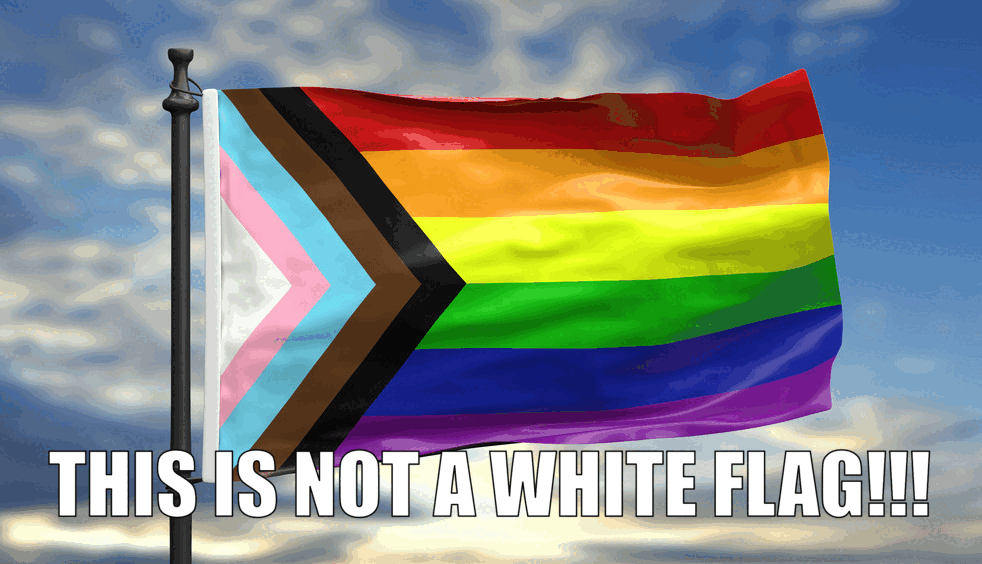
The law effectively bans Pride flags and other LGBTQ flags from being flown at schools or government buildings. In 2019, Gov. Steve Bullock, D-Montana, flew a Pride flag over the state Capitol, which drew criticism from Republicans.
Language in the bill does allow flags like the Gadsden flag and other “official historical flags” to be flown. It also allows flags for law enforcement officers and fallen officers, like the “Thin Blue Line” flag, which Gov. Gianforte, R-Montana, flew above the Montana Capitol on Thursday, May 15, 2025.
When HB 819 was debated on the floor of the Montana House of Representatives, Mitchell said the bill was intended to ensure government entities remain a place of neutrality and was not to impact an individual’s free speech.
“Government buildings, schools and public facilities serve all citizens and should not be used to promote political, ideological or activist messaging,” said Mitchell during the March 6 floor debate.
Critics of HB 819 say the bill targets free speech by allowing provisions for specific flags like the Gadsden “Don’t Tread on Me” flag to be flown, while others were prohibited. Rep. Pete Elverum, D-Helena, said under the language, a Confederate flag could be flown.
“What we’re doing here is we’re expressly prescribing what speech is allowed, ‘these flags’, and what speech is not allowed, ‘these other flags’,” said Rep. Pete Elverum, D-Helena, on March 6. “And as for the definition of ‘promoting a certain ideology,’ those [flags] are expressly prohibited, but at the exact same time we’re sitting here with a bill proclaiming to be about free speech, we’re expressly prohibiting some and promoting others.”
Flags of tribal nations, foreign countries, military service branches, the POW/MIA flag and official school or government entities’ flags are also permitted under the law.
HB 819 went into effect immediately after Governor Greg Gianforte signed it.
This year, both Utah and Idaho have passed similar laws restricting or banning Pride flags on government property or at schools.
New Montana law decides which flags fly in public schools.
Students are shown at Carl Wunsche Sr. High School, 900 Wunsche Loop, Tuesday, Feb. 4, 2025, in Spring.
Melissa Phillip/Staff Photographer
A lawmaker pushing to ban non-human behavior in schools says he based his bill on a conversation with a school administrator, who has since denied so-called furries are a problem in her district.
During an at-times tense hearing Tuesday night, Republican state Rep. Stan Gerdes said he filed the bill after hearing “reports of the presence of a furry” in a Smithville school. He said he called the district superintendent in November, who told him “this is happening in districts across the state” and schools don’t have the ability to stop it.
“We just want to help them have the tools to get some of the distractions out of the classroom so we can get back to teaching time,” Gerdes told the House Public Education Committee.
But the Smithville school district issued a public statement last month disputing Gerdes’ claims. It said Superintendent Cheryl Burns told Gerdes there were no litter boxes on campus for use by students dressed as cats, but as a courtesy to the lawmaker, she “made the extra effort to walk the campus to confirm.”
“At this time, the District has no concerns related to students behaving as anything but typical children,” the statement said.
Still, Gerdes argued the legislation was needed to curb the “extremely concerning” trend while providing scant evidence furries are a problem, or even present, in Texas schools.
Both Gov. Greg Abbott and House Speaker Dustin Burrows have backed the “Forbidding Unlawful Representation of Roleplaying in Education (F.U.R.R.I.E.S) Act,” which would prohibit any “non-human behavior” by a student, including wearing animal ears or barking, meowing or hissing.
The bill includes exceptions for sports mascots or kids in school plays and would only apply to grades 6-12. Still, it includes a clause that would amend the family code to deem schools “allowing or encouraging” a child to “develop a dependence on or a belief that non-human behaviors are societally acceptable” as child abuse.
The furries trend has existed for years, at least among adults. Many like taking on animal personas, dressing up in costumes and attending gatherings. The annual Anthrocon convention in Pittsburgh draws thousands.
Rumors about classrooms adapting to child furries appeared to start online in 2022. School districts in Iowa, Michigan and Nebraska later debunked claims they were providing litter boxes in bathrooms, and the fact-checking team at PolitiFact could not find any credible news reports that supported the claim.
Under questioning from a Democrat on the panel, who cast the bill as part of a “smear campaign” against public schools, Gerdes could not point to a single example of a school providing litter boxes to students.
Gerdes, a two-term legislator and past aide to former Gov. Rick Perry, said his office has received “some reports of them.”
“Did I go to these school districts and visit and see it with my own eyes? No,” Gerdes said.
When Gerdes introduced the legislation last month, he said he fully expected members of the subculture he was targeting to show up at the Capitol “in full furry vengeance” when the bill was heard.
“Just to be clear — they won’t be getting any litter boxes in the Texas Capitol,” the Smithville Republican said in a press release announcing the bill.
But there were no so-called furries or litter boxes at the late-night hearing Tuesday. Instead, the four people who showed up to testify against the measure included a public school teacher and a Texan who worried the measure could affect students with disabilities.
State Rep. James Talarico, a Round Rock Democrat who grilled Gerdes on the legislation, called the bill a “joke,” but said it would have serious consequences for educators. Teachers and schools could face fines of $10,000 to $25,000 for allowing behavior prohibited by the bill.
Talarico questioned whether a student licking their fingers after eating Cheetos would be prohibited by language in the bill, which defines “non-human behavior” as “licking oneself or others for the purpose of grooming or maintenance.” He asked whether students reading “Animal Farm” would be flouting the law if they made sounds like the characters in the book.
Gerdes said neither would meet the intent of the bill, and said he would be open to working with Talarico on the language to make him more comfortable with the legislation.
“I’m not comfortable with any bill that’s going after a non-existent issue,” Talarico responded. He cast the bill as part of an effort by Republicans to undermine public schools.
“Governor Abbott has used this litter box rumor to paint our schools in the worst possible light,” Talarico said. “That’s because if you want to defund neighborhood schools across the state, you have to get Texans to turn against their public schools. So you call librarians groomers, you accuse teachers of indoctrination, and now you say that schools are providing litter boxes to students. That’s how all of this is tied together.”
Gerdes denied the accusation. Later in the hearing, state Rep. Jeff Leach, a Plano Republican, defended Gerdes as a supporter of public schools and cast Talarico’s opposition to the legislation as part of an “obsession” with the governor.
“His hatred for Gov. Abbott and for private school vouchers or educational savings accounts has just gone too far,” Leach said. “You’re highly respected,” he told Gerdes, “and this bill doesn’t change that.”
The committee left the measure, House Bill 54, pending.

 Alex Bollinger (He/Him)January 15, 2026, 3:30 pm EST
Shutterstock

 The Texas State Board of Education launched the process of redesigning the state’s social studies standards earlier this year.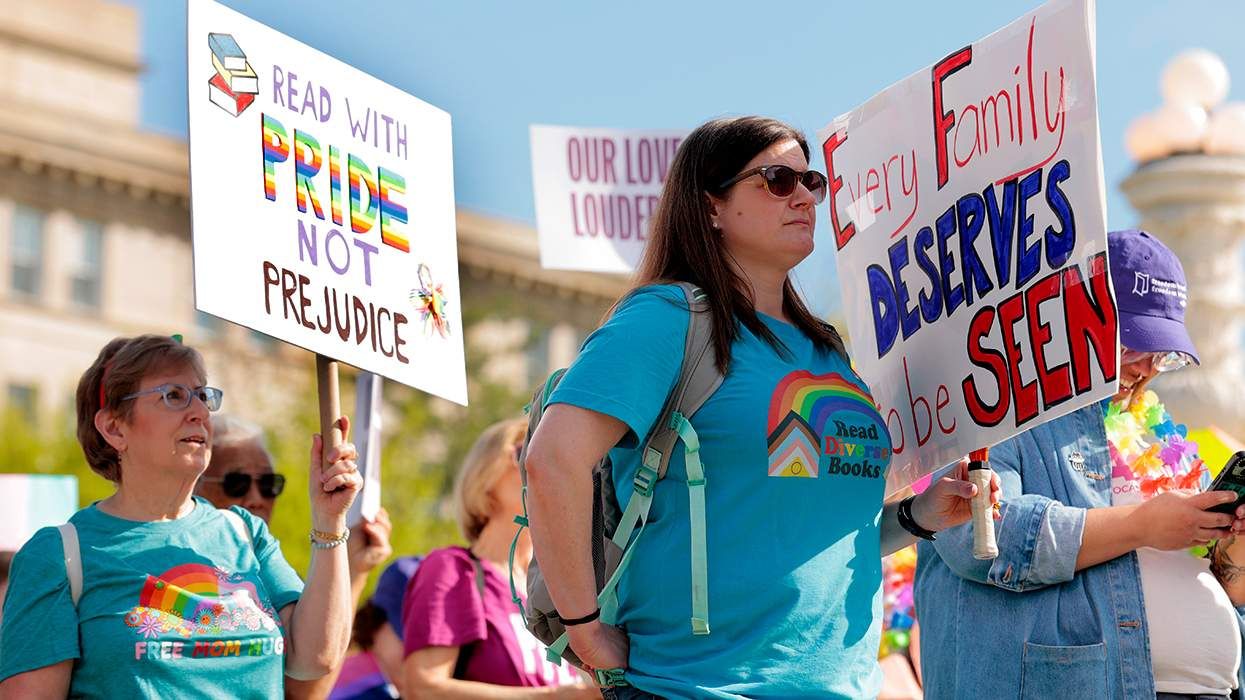



 Scottie's Playtime