The site isn’t exposing misleading reporting – it’s revealing the bubble Trump increasingly inhabits
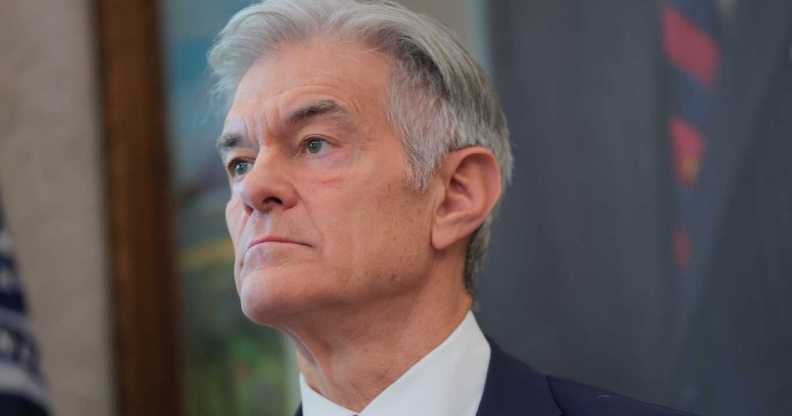
‘Given that bubble, harsh reality via the media is a rude intrusion.’ Photograph: Jonathan Ernst/Reuters
Donald Trump has used the mainstream press as a punching bag for many years, but in recent weeks his jabs have become even more frequent – and more ill-tempered.
And last Friday, his White House unveiled the latest wrinkle: a new website that supposedly tracks media bias. It offers a “Hall of Shame” and “media offenders of the week” to focus on reporting that the president dislikes. It names individuals and news organizations, and it points to the Boston Globe and CBS News, among others, for doing supposedly misleading and biased work. It uses terms like “left wing lunacy” to describe some of its complaints.
The site’s first iteration is particularly focused on media reporting about Trump’s call for six Democratic members of Congress to be arrested, tried and punished for their supposedly “seditious” video reminding military and intelligence personnel that they are not obliged to follow illegal orders. Trump even boosted a social media post that shouted: “HANG THEM GEORGE WASHINGTON WOULD” (He later told Fox News he wasn’t “threatening death, but I think they’re in serious trouble”).
All this for a video in which the members of Congress sought to remind people that military members make an oath to the constitution, not to the president.
“Our laws are clear. You can refuse illegal orders,” Senator Mark Kelly of Arizona, a former astronaut and a US navy veteran, says on the video. Trump has been especially furious about Kelly, who seems like just the wrong person to go after, giving his background of service and high credibility.
The White House site crows that those journalists and outlets who reported on all this are now “exposed”.
There really is something being exposed here, but it’s not the reporting.
It’s Trump’s own increasing desperation and his decreasing ability to countenance anything other than flattery and sycophancy. That’s not what the mainstream press is – or should be – in the business of providing.
But as Jonathan Lemire reported this week in the Atlantic, this president has become more and more isolated lately. His social media appears mostly restricted to his own (poorly named) Truth Social site; his travel is generally not to meet with (or even see) ordinary Americans; instead he tends to hang out with the billionaires who want something from his administration and are willing to cozy up shamelessly to get it.
“President Trump has never before been in such an echo chamber,” according to Lemire. “His domestic travel has basically stopped. He sees rich donors and Maga media, not actual voters.”
Given that bubble, harsh reality via the media is a rude intrusion, and the new White House site is an evident effort to dispel the discomfort by disparaging it.
Who, I wonder, does Trump think he’s reaching with this effort?
The Maga faithful, of course, don’t need to be persuaded. They already are fully on board with anything their dear leader does. And most other Americans – even some of the millions who voted for him – already have his number.
Trump’s overall approval rating of 38% is the lowest since his return to the presidency, according to a recent Reuters/Ipsos poll. It has fallen dramatically since the start of that second term and is down two percentage points just since the beginning of November. Even his iron grip on the Republican party has weakened. All of that is a deep worry with the approach of the midterm elections – less than a year away.
Who can he blame?
Why, the press, of course. And that’s precisely what this new site is all about.
Will it work? Granted, trust in the mainstream press is low, so reporters and news organizations are a convenient target of criticism. And granted, media bias exists, though the most blatant is on the far right, the busy pro-Trump propagandists.
But I agree with Seth Stern, director of advocacy for the Freedom of the Press Foundation, who told the Washington Post that most people – whatever their politics – aren’t going to buy what this new “bias tracker” is selling.
“People understand the obvious conflict inherent in a presidential administration appointing itself the arbiter of media bias,” Stern said.
That’s especially true for media criticism from those doing the bidding of Trump, who has made his antipathy toward the press so central to his persona.
Calling out inaccurate and biased reporting is a fair pursuit. Journalists are far from flawless; they make mistakes, and the best of them correct those quickly and fully.
But that’s not what this new site is about. And trashing the media is not going to help Trump get out of the trouble – or the bubble – that he’s in.
Margaret Sullivan is a Guardian US columnist writing on media, politics and culture
Ten Bears made a post that points out something I think we all should be aware of. I know a lot of the people who come here also go to his site also. But incase anyone missed it this short video is a powerful reminder of what we are fighting in the second tRump dictatorship. Hugs
Commissioners in Randolph County, North Carolina dissolved the county library system’s entire board of trustees last week, after the trustees voted to keep a picture book about a transgender boy on library shelves.
In October, the Randolph County Public Library’s Board of Trustees voted to keep the picture book Call Me Max on shelves despite some objections from members of the public. The book, written by Kyle Lukoff and illustrated by Luciano Lozano, tells the story of a young trans boy who asks to be called Max at school, eventually leading him to come out to his parents. The Randolph County trustees voted 5-2 to keep the book available, with some trustees reportedly commenting that removing or relocating the book would be a “slippery slope” toward censorship.
In response, the Randolph County Board of Commissioners voted 3-2 on December 8 to dissolve the library board and its governing bylaws entirely, Blue Ridge Public Radio (BPR) reported. Commissioner Hope Haywood, who cast one of the two dissenting votes, told BPR that the other commissioners’ likely intended to appoint new members, but that she had wanted to establish plans to facilitate that process first.
“Three commissioners didn’t see it that way. Three commissioners felt like, just abolish the board and then figure it out,” Haywood told BPR.
Minutes and video of the December 8 meeting were not yet available at time of writing. According to coverage of the meeting by local news website Randolph Hub, commission chairman Darrell Frye made bizarre comments about a member of his family he said had killed themself after being “brainwashed” on social media, apparently in reference to being trans. “It’s about, to me, exposing a child before it’s able to make a decision. It’s personal to me,” Frye reportedly said. Commissioner Kenny Kidd opined that dissolving the board of trustees was “a black-and-white issue,” and that “the soul of our children” was at stake.
“We adhere to the rules for the disposition of materials. We have the responsibility to serve all sides of issues,” trustee Betty Armfield reportedly told the board, adding that it was “parents’ responsibility to choose what they believe are appropriate books for their children.”
Call Me Max will still be available to check out from Randolph libraries in the wake of the commissioners’ vote, the county public information officer told CBS affiliate station WFMY. Still, Lukoff — who won a 2020 Stonewall Book Award for another picture book about a trans boy, When Aidan Became a Brother — lamented the vote and what it represents on Instagram last week.
“A library’s entire board of trustees was fired and replaced because they refused to ban one of my books. It’s so terrible,” Lukoff wrote. “I just feel so bad for the people who live in that community and love their library,” he added in a later reply.
Anti-LGBTQ+ activists have increasingly targeted local and school libraries over the past several years, particularly amid the rise in popularity of “Drag Queen Story Hour” events, some of which have been the subject of bomb threats and harassment from far-right militia groups. Tennessee officials have ordered libraries across the state to remove books with LGBTQ+ themes or characters this year, while in South Carolina, the York County Library board voted last week to move all books dealing with gender identity to sections for patrons aged 13 and older. One conservative activist claimed that move was necessary for “protecting childhood innocence.”
Issues of access to LGBTQ+ materials are increasingly landing in courts. Earlier this year, former Wyoming librarian Terri Lesley settled a wrongful dismissal lawsuit with county officials for $700,000, after she was fired in 2023 for refusing to remove LGBQ+ books from children’s and young adult sections of her library. (Neither party admitted wrongdoing as a result of the settlement.)
“People that want to keep pushing an agenda to go against these library materials and the First Amendment, I hope they see this, and I hope it’s a deterrent,” Lesley told CBC Radio in October.
Dr Mehmet Oz, administrator for the Centers for Medicare and Medicaid Services. (Anna Moneymaker/Getty Images)
Mehmet Oz, better-known as Dr Oz, has raged about “$150k penis surgery” for trans youth, but he failed to cite any facts.
Dr Oz, who leads Medicaid and Medicare, announced on Thursday (18 December), alongside health secretary Robert F Kennedy Jr, measures that will ban gender-affirming care for trans youth.
The ban, part of Dr Oz’s bid to end “taxpayer funding of sex rejecting procedures for children in Medicaid and CHIP [children’s health insurance program], full stop”, takes the form of two new proposed rules from Medicaid and Medicare.
The first prevents doctors and hospitals from receiving federal Medicaid reimbursement for gender-affirming care provided to trans youth under the age of 18, while the second blocks all Medicaid and Medicare funding for any services at hospitals that provide pediatric gender-affirming care.
Medicaid, which is the health care program that covers low-income Americans, alongside older and disabled citizens, is taken at most hospitals, meaning the proposals could have a wide-ranging effect, as per New Hampshire Public Radio.
During announcing the proposals, Kennedy referred to gender-affirming care as “malpractice”, while Dr Oz went completely off topic.
The 65-year-old began ranting about the prices of bottom surgery, which is very rarely performed on individuals under 18.
“A vaginoplasty – a procedure a child does not need – costs $60,000,” he claimed, adding: “Shockingly, a phalloplasty, the creation of a penis, costs, on average, in America, $150,000 per child.
“I do believe, with doing some work, that these prices have continued to increase due to increased manufactured demand,” he continued. “A scrotalplasty, where you add testicles? That’s extra.”
Dr Oz didn’t clarify where he pulled his quoted figures from, but according to the Gender Confirmation Center, the price of a vaginoplasty is between $23,000 and $24,500, while phalloplasty ranges between $35,000 and $50,000.
According to 2025 data from the Williams Institute, about one per cent of people aged 13 and older identify as trans in the US, and despite the proposals attacking gender-affirming care for trans youth, multiple studies show that surgeries are rarely performed on minors.
A 2024 study by researchers at Harvard TH Chan School of Public Health found that no gender-affirming surgeries were performed on trans or gender diverse youth (TGD) aged 12 and younger in 2019, the most recent year for which data is available.
For teens ages 15 to 17 and adults ages 18 and older, the rate of undergoing gender-affirming surgery was 2.1 per 100,000 and 5.3 per 100,000, respectively. The majority of surgeries were chest surgeries.
Co-author Elizabeth Boskey, instructor in the Department of Social and Behavioral Sciences, said: “We found that gender-affirming surgeries are rarely performed for transgender minors, suggesting that US surgeons are appropriately following international guidelines around assessment and care.”
Lead author Dannie Dai, research data analyst in the Department of Health Policy and Management, added: “Our findings suggest that legislation blocking gender-affirming care among TGD youth is not about protecting children, but is rooted in bias and stigma against TGD identities and seeks to address a perceived problem that does not actually exist.”
Share your thoughts! Let us know in the comments below, and remember to keep the conversation respectful.
A same-sex female couple in Pennsylvania is suffering through a “Kafkaesque nightmare” after one of the women was detained by Immigration and Customs Enforcement (ICE) when she showed up for a regularly scheduled immigration check-in.
ICE agents detained her and shipped her to a detention center in California.
Xiomara Suarez, 28, arrived in the U.S. in 2022 seeking asylum after fleeing Peru, where she was stalked and endured a violent sexual assault based on her sexual orientation. In a sworn declaration to U.S. Citizenship and Immigration Services officials reviewed by Advocate, Suarez said Peruvian police refused to acknowledge her complaints or offer protection, and she feared for her life.
Suarez was admitted to the U.S. on “parole” as her request for permanent status was processed.
In February, Suarez married her then-girlfriend, Grazi Chiosque, 29, an American citizen. The couple hoped to adjust Suarez’s immigration status and smooth the way for her to obtain a green card. They filed the required documents in May.
Before that request was processed, however, Suarez was swept up in a wave of detentions by ICE at courthouses targeting immigrants scheduled for hearings — only to be arrested and shipped to detention centers despite their legal non-criminal status.
Suarez was now one of them.
Chiosque says her wife is enduring degrading and isolating conditions at the Adelanto ICE detention facility in Southern California, where she’s been detained since September.
“There’s mold in the food,” Chiosque said. “You don’t have any privacy.”
“She was put into shackles,” Suarez’s wife added. “She told me that crying because it really made her feel like she did something that was wrong, and she didn’t.”
Far from expediting Suarez’s immigration status, the couple’s decision to marry may have only complicated Suarez’s legal claim.
Earlier this month, she was scheduled for back-to-back appearances with government officials. The first was with U.S. Citizenship and Immigration Services to adjudicate her spousal petition. The second was before an immigration judge related to her detention and status in the country.
Chiosque flew from Pennsylvania to help Suarez through the process.
At the first appointment, a supervisor with Citizenship and Immigration Services told Chiosque, referring to her wife, “USCIS does not have jurisdiction because she’s detained.”
“The immigration judge would have to adjudicate on both,” Chiosque was told.
But at that hearing, the explanation flipped, Chiosque said.
“‘No, I don’t have jurisdiction on the I-130,” the judge told Suarez, referring to her spousal petition. “There’s nothing I can do.”
“If USCIS does not want to give you an interview,” he added, “contact your congressman.”
The couple had hoped their marriage claim would help expedite Suarez’s permanent residency. Now it was keeping her behind bars.
“USCIS says it’s not them because she’s detained. And the judge says it’s not them, it’s USCIS,” Chiosque said.
Suarez was returned to detention. Her next immigration hearing is scheduled for January 28.
The couple’s legal limbo is indicative of a broader, and intentional, pattern by ICE and the Trump administration, said Álvaro M. Huerta, director of litigation and advocacy at the Immigrant Defenders Law Center.
“This administration is separating and trapping families like Xiomara and Grazielli in a Kafkaesque nightmare, with the clear intention of making life so unbearable that they abandon all hope,” Huerta said. “It’s not only a policy failure, but also a betrayal of LGBTQ immigrant families who deserve dignity, safety, and the chance to thrive.”
“It feels like we’re begging,” said Chiosque, whose wife sits in detention a continent away.
Subscribe to the LGBTQ Nation newsletter and be the first to know about the latest headlines shaping LGBTQ+ communities worldwide.
May 14, 2024; New York, NY, USA; Speaker of the House Mike Johnson (center), and Vivek Ramaswamy (right) look on while former President Donald Trump speaks to the media alongside his lawyer Todd Blanche before his criminal trial at Manhattan criminal court at the New York State Supreme Court on May 14, 2024. Mandatory Credit: Justin Lane/Pool via USA TODAY NETWORK | Justin Lane/Pool via USA TODAY N
Yesterday’s announcement from Donald Trump’s Department of Health and Human Services (HHS) shows just why the 2026 midterms will matter so much, and why the 11 months of waiting to get there could be so disastrous. We need a Congress that will stand up and snatch back the purse strings as the Founding Fathers originally intended.
In the United States Constitution, Congress is granted the power of the purse: the right to decide how much to spend and on what. Also, importantly, it gets to decide when to remove funding. In the 70s, that was used to pull funding from the Vietnam War. That power does not belong with the Executive Branch, which the Constitution says must “take Care that the Laws be faithfully executed.”
Unfortunately, the Founders likely never imagined people like House Speaker Mike Johnson (R-LA) or Senate Majority Leader John Thune (R-SD), who have been willing to roll over and allow Trump to usurp their power, in violation of the basic concepts behind the checks and balances built into the Constitution.
Congress is already working to block gender-affirming care. This week, the House of Representatives passed two gender-affirming care bans for minors, one from Rep. Marjorie Taylor Greene (R-GA) and one from Rep. Dan Crenshaw (R-TX). Those bans are horrific, and we can only pray that the Senate will stop them, but they are at least going through some sort of democratic process.
The Trump administration has a way to move towards a gender-affirming care ban if that is in line with the will of the people and democracy. The HHS proposal doesn’t represent a ban; instead, it’s an end-run on democracy, hoping to conduct a scorched-earth funding pull that they should have no authority to do.
The HHS funding blocking proposal would pull all federal funding from any institution that conducts any gender-affirming care for trans people, even if patients pay for it without using federal funds. Hospitals will have to either comply with the HHS plans by ceasing gender-affirming care or risk losing all federal funding for all other treatments. Major hospital systems have already cut their programs because of these sorts of threats.
Trans youth and their families would be left seeking institutions that only provide gender-affirming care and forgo all government funding, if such a place even exists. Additionally, the removal of Medicaid coverage could see prices rise.
There will certainly be pushback against this plan, especially from cities and states that have marked themselves as trans sanctuaries. But those challenges will take time, and a small interruption in care or even just the threat of it does huge damage to trans youth. Denial of care has been linked to increased rates of depression and anxiety, and for those who have begun puberty, the physical changes that can happen in a short time can be extremely upsetting.
Trump keeps using threats of pulling federal funding to power his authoritarianism. That tactic is only working because Congress isn’t stopping him and saying, “No, that’s our job.” When Nixon pulled federal funds as a way to end programs with the Environmental Protection Agency (a process called impoundment), Congress passed the Congressional Budget and Impoundment Control Act, which closed loopholes and ensured that the president couldn’t rule this way. The Supreme Court went on to rule in 1975 that the president did not have the power to overrule Congress by impounding funds.
Michael Dorf, a constitutional law professor at Cornell University Law School, spoke with ABC News early in the Trump presidency, when he first started using this trick. “If Congress says you’re spending that much money on the federal programs, that’s how much is being spent. The president cannot stop it even temporarily,” he said. “Congress passed this statue this very particular rules of what exactly the president has to do if he wants to not spend money on money Congress has spent. He can ask Congress to for a recission, but there is a 45-day clock and a bunch of procedures, none of which have been followed by Trump.”
Congress’ move here wasn’t just granting itself new powers, but providing a safeguard to ensure that the power of the purse remained where the Constitution had put it. Republicans are quick to wheel out the Constitution and the will of the Founding Fathers, but all of that seems forgotten under Trump. Instead, Congress is leaving decisions to be drawn out in protracted judicial battles, which ultimately run the risk of landing in the Trump-packed Supreme Court.
All of those federal funding threats work well for Trump, as he and his administration can wave their hands and claim that they’re standing by their promise to cut bloated government spending (all while spending millions in taxpayer money on golfing and Kid Rock). But it all relies on a tactic that shouldn’t even be part of the presidential toolkit.
There might be a lot of justifiable hope in 2026 that things will work out. Elections this year have already shown a big swing away from Trump’s party. Republicans are resigning, opening more seats that the party could lose between now and 2027. And while Congress might be voting on gender-affirming care bans themselves, it took a capitulation to a hardline anti-trans Republican as she was heading out the door to get that to happen.
But we’re only halfway to those midterms, and there’s going to be a lot of pain if the current Congress can’t remember why they’re there for another year.
Subscribe to the LGBTQ Nation newsletter and be the first to know about the latest headlines shaping LGBTQ+ communities worldwide.
This is just hate and bigotry. It is a group of people who hate trans people for some unknown reason and have made their life / career the harassment of trans minors who play sports. I can not see how this harms this reporter and his group in any way. To make your life about harming others is a real petty way to exist. Many conservatives use their religion to justify such hate but the Jesus of the bible never said a word against the entire LGBTQ+ community. So their hate is internally driven and they must be such miserable people. So Sad. The drive to regress the world’s most progressive countries back to an uneducated straight cis white male controlled society is really causing a lot of damage to people and freedom to express your life as you wish. It seems driven by two groups, the older people who are uncomfortable with the progression of society and younger religious people driven by wealthy religious hate groups. Hugs
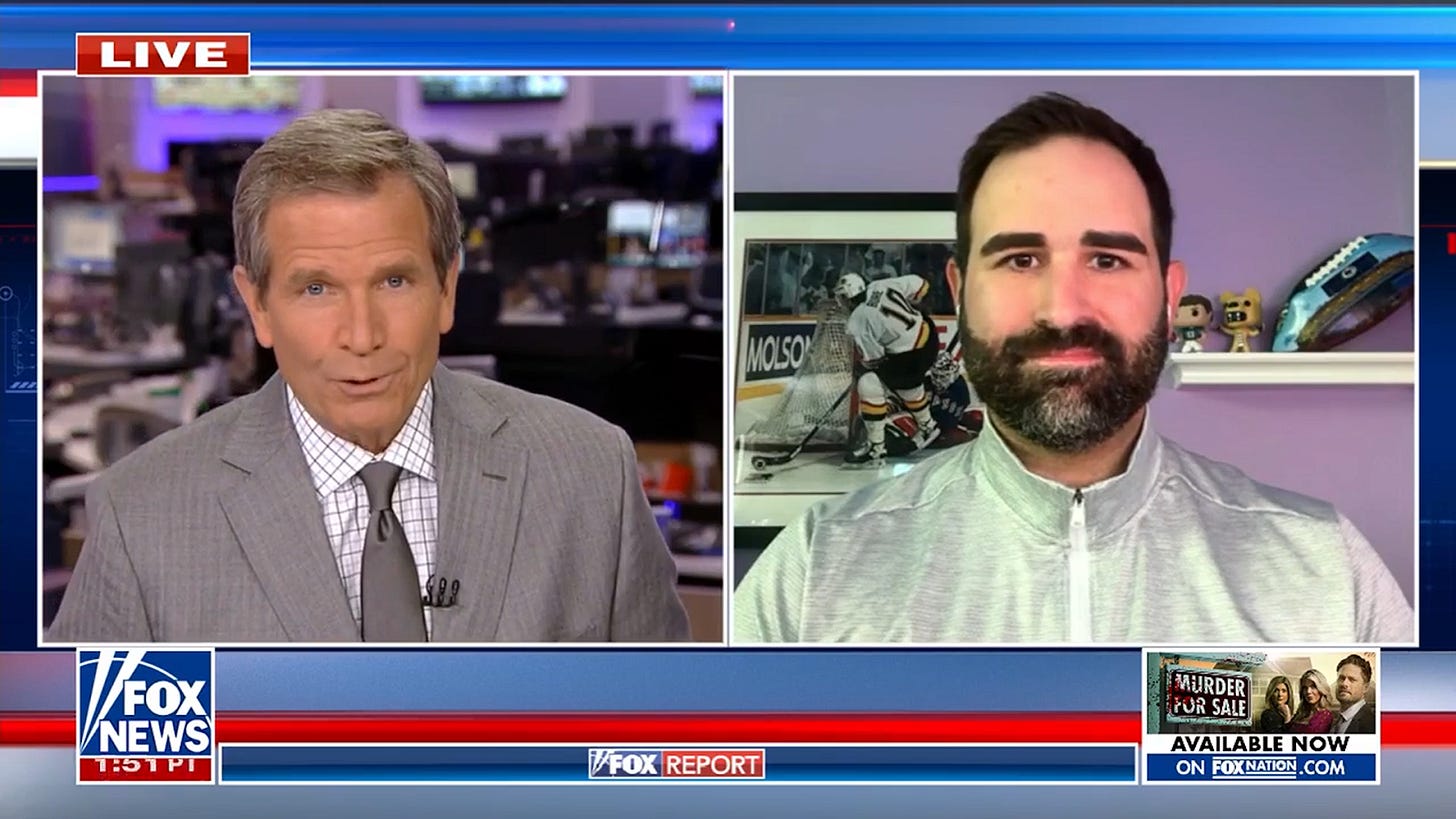
Since Sept. 5, right-wing sports publication OutKick has published 19 articles about a 12th grade girls’ volleyball player at Skyline High School in Ann Arbor, Michigan. The player caught the attention of reporter Dan Zaksheske after he obtained public documents that appear to show her requesting a legal name change from a traditionally masculine first name to a traditionally feminine one.
Over the next three months, Zaksheske would write 18 of the 19 articles OutKick would publish about this student. He and other OutKick reporters attended multiple high school girls’ volleyball games where they recorded and reported on Skyline High’s volleyball season. At the heart of each article was a focus on the girl, who Zaksheske refers to as a “trans-identifying biological male.”
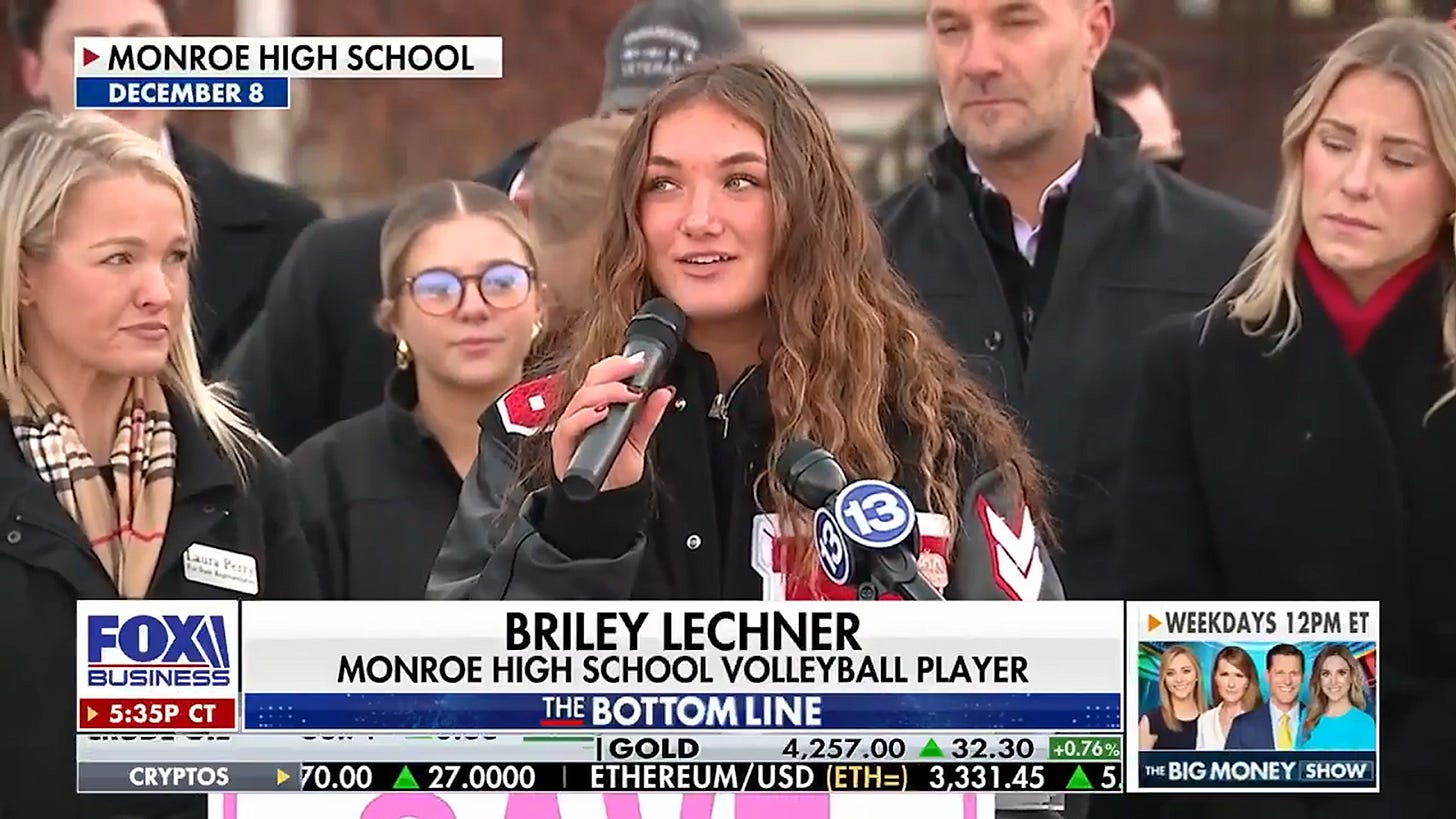
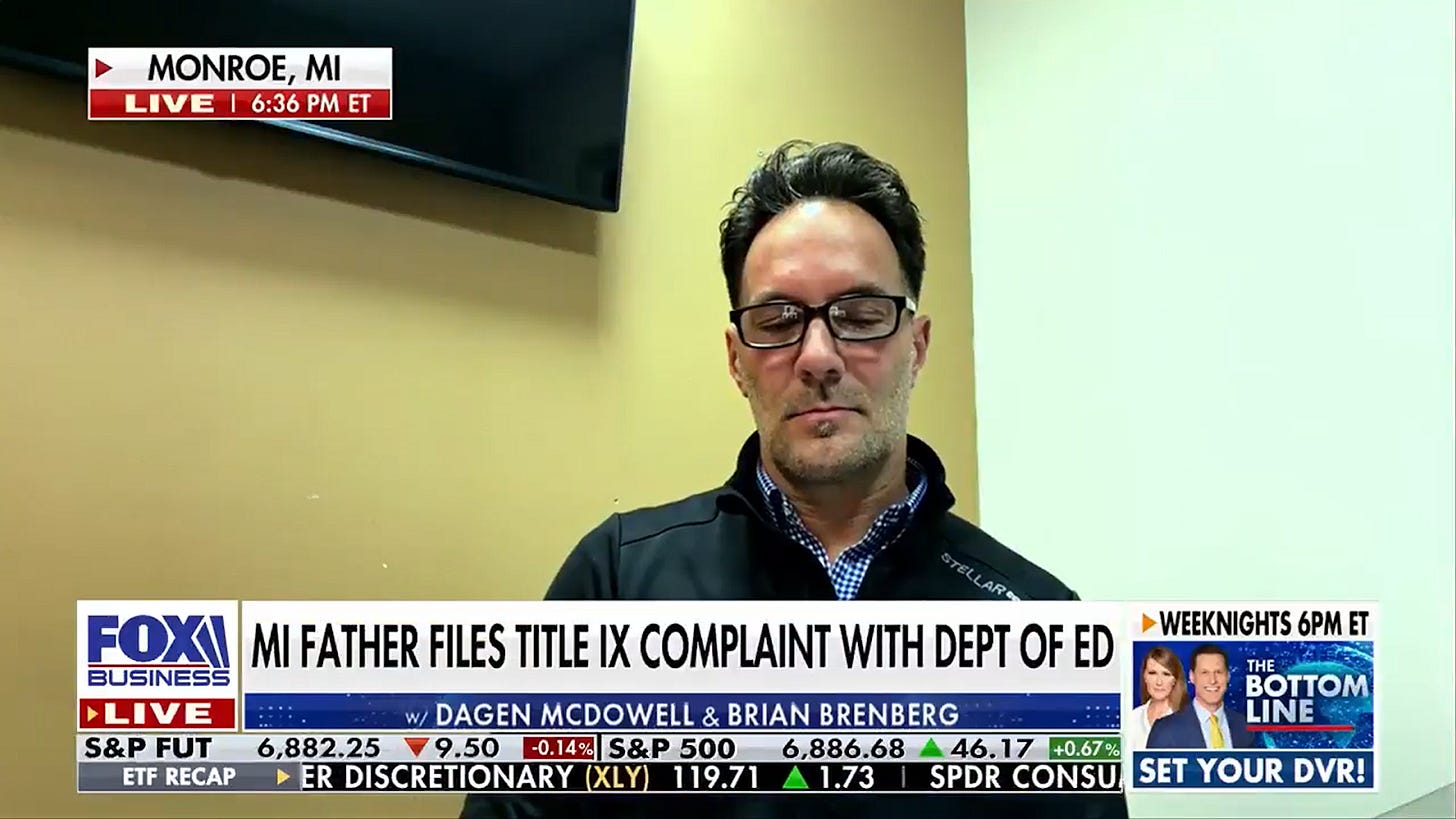
Zaksheske’s reporting stoked a controversy that drew the attention of multiple right-wing publications, politicians and influencers. This coverage led Sean Lechner, whose cisgender daughter played against Skyline and allegedly shared a locker room with their team, to file a Title IX complaint.
Lechner’s daughter at a press conference about the complaint. Screenshot via Fox Business.
While the Michigan High School Athletic Association (MHSAA) does require trans athletes to get a waiver approved to compete in official state tournaments, the Democrat-majority state Senate outright rejected the idea of a trans athlete sports ban earlier this year. In addition, LGBTQ Michiganders have strong anti-discrimination protections under the state’s Elliott-Larsen Civil Rights Act.
In the complaint, Lechner calls for a ban on “biological males from competing in female sports” and for a “full investigation into actions and communications of Ann Arbor Public Schools/Monroe High/Chet Hesson,” citing a Trump executive order that declares that trans-inclusive policies are in violation of Title IX.
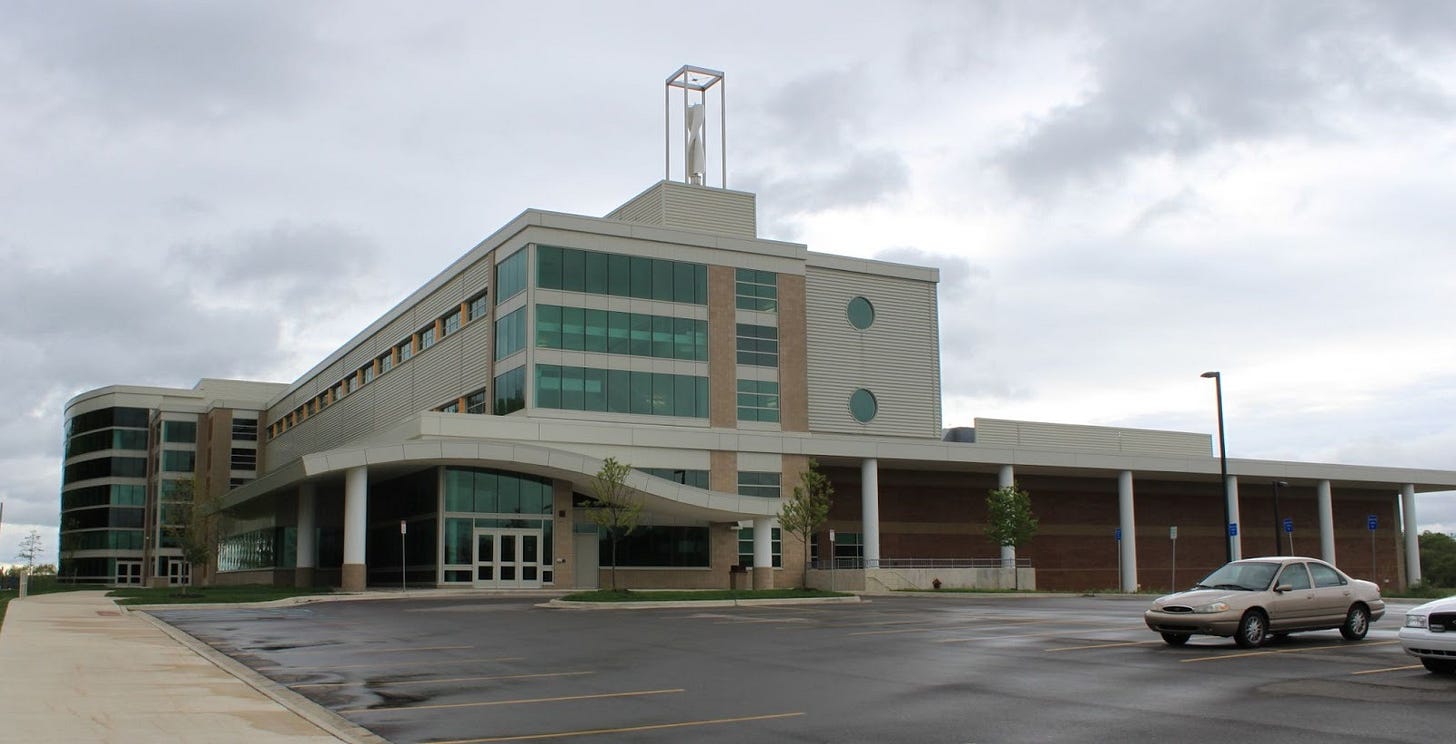
Shortly after the complaint was filed, Uncloseted Media published an interview clip with Hesson, the athletic director of Monroe Public Schools, in which he simply said his “heart goes out” to the player for being under such scrutiny. Less than 24 hours later, he was put on administrative leave.
As this story spreads like wildfire, experts in journalistic ethics are raising concerns about Zaksheske’s reporting.
“OutKick’s inflammatory reporting on a Michigan high school volleyball player who may or may not be trans disregards several core principles of the Society of Professional Journalists’ [SPJ] Code of Ethics,” Dan Axelrod, chairman of the SPJ’s ethics committee, told Uncloseted Media. SPJ’s Code of Ethics, originally drafted in 1973, has been embraced and used by thousands of journalists from numerous newsrooms and schools.
“The Code cautions reporters to ‘show compassion for those who may be affected by news coverage,’ and to ‘use heightened sensitivity when dealing with juveniles,’ while ‘weigh[ing] the consequences of publishing or broadcasting personal information,’” Axelrod says. “[OutKick] has essentially ignored all those ethical principles, given [Zaksheske’s] relentless coverage of the player, which has led the public to easily infer who she is, and its negative framing of her story.”
The player, whose mother did not respond to an interview request, does not appear to have publicly come out as trans prior to the publication of Zaksheske’s first article.
Chad Painter, associate professor and chair of the communications department at the University of Dayton, says this “brings up a whole host of issues.” While Zaksheske wrote that he did not name the girl “because the student athlete is under 18,” Painter says that doesn’t do enough to conceal her identity.
In his reporting, Zaksheske references the existence of publicly accessible name change documents, the girl’s county of residence and the name of a local volleyball club she’d been a part of. “Someone who is reasonably well-versed in being able to Google someone can figure this out pretty easily,” Painter, who has co-authored multiple media ethics textbooks, told Uncloseted Media.
“There’s longstanding norms in newsrooms that we don’t out people, that that is a very personal decision that an individual gets to make, and unless there is a massively compelling reason to do that, it’s not our role,” he says. “The idea that he is in the clear because he didn’t specifically write this person’s name in a story, it wouldn’t hold up to journalistic scrutiny.”
And Zaksheske’s reporting appears to have outed the girl. The same day that he published his first article on the matter, an X account whose mission is “to call out these male athletes and expose the damage that they have each caused to women and girls in sports” published the girl’s full name and deadname along with multiple photos and videos of her. (Uncloseted Media has chosen not to link to these posts directly in the interest of her privacy.)
In addition to the 18 articles Zaksheske wrote, he also tweeted about the situation at least 41 times and attendedatleastfourhigh school girls’ volleyball games. While watching, he recorded videos of the girls playing and then posted them to X and OutKick’s website.
“Having 19 stories about one athlete … to me, that seems like this coverage is out of line with how we’d normally talk about, especially high school sports, which, frankly, no one outside of this little area in Michigan are going to really care about,” says Painter.
“Outside of the culture war stuff, I don’t see where this is a story.”
When Zaksheske was confronted by multiple people at the school about attending and recording one of the games, he published another article accusing them of harassment. “I was shadowed by the school principal and harassed and stalked by Skyline supporters,” he wrote.
Painter notes that while Zaksheske was within his rights as a journalist and citizen to be attending and recording such events, he understands why the school would approach him with skepticism.
“I have a feeling that if I just started showing up randomly to high school volleyball games and taking photos and videos, there would probably be questions,” Painter says. “Because, again, we are talking about minors.”
“The reporter has a right to pursue news … and that right especially exists at a public school,” says Axelrod. “However, one has to wonder at what point is the coverage just pandering to curiosity as opposed to serving a valid societal purpose in informing and facilitating larger discussions about real and valid questions regarding the participation of trans athletes in sports.”
Misinformation and Animus
Zaksheske has pushed back against similar criticism on X, accusing those who question the ethics of his reporting of being “in favor of sterilizing, mutilating and castrating children” and characterizing his reporting as “exposing their heinous acts.”
“I don’t see that as an ethical problem because it doesn’t even enter into the world of ethics,” Painter says of Zaksheske’s rhetoric. “It is wrong factually and it doesn’t really have a place in what we do in terms of the journalism field.”
Misleading rhetoric about trans health care is common throughout OutKick’s reporting. Zaksheske has written several articles about gender-affirming care, where he has claimed that puberty blockers “take healthy children and sterilize them for life.”
Puberty blockers have been FDA-approved for treating precocious puberty in cisgender children since 1993. Multiplestudies have found no evidence of them causing permanent infertility, and gynecologists and endocrinologists have said that they do not cause sterilization.
Much of Zaksheske’s coverage of trans people has been negative. Of adult trans women, he wrote that “that person might see himself as a woman, but we are under no obligation to ‘affirm’ that.” He also wrote that doctors who provide gender-affirming care “have to answer to their consciences.”
OutKick also generally misgenders trans women and girls, referring to them as “males,” “biological males” or “trans-identifying males,” additionally using masculine pronouns to refer to them.
Painter notes that this goes against the “Associated Press Stylebook,” which he says “any newsroom worth its salt is going to follow.”
“The journalist and the news outlet squander their credibility covering these types of societal questions when they use language … that fails to recognize and respect the underlying humanity of an entire group of people,” he says.
In an email, Brian Karpas, OutKick’s director of media relations, told Uncloseted Media that the publication “stands by the thorough and responsible reporting of Dan Zaksheske and will continue to protect women from competing against biological males.”
Beyond Michigan
OutKick’s extensive reporting of the Michigan volleyball player is reflective of the publication’s increasingly conservative bent since it launched in 2011. In 2021, it was acquired by Fox Corporation. Since then, it has partnered with Fox News and has become home to numerous right-wing personalities known for anti-trans rhetoric. These include founder Clay Travis, who has said World Aquatics is “encouraging …super young kids to be transitioned”; Tomi Lahren, who said that liberals “don’t know what a woman is”; and Riley Gaines, who referred to an eighth-grade trans girl as a “mediocre man.”
This story in Michigan is not the first time OutKick and Zaksheske have hyperfocused on one trans girl. They were one of the first national publications to report on California-based track and field athlete AB Hernandez, who later became the center of a feud between the Trump administration and Gov. Gavin Newsom. Since March, OutKick has published at least 24 articles about Hernandez, 10 of which were written by Zaksheske. They sent reporters to at least twogames to photograph Hernandez and other teenage players. Additionally, OutKick published 15 articles and attended at least four games covering the story of a trans softball player in Minnesota, whose presence on the team became a key point of a lawsuit by the Southern Poverty Law Center-designated anti-LGBTQ hate group, Alliance Defending Freedom.
This massive amount of coverage is common for U.S. conservative media: A report published this year from Media Matters for America found that Fox News ran over 400 weekday segments mentioning trans athletes from Feb. 5 to June 6.
All of this has had an impact. While the Title IX investigation is still pending, Hesson, who was named in the complaint, told Uncloseted Media that he had been targeted with harassment and vitriol online.
Uncloseted Media on Instagram: “Last Friday, Uncloseted Media p…
In the comments of the Instagram post, Hesson was attacked by numerous users: squaredbeach9 wrote, “Stop normalizing these freaks. You don’t give a bulimic chick a bucket and some gum.”
And others chimed in, saying:
“Guaranteed he has child pron on an electronic device.”
“Fuck off, poor tranny hates attention, give me a fn break.”
“So a male playing in women’s sports. And this cuck is defending it.”
All of this has come even though Hesson is not directly affiliated with Skyline High School, which is part of a different district. As such, he was not involved in the decision to allow the girl to play, and he was also not privy to whether she had a waiver.
In addition, numerous right-wing lawmakers and candidates have endorsed Lechner’s complaint. Republican state Rep. James DeSana posted a statement to Facebook “calling for Chet Hesson to be removed immediately.”
“The public cannot have good discourse, debate, or dialogue without good information,” Painter says. “Supplying that information is the fundamental duty of the news media. When journalists are distracted by inconsequential stories, then we’re not spending the time to cover interesting and important news that our readers really need.”
Both Painter and Axelrod took note of the small number of known trans athletes in the U.S. Last year, the NCAA’s president told a Senate panel that fewer than 10 of the 510,000 college athletes affiliated with the organization were transgender.
“This controversy is part of a much larger national narrative about transgender athletes and the LGBTQ+ community as a whole,” Painter says. “The entire national conversation is based on virtually nothing, so this particular set of stories are based on an inconsequential premise.”
Going Forward
If the Department of Education does find that Title IX was violated, the school district could risk losing federal funding if it continues to allow trans athletes to compete.
Zaksheske has been pressuring the MHSAA to confirm whether a waiver was approved for the volleyball player to compete, citing a statement from early September in which the association said it had not yet approved any waivers for the semester. On Dec. 9, MHSAA confirmed that one waiver was granted in the fall season, though no details were given in the interest of the student’s privacy.
While research into the relative athletic capabilities of trans and cis women is ongoing, numerous experts and athletes say that politicized vitriol, misleading information and outsized media attention about trans athletes makes girls’ sports less safe for all athletes.
“There are real, valid, and necessary societal discussions to be had about trans athletes participating against competitors who don’t match their birth gender, and ethical journalism can have a place in informing those discussions,” Axelrod says. “At the end of the day, this woman is still a human, and a child at that, not a canvas for OutKick to paint a distorted picture of one individual who’s a tiny part of a much bigger societal dialogue about trans athletes.”
If objective, nonpartisan, rigorous, LGBTQ-focused journalism is important to you, please consider making a tax-deductible donation through our fiscal sponsor, Resource Impact, by clicking this button:
Can’t air anything that might upset the dear cult leader right? All broadcast corporate media must please the dictator to make a profit, or pay the dictator tribute. What a waste. Again if a democrat had tried this republicans would have howled every few minutes on their paid media arms of their party. Not a peep out of the democratic party about it? Hugs
60 Minutes postponed a segment on the maximum security prison in El Salvador that President Donald Trump sent suspected gangsters and illegal immigrants to, only a few hours before the report was set to air on Sunday.
The CBS program had been planning to air the segment titled “Inside CECOT,” referring to El Salvador’s Centro de Confinamiento del Terrorismo.
Here is the brief editor’s note that 60 Minutes posted to X about the report getting bumped:
“The broadcast lineup for tonight’s edition of 60 Minutes has been updated. Our report ‘Inside CECOT’ will air in a future broadcast.”
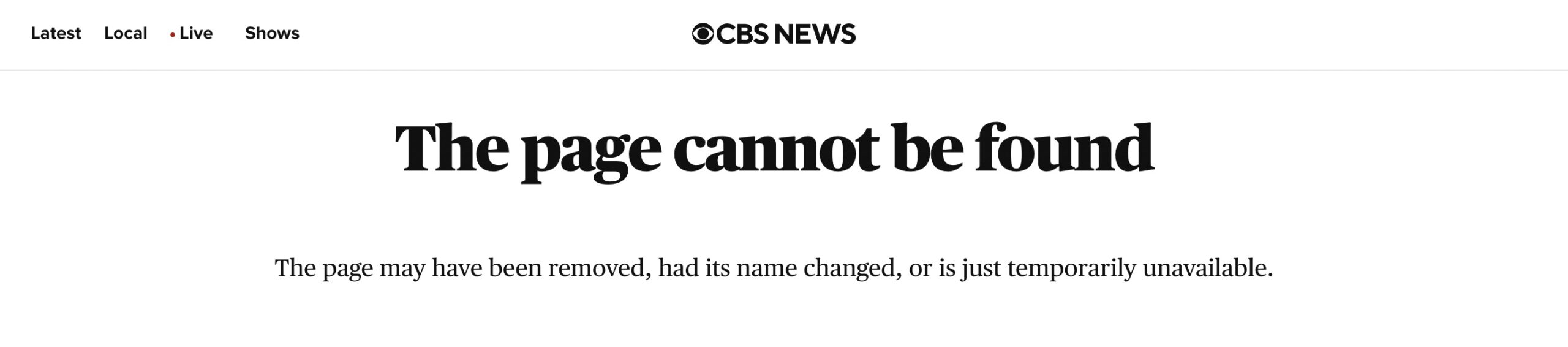
The CBS News website also yanked its teaser clip of the report down from its website. Here is what that page looks like now:
A CBS News spokesperson toldPuck reporter Dylan Byers that its editorial team “determined it needed additional reporting.”
The segment was being reported by correspondent Sharyn Alfonsi and produced by Oriana Zill de Granados.
Paramount Skydance, the parent company of CBS, shared the following teaser for the report on Friday:
Earlier this year, the Trump administration deported hundreds of Venezuelan migrants to El Salvador, a country most had no ties to, claiming they were terrorists. This move sparked an ongoing legal battle, and nine months later the U.S. government still has not released the names of all those deported and placed in CECOT, one of El Salvador’s harshest prisons.
It added Alfonsi would be speaking to “some of the now released deportees, who describe the brutal and torturous conditions they endured inside CECOT.”
CECOT has been described by outlets like ABC News as a “mega-prison.” It opened in 2023 as part of Salvadoran President Nayib Bukele’s push to arrest and imprison more gang members. Inmates taunted a handful of Democratic and Republican lawmakers when they toured CECOT in May.

‘Given that bubble, harsh reality via the media is a rude intrusion.’ Photograph: Jonathan Ernst/Reuters
























 Greg OwenDecember 21, 2025, 5:00 pm EST
Shutterstock
 Faefyx Collington (They/Them)December 21, 2025, 4:41 pm EST
May 14, 2024; New York, NY, USA; Speaker of the House Mike Johnson (center), and Vivek Ramaswamy (right) look on while former President Donald Trump speaks to the media alongside his lawyer Todd Blanche before his criminal trial at Manhattan criminal court at the New York State Supreme Court on May 14, 2024. Mandatory Credit: Justin Lane/Pool via USA TODAY NETWORK | Justin Lane/Pool via USA TODAY N