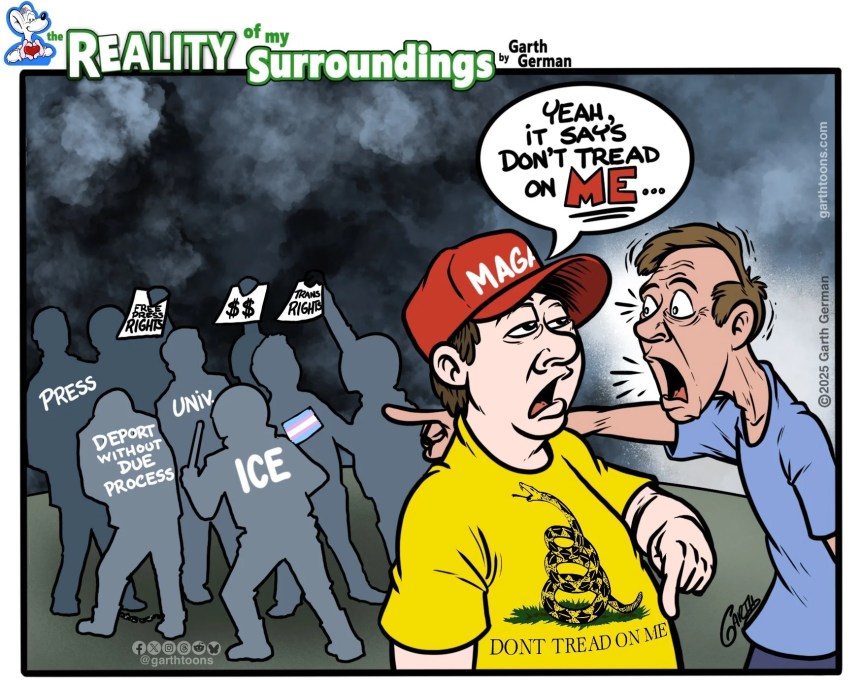
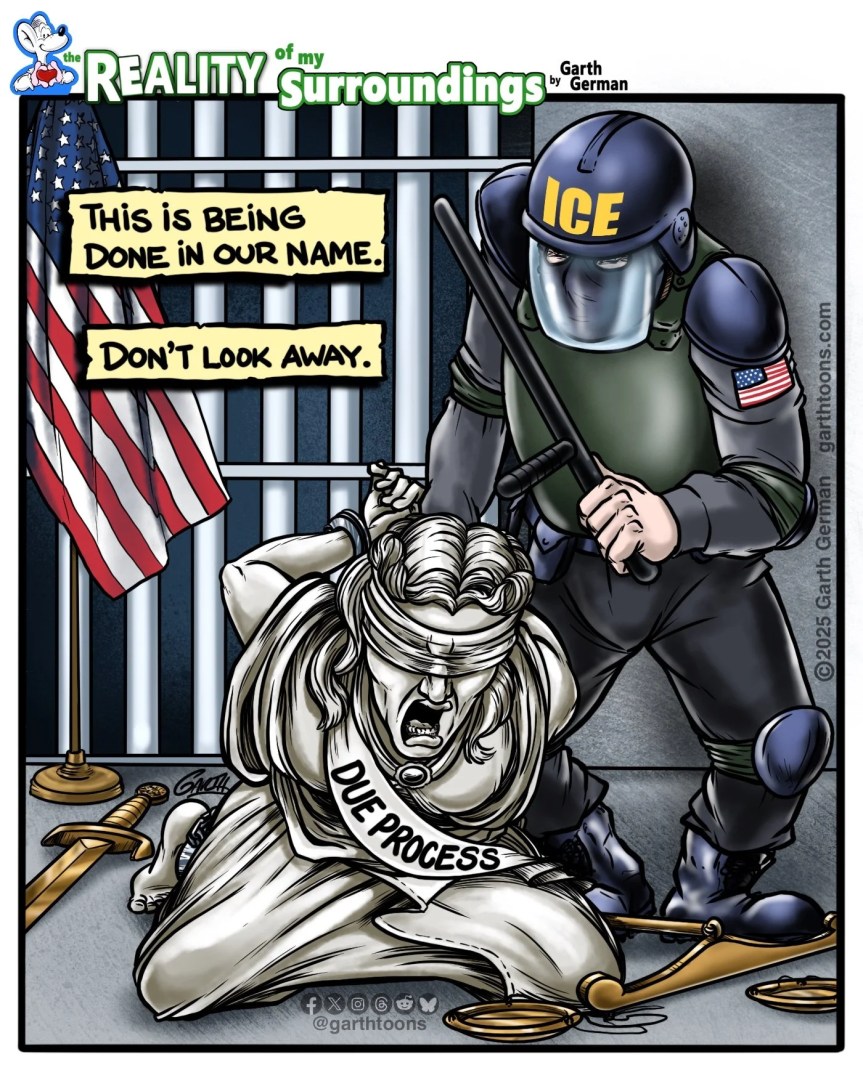
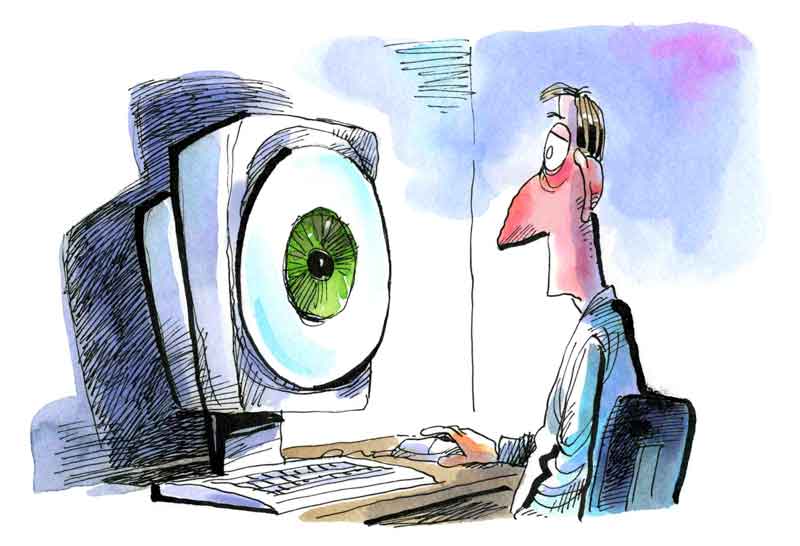
Yesterday, I stumbled on a forum dedicated to hate me, where people basically spend their lives spewing transphobic bs, obsessing over my body, making up stuff about me, sharing awful parodies of my work, etc. It really got to me, as I’ve been living with the knowledge that these people are constantly there, stalking each of my movements, for several years now.
I will never understand this kind of hate. I cried a good deal of tears. It was important. I need to feel in order to find the will and energy to create. I remembered who I do all this work for : us. The ones I call my family. My trans siblings. That’s why my new book starts with “we”. That’s why I’m announcing it in the urgency, as a memorandum for these troubled times and a reminder that we are stronger together, and that we need to be there for each other.
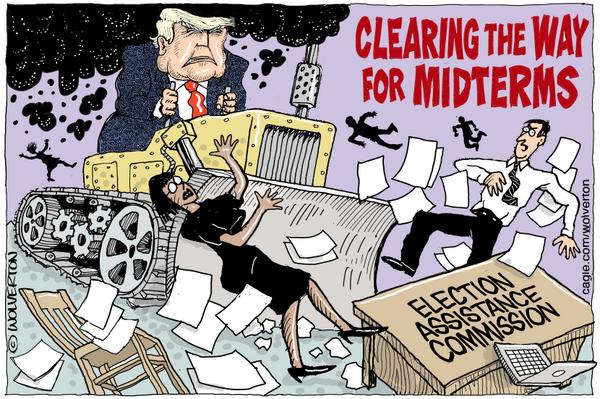
NEW: The FBI has explored using AI to assess the validity of signatures on tens of thousands of mail-in ballots seized from Fulton County, Georgia, another push in the Trump administration’s continued reinvestigation of the 2020 vote.
The rule directed the USPS to only deliver mail ballots if states handed over a list of preapproved voters.A federal court in Massachusetts blocked the rule implementation last month, and another court in D.C. followed suit shortly after.Full story:
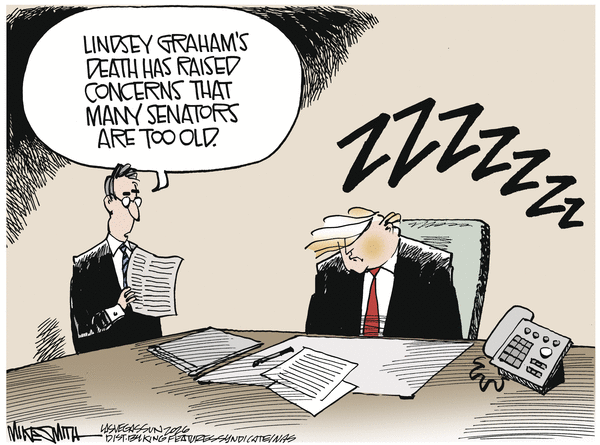
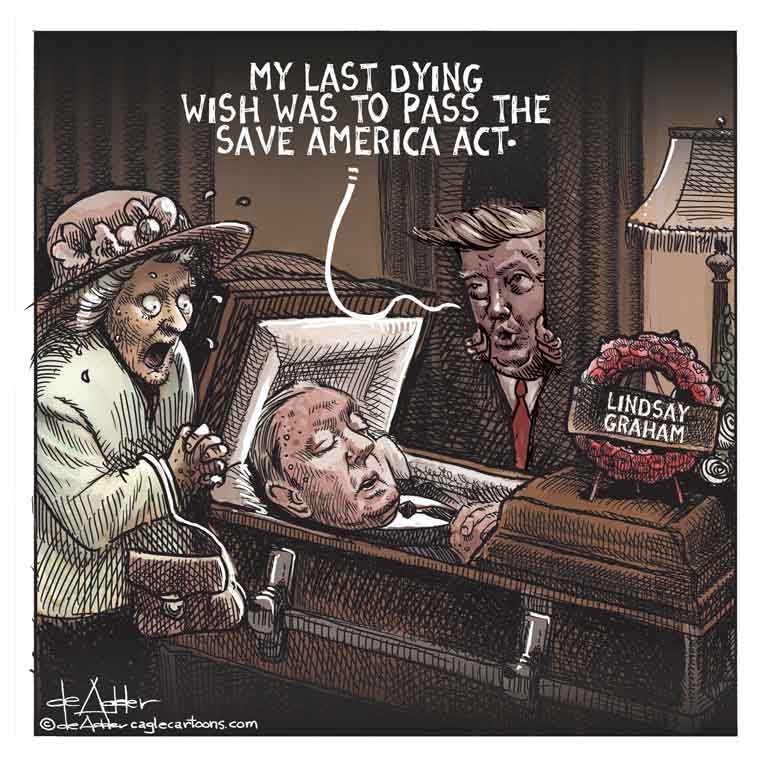
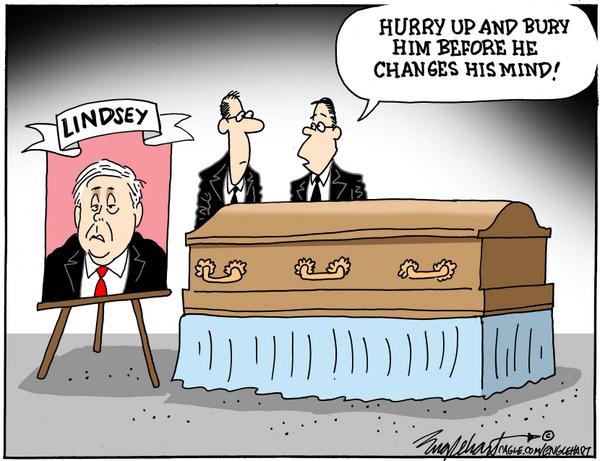
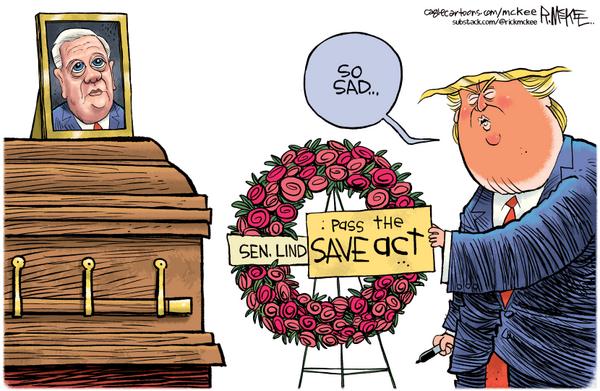
The reelection campaign of Sen. Lindsey Graham, who died Saturday, has more than $2.3 million in leftover funds, according to a financial statement the campaign committee filed today with federal regulators.
Ken Paxton recently bought 3 Utah luxury condos worth $1.6 million. He then put them in a blind trust that shares an address with the Dallas home he appears to be sharing with a woman who is not his wife.
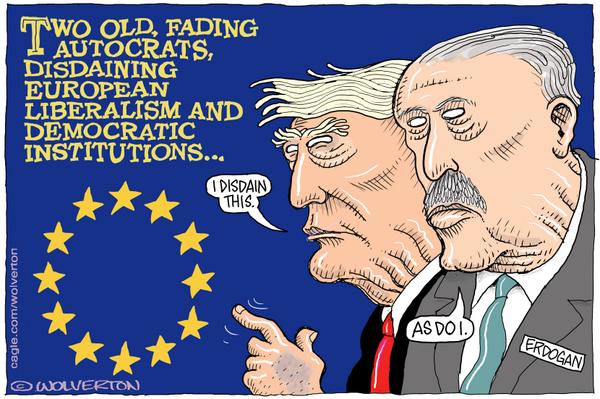
German Chancellor Friedrich Merz has pushed back against a new, million-dollar funding scheme from U.S. President Donald Trump’s administration to support “free speech and religious liberty” in Europe.
Erin In The Morning is a reader-supported publication. To receive new posts and support my work, consider becoming a subscriber.
Billionaire TERF influencer J.K. Rowling has announced that she will cover the legal costs of anti-trans groups named in a report by Amnesty International (UK), which called them “anti-rights.”
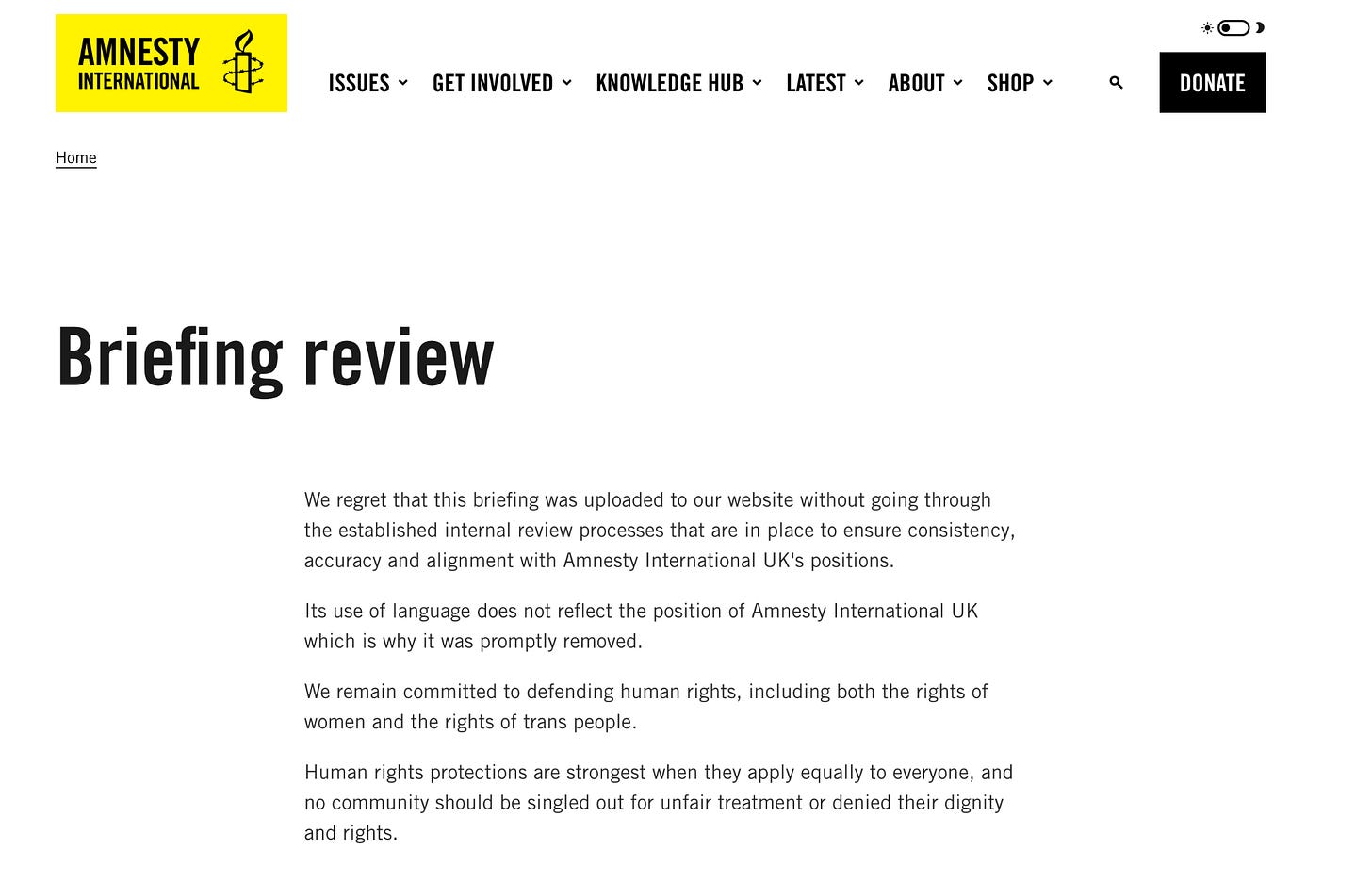
The report was retracted shortly after publication and replaced with a statement from the organization saying the report was uploaded “without going through the established internal review processes” and that its “language does not reflect the position of Amnesty International UK, which is why it was promptly removed.”
But the withdrawal and public acknowledgement was not enough to sate the organizations that have fought tooth and nail to exclude and/or antagonize the transgender community in the United Kingdom. The United Kingdom is notoriously more perilous for free speech than the United States. For our neighbors across the pond, the burden of proof lies with the defendant to prove the statement is true; here in the United States, the burden of proof lies with the aggrieved to prove that a statement is categorically false, and published knowingly or at least recklessly regardless. The US also benefits from “anti-SLAPP” laws to prevent such frivolous lawsuits waged by wealthy individuals or powerful corporations against those who criticize them.
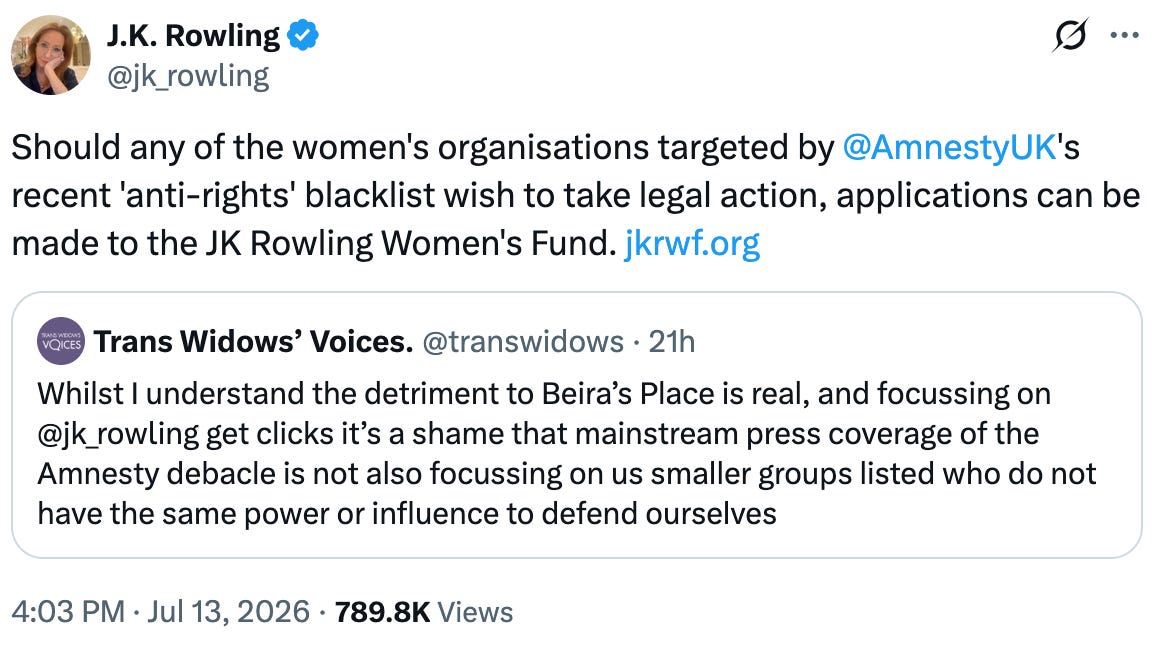
So Rowling capitalized on the spectacle to, in essence, help dozens of groups in what appears to be an attempt to sue Amnesty into oblivion.
CAPTION: Screenshot from Rowling’s Twitter, where she offers “women’s organizations” backing to sue Amnesty International (UK) through her own charitable fund. She quote tweets a group of people who self-identify as “trans widows”—referring to cisgender people whose spouses or ex-spouses came out as transgender.
The saga began earlier this month, when Amnesty International (UK) released a report titled “A growing threat: the anti-rights movement in the UK.” It released a similar report last year, but this year, it added a new category for what appears to be the anti-rights movement’s most rapidly growing sector: “Gender critical” groups, or groups that are antithetical to transgender rights and inclusion.
Rowling rushed to tweet about the situation.
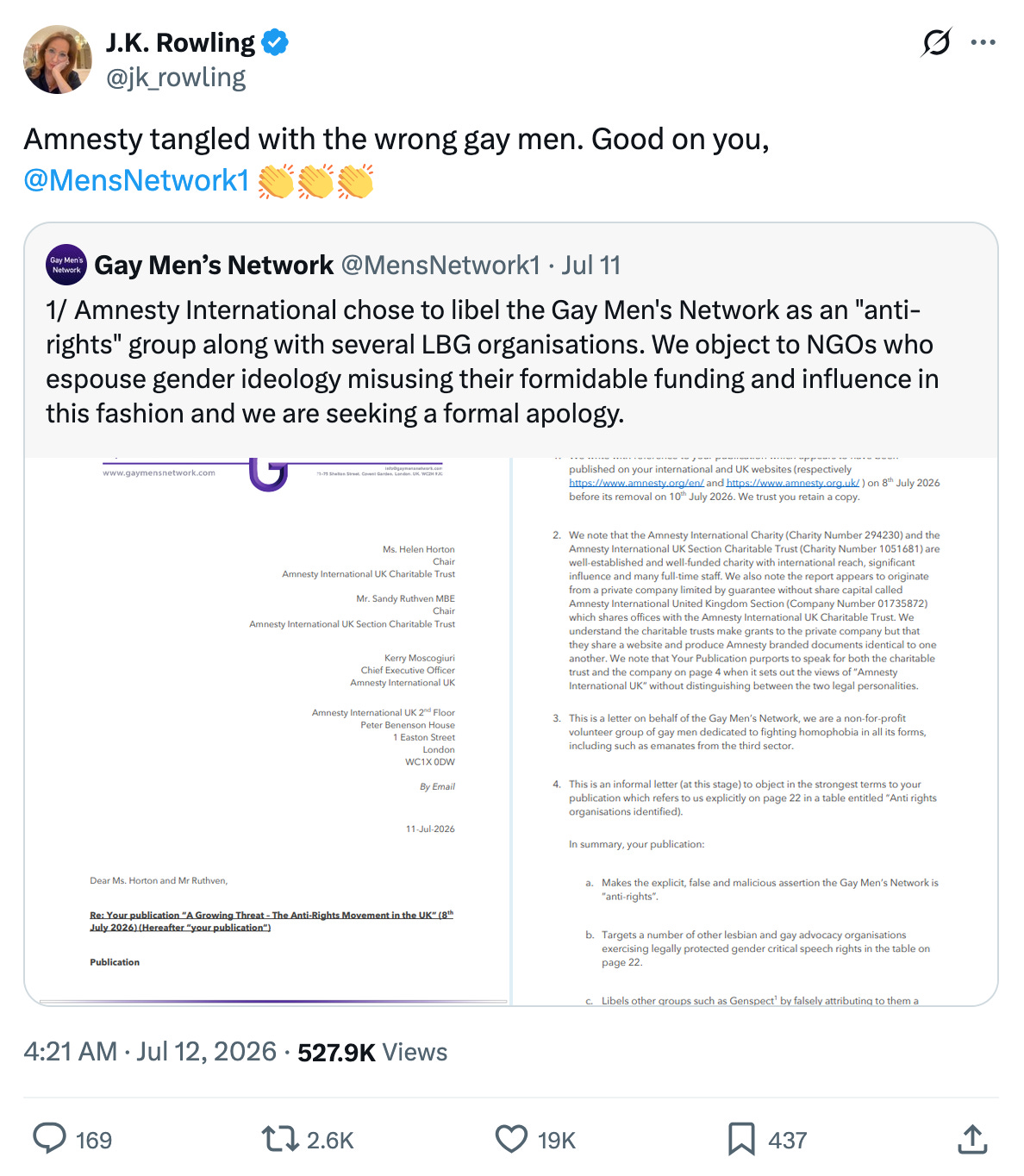
CAPTION: Rowling tweets a group’s response to Amnesty International (UK)’s report on “anti-rights” groups.
She lauded “LGB” groups—another anti-trans buzzword, which, as the name suggests, describes groups that wish to erase transgender people from the queer liberation movement—like the Gay Men’s Network, an organization that has pushed for anti-trans policies. That group posted a public letter indicating it might sue Amnesty International for defamation. The Network demanded a retraction of the report and then claimed that Amnesty is guilty of “trying to control gay and lesbian free speech.”
In the day or so that followed, Rowling retweeted around a dozen similar letters. The posted letters include groups like Genspect, a Southern Poverty Law Center-designated hate group that threatened Amnesty International with legal action, as well as groups like LGB Alliance and Sex Matters.
Amnesty International (UK) did not formally reply to a request for comment for this piece.
Gender critical activists, often financed by Rowling, rely on legal “guerilla warfare” said one U.K.-based trans rights organizer, who could only speak to Erin in the Morning if granted anonymity. The tactic is familiar: Wear down non-profits and individuals who dare speak out against anti-trans and anti-rights groups. They don’t have to win a lawsuit; they can just file again, and again, and again, draining valuable time and resources.
“They have sued organizations into the ground,” the advocate said.
Some context for just a handful of these groups so up in arms about being labeled as hateful: Helen Joyce, the director of advocacy for Sex Matters, gave a speech at a Genspect conference (both are groups on the anti-rights list) about how “beauty” is “inimical to trans bullshit.
She also boasted about manufacturing a moral and medical panic about how, although only a “small” segment of trans kids are prescribed puberty blockers, it has been a strategic “rhetorical device” to erode the rights of transgender people more broadly.
Depending on who you ask, TERFs are considered either a self-branded liberal faction of gender critical ideology, or a different term for what is essentially the same movement. TERF stands for “trans exclusionary radical feminist,” a term to describe self-proclaimed “feminists” who oppose giving transgender women and cisgender women equal rights.
Many of these TERF or “gender critical” groups have close ties to far-right Christian groups. DonorsTrust, the conservative donor behemoth and primary financier of initiatives like Project 2025, also forked over hundreds of thousands of dollars to groups like the Society for Evidence-based Gender Medicine and Thoughtful Therapists, both of whom made the “anti-rights” list because, as Amnesty International (UK) among many others have put it, they promote “conversion practices.”
One major point of contention was the inclusion of Rowling’s own organization, Beira’s Place. It does not primarily seem to function as any sort of advocacy organization. Rather, it’s a women’s shelter for those fleeing domestic violence, but it also has an explicit anti-trans policy, banning transgender women from accessing its services.
However, as the report explained, none of these groups exist in a vacuum. “These entities must be understood as an ecosystem sharing values, goals, strategy and tactics and, for some of them, formal collaboration,” it reads.
Amnesty isn’t the first or last institution or expert to call out gender critical ideology for being anti-rights. UN Women has published materials saying as much.
Meanwhile, University of Sheffield sociologist Dr. Sally Hines has called this framework “deeply conservative.” In the Journal for Gender Studies, she writes that “despite its origins within a branch of radical feminism, [gender-critical ideology] has a profoundly misogynist agenda that stands opposed to the rights of women.” It is a “key force within a current conservative pushback against the rights of women and minoritized sexual groups.”
Gender critical activists continue to use the language of oppression to characterize their plight. Many say “TERF” is a slur. Others believe criticizing a group because of its arguably regressive politics is grounds for a lawsuit.
Despite the fact that the report was pulled down, Erin in the Morning was able to retrieve a copy reposted by an anti-trans news outlet. You can read a full version of that archived version below.
Report A Growing Threat The Anti Rights Movement In The Uk July 2026
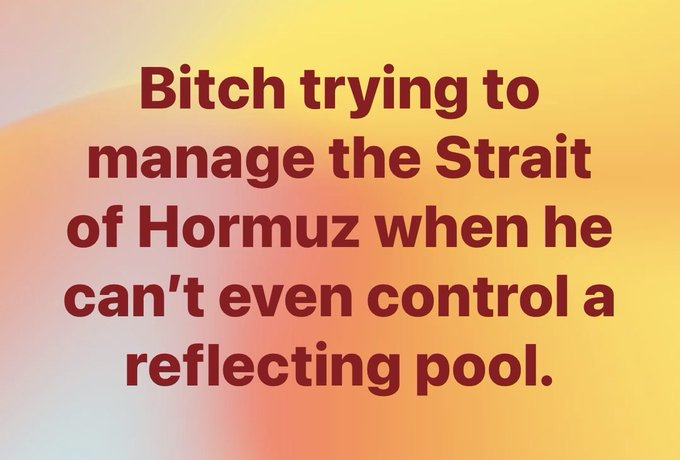
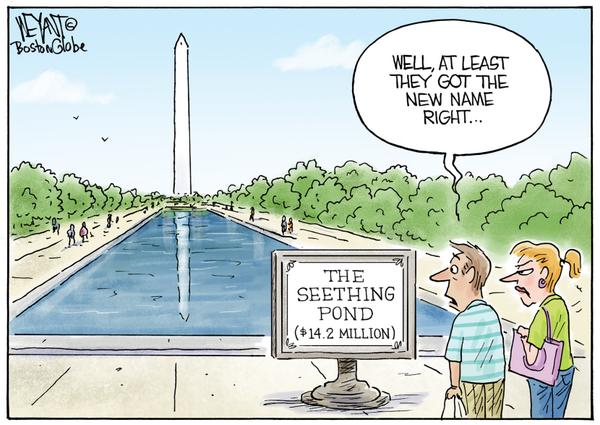
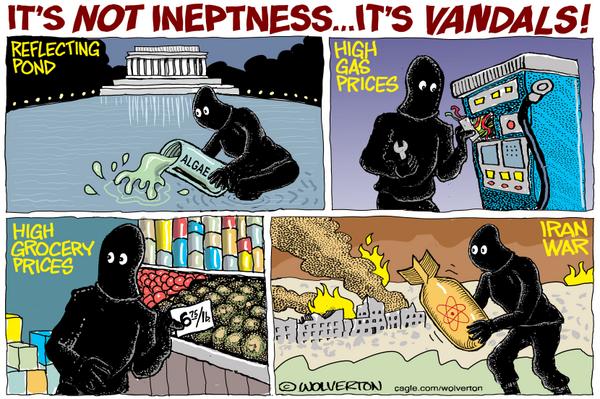
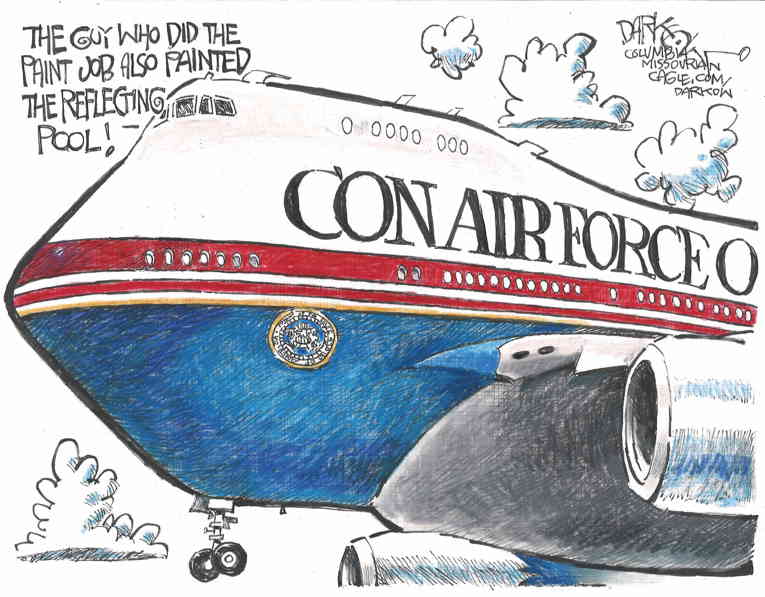
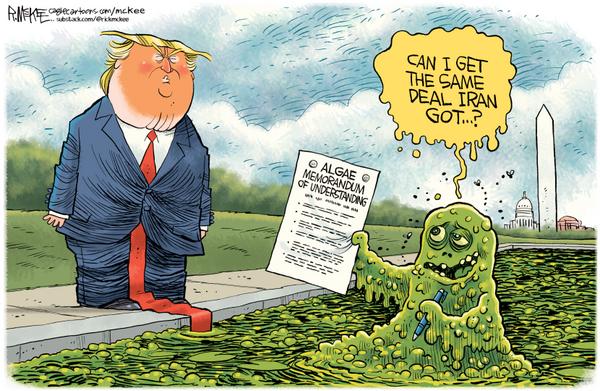
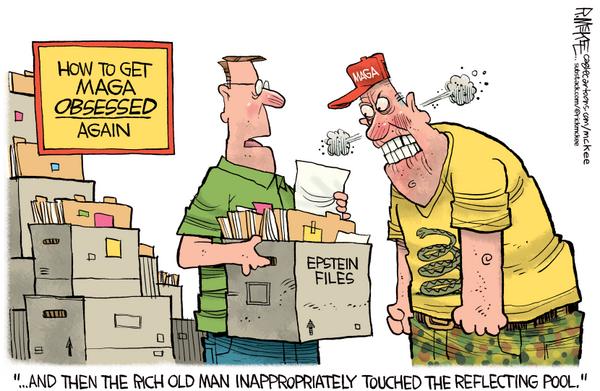
Trump’s decision to have his motorcade drive across the Lincoln Memorial Reflecting Pool during a high-profile inspection last month may have contributed to damage now plaguing the national landmark.www.newsweek.com/donald-trump…
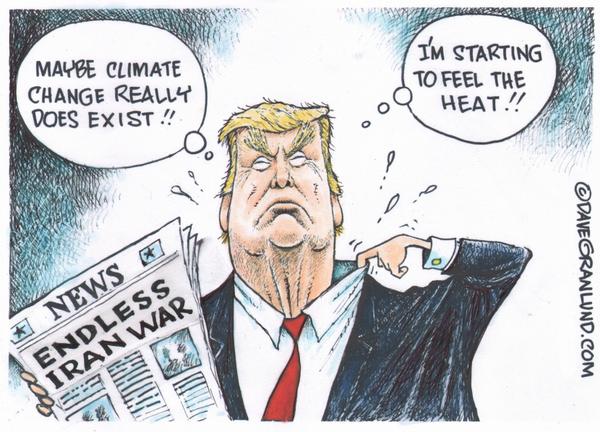
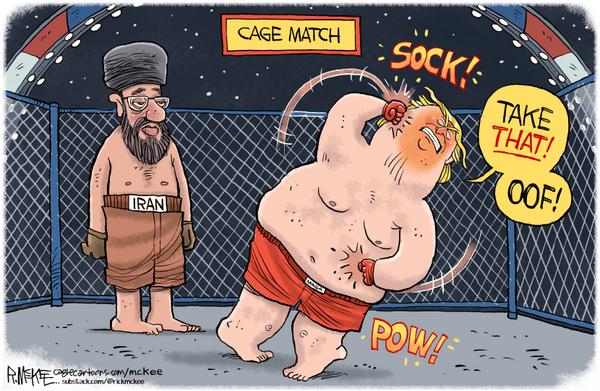
Oil prices continued to climb on Tuesday, hitting their highest levels in a month, as an escalating pattern of strikes and counter strikes between the U.S. and Iran rattled markets.
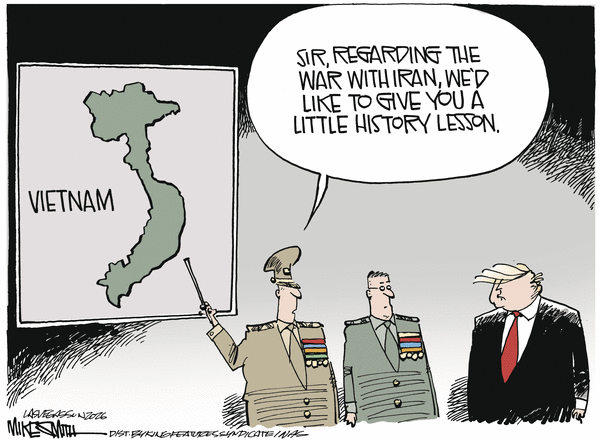
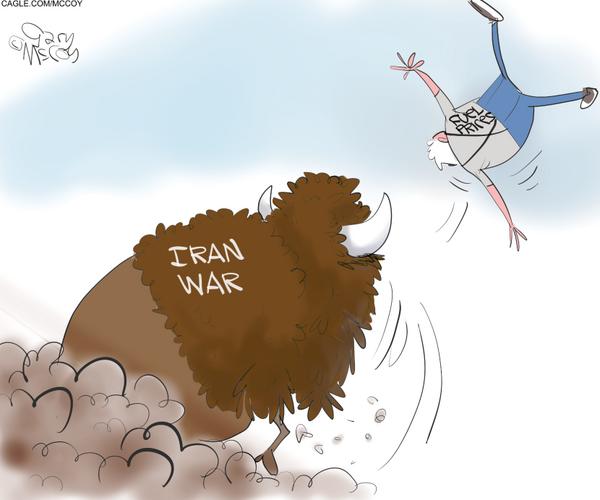
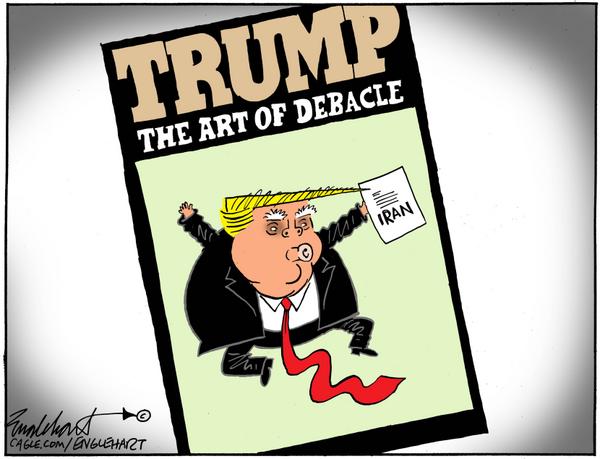
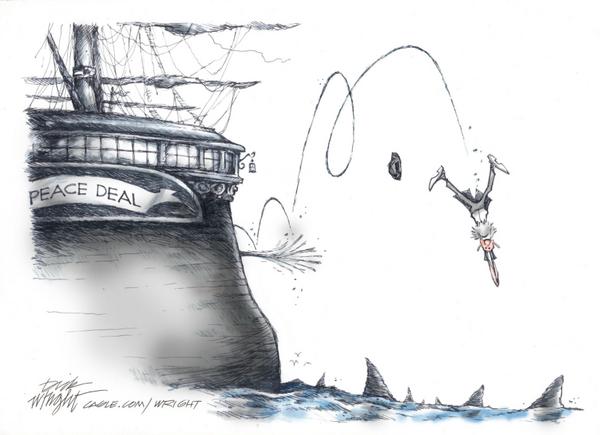
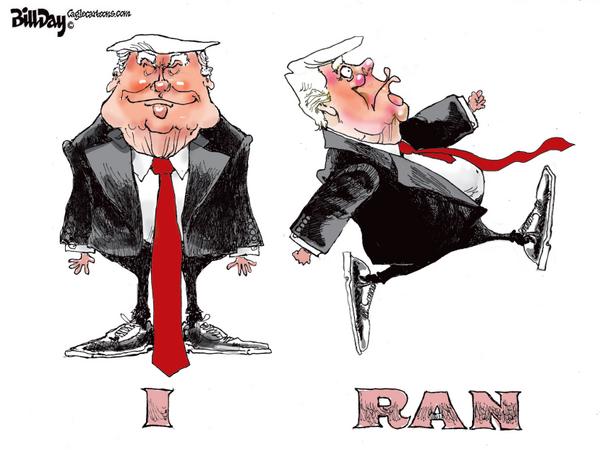
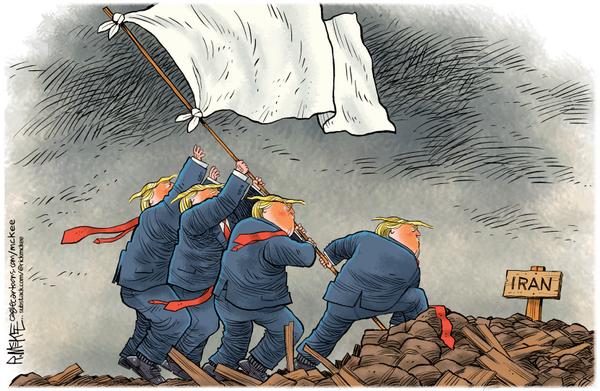
Trump formally notified lawmakers this weekend that the nation is once again at war with Iran, giving his administration another 60-day clock to use the military in the region without congressional approval.
Ro Khanna details the abuses the Israelis commit against the palestinians and how the authorities do nothing to stop these abuses. Khanna gives numerous details and says that the israeli governments want to make it clear that no one should go to see the attractions and abuse done to the Palestinians but should only visit the Jewish parts of Israel. This is the best reporting of what happened to the congressman and the other US citizens. Hugs
Doctors and human rights experts documented hundreds of incidents from June 2025 through May 2026 and estimate true number is ‘far greater’
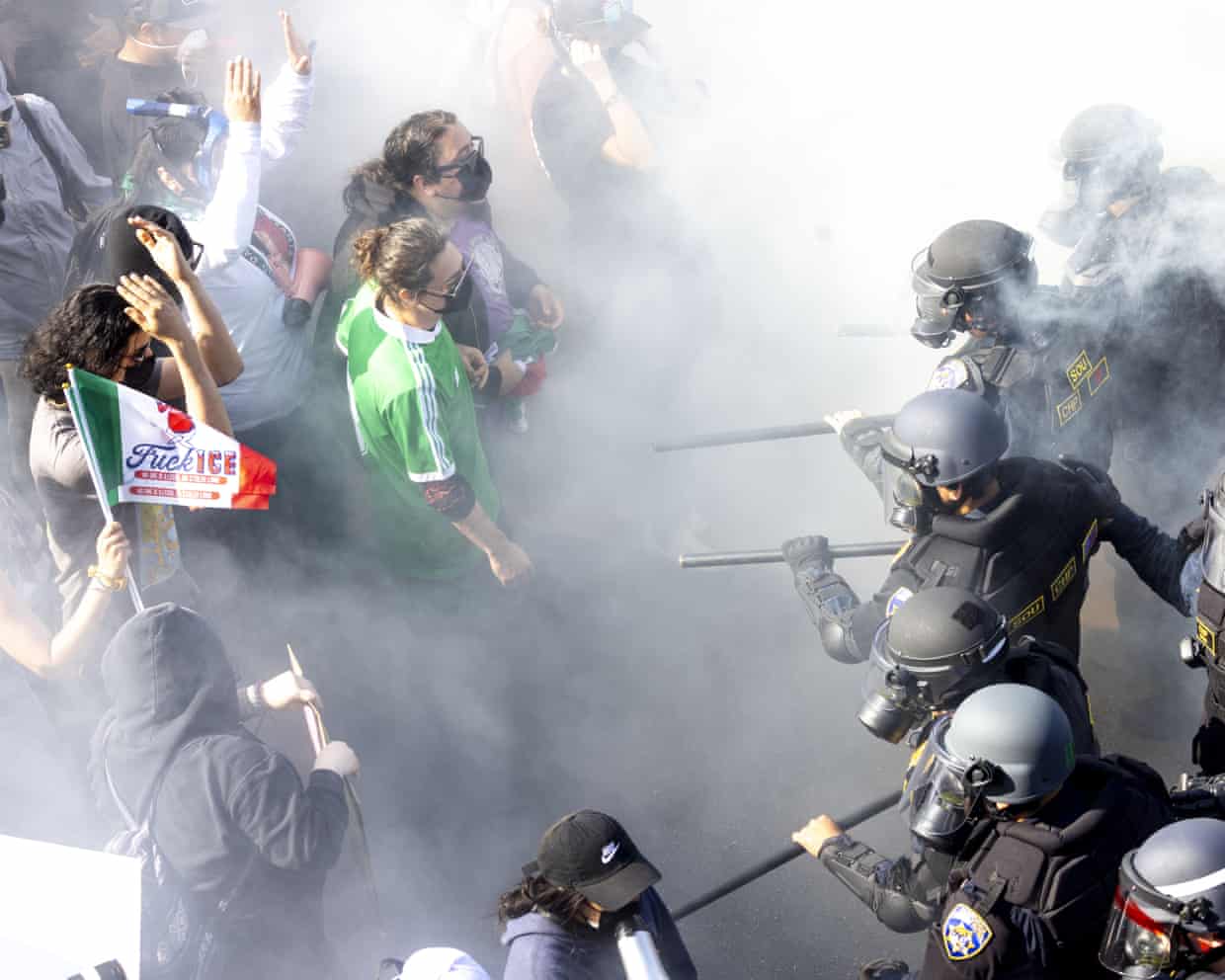
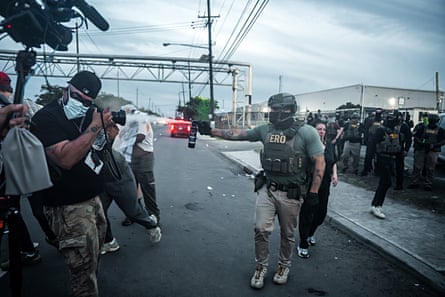
Smoke fills the air as protesters face off with California Highway Patrol officers in Los Angeles, California on 8 June 2025. Photograph: Jill Connelly/ZUMA Press Wire/Shutterstock
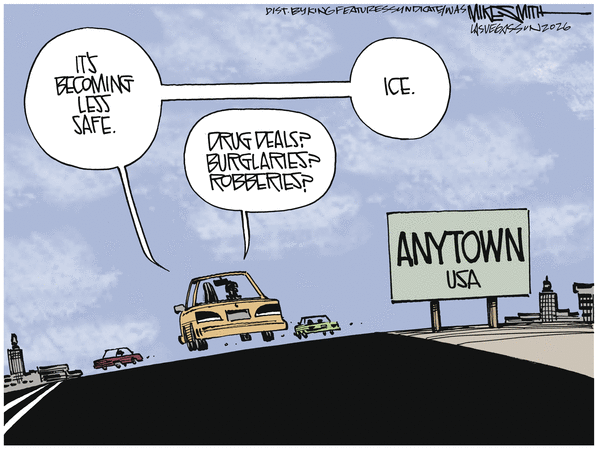
It’s been a brutal tactic deployed by local and federal law enforcement officials time and again over the past year: using teargas, rubber bullets and pepper spray to control protests outside ICE detention centers or during enforcement operations.
Now, a new report lays bare the scale of the use of these crowd control weapons during anti-immigration demonstrations across the US, including hundreds of incidents that resulted in lasting and traumatic injuries.
The report and an interactive map was created by Physicians for Human Rights (PHR) and the Human Rights Center at the University of California, Berkeley (HRC) and released this week. Doctors and human rights experts with PHR and HRC documented 412 verified incidents of the “misuse” of these crowd control weapons, also known as “less-lethal weapons”, from June 2025 through May 2026.
“This is a concerning story,” said Dr Rohini Haar, the lead author of the report and a PHR medical expert, in an interview with the Guardian.
The report documented 203 injuries stemming from the alleged misuse of the crowd control weapons. Some of the injuries included blindings, traumatic brain injuries, lacerations, fractures and contusions.
The researchers struggled to confirm the full scale of the injuries, because “visual investigative techniques cannot adequately assess invisible injuries, such as chemical injury or chronic pain or hearing loss”.
“The true number of injuries is likely far greater,” the report adds.
Such tactics were on display earlier this summer, when dozens of protesters gathered outside the Delaney Hall immigration detention center in Newark, New Jersey, in solidarity with detained immigrants on hunger strike. As protests became more and more heated, a line of masked Immigration and Customs Enforcement (ICE) officials stood outside to guard the detention center.
During a scuffle, ICE officials pepper sprayed Andy Kim, a New Jersey senator, making national news and helping set off one of the country’s flashpoints in demonstrations against the Trump administration’s immigration enforcement operations.
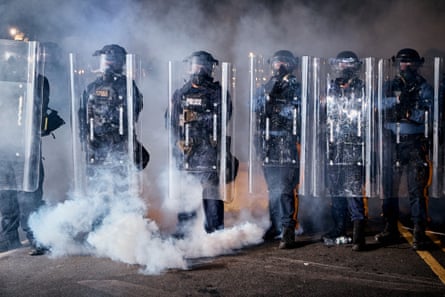
State police officers stand behind shields as tear gas fills the area outside the Delaney Hall detention center during a protest in Newark, New Jersey. Photograph: Andrés Kudacki/AP
In the days and weeks that followed, local and state officials also moved in on protesters, using batons and shields, deploying teargas canisters and arresting dozens. Many were injured during the demonstrations outside Delaney Hall by the crowd control weapons that the local, state and federal officials used.
The use of crowd control weapons in New Jersey was not new – local, state and federal law enforcement officials have used them on protesters nationwide opposing the aggressive anti-immigrant arrests, detentions and deportations.
But their use has become widespread as the backlash to Trump’s immigration crackdown has grown – prompting researchers to track down incidents and the types of weapons used nationwide, and to establish a map where readers can see how those weapons have been used in their communities.
Haar began working on the report after she saw news of a pastor being blasted in the face with a chemical weapon by a federal official in Oakland. Haar and PHR have been researching the impacts of crowd control weapons for years.
“Those weapons can cause harm,” Haar added. “It’s just when they’re used, how they’re used and if they’re used.”
DHS did not respond to Guardian inquiries about the report’s findings before publication.
The crowd control weapons include chemical irritants, including teargas, pepper spray and Mace, along with “kinetic impact projectiles”, which include rubber bullets and bean bag rounds. Researchers with PHR and HRC also documented the use of stun grenades, water cannon and other “improvised” weapons, like horses and riot police shields.
Haar explained to the Guardian that they qualified “misuse” by a number of methods. First, they tracked whether people in “protected categories”, including journalists and health workers, were targeted by officials. Next, they documented if vulnerable populations, including elderly people and children, were affected. And lastly, they tracked whether the weapons were used improperly, like using the weapons in close range, targeting people’s heads or going against the weapons’ manufacturing guidelines.
An Immigration and Customs Enforcement (ICE) agent fires tear gas toward demonstrators and members of the press at the Delaney Hall Detention Facility. Photograph: Olga Fedorova/EPA
A report from earlier this year by ProPublica identified 70 children across the US who had been harmed by teargas or pepper spray – not just at protests, but during immigration enforcement operations as well.
On a national level, officials with the Department of Homeland Security (DHS), like ICE or Customs and Border Protection (CBP) officials, were responsible for over half of all misuse incidents – 64%. But local law enforcement officers also played a role in many incidents.
“The involvement of state and local [authorities] is also concerning,” Haar added. “Because in many places, they’re coming on top of what is already happening with DHS. But in places like Los Angeles, there is a lot more involvement [of local law enforcement officials].”
The researchers found that there was an increase in the use of these weapons during immigration enforcement surge operations under the command of former Border Patrol commander-at-large Gregory Bovino, who took a hardline approach to his enforcement tactics. After the shooting deaths of two US citizens in Minneapolis by federal immigration officials, Bovino was pulled from his position. He became critical of the Trump administration, accusing them of not taking a tough-enough approach, and retired in March of this year.
“In each city where there were federal directions to escalate enforcement, incident counts rose sharply within days,” PHR said in a statement announcing the report and the map. “Much of this was coincident with the arrival of Greg Bovino.”
“Many of the enforcement operations that coincided with spikes in documented misuse were also promoted through public social media accounts, including Bovino’s,” PHR continued.
For researchers, the scale of the use of the crowd control weapons harkened back to law enforcement’s response to the 2020 racial justice protests. That year, protesters throughout the country took to the streets to protest police killings of people of color throughout the US. And in some cities, the Border Patrol’s elite unit participated in arrests and crowd control operations.
Since June 2025, mass protests have erupted in Los Angeles, Chicago, Minneapolis, Newark and Portland. The report documented that over 90% of the documented “misuse” incidents happened in those regions.
DHS and local law enforcement officials have fallen under repeated criticism for their response to their protests and their aggressive use of force. Since January of 2025, federal immigration officials with DHS have been responsible for at least 11 shooting deaths. The two most recent fatal shootings by immigration authorities took place this month, less than one week apart, in Texas and in Maine.
On 7 July, ICE agents shot and killed Lorenzo Salgado Araujo, a 52-year-old construction worker, during an arrest operation in Houston as he drove his work van. And just this Monday morning, a 26-year-old Colombian man was shot and killed by a federal official in Biddeford, Maine, DHS confirmed.
I am sorry, I wanted to add so much more to this post. I have 65 websites I use to make this post. However I am very very tired. It is 4 pm here and I will struggle to make supper for Ron and me, and I doubt I will be able to even eat. As much as I love the blog and the people who come here who I adore, I love my husband the most. Two days ago when I fell because I grabbed a support that gave way, my 71 year old husband charged into the room and helped me back up. Both of my hands were very bruised and damaged. We help each other. So this is the post. After I schedule this, I will go make our supper. Sadly I simply have run out of time today to get to the wonderful comments. But the grand thing is everyone who comes here has a voice on what I post. But Ron has said that other than sharpening the knives he needs he really wants to leave me alone to reply to your comments. See Ron understands both how important this blog is for me and he agrees to the large cost each year, and he supports my being able to interact with each of you. However on my part I also know that making my husband of 36 years happy means a lot of nighttime hugs and some one who reaches out to comfort me when I am crying or sobbing at night.
I hope others can have the relationship Ron and I have. When he was sick or fearing he needed a new heart I was there for him in the room holding his hand. When I scream out at night remembering my abuse scaring the cat he is there to wake me, hold me, and force the hurt away from me by his very presence. Love and best wishes to everyone and hugs to those that want them. Scottie