
| July 7, 1863 The first military draft was instituted in the U.S. to provide troops for the Union army in the American Civil War. Once called, a draftee had the opportunity to either pay a commutation fee of $300 to be exempt from a particular battle, or to hire a replacement that would exempt him from the entire war. |
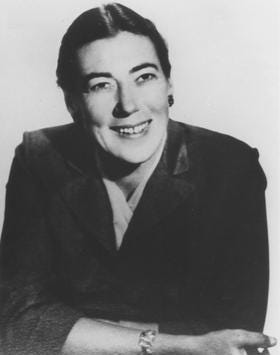
July 7, 1903 The March of the Mill Children watch a video – highly recommended Labor organizer Mary Harris “Mother” Jones led the “March of the Mill Children” over 100 miles from Philadelphia to President Theodore Roosevelt’s Long Island summer home in Oyster Bay, New York, to publicize the harsh conditions of child labor and to demand a 55-hour work week. It is during this march, on about the 24th, she delivered her famed “The Wail of the Children” speech. Roosevelt refused to see them. “Fifty years ago there was a cry against slavery and men gave up their lives to stop the selling of black children on the block. Today the white child is sold for two dollars a week to the manufacturers.” –from Mother Jones’s autobiography  Read more about Mother Jones |
| July 7, 1957 Convened at the onset of the Cold War, a group of scientists held their first peace conference in the village of Pugwash, Nova Scotia, Canada. The mission of the Pugwash Conference was to “. . . bring scientific insight and reason to bear on threats to human security arising from science and technology in general, and above all from the catastrophic threat posed to humanity by nuclear and other weapons of mass destruction . . . .”  Bertrand Russell Wealthy industrialist and Pugwash son Cyrus Eaton had invited the world’s greatest minds to his family home in Nova Scotia and address the emerging threat of nuclear war. The Conference became the basis for an ongoing organization that deals with issues of weapons of mass destruction. The 1995 Nobel Peace Prize was awarded to Joseph Rotblat (one of the original signatories of the Pugwash Manifesto) and to the Pugwash Conferences on Science and World Affairs.  Albert Einstein Pugwash home Fifty years later . . . 25 scientists, diplomats and former military officers from 15 countries gathered for a “Revitalizing Nuclear Disarmament” strategy workshop. The meeting was held near the Thinkers’ Lodge, the site of the first meeting in 1957. “Fifty years ago from Pugwash, Nova Scotia, nuclear scientists helped alert the world to the dangers of nuclear weapons, and especially the newly developed hydrogen bomb,” said Paolo Cotta-Ramusino, Secretary General, Pugwash Conferences on Science and World Affairs. “Today, we are working with experts from around the world for global action to revitalize nuclear disarmament and the final elimination of nuclear weapons.” Senator Roméo Dallaire, Honorary Patron of the Pugwash Peace Exchange, said “It is appalling to observe the increasing potential for many regional nuclear arms races, shameless plans to modernize nuclear arsenals and bald-faced threats of pre-emptive nuclear use,” said Senator Dallaire. “Only by revitalizing discussion and implementation of disarmament leading to abolition can we ensure that these genocidal devices will never again be used.” |
| July 7, 1977 The United States conducted its first test of the neutron bomb. The neutron bomb was a tactical thermonuclear weapon designed to cause very little physical damage through limited blast and heat but was designed to kill troops through localized but intense levels of lethal radiation. A neutron bomb explosion at a test site  |
| July 7, 1979 2,000 American Indian activists and anti-nuclear demonstrators marched through the Black Hills of western South Dakota to protest the development of uranium mines on sacred native lands. |
https://www.peacebuttons.info/E-News/peacehistoryjuly.htm#july7












 Scottie's Playtime