I know this is old but I worked hard on it. Now that I got the issues between computers worked out and I am in the process of reinstalling all the programs I need to make the computer do what I want, checking to make sure the issue that came up a week ago from reappearing. The issues of full acceptance and equality for the full LGBTQ+ community. Hugs
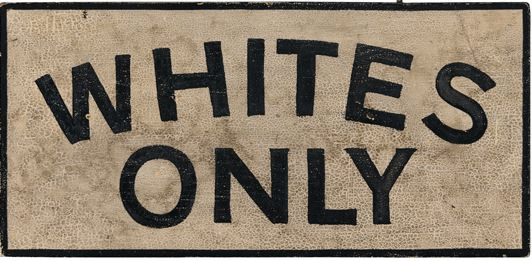
Please notice that the entire campaign to erase LGBTQ+ from society started with the false premise that the LGBTQ+, especially children need to be protected from trans people and drag queens. But the same people claim to be grand Christians yet they never address sexual abuse of children in churches or other organizations like foster homes / orphanages. These same people support a man for president that was credibly accused of violently raping a 13, how many more did not report the abuse? They support a man who bragged about barging into the changing rooms of teen girls as they were in different states of being undressed some of them nude during the teen pageants claiming it was his right as the owner. He is a child sex predator by his own words claiming he would date / have sex with his own young not adult daughter. They supported a man convicted of sexually assaulting a woman with the commonly understood phrase raped her. But they claim the real problem is women being raped in bathrooms if trans women are in there also. They support Pete Hegseth for Sec. Of Def. He also has been accused of sexually assaulting / raping a woman and assaulting other women. It was reported that he was often drunk and enjoyed going to places where women take off their clothing and at least one occasion needed to be restrained from going on stage with the nude women. Tell me where is the effort to removed white men from the social media and from the military? Sorry but when they say woke it means anything they dislike just as CRT did. When they say DEI it is them saying the “N” word and that females are inferior to males. Well let me get to separating the posts. Hugs.
Dria James is a former DEI executive, with over a decade of experience driving diversity, equity, inclusion, and belonging across financial services, management consulting, higher education, and non-profit sectors. Now, she’s the CEO and founder of Black In Diversity, dedicated to empowering Black leaders and allies to thrive while driving systemic change. Here, shetakes us inside what it’s like to work in America’s most contested industry.
The emptiness of not-quite belonging followed me like a shadow from a young age. Born in the late ’80s in Paterson, New Jersey, to two young parents, private school education was seen as one of the few lifelines available for Black folks looking to transcend the social, economic, and political firestorm that engulfed Paterson in the 1990s. At the time, the city was marred by rising crime rates, declining businesses, and severe budget cuts to public schools, leaving many families searching for alternatives. In fact, my mother’s high school, Eastside, is featured in Lean On Me, the Black film classic that details the true story of Paterson’s own Principal Joe Clark, an educator who went to extreme lengths to help improve the test scores and livelihoods of Black students at the inner city school.
My parents, both educators, witnessed firsthand the crumbling state of local public school education: overcrowded classrooms, underfunded programs, and a growing sense of despair among students and teachers. So, they made immense sacrifices, often forgoing their own comforts, to ensure I had access to a quality education in a private school life. But that choice carried an unseen cost—a nagging fractured sense of identity that lingered long after I left the classroom.
Courtesy of Dria James, The author, Dria James
In college, I penned a personal statement titled The Struggle of Adaptation, detailing the weight of double-consciousness I carried as a child while wading alone in a sea of white for most of my formal education. On the one hand, I knew I was privileged to attend the schools I did, gaining access to extracurricular opportunities, like playing the violin and traveling, rare opportunities that few Black kids from Paterson could even dream of at the time. But inside those classrooms, as one of the only Black girls in a space where no one looked like me, I often felt small, like my experiences and perspectives were invisible or undervalued. My educational experience was a tightrope walk between two worlds, never quite falling safely into either.
Looking back, my own awkward dance with cultural isolation set the stage for my future career as a corporate human resources executive in diversity, equity, and inclusion (DEI). Perhaps subconsciously, I was driven to resolve my internal conflict by helping other underrepresented communities navigate the challenges of educational and workplace integration with less angst. But DEI work extends far beyond my personal story, it is deeply woven into this country’s history. The earliest forms of this work trace back to the Civil Rights Act of 1964, which guaranteed equal employment rights to Americans regardless of race, age, sex, religion, or national origin. With that storied history on my shoulders, I enrolled at Cornell University, determined to make a tangible impact. My first step? A DEI internship at a major financial institution, where I arrived with the enthusiasm of a true changemaker, eager to reshape the narrative.
As an intern, I was involved in diversity recruiting efforts on college campuses. As a bright-eyed, bushy-tailed college junior, I put together a list of schools to visit, including Historically Black Colleges and Universities (HBCUs), determined to bring diverse, qualified Black talent into the Wall Street pipeline. But I was quickly hit with my first strip of DEI yellow caution tape — I was told those schools were too small to justify a campus visit from a budget perspective and was instead directed to focus on institutions with larger enrollment numbers.
That early career disappointment was a wake-up call. As much as I wanted my work to be heart-centered and passion-driven, I realized that passion alone wasn’t enough in the corporate world. Everything had to have a clear return on investment (ROI). That’s why the current narrative that DEI is a shell-tactic to simply give a handout to undeserving folks is so wildly misleading. Companies wouldn’t invest in these policies if they weren’t economically advantageous to their bottom line. (snip-there is MORE; not tl,dr.)
“Nothing that you are seeing right now is normal,” says Gabrielle Perry, a political commentator, nonprofit founder, and organizer. “We are seeing the Latino community buying groceries in bulk so that they do not have to leave their homes frequently. We are seeing Native American people’s citizenship being called into question. We are seeing Black people in mass being laid off from their jobs at the federal level.” In each of these situations, the law is being weaponized as a tool of fear and anxiety, but it’s the latter threat — the legal war against diversity, equity, and inclusions in workplaces — that hits home for Perry. “DEI has now become synonymous with Black people and that’s not an accident,” says Perry, who is the founder and executive director of The Thurman Perry Foundation, a nonprofit organization that lost a $35,000 grant that they normally receive annually. “White people, particularly white men, are suing nonprofits and universities for awarding any aid to anyone on the basis of race or gender,” she tweeted out afterwards. Though Perry’s organization wasn’t sued, her funders are responding to this moment with an abundance of caution which means pulling “risky” investments. And after Trump’s executive order urging the roll back of DEI at the federal level, everyone else seems to be falling in line and investing in anything Black is deemed a “risk”.
Fear is a powerful motivator and the threat of having the full force of the American legal system against you is enough to make anyone cower. For example, even when Latine Americans do have citizenship, there is a fear of being rounded up anyway with no clear path to resistance. And even when there is no legal grounds to strip employees of their right to equity and inclusion, Trump’s grandstanding has stoked enough uncertainty that his rhetoric is working. Multiple brands have announced they are either ending or curtailing their DEI efforts in what seems to be a pre-emptive show of compliance to the Trump administration. That’s exactly what makes these shifts so dangerous; conservatives don’t even need to have constitutional cover for their onslaught. Republicans only need to make the average American fear their proposed policies enough to shift their behavior proactively.
These attacks are not new. Over the past few years, Republicans have come after “woke culture,” critical race theory,affirmative action, and now DEI. Trump has positioned DEI as standing in the way of others’ freedoms, a falsehood that his base has run with in recent years. “The distortion of our words and work is right out of the playbook for opponents of freedom for all people,” says Susan Taylor Batten, President and CEO of ABFE. She encourages people to refocus the conversation around the true history of this country and Black organizations’ consistent investment in fighting for all people regardless of race, ethnicity, gender, ability, and more. Similarly, Dr. Alvin Tillery believes we need to shift our strategy for how we communicate what is happening. Tillery is a tenured professor at Northwestern University and founder of The Alliance for Black Equality. “I see so many beautiful Black kids on social media posting things like, ‘Donald Trump is a DEI hire.’ No, he’s not,” Tillery corrected. “DEI hires are qualified and legitimate. Donald Trump is a white supremacy hire.” When conservatives co-opt progressive messaging, the answer isn’t to fall in line with their revisionism. “We don’t need to respond to racism by saying we’re excellent,” Tillery warns. “Rebranding our work won’t protect us or these programs because this fight isn’t rational. We have to fight back.”
Perry also expanded on this moment and how these attacks are bleeding into all facets of American life — not just Black communities. “People began to see this coming to a head on a national lens last February when the Fearless Fund venture capital lawsuit hit national headlines,” Perry expounded. The Fearless Fund previously extended grants to small businesses led by women of color and was sued by Edward Blum and his conservative organization, the American Alliance for Equal Rights. The claim was essentially one of reverse-racism; that by only opening their grant program to Black women, Fearless Fund was discriminating against others in violation of the Civil Rights Act of 1866. “At the time,” Perry said, “I knew it was horrible what was happening to her but I had no idea that was going to trickle down to my little organization in Louisiana. [Arian Simone] made the absolutely selfless decision to settle and to close her doors because she knew that if she took it to the Supreme Court, so much would be stacked against her, and that it would affect all of us.” Blum and the AAER claimed victory, labeling the Fearless Fund’s work as “divisive and illegal” and painted the founders — working to resource the most marginalized among us — as exclusionary (Unbothered has reached out to Blum and the AAER and they have yet to respond). Unfortunately, the decision has hurt Black founders anyway as funders pull resources in fear of litigation and as the federal government remains on the attack. Litigation is expensive and sets precedence which can completely shift the landscape facing Black-led organizations. It takes deep coffers to go up against a high-powered law team and, if you lose, a single legal decision can hurt thousands of organizations. For many, it’s easier to avoid lawsuits altogether.
“The cruelty is the point,” Gabrielle Perry reiterated. “Trump is testing what will hold and what won’t. Who’s going to push back and who won’t.” Perry urges that there needs to be a strong and unrelenting response to these attacks, something Democrats haven’t been doing with nearly enough force. Tillery agrees and brought up some important historical context to emphasize how much more could be done right now. “We have more power in 2025 than Dr. King and Fannie Lou Hamer and Rosa Parks and Ralph Abernathy had in 1964 when the Civil Rights Act passed,” Tillery called out. “There were three Black members of Congress, then, and it was a segregated institution. Today there are over 60 Black members of Congress including five Black senators who have the ability to filibuster. Why aren’t we putting pressure on them right now to step up?” (snip-MORE; again, not tl,dr.)
Former Capitol Police Sgt. Aquilino Gonell, who was injured by the mob on Jan. 6, told NBC News that he tried to purchase a number of the replica medals this week, planning to hand them out as gifts, and was surprised to see they were no longer available.
Hello All. I know I posted a lot of videos today. I wear headphones when doing things out of my Pink Palace office and because I like what I am hearing I post them. I do that while in my office also. I am having crackers and sharp cheese as I write this because of my recent steroid shot I get hungry quickly. I was down to 168. Every time I have steroids my weight goes up a bit because I get so hungry. But to this video and why I am posting it. I hate abuse of children as you can imagine, that includes beatings which I got frequently. Please tell me how a 6 year old 40 pound child can stand up to a 200 pound barroom brawler who can put three chimney blocks over one arm and go up a ladder. I soon learned that to complain would get me told that parents have the right to discipline their children, it was in the bible. I am not sure that included the black eyes, broken bones, or seeming all over me bruises. I would gladly take the hits rather than the belts that left welts that would take weeks to stop hurting, and if on my butt made sitting still in class to learn impossible. So to hear a man of the cloth stand up and say that hitting a child is not that passage meant is very important to me. Thank you all for reading and watching. Hugs
Ron has followed this young man for a while. This morning he was telling me how smart and well grounded he was. I decided to check him out. I found out I really like his content. Here are a few clips. Hugs
Adam Mockler with MeidasTouch Network breaks down Donald Trump’s botched Ukraine meeting.
Adam Mockler with MeidasTouch Network breaks down Donald Trump and JD Vance throwing a fit while meeting with President Zelenskyy.
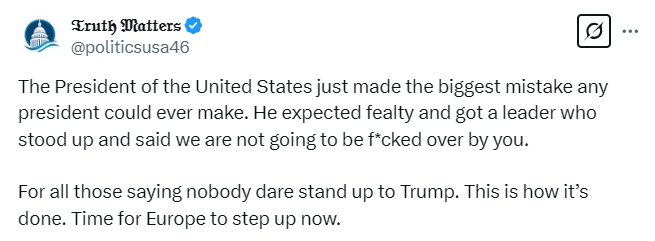
I don’t know if anyone else is catching this, but the US President and VP are behaving like 7 year old boys on the playground bullying Pres. Zelenskyy. Right in front of everyone. Now he’s on RussiaRussiaRussia and Hunter Biden’s bathroom and bedroom.
I had to vent. I like my stories, it’s Friday, and they broke in to show us this awful behavior. Open thread on comments, as far as I’m concerned. grrrr
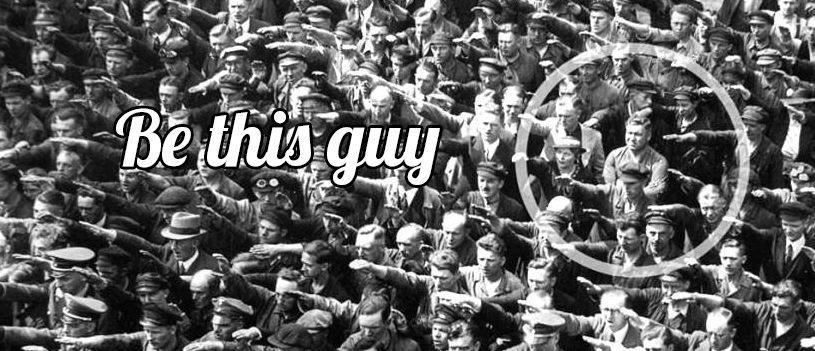
February 25, 1941 A general strike was called in Amsterdam to protest Nazi persecution of Jews under the German Nazi occupation. The previous weekend 425 Jewish men and boys had been imprisoned (only two survived the war). Truck drivers, dock and metal workers, civil servants and factory employees — Christians, Liberals, Social Democrats and Communists — answered the call and brought the city to a standstill. The work stoppages spread to Zaanstreek, Kennemerland and Utrecht. Two days later the strike was called off: nine people were dead, 50 injured and another 200 arrested, some of whom were to die in the concentration camps. “The Dokwerker” is a statue by sculptor Mari Andriessen in Amsterdam’s Jonas Daniel Meyer Square commemorating the February 1941 strike. It is frequently the rallying point for demonstrations against racism. Read more (pdf)
February 25, 1968 Discussing the war capacity of North Vietnam, a country that had been fighting for its independence for 23 years and had just staged the massive, successful Tet Offensive, U.S. General William C. Westmoreland stated, “I do not believe Hanoi can hold up under a long war.” He was replaced as commander in Vietnam less than four months later. Vietnam commander General William Westmoreland meeting with President Lyndon Johnson Westmoreland’s life and career (It’s NYT’s obit.)
February 25, 1971 Legislation was introduced in both houses of Congress to forbid U.S. military support of any South Vietnamese invasion of North Vietnam without prior congressional approval. This bill was a result of the controversy that arose following the invasion of Laos by South Vietnamese forces. On February 8, the Army of the Republic of Vietnam had launched a major cross-border operation into Laos to interdict activity along the Ho Chi Minh Trail and destroy the North Vietnamese supply dumps in the area. The Ho Chi Minh Trail, named for the leader of North Vietnam, was an informal network of jungle trails down which supplies came from the north, supplying insurgents and troops in the south.
February 25, 1986 The newly elected Philippine president, Corazón Aquino, was sworn in, bringing to an end years of dictatorship under Ferdinand Marcos. In the face of massive demonstrations against his rule, President Ferdinand Marcos and his entourage had been airlifted from the presidential palace in Manila by U.S. helicopters.
February 25, 2011 A Day of Rage saw demonstrations across the Middle East. Protesters in Iraq, Yemen, Egypt, Tunisia, Jordan, and Bahrain showed their support variously for an end to corruption and income inequality, political reform and better public services, and the replacement of long-running dictatorships with democratic regimes. Day of Rage in Taiz, Yemen Reports from throughout the region







 Scottie's Playtime