I wish to thank Ten Bears for the link to this article. We are in a really bad time in this country driven my a dementia addled president that is driven by greed and an unhinged Nazi wannabe man who felt powerless over anyone most of his life Stephen Miller. He has felt less than the women and men around him. Miller has hated brown people since he was a teen and his goal is a white ethnostate. Hugs
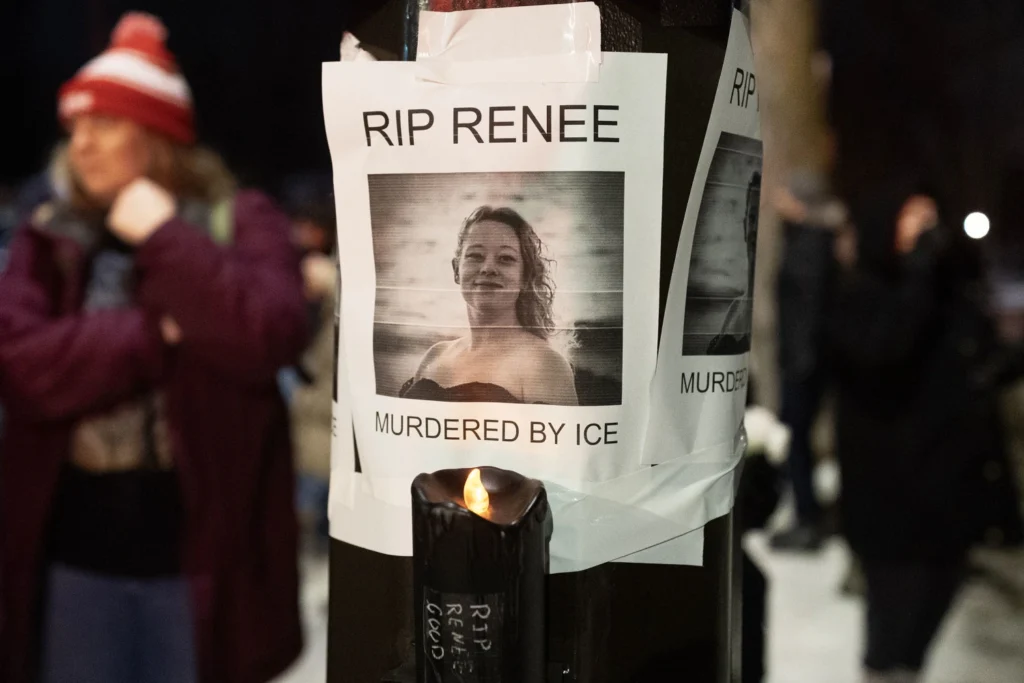
The murder of Renee Good was an intentional act in several senses.
First, it was a murder in the classic legal sense, in that the ICE agent who shot and killed her was in no danger — the video clearly shows Good trying to drive away as masked armed men shout contradictory orders at her — so the use of deadly force had no justification. Of course the entire right wing is lying about this, recalling a famous quote from 1984:
The Party told you to ignore the evidence of your eyes and ears. It was their final, most essential command.
Closely related to this is the fascist fellow traveler move of invoking some utterly phony Rashomon metaphor about “multiple perspectives” or some such dime store postmodernist bullshit. There are multiple perspectives here, but only because half the country is fascist or enablers and tolerators of the fascist movement that is Trumpism. The perspectives are the truth — Renee Good was murdered by ICE — and a lie: The fascist scum who murdered her was acting in self-defense.
But this was an intentional act in a more abstract and attenuated sense, in that Stephen Miller has created a set of circumstances in which it was inevitable that this sort of murder would happen in this way, so he could pursue his sadistic fantasies of a violent crackdown on protest against the regime (note here that Good wasn’t even protesting; she may have been observing ICE’s activities for evidentiary purposes, but even that is unclear). The local Democratic authorities are asking for calm, so that a proper investigation of the murder can take place, but of course there can be no proper investigation when any such investigation needs to take place in the shadow of a fascist federal government, that quite consciously put into place the policies and practices that would make such a murder, as well as future such murders, inevitable.
Meanwhile Donald Trump, whose brain is turning to mush in real time, is apparently serious about invading Greenland, while Denmark is promising to resist such an invasion with whatever military resources it can muster. All of this is total madness. all of this presages the descent of the nation into pure authoritarianism, and all of this is something that the leadership of the Democratic party is utterly unable to even begin to deal with, as illustrated by these remarks from senior Democratic senators about Marco Rubio and his role in the quarter-baked let’s not even bother to pretend there’s any legal defense for this coup in Venezuela:
“Although I may disagree with him on a day-to-day or hour-to-hour basis … he has shown extraordinary competence,” Sen. Dick Durbin of Illinois, the No. 2 Democratic leader, said in an interview. “I voted for him in this position; I still have confidence in his abilities.”
Others said they respected his particular expertise on issues in Latin America while also raising doubts about the strategy for Venezuela he is laying out in public and in private briefings — which for now involves propping up interim president Delcy Rodriguez as a de facto U.S. puppet.
“You can talk to Marco about — ‘Tell us about Delcy.’ … He knows all of that, and he can give you a sense of who they are and what they’re up to,” said Sen. Tim Kaine (D-Va.), a former colleague on the Foreign Relations Committee.
Kaine complimented Rubio for putting a renewed focus on the Americas, while quickly adding that Trump’s self-proclaimed “Donroe doctrine” is the “wrong kind of attention.”
Compare this attitude toward the Trump administration to Alexandria Ocasio Cortez’s straightforward response to the federal government’s murder of Renee Good:
Ultimately, there are “multiple perspectives” on things like the murder of Renee Good and the invasion of Venezuela because half the country is fascist, or fascist-enabling. The essence of Trumpism — in all but textbook fascist movement at this point — is to both deny Renee Good was murdered and at the same time enthusiastically approve of her murder (see Holocaust denial for the classic template).
Half the country are enemies of liberal democracy, and they have to be crushed by its defenders. That the political opposition is not currently capable of this even if it should manage to win actual future elections is too obvious for words.
“Never believe that anti-Semites are completely unaware of the absurdity of their replies. They know that their remarks are frivolous, open to challenge. But they are amusing themselves, for it is their adversary who is obliged to use words responsibly, since he believes in words. The anti-Semites have the right to play. They even like to play with discourse for, by giving ridiculous reasons, they discredit the seriousness of their interlocutors. They delight in acting in bad faith, since they seek not to persuade by sound argument but to intimidate and disconcert. If you press them too closely, they will abruptly fall silent, loftily indicating by some phrase that the time for argument is past.”
I would like to thank https://personnelente.wordpress.com/2026/01/08/causing-problems-on-purpose/ for the link to the story. I am listening to congressional republicans drown on about the US being the apex predator so our country has the right to do what ever we wish to on the world stage. Our country has the right to take what we want because Nazi Stephen Miller who seems to be running the country because that might makes right and the US has the military might. Every time I listen to Miller punch his words out like a poor imitation of Hitler and his entire mocking of anyone in the media or that disagrees with his stance I get a sick horrible feeling in my core being. He is unhinged and the most powerful person next to tRump. Hugs
Protesters clash with law enforcement outside an Immigration and Customs Enforcement (ICE) facility on January 8, 2026. (Photo by Mostafa Bassim/Anadolu via Getty Images)
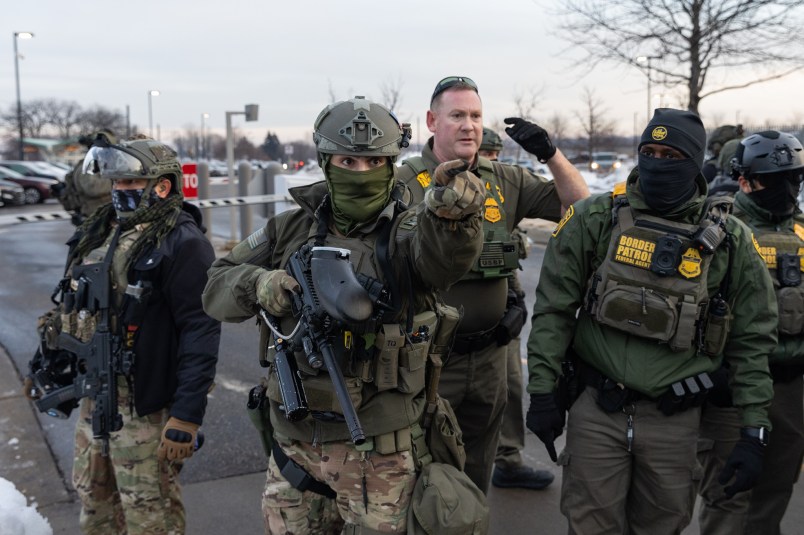
More than 2,000 U.S. Immigration and Customs Enforcement agents are on the ground in Minnesota in what President Donald Trump’s administration officials have called the “largest immigration operation ever.” Deployed just days ago by Trump, one agent has already shot and killed a person and federal law enforcement has deployed tear gas and pepper spray against protesters.
The massive operation and subsequent violence in Minneapolis comes against the backdrop of Trump’s announcement Tuesday that he’s freezing $10 billion in federal funds approved by Congress for child welfare programs, including Temporary Assistance for Needy Families, foster care, and childcare subsidies in Minnesota and four other blue states.
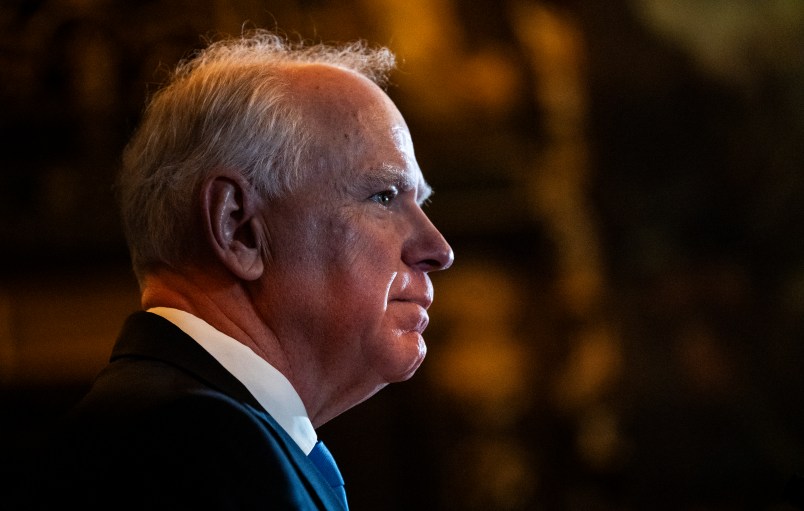
This sharp escalation in action has its roots in a yearslong law enforcement investigation into widespread fraud and misuse of federal funds in Minnesota that in late 2025 was seized upon by the right-wing misinformation machine and, this week, reached a screeching fever pitch. Minnesota Governor Tim Walz announced Monday he would not be running for reelection, in part so he could devote his time to addressing the crisis.
The journey from legitimate local and federal investigations into fraud to the so-called largest ICE operation in history, the pausing of federal funds to blue states and the end of Walz’s gubernatorial tenure is a long and tangled one. As has become common in the Trump era, a serious situation was dispersed throughout the unserious realm of right-wing media and content creation, catching the attention of the president and yielding very real consequences.
Here’s the backstory you need to understand these events.
How the Scandals Started
Amid the right-wing uproar, there are elements of truth: Minnesota has grappled with Medicaid fraud for more than a decade, which has been the focus of federal and state investigations and local news reporting. The schemes were further fueled by the COVID-19 pandemic, during which an influx of federal funding for social programs came with relaxed vetting standards in an effort to allow speedy access for vulnerable populations.
Republican furor over widespread fraud has also flared up periodically over the years. But it reached new heights in recent months after a wave of new claims — ranging from the well-founded to the baseless to the entirely histrionic — caught the attention of the president.
Some of the first claims of fraud arose in 2015, and focused on day care centers that local authorities accused of overbilling state welfare agencies. This gave rise to an early instance of right-wing outrage, when a local Fox affiliate in 2018 speculated that hundreds of millions of dollars were being stolen from the program and sent to terrorists in Africa. State officials found that claim to be baseless.
In 2021, feds began investigating fraud claims connected to a child nutrition program. By early 2022, the FBI seized property from a nonprofit called “Feeding Our Future.” The revelation of the investigation prompted bipartisan outrage toward the fraudsters; Rep. Ilhan Omar (D-MN), for example, questioned the U.S. Department of Agriculture about the misuse of funds, asking about the investigation and steps that could be taken to prevent “fraudulent misuse of federal funding meant to feed hungry children” in the future.
In September 2022, the Department of Justice announced federal criminal charges against a network of people connected to Feeding Our Future, alleging they defrauded the government of $250 million in federal child nutrition funding, using the funds instead for mansions, cars and other lavish personal expenses. Former Attorney General Merrick Garland said the indictments represented “the largest pandemic relief fraud scheme” to date. At the time, 47 people were indicted, many, but not all of whom, were members of the Minnesota Somali community. State Republicans began pointing a finger at the governor.
The scandal continued to unfold. Even the ensuing criminal proceedings were rife with corruption, with one juror dismissed after fraud defendants tried to bribe the juror with a literal bag of cash. The Feeding Our Future scheme has proven vast and deep. Between 2023 and 2025, more indictments came down connected to the case, with the 78th person indicted this past November. It has become the poster child for Minnesota’s tangled fraud network that has so far extended to autism services, Medicaid fraud, addiction services and housing..
The state has also investigated the network. In August 2023, Minnesota Attorney General Keith Ellison charged 18 people with defrauding Medicaid of $9.5 million with fake home health care businesses. Ellison in December 2023 announced charges in what his office called the largest Medicaid fraud case it had investigated. Three people were charged in an $11 million prosecution. A June 2024 state audit found the Minnesota Department of Education had received dozens of complaints about the nonprofit and failed to oversee the distribution of the $250 million at the heart of the case.
The Politics of the Scandals
State Republicans continued to use the fraud investigations and indictments as evidence of Walz’s unfit leadership. When Walz became Kamala Harris’s vice presidential candidate in August 2024, the governor became a punching bag for Republicans in the state running for local and national office. On the Hill, House Republicans subpoenaed Walz for information about his actions and responsibilities related to the Feeding Our Future scheme.
ST. PAUL, MINNESOTA – JANUARY 5: Minnesota Gov. Tim Walz speaks during a press conference at the State Capitol building on January 5, 2026 in St. Paul, Minnesota. Walz announced today that he is abandoning his re-election campaign for governor, blaming scrutiny from President Donald Trump for his decision. (Photo by Stephen Maturen/Getty Images)
In September 2025, eight people were charged in a multi-million dollar housing fraud scheme for a state program that used Medicaid funds for certain housing services. Then-Acting U.S. Attorney for the District of Minnesota Joseph Thompson called the indictments “the first wave of charges in a massive fraud” program. The abused housing program was dissolved in late October.
In addition to the political advantages of blaming the Democratic governor, some conservatives exploited the fact that most of the people implicated in each of the fraud investigations were members of Minnesota’s Somali community. That became paramount when Trump and prominent members of the MAGA-sphere got involved.
Trump Grabs the Story
On Nov. 19, City Journal, a publication produced by the conservative New York think tank The Manhattan Institute published a post co-authored by Chris Rufo, the notorious anti-woke crusader who is also a fellow at the think tank. The report alleged Minnesota fraudsters were wiring their spoils to a Somalia-based terrorism organization called Al-Shabaab, citing “federal counterterrorism sources.” Two days later, news website and television station The National News Desk — owned by the conservative Sinclair Broadcast group — covered the City Journal report. Those posts may have been what caught the president’s eye. Two hours after The National News Desk report was published, Trump posted about the Minnesota fraud investigations on Truth Social. “Minnesota, under Governor Waltz, is a hub of fraudulent money laundering activity,” Trump wrote, misspelling the governor’s name. In the same post, he said he was removing a special immigration status that covers about 700 Somalian people in the U.S., and introduced the idea that “Somali gangs are terrorizing” Minnesotans.
The Truth Social posts marked the beginning of a far-right frenzy that has seen the president and extremist influencers feed off of one another, spinning narratives and pushing policies pulsating with outrage, xenophobia and Islamophobia. On Nov. 29, the New York Times echoed Republican talking points blaming the Somali community for federal funds theft, saying that the “fraud took root in pockets of Minnesota’s Somali diaspora as scores of individuals made small fortunes.” On Dec. 1, the White House issued a one-pager about the Minnesota situation, repeatedly highlighting the ethnicity of most of the people who had been federally charged and blaming Walz.
Trump on Dec. 2 deployed a first round of ICE agents — about 100 — to Minneapolis and St. Paul to target the Somali community, an official told the New York Times. All the while, legitimate federal investigations continued to play out.
Prosecutor Thompson is now the First Assistant U.S. Attorney for the District of Minnesota. Appointed by Trump, Thompson has served as a longtime prosecutor. On Dec. 18, he charged five new people in the housing program Medicaid fraud scheme. Thompson said more than $9 billion in federal funds may have been stolen from Minnesota.
“The magnitude cannot be overstated,” Thompson said. “What we see in Minnesota is not a handful of bad actors committing crimes. It’s staggering, industrial-scale fraud.”
Following this announcement, the total number of people indicted in Minnesota fraud schemes reached 92. Eighty-two of those were of Somali descent, according to the U.S. Attorney’s Office for Minnesota, PBS reported. While a significant share of the scammers are Somali, the number is less than 0.1% of the entire Somali population in Minnesota, where the majority are U.S. citizens, and just about 0.03% of the Somali population nationwide, according to U.S. Census Bureau data cited by PBS.
Six days later, a 23-year-old content creator dropped a 43-minute YouTube video that had the effect of planting dynamite in a minefield. In a vague Dec. 26 video, former prankster turned anti-immigrant influencer Nick Shirley visited Minnesota day care and health care centers, demanded people who appeared to work at the centers show him children, and accused the businesses of fraud. Shirley in the video is flanked by two masked men, whom he identifies as his security, and is following a man called David who purports to have papers showing evidence of fraud. The Intercept identified David as 65-year-old David Hoch, an eccentric, far-right political operative in the state.
It doesn’t matter that claims made in Shirley’s video remain unfounded, and that it documents nothing untoward.
It also doesn’t seem to matter that the initial, 2018 report linking fraud in Minnesota to a Somalia-based terrorist group was debunked by the state, or that the only named source for the article told the Minnesota Star Tribune he was misquoted. (City Journal told the Star Tribune it stands by its reporting.)
Trump has since early December used the fact that the majority of the defendants in each of these fraud cases were members of the Minnesota Somali community as ammunition, opening a dark new chapter in his signature anti-immigration crackdown.
Layla A. Jones is a reporter for TPM in Washington, D.C., with experience covering government and economic policy, race, culture, and history. She has written for the Philadelphia Inquirer, Billy Penn, WHYY, NPR, and the Philadelphia Tribune, and participated in the Knight-Bagehot Fellowship at Columbia University. She attended Temple University for undergrad.
So much of what is reported is the tRump people trying to hide the truth. The fact is true it seems the US tRump government doesn’t want the truth to come out, they don’t want rogue officers investigated, they want to keep lying to the public and running illegal thug operation over the US people. There must be some way the local police can find evidence to send to a prosecutor over this event. Hugs
A day after an Immigration and Customs Enforcement officer shot and killed 37-year-old mother of three Renee Good as she tried to drive away on a snowy Minneapolis street, tensions remained high, with dozens of protesters venting their outrage outside of a federal facility that’s serving as a hub for the Trump administration’s latest immigration crackdown on a major city.
Homeland Security Secretary Kristi Noem has not publicly identified the officer who shot Good. But she spoke of an incident last June in which the same officer was injured when he was dragged by another driver’s fleeing vehicle. A Homeland Security spokesperson confirmed Noem was referring to an incident in Bloomington, Minnesota.
Court records from that case identify the officer who was dragged and injured as Jonathan Ross.
Court documents say Ross got his arm stuck in a vehicle’s window as a driver fled arrest in Bloomington, Minnesota. The officer was dragged 100 yards (91 meters) and cuts to his arm required 50 stitches.
The Associated Press wasn’t immediately able to locate a phone number or address for Ross, and ICE no longer has a union that might comment on his behalf.
Here’s what we know:
Videos of the shooting:Footage shows an officer approaching an SUV stopped across the middle of the road, demanding the driver open the door and grabbing the handle. The Honda Pilot begins to pull forward, and a different ICE officer standing in front of it pulls his weapon and immediately fires at least two shots at close range, jumping back as the vehicle moves toward him. It is unclear from the videos whether the vehicle makes contact with the officer, and there is no indication of whether the woman had interactions with ICE agents earlier. After the shooting, the SUV speeds into two cars parked on a curb before crashing to a stop.
Renee Good: She was a U.S. citizen born in Colorado and appears to have never been charged with anything beyond a traffic ticket. In social media accounts, Macklin Good described herself as a “poet and writer and wife and mom.” Public records show she had recently lived in Kansas City, Missouri, where she and another woman with the same home address had started a business last year called B. Good Handywork. Trump administration officials painted Good as a domestic terrorist who had attempted to ram federal agents with her car.
Who will investigate? The Minnesota agency that investigates officer-involved shootings said it was informed Thursday that the FBI and U.S. Justice Department would not work with the agency, effectively ending any role for the state to determine if crimes were committed. Noem said the state has no jurisdiction. Gov. Tim Walz pushed back against the Trump administration’s decision to keep the investigation solely in federal hands, emphasizing that it would be “very, very difficult for Minnesotans” to accept that an investigation that excludes the state could be fair. Mary Moriarty, the prosecutor in Hennepin County, which includes Minneapolis, said her office is “exploring all options” to determine if a state investigation can proceed.
While Mock Paper Scissors and my blog have many of the same viewers it is important to note that TenGrains site has a forensic breakdown that is very important to understand the misinformation and how badly these ICE thugs acted. I keep saying one thing everyone misses is how angry the driver of the ICE truck is and how he charges the car immediately trying to get in the car swearing at the woman driver. It would have caused concern in anyone when an angry armed masked man charges your car and starts yanking on the door handle while swearing at you. As the other videos at the above linked site show the ICE officers were never in danger and they only fired because they believe that anyone not instantly obeying them or blocking them in any way is a capital offense they can deal with anyway they want including killing the offender. We are in a very dangerous situation because the ICE thugs are soon to be the largest armed military police agency with no controls on their behavior in the US. They are the US brownshirts or Gestapo. They are made up of militias, Proud Boys, 3 percenters, Oath keepers, and Jan 6th riot insurrectionist. They feel no laws or rules apply to them, they are on a white supremacists mission to remove the brown breeders from the US to save the white people from becoming a minority. Why does that bother some white people? Because they are afraid that brown people will treat them the same way they treated brown people all these years before. It won’t happen but that is their fear, the loss of privilege they never earned and don’t deserve. Hugs
An aerial view shows a fjord in western Greenland, September 16, 2025. REUTERS/Guglielmo Mangiapane/File Photo Purchase Licensing Rights
Summary
U.S. purchase of Greenland also an option being discussed
Invasion would send shock waves through NATO
Trump’s drive to acquire Greenland ‘not going away’, official says
Some U.S. Republicans and Democrats push back against Greenland comments
WASHINGTON, Jan 6 (Reuters) – The White House said on Tuesday that President Donald Trump is discussing options for acquiring Greenland, including potential use of the U.S. military, in a revival of his ambition to control the strategic island despite European objections.
Trump sees acquiring Greenland as a U.S. national security priority necessary to “deter our adversaries in the Arctic region,” the White House said in a statement.
“The president and his team are discussing a range of options to pursue this important foreign policy goal, and of course, utilizing the U.S. military is always an option at the commander-in-chief’s disposal,” the White House said.
Greenland has repeatedly said it does not want to be part of the United States. Leaders from major European powers and Canada rallied behind the Arctic territory on Tuesday, saying it belongs to its people.
A U.S. military seizure of Greenland from a longtime ally, Denmark, would send shock waves through the NATO alliance and deepen the divide between Trump and European leaders.
The strong opposition has not deterred Trump from reviewing how to make Greenland a U.S. hub in an area where there is growing interest from Russia and China. Trump’s interest, initially voiced in 2019 during his first term in office, has been rekindled in recent days in the wake of the U.S. arrest of Venezuelan President Nicolas Maduro.
Emboldened by Maduro’s capture last weekend, Trump has voiced his belief that “American dominance in the Western Hemisphere will never be questioned again,” and has put pressure on both Colombia and Cuba.
He has also started talking about Greenland again after putting it on the back burner for months.
A senior U.S. official, speaking on condition of anonymity to discuss internal deliberations, said Trump and his advisers are discussing a variety of ways to acquire Greenland.
IS GREENLAND FOR SALE?
Those options include the outright U.S. purchase of Greenland or forming a Compact of Free Association with the territory, the official said. A COFA agreement would stop short of Trump’s ambition to make the island of 57,000 people a part of the United States.
The official did not provide a potential purchase price.
“Diplomacy is always the president’s first option with anything, and deal making. He loves deals. So if a good deal can be struck to acquire Greenland, that would definitely be his first instinct,” the official said.
Secretary of State Marco Rubio told lawmakers that recent administration threats against Greenland did not signal an imminent invasion and that the goal is to buy the island from Denmark during a classified briefing late on Monday for congressional leaders, two sources familiar with the briefing said.
The Wall Street Journal first reported Rubio’s comment.
Members of Congress, including some of Trump’s fellow Republicans, pushed back against the administration’s comments on Greenland, noting that NATO member Denmark has been a loyal U.S. ally.
“When Denmark and Greenland make it clear that Greenland is not for sale, the United States must honor its treaty obligations and respect the sovereignty and territorial integrity of the Kingdom of Denmark,” Democratic Senator Jeanne Shaheen of New Hampshire and Republican Senator Thom Tillis of North Carolina, the co-chairs of the Senate NATO Observer Group, said in a statement.
Administration officials say the island is crucial to the U.S. due to its deposits of minerals important for high-tech and military applications. These resources remain untapped due to labor shortages, scarce infrastructure and other challenges.
“It’s not going away,” the official said about the president’s drive to acquire Greenland during his remaining three years in office.
Reporting by Steve Holland, Jeff Mason and Bo Erickson; Additional reporting by Patricia Zengerle and Humeyra Pamuk; Editing by Colleen Jenkins and Lisa Shumaker
Randy in a post asked the question I think many ask here. Why do I champion the trans community so forcefully? Nan asked me a few years ago if I was feeling like I was trans, and no I am a cis gay male and happy in it. Although if not for my past I would have liked to be free to explore a more feminine side of myself. Ron and I do have trans people in our family but I have never met them. The truth is in the page why I do this. I want to give a voice to those that have no voice and right now the most targeted unfairly groups are trans people / kids and brown skinned people ICE is going after. Why do I put so much effort in to giving them a voice? Because as an abused little boy people in my town knew I was being abuse but no one gave me a voice, no one spoke up for me. Hugs.
How Americans are manipulated by online misinformation and political rhetoric.
Joseph McConville’s first memory of being online was at 13 years old when he started playing Neopets, a virtual pet game, at his home in Boynton Beach, Fla. At the time, he had no clue that just months later, the internet would suck him into the alt-right.
As a young, white man, McConville says he was taught to believe that he’d have everything he wanted.
He started to realize this dream wouldn’t come to fruition when he was pulled out of private school as his parents struggled during the 2008 recession.
McConville quickly graduated from kids games to popular social media sites like Myspace and Facebook. But it was when he found FunnyJunk.com in ninth grade that he started being exposed to alt-right content.
The website gave users the ability to upload memes and upvote popular content. When McConville began using it, he was initially exposed to dark humor and edgy right-wing memes.
He then migrated to 4chan, a website known for hosting anonymous, fringe, right-wing communities, where he started engaging with content used to stoke extremist meaning —pushing us vs. them narratives that alienated McConville from his multicultural South Florida community.
“Everyone else is wrong. … These guys are right. These guys get it,” says McConville. The deeper he got, the more anger he felt—especially towards transgender people.
“It’s all a psyop … there’s a big trans psyop to destroy manhood,” McConville remembers believing for nearly a decade. “It’s all about making men hate themselves, to become women, to weaken the American hegemony.”
McConville, now 30, eventually found his way out of the alt-right world around 2018 when he was deradicalized by a friend who had previously been a part of the community.
But since then, the pervasiveness of this thinking has grown. What was once conspiratorial thinking on fringe websites has now become commonplace. “The [2016] Trump election changed a lot of things, it all became serious,” McConville told Uncloseted Media and GAY TIMES. “You feel like, ‘Wow, we’re actually being listened to—we’re changing the mainstream talking points.’”
Transgender Americans have been one of the biggest targets of this alt-right rhetoric, and it’s effective. Since 2022, Americans have increased their favorability towards laws limiting protections for trans people and have become less favorable towards policies safeguarding them.
The site of Charlie Kirk’s assassination after it took place. (KSL News Utah)
This change in public perception may be because of the growing claims that falsely link transgender people as perpetrators of mass violence and domestic terrorism. After Charlie Kirk’s death in September, these narratives reached a boiling point.
But how did Americans get taken to believe this anti-LGBTQ lie? And what does it say about how people can be brainwashed to hate?
Who’s Pushing the False Link Between Trans People and Domestic Terrorism?
One reason many Americans began to believe that trans people are more likely to be linked to terrorism is because trusted sources in mainstream conservative spaces are telling them it’s true. Even though the overwhelming majority of mass shooters are cisgender men, the Heritage Foundation, notably behind Project 2025, recommended the FBI create a category of domestic terrorism called Transgender Ideology-Inspired Violent Extremism, which suggests transgender people pose an imminent threat.
“I think some people know that this is false, but push it,” Thekla Morgenroth, a professor of psychology at Purdue University, told Uncloseted Media and GAY TIMES. “It’s worth giving false information if you get people on your side and support your opinion, and I think that is malicious.”
Unlike when McConville was in the alt-right, many of the people behind the rhetoric today hold powerful positions in the government. After a shooting in August at a Minnesota Catholic school perpetrated by a transgender person, Rep. Lauren Boebert falsely said there was a “pattern of transgender violence in our country.” Trump officials and other members of Congress used this as an excuse to attack gender-affirming care. And Harmeet Dhillon, an assistant attorney general at the Department of Justice, has insisted that hormone replacement therapy played a role in the shooting, although officials do not believe the perpetrator was using hormones.
This narrative has bled into the mainstream media who are used to trusting government sources. Just a few hours after Kirk was pronounced dead, The Wall Street Journal and other media outlets picked up claims from the Bureau of Alcohol, Tobacco, Firearms and Explosives that the bullet case engravings pointed to a motive related to “transgender ideology,” a term coined by transphobic commentators. The bullet casings ultimately did not have any reference to transgender people.
Nevertheless, suspicions around this shooter being connected to the transgender community spread like wildfire.
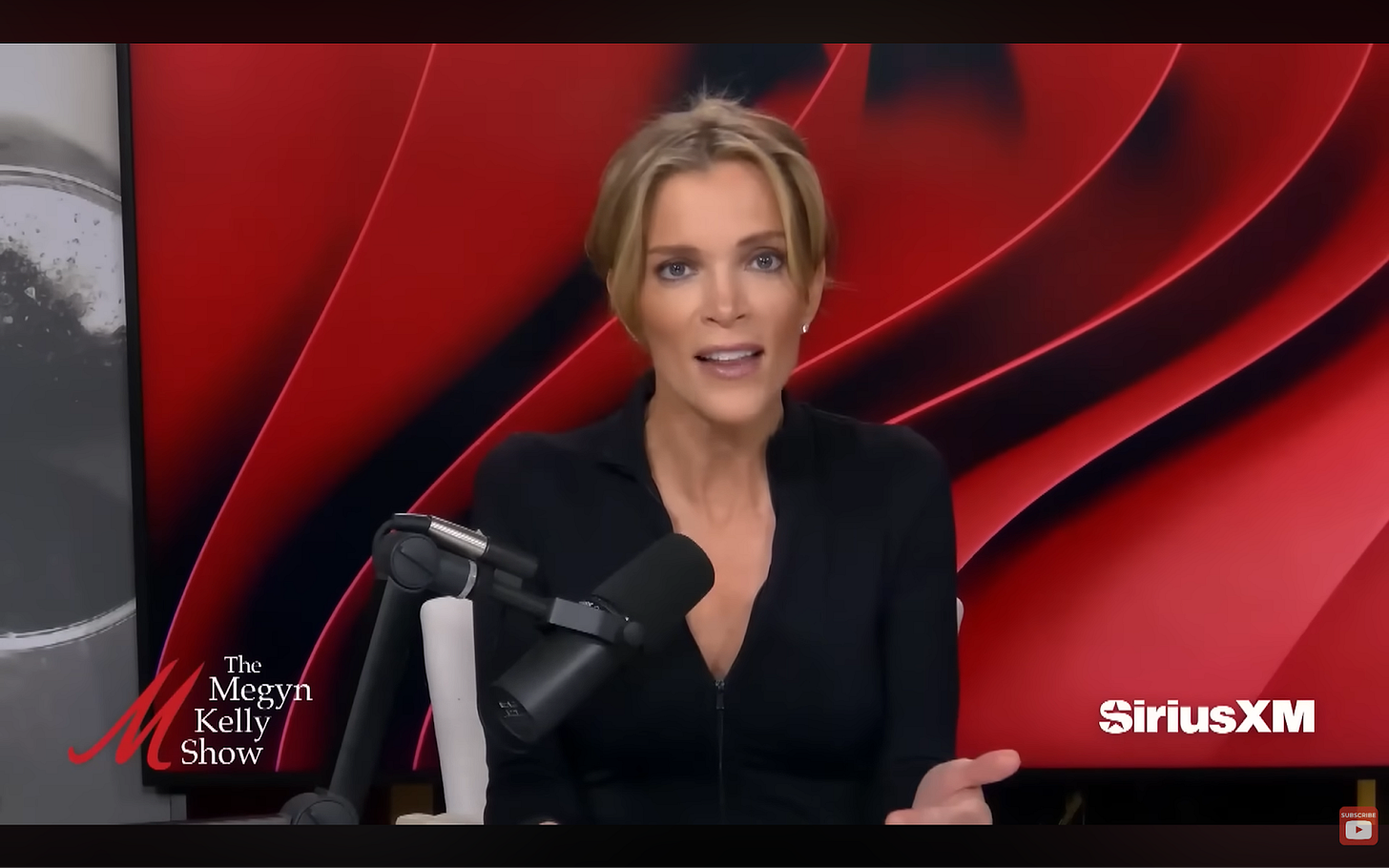
Megyn Kelly in her video. (Megyn Kelly on YouTube)
Former Fox News personality Megyn Kelly posted a video titled “Megyn Kelly Reveals the Truth About the ‘Trans’ Phrases Found on Ammo of Gun Which Shot Charlie Kirk,” to YouTube on Sept. 11, 2025, where she falsely told over 4 million subscribers, “There’s a particularly high percentage [of transgender people] committing crimes these days and it is responsible and important to say so.” The video now has 2.1 million views and Kelly has not retracted these comments.
Her followers—who believed her false claims—began calling for extreme action in the video’s comment section. @WonkoTheDork wrote, “Trans insanity needs to end. I don’t care how, this has to stop.” And @kathleenbarton-m6c wrote, “As an American, I completely agree that this [Trans] movement needs to be completely eradicated.”
Referencing Kirk as a martyr, Texas Attorney General Ken Paxton took it a step further, writing in a press release that “corrupted ideologies like transgenderism and Antifa are a cancer on our culture and have unleashed their deranged and drugged-up foot soldiers on the American people.”
The Social Psychology of Transphobia
Morgenroth thinks many people who endorse rhetoric around transgender domestic terrorism are threatened or afraid of otherness and of the breaking of traditional gender norms.
“People are very attached to the way that they think about gender because it gives them a sense of certainty—it gives them a sense of who they are and who they’re not,” they say.
Morgenroth says people come up with justifications for their discomfort, even if they don’t make sense.
“‘Here’s an explanation for why I should be scared. I’m gonna endorse that and I’m gonna believe that regardless of whether that makes logical sense or not,’” they told Uncloseted Media and GAY TIMES. “I think that’s what’s happening and why people are so willing to endorse these conspiracy beliefs or theories about trans people.”
Joseph Vandello, a psychology professor at the University of South Florida, says that when influential figures ramp up a threat, it triggers an emotional response of fear or anger, which leads to a desire to punish or exclude people.
“This is the same playbook that people were using against gay people going back to the 1970s or against other kinds of marginalized or minority groups like Jews,” Vandello told Uncloseted Media and GAY TIMES, referencing the gay panic of that era. “I think there’s this idea that if you frame the issue in terms of a threat, then it becomes an issue of moral protection of the community.”
Another One Down the Rabbit Hole
Vandello says many young men fall for anti-trans narratives because they confirm their place of privilege in the world and validate their insecurities. He coined the term “precarious manhood,” which is the idea that manhood is a social status that has to be won and can be lost. His research indicates that threats to one’s sense of manhood—like trans and queer identities—provoke not only insecurity, but aggression.
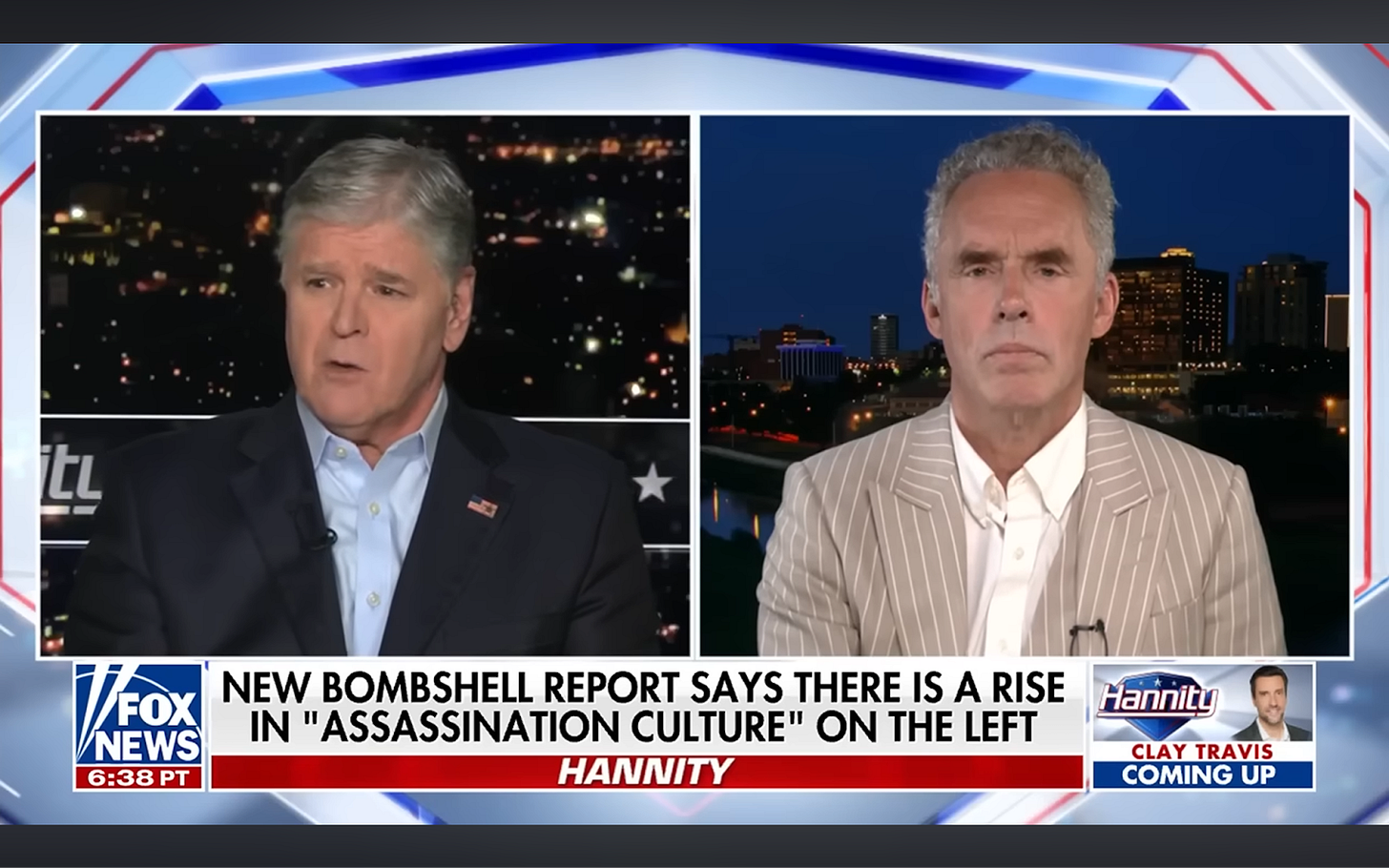
Jordan Peterson (right) being interviewed by Sean Hannity in 2025. (Fox News)
Ten years ago, Justin Brown-Ramsey became a case study of precarious manhood, lashing out when he began thinking that trans people were a threat. At 18 years old, and in search of an escape from his parents’ divorce, he started binge-watching YouTube lectures from Jordan Peterson, a clinical psychologist who’s best known as an outspoken anti-trans thought leader and has said that using someone’s preferred pronouns is the road to authoritarianism.
“He has a degree, he’s working at an institution, it seems like if that’s the kind of guy that has this opinion, I should probably also have that opinion,” Brown-Ramsey told Uncloseted Media and GAY TIMES.
This intellectualized version of transphobia appealed to the sense of insecurity Brown-Ramsey faced growing up in a household with strictly enforced gender roles.
Eventually, Brown-Ramsey became an active participant in anti-trans rhetoric. As an anonymous keyboard warrior, he’d fight in the YouTube comments against the #MeToo, feminist and trans rights movements.
Near the end of his senior year of high school, Brown-Ramsey brought this hatred into the real world against another classmate.
“They mentioned they were trans, and I recall always taking issue with that for seemingly no reason, and being just generally antagonistic about that,” says Brown-Ramsey, now 28.
He purposefully misgendered the student in class and started lashing out against friends, family and romantic partners until he was almost totally isolated.
“I think over time, the less acceptable my behavior was for people in person, the more it became acceptable to lean into the online version of that,” he says. “It went from those lecture videos to watching long rant videos about trans people and gay people, or seeking out stuff that was more 4chan-adjacent.”
Brown-Ramsey, who eventually left the alt-right after deeply engaging with U.S. history in college, believes he was manipulated to hate trans people because it helped him displace his anger about other elements of his life. “I think it was the fact that I was lower working class or lower middle class, and didn’t have an economic future ahead of me,” he says. “I was like, ‘Well if the world is that way then I just might as well be hateful and try to be more powerful than somebody.’”
Undercover in the Alt-Right
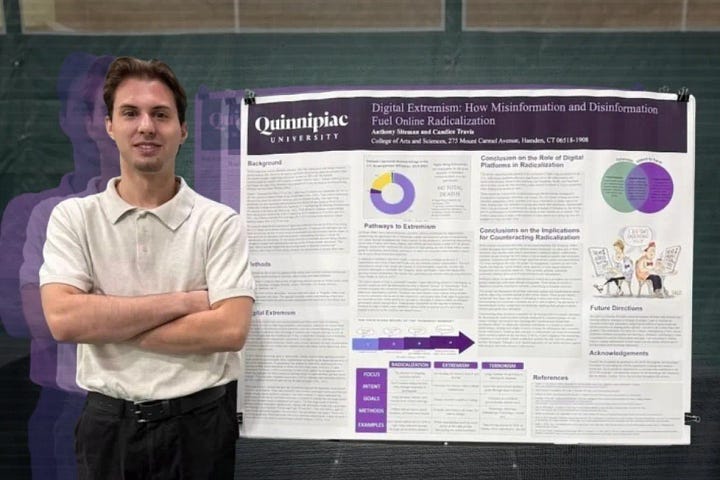
Anthony Siteman (Photo courtesy of Siteman, design by Sam Donndelinger)
This phenomenon of young men getting drawn in by alt-right algorithms fascinated 21-year-old Anthony Siteman, who started investigating online extremism ahead of the 2024 presidential election.
“My main goal was to understand how and why people became radicalized,” Siteman, a senior at Quinnipiac University, told Uncloseted Media.
Siteman immersed himself on right-wing sites like Rumble and Gab as well as encrypted messaging apps like Telegram where he joined channels that included Proud Boys. He noticed trends that draw people in: all caps text, red alarm emojis and inflammatory language, which all trigger a sense of urgency and concern.
He saw constant racist, sexist and transphobic language, but also violent videos and memes created from the livestreamed footage of the 2019 mosque shootings in New Zealand that left 51 people dead.
Even though he entered this project to learn about indoctrination, sometimes he felt his own views slipping. “ I was really questioning myself and what I believed,” he says, adding that he had to turn to his professor to keep him grounded. “They make you really question all of reality.”
“Social media companies are feeding people more extreme content, more emotional content,” Vandello says. He explained that emotionality is what has made the online alt-right successful at manipulating users against transgender people.
Siteman agrees: “ It’s always framed about fear, anger, and just some sense of belonging.”
The Way Out
Siteman believes that to exit these spaces, people outside the alt-right should use empathetic communication to help those in their network who have been radicalized.
For Brown-Ramsey, it was a professor that pulled him out.
“Unlike online spaces, where I curated the information that I wanted to see, and the algorithm fed me more of the same bigoted, hateful content, college was perhaps the first time I was required to engage with media outside of my usual diet,” Brown-Ramsey published in an essay about his experience.
Brown-Ramsey had to read books aloud in class like “Narrative of the Life of Frederick Douglass,” which detailed the abolitionist’s experience being born into slavery. “The narrative turned a mirror onto me and, in upsetting detail, showed me that my inclinations toward antagonizing those who looked, acted, or believed differently than myself [were the same beliefs that] led to Douglass’ dehumanization,” he wrote.
“That trajectory is really just me learning, ‘Why should I be at odds with a trans person if both of us work crappy jobs and can’t pay our bills?’ Obviously, that’s not who I should be angry at, but it took a while to get around to that,” Brown-Ramsey says.
If objective, nonpartisan, rigorous, LGBTQ-focused journalism is important to you, please consider making a tax-deductible donation through our fiscal sponsor, Resource Impact, by clicking this button:

 By
By 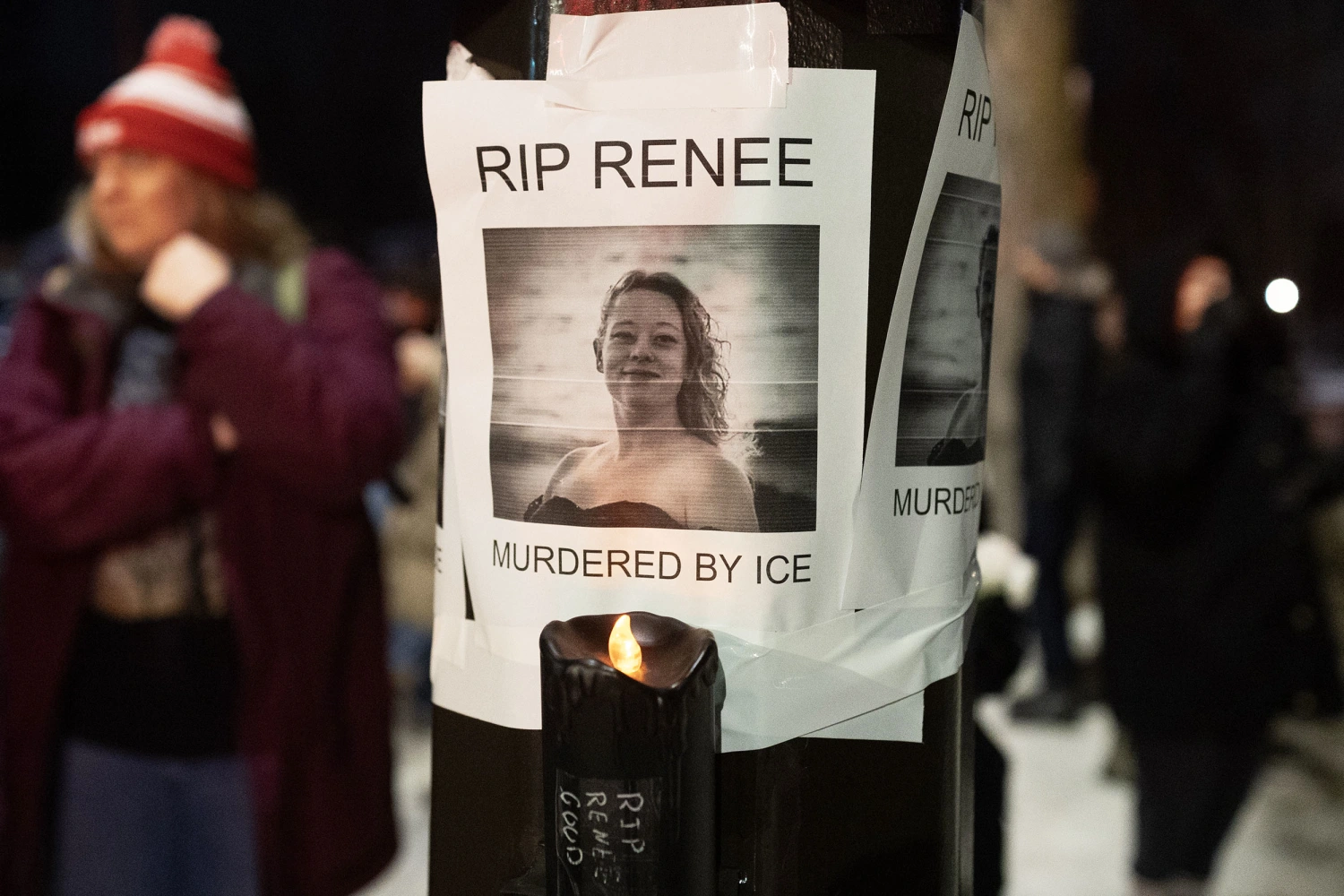



 Scottie's Playtime