House Democratic subcommittee report outlines web of alleged corruption, wire fraud and pay-to-play schemes
The interim report, “From Vanity to Insanity: How the White House Cheated the American People Out of Their 250th Birthday”, outlines a web of alleged corruption, wire fraud and pay-to-play schemes orchestrated through a shadow corporation embedded within the National Park Foundation (NPF).
The document was produced by Democratic staff of the House of Representatives’ natural resources committee’s oversight and investigations subcommittee. It has not been officially adopted by the committee.
‘A sanitized view of America’: inside Trump’s campaign to erase US history from national parks
Read more
———————————————————————————————————–
“Under President Donald Trump, this anniversary has been hijacked and perverted into a hotbed of corruption and self-enrichment,” it states, contending that the machinery built for a national commemoration was converted “into an apparatus for raising and spending money in service of the President’s ego, political ideology, and pet projects”.
How Trump is making the US’s 250th anniversary about himself – video
In 2016 Congress established the US semiquincentennial commission, operating as the non-profit America250 Foundation, to plan the nation’s 2026 celebrations on a non-partisan basis. However, under Trump, the White House launched a sustained pressure campaign to subsume the commission.
When America250 leadership resisted its demands to shift focus toward partisan, campaign-style spectacles, the Trump administration created Freedom 250 as a wholly owned subsidiary of the congressionally chartered NPF.
The interim report finds that, by taking control of the NPF board and installing key campaign operatives such as Meredith O’Rourke and Chris LaCivita, the White House secured an opaque vehicle that enjoyed the NPF’s non-partisan credibility and tax-exempt status while operating outside standard government transparency laws.
Jared Huffman, a California congressman who is the top Democrat on the natural resources committee, said: “I can’t, in my time here in Congress, remember anything even remotely like this: watching this trusted, venerable charity organisation, the National Parks Foundation, literally be hijacked for a craven political agenda that tries to steal the celebration of America’s 250th anniversary and turn it into something that’s all about Trump, advancing this very divisive agenda and even enriching Trump and those around him.”
The interim report alleges that Freedom 250 surreptitiously diverted resources intended for America250 for its own benefit, leaving America250 scrambling for funds.
Sources interviewed by Democrats on the committee said fundraisers including O’Rourke misled prospective America250 donors by providing them with Freedom 250’s banking and routing numbers instead. The report finds this could constitute wire fraud and charitable solicitation fraud under federal and District of Columbia law.
This deceit extended to the entertainment industry. Artists recruited for the kickoff of the Great American State Fair – including Martina McBride and Young MC – were assured the event was non-partisan, only to face social media backlash when the event was revealed to be a Trump-backed rally. In the words of Young MC, the booking was a “bait and switch”.
The investigation also outlines how Freedom 250 effectively put a price tag on presidential access, circulating sponsorship packages starting at $500,000 and climbing above $10m for tiered recognition, culminating in a “historic photo opportunity” with Trump.
The report also points to perhaps the most clear example on 14 June when the White House hosted a huge Ultimate Fighting Championship (UFC) event on the South Lawn to celebrate the president’s 80th birthday. The event was heavily sponsored by corporations facing impending federal regulation and used vast government resources for “Super Bowl-level security” marshalled by the Department of Homeland Security (DHS).
Fighters received bonuses in “USD1”, a cryptocurrency issued by World Liberty Financial, a trust run by the president’s children, and Trump personally bought up to $50,000 in stock in the UFC’s parent company weeks before the event.
Freedom 250 has also functioned as a conduit for steering federal funds to Trump campaign loyalists. Event Strategies – the same firm that planned the January 6 rally that preceded the US Capitol attack – was awarded 18 federal contracts totalling roughly $40m, along with an indefinite delivery master contract worth up to $100m.
Beyond lucrative contracts, the administration is accused of building a partisan political database disguised as a government domain. Freedom 250’s website, initially managed by former “Department of Government Efficiency” (Doge) employees known for past data leaks, extensively logs user data.
Event registration is powered by Campaign Nucleus, a firm founded by Brad Parscale, a veteran of Trump election campaigns. Campaign Nucleus openly boasts about using artificial intelligence to analyse personal data and target “persuadable” voters. Unsuspecting visitors, such as attenders of a free Fifa World Cup Fan Zone on the National Mall, unwittingly fed their personal information directly into this Republican campaign apparatus.
The report also focuses on the ideological overhaul of the semiquincentennial. Freedom 250 replaced America250’s civic engagement focus with overt Christian nationalist programming, operating in tandem with the Religious Liberty Commission, which recently recommended repealing the Johnson amendment to allow churches to engage in partisan politics.
A central feature of this effort was “Freedom Trucks” – a federally funded fleet of mobile museums dispatched to schoolchildren across the nation. Supplied with content from the conservative PragerU [the Prager University Foundation] and Hillsdale College, these exhibits recast the founding of the US as an exclusively Christian project, embracing demonstrable falsehoods.
Exhibits include an AI-generated George Washington claiming that “our rights are a gift from God”, a statement the first president is not documented as having made, alongside antisemitic tropes suggesting that Jewish merchants financed the revolutionary cause while omitting they also fought and died for it.
Concurrently, the administration aggressively moved to erase historical realities, removing national park signage detailing slavery, forced removal of Indigenous peoples and climate change. Huffman said it amounted to an attempt to reshape American identity to fit a narrow rightwing agenda.
“It’s a fantasy that airbrushes out the more complicated parts of our history – slavery, the Native American genocide, the actual secular ideals on which our government was founded. It wasn’t the opening of the clouds and some revealed covenant with God as they would have you believe.”
As Washington barrels towards Fourth of July, with another Trump speech and a big fireworks display planned for the national mall, Huffman acknowledges that Freedom 250 is unstoppable. But his goal now is exposure.
“The one thing we can do is make sure the American people know what they’re doing in our name and with our tax dollars,” the congressman said. “We should do that because what they have pulled off here is a potential template for other betrayals of public trust that they and maybe future generations will attempt if we don’t challenge them.”
Fox news host claims that capitalism is working and mocks that it is said it is not working. Of course for him and the other wealthy host it is working great. He is paid to promote a very unfair wage distribution of the country’s wealth, moving it upward to the upper incomes. Sam points out we do already have a capitalist / socialist country. Thefox host quotes the theme song from the sitcom Friends as if it were the manifesto of a generation. Hugs
This is the fundamentalist Christian nationalist religious majority trying hard to find a reason that violating any religion not christianity was OK. They do not deny that the man’s religious beliefs were violated and ignored even after the courts had ruled to protect them. That shows a bias against the non-Christian religions. The SCOTUS has no qualms lying and using false misleading inform to create ruling in favor of the Christian religion and those that want to push / force it on to everyone else in the country. Hugs
For more than two decades, the Supreme Court has issued a long series of wins for plaintiffs seeking to protect their religious practices. On June 23, 2026, though, the majority delivered an uncommon defeat in this contentious area.
Landor v. Louisiana Department of Public Education and Safety, a 6-3 judgment, rejected the claim of Damon Landor, a Rastafarian whose hair was forcibly shaved in prison. Landor had worn long dreadlocks for almost 20 years as an expression of his beliefs – part of a biblical practice known as the “Nazarite vow.” Like lower court judges, the Supreme Court did not dispute that officials violated Landor’s rights. However, the high court’s majority ruled that he could not sue individual officials at the prison.
The case stands out for at least three other reasons.
First, Landor v. Louisiana underscores the complexity and far-reaching nature of religious freedom laws in the United States and the increasingly diverse faith traditions to which they apply. Christians now represent 62% of the American population, down from 78% in 2007, while 29% have no religious affiliation and 7% belong to other faith traditions.
Second, Landor’s case gained support from many groups typically at odds over how to protect religious freedoms – groups disappointed withthis week’s decision.
Finally, the case highlights the religious rights of the nearly 2 million people in U.S. prisons, jails and detention and correctional facilities – and the challenge of holding their public employees accountable when those rights are violated.
Toward the end of his sentence, Landor was transferred to a different correctional facility in the state. There – with three weeks left for Landor to serve – the warden ignored the judicial order, directing guards to shackle Landor and forcibly shave his head.
After finishing his sentence, Landor filed suit for money damages under the Religious Land Use and Institutionalized Persons Act. The act forbids the government and its officials from imposing “substantial burden(s)” on incarcerated people’s First Amendment right to the free exercise of religion. It also protects religious groups from discrimination through zoning restrictions.
Journey through the courts
In 2022, a federal trial court in Louisiana condemned Landor’s treatment but rejected his claim, concluding that money damages were not an appropriate remedy under the act.
The following year, the 5th U.S. Circuit Court of Appeals “emphatically condemn(ed) the treatment that Landor endured.” However, the panel unanimously affirmed the lower court’s decision, based on its earlier ruling that plaintiffs cannot sue government officials in their individual capacities for monetary damages – only the institution.
At issue was not whether Landor’s rights had been violated but whether he could sue an individual official, namely the warden, for monetary damages. During oral arguments on Nov. 10, 2025, the Supreme Court seemed skeptical.
Legal dilemma
That skepticism was reflected in the court’s ultimate ruling. It was essentially a procedural ruling about the Religious Land Use and Institutionalized Persons Act rather than a judgment on the merits of Landor’s religious freedom claim.
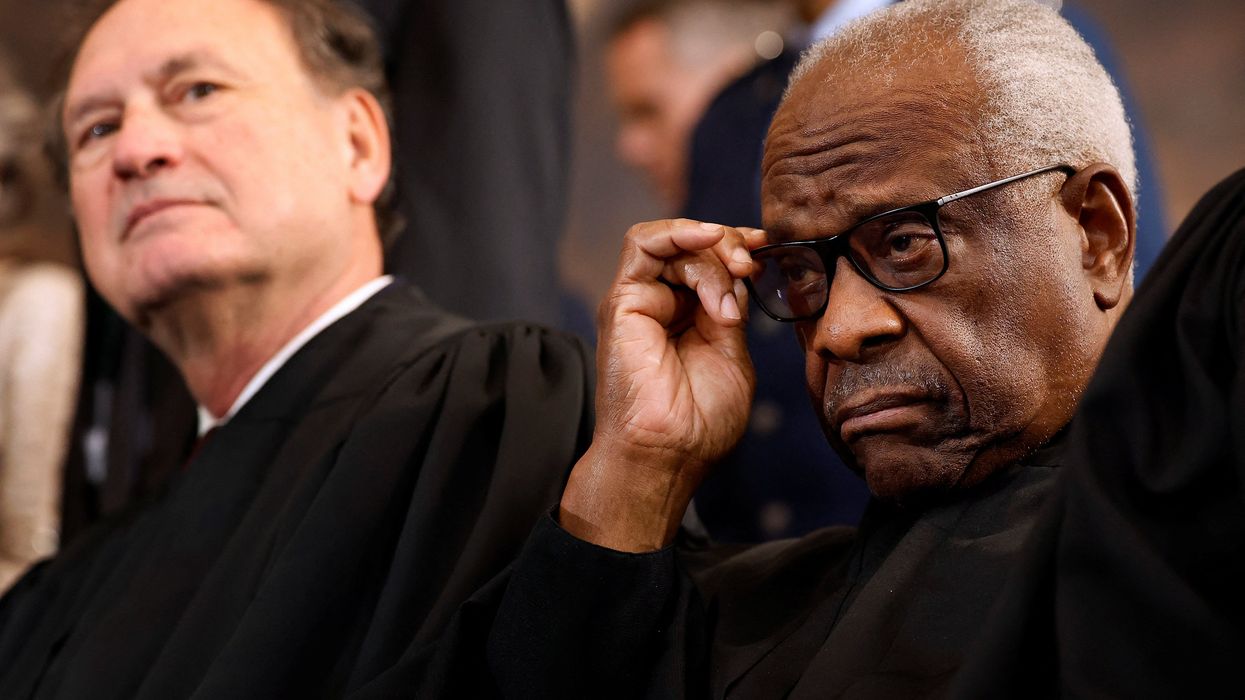
Justice Neil Gorsuch wrote the majority opinion, joined by Chief Justice John Roberts and Justices Clarence Thomas, Samuel Alito, Brett Kavanaugh and Amy Coney Barrett. Justice Ketanji Brown Jackson’s dissent was joined by Justices Sonia Sotomayor and Elena Kagan.
The majority’s argument that Landor could not sue centered on the spending clause of the U.S. Constitution – the source of Congress’ authority to create the Religious Land Use and Institutionalized Persons Act. The spending clause allows the legislature to spend money to provide for the “general Welfare of the United States.” If a state or institution uses federal funds, their officials agree to certain conditions; if they violate those conditions, Congress can remove funding.
But the spending clause does not give Congress authority to hold individual employees accountable, Gorsuch argued in his 18-page opinion. Prison officials had not “voluntarily and knowingly consented to answer private suits” under the act, and so they could not be held directly liable for monetary damages. Otherwise, Congress would have “effectively unbridled police power.”
Jackson’s 29-page dissent disagreed with the majority’s interpretation of the spending clause. The ruling, she contended, “jettisons ‘a long line of this Court’s precedents’” under which “Congress has been able to use its spending power to reach beyond direct recipients of federal funds.” As such, she worried that the court’s order imposed a “novel consent requirement.”
Jackson also lamented the decision’s potential consequences for inmates. Although the goal of the Religious Land Use and Institutionalized Persons Act was to protect prisoners’ faith practices, she worried that people “like Landor who suffer violations of their religious freedom in state prisons – no matter how blatant – will often be left remediless.”
Bigger picture
At a glance, the Landor case appears to be a procedural disagreement rather than one over religious freedom.
However, I argue Landor v. Louisiana must be viewed as a setback for religious liberty, raising a serious question about whether minority faiths have as much protection under the First Amendment as larger religions. The decision is also something of a surprise to me, because the Supreme Court has recently upheld free exercise rights in multiple high-profile cases, almost all of which involve Christianity – such as a football coach’s ability to pray on the field after public school games.
Portions of this article originally appeared in a previous article published on Nov. 6, 2025.
Wow. There is a lot of historic information in this video. The author / presenter has quick cuts to other personality characters she plays to highlight the absurdity of some positions held by the hierarchy. She delvesdeeply into the idea of what is proper femininity, who steps outside it, and who thinks they are responsible for judging or enforcing it. She delves into how many fights against change and equality are about fears by men of emasculation. The lowering of men’s status. When she elaborates on suffrage, all the fears seem to be that allowing women to vote would give women the right to be men and force men to be women. Seem familure? She goes into detail on how each repressive opressive responce to equal rights comes down to the same phrases such as save the children, save the family, or the claims that society it self will end. The clips she intersperses go by far too quickly so I had to stop the video to read them but she does describe what is on them. The begining was choppy and it took me a bit to get her style of presentation but once I did I found it very informative fillwed with facts, history, and fun to watch. Hugs
The transgender bathroom ‘debate’ isn’t new (but it is stupid). I’m looking at you TERF’s…
Looking back through history, gender politics is consistently entangled with race, class, misogyny, and disability. Minority groups existing outside the ‘norm’ are attacked as ‘radicals’ or menaces to society…
But what prevails each time we face oppression AND causes real change in our society?
These complete no exception bans have pretend exceptions that no doctor can trust. These paws and the people who push them do not see a woman as a whole real person, just a vessel for a possible offspring. Women are dying when there is no viable fetus to protect because these laws do not see women as people. Only men are human people. Plus these laws are pushed by religious fanatics and not doctors. Hugs
Texas resident Lynn Callaway filed a federal complaint against two Texas area hospitals that denied her treatment while she was having a miscarriage. “It has been a whirlwind, very traumatic,” Callaway said. In order to treat her miscarriage, she needed to receive the same procedure used in abortions. “I was someone who also did not realize that the abortion ban, particularly how it bans the pill, as well as the D&C, could also impact miscarriage care. That just never came to my mind, and that’s why it’s very important to understand these laws and understand how they impact everyone.”

Illustration: Guardian Design