I watched videos of this protest and the complete violence of the police going full out assault against the gay protestors who were just standing there. The Christian group in anger at what the mayor said about them, so the next day blocked access to the town hall not letting reporters, workers, or people in the community into the town hall. The Christian group did not have a permit and violated sound level ordnances but the police did not try to remove them or force them to let people through to the town hall. But the police did again violently attack the counter protestors from the neighborhoods. It seems clear the police are pro the Christian haters who want conversion therapy done on LGBTQ+ kids to wipe out anyone not straight and cis. The police chaplain is on the fly for the hate group as you can see below. The Christian hate group wants to force everyone to live as their church doctrines demand. They are extremely hateful towards the LGBTQ+ community. They demand that people respect and accommodate their views but refuse to accept the rights of the LGBTQ+ community, not accept the rights that the LGBTQ+ communities are due. I will post the rest of the post by Joe. My. God. but at the end I will post a video that streamer Vaush made on this subject also. As Vaush says the prosecutors refused to press charges on many the police arrested. Maybe because they were innocent protestors viciously attacked by bigoted police. Hugs
In the days after a chaotic confrontation between police and protesters at a conservative Christian rally on Capitol Hill, several groups have questioned why the demonstration was held at Cal Anderson Park and how the city could have better prepared.
The rally, advocating “freedom from same sex attraction” and ”the sacrality of biological gender,” was permitted in the heart of the state’s most LGBTQ+-friendly neighborhood, in a park named for the state’s first openly gay elected official.It attracted scores of protesters who scrapped with police. Twenty-three people were arrested.
Local LGBTQ+ advocates and at least one City Hall politician expressed anger the permit was granted for Cal Anderson, alleging the location was intended to rile the neighborhood’s residents.
The Deputy Director of the Federal Bureau of Investigation (FBI) announced via a social media post on Tuesday evening the FBI will investigate allegations of targeted violence against religious groups regarding last weekend’s chaotic Cal Anderson Park rally.
Dan Bogino posted the announcement on X at 5:15 p.m., writing, “We have asked our team to fully investigate allegations of targeted violence against religious groups at the Seattle concert. Freedom of religion isn’t a suggestion.”
MayDay USA, which describes itself as a Christian Pro-Life organization, held the rally at Cal Anderson Park in Seattle’s Capitol Hill neighborhood. It was met by LGBTQ+ protesters in a competing rally. At some point, police were called in, and there were multiple scuffles between the group and officers.
One of the prominent supporters of Mayday USA is former Spokane Valley state representative Matt Shea, of the “On Fire Ministries,” according to the Radical Women Seattle. Mayday USA organizers have set up a tour of five cities in the country, with Saturday’s event being held in what is considered the heart of the LGBTQ+ community in Seattle on Capitol Hill.
Seattle Mayor Bruce Harrell said the far-right rally was specifically held at the park in Seattle’s known LGBTQ+ neighborhood “to provoke a reaction by promoting beliefs that are inherently opposed to our city’s values.”
In a statement, Mayor Harrell called Seattle “a welcoming, inclusive city for LGBTQ+ communities, and we stand with our trans neighbors when they face bigotry and injustice.” Harrell said anarchists joined the counterprotesters, which resulted in violence and arrests. He said the event organizes shut down the event early after being asked to do so.
Matt Shea, the far-right extremist cited above, has appeared here multiple times, most recently in February 2023 when a church then-affiliated with Shea was ordered to pay Planned Parenthood nearly $1 million in legal fees and a fine related to protests that “interfered with patient care.”
He first earned national headlines in 2019 when leaked chats showed his violent fantasies about executing non-Christians and when it was learned that he had participated in militia drills to train young men for “biblical warfare.”
Shea advocates for the creation of a 51st US state based on “biblical law.” He has also said that all American men who fail to avow allegiance to Jesus should be executed.
He was expelled by the Washington state Republican caucus but refused to resign even after the feds found that he had “participated in an act of domestic terrorism against the United States” by helping plan the armed takeover of the Malheur Wildlife Refuge in Oregon in 2016.
Shea did not seek reelection in 2020 and is now the pastor of Covenant Christian Church in Spokane.
Snippet: In the book The Great Open Dance: A Progressive Christian Theology, theologian Jon Paul Sydnor argues that even the apostle Paul calls for an allegorical reading of Genesis by citing his letter to the church in Galatia. In Galatians 4:21-31, Paul explains the significance of Sarah and Hagar. In verse 24, he tells his audience, “These things are being taken figuratively: the women represent two covenants.” If Paul didn’t read Genesis literally, then I think that permits Christians to interpret Genesis from a more open perspective when it comes to gender and sexuality.
I hold out hope that the Bible can be interpreted in such a way as to make room for me and other trans people. I grasp on to the idea that there is a Christianity out there that is safe and committed to fighting anti-trans legislation. Perhaps to my own harm, I even sometimes find myself hoping that fundamentalists and the Far Right can be persuaded. Persuaded to care, persuaded to see the shared humanity between themselves and transgender people, persuaded by their own good book to protect my community and change their ways. Though I know this is unlikely, I continue to cling to hope. As I am literally fed and cared for by a Christian community, I gain a better understanding of what faith looks like. Today, I am choosing to have faith in my identity as something beautiful and chosen, and good.
In Transgender, Intersex, and Biblical Interpretation, theologians Terese J. Hornsby and Deryn Guest write, “The trans body is not a minority exception to a two-gendered system; it is not an anomaly or a body that exists in the margins. The reality is that there are no margins.” This limitlessness, this abundance, is not only good theology, it is safety, it is belonging.
The entire article is saying that the public schools should be for everyone … except LGBTQ+ kids and parents of those kids. Yes gay and trans children exist and need / deserve to see themselves represented in the community just as much as straight cis kids do. This is a hate bill, banning a group because the majority in charge doesn’t like them. The flags they say are ok to fly like the Gladstone flag or the thin blue line flag are not neutral and they most definitely represent a political ideology. Again this is about erasing the LGBTQ+ kids / people from society to make the Christian fundamentalist and insecure parents who know they can’t have produced a gay / trans kid feel better about themselves. It is a desire to force the fundamentalist view point on every one regardless if they believe it. It is a desperate attempt to return to the 1950s. Hugs
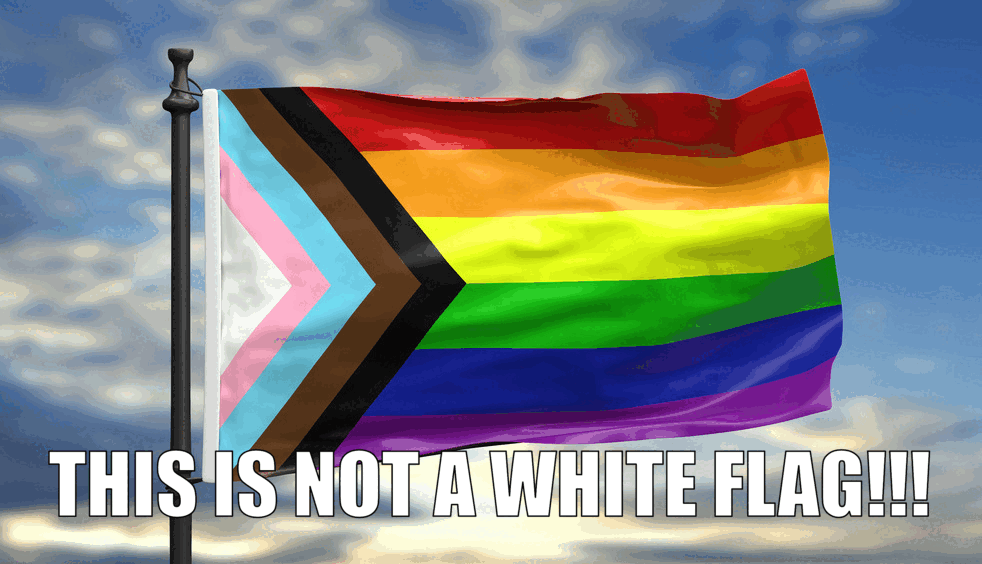
The law effectively bans Pride flags and other LGBTQ flags from being flown at schools or government buildings. In 2019, Gov. Steve Bullock, D-Montana, flew a Pride flag over the state Capitol, which drew criticism from Republicans.
Language in the bill does allow flags like the Gadsden flag and other “official historical flags” to be flown. It also allows flags for law enforcement officers and fallen officers, like the “Thin Blue Line” flag, which Gov. Gianforte, R-Montana, flew above the Montana Capitol on Thursday, May 15, 2025.
When HB 819 was debated on the floor of the Montana House of Representatives, Mitchell said the bill was intended to ensure government entities remain a place of neutrality and was not to impact an individual’s free speech.
“Government buildings, schools and public facilities serve all citizens and should not be used to promote political, ideological or activist messaging,” said Mitchell during the March 6 floor debate.
Critics of HB 819 say the bill targets free speech by allowing provisions for specific flags like the Gadsden “Don’t Tread on Me” flag to be flown, while others were prohibited. Rep. Pete Elverum, D-Helena, said under the language, a Confederate flag could be flown.
“What we’re doing here is we’re expressly prescribing what speech is allowed, ‘these flags’, and what speech is not allowed, ‘these other flags’,” said Rep. Pete Elverum, D-Helena, on March 6. “And as for the definition of ‘promoting a certain ideology,’ those [flags] are expressly prohibited, but at the exact same time we’re sitting here with a bill proclaiming to be about free speech, we’re expressly prohibiting some and promoting others.”
Flags of tribal nations, foreign countries, military service branches, the POW/MIA flag and official school or government entities’ flags are also permitted under the law.
HB 819 went into effect immediately after Governor Greg Gianforte signed it.
This year, both Utah and Idaho have passed similar laws restricting or banning Pride flags on government property or at schools.
New Montana law decides which flags fly in public schools.
“I am most grateful that…I was born long enough ago to have known people who lived in the ancient way before everything started to change.” –Mourning Dove
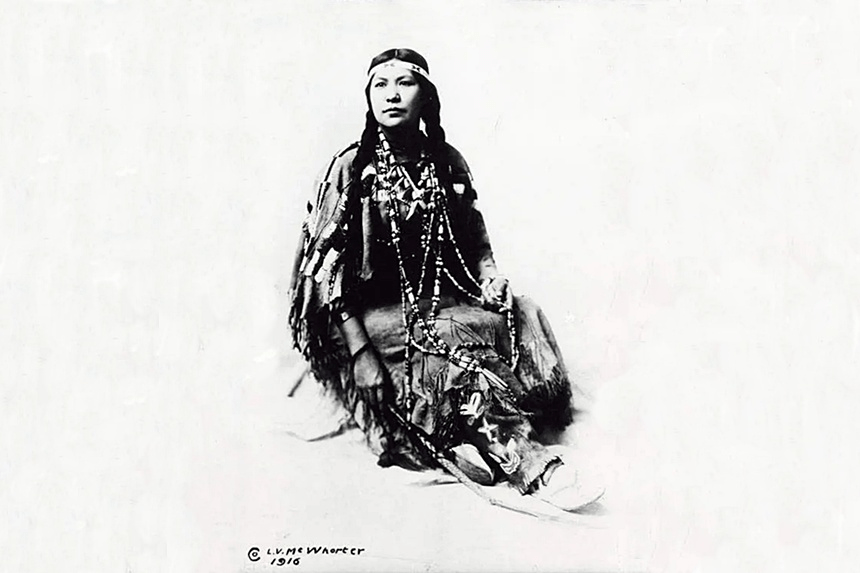
Maybe it was because she was born in a canoe on Idaho’s Kootenai River. Or because she was multiracial. Or because she went to a convent school to learn English as a ten-year-old. Whatever the reason, Christine Quintasket, whose Salish language name was Hum-ishu-ma (Mourning Dove in English, which she adopted as her literary name as an adult), wrote stories about the hostility white people had toward Native Americans and the confusion they suffered when educated in white schools.
Born around 1884 to Sinixt/Colville Lucy Stukin of the upper Columbia River and Okanagan/Irish Joseph Quintasket of British Columbia, the future writer grew up speaking the Salishan dialect in her mother’s home near Kettle Falls, Washington, according to her autobiography. Mourning Dove’s grandmother taught her the traditional customs of Columbia Plateau natives. Teequalt, an older woman who lived with the family, introduced her to tribal spirituality, and Jimmy Ryan, an adopted white orphan, taught her to read English through dime novels.
As a young girl, Mourning Dove remembered sitting by a campfire and listening to the animated voice of a tribal storyteller imitating an animal. “We thought of this as all fun and play, barely aware that tale-telling and impersonations were part of our primitive education,” she recalled decades later.
Mourning Dove’s indigenous education ended in 1894 when she went to the Sacred Heart School at the Goodwin Catholic Mission near Kettle Falls. When her mother died in 1902, the writer returned home to care for her younger siblings. After her father remarried in 1904, she moved to Great Falls, Montana to attend the Fort Shaw Industrial Indian School. In 1908 Mourning Dove sorrowfully watched the last roundup of America’s wild bison herd as the Old West faded. “One magnificent fellow fought like a lion as they tried to crowd his wonderful shaggy head into a box car,” she told an interviewer. She later incorporated the roundup in her writing. (snip-MORE, not too long to read, and it’s really interesting!)
May 23, 2025, 3:13 PM EDT; Updated: May 23, 2025, 3:35 PM EDT
Allie Reed
Correspondent
A large transgender flag with signatures and messages during a protest.
Photographer: Manaure Quintero/Bloomberg
The Trump administration must republish two Harvard Medical School professors’ papers it censored because they contained words related to gender ideology, a federal judge ruled Friday.
“The plaintiffs are likely to succeed in proving that the removal of their articles was a textbook example of viewpoint discrimination by the defendants in violation of the First Amendment,” Judge Leo Sorokin wrote for the US District Court for the District of Massachusetts.
The US Department of Health and Human Services took down peer-reviewed articles by doctors Gordon Schiff and Celeste Royce from the now-inactive Patient Safety Network website, run by the HHS’s Agency for Healthcare Research and Quality.
PSNet said the articles were taken down in accordance with President Donald Trump’s executive order directing agencies to remove content that promotes “gender ideology.” Schiff’s article, on suicide risk assessment, and Royce’s, on endometriosis, both referenced transgender people.
“This is a flagrant violation of the plaintiffs’ First Amendment rights as private speakers on a limited public forum,” Sorokin wrote.
The government can only restrict speech on a limited public forum like PSNet in a way that is reasonable and viewpoint neutral, the order said, and the administration’s restrictions were not.
Sorokin said it is not within his discretion “to evaluate the wisdom of restricting access to peer-reviewed scientific information that enhances patient safety by fostering more informed and timely diagnostic care—or of eliminating entirely a free, online repository of patient-safety resources accessed each year by thousands of medical professionals seeking to provide better, safer care to their patients in the United States. Those are matters for the political branches of government to decide.”
The preliminary injunction applies to Schiff and Royce’s articles, as well as other content removed from PSNet in a similar manner.
The Trump administration is asking a federal judge to reject a challenge from two Harvard University Medical School physicians seeking to block the government’s removal of research papers because they included terms related to the LGBTQ communities. https://t.co/Bj8Wuuu8c7
Multiple sources shared details with the Daily Beast about a meeting in which the ABC News president delivered a message that left the co-hosts unnerved.
Photo Illustration by Thomas Levinson/The Daily Beast/Getty/ABC
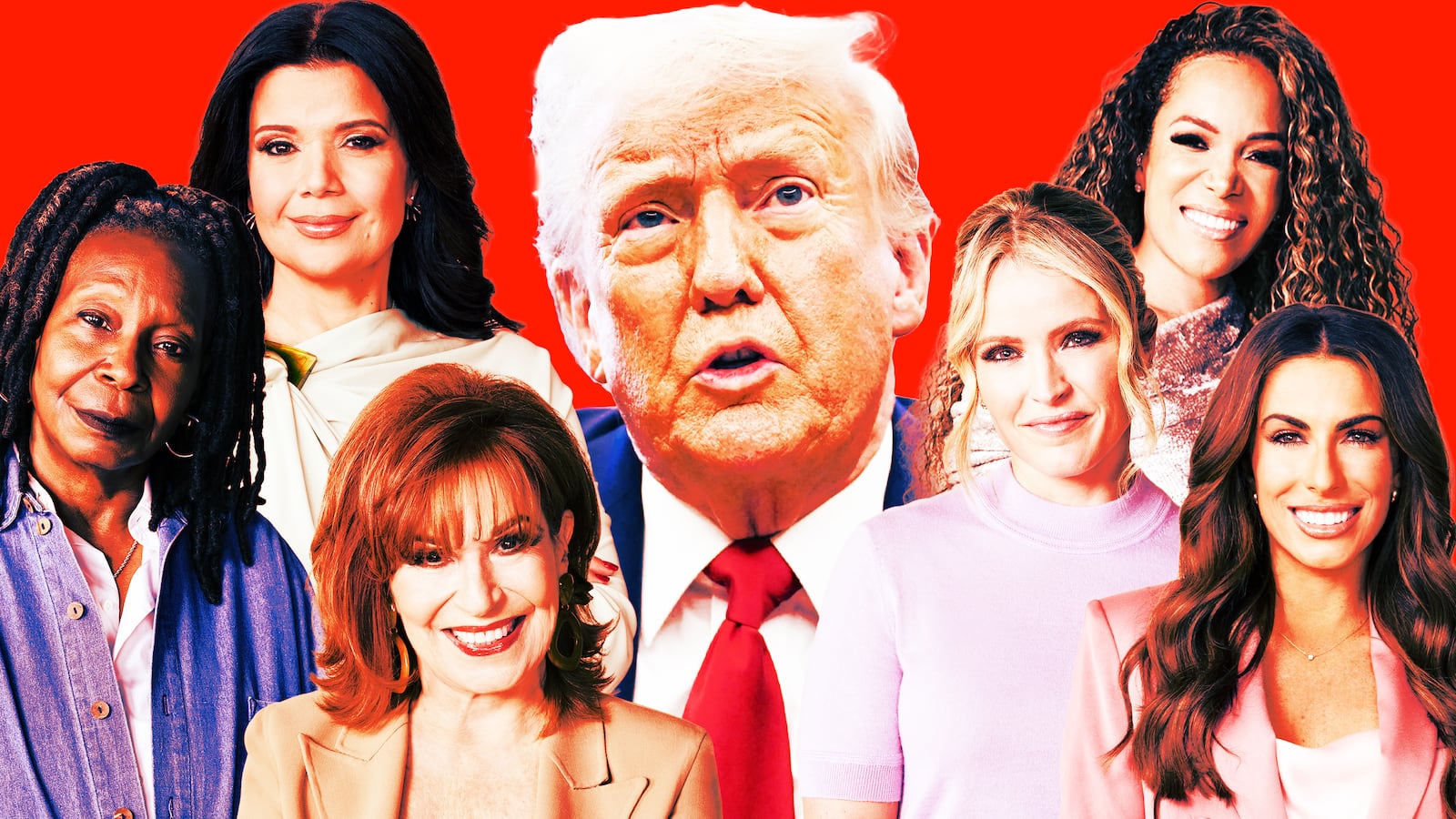
Disney and ABC News have asked the hosts of The View to tone down their political rhetoric, multiple sources told the Daily Beast.
Since President Donald Trump’s election in 2024, the panel of co-hosts on The View—Whoopi Goldberg, Joy Behar, Sara Haines, Ana Navarro, Sunny Hostin, and Alyssa Farah Griffin—have consistently criticized Trump administration officials and policies.
But its constant focus on Trump and politics seems to have roiled the network’s top bosses, including Disney CEO Bob Iger and ABC News President Almin Karamehmedovic.
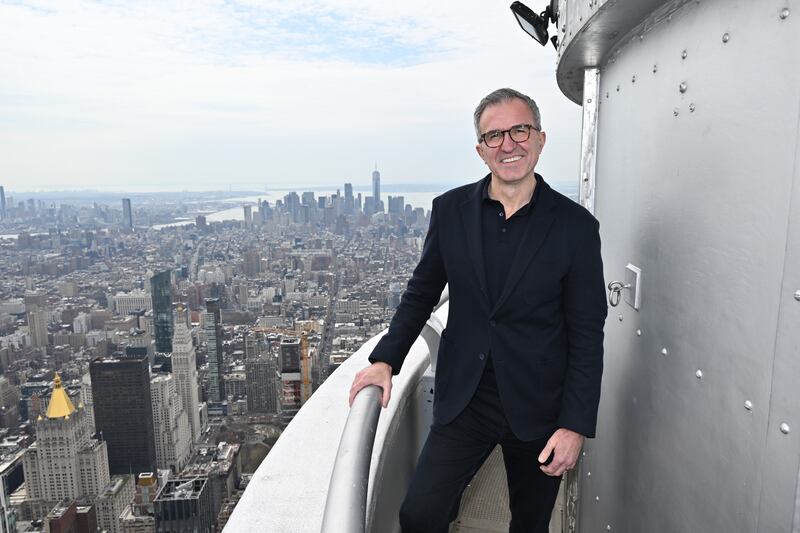
Almin Karamehmedovic lights the Empire State Building in Partnership with ABC News in Celebration of Nightline’s 45th Anniversary at The Empire State Building on March 28, 2025 in New York City.Roy Rochlin/Getty Images for Empire State Realty Trust
Karamehmedovic convened a meeting with The View‘s executive producer Brian Teta and its hosts, and suggested the panel needed to broaden its conversations beyond its predominant focus on politics, two sources familiar with the meeting said. Karamehmedovic highlighted episodes with celebrity guests that he said were highly rated, one source said, and encouraged them to lean into such coverage moving forward.
The move was not framed as an edict, one source said, but the suggestion alone rankled the hosts. The group pushed back forcefully, with hosts like Navarro noting the show’s audience routinely seeks out its perspective on politics, especially when the administration’s radical attempts to upend the government can potentially affect their daily lives.
One source familiar with the meeting characterized the hosts as telling their boss, “‘This is what our audience wants. Isn’t it gonna look kind of bad if we’re all of a sudden not talking about politics?’”
Ultimately, the women found the requests “silly” and that “they were just going to keep doing their thing.”
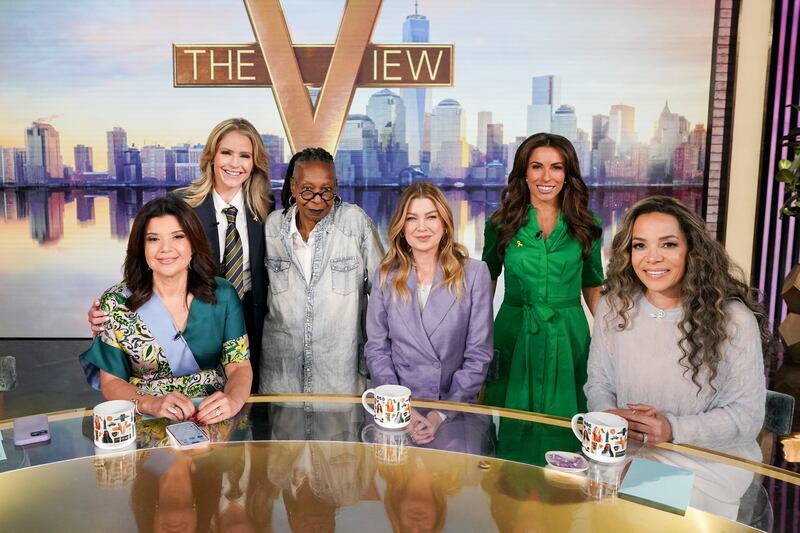
Ellen Pompeo is a guest on “The View” on March 17, 2025.Al Drago/ABC via Getty Images
Still, the conversation continued to stay at top of mind for at least one of the co-hosts. During Disney’s Upfront presentation day to advertisers last week, an annual glitzy gathering where media companies seek to woo brands to advertise with their shows, Navarro had a direct conversation with Iger, according to multiple sources.
Navarro thanked Iger for allowing the hosts to continue doing their jobs in a politically turbulent environment, the sources said. Iger confirmed he supported the show—but he also reaffirmed that the show needed to tone down its political rhetoric, the sources said.
The conversation made clear the suggestion to tone down the politics went all the way to the top, the sources said.
ABC News did not comment, and a Disney spokesperson did not respond to a request for comment. Navarro did not respond to multiple requests for comment.
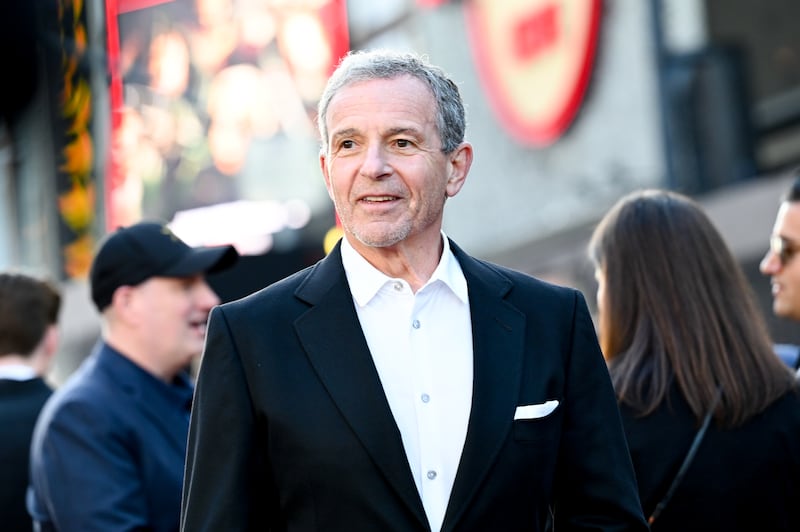
Bob Iger at the Los Angeles Premiere Of Marvel Studios’ “Thunderbolts*” at Dolby Theatre on April 28, 2025 in Los Angeles, California.Gilbert Flores/Variety via Getty Images
Another source familiar with the matter said ABC will “constantly have conversations with talent based on viewer feedback, and this instance was no different,” suggesting the show’s viewers have indicated that they want the show to be less political.
Despite suggestions otherwise by ABC’s top brass, the political coverage appears not to have affected the show’s ratings. The show was the No. 1 among daytime network talk shows and news programs during 2025’s first quarter, according to TheWrap, beating time slot competitor The Faulkner Focus on Fox Newsin both total viewers and women ages 25-54, its chief advertiser-focused demographic, throughout the quarter.
Even earlier this month, it maintained that No. 1 title, beating competitors like NBC’s TODAY Third Hour and TODAY with Jenna & Friends during the week of May 5, according to ABC.
The executives’ efforts to push The View in a less political direction highlight the current difficult circumstances facing media organizations as Trump and his administration set their sights on bending them to their will over critical coverage.
Trump got Disney to pay his presidential library $15 million and $1 million in legal fees in December when he sued the network and anchor George Stephanoupolous over an interview that mischaracterized a verdict that found him liable for sexual abuse as opposed to rape. Disney made the decision in part to avoid brand damage and risk stripping press freedom protections across the industry should it have lost at trial, according toThe New York Times.
Trump has also been at legal war with CBS and its parent company Paramount Global, suing the two for $20 billion over a 60 Minutes interview with Kamala Harris. CBS has called the lawsuit baseless, but as Paramount’s controlling shareholder Shari Redstone seeks to merge the company with David Ellison’s Skydance Media, the company has entered into mediation talks with Trump to secure a settlement.
Federal Communications Chairman Brendan Carr, an outspoken supporter of Trump, has also launched an investigation into Disney and ABC over its diversity, equity, and inclusion policies, and said the 60 Minutes interview would factor into the FCC’s review of the merger. And on Wednesday, Trump lashed out at an NBC News reporter and suggested NBC’s parent company Comcast “ought to be investigated.”
“Bob Iger writes a check for $15 million and then the FCC opens an investigation into DEI? What are they thinking?” one source said. “If anybody could stand up to Trump, it’s Bob Iger, and he already decided not to.”
The View, the long-running opinion talk show that became creator Barbara Walters’ crowning achievement in her celebrated run at ABC News, has long been a major player in the political media landscape. Democrats like Joe Biden, Barack Obama, and Harris have flocked to the show’s glass-adorned table to appeal to its predominantly female audience, and arun of Democrats and Republicans appearing on the show in 2019 promptedTheNew York Times Magazine to label it the “the most important TV show in America.”
Pundits speculated whether Harris’ admission at the table that she wouldn’t have done anything differently from President Joe Biden cost her the 2024 election, highlighting the show’s political relevance.
But just as common as its friendly approach to Democrats has been its vocal criticism of Trump and his policies. The show railed against the once-View regular—Trump appeared on the show more than a dozen times before effectively shunning it ahead of the 2016 election—and Goldberg warned last year his reelection could put the U.S. “in danger.”
But Trump won the election—a month after calling its panel “degenerates”—prompting the show to figure out its next move. The Daily Beast reported at the time that it planned to invite Trump to the table, though it had no plans to add an explicitly pro-Trump panelist.
Despite the conversations with Iger and Karamehmedovic, the hosts have continued to keep politics in focus this month. The women conducted a lengthy interview with former President Joe Biden and former first lady Jill Biden ahead of a book questioning his mental decline—though it was the Biden team that approached the show about the conversation, a Biden spokesperson told the Daily Beast.
Its “Hot Topics” segment on Tuesday also featured Behar questioning “when is Jake Tapper gonna write a book about the cognitive decline of the person who is in charge right now,” and Wednesday’s episode had a segment railing against “puppy killer” Homeland Security Kristi Noem for her bungled definition of the legal concept of habeas corpus.
But hints of a balancing act have emerged. During a robust discussion last week over the question of whether Democrats needed to focus on the question of Biden’s decline or move forward to fight Trump, Griffin appeared to strike a more balanced tone by highlighting how Trump’s low approval numbers were ahead of the Democratic Party.
“This table spends a lot of time criticizing Donald Trump and a lot of it is very valid and needs to happen, but it’s a fact his approval rating is 39 percent,” she said on Friday. “However, Democrats’ is 27 percent. People felt gaslit and lied to.”
That episode continued with a panel conversation about a Reddit post that asked whether Mother’s Day cards were appropriate for women who consider pets to be their “children.”
We studied the Hays code and its effects on cinema in high school drama class during the film module, but Wendy has more info than we got! Turner Classics ran a day or two of films last year which had ended up withdrawn after the Hays Code; they ran them during Pride. I don’t get that channel anymore, but maybe someone else does and can catch one or more of these gems during Pride. -A Language alert, of course.
Queer History 114: Before The Fucking Hay’s Code, The Golden Era by Wendy🏳️⚧️🏳️🌈🌈
The Queer Golden Age: LGBTQ+ Representation Before Hollywood’s Great Erasure: The forgotten era when queer characters thrived on screen before censorship killed the party Read on Substack
You think the 1930s was all straight-laced puritanism and sexual repression? Think a-fucking-gain. Before Will Hays and his moral crusaders stormed the gates with their production code in 1934, early Hollywood was a goddamn queer paradise compared to what came after. For a brief, glorious moment in cinematic history—roughly 1927 to 1934, known as the “Pre-Code era”—American films featured openly gay characters, gender-bending performances, same-sex kisses, drag performances, and discussions of homosexuality that wouldn’t be seen again until decades later. This wasn’t some underground cinema movement either—this was mainstream Hollywood, baby, playing in theaters across America to audiences who apparently weren’t clutching their pearls nearly as hard as history would have us believe.
Let me be crystal clear about something: the systematic LGBTQ+ erasure caused by the Hays Code didn’t correct some temporary deviation from the norm. It violently interrupted what was becoming a remarkably progressive trajectory in early cinema. The Code didn’t “restore morality”—it fucking killed the natural evolution of queer representation just as it was beginning to flourish. And that makes the story of Pre-Code Hollywood’s queer characters and themes not just interesting cinema history, but a painful reminder of what might have been if censorship hadn’t set LGBTQ+ representation back by half a century.
The Wild Fucking West of Early Cinema
The early days of Hollywood—particularly the silent era and the first years of sound—operated like an artistic Wild West. With few formal regulations and before conservative religious groups had mobilized their substantial political power against the film industry, filmmakers explored themes, characters, and stories that would soon be ruthlessly purged from American screens.
“Early Hollywood was far more sexually progressive than most people realize,” explains film historian Clara Rodriguez. “There was no central censoring authority with real teeth until the Hays Code enforcement in 1934, which meant filmmakers were relatively free to explore topics that would later become forbidden.”
This freedom allowed for a surprising amount of LGBTQ+ representation, often done with remarkable frankness for the era. Silent films like “Algie the Miner” (1912) featured sissy characters played for laughs but not necessarily contempt. “Manslaughter” (1922) included a lesbian party scene with women in tuxedos dancing together. “Wings” (1927)—which won the first Academy Award for Best Picture—contained a scene where two male fight-
er pilots share a kiss that’s played not for laughs but for genuine emotion.
When sound arrived in 1927, rather than becoming more conservative, Hollywood initially pushed boundaries even further. The pre-Code talkies of 1929-1934 featured not just coded queer characters but explicitly gay, lesbian, and gender-nonconforming figures who weren’t always punished for their identities.
The Gender-Bending Superstars Who Didn’t Hide
Marlene Dietrich wasn’t just flirting with gender boundaries—she was taking a fucking sledgehammer to them. In “Morocco” (1930), Dietrich performs in a man’s tuxedo, kisses a woman full on the lips, and portrays a character with explicitly fluid sexuality. This wasn’t hidden or coded—it was right there on the mainstream screen, and audiences ate it up. Dietrich’s gender-bending performances made her more popular, not less.
“Dietrich in a tuxedo kissing a woman wasn’t scandalized—it was eroticized and celebrated,” notes film scholar B.D. Grant. “She won an Academy Award nomination for ‘Morocco.’ This wasn’t career suicide; it was career-defining.”
Dietrich wasn’t alone. Greta Garbo played a cross-dressing queen in “Queen Christina” (1933), in which her character openly discusses her disinterest in marriage and her preference for dressing in men’s clothing. The film strongly implies Christina’s romantic feelings for her lady-in-waiting. Again, this wasn’t some art-house curiosity—it was a major MGM production starring one of the biggest names in Hollywood.
Mae West built her entire early film career on sexual innuendo and characters who openly acknowledged and enjoyed sex outside marriage. In “She Done Him Wrong” (1933), West’s character flirts with a woman, suggesting she might “be able to do something” with her, a line delivered with unmistakable sexual undertones.
These weren’t bit parts or villains—these were the fucking stars, the box office draws, the roles that made careers rather than ending them.
Explicitly Queer Spaces and Characters On Screen
One of the most jaw-dropping aspects of pre-Code cinema is how openly it depicted queer spaces and communities. “Call Her Savage” (1932) features what may be the first gay bar depicted in American cinema, complete with effeminate male performers singing to tables of men clearly coded as gay. This scene isn’t brief or hidden—it’s an extended sequence in a major Fox Film production starring Clara Bow, the “It Girl” herself.
“Our Betters” (1933) features an openly gay character referred to as the “fairy designer” who speaks with a lisp and displays stereotypically effeminate mannerisms—problematic by today’s standards, certainly, but remarkable for presenting a gay character whose sexuality is acknowledged rather than punished.
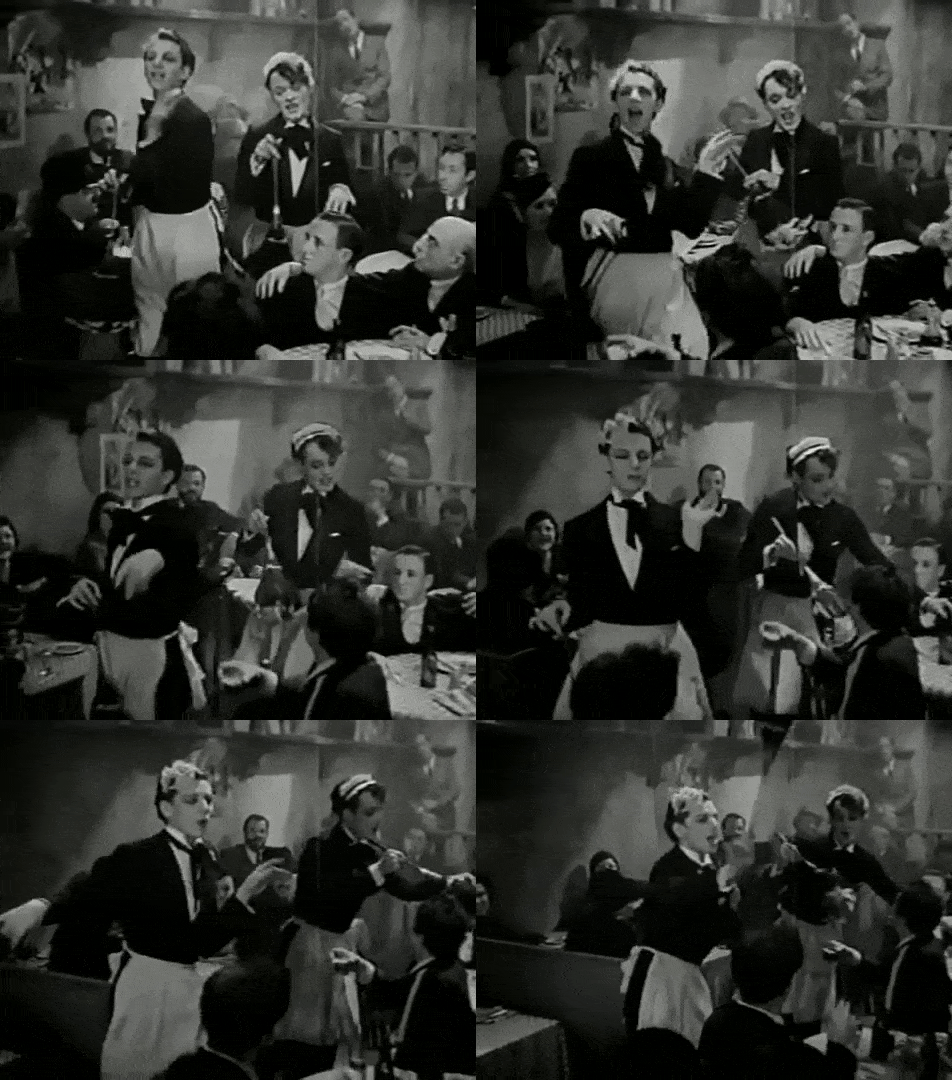
“Sailor’s Luck” (1933) includes a landlady who is clearly coded as lesbian and whose sexuality is treated as unremarkable by the other characters. “Wonder Bar” (1934) features a brief scene where two men are dancing together, and when a woman tries to cut in, one man says, “No, I think you’re barking up the wrong tree”—an explicit acknowledgment of homosexuality
“Hell’s Highway” (1932) includes a fairly sympathetic portrayal of an effeminate prisoner called “Sneeze,” while “This Is the Night” (1932) features a fashion designer character who is flamboyantly gay and, remarkably for the time, not portrayed as villainous.
“These weren’t just quick scenes that censors missed,” explains film historian Parker Tyler. “These were deliberate inclusions that suggest filmmakers and studios understood there was an audience for these representations.”
The Trans Pioneering You Never Knew About
Perhaps most surprising to modern viewers is pre-Code Hollywood’s exploration of transgender themes. While the language and understanding of transgender identity was different in the 1930s, several films explored gender transition and identity in ways that were remarkably forward-thinking.
“Viktor und Viktoria” (1933), a German film that played in American art houses, centered on a woman living as a man who performs as a female impersonator—a complex exploration of gender performance that wouldn’t be attempted again in mainstream cinema for decades.
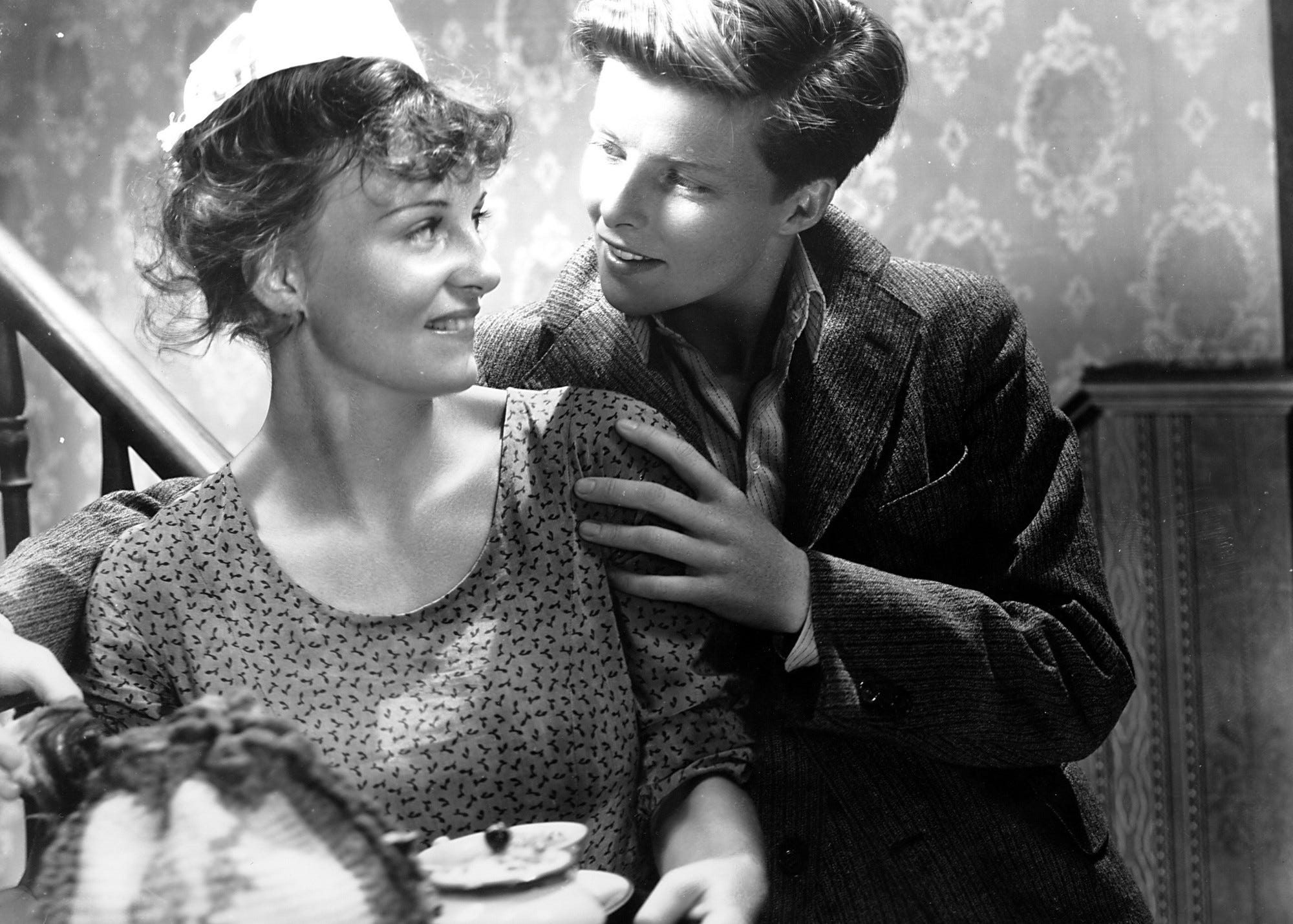
The American film “Sylvia Scarlett” (1935), released just as the Code was tightening its grip, stars Katharine Hepburn as a woman who lives as a man through much of the film. While ostensibly she does this for practical rather than identity reasons, the film explores her comfort in male identity and the romantic complications that arise when she develops feelings for a man while presenting as male.
“These weren’t just cross-dressing comedies,” argues transgender film historian Susan Stryker. “They were genuine explorations of gender identity that asked questions about how clothing and presentation relate to our inner sense of self. For the 1930s, that’s fucking revolutionary.”
Sex, Violence, and the Moral Panic That Killed Queer Cinema
It wasn’t just LGBTQ+ content that thrived in pre-Code Hollywood. Films openly depicted adultery, prostitution, drug use, and violence in ways that would be forbidden for decades after. Women’s sexuality was portrayed with remarkable frankness, with female characters who openly desired and pursued sex outside of marriage without necessarily being punished for it.
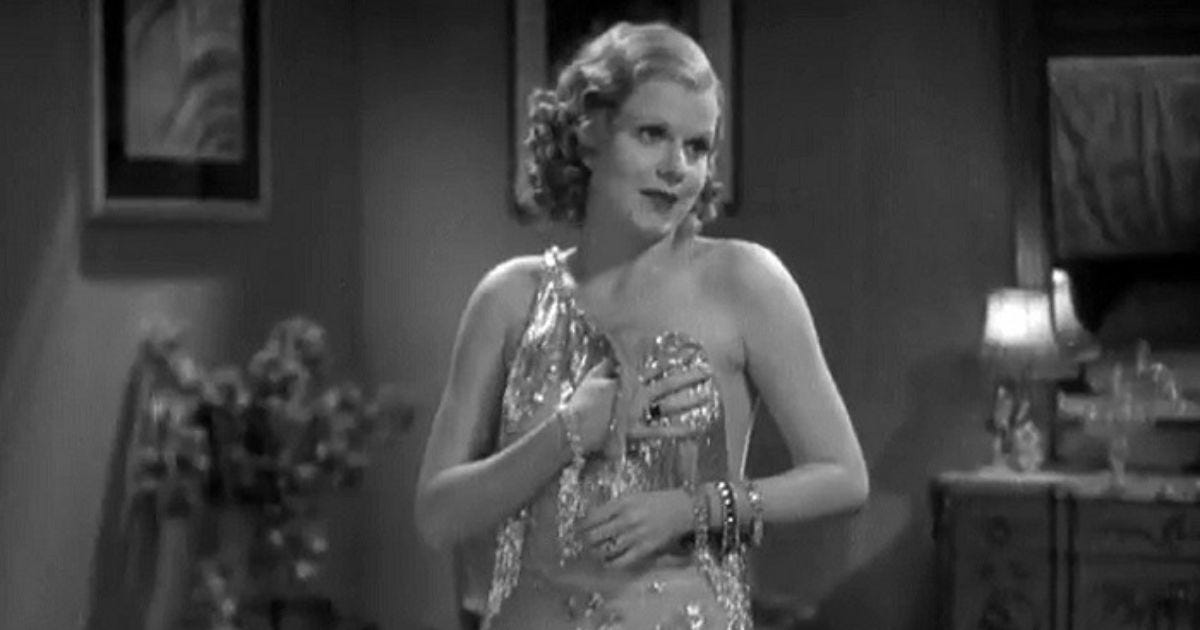
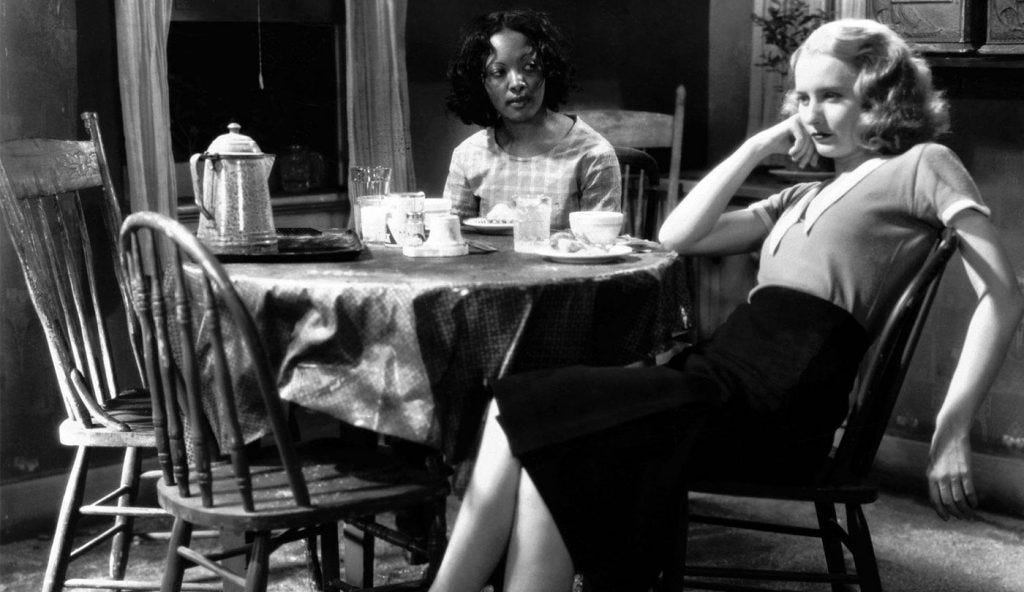
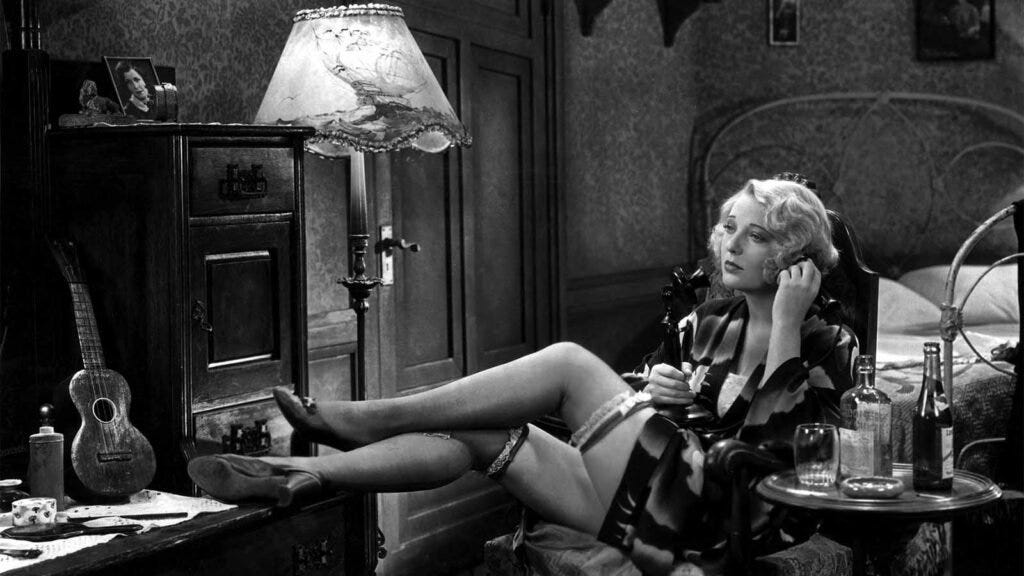
“Baby Face” (1933) stars Barbara Stanwyck as a woman who explicitly sleeps her way to the top of a corporation, floor by floor. “Red-Headed Woman” (1932) features Jean Harlow as an unrepentant home-wrecker who faces no significant consequences for her actions. “Safe in Hell” (1931) centers on a prostitute on the run after killing her abusive client.
This sexual frankness extended to the depiction of gay and lesbian characters, who were often presented as part of this sexually liberated landscape rather than as cautionary tales or villains.
“The overall sexual openness of pre-Code films created space for queer characters to exist without automatic condemnation,” explains film scholar Molly Haskell. “When straight sexuality isn’t being repressed on screen, queer sexuality doesn’t stand out as dramatically different.”
This openness eventually triggered a massive backlash from religious groups, particularly the Catholic Legion of Decency, which threatened boycotts of “immoral” films. Studio heads, terrified of losing audience dollars during the Great Depression, capitulated to these demands by agreeing to strict enforcement of the Production Code starting in July 1934.
“The moral panic wasn’t organic—it was orchestrated,” argues media historian Kathryn Fuller-Seeley. “Conservative religious groups deliberately framed Hollywood as a corrupting influence, and studios chose profit over artistic freedom.”
The Great Erasure Begins
Once the Hays Code enforcement kicked in during 1934, the change was dramatic and immediate. Films in production had scenes cut, storylines altered, and dialogue changed. Characters who might have been openly gay were either eliminated entirely or transformed into heterosexual figures.
The original script for “The Thin Man” (1934) contained clearly gay characters who were either cut or de-gayified before filming. “Dracula’s Daughter” (1936) had its lesbian overtones significantly watered down from the original script. Projects with prominent LGBTQ+ themes were canceled entirely or morphed beyond recognition.
“It was a systematic purge,” says film preservationist Robert Gitt. “Studios went through their own back catalogs and many pre-Code films were literally locked away in vaults, deemed too risqué for re-release under the new standards.”
This erasure didn’t just affect new productions—it altered our cultural memory of what early cinema had been. As pre-Code films were withdrawn from circulation, later generations grew up believing that early Hollywood had always been sexually conservative, when the exact opposite was true.
What We Lost: The Alternative Timeline of American Film
Perhaps the most tragic aspect of the Code’s implementation is contemplating what might have happened if this early progressive trajectory had been allowed to continue. If Hollywood hadn’t been forced into 30+ years of censorship right as it was beginning to explore LGBTQ+ themes with relative openness, how might American attitudes have evolved differently?
“The timing couldn’t have been worse,” laments film historian Thomas Doherty. “Sound technology had matured, allowing for more complex storytelling. The Depression had created an appetite for films that addressed social realities frankly. Studio systems were at their creative peak. And then—boom—the Code slammed the door shut, particularly on queer representation.”
If LGBTQ+ characters had remained visible in mainstream cinema throughout the 1930s, 40s, and 50s, how might that have changed public perception? Would the lavender scare of the McCarthy era have gained the same traction? Would the gay rights movement have had to start from scratch in the late 1960s?
“We’re still living with the consequences of that erasure,” argues activist and film historian Jenni Olson. “The Code didn’t just remove queer people from films—it removed them from the public’s understanding of American life. It created a false narrative that LGBTQ+ people suddenly ‘appeared’ in the 1960s rather than having always been part of the social fabric.”
Subversive Survival: How Queer Cinema Went Underground
When the Code slammed the door on explicit representation, filmmakers didn’t entirely give up—they just got sneakier. The era of “queer coding” began, with characters who couldn’t be explicitly identified as LGBTQ+ but who conveyed their queerness through mannerisms, costuming, interests, and subtle dialogue.
“Suddenly, filmmakers had to learn the art of the double entendre,” explains film critic Drew Casper. “They developed a sophisticated visual and verbal language that straight audiences might miss but that queer viewers would recognize.”
Alfred Hitchcock became a master of slipping queer-coded characters past the censors. The villains in “Rope” (1948) are clearly coded as a gay couple. “Strangers on a Train” (1951) features an antagonist whose queerness is conveyed through his style, mannerisms, and obsession with the protagonist.
“Ben-Hur” (1959) screenwriter Gore Vidal has revealed that he and Stephen Boyd (who played Messala) agreed that their character’s relationship had a romantic history, but never told Charlton Heston, creating a homoerotic subtext that the censors missed completely.
These coded representations were a double-edged sword. They provided some visibility, however limited, but they also established the harmful pattern of associating queerness with villainy, mental instability, or tragedy—tropes that outlived the Code itself.
The Forgotten Drag Kings and Queens of Early Film
Another fascinating aspect of pre-Code cinema was its relative comfort with drag and gender play. While often played for comedy, these performances weren’t always mean-spirited or contemptuous.
Julian Eltinge was one of the most famous female impersonators of the early 20th century and appeared in several silent and early sound films, including “The Isle of Love” (1922) and “Maid to Order” (1931). Rather than being portrayed as deviant, Eltinge was celebrated for his artistry and precision in female impersonation.
On the flip side, stars like Marlene Dietrich frequently performed in male dress without it being treated as scandalous or perverse. When Dietrich wore a tuxedo in “Morocco,” it was presented as the height of sophisticated sexiness, not as a joke or a perversion.
“Early film had a more fluid relationship with gender performance,” explains historian Judith Weisenfeld. “Drag wasn’t necessarily seen through the lens of sexual deviance until conservative forces deliberately constructed that association.”
This comfort with gender play extended beyond star performances. Films like “Their First Mistake” (1932) with Laurel and Hardy include casual cross-dressing played for laughs but not disgust. “The Warrior’s Husband” (1933) features Katharine Hepburn as a spear-carrying, athletic Amazon who kisses another woman on the lips.
After the Code, drag would be permitted only under very specific circumstances: if it was a temporary disguise used for practical purposes (like “Some Like It Hot”), if it was played entirely for laughs, or if it was eventually punished or “corrected” within the narrative.
The Queer Actors Who Couldn’t Be Themselves On Screen
The tightening grip of the Hays Code didn’t just affect fictional characters—it had profound implications for queer actors in Hollywood. Before the Code’s strict enforcement, there existed a certain “don’t ask, don’t tell” approach to actors’ personal lives. While few stars were openly gay, many lived in what were known as “lavender marriages” (marriages of convenience between gay men and lesbian women) or maintained relatively open secret lives within Hollywood circles.
William Haines, one of MGM’s top stars of the late 1920s and early 1930s, refused to hide his relationship with his partner Jimmy Shields. When Louis B. Mayer demanded Haines get married to a woman for appearances, Haines chose to end his film career rather than deny his relationship. Before the Code’s enforcement, his career had flourished despite industry insiders knowing about his sexuality. After 1934, that became impossible.
“The Code created a culture of terror for queer actors,” says historian William Mann. “Not only could they not play gay characters on screen, but their personal lives became subject to extreme scrutiny and control. The studios developed complex systems to hide actors’ sexualities, including arranged dates, fake engagements, and forced marriages.”
Actors like Cary Grant, Randolph Scott, Katharine Hepburn, Marlene Dietrich, and dozens of others had their queer relationships erased from public view. Studio publicity departments crafted heterosexual narratives for stars regardless of their actual lives.
“It was a double erasure,” explains Mann. “Queer characters disappeared from screens at the same time that queer actors were forced deeper into closets.”
The Birth of Camp: Rebellion Through Exaggeration
One of the most fascinating responses to the Hays Code was the development of camp as an aesthetic strategy. Unable to show explicit homosexuality, some filmmakers turned to exaggerated femininity, over-the-top performances, and stylistic excess as a form of coded representation.
“All About Eve” (1950) is filled with dialogue and performances that play as camp, particularly the character of Addison DeWitt. Films starring stars like Bette Davis, Joan Crawford, and later performers like Judy Garland and Liza Minnelli became touchstones for gay audiences precisely because they deployed camp as a strategy to communicate queerness without naming it.
“Camp became a survival strategy,” explains cultural theorist David Bergman. “If you couldn’t be explicit, you could be excessive. And that excess created spaces within mainstream culture where queer sensibilities could find expression despite censorship.”
This strategy created a peculiar cultural phenomenon: films that seemingly conformed to heteronormative standards while simultaneously winking at queer audiences who could read between the lines. “Johnny Guitar” (1954), with its intense rivalry/attraction between Joan Crawford and Mercedes McCambridge, became a lesbian cult classic despite containing no explicit lesbian content.
The International Contrast: European Cinema Kept Queer Characters Alive
While American cinema was forced into a heterosexual straitjacket, European filmmaking continued to explore LGBTQ+ themes with greater freedom. Films like “Mädchen in Uniform” (1931, Germany) depicted lesbian attraction between a student and teacher with remarkable sensitivity. “Michael” (1924, German) portrayed a gay relationship between an artist and his model.
Even after the rise of fascism curtailed some of this exploration in Germany and Italy, other European countries continued producing films with queer content. French cinema, in particular, maintained a more open approach to sexuality, with films like “Club des femmes” (1936) and later “Les enfants terribles” (1950) exploring same-sex desire.
“The contrast between American and European cinema during this period is stark,” notes film historian Patricia White. “While Hollywood was systematically erasing queer people, European filmmakers were continuing the exploration that American pre-Code cinema had begun.”
This international contrast created a bizarre situation where sophisticated American audiences might see European films featuring LGBTQ+ characters at art house theaters while mainstream Hollywood productions remained rigidly heteronormative.
The Painful Path Back: How We Slowly Recovered What Was Lost
When the Hays Code finally collapsed in 1968, replaced by the MPAA rating system, LGBTQ+ representation didn’t immediately bounce back to pre-Code levels. The damage had been done. Generations of filmmakers had been trained under the Code’s restrictions, and audiences had been conditioned to expect certain narratives.
The first post-Code films to feature gay characters, like “The Boys in the Band” (1970), often reinforced negative stereotypes of gay men as self-loathing and miserable. Lesbian characters remained primarily predatory or tragically doomed. Trans characters were portrayed as psychotic (as in “Psycho”) or as jokes.
“The legacy of the Code outlived its formal existence by decades,” argues film critic K. Austin Collins. “When you spend more than 30 years teaching filmmakers and audiences that queer people can only exist as villains, victims, or jokes, that doesn’t disappear overnight.”
It would take until the 1990s and early 2000s for mainstream American cinema to begin approaching the relative openness toward LGBTQ+ themes that had existed in pre-Code films of the early 1930s. Even today, certain types of queer representation remain controversial or limited in mainstream cinema.
“It’s mind-blowing to think that in some ways, films from 90 years ago were more progressive about LGBTQ+ representation than many films made in the last 20 years,” notes film preservationist Kassandra Harris. “We’re still catching up to where we could have been if the Code hadn’t interrupted the natural evolution of film.”
The Queer Archaeology Project: Rediscovering What Was Buried
One of the most exciting developments in recent film history has been the rediscovery and restoration of pre-Code films, many of which had been effectively buried for decades. Organizations like the UCLA Film & Television Archive, the Library of Congress, and the Queer Film Heritage Project have been working to restore these films and bring them back into public view.
“It’s like conducting archaeology,” explains film preservationist Dave Kehr. “We’re digging up evidence of a queer cinematic past that most people don’t realize existed.”
These restoration efforts have revealed just how extensive and explicit queer representation was in early cinema. Films that had been dismissed as minor or forgotten have been rediscovered as containing important LGBTQ+ content. Silent films once thought lost have been found in archives around the world, some containing surprising depictions of same-sex desire or gender nonconformity.
Turner Classic Movies, streaming services, and specialized distributors like Kino Lorber have begun making these restored pre-Code films available to contemporary audiences, allowing modern viewers to see for themselves how the Hays Code didn’t “maintain standards” but rather reversed an emerging progressive trend.
“When people actually see these films, they’re shocked,” says film historian David Pierce. “They’ve been told that old movies were naive and sexless, especially regarding LGBTQ+ themes. Seeing the reality challenges everything they thought they knew about film history and American cultural attitudes.”
Why This Forgotten History Still Fucking Matters
Understanding pre-Code cinema’s relative openness to LGBTQ+ themes isn’t just about correcting the historical record—it’s directly relevant to contemporary battles over representation. When conservatives claim that LGBTQ+ visibility in media is a recent “trend” or “agenda,” they’re erasing the fact that queer people have always been part of American culture and its artistic expressions.
The history of pre-Code cinema demonstrates that the systematic removal of LGBTQ+ people from American screens wasn’t an accident or a reflection of audience preferences—it was a deliberate act of cultural censorship driven by religious pressure groups and institutionalized through industry self-regulation.
“When people try to remove LGBTQ+ books from libraries or pressure streaming services to reduce queer content in children’s programming, they’re reading directly from the Hays Code playbook,” argues media scholar Melinda Hsu. “It’s the same moral panic, the same rhetoric, and the same goal: making queer people invisible.”
The pre-Code era stands as proof that American audiences were perfectly capable of accepting LGBTQ+ characters and themes until they were told not to. Films featuring gay characters, lesbian kisses, or gender-bending performances were commercially successful and critically acclaimed before censorship artificially constrained what could be shown.
“The most powerful weapon against those who want to erase LGBTQ+ people from media today is showing that we were there from the beginning,” concludes film historian B. Ruby Rich. “We weren’t added to American cinema—we were forcibly removed from it. And every push for representation since has been an attempt to reclaim what was taken from us.”
References
Russo, V. (1987). The Celluloid Closet: Homosexuality in the Movies.
Barrios, R. (2003). Screened Out: Playing Gay in Hollywood from Edison to Stonewall.
Mann, W. J. (2001). Behind the Screen: How Gays and Lesbians Shaped Hollywood, 1910-1969.
Doherty, T. (1999). Pre-Code Hollywood: Sex, Immorality, and Insurrection in American Cinema, 1930-1934.
Vieira, M. A. (1999). Sin in Soft Focus: Pre-Code Hollywood.
Lugowski, D. M. (2007). “Queering the (New) Deal: Lesbian and Gay Representation and the Depression-Era Cultural Politics of Hollywood’s Production Code.” Cinema Journal.
White, P. (1999). Uninvited: Classical Hollywood Cinema and Lesbian Representability.
Horak, L. (2016). Girls Will Be Boys: Cross-Dressed Women, Lesbians, and American Cinema, 1908-1934.
Stryker, S. (2008). Transgender History: The Roots of Today’s Revolution.








 Scottie's Playtime